Tag: Vikas Mehta

  • IPL – A chimera


    With apologies to none

    By Vikas Mehta


    Vikas MehtaI was on vacation for the last 10 days and took the opportunity to do some family bonding while trekking and just doing nothing at some remote places in Himachal. We started our holidays by watching an IPL match live at Mohali, and I will come to that a bit later. But what was unescapable is the tremendous reach, following and craze about IPL. Wherever we stayed, the TV channels were blasting the IPL matches throughout the day. Small shops in far off places had a small 14-inch TV tucked away in a corner, on mute, showing the match highlights. And our fellow tourists were all glued onto their mobile phones using to catch a glimpse of the match. In fact, while talking to a resort manager he mentioned something interesting. The resort offers free wifi, but for the last few years, hardly anyone asks for the password or its details. Everyone is happy with their 4G networks to catch whatever is their poison, news or mail or social media. But during IPL times, there is a sudden surge from tourists asking for free wifi. It’s an issue of both, connectivity and consumption of data. So, during IPL they ensure that the band width is increased and the routers are working.


    It’s therefore disheartening to see that brands are hardly using the event for any brand-building. Let’s not forget that it was the same IPL which made Vodafone Zoozoo a familiar name. Or more recently, let an angry Rahul Dravid into our households and made Cred a brand which not many use but which most are acquainted with. The list of brands that used IPL to bring themselves glory is worth revisiting to understand what IPL can do. Unfortunately, that list is dwindling. This year, the only memorable campaign that I can remember is the Dream 11 cricketers vs film stars. And Dream 11 has used IPL very adroitly over the last few seasons, mostly the pandemic times, to establish itself as a leader in the fantasy games category. I am not aware of facts and figures but I am sure that if one looks at critical brand parameters in the category, Dream11 will be at the top.


    So, what ails the IPL ads?  The answer is simple. IPL is an expensive proposition for the brands to splurge on. And digital has spoilt marketers to demand measurability for every rupee spent. Nothing wrong in that. But parameters like brand recall or brand likeability or brand trust or even purchase/ use intention, need brand building. But today most marketers are looking at conversion rates or just sales. A direct co relation between ad spend and sales seems to be the only metric in mind.


    And that’s why brands have no distinction in the category. They are becoming soulless. Think about it. Would you rather use Gpay or Phone Pe? Swiggy or Zomato? Ola or Uber? Is there any differentiation between these brands? They are all technology children and they have all sold their generic technology. So the category has been established. But what about the brand? That’s why when I look at Cred or Dream11, I feel there is hope. Let me explain it a bit more. Cred has been of late doing cashbacks on credit card payments and some interesting offers during the matches, These are flashed on the venue screens as well as on TV. Do you think these promotions and offers would have worked if Cred has first not established a brand story? If today, Cred has a competitor who does not have a brand story but starts doling out some promotions, will it have the same response that Cred has now? Cred is now reaping the windfall of establishing a brand narrative. Same with Dream11. It has established some sort of awareness and trust with its stories using cricketers. Therefore, the promotions it runs now, during the matches get traction.


    This lack of patience and faith in storytelling is resulting in the drab ads that one can see on IPL. The brand narrative is missing. It’s all about the sales pitch.


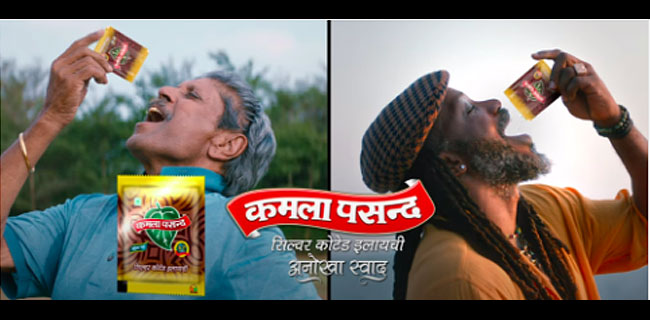
    Last time, I had mentioned about surrogate tobacco ads. As if using people like Sehwag and Gavaskar was not enough, yesterday, I saw the same brand also using Kapil Dev and Chris Gayle. I have a feeling that all these brands are anticipating a total ban on the advertising of their products. So, now they are going all out and spending big monies not just advertising but using ex-celebrities. I guess this particular brand is trying to do a Cred by using ex-celebrities. But jokes apart, this has to stop. One of my colleagues wrote a blog on this very portal where he argued about ASCI being the favourite whipping boy of everyone but trying to defend it by saying that it does not have authority or the power to step in as it is a self-regulatory body of advertisers. Fair point.


    But, it looks like that this body has become a small indulgent club of advertisers who under the pretext of being self-regulated and no teeth will not act against one of its own. By law, surrogate advertising means that the product being advertised must have at least 10% of total brand sales and also some similar matrix on distribution and availability. Has ASCI even looked into that? I don’t have the figures, but most of the tobacco brands, and at the last count there were four, all being supported by the biggest Bollywood and some sports celebrities seem to be contributing towards at least 30-40% of commercial time on IPL. Isn’t that alarming enough for a self-regulated body to step in and take some action?


    The narrative on this cannot be wished away. Last time, I advocated a boycott of these celebrities. Now I am taking it a step further. Can other brands and advertisers stop using these celebrities? If you hit at their income source only then it will hurt. After all, associating brands with celebrities who support tobacco brands is not good for other brands. Will ASCI ask its members to boycott using these celebrities? Even as an advisory?


    Before I sign off, a word on the IPL match experience at Mohali. The atmosphere was awesome. The stadium was jam packed on a Wednesday night. The match itself was a high scoring thriller. But unfortunately, the spectators were taken for granted. Ticket booking and delivery system was wonderful. We went to the stadium almost two hours in advance. At the security check things like sunglass covers were being confiscated. No explanation was given. Except that one could collect the same after the match. Fat chance.


    Then, the police tried to stop us from using our designated seats. It was the first row and I suspect they wanted to use it for themselves. But when we insisted, they relented. We still could not use our seats as someone else plonked themselves on the same. Soon it turned into mayhem. It was like first come first serve basis. Those who came late, could not get any seats. Many people, at least hundred or more were watching the match standing. Or by sitting on the steps. And these were people who had paid upwards of Rs 1500 for a ticket.


    The toilets, as usual were far and few. And in bad shape hardly an hour into the match. After that, given the overcrowded stadium it was impossible to even reach the loos. The police on duty were more interested in watching the match or as in one case, asking Preity Zinta, who was doling out free Tshirts of her team, for one. At the end of the match there was near stampede. There was just one small exit with thousands of spectators from one block having to use it. As others were shut. Pushing, shoving, continued for a few minutes. And when I asked a police guy about the same, his answer was that a private security was manning this. And of course, at the end whatever was confiscated was never found. It seems that the private security, in charge of frisking was pocketing whatever caught their fancy. Indeed, some stuff was found lying strewn around the frisking area at the end of the match.


    For all the big claims that cricket authorities make in India, some things never change. And the poor spectator who pays for the same, is invariably at the wrong end of the stick. But then, who cares? In many ways, when we see the IPL from a distance, on TV or live streaming, away from the commercial and moral aspects of surrogate advertising, IPL seems to be an Oasis of fun, enjoyment,celebration and sports.


    In reality it’s just a Chimera


    Vikas Mehta is a senior marketing strategy consultant and educator based in Dehradun. He writes on MxMIndia every other week, and sometimes more often. His views here are personal.
     

  • Boycott: Our weapon to fight surrogate advertising

    Image courtesy Twitter handle @RoshanKrRaii


    By Vikas Mehta


    Vikas MehtaIt’s time to kick a few butts.


    For years, surrogate advertising has been the bane of the Indian communication industry. First it was cigarettes and alcohol and now for the last few years it’s been pan masala.


    More than a year ago, Amitabh Bachchan had raised the hackles of many when the septuagenarian appeared in an ad for Kamla Pasand along with Ranveer Singh. The actor, who once was the darling of the masses, took quite a beating on social media when he first defended his action saying that the ad was part of the entertainment business which provides employment to many people.


    When he was mercilessly trolled on social media and when a national anti-tobacco agency requested him to refrain from endorsing tobacco products, the actor put on a big act.


    He grandly announced that he is terminating his contract with the company, returning their money and also said that he did not know that the silver coated elaichi, which was the product shown in the ad, was part of surrogate advertising. Ha!


    Read that again. He said that he did not know that he was part of a surrogate ad. Mr. Bachchan wanted us to believe that his lawyers and his advisors were so unaware that they had no idea of this malaise called surrogate advertising. His naivety was an act for the ages.


    The campaign had broken out in September 2021 and in October, on his birthday, Mr Bachchan had made the grand announcement.


    But the ads continued. When another round of protests hit social media, Mr. Bachchan’s office released a statement in mid-November saying that they have sent a legal notice to Kamala Pasand, to stop broadcasting the TV commercials with Mr Bachchan immediately, as it was noticed that despite termination of the endorsement agreement ‘ Kamala Pasand ‘ has ignored the same and is seen to continue airing the TV commercials.


    The result: Nothing. Zilch. Nada. No change. Social media got tired, bored, disillusioned of this tamasha and moved on. And the ad continued to be aired. Another version of it was also released. Right through 2022, all major cricket events unleashed the campaign. It went on even in 2023. Till almost the half-way stage of IPL.


    After more than one-and-a-half year of endorsing a surrogate tobacco product, a time when other pan masala brands, no doubt emboldened by the free run that Kamla Pasand had, and featured celebrities like Akshay Kumar, Shah Rukh Khan, Ajay Devgan, Salman Khan; Mr. Bachchan, seemed to have finally persuaded the brand to remove its ad. No, that should read as, the ad was withdrawn after maybe it had run the course of its contract.


    But the legacy of endorsing a surrogate brand continued. And the culprit this time is another septuagenarian cricketing legend along with a dashing cricketer who has a school in his name.


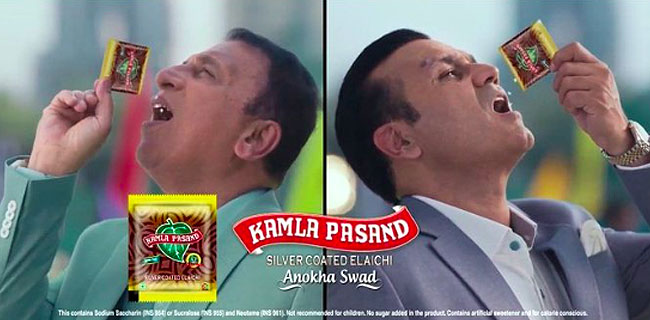
    Ladies and Gentlemen, let me introduce Shri Sunil Gavaskar, ex-cricketing legend, ex-Sheriff of Mumbai, Padma Bhushan recipient, Arjuna Award-winner, ICC cricket Hall of Fame member as the latest entrant to the tobacco surrogate celebrity endorser Hall of Shame.


    And he is keeping illustrious company. Shri Virendra Sehwag is a cricketer who changed Test cricket with his fearless approach to the game. And now his fearless approach is to endorse a surrogate for Pan Masala. Not fearing that it will influence many people into believing the veracity of pan masala. A Padma Shri recipient, Wisden Cricketer of the year and ICC Test player of the year, Shri Sehwag has also started Sehwag International School in Haryana on a piece of land gifted by the Haryana government. Undoubtedly, he will be a role model for the schoolchildren to consume pan masala.


    It’s really shocking that neither the government, nor the advertising bodies and nor the celebrities themselves have an iota of responsibility to clean up this mess.


    Why are the anti-tobacco advertising laws full of loopholes for the manufacturers to exploit? Or, if there are no loopholes, then why no action is being taken against the offending brands.


    ASCI is a self-regulatory body of the advertising industry. Its rules and regulations are so warped that it is an impotent body which moves to takes action against advertisers after the deed is done. It waits for complaints and it has no legal leg to impose a punishment. It hopes for advertisers to be good boys/girls and accept the punishment, which incidentally cannot be a fine or a criminal complaint or any legal action. After all, the advertisers themselves fund ASCI. So this is a case of the accused having their own kin sitting on judgment?


    Whereas the likes of Messrs Gavaskar and Sehwag are joining in the fun. After all if a Mr Bachchan can earn a few crores, why not them?


    For the media companies, this is the easiest way to recover the millions they have put not their bids. At a time when inflation is high, global recession looms, a category like pan masala which always fears a blanket ban, is welcomed with open arms and big deals.


    The curse of tobacco be damned.

    The curse of a generation being influenced be damned.

    The curse of lingering health issue be damned.

    The curse of making an unhealthy product seem fashionable be damned.

    And of course the legacy of the celebrities will not be damned.


    All the above culprits, specially the celebrities deserve a kick on their backside. Because if a celebrity cannot care for the very people who made him a celebrity, if a celebrity will sell his soul for making his bank balance heftier and if a celebrity will doom a generation just because he thinks he can get away with anything then a kick in the backside delivered by millions of his fan in the form of a boycott may just make him see sense.


    The boycott has been used as an effective tool in the past for political and religious reasons. For once, if we are ready to use this tool for a healthier society, then it will truly reflect the spirit of what the father of our nation meant when he introduced boycott as a weapon. Not just a tool but a weapon.


    Let us boycott the channels which use these cricketers as commentators. Let us boycott the films which all the above film celebrities act in. Let parents boycott the school or whatever institutions or brands these celebrities endorse. Let’s boycott the shows which invite these celebrities.


    Because if we do not boycott them today, tomorrow a few more will endorse an unhealthy product. And the cycle will continue.


    So, stop waiting for the government or ASCI or anyone else to do anything.  Just boycott anything and anyone which is associated with surrogate advertising. 


    And do not expect me to post a link of the ad. I refuse to use it to make a point too. Boycott the ad on you tube. If a friend forwards it, stop it from being forwarded or boycott him.


    Make boycott the buzzword to fight surrogate advertising. To kick a few butts.


    Vikas Mehta is a senior marketing strategy consultant and educator based in Dehradun. He writes on MxMIndia every other week, and sometimes more often. His views here are personal.


  • IPL: Are we the prisoners of advertisers’ laziness?


    With apologies to none at all

    By Vikas Mehta


    Vikas MehtaSome people have equated IPL matches as the equivalent of modern-day colosseum games with the two teams being the gladiators. The stadiums are a riot of screaming chanting spectators who are fenced in almost like prisoners. I tend to agree, having watched one or two matches at the stadium before the pandemic. But I think the same spectacle is at home too. Specially if one is watching the match on a big screen. Except one feels like being imprisoned by a cacophony of repetitive and listless ads. Not to forget the myriad ads by the channel which keep on promoting the matches endlessly.


    I used a strong word, prisoner. For many reasons. Because most of the ads are bad. I am sorry there is no better word to describe how I feel about the decline of a profession with which I was associated for quite a long time.  And I think everyone is getting caught in a vicious economic cycle, with we, the audience at home, getting the wrong end of the stick at the lowest end of the food chain.


    As a sport, IPL is definitely a hot property. It’s sport, entertainment, tamasha and money all rolled into one. And it can’t get bigger. The biggest name in world cricket are a part of it. There is a bottomless pit of unlimited audience and there are big brands and corporates ready to shower crores on it. Safe to say that IPL has made the BCCI the big bully of world cricket. But in all this, the viewers, who sit at home and watch the matches on TV and through streaming, who are the reasons that the brands spend the big bucks are being served up some sports in the cacophony of the ads. Hardly a decade ago, when the IPL started, brands and companies would work towards preparing some memorable communication for the IPL. But the decline is alarming.


    Many people put the blame on arrival of digital. On lack of enough data to measure ad effectiveness. On short attention spans. But all of this is irrelevant. What has happened is that in the guise of all of the above both, marketeers and advertisers have become lazy.


    Lazy enough to repeat product proposition and forgetting the role of desired response. Lazy enough to finetune the target audience and not talk to all. Lazy enough to get some celebrities and not bother to see if their personality matches with the brand’s. Lazy enough not to have an idea which the target group can relate to. And to sum it up, lazy enough to not weave a story but happy with hammering a generic benefit while glamming it up with technical effects.


    And still worse, in today’s day and age lazy enough to run ads which have been on air for past few months. Be it Kingfisher, Kamla Pasand, Rajashree Pan Masala, Vimal Pan Masala, TVS tyres, Macho underwear…….and all of them use celebrities, most of whom do not fit the brand personality.


    There are some new ads. Spinny. It’s a vehicle buy, sell and upgrade platform. And they use not one or two but three ex-cricketers. Tendulkar, Kumble and Yuvraj. I am not even getting into if the brand personalities match but I did not even get what the product is or how it is different from other vehicle resell platforms. And seriously, does the brand want us to believe that these three are the best of friends who would be going for long drives in ordinary vehicles?


    Those of you who read my last column here, will remember that I had singled out the Dream 11 ad as a stand out. It’s follow up ads are also very well done. I think that amidst a clutter of fantasy sports brands, it’s Dream 11 advertising which has positioned the brand brilliantly. The others, inspite of using celebrities, are a haze of similar sounding and similar offering brands.


    I had asked my readers to revert with their comments on the Ranveer Singh Pepsi ad. Some who responded, mostly GenZ, gave it a thums up. I think it’s a good ad, could have been better, but Pepsi has finally found a celebrity which matches its brand persona. Frankly, I wonder what took them so long. I always slotted, Ranvir as the Pepsi type of a guy.


    Then there is the new Rupay Visa card ad. A very good example of story telling while communicating the product proposition. Well crafted, good stimulus and sustains interest. Watch it here.


    In a similar vein is the new Maaza ad with Amitabh Bachchan. I thought the second ad in the series, worked very well. It sticks to the product benefit. It uses the personality of Mr. Bachchan and very nicely superimpose it onto the brand and in an interesting way also takes care of the target groups desired response. Here it is.


    Last IPL, Tata the key moneybags of the tournament, had launched the Tata Neu super app. While the product got a lot of flak and the consumer experience was not as great as thought, the communication has not disappointed. Even this year, the peppy, making shopping an enjoyable experience, the ads have focused on the story of Neu coins helping you buy more. The short stories have good humour and they have focused on the product proposition interestingly.


    Just when one thought that things were looking up, I came across this ad for Happilo. So, you are an official sponsor. You can use some cricketers. Their availability is an issue. They maybe cannot act or emote. What does one do? Use them in a song and dance. Use them against a chroma background. Superimpose the shots with some tech wizardy. Get a rap sounding song. Highlight all benefits in the lyrics. Use some GenZ typical words or phrases. Let the brand name be mouthed in direct proportion to the number of seconds that the celebrities can speak. Voila! You have an ad.


    Can it be worse? Yes, watch this Ceat tyre ad with three cricketers.

    I am bailing out. Need a release from all these ads.

    So, next week I am off to watch a match. Maybe it’s better to be a prisoner in the colosseum of a stadium rather than in my TV room. Will keep you all posted.


  • A different rivalry emerging in IPL


    With apologies to none at all

    By Vikas Mehta


    Vikas MehtaThe Indian Premier League (IPL0 has become famous for franchise rivalries over the years. MI vs CSK, KKR vs RCB and, as my daughter says, now LSG vs SRH biryani wars!


    But a most unexpected rivalry has surfaced around the IPL this year. And it started before the tournament commenced. When the media rights for IPL were announced for the next five years, television and digital rights went to two different entities. While Star Sports continued with the TV rights, Disney Hotstar lost the digital rights to Reliance group backed Viacom18. And thus started a new rivalry. TV vs Digital. Jio Cinema vs Star Sports.


    If we look at the numbers, it seems an unequal fight. TV penetration in India is almost 70%. Whereas smartphone penetration is just about 50% with roughly 600mn smartphones in use. While smartphone is an individual device, TV is watched by four-five people. But what makes these numbers interesting is the fact that many youngsters in TV households may be either abandoning TV for smartphones or TVs are being connected to streaming devices. Jio Cinema has been talking about its customised device integration partnership with OEMs like Jio set-top box, Apple TV, Amazon Firestick, One Plus TV, Sony, Samsung, LG and Xiaomi.


    And Jio Cinema fired the first salvo by announcing free subscription to IPL. Clearly, they were trying to catch more viewers which in turn would get more advertising moolah. So, for the first time, an advertising revenue war between streaming and TV was on. Brands and companies were being enticed on two fronts. And they had to take decisions which till now they need not as Star and Disney Hotstar were playing a complementing game with Disney also charging for subscription. Viewership now was an important dimension.


    And soon enough an advertising war broke out. Not surprisingly, Jio Cinema was the instigator. It released a long ad on Youtube which took a dig at watching IPL on old-fashioned, non-interactive, dumb TV sets. While it was entertaining and informative at the same time, it served a reminder as to how much more personalised the viewing can be on digital. Watch it here


    Star Sports then released an ad which claimed that normal TV watching through DTH channels like Tata Play and Airtel (my enemy’s enemy is my friend) could allow digital features like highlights, key moments, deep statistics dive etc. Star Sports Pro was launched which could turn your TV into TV on demand with these features. Watch the ad here.


    While Star spoke about commentary in nine languages, Jio Cinema went ahead and announced commentary in 11 languages including Bhojpuri. I think no ex-cricketer worth his salt is free in India today during IPL and anyone who is, needs to just learn a new language!


    Hardly had the first weekend passed that viewership figures were being bandied about. Star took out a full-page ad in leading dailies claiming a record-breaking TV Rating for the first match which went up by 29% and 47% increase in consumption of TV time as against last year. It also claimed 130 million viewers on its channels for the first match which was almost 90% of the Pay TV universe. Jio Cinema on its part issued press releases claiming 1.47 billion video views and 50 million new app downloads for Jio Cinema over the first weekend.


    While Jio’s figures were based on its own actual numbers, Star figures were based on BARC viewership data that uses a base of around 50,000 plus households and the number is then extrapolated to a national level, a fact shared gleefully by even Viacom18’s CEO in his press release. Clearly, the advantage of measurability went in favour of Jio Cinema.


    So, is there a clear winner? Of course not. Jio had glitches during streaming. While many claimed no audio, there was rebooting happening and many took to social media to vent their frustration. And while TV seems to have the upper hand just by sheer numbers, the habit of Gen Z to watch on small screen on an individual basis will eat into TV share. But then from my limited experience, I think it is just a high income phenomena. Most Indian families do not have the luxury of a personalised smartphone for each family member. Plus, IPL is a more involved family entertainment. That would mean a point in favour of TV.


    One thing though is for sure, this rivalry is going to become more intense and it would mean more benefits for the consumers.


    Oh! What about the ads on IPL you ask? Mostly a big bore. Mostly repetitive old ads. Most using the same few celebrities. Most covering the same few categories.


    But the one exception that came as a breath of fresh air was Dream 11. Like in the previous years they have not disappointed and have raised the bar by not just using famous cricketers but also roping in some celebrity actors. And with an all-out war between the two sets of celebrities, things are getting spiced up. It’s a shame if you haven’t watched the launch ad which is a longer version in the form of a press conference. Watch it here.


    And then the other ones which involve needling each other with some real life, incisive and stinging comments. The one where Rohit Sharma needles Aamir about not attending award shows, or the one where the cricketers are needled about retakes, or the one where Aamir is reminding himself that ‘all izz well’, are all well-crafted and wonderful to watch. A relief to see creativity, relevance and celebrity all being combined so well. Watch. One more. And one more.


    As I write this, I see a new Pepsi ad with Ranveer and a new Pepsi anthem too. These look and sound interesting. Watch the ad. And the theme song.


    Now tell me what do you think about them?


  • Can technology be a foe for your brand?


    With apologies to none at all

    By Vikas Mehta


    Vikas MehtaThe omnipresence of digital has its drawbacks. Not only are we inundated with messages galore but there is also the temptation to use technology and data in a half=hearted way. One which leaves the consumer frustrated and many a times move away from the brand. Sometimes, even category. In the rush to go digital or for everything to be online, some categories are actually doing a great disservice to customers.


    And my favourite whipping boy for this is online pharmacy brands. I have been inundated with messages, offers and marketing efforts trying to persuade me to try these brands. I have tried a few times. I have tried not just Netmeds but also 1mg and PharmEasy. But I have always ended up in frustration.


    Let’s look at this category from a consumer behaviour viewpoint. More often than not, one needs medicines in a rush. If I am unwell and the doctor prescribes some medicines, I need them immediately. But none of the online portals/apps can deliver the medicines to me in a jiffy. Not at least in Tier 1-2 towns like Dehradun. Whenever I have tried to buy prescribed medicines the minimum time required has been at least 48 hours. So, all you online pharmacies kindly tell me can I wait that long for the medicines?


    And clearly there is an over-promise and miscommunication. Netmed says same day delivery. PharmEasy says family ki healthwali sab zaroorat Pharmeasy deliver karta hai woh bhi same day. The communication left me confused. Digging a bit deeper you realise that what they mean is all health-related needs except medicines!


    Seriously, you want me to use your portal/app because I can get a blood pressure meter the same day or get a vitamin supplement the same day? And there is an asterix there also. In selected cities only. Isn’t it a case of miscommunication?


    I spoke to some friends and they advised me to get only long-term medicines or medicines that have been prescribed as precaution for illness like diabetes or BP which one takes daily. For all other illness, which could be small illness or an emergency, you cannot depend on these portals.


    So, what’s the point in sending me mail or messages asking me to buy online at 20% discount or limited time period offer. The category has to realise that limited time is about delivery in a limited time not about discounts for a limited time.


    Yes, associated categories like wellness or medical check-ups are a good revenue spinner but shouldn’t the players first focus on medicines?


    Quick delivery is the need of the hour for medicines. So, the ecommerce model has to be closer to that of Blinkit and Dunzo. Not like Amazon or Meesho. There are some category challenges like storage under controlled temperature but isn’t disruption the name of the game and shouldn’t the category be finding its disruption rather than depending upon adjacent categories?


    When my neighbourhood Reliance Smart offline shop opened an in-shop Netmed counter with white lab coat assistants manning it (that definitely is a nice touch. Lab coat cueing medicine) I thought that the quick delivery problem will now be sorted out. But, no, they were worse than chemist shops. Hardly any stock. They check online availability and then call you back to say that the delivery will take 1-2 days. And the situation has not changed for over a year. Frankly, It’s a waste of retail space. Reliance Retail can generate more revenue by stocking more groceries than having two chemists twiddling their thumbs.


    The only good thing that has happened out of this situation is that the local chemists have started giving discounts of 10-12%. So, the whole rationale of buying online cheap stands defeated. It will be interesting to see how developments unfold in this space.


    The problem of using technology half-heartedly manifests itself in many ways. For last six months, I have been getting mails and messages from HDFC telling me that I have qualified for an upgrade of my account to a higher category. I am given a link to upgrade which says enjoy your exclusive benefits. The problem is that the link takes me to the home page of the bank. Now, am I supposed to navigate and find my benefits? Or am I supposed to login to my netbanking and find where are the benefits? Why should I struggle to find these out? The result is that I haven’t upgraded and am still not aware of the benefits.


    I have a personal banker assigned by the bank. He keeps on calling me anytime during the day. And if I am in meetings or am busy and do not take his calls, I get a message that he tried to call me and if I need any help, I can call him back. When I do that to ask him about the benefits of the upgrade, I can’t get through to him as he has moved on calling another customer. The result is that on paper the bank is providing me an omnichannel experience but I am not getting it. Vague and general link, no messaging from the personal banker asking me when can he call or even returning a missed call. All of this actually leads to a situation where the bank may have been better off not telling me that I have an upgrade!


    There are many such peeves. Some ecommerce sites orders cannot be cancelled. On Jiomart, if the seller is anybody besides Reliance Retail, then the only way to cancel an order is to refuse to take delivery (yes, that’s what I was advised by customer service). BigBasket keeps on sending messages about BBnow which is all about quick delivery. But when I downloaded the app and try it, I get a message that it’s not operational in my area.


    Omnichannel, customer experience, customer satisfaction are all jargon which will remain on paper if technology is misused or used in a half-baked way. Brands and companies must start addressing these issues. Not to forget that the same brands must realise that just by being present in a few cities do not give them the liberty to publicise and talk about their services on a national level. Because when you are actually available nationally, many would have switched off from you.


    Technology was supposed to turn brands into your partners in need. But unfortunately, in many cases it’s turning into a foe.


  • Vikas Mehta: The sham we enact on Women’s Day

    With apologies to none at all


    By Vikas Mehta


    Vikas MehtaSomeone asked to do a review of International Women’s Day communication. And for once I flatly refused to do so. I find it ridiculous that for one day, just one day, the whole world seems to be suddenly sympathetic to all women. Millions are spent on creating communication for one day. Every brand worth its salt becomes a crusade for woman. Products which actually pigeon-hole women into beauty compartments do not feel ashamed to be proud to be associated with the day. There is this facewash brand which used Indian women cricketers (who incidentally are the talk of town due to WPL but let’s leave that for another day) with a headline saying #Not Fair and goes on to define beauty in the way the cricketers play. Neatly done. But then what is the product actually? Natural Glow. The current euphemism for fairness. Or to put it more bluntly, whiteness.


    And then most of the communication is targeted at the upper crust of the society. Not necessarily the woman, but the peer group of those who create such communication. It’s like a pat on the back. Or more likely to win an award. And of course, the millions of women for whom March 8 just goes by like any other day, are not even thought of.


    I am not criticising the rationale of International Women’s Day. Neither am I questioning its importance. I am questioning the way we celebrate it.


    Personally, I think the day should actually be a start of a round-the-year  programme which helps to uplift the cause of women. And the big difference is that it should not talk to women, but to men.


    Let’s face it: it is us men who still control women. It is us men who still make the rules. It is us men who decide the fate of most women. So, if anything has to change, the change has to come from the men.


    We do not need to celebrate women. We need to liberate our women.


    A good start for any brand could be to tell men what women are capable of. Not by preaching to them but by using examples of common women. Not just the cricket players but a housewife, a mother and a daughter too. In communication we always say that word-of-mouth or first-hand endorsement by a user is the best way to convince the target group. So why not use the millions of examples around us to tell the men that women can do little things which can make an enormous difference in everyone’s life.


    Look around you. Look at the women in your own life and around you and you can see what they are capable of.


    Let me give you some examples from the women I know.


    My wife. Most know her as that. But not many know that she is actually a fighter. And she in turn was influenced by her mother. My wife lost her father when she was in Class 10. Undaunted, her mother sent her son to US for higher studies. For more than a decade my mother-in-law, my wife and her younger sister lived alone. Learning, earning and surviving. And then when I embarked on my international career, she sacrificed her dreams and work to allow me to grow. When I had a huge health issue, she stood by me like a rock. She helped me come back like a phoenix and sacrificed much more than just some materialistic things.


    Just before 50, she decided to reinvent herself. She relocated to my hometown Dehradun, a city totally unknown to her and embraced it with open arms. She started from scratch in a new responsibility getting involved with boarding schools. She did a one-year online course and started etiquette management as a subject in some schools. Not only that, she ventured out on her own. Today, schools offer her assignments at her terms. Parents seek her out from cities far away from Doon. And I bask in her glory. Tell me which man will not be inspired by her story?


    She has rubbed off on my daughter too. My daughter suffered from Vitiligo from a young age. This is a skin illness which leaves white patches all over the body. Daughter. Vitiligo. Indian society. You get the drift. We (read, my wife) started treatments from various sources. But what amazed me was the fighting spirit of my daughter. She actually became an extrovert. People would stare at her but she would hardly be bothered. In fact, she started wearing short pants and sleeveless clothes, just to make a point. Her maturity belies her age. Hey, men, isn’t that an inspiring story?


    Then I heard about this domestic help of a common friend. Typical Indian maid sob story. Husband was a drunk who would not earn anything, snatch away the maid’s salary, beat up and abuse her and the children. She wanted her two sons to be educated. So, our friend helped her enroll into a adult’s school, where in three years she could read and write. She opened a bank account. Learnt to do digital transactions. Because she learnt to read, she discovered that her children can go to a good school under the EWS quota. I also must admit that with her confidence and financial independence,  we tried to influence her to leave her erratic husband. But she has refused to do that. She is confident she can turn him around too. Now isn’t that something men will be glad to know of?


    Recently, I made a new acquaintance in my society. The lady is the wife of an army officer. She mostly stays with her children as the husband is posted in remote locations. A common story for most of our armed forces families. But what amazed me was her daughter. She is doing her UG in economics and I casually asked her what she wants to do next? I was expecting the answer to be on the lines of MBA, Teacher……but in a calm and poised way she answered unhesitatingly. She wanted to join the defence services. Here is a girl, who is spending most of the time away from her father. Who is seeing her mother bring up the kids on her own. And yet she is choosing the same profession as her father’s. Knowing that not only is it difficult but also unusual for a girl. And she has the option of doing almost anything else. Immense courage and strength of character in the mother too, for  encouraging her daughter to go ahead with her choice. This is the real discourse of a woman. Is there any man who will not admire the thinking of these women?


    I am sharing just a few examples. Am sure, you readers have your own such examples. So why can’t some brands build a favourable opinion about women by taking such simple, ordinary stories? Not just on women’s day but the whole year round? Why pay lip service which will be forgotten almost immediately? Women’s day has to kick start a change in the men. It’s not about any aspiration. But it needs to be about inspiration. Inspiration from such everyday stories and truths.


  • Vikas Mehta: Move over e-commerce. Here comes guilt commerce

    With apologies to none at all

    By Vikas Mehta


    Vikas MehtaMany a moon ago, I learned about a new type of commerce. The ‘guilt commerce’. Living in Dehradun and having a daughter in a boarding school for a few months was a revelation.


    This year in January I revisited the phenomena. Wherever in Doon we went that weekend, the place was teeming with boarders and their parents. Stationery and gift shops, eating joints, malls, cinema, the cash registers were jingling everywhere and the businessmen couldn’t hide their glee.


    Let me explain. All boarding schools have a monthly off wherein the parents or the local guardians can take their wards away over a weekend. Typically, the student can go out on Friday evening or Saturday morning and be back at the boarding on Sunday evening or Monday morning, before school. So, lot of outside parents come to town on a particular weekend. They check into hotels or a friend’s or relative’s places and then they get into indulging their children. Shopping for school stuff, boarding house requirements are par for the course. And then comes ‘guilt shopping’. Dining at favourite restaurants, shopping for the odd indulgence, buying of goodies, watching cinema, ice creams…..


    For the students, it is a release. Not just from a structured and regimented life but in today’s day and age it also means access to technology. At the boarding schools, children have restricted and controlled access to the Web. Smartphones and social media are a no-go. So, god help a parent if they are not carrying the child’s smartphone or do not give them access to it. In fact, I do suspect that smartphones sales also pick up a bit on such days.


    Every time my daughter came home she had a simple wishlist… a few canvasses, colours, brushes and books. All which I agreed with. And then one day she asked for a loomkit. I had no clue what it was. She not only knew everything about it but also knew where to buy it. So, we proceeded to a gift shop type of a place and I was bowled over by the number and variety of boarders. I think I saw almost all types of school dress and designs. (Some schools allow children on a day pass in school dress). And while standing in a queue to pay I noticed some interesting buying behaviour and parent reactions.


    One young chap insisted he wanted the ‘Blood capsule.’ I had no clue what it was and neither had the poor mother. But remember the phrase ‘guilt shopping’? Well, the mother succumbed to it. Another mom was chiding her son for buying four pens as according to her he hates writing. At this my daughter, mumbled in my ears ‘ oh he must be buying it to play pen fight’. I was learning new things. And of course there was the usual. An 8-9-year0old insisting on the new Barbie, with a little help from the shopkeeper and getting away with it.


    I chatted with the shopkeeper when my turn came. While furiously punching his calculator he told me, ‘sir once in a month we face bonanza. And when festivals like rakhi or bhai dooj come along the schools are again lenient, and we have a windfall’. So, there were parents from Punjab in their Audis, from UP in their Fortuners, from Haryana in their Brezza and from Uttarakhand in their Dezires. All justifying their child’s stay at a boarding house with their wallets.


    And most of these parents and children have their favourite haunts. A stationery store, an electronic shop, a sweet store, a few restaurants. I learnt a few more interesting things. Some of these establishments are run by people who themselves are ex0hostelites from these schools. These places also therefore become reunion spots for parents. Mini alumni celebrations happen here.


    To understand the guilt complex, one has to just watch the number of children in rags selling inflated balloons to ball pens to these parents or mothers with toddlers holding out for some alms in and around the favourite haunts. It is a sad reflection of the society but the reality is that the street urchins and the destitutes also know how to exploit the phenomena.


    One of my grouses with business establishments in Doon has been that they open late, specially in winters. Don’t venture out till 11:30 am is the thumb rule. But because the schools allow the children to be off by 9 or 9:30 am, that one day many shops open early. Hotels have brunch menus and traffic is unusually heavy.


    Post the pandemic, not much has changed. Except that a new, swankier mall has opened. At the mall the food court didn’t have an inch of space. Fancy new deli and cafes have replaced the fast food options.At the ice cream parlour, the chocolates and caramels were running out of stock and at the stationery shops there was a run on the pens.


    We are local guardians for one child in a boarding school. The parents are in Rajasthan and if by any chance they cannot make it, they request us to take care of the child. The usual schedule includes mall, 2-3 different eating joints, stationery shop, gift shop and tonnes of time with smart phone.


    The sense of freedom means the children want to go for a drive. This brings a windfall for cab operators too.  Maybe Musoorie or Maldevta or Rishikesh. It’s not really the love for the outdoor or a wanderlust. It’s just that they do not want to be confined to the four walls of a hotel room or a home. That in fact was one of the biggest reasons that we withdrew our daughter from the boarding.


    Cities like Dehradun thrive on guilt commerce. And when I mean Dehradun, I also include boarding schools from Mussourie area. There is a tourist season and a guilt commerce season. Tourist season is for a few months but guilt commerce is a monthly phenomena. Dehradun’s economy is largely service driven. Schools, colleges, private hostels, dabba system for the students in private hostels, coaching institutes for defence exams, tourism etc. Guilt commerce, I suspect has a sizeable contribution too. Plus, it gives offline shopping a big boost too. Move over e commerce, guilt commerce is here to stay.


  • Vikas Mehta: Thums Up, Kya Shah Rukh hai right choice?

    With apologies to none at all

    By Vikas Mehta


    Vikas MehtaThe Pathan tsunami swept the nation with record-breaking box-office collections. The film. while being a shot in the arm for Bollywood and theatres, with OTT breathing down its neck, also resurrected the career of Shah Rukh Khan. Some of Khan’s previous films had not delivered as expected and with age not being on his side, the romantic hero desperately needed a hit. With calls for boycott of the film by the Hindutva brigade and the impact of a similar boycott call having affected the release of Aamir Khan’s Lal Singh Chaddha, the huge success of the film caught everyone by surprise.


    To me, the interesting part about the film was that though it was a typical Bollywood potboiler replete with songs, dance, action, nationalism, Khan had taken a calculated risk by playing an out and out action hero. As against his popular image of a loveable, romantic, heart throb of females, Pathan was a spy thriller in the action genre.


    In all this brouhaha, Thums up released a new advertisement as part of its extreme action-oriented, Taste the Thunder campaign. With a pedigree of action heroes like Akshay Kumar, Mahesh Babu, Salman Khan, the last person one expected to be spearheading this campaign was Shah Rukh. And yet the new campaign was almost a replica of the Pathan movie with Shah Rukh being the action hero. See the ad here.


    To understand the significance of the move, it’s also important to understand the persona of Shah Rukh as a superstar. Ever since he burst onto the big screen almost three decades ago, Shah Rukh has captivated more than two generations of Indian women. And, yes, I have deliberately said women. Shah Rukh has thrived because he is adored by women across the country and the Indian diaspora. I don’t think he was as much liked by men as he has been the darling of women. My contention actually is not that many men did not like him, but that many actually disliked him because their wives or girlfriends or even daughters adored him. Yours truly is one such example.


    And this craze was contagious. Today, in a family, grandmother, mother and daughters are all his fans. They will see his old videos where he is schmoozing Kajol or Rani or Preity millions of times. They will repeat his dialogues. They will swoon over his songs. And they will even copy his mannerisms.


    Shah Rukh ruled the hearts of Indian women for almost three generations. He was not the typical chocalatey hero, neither was he the typical action hero. He was unconventional. He could make you laugh, cry, sing along, dance and engage with traits that were unimaginable. His first few roles were negative and even in those negative roles he became the darling of women. How many remember the hero of Darr? His K-K-K-Kiran stammering caught the fancy of his fans. His intensity came through not just in serious roles but also in romantic roles or in comic scenes.


    It is against this backdrop that one must look at Pathan. Shah Rukh had again made an unconventional move.


    This article though is not about Shah Rukh, the actor, but Shah Rukh, the marketing genius. In his heydays, Shah Rukh became the face of Pepsi. His unconventionality fit the brand personality of Pepsi being unconventional, rebel and in sync with the times, perfectly. Shah Rukh and Pepsi produced some iconic commercials which like his films are etched into our collective memories. You can watch some of them here and here and here.


    The timing of the new Thums Up advertisement therefore makes me believe that this was a calculated move, more likely by Shah Rukh, than by the brand. Shah Rukh was taking a risk with Pathan. He was now an action hero. And he needed to compliment the same. What better than a new ad for a soft drink brand? The ad very beautifully captures the essence of the film and establishes Shah Rukh as an action hero. The fact that the ad is not just a rip-off of the film but has been thought through, has a detailed storyline, has some very good production values, and, most importantly, has not been done in a hurry goes to show that it is a win-win for both the brand and the star. The brand was taking minimal risk. Even if the movie had not done well, the ad would have stood out. And with the movie now being a smashing hit, the brand is basking in its glory. The star’s new avatar fit into the personality of the brand.


    Incidentally, the other Khan, Aamir too did something similar. Though it was not as calculative or obvious as this one. When Aamir came into films he was a typical teenybopper hero who was dancing around the trees, playing pranks and had the image of a carefree youngster. Pepsi capitalised on the same and used him in a path-breaking Indian version of the Michael J Fox Pepsi ad. Incidentally, the same ad also launched Aishwarya Ray and Mahima Chaudhry. You can watch it here


    More than two decades later, when Aamir’s persona as an actor had changed with Lagaan, he was now seen as a mature, thinking, non-formulaic, yet an actor who could deliver big hits, Aamir did some very interesting ads with Coke, fitting the brand personality of Coke being fun but mature and more family oriented. See the ads here and here.


    The interesting thing to note here with Shah Rukh Khan is that this new persona of his is not to stay. It will not erase Shah Rukh’s image as an unconventional romantic at heart hero. His action avatar will just add to his unconventionality.


    So, does that mean that the brand will also be using Shah Rukh temporarily? We live in an age where a film is forgotten in a few weeks. Pathan, I think has already had its run. Sure, its effect will linger and it will be talked about for some time, but a brand has a consistent and enduring personality. Can it afford to use Shahrukh long term, much after the Pathan episode has been forgotten?


    Has it made the right choice for a brand ambassador?


  • Upclose with Urban Bharat


    With apologies to none at all


    By Vikas Mehta


    Vikas MehtaI call my column with apologies to none. But this time, I begin with an apology. This column is actually a mish mash of many things. State of the economy, inflation, urban Bharat consumer, children as consumers… you get the picture.


    What prompted me to write this blog was two trips that I have made in the past 2-3 weeks, between Dehradun and Delhi & back. By road in a bus and by train.


    I have always believed that marketers must travel by train to understand the Indian consumer and this could not have been more true than in the recent trips of mine. I travelled in a Volvo, in Shatabdi and in Jan Shatabdi too. So, let’s dive in.


    While travelling in the comfort of a Volvo which does Delhi to Dehradun, a distance of around 250 kms in 4-4:30 hours non-stop, thanks to expressways and toll roads, I entered into a conversation with an economics student who was in his final year.  He had bought some packaged namkeen and was pretty sore about the price increase of these in the past year. Being a economics student he was throwing around the word inflation like free popcorn. I couldn’t stop myself from asking him the reason for inflation. He immediately threw demand supply curve at me saying how supply has been constrained due to lockdown and shortage of raw materials and oil due to the Russia Ukraine war.


    But, India has actually benefited by the war in terms of crude oil prices. We are buying record quantity from Russia almost about 10% of our need, compared to less than 1% pre war. That’s why fuel prices in India have remained constant for almost a year now. I countered.


    That left him stumped. Like a typical Indian student who understood his theory, the practical aspect of his understanding was not upto the mark.


    And what about the demand, I asked him. After all those lock downs and production sector taking a hit, rise in unemployment in sectors like tourism and hospitality, now also in IT, how has the demand increased, I enquired.


    By now, he was totally confused. But to give credit to him, he wanted to know. I patiently explained to him how subsidies and dole outs that governments all over the world, including India, gave out, left people with unexpected money which they could not spend, then. So, when the pandemic subsided all that money created an unprecedented demand which the lockdown induced supply constraints, specially in China, could not meet upto. In India it was not just the food subsidies that was given to almost 80 crore people, which still continues to be given, but also sectors like government employees, who had no pay cuts, IT, who did brisk business and more, that were laden with money, which then resulted into a booming demand. Imagine, even a daily wage earner, if he was spending 2000 rupees a month on food, he was now spending only about 20% of that. Rest, even he splurged in his own little way.


    And this point was proven in my Jan Shatabdi train trip. I was sitting in the ordinary chair car (ok, I confess. I did want AC but it was not available), and a family of four travelling from Ghaziabad to Meerut was buying popcorn, chips, peanut packs with abandon. I got into conversation with them. The man was not too keen to talk about what he does but suffice to say that he had no fixed job and the family was recipient of government food largesse. And he was not alone. From what I could see, the IRCTC vendors were making hay. Except tea and soft drinks, almost nothing was available for less than Rs 50, yet the vendors were selling like crazy. I spoke to a vendor during the journey and he said that the revenue from selling packaged food has definitely gone up from pre Covid days. Inspite of price hike, everyone was buying more according to him.


    I spoke to the family at length. The wife seemed very upset with food prices. Edible oil, masalas, dals, flour, milk, bread, even vegetables she argued were getting more expensive. Hearing her rant two three more people joined in. They were all sailing in the same boat and were very thankful for the subsidised ration they were getting. It was very clear why the government is reluctant to roll back the subsidies. Specially now, with inflation at its peak and elections due in 9 state assemblies.


    But how can they afford to buy packaged food like chips etc was my natural query. It’s part of the household budget, I was informed. I refused to accept or believe it. But they were adamant. 3-4 chip packets (local, cheaper ones) a week, Kurkure or namkeen bhujiya, or cheeselings etc was part of buying pattern. And it was children that drove it. Pester power at play. The children in turn were under peer pressure. It was a buying behaviour cycle which seem to have burdened the lower income strata too.


    I asked questions about health and insurance too. The belief was simple. If all these packaged goods were unhealthy, they would have been banned. Why are Americans also eating them if these are unhealthy, chirped a father with a toddler in his arms. Everyone nodded sagely and I quickly moved onto the question of medical costs and insurance.


    All prefer to go to government hospitals as they are cheap, even if it meant having to take a day off from work as these places are crowded. More crowded than before, I was told, as private doctors have raised their fees by more than 50-60%. And they had no insurance because they saw it as one, a regular payment which they were not sure of and two, a waste of money if nothing happened to them. I was relieved when one disputed the second point saying it was not a waste but safety as chances of ill fate was high (exact words translated into English). But he too was worried if he can afford to pay regularly as required.


    This was a very different view than what I encountered while talking to a “businessman” in Shatabdi. He had bought not just LIC policy but had also bought a family health policy from his LIC agent for United India Mediclaim. 5 lakhs for a family of four he told me proudly. “We were lucky that Covid did not impact my family” he said. “But I have seen what happened to some families and I have learnt a lesson.” This guy was from NCR region and I could see the Urban India and Urban Bharat divide here.


    On all the trips I was not surprised at seeing kids, from four years and above, engrossed with games on mobiles. The parents were not bothered and in fact were relieved that the children were not being a nuisance. Unfortunately, it looked like that snack food and mobile phones had taken up child rearing duties even in the lower strata household. Almost all children had realised that tantrum and pester power could get them either the mobile phone or their favourite snack.


    But what was definitely a revelation to me was the smartphone ownership. The wife’s smart phone was usually shared by the children. Even on the journeys all children using the mobiles were using the mother’s smart phone. The father was busy with his own. Gender discrimination?


    The economics student had been very bullish about the stock market. And he had mentioned to me that he will be investing in the Adani Enterprises FPO. Unfortunately, that conversation was more than two weeks ago. And a lot has changed in the two weeks. Maybe, I need another road/train trip to understand what’s the Urban Bharat take on all this Adani vs Hindenburg issue. The Urban India take we see on social media. So, anyone game to join me?


  • Are you barking up the right tree?


    With apologies to none at all

    By Vikas Mehta


    Vikas MehtaIndians want free programming. Indians will not pay more for data. Indians buy the cheapest option.

    Jio succeeded because it gave free data for more than six months. Netflix is not doing well because it is not cheap.

    Sometimes, I am amused at such cliches which are used to define success or hide failures. Sure, price is important. Definitely, everyone loves free. But it would be imprudent to define failure or success due to such unidimensional thinking. And, no, Indians are not some out of the world consumers who live by a different paradigm.

    There are two factors here. One is the definition of value and the second is the role of other marketing factors which accentuate the free or cheap story.

    Let’s look at some examples. Netflix which became a household name globally worked on a simple premise. Great programming which is ad-free. The OTT channel invested a huge amount of money into producing independent programme content and dished it out on the back of subscription fees. It was lapped up globally and even in India its numbers initially were impressive. But then after it had reaped the low hanging fruit of urban, English-speaking affluent Indians, it stuttered and spluttered. The reason trotted out was its premiumness. Its subscription cost was Rs 799 per month. Compare that to Amazon Prime which then was Rs 999 a year and Hotstar which was around the same. Netflix was almost 10 times more expensive. To woo the Indian audience, the channel put out a Rs 199 a month mobile phone offer and then reduced that to Rs 149. Other rates were also slashed by around 20-60%. It seems, that barely moved the needle and Netflix subscription in India languishes at around 6 mllion subscribers.

    So, the above statements about Indians and cheap or free etc.

    But that’s barking up the wrong tree. Let’s look at the Netflix product. It has very little programming in Indian languages and the subtitles option relevant for India are only in Hindi and English. According to the 2011 census 46% of Indians claim Hindi to be the first language and 11% claim English to be the same. So, even if we ignore that some percentage of such Hindi speakers may not be comfortable reading Hindi, this means that more than 55% of Indians have a problem with Netflix as a product. And mind you, subtitles is always a compromised product. The bare minimum that Netflix needs to do in India is start dishing out subtitles in at least six-seven more languages.

    This brings me to the second point. There is not much value to pay for a channel whose product to a big majority of Indians is not suitable. Specially, when compared to local competition like Hotstar or Amazon Prime or Sony Liv. Because these, offer something extra too. Some sports like cricket or football or free online delivery which Amazon Prime offers. And of course a deluge of Indian language programmes.

    Indian consumer is not just price conscious but value conscious too.

    What about Jio, you say. Of course, Jio gave free services for about 9 months after launch. But do not forget, it had a great product. Not only was it 4G but Jio was giving it out in spades. Till Jio came on the tariff of all telecom service providers was call centric. So many calls, so many SMSs and a miniscule amount of data per month. A typical post-paid plan which cost around Rs 400 per month would give 2-3 GB a month data. Jio turned it around on its head. It’s launch plan for Rs 149 for 28 days included 1.5 GB a day data and unlimited free calls and SMSs. The price was down by 80% and data had increased by almost 20 times. Was that cheap or was it more value?

    Now let’s look at a category like soaps. This is a category where brand loyalty is tested quite often. And enough brands are available which cover not just all price segments but also all imaginable features and benefits. In the plethora of these brands Godrej No.1 was launched with a high TFM Grade 1 claim. Not an easy differentiation to express but they did a decent job. And they did not stop at that. They discovered a new pricing. Actually, pricing in the garb of an offer. Buy 3 get 1 free. And then they made only these packs available. Value? Yes. Indians love more value for the same price.

    But India is not a large pack market. Sachets have revolutionised the Indian market. So, by making only buy 3-get-1 free packs available was Godrej barking up the wrong tree?

    Actually, it was a classic case of right product with the right pricing, right promotion and also right retail push. Retail push because the retailer now had the opportunity to pocket more money. India being a single unit market, the retailer would break open the pack of four and sell each pack individually. Even if he sold it at a lower price than the MRP he was actually selling one extra pack, the whole value of which was his earning. Not just the margin but actually the selling price. And this was being done by the retailer. So, he was not just happy but would actually push the brand, citing TFM, grade1 soap. And currently I see the brand being sold in large packs only. Sometimes even pack of 8 or 9. It’s not being targeted just at the consumer but at the retailer. It’s value for the retailer too.

    Value and price is fast evolving into a challenge for the brands. Traditional discounts are being traded with value. When one is dealing with aspirational products like say 5-star hotels, it hurts them if they have to offer big discounts during off season or when occupancy is low. If an average room costs Rs 25,000 per night and occupancy is low then the standard way of looking at the situation is to cut prices. For a hotel, at midnight the value of an unoccupied room becomes zero. Their thinking is that instead of zero even if I can get Rs 10,000 then it’s a bargain. Therefore late night deals and sites like booking.com give massive discounts to very late bookings. But Hotels now are changing the game. They are trying to attract a different target, those who aspire to stay at 5-star or want the comfort of a great room but till now cannot afford it. The concept being used is less value for less price. So, the room is available at Rs 15,000 or even Rs 12,000 but the resident cannot use the gym and the swimming pool and of course, no free breakfast. Suddenly, a whole new market opens up for the hotel.

    We Indians are famous for jugaad. But the above sort of thinking where value is redefined, where product is redefined and where new rules are explored is what is redefining jugaad and making  marketing more exciting today. The question that every marketer needs to ask themselves today is “Are we barking up the right tree?”


  • Pandemic: Not the driver of change but the change accelerator


    With apologies to none at all

    Vikas MehtaBy Vikas Mehta


    With the turn of the year, there was a splurge of articles on trends, what awaits us in 2023 and of course life post-pandemic. Trends were being captured and changes were being highlighted. A lot of debate on how life has changed for good and bad post-pandemic.

    So, I reflected on these changes, tried to relate it to my own life and read some researched articles.

    My conclusions however differ than the most. I don’t think there was much change. What though did happen was that a lot of change that had already started, accelerated. Let me explain with a few trends that are being hailed as change due to the pandemic.


    Digital payment: From Wallets to UPI: The UPI phenomena picked up immediately after demonetisation. Wallets, which was what was the first new age Digital Payment method, quickly gave way to UPI. While it grew as it eschewed the perennial problem of cash exchanges including small change, the pandemic accelerated it considerably. Let’s also not forget that UPI payment needs bank accounts and the opening of millions of jandhan accounts enabled even a streetcart hawker to open an account and get a UPI link. And while we talk about the role of jandhan accounts let’s not forget to give due credit to the 4G revolution and the availability of cheaper smart phones in promoting UPI payment. The timing of pandemic was the catalyst which got all these elements together and UPI payments have since ballooned exponentially reaching 782 crore transactions estimated at Rs 12.82 lakh crore in December 2022.


    Online shopping: From novelty to necessity: The miracle of shopping from home had entered our lives more than a decade ago. And the convenience of card payments followed by UPI made online shopping catch on and also achieve penetration in smaller towns. What the pandemic did was to make it a habit. So, when it was not safe to be in a shop or any crowded place online delivery became a preferred mode of shopping. And even the neighbourhood kirana caught on to it. No, every kirana store did not rush to put up a website but they used WhatsApp to communicate availability of the merchandising and whatever offers and promotions were on. These kirana shops facilitated delivery by getting a hired help or even the regular staff, whose workload had decreased due to less footfalls, to do home delivery. So, the concept of online shopping became more acceptable, and more user friendly. But let’s not ignore that there was a huge class of consumers like the government employees who did not suffer a salary cut or loss of employment and whose savings during the pandemic went up as their spending avenues like travel or shopping during holidays got curtailed. As a result, this type of consumer not only picked up the nuances of online shopping but embraced both, the technology and the offers that came along with it. The boom was therefore accelerated. And let’s be sure it has also slowed down. The same consumers are now rushing offline to experience the rush of shopping.


    WFH: From Work to Personal Life. Video conferencing and apps like Zoom were not just in place but they were being used by corporates pre pandemic. The pandemic made them verbs. Zoom, Meet, Facetime etc crossed the threshold of corporate world and became household names. Birthdays, anniversaries, even prayer meetings went online. Housewife groups, student groups, educational institutes, understood to use video conferencing as a mean to not just work from home but to also socialize, do part time work and peddle their interests into small business. Again, here the timing was important. Broadband connections were already being rolled out giving faster internet speeds and affordable prices, which the whole family could use. Suddenly everyone, not just working professionals realized that one need not spend time travelling to work or even to meet someone socially. The need to safeguard their health made an individual realise that what was considered non-negotiable like travelling to work, physical meeting with customers had an alternative. And this available also gave the individuals to indulge in new habits.


    Reels: From a passive receiver to an active creator. Software combined with smartphones and apps like Tik Tok had already whetted the appetite of the youngster to indulge in expressing themselves through videos. The pandemic gave the youngsters time to explore various technologies and software. The allure of fame and instant recognition added to it. Extra time in hand allowed the youngsters to indulge in their creative language and it also helped ignite a deeper connect with technology. Technology moved from an exclusive domain to a more generic domain. It also fuelled more liberal arts interest in areas like film making, music and liberal arts. Tik Tok had already shown the way. Pandemic fueled it to much greater heights


    OTT: Primetime slots to personal primetimes. Time in hand, coupled with more savings, enabled consumer segments like government employees, software engineers etc buying OTT subscriptions. Anyways, movie theatres were shut. TV serials had stopped production so new episodes were not available. These consumers spread their net wide by dipping into the old inventory of OTT channels. Plus, they also started looking at other language programmes which had subtitles. And then, they started taking more than one subscription. As a result the OTT channels which already had good inventory took off. It was not just films or serials it also applied to old sports footage of cricket and international football. It was a win0win situation for both the consumers and the channels. As the consumers opened their wallets the channels started investing in new films or programmes. Pandemic was the rocket fuel for the OTT channels.


    Education: From home tutions to online tutions: Forget the role of edutech companies, private tutions, which seem to be a staple for every middle class Indian child were not only a financial burden but also meant parents having to spend time picking up and dropping their children for tutions. So, when online tutions was tried out by some enterprising teachers, the trend caught on. Even now, I hear of one to one online tutions which involves student getting slots at an unearthly hour of 5:30 am or 6 am. But that is manageable as it involves no travel or getting ready.


    Tourism: From global to local. Local tourism, a trend that had started around a few years back blossomed during the pandemic. Many youngsters in small towns and even metros had started exploring and then organising local tours which featured forgotten heritage, architecture, natural spots and local cuisine. When the lockdown relaxations started, long distance tourism was still a no go but these local tours picked up. Coupled with the fact that these were mostly walking, and gave an opportunity to get away from the confines of homes, I have seen these flourish and thrive almost everywhere.


    Social Media: From gossip to extra income. While social media has fueled enough gossip, innuendos and fake news it has also been used to whet the appetite of work from home housewives or youngsters who channeled their hobbies like cooking or knitting or even worked for social commerce sites like Meesho to earn an extra buck. Even now I come across some students who use Instagram or whatsapp to make some money baking cakes and goodies during festival season. Again, the pandemic enabled these people to use the time available to monetise their hobbies. 

    On a personal level, I saw and experienced some of these explosions. Before the pandemic I would be using Zoom for some business meetings, so as a family we were happy with 4G data plans or using wifi hot spots. But with both me and my spouse working online and my daughter into online schooling, an unlimited data plan backed by higher speeds for video consumption meant that we opted for two broadband plans with the second one as a backup. Online shopping for even daily needs like milk and bread became a habit. My bank statement transactions doubled and tripled due to the increased use of UPI. DTH connection was pruned down to some sports and news channels and Netflix, Sony LIV, Disney Hotstar, Amazon Prime became staple entertainment medium. Zoom became the default verb for any family gathering across countries and continents.

    And when the pandemic struck my mother-in-law in Mumbai, we did tripartite online medical consultation twice daily. The chemist near her house would be sent a list of medicines and nutrients by WhatsApp, his delivery person would place it at the doorstep and we would make UPI payments. Fruits and groceries followed a similar pattern. Even for her food, a tiffin person in her neighbourhood was employed. And finally, a healthcare worker was contacted who physically moved in to tend to her.

    The point to be noted is that many of the abovementioned habits were accelerated due to the pandemic. One would have tried them and adapted them at one’s own pace but the pandemic did not allow the luxury to do so. The pandemic put into perspective the difference between needs and wants and many of the wants became needs. This led to immediate change in habits and trends, instead of a gradual acceptance. And that has made all the difference.


  • The Rise & Rise of Tier 2-3 Youngsters


    With apologies to none at all

    By Vikas Mehta


    Vikas MehtaIt’s not news when we talk about people like Dhoni, Bumrah, Lovelina Borgohain, Chanu Mirabai or even Vijay Shekhar Sharma who have made a name for themselves in sports or business. Towns like Kota which have churned out toppers for IIT entrance exams, actors and artists like Nawazuddin Siddiqui or Anurag Kashyap have already propelled small towns of India into the limelight. But, today, these towns are in the forefront of delivering much more than just sporadic gifted individuals. They are now changing the socio-economic structure of Bharat while contributing to a deluge of talent to corporate world too. And don’t forget these youngsters are also tomorrow’s consumers.


    What it underlines is the importance of Tier-2 and Tier-3 towns of India. While we understand Urban (read metro) India and talk about Rural India, there is a huge chunk of these towns which, like a sandwich, have imbibed the good and the bad of both Urban and Rural India. The fact that I have been living in one such town for the past nine-odd years has helped me understand this small town phenomenon better.


    Traditionally, Dehradun was a town with hardly any industry, some government and public sector undertakings and a decent tourism sector. Over the years, it also acquired the reputation of being a good education hub, in school education and training institutions of national importance and of late also in graduation and postgraduation.


    Till a decade ago, to earn a living, one had to be either a government employee in public sectors like ONGC, Survey of India, Forest Research Institute, or be associated with the likes of IMA, Indian Institute of Petroleum, or be self-employed. And getting a public sector job was the biggest dream of the youth. It promised a lifetime of employment, good perks and better retirement perks too.


    Since the above jobs were limited, self-employment played an important role in the commerce of Dehradun. People were self-employed in tourism, in retail, or as serviced employees in government or quasi-government employees in organisations like the ONGC or the educational institutes or the IMAs and the FRIs. And many of these self-employed carved interesting niches. They had bookshops which became a melting pot of the intellegentia, or food outlets like bakeries and restaurants that became a must for the tourists. With educational institutes abounding, hostels, tiffin service, small eateries, sprung up aplenty.


    But the abundance of educational institutes also changed the job scene. Many of the self-employed used to pass on their business to their children, who till not too long ago, were pretty content in accepting this. But now with education at their doorstep, they started thinking differently. And this has happened across socio-economic classes. A help in the household would earlier be content if her daughter took up similar jobs. Or a taxi-driver’s son would take up the same job from his father. A small-time kirana shopowner would let his son take over his shop and a restaurant-owner would pass on the restaurant to his progeny and his employees would pass on their jobs to their children.


    The arrival of education, across all levels, has changed the game. Ask a homemaker and she will complain how it is not easy to find household help. Ask a retailer and s/he will bemoan the fact that the son does not want to run the shop. Ask a small-time plumber and s/he will tell you with pride that his son is doing engineering. Ask a tailor and s/he will be proud to say that his daughter wants to pursue fashion designing. Ask a teacher in a school and s/he will wax eloquently about the daughter doing a computer course.


    Here, I will give the example of my parent’s household help. Thirty years ago, when my parents shifted to Dehradun after retirement, they had a household help whose husband was a daily wage-earner labourer and who had three sons and one daughter. Her initial outlook in life was that the sons will get into being labourers as soon as they hit the teens and the daughter will be married off and would continue her tradition. But then with my parents’ encouragement, she sent all her children to a local small-time private school with my parents funding part of the education and also tutoring them. Today, one son is a front-desk manager in a four-star hotel in Bhopal after doing a two-year course in Dehradun from a hotel management institute. Another one is a cashier with a retail chain having done a diploma in cost accountancy, the third one has started his own repair shop after getting a technical degree from a private college and the daughter has done under graduation before she was married off in an arranged marriage to an engineer in another town, where she takes some private tuition for primary government schoolchildren.


    That to me is the difference in education, even in a small town of Bharat. In another Bharat, without education this would never have happened.


    The arrival of education has shifted the benchmarks. Small towns offer all types of education. Dehradun has engineering colleges, management institutes, pharmacy courses, fashion design institutes, airhostess training institutes, institutes teaching various dances, institutes churning out trained actors, institutes offering retail courses, architecture courses, English-speaking courses, courses training you for a BPO job and of course institutes who train you to get admission into all these institutes. I am not even talking about the normal graduate courses and the ITIs, which are a given. And of course, for primary education Dehradun has more than 300 private non aided schools.


    Many of these institutes are charting their own unique courses. They are offering dual specialisations, credit-based trimester system, industry oriented certifications like SAP or NIIT Swift or even Art of Living. Many flaunt the number of patents their students have registered or the inventions that have merited international recognition.


    And I am sure this phenomenon is being replicated in Raipur, Ranchi, Kochi, Guwahati, Sangli, Mangalore etc. May not be at the same scale, but definitely across the spectrum. Dehradun has a classified weekly newspaper. It is a big hit with edition each week running into 30-40 pages. I see ads for everything in it. Last week, it had almost 10 pages of ads for educational institutes and teachers and other administrative posts. The interesting thing was that the ads were not just for Dehradun or its surroundings but for places as far as Jaipur, Bhopal, Varanasi…..And tell me how many metro cities even have such an amazing, classified only, newspaper?


    Yes, education has changed a lot. But the leveller has been technology. The 4G revolution has inspired the Bharat youngster in more ways than one. And I am not even getting into online education and different online specialisations available. First, is the exposure to the world. My daughter finds about a college in London to pursue her interest because an Instagram friend spoke about it. A beauty parlour owner’s son being a part of Arsenal Football club fan discovered his passion for football coaching.


    Second, is the confidence level. Mediums like Reels have not only given the youngsters a medium to express themselves but also realise that they are no less than the so-called slick city bred.


    Thirdly, it is also changing the cultural identity of the youngsters. It’s not uncommon to see teenaged girls in Dehradun wearing short skirts, hair tied back in a bun, speaking English, walking out of air hostess training institute. Nor is it uncommon to see young men in suits whizzing around on scooters, bending down to touch the feet of elders. Over the last two months, Doon Times has carried enough articles about international DJs and Bollywood stars performing at college festivals. And this evening on Christmas Day sitting at a small café, watching confident youngsters strutting around while talking in Hinglish, I realised that this could well have been the scene in a Gurugram or Mumbai café.


    Finally, the combination of all of the above is making the smalltown youngsters more risk-ready. They are not afraid of doing unconventional things. Exposure, confidence and comfort in finding one’s own identity is making the youngster willing to explore, look at new career paths and be ready to be an entrepreneur too. This is breaking many barriers. And talking to the youth today, it is clear they are ambitious. They still are keen for a job in public sector undertaking. But they are not averse to the private sector. They want a job that will expose them to the world. They want to move to a bigger city and also abroad. And those who have the independent streak, it’s not about opening a small restaurant or having his own taxi. It’s about having a chain of restaurants or a fleet of taxis. For a teenage girl, marriage, though still important, is no longer a driving force. She wants to have some education so that she too can contribute to the household. And she is not limiting her ambition to just be a teacher.


    My wife and I walked into a showroom of a global brand in a prestigious mall in Dehradun. We were discussing, in English, the merits of a T-shirt which seemed to be priced on the higher side. To my shock, which later turned into genuine surprise, the sales girl politely intervened and explained the premium on the T-shirt. I asked her about her good English and she explained to me that she had done her PGDBM from an institute in Dehradun itself and had joined the MNC as a trainee. Her first six months would be on shop floor for her to understand the consumer and the market dynamics.


    I was intrigued. Here was a small-town girl from Bharat. She was comfortable in conversing in English, with strangers, in a shop. She had no qualms or stigma associated being a sales girl, that too after doing a PGDBM! She had broken family barriers, social taboos and wanted to be a part of the world. And her school was called St Kabeer. Figure out if it’s Saint or Sant Kabeer. I spent five minutes quizzing her and I realised that the youth of Bharat has arrived. Not only is she confident and articulate but she is also contemporary. Not modern, but contemporary.


    She is with the times. Mind you she is not a rebel and neither has she given up on tradition. She had mehndi on her hands and the one holiday she never misses is Raksha Bandha. She would not admit that she has a boyfriend, but had some good male friends. She will marry a bit late after she is sure of her job or career. She will not mind a proposal that her parents get but she needs to accept the person too. And she was not interested in just a job but a career.


    What is surprising was not that she was ready to speak to an unknown male (of course my wife’s presence helped) but that she was willing to speak on some subjects which I thought were sensitive.


    The tough and determined rural life has had a very positive impact on such people. Their struggles have strengthened them. But the underbelly of the Urban India has also gotten to them. Drugs consumption is seen as a part of a lifestyle. Most of the youngsters I spoke to, don’t smoke and consider smoking as harmful but drugs were not a taboo. Social drinking seems to be on the rise. Two-hour hotel rooms are mushrooming in every locality at ridiculously low prices. Some private medical clinics talk about unwanted pregnancies being on the rise. But there is no real data to analyse this properly.


    The bottomline is very clear. Tier 2-3 towns youngsters are neither urban or rural but they have carved out their own niche. Companies and brands need to understand them better.