Tag: Vikas Mehta

  • Agony & Ecstasy…


    With apologies to none at all

    By Vikas Mehta


    Vikas MehtaThe Fifa World Cup is now reaching its crescendo. My social media feed is full of comments on football and I can see lot of angst as the traditional superpowers like Germany, Spain, Netherlands and Brazil have been eliminated. Teams like Morocco or Croatia do not have the same universal appeal and at best are seen as outsiders. But football fans in India have one more angst. The patchy and glitchy coverage of the event in India on the Jio Cinema OTT channel.


    I am surprised at the criticism as I was watching the matches on the Sports18 TV channel and the coverage seemed pretty good. But what really got me puzzled was why were most of the people I know, watching the matches on the OTT channel and why not on the traditional DTH channel?


    Subscribing for a month or even a quarter was very cheap and no connectivity or downloading speed issues to tackle. Turns out from my limited friend circle that not many knew about the TV option and the addiction to OTT is so great that many have actually given up on DTH TV. The reality had hit home.


    Now that I am travelling, I too have started watching the matches on OTT, mobile screen. And to me all seems fine. The glitches about buffering etc have not affected me even though I am in the interiors of Tamil Nadu with some Mandous-related weather issues.


    My biggest disappointment with the Football World Cup, as indeed it was with the T20 World Cup is the lack of interesting World Cup-related commercials. On a global scale, Nike, Coke, Pepsi have launched some interesting commercials. Pepsi has brilliantly used its global stars like Messi Ronaldinho, Pogba etc and weaved in the lingo and feel of the Gen Z with slang like nutmugged etc. It also has a flashes of irreverence, chutzpah and of course football. Living upto the expectations of what Pepsi calls “Generation Thirsty”, the ad is about being thirsty for more. The commercial has got a strong backlash too as it seems to have adopted a lot of Moroccan locales and cultural icons which could be interpreted as Qatari. But I guess with the Moroccans having knocked out Spain and now Portugal and having advanced to the semi finals, this anomaly will be overlooked. Watch the Pepsi World cup ad.


    Expectedly, Coke, which is the official sponsor of World Cup, has come out with a simple yet strong film which stays true to Coke’s global sign-off of ‘Believing is Magic’. Depicting a young girl swept away in a carnivalesque celebration of football, the film stays true to the brand personality of Coke. Watch it here: Coke World Cup


    But Coke has been breaking new grounds of late and it tries to go beyond just advertising. I was therefore not surprised to come across a whole digital campaign which captures a wide range of fans’ devotion for their beloved teams. The ads show the outlandish promises many fans would make if their team could win the World Cup; from getting a tattoo, to shaving their head, to running to work every day—while inviting viewers to share their own promises for possible inclusion in Coca-Cola packaging, digital content or outdoor creative. And Coke is also issuing NFT’s associated with this world cup. Digital Memories that will be for the buyers to own. Watch this: Coke World Cup promise


    The piece de resistance for me was definitely the Nike Multiverse campaign. It has a simple global insight of fans’, in this case two scientists in a lab, debating the greatness of their favourite player, across different eras. And then the whole campaign turns into a science induced multiverse universe where players Mbappe and Ronalidinho (he seems to be getting into an advertising renaissance), are zapped into a multiverse universe to have them play against each other. Soon other employees at the lab weigh in with their favourites, present and past, like the Brazilian Ronaldo, Ronaldo CR7, Alex Morgan, Kevin De Bryun, Virgil Van Dijik etc and the film gets into some crazy football shots with a nice touch of technology. Nike has again outdone itself. Watch the ad. World Cup Nike


    All this makes me wonder why brands like Coke or Pepsi who have a strong presence in India and who splurge a lot on advertising, not show any world cup related ad. Coke is a global sponsor of the World Cup and yet it has no presence in either the TV or the OTT telecast. I understand the winter months low soft drink consumption issue but seriously, the world cup is a brand building exercise, not just an increase in sales time. The winters in Europe are much more severe. I also believe that initiatives like the outlandish promises, will work very well in India. Just yesterday I saw a post from a Bengali friend, who, while moaning the exit of Brazil was also depressed that he will have to go non vegetarian till the end of the world cup. Some outlandish promise or wager, is my guess. So why total silence by the brand during world cup football is beyond my comprehension.


    I did see a Pepsi ad on TV during the matches but it was a rerun of an old “more fizz” ad featuring the more older Salman Khan. Nothing to do with football.


    Byju’s has hired Messi as a brand ambassador for its social cause of education for all. Hyundai is one of the official sponsor of the world cup. Visa is another global sponsor. And Amul is the regional sponsor (whatever that means) of Argentina and Portugal teams. So, let’s look what these brands, who have a strong presence in India, are doing around the world cup in India.


    Byju’s had an ad which I saw a month or so ago which announced the partnership with Messi along with Byju’s being an official sponsor of the world cup. A very forgettable and predictable piece of ad which featured some stock footage of Messi and a few supers announcing from India to the world (whatever that means, again) and Byju’s sponsorship. Shoddy, poor quality and unimaginative. There is a separate long video which uses Messi to talk about the importance of choosing the right coach not just in football but in education too. Interestingly done but it’s a long video which is expected to go viral and not being telecast during the matches. Byju’s Messi Ad


    Amul has gone the same tacky route. Some stock shots of players of each team with a milk splash effect added on. Mind you, these are still shots, not even video footage. There is a bit of a generic milk benefit lyrics added on which rhyme with the name of the team. Sample this. Go go Portugal. Doodh se mile bal. Tasty har pal. Daud aur uchal. Or this one. Amul Khana peena tasty aur proteina. Cheer Argentina. Some really corny stuff with absolutely no production values. It has an interesting thought in its tagline of being the original energy drink. But it has been relegated to just a tagline. Amul had a budget for sponsoring the teams. Amul has a budget for buying media time. But Amul kept hardly any production budget. Go figure. Amul Argentina Regional sponsor


    The auto brand, Hyundai, has followed a global diktat. They are using a global film which is very high on tech with a message of “Beyond Mobility”. The ad is more manufacturer speak rather than consumer benefit or language. Leaves one cold. Watch here. Hyundai beyond mobility


    And Visa is re-unning some old ads which showcase the advantage over paying cash by using Visa cards. Tap to pay with Visa. A network that’s fast, secure and convenient. Seriously? In a world dominated by UPI payment that’s Visa’s competitive advantage? Watch here. Visa India


    Definitely the World Cup ads in India are a huge disappointment. Rather, these are a case of missed opportunity. The brands have missed out on a chance to use the world cup in a creative and engaging way. The plethora of similar looking automobile ads or RBI ads or Mutual Funds sahi hai ads featuring cricketers and film stars are just using world cup as another event where the brands are throwing good money but not creating any impact. It’s just an item ticked off. And that’s really a pity.


    P.S: Ok, I now understand the furore about the Jio Cinema glitches during live telecast. While writing this, I am watching the Morocco vs Portugal match and at half-time for two-three minutes there was nothing happening. Just some shots of the stadiums and some graphics. No commentary, no explanation. And then after 2-3 minutes the match centre came on with a half time report. Very shoddy and unprofessional indeed.


     

  • Bisleri and the Chimera of the Tata Group


    With apologies to none at all

    By Vikas Mehta


    Vikas MehtaChimera is a fire-breathing female monster with a lion’s head, a goat’s body and a serpent’s tail. A thing which is hoped for but is illusory.


    One of the big news of the week was Bisleri being up for sale and for all practical purposes Tata Consumer Product seemed to be the obvious suitor. The reasoning for Tata being the best suitor for Bisleri is the story of Chimera.


    I say obvious as the reaction and reasoning of the deal was more from the heart than sound business logic. A leading business daily which actually carried an interview with Ramesh Chauhan, the promoter of the brand (who incidentally, never confirmed the deal but just said that it’s in the works and Tata’s could be the destination for Bisleri), spoke about how the brand has had many suitors in the past but the promoter was holding off as he wanted someone who can nurture and grow the brand and Tata therefore is a natural fit.


    Does that mean that other suitors like Reliance Retail, Nestle and Danone which were mentioned, will not nurture and grow the brand? Or it meant that others will acquire the brand to kill it so that their small brands will thrive and grow? Or maybe reading between the lines meant that given the Tata’s reputation to be a business house with a heart of gold and who care about their employees they will translate the same empathy on to the brand?


    Frankly, I find this sort of conjecture and reasoning defying all logic. Business is about bottom line, financials, growth, shareholder value and return on investment. Sure, the social side of business is important but at the end of the day a business has to justify its investment in terms of returns. And growing a brand, making it more profitable will be the objective of most businesses.


    Both Danone and Nestle have a presence in the premium segment of bottled water. Exactly like Tata Consumer Product which has Himalayan and Tata Copper Plus as premium offerings. So, for any one of them, Bisleri can be a great acquisition with a presence in the economy segment. And the legacy plus the momentum of the brand will ensure that any suitor amongst the three, be it Tata or Danone or Nestle will hit the ground running with this acquisition. More so, as the current management team will continue to oversee the brand in the near future. So, I cannot figure out why only Tata can nurture and grow it. It is obvious that Tatas reputation of being a fair, just company is colouring the assessment of the suitors.


    Let’s also look at Reliance Retail. With Jiomart operational in more than 200 cities in India and Reliance Fresh retail presence being equally strong along with the much-touted acquisition of about 800 Future Group stores, RR is a great bet for Bisleri. RR is looking at private labels and has already nurtured Good Life in groceries, Snactac in snacks, Trikaya in fresh farm produce amongst others, while shopping for likes of Campa to add to its inhouse portfolio. Bisleri would seem to be an ideal addition to the same. And RR can make the brand much more visible in its own stores, websites and apps. Private labels give retaliers more margin and a brand like Bisleri would be a huge asset for RR. Why would the company not want to grow and nurture it? Seems its reputation of being sharply business oriented and its absence in the public mind for its charity work or its social side has made it unsuitable.


    Tata also has Big Basket and given the success of Fresho and BB Royal, Tatas would also be raring to acquire Bisleri. But BB is a standalone and is not a part of Tata Consumer Products. And Tatas track record in integration has not been too good in the past. The superapp Tata Neu is struggling. The consumer feedback and the app performance has been bumpy. So, the recent track record of Tata is not at all encouraging. Therefore, it seems illogical in assuming that Tata can nurture and grow the brand and others cannot.


    It is also not a coincidence that many marketing experts and gurus have suddenly started talking about sustainable packaging format for Bisleri. That is the Tata effect. Tata is a good, kind-hearted, responsible company. So, if it acquires Bisleri it must look at sustainable package. I find it strange, nay amusing, that suddenly with Tata in the news people have started worrying about Bisleri packaging. More than Tata, shouldn’t it be the responsibility of long time players like Nestle and Danone to be made more accountable for finding a sustainable packaging solution for bottled water? And shouldn’t the issue be more specific than just pinning category responsibility? For example, with the government already banning the use of one-time plastic should the marketing community not be asking for bottled water players like Bisleri to stop producing one time use 200 ml bottles? That’s a more practical approach than starting to expect Tata to wave a magic wand once they buy the brand.


    Getting back to growing and nurturing, let’s look at the track record of Bisleri. For a brand which has been in the Indian market, with the current promoter for more than five decades, the brand has hardly innovated, remaining more or less a one product brand. It could have for example, entered adjacent categories like fruit juices or health drinks. It therefore sounds downright hypocritical to hear the promoter wanting to sell the brand to a company which is a good fit because it will grow and nurture a brand.


    In my opinion, Tatas being a good fit for Bisleri is a very tenuous link. At best it is an attempt to appropriate the halo of the Tata name to raise the brand value of Bisleri so that the promoters can get a better valuation and in a worst case scenario it is desperately hoping that the deal with Tata will go through at the current estimated valuation as the others may not be willing to pay the asking price. The deal may well go through but the chimera that has been raised will obscure the real reason of the deal having gone through.


    Vikas Mehta is a Dehradun-based business strategy consultant and educator. He writes on MxMIndia every other Monday. His views here are personal


  • Ayush needs a cure push and not the prevention perception


    With apologies to none at all

    By Vikas Mehta


    Vikas MehtaWith the pandemic many things changed on the health front. Suddenly health and hygiene became a very important part of our lives. In India, with a parallel narrative on health and hygiene existing in the form of ancient methods like yoga, ayurveda, unani (all abbreviated as Ayush), and homeopathy (not strictly Indian but practised widespread), health and hygiene took a very interesting turn.


    Whereas the goodness of turmeric and ginger was already part of our modern lifestyle, yoga and ayurveda caught on in a big way. While established companies like Dabur and Baidyanath played it safe by highlighting the benefits of raising body immunity with products like Chyawanprash, Patanjali went headlong and actually claimed to have produced a cure to Corona with Coronil but then beat a hasty retreat to claim that it also is an immunity booster. In fact, currently if you look at the product benefit of Coronil, as listed on Amazon, it says, energy management and for specific uses of product it says, immunity booster


    Thisa was also the time that we saw lot of talk on various media including social media on overall wellness and health. Raising body immunity became a catch phrase and anyone related to health started hyping body immunity and how to achieve the same. Green tea, ginger tea, antioxidants, turmeric milk, tulsi drink, immunity bar, were some of the products which became part of the typical middle class family eating habits.


    And this was not all, ayurveda doctors and clinics came into big demand. Clinics and private practice mushroomed. Under the guidance of the Ayush ministry, the pandemic saw a growth in ayurveda as a medicinal opportunity. And then there is also a chain of nine ayurveda hospitals and clinics called AyurVAID which has now been acquired by India’s largest chain of hospitals, Apollo Hospitals. Why should an allopathy chain acquire an ayurveda chain of clinics and hospitals? Though that is an intriguing topic, given that allopathy doctors have protested when Ayush doctors were given more powers, including performing minor surgeries, that’s for another day.


    The elephant in the room is the viability and the success of traditional concepts like Ayurveda in the post-pandemic era. I don’t have any data on sales of Chyawanprash and many such immunity boosters but I guess their sales must have come down in the past six months or so. To understand why it is difficult to sell concepts like immunity boosters or wellness let’s take the analogy of oral care.


    Oral care is largely preventive. Brands like Colgate have to sell a story of prevention, not cure. You do not want cavities and the pain associated with it, start using a toothpaste. You want strong teeth that do not fall away or break, use a toothpaste. Toothpastes are not about cure. They are about prevention. Prevent cavities, prevent teeth from weakening. Prevent gum sensitivity. It’s not that you have toothache and by applying it the ache will go away. It’s the constant use that will prevent any oral problem. And still there is no guarantee that you will not develop cavities or other problems. That’s why in many parts of the world toothpaste penetration is still low. People want cure, not prevention.


    That is exactly the issue with alternate treatments. These are not necessary cure. AyurVAID hospitals in the first line describing themselves say “Today’s chronic illnesses require a comprehensive customized and affordable approach to prevention and treatment.” Prevention takes precedence over treatment.


    And that is the consumer perception too. The 2015 National Sample Survey says that 90% of Indians prefer allopathy to Ayush. I suspect the reason is simple. Allopathy is about cure. You got pain take x medicine. You have hernia get an operation done. Ayush, on the other hand is about wholistic. Root of the problem. Cure may exist but it will take some time to work. Simply put, the perception is that Allopathy is cure to a problem, Ayush is just prevention. The common man has been attuned to cure. Prevention is not part of the mental make up.


    So, when the Pandemic struck and allopathy had no cure, Ayush and its immunity boosters, its turmeric, ginger and tulsi ingredients etc were a great story. People flocked to them as there was no cure. And then came the vaccines. The vaccines were also prevention but armed with research and data, plus government push. In our simplistic minds, a cure to Covid had been found. We no longer needed Ayush. At best, it remained a top up.


    For Ayush to succeed it must move into the realm of cure. And to do that it needs to copy a page from the allopathy play book. Get into research and trials in a big way. Publicise the same. And no short-cuts. No sham research. It’s one thing for Baba Ramdev to hit out at allopathy but then by making exaggerated claims without any research backing on ayurveda he is doing a great disservice not just to the practice but also to those who are painstakingly trying to establish that Ayush can be a cure. Flexing his political connections to overturn decisions against Patanjali and its products is actually a sure shot way to create bigger dissonance in the consumer minds.


    Ayush also makes tall and sweeping claims. Any pack of Chyawanprash talks about power, mental and physical fitness, agility, increasing resistance and metabolic activity, prevention of infections like cough and cold, effective antioxidant, improving immunity and resistance. The glut of claims make it sound ridiculous and also unbelievable. Chyawanprash may do all that but it needs to focus on its core benefit. And then use science and data to make it come alive. Jack of all trades and master of none can make Ayush a dull and uninterested concept. Not to talk about being non trustworthy.


    Almost a decade ago, I had checked into an ayurveda ashram in Kerala for a specific health issue. The founder, an FRCS Doctor and Surgeon, bemoaned the lack of research rigour on ayurveda. He had over decades painstakingly studied Ayurveda and was using his allopathic skills to diagnose the issue and treat it with Ayurveda. He was well aware that Ayurveda was associated with general well being and prevention. He was afraid that ayurveda may just remain a lifestyle generic treatment and may become the preserve of the rich or the foreigners for whom the exoticism of ayurveda is a draw.


    Will the taking over of AyurVAID by Apollo Hospitals be the gateway to allopathy playbook that Ayush needs or will it be just another offering of exoticism for the rich and the famous?


  • Emotion & Technology can go hand in hand


    With apologies to none at all

    By Vikas Mehta


    Vikas MehtaDiwali, IPL and World Cup cricket are the times when Indian marketers unveil new campaigns and this year the T20 World Cup coinciding with the Diwali season meant that a deluge of new campaigns could be expected. But now there is also technology into play and this means that the communication is well targeted and not necessarily mass. To this mix, throw in the long videos which advertisers hope will go viral through social media and it becomes more difficult to keep track of such new campaigns.


    This is also the time when brands attempt feel-good campaigns. Family bonding, celebrations, helping the needy, are the themes that become norm de rigueur. And many brands flaunt brand purpose at this time. Something which I highlighted in my last post (Festival Videos Article)


    It’s definitely a plus for the brands to leave one with a lump in the throat or a tear in the eye with such videos. But a greater impact can be created when brands actually do something which can make a difference in real life. Coke always has an interesting communication around getting together, family values etc. But they would not really do anything to highlight the same. On the other hand, I have seen HP actually do stuff like creating space for local artisans in HP stores to display their talent, bring alive the purpose of helping those who struggled to find space for display (HP Diwali).


    Predictably, Coke released an ad which was about not just wishing but meeting people for Diwali. Iss baar gale milke kaho Happy Diwali (say happy Diwali by hugging) was the thought. Watch it here Nice, cute and I thought that was it. So, imagine my surprise when I came across two more versions of the same thought but these used technology to make people actually meet up. Specially locked Coke bottles, which could be ordered using a QR code and unlocked only when the people met, with a code (Watch).


    It’s not that Coke has not done something similar in the past. I remember some Open Happiness videos of Coke in various countries where Coke installed phone booths to help migrant workers in the middle east connect back home or the valentine’s day free coke can if one kisses your partner in front of the specially designed vending machine in Europe; this was to me a very good example of taking a festival thought not just as a tagline of an ad but actually making it happen. The most important thing for me was the use of technology.


    In marketing and marketing communication, technology was all about either a product improvement or a media innovation. What Coke has achieved is significant as it has transcended the feel-good factor into actually making people experience the feel-good factor. It’s not just preaching about hugging people but enabling them to do so.


    And that brings me to the bigger issue. When the first murmurs of brand purpose broke out with the ex-Unilever CEO Paul Polman suggesting brand purpose as mandatory for all Unilever brands, there was lot of hue and cry and pessimism from investors. It exists today also with some pundits asking what could be the brand purpose for Walls Ice cream or Lux Soap. The same argument could be extended to a carbonated sweet drink like Coke. I am not suggesting that Coke has discovered brand purpose but it has shown that using technology any brand can make its promise come alive.  To me that’s as close to brand purpose than anything else.


    Till now most of the Diwali or festival ads were woke advertising. But Coke has demonstrated that using technology, one can take the leap to make the emotion come alive. I have no clue how many people actually got the locked Coke bottles and were the bottles easy available. To be honest, I did try to get a locked bottle by scanning the QR code but the message I got was that they have run out of bottles. This could well mean that the locked bottles were a sell out or maybe Coke did a very modest run of the locked bottles. Whatever, this is proof that using technology, brands can make their emotions, if not exactly the purpose, come alive. And that is sure to make the brands more attractive to its potential customers.


    Indeed, the brand which has been a pioneer in this field, at least in India has been Cadbury. More than two decades ago the brand came in with a gifting pack called Celebrations. It would be available during Diwali time and with deft and emotional communication the brand took off. Over the last two decades, the brand has become synonymous with gifting and is available through the year. I dare say, today the idea has actually become outdated as every tom dick and harry in confectionary or even Indian namkeens has a gift pack.


    Therefore, when Cadbury Celebrations used technology to promote small neighbourhood retailers by using pincodes and geo-location to highlight the name of the retailers in the particular pincode where the ad was played, it was a great breakthrough. This was 2020 when all small local retailers had taken a hit due to pandemic induced lockdowns. The brand reinvented itself by having a strong purpose of helping local retailers and brought its tagline of Kuch meetha ho jaye, kuch achha ho jaye (Have a sweet. Do some good) alive in real terms.


    In 2021 the brand went one step further. It used Artificial Intelligence and any retailer, through a website could get its own name endorsed in an ad by Shah Rukh Khan. The ad was then sent by Whatsapp to the retailer who could use it as he desired. And all this happened in almost real time. I helped a neighbourhood retailer in my city to download his personalised ad and he forwarded it to his customers. Many came in just out of curiosity to know how could he get SRK to endorse him.


    This year, the brand with QR code on the pack is helping hawkers to put their merchandising on a website and one can find a hawker in the neighbourhood through pincode (Cadbury 2022).


    We all talk about technology being an enabler. These examples are showing that in communication too, technology can be an active enabler. For brands which spend money on advertising or brand videos during festival season, the time has come to put the horse before the cart. Be clear on your purpose or on your promise. Decide what will the brand do on ground to make the promise come alive. Then think of the communication. The idea of the activity has to be bigger than the idea of the communication. And tap technology, both for the activity and also for the communication.


    The more brands use technology to bring alive its promise, the stronger will the emotional connect of the brand be. I see more such technology induced activities and communication during the festive season in the near future.


  • When the festival videos go marching in….


    With apologies to none at al


    By Vikas Mehta


    Vikas MehtaI am a sucker for feel-good, soppy, emotional videos. A story about a good deed or a sacrifice, or someone lending a helping hand to the deprived or needy, family reunions, going an extra mile to be considerate to other people; all this is guaranteed to make my eyes moist. Nothing wrong in it and I suspect most of us have same feelings and emotions for every act of kindness or goodness.


    And this is what we encounter with the festival season upon us in terms of brand videos and messages. As the famous song from Bruce Springstein continues, all brands like to join the festival videos number. What I have described above fairly summarises what all Diwali brand videos try to portray. I guess this is also the time for ad filmmakers to rake in the money. (As also for some over-the-hill Bollywood personalities and some famous TV stars).


    With the virus of viral culture, the only expenditure that the brands incur in making of the videos, media is not a concern as social media is supposed to do the job, free, it’s a free for all. So, we, the unsuspecting consumers, are subjected to a barrage of minimum 2-3-minute-long, mushy videos. This is also when I am thankful to whatsapp for their not more than 5 forwards at a time policy. Maybe, some people will get tired and I will not be a part of their forward list. That’s definitely one of my Diwali wish list.


    But I am digressing. After watching two-three Diwali videos for this year, I opened my YouTube feed and searched for Diwali videos. Unsurprisingly, some good folks had compiled “Emotional festival ads” which had been released in last few years. After going through the compilation here are my thoughts

    1. I remembered seeing almost all the videos before. Unfortunately barring one or two, I could not remember the brand associated with them.

    2. I think the brand custodians know this. So, most of them have a brand logo in the top right hand or left hand corner throughout the full duration of the video.

    3. Many of the videos have no connect to the brand narrative at all. Mankind Pharma, Oppo (or was it Vivo), Ghadi detergent, Vikram Tea were some of the mushy videos that tried an impressive sign off at the end which was more like a public service message than a brand message. Ghadi detergent ki ek gujarish is Diwali dimag ki mail nikalo (This Diwali remove all wrong impressions from your mind). Or nayi shuruat wali Diwali Vikram chai ke saath (This Diwali new beginings with Vikram tea). Or even Gharwali Diwali from Pepsi.

    4. The Pepsi Diwali video is a classic example of doing a long video for the festival season and in the process forgetting the brand personality. Pepsi is about a rebel, someone who does not follow norms, thinks out of the box, goofy fun. Coke on the other hand is all about family, getting together, fun and frolic with friends. It is also famous in the west for its Christmas time videos, which as a festival rivals our Diwali. Pepsi, actually tried to emulate the same by becoming Coke. Little surprise that no follow up happened in the later years.

    5. It’s all about views and likes. The Pepsi ad has had more than 17 lakh views in the last 6-7 years and I guess the brand custodians are happy about that. But does it help Pepsi as a brand?


    The role of a brand as one friend of mine said, is to create an inexplicable preference, an irrational disposition and an unwavering bias towards it. To do this brands need to not just be about rational benefits but create a space in the users heart and mind with strong emotional connect, continuously. The rational and the emotional have to work seamlessly together. I think with Diwali only a very few brand videos pass this test. So, let me stick out my neck and try to talk about what may work for Diwali videos.


    One, it’s not necessary for all brands to jump into the Diwali bandwagon. If the festival message suits your personality and more importantly play a role in the festival, then by all means use Diwali. Cadbury’s celebrations and Coke are two very good examples of the same. By all means, use Diwali for a promotion or to try and induce sales but it’s not necessary to do a feel-good Diwali video as a force fit.


    Two, if your brand can attach with a good purpose and can make it relevant to your brand then the role of brand gets amplified.  HP did it very well for a few years. They encouraged buying from small traders and wove their computers and printers very well with the story. The rational and emotional connect was perfect. For the last three years, Cadbury’s has been doing something similar but at a different level. More about that in the future. Asian Paints and JK Cement did it too. Asian Paints have taken it to another level in Bengal with its association with the Pujo pandals. The Aamir Khan AU Bank video failed to show the connect to badlav (change), which is what the bank is all about and the change in traditions. It is ironical that the brand which had earlier released ads about how they are changing consumer banking, could not relate the change in tradition to their story of badlav.


    Three, Diwali has many rituals. Maybe try and get your brand associated to those rituals. Surf Excel has intermittently associated Rangoli and Daag acche hain. A wonderous connect of a strong emotion of the festival with its rational, removing stain, claim. Asian Paints endeared to the ritual of cleaning and painting our house. Laxmi Puja, Bhai Dooj are more such rituals that can be associated with.


    Four, own the ritual. Take it up and celebrate it consistently year after year. Build a moat around that ritual for your brand. Cadbury’s celebration has aced the ritual of gifting sweets. And now they have taken it to another level by actually using technology to make Diwali sweeter for small traders and hawkers across the country. Kuch meetha ho jaye, kuch accha ho jaye (Have some sweets, do some good). Coke has aced the family get together ritual. That’s why these two brands are such relevant brands and can leverage Diwali well.


    Dassera and Diwali time is India’s Christmas, New Year, Thanksgiving, Super Bowl; all rolled into one. It’s every brand’s final destination. For many brands, yearly sales targets are met or lost in this time-frame. For many new brands this is the time to establish themselves. International brands like Amazon or Vivo try and use this time to weave a more Indian narrative about themselves. But the mistake most brands make is by thinking that an association with the festival is good enough. Personality, relevance to its own purpose, owning a ritual, all play an important role too. Just because you can afford a production and media can be generated free does not mean that the brand adds to the Diwali clutter.


    Which videos made the cut this year and which did not? Wait for a fortnight.


  • Do not berate brand purpose purposelessly


    With apologies to none at all

    By Vikas Mehta


    Vikas MehtaThe last two weeks were very purposeful. I was a panel member at a leading institute discussing the importance and genuineness of brand purpose in recent times. Coincidentally, two big brands in India, Stayfree and Dove also released some new work on their brand purpose.

    Both the pieces of work, have been panned by some marketing pundits and marketing gurus. While everyone has a reason and right to do so, I find the arguments put forward illuminating the ignorance of what is actually happening in the country. Most of the critics are metro-based with hardly any connect with the real India, Bharat, as it is called by some. Some of course also presume that every consumer is as marketing savvy and informed as they are. Let’s get into the details.

    First a look at Dove. And before I begin, here is a disclaimer. I was involved with Unilever brands for more than a decade at a global, regional and local level in South Asia, Middle East, North Africa and Far East and this includes Fair & Lovely now known as Glow & Lovely.

    Dove, for many years now, has been talking about body positivity. Very famously, Dove has in the past refrained from using models for its soaps and were using real homemakers, sans glamour and beauty, even in India. So, the body positivity was a natural progression with a scope to use various elements like colour, race, gender, depending upon the market they are in. The current campaign in India is about girls facing beauty issues as parents prepare them for the ‘marriage market”

    The issue that critics have raised is first, not with the brand but with the company Unilever. They have chided Unilever who have profited very well with Fair & Lovely in the same marriage market. And I concede it’s a valid point. It does sound hypocritical. But then if a brand is calling out a practice which another brand in the company stable maybe encouraging, is it wrong or gutsy? Sure, the company must look inwards but should it stop raising issues that are real in the society. The marriage market is still a reality. The focus on the daughter’s marriage is still an issue. Or are they saying that the issue is not important. I found some critics mentioning that. And that highlights a bigger problem. If we think that because our daughters or our friends’ daughters or even our driver or help’s daughter are getting educated and are building a career or niche for themselves, it does not mean that the problem does not exist. I live in a small town in North India and I find the focus on the girl’s marriage still takes centrestage from an early age. Prosperity has meant that more money is being spent on the daughter’s beauty issues. Visits to dermatologists, increase in use of facewash, is a sign of the times. But the issue has not subsided or lessened in its importance.

    And let us not forget that matchmaking, dowry etc have assumed gigantic proportions. When I started working in marketing more than three decades ago, the big society evil was dowry. Most of public service ads focussed on dowry problems. Now we hardly see any such communication or message. That does not mean that dowry problems or dowry as a society evil has lapsed. It’s in fact more monstrous. A cursory glance at vernacular newspapers in the Class 1 town editions reveal a spate of dowry-related death and torture stories on a continuous basis. The marriage market and the problems associated with someone who is not traditionally beautiful (read fair or blemishless skin) having to shell out more in dowry is a stinking reality of our times. Let us not wish it away. I moved to a small town almost a decade ago and not a month goes by when my wife is not reminded about our daughter’s future in the marriage market and what she should do to help her look better. And my daughter follows in amusement what some of her friends are forced to do.

    It’s a bigger hypocrisy that we are trying to attack a purpose which is most relevant just because another brand from the same stable partakes in the marriage market. In fact, I will stick my neck out and claim that Glow & Lovely had stopped partaking in the marriage market even in its earlier avatar of F&L. So that too actually does not hold good. The real issue that Dove has highlighted is the marriage market.

    I see similar issues in the panning of the Stayfree communication. Critics claim that the society has moved on from the “period talk is uncomfortable” issue. We have had movies like the Padman and some brands are showing in their demos red colour of blood, so why are we stuck with the same old issue of male friends and relatives uncomfortable with the talk of blood? I am afraid the critics again have a “big city” view. In metros, the issue of periods may not be uncomfortable anymore but in small towns and villages it is still taboo. Actually, I doubt if it has overcome the society stigma even in big cities. Just before the pandemic, I was attending an awards show in a 5-star hotel in a metro and a gent on our table noticed that a lady on the adjoining table had a stain. He pointed it out to his wife and was immediately admonished for making the observation so loudly and openly in front of men too. She then proceeded to discreetly inform the “victim” and help her cover it up with a stole, She was so embarrassed that she left the show, with a fuming partner in tow.

    The situations in the Stayfree communication are very common and prevalent in small towns. It’s actually quite irresponsible to think that the issue isn’t relevant anymore. Just because we had many anti-dowry communications did not mean that dowry as an evil was vanquished. Or just because our circle of friends and relatives, even in smaller towns have risen above the period issue does not mean that the society has. The brand has actually opened a new window to the same issue. Teach the boys that talking about periods is not taboo. Just like one detergent brand talks about sharing the load by teaching sons the same at a young impressionable age.

    I genuinely think that the metro, western influence phenomena continues to blindside our marketers. We also get overwhelmed by our own rhetoric. Yes, India has done very well. We have taken great strides in pulling up the society and breaking some myths and taboos. But the battle is far from over. A myopic metro-centric view is more detrimental than even the societal woes. Why, the most amusing comment I read was the one in which the marketing person stated that he is not sure that an average Indian user isn’t aware of Unilever, Axe and Glow & Lovely. Did he actually mean that an average Indian user knows that Axe, Glow & Lovely and Dove are all brands belonging to Unilever? Really?

    It tells me all about an average Indian marketer.


    Vikas Mehta is a senior business and marketing strategy consultant and educator. He is based in Dehradun. This column will appear every other Tuesday (and sometimes on other days as well). His views here are personal


  • Feedback: the new WOM tool in town


    The second instalment of  ‘With Apologies to None at All’, a fortnightly column by Vikas Mehta


    By Vikas Mehta


    Vikas MehtaI remember that while growing up all major purchase decisions at home, be it a fridge or a mixer grinder or even a bicycle would heavily depend upon the suggestions and experiences of neighbours, relatives and friends. Not that there was much choice but even if one had to choose between a Hero or an Atlas bicycle the recommendation of someone who had bought and used the brand would matter. I still remember, how my father spoke to at least 6-7 users of Ambassador and Fiat before deciding that a secondhand Fiat will be a good choice for the family of four. That’s the car which introduced me to the world of driving.


    But I deviate. The point being that in the days of thrift and limited choices, word-of-mouth really mattered. WOM was the initial marketing tool that was used by customers inadvertently It also played an important role in brand perception. So, if I remember correctly, all our acquaintances were clear that Lambretta was a better scooter, technically and for its reliability too. But its availability was always a problem and Bajaj became the family favourite as it had a better distribution and quicker delivery time, relatively (2-3 years as against Lambretta which was bhagwan bharose).


    I have seen WOM evolve with the times. It actually became an important tool even in advertising. Some categories started using consumer testimonials as a strategy to influence consumer behaviour. Actual consumers who had used the brand became its spokesperson and seeing or hearing someone who one could identify with, talking good about the brand became a WOM experience. I think detergents as a category was the first to use consumer testimonials effectively. And Dove mastered it wonderfully. The protagonists in the ad were not glamorous or young or had a model type of smooth talking but were real consumers who seemed just like our everyday friends and acquaintance. Even real life doctors or scientists being used by brands were effectively WOM expert testimonials. The problem started when the brands became greedy and started using models, who were professionals paid to become a consumer or a doctor, who also appeared in other ads as actors, and the effect of consumer/expert testimonials was lost.


    With the advent of Direct Marketing and CRM, marketing looked at WOM with a fresh approach.  WOM agencies came into existence, which started amassing consumers who had similar demographics and psychographics and used these consumers as brand evangelists. Events would be organised, gatherings would be held where brands would entertain and educate these groups of consumers, who in turn would spread the good word around. They would also gain some benefits out of this. So, in effect WOM was commercialised. Digital made this not only easy but also more widespread.


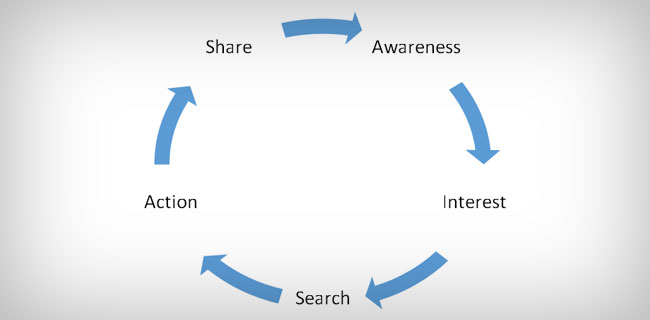
    But the last three-four years have seen another factor come into play which has recast the role of WOM. And I will use the AIDA model of buying behaviour to demonstrate the same. For decades, the model was linear. Catch attention, gain interest, create desire and close the action through sale. Digital changed this model into a never ending circular, self-perpetuating one with two additions. Search and feedback.


    Communication created interest. And thanks to the prevalence of the net, we translate the interest into search. We look for more information. We look for more brands/competition, we look for deals and then we tend to take action. Some may argue that this is not as prevalent in categories like groceries or commodities but I beg to differ. Search is still relevant. May not be for features or differentiation but definitely for bargains and offers. Even for weekly grocery shopping we do have a tendency to check if Big Basket or Jiomart or maybe even Amazon Fresh gives me better discounts or offers. Search is now second mature to us. So much so, that in US Amazon has almost 35% share in Search engines.


    And we do not stop after buying. Social media gave us a habit to share our purchases with our circle of friends. So, while we may want to show off our latest phone purchase or a dress or even a good deal, we are quicker on the draw to complain about a problem or a purchase gone bad. The habit of giving a feedback has also arrived. The habit of sharing our purchase and its experience.


    Therefore, when ecommerce companies ask explicitly for feedback on our purchases the feedback is provided for. Both good and bad. These are then classified as ratings and are posted on the product listing. Now tell me if this isn’t WOM, what is?


    And this is a tool waiting to be exploited. Imagine, you are a new player in the home accessory business. You list on Amazon. You pay to be sponsored on Amazon. Your product quality is good, your delivery is good and your consumer care is excellent. You give discounts to get the first batch of consumers and maybe 5% of these give feedback. Most of it is good, so your rating is close to 5 out of 5. Now, someone who wants to buy a new kitchen rack sees your product, likes the design but is not sure about your brand. He sees your ratings and is impressed. He then checks some of the feedback and sees mostly positive ones. He trusts these. Because these are from buyers. People like him. He may not know them, but they have used the product and are speaking up for it. A positive WOM.


    This positive WOM has now got a new customer. And the cycle continues. More positive feedback will get more new buyers. Will also reassure current buyers. The cycle will keep on expanding and a new brand can get success based on positive feedback. But if the feedback is not positive, the cycle will break. New consumers will be hesitant to buy. All because the feedback was negative. And the brand trial and usage may shrink.


    With the advent of digital Tripadvisor started customer feedback ratings of hotels, restaurants and other tourism related services. It’s success was illustrated just by the fact that many hotels etc would respond to negative feedback with apologies and promise to make the service better. Today Makemytrip and such sites also use this feedback mechanism.


    Feedback is the new avatar of WOM. It can be a strong and powerful tool. Ecommerce companies have realised its potential, travel and tourism companies have too. I think it’s time that brands in other sectors, especially new players, start looking at feedback as a digital WOM that can give them a true differentiation. It’s waiting to be exploited.


    Vikas Mehta is a senior business and marketing strategy consultant and educator. He is based in Dehradun. ‘With Apologies to None at All’ will appear every other Tuesday. His views here are personal


  • Can the tragic death of Cyrus Mistry be a gamechanger in the way we look at driving and safety rules?


    Introducing ‘With Apologies to None at All’, a new fortnightly column by Vikas Mehta


    By Vikas Mehta


    Vikas MehtaI do not believe in coincidences, but last Sunday evening, I had stumbled upon a report by the Ministry of Transport on road accidents in India for the year 2020. As I was glancing through the same, my phone flashed the news of the tragic death of Cyrus Mistry in a road accident, near Mumbai.


    The report was for 2020 and it had some chilling statistics. Even though the report boasted of a decline in road accidents by 18% and a decline of almost 13% in number of people killed in road accidents (not to forget that 2020 was the year of lockdown and restricted travel and road commerce), the absolute numbers were mindblowing. More than 3.66 lakhs reported accidents. More than 1.2 lakhs fatal accidents. More than 55% of the accidents happened on national and state highways and, hold your breath, 65% of accidents happened on stretches of straight roads. The report mentions a mix of traffic rules violations, driving without valid driving license and non-use of safety devices as the main reasons for road accidents.


    This was startling for me. Does a valid licence holder in India, know more than a non-driving licence holder? What extra or more safety precaution does a valid licence holder is aware of, or takes? My contention is actually the opposite. A valid licence holder thinks that s/he is now the king of the road and has the licence to do anything s/he pleases.


    And then came the news that the vehicle of Mr Mistry was over-speeding. That it tried to overtake another vehicle from the wrong side. That the passengers at the back were not wearing seat belts. I am sure that the person driving the vehicle had a valid driving licence. But that person, it seems, was flouting traffic rules and the passengers at the back were not using safety measures. If some of the most distinguished, well-educated people in India were responsible for such oversights then imagine the behaviour of the more common man.


    And now ask yourself. How many road safety rules are you aware of? Did you pass an oral test about driving rules when you got your licence? Was there an oral test at all? Were you given any rule book? Do you know the speed limits on the roads you frequently use? Can you understand road signs?


    Do you know how to use a traffic circle? When to enter it? Do you know that even when you change lanes you should signal the same? Have you heard of a blind spot which even a side rear view mirror cannot cover? What is the rule for joining the traffic from a side road? Do you know that you cannot stop or park your vehicle near a crossing or a turn or a bend in the road?


    These were some of the questions that I faced when I went for my driving tests abroad. In fact, I was not even allowed to take a test till I went through more than 30 driving classes and attended sessions on driving rules. This is after I had been driving in India for more than 12 years. And I was failed five times before I was deemed ready to drive on the roads.


    So, do not feel guilty if you do not know the answers to above questions. Because driving licence in India means testing the ability to drive engaging gears. Often you need not even have that capability. Yes, I have heard that things are changing. Automated tests which have no human interference or influence and which lay a strong emphasis on you understanding rules have started in key cities. But let us not forget that currently most of the drivers on road just know the basics of driving from point A to B. Period. The first step in reducing road accidents is in educating the current drivers about the driving and safety rules.


    Do not also feel guilty because my practical experience shows that even the traffic police are not well versed in traffic rules. They look at some basic violations like overspeeding, wrong side driving, driving under influence of alcohol, helmets, three to a two wheeler, registration of vehicles and maybe one or two more.


    So, in a country where increase in sale of vehicles is a benchmark of economic growth; where the transport ministry is claiming to build 100 kms of roads per day, isn’t it high time that all drivers are given a crash course (pun unintended) in safe driving and driving rules? For, if I am not even aware that what I am doing is wrong, how can I correct it?


    No, I am not talking about public service advertisements. Nor am I talking about some government drive of distributing leaflets or sending SMSs. I think that the communication industry along with the transport ministry must work out a comprehensive road rules and road safety education programme targeting all licence holders. Two-wheeler drivers, private vehicle drivers, heavy vehicle drivers, everyone must be sensitised to road rules. Call in all license holders for a programme. It may be voluntary but if the compliance is low then it needs to be enforced. If they do not attend even after three notices, cancel their licence. In the past, we have very successfully carried out literacy and adult literacy programmes. These were done when technological advances and innovations were nowhere at the level of toady. And these had good measure of success. So, why not a road rules and safety communication programme? The economic loss to the country in terms of road accidents is in billions of dollars per year. If a communication drive can reduce that, if it can reduce fatalities, then it’s not such a crazy idea at all.


    In a country, where we are willing to debate and maybe enforce some sort of population control measures, isn’t it time to think of a traffic safety and traffic rules education plan at a countrywide level? If we are determined to phase out carbon emission vehicles by 2040 then why can’t we look at increasing road safety, increasing awareness of road rules?


    Minister Mr Nitin Gadkari has taken some bold and revolutionary steps in road and surface transport. Is he willing to pick up this gauntlet?


    Vikas Mehta is a senior business and marketing strategy consultant and educator. He is based in Dehradun. This column will appear every other Tuesday. His views here are personal


  • #AdsOnIPL: And the award goes to…


    By Vikas Mehta


    Vikas MehtaSince this was the last week of IPL, my editor suggested that maybe I should decide on the Top 4 ads of the season. Like the Top 4 play-off teams. But with IPL being unusual in so many respects, I decided to do something unusual too. What if we had an IPL ads awards? Not just the best four, but look at many more. So, here is a list of the categories and the winners.


    Oh, before I forget, these awards are sponsored by MF, as yeh bilkul sahi nahin hai.


    The Paisa Vasool Entertainment Award is a toss-up between the Ravi Shastri Cred ad and the Swiggy Instamart Dolly Aa Rahi Hai ad.


    While at Swiggy Instamart we cannot forget Dunzo. It gets the award in the Prophet of Doom category for announcing the demise of refrigerators in the midst of summer.


    Spotify gets the award in the Saannu Ki category for using music to blank out all the worldly debates.


    The Hum Nahin Sudherenge Award goes to Jio for its song and dance routine by cricket stars season after season.


    Jio also wins the Can’t Act for Nuts, Can’t Dance for Nuts Award for forcing cricketers to dance and act year after year.


    The undisputed winner of the Cooked Up Nostalgia Award goes to Dream 11 Ashwin ad.


    Pepsi Salman Khan double role ad is the winner of the Faulty Time Machine category.


    Pepsi is the winner again, in the Tag Line with an Asterisk category. It was the sole entry but the 7 point, 50 word explanation of the asterisk in the last three seconds of the ad made it a clear winner.


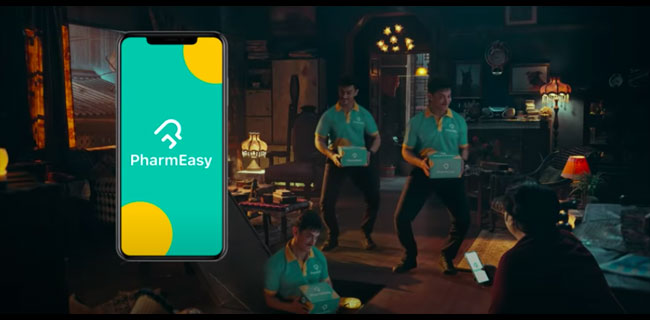
    The Good from Far but Far from Good Award is again a toss-up. This time between the Kareena Kapoor MedNet and Aamir Khan PharmEasy ads.


    The MedNet ad also won the Jab We Net category award, courtesy the Railways.


    The Indigo paint ad featuring Dhoni was the clear winner in the No Animal was Harmed while Shooting an Ad category, as the only people who suffered were human beings like us.


    Bas Naam hi Kaafi Hai Award goes to all ads featuring Dhoni.


    PhonePe Aamir and Aalia ads get Police Story Indian version award.


    Meesho ads are the recipient of the Wah, Kya Scene Hai award.


    Tata Neu is the winner of the It Happens Only in India award for raising hopes of spending on a honeymoon by buying a sui (needle).


    The Study, Study, More Study Award goes to Byju’s + Aakash classes and the Money, Money, More Money Award goes to all fintech companies except PayTM.


    PayTM gets the Neend Se Jaago Award for explaining the concept of UPI five years after its launch.


    Vimal, Kamla Pasand and Budweiser get the Cock a Snook Award for neatly bypassing rules and regulatory bodies.


    Jiomart gets the impossible is nothing award for letting Ranveer Singh be a normal person.


    A special award to Aamir Khan in the category, Any Publicity is Good Publicity, for asking Rashid Khan about the Eid spread that Rashid made for his teammates. Not an ad? You are wrong. Am sure his next release is round the corner. And as I write this, I see a trailer for his new film releasing in August. The interview was a quid pro quo for screening the trailer. Self-promotion.


    And finally, if you do see this last award below being mentioned, then it means my editor does not read my columns.


    The biggest award of the season, the KLPD Award goes to Tata Neu for having a great set of teasers but then the revelation being like a hole in the sui.


    Do you have any more categories to suggest?


    Disclaimer: Tsk Tsk Tsk. All of you with dirty minds….KLPD stands for Kaise Log Proposition Dubate hain


    Vikas Mehta is a senior strategic advisor and educator based in Dehradun. This is the second season that he’s been reviewing ads around the IPL coverage. His views here are personal.


  • The curious case of self-regulation


    By Vikas Mehta


    Vikas MehtaThe Budweiser ad aired on the IPL last week is symptomatic of the hypocrisy that is so evident in the industry. On the face of it, there is a blanket ban on alcohol and gutkha products. Yet, both the categories find enough loopholes to beat the ban. Both get away with surrogate advertising. ‘We are not about guthka but about silver coated elaichi.’ ‘ We are not about alcohol but about playing cards or water.’ And to add insult to the injury, stars like Akshay Kumar and Amitabh Bachchan, who at the drop of a hat shout about nationalism and patriotism, find nothing morally wrong in promoting such products. When they are criticised and trolled, they profess ignorance about such surrogate advertising, apologise, make some grand gestures about cancelling contract or donating the earnings to a social cause and life continues as before. The ads continue unashamedly.


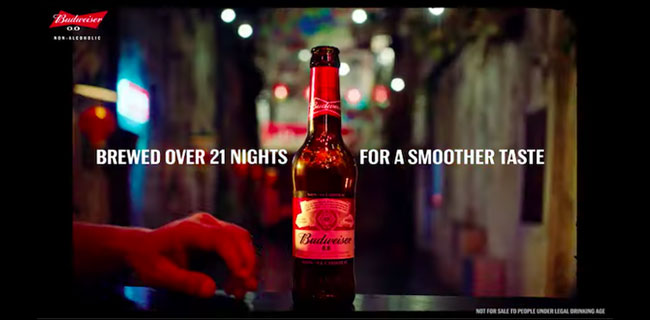
    But the Budweiser ad tops it all. It does not even pretend to be a surrogate. It shows what definitely looks like a beer bottle. It talks about being brewed over nights. And then to make sure there is no confusion that the product is a beer, it talks about brewed over 21 nights for a smoother taste. How brazen can one get? It’s almost like teasing the regulatory bodies. And what will they do?


    ASCI will wait for someone to complain. Then issue a showcause notice. If the advertiser does not respond within a few weeks, it will write to the advertiser that the ad violates its code of conduct and they should desist from airing the ad. In the meanwhile, IPL would have not only finished but the advertiser would have anyways stopped airing the ads. Come to think of it, Budweiser has already stopped the ads. It was a neat ambush. All are happy. The advertiser has got exposure in IPL. ASCI will have done everything by the book and can claim that they stopped the ad.


    But soon enough this will become inspiration for another advertiser and the whole story will be repeated. This self-regulation is a joke. We need fines, bans. Some tough measures. But what can one expect from a body whose rules do not allow it to rule on government or political ads. Mind you, these are the largest source of revenue for press media. But ASCI constitution does not allow it to question political ads or government ads. So, how can we expect anything tough from ASCI? The self-regulation is a hypocrisy so that no law-enforcing body need interfere. The industry continues to make merry. This charade, hypocrisy has to be stopped. Either ASCI gets a mandate to take tough measures, or remove the loopholes or let an outside body with enough powers step in.


    The silver lining this week was the first decent Jio ad I have seen. And it was for Jiomart. A very homely and not over-the-top, Ranveer showcases the simple features of Jiomart along with Deepika. Everyday sasta, no minimum order. The two ads make two simple points. One, is the power of storytelling. Single-minded benefit in each ad makes it episodic and entertaining. Two, how star power can be harnessed in an effective way. Ranveer, has a screen persona which is outlandish and over the top. But as a husband one can expect him to be a normal, doting husband. And that’s exactly how he comes across.

    For me, the ad of the week was Cred. There have been lot of stories and tales about Ravi Shastri and his extracurricular habits. Cred used these brilliantly to build a narrative about Shastri. What I particularly like was that they could convince Shastri to portray his oft-debated, but never openly discussed persona in the ad. It was hugely entertaining and did the job for the brand also very well.

    https://youtu.be/vLHpfulLcUE

    So, as we have the four surprise play-off teams in competition, we have had some surprising ads this week. Which were your Top 4 ads of IPL 2022? Compare your notes with me. Next week.


    Vikas Mehta is a senior marketing and business strategist and educator. This is the second IPL season where he has been reviewing for MxMIndia. His views here are personal.

  • Medicines: Quick delivery? Naah!


    By Vikas Mehta


    Vikas MehtaI have been constantly writing about this year’s IPL being unusual. In many ways. And now when we are reaching the business end of the league, it’s getting obvious that the three most unfancied teams are set to qualify for the playoffs. Paying an ode to the unusual season, this column is also going to be unusual. This time I am taking up one category campaign and talking about it extensively.


    In the midst of edutech, fintech, transport aggregators, there is also the medicine aggregators. And some brands like Pharmeasy and Pharmeasy have advertised heavily on IPL. Both have used celebrities. Both have done multiple ads. Both promise multiple benefits. And both, over-promise.


    When anyone needs a medicine, usually it’s because there is an urgent need. The delivery needs to be in minutes. But my experience with both the apps show that the usual delivery time is anything between one to four days. Maybe because I am in a small town therefore the medicine logistics is still to be sorted out. But isn’t that an irony. A small town should be able to deliver much faster. Netmeds, I have walked into Reliance Smart stores with prescription, which have a small Netmeds dedicated pharmacy area, and the standard answer is that they will check and call me back. And call back is after a few hours which confirms that the medicine will take another 12-24 hours. Both times that I tried Netmeds, by the time the call came, I had already bought the medicines from an offline pharmacy. And of course the app showed at least two to three days to deliver.


    Therefore, when I see the Kareena Kapoor ads which talk about quick delivery, the brand loses all credibility. Ditto with Pharmeasy as they clearly say same day delivery. Maybe they deliver cosmetics and other non-medicine products fast. But then are they just a Swiggy Instamart or Dunzo? They need to be Swiggy Instamart and Dunzo in medicines or else stop making these claims.


    The Kareena Kapoor train ads go on to show other benefits like quality or range. Again, I am not sure if one needs to highlight these benefits for medicines. The app claims to sell medicines against prescriptions. So, do we assume that quality of the prescribed medicines is a suspect? Range is more confusing. Yes, generic drugs can be available but how many of us actually know about it or are willing to even order a generic and ignore the doctor’s prescribed brand? I suspect they are pushing more of the cosmetics or supplements or tonics rather than the prescribed medicines.


    Pharmeasy with Aamir Khan on the other hand has chosen some relevant benefits. Ordering medical equipment like sugar meter or even organising for home medical tests. These definitely are relevant and benefits that matter to the category. And I quite liked the exaggeration execution of three Khans belabouring each point.


    Ultimately, both these brands cannot overcome the lure of discounts. Medicines, by Indian standards are definitely expensive. So double digit discounts work. And the lure of a minimum discount always is music to ears. Specially, when one is on long-term medication for ailments like diabetes, cholesterol, arthritis etc. These medicines are expensive, they are required on a regular basis and most importantly can be ordered in advance, keeping two-three days delivery time in mind. So discounts do play an important role in both the brand communication.


    As a marketer, I have always wondered at multi0benefit communication. Does it really help? Do the consumer remember all benefits? The classical theory says that let one benefit be emphasised so that it sticks. And can be owned. My thinking is that well executed multi benefits work if they are relevant. The target consumer picks out the benefit that he needs or that matters to him and that sticks. So, if we take Pharmeasy, someone who needs to buy a medical equipment or needs to do tests will remember the brand. But the irrelevancy of quality or range for medicines, makes me doubtful about Netmeds communication. And discount is almost like a must. It is a category given without which no brand will survive. In fact, discount is like a blind spot. Its presence is almost like a reassurance but its absence will be most glaring. As for speed of delivery, the brands need to either improve their delivery or not talk about it.


    Episodical ads, which seem to be like a continuing story narrative, always create interest. And using a celebrity to anchor it is a good idea if the celebrity becomes an integral part of the narrative. The Netmeds ads with Kareena Kapoor reprise her role in Jab We Met. So all the episodes have good empathy. Pharmeasy, on the other hand is not episodical but Aamir lends it a nice ethereal quality which again piques our interest.


    As I sign off this week’s column, I am aghast at seeing the new Budweiser ad. But in the spirit of being unusual, let me leave it at that. More about it, next week.


  • Vikas Mehta | #AdsOnIPL: Why to make a song and dance about it?

    Vikas MehtaBy Vikas Mehta


    As a kid when radio was the primary source of entertainment, news and advertisements, ads would resort to jingles to be memorable. Memorable was the keyword but there was another reason for the same. In a short jingle one could mention two-three brand benefits, sometimes more. Take Nirma for example. It was doodh ki safedi, rangeen kapda, sabki pasand, dher saari jhaag, Or Vicco Turmeric and many more. Of course there were some memorable ads that had singular refrain, Vicks; gale mein khich khich or Lifebuoy hai jahan tandoorasti hai wahan.


    With the advent of TV, the songs were accentuated with dances. The Zupee ad exemplifies this. An old song tune which resonates to Zupee has been remixed and there is a whole lot of song and dance added to it. Thankfully choreographed and executed by professional dancers.


    Thankful because, with the advent of film and sports celebrities we started having a cocktail; song, dance and celebrity. IPL of course started a new trend wherein sponsor brands could use many team players. Kingfisher was the pioneer of this strategy with the Ooh la la la leo campaign featuring three-four main players from almost all teams singing and dancing to the Kingfisher jingle, rather awkwardly. And then Jio took over doing exactly the same with dhan dhana dhan campaign. It does lead to some hilarious moments with sports celebrities trying their best to emote and show off their two left foot.


    So, I was very thankful when Meesho, having sponsored four IPL teams did not go the song and dance route. They have still used the top three-four players who are trying their best to act and say “arre wah”. And the benefit is also straightforward and simple. Unseen variety, unheard prices. I am not a big fan of using celebrities or song and dance as to me it is a reflection of lazy strategy, indeed, no strategy at all. But Meesho has done a better job than the above mentioned brands.


    Talking of song, Tata Neu sticks on to its lure of Neu pass coins or rewards. With a song. Of course the song very cleverly showcases the mindboggling range that the Neu app offers. From a lotta to a latte to a shoe to an air ticket to a laptop and so on. But the product, the App, still leaves me in tangles.


    I had spoken about Swiggy Instamart recently, lauding their quick delivery premise without getting into specifics of 10 minutes or 19 minutes, but still owning quick delivery. Dunzo has taken the route of freshness to highlight quick delivery. The execution though was not at all convincing. After all a fridge is used to do much more than just keep groceries fresh. And then it could also not escape the lure of mentioning 19 minutes. If you have it flaunt it.


    There is also no escape from celebrities. Just when one thought that all sports celebrities have been exhausted in the use of fantasy games brands, the quintessential Shah Rukh Khan pops up. This time for a game site called A23. This ad though is quite a change and relief from other celebrity ads. Some iconic dialogues of Mr Khan’s movies are used to illustrate that one can meet and play with many interesting people. A debateable, or at least a thought provoking angle, especially when online games are seen to make people more anti social and introvert.


    Talking about Mr Khan, did you see his Byju’s ad which focusses on doubt clearing? We were till now focussing on the pressure on students to deliver. But now the pressure shifts onto the Byju’s teachers. Looks like they have to be on call all the time to clear the student’s doubt. Phew! Never thought I will see the day when teachers will be available on demand too. We do live in interesting times.