Tag: Star India

  • NDTV’s Dr Prannoy Roy to be honoured at RedInk Awards in Mumbai

    By A Correspondent


    Dr Prannoy Roy, Executive Co-Chairman of NDTV Group, has been awarded the Mumbai Press Club RedInk Award 2015 for Lifetime Achievement for Excellence in Journalism for his consistent and pioneering contribution to news television in India. Dr Roy will be honoured for his service to journalism at a glittering ceremony on Thursday, 30th April in Mumbai at the Jamshed Bhaba Auditorium, NCPA, by Chief Minister of Maharashtra Devendra Fadnavis.


    Dr Roy along with his wife and journalist Radhika Roy in 1988, were the first to set up a television news production company called New Delhi Television, now called NDTV. In later years, Dr Roy made a mark for his incisive and pioneering coverage of election news and changed the way people consumed TV news with his ground-breaking programmes such as ‘The News Tonight’ and ‘The World This Week’. After years of producing the news for Star News, Dr Roy launched his own broadcasting network with NDTV 24X7, NDTV India and other channels in 2003.


    Dr Prannoy Roy was chosen for the RedInk Lifetime Achievement Award from a shortlist of senior editors by a survey among 200 journalists all over India, and a final consideration by the Managing Committee of the Mumbai Press Club. RedInk Lifetime Achievement award winners in previous years include the late Vinod Mehta, Kuldip Nayar, N Ram, and Mrinal Pande.


    Judging for the RedInk Awards, which includes as many as 10 categories have just been completed, and as many as 24 journalists who have produced outstanding and impactful stories in calendar 2014 will also receive awards along with Dr Prannoy Roy on 30 April at the NCPA. The judging process proved to be a herculean task with over 800 entries in the print/online category and nearly 250 stories from television journalists. Each of the categories 10 categories had a dedicated jury of senior persons with domain knowledge assigned to judge the entries. A special curator was also assigned to sift the large number of entries in each section and guide the judges.


    The judging process brought in well-known names such as Harsh Mariwala, chairman of Marico, for the Business category, Dr Kiran Shaw Mazumdar, chairperson of Biocon, for the Health & Wellness category, Justice Kode and former Mumbai Police commissioner M.N. Singh for the crime category and Sudanshu Vats, CEO of Viacom18 for the ‘Entertainment & Lifestyle’ stories.


    Star India is the Presenting Partner for the Mumbai Press Club RedInk Awards for Excellence in Journalism 2015. Some of the awards partners includes Aditya Birla Group, Yes Bank, Indiabulls Housing, Glenmark Pharmaceuticals, Zee Entertainment, Eros International, SevenHills Hospitals and JSW Steel.


  • With World Cup viewership worse than 2011 edition, Star misses Rs 850-crore ad target

    By Ravi Teja Sharma


    Much like the national cricket team, Star India’s World Cup performance doesn’t seem to have reached the same level that it did in the 2011 outing. Overall viewership percentage, reach and time spent are lower than four years ago. As a result, Star has missed its World Cup target, much like the Indian team, which went down to Australia in the semi-final. Sure, India did better than initially expected to win six games on the trot but that wasn’t enough in the end.


    According to multiple industry sources, Star India had an internal revenue target of Rs 850 crore from advertising sales during the World Cup but several media agencies said it could barely earn Rs 600 crore. The time spent has declined by 19%.


    Apart from the team not going the distance, they also attributed the shortfall to matches being played in Australia and New Zealand and some very early starts that led to lower ratings. Had India made it to the final, close to Rs 75 crore would have been added to Star’s revenue figures, said media planners.


    Star had about 6,000 seconds in each of the World Cup matches this year to sell to advertisers.


    According to AdEx, which provides an estimate of the total value of advertising on television, print and radio, Star sold an average of 4,500 seconds per India match. In the 40 non-India matches, it sold close to 2,600 seconds per match. According to industry sources, Star charged an average rate of around Rs 5 lakh per 10 seconds for India matches and Rs 1.5-1.75 lakh per 10 seconds for non-India matches.


    It did manage to sell some spots during marquee India games at very high rates — Rs 25 lakh per 10 seconds for the India-Pakistan match and Rs 15 lakh per 10 seconds for the semi-final against Australia.


    “Because of the timings, people knew ratings would be lower than before when the tournament was played in India,” said a media planner, who didn’t want to be named. “This World Cup was mostly about the six India games that did well in terms of ratings and viewership.”


    635 MILLION WATCHED WC

    The India-Australia match garnered the most impressive rating among all India matches at 10.4 while the India-Pakistan clash got a rating of 9.3. According to Star, 305 million people (TAM Panel CS4+ extrapolated to the universe using a standard conversion factor) watched the India-Australia semi-final match compared with the 288 million who watched the India-Pakistan one. According to Star, a total of 635 million people watched the World Cup this year.


    The last World Cup in 2011 was held in India and matches were played at local prime time. That led to much higher ratings during India as well as non-India matches and Star is reported to have made upwards of Rs 800 crore from ad sales in that edition. While the average rating for the 2011 World Cup was 3.3, this year it was 1.8. For the India matches, ratings were higher in both years — 13.05 in 2011 versus 6.9 this year (excluding the ratings for the final, the data for which will be available only later this week). Star did not respond to questions sent.


    The semi-final this year between India and Australia got the highest rating among all India matches at 10.4 but that pales in comparison with the India-Pakistan semi-final in 2011 — 21.2. The final in 2011 between India and Sri Lanka, which India won, got a rating of 23.6. Nevertheless, Star has done well to generate the revenue it has, said the head of an agency, not wanting to be named. “Getting close to Rs 600 crore from ad sales in this World Cup considering the constraints is good,” the person said.


    SPOTS ON REGIONAL FEEDS

    Star opened up more opportunities for smaller advertisers this year by selling spots on regional feeds — Tamil, Malayalam, Kannada and Bengali, apart from Hindi and English. Media planners said this and before-and-after match programming worked well for Star. Hindi and regional feeds contributed 77% of the overall viewership, according to Star India. In absolute numbers, total viewers rose 14% to 205 million from 179.9 million in 2011. But considering that the total television viewing universe in India has become bigger in the past four years, the World Cup was seen by around 65% compared with 84% in 2011.


    Star said it got 50% more advertisers this World Cup compared with the previous edition. This included brands such as Maruti, Airtel, Marico, Raymond and Nestle, among others, that signed up at the beginning of the tournament and others such as Amazon, Snapdeal, Dell, Panasonic, Toyota, Voltas and OLX that came in for the semi-finals and finals. Digital too saw high traction during the World Cup with a cumulative viewership of around 87 million on Starsports. com and its new Hotstar app through the tournament. The India-Pakistan match got over 25 million views on Star’s digital platforms while the India-Australia semi-final got 50 million views, according to the broadcaster.


    Innovations such as feeds in regional languages, the first global telecast of cricket in 4K and drone cameras above the stadiums came at a cost. According to people aware of this, the production costs rose to Rs 170 crore from Rs 65 crore in 2011 because of the innovations and the matches being played in Australia and New Zealand, further denting the margins.


    Source:The Economic Times

    Copyright © 2015, Bennett, Coleman & Co. Ltd. All Rights Reserved

    Licensed to republish


  • Star India’s Sanjay Gupta shares broadcast mantras at FICCI 2015

    By A Correspondent


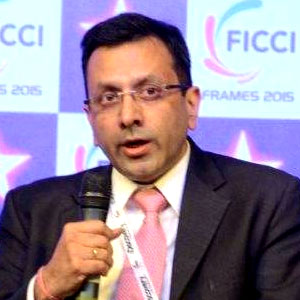
    The broadcast subscription side of Media & Entertainment Industry alone has the potential to grow ten-fold to Rs 300,000 crore a year, provided it moves from a pre-liberalization mindset of price control to free market, addressed Sanjay Gupta, COO, Star India, to an audience of M&E professionals at FICCI Frames 2015. He was speaking at ‘Vision 2020 – laying a transformative roadmap for Indian Broadcasting’ with other leaders from the M&E industry and MIB and TRAI in a thought-provoking discussion moderated by celebrated media writer Vanita Kohli Khandekar.


    Even as the FICCI-KPMG Indian Media & Entertainment Industry Report 2015 revealed that the total industry had grown to Rs. 102,600 crore in calendar year 2014, Gupta said that the true value of the industry is far from being unlocked.


    “All broadcasters are creating as much as 100,000 hours of fresh content each year, engaging 700 million consumers in this country, which is not a small number,” Gupta said, “but what are people paying for consuming all of this content? Around Rs 30,000 crores a year. See how that compares to a simple market like soaps and detergents, for which people are paying Rs. 100,000 crore a year in India!”


    He raised the question on how big this industry can be: “I believe it (broadcast subscription) can be Rs. 300,000 crore, instead of Rs. 30,000 crore. How do we get this to happen?”


    “The fundamental issue is that we have regulated this industry from a very wrong perspective.” He brought in the example of Telecom industry which has shown dramatic growth in the last 10 years – from 40 million subscribers to 900 million subscribers and from an $8Bn to a $100Bn – on the back of de-regulation and players themselves taking measures to benefit consumers.


    Citing glaring and illogical price disparities in media, Gupta said: “We charge Rs.10 for Star Plus, which caters to a very large consumer base; for Star World, where only a small set of consumers watch English content, the price is Rs 2.5!  It is ironic that in India the pricing for premium content is less. Another example – in Kerala, we had priced Asianet, the No.1 channel in that market, at Rs. 5.35 and the regulator asked us to take out that extra 0.35 paise! I don’t know what the right price should be, but let the market determine that.”


    Explaining how pricing is still genre-based and not driven by nature of content, he said: “In sports, despite the big difference in costs between World Cup cricket, which possibly everyone is watching, and UFC – which many would not have even heard of – the pricing remains the same!”


  • Murdoch’s empire makes 2 buys in India


    By A Correspondent


    There were film magazines and film magazines and film magazines. And then there was Screen. A brand born just four years after the country’s independence earned its rep of being a serious film trade publication.


    While Filmfare (and later Star & Style, Cine Blitz and Stardust) were built in the fanzine model, Screen was meant for people in the business of cinema or for serious consumers of film information.


    There were some trade publications like ‘Trade Guide’ or ‘Film Information’ or ‘Box Office’, but Screen was bigger. Editors like BK Karanjia and later years Udaya Tara Nayar and Bhawana Somaaya.


    But over the years, a decision to go in for softer content plus the concentration on film coverage in the dailies ensured that the popularity of Screen eroded, even as the respect for the weekly continued.


    Realising the Indian Express group launched the Screen awards and also went in for a digital edition. However, competition on the digital medium was stiff, as newer brands – with no ‘Established in 1951’ pedigree – gaining popularity amongst netizens.


    Albeit a brief period when Screen Awards were aired on Colors, the Express group and Star India have had a long and healthy relationship. In early 2014, Screen Awards moved to Life OK and while it was touted as a business decision, industry insiders had then said the reason why this was done was a bigger pact between Express and Star. But that didn’t happen immediately even as there were rumours that the Indian Express was looking at selling Screen at a valuation in the region of Rs 30 crore.


    On Monday, March 9, evening, Star India announced the acquisition to the media in general with exclusives to some favoured publications. As part of the transaction, Star will get exclusive ownership of the “Screen” brand franchise including all archival material and transfer of key employees. “The Screen acquisition will yield huge benefits for Star India and for hotstar our digital platform,” said Uday Shankar, CEO of Star India. “We couldn’t be more excited.”


    “Screen is a strong and reputable franchise and gives us access to the entertainment editorial suite and the tinsel world, where news that shapes trends is made by film stars, directors and producers,” Mr Shankar said in the communique, adding “The acquisition of Screen will allow us to strengthen and expand the content brand online while taking the awards platform to the next level. There are strong synergies and the combination of the quality content and awards franchise with Star’s presence across television and digital platforms is strategic and scalable.”


    “We are delighted to enter into a transaction with Star India. Screen is one of the most reputed film and entertainment properties in the country. We have built this business with lot of passion and are confident that Star will nurture it and take it to greater heights” said Viveck Goenka, Chairman and Managing Director the Indian Express Group.


    Speaking on the transaction George Varghese, CEO Indian Express said “Screen is one of our leading properties on the entertainment side of the business. Our decision was driven by our belief in Star’s focus to grow this business, which we believe would translate into adding value for all stakeholders including employees.”


    The acquisition will integrate the Screen awards property with Star, besides adding a consumer brand to the network’s digital business. The acquisition makes Star poised to become steward of the great Screen franchise that the Indian Express Group has built over the past many years. Star is uniquely positioned to preserve and build the market presence of Screen through its shared values and complementary resources. This acquisition will enable Star to expand the awards franchise and build the content brand to the next level by taking it online.


    Industry analysts say the Rs 30 crore valuation may seem high for the weekly print publication or just the brand, but add the awards to the bouquet and it’s a steal given the yearly fee that Star would be required to pay the Express group for the telecast of the awards. Another analyst who didn’t want to be quoted said that while Star could have set up its own awards, by buying the Screen brand name, it ensures that no other television network can take advantage of the Screen equity.


    Amongst film awards, while the Filmfare Awards are considered to be the #1 and most respected and sought after awards, Screen comes second followed by Zee Cine and IIFA and a slew of others. Stardust, which was until last year, the lowest in the ladder appears to have climbed the pecking order given that it has received a shot in the arm post the association with Colors.


    Star India is a fully owned subsidiary of 21st Century Fox which is owned by Rupert Murdoch. After the split in businesses recently, the news operations come under News Corp, which in turn has acquired VCCircle, a smartly packaged digital news site dealing in private equity, venture capital and start-ups. VC Circle also runs successful conferences and training programmes. On Monday, News Corp announced the signing of a definitive agreement to acquire the VCCircle Network, which includes VCCircle.com, Techcircle.in, VCCEdge, VCCircle Training, in addition to a premium-content driven conference business. The terms of the acquisition, which is expected to close in this month, were not disclosed.


    “This important investment is a sign of our faith in India’s future and our enthusiasm for working with and building up emerging talents in the country,” said News Corp Chief Executive Robert Thomson. “India is an increasingly meaningful part of our portfolio, which is itself increasingly digital and global.”


    “For the past decade, we have built a strong franchise with proprietary data, information, content, and networking capabilities around India’s digital business world,” said P V Sahad, Founder and CEO of VCCircle Network. “Being a part of News Corp will now allow us to accelerate our already aggressive growth plans.”


    VCCircle Network is owned by Mosaic Media Ventures Pvt Ltd and has about 100 employees across India, with its headquarters in Noida. Mr Sahad, and the management group, will become part of News Corp’s India team. Mr Sahad will report to News Corp Senior Vice President, Strategy, Raju Narisetti (formerly editor of ‘Mint’).


    The VCCircle acquisition builds on News Corp’s recent digital investments in India. In November, News Corp acquired a 25% stake in PropTiger.com, India’s leading online residential real estate platform. In December, News Corp acquired BigDecisions.com, which aims to help Indian consumers make smarter financial decisions through interactive, decision-making tools powered by sophisticated algorithms and data. News Corp also has a presence across India through its Dow Jones, Wall Street Journal and HarperCollins Publishers businesses.


    The question which everyone seems to be asking is what next will the Murdoch empire target for acquisition? Could it be more non-news publications with a strong digital play? Guess only time will tell. We’ll bring you a ringside view and some unbiased analyses.
     

  • More ads go digital as ICC World Cup action shifts to sites, apps

    By Vijaya Rathore & Ravi Teja Sharma


    The morning and working hour timings of matches in the ongoing cricket World Cup have made millions of sport lovers follow the action on dedicated websites, apps and social media, prompting several big and small brands to latch on to digital advertising like never before.


    Brands across industries, including Lufthansa, Accenture, Tissot and Hero are looking to catch the on-the-move consumer on a variety of platforms including official broadcaster Star India’s starsports.com, social media sites, cricket portals and apps such as Hotstar.


    “Some of our clients have looked at digital very seriously. Hero, for instance, has bet heavily on digital and it is really doing well for the brand,” said Praseed Prasad, national director for digital trading at media buying firm GroupM India. Another client of his, Pepsi Lays, has chosen to do more on the digital side and only advertise on television during select matches in the World Cup this year.


    A spokesperson for Star India says they have seen an exponential growth in consumption online. This World Cup, Star has got around 35-40 advertisers, including Lufthansa, Accenture, CarTrade, Tissot and Hero for its online platforms, with about 20% of those exclusively on the digital medium. “Revenues from digital will be significant this time,” the person said.


    Hero is the co-presenting sponsor of the World Cup 2015 digital. “The medium has seen exponential growth in terms of traffic,” a Hero MotoCorp spokesperson said. It is the lead sponsor on the property with branding/inventory in terms of video inventory, logo presence, banner ads, special sections such as replay and match insights, and has also launched a dedicated app, Hero Super Skipper, the spokesperson said. “This association is a strategic move, owing to a perceptible shift in viewership patterns in favour of digital medium.” The India-Pakistan match at the beginning of the tournament, for example, got over 25 million views on Star’s digital platforms, the highest in the world for a single game.


    Firms such as DishTV have created fresh campaigns around the World Cup. “Most digital campaigns are either in the form of graphics or extension of TV campaigns but we created one especially for the digital medium and that has helped us reach the young consumers, the millennials,” said Salil Kapoor, COO of DishTV.


    He said the interactive nature of the digital space helps consumers to make purchases by routing them to the firm’s call centres if they wish to. Also, a television ad campaign costs at least 3-4 times more than a digital campaign, Kapoor said. DishTV has shot a campaign with brand ambassador Shah Rukh Khan to promote their HD channels during this world cup.


    Digital adoption by brands is on the rise with large companies now allocating significant spends to this medium. “From about 2-3% of a large company’s marketing budget, digital is now in double digits,” says Ahmed Naqvi, CEO at digital and social media agency Gozoop.


    Source:The Economic Times

    Copyright © 2015, Bennett, Coleman & Co. Ltd.

    All Rights Reserved, Licensed to republish


  • Star twinkles as India shines


    By Ravi Teja Sharma & Ratna Bhushan


    Star India, official broadcaster of the ongoing cricket World Cup, has lost no time in hiking ad rates for the tournament even further, riding on the two big wins India recorded and all-time high television viewership of the India-Pakistan match. Rates have shot up by almost 25-30% over the past two days, and are in the range of Rs 18 lakh to Rs 20 lakh for a 10-second ad spot, up from close to Rs 12 lakh, said two media buyers requesting anonymity.


    Sam Balsara, chairman and managing director at media buying group Madison World said it was usual for broadcasters to up rates on highly watched shows. “India’s performance has been unexpectedly good so far. So its natural to hike rates for any broadcaster,” he said. Media planners say rates may peak that of the last World Cup which India won.


    Anita Nayyar

    “The India show gives India more muscle to stick to its rates. Even if advertisers think the rates are too steep, they don’t have a choice,” said a marketing head of a top foods firm. “When the World Cup started, there was scepticism. In the last two matches India has done phenomenally well giving a lot of philip to the tournament. With viewership increasing, Star is increasing rates,” said Anita Nayyar, CEO of Havas Media, India and South Asia. She said there are clients who are waiting for quarters, semi-finals and finals to advertise as they know that people will watch these games irrespective of the Indian cricket team’s presence in the stages.


    Media buying firms say now even unconventional advertisers are looking to buy one-off spots, even at a premium, with India almost certain to reach the final league stages. Without specifying the rates, a Star India spokesperson said: “The pricing for the remaining matches is dynamic and depends on the inventory left. Most brands are interested in buying spots for a group of matches, therefore single game spots are sold at a premium.”


    Star claims it has over 100 advertisers on the tournament. “The final stage matches will definitely get Star a higher rate. With India doing well, they will get their desired rates for these few matches,” says Vinit Karnik, national director, sports and live events, at GroupM ESP.


    The India-Pakistan World Cup thriller on February 15 was watched by 288 million people in India – the most watched event in the country since the last World Cup final, according to data provided by World Cup Star India. In comparison, on the opening day of the World Cup, the Australia-England match was viewed by over 100 million people. The match, which India won convincingly by 76 runs, got a rating of 14.8 TVR among male viewers.


    With Star launching commentary on its regional channels, about 76% of the total viewership during the match came from regional and Hindi while the rest came from English, said Star. The India-Pakistan match had also created history on the digital front with Star India’s digital platforms garnering over 25 million views, the highest in the world for a single game.


    Source:The Economic Times

    Copyright © 2015, Bennett, Coleman & Co. Ltd.

    All Rights Reserved, Licensed to republish


  • Star India acquires broadcast biz of Maa TV Network

    By A Correspondent


    Star India and Maa Television Network have announced a deal under which Star India will acquire the broadcast business of Maa Television Network. This opens up an opportunity for major creative content innovation in the Telugu television market.


    The acquisition would give Star India access to the highly attractive Telugu TV market and a market where Star has a very limited presence till date. Maa Television Network is a leading broadcast network in Telugu language content and has a strong trajectory of growth driven by fiction content and movies.


    The strategic deal will come into effect upon complying with the necessary regulatory formalities and the broadcast business of Maa TV will be integrated with the business of Star India, once the policies and procedures in the acquired broadcast business of Maa TV are aligned with those at Star India.


    Uday Shankar

    “The Telugu market is an important market however the pace of innovation has been slow. We are keen to change this by acquiring a local presence and fundamentally changing the content quality paradigm. We were very impressed by the solid creative core and quality and depth of the management team at Maa Television Network. In a short span of time they have built a leading business which is poised to take the next leap. The acquisition fills a vital gap in our portfolio allowing our advertisers targeted access to a critical market,” said Uday Shankar, CEO, Star India.


    “The strategic decision to align with Star India and be part of a global media group will be a big leap in our efforts to take the Maa TV Network to the next level and strengthen the positioning of Maa brand in the entertainment industry. Star’s leadership in Indian media and entertainment industry and its parent company’s proven expertise in media business on global scale will enable Maa to offer more innovative, rich and differentiated entertainment content to the Telugu Diaspora worldwide,” said Nimmagadda Prasad, Chairman, Maa Television Network.


  • Is the form of Dhoni & Co keeping advertisers at bay?


    By A Correspondent


    Is the Indian team’s cricketing form a worry for advertisers? We spoke to a few sports marketing specialists and this is their analysis: While the likelihood of India entering the quarter-finals is very high,    let’s take a close at look at the India fixtures and the time at which each of them is going to be aired (all timings in Indian Standard Time).


    Sun, Feb 15 v/s Pakistan, 9am

    Sun, Feb 22 v/s South Africa, 9am

    Sat, Feb 28, v/s UAE, 12 noon

    Fri, Mar 06  v/s West Indies, 12 noon

    Tue, Mar 10  v/s Ireland, 6.30am

    Sat, Mar 14  v/s Zimbabwe, 6.30am


    The first two matches will have much bearing on how India fares in the Cup. While the UAE and Ireland matches are India’s unless there is a major upset, the West Indies and Zimbabwe could not be taken too lightly. The last two matches start at 6.30am on Tuesday and Saturday so could see a beating in viewership and Feb 28 is Budget Day and will clash with Finance Arun Jaitley’s speech.


    And this is how the last seven fixtures are scheduled:

    Quarter-finals 1-3 March 18-20, 9am

    Quarter-final 4 March 21, 6.30am

    Semi-final 1 March 24, 6.30am

    Semi-final 2 March 26, 9am

    Final: March 29, 9am


    The likelihood of India reaching the quarter-finals is a near-certainty unless there are some major upsets, the likes of which we have seen in the group. But India has to play really badly to make way for the UAE, Ireland and Zimbabwe in the final four.


    Is India in really bad form? Could the performance of Dhoni & Co in the recent past have been caused due to some experimenting with the mix of the team?


    So what explains the lukewarm interest in the Cup? That’s more because every advertiser and media agency wants to beat the broadcaster on ad rates, which some advertisers told us was on the higher side. The later you sign up, the better the negotiations.


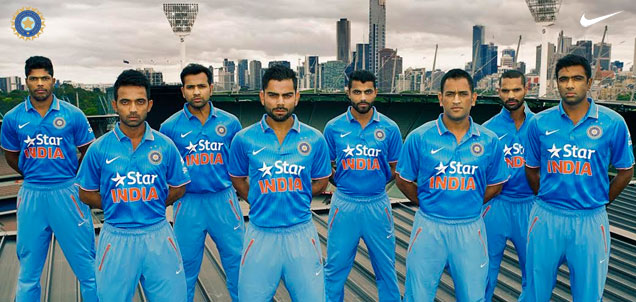
    Image: Nike publicity material of the unveiling of tge One Day International kit that the Indian Cricket team was to starting January 18 in Australia


    Rs 25 lakh for 10 seconds?!
     

    Ads get expensive as Star India seeks Rs 25 lakh for 10-sec slots during India-Pak ICC World Cup tie


    By Ravi Teja Sharma & Pritha Mitra Dasgupta


    Diehard cricket fans will remember the memorable India-Pakistan battles of the past World Cups. The tense standoff in Bangalore in 1996 when Ajay Jadeja went on a rampage and Venkatesh Prasad showed Aamir Sohail the way to the pavilion after sending his stumps clattering; that glorious Saturday seven years later in Centurion Park when fiery Shoaib Akhtar’s missiles were smacked by Sachin Tendulkar to all parts of the stadium, in the process delivering a huge win for India and a big confidence boost after a demoralising loss to Australia early in the tournament.


    This World Cup, the old enemies meet again. Not in the final as many fans would hope for or in the semi-finals like in 2011, but in the opening league match on February 15.


    Well ahead of that epic India-Pakistan encounter, a different kind of a battle is being fought behind the scenes. On one side are the advertisers who want to exploit the big viewership numbers that this match promises to deliver, and sitting tight on the other is Star India, the official broadcaster, who wants to milk the match by jacking up the advertising rates.


    More than 70 brands, including some regional brands and first-time advertisers, have booked slots for the game, which is 50% more than the count for 2011 World Cup final, said a spokesperson for Star India. At Rs 25 lakh per 10 seconds, this is going to be the most expensive advertising opportunity ever in cricket, but one that not many advertisers would want to miss. The match will see Amitabh Bachchan making his debut as commentator.


    Star India had sold the match between the two nations in the 2011 edition – the semi-finals – at Rs 20 lakh per 10 seconds but the final between India and Sri Lanka had come close to Rs 25 lakh per 10 seconds. “From a business and brand perspective, very few events can match the potential of an India-Pakistan match. I can understand paying a premium for this match, but Rs 25 lakh is too steep,” said Basabdatta Chowdhuri, chief executive at Platinum Media, which is part of the Madison Media Group.


    Media planners and agencies contest that number. According to them, Star has sold around 75% of its inventory for the India-Pakistan match and about 70% for the entire World Cup so far.


    Clearly, Star India is going for the kill, seeking Rs 25 lakh per 10 seconds from those who want to advertise across all its feeds during this match, according to people in the know. But top advertisers and media planners say they would rather wait and watch, as they feel prices will dip closer to the game


    Speaking on the condition of anonymity, a senior executive at a large advertiser said there is enough inventory available at the moment and they are waiting for rates, even for the India-Pakistan match, to correct closer to the tournament beginning


    A spokesperson for Star India said the ad slots for the match have been sold out much in advance.


    “No other game of cricket draws as much passion, emotion and following as an India versus Pakistan World Cup game,” he said.


    The channel has packaged the India-Pakistan match in several ways. There are advertisers who have bought combined airtimes across several matches, including the most talked-about match. For them, though, the average airtime rate is working out to between Rs  4.5 lakh and Rs 5 lakh per 10 seconds. Floating inventory for the match, however, have been categorised and priced according to the feeds.


    An advertiser that wants all the feeds including English, Hindi, South Indian feeds and high definition will have to pay Rs 25 lakh per 10 seconds. This means an advertising spot of 30-40 seconds would cost anywhere between Rs 75 lakh and Rs 1 crore. If an advertiser wants only English and HD feed, then it will have to pay Rs16-18 lakh per 10 seconds.


    “This is by far the highest rate that has ever been charged for a cricket match by a channel and I think it is a huge risk for advertisers,” said a top GroupM official, who didn’t wished to be named.


    Another media planner from the Dentsu Aegis Network said it doesn’t make sense for an advertiser to pay this kind of money when there is enough cricket happening in the country with both ICC and IPL matches.


    According to Indranil Das Blah, chief operating officer of sports management firm Kwan, this is undoubtedly the most high-profile match of this World Cup. “I don’t know if the ad rates are justified or not, but it can’t get bigger than this and no advertisers would risk missing it,” said Blah.


    For the larger World Cup, though, Star has signed up the likes of Sony, Airtel, Gaana.com, Hero and Karbonn as sponsors, alongside Maruti, Nestle, Raymonds, Marico, Pidilite, Yepme-.com and Paytm. To cater to a wider audience, it is broadcasting the tournament in Tamil, Malayalam, Kannada and Bengali alongside Hindi and English that it hopes will bring in a large number of new advertisers to the World Cup as it will become more affordable for smaller advertisers.


    But media planners say there is some level of concern around the Indian team’s performance as well and also the timing of the matches, but these concerns will not matter if India begin the World Cup journey with a big win over Pakistan.


  • Times TV appoints Sandeep Bharadwaj as Head Distribution

    By A Correspondent


    Times Television Network (TTN) has announced the appointment of Sandeep Bharadwaj as Head – Distribution, All Platforms. Based out of Gurgaon, Sandeep will lead and drive domestic Subscription Revenue and Carriage for the various Channels under the TTN portfolio. He will report directly to JagdishMulchandani, Chief Financial Officer, TTN.


    Speaking on the announcement, Jagdish Mulchandani, Chief Financial Officer, TTN said, “With his extensive experience in Subscription Revenue and Carriage, Sandeep is a welcome addition to the dynamic, motivated team at Times Television Network. We believe that with his skill-set, he will drive commendable growth for the network.”


    Sandeep joins Times Television Network after a successful stint at STAR India as Sr. Vice President where he was instrumental in increasing penetration of the channels whilst meeting annual revenue and collection objectives. Prior to STAR India, Sandeep was associated with companies like Adinos India (Onida), Media Pro, Star Den and IndusInd Media.


    Sandeep holds an MBA in Marketing from Pune University. With over two decades in broadcast distribution, subscription revenue and carriage, Sandeep will add great value to the growth of the Times Television Network.


  • Star bags ICC broadcast for 2015-23 for India, Mid-East

    By A Correspondent


    The International Cricket Council (ICC) on Sunday announced jointly awarding audio-visual rights for ICC Events from 2015 to 2023 to Star India and Star Middle East.


    The decision was made by the ICC Business Corporation (IBC) Board, ICC’s commercial arm, during a meeting at the ICC headquarters in Dubai on Sunday. The decision followed a robust tender, bidding and evaluation process, which started in July 2014. During the process, which involved two rounds of bidding, the ICC received 17 competitive bids from various broadcasters across different territories for its audio-visual rights.


    While the final value of the rights fee agreed will not be disclosed, it is significantly in excess of the ICC’s previous commercial deals, notes the release. In 2006, the rights were sold to ESPN-Star reportedly for $1.1 billion. The figure for the 2015-2023 rights is rumoured to be in the region of $2 billion. The current cycle has seen ESPN Star Sports hold the audio-visual rights until the contract expires at the end of next year’s ICC Cricket World Cup 2015.


    Included in the new eight-year period are 18 ICC tournaments*, including two ICC Cricket World Cups (2019 and 2023), two ICC Champions Trophy tournaments (2017 and 2021) and two ICC World Twenty20 tournaments (2016 and 2020).


    Commenting on the decision to name Star India and Star Middle East as its successful bidders, ICC Chairman N  Srinivasan said: “We are delighted that our partnership with the Star group has extended to the next cycle of ICC Events. This illustrates the strong relationship we have built in the current cycle and the value we have delivered since 2007.  This commitment for the next eight years will ensure greater stability for ICC Members as well as increased funding for developing and established countries. Emerging nations will have access to the largest funding resource in the history of the game and the Board has fully endorsed this framework as the best means of safeguarding the future of the sport.


    Uday Shankar

    Uday Shankar, CEO, Star India, said: “We are delighted and honoured to extend our partnership with ICC. This is a tribute to Star’s commitment and ICC’s trust in our ability to take the great game of cricket to the next level. Star will constantly attempt to reinvent the viewer experience to make cricket bigger and bigger.”


    Giles Clarke, Chairman of IBC’s Finance and Commercial Affairs Committee, said: “This innovative and exciting partnership will underpin the long-term financial health of the global game and provide real stability for all our Members. It will help the ICC and our Members to grow participation in areas such as the women’s game where there have been great strides made as well as supporting the emerging nations. This deal benefits all ICC Members and will allow them to improve their competitiveness and public interest in a targeted and sustainable way.


    “This is a momentous day for world cricket which highlights the great commercial attractiveness of our sport and the ever increasing levels of interest in our outstanding world-class events.


    “The partnership will also guarantee increased promotion and marketing of the game in key markets across the globe.”


    ICC Chief Executive David Richardson said: “This agreement guarantees more money for all our Members, thereby underpinning the growth and development of the game.


    “Star has been an excellent partner for the ICC during the current rights cycle, promoting and supporting ICC Events and cricket in general in the sub-continent, and I am pleased that we now have a chance to build on that success over the next eight years on a global level.”


    ICC Events 2015-2023

    *The following ICC Events are included in the audio-visual rights packages:


    ICC major global events:

    ICC World Twenty20 2016 – India

    ICC Champions Trophy 2017 – England and Wales
    ICC Cricket World Cup 2019 – England and Wales
    ICC World Twenty20 2020 – Australia
    ICC Champions Trophy 2021 – India
    ICC Cricket World Cup 2023 – India


    ICC qualifying events:

    ICC World Twenty20 Qualifier 2015 – Ireland and Scotland
    ICC Cricket World Cup Qualifier 2018 – Bangladesh
    ICC World Twenty20 Qualifier 2019 – TBC
    ICC Cricket World Cup Qualifier 2022 – Zimbabwe


    Other ICC events:

    ICC U19 Cricket World Cup 2016 – Bangladesh
    ICC Women’s World Cup 2017 – England and Wales
    ICC U19 Cricket World Cup 2018 – New Zealand
    ICC Women’s World Twenty20 2018 – West Indies
    ICC U19 Cricket World Cup 2020 – South Africa
    ICC Women’s World Cup 2021 – New Zealand
    ICC U19 Cricket World Cup 2022 – West Indies
    ICC Women’s World Twenty20 2022 – South Africa


    The agreement with Star India and Star Middle East does not include host broadcast production rights, which the ICC has decided to reserve along with a host of other rights. The sales process for ICC’s reserved rights will be announced in due course.


  • SMJ to take ‘Change is possible’ tack in third season

    By A Correspondent


    Game-changing television series Satyamev Jayate is returning for a third season on Star Plus and key channels of Star Network. After influencing change at an individual, societal and policy level in the first two seasons, the show is returning with the core theme ‘Mumkin Hai’ or ‘Change is Possible’. The focus will be on creating hope and positivity, and showcasing how Satyamev Jayate has truly become a brand of the people.


    Uday Shankar

    Talking about the new season, Uday Shankar, CEO, Star India said, “We began Satyamev Jayate to build awareness around urgent social issues. But it’s now gone way beyond that and has emerged as the best showcase of the role media can and should play in driving change in the country. I am particularly proud that Satyamev Jayate has also become the most powerful platform to inspire individuals and groups and acknowledge the extraordinary contribution that seemingly ordinary people are making to our country. For us at Star India, it has given purpose to why we exist.”


    Aamir Khan, Producer and Host of the show added, “Ninety per cent of my time this entire year has been spent on Satyamev Jayate, and it is with great anticipation that I look forward to the new season. We have an unusual mix of topics, and some really moving and inspirational first person accounts. Importantly, the major new aspect of our show is what I am really looking forward to, and that is the live response of the audience. Hope is the key word for me and it is with great hope that I look forward to the show’s launch on 5th October.”


    Satyamev Jayate has created awareness on several issues, portraying success stories in a bid to encourage more people among us to take actionable steps toward positive change. The entire campaign for the new season has been divided in two phases focusing on the change already inspired by the show and how change is possible when all of us take active interest and act responsibly.


    The big innovation in the show this season is live show called “Mumkin Hai” wherein Aamir Khan will be interacting with viewers live through phone calls and social media interactions. This was based on feedback from viewers that they wished to interact and have their voice hear and their opinion registered. The live show will air right after the main episode and will be telecast each week from a different city in India.


    Satyamev Jayate launches on 5th October, Sunday mornings at 11 am. This season will have six episodes in total. The show will be aired in five languages (Hindi, English, Marathi, Tamil and Malayalam) across eight channels (Star Plus, Star Utsav, Star Pravah, Star World, Star Vijay, Asianet, ETV Telegu and Doordarshan).


  • Uday Shankar re-elected President of IBF

    By A Correspondent


    Uday Shankar

    Star India CEO Uday Shankar will once again be President of the Indian Broadcasting Federation (IBF), the apex body of television broadcasters in India. At the 15th Annual General Meeting (AGM) IBF held in New Delhi on Wednesday, and the Board of Directors meeting thereafter, Mr Shankar was elected President.


    The IBF Board also elected Punit Goenka as Vice President – Measurement, N P Singh as Vice President – Distribution, Rajat Sharma as Vice President – Strategic Affairs and Rahul Johri as Treasurer.


    Commenting on the development, Uday Shankar said: “I am privileged to be trusted by the members of IBF to lead the industry body at a critical juncture when the industry needs to leap to the next level by working collaboratively with the Government and other stake holders.”


    The move is seen to be significant as the all-important television viewership measurement system of joint industry body BARC is scheduled to be functional in the next few quarters.