Tag: Star India

  • Star India invites advertisers to “Go Digital, Go Green” with STAR Content LIVE

    By A Correspondent


    In yet another game-changing move, Star India is pleased to announce Star Content Live, an industry first where the network will provide its advertisers and business partners a tapeless TV commercial delivery service which is faster, cheaper and greener.


    Star Content Live is a digital solution that enables the advertisers to deliver their TV commercials for telecast across the Star Network. This service will enable better cost and time efficiencies across the value chain and is a tapeless end-to-end workflow that is safe for HD and SD digital advertisement distribution.


    Star Network has always been extremely conscious of its carbon footprint and this initiative also forms an integral part of the movement to reduce the same by terminating the use of tapes for all TV commercials telecast across the network.


    With Star Content Live, the advertisers can turn around their campaign faster by instantly uploading their TV commercials. It is cheaper because it helps save costs incurred on betas for multiple campaigns, edits, languages and channels. It is also a greener option that helps reduce carbon footprint.


    Announcing this as an industry first, Kevin Vaz, President, Ad Sales, Star India Pvt. Ltd. said: “At Star, we believe that receiving tape-based commercials from advertisers is riddled with time and cost inefficiencies. The order-to-air cycle is slow and involves logistical and preparation costs such as purchasing tape, dubbing, shipping, digitising again for play-out and so on. It is also vulnerable to outside factors such as custom hold-ups, traffic which can further delay the process. Going tapeless, in addition to being a greener option, also eliminates many of these inefficiencies. We are sure that our advertisers, business partners and eventually the whole TV broadcast industry would move to this digital solution sooner rather than later.”


    Advertisers on Star Network can avail of this service by delivering their commercials using any one of the following three options:


    Option 1: Upload commercial as a file on http://content.startv.com/tvc via the internet.

    Option 2: Drop the commercial in a returnable hard drive at the Star TV kiosks located in Mumbai, New-Delhi and Kolkata.

    Option 3: If the commercial is being compiled at a Prime Focus studio, the studio can pick up the final files from the edit suite itself.


    STAR India is a leading media and entertainment company, broadcasting 33 channels in eight languages to more than 400 million people every week across India and more than 100 countries across the globe. Star India has defined India’s broadcast entertainment industry for over two decades with its unparalleled reach and unrivaled thought leadership position. Today STAR India is a sprawling media conglomerate, with a number of widely admired properties that transcend the barriers of language and culture and enlivens the lives of millions of Indians every hour of the day.


  • STAR Plus the undisputed leader in 9 primetime slots

    By A Correspondent


    STAR Plus scaled a new high in the popularity charts, with four of its prime-time shows cornering the top honours across general entertainment channels in this week’s ratings, TAM data show.


    ‘Saath Nibhana Saathiya’ and ‘Yeh Rishta Kya Kehlata Hain’ brought in the highest ratings for the Star franchise, with a 5.3 TVR each, while ‘Diya Aur Baati Hum’, the channel’s gender-stereotype breaker, had a strong 5.2 TVR. ‘Iss Pyaar Ko Kya Naam Doon’ (4.2 TVR) completed the top 4 sweep. The crowning glory was that nine of Star Plus’ shows were declared slot leaders.


    The channel delivered 306 GRPs this week, clearly underscoring its leadership position across channels and categories.


    Nitin Vaidya, Business Head, Hindi Channels, STAR India, said: “The consistent performance and popularity of our shows reiterate STAR Plus’ commitment to quality entertainment and world-class programming. Our constant endeavour is to re-invent the ‘nayi soch’ in the society with every show we conceive, design and offer.”


    Star India is a leading media and entertainment company, broadcasting 33 channels in eight languages to more than 400 million people every week across India and more than 100 countries across the globe. Its channel portfolio includes household brands Star Plus, Life Ok, Star Gold, Channel [V], Star Jalsha, Star Pravah, Star World, Star Movies, Star Utsav and joint venture channels Asianet, Asianet Plus, Star Vijay, Suvarna, Star News, ESPN and Star Sports.


  • Life OK’s gr8 start with 87 GRPs (report + analysis by Stratagem)

    By Rishi Vora


    While it may be still early days to declare Star India’s new channel Life OK as a success story in the Hindi GEC market, there is no doubt that it has delivered on the network’s goal No 1, which was to make an impact on the industry.


    The primary objective, as cited by a few industry observers, is to compete with the Sony and SAB TV combo, so that Star as a network could have a commanding position in a market which is now seen as hyper-competitive.


    So Life OK has clocked 87 GRPs in its first week, surpassing Colors’ 81 GRP launch back in July 2008. It may be recalled that Colors had left no stone unturned for the launch. The strategy was to start with the big-ticket show Khatron Ke Khiladi (with film star Akshay Kumar in a way giving a solid push to the channel), aggressive marketing, fiction shows, mythology, so on and so forth.


    One may argue that Colors was launched as the flagship channel of a joint venture company of two broadcast majors – Viacom and Network 18. Life OK in that sense is Star India’s second offering in the Hindi GEC sector. But, that has very little to do with what the channel has achieved in the first week as Star officials say that the idea is to compete with every channel in the market, it doesn’t matter if it means competing with elder sibling and No 1 channel Star Plus.


    An interesting observation: Imagine and 9x were launched in the same year (2008) and registered 55 and 21 GRPs respectively. Both the channels gradually grew in GRP terms, but as the market became competitive, the going for both channels became tough. While Imagine is still around (currently placed at No 7 with 67 GRPs), 9x may be on air, but even though it has been acquired by Zee, it has failed to create an impact . Of course there are several reasons attached to why the channel tasted early success and witnessed one of the most dramatic and talked-about downfalls.


    As for Life OK, its success at this stage can be attributed to the following: A sensible approach to launch the channel with a unique philosophy, marketing blitzkrieg (it is reported that Star India made an investment upwards of Rs 700 crore to launch the channel. The campaign, which is in full swing now, saw a three-day roadblock across Star India’s network, an outdoor plan reaching 100 towns, a week-long digital engagement programme which included an eight-hour-long concert, and of course getting Madhuri Dixit as the Sutradhar (storyteller). Plus, the fact that the channel did not bank on one particular show to deliver, and rather offered viewers a package of differentiated programming, the strategy to cut down on advertising inventory – all these factors put together have produced rich dividends.


    Official comments from the senior members of Star India and Life OK could not be obtained at the time of this report. However, industry observers believe that Life OK has what it takes to be a serious contender in the Hindi GEC market.


    Ashish Bhasin, Chairman India and CEO South East Asia, Aegis Media, observed, “Life OK as a channel has great potential.  However, the true test of a channel is after it has settled down for a few months. It is sometimes easy to get content for a short period but sustaining it on an on-going basis becomes a challenge. Ultimately, in my view, content drives the fate of any channel. If Life OK is able to sustain good quality content on an on-going basis for two or three years, it can definitely become a serious player. On the other hand, if the quality of the content starts to drop after the initial launch, then it’ll have a struggle ahead for itself.”


    Havas Media CEO – India and South Asia Anita Nayyar said, “With the kind of marketing backup and hype, the opening seems good and certainly a hike from the Star One deliveries. However, two-three weeks of sampling will continue and the actual stability will start setting in after a few weeks. Coming from the Star Network, the programming quality is very good.”


    On whether it will pose a challenge to the top players – Star Plus, Sony, Colors and Zee, she said, “It will be a strong competition in the GEC category for the No 3, 4 and 5 slots. Not sure about whether it will be another success story as big as Colors, as it had the advantage of differentiated content on the social platform when it launched. The content is interesting and should help stabilise around 60-70 GRPs from here.”


    In an earlier interview to MxM India, Star India COO Sanjay Gupta had mentioned that the No 4 position in the GEC line-up (currently held by Zee) would be a first good milestone to look at. In week 52, Zee is at 208 GRPs. Though he did not put a timeframe, going by what experts have to say, the channel will need to pick up on its early momentum and get there by bringing differentiated content – something Colors did very successfully.


    While Imagine has slipped to No 7 position and SAB is at No 5 with 122 GRPs, it looks like a serious battle from here on.


    An analysis by Stratagem Media Pvt Ltd on the launch of Life OK.Background 

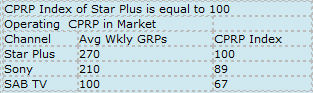
    It is a jungle out there in the media business. If you win the battle, you still have to worry about losing the war. Recently the Star Network launched another GEC called Life OK. Probably in the wake of competition from the Sony and SAB TV combo.The table 1, below depicts that the Sony and SAB combo was just about edging out Star Plus from the top GEC position, especially if it came at a more attractive rate (CPRP), as estimated in the table below.So, the not-so-hidden agenda of the Star network for Life OK would be to combine it with Star Plus and thereby fend against the Sony + SAB offensive, but without devaluing their trump card (i.e. Star Plus itself). Therefore, how would the new channel Life OK have to price itself, to overcome the Sony + SAB threat?


    Stratagem Media has undertaken a simple exercise to answer this question, for different levels of performance of Life OK.


    Objective of the exercise: To derive the CPRP Index of Life Ok @ different level of GRPs, if the CPRP of Star Plus is 100?


    Methodology: If the CPRP of Star Plus is 100, then what should the CPRP of Life OK be, if they have to match the CPRP of the Sony + SAB combo at different GRP ratios between the 2 channels.


    In the exercise below, the ratio of GRPs purchased between Life OK and Star Plus is assumed to improve in favour of Life OK, as its performance improves.


    *At these CPRPs, the Star Plus and Life OK combo will be as cost-effective as SET and SAB combo.


  • Video Report: Chaining the modem, gagging the router

    By Shruti Pushkarna


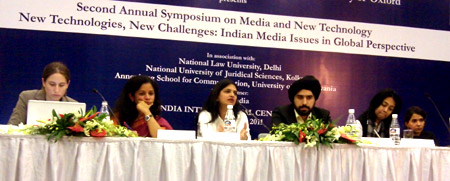
    The second annual symposium on ‘Media and New Technology – New Technologies, New Challenges: Indian Media Issues in Global Perspective’ hosted by Star India in New Delhi, on December 19th and 20th, set the ground for exploring international and comparative perspectives on the current media regulation debate and the role of information in the society in the times to come.


    The symposium, an initiative of Oxford University’s Programme in Comparative Media Law & Policy (PCMLP), in cooperation with its academic partners – the National Law University-Delhi, the National University of Juridical Sciences-Kolkata, and the Annenberg School for Communication at the University of Pennsylvania, brought together the diverse views of academics, bureaucrats, policymakers, industry leaders, civil society and legal experts to discuss such issues as law and responsibilities of self-regulation of media entities, regulation of the Internet, and emerging technologies in the context of freedom of information, privacy, and freedom of expression.


    Setting the tone of the two-day seminar, in his opening address, Uday Kumar Varma, Secretary, Ministry of Information & Broadcasting announced the government’s roadmap both for digitization and content regulation.


    Some of the other key speakers who addressed the participants at this symposium included Mark Stephens, Former Legal Advisor for Wikileaks; Osama Abu-Dehays, Head of Legal Affairs, Al Jazeera; Arvind Rajagopal, Professor of Media, Culture and Communication, NYU; Blair Levin, Communications & Society Fellow, Aspen Institute; Siddharth Varadarajan, Editor at The Hindu; Siddharth Narrain, Alternative Law Forum, Bangalore; Manoj Mitta, Senior Editor at The Times of India; Sevanti Ninan, Founder of TheHoot.com; and Monroe Price, Director, Center for Global Communication Studies, University of Pennsylvania.


    From trends in media regulation over the past year to the changing role of regulators, to the number of new challenges posed by evolving technology to media companies and the lawyers who represent them, a flurry of viewpoints were exchanged in the extensive debates.


    Deepak Jacob, EVP & General Counsel – Legal & Regulatory Affairs, Star India said, “I think this debate keeps the entire discussion and controversy around media regulation, it keeps it on the boil. You get different viewpoints, you get the contra viewpoint, you get the ‘for regulation’ viewpoint. So I think it’s healthy to keep this debate alive.”


    Panelists from different disciplines added to the flavour and scope of discussions. Nicole Stremlau, Coordinator, Programme in Comparative Media Law and Policy, University of Oxford said, “We tried to bring together the different research streams that are active here in India. So we brought together academics from universities, researchers from think tanks, as well as others working in the industry. So we very much tried to have a discussion across disciplines and across institutions. On the one hand, we had anthropologists, sociologists talking about the vast changes in the media policy and media regulation in India and on the other hand we also had a legal stream. So we had emerging lawyers discussing some of the pressing legal issues here and how they do research on these issues.”


    Is self-regulation possible?

    Following the recent controversy on content regulation sparked by Telecom Minister Kapil Sibal, interesting points on self-regulation of the media came up during the course of discussions. While Blair Levin, Communications & Society Fellow, Aspen Institute thought that it’s important to look at the particular issue to determine whether there is a need for the govt to step in or whether the industry can regulate itself, Deepak Jacob, EVP & General Counsel – Legal & Regulatory Affairs, Star India felt that the implementation of the self-regulatory mechanism is the biggest challenge. He said, “That’s always going to be a challenge, to educate, to make people aware of how self-regulation is the best way forward. I think that’s going to be the biggest challenge because people really intuitively don’t believe in self-regulation. They always believe that the govt has a huge role to play and should be censoring content.” Deepak Jacob also added that people are reading too much into Kapil Sibal’s move.


    [youtube width=”400″ height=”200″]http://www.youtube.com/watch?v=bOJ_EOHawOI[/youtube]

    Deepak Jacob of Star India on challenges of self-regulation


    ‘Informal censorship is happening’

    Another interesting point was made by Chinmayi Arun, Assistant Professor, National University of Jurisdical Sciences, Kolkata who feels that there is state-driven censorship taking place at an informal level. She said, “When we discuss censorship or interception of data, basically govt influence of information online, we tend to think of it in formal terms, that has the government officially asked for a certain amount of information, has the government officially asked certain sites to block a certain kind of information. But there’s actually a vast amount of blocking and interception that may possibly be done through informal mechanisms. And I think that perhaps this is one of those informal mechanisms surfacing.”


    [youtube width=”400″ height=”200″]http://www.youtube.com/watch?v=tmNH3tZgPJc[/youtube]

    Prof Chinmayi Arun on state-driven censorship


    Speed, affordability… and freedom?

    Talking of broadband access and the debate around filtering content, Blair Levin, Communications & Society Fellow, Aspen Institute agreed that the issue does get trickier with the nature of broadband but particularly in India, he said, “The debate is in a very early stage, in part because there is so little broadband, and in part frankly because the wireless technology, that’s going to be the necessary tool to bring broadband to most people in India, really is very early on in the game. It is only now that we have the kind of technology that can deliver real broadband speeds over wireless platforms. And really only now that the costs of the devices have come down to a level where a number of people can afford them.”


    Citing his personal experience with working on the National Broadband Plan in the US, Mr Levin stated that the situation and the challenges in India are very different from that in the US. He said, “In India, the great challenge is how do you get, first the underlying infrastructure in a number of places. Though I would say that infrastructure ought to be much more wireless than wired but then there is really the challenge of how do you make sure it’s a productive infrastructure? It’s a similar challenge in the US but the details are quite different.”


    [youtube width=”400″ height=”200″]http://www.youtube.com/watch?v=wdQDkQQaU2E[/youtube]

    The debate on whether the govt can filter or block content in both broadcast and broadband mediums, Mr Levin feels, will continue, as it has for the past so many decades, but he hopes that “the government here, as well as elsewhere, can get the balance right”.


    Dr Blair Levin on the debate in India on filtering content

  • Life Ok will compete with Star Plus: Sanjay Gupta


    By Rishi Vora


    The new gleam in the sky from broadcast major Star India promises a unique viewing experience, differentiated content and a philosophy which it will thrive on. The idea is to have a challenger brand, one that’ll challenge even Star Plus – the No 1 channel in the GEC line-up today.


    Life Ok – the new avatar for Star One – was launched on December 18, 2011. The channel will target to first get to the 60-70 GRP mark, and from there its first big milestone – to be a significant player by winning the No 4 position and beating one of the four big players.


    How well it suits the Indian viewers is something to look out for. Meanwhile a quick glimpse of what the management is thinking. MxMIndia’s Rishi Vora speaks to Chief Operating Officer Sanjay Gupta on his expectations, and much more. Excerpts:


    Q: Why the decision to shut down Star One and launch Life Ok?

    Star One as a channel has been there for several years. But it delivered a very average sort of performance. It catered to a niche audience and never quite made an impact. In GRP terms, it clocked about 30-40 GRPs. So there was a need to ask tough questions. We thought there was an opportunity in the GEC landscape to come up with a channel that is unique and differentiated, going by the viewer and the way he consumes content. So we decided to rebrand Star One to Life Ok.


    Q: It is said that Star One was not given the required strategic push to compete with Star Plus and other GECs.

    Every business can reach its potential. The business idea, in the case of Star One, was to be a niche channel. So in thought terms, I don’t think we were very sharp. We did not have a content offering that was differentiated enough to create a long-lasting impact on consumers’ minds.


    Q: So was Star One treated like a second channel? Was it a conscious call that it should not compete with Star Plus?

    The question that we asked ourselves was: Should we continue to have a channel which is a second channel or should we really continue to have a channel which fights? Which may be second, third or fourth, but that’s not very important. We thought we should have a channel that’ll compete with every channel – be it Zee, Colors, Sony or even Star Plus. The whole idea of changing the name to Life Ok was to liberate the channel so that it could cater to consumers as a brand and as a content destination. So that it could be different and unique and in the process have a more meaningful presence than Star One.


    Q: So Life Ok is not going to be the second Hindi GEC channel of the Star Network?

    It is in the Hindi GEC, one more offering from Star India. Star Plus is our first offering. The reason why we have changed Star One to Life Ok is because this channel has come up basis our understanding of viewers and we believe there is a gap. The name carries a philosophy. Unlike Star Plus for example, where we connected Star and Plus-and it became Star Plus, Life Ok is a name with a purpose.


    Q: Was there any research done on the name? What was the thought process behind naming it Life Ok?

    The idea was to have a name which captures the philosophy of the channel. A lot of research and consumer work has gone into deciding the name.


    Q: Can you elaborate on the philosophy?

    Let me explain. We’re entering a very, very tough competitive market – the Hindi GEC market. So why will this work? In my view, this is likely to work is because this channel comes with a very unique promise which consumers and viewers will see every day. Stories and characters of this channel will come on every day – not for five days but for all seven days in a week. As a viewer you want to seek whatever you like – it can be music, films, radio, newspapers, and also in my mind the characters of the shows you watch on daily basis. So content will be offered to consumers seven days a week.


    Also, stories on other GECs are not pacy enough, in terms of the speed. So what we’re doing on this channel is, we will tell three stories in an hour unlike the norm which is two stories every hour. We will tell a story in 20 minutes, so when viewers come to our channel, they will find the stories very pacy.


    Q: What is the thought process behind the two-minute break?

    The two-minute break is again a viewer experience. I don’t want a big break. As a viewer that will put me off. A lot of people get distracted with a long break and end up not watching your show. So with three stories in an hour and the two-minute breaks, we’re telling the viewers that they don’t need to go anywhere. They know it’s coming back in two minutes, so they are more likely to be on your channel if the commercial breaks are not very long.


    Q: But that means there will be an impact on the bottomline.

    In the short run, yes. But in the long run, it brings you more eyeballs. Once we have a set of viewers, we can then make up…


    Q: What is the programming strategy for the weekends?

    Fiction shows, non-fiction shows, we will use Sach Ka Saamna every day including the weekends. We will also have movies on weekends, in the afternoons. Afternoon time is very important-the whole family gets together and watches TV. So yes, we will have a variety of content running on the weekends.


    Q: We’ve seen some failures in the broadcast industry – 9x and Real being prime examples. So what are the things that you need to be extra careful about?

    Doing a new channel is a very costly exercise. Therefore, there will be a huge amount of risk that you always run, whether you refresh a channel or you create a new channel. In either of the cases, it is important to have a differentiated offering. If the viewer is getting the same thing on many other channels, why is he going to watch yours? The idea for this channel, therefore, is to keep the viewer at the centre and offer him something unique. So if you’re able to stick to that – not only in the philosophy and the thinking, but also on the content you offer every day, then it gives you more chances of being successful.


    Q: True, but second GECs which have launched in the past haven’t done well. SAB, you may say, is an exception.

    Yes, Sony is a good example where it has two channels – Sony and SAB. And they’re working well, so if there is an appropriate positioning, relevant content, it would work. I think the learning which I mentioned earlier, if we have a unique proposition, keeping the consumer at the centre and differentiated content, it should work. And Sony and SAB is a good example in my mind to quote. Hopefully, Star One can learn from that and create a more meaningful positioning.


    Q: Are you going to roll out shows which cater specifically to the youth, the single largest segment of India? Something like Bigg Boss which does well in that department?

    We’re very focused on youth because we believe that is an important target audience. So if you look at the non-fiction we are beginning with – Sach Ka Saamna with Rajeev Khandelwal, where the big issue which we are tackling is corruption. Now, that is something which is at the top of every young person’s mind in the country. From the content, which you will see in the next few days, in terms of the message it delivers, it is not about saying let’s point fingers at others. It is about saying, ‘If somebody has to clean up the system, he or she has to start with us.’ That’s the message. And it is very much focused on the youth of India. Another show – Devon Ke Dev… Mahadev – we’re talking about one of the biggest gods of the country for whom most youngsters, especially women, fast for Mahadev in their early teens and before marriage. So that is a very unique thing we have on the channel and that’s the beginning of FPC every day. The rest of the content is dealing with absolutely the key issues which youth will emphasise on in a really big way.


    Q: But mythologies haven’t done very well for other channels. Colors and Imagine have tried it and haven’t produced fantastic results.

    I think Colors did fairly well on Jai Shri Krishna – the mythology serial they had. So if positioned well, it can work. We believe there is a market for mythology in a big way. It will have a different kind of emotion being catered to consumers.


    Q: Did you consider doing a big-ticket show like KBC, Bigg Boss, bringing a popular celebrity hosting the show?

    I think we have been very careful in the kind of emotions we want to deliver. And we wanted to be true to the philosophy of the channel that we’ve created. So we’ve stepped away from bringing a big celebrity. If somebody comes, he or she should be able to respect the values of the brand. And it is about cherishing what you have as a philosophy ‘Jo Apne Pass Hai Woh Khas Hai‘ and that’s why all the content pieces are on the lines of that philosophy. In fact everything we’re doing is true to that. And that’s the reason we’ve stayed away from having a big celebrity on the channel.


    Q: So going forward if there is a need to have a Amitabh Bachchan or a Shahrukh Khan, would you go for it?

    At this point in time I would say if it fits in nicely with the philosophy of the channel, then we will definitely consider it.


    Q: Why Madhuri Dixit as the Sutradhar?

    There is a lot of learning that’ll come out from the shows we’re putting up on the channel. What we wanted to do by bringing Madhuri was: as we show the content, everybody takes away their own understanding. What she does on the channel is, she poses questions, brings in her understanding and her life reality, and really puts a lens in front of viewers to evaluate and see the content well. And therefore, it really raises the question – are we really cherishing what we have or not? Or are we worrying only about possibly the dreams of future alone? And, in her life she’s done the same. She has been one of the big superstars and has taken a break – been a family person. So she has balanced her life very well. So the persona fits in well with the channel’s philosophy. And she hopefully will be able to raise the questions in everybody’s mind and help viewers view the content through a new lens.


    Q: But what is the fan following of Madhuri Dixit today? Do you think there are enough fans, because quite clearly, her days are gone.

    Firstly, all big stars have a really valuable equity in consumers’ minds. But the important thing is how this fits in with the channel’s philosophy. And in my mind, it fits in very, very well.


    Q: How has the response been from the trade?

    Mixed response, I would say. People are surprised that the brand name doesn’t carry Star in the name – that’s been one of the questions from a trade point of view. And they’re wondering why. And also the other trade response is that we have a good variety of content. So they feel that the content looks very powerful and hopefully, the next few months will tell us how the business goes.


    Q: What will be the channel’s reach on Day One?

    Star One today reaches out to around 40-45 per cent of people every week. Those are the people who come every week to view Star One. Hopefully those people would definitely come to see the channel and basis the marketing campaigns, other sets of viewers will get curious about the channel and they’d come and like to watch it. So anywhere between 40-45 per cent definitely should come and maybe some more would like to come and check out the channel. And finally the content strength will determine how many people will become regular watchers.


    Q: Do you expect to be the No 4 channel, beating Zee, say in a month’s time after launch?

    Star One is at around 40 GRPs right now. And if we grow significantly, that’s the first good number to look at, because this journey is a long journey. We are not starting it to really take a big leap in week 1or week 4. If you’re able to grow from where we are significantly, that’ll be the first milestone. And as I said earlier, it competes with every channel in the GEC space. If the content is powerful, it’ll grow – but the first initial aim would be to get to a 60 or 70 GRP mark. That will be an important milestone for us.


    Q: How long will the aggressive marketing campaign continue?

    We started this campaign around a week ago. We started it on December 12, it continues in full intensity now and it will continue for another few weeks. So it will be a four-week campaign which will run supporting the channel launch.
  • Mohit Sainani quits Mid-Day, joins Star India

    By Shubhangi Mehta

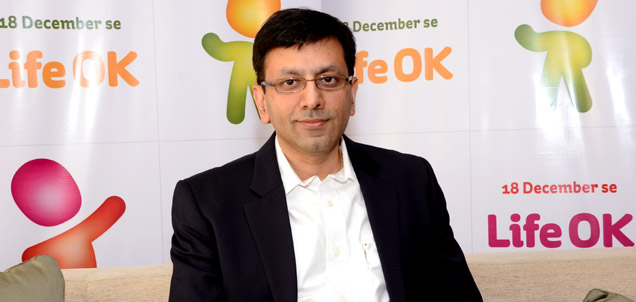
    Mr Mohit Sainani who was working as the marketing head, Mid Day for the past four years, has quit and moved to Star India.

    Industry sources confirm that Mr Sainani’s designation at Star has not been decided yet but he will be working closely with Mr Neville Bastawalla, AVP marketing,Star India Pvt Ltd. It may be recalled that Mr Bastawala had joined Star India as Head of Marketing for Star World and Star Movies. He too was previously with Mid-Day as Head of Marketing for a little over three years from where he exited early in December 2010.

    Prior to Mid Day, Mr Sainani had a stint with Compass BPO as a Marketing Manager where he reported into the CEO. Before that he worked with Times of India as Assistant Manager and as Relationship Manager with Citibank NA.

    Star India, the leading media and Entertainment Company in India has the highest reach among the country’s broadcasters, beaming to over 140 million people every week across India and over 65 countries across the globe. Its portfolio includes 33 channels in eight languages spanning the household brands Star Plus, Star One, Star Gold, Channel [V], Star Jalsha, Star Pravah, Star World, Star Movies, Star Utsav; along with the joint venture channels Asianet, Asianet Plus, Star Vijay, Suvarna, Star News, ESPN and Star Sports.

    Star India also manages a portfolio of business ventures including DTH operator Tata Sky; cable system Hathway, channel distributor Star Den, news channel operator MCCS, the film production and distribution business Fox Star Studios India and Star CJ Home Shopping.