Tag: social media

  • Anil Thakraney: The IPL diary

    By Anil Thakraney


    The two month long drama is done and dusted. (I use the word ‘dusted’ hesitatingly… goodness knows if there are more skeletons waiting to tumble out.) It’s a good time to take stock of the IPL and make some suggestions for the next season.


    Since the overall television ratings were on the lower side this year, it indicates a strong possibility of audience fatigue having set in. My hunch is there are just too many matches in the tournament… the numbers must be scaled down. I think the IPL should be a one-month event, this would make sure audience attention doesn’t flag. And the tournament doesn’t lose its appeal.


    There have to be very powerful and effective mechanisms put in place to rid the tournament of all the scandals it’s associated with. Match/spot fixing, black money transactions with players, rowdy behaviour of some franchise owners, drunk players going berserk at the IPL parties, cheerleaders being hit on, crowd mismanagement at the venues, etc, etc. I don’t know if the BCCI is aware of this, but the IPL carries very little respect and credibility across the world. I was stunned by the constant allegations of match fixing on the social media right through the two months. Clearly that’s not good for the IPL brand.


    The auctioning process needs to be made transparent. And the fee paid to all players made public. (We still don’t know how much Sachin and Dhoni get paid.) Since the IPL is not a private party, its financial records must be made public. This will only help the tournament gain some much needed brownie points.


    There have to be clear guidelines laid out for all members who get free passes at the venues. On how they must conduct themselves, and the exact benefits allowed to them. The reason Shah Rukh Khan got into a skirmish at the Wankhede stadium is because no one told him he’s not allowed to take children onto the cricket ground.


    Navjot Sidhu, Ravi Shastri, Laxman Sivaramakrishnan, Danny Morrison and a few others should be given a break from commentary duty for a few seasons. And instead, some old boys and T20 misfits like Ganguly and Dravid must be removed from the field and brought into the commentary box.


    Lastly and most importantly, a separate contract needs to be signed between the BCCI and the Royal Challengers team owner, Dr Vijay Mallya. This contract should make it clear that throughout the duration of the tournament, his very bigda hua beta, Sid, shall be barred from tweeting.


    * * *


    PS: Speaking of the IPL, in case you missed it, here’s SRK’s fantastic speech at Yale. Full of beans and full of humour. This is not the SRK who landed up at Wankhede that night, and indulged in deeply vulgar behaviour. I guess basically he’s a cool guy. But is unable to exorcise theDelhimawaali who still lurks inside of him.


  • JWT crafts new ‘shuruaat’ for post-IPL Max

    By A Correspondent


    Television channel Max has announced its latest brand campaign with the theme ‘Shuruaat Yahin Se’ . Created and conceptualized by JWT, the creative agency for Max, the campaign comprises three films – featuring an old couple, a politician and an Olympic shooter.


    The campaign highlights the monotony in the lives of these characters and how certain movies that they watch on the channel change their life for the better. Directed by ad film maker Piyush Raghani of Old School Films, these will be released across television, social media and online forums.


    Meanwhile, the channel also sports an all-new packaging. Charlieco, a Los Angeles-based agency has brought about this new look-and-feel. The music score mirrors and accentuates the visual themes of the packaging and has been created by the musical duo Salim- Sulaiman.


    Speaking on the new initiatives, Neeraj Vyas, Executive Vice President and Business Head, Max said: “‘Shuruaat Yahin Se’ aptly brings alive the central communication theme that Max gives its viewers the power to change their life for the better by showcasing the best of inspiring and thought provoking Hindi cinema. I am sure we will be successful in further engaging loyal viewers while bringing in new audiences.”


  • The Anchor: 6 things every marketer must pay heed to on social media

    By Rajiv Dingra


    Dialogue

    The rise of social media has brought about an important change in terms of communication between a brand and its audience. This is the magical two-way dialogue that social media offers. The days of a brand ‘communicating’ alone with its audience are gone. People and users are talking with brands online, and in many cases successful relationships are being forged because of this. A modern marketer should design marketing campaigns with this in mind. Being open and honest in your communication is the way to go.


    Equality

    Social media has given everyone a voice. This is good because now you as a brand can get access to some ‘real’ feedback and insights. The thing a modern marketer needs to note is that every person’s opinion and feedback holds value. You cannot just concentrate on the good things being said about your brand. You cannot afford to ignore anyone on your social platforms anymore. Instead delve deep into criticism and focus on how you can make it better for the person who has complained. This action will firstly get you a loyal consumer and all your fans and followers on your social pages will see this and react well to your brand.


    Brand reputation

    A brand’s reputation on social media hangs by a thread. One small negligent step can snowball into a huge media avalanche which can tarnish the brand that you have worked so hard to build. A lot of importance should thus be given to the content that you post on your social media platforms in terms of topic, context and viewpoints. It is good for a brand to believe in something, but at the same time ensure that whatever you post, it should not be construed in a negative way by your audiences. Stay away from controversies in your updates and even in your conversations with your audiences.


    Innovation

    Far too many times has the word, innovation been abused by peddlers of jargon. Real innovation is much more than that! First, you as marketer need to understand that innovations can be brought about by changing the way you view social platforms. Social media is not just your everyday media platform. It lives and breathes as a giant collective. The real question is ‘how do you inform and engage audiences instead of shoving your product down their face all the time?’ The second thing is to accept that not everything will be ‘viral’. As opposed to popular belief in marketing circles, you don’t conceive a viral video; it gets viral because it is good and marketed in the right way. Don’t let things settle down into a comfortable process. Experiment with your brands and your communication and then maybe you will succeed in getting something ‘viral’ done.


    Different platform, different strategy

    You can call it ‘Social Media’ for your ease but do not treat individual social media platforms as one. Ever. The ‘horses for courses’ approach is what needs to be taken to do well on Social Media. Every platform is distinctive in terms of features, UI, brand communication possibilities and its audience. You must learn to differentiate between platforms based on the parameters mentioned above. It might be easier to develop a broad social media strategy and deploy it, but trust me, it does not really work well for your brand. Learn the platform. Figure out the platform’s strength and weaknesses and position yourself accordingly. LinkedIn is a professional social network. How can your brand leverage this? If you can find more than one meaningful way, then get onto it and work your magic.


    Social is all about real-time

    Things move fast these days. The technology, the devices, the platforms and finally your audience. Never let anyone move faster than you. If your brand has to resonate with your consumer then it has to be perceived as fast, hip and trendy! This translates into a lot of effort for marketing. Dive headlong into the latest things, trends and crazes and figure out the potential they hold for your brands. Like I said before, take more risks! Don’t wait for someone else to try something out first, as this will only affect you negatively. These days there is a lot of buzz about Pinterest! If you are a retail brand or a restaurant, it is brilliant because of its visual nature. The first mover advantage is really very crucial in social media. Be prepared to think real-time or be prepared to be left behind!


    Rajiv Dingra is Founder and CEO of WATConsult


  • Need to monetize radio-social media connect (+Vdo)

    By Robin Thomas (Videos: Insiyah Rangwala)


    Social media has, more or less, become a necessity for every organization today because the consumers are out there and no brand can afford to not be interacting with them. Moreover, social media can also help  brands know their consumers’ thoughts, behaviour, likes and dislikes. It also allows brands to have a two-way communication with their consumers, and thus provides high level of interaction and engagement. And it is not just brands but other media like radio stations which are coming out with innovative ways to connect with their listeners through social media.


    At the sidelines of the India Radio Forum (IRF) 2012 industry veterans from the advertising fraternity discussed the importance of social media for radio.


    Mr Premjeet Sodhi, COO, Lintas Media Group said: “Social media is certainly important for not only the radio industry today, but also for every other medium. In the long run we will see more integration taking place between social media and radio.”


    Mr Raj Nayak, CEO, Colors- Viacom 18 explained: “Social media is growing by the day. Today almost 65 per cent of the people in India are below the age of 35 and 50 per cent are below 25 years of age. I believe this is the fastest growing medium, therefore, it is a very important medium and those that have not got onto social media, must get on before it is too late.”


    Mr Suman Srivastava, Founder and Innovation Artist, Marketing Unplugged said: “Social media is important for radio at two levels. One is to connect with the listeners and therefore, get much larger engagement which might even result in an increase in the reach. On the other hand, it is a fantastic medium for radio channels to build their own brands as well as the brands of their advertisers. In the future, I believe, we will see a lot more advertisers using radio and social media together along with, perhaps, ground activations to create events which could have a multiplier effect for those advertisers.”


    Speaking on the need for radio to partner with clients, Mr Vinay Bhatia, Customer Care Associate and Senior VP- Marketing, Shoppers Stop said: “The real big partnership for radio and their clients is in the digital space. Digital and radio have to come together and ally in such a way that they deliver joint value to the client, and I don’t think any of this is happening today. Radio is an out of home medium and we are increasingly seeing out of home consumption for digital. I think these two medium can go very well together and brands like ours which have large Facebook pages need content, we need engagement and I think radio channels that provide us that.”


    Mr Harshad Jain, Business Head – Radio and Entertainment, HT Media said: “Radio is a medium which is free of cost, it is the cheapest form of entertainment in the country, and if there are issues that can be interlinked with social media, it could call for a good integration. Having said that, it is still early days because radio as a medium still has to catch up big time before it starts integrating with social media.”


    While there are calls for integration between radio and social media, the radio industry must also find ways to monetize the radio-social media connect. Mr Sodhi pointed out that while social media can make radio activations richer, it is vital for radio stations to find newer ways to monetize this activation.


    Agreeing with Mr Sodhi, Mr Raj Nayak said that no business will work if there is no monetization. He added: “One of the biggest disservice broadcasters have done is that they have not woken up to the digital media.”


    So while radio and social media will see more integration in the long run, there is also another school of thought that believes that radio is still at a nascent stage and has a long way to go before it can get into integration with social media. However, monetization is the key for survival of any business and radio stations must find ways to monetize its social media activations.


  • Takeaways from IRF 2012 (+Vdo)

    By A Correspondent


    The seventh edition of Indian Radio Forum (IRF) discussed quite a lot of issues on the strength and opportunities of radio, the road ahead for the medium, especially with FM Phase III expansion, how to maximize radio’s assets and how to gain share of market spend; the use of social media and monetizing it and much more. MxMIndia spoke to couple of industry veterans on their takeaways from the IRF 2012.


    Mr Premjeet Sodhi, COO, Lintas Media Group:

    One major takeaway with which I am going back is that while there are issues on how radio is performing commercially, there are certainly people who are passionate about the medium, and therefore, there are a lot of possibilities on how to do well on radio.


    The second major takeaway is the use of social media and radio, we had never thought of a subject as such. Radio has a lot of potential to work along with social media and be commercially successful as well.


    Third, I don’t think we are doing enough for radio, overall as an industry. There is, however, a lot of scope for improvement in this area.


    Mr B Surender, Senior Vice President, and National Sales Head, Red FM:

    I think the RAB (Radio Advertising Bureau) style of evangalising the medium is needed because UK’s RAB is so active in not only the developed markets like the UK, but it is also quite active in developing markets like South Africa.


    InIndia, probably, this kind of promotional activity is required for radio as a medium, because in India FM radio started very late and it did not get enough time before social media and the online or digital media arrived. Therefore, I believe there is a different need for a RAB kind of body which promotes radio.


    Mr Vinay Bhatia, Customer Care Associate and Senior Vice President – Marketing, Shoppers Stop:

    I think each industry within radio should develop its own tools, and this is really important in judging the input-output in efficacy because I am not chasing radio just for reach, OTS or number of impressions. Radio, as a channel, is a response medium and so it must deliver much beyond intermediary variables, it must deliver final business variables and I think radio can do that. However, it depends on how well a radio channel partners with a client, wherein the client is also willing to share some amount of data and information and a radio channel is also willing to partner it and jointly experimenting which works for all of us.


  • Balki & Shekhar Kapur to present ‘Global India’ at Cannes Lions 2012

    By A Correspondent


    R Balki

    The annual Cannes Lions Festival of Creativity kicks off on June 17. Every year a select number of world class advertising networks are invited to speak to the assembled delegates, who converge onCannesfrom all over the world. Some 10,000 delegates, from the agency and client world, attend the festival each year.


    This year, Lowe Lintas, will take to the stage to present ‘Global India’ – the first time the Cannes Lions Festival has featured a seminar dedicated to Indian creativity and its influence globally.


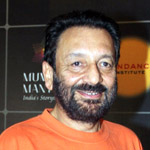
    Shehkar Kapur

    Chairman and Chief Creative Officer of Lowe LintasIndia, R Balki, will be joined on stage by special guest, Oscar nominated Director, Actor, Producer and new media entrepreneur, Shehkar Kapur. Wired magazine Editor, David Rowan, will interview Mr Balki and Mr Kapur on stage, while the seminar will be introduced by Michael Roth, Chairman and CEO of Lowe and Partners parent company, IPG.


    Michael Wall, Global CEO of Lowe and Partners said: “At Lowe and Partners, we pride ourselves on our strong capability in emerging markets. We have great, talented leaders like Balki, who manages to successfully meet the challenges presented by globalization ofIndia, while preserving the local culture. We can look forward to a thought provoking seminar from Balki and Shekhar at Cannes Lions, the first time the festival has dedicated a session toIndia.”


    Wall added: “This seminar isn’t just for the Indian Cannes delegates to attend,India’s future will play a large role in our industry’s future and should be of interest to all delegates.”


    Mr Balki and Mr Kapur will share their thoughts on a variety of topics, including the creative heritage ofIndia, the future ofIndiaon a world stage, Indian advertising,Indiain the digital age and the film and entertainment industry, and discuss their views on the impact of the nation around the world.


    Mr Balki commented: “We are very excited to bringIndiato Cannes Lions for the first time and to have Shekhar join us. He has been, of course, a leading Indian creative force, with a world profile, for some years now and is set to inspire the gathered creatives from all over the world, who attend the event. Cannes Lions is really the only truly global festival that celebrates our industry and looks to its future andIndiais at the forefront of that future. We plan to bring all the diversity, colour, creativity and passion that is modernIndia, on stage with us.”


    Mr Kapur added: “I am happy for the opportunity to be on the same platform with creative leaders like Balki and Lowe and Partners and look forward to a great, in depth discussion. Social Media is a new force that is asking us to redefine Advertising’s role in society – we have great challenges, but huge opportunities available to us too, by working within communities”.


  • The Anchor: 5 trends to watch out for in e-com in India

    By Suvir Khullar


    1. Multiple channels in e-retailing

    A variety of SCM models are being created and new methods are evolving daily to procure/deliver products from varied brands/manufacturers. This helps offer a variety of brand and product options to customers with minimal investment in inventory and increase customer stickiness.


    2. Customer Service like never before

    With the increasing options available online and the easy way to find them, the internet makes customer fickle. This results in websites offering increasing levels of customer service to ensure that their customer is happy – from 100 per cent satisfaction guaranteed to Cash on Delivery to 5 minute deadlines to respond to customer queries and complaints.


    3. Promotion through Social media

    Social Media is gathering force and becoming an important tool for promotion. It reels in the customer with events and stories relevant to the product/ service being offered while informing his friends and colleagues his interests thus enticing them to view the same. Social Media is also giving the customer free rein to comment about his experience and keeping the website on its toes to offer the best service model.


    4. Brand Awareness

    The e-commerce platform is increasing the awareness of a brand among a large range of customers. Earlier for a brand to gain awareness, it was necessary for them to open an outlet in all major relevant locations. Now the brand outlet can be in a Tier 2 city and service its online customers across the country by showcasing its products online. This will also result in limited mindshare of brand names, as more and more take up space in the customers mind. Unknown brands during the pre e-commerce time will become household names now.


    5. Brand Loyalty to Website Loyalty

    The loyalty a customer had to his favorite brand has diluted with the advent to tempting deals and offers available across competitive brands. Now depending on the offers and services offered by an e-commerce site, the customers’ loyalty will be held by the site instead of the brand. The product that site offers will become the customers brand basket to choose from.


    Suvir Khullar is Founder & Director, Gifting Ideas Pvt. Ltd.


  • Anil Thakraney: On the great IPL scandals

    By Anil Thakraney


    I had been traveling all of last week, but I kept track of the IPL shenanigans as and when I could. Since the news channels and the social media folks were busy discussing two sensational incidents of last week, allow me to add my two-bits. And I’ll cut to the chase, as always.


    Firstly, on the Shah Rukh Khan versus Wankhede security personnel battle. If SRK’s kids and their pals did not have passes to enter the stadium, the security guards had every reason to demand their immediate removal. Kids will be kids, and it’s highly likely that they would run onto the pitch. There have been allegations that the kids were ‘molested’. I think that’s utter crap. Had that been the case, garam khoon Mr SRK would not have settled for maa bahen ki gaalis, he would have dispatched a few souls to the nearby Bombay Hospital. Also, guards molesting kids on an open ground when the IPL office bearers and players are still at the venue is a preposterous idea to even imagine.


    Net net: King Khan’s fat ego (and maybe his booze-influenced head) got the better of him, and he lost control. Ergo, it’s correct that the MCA has banned him. Though given the star’s super heavy connections; that would soon be lifted. But, hats off to the security men who stood up to him. It’s very, very rare in a celeb and VIP obsessed India for lowly officials to take on a heavy weight. I think these guys should be bestowed with an honour.


    Next: The incident in Delhi where a drunken IPL player allegedly molested a lady inside her hotel room. That’s a criminal case, and we will have to leave the investigation to the local cops. No one has the right to pass any moral judgments. But Mallya Jr’s tweet was beyond disgusting. It not only denigrated the woman in question, his rant exposed the dude’s sick mindset towards women in general. If Dr Vijay Mallya is a good dad, he needs to send darling beta for counseling, ASAP. And he must also insist that the brat disconnects his twitter account. Junior is not just busy bringing disrepute to his family – he’s reflecting a very poor image of the entire UB group.


    It’s Sunday evening as I write this piece. The dust is beginning to settle on both the above issues. But am sure the next scandal is just round the corner. What’s the IPL without some offline tamasha? Aisa mauka aur kahaan milega, bhaiyya?


    * * *


    PS: “If You’re Not Pissing Someone Off, You’re Probably Not Innovating.” An interesting read from the Harvard Biz Review. On what innovation really means and how marketers must do things differently in order to make a real impact.


    Link: http://blogs.hbr.org/cs/2012/05/if_youre_not_pissing_someone_o.html


  • Indian Idol 6 to use drama & emotions for a connect with viewers

    By Meghna Sharma


    Music is something that almost every Indian can relate to. So, when in 2004, a reality show was launched which gave the people a chance to show-off their singing talent, the whole country lined up for auditions.


    Today that very same reality show, Indian Idol, is getting set to launch its sixth season. From June 1 on Sony Entertainment Television. The show had opened with average TVR of 6.9 in its first season whereas the last season got an average TVR of 2.0. According to Chandradeep Mitra, managing partner, Anvention, the main reason why reality shows lose their audience over years is stagnation: “After a while, one does get bored of watching the same genre of shows. It has happened to a lot of shows, be it KBC or IPL. Also, there are a lot of similar shows on other channels. So, there is a natural decay.” He further explained: “With more and more channels coming up and new genres being experimented, there is division of audience too.”


    Danish Khan

    Danish Khan, senior VP and Marketing Head, SET, is optimistic about the upcoming season and feels that every season has to have a unique hook to catch audience’s attention. “We are doing our best to come up with a delight for our audience. I agree that there are a lot of reality shows, so differentiation becomes important to stand out of the clutter.”


    This year, the show will focus on ‘Idols behind the Idol’: “We thought of going back this year and focus on how ‘nobody’ becomes a ‘somebody’. We’ll follow the journey of the Idol and the people who have played a role in guiding them to reach that position. So, there are a lot of drama and emotion this time, and we are hoping that it will touch the audience. And help us get good ratings,” Mr Khan said.


    However, Mr Mitra feels that for this genre to work well, the show must have quality talent and should be able to use social media well to promote it which will help to create awareness about the show.


    The channel will launch the show after the IPL. “It is a deliberate move and we have used the IPL to build the show through various promotions. We have used 360 degree marketing strategy to market the show,” said Mr Khan.


  • UPA tenure sees surge in attempts on media curbs

    By A Correspondent


    Last month, Congress MP Meenakshi Natarajan, reportedly close to Rahul Gandhi, the party’s general secretary, proposed a legislation that sought to regulate the media. The private member’s bill, subsequently disowned by the ruling Congress after uproar, sought to empower the government to ban coverage of an event that may pose a threat to national security. The bill also prescribes detailed ‘standards’ that the media should follow.


    Late last year, communications and IT minister Kapil Sibal famously sought to regulate the social media. The itch to regulate the media is not new but ever since the United Progressive Alliance (UPA) returned to power in 2009, attempts to do so have become alarmingly frequent.


    “The problem started when media organisations across the country began reporting on political issues aggressively,” said IBN7 managing editor Ashutosh. This was in late 2009 and 2010, when a series of scams were exposed by different sections of the media, including the alleged 2G spectrum scam in which former minister A Raja and a clutch of bureaucrats and industrialists are on trial.


    When questioned, political parties and media groups across the board agree that the government should stay away from media regulation, but that has not stopped the government from trying at various levels.


    During the time Anna Hazare’s campaign was gathering steam last year, there were reports of impending curbs on the social media, which was being used to garner support by the Anna camp. “At some stage we were told that the mainstream media was instructed not to report on the Anna Hazare campaign,” said former top-cop Kiran Bedi, who is also a member of India Against Corruption. “People voice their opinions through the media and the moment government gags that, you are abusing people’s vote,” she added. However, no such curbs were eventually imposed.


    For a country that prides itself on its status as the world’s largest democracy, the years under the UPA government, which came to power in 2004, have seen an alarming slippage in press freedom. This is ironical, political observers say, as the Congress-led UPA had benefited from the media’s aggressive exposure of scams during the NDA era. The media’s extensive, and overwhelmingly negative coverage of the Gujarat riots had also helped turn public opinion.


    The 2011-2012 Press Freedom Index compiled by Reporters Without Borders shows that India has dropped on the index from the 80th position held in 2002 to the 131st position in 2011-12 among 179 countries.


    “There is a complete absence of confidence and lot of insecurity among the elected representatives today, which is adding to the problem,” said Abraham Koshy, professor of marketing at IIM, Ahmedabad.


    In recent years, a number of politicians have invested in media businesses across the country, which some say, is another way to restrict the media.


    “The politician-corporate nexus too has grown further over the years and that is also impacting freedom of the media as some of these corporate own parts of the media. The government should not try to impose restrictions on the media,” said Nilotpal Basu, central committee member of the Communist Party of India (Marxist).


    There is a school of thought that politicians and political parties should not be allowed to own media companies under the law as that could lead to media being used as a tool for propaganda.


    “TV channels and newspapers are watchdogs of the government but if they are owned by the politicians themselves, there is a conflict of interest and that is what should be regulated,” said an editor of a news channel, who did not wish to be named. “We must sit down and discuss these issues,” said Vinod Mehta, former editor-in-chief of Outlook India. While most of those quoted in this story are also concerned about the quality of reporting in the country, which needs to be improved, most prefer self-regulation.


    Mr Ashutosh said: “Self-regulation within the media is working. Media needs to improve the same way the functioning of the Parliament, the judiciary and the executive need to improve in the country.”


    Ms Bedi said the media needs to be more independent and non-partisan but it is a fact that “media plays the roles of a visual and verbal Lokpal. Without media exposing the scams, India would have been a Banana Republic.”


    Source: The Economic Times
    Copyright © 2012, Bennett, Coleman & Co. Ltd. All Rights Reserved


  • Sharon Aneja & Gautham Pingali join SMG Digi

    By A Correspondent


    In two major appointments, SMG Digital – Starcom MediaVest Group’s digital arm – appointed Sharon Aneja as Director, Earned Innovation & Business Head West and Gautham Pingali as Director, Digital Improvisation. While Sharon Aneja will be based out of Mumbai, Gautham Pingali will be working from the Bangalore office. Both will be reporting to Arnab Mitra, National Director, SMG Digital.


    Confirming the appointments, Arnab Mitra, National Director, SMG Digital said: “We are thrilled to have Sharon and Gautham on board. While Sharon has huge global exposure and a very solid creative experience in her kitty, Gautham has a sharp inclination towards business development and strategy. I am sure both will immensely contribute to the success of SMG Digital.”


    SMG Digital is the digital offering of the Starcom MediaVest Group. It was formed in recognition of how Search, Social, Mobile and Display play a role in the rapidly changing landscape of Marketing, Communications & Media.


    With the social media reach scaling up and earned media gaining a strong ground with big advertisers, Sharon Aneja’s appointment is in sync with SMG Digital’s focus in investing on people, processes and technology to boost client visibility and engaging consumers on an interactive platform.


    Sharon Aneja recently shifted to India after working in London for the last 12 years. Prior to joining SMG Digital she was working with UKTV (the commercial arm of the BBC) as the Head of Digital Entertainment, where she was primarily responsible for developing a creative and commercially focused multiplatform vision for the company’s core entertainment brands. She has a longstanding experience advising the business on key online and social media trends.


    She began her career in 1991 with Conde Nast and has since then held important positions with organizations like Virgin Media, National Geographic, and Sky. She completed her education from the Queen Mary University of London.


    Commenting on her move, Sharon Aneja said, “While moving to India I was keen on moving to an organisation that had Digital as one of its core functions and was future focused. I am thrilled to be a part of SMG Digital as it is an extremely future focused and strategic pillar of SMG.”


    SMG also continued to strengthen its South operations where it has a substantial client base. With the appointment of Gautham Ram Pingali, SMG added to its talent pool in the South after several recent appointments. This move denotes the high interest levels in Digital in the southern markets as well.


    Gautham Ram Pingali has over 6 years of experience in multiple verticals across industries. He joins SMG Digital after a 3 year stint with Havas Media. He initially started off with the group’s centre of excellence to drive operational efficiency and organizational growth and quickly moved into managing projects for global and regional clients. He was last working as Associate Director Strategy & Business Development with Havas Digital India where he also managed the businesses in North. Gautham started his career in 2004 with AIESEC Hyderabad and has since then led teams at Myrmidon Consulting and ABN AMRO Central Enterprise Services. He is a B Tech graduate from the Jawaharlal Nehru Technology University in Hyderabad.


    Gautham Pingali, confirming his move, said, “I am thoroughly excited to work with SMG Digital as they have some unique methods a great team and a very strong vision, with this ability  they are in the forefront of creating a new dimension to the marketing & communication space by leveraging the Digital platform.”


    Starcom MediaVest Group is one of the youngest, largest and most diversified media networks in the country. It has over 250 human experience strategists and activators across its four full service offices. It prides itself on its ‘people first’ approach at workplace and is known in the industry and in campuses as one of the best places to work in. In addition to communication strategy development through its two networks Starcom Worldwide and MediaVest Worldwide, the group offers solutions in the area of ‘any screen content’ LiquidThread.


  • Angry Birds forever!

    Angry Birds Space visual Courtesy Rovio.com


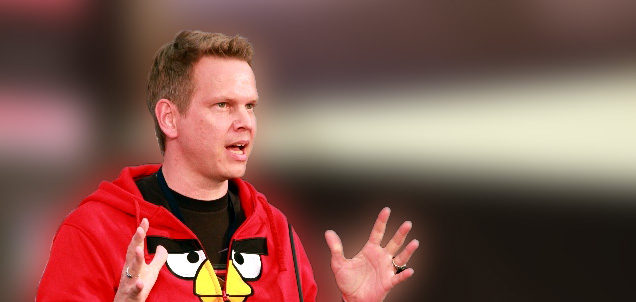
    Henri Holm is the Senior Vice President at Rovio Entertainment, the creators of Angry Birds. Holm, a Harvard alumnus, has extensive international management experience in consumer electronics, mobile internet, manufacturing, distribution, retail and brand management. At the sidelines of the recently concluded MTV Youth Marketing Forum 2012, MxMIndia’s Robin Thomas caught up with Henri Holm  who spoke at length about his India plans, India as a market for gaming and of course about Angry Birds and much more.
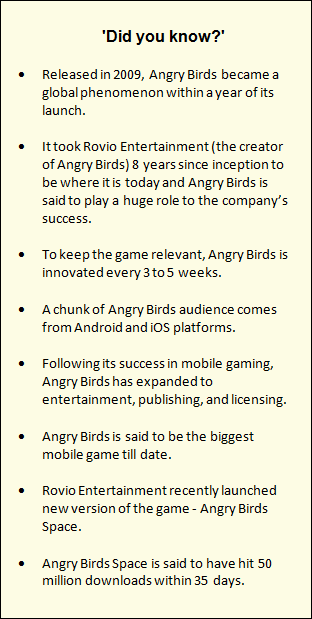
     

    You had said that it took Rovio Entertainment eight years to be where it is today. Tell us a little more about your company and your journey so far?

    Rovio Entertainment is a company which has grown very fast. We grew from a 12 people organization to over 300 plus professionals as of today. In our operations we cover mobile gaming, entertainments which include animations, books and publications, education content or edutainment, merchandising, licensing and sponsorships. In the entertainment space, we also cover advertising, so we are a major premium advertising channel provider. Globally, in fact, our ad impressions reach over 10 billion. It’s a company of young people who believe in their course, who neither give up nor give in.


    There are talks about the slow death of console gaming in India with the onslaught of mobile gaming especially with 3G and 4G coming in. Would you agree? Is the next phase of gaming coming from mobile?

    Console gaming is not necessarily as scalable as mobile gaming because I think it caters to a different set of audience or different media consumption or entertainment consumption. The mobile devices, including the tablets, are always with you and you can consume the game anytime anywhere, so the industry is certainly changing.


    Can you please throw some light on the entire thought process behind the Angry Birds concept? How did it come about?

    Everything started from the fact that the company has gone through 50 plus games. Being an audio manufacturer, we didn’t own a brand, we wanted to have our own IP and we wanted to build a brand. The thought process started with the characters and with distinctive personalities in those characters. The story was unique too, it was not a me-too story, and besides, the mechanics of the game itself was about simplicity, quality and paying a lot of attention to the details.


    You also said that Angry Birds will continue forever and that this is only just the beginning… How do you intend to stay relevant to the audience?

    Yes, we feel that this is just the beginning for us. Angry Birds as a brand, and as a story, will definitely continue. Every three to five weeks we try to keep the game relevant and innovative or new for our audience. However this does not mean that we will not be looking at other games or characters or stories, it’s just that we need to find the right time to introduce something new.


    Where is the Angry Birds audience coming from?

    Today’s audience primarily comes from the android and IOS platforms, however there are other very significant platforms besides the androids and IOS. So today we can cover all operating systems in mobile devices ranging from the smallest screens of the feature phones to the largest of the screen which are the tablets. So the mobile space is certainly growing the fastest. When you move away from the mobile to the web we cover the operating systems where Chrome has been leading the web experience supported by flash and now the social gaming like Angry Birds on Facebook. So each one of these platforms needs to be looked after individually and what is important is that we present the channel and the content where the fans are. So, if the fans are moving primarily into one operating system or one type of access into the content, we move with it.


    What is the role social networking sites have played for the success of games? According to a survey, young people in the west visit social networking sites only for friends and not necessarily brands…

    We are an entertainment company and we engage our fans on social media so, we are living social media 24×7 and we are participating in conversation all the time. Our business is about the fan engagement, delighting them and therefore I believe that social networking sites play a huge role in the success of any brand.


    What is the business model of Rovio Entertainment? Is it advertising led and how much has Angry Birds contributed to its revenue share?

    We have different business units, we have the games business unit, entertainment business unit and merchandising and licensing business unit. Each one of them contribute their own revenue but, they also complement the entire brand experience and the brand presence because of the huge opportunity to manage and monetize the brand. So our business model is purely based on the fan and the brand.


    How has 2012 welcomed you? What are your business plans this year? When you compare it with 2011 how has the growth been so far?

    In 2011 we launched one game and this year we have already launched two and have several more to go. The year 2011 was about building the infrastructure and the making the organization ready, 2012 on the other hand is about finding the right partnership and making the entire business ecosystem stronger and more global.


    So are you looking for more expansions and new partners?

    We are constantly looking for new partners and expansions as we need to build a very robust business and country plans before this.


    What is your view on India as a market for gaming and for your business?

    India is a very important market for us, as of now we are scouting for partners and once we find the right partnerships here it will give us better footprint and presence. We are looking for partnerships in the media space, in the digital distribution space, operators, and the major brands and all the big movers and shakers in the country.