Tag: social media

  • ‘By 2015, we want to be the top 3 player in every single sphere we operate in’

    What led you to shortlist Communicate2 as the partner of choice?

    Communicate2 is one of the largest and oldest firms in the area of search & performance marketing in India. Vivek Bhargava, as you’d know, is considered to be the guru of search inIndia. He is also one of the guys to be Google-certified and has been in this business since 1997 – a time when the internet and search was in its absolute infancy. In our view, nobody else managed the quality and scale of the business that he has built up, and therefore he was a preferred partner of choice.


    The other important reason for choosing Communicate2 was chemistry – Aegis Media has a certain vision and value outlook which is very close to our heart and Communicate2 seemed to have gelled very well with those attributes. There was a lot of comfort on both sides. So these were some of the key reasons for us to choose Communicate2.


    Will you be laying enhanced emphasis on Search with the current acquisition…

    The focus is on search because it is one of the fastest growing parts of our business. Clearly, Communiacte2 is the biggest player in the space and now with iProspect and Communicate2 together, we are straight away the number one player of search in India. So that’s how it is placed as of now.


    How long has it been since you have been pursuing Communicate2? Did you scan the market for other potential candidates?

    We were working with them about 4-5 years ago, but nothing more came out of that deal. This recent move has been in the works for a few months. Also, we did scan the market as anybody else would and we did have a few names that we shortlisted and we narrowed down to Communicate2.


    The deal seems heavy on the investments front. Would you share with us the monetary plans you engaged in towards snapping the agency?

    An agency that is the oldest and has a workforce of more than 130 people is not going to sell out cheap. I cannot disclose the amounts behind the deal, but I can say that it has been fairly priced.


    The market has been abuzz with news of big communication houses buying out specialist digital agencies in the recent past. What would you infer of this trend that everybody is taking a liking to?

    I cannot comment about others, but there is a clear strategy that Aegis Media believes in and that is by 2015, we want to be the top three player in every single sphere that we operate in – be it out-of-home, search or digital. As part of our strategy to be in the top 3, the best way of getting there was by partnering with Communicate2 because their expertise, their client base and their search professionals coupled with the iProspect tools and knowledge would be an unbeatable combination.


    In an acquisition it is very important that you have to see how the acquisition fits with the plans of your company. So the task of integration becomes key, which is why the quality and type of people and the chemistry become important. So companies that are blindly going out and buying companies will fall flat on their face, but those who are able to acquire and integrate companies and have a great bond with the partners will be successful in the long run.


    Globally, digital contributes more than 35 per cent for Aegis Media. What is it that you anticipate from the Indian market post the acquisition of Communicate2?

    We are looking at being the clear No 1. Globally, iProspect is the world’s largest search network, and in India we now become No 1 with this venture. But we want to be No 1 by a long distance. We want to be double the size of the No 2 guy in a few years.


    What are the immediate changes that will be seen on ground?

    There is a new office that we are in the process of doing up in Mumbai; their staff will be moving into that new place soon. Likewise the Delhi team too would be amalgamated in our office. With this the entire Aegis Media clients will have benefits from Communicate2 and vice-versa.


    As for people, Vivek will be the MD of the new venture. He already has a management team. Of course, as growth happens we will keep recruiting more people. All other aspects remain the same.


    The announcement comes just weeks after Dentsu acquired a stake in Aegis Media. Has this deal been inspired from that takeover…

    These things do not happen overnight; it has been ongoing much before that. The two are not related.


    Future plans from Aegis Media…

    As I said, we will be the top 3 player in every space that we operate in. In some instances we will do that organically, in others we will do that inorganically – provided we get a good partner. We are not on the lookout as of now but if any new opportunity does come up we will not be turning a blind eye to that.
     

  • ‘It was a meeting of the best minds of the world’

    The buzz was that you were being hounded by most big communication players in the market for a takeover and now you’ve finally given in to Aegis Media. How would you describe the takeover journey?

    We had the opportunity to talk to every single large player and we found that the way the market is growing, there is going to be a lot of technology components required in it and iProspect globally has the best technology in the world. Also, we are a very dominant agency as far as search and performance marketing is concerned inIndiawhile iProspect was the world’s largest search company, so it was a meeting of the best minds of the world. The digital market inIndiahas matured to the level where clients are looking for the best in the world and we felt that with the expertise that iProspect had to offer, it was a perfect solution to offer to our partners. And we endeavour to take decisions for our partners as much as it helps us.


    What is your view on big communication players showing sudden interest in digital in India?

    Digital marketing inIndiahas now arrived. More promoters and senior management people now believe that digital is a very critical part of their marketing endeavour. So they are spending a lot of time around the medium. About 3-4 years ago we were talking about digital being the future and today digital is now considered as present. Earlier digital used to attract a small budget from marketers, but now they position it as their first priority and question whether they need conventional media or not.Mobilehas given digital three times the reach of television. So I believe digital is going to be the dominant medium in the future.


    What is the value that you’d be leveraging from this partnership?

    Globally if you see, there are clients like GM, Nokia, Philips and others who have operations in 60-70 countries and they are aligned with Aegis Media. I see tremendous opportunities there. As for us, we are a 140-people agency which makes us the largest digital agency in the country. So with the clients we have and with the kind of team we have in the enterprise sector, I see it as a perfect marriage of the two. I see tremendous value in the venture.


    How have clients responded to this move of yours?

    I had spoken to clients even before this venture and they seemed pretty positive about it. Also there is no change as such in the team and talent, so there was a comfort level there. Generally they are happy with the merger.


    Do you see the gap between digital and advertising being bridged?

    If you ask me the demarcation between digital and conventional media will probably go away. This is going to be an advertising agency and digital is going to be an integral part of the advertising medium, probably the largest. Demarcation is something that we have created for ourselves but it is about giving out advertising solutions.


  • The Crucial Social Media Question: Have fans? Now what?

    By Tuhina Anand


    Every marketer worth his salt wants his brand to have a presence on social media. However, the truth is that the marketers are still trying to figure how to navigate this medium.


    Having heard that it’s a ‘cost effective medium, can be tracked and is ‘the’ medium’ where the customers hang out, the marketer obviously wants to be there too. But the social media still has a long way to go before it is seen as the ‘vehicle of choice’ and not just as an afterthought.


    Yes, one agrees that marketers are warming up to the medium but they are still testing waters barring a handful who have taken the medium wholeheartedly.


    Once a marketer decides to go on social media, the next move is to create a presence on Facebook and maybe on Twitter. We have often heard the marketers talking about the large number of fans they have acquired on FB, so what do these number of fans mean to them and how are the marketers leveraging these fans to engage effectively with consumers?


    Chhaya Balachandran Aiyer, Founder and Managing Director, BC Webwise agrees that there is peer pressure to acquire more fans and clients often bow to that demand: “The number of fans and likes is a visible number, hence one can’t write it off completely even though many of the numbers could be dormant fans. These numbers are an opportunity to engage those fans in a meaningful way to create brand loyalty and brand recall.”


    She added: “Two years back, the common demand of a client was to be on Facebook, but we have seen a shift now where they have realized that it’s not the ultimate answer but social media too needs a 360 degree approach.” So it’s clear that there are different kinds of marketers and the early adopters are clearly asking the right kind of questions.


    Some of the brands that have effectively used the communities on FB are Fastrack, Café Coffee Day, Sunsilk while more are getting on the engagement bandwagon. Explaining the significance of the numbers, Rajiv Dingra, CEO, WATConsult, said: “While all readers of an ad do not become buyers of the product, similarly with FB, the marketers become a publisher of its page to reach out to the consumers. The aim is not always conversion to transaction for all people on its FB page, but with a large fan base the number of potential buyers definitely increases.”


    Mr Dingra is clear that there is no replacement for good content. He added that the numbers might reflect various objectives of a brand at different points, but if the content is good, the engagement with brands will become only much more involved and meaningful.


    Vineet Gupta

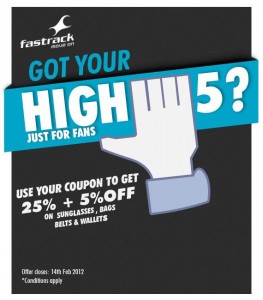
    Vineet Gupta of 22feet has been relentlessly engaging with brands to enable them to use their social media tools effectively. He explained: “We have brought out exclusive sale for Fastrack fans on FB and the brand has been doing a lot of stuff exclusive to the community. Scale has its own benefit and one can’t deny that. With people becoming familiar with social media, there are lots of activities happening which take people beyond the likes and the fans.”


    The agency has recently done activation for Lee titled ‘Shadows of City’, where people were encouraged to present their photographs of the city and the shadows they create which would then be put up in the stores.


    CCD is another brand that has been using FB to listen to its customers and also engage them via the medium. Ramakrishnan K, President- Marketing at CCD elaborated: “At CCD, we not only have numbers, but also a high level of engagement. Our fan base is 2.6 million and our monthly engagement level is 60 per cent, i.e. 60 per cent of our fans interact in some form with our page every month.”


    He added: “At CCD, we use social media base for regular tailor-made communication on happenings in CCD. We have a direct consumer feedback on cafes across the country which gives us instant information that keeps us on our toes. Most importantly, we use the fan base for co-creating many of our offerings – be it new menu, suggestions for improvement, live tasting of new introductions, choice of music among others. We engage fans to co-create their brand. As a result, we drive a very high level of consumer engagement, which in turn helps us drive sales.”


    One concern is that many fans on FB might be dormant, so then do the numbers really mean anything? Sanjay Mehta, Joint CEO at Social Wavelength explained: “I think that the key is to deliver message to interested people. If people receive the message but not respond, that is not a concern, but if they do not get the message in the first place, then it’s a bigger challenge. I think one should not be dismissive of the dormant numbers, but focus more on getting the right kind of messages that will get them to engage.”


  • Pulp Strategy launches Augmented Reality app

    By A Correspondent


    Augmented reality (AR) is the new buzzword and augmented reality games have become a favourite with brands and consumers alike. Now introducing a new dimension to experiential marketing campaign, Pulp Strategy has launched a layar-based mobile application. The application is currently available for Android and Iphone users. This app is an excellent way to add digital content to printed media.


    Explainign about the app, Ambika Sharma, Managing Director & CEO, Pulp Strategy, said: “With the increased penetration of smart devices in the youth segment, the application allows the static creative advertisements and collateral’s traditionally used in on-ground activations to be infused with interactive digital experiences in real time. This means that a static poster or a standee – a method of delivering static information – can now be an information tool and an engagement prompter.”


    The possibilities of the application are amazing – consumers can be prompted for check-ins on Social media at the press of a button; drive ‘Likes’ or ‘follows’; go to the brand site or order a product or stream the brand video straight to the users hand-held device. The next time marketers plan for that poster creative in campus, or big branded wall in a mall activation, or even brand merchandise for a campaign, the app promises to bring alive each piece of static creative digitally for the consumers.


    “Marketers find value in such innovations, as not only is it useful and social media relevant but also breaks clutter, and adds pizzazz to existing branding elements increasing consumer engagement,” said Sharma.


    This thought is not new. RFID bands for check-ins have been used in activations before. However, they have been device restrictive and cost per user piles on if one scales up. It needs physical equipment presence to drive any engagement or check-ins.


    “But the Mobile app is device agnostic. All it needs is a smart phone and once planned it can be scaled up to unlimited consumers. It is not necessary to have a promoter or brand representative to drive the experience. Essentially, the added delight in experience for the consumer comes at a negligible cost as part of the ground campaign. It integrates, Facebook, Twitter, Google+ Linked In for social media,” said Ms Sharma.


  • Tourism Australia launches Facebook app

    By A Correspondent


    The ‘Discover Australia Through Your Friends’ app – the first of its kind – merges the best of Google Maps and Facebook technology to create a unique travel planning tool to not only help choose where to go in Australia, but also provide advice from friends who may already have been there.


    The app provides users with a location-specific snapshot of where all of their Facebook friends have previously ‘checked in’, photos they may have ‘tagged’ and also any comments they may have posted about their travel experiences whilst there.


    Currently, Tourism Australia has 3.3 million fans. Tourism Australia Managing Director Andrew McEvoy believes that the new app will be welcomed both by travellers and the Australian tourism industry.


    “We know from research that more and more travellers are turning to their social media networks for inspiration to help them plan and get the best out of their holidays. Tourism Australia has been a global leader in the digital space for over a decade and this innovative social media tool will make word of mouth from your trusted network of Facebook friends even more powerful,” Mr McEvoy said.


    The launch of the new app follows new research findings, released by Tourism Australia earlier this month, demonstrating the growing impact of social media on the way Australians travel around their own country.


    “Facebook remains a key plank in Tourism Australia’s social media strategy to promote the country’s tourism credentials at home and abroad through the power of advocacy,” he added.


    Tourism Australia Executive General Manager Consumer Marketing, Nick Baker, who has led the national tourism agency’s innovative digital and social media approach, said Tourism Australia’s Facebook page now enjoyed over three million advocates.


    “The new Discover Australia Through Your Friends app is also a great tool for the industry – allowing us to simultaneously showcase these postings as fantastic examples of things for visitors to do nearby, whilst spending time exploring our great country,” Mr Baker said.


  • Storytelling through the years

    By Shubhangi Mehta


    The trend of storytelling in an ad began with actors in the campaign sharing a fictional story that connected with the masses and now taking it a step ahead, advertisers are trying to connect directly with the masses and asking them to tell their original stories in the campaign.


    Storytelling commercials capture the emotional side of an audience.

    How beautiful or charming your story is depends on the imagination of the creator. How beautifully and effortlessly it’s told, depends on the media plan.

    Some stories need more time, some don’t. While one understands that media comes at a price, one often forgets that the  poorly told story, even if it fits the budget perfectly, is money down the drain as it won’t reap half the rewards as a beautifully told story will.


    KV Sridhar

    As KV Sridhar, NCD, Leo Burnett India, explains, stories are a “means of communicating to the world in an interesting manner and advertisements are no different. The only challenge is to tell a story in 30-60 seconds. Products have become brands and household names because of use of this concept in our commercials. The concept provides a benefit for the brand as it establishes an emotional connect with the consumers, it’s not just a sales message, but about narrating a story. In other words, we can regard a story as a sugar coated medicine. Initially, story telling in commercials was a one way process -brands created a virtual story to connect with the masses – but today it has become a two-way communication. And due to the popularity of social media – Facebook, Twitter – it’s become easier to interact with the consumer. Brands no more control the story, consumers do.”


    Sumanto Chattopadhyay, ECD, Ogilvy & Mather, cites an example: “Pond’s created a very successful series of TV commercial a few years ago. It was a love triangle starring Priyanka Chopra, Saif Ali Khan and Neha Dhupia. These episodic films spun a classic love story with all the trademark melodrama of a top-rated TV serial.”


    Sumanto Chattopadhyay

    The only downside of episodic commercials is the high budget required to make and air multiple TV spots. But if made with skill and backed by deep pockets, they can be a worthwhile investment. The international trend in contemporary popular culture is marked by a penchant for realism combined with a desire for the limelight.


    From reality shows that hunt for talent to advertising that is crowd-sourced, it is all about letting people step into the light to tell their own stories in their own voice. Andy Warhol was prescient when, decades ago, he said: “In the future everybody will be world famous for fifteen minutes.” Today, that is the mantra of many – offering the people the chance to have their names, faces and stories in the spotlight – which is also a shrewd strategy for brand success. The resulting authenticity has an inherent appeal to the modern mindset.


    Storytelling is the means by which our culture has been passed down

    Storytelling is the means by which our culture has been passed down from one generation to the next. Sometimes, through stories expressed verbally by our elders; at other times through pictures drawn on cave walls and later through sophisticated dance drama. So it is hardly surprising that we took like ducks to water to story telling in movies, TV serials and TV commercials.


    Rahul Matthew, ECD, McCann Erickson said: “Storytelling, to get a point or ideology across, is not a creation of advertising. Stories have been used forever to sell ideologies, morals, and wisdom to people. Panchtantra or Mahabharata are all illustrations of the same. The only difference is that in advertising we use it to sell brands. It’s probably because story-telling makes anything less preachy and we’re always ready to hear a good story. A story also makes things more relate-able since it borrows from life; the same life that our brands and products have to be a part of. This so-called real story-telling has always been there. What’s called testimonials is just that. We used to use models to give the impression of a real-life consumer sharing his/her experiences with the product. And today instead of models we are recruiting real consumers to tell us what they feel or think.”


    Mr Matthew further states that it’s more a reflection of a change in consumer behaviour than a change in advertising: “We are reaching out to reviews from unknown people through blogs/social media to make our choices, and at the same time proactively sharing our views for others to consume. And advertising has always merely reflected consumer behaviour.”


    Minakshi Achan, co-founder, Salt Brand Solutions feels that storytelling has kept us riveted for centuries as it is part of popular culture and has shaped and defined us for the longest time through religion, entertainment, history and music. “Brands have simply adopted the art and used it to tell stories and shed light about their products and services. There is no better way to connect with your consumers and the greatest of brands know the profound impact it has on people. Brands are the greatest story tellers and if you count religion itself as a brand, we know the power of story telling, and the continued effect on us. The big change has not been in the concept of storytelling, but in the way we communicate because of the platforms available to us. In the yester world, there were no platforms for two-way communication or rather it was difficult to do so. Today’s world is open and the exchange and engagement with a consumer is far easier. Far greater possibilities exist thanks to social media – whether it is the internet or mobile,” she added.


    Co-creation is the new way

    Consumers have stories to tell and today brands can listen to them and have their contribution to impact their brands. This apart, the stories are more real, straight from the horse’s mouth, which lend great credibility to brands. Since the engagement models have changed, I think there is far more meaningful conversations possible today, feels Ms Achan.


    All in all, we can say that stories surely are for everyone and quite naturally work across categories and consumer types. The length of time, the canvas of the medium may change but the premise is the same, and the objective for brands is just to impact the brand and consumers with this format. Whether it s a 3-hour movie or a 30 second commercial, the principles of storytelling remains.


  • WATBlog announces CMO conference

    By A Correspondent


    With an aim to give marketing professionals key insights into digital media, WATBlog announced the Digital CMO Conference. The event will have top CMOs of the country come together to showcase case-studies that have witnessed ground breaking success in digital media. The conference will be held on August 31 in Mumbai.


    WATBlog’s Digital CMO conference will showcase insightful presentations by the biggest brands that have emerged as the thought leaders in the digital media space. The conference will cover all aspects of digital marketing, including the role of social media in Customer Service and how the digital platform can help build brand reputation. The delegates expected to attend the conference would be a mix of CEOs, entrepreneurs and marketing professionals.


    “Digital marketing in India has gained significant momentum over the past year. A lot of brands are now looking at social media as an integral part of their marketing mix. We have organized the Digital CMO Conference to help these brands understand the best practices and soak up valuable insights from those who have run successful campaigns in the digital space” said Rajiv Dingra, Founder and CEO, WATMedia.


    Key speakers at WATBlog Digital Marketing CMO conference will be: Krishnakumar P, Executive Director, Marketing, DELL; Virginia Sharma, Chief Marketing Officer, IBM; Kavita Joshi, Head of Digital Marketing, HDFC Bank; Arun Nair, Head – Digital Marketing, Mahindra Holidays & Resorts; Dharini Mishra, Global Head of Brand, Suzlon Group


  • Clean & Clear’s morning energy campaign

    [youtube width=”400″ height=”225″]http://www.youtube.com/watch?v=u_7cyKss7Ts[/youtube]

    By A Correspondent


    Clean & Clear didn’t want their brand to be associated only with problems. They wanted girls to celebrate their skin and have fun with their beauty regime. This sparked the need to launch Clean & Clear’s new fruity range – Clean & Clear Morning Energy Face wash.


    Internationally, the Clean & Clear Morning Energy range is advertised as the perfect solution for girls who’ve had a late night and need to perk up in the morning. However, inIndia’late nights’ have negative connotations of parties and irresponsibility. They kept Indian sensibilities in mind while creating communication for this new range.


    Research with teen girls confirmed what they had feared. They immediately rejected the notions of late nights claiming that it didn’t hold true for them. However, when spoken to about their daily routine, they found that most teens spoken to went to sleep after midnight on weekdays. In fact, they stayed up much later when they had exams or project submissions due.


    They have created a series of fun TVCs that showed a girl employing unusual techniques to wake her best friend up. They’ve used these spots to communicate that in addition to your best friend, you also need an alarm clock for your skin.


    The TVCs were followed by a crowd-sourcing contest on social media where contestants were asked to shoot their own crazy ways of waking their best friends up. Radio, outdoor and print was used to reinforce the message that there’s now an alarm clock for your skin.


    Credits:-

    Chairman & CCO: Sonal Dabral

    President: Rajiv Sabnis

    Executive Creative Director: Louella Rebello

    Group Creative Director: Hanoz Mogrelia

    Art: Rithwick Raghunath

    Copy: Kashyap Joshi

    Account Management: Sharmila Malekar, Sumeeta Bhangalia & Aastha Chopra

    Account Planning: Aditya Kanthy, Mitali Srivastava, Saloni Handa


  • Xrbia goes social to promote project

    By A Correspondent


    XRBIA Developers’ aim was to bring consumers closer to realizing and living their dream of an idyllic house in a dream country. This was the genesis of XRBIA’S dream campaign. The idea was to create a country which was perfect, where people were happy; there was no rush; air, water and environment was clean. And thus giving shape to the idea, XRBIA went in for a threefold strategy: The team started with a teaser launch promoting XRBIA as a country, which lead to the press conference announcing XRBIA as an affordable housing developer and finally moved to launch the first project at Hinjewadi in Pune.


    XRBIA Developers initiated a social media campaign where they designed their Facebook page as a tourist destination. XRBIA engaged users with tidbits about the country’s cultural nuances, including its culinary habits, nightlife, and so on and so forth. This engagement program started with a unique contest of “where in heaven is XRBIA?” This campaign drew a lot of interaction with almost everyone having an opinion on where XRBIA was located. This set the ground for the rest of the campaign where the developers shared more information about XRBIA and the life there.


    The outcome of the campaign resulted in about 30,000 likes, which is commendable, as the teaser ended on June 20, barely 4 days after the launch. Since then, there have been more than 4 million page views and 1.3 million unique visitors on the Facebook page.


    This is a first-of-its-kind campaign, especially for a real estate brand. The concept of promoting XRBIA as a country was initiated with the thought of running the teaser campaign as a tourism campaign where people are invited to experience the country. The line “Visa on Arrival” was coined to invite people to visit XRBIA. This idea behind the thought was that once the teaser campaign was over, the real estate brand would be revealed and people would be invited to stay at their dream destination.


    Before XRBIA was unveiled as real estate company, many of the interactions on Facebook were about people asking where the new country was, some even asking if it was a rebranding campaign by Serbia. Some even applied for a job in the country. The high amount of interaction reinforced the success of the campaign.


  • Brands go 360-deg with FM radio activations


    By Robin Thomas


    Brand activations or on-ground, on-air activations by FM radio stations is not a new phenomenon in this country. In fact, it could be said that most FM radio stations boast of having a dedicated unit to service the needs of their clients.


    Brands today realize the need for a 360-degree presence across mediums so that they can be where their consumers are and directly interact and engage with them. Hence the on-ground activations by radio stations give an added advantage to the brands as the activation is also hyped in the on-air programmes they execute.


    Take for instance the Asian Paints ‘Lift Kara De’ campaign executed by Radio City Connect. RadioCity Connect had tied up with the dabbawallas of Mumbai and placed around 15,000 sweet boxes inside the dabbas. The activity was spread across various restaurants and some Cinemax outlets in Mumbai.


    Apart from the Asian Paints’ campaign, Radio City Connect is also said to have executed a 12-city campaign for Renault Pulse and a 72-location activation plan that involved RWA, corporate park and mall activations. This campaign is said to have generated more than 6,000 leads for the client, along with 1,000 people who went for a test drive.


    The same has been the case with other stations as well, where categories such as Telecom, FMCG, BFSI, Cement, Automobiles, Retail, and others have been part of brand activations. According to industry estimates, brand activations on FM radio stations contribute around 12-15 per cent of the overall turnover and is estimated to go above 20 per cent in the near future.


    Sanjay Tripathy

    Sanjay Tripathy, Executive Vice President-Head Marketing and Direct Channels, HDFC Life explained: “On-ground activations through radio stations are indeed effective with the on-air ads and promos amplifying the activations without the need for an additional media buy. It helps the brands roll out a through-the-line approach with on-air ads and promos, creating awareness and drawing footfalls for the activation. The radio station-led activations are usually properties moulded into the brand’s requirements and help reach out to the specified TG. Also the radio stations help the brands to get easy access to venues, which some brands might not normally get.”


    Ashit Kukian

    Ashit Kukian, COO and President, RadioCity was of the view that clients these days are increasingly using radio activations to connect with their listeners. “Clients are not just looking for plain vanilla advertising. They are looking for something that is different and allows a 360 degree visibility. More than anything else, they require customization; an integrated approach that involves effective use of radio, on-ground and social media. Over the years, brand integration has played a vital role in traditional mediums like print and television and now brands are increasingly using radio activation to connect to their target audience.”


    B Surender

    According to B Surender, Senior Vice President, and National Sales Head, Red FM, “The on-ground activation business is extremely important, not just from the revenue point of view, but also from the angle of providing customer satisfaction through a 360 degree approach. Radio stations do have an edge over a direct BTL agency as they provide a 360 degree approach and are better placed to give value for money solutions.”


    He added: “Brands had a lot of unfulfilled needs when it came to activation in the form of nationwide reach, one-stop-solution and proactive ideation. Initially, there were hesitations amongst clients to accept a radio station as an activation service provider. However, after the arrival of Phase II and expansion of FM stations across the length and breadth of the country, radio stations have started fulfilling the need for integrated ATL and BTL solutions. The dynamic and innovative nature of radio as a medium has enhanced the quality of integrated solutions provided to the clients.”


    The road ahead

    Today brands want to engage and interact with their consumers – they want to approach them in a unique way to create high recall value for their brand. Brand activations through radio stations are said to have more impact as compared to other mediums because of high penetration of the medium; the 360 degree promotions the activation is given and the ability to highly engage and have a two-way communication with the consumers. But what needs to be questioned is whether brand activations on radio stations are an effective option when it comes to delivering high ROI?


    Mr Tripathy of HDFC Life said that the impact of brand activations is better with radio station-led activation as on-air promos help create incremental hype for the on-ground activations by leveraging an additional medium for communication. “The costs for solo activations through radio stations, however, tend to be very high owing to the air time cost added on to the activation cost which has to be borne by the advertiser. Usually most advertisers resort to associate or partner sponsors from brands, willing to reach out to a similar TG without any conflicting business interests, to share the cost of the activation. However, this sometime dilutes the impact of the activation with multiple brands having to share the centrestage,” he added.


    FM phase III rollout is expected to add a new lease of life, not only radio stations, but for advertising options like activations on the medium. Phase III will not only further expand radio stations to newer towns and cities, particularly into tier III and IV towns but will also allow newer genres of FM radio stations, which may attract newer listeners to the medium.


    Mr Kukian of RadioCity said: “Radio activations involve a 360 degree format which ensures an all-round visibility for the client. An on-air activity when supported by on-ground activation becomes much more amplified and effective. To create an impact we need to look beyond vanilla-selling, thus activations is the segment to watch out for. Activation is going to assume greater importance in the radio space, as competition increases, the market becomes more saturated and advertisers look for unique and innovative ways to reach the target group.”


    Mr Surender of Red FM observed: “With phase III being discussed, private FM industry will get into Tier III and Tier IV cities in a big way. BTL activities in such places are being currently handled by the unorganised sector. Presence of radio players will definitely help improve the impact of experiential marketing efforts targeting semi-urban and rural areas.”


    Industry players are of the view that radio is not only an apt medium for brand activations, but in the long run, the importance of brand activations through the medium is also expected to grow. Phase III will not only bring more innovation and differentiation within the medium but, also increase the reach of the medium to tier III and IV cities and towns.


  • The Anchor: Faisal Farooqui on 5 changes he would like to see in digital media

    By Faisal Farooqui


    1. Government adopting Digital:

    There is a lot that the government can do by adopting the digital media. We look forward to significant changes in the government where the entire delivery of the government public interface services should be digital. I would like the government to understand that digital media is not just about having a website but it is really about reaching out to your citizens on a larger scale.


    2. More schools adopting Digital:

    All schools inIndiastarting with government schools must adopt digital as part of their curriculum and treat it as a separate medium. All the schools in this country should realize that digital is not a separate medium, but a medium which can be integrated with their teaching and curriculum, and they should make this change.


    3. Cutting down on the middle men:

    I would like advertisers and publishers to reach out directly to each other. There are a lot of middle men involved in the whole process of buying and selling of ads in the digital space. If the digital industry, both on the advertiser and publisher front, has to make progress then we need a lot of direct interaction between buyer and sellers. This will help ad buyers reach out to inventory sellers directly. Therefore, we need to cut down on some of the layers in between.


    4. Cell phone operators adopting digital:

    Cell phone operators inIndiahave not adopted digital completely. They have to realize that digital doesn’t just mean subscribing to SMS jokes. Most of their websites are not optimized. Hence, a great push can be given if the mobile operators can go digital. Cell phone companies must therefore make a lot of their services digital. So if they can change their digital strategies and adopt digital in a bigger way, I think that will be a big boost.


    5. Digital industry must think beyond the websites:

    Digital industry has to think that digital is beyond the website. You have to build social integration and a lot of these digital companies inIndiahave not embraced social media. Hence digital I believe has to become social.


    Faisal Farooqui is the Founder – CEO, Mouthshut.com


  • Phew! Over a billion online in APAC

    By A Correspondent


    The Asia Digital Marketing Association (ADMA), in co-operation with leading digital marketing companies and research houses, has published the sixth annual Asia Pacific Digital Marketing Yearbook. Among the thousands of facts and data points, readers will learn that 46 per cent of the world’s online population – 1.016 billion people – is now in Asia Pacific, of whom 623 million access the web via mobile.


    Although this enormous and growing addressable market seems to hold boundless business potential for marketers, the reality is more complicated – and more interesting.


    The Yearbook is compiled for marketers, advertisers, and their agencies, to help them understand and maximise the digital potential of their business in the region. The 2012 Yearbook has more information than ever before on online demographics, user behaviour, online advertising, mobile, e-commerce and social media.


    “The billion people online in Asia Pacific are spread across more than 14 countries, with a wide range of languages, cultures and online habits. More than half of them (513 million) are in China, which has its own media properties and consumer dynamics. In fact, seven of the top eleven sites in the region are in China,” said David Ketchum, ADMA Chairman.


    “Across the rest of Asia Pacific there is remarkable diversity; the way people use the web and interact with content and with one another differs significantly from Australia, to Korea, to Indonesia, to India. The Yearbook helps marketers make sense of what works where in Asia’s increasingly social, local and mobile web environments,” he added.


    The one billion user number is made up of hundreds of thousands of communities of users, spread across a wide variety of devices and platforms, languages and cultures, and who use the web in a profusion of different ways.


    The data in the ADMA Yearbook send a clear message: it’s time for marketers to get local and get personal.  The implications and opportunities are far-reaching:

    • Social media continues to gain in importance, but brands have to proceed with caution. Although 60 per cent of social networkers say that social networks are a good place to learn about brands, 50 per cent also say they don’t want to be bothered by brands.
    • As in past years, people still put the most trust in recommendations from friends and family over all other media channels (with 52 per cent of users in Asia Pacific trusting friends and family completely as compared with newspaper and magazine ads at 14 per cent).
    • Social commerce is on the rise, and marketers can deploy sophisticated, personalised approaches, depending on where they are in the sales funnel, to build brand awareness and understanding, create brand preference, make sales, and do CRM.
    • Search remains vital to helping customers find your brand and for you to find your audience. With crowd-sourced curation of content, natural search rises in importance and complexity, and paid search is still effective for driving “last click” results.  Search/navigation properties in the region have 84.7 per cent reach.
    • Despite the rise of social media and user-generated content, paid, owned and earned media all continue to play important roles in achieving marketing goals.
    • Although in this fragmented environment marketers must work harder to understand and find their target customers, analytics, behavioural targeting and big data are providing more and more powerful tools for marketers to reach and engage with internet users in personalised ways.


    The Yearbook, compiled by editor Rachel Oliver from government, industry, company and research data, is the single most comprehensive source available for the Asia Pacific region.