 By Shailesh Kapoor
Love stories have been a popular favourite for Indian audience. Be it cinema or television, some of the most successful content created over the last several decades belongs to this genre. There was a time when it was default genre for all content in cinema. And that’s why, the idea of the hero-heroine pairing still remains relevant. A film that does not have such a lead pair stands out as ‘different’.
While cinema embraced love stories almost 100 years ago, the genre flourished on television only in the satellite television era. The Doordarshan era focused on shows that were more real and relevant, than fantastical, which love stories are often designed to be. None of the best shows in that period are based on love as a central premise. Hum Log, Buniyaad, Yeh Jo Hai Zindagi, Nukkad, Dekh Bhai Dekh, Ramayan, Mahabharat et al explored a wide range of genres, but apart from a strong sub-plot in Shah Rukh Khan-starrer Fauji, there is little romantic content to talk about from that period.
This changed quickly when satellite channels entered, and tried to tell more escapist and aspirational stories, than real and rooted ones. From teenage love (Just Mohabbat) to office love (Jassi Jaisi Koi Nahin) to a wide array of shows, on love in the backdrop of familial relationships, often helmed by Ekta Kapoor, various shades of love were on offer.
And this continues to be the case even today. With the exception of Taarak Mehta Ka Ooltah Chashmah, which could easily have been a show in the Doordarshan era too, all the top successful fiction shows are centered around a romantic relationship. They may have a larger story that goes beyond love, but the heroine-hero pair is the pivot around which that story unfolds.
Many such successful shows on television explore marital love. Getting married is easy on Indian television. But falling in love with your spouse and consummating the marriage is a big deal. These shows are referred to by audience as ‘family love stories’, a somewhat oxymoronic phrase that works very well in context of the family medium that television is. The challenges in these love stories are often posed by conflicts within the family, or by circumstances that are triggered off because of one or more family members.
This external conflicts model dominated the love story ‘formula’ in cinema too, till the 90s. Maine Pyar Kiya, Qayamat Se Qayamat Tak, Gadar Ek Prem Katha, Hum Aapke Hain Koun, Kuch Kuch Hota Hai, Dil To Pagal Hai and all such long-named films from the 90s saw protagonists facing external conflicts that tested their love, and their resolve to come together. Often rooted in social or economic divide, these conflicts found their genesis in traditional India, where rich vs. poor and inter-caste marriages were big factors at play in marriage decisions.
Post-liberalisation, and with the advent of multiplexes, this formula began to look cliché. After all, in how many different ways can you tell a rich vs. poor love story? This is when Hindi cinema shifted its focus from external to internal conflicts. Challenges were more in the mind (career vs. love, commitment vs. free spirit) than in the world outside. Protagonists in films like Yeh Jawaani Hai Deewani or Love Aaj Kal battled their inner demons, even as the world outside was completely aligned to the idea of them being together.
Some such films worked, but many didn’t. Internal conflict is still a dominantly Western idea, and barring a section of audience in the big cities, it’s not seen as being dramatic enough to be mainstream content. As a result, love stories stopped working, and then stopped getting made. In the list of the top 50 love stories of the decade of 2010-2019, the number of love stories is an abysmal five. Just five. The equivalent number for the 90s is in the early 20s.
Clearly, going away from external conflicts hasn’t worked for this genre in Hindi cinema. The nature of these external conflicts needed to be reinvented, but in a classic error of judgement, the baby was thrown out with the bathwater. Last year’s Kabir Singh (originally Arjun Reddy) showed us how external and internal conflicts can be brought together to make an engaging and dramatic love story. Similar impact was created in Sairat, another regional film. It’s the big-city syndrome that may have led Hindi cinema to get deviated from this line of thinking, even as regional films continue to explore it with new-age twists.
We need more such ideas. Love is a fantastical genre, and it may have been over-intellectualised in Hindi cinema over the last few years. It’s time to go back to the roots, and re-imagine the classical notion of love. And for a change, some inspiration can be drawn from television.


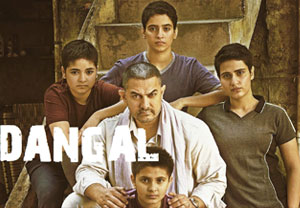 The top-grossing Hindi film of all-time (not counting the dubbed Bahubali 2) took forward the sports biopic fascination of the industry to a new level, with Aamir Khan helming a film in this genre. The film provided an exciting combination of many ingredients that work commercially and critically – a real life story, great casting and performances, humour, social messaging and warm emotions. It may have lacked the ultimate finesse of Lagaan, but being based on real-life characters, Dangal had an unmistakable authenticity that resonated across the country.
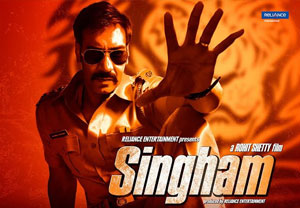 The first film of the much-touted Rohit Shetty cop universe came at a time when anti-corruption citizen movement in the country was at its peak, in the midst of various scams and scandals. Singham was followed by the much-inferior Singham Returns, and then by the highly-entertaining Simmba. All the films in this cop universe quasi-franchise promote vigilante justice in some form or the other, which can be problematic at some level. But in terms of entertainment value, Singham and Simmba both had the right balance of larger-than-life elements (especially the punchlines) and a certain believability that the story is indeed rooted in today’s real world.
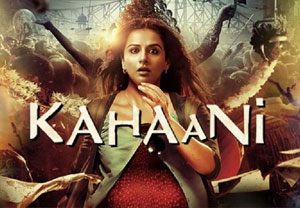 Kahaani is iconic for several reasons. Coming within three months of the much-hyped The Dirty Picture, it provided a definitive tag to Vidya Balan as one of the finest female actors of her generation. Kahaani was also one of the first films in the so-called ‘female-centric’ films genre, and its success paved way to many more such films over the last seven years. It was also one of the first Hindi films with Nawazuddin Siddiqui in a major role. The film also gave us the iconic Bob Biswas, who now has a film of this own under production.
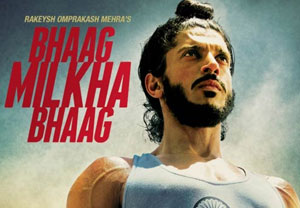 The original sports biopic that opened the floodgates for umpteen others had an unlikely director-actor combination for the genre, and that probably worked as its surprise element. Farhan Akhtar may not have got the Punjabi accent pat, but his work on his physique and look deservedly got much appreciation, and the film, which spanned a few decades in time, worked equally as a human drama as a sports film.
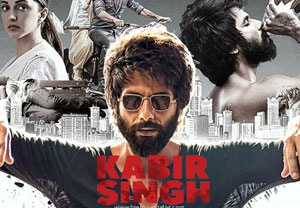 This year’s big hit Kabir Singh was a near-replica of its original film Arjun Reddy. It was also the most-controversial and spoken-about film in a long time, fueling debates on misogyny in cinema. But the film worked for the audience across the broad spectrum, and remains the highest-collecting film of the year in multiplexes, ahead of the year’s top-grosser War. While the music played a key role in its success, the resonance of today’s youth with Kabir’s character is a study in itself, on how Indian youth looks at life today. And that’s a topic that deserves a full write-up of its own.
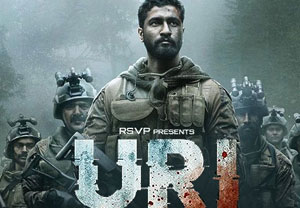 Political films have been taboo topic in Hindi cinema for the longest time, but the last 2-3 years have seen more acceptance on this front. Uri was a full-throttle action drama, featuring a fictionalized account of the surgical strikes that followed the Uri attacks. The idea of the film itself is a masterstroke, and the execution was more than praiseworthy, especially in the sound department, which lifted the last hour of the film to a new level altogether. The film went on to be a much bigger hit than anyone would have anticipated, given its modest cast. And that shows the power of right-wing cinema in today’s India, when made with technical prowess, of course.
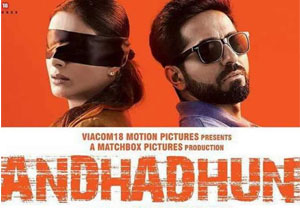 Ayushmann Khurrana is the big story to emerge out of the last two years, with back-to-back successes in AndhaDhun, Badhaai Ho, Article 15, Dream Girl and Bala. AndhaDhun, with its comedic treatment of the thriller genre, was perhaps the best-reviewed film of the decade. Director Sriram Raghavan has made taut thrillers before. But with AndhDhun, he outdid himself, peppering the film with fascinating sequences, especially that captivating scene in the first half at Tabu’s house, where Khurrana discovers there’s been a murder in the house. AndhaDhun will take some beating in class, and may hold the tag for the most iconic modern-day thriller in Hindi cinema for a long time.
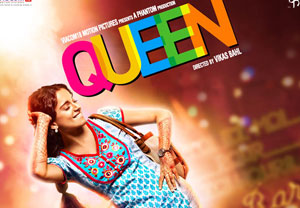 If Kahaani started started the trend of films being headlined by female actors, Queen took it to the next level. It also brought forth the acting genius of Kangana Ranaut, which was later reiterated in Tanu Weds Manu Returns, where she plays a double role. Queen was empowering, uplifting, funny, emotional and authentic in equal measure, becoming that rare urban film that only gets better with each viewing.
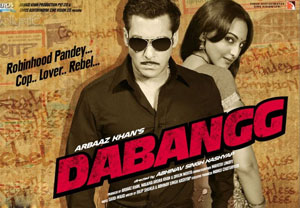 I write this on the day of the release of Dabangg 3, more than seven years after the first film in the franchise. Dabangg, coming after Wanted, gave Salman Khan the star status he continued to enjoy through the decade. It also led to the resurgence of the masala action genre, which thrived for a few years, before facing audience fatigue due to a sense of sameness that grew with every such film. Dabangg may not be even amongst the top 25 finest films of the decade (at least 2-3 Salman Khan films would be ahead of it on that list), but in terms of its impact, it became the foundation of a sub-industry in itself.
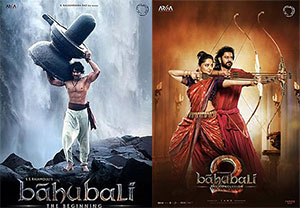 There’s not much new to say about Bahubali. It remains the most-watched, most-discussed and most-adored Indian film work of the decade by an embarrassingly-wide margin. A dubbed film, without any major Bollywood stars, beating the big-ticket Hindi films to the top of the box-office was an eye-opener for many. It told us that big-screen experience and imagination hold more value in minds of the audience that one would have ever thought, an idea that was further authenticated with the huge success of the last two Avengers films in India. Bahubali’s success may have changed Hindi film industry’s thinking forever, and for the better.