Tag: Prasoon Joshi

  • Is Nestle really part of India’s fabric for a century?


    By Pritha Mitra Dasgupta


    The latest corporate campaign from Nestle created by Prasoon Joshi, executive chairman, McCann Worldgroup Asia Pacific is visually impressive in its sepia tones and transition from pre-Independence to the 21st century. But ad folks and even consumers are taking the film with a bag full of salt. Their grouse: while Nestle claims it’s been a part of “country’s fabric for more than a 100 years”, many regard it more as silent spectator than active participant.


    In the almost 92-second clip, the Swiss multinational food and beverage company packs in historic milestones in India’s journey like independence, India’s World Cup victory, its first space mission and so on. Nestle which set foot in India in 1912 features some of its marquee products like Nescafe, Milkmaid, KitKat, Maggi Masala and so on. But it’s opted to drop its famous Maggi noodles which, as you are probably aware, has been pulled from the market and is still under a cloud.


    There has been some appreciation but the critiques have also been flying thick and fast. The most common one is that of appropriation: the belief that Nestle was nowhere near as embedded into the life of India as it claims to be. And that the one product that was ubiquitous does not make an appearance in the film.


    An agency CEO who opts to remain anonymous points out: several brands can claim to have rightfully played a role in the transformation of India: Amul, Air India, Colgate, Dettol, Parle G and Lifebuoy. But when it comes to Nestle, he says, “The film is desperately trying its best to be part of the Indian subtext and culture, forcefully creating situations and conversations, which don’t connect. It is a tall claim. The basket has brands which cannot claim to be serving and being part of the nation for 100 years!”


    Manish Bhatt, founder and director at Scarecrow believes the film is good but stops short of being Nestle’s best: “When you talk about brands being part of a country’s fabric then you instantly think of Coca Cola and the United States or Milo in Malaysia. You will find Santa Claus holding a Coke bottle. So only when a brand plays such a grand role in the everyday life of consumers and becomes part of their being, can it make such a claim.”


    It’s also aroused the ire of Joe Public who are either rendered inarticulate by rage or weren’t particularly articulate to start with. A typical complaint reads as follows: “Fresh cow’s milk better option. Nice Ad but believe me can’t trust Nestlé (sic) I feel like a culprit as I used to give my daughter Maggi on Sundays.I never knew was feeding her lead n MSG.” Another reads: “Nestle should b ban (sic) for 100 yrs as it has betrayed 100 years of faith of indian people.”


    To its credit, Nestle doesn’t believe in merely basking in the admiration of the people who like the film and is engaging even with its critics: a strategy that was missing around the time the Maggi crisis was brewing. In response to the first comment, it provides an update that clarifies its stance on the MSG issue. In response to the second, it replies with “This film is not about specific products or brands, but about Nestlé’s understanding of India’s culture and how we have been a part of the country’s fabric for more than a 100 years. While the Hon’ble Bombay High Court has lifted the FSSAI ban order on Maggi Noodles, the process of fresh tests mandated by them at select accredited labs is still underway, and we have taken a conscious decision not to use the Maggi Noodles pack-shot in the film until the process is complete.”


    Nestle also takes times out to address the critiques of the industry at large. Managing director, Suresh Narayanan points out, “Nestlé has developed deep bonds of good will, trust and relationship with millions of consumers and participated actively in Indian society at large. The corporate film has been developed to communicate the rich heritage of Nestlé in India and how its relationship has been built over the years with commitment, understanding, passion and dedication towards quality. It is an acknowledgement of our gratitude in being part of Indian consumer’s lives, epitomised by some significant historic moments since Independence.”


    He points to Nestle’s factory in Moga set up in 1961 which pioneered the dairy business and began contributing significantly to the development of the district in Punjab. He says, “We have successfully touched the lives of 100,000 famers who supply milk to us. Today with 8 factories across the country, our staff strength of more than 7000 people has 99.7 per cent Indians working dayin and day-out to deliver on our promise of quality and safe products.”


    The film serves a second purpose that neither Nestle nor its critics are articulating: an attempt to position the firm as distinct from its flagship products. Maggi and Milkmaid are famous brands in India, Nestle perhaps, not as much. And so an attempt to build Nestle as a distinct, trustworthy entity, one that could brave the storms that may momentarily sink a flagship or two. But of course, the jury is out on whether this film is enough to make that happen.


    Source:The Economic Times

    Copyright © 2015, Bennett, Coleman & Co. Ltd. All Rights Reserved

    Licensed to republish


  • Jaisurya Das: Kappa, Meen Curry & the IAA Summit

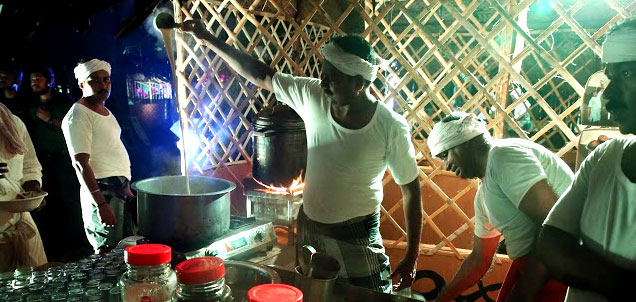
    A glimpse from the streetfood festival hosted by Mathrubhumi group on Day 2 of the Summit


    By Jaisurya Das


    Shah Rukh Khan, Mammooty, Sachin Tendulkar, Sadguru Jaggi Vasudev and earthy crooner  Papon topped with pyrotechnics and Kappa – Meen Curry and you have glitz, glamour and intrigue like never before.


    Kerala – God’s Own Country – played host last week to over 700 Delegates from all over the country at the Silver Jubilee Summit of the International Advertising Association India Chapter. An eclectic mix of international speakers, top-notch professionals, academicians and students did the audience proud at every session.


    Srinivasan K Swamy, IAA India President, welcomed delegates while Faris Abouhamad, Global President and IAA chairman and Pradeep Guha, Summit Chairman & Area Director IAA Asia Pacific, gave their short and crisp Introductions to the Silver Jubilee Summit.


    Amitabh Kant; Secretary, Industrial Policy & Promotion , Government of India delivered a keynote address with almost a rehearsed élan. Kerala and tourism have always been synergistic, yet the transition from being known only for Kovalam (The ‘Done to Death’ beach near Thiruvanthapuram ) to a destination that has immense diversity, was a carefully planned strategy. “Brands are made by people,” said Kant.


    Now , we have to agree with that don’t we ?


    The sheer diverse plethora of eminent speakers (that includes the glam world) who spoke at the Summit rendered it Unique . Srinivasan Swamy and Pradeep Guha gushed about the immense response they got.


    While Cindy Gallop (Founder & Former Chair of BBH, USA and founder of MakeLoveNotPorn ) explained the need of a new world order, Paul McCarthy, author of Online Gravity, outlined how gravity giants attracted huge investments . Undoubtedly a reality that was seconded by Abhay Pandey, Managing Director, Sequoia Capital. Simon Kemp, Regional MD, ‘We Are Social’, Singapore, was emphatic about how social will disrupt all the fundamentals of the marketing mix. We would imagine it already has, Simon. We are still trying to find the method in the madness called social!


    That’s probably why Sanjiv Puri, President – FMCG, ITC Ltd, felt that building globally acceptable brands wasn’t easy. Understanding the equity of tradition is the essence, remarked Puri.
    A meaty day met its match when the Mathrubhumi group took over the evening and ferried the entire lot of delegates to the boat jetty at Marine Drive. Half-hour later, the boats approached what seemed like an enchanted island. It was Bolgatty, resplendent with exquisite lights and the resonance of the unmistakeable ‘Chhenda , the Traditional Drum.


    The overcast skies came alive with the startling pyrotechnics, much like the famed ‘ Trichur Pooram ‘ where neighbouring temples symbolically compete with each other using fireworks. This festival incidentally attracts visitors from across the globe.  More often than once it is the fireworks and the majestic elephants that has the audience spellbound, year after year.


    Malayalam film icon Mammooty stole everyone’s heart with his inimitable baritone intonation and sheer presence. Street food in Kerala has its own charm, and the Bolgatty Island came alive with food stalls , picklesellers and the like. All that was served was homecooked or made right there , making it even more authentic and rich in flavour and tradition. Shreyams Kumar of Mathrubhumi played a perfect host and ensured every one was taken care of well.


    The third and final day of the Summit was a mixed bag of glamour, intrigue and emotion what with Sachin Tendulkar, Sadguru Jaggi Vasudev, Arnab Goswami etc sharing their experiences and views on ‘What’s Coming Next’.


    Tendulkar was his calm, composed self, in conversation with Prasoon Joshi. He talked about how a good advertisement could help him in addition to the brand and how he respected his father’s wishes and refused all tobacco and liquor ads. “Let the country talk about the past innings, you think about the next,” he said. ” Take that extra step, don’t give up” was his positive advise to all. The master blaster and Prasoon Joshi handed over the stage to the ever-charismatic spiritual leader Sadguru Jaggi Vasudev.


    His deep voice and incisive views enthralled the audience. “Why create the ghost, fight with it most of your life, and then win over it,” remarked Vasudev.  “Success is Joy. ” he said while advising the audience to be positive in life.


    Rahul Welde, Vice President-Media , Unilever Asia, Africa, Middle East, Turkey and Russia, was lucid in his talk focussed on the power of custom content. “Don’t be in the advertising business. Be in the content business,” he said with passion. Custom content is the future where speed is the new currency.


    One also saw the likes of 21-year-old Ritesh Agarwal, Founder & CEO, OYO Rooms, in conversation with Sam Balsara, Chairman, Madison. Sameer Nair, the man who brought Koun Banega Crorepati and Amitabh Bachhan to the small screen, and currently Group CEO, Balaji Telefilms, talked about how word of mouth is now word of social!


    The Chief Minister of Kerala Oommen Chandy was all praise for the IAA for having brought the Summit to Kerala. This, Chandy said, was the largest advertising conference to be held in the State.


    The Summit ended with Arnab Goswami talking about how his breed of journalism is disruptive. “You have to be like a pin prick for the society to change.” remarked the Newshour man.


    Kerala will indeed a special place in many hearts, be it the Kappa and Meen Curry or the diverse energy that came together for this Summit.


  • McCann bags creative biz of Incredible India

    By A Correspondent


    The Ministry of Tourism has awarded the duties of its Incredible India account to McCann. A grueling pitch process had been underway for the last couple of months and the account was won by McCann in this multi-agency pitch for a three year period.

    The account was earlier handled by Ogilvy.


    According to the Tourism Ministry, McCann was chosen because of their unique consumer understanding, intrinsic reflection of the social conscience cultural insight and superlative creative work.


    Prasoon Joshi

    Prasoon Joshi, Chairman Asia Pacific, CEO & Chief Creative Officer McCann India says “At McCann we take pride in our deep cultural understanding of the country and am really looking forward to this opportunity to build on India’s diversity and share the incredible canvas with the world. The Ministry has many innovative ideas for the coming years and we are excited to partner the Ministry in creating communication for the same.”


    Incidentally, McCann has just executed a set of four commercials on the Atithi Devo Bhava Initiative. These feature Mr. Aamir Khan and have been launched recently. McCann has also contributed musically to this campaign with Prasoon composing and lending his voice to one of the folk songs of Uttarakhand.


  • ‘They listen to me’, says Saavn in new brand campaign

    By A Correspondent


    Saavn has announced a new campaign with renowned ad film visionary and lyricist, Prasoon Joshi. Saavn has collaborated with Joshi and his team at McCann to help drive the music company’s evolution as one of the most innovative advertising voices across India’s top technology brands. The first campaign created under the association is on air now and features a comical series of five spots that promote Saavn’s innovative social features: Tag, Chat, Follow, and Share.


    Saavn’s previous campaigns, featuring Bollywood star, Ranbir Kapoor, were launched in India and select international networks, and generated more than 7 million combined YouTube views, while attracting millions of new users to the Saavn app. Until now, Saavn’s ad creative had been completed entirely in-house. Saavn’s Creative Director Teddy Stern and Vice President and Editor-in-Chief, Sneha Mehta, independently conceptualized, directed, and co-wrote each spot. The new campaign, titled “They Listen to Me” was also directed and written by Stern and Mehta, but this time the duo’s sensibilities and creative execution is combined with the McCann team’s globally-renowned expertise. The result is a unique and fresh concept that builds on Saavn’s history of pushing groundbreaking creative.


    “The last year has been pivotal for Saavn as both a brand and advertiser, starting with the Ranbir Kapoor TVC in August. The next step in our brand evolution is collaborating with the immensely-talented Prasoon Joshi and his team at McCann,” Stern said. “Music connects people, and Saavn amplifies that connection. Our app empowers our listeners to share in the joy of music with each other. That’s the Saavn ethos, and McCann is the perfect team to help us broadcast that message to millions of music lovers, in Saavn’s own quirky and innovative way.”


    The new “They Listen to Me” campaign is a series of five short TVCs, plus creative for radio, theatrical, and digital platforms. The spots demonstrate how people of all walks of life are empowered by Saavn, through the app’s new social features. The spots feature multiple genres of music, with tracks ranging from “Jumme Ki Raat” from Kick, starring Salman Khan, to “Uptown Funk” by Bruno Mars.


    “From concept phase to production, and now to launch, the Saavn team has been a joy to work with on this campaign,” Prasoon Joshi, CEO and Chairman of McCann, APAC Region, said. “When Saavn’s creative team came to us with the idea of empowering users through Saavn Social, McCann’s creative and strategic team knew we wanted to deliver something that not only reflects Saavn’s unique and progressive brand mentality, but also tells the stories of their users – everyday people who have the power to influence their peers on a daily basis through music.”


    The five spots range from 20- to 30-seconds in duration, and were shot in just three days. Each spot will air in three languages (Hindi, Tamil, and Telugu), for a total of 15 television commercials. The five spots, which will roll out throughout the summer across key networks in India, are titled: “The Wrestlers,” “The Office,” “The Professor,” “The Newsroom,” and “The Dentist.”


  • Winning it the Manthan way


    By Pradyuman Maheshwari


    Last fortnight, the London-headquartered D&AD announced the winners for its 2015 awards where McCann won six ‘Pencils’ (as the awards are called), including the coveted Yellow Pencil — the first time ever won by an Indian agency.


    Talking about the win, Prasoon Joshi. Chairman, Asia Pacific, CEO and Chief Creative Officer of McCann India, said: “I am extremely pleased with the outcome… D&AD is a prestigious award to win.” Earlier, the agency bagged four Golds and two Silvers at the One Show Awards.


    It may be his third job in the business, but Nikhil Waradkar has been in the McCann system for just three years. A student of the LS Raheja School of Arts in Mumbai, the edition of Manthan where the Yellow Pencil-winning Babol idea came up, was Waradkar’s first. “Babol is a Delhi-based account, but it was a fun working on it,” says Waradkar. Didn’t the original Babol team feel threatened that an ‘outsider’ who wasn’t a part of the team, cracked it? “On the contrary, they pushed it to the client? “says Waradkar. “That’s the Manthan format. It’s good for everyone.”


    For the India office of McCann Worldwide, it’s been a great showing at some of the top awards events internationally. Little wonder then, that in the Gunn Report ranking, McCann tops the India list for a second year in a row. The Gunn Report is a global index of creative excellence in advertising, and is collated from among the winners of the world’s leading and most important awards events.


    Joshi attributes the successful showings to a concept called ‘Manthan’ that he initiated in the agency some five years ago. “It started as an experiment, but has matured over time,” he says. “We organise it at least three times a year, and it’s essentially a congregation of creative folk. So our Yellow Pencil-winning entry is for a client from the Delhi office, but the art and creative directs are from Mumbai. This is the way Manthan works.”


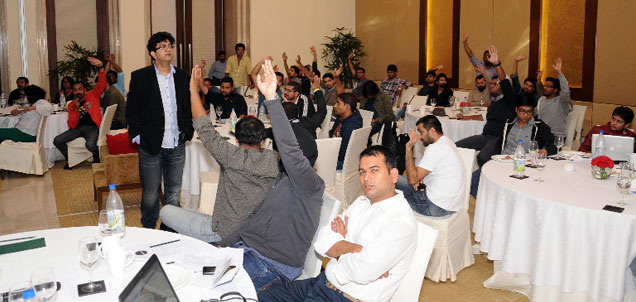
    It’s an offsite with Joshi leading the warm-ups. “I try and share some stuff with them to get the ball rolling. But later, we have everyone sharing things that have inspired them. It could be anything — advertising, art, music, poetry, literature.” Manthan, says Joshi, has had a significant impact over the last three years. “People are very excited about each other. It also helps them to interact with teams from elsewhere in the country,” he adds.


    Typically, while employees are aware of the various brands the agency is working on, a Delhi staffer doesn’t know what’s happening in the Mumbai office, and vice versa. The idea of Manthan is to provide a sort of ‘churn’, a regular engagement to keep everyone in the loop. “I often hear that people are constrained by every day work or have someone sitting on their heads, telling them what will or won’t work. Younger creative, in particular, wish they had a free hand to do things,” says Joshi.


    Manthan is for creatives at all levels – from Joshi and the National Creative Directors, to the fresher, and some 80 to 100 people travel to a destination within the country for this brainstorm. But even before they arrive at the designated venue for Manthan, all creative staff are sent an agenda, and they have to work on a presentation for a certain product or a service. “It also breaks the fact of ownership of clients. For example, there may be someone who may say ‘I will work only on this brand’,” says Joshi.


    But aren’t people possessive about their accounts? “Yes, and I don’t blame them. You nurture it, you understand it,” say Joshi. “But being a part of the creative world, you understand that it eventually boils down to ideas. There are some honest, creative people who, at times, come and tell me they are fatigued. They have a mental block about a certain brand. Similarly, clients sometimes ask if they can get a fresh team because the regular team [may have hit a roadblock] from being over-briefed and over-cautious”


    As ked if he faced any resistance to the initiative, Joshi said it was largely around people wanting to keep their cards close to the chest about their clients.  That’s when Joshi would point out to them that, the large number of brands he has nurtured, he should be the most “possessive” one of them all. “At McCann, right from the beginning, I have tried to bring the culture of less territory. While ownership is important and I want that, a turf war is harmful. And Manthan has helped clear that up,” says Joshi. But can a sweep of awards events be attributed to Manthan? According to Joshi, the initiative is an exercise in pushing the boundaries, and developing an attitude to do that. So while Manthan helps break the monotony of a daily grind, it also takes people back to the basics, by making them re-examine whey they got into advertising, in the first place. “At Manthan, the basic belief is do what you feel right. We do meet the management team and the planners later, and some of the work may get shot down, but the process does opens our minds up,” says Joshi.


    In fact, Joshi explains how the core ta working on an account has now begun to see interference and suggestions from others (sometimes rookies), not as an impediment, but as a way of finding solutions when you are stuck. Indeed, Manthan enables a cross-fertilisation of ideas much in the way that creative people, having a drink together, might sometimes come up with ideas on various brands. “I always wanted to do this for this particular category. That ‘wish’ gets fulfilled through the Manthan culture,” says Joshi.


    It also helps to figure out who is getting a little jaded. “I believe in self-realisation. McCann is a very non-judgmental organisation,” says Joshi. “I believe in people realising their limitations themselves. I feel the culture should be such that it makes you realise what you’re not doing right. When you see the quality of ideas coming out in front of you, you are [bound to wonder if this is] where I’m going.”


    On the more philosophical question of where the future of creativity is headed, Joshi says: “Creativity can’t be boxed. I think crowdsourcing will very much be a part of our offering, but deep-dive will reign supreme. A lot of time should be spent in briefing, which people don’t do. People feel client briefing, agency briefing and strategic planning are a waste of time. That’s the reason, Manthan is not about throwing a problem at you. You’ve already been given a brief about a brand which might not be a part of the brands that you’ve thought about.”


    A version of this appeared in dna of brands dated June 8, 2015


  • VIP Industries inspires consumers to fulfill their travel ambitions

    By A Correspondent


    VIP Industries is set to grab the attention of the audience with its new campaign ‘Where do you want to go?’. Themed on empowering travelling aspirations, the campaign has been conceptualized by Prasoon Joshi and Director of the Bollywood box office hit movie Queen – Vikas Bahl. The campaign also showcases VIP’s new 2015 collection which has an array of different designs, designed for weddings, holidays and business travel.


    The TVC portrays a story of a young girl who appears to be blind and yet is determined to travel across the globe. ‘Where do you want to go?’ touches on the desires of traveling ahead in life and motivating people to overcome all the obstacles. Taking the campaign a step further the brand has associated with Make-A-Wish Foundation of India which believes in fulfilling wishes of children with life threatening medical conditions. As a part of their association, every month VIP will sponsor the travel wishes of these children.


    Commenting on this new campaign, Radhika Piramal, Managing Director, VIP Industries said, “We in VIP believe that every individual would like to travel irrespective of their socio economic or health condition, as travel brings joy and experience of a different kind. This campaign is all about urging people to travel and explore. Therefore apart from exhibiting our new collection, we aim to convey an important message of travel through this campaign. ‘Where do you want to go?’ is an inspirational and emotional concept, close to my heart. We hope that people are motivated to travel by watching this campaign.”


    Prasoon Joshi

    Expressing his content towards the TVC, Prasoon Joshi, Chairman McCann Worldgroup Asia Pacific & CEO McCann India shared, “Where do you want to go? is an attempt to portray the change in the new confident India through the differently abled whilst subtly displaying the new collection of VIP. This creative thought is built around celebrating the new emotions around the journeys that Indians are undertaking, and the story of the blind girl as a protagonist is a creative metaphor which represents the emotions of a new & bolder India that is forging ahead. The entire team has stayed true to VIP as a luggage brand which has always remained part of Indian popular culture and this commercial represents it contemporary role in the Indian society.”


    Speaking about the TVC, Vikas Bahl said, “Directing a movie is far easier than making an ad commercial. You barely have few seconds to convey a message as compared to the hours one has for a movie. ‘Where do you want to go?’ is based on a concept that will make you think of those who can’t normally travel but how it’s possible if you put your mind to it. I hope justice has been done to the concept through my direction.”


    Deepak S Bhatia, CEO, Make-A-Wish Foundation of India commented, “We thank VIP Industries for choosing to associate with our cause.to grant wishes of eligible children who wish to travel within India. This will help them be positive and restore in them hope, strength and joy.”


    The TVC is currently on-air and showcases ‘Verve Nxt’, a lightweight, stylish collection available in golden yellow. The campaign will witness a 360 degree marketing approach across all the mediums of print, radio, television, digital and social media nationally.


  • IAA Leadership Awards 2015 presented


    By A Correspondent

    CMO interviews by Dyanne Coelho


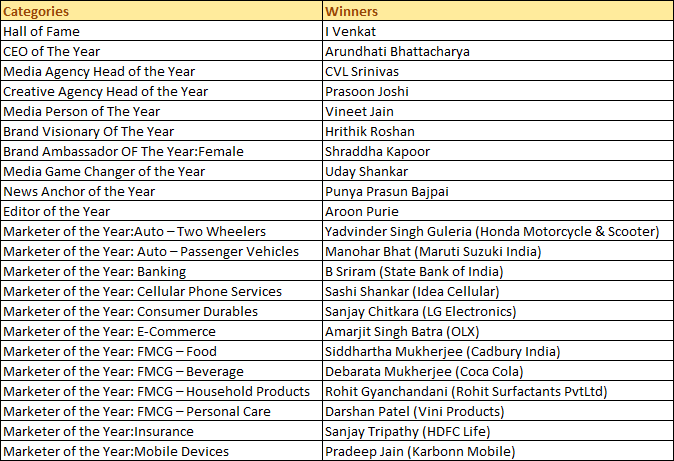
    It would be wrong to single out any single IAA Leadership Award winner. All them are super-achievers. Along with a host of top marketers (see list below), Bennett, Coleman and Company Limited managing director Vineet Jain and India Today group Chairman and Editor-in-Chief were among the top mediapersons presented with the IAA honours. Arundhati Bhattacharya of the State Bank of India was CEO of the Year. And CVL Srinivas and Prasoon Joshi from adland were Media Agency Head and Creative Agency Head respectively. Leading mediaperson and director of the Eenadu Group I Venkat was awarded the prestigious Hall of Fame by the India Chapter of the International Advertising Association (IAA).


    Mr Venkat and several other leading media, advertising and marketing leaders were presented awards at the third annual IAA Leadership Awards in Mumbai. The event, presided by Minister of State for Finance Jayant Sinha, saw leading lights of the fraternity in attendance. The awards presented were:


    Sanjay Tripathi (HDFC Life):

    Marketing is very important in this field. It is not like other industries where the product changes every year. We sell the same product for 20-25 years. We need to understand the needs of our customers and cater to them. When a customer buys an insurance policy, he/she looks at all aspects, not just the price. They need to be able to trust us for a long time period and we can instill this trust through our marketing and service. We need to maintain our efficiency through the years.


    Darshan Patel (Vini Products)

    Marketing is a key thing, and we need to differentiate from what others are doing and if you do the right thing, you are going to be successful in this field. First of all, my products were different from what other companies were offering, and I kept investing in my brands, and I advertise how my brands were very consumer-oriented and it was accepted.


    Debarata Mukherjee (Coca-Cola)

    It is competitive from the outside, but if you look at the industry from the inside, the per capita consumption is very low, so the real need is to grow the market. The percapitas in India are 15, 16, compared to global averages of 95, 96. We are competition-aware, but not competition-focused. It is good to be aware of what others are doing, but I think collectively we have the mantle of growing the industry. If you look at the water space, it is all unbranded, but you’ve got the Kinley commercial which is about trust in every drop, creating a brand in a category with so much competition. So I think the task is to make sure that we have sustainable, profitable, competitive advantage by building brands through marketing. While competition is important, all of us have accountability on the mantle to grow the business together.


    Yadvinder Singh Guleria (Honda Motorcycle & Scooter)

    See,. a job for a marketer in India is difficult, because you cannot have the same language to communicate with the entire demographic of the country. We have a large geographical spread and different languages, and at the same time we do not have a so-called national language. Every region has so-called likes and dislikes, so this becomes a real challenge for any marketer in India to have a common linkage and to be able to connect the dots between various regions, to arrive at one communication for the brand.


    We take regular feedback from our regional teams who are sitting in the market and try to find a connection to bring them together on a particular point. Then somebody at the corporate level takes a decision so that we are at the pulse of the market.


    Amarjit Singh Batra (OLX)

    India is a market where internet penetration is very, very low. Now it is a bit better than what it was a few years back. Still I think we are about 20-30 percent of the market which is very low compared to a 1.2 billion population. What marketing allows you to do is to reach people beyond people who are on the internet. I’m talking about offline marketing here. It helps with the battle of the minds as well as the battle of the market share, because it allows you to reach out to everybody, and those people will also be on the internet sometime. So as an internet brand I think it’s important to also look at offline marketing as a tool, and I think most of us are doing it today.


    One way we did that is via marketing to create awareness of the brand. We have also taught people as to how to go about using OLX. Our marketing campaigns have also got education about how to use our brand. One more thing is that we have realised that India is not going to be on PC, so we have developed our brand for mobile and we also used marketing communication to tell people that you can use your mobile to access OLX. With that we were able to move the market faster than what it was.


    Congratulating winners, Mr Sinha said, “Politics is like marketing in many ways. In my experience I have learnt that Indian consumers are a very different lot, very different from consumers internationally. They are emotional, relational and definitely need value for money – paisa vasool is a must. So when we are speaking to the Indian consumers as marketers, much as we in politics do, we need to keep these aspects in mind.”


    Speaking on the occasion, Srinivasan K Swamy, President of IAA’s India Chapter said, “This is only the third year of the IAA Leadership Awards and it has already established itself as an industry standard. I would like to thank for the support I received from Raj Nayak for putting steam behind an award that the industry looks forward to.”


    Speaking about the initiative, Raj Nayak, CEO, COLORS said, “IAA is undoubtedly the best platform in the industry bringing together creative minds, and the IAA Leadership Awards celebrates the leaders who empower like-minded individuals to push their boundaries with great campaigns and hard work. Associating with the event is an absolute honour and we would like to extend our heartiest congratulations to the winners for their contribution towards the development of the industry. We look forward to further our association with IAA and continue to applaud the efforts put in by professionals on this national platform.”


    Also speaking on the occasion were Sudhanshu Vats, Group CEO, Viacom18 and Kaushik Roy, President – Brand Strategy & Marketing Communication, Reliance Industries Limited. Network18 Group CEO AP Parigi joined Messrs Swamy, Roy and Nayak in the presentation of a memento to the minister.


  • What ad veterans have learnt from the younger lot


    By Delshad Irani


    At work, like in any human tribe, there are two kinds of people – the Elders and the Young. The latter, of course, are eager to conquer the world. The elders, who have been there and done it all (or so they’d like to think) remind the impatient youth, Rome wasn’t built in a day.


    ‘No schnitzel, Sherlock!’ is the response, generally. While it’s not the elders’ job to shatter the young’s exaggerated sense of self-belief, it is however their duty to voluntarily impart pearls of wisdom and teach a lesson or twelve. That is if the children aren’t of the know-all variety with brains like sieves.


    However, at no other point in history has there been such a high premium on youth and the mad dash to make everything from buttocks to board rooms look younger is testimony to that fact.


    Yet, rarely are inhabitants of corner offices conscious of the learnings they’ve gathered from the younger tribe. It might not seem so but there are some important lessons to learn. And we’re not talking about teaching grandma to text and abbreviate every word known to man here.


    In advertising agencies, there are endless corridors of hormone-fields. It’s one of the youngest industries, where millennial minions slave day and night to create ads for unrelenting and often unreasonable clients so their award-winning bosses can scale the Palais in June, every year.


    So whoever said the millennial is fickle or needs constant validation and expects “Look maa, I drew within the line!” to be followed by a treat and a cuddle or that they are as loyal as a mercenary is nucking futs.


    Well, there are exceptions. But amid the myriad of contradictions, millennials have come to represent quite effectively, the new generation of adwallahs. They too have priceless wisdom to share with the generations that preceded them, even if they aren’t quite aware of this yet.


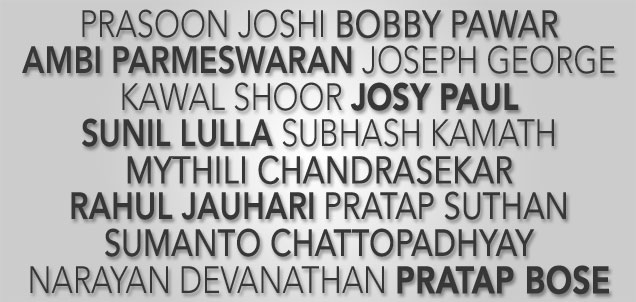
    In an attempt to bring these to light, Brand Equity asked advertising’s “seniors” about the valuable lessons they’ve learnt from their juniors.


    Striking the right work life balance, not being averse to risk and cultivating a very low embarrassment threshold, are just some of the beautiful learnings but let’s not get ahead of ourselves.


    Read on to see the lessons advertising’s heads have learnt from the legs that prop them up.

     

    Prasoon Joshi, Chairman Asia Pacific & CEO of McCann Worldgroup India

    What I have learned from the younger generation, is the work life balance. My generation (or at least speaking for myself) were very extremist, single minded and did too much work. We’d go to Cannes and it was like a project: go and return.


    The younger lot tie it up with travel and exploration. With youngsters, right from the start, there’s a more holistic approach to life. They believe it’s good to take breaks, even short ones. And so to someone like me, with a crusader mentality, I’ve learned a lot.

    Moral of the story: Take as many breaks as HR will allow.



    Bobby Pawar, Director and Chief Creative Officer, South Asia, Publicis

    The lessons I’ve gathered from my youngest colleagues? Holy-moly, where do I begin? Tenacity. Irrational passion. Being curious of the changing world. Trusting my instincts as much as my experience. Experiment. When to step in. When to sit on the sidelines and applaud. Rediscovering that this business is supposed to be fun. Patience. The list grows almost every day.


    I believe, if you aren’t learning from the people you are with, you have the wrong people, or more likely you have the wrong attitude. One day at work we were discussing ideas. It was a big brand, big brief, big budget, big stakes. This kid had an idea that sounded cool, but it was pretty much out there. And I said, I don’t think we can take a chance like this on a billion dollar brand. The kid looked bummed. He remained quiet for a bit, while we chatted.


    Then he said, “Bobby, failure is temporary, success is permanent.” I said, “Getting fired is temporary too, but it stings.” Everybody laughed. What he said haunted me. The next day I caught up with him and we spent time trying to make his idea work. Let go of your professional prejudices. A new marketing order is coming and it will be shaped by those willing to shape it and be shaped by it.

    Moral of the story: Don’t save your precious aphorisms for Twitter, try it in conference. Even if it sounds dumb. Never stop being bold and curious. Christopher Columbus wouldn’t have gotten far if he weren’t a nosy fella.



    Ambi Parmeswaran, Executive Director and CEO, FCB Ulka

    The youngsters taught me how use technology to solve problems. Sometimes what looks difficult is really a piece of cake.


    The younger lot have innovative skills that they bring to the table. It’s great interacting with trainees from management and creative. They are supposed to make a 20 minute presentation to us at the end of their stint, and I remember a boy making a video presentation in the form of a daily diary to his mom. It was great because of the ‘We haven’t seen this before’ feeling.


    Their approach to work is very different, which we often criticise, but there are plenty of takeaways. I remember the time when an employee was moving on from our agency, and I asked him to give me a call in case he wasn’t happy at the new place. I told him there was nothing to be embarrassed about and we could definitely work something out for him if he decided to return. “Why would I be embarrassed?” he asked me. And he was back in six months.

    Moral of the story: Never criticise before thinking. And if one is ever in need of a smashing presentation, commission the millennials in your employ.


    Joseph George, CEO, Lowe Lintas

    Their belief in the spirit of “moving on”, it allows you to not get stuck with any issue (good or bad) for too long. It allows you to accomplish a lot more. And it makes you a lot less emotional and more objective. It also allows you to stay focussed in meetings and conversations instead of the hangovers of an earlier issue or a previous meeting still clouding your head.


    Many times, we seem to dismiss and brand this trait of the youth as being fickle and superficial. Or even accuse them of being disinterested. It took me a long time to realise that those were erroneous and lazy conclusions. I was interviewing this young planner ( I personally interview all planners coming into Lowe Lintas ), and as we concluded with me saying that HR will get back to him, he said in a matter of fact way “to not let his youth come in the way of his salary or indeed his designation!” There are three brand lines that sum them up “Move on”, “Impossible is nothing” and “Poochne mein kya jaata hai”?

    Moral of the story: Life’s too short to cry over yesterday’s headlines, delusion of grandeur is a millennial condition and there is no such thing as a stupid question



    Josy Paul, Chairman, BBDO India

    One of the greatest things that my youngest colleagues have taught me is to be more authentic. They value that in themselves and they seek that from me. It helps me relax in their company and be who I am. It brings out the best in all of us. I feel the younger generation is a reminder medium of who we once were. They remind me of the strengths that I had, and have now forgotten. They revive and rejuvenate my authentic side. They point out things I once told them when I was a visiting faculty in their colleges. And they don’t let me forget. It’s a great source of energy.


    “We work differently from how you work. You guys work really hard and are obsessed with excellence about work. But excellence for us is how we manage both work and life. We need more breaks, more away-time. That’s how we create excellence at work. For you work is everything. We work for life” – Hemant Shringy, senior creative director, BBDO Ashram, age 29. It’s an insightful jolt and a beautiful truth, and I have accepted it. It is important to me. Which is why I remember it. Reverse internship, osmosis and learning are part of my world. I spend at least two hours a week speaking at colleges. The best thing that an experienced generation of marketers can learn from millennial marketers is to let go! The best way to contribute is to get out of the way.

    Moral of the story: Be real and weekends are not just Saturday to Sunday.


    Kawal Shoor, National Planning Director, Ogilvy & Mather

    I like their naivete and candour the most. I especially love their language, as yet un-corrupted by the dreaded ad lingo. And fresh language is often a window to new thoughts. No ‘target audience’, no ‘strategy’, no ‘360 degrees’ no bullshit. When they talk formally, they are pretty predictable and ordinary ; maybe they say what they think they’re expected to say, but when they let go, when they just chat with you, when they talk about how people are, and why they are the way they are, is when they can really say interesting things.


    The biggest life lesson is that there are no rules. Yes, there are a few rules on how you anchor a thought f o r clients to feel comfortable with them, but for creation of new thoughts and ideas, there are absolutely no rules. I also think today’s young are a lot more confident, sometimes even before they’re able.


    Exactly the opposite of how I was, or still am. And then I have a 14 year old at home who’s my anti-aging insurance. There’s a daily crash course I get on staying young. There are times I fail, times I pass, but I can’t say life’s boring.

    Moral of the story: Speak without thinking.



    Sunil Lulla, Chairman and Managing Director, Grey Worldwide India

    “I work harder.” It was a simple statement made to me by a fresher at JWT in the late 80s. It expressed the strength of the individual and the difference one can make to one’s success. i.e. Work Harder, than anyone else, until success is yours. He was working really late hours and was undertaking very simple and humble tasks. It was late and I asked him to stop working and go home and complete it the next day. This response, “I work harder”, got me to agree, smile and adopt this attitude.

    Moral of the story: Forget what was said about frequent getaways, work your backside off.



    Subhash Kamath, Managing Partner, BBH

    There are many lessons I’ve learnt from some of my young colleagues. Most importantly, I’ve realised that their youth is very different from how mine was. They’re growing up in a very different society, they’re far more optimistic and daring, far more capable of taking risks and exploring newer things than I was. And thanks to the digital age, they seem far more connected and have much better access to information than I did.


    Sure, it’s much more competitive now than it was in the 80s, but I think today’s youngsters are upto it. Our generation was taught to play safe, hold on to our jobs, save for a rainy day etc. Today’s youngsters have grown up in a more plentiful society. They have many more options to choose from, more entrepreneurial opportunities.


    Talent and ideas get rewarded more easily today than it did in my time. So the same values and priorities that I had don’t necessarily work for them. The one anecdote I remember very vividly that would perhaps illustrate this change was when, some years ago, I was doing an exit interview of a young star who’d decided to leave the agency. She had been doing extremely well, her colleagues and clients loved her, and she’d just been promoted with a hefty increment. But a month later, she put in her papers. I was completely taken aback. When I asked why, she said the job was keeping her too busy and that she was not getting any chance to spend time with her family and friends.


    Trying to give her some sagely advice, I explained that even I had to go through this phase in life. That it was important to give it one’s all at this early learning stage to build a long term career. That one day she’ll be able to balance it having come on top of this service business.


    To which she coolly looked me in the eye and said “But what makes you think I want to lead the same life as you did? I want to do it differently and enjoy both work and play now, not later.” I honestly had no answer to that. Just the strong realisation that things have indeed changed. This generation looks at things very differently. And the worst thing a senior person like me could do was to think of my own upbringing and youth in evaluating today’s generation.

    Moral of the story: Don’t evaluate the world through the prism of your life. It’s not that great a life, after all, if a millennial doesn’t want it.



    Rahul Jauhari, National Creative Director, Everest Brand Solutions

    I guess the number one lesson is that these kids don’t take shit for too long. They are not as tied down by stuff like loyalty to boss/agency as we used to be. So if they don’t get a good deal (monetary or opportunity) they move on. They have innumerable options – advertising copywriting is not bigger or smaller than content writing or opening a wedding ideas shop with friends or something else.


    I guess fundamentally, they are experimenting more than we did, they take less load than we did/do. Long ago, after I finished seeing a complete fresher kid’s folio, he asked to see mine. I kicked his butt for not doing his homework, but loved the attitude. We are in a people’s business.

    Moral of the story: You can’t take designations and dignity to the bank.


    Mythili Chandrasekar, SVP & National Planning Director, JWT India

    The youngsters absorb so much from the world around at a blistering pace, and are intuitive culture and technology experts. They challenge conventional wisdom and it is good to be constantly tested. Free flowing and lateral thinking is something we can learn. Some very young colleagues have stunned me with their depth of work and speed of learning.


    While one cannot generalise, I do find disrespect for dress codes, time and casualness in tonality ends up working against youngsters being taken seriously. They certainly seem to have better work life balance, and are able to switch off far more easily – too late to learn that! After a point it’s not about age, but character. Those who are tenacious, unrelenting, passionate, bold, and thorough are those who stun you and teach you every time.

    Moral of the story: Study hard, study fast. Dress for comfort, but save the ‘Frankie Says Relax’ t-shirt for under the comforter.


    Pratap Suthan, Managing Partner and Chief Creative Officer, Bang In The Middle

    This was when I was a CD in Grey Delhi in about 1999. I had a trainee for about six months – he was really good at his job and had a lot of spunk. I wanted to hire him as a junior writer, but apparently we didn’t have the budgets. I kept delaying telling him because I wanted him on board, till the time he asked me what the status was.


    When he realised that the branch head couldn’t bring him on board, he walked into his office, gave him a piece of his mind and got out, only to start his own agency. That boy is Sidharth Rao of Webchutney. That day I learned that if you are convinced about something, you should stand by it no matter what anyone says. All it takes is belief and some spine.

    Moral of the story: Never listen to your branch head. And go with the gut every time. (At your own risk.)



    Sumanto Chattopadhyay, ECD – South Asia, Ogilvy India

    The most obvious fact is that the young colleagues are digital natives and we are digital dinosaurs. That is one area I have learnt everything from my juniors; I harass them and pick up a lot of internet and socialmedia related things from them. I can now ideate on digital campaigns today, and the only reason I can is because I had juniors who were complete whizzes at this. They’re born into it and have been using technology since the time they were in school.


    Another thing that is amazing is their comfort level with all kinds of apps and software to get things done. They find ways to easily put together a little film for a presentation, for instance. These little things seemed so difficult but they’re not; they helped me break that barrier. We belong to the doctor-lawyer-professor-bano generation, where we were told to pursue our passions only after first securing an academic degree and a steady job.


    Our mentality was to stick it out whether or not you’re enjoying your job. While there are good and bad sides to this way of thinking, I am going to say that the changes in the world and economy give youngsters the option to not waste their time at a place they aren’t having fun. The flipside is that they decide in three months that they don’t like advertising and quit. Three months! At least give it a year?


    Sure, go ahead and explore if you like something or not, but three months is too short a time. Some people are too hasty in deciding if something is working for them. They just need to find their happy medium. I like that they explore and have the confidence, but just take your time.

    Moral of the story: It’s never too late to learn.



    Narayan Devanathan, Executive Vice President and National Planning Director, Dentsu India Group

    The natural ease with which they carry themselves, knowing their place in the world (at the centre). Their ability to keep me grounded with an “Ae, kidhar ja raha hai, pehle good morning toh bol de.” Knowing how to be wrong with complete confidence, and most of the times, with a good idea of what failure looks like. Being completely comfortable with uncertainty, with “maybe” as a valid life choice.


    Work hard, party harder (I haven’t been able to apply this as effectively as them though.) But time and again, the young ones have taught and reinforced to me the idea of embracing uncertainty. “We’re dating currently, but he’s at IIM Ahmedabad and I’m here in Delhi, and I’m not sure if we’ll be in the same city after he finishes. I might find somebody else by the time he comes back. Or he might. Ya, I know we’ve been together for five years, but who knows what will happen tomorrow? I’d like to marry him, but that’s too far away.”


    This was a 20-year-old intern who worked with me several years back. I have no idea who she is with right now, but I don’t think she’s worrying about it. The value of persistence: A girl applied for a position in a previous job of mine, and after I met her, I was pretty sure I wanted to be on the same team. Except we didn’t have the budget to hire her then. So I told her, “Listen, I’m pretty bad at keeping in touch. But call me regularly. And if I don’t answer, message me. And if I don’t respond even then, email me.” She did all three for three weeks continuously.


    I managed to wrangle a budget out of the management to get her on board after that. I hope I apply these lessons regularly. But those who work with me will probably be able to better speak about the impact. In life, I definitely am more actively trying to embrace the uncomfortable, the uncertain. As I said elsewhere sometime back, I’m discovering the joys of confusion. Clarity is overrated, if you ask me.

    Moral of the story: Don’t date anyone at IIM-A. Embrace uncertainty and confusion every morning and there’s no shame in being stalkerishly persistent. However, try and stop short of a restraining order.



    Pratap Bose, former COO, DDB Mudra Group

    I remember once going through my worst crisis ever on the IBM account, and by the end of the evening it looked like we would lose the account through a horrible mishandling which had the worldwide IBM CEO and CMO threatening hell and high water.


    At 9 o’clock in the evening, when I was in the depths of despair and totally at my wits’ end, a young colleague came over and said to me, “Sir, why don’t you go home and sleep on it? It never seems so bad in the morning after you wake up.” To this day, I follow that advice I learnt from my younger colleague. In life, no matter how disastrous or how enormous the problem, it always seems smaller after you have slept on it.

    Moral of the story: Snoozes, not weekend getaways are the pillars of success.


    (With Inputs from Ravi Balakrishnan, Amit Bapna, Shephali Bhatt, Mukta Lad & Priyanka Nair.)


    Source:The Economic Times

    Copyright © 2015, Bennett, Coleman & Co. Ltd.

    All Rights Reserved, Licensed to republish

     

  • VIP unveils sequel to ‘Life Leke Chal’ campaign

    By A Correspondent


    Following the success of ‘Life Leke Chal’, VIP Industries has unveiled their popular campaign yet again. Amplifying their reach, the campaign is engaging with the customers on multiple platforms like TV, social media, cinema and is being broadcasted on leading radio stations. Making the campaign more interactive, the brand is running live contests on social media and radio.

     

    Sudip Ghose, Vice President-Marketing, VIP Industries says, “Following the surge in sales and the immense positive feedback we got post the ‘Life Leke Chal’ campaign launched earlier this year, we decided to re-launch the campaign just before the onset of the festive season. With so many brands vying for the consumers’ attention during this period, we are confident that this highly addictive jingle will help us stand out and retain the customers’ attention.”


    Conceptualized by Prasoon Joshi the ‘Life Leke Chal’ campaign was built around three 20-second TVCs. Each TVC highlights three different bags with their unique features, from sturdy and durable bags, Teflon coated anti stain and water resistant bags to the lightest bag in the VIP Portfolio.


    Prasoon Joshi

    Prasoon Joshi, Chairman Asia Pacific, CEO & Chief Creative Officer India McCann Erickson Pvt Ltd said, “VIP is an iconic Indian brand which resides in the hearts of people, the whole team has kept this in mind while developing ‘Life Leke Chal’. I am happy that this communication has showcased VIP products range beautifully and people are humming the breezy music.”


  • Prasoon Joshi to take a trip down memory lane at IAA Young Turks Forum

    By A Correspondent


    Prasoon Joshi

    IAA Young Turks Forum of the International Advertising Association (IAA) India Chapter has invited the Chairman Asia Pacific & CEO of McCann World Group India, Prasoon Joshi, to share his multi-faceted professional journey.


    Kaushik Roy, President, Brand Strategy & Marketing Communication at Reliance Industries Limited will interact with him to uncover this journey, which will be followed by discussions with the young audience.


    An acclaimed advertising industry leader, Prasoon exemplifies a rare breed of creativity and leadership. An icon who has built mega brands, a writer who’s been honoured with the prestigious National Award twice by the President of India and one who has garnered glory at International Awards like Cannes, D&AD, Clio, Media, Adfest, and plethora of others, Prasoon has also authored 4 books.


    Srinivasan K Swamy

    Srinivasan K Swamy, IAA India Chapter & Vice-President, Development Asia/Pacific Region of IAA said, “IAA Young Turks Forum in its three prior events has shown how the young professionals find this very useful. We are happy to have brought out this series, which is giving an opportunity for them to listen, learn and get inspired by successful communication experts from different genres.”


  • McCann elevates Prasoon Joshi as head of its APAC ops

    By Delshad Irani


    Prasoon Joshi

    McCann Worldgroup, the biggest agency network in global advertising giant Interpublic Group’s fold, has elevated Prasoon Joshi as its chairman for Asia-Pacific region, bringing both Greater China and Australia under his purview, with immediate effect. Earlier, he was president of McCann Worldgroup South Asia and CEO of the agency’s Indian operations.


    Harris Diamond, chairman and chief executive officer of McCann Worldgroup, flew down to Mumbai to make the announcement. In his new role, Mr Joshi will lead the network’s strategic vision in the region and integrate McCann Worldgroup’s skills across platforms in line with its core ideas.


    “Collaboration and integration is the value we bring to the table,” Mr Joshi said. “McCann is a truly international agency and clients benefit from talent across the world through one portal that they can access anywhere, say, from Latin America and get the benefit of minds sitting in Mumbai.” Joshi will be based in Mumbai.


    Charles Cadell, who spent significant time in India with another Interpublic agency Lowe, and Jesse Lin, will provide him business and operational width from Singapore and Shanghai, respectively.


    In an exclusive interaction with Joshi and Diamond, when asked why has Mr Joshi decided to stay in Mumbai despite having several world cities to choose from? “His wife would kill him if he chose to move!” Mr Diamond retorted with a smile. On a more serious note he said, “I believe in the growth story of India, but we also have to play our part and not expect growth on a platter,” emphasising the importance McCann gives to the country. “India is a tremendous growth environment,” Mr Diamond said. “The new leadership, the new prime minister…we are very enthusiastic about the market.


    Candidly, a year ago there were a lot of questions.  Mr Joshi will not be the first person to run regional or global operations of a multinational from India. Vikram Sakhuja, the worldwide CEO of media firm Maxus, still works out of his Goregaon East office in Mumbai, two years after taking over. We recently reported that Nitin Paranjpe, who assumed charge of Unilever’s global home care division 11 months ago, was yet to relocate out of India. McCann Worldgroup, which has 23,000 employees in 330 offices across the world, has turned more aggressive under Diamond, who took charge two years ago. Earlier this year, Microsoft parked its global account with McCann.


    Mr Joshi – poet, scriptwriter and creative mastermind behind some memorable campaigns such as ‘Thanda Matlab Coca-Cola’ and the Happydent ‘Palace’ – joined McCann in 2002 after a decade at Ogilvy. He’s a member of both McCann’s global creative council and its board.


    Source:The Economic Times

    Copyright © 2014, Bennett, Coleman & Co. Ltd. All Rights Reserved

    Licensed to republish


  • Gunning for more ad awards, creativity loses plot

    By Ravi Balakrishnan


    A little over a decade ago, when the Abby awards were still the only show in town, the after party found Prasoon Joshi in a pensive mood. As team Ogilvy celebrated their ‘agency of the year’ win with a characteristic lack of subtlety – drums, horns, and people in black posing for interminable photoshoots – Mr Joshi, then early in his stint at Mc-Cann Erickson reasoned, “There are youngsters from many agencies who’ve won their first trophy tonight. But all of that is being forgotten in this obsession with who won most. We should celebrate the work and not the numbers.”


    Mr Joshi may have been among the first to voice this concern, but he’s far from the last. Several creative leaders in India are increasingly vocal about missing the forest of creativity for the trees of a final tally.


    Festivals like Cannes Lions have arguably made things worse, adding layers to the competition like Holding Company of the Year. WPP won for the fourth time running in 2014, which according to media reports led Interpublic to boast of its far better win to entry ratio. Closer home, Goafest officially scrapped ‘agency of the year’, ostensibly to make it more about the work and less about the numbers. It however resulted in a cottage industry where previously math-phobic creatives sliced and diced the numbers till they were left with a rank that satisfied them.


    Apart from no year being complete without some controversy, protest or conspiracy theory, the numbers game is tainting large parts of the industry.


    Remember all the worldwide chief creative officers who’ve lashed out against scams? Creative directors in their employ will tell you, off the record of course, that the scamming happens entirely with their approval, frequently on their insistence. Truth be told, it’s hard to say no when even a laggard that gets lucky and scores bronze adds one more to the total tally. It’s resulted in a business where scams are the worst thing to happen only so long as you get caught.


    The judging process too is compromised as long as tallies – official or unofficial – continue to be important. Says Bobby Pawar, chief creative officer, Publicis, “Judges may be more open to acknowledging how they feel about a piece of work when voting for it doesn’t make them losers. When you have younger people on the jury who haven’t won that much, it’s hard (for them) to be charitable.” In every award jury, if some industry folk are to be believed, there are people wondering “what’s in it for me?”


    With the role of tallies coming into question, the Gunn Report is perceived to be the biggest villain of the piece. Started in 1999 by former Leo Burnett adman Donald Gunn, it’s currently the largest, most authoritative source of league table on ad agencies. The 2013 edition considered 46 award shows – global, regional and national. While undoubtedly a definitive source of information on the varying creative fortunes of agencies, doing well in the Report has become an unhealthy obsession.


    Mr Pawar says sardonically, “It’s a great idea – for Donald Gunn. Or CEOs and creative guys looking to put notches on the belt. I don’t think it’s a good idea for work. Let’s not reduce creativity to accounting because that’s what these things do.” Adds a creative chief who wishes to remain anonymous, “I know the networks love Gunn but does the report motivate me to break the mould? Is it inspirational?


    Or just an impotent report card?” The latter has no place in an industry that’s playing it fast and loose, finding ideas from unlikely sources, some of whom are not agencies. The Gunn Report had not responded to our questions at the time of going to print.


    The alternative: Let the year be remembered not for who scored the maximum but for the best work. Irrespective of where it came from or what else the agencies who created those pieces won. In spite of being the top ranked Indian shop by Gunn this year, Mr Joshi, currently president – South Asia, McCann Worldgroup continues to have a purist perspective.


    “The creative world is more like a garden than a wrestling ring. We shouldn’t be trying to outshine each other but to complement each other. People will say ‘here comes Prasoon again with his poetry’, but I’ve said this since I was in school. Every child is unique but the moment you ask ‘kitne number aaye?’ you make him start thinking in those terms.”


    However, in spite of these pious and occasionally poetic sentiments, it’s unlikely that tallies are going anywhere. Because as KV Sridhar aka Pops, chief creative officer at SapientNitro points out Gunn and accounting are unnecessarily being pilloried. For one, the report is a lot more nuanced, measuring both the width as well as depth of wins.


    At worst, it represents a deeper malaise: “Gone are the days when creative people were obsessed with peer recognition. Awards are now more about business development. There’s nothing wrong (in wanting to win big) since this is how advertising agencies sell themselves. It’s both for the benefit of new marketers and to tell your existing clients ‘we’ve still got it.’”


    The obsession with tallies is less about creative oneupmanship. Says Mr Sridhar, “It’s the obsession of people like Martin Sorrell and Maurice Levy. It’s a global diktat to every agency since this is how a brand seeking to enter the country decides on who to start talking to. Every country head is measured by creative reputation as much as bottomline. If you deliver 21 per cent instead of 23 per cent you are sacked, but if you’ve got a creative reputation with 21 per cent, you get your bonus.”


    And so what it comes down to is this; when the agency man’s stuck at the wrong end of the barrel, even the most virtuous will start Gunning for more awards. Don’t blame the player, blame the game.


    Source:The Economic Times

    Copyright © 2014, Bennett, Coleman & Co. Ltd. All Rights Reserved

    Licensed to republish