Tag: Prasoon Joshi

  • The Anchor: 5 faces that define Indian advertising

    1. Piyush Pandey

    He provides creative leadership to one of the leading advertising agency of India. He leads by example and the interesting bit is that most of his creative education came by travelling in trains. He was playing for Ranji Trophy and they could only afford train travels for their players. During these travels he got insight into the small-townIndiawhich he uses in his creatives. Trains give a glimpse into different types of people and their lives which can weave into beautiful stories.


    2. Prasoon Joshi

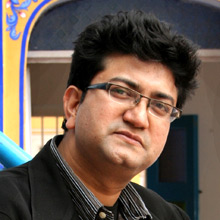
    He is a brilliant music writer besides being an excellent advertising professional. He has made it on his own from a small town inIndia. He is the original bilingual copywriter ofIndia.


    3. Aishwarya Rai Bachchan

    We had launched her with a three-second presence in Pepsi commercial where she said: “Hi, I am Sanju”. Her presence made every male from 8-80 get into a tizzy and they wanted more of Sanju. She has become one of the most recognizable face of the Indian advertising, besides being that of Indian film industry.


    4. Katrina Kaif

    She made it fashionable for foreign faces with an accent to make their presence felt in Indian advertising. She is every director’s dream come true and a face that is not easy to forget.


    5. Me

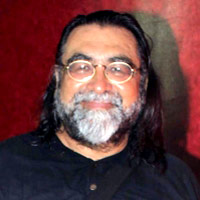
    Beauty is only skin deep but my motto is ugly is forever. So I am immortal face of the advertising industry.


    Prahlad Kakkar is an ad filmmaker and CEO, Genesis Films

    Photograph: Fotocorp

  • Winning consumers, dil se


    By Shubhangi Mehta


    ‘Advertising’ generally relates to a 30-60 second commercial which is, in some way, a break from whatever has grabbed our attention on the TV. It is, at times, packed with humour or creativity which manages to engage audiences and pay attention to the product being endorsed. But these days, brands are thinking beyond short term goals such as increasing sales to a long term goal of maintaining goodwill for the brand.


    For a while now, a lot of advertisements are not just based on a self-centred motive to sell the product but the brands and creatives are becoming more and more altruistic and trying to engage the audiences by including them in the commercial.


    Whether it is Coca-Cola “spreading happiness” or Tata Tea asking the consumer to “Jaago Re”, almost every brand is trying to step ahead and be an element revolutionising society.


    [youtube width=”400″ height=”250″]http://www.youtube.com/watch?v=M5ECJrnqPcI[/youtube]

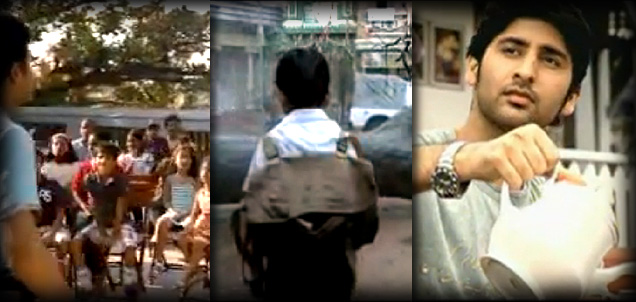
    R Balki, Chairman and CCO, Lowe Lintas India, said, “There needs to be a connect of the message with the product. Brands just cannot jump onto the bandwagon by saying something which isn’t connected with the product. Even before Tata Tea or Lead India, it was Lifebuoy that came up with ‘koi dar nahi’, which encouraged kids to walk out and clean the streets. Hence, there is a definite need of product association with the message. Even in the Tata Tea campaign, tea is always associated with awakening and, with a name like Tata attached to it, we took it a step ahead and correlated it with awakening against corrupt politicians and so on. The thought was based on being optimistic and not cynical.”


    As a matter of fact if we are to recall, such advertisements are also the ones that manage stay in our minds the longest. Be it ‘Jaago Re’ ‘Lead India’ ‘Hum Mein Hai Hero’, ‘Idea’ commercials or the latest Stayfree campaigns.


    [youtube width=”400″ height=”250″]http://www.youtube.com/watch?v=A0M0EZ8T5J8[/youtube]

    “Every businessman today realises that just a transactional relationship with a client does not work these days, there is a very important need for emotional connect with the consumers, and brands like Coca Cola are realising the same. The trend has been there for a while, but its gaining momentum as every brand wants to be in the good books of the consumer. This is a worldwide trend where the society needs to know what exactly we are giving them back,” explained Prasoon Joshi.


    The problem lies when rather than being engaging, these commercials become preachy. The idea should be that it sermonises in such a creative way that it manages to engage a consumer, who considers an advertisement a break from a nail biting cricket/football match, or a soap opera that he /she is watching


    KV Sridhar, NCD, Leo Burnett, India, said, “More and more brand are realising these days that whatever we do is replicable. All the uniqueness and benefits get blurred after a while. Be it the uniqueness of an iPhone which is replicated by Chinese and Korean companies or the uniqueness of a brand communication. The other thing that marketers have understood is that ‘honesty’ and ‘selflessness’ are the keys to attract audiences. The Brand now tries to tell the audience that your ideas and my ideas are the same and this has become the solution to connect with the masses.”


    It won’t be wrong to say that Indian society gives utmost importance to values when compared to any other society. Hence, it helps a brand to come across as socially responsible.


    [youtube width=”400″ height=”250″]http://www.youtube.com/watch?v=6DkS7wfPMdQ[/youtube]

    Rahul Kansal, CMO, Bennett, Coleman and Co, said: “When it comes to using a social message to promote one’s brand, it has to have certain connection with the product. Sometime back, we saw Aircel’s campaign to Save the Tigers. Despite being a good concept, the campaign did not leave a mark, as it didn’t really help the brand because the cause wasn’t really connected with the brand. On the other hand, if we talk about Tata Tea’s Jaago Re campaign, it is a beautiful example of laddering up by a brand since tea is always associated with awakening and here the brand communication took it a step further by making it an awakening of the society towards the corrupt system. The Coke ad is also an example of going ahead with a thought of a drink which is meant to quench thirst, stepping ahead and becoming a brand to spread happiness. Times ofIndia’s ‘Lead India’ and ‘TeachIndia’ are also an example of laddering up by using a social message.”


    One might wonder, is creativity becoming a follower rather than a creator? One can also speculate that creative thought is the slave of trend, where one does something exceptional and others follow, as that becomes what the audiences want. The fact that such campaigns manage to capture the consumers’ eye is evidence. This practice had been seen in the past as well, but more and more brands have been adopting the concept lately. Will it continue, and how well can creativity present it? The fact remains that any product endorsing itself on such messages, even if remotely, needs to be connected with the communication at a certain level.


  • The Anchor: Prasoon Joshi on 5 songs he wishes he had written

    1. Ye dunia agar mil bhi jaaye to kya hai
    from the movie Pyaasa. This is a legendary song and the kind of work that I like doing. The song has a philosophical bent and is almost cathartic. It reflects the feeling of people and a song that has a social impact. This is Sahir Ludhianvi at his best.


    2. Bird on the wire by Leonard Cohen. The lyrics present a compelling imagery. Like a worm on a hook, Like a knight from some old fashioned book… It is a brilliantly written song and I admire the whole construct of the song.


    3. Mora gora rang laile from the movie Bandini. This is one of the first compositions of Gulzar Sahab and the lyrics are sheer poetry. In India where fair complexion is revered, here the request is to make her dark-skinned just like Krishna so that she can hide in the darkness and meet him. Beautifully stringed words that touch the core of your heart.


    4. Jyoti kalash chhalke from Bhabhi ki Chudiyaan. Again it presents a powerful imagery and a superb play on words. Huye gulaabi, laal sunahare, rang dal baadal ke, jyoti kalash chhalke/Ghar aangan van upvan, karti jyoti amrit ke sinchan, mangal ghat dhalke. Writing poetry is different when it has to be set on music as one has to ensure that while the song is written well it must also sound well. This is a perfect example of such a work.


    5. Mr Tambourine Man by Bob Dylan. I love the lines – I’m ready to go anywhere. I’m ready for to fade. Into my own parade, cast your dancing spell my way. I promise to go under it.


    Prasoon Joshi is the Chairman & CEO McCann Worldgroup India, Executive Creative Director of the Asia Pacific region and Chairperson, McCann Global Creative council. He is also an awardwinning lyricist.

    Photograph courtesy Shailendra Pandey/Tehelka

  • Prasoon Joshi is Jury Prez of Press Lotus @ Adfest 2012

    By A Correspondent


    Prasoon Joshi, executive chairman and CEO, McCann WorldgroupIndiais joining ADFEST’s all star line-up of jury presidents in 2012, overseeing the Press Lotus jury panel.


    As Regional ECD for McCann Erickson (Asia Pacific), Mr Joshi is one of the region’s most powerful advertising creatives. He was recently mandated with the leadership of McCann Erickson’s worldwide Creative Council, making him the most influential creative executive in the network.


    “I was jury president for Film some years ago at ADFEST, and today the quest for excellence remains intact. ADFEST is one of the oldest advertising communication festivals, which understands and appreciates the unique cultural fabric of Asia. It has experimented and has tried to reinvent itself and stay relevant in these changing times,” said Mr Joshi.


    Winner of more than 400 national and international awards, Mr Joshi also won the prestigious National Award by the President of India for his socially impactful work in 2009.


    “It is an honour to have Mr Joshi oversee the Press Lotus juries at ADFEST 2012. He is not just a phenomenal talent – he’s one of India’s most powerful creative executives, and we are humbled to have him accept our invitation to attend next year’s Festival,” said Jimmy Lam, president, ADFEST.


    The Times of India recently cited Mr Joshi amongst the nation’s Top 60 icons; while Business Today named him as one of the Top 21 Business Leaders who will shape India in the 21st century.


    With a postgraduate in Physics, Mr Joshi is also a prolific poet, feature film song and scriptwriter.

  • After TVCs, the next best thing


    By Shubhangi Mehta


    Commercial advertisers often seek to generate increased consumption of their products or services through “Branding”, which involves the repetition of an image or product name in an effort to associate certain qualities with the brand in consumers’ minds.


    The marketing mix has been the key concept in advertising. Suggested by Professor E Jerome McCarthy in the 1960s, the marketing mix consists of four basic elements, famously called the Four Ps. They are Product; Price, representing the process of determining the value of a product; Place representing the variables of getting the product to the consumer like distribution channels, market coverage and movement organization; and Promotion, the process of reaching the target market and convincing them to go out and buy the product.


    There is a plethora of ways to do this. The modes of advertising include television, radio, online, OOH and then these further have various categories in them.


    Television is generally the first choice for most of advertisers, but what about radio, digital and OOH?


    Prasoon Joshi
    Abraham Allapatt

    Prasoon Joshi, Executive Chairman, McCann Worldgroup, commented, “It’s all about the requirement of a brand, it depends on a particular brand as to what marketing mix is to be used. There might be a brand for which I may not even use television, but might go in for a local newspaper etc. Hence it is not possible to choose a particular medium over others across the board.”


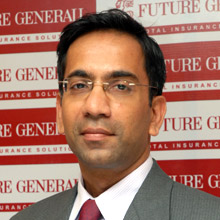
    Abraham Allapatt, Head – Brand & Corporate Communication, Future Generali India Life Insurance Company Limited, said, “Frankly, one cannot definitively state that one of these mediums is the best (after TV) simply because each of them has pros and cons. Radio is good if one wants to reach out to young/upwardly mobile urban customer prospects with a limited budget – especially if you have a powerful/simple message and creative to deliver, but it’s limited in terms of reach.


    “Similarily when we talk about print, it can target specific audience and is quick in reach but again it is a little expensive as compared to other media (cost per reach) and it is relatively limited in terms of reach at an overall level versus TV.


    “OOH is a powerful reminder medium for topical messages but is a relatively disorganised sector/medium. There is no science to measure impact/effectiveness. Large agencies use some tools to add some science to measurement, but it is still not too dependable.


    “Digital is focused down to the individual and is measurable accurately and instantly. It is very good for reaching young, urban, upmarket segments, plus it is cost-effective and an image driver. The only issue is that it is still limited in reach to large cities/income segments.”


    Apurva Purohit

    Apurva Purohit, CEO, Radio City 91.1 FM, said, “Radio as a medium has the ability to impact millions of Indians due to its wide coverage. And that’s just one of the multiple benefits of the medium! It enjoys a deep personal connect with listeners, allows marketers to create customized and local communication for pocketed audiences, and offers extensive on-ground engagement prospects to supplement advertising campaigns. Such offerings make the medium superiorly effective and attractive for marketers.


    “Radio has an edge over other media due to the local relevance that the medium offers. Advertisers seek to maximize efficiency of their marketing spends by looking at micro targeting communication to consumers in focus markets. Radio serves as a key medium to fulfil this need with its ability to create customized and local communication for the relevant target audience.


    “Another important feature that gives radio a one-up is that it’s an anytime access medium. Hence, advertisers can reach their consumers anywhere, anytime. Different sets of people tune into radio at different points of time and therefore the medium is consumed across the day. This is unlike print which is mainly consumed in the morning and TV which is mainly consumed at night.


    “Of course, the medium’s cost-effectiveness is unquestionable. Radio is far more inexpensive than print. If you need a local media plan you will pay six times on print, while at one-sixth you will get the same kind of reach and frequency on Radio.”
     

    Sanjay Tripathy

    Sanjay Tripathy , Executive Vice President – Head Marketing and Direct Channels at HDFC Life, said, “Choosing a medium will always be the prerogative of a brand marketer depending on his/her key objectives. While Television is the most preferred medium for marketers because of the kind of reach and opportunity for quality of communication it provides, Print comes a close second because of its ability to provide detailed information about the product/ service. This medium is also hugely preferred because the circulation and readership numbers are measurable unlike Radio and OOH, which are usually used for local, last mile reach. Contrary to popular perception, in a highly populous country like India, print still has a lot of scope for growth in the interiors where literacy is still catching up. Print provides flexibility in terms of customisation as per the regional target audience. However, the characteristics of the target audience influence hugely in terms of ‘where’ would the marketer best capture their attention, leaving a lot of scope for exploring different media channels. Especially in case of digital – the new-age innovative medium, which is my personal favourite and which, I believe, has a lot of potential over all the other media. Going forward, as most people are spending more and more time online and on social media, these will emerge as preferred media for brand engagement.


    Kalyan Kumar, CMO Games 24×7.com, said, “Being an e-commerce company, our vote will definitely go to digital. Digital is growing rapidly and has a great future scope. If there was a medium to be chosen after television, then hands down, my vote goes to digital.”


    Ranjeev Vij, Vice President, Head – Proximity, said, “We cannot isolate and say that digital is the only preferred choice. It works best when used in tandem with traditional media. For example look at “Quaker Mission to Make India Heart Healthy Campaign” done by BBDO/Proximity India in 2009 where TV and print ads were linked to the website (www.goodmorningheart.com) and the website led people to social media sites, which helped create buzz, conversations and relationships between consumers and the brand. What digital does brilliantly over other medium is that it helps build relationships and brings customers close to brands by enhancing user experience. Digital is best used to ‘amplify’ everything we do to the power of millions.


    “For marketers Digital provides real-time access to data and analytics, instant feedback on campaigns, product/service quality, etc. along with better understanding of consumer journey and behaviours. This data if mapped properly can help brands massively multiply the results of their marketing initiatives.”


    News paper image: Nuttakit

  • Video Report: The new rules of engagement


    By Shruti Pushkarna

    [youtube width=”350″ height=”200″]http://www.youtube.com/watch?v=iQBVjzNGF9I[/youtube]

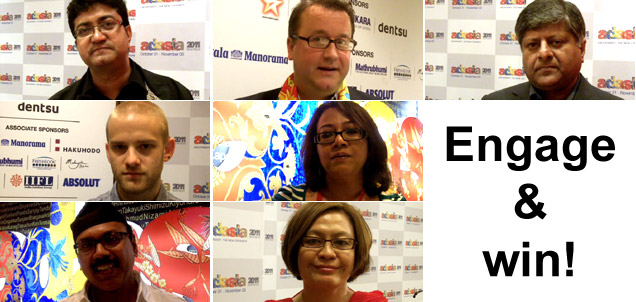
    Amid discussions at one of the biggest marketing, media and advertising meets, or AdAsia as we call it, one common thread to many a conversations was the changing reality of advertising from the consumer’s perspective. Several members of the fraternity expressed concern over the pressing need to ‘engage consumers’ in a fast changing world. MxM India caught up with a few to find out what really are the new rules of engagement.

    Keeping up with new technology and being able to deliver a digitally enhanced experience to the consumer is a growing area of focus but the underlying idea echoes the same old principle, ‘reaching out’ to the consumer.

    Prasoon Joshi, Chairman & CEO McCann Worldgroup India, Executive Creative Director of the Asia Pacific region and Chairperson, McCann Global Creative council said, “There are no new rules…it’s just that there is a new reality out there. You have to be able to understand the lives of consumers…I think if you are connected with your market, then rules or whatever you call them, will come naturally to you.”

    Furthering Mr Joshi’s view, Kelly Clark, CEO, Maxus Worldwide said that the new rules of engagement are the old rules of engagement and we have to start out by understanding customers’ relationships with brands.

    Shashi Sinha, CEO, Lodestar UM said that engagement has to come from a sum total of different activities, but foremost you need to know what the customer really likes and will participate in. Josy Paul, Chairman and CCO, BBDO India made an interesting point, saying that understanding the new rules of engagement starts from knowing that advertising might not be the only solution. Emphasizing on a collaborative model between advertisers, regional partners, PR partners and activation partners, Mr Paul said, “…it’s really about shedding your sense of the past and forgetting whatever you knew before but using your experience to assimilate and synthesize the new world.”

    Three rules of engagement recommended by Contagious Communications Consultant, Will Sansom are transparency, experience and meeting an unmet need. He said, “…First and foremost be honest…second rule is use emerging technology…and third is about identifying an unmet need and then meeting it.”

    Kitty Lun Chan, Chairman/CEO, Lowe China said that we live in exciting times where internet has revolutionized everything, and in this ‘socially-networked’ world, everyday new forms and new approaches of engagement are being created.

    Keeping it to the basics, Basabdatta Choudhary, CEO, Platinum Media underlined “relevance” as one of the constant rules of engagement in these changing times.