Tag: Prasoon Joshi

  • Adland ‘Inkaar’ to film with NCD accusing agency CEO of sexual harassment

    By Rajiv Singh


    Inkaar, Sudhir Mishra’s latest film, may have failed to set the box office on fire, but it has created quite a flutter in the advertising world, with the fraternity refusing to accept the way it depicts an ad agency.


    In the film, Maya Luthra (Chitrangda Singh), the national creative director of an ad agency, accuses CEO Rahul Verma (Arjun Rampal) of sexually harassing her.


    That, of course, is not the best advertising for the industry.


    Prasoon Joshi

    “Advertising is probably the only profession in the country where a woman can do what she wants to do, can speak her mind without even an iota of fear and can live her life the way she wants to be,” Prasoon Joshi, CEO and chief creative officer of McCann World Group India, says.


    Lack of knowledge and understanding about the industry could be the reason for choosing ad agency as the workplace for depicting sexual harassment, he avers. “It’s not an industry of exploitation but an industry of equality.” Almost everybody in the fraternity agrees. It’s a mad world, but not bad, they say.


    Priti Nair

    Priti Nair, director and co-founder of ad agency Curry-Nation, says the film falls to the stereotype that ad agency is glamour-laden and loose life. “You just have to show a woman wearing a nose ring, with a wine glass in hand, and yes smoking-and you have an ad woman,” she says.


    KV Sridhar, chief creative officer, Indian subcontinent, at Leo Burnett, however, believes that there’s no stereotyping. “Ad agencies have become a metaphor of progressive women and flamboyant men,” he says. Sridhar says it’s a good thing that a movie has been made on a sensitive issue. “There are not many movies dealing with sexual harassment,” he says.


    KV Sridhar

    Branding experts feel interpersonal dynamics ranging from fancy free flings to forced sexual innuendos at workplace connect with the audience because it’s a subliminal reality nearly everywhere.


    “Power disequilibrium is what fuels exploitation, sexually or otherwise,” says Smitha Sarma Ranganathan, a brand communication specialist who teaches marketing management at IBS Bangalore. “So, over-emphasising and contextualising this specifically to the advertising industry paints a biased picture of the fraternity at large.”


    Source:The Economic Times

    Copyright © 2013, Bennett, Coleman & Co. Ltd. All Rights Reserved


  • Insensitive or just mirroring reality?


    By Tuhina Anand and Johnson Napier


    The portrayal of women in advertising has always been a contentious issue. It is even more sharply in focus now with questions being raised about whether popular culture causes men to assault women.


    Prasoon Joshi

    Leading Indian adman Prasoon Joshi, Chairman and CCO, McCann Worldgroup, made a statement on the popular show ‘Storyboard’ on CNBC-TV18 saying in effect that advertising is meant to sell a product, and market reality is “jo dikhta hai who bikta hai”. He cited a song which has offensive lyrics but has also a huge number of hits, so even if someone might be condemning it, huge numbers are still consuming it.


    While there may be many who may have thought that he was being candid, Mr Joshi’s statement wasn’t taken too kindly by some of the people who watched the show. In advertising as in films and music videos, instances abound of eyeball-grabbing via alluring depictions of women, often irrelevant to the subject matter. But since we see them, daily, and have been doing so over the years, an eyebrow may be raised at times but we generally don’t think of protesting at the insidious and subtle projection of women as objects.


    However, that’s changing. Population First, an NGO set up by veteran adman S V (Bobby) Sista has taken a pioneering role in showing the way and educating advertisers and agencies on the need to be careful about how women are portrayed.


    Ranjona Banerji

    Senior journalist and MxMIndia Contributing Editor Ranjona Banerji who very severely criticized Mr Joshi for his comment believes there’s got to be an attitudinal shift. “Why should a housewife be seen buying detergent or serving a breakfast cereal? It could be done by a working woman or any other member of the family, the husband may be?” Ms Banerji, like NewsLaundry founder-editor Madhu Trehan on the Storyboad show not, doesn’t damn the objectification of women in ads such as the Amul Macho TVC as much.


    KV Sridhar

    Echoing the view that advertising has a huge effect on people and there has to be some responsibility in the way ads communicate with them is KV Sridhar (Pops), National Creative Director, Leo Burnett India, who has been working with UNFPA and Population First on the issue of gender sensitivity in media and advertising. He said, “I would not want to criticize anybody but I do believe that currently our advertising and media has been very insensitive in their portrayal of women.”


    Pops says that the issue can only be resolved when the influence comes from the influencer. Simply because the person who is working in creating the concept has a white sheet and can bring subtle changes to make the portrayal gender sensitive. Like in HDFC ad, Leo Burnett consciously brings in a girl who wants to become an astronaut and a mother who is listening, rather than bringing in the gender stereotype of the mother serving tea to the father. Pops said, “It would be wonderful that instead of showing a family with father, mother and one boy and a girl why not show a family with two girls. Ads influence people and these kind of subtle changes would go a long way in changing the mindset of people albeit in a small way but it shall be a beginning to show some respect towards the female gender.”


    Rahul Sengupta

    While Pops talks of bringing a change by subtle but conscious ways, Rahul Sengupta, National Creative Director, TBWA\India, agrees that women are used as props or for glamour in advertising. He said, “To add beauty or sexuality to the film, many a times women are added in the storyline. However, if it’s a derogatory portrayal remember that the communication might catch initial eyeballs but will not go long way in building the brand.”


    He added, “Crudeness in advertising will never work especially in the premier segment. Those who do it do it as a short cut. We should definitely refrain from using such regressive concepts like ladki patana (woo a girl) which I can recall from a Virat Kohli ad. There has to be some thought given in what one depicts.”


    So then why do we have so many women in ads selling deodorants? Well Pops is of the opinion that it’s the worst-thought-of strategy. Women don’t like men who are abusive, hence he terms these ads as sheer stupidity.


    Agnello Dias

    Agnello Dias, Co-founder, Taproot India reasons that the advertising fraternity is not really clued in about how women are to be portrayed in commercials today and there is a need for the industry itself to put in some extra effort and have a filter in the way they portray women. He said, “What happens usually is that we get busy thinking about other issues that may get an ad into trouble like religion, animal rights etc because of the perceived repercussions that may arise out of doing something on those lines. But not many think of what may be the short-term repercussions of how women are portrayed.” However, Aggie is optimistic and feels that may possibly change as we move forward.


    Srinivasan K Swamy

    Voicing his opinion on the issue of portrayal of women in commercials, Srinivasan K Swamy, Chairman & Managing Director, RK Swamy BBDO was categorical as he said: “Advertising reflects the mores of our times. But that does mean we can crudely depict the so-called mores. Typifying women in commercials are not necessary since there are many ways to communicate the message. Also use of women as ‘objects’ in certain product categories like motor cycles, or even deodorant is unnecessary. Having said that, it is important to note that stereo-typing women roles are done by everyone without thinking. Take movies, TV serials or how stories are written in Indian language publications.  A greater level of consciousness is needed to overcome this by everyone.”


    However, not everyone believes that a more correct portrayal of women is the answer to the problem. Asks Anita Nayyar, CEO, Havas Media India and South Asia: “If advertising stopped using women or depicted them only as mothers, teachers, businesswomen creating jobs and nation-builders, or wrapped them in gunny sacks, would atrocities against women lessen? Are women safe in nations where only their eyes are visible? What about kid’s stereotype portrayal, does this also need changing to keep two- and six-year-old girls safe? And are we forgetting innocent little boys, now what of that?”


    Anita Nayyar

    She continues, “Ads tell stories – women help bring them alive. But she is the creator, and there are more positive portrayals than negative ones. Did even one husband run to buy an anniversary gift or make a mobile anniversary reminder, because in Century Ply the wife turned into a gorilla? Well, may be just one! Regulation, moderation and discussion will simply create more breaking news opportunity than any real effect for the present and future brave and unfortunate women.”


    Ms Nayyar believes that the need of the hour is education and the courage of conviction to take a stand as would a Nehru, Ambedkar or any of them who gave us liberty, all initially just common men. Every nursery, school -government or private, workplace – from smallest to global must have this as mandatory education and regulation is needed to incorporate it so it is a part of the Indian psyche, embedded as culture, like you must wear clothes. Advertising could in fact help educate and put this into motion; enterprise and government looking at branding can enable a social motion of action over passive discussion.


    Clearly, there’s need for all sections of society to prevent excesses against women. But the role of advertisements in furthering stereotypes or reflecting the reality is going to be much debated.


  • Coke gets real to boost drinking of ‘thanda’ in ‘thandi’

    By Rajiv Singh


    Coke’s New Year resolution, it would seem, is to go ‘crazy’ in its quest to spread happiness. The beverages major last Thursday rolled out its latest TV commercial for India, its second successive winter campaign in the country; but, for the first time, it features real-life characters.


    Conceptualized by McCann Erickson, the campaign titled ‘Crazy for Happiness’ showcases people who are committed to doing good deeds. It is an extension of Coke’s ‘Ummeed wali dhoop, sunshine waali aasha’ campaign that rolled out in December 2011, exhorting people to believe in a better tomorrow.


    The TVC has a teenage singer from Indore who has been performing stage shows across the country to collect money for treating sick children.


    She is followed by a Mumbai lad who loves stray dogs, and spends a chunk of his salary to feed over 30 dogs every day.


    Prasoon Joshi

    “Coke has always been called the Real Thing,” says Prasoon Joshi, CEO and chief creative officer of McCann World Group India. So, it’s no surprise that it has used real-life characters, he adds. “When the values of helping and being kind have taken a backseat, why not celebrate being nice to each other,” he says, explaining the theme of the campaign.


    Not only is Coke determined to make people happy, it also appears keen to improve their lives. In today’s world, people have become more insular and self-focused, says Anupama Ahluwalia, vice president, marketing, Coca-Cola India & South West Asia. “The ‘I’ has stopped caring for the ‘WE’ and doing something good for a stranger is often considered crazy,” she points out.


    But why has Coke chosen the chill of winter – the ad hit the small screen a day after New Delhi recorded its coldest day in decades – to drive home its altruistic messages? After all, traditionally it’s the onset of summer that sets the cola majors into overdrive with fresh war chests and mint-new campaigns.


    “It’s not about seasonality anymore,” contends Ms Ahluwalia. “With changing lifestyles, consumption of cola happens round the year, and we have been looking at various occasions for connecting with the consumers.” She, however, refuses to divulge the sales figures for Coke during winters.


    Marketing experts agree that the new campaign could be a deliberate attempt to de-seasonalize the brand and give it a distinct brand personality.


    While the ‘Open Happiness’ ads effectively set the stage in this context, the latest campaign infuses life into the brand by way of giving it a distinct personality, says Smitha Sarma Ranganathan, a brand communication specialist who teaches marketing management at IBS Bangalore. “After all, every brand is a story and every story needs a well-defined stage and attractive characters that come alive with every narration,” she adds.


    Analysts say typically 40% of cola consumption in India happens during summer, and the rest takes place during the festive season, starting with Diwali.


    With per capita consumption of Coca-Cola beverages in India at 12 servings a year, as compared to 403 in US, the Atlanta, Georgia-headquartered beverages maker has been trying to create occasions to push its brands and, in the process, close the gap with arch rival Pepsi, say marketing experts.


    The ‘Coke and meals campaign’, which talks about happiness around mealtimes, is one of the ways in which the brand is trying to do a Cadbury – which has its ‘kuch meetha ho jaaye’ slogan – and encourage consumption on virtually every occasion, says Subrata Chakraborty, a Delhi-based brand expert and head of ad agency Brand Curry.


    Source:The Economic Times

    Copyright © 2013, Bennett, Coleman & Co. Ltd. All Rights Reserved


  • Diamonds are wherever…

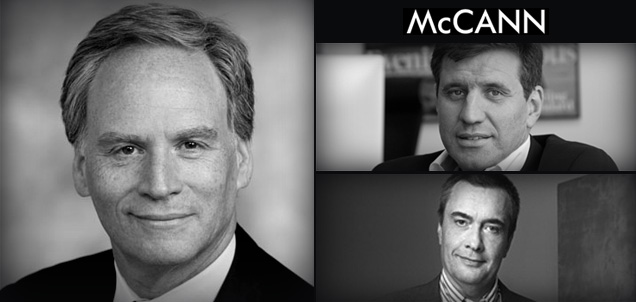
    Left: Harris Diamond, Right top: Gustavo Martinez, Right bottom: Luca Lindner


    By A Correspondent


    Imagine the head of a large Indian PR agency being appointed CEO of his network’s well-known creative agency? You can’t dream of such an eventuality in India, but not so in the United States of America, where public relations hasn’t hit the bottom of the pyramid as it has here in India.


    On Tuesday, November 13, the Interpublic Group announced a series of top management changes at McCann Worldgroup:  Harris Diamond was moved from being Chairman and CEO of IPG’s Constituency Management Group (CMG, which includes Weber Shandwick) to a similar role at McCann Worldgroup, replacing Nick Brien. A new, three-person office of the Chairman has been created which will have Mr Diamond along with Luca Lindner and Gustavo Martinez who have assigned bigger roles with geographic and operational responsibilities.


    McCann Erickson is the dominant unit of McCann Worldgroup which also includes UM, Weber Shandwick, Momentum, MRM, Craft Worldwide, McCann Health and Future Brand.


    Prasoon Joshi

    What does this mean for India? Not much. Except that until Tuesday, Prasoon Joshi as head of McCann in South Asia reported directly to CEO Nick Brien will now relate with Mr Martinez who takes charge of Asia-Pacific in addition to Europe. Mr Diamond told a Campaign Asia journalist that he had been in touch with Mr Joshi.


    Part of the reason why the office of the Chairman has been created is reportedly Mr Diamond’s background of being a Public Relations maven. Widely regarded as among the top 10 PR practitioners in the world, Mr Diamond role at CMG and Weber Shandwick specificially has received several accolades.


    His appointment to McCann is significant as he’s possibly the first true blue Public Relations professional taking charge of a large, global creative advertising company.  For IPG, industry observers say, it’s all about managing a communications firm, keeping costs under control, maintaining  a disciplined organization and most importantly: get in sync with the customer’s future strategy.


    Reasoned a former colleague David Brain: “In the era of enfranchised consumer and stakeholder and when everyone now ‘gets’ the need to engage and change strategy based on the long term needs of stakeholders and consumers, it is PR thinking not advertising thinking that is best placed to succeed.  Note, I’m labeling advertising thinking as the problem, not necessarily advertising agencies.”


    Mr Diamonds work appears cut out. Along with Messrs Lindner and Martinez plus Linus Karlsoon and Daryl Lee, global creative and strategy officers respectively who will take charge of the day-to-day operations of the agency, he needs to first ensure that people do not use ‘ailing’ as a descriptor for McCann Erickson.


    PR Week magazine reports on how in the 11 years that Mr Diamond led Weber Shandwick, he created a “powerhouse that had other shops looking over their shoulders”. The magazine’s website notes: “Contemporaries in the industry said he was a visionary who led his firm to be one of the most successful in the country.”


    Mr Diamond has the reputation of being cost-conscious and Mr Brain has this view: “My top tip for anyone at McCann who will be meeting Harris in the next few days and weeks is make sure you know how to forecast your revenues; make sure you know your cost base; make sure you are intimately connected with your clients and their needs and make sure you do quality work, because he can sniff BS a mile away!”


    Will Harris Diamond shine where Nick Brien didn’t. After all, Mr Brien too came with the reputation of being a successful Universal McCann captain and very customer-focussed. Guess time will tell.


    There are many people watching.  The success of this appointment could well see winds of change blowing across adland and the entire world of marketing communications.


    And to the world of PR professionals in India: fingers crossed. It could well be your time soon!


  • Prasoon Joshi, Nirvik Singh to speak at Spikes Asia 2012

    By A Correspondent


    Prasoon Joshi

    The finishing touches are being added to the annual Asia-Pacific Awards and Festival for creative excellence in advertising and communications – Spikes Asia – is set to happen in Singapore from September 16-18.


    With a record number of entries and delegates expected, Spikes Asia 2012 is set to be an exciting and outstanding event, the organizers say. Said Terry Savage, Chairman of Lions Festivals: “There is a huge amount happening at Spikes Asia this year with many different elements combining to create a massive creative hub where regional work will be celebrated and admired, industry issues will be discussed and debated and creativity will be ignited. With early indications showing that both entries and delegates will be at an all-time-high, Spikes Asia continues to build and reflect, remaining at the forefront and therefore making it an invaluable date on the industry calendar.”


    As many as 30 seminars focusing on creativity and learning and The Forum where attendees the chance can interact with speakers specific themes are on anvil. Some of these are: the creative future of media; creativity in mobile advertising; consumer insights and understanding people; creativity in branded content and entertainment; and the creative future of technology. Prasoon Joshi and Nirvik Singh are among the speakers invited from India. Indian stand-up artist Papa CJ is scheduled to perform. Details can be accessed at www.spikes.asia


    Meanwhile, Spikes Asia will present this year’s Advertiser of the Year 2012 award to P&G Asia.


    Freddy Bharucha, Chief Marketing Officer, Asia P&G, who will be presented with the award.


  • If we are divided as an industry, we will sink: Prasoon Joshi


    Forty-one-year-old Prasoon Joshi’s has been a remarkable story. A young lad from the mountainous region of Tehri Garhwal (Uttaranchal), who once struggled to get a book of poems published, is not only heading a top ad agency today, he is much sought after in Bollywood for his superlative song writing skill.


    The Chairman and Creative Chief of McCann opens up on his multi-faceted existence, the challenges the ad world faces today, his approach to creativity and the things about the industry that disappoint him. Joshi also admits that ‘Bose DK’ made him frown. Despite his close friendship with Aamir Khan.


    By Anil Thakraney


    Excited about Milkha Singh?

    Yes, I have written the story, screenplay, songs and dialogue. It’s been two years since I started working on this project.


    Must have been a time-consuming project.

    Only in phases. One had to spend time with Milkha Singh, since this is a biopic. You have to know the person and his life very well. But there was enough time, and I only do projects which give me that kind of time. Because my first job is to run the ad agency.


    Don’t your big daddies at McCann get hassled with your moonlighting?

    No. In fact, I would say any intelligent boss would understand how it helps them in return. I do these things in my free time. Now, if this takes a toll on your free time, then that’s a choice you have to make. Today is a Sunday and I am sitting with you. After meeting you, I am meeting a musician who wants to collaborate. My wife understands this, my family understands this. This keeps me happy, and when you are a happy, satisfied person, everyone likes you. Your organization likes you, your wife likes you. I whistle at home and at work. People from my organization will tell you, no matter how difficult the problem is, I have a very positive attitude about life. And positivity happens when you are not frustrated. My organizational leadership has understood that this man has many needs. He is a musician, he is a poet.


    Which means you say no to many film producers.

    Yes. 90 per cent of them.


    You are the global creative director?

    Till now, I am the chairman of the global creative council. Soon this mantle will shift from me to our creative director of New York and London office.


    How exactly does the creative council work?

    You are like the global creative director for that period. You go through the work, advise people, send them feedback. There is a chosen set of seven or eight of us who meet quarterly and review the work. This was the idea of our new CEO, Nick Brien. It was his vision to start a council where the best minds of the company can collaborate.


    Don’t you want to play a global role now?

    I have been doing it. Working out of India, I am the global creative director. I am the Asia Pacific creative director as well. I heard this couplet when I was in college: ‘Phool wahi sar chadha jo chaman se nikal gaya, izzat usi ko mili jo watan se nikal gaya.’ And I thought this was wrong. Why do Indians respect only those people who leave the country? I decided I will be here, and I will do global work. In fact, I have been instrumental in getting the Commonwealth hub to Mumbai. This is an unprecedented collaboration between two rival groups, IPG and Omnicom. There will be four Commonwealth hubs around the world. Detroit, Milan, Sao Paolo and Mumbai. This means the global work for General Motors’ brands will be generated out of Mumbai. And I will head that.


    Why was the need felt for Commonwealth?

    What happened is that in the US, General Motors was being handled by Goodby Silverstein & Partners. And some other agencies around the world, including McCann, were handling this account. A collaboration of minds happened between Jeff Goodby, myself and a few others. And it’s interesting because Goodby is owned by Omnicom and McCann by IPG. The client felt that these minds are rare to get together, so why not start another set-up, which will be dedicated to GM around the world. So my ambition is to get India onto the global map, and not just Indians.


    What about growth plans for McCann in India?

    McCann has grown in leaps and bounds in the last three years. Last year we grew by 50 per cent, this year’s projected growth figure is 45 per cent. We are No 2 in Delhi. It’s amongst the top four agencies in India. And let’s not forget that McCann doesn’t have a history, unlike JWT, Ogilvy or Lintas. We are the youngest multinational agency in this country. We are fifteen years old, unlike the hundred year legacy of the others. Also, we are expanding beyond advertising. Into things like branded content and events. For example, we have launched ‘Chevrolet Jam’. What happens is that a veteran artist comes and introduces a young musical band, and then they jam together. And this not restricted to the club culture, it extends to the rural culture. There will be a series of such musical events, and this will finally lead to making of albums.


    You come from the Northern heartland, and this has played an important part in your success. Do you prefer to hire people from the North?

    We do hire people from the heartland a lot. We have a great combination of IIM grads and people who come from extremely different background, from smaller towns. This is because we have a large base of local clients. Dabur, Marico, TVS, Videocon, Britannia, etc.

     

    “We need IPR (Intellectual Property Rights). Our ideas need to be valued much more”

    Do you feel pressure has increased in the ad world? You said this to me when we met last.

    There is pressure of growth and it percolates down from the top. If the pressure is on the CEO, he expects more from his marketing head. Who then expects more from his team. And advertising being a very important part of the marketing mix, the pressure percolates down to the ad agency. There are aggressive growth targets. Also, people come and go very fast. The new guy comes in with new aggression, and he starts evaluating everything, even the ad agency. Which is why we need IPR (Intellectual Property Rights). In the older days, clients and agencies had a long term relationship. Today it’s different, you might be there for just one year, and the client continues to use what you created for him, and you hardly got returns for that. Our ideas need to be valued much more.


    “I think there is too much animosity in the ad world. This is the reason I desist from going for certain ad functions”

    Prasoon, here’s the problem: You ad guys talk a lot about these things but no one takes the lead in trying to change things. Shouldn’t you people get together and find solutions?

    That’s a good observation. I think there is too much animosity amongst each other. This is the reason I desist from going for certain ad functions. I think it’s high time we understand that together we will succeed. And if we are divided as an industry, we will sink. And I take part of the blame for this. As the youngest of the big agency leaders, I expected the older people to take the lead.


    Another observation is that you old world chaps have a TV fixation. And no one’s even trying to understand the digital space.

    I am a geek, I was the first to launch a virtual office in Asia. But let me speak for everyone. Age has nothing to do with it, and it’s not a TV fixation. Also, I must tell you Indians are very adaptable people, history will tell you we are the least resistant race. We have been invaded, we have dealt with many cultures, and we have emerged victorious. So there’s no resistance to digital. The needs are very complex. There are certain products which do not have any need for digital. In some categories, it’s really needed. The market needs out here are very different from those in the West. If we are doing a lot of television, it’s because of the market. You know, my driver bought his first TV set only last year! But I must tell you, at McCann, we have moved away from the copy/art model. Now it’s copy/art/digital. So there are three people working together.


    “The younger talent is in too much of a hurry. Today the patience is not there, they don’t dive deep into problems”

    The biggest challenge facing the ad world today.

    Client relationships are becoming very short term. There used to be a time when you understood the brand, there used to be consistency of people. Too many changes are happening at the client’s side. As a result, new expectations keep coming up. So we are re-inventing the wheel far too often. Also, on the advertising side, the younger talent is in too much of a hurry. And I keep telling them to nurture a brand for some years, to understand it. Else you’ll have one-offs in your portfolio but not great campaigns. Today the patience is not there, they don’t dive deep into problems.


    We didn’t do well at Cannes this year. What happened?

    Well, our agency did win a Gold. We have to understand that a number of new media have emerged, such as interactive, digital, etc. We don’t have that much of work in these categories to begin with, so our number of entries in these categories is very less. What worries me however is that we should be doing much better work on television. We need to introspect on what went wrong.


    Never thought of moving full-time into Bollywood? Surely they pay you very big bucks now.

    I have a lot of respect for Bollywood, and they have given me a lot of respect. The masses have accepted my work and I have won awards. But I don’t want to do too much of work in Bollywood, not every film excites me. Tell me which film you have seen, for which you wished Prasoon had written the lyrics? You’ll probably come up with one or two names. Also, I love advertising, I like the adrenalin, it keeps me on my toes. I come to know about the global perspective, the changes, it’s a business which keeps you alive and kicking.


    Given your sensibility, a song like ‘Bose DK’ must have appalled you. Did you speak to your friend Aamir Khan about this?

    I honestly expressed my point of view to him. I told him I would never do this. Because there is something called sanctity of a language. I feel it’s easy to abuse it and difficult to maintain it. I am of the view that you have to entertain people, but tehzeeb ke daerey mein rahe ke. But Aamir’s an individual, he believed there’s nothing wrong with it, and that he was having fun.


    An honest review of Satyamev Jayate.

    I believe in people who do something, I am against arm-chair criticism. Aamir went ahead and did something he believed in. And hats off to him.


    You really think the programme will make a difference on the ground?

    Will things change overnight? No. A taxi driver in Delhi asked me to thank Aamir on his behalf. He said, on the issue of child sex abuse, he (Aamir) told his children things which he was not able to do himself. So at the grassroots’ level, it does make an impact on the psyche of people. How far will this get manifested, is very difficult to measure.


    What is the ad sensibility you bring to Bollywood?

    Simplicity and single-mindedness. Every song of mine communicates something, and it’s crafted in a way that the message doesn’t get garbled.


    One Indian creative director you admire.

    Piyush Pandey. He leads by example, he is such a hard working man. He sweats it out. And that’s exactly what I am today.


    Why did you leave him in that case?

    After a point, you have to find your own world. My upbringing was of a certain kind. Piyush had the language of the street in him. I wanted to bring in literature and music. I wanted to bring in my surrealism, my minimalism. Which is why I chose McCann, they offered me an open platform, a canvas to paint on.


    One thing that disappoints you about the Indian ad world.

    There’s unhealthy competition. The talk is less constructive and more destructive. One-up-manship is the name of the game. We forget that this is only advertising, and we aren’t at war. When I asked a few of my clients to come to Goa Fest, they said, “You people are too much into mud-slinging and we don’t want to be a part of that.”
     

  • Rajesh Mani joins Commonwealth as ECD

    By A Correspondent


    Rajesh Mani has come on board Commonwealth as Executive Creative Director at the Mumbai office. Mr Mani has moved to Commonwealth from Leo Burnett and has 12 years of experience in creating distinct and memorable work.


    He co-created, with Rajiv Rao, the hugely popular Blackberry Boys version 1 and also wrote the much loved song for Blackberry Boys. He has also done some acclaimed films like Hutch callertunes, Vodafone 60P/minute film and was also part of the core team that launched the Zoozoos. His other internationally acclaimed work was for the global launch of Lenovo X300 laptops with a film that was showcased during the Beijing Olympics titled ‘The Flying Sumos’.


    Mr Mani, or Mani as he likes to be called, said: “Leo Burnett was a leap of faith. At Ogilvy, I worked on one of the best brands in the country, Vodafone. Commonwealth offered an exciting prospect of working on one of the biggest car brands in the world at a global level and a rare opportunity to interact and imbibe from the best in the business – Prasoon Joshi, Jeff Goodby, Linus Karlsson and Washington Olivetto. On a global platform like Commonwealth, it is important to understand the finer points of cross-cultural communication challenges and pegging ideas on simple human truths that are geography agnostic.”


    Prasoon Joshi said: “Am really pleased that Rajesh Mani is a part of Commonwealth. He has tremendous experience and talent which will further strengthen the operation. I am positive that Rajesh will be instrumental in creating and delivering stellar quality work.”


    Commonwealth is a first-of-its-kind 50-50 joint venture, combining San Francisco-based Goodby, Silverstein & Partners, an Omnicom Group company, and New York-based McCann Erickson Worldwide, an Interpublic Group company. In forming the joint venture, Commonwealth combines a wealth of creative talent, extensive global automotive experience and strategic business leadership that is unique in the industry.


  • Glory eludes India @Cannes Lions 2012


    By A Correspondent


    1992 is not a year on which I shall look back with undiluted pleasure. In the words of one of my more sympathetic correspondents, it has turned out to be an Annus Horribilis. Thus spoke Queen Elizabeth II describing the year that was quite horrible for the British royal family. Now as the world celebrates 60 years of her Accession, the Latin phrase could be used for India’s performance at the Cannes Lions.


    Now that the 7-day grand creative festival has come to a close in the south of France, agencies that have emerged tall and triumphant from across the globe will be heading back to their respective continents to kick off celebrations.


    And that we guess India will miss out on, as the contingent make its way back home. Some have done so already as you read this. The boardrooms, bars and smokers’ areas will be busy as a new week commences with agencies trying to figure out what exactly went wrong. Or perhaps what didn’t go right. Some obvious questions that’ll come up for scrutiny are whether agencies have become too complacent and are taking their creative skills for granted or whether other countries have simply outsmarted India in the game of creative one upmanship.


    Few doubt the creative aptitude India possesses, having given a tough time to most agencies in the past but 2012 could easily be billed as the worst year thus far – just 14 metals in kitty when the number of entries that were sent were the highest at 1,182.


    Even in a dry year like 2008 where India had sent only 982 entries, the total metal count stood at 23. The only bad year was 2007 where India bagged just 12 metals but then one expects performances to see an upward spike year-on-year and not the other way round. It will be interesting to see the kind of reactions that emerge from the entrant companies in the ensuing days.


    Though it was a forgettable year for India , there were some agencies that shone bright and whose entries managed to win a few metals. Those that were hopeful of a win did just that and came back lapping up either Gold, Silver or Bronze in the respective categories. Mentos Sour Marbles by Ogilvy & Mather continued its winning spree across festivals as it bagged a bronze in the Press Lions category.


    Another sureshot that bagged India its metal was an entry by Leo Burnett for its client Bajaj Electricals for their exhaust fans. The team of KV Sridhar and Nitesh Tiwari carried on with their winning spree bagging Silver in the Press Lions category.


    In fact, the team of Leo Burnett carried on with their rich display by picking up a Media Lion Silver for its Doorstep School campaign in the Best Localised Campaign category.  Another entry from India that was sure of a win was Cheil Worldwide’s campaign for Samsung Printers. The work bagged a Media Lion Silver in Best Use of Integrated Media in Media Lions. BBDO India’s You Shave, I shave campaign for Gillette continued with its winning streak as it bagged a Bronze in the Media Lions category.


    While those that were touted to win did just that, it was the Gold winners that were the talk among the delegates at the Cannes Lions festival. The tally was opened by McCann Worldgroup which won an Outdoor Lions Gold for its client Western Union.


    An elated Prasoon collected the coveted prize on the dais. DDB Mudra’s ‘The Hinglish Project’ for Ministry of Tourism, Government of India was another Gold winner as it bagged the metal in the Design Lions category. The same project also won a bronze in the same category.


    Abhinay Deo

    The third Gold winner was the entry ‘I am Mumbai’ that was entered by Ramesh Deo Productions and the advertising agency for which was Taproot India . Abhinay Deo, on bagging the award, said: “There is no thumb rule for success. All I can say is that one has to be honest to his craft. Never make a film to win an award be it Cannes or any other, because then you surely won’t.”


    Failures Unlimited

    While that was about the winners, the conversation that dominated the festival during the latter half was the lack of wins by India across categories. The discussion was compounded by India failing to make the shortlist across categories too. India would definitely want to forget its showing in the Mobile Lions & Cyber Lions category where it didn’t manage a single shortlist.


    Even categories like Film Craft, Creative Effectiveness, Branded Content & Entertainment put up a poor show by bagging just a handful of nominations. In comparison, categories like Radio and PR performed better with the shortlisted entries in either of them going on to win metals.


    In fact, the categories where India had the maximum number of shortlisted entries like Press and Outdoor too were failures as the conversion rate averaged about 10 per cent or so for each of them. Titanium & Integrated continued to elude the Indian contingent of bagging any metal.


    KV Sridhar

    The overall grim mood at the festival was highlighted by KV Sridhar, NCD, Leo Burnett India : “We are extremely satisfied with Leo Burnett’s performance at Cannes this year; getting three Lions is not an everyday event. The only disheartening thing being that India’s overall performance this year wasn’t gratifying. I think we need to push ourselves a little more to do well in such awards, because at the end of the day it’s not about how good your work is, but about how much better the world is performing than you.”


    Said Pratap Bose, COO, DDB Mudra Group, whose agency did win some big awards but not as many as they had hoped: “At the end of the day, as DDB Mudra, we were more hopeful as we did get 21 shortlists. Though this is an extended India problem as well. We did bag a Gold and that compensated a little. The standard to which the world has risen surpasses India to a very great extent hence India has got a lot of catching up to do. To sum it all, we are quite disheartened with the overall performance.”


    Pratap Bose

    Mr Bose’s comments on the creative standard of other agencies around the world rising to surpass India may all but be true. Why else would entries that stood a high chance of bagging a metal miss out on winning one? DDB Mudra’s work for Stedfast, Volkswagen and GeeBees Beverages were all assured of a win but sadly missed up winning any.


    Chaplin Chapters & Google Chrome by BBH India , Keeping the Legend Alive by McCann Worldgroup, Parle Agro by Creativeland Asia and A Day in the Life of India by Taproot were other worthy entrants too but were skipped for the sake of others that were found to be more deserving.


    Manish Bhatt

    Manish Bhatt, Founder-Director, Scarecrow and a jury member for Cannes, 2012, said, “I would say that winning at Cannes has a lot to do with probability, so many factors can work for or against a piece of work during the judging process. Also with my interactions with other jury members, I got a feel that many felt that while there is no disputing Indian creativity but the viability of that idea on various medium is restricted. As creativity is being redefined, there is a need to bring on an idea that can work on multiple platform. There is also a need to bring in more interactivity in our entries as thats what the judges are looking for.”


    Perhaps, it’s time for India to stop being looked upon as the ‘favourite’ one and for more creative ideas to spawn if we have to make a rousing comeback in 2013.


    We could then look forward to a wonderful year… Annus Mirabilis may be


    With inputs from Shubhangi Mehta, Tuhina Anand and Meghna Sharma


    Cannes Lions 2012 Winning Entrant

    Gold

    Silver

    Bronze

    Bacardi India

    1

    BBDO India

    2

    Cheil Worldwide

    1

    DDB Mudra

    1

    1

    Leo Burnett

    2

    1

    McCann Worldgroup

    1

    Ogilvy India

    3

    Ramesh Deo Productions

    1

    In alphabetical order of agency names


    Imaging: Rafiq

    Photograph of Abhinay Deo: Fotocorp


  • Rules of creativity rewritten at Cannes

    By Ravi Balakrishnan


    As the week progresses, it’s become obvious that you need to ‘friend’ social media if you’d like to win atCannes. Almost every single award case study this year in the more functional result- driven categories like Direct, Promo and Activation and Creative Effectiveness came complete with a laundry list of social media successes.


    Indian agencies and the smattering of marketers who continue to lament the country’s performance atCannesthis year would do well to heed some of the new rules of creativity. According to Manish Bhatt, founder, Scarecrow Communications, and a jury member on Direct: “The definition of creativity is changing. Everybody is now talking about making a difference to the world. It’s a tall claim we all know, but creative effectiveness alone cannot get you to a Grand Prix.”


    A few jury members go so far as to say creativity is almost playing second fiddle in some cases to ‘earned media’ – getting spontaneous mentions in news sources – the more global, the better and being widely shared across social media. And in rare cases, an endorsement from the president of the United States Barack Obama who tweeted about Small Business Sunday, a campaign from American Express that won both in Promo and Activation and Direct and is said to be a close contender for the highly prized Titanium category.


    Even this year’s press winner for Benetton, ‘Unhate’ which featured photoshopped images of notoriously antagonistic political leaders kissing, was a news and social media success long before it reached the jury. It’s not thatIndiadoesn’t do socially relevant advertising; it’s just missing a trick in viewing such campaigns as ‘awardworthy.’


    Prasoon Joshi, president – McCann Worldgroup,South Asiasaid: “If Team Anna had entered their campaign that would have been a Grand Prix in my book. It was well managed in social media and everything. But in our country that consciousness is not there: that social movements and social good by brands is a big thing.”


    The serious exception to the rule of corporate ‘good’ winning applies to work that takes a radically different view of the possibilities a category represents; never mind if it seems almost too bizarre for their own good. A global brand like Mercedes lost the Grand Prix on radio to an entry fromBrazil’s Go Outside magazine from Talent,Sao Paulofeaturing a radio station with allegedly mosquito repellent properties.


    Source: The Economic Times

    Copyright © 2012, Bennett, Coleman & Co. Ltd. All Rights Reserved


  • Havells fans ropes in Bollywood’s first superstar Rajesh Khanna

    By Rajiv Singh


    He thrilled millions of his fans with his electrifying presence on silver screen during late 60s and 70s. Now, after staying out of the limelight for decades, but with his air of stardom almost intact, a frail Rajesh Khanna has pleasantly shocked all by featuring in his maiden TV ad – for Havells fans.


    Created by advertising agency Lowe Lintas, electrical equipment maker Havells India’s ‘Fans are forever’ campaign takes viewers down the memory lane by showing glimpses of the unprecedented mass hysteria and a frenzied fan following that the first official superstar of Bollywood enjoyed for decades.


    For a superstar whose fans were legion and who wrote romantic letters in blood to him, a fan commercial may not be the ultimate box-office humdinger, but it has definitely created a buzz with some advertising experts hailing it as a masterstroke.


    “It’s a bold ad, so true to the life of Rajesh Khanna,” said Prasoon Joshi, executive chairman and CEO of McCann Worldgroup India and president, South Asia.


    Sometimes ads are done not to hardsell a product, but to start a conversation or create a language for the brand, said Mr Joshi. “This is one of those advertisements.”


    For Havells India, which has more than 13 per cent share in the Rs3,500-crore fan market, the commercial is yet another instance of out-of-box advertisements that the brand has been resorting to over the last few years to break the clutter on television.


    “Fans are not so talked-about category,” said Anil Gupta, joint MD of Havells India. “With almost similar-kind of communication by all the brands, we wanted to break the clutter.”


    Josy Paul, chairman and national creative director of ad agency BBDO India, said Havells has always gone for highly salient advertising, to make people look again at boring stuff like switches and fans.


    “Nostalgia is a sweet thing and brands can benefit from this,” he says, adding, “We brought music director Bappi Lahiri back with 7Up ‘golden lemon offer’ in 2009, and the commercial was a super hit.”


    However, not all are impressed with the brand using a yesteryear superstar. Prathap Suthan, managing partner of brand-new independent ad agency Bang in the Middle, believes the Havells commercial is like a living obituary to the legendary superstar. “This is rank terrible advertising,” said Mr Suthan. “I don’t know whether to cry for Rajesh Khanna or console him.” He feels that the pun around ‘fans’ has not worked.


    YLR Moorthi, marketing Professor at IIM Bangalore, said the retro of an ageing yesteryear superstar who looks a pale shadow of his former self may not connect with young consumers. “The ad assumes that the target audience has seen the movie ‘Anand’,” said Mr Moorthi. “Will the new generation connect with the advertisement,” he wondered.


    However, Mr Gupta of Havells India is convinced that the new advertisement campaign with cut across all age barriers. “We did a lot of research before roping in Rajesh Khanna,” said Mr Gupta. The young generation is very much aware of Rajesh Khanna’s movies and songs, he added.


    The jury may still be out on the advertisement, but for Rajesh Khanna, the star who fathered superstardom in India, a small commercial is a reminder of the many glories that were his for the taking in a country that was rigidly socialist and almost without the amplified profusion of second-by-second ads that innundate the present.


    Source: The Economic Times
    Copyright © 2012, Bennett, Coleman & Co. Ltd. All Rights Reserved


  • Perfetti signs on Kareena Kapoor as brand ambassador for Alpenliebe 2 Choco Eclairs

    By A Correspondent


    Perfetti Van Melle India (PVMI), the leading confectionery giant, has signed on Kareena Kapoor as brand ambassador for its all new Alpenliebe 2 Choco Eclairs brand. Ms Kapoor will feature in the launch TVC of Alpenliebe 2 Choco Eclairs and also in all mobile and internet campaigns of the brand. This is the first instance of a celebrity endorsement in the eclairs category and also Ms Kapoor’s first brand endorsement in the confectionary category.


    Commenting on Ms Kapoor’s association with the brand, Mr. Nikhil Sharma, Director Marketing, Perfetti Van Melle India , said: “Today’s youth immediately identify Kareena Kapoor as a style icon who has established herself through her work in Bollywood. When it came to selecting the right brand ambassador for Alpenlibe 2 Choco Eclairs, Kareena was a unanimous choice. She is an irresistible mix of beauty, elegance and style. She fits perfectly with our product which promises consumers a great indulgent experience.”


    Commenting on her endorsement, Kareena Kapoor said: “I am very proud to be associated with PVMI, which is one of India ‘s leading FMCG companies, known for their innovative products and creative advertising. Alpenliebe is one of India ‘s most loved brands and this innovative product under Alpenliebe has given me the opportunity to work on an exciting new campaign.”


    The brief to McCann Erickson, PVMI’s partner creative agency was to create a clutter breaking TVC which stays true to the product promise of a rich, magical and indulgent experience. The new TVC conceptualized by Mr. Prasoon Joshi, Executive Chairman and CEO, McCann Erickson Worldwide India , was made with an objective of introducing viewers to a magical world where a princess gets swept off her feet by the most unlikely of characters. Commenting on the script, Mr Joshi said: “We wanted to use Kareena in a unique way and we were happy to stumble upon an idea which has immense charm and I am sure will be loved by the consumers.”


    The TVC shot by ad film maker, Ravi Udyawar, involved a shoot at Mumbai’s Reliance studios followed by a complex post production process at animation studios inPolandandBlack Magic,Singapore. “This TVC has been one of my most challenging assignments. We shot live with Kareena and an actor, together to get the interaction and dance movements correct, we then replaced the actor with the bear, which was created on CGI. Getting the dance sequence between Kareena and the Bear required complex animation techniques. The facial expressions were motion captured and applied on to CG bear to look more authentic. The toughest part was creating the bear which is very difficult due to its fur body. Shooting with Kareena was a great experience, due to her understanding of the idea, flawless acting and timing. The music composed by Mikey McCleary adds great value and fits in perfectly with the overall look of the film while staying true to the naughty mood of the original song,” said Ravi Udyawar.


    Perfetti Van Melle India Pvt. Ltd. (PVMI) is a name to reckon with in the India n confectionery industry and is a renowned manufacturer, distributor and marketer of several high quality products. With close to a 30 per cent market share, it is one of the leading players in the organized confectionery business in India today. The company, at present, has a diverse portfolio of brands across segments which it sells through various retail channels across the country. As a marketer, PVMI has always been known for its iconic, interesting and entertaining advertising.


  • Awards have no relevance to advtertising: Balki


    By Anil Thakraney


    It’s always fun meeting the big boss of Lowe Lintas. Since we have worked together before and since Balki is always forthright and politically incorrect, one is assured of an exciting but meaningful exchange. Here is he, speaking his mind on various issues. Movies, advertising, the challenges facing the industry, the kind of people he’d like to hire, and yes, about his continuing allergy to advertising awards.


    You have to respect the man for the wonderful work he’s been doing on both, the small and the large screen. And more so for being that rare individual in the ad world who has the balls to stand up for something he believes in.


    Still around in advertising? Shouldn’t you be busy making big films with Big B?

    I am making a movie a day, it’s the same thing. An idea is an idea whether it’s three hours or thirty seconds. The day I stop tripping on getting the high when one gets an idea, that’s the day I will stop. In fact, I haven’t done a film in the last two years, I have been caught up with Lowe Lintas. I do have an idea for a film which I will work on towards the end of this year.


    And it will back to Bachchan, I suppose.

    Not back to, WITH Bachchan. I haven’t gone away from him.


    What’s with the Bachchan fetish?

    When you work with the ultimate guy it becomes difficult to work with somebody else. He’s phenomenal. Such hunger and greed for performing at the age of 70… it’s truly inspirational. I can keep on making films with him for the rest of my life.


    Are you a fan of Abhishek Bachchan too? His career isn’t going anywhere.

    Actually I found his performance in ‘Paa’ the best. It was the most difficult role. I think his problem is more the choice of films rather than the quality of his acting. He’s got his niche, he’s very good at certain things. He’s also a good friend.


    So that’s why you keep using him in the IDEA commercials, often when he’s not even needed.

    He’s a better friend of IDEA than he’s of mine. I didn’t choose him, IDEA chose Abhishek.


    What are the learnings from movies you’ve taken to advertising?

    The biggest thing that happens when you come back from cinema to advertising is that you are even more impatient. Because cinema takes so much time to execute, you want to make the ads even faster. That’s the reason I like making ads. You make them fast and you move on. There’s an idea a day, and that’s an addiction which is difficult to escape.


    Your wife’s directing ‘English Vinglish’. Are you the producer? And what’s it about?

    Rakesh Jhunjhunwala has co-produced it with me, along with another investor. It’s about the insecurities of a middle class woman who doesn’t know English in today’s context. It’s about how she overcomes the fear of English. It’s a very relevant issue to a lot of people in this country. In India, it’s money, fame and (knowledge of) English which determine the class and quality of a person.


    Let’s cut to Lowe. Are you still as hands-on as ever?

    I am. There’s so much of work, yaar. Today, Arun (Iyer) and Amer (Jaleel) have taken on a hell of a lot, they handle 50 percent of the business. My travel has come down but my ideation hasn’t. So yes, I am still involved in major things, I know what’s happening. This is not a profession where internal structures and motivations of the agency can dictate solutions for a client. The client comes to an agency for a solution and we have to get it, by hook or by crook. Gone are the days when creative directors would sit on a revolving chair and give motivational advice to people on how to crack things.


    Piyush Pandey said to me the reason he isn’t making movies is because he’s not bored of advertising.

    It’s about the number of things you can do, it has nothing to do with being bored of advertising. So maybe some people are capable of doing a lot more and some people are not.


    Significant changes you’ve observed in the ad world in recent times.

    It’s the same, in so far as it’s still a problem/solution business. What I find is that the clients today are hungrier for more interesting solutions. I find that clients don’t want to waste an idea. And because of the complexities of the marketing issues, the problem articulation is no longer simple. You can no longer say this is small, this is big or that is cheap. It’s about understanding the complexities and simplifying them. And I find that fewer and fewer people are able to do this. Therefore far more is expected of a creative person today than it ever was. The creative person is now seen as the solutions provider. Planning is now playing a big role in the articulation of the problem. Planners are now working more for the clients than for the agency. This shift is something I don’t quite agree with, but it’s happening. This situation requires more discipline, rigour and understanding from a creative person than ever before.


    And I guess this impacts your hiring policies.

    It impacts that hugely. The three Cannes Gold winners don’t make sense any more. Today a lot of senior creative people have to grow within the current system. So you hire junior people who are clever and intelligent and then groom them into the system of understanding problems. It’s very dangerous hiring very senior people from the outside. We went through a phase in advertising where we said we are losing our respect as an industry. That’s changed. Today the clients respect the advertising agency for providing solutions.


    Both, Prasoon Joshi and Piyush Pandey told me that the industry is losing talent. There seems to be too much pressure from clients, they no longer pamper creative people. And opportunities have opened up for agency personnel in other industries.

    I don’t agree with this. I actually think there’s never been a better time to be in advertising. You are no longer respected for your whacky ideas, being a maverick won’t get you any special respect. The problem isn’t that the industry is losing talent, the problem is it’s not attracting talent. It’s damn difficult to find talent to address today’s problems. In fact, today there are a lot of people in marketing who want to join advertising. Where we are not attracting the right talent is at the junior level. We as an industry haven’t been able to articulate what is the kind of people we want.


    As an old-world creative director, do you find yourself struggling with the new media?

    No. Clients want you do virals in the new media, but it’s still film. The video will never die, though the medium for broadcasting it may have changed. The production methodologies may also have changed. But the idea is the key to it all.


    You are not even on Twitter and Facebook. How will you ever understand the digital world?

    The reason I am not on it is that I don’t want the world to know what the fuck I am doing. That’s a personal choice, it has nothing to do with the new media. In fact, today if I am on Facebook, I am a fuddy duddy cock.


    The problem, Balki, is that all you uncles are obsessed with the TV commercial.

    I approach a problem very simply. There is a solution, and there is an idea. And if the solution demands a certain kind of medium, you use that. Nobody knew how to make films before or how to make a digital programme. So it’s all about expression. And you go into that particular medium and do it. I didn’t know how to shoot a film earlier, so I went to the experts to do it for me. I don’t watch television at all, but that doesn’t mean I am fuddy duddy on television.


    Small shops are springing up. People like Aggie are doing very well. Does that worry you?

    It’s always been happening. What do you think Mohammed Khan and Ravi Gupta did? If Ogilvy and JWT don’t worry me, then why should they? They are all competition. In fact, the more the merrier, it means more people are doing better ads, and that’s fantastic for the ad industry.


    Why are so many creative directors branching out on their own?

    In some cases they believe their talent is far superior to what a large agency can harness. The other reason is there are only so many people who can grow to a point in an agency. So it could be the frustration of not being able to grow beyond a point. They have to start their own thing to be what they want to be. The third thing of course is money. Some people want to be richer than what they are.


    Words of wisdom for young creative people.

    I think if you like sport, you should come to advertising. There is a hurdle to be crossed every day, there is a goal to be scored, there is a wicket to be taken, there are problems that come your way. It is like a game. The moment you start taking it too seriously, it’s very difficult to function in this business. A lot of things don’t make sense out here.


    Shashi Sinha tells me he’s cleaned up the GoaFest judging process. All the scams have been dealt with. But you still won’t take part.

    I believe the advertising industry needs credible awards. But how do you judge advertising? You say, ‘Haha, this is so funny! Oh, what a technique in this one!’ And based on that you award some ads. And two months later the agency loses the business. So obviously it doesn’t work. What the fuck are we doing in advertising? We are supposed to solve a problem interestingly. You are supposed to state the problem and the judges are supposed to ask if that ad could have solved that problem. I judged at Cannes once, and I refused to judge after that. I’ll give you an example of what happens: Those Coke print ads, where someone is sleeping under the shadow of Coca Cola bottles, has been hailed as the greatest piece of creativity. And then you have those great TVCs of Coke with Aamir Khan, which the nation loved, but which they (the Cannes jury) didn’t understand! This kind of judging has no relevance to what the purpose of advertising is. Basically the award show is a game and you play it. So it’s not about cleaning it up, I don’t value what you award.


    And you also have a problem with your peers doing the judging.

    Some of them I respect and some I don’t.


    So what sort of jury will satisfy you?

    Having some respected marketers on the jury would help. And some very good advertising people. Right now they ask anybody who’s free to come and judge, and that’s not the way to do it. You can’t choose people just because you want representation from various agencies. Thing is, before I give you a piece of work to be evaluated, before I give you the right to say if I am good or bad, I need to be assured you are a person who’s capable of telling me that. We need to first judge the judges.


    What disappoints you about the ad world?

    What pains me is the amount we try to market the barometers which decide who’s good and who’s bad in the Indian industry. The Gunn report, the Asian awards, etc, they tom-tom the barometers rather than the advertising itself. And all this has absolutely no relevance to what we do here. It’s time we found a barometer or an evaluation process that tells India which is a good agency. A method through which clients can credibly choose agencies beyond just the surveys and the awards. And this lack of a proper barometer has led to personality driven agencies. This propels a lot of false media management. PR for advertising people happens because of this.


    Why don’t YOU work on that barometer?

    Piyush Pandey and I have had many whiskies discussing this, but we only walk away promising that we should drink some more, and that’s about it. (Laughs.)


    Click here to view all Goafest 2012 stories