Tag: Prasoon Joshi

  • McCann India triumphs at One Show

    By a correspondent


    McCann Worldgroup, India has bagged 4 Golds & 2 Silvers at the prestigious One Show Awards that concluded recently.


    The agency was awarded Gold for the foll work: Full Page or Spread – Campaign – Premier Tissues India Ltd – Author Headphones; Art Direction – Single or Campaign – Premier Tissues India Ltd – Author Headphones; Full Page or Spread – Single – Premier Tissues India Ltd – Mark Twain and one in the design category for Designer Initiated – Happy Life Welfare & Dabbawala Foundation – Share My Dabba.


    The Silver winners include Posters – Single – Penguin Group (India) – William Shakespeare; Posters – Single – Penguin Group (India) – Mark Twain.


    The entries that received a Merit nomination include Full Page or Spread – Single – Penguin Group (India)- Oscar Wilde; Posters – Single – Penguin Group (India) – Oscar Wilde; Posters – Single -  Premier Tissues India Ltd; P.O.P. and In-store – Campaign - Premier Tissues India Ltd – Origami; and Full Page or Spread – Campaign – Yatra Online – Shoelace Monuments


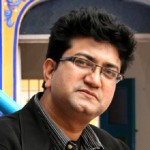
    Prasoon Joshi

    Sharing his views, Prasoon Joshi, Chairman-CEO and Chief Creative officer of McCann India said, “One Show is a very prestigious show and winning 4 Gold pencils is really rare; we at McCann will cherish it for sure. I thank One Show on behalf of the entire team for this honour.”


  • Jury chairs for Creative Abby announced, more than 3000 entries received overall

    By A Correspondent


    The Awards Governing Council (AGC) of the Abbys at Goafest 2014 has announced the names of jury chairpersons for the Creative Abbys. The jury chairpersons for various categories are as follows:


    o Integrated Advertising: Prasoon Joshi, President, South Asia, McCann World Group

    o Films: Agnello Dias Chairman and Chief Creative Officer, Taproot

    o Design: Alok Nanda- Director Alok Nanda Communications

    o Outdoor Advertising & Ambient: Sonal Dabral, Chairman and Chief Creative Officer, DDB Mudra Group, India

    o Radio Advertising:  Ashish Chakravarty, National Creative Director, Contract Advertising


    Pratap Bose

    Commenting on the jury, Pratap Bose, Chairman of the Awards Governing Council and President of the Advertising Club, said “We are delighted to have such a remarkable line-up of jury chairpersons this year. All of them are creative stalwarts and I am pleased that they will be judging the Creative Abbys this year.  The judging process will be transparent and fair. KPMG will be monitoring the judging procedure.”


    Shortlists for Goafest 2014 are being displayed at www.abbyshortlist.com. Issues related shortlisted entries should be brought to the attention of jury chairperson in writing. The matter with proof submitted will be tabled in the second round for the jury to make a final call on. The metals awarded by the Jury after the second round of judging will be final.


    Meanwhile, according to a communiqué, over 3,000 entries have been received overall by the Awards Governing Council.


  • How effective are Focus Groups?


    By Rahul Sachitanand, Shephali Bhatt, Amit Bapna & Ravi Balakrishnan


    “It’s really hard to design products by focus groups. A lot of times, people don’t know what they want until you show it to them.” That was Steve Jobs, back in 1998, just before Apple launched the hugely successful iPod. If Jobs’ statement had a touch of swagger to it – much like everything Apple – his words were prescient. A decade-and-a-half later, creatives and marketers are coming face-to-face with the decline of one of the most preferred qualitative measurement tools. As consumers get smarter and more connected, companies find it harder to keep focus groups honest. A tool first used in the 1940s at The Bureau of Applied Social Research at Columbia University to study the then revolutionary medium head – radio – is now struggling for a sense of purpose.


    THE DUBIOUS WISDOM OF CROWDS

    Focus groups may be the most popular mode of qualitative research, but things can get hilariously out of hand


    KV Sridhar, CCO, LEO BURNETT

    “Focus groups are sometimes like award jury members: if one dumb guy doesn’t get it the entire group gets muddled. Once we tested an ad where someone attempts suicide and from the time of him jumping off a building till he falls there is a courier company that delivers a safety net. It was trying to demonstrate the criticality and speed in a hyperbolic way. They never got the connect. They said “Woh toh mar jata tha.” (He would’ve died.) The van was painted in brand colours and they said it should’ve been an ambulance to help the guy.”


    Sarang Panchal, CO-FOUNDER, MRSS INDIA

    “A focus group in Egypt we once conducted bombed because of one incident. A group of female smokers included some non-smokers (of course, a wrong recruitment). We ended up asking all the women to smoke. The non smokers were also made to carry a pack of 10 with lighters. The moment we asked them to smoke, a nonsmoker actually held the cigarette the wrong way – filter ahead and tobacco end in mouth and started praying! “I am sorry Allah to commit this crime, I know it is haram.” We cancelled the whole group before she could light up. In the end, all we got were a few belly laughs at her expense.


    Ambi G Parameswaran, ADVISOR, FCB ULKA
    “The same set of women attends a focus group every day. At a group in Delhi, we overheard the women remarking “Kal ke group mein snacks better the.” (The snacks were a lot better in yesterday’s group).


    Prasoon Joshi, PRESIDENT – SOUTH ASIA, MCCANN WORLDGROUP

    “This was in 2002. We were working on creating a campaign to spread the word about HIV for NACO. Researchers were asking men from men Tier-2, Tier-3 towns if they were inclined to wear a condom. One respondent told them that he wears a condom everyday but added that it gets loose by the evening. He didn’t know a condom is to be worn during sexual intercourse and was wearing it as an accessory that he believed was magically helping prevent STDs like AIDS. It was a great insight to create a campaign.”


    Ajay Kakar CMO – FINANCIAL SERVICES, ADITYA BIRLA GROUP

    “Hum to sab jaante hain. Hum ko koi bewaqoof nahin bana sakta” (We know everything and cannot be fooled) is a very common refrain, capturing the macho attitude of Indian males. If you are knowledgable and sitting on the marketer side, you soon realise such a person has nothing but confidence.”


    Focus groups use a set of people to test what they are thinking about specific new products or solutions. For example, Café Coffee Day may put together a team to tentatively consider additions or subtractions to its menu and overhauling the ambience of its stores. HDFC Bank has used these groups as a sounding board for new products such as offers for the Solitaire credit card specifically targeted at women. They helped Godrej Tyson Foods build a market for its packaged chicken. “In 2002, consumers were not exposed to fresh packaged chicken,” recounts Sushil Sawant, associate vice president with the firm. “Findings culled out from focus groups were used to position and communicate our strategy,” he adds. Companies such as Britannia have even avoided missteps: putting an Indian sweet – Kaaju Katli – as a filling between biscuits, got an emphatic thumbs-down.


    Despite their uses, focus groups are under sustained fire. Saji Abraham, EVP – planning, Lowe Lintas is dismissive: “They are a misnomer,” he argues. “They usually ramble all over the place, trying to pass superficial observations off as insights.” Focus groups are under siege because of the lack of depth and limited interpretation of the data provided, he adds. “Directly asking a question or keeping it thinly disguised through projection techniques is useless, as it alerts the consumer and influences the answer.”


    The madness, it appears, is in the method. For most marketers, the biggest concern is the quality of the audience. Ajay Kakar, CMO – financial services, Aditya Birla Group likens it to visiting the filthy kitchen of a dhaba reputed to serve excellent food. A provider of men’s grooming products discovered the perils of the technique on putting together a small group to try to explore the nuances of men’s fairness creams. Soon after they assembled, not only were the guys reduced to monosyllables; previously talkative men spent their time examining their shoelaces. It turns out even the vainest men preen only in front of their mirrors and not before complete strangers. Instead of getting nuanced insights, the company ended with a bunch of stilted, predictable reactions.


    A bigger problem is when companies and agencies discover their audience is, if anything, a little too much “on message”, or as an agency head cheekily puts it “have lost their research virginity.” Rajesh Mehta, the former marketing head for Western Union and founder of marketing consultancy Agora recounts: “I have seen agencies and field work where recruiting agents have the same respondents across categories.” He adds, “Sometimes the agents are housewives who hold groups at home and reach out only to acquaintances, family and friends. Maybe 20 or 30 people rotate across groups.” Agrees marketing consultant Suvodeep Das, “Unfortunately, there is a widespread incidence of ‘professional respondents’. Seasoned researchers can easily identify them – they are usually asked to leave within a few minutes.” However there are cases where they aren’t and these appear to be on the rise according to most of the people we talked to. Suave respondents with studied and deliberate answers are of no use to anybody – especially not a company trying to extrapolate their opinions to a larger set. And then there are the bullies; the superficially knowledgeable assertive types who speak for the group, not letting anyone else get a word in edgeways. To the point where several agencies and marketers are thinking of alternative routes to consumer insights.


    Research agencies say companies give them little notice and then expect miracles. “They can give us as little as three days,” says Rohini Abraham, senior vice president, IMRB. In this time, she argues, it is challenging to assemble a strong group, a moderator who can guide attendees through questions and then expect cogent findings. Research agencies offer options to standard focus groups. Sarang Panchal, co-founder of MRSS India, suggests “A better use of say conflict groups or jury groups helps meet the client’s marketing objective, compared to a plain vanilla discussion.” In the former, brand advocates face off against a neutral set of consumers. However, most companies are yet to evolve, since they prefer using ordinary groups to meet their needs.


    Of course it’s unfair blaming just the research agencies. In ad agencies too, research and consumer outreach are low on the totem pole. Leo Burnett’s CCO KV Sridhar says wryly, “Everyone wants to come for a shoot with Amitabh Bachchan. But try getting them to show up for discussion on the same film in a small town and they’ll immediately talk about how there are no direct flights and only poor accommodation options.”


    For too many clients, the group is a box that needs to be ticked. It becomes less about uncovering insights and more about playing safe, claiming a course of action was ratified by research. And so, in this as in so many other industry issues, marketers and agencies are their worst enemies. This time around though, there’s a convenient scapegoat.


    Source:The Economic Times

    Copyright © 2014, Bennett, Coleman & Co. Ltd. All Rights Reserved

    Licensed to republish


  • Tista Sen, Malvika Mehra, Tapas Sen & Abhijit Chaudhuri join Prasoon Joshi in first list of Cannes Lions jury

    By A Correspondent


    Tista Sen, Malvika Mehra, Tapas Sen and Abhijit Chaudhuri join Prasoon Joshi in the first list of Cannes Lions jury announced yesterday. While Mr Joshi is Jury President of the coveted Titanium and Integrated category (as announced earlier), Ms Mehra will be adjudicate in the Press category, Ms Sen in Outdoor, Mr (Tapas) Sen in Radio and Mr Chaudhuri in Film Craft.


    Commenting on this year’s jury line-up, Philip Thomas, CEO of Lions Festivals says, “We are delighted to welcome this group of high calibre professionals to judge entries and award creative excellence in their respective categories. Every year the outcome of the judging process at Cannes Lions sets new benchmarks in creative communications for the global industry. By pulling together this collection of leading names we can expect the outcome of the jury’s deliberations to continue to achieve this.”


    The entire list of the juries for the five categories is as follows:


    Titanium & Integrated


    Prasoon Joshi, Chairman, CEO and Chief Creative Officer, India & South Asia, McCann Worldgroup – Jury President

    Alexandre Hervé, Vice President – Executive Creative Director, DDB Paris, France
    Anselmo Ramos, Founder, David, Brazil
    Gaston Legorburu, Worldwide Chief Creative Officer, SapientNitro, Global
    Jacki Kelley, CEO North America & President, Global Clients, IPG Mediabrands, Global
    Katrien Bottez, Executive Creative Director, Duval Guillaume, Belgium
    Kentaro Kimura, Co-CEO, Executive Creative Director, Hakuhodo Kettle, Japan
    Kevin Brady, Executive Creative Director, Droga5, USA
    Steve Vranakis, Executive Creative Director, Google Creative Lab, UK
    Tor Mhyren, President/Worldwide Chief Creative Officer, Grey, Global


    Press


    Rémi Babinet, Founder and Creative Director, BETC, France – Jury President

    Alvin Lim, Group Creative Director, Draftfcb, China
    Damisa Ongsiriwattana, Creative Director, JWT Bangkok, Thailand
    Damon Stapleton, Executive Creative Director, Saatchi & Saatchi, Australia
    Danilo Boer, VP Senior Creative Director, BBDO New York, USA
    Darren Bailes, Executive Creative Director, VCCP, UK
    Fernando Tchechenistky, Executive Creative Director, DDB, Argentina
    Gabriel Roman, President/General Creative Director, Lowe Ginkgo, Uruguay
    Götz Ulmer, Executive Creative Officer, Jung von Matt/Alster, Germany
    Juan Silva, Executive Creative Director, Shackleton, Spain
    Kalpesh Patankar, Creative Director, Y&R Dubai, UAE
    Leslie Sims, Executive Creative Director, McCann NY, USA
    Malvika Mehra, National Creative Director & Executive Vice President, Grey Worldwide, India
    Marcelo Reis, Creative VP and Partner, Leo Burnett Tailor Made, Brazil
    Mariana O’Kelly, Joint Executive Creative Director, Ogilvy & Mather, South Africa
    Maurice Wee, Creative Director, Bartle Bogle Hegarty, Singapore
    Nuno Jerónimo, Partner & Creative Director, O Escritório, Portugal
    Volkan Karakasoglu, Creative Director, TBWA\Istanbul, Turkey


    Outdoor


    Jose Miguel Sokoloff, President, Lowe Global Creative Council & Co Chairman and CCO Lowe SSP3 Colombia – Jury President

    Alemsah Ozturk, Chief Happiness Officer, 41? 29!, Turkey
    Brett Morris, Chief Executive Officer & Chief Creative Officer, Draftfcb, South Africa
    Cristina Tin Sanchez, Executive Creative Director, BBDO Guerrero, The Philippines
    Darren Spiller, Executive Creative Director, DDB Group Melbourne, Australia
    Eugene Cheong, Chief Creative Officer, Asia Pacific, Ogilvy & Mather Asia Pacific, Singapore
    Gigi Lee, Executive Creative Director, Y&R Malaysia, Malaysia
    Gonzalo Ricca, Executive Creative Director, DON, Argentina
    Jeff Kling, Chief Creative Officer, Fallon Worldwide, USA
    José Valdir Bianchi, Art Director, Agência Mood, Brazil
    Juan Sanchez, Chief Creative Officer, TBWA\España, Spain
    Keiichi Higuchi, Creative Director, Dentsu, Japan
    Kevin Lee, Executive Creative Director/Partner, Leagas Delaney, China
    Luis Elizalde, Executive VP Chief Creative Officer, Saatchi & Saatchi, Mexico
    Matthieu Elkaim, Executive Creative Director, CLM BBDO, France
    Stefan Kolle, Founder and Chief Creative Officer, Kolle Rebbe, Germany
    Tista Sen, National Creative Director & Senior Vice President, JWT India, India
    Vicki Maguire, Deputy Executive Creative Director, Grey London, UK


    Radio


    Tony Hertz, Owner & Creative Director, Tony Hertz: Radio & Brand Sound, The Philippines – Jury President

    Danny Searle, Chief Creative Office/Vice Chairman BBDO Asia, BBDO, Singapore
    Emma Eriksson, Creative/Partner, Le Bureau, Sweden
    Felipe Luchi, Creative Vice-President, Lew’Lara\TBWA, Brazil
    Jan Leube, Chief Creative Officer, Y&R, Germany
    Josh Rabinowitz, EVP/Director of Music, Grey Group, USA
    Max König, Creative Director, Simple, Chile
    Raf Debraekeleer, Producer – Director, Cobra Radio Brewery, Belgium
    Rafael Arnau, Producer, Composer, Sound designer, Rafael Arnau Freelance, Spain
    Shane Bradnick, Executive Creative Director, DDB, New Zealand
    Simon Blaxland, Owner, Blazland Productions, UK
    Tapas Sen, Chief Programming CrOfficer, Radio Mirchi, Entertainment Network, India
    Tom Eymundson, Partner, Director, Pirate Group, Canada
    Vanessa Pearson, Executive Creative Director, House of Brave, South Africa
    Victoria Marie Evensen, Copywriter, Dinamo, Norway
    Vince Lagana, Creative Director, Leo Burnett Sydney, Australia


    Film Craft


    Brian Carmody, Co-Founder, Smuggler, USA – Jury President

    Abhijit Chaudhuri, Director, Q.E.D. Films, India
    Augusto Gimenez Zapiola, Director, Argentinacine, Argentina
    Corey Esse, Managing Director/Executive Producer, Exit Films, Australia
    Felipe Vellasco, Director, Sentimental Filme, Brazil
    Jenny Gadd, Head of Integrated Production, Johannes Leonardo, USA
    Kerstin Heffels, Producer, Heimat, Germany
    Martin Loraine, Deputy ECD, AMV BBDO, UK
    Pia Dueholm, Executive Agency Producer, INGO Stockholm, Sweden
    Roel Welling, Director, Wefilm, The Netherlands
    Thierry Buriez, Creative Director, Being, France


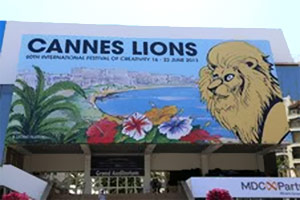
    With the introduction of the new Product Design category, a total of 17 juries will be judging in Cannes this year. Members of the remaining 12 juries will be announced shortly. Cannes Lions, the world’s leading celebration of creativity in brand communications, will take place 15-21 June at the Palais des Festivals in Cannes, France. For information on how to enter work, or register to attend, please visit www.canneslions.com.


  • BJP ads to go on air soon, with Prasoon Joshi songs

    By Pritha Mitra Dasgupta


    The Bharatiya Janata Party, which has just unveiled the outdoor ad campaign for the Lok Sabha polls, will launch 10-15 TV commercials in the coming weeks. The films, which will explore several themes including anti-corruption and women’s safety, are at the script-level and awaiting Narendra Modi’s approval, a person aware of the party’s campaign plans said.


    A source in the BJP ad campaign team said that Sushil Goswami, national creative director of Graphisads, a small Delhi-based agency that handles BJP’s state-level ad campaigns, is also working with Soho Square on the television, radio and outdoor campaigns. When contacted, Samrat Bedi, head of office, Soho Square, refused to comment on the party’s plans stating, “We do not disclose any client’s strategy and plans.”


    The other agency in the running, McCann’s subsidiary TAG, presented three songs written by McCann executive chairman and lyricist Prasoon Joshi as part of its pitch, the person informed. “Prasoon has written a rousing song for Narendra Modi – Saugandh is mitti ki mein desh jhukne nahi doonga, Mein desh mitne nahi doonga.”


    Source:The Economic Times

    Copyright © 2014, Bennett, Coleman & Co. Ltd. All Rights Reserved

    Licensed to republish


  • Prasoon Joshi is jury prez at Cannes Lions

    By A Correspondent


    Prasoon Joshi

    Prasoon Joshi, Chairman, CEO and Chief Creative Officer, India & South Asia, McCann Worldgroup, has been appointed Jury President of the Titanium & Integrated Lions category at the 2014 edition of the Cannes Lions Advertising Festival to be held in Cannes, France from June 15 to 21. “Titanium brings the world’s most respected and eclectic set of people to the jury, and there is immense learning. The bar is raised and new benchmarks set for the world in advertising and communications. It will be an honour to work with the jury,” Joshi, who also is an awardwinning film lyricist and scriptwriter, said.


    Meanwhile at the Clio Awards which is scheduled to be held in October 1, 2014, Taproot India founder and Chief Creative Officer Agnello Dias and Malvika Mehra, National Creative Director, Grey India have been invited to the jury. Said Mehra, who will be on the jury of the ‘Content & Contact, Integrated Campaign & Innovative Media’ category, is looking forward to being on the jury. “It’s a great honour and a responsibility as one has a big part of play in setting a benchmark.” Dias will be on the Film jury.


  • McCann forms Creative Central with Praduymna Chauhan as ECD

    By A Correspondent


    McCann Worldgroup India has announced the formation of Creative Central with Praduymna Chauhan to lead it creatively. The Creative Central is an effort directed towards creating more insightful creative work for clients, a communiqué said.


    Prasoon Joshi

    Prasoon Joshi, Chairman, CEO and Chief Creative Officer of McCann Worldgroup India and South Asia welcomed Mr Chauhan as Executive Creative director, Creative Central. “With a sharp and insightful approach reinforced by a stellar body of work, Pradyumna is keen to create work that impacts popular culture. Based currently in Mumbai, he will work with our creative directors and teams across McCann India offices and functions on our key brands. In the near future we will find more people with a similar skill set and approach to strengthen McCann Creative Central,” he said.


    Mr Chauhan is credited with the MP Tourism Ajab Hai and Colours campaigns, Asian Paints, Star’s Satyamev Jayate, Vodafone ICICI and Birla Sun Life’s Jab Tak Balla Chalta Hai. Before joining MWG, he was Group Creative Director at Ogilvy Mumbai. He has also worked on Airtel, LG Electronics, General Motors, HPCL etc.


    According to Mr Joshi, the setting up of the Creative Central is an important step towards increasing the creative width of MWG India’s offerings to its clients.


  • VIP Industries appoints McCann as creative agency

    By A Correspondent


    Leading luggage manufacturer VIP Industries Pvt Ltd has announced the appointment of McCann Erickson as its creative agency for VIP brand. The company also said that it is currently scouting for a creative partner for its Skybags brand.  The business has moved both its brands -VIP and Skybags from its incumbent agency Ogilvy and Mather


    Commenting on the development, Sudip Ghose, Vice President, Marketing- VIP Industries said, “We believe that McCann has the potential of leveraging our innately strong brand and providing the thrust to take it to the next level. ”


    Prasoon Joshi

    Prasoon Joshi, executive chairman and CEO McCann Worldgroup said, “VIP is among India’s most prestigious brands. We are proud to partner a brand of this stature and heritage. We look forward to doing great work on the brands and a long-term relationship.”


  • Prasoon Joshi, Sonal Dabral, Santosh Padhi & Roopak Saluja on LIA 2013 jury

    By A Correspondent


    Sonal Dabral

    Sonal Dabral, Prasoon Joshi, Santosh Padhi and Roopak Saluja have been appointed to join LIA’s 2013 prestigious juries. The judging is scheduled to take place at the Wynn/Encore Hotel, Las Vegas in early October.


    Sonal Dabral, Chairman/CCO of DDB Mudra, Mumbai returns to join the 2013 TV/Cinema/Online Film Jury which will be led this year by Ogilvy’s Worldwide Chief Creative Officer, Tham Khai Meng.


    Prasoon Joshi

    Prasoon Joshi, President South Asia of McCann Worldgroup, Mumbai will sit on the Non -Traditional Jury, led by Leo Burnett’s Global Chief Creative Officer, Mark Tutssel.


    Santosh Padhi, Chief Creative Officer/Co-Founder of Taproot India, Mumbai will join the Print-Poster-Billboard Jury, presided over by David Guerrero, Chairman & Chief Creative Officer, BBDO Guerrero/Proximity, Philippines.


    Roopak Saluja

    Roopak Saluja, Founder/CEO of The 120 Media Collective, Mumbai joins the 2013 TV/Cinema/Online Film – Production/Post-Production Jury, which is led by Jonathon Ker, Executive Producer at paydirt, Los Angeles.


    Says Barbara Levy, President of LIA of the appointments, “It is a reflection of the great creative work that consistently emerges from India that we have appointed Indian jury members across such a broad spectrum of media. To have the honour to have some of the most highly ranked Creative Officers of India’s most awarded creative businesses is something that we are extremely proud of, and is in keeping with our commitment to have the world’s most creative work judged by the world’s most creative people. We look forward to welcoming them and working with them in Las Vegas”.


    The complete LIA Jury can be viewed on the website: www.liaawards.com  The LIA Call for Entry Deadline is currently the July 15, 2013


  • Comment: News media must black out netas at Uttarakhand

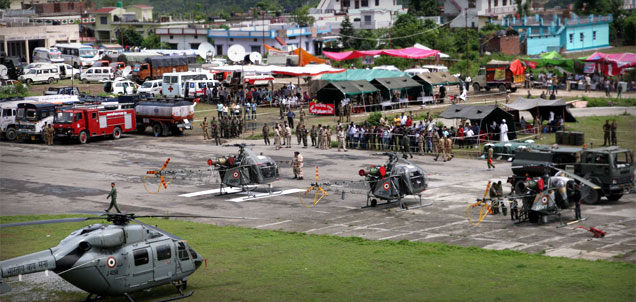
    Representative picture courtesy PIB of the IAF rescue helicopters at Gauchar airport, in flood-hit Uttarakhand on Wednesday, June 26


    It is indeed sad to see several dead and many injured as rescue operations are still on in Uttarakhand. What rages us is the game of one-upmanship between political leaders in grabbing camera time and the importance our news vehicles give to these visits. We present the comment by our Editor-at-Large and senior journalist Anil Thakraney on the issue which would normally appear as Hard Knocks on a Friday. – Editor


    By Anil Thakraney


    In the entire television din over the role of politicians on the Uttarakhand disaster, Prasoon Joshi made the most valid point. (Prasoon, if you are reading this post, I would urge you to take part in the tube debates regularly, we need a few sensible voices out there.) While the others were heatedly accusing the netas of seeking photo-ops during the tragedy, Joshi said the media must consider WHO is providing them with these photo-ops. Very true. If the media stopped covering these opportunistic politicians, they will immediately vanish from the scene.

     

    The defining neta moment so far was the two Andhra politicians exchanging fisticuffs at the Dehra Dun airport, as they fought over who would fly with the ‘cargo’. And no, the cargo in this case wasn’t medical supplies for the victims, but those people who had been rescued, and were anxiously waiting to be flown back home. Absolutely pathetic. And then there is Pheku and Pappu busy scoring brownie points over each other, and the many chamchas defending their actions. At least half of the media time and space gets spent on these jokers. What a bloody waste!


    My humble request to colleagues in the media is this: For the Uttarakhand news, take a firm decision not to provide any coverage whatsoever to the visiting politicians. Not only are they unable to help in any way, with their shenanigans, they come in the way of rescue and relief operations. And there’s no keeping these hyenas away, they will come to feed on the dead, it’s in their nature. Emotional situations like these give politicians a cool opportunity to win more fans, or so they believe. Let’s deprive them of it. And let the entire media effort be focused on the victims, the rescue and rehab. And on the jawans who are doing all the hard work, these brave souls who are putting their own lives on the line so that maximum number of people can be saved. I want to see their faces, I want to hear their voices, I want to know their stories. And this is what the media must provide us.


    Net net: Let’s make Uttarakhand a template for future disasters. No spotlight on any neta. Let it only be about those who matter, and those who do the real work. That done, no politician will ever arrive to disturb rescue operations. Once the oxygen supply (cameras) is cut off, they won’t see any point of jet-setting in. Good riddance.


    Anil Thakraney is a senior journalist and commentator. He is also Editor-at-Large, MxMIndia. The views expressed here are his own. He can be reached via Twitter at @anilthakraney


  • Can(nes) we give our best in 2013?


    By Johnson Napier


    With 3 Golds, 3 Silvers and 8 Bronze Lions the Indian tally at Cannes Lions last year ended at a disappointing 14 metals. This was a sharp decline compared to the 24 metals that India had bagged in 2011. But the dismay of last year seems to be forgotten as the Indian camp gets ready to put up a better, if not the best, show this year.


    MxM India gets a few biggies of the ad fraternity to share their expectations from camp India this year.


    Prasoon Joshi, President – South Asia, McCann India

    The tally apart, I go to Cannes with a completely open mind to discover new surprises, works, etc that are done from around the world. To be able to predict India’s performance would be unfair on my part because the festival is such that agencies from around the world come and participate. As a result one goes there with a very open mind to see what are the new trends that have emerged in recent times. Also, where India’s performance is concerned it keeps wavering; I do not go there with too many expectations ever. It’s always a bonus if you win more. But as I said it is always a learning experience where one can learn a lot more.


    As for McCann India, we did well last year and managed to win a Gold. For this year I am counting on work around Stayfree to win us metals. It is work that we are very proud of. The work managed to win Gold at Abbys too. We have managed to use multiple mediums very well for the campaign like video, uses advocacy of intention of people to drive home an important point of social change with the brand. It’s all about girls drop out of school because of toilet/sanitation issues and therefore try and create awareness of the issue and try and educate girls in the process. The project also benefits the brand equity in the market and also encourages good social habit. When such work gets awarded it kind of encourages the whole team to do more.


    Abhijit Avasthi, National Creative Director, O&M India
    I am an eternal optimist and hope that this year will be India’s best ever. Across agencies, across disciplines and across categories there is some very interesting and original work we have submitted as a country. Yes there is always a lot of cultural nuancing in our work but therein lies the responsibility of our country’s jurors to educate the jury about the brilliance of our work. Judges from other countries, especially Latin America, do make the effort to do the same and hence they benefit from it.


    Sridhar Kondiparthi, Chief Creative Officer – India Sub Continent, Leo Burnett

    I think India stands a good chance this year. We should do better than last year and I hope we win in all verticals including Digital and Mobile. But I do not think this will be our best year ever at Cannes.


    Mahesh Parab, Executive Creative Director, DDB Mudra Delhi

    I am quite confident of Indian talent and craftsmanship so I am expecting India to win a lot. I would also like India to see India winning in some of the most challenging categories like Titanium, & Integrated, Promo & Activations Lions etc. As technology evolves, so does the possibility of what you can do with your ideas. So I would expect more innovative stuff from India this time around.


    As for the tally, it’s going to be tough to go past the tally of 25 Lions (2009). After the glory of 2008, India’s first Grand Prix ever, it’s going to be a Herculean task for Indian agencies. All the best.


  • More smalltown India folks are joining advtng: Prasoon Joshi


    This interview with Prasoon Joshi was done around a fortnight back, and the orginal transcript went into twice the length of what you read here. There are many industry leaders whom you can cut short in a conversation, but with the McCann Worldgroup President – South Asia, you are transported to another world and you can’t get him to stop.


    Perhaps it’s the other hat that he wears that does it to you. The poet in him takes over. As he goes about discussing every facet of the business of creative advertising. What was intended to be an interview on the problems plaguing creative awards in India ended up being a freewheeling interview…


    The industry sure has changed much in the recent past…

    The whole scenario is changing. It is very tough to survive in the advertising industry. No compensation model, there is no IP in this industry. For example, any other industry which is ideas industry has IP. I do music and I have IP; films have IP, technology has IP. Advertising industry has no IP of ideas. So, in the earlier days, the relationships with clients and agencies were longer, and the IP, in a sense, was taken care of because the client lived very long with an agency. One idea was used for a longer time. For example, an ad used to run for 4-5 years, sometimes 10 years. Today it is so perishable, so here and now that you might have cracked a big idea, but quickly you are changing the product and having versions and versions of it. And even relationships aren’t that long; a client may stay with an agency for a year and then move on. The hard work you put into the business, you reap the benefits of it through compensation over the years.


    Which is not too bad…

    The commission model is not there. There is a fee model, now, mostly. So, before you can actually get compensated, the client has moved on. And there are practices that client moves on with the creative idea and continues with it without you being any part of it. You probably got paid for eight months, six months or one year. These protections need to be there for the industry.


    But it’s an international malaise.

    I’m talking about internationally only. I’m saying that IP has become a big problem for the advertising industry. This model has not being able to take care of the changing landscape and as a result, it’s tough. Every client whether big or small wants similar attention, dedicated resources. Sometimes what they pay you can’t even take care of two people’s salaries, and they want six people on the team. How do you do it? So right now agencies are pitching every day, and you can’t take a stand that you only want to do a certain scale of business, that you want to be compensated in a certain way.


    The economic scenario isn’t much to talk off. The long-term compensation may be there over the years, but the amount of work required today on one brand is huge. The fatigue factor of the consumer is very high as the consumer is bombarded with so many creative things, so many channels, so much of entertainment. Earlier you had one channel, you made one good ad like jab mein chota bachcha tha badi shararat karta tha and everyone knew it. Done. Now, even on hit programmes, how much of assured appointment viewing do you get? It has declined.


    So business has gotten tougher.

    The challenges have increased. Yes, more complex media habits of consumers, more distractions, more challenges.


    And this is when one digital is not big enough in India.

    Digital is still at its nascent stage in this country. But in the western world, is has become very definitive. Given the co-existence of various kinds of consumers, media habits and the exposures people have and economically it is so diverse that affordability, reach, and penetration are a problem. I don’t think that internet penetration is such a big problem in the west.  There are problems of literacy and infrastructure. Mediums will co-exist and television will stay on. My driver bought his first TV two years ago. You can’t even imagine that somebody bought his first TV two years ago in America – it’s not possible!


    Do these complexities impact creativity?

    Creativity thrives from challenges. Eventually, it has only helped creativity. It is only going to challenge you and you are going to come up with better ideas. But right now it really makes it complex, especially for the brands. Certain brands are clearly very niche brands wherein you know your TG. But when you have to use the mix of media in this country then the problem is complex. You have to be little bit everywhere. You have to have an idea, which can travel across – you can’t be messaging differently on TV and online. And when something is at inception, a lot of jargons are at work. The fear of the alien, unknown is there, which is there in clients when clients talk about digital. There is a fear – ‘we will not be able to understand digital’. There is nothing like you can’t understand digital… it is also communication.


    How to do deal with getting the right talent? One of the problems agencies face for account planning and client servicing is that business models do not allow hiring of top talent. Is that impacting the creative side also?

    Advertising is still a destination for many creative people in India. That might not be the truth everywhere else in the world. But in India, it still attracts a fair amount of talent. In fact, it attracts more talent than it used to in my time. Then, someone like me who came from a small town did not have any knowledge about advertising. So we found it very difficult to tell our parents what we do. It was difficult for me to explain to my father who was a civil servant – he understood IAS, medical, engineering, he also started understanding management and MBA, but advertising wasn’t easy to explain. There is a science attached to advertising that is very difficult for a common person to understand.


    Would it be right to say that when you began the composition of an ad agency was mostly 90 percent people from urban areas? Has that changed dramatically? What is it at McCann?

    It has changed a lot. I think we have a lot of people from smaller towns now. There are still people who are brought up in metros. They know about the profession or have families in the profession unlike our families who didn’t know anything about it. There are people who are second-generation advertising people, whose fathers were probably in client servicing in some small agency and they feel like working at an MNC now. There are people like that. But lot of people, talent have heard about Piyush or me and know that we were from small towns. You require people to know about people before they can get attracted to a profession, especially a creative profession. See, the creative profession is not that music happens. It’s like Zubin Mehta does this kind of music or Mick Jagger does this or Kishore Kumar sings like this or Gulzaar sa’ab writes like this. There is always people’s association in creative field. Creative profession also has desire to get accolades because you want to be acknowledged. If you tell a journalist you will not have a byline, he might not feel good about it. Because he wants to own his thinking, there is some kind of proprietary thing that you feel for your ideas. That happens with the creative field.


    So what is the percentage of urban v/s smalltown India in agencies?

    It is a good question. I should have done this exercise. But I can tell you from my perception, from my understanding that there are many people now who come from smaller towns. I see people from Nagpur, Pune, parts of North India like Lucknow, Bareilly, Trichy, not where advertising agencies used to be.


    If you had two people to be selected – one say from Mumbai and other person from a smaller town, say Barielly. Assuming all else is equal, who would you prefer to take?

    I would go for talent. I have another observation to make. I would prefer to take someone who comes from the grassroots, who has seen more life than just metros. That’s where the market is going to expand. Though I won’t have a bias, anybody can have understanding, anyone could have travelled the world and understood things. I do not have that strong a bias. But I would want people to come from various parts to make my offering more robust and widespread.


    But sometimes my experience is very strange, I meet people whom I hire for their background at times, but I don’t know they want to shun that, they want to be someone else. What I expect them to do is to borrow from their lives and they are psychologically blocking that part. And say I want to be part of this big town, they start dressing up differently, they suddenly start pretending like they have not heard certain words in the language. So I may be talking to them in Hindi, and they reply in English, almost feeling that he is being thought of as a person from a small town. Some people want to shun that and rather than that becoming a strength, it becomes a liability because you are neither here or there.  They don’t want to be known to have an understanding of middle-class India. Hence, they are not borrowing from it. And it’s not they are doing it consciously, they do it unconsciously as they want to be part of this upwardly mobile life. So, that becomes almost like a deterrent.


    Do you think there’s a domination of the North Indian mindset in advertising… there’s Piyush and you. Of course there’s Balki and others…

    There are many South Indians. We have Balki, Pops, Chax who are from South India. Then you have Aggie who is also from South, he is from Kerala. Many more people. So it is a misconception.


    Moving on… we have had recession and a mixed year in the creative world. How do you think India will do at Cannes this year?

    For me Cannes is a by-product of what you did throughout the year. I wrote the script of Bhaag Milkha Bhaag. While I was looking at Milkha Singh’s life, his target was metal – Olympic, Commonwealth, Asian Games. I work with a target. For us, it can’t be. It is just an icing, it is some activity which happens in parallel, where you get acknowledged – that is how it should be seen.


    Today, awards are becoming targets. Of course, you should enter and win. And there are some rules which you need to follow. There are various other ways of measuring what you are doing is right or not. The biggest measure is your connect with the consumer. Not only here but even the other field I operate in – the films. There are few songs of mine which are very popular, which have done a great job but never been awarded. I consider the song Arziyan, Maula, Maula, which I wrote for Delhi 6 as very good pieces but I didn’t win for that. It doesn’t matter to me. Here also, a lot of campaigns like Thanda matlab Coca Cola, these films didn’t win at Cannes but outdoor won, print won. ‘Yaaran da Tashan’ did not win a Cannes Gold. I won later on for Happydent. I don’t think that the work was not correct. It didn’t meet the jury sensibility and when it comes to Cannes. I feel that we have entered our work and if I don’t win, we don’t get disappointed. For us the bigger worries are if the brands we work for are not doing well in the market or the consumer connect is not there or the sales are not in place. Cannes is something which I would love to win and feel happy if we do but if I don’t, we don’t re-strategize to perform better in Cannes.


    Is there pressure from the clients to win at Cannes?

    I would say an absolute no.


    Won’t marketing managers want that…?

    No. marketing managers never want it. In fact there are a few cases that someone might say, change your work. And it is there that they get derailed. And they are not doing their job.


    May be they are not telling this to someone like Prasoon Joshi. May be they are telling your juniors.

    None of the sensible clients would ever tell you to get an award but will want good work which will spark great conversations. Brands need to occupy a mindspace in this cluttered space. No one leaves the house saying I will buy ketchup or soap like a lifestyle product. But if I have been able to make someone even think for one second about buying a certain toothpaste, then I have done my job. Clients may ask you to create work which will create conversations. There is nothing wrong in this.


    How many entries have you sent to Cannes this year?

    I don’t remember. Maybe 25-30.


    No conversation will be complete without talking about what happened at Goafest. Now that it is past us, how do we make sure that things are not repeated next year?

    About proactive or one-off works that people create, I have said earlier as well that creative people keep looking for experimentation. And it starts off like you needed one room for experiment and they asked for client permission and they gave you permission. But what started as a one-off can become an epidemic. I believe that creative people should experiment but not at the cost of brands. Because brands are not made overnight. Credibility can be shaken in a second but it takes years and years to build brand equity. So it’s not correct to play with a brand equity which has not been created by you alone but a lot of people. I feel that we have to give a window for creative people to experiment. It can’t be at the brand’s expense, at all.


    So what do we do? We don’t allow or indulge in such work. I won’t approve of it. But being a creative animal, creative people have an urge – why can’t I do this or that? You can say why don’t you do it at home and why get out with it? But we need to get out with it because we need opinions from people like you. You want to know what people think of it – is it good or not? I have suggested that at award shows, we should have a showcase award or window where people are allowed to exhibit their work so that they can sharpen their tools. But you can dismiss this argument by saying, why don’t they do it on regular work? Because sometimes they don’t get an opportunity. We should be a little kind and generous for people to showcase their talent. However, it’s unfair to think that clients will face the damage at the expense of something you created.


    We need to keep in check the desire and importance we attach to awards. Because if you start attaching undue importance to it then we will derail from what we are there for – to help build brand equity and not win metals. It’s an art to sell products and that’s why brands come to us, because they think we have the art of selling. So you need to create forums where art can be practised. The role of award shows should be sharpening and sharing.


    And plagiarism? 

    About plagiarism, it is a very subjective thing. Before this year we had not heard of it. I think somewhere it went overboard. Similarities can always be found. I think I have judged at Cannes and other respectable shows, I have never ever received a request to judge anything again. What went wrong I think is that after the jury process is over it should be over. You can criticize it because then otherwise throughout the year we will be doing it. Highlight it but not get paranoid with it.


    But the Ad Club accepted the complaints and decided to act on it?

    That is the reason why the super jury happened. We collectively took a decision that there has to be a line drawn. We cannot keep it open. Every year, someone will say I’m not happy. And some might say that I don’t think our industry is into plagiarism, but in the last one year plagiarists have entered our industry while aliens have attacked. What are people talking about?!


    It’s not that we are not creating brands, selling brands or the advertising industry is collapsing. We know that lately, award shows have become a little unhealthy as there is too much importance given to them, people take them too seriously.


    Are clients okay with being exposed?

    Most clients don’t track of so many awards shows. It is for the advertising industry, they say.