
Tag: Ogilvy

  • Ogilvy comes up with reminder medium via ‘Fevi-call’

    By A Correspondent


    Fevicol has launched a new radio innovation that turns simple phone calls into reminders that stick. Through a partnership with a leading FM radio network, it has set up a phone number which lets anyone use this service. Conceptualised by Ogilvy, the radio innovation rolled out on January 9, through a series of radio spots.


    Piyush Pandey

    Said Piyush Pandey, Chief Creative Officer Worldwide and Executive Chairman – India, Ogilvy: “Repetition is an age-old memory trick we’ve all used in school while growing up. Through Fevi-call, we wanted to apply it to simple everyday reminders and make them stick in people’s minds. So, we turned an old medium like radio into a fun platform that anyone can use to reach their loved ones in a more effective way.”

  • Asian Paints promotes Ultima Protek offering in Southern markets

    By A Correspondent


    After releasing a TVC exclusively for Kerala market, Asian Paints has released two more TVCs for Tamil Nadu and Andhra Pradesh and Telangana (APTG). The campaign promotes Lamination Guard Technology of Ultima Protek that is designed to laminate houses and provide complete protection with 10-year guarantee.


    Speaking about the new ad, Jaideep Kanse, CMO, Asian Paints Limited said: “The dynamics of Tamil Nadu and Andhra Pradesh are unique both in terms of the vagaries of weather and the consumer need hierarchy. Asian Paints has always pioneered technology led innovation through its products to bring to consumers nothing but the best. This campaign is yet another step in that direction where Ultima Protek will be one stop solution to all the current problems pertaining to exterior walls by laminating your house.”


    Added Prem Narayan, Chief Strategy Officer, Ogilvy and Mather, India: “Lamination is a commonly understood metaphor for protection. In this campaign, we are trying to surprise home owners that the same protection is now available for their homes too, thanks to Asian Paints Ultima Protek.”


  • Ogilvy & Licious unveil year-end festivities

    By A Correspondent


    Licious has launched the Licious Carol on the occasion of the festive Christmas season. The campaign has been conceived in the form of popular Christmas carol, Jingle Bells.


    Said Sujoy Roy, Executive Creative Director of Ogilvy, Kolkata: “We wanted to do something unique for the holiday season. The point of the exercise was to talk about Licious Spreads, without being too preachy. Besides, it’s meant for the holidays. Why not have some fun with it? The best thing about the musical is that one can hum along with it,”


    Added Manohar Kumar – Business Head, Packaged Food Business, Licious: “Licious Spread is a unique & an innovative offering from Licious. Its India’s 1st Meat spread, a completely new category that currently doesn’t exist in the Indian market. The key marketing task has been not only to drive awareness but also to educate consumers about its usage & consumption occasions. Given the festivity around & popularity of Christmas jingles, it’s an interesting approach of communicating the message in a fun way. Best thing about this musical is that it cuts across age and gender.”


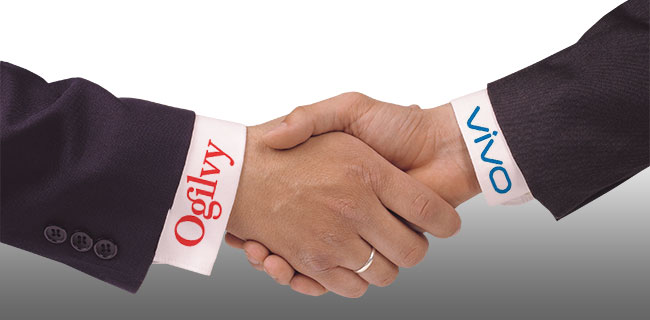
  • Ogilvy-Vivo Plagiarism Case: The Industry Needs To Know


    By Sanjeev Kotnala [Updated*]


    Like many others, I was super-excited when Ogilvy took Vivo to court for plagiarism. It seemed someone was gutsy enough to take on the issue the industry has been facing for a while.

    It led to a high decibel short buzz. There were debates and the industry was discussing the next course of action. What could be done? How can the menace of plagiarism be tackled? Why must one differentiate between straight plagiarism and pitches? How could the fraternity protect their creative IPR?

    Alas, just like the buzz around some other issues within the country, the campaign against plagiarism died an abrupt death.


    The Recent Development Is A Dampener.

    Now, in what was colloquially known as the Ogilvy- Dentsu – Vivo case and was primarily a direct dispute between Ogilvy and Vivo, the two parties  have come to an amicable agreement settling the dispute out of court. It is something everyone expected.

    It cannot be a case of  ‘I am Sorry’ or writing 100 times ‘No, we won’t ever do it again’. And hopefully, not a matter of a quid pro quo where future assignments come Ogilvy way.

    No, none of us can do anything. Not that we have done anything.

    Many people have welcomed the development.

    Is it about ‘Keeping it within the family’ and ‘not washing dirty linen in public’?

    The Ogilvy – Vivo case was one of the rare high voltage cases of Indian advertising that shies away from raising such an issue.

    Definitely two parties have a right to an out of court settlement. That is a defined process.


    It May Act As A Deterrent Or Set An Precedent.

    Yes, I agree, the point is well-made. Plagiarism was in the spotlight for some time. But, then it is half the battle.

    Yes, it may help the creative process and such act as a deterrent for possibilities. Maybe, people, agencies and clients will think twice before plagiarising creative concepts. However, it is setting an example. It may become a precedent, giving rise to claims and out of court settlements. And in that case, it will be detrimental to the industry.


    Industry Needs To Know.

    Sorry, Arnab Goswami, for taking your line, but may be the industry does need a hard and differential debate on the subject. I do think that the industry wants to know. In many ways, Ogilvy and Dentsu are leading agencies and Vivo is a large client, and hence, the industry has the right to know. And I am equally sure that nothing will be shared. That is what happens to out of court settlements which has non-disclosure as a necessary binding clause.

    However, if someone were to share, the industry would want to know:

    • What really happened?
    • What made Ogilvy withdraw the complaint?
    • What is the agreement?
    • Did Ogilvy accept it to be a case of creative-coincidence?
    • How did the creative-coincidence happened or was agreed?
    • If, yes, how did it happen?


    Expectations

    The problem of plagiarism is alive ad growing by the day.

    No solution has been found, presented or discussed in public domain.

    The issue must be kept alive. The industry bodies owe it to the industry to act, to create norms, ways of self-regulation, the process of internal reporting and decision-making. Any such thing will not be legally binding, but it will be a start.


    *  an earlier version of this article and the visual that accompanied it had mentioned the legal tangle between Ogilvy and Dentsu, when it was in fact between Ogilvy and Vivo


  • ClearScore encourages loan seekers to check credit scores in latest ad film

    By A Correspondent


    ClearScore, a free credit scoring fintech platform, has announced the launch of its first TV campaign ‘Credit Score Matlab ClearScore’.


    Said Hrushikesh Mehta, Country Manager, ClearScore: “We believe that credit education and awareness are of utmost value. Being aware of and educated about one’s credit score facilitates easier and cheaper access to finance whenever someone needs it. The purpose of the television commercial is to educate credit seekers to check their credit score on our fintech platform – for free – and find suitable credit offers quickly and easily,” adds Hrushikesh.


    Added Srreram Athray and Elizabeth Dias, Group Creative Directors, Ogilvy, Mumbai: “When you apply for a loan you always have the jitters – what if they don’t approve it? And you go through self-doubt and fear. We took a light-hearted and yet in-your-face way of dramatizing what goes on in the loan seeker’s mind. Thus, underlining the importance of checking credit scores to be able to avail any form of finance.”


  • Titan Eyewear tells Indians to ‘Find their signature style’

    By A Correspondent


    Titan eyewear has unveiled its latest campaign titled ‘Find your signature style’. Said Shalini Gupta, Marketing Head of Titan’s Eyewear business: “Consumers today are seeking new age materials, enhanced functionality and a deep design story. The TVC romances three important product lines of Titan and playfully showcases their uniqueness. We have crafted an engaging screenplay to showcase the interplay of the large variety of our product portfolio & spectrum of Ayushmann’s versatility.”


    Added Tithee Ghosh, Managing Partner, Ogilvy: “The new campaign for Titan Eyewear has a surprise for audiences as Ayushman Khurana is launched as the brand’s ambassador. Titan Eyewear has been synonymous with the brand’s outlets but with the brand expanding its footprint across different optical stores and focusing on a larger, more stylish and consumer need based range of eyewear and eyewear solutions it was important to deliver this news in an engaging manner. The fit with Ayushman was very strong as he has established himself as a stylish actor with amazing range. The brand’s message therefore gets delivered in an entertaining and credible way. We are confident consumers will engage with this ad as it has been crafted to leverage Ayushman’s core essence of stylish approachability for Titan Eyewear which is also seen by consumers as a stylish but accessible brand.”


  • Vodafone urges #YourWordsNotForwards this Diwali

    By A Correspondent


    With Diwali round the corner, Vodafone has launched a campaign encouraging people to share #YourWordsNotForwards this Diwali with a personalised greeting to their loved ones.


    Commenting on the campaign, Kavita Nair, Chief Digital Transformation and Brand Officer, Vodafone Idea Limited, said: “In today’s automated world, relationships have moved from being warm and personal to being distant and impersonal. As a brand that believes in genuine conversations, we want to remind our consumers the importance of personal messages and calls and the love and warmth it conveys. Through this #YourWordsNotForwards campaign, we are encouraging everyone to take out time to wish their loved ones with a personal touch and send original greetings instead of forwards. We hope that people will take a lead and connect this Diwali in the real sense.”


    Added Kiran Antony, Chief Creative Officer, Ogilvy South and Team Vodafone, Ogilvy: “Wishing over a period of time has become impersonal. We are all guilty of it. What started off as calls to friends and family, came down to messages and is now only about forwarding wishes created by someone else. We wanted consumers to realise that every wish can also have a personal touch added to it. A sweet visual for this was to get a grandmother to make an effort while wishing her grandson and reminding everyone to share #YourWordsNotForwards.”


  • Is there a way to check Plagiarism in Advertising?


    By Sanjeev Kotnala


    Brand David (from the Ogilvy stable) took Dentsu to court for a claimed plagiarised creative (‘Light Up the Night’) for Vivo. It is a welcome act for the Indian advertising industry. Dentsu, as expected, has categorically denied the accusation. In an official statement, Dentsu said: “What we created is completely our original work, and we have always maintained this before the Hon’ble Court, as this is the fact”.

    No one other than Vivo, Ogilvy and Dentsu knows the facts. I am not raising an accusing finger on the Dentsu. However, this one seems a case of copying an idea completely. I am personally unable to explain it as ‘Creative Coincidence’. I find it impossible to give it the benefit of the doubt though I have no doubt on the integrity of people heading Dentsu.

    It was Ogilvy claiming it presented the idea to the client. There is a possibility that the idea came up in a discussion, and the client team pushed the agency to work on it. The agency may not be aware of Ogilvy presenting the script to Vivo. However, when Dentsu says it is an original work, there is no reference to the client being part of it as co-creator. With this, in a way, Dentsu exonerates Vivo of any misdoing.

    I expect that in the end such acts will be internally be tracked down to a few individuals with good intent and questionable motives. If it is a case of plagiarism, it can happen with and without the knowledge of management and individuals. Sometimes, people who know the history and remain silent, doing more damage to the industry.


    Creative Coincidence And Plagiarism

    Creativity is subjective. In the Indian advertising arena, it is loosely protected. Rules do exist, but rarely anyone has taken someone to task. It has helped the disease to spread.

    We have protected the acts of creative plagiarism under various excuses. Creative Coincidence, category insights, inspired by and obvious thinking has been some of the excuses we as an industry used to defend it.

    Plagiarism And Idea Shopping

    The concept of Idea Shopping and calling for pitches is not new. Unsolicited pitches with no obligations have further amplified the problem.

    May be it is time for the agencies to get the client to acknowledge the ideas presented. Or to create a service, where ideas presented can be date-marked and kept for future reference. Just like what is done for a novel or a film.

    No Excuse For Plagiarism

    No excuse is good for plagiarism. Client-agency relationship, timelines, conflict of business, cost consideration or any other reason is purely a post-rationalisation. It can never be acceptable for a client to get the idea executed by an agency, which is not the original creator of the idea unless it is done in mutual agreement.

    Creative Coincidence Does Exist

    Ones we agree that agencies can come out with the same consumer and category insights. We must agree that the summarisation of expression may use the same words. If we take it further, the execution can be the same.

    This defeats the argument that the executions need to be different. However, in this case of Ogilvy, Vivo and Dentsu, it goes to a frame-by-frame comparison. It makes ‘Creative Coincidence’ hard to believe

    Pitch Fee Is A No-No Solution

    Pitch fee is a non-starter. The industry has seen hungry agencies flocking to a pitch for a client based on a Facebook post.

    Some larger and smaller agencies do ask for the pitch fee. The result: they get invited to fewer pitches. No one wants to be in that situation. In this chaotic industry scenario, no one wants to not be considered for pitch.

    The pitch fee must be properly understood. It does not give the idea ownership to the client. It is for the effort made by the agency. In no way, is it a compensation for ideas.

    There is no point in asking agencies to state the idea fee openly. It will be wrong to expect agencies to pass the idea ownership to the client on payment of an idea fee. Creative ownership, passion and legacy come into play. If we give the client the freedom to execute it with a different agency, we will be weakening the very fundamental part of the business.

    Can Agencies Give Their Work A Certificate Of Original Work? 

    May be the clients and the celebrity or producers to protect their image can ask agencies to provide a certificate of ‘Original Work’ before the campaign is released or approved. That way, the onus will ultimately be on the agency.

    Ogilvy Case A Wake-Up Call For The Industry

    The Ogilvy case is a wake-up call for the industry. The advertising association and industry bodies need to come together on plagiarism. There is definitely a need to define the process, set rules and guidelines for pitching.

    Documented Cases Of Plagiarism

    Plagiarism was the reason for Malaysia 4As disqualifying two of Dentsu Utama Kancils winners many years back. Dentsu held its ground and in fact (not ascertained) resigned from the 4As.

    Manish Bhatt, Founder Director, Scarecrow Communications accused ‘Jai Jawan Tea ‘ to blatantly plagiarising the much appreciated ‘Bagh Bakri’ tea creative. He once again questioned the uncanny similarity of positioning ‘Go with the Flaw’ with Spykar ‘Flaunt your flaws’.

    ‘Bang In The Middle’ saw its Jabong positioning ‘Be You’ very similar to a UK-based fashion brand, Sainsbury’s Tu.

    Sunny Lite, complained to ASCI against the Aashirvaad Atta brand.

    In 2013, many entries in the biggest advertising award (Goafest )were accused of plagiarism.

    Plagiarism Raises More Questions.

    How do you safeguard your ideas in a pitch?

    Who defines what unintentional plagiarism is?

    At what level of similarity does plagiarism start?

    When along with constrained research methodologies, the agencies have similar consumer insight leading to obvious executions, who will decide if it was plagiarised or a mere creative coincidence?

    Is there any other way than the victim agency can seek legal options?

    Can industry bodies create an ecosystem where plagiarism is challenged at every stage?

    What punishment and sanctions can an industry body impose on erring member – non–member client or agency?

    In the past, Philippines’ Department of Tourism ended its partnership with McCann when there were complaints that the ad was similar to a South Africa tourism ad. And it was a rare action by the client.


    A Different Question?

    Who owns the creative? Most employee contracts give the agency the ownership for all work created and developed by the employee during his or her tenure with the agency belongs to the agency.

    What happens when the person moves from one agency to another? Is he or she not expected to use the accumulated expertise? Are they barred from benefiting from the ideas they generated during earlier engagements?

    How can you compartmentalis creative ideation?


    Industry Must Come Together Against Plagiarism

    To set an example, bigger agencies and like-minded organisations must come forward. It is a space where AAAI, IAA, ISA and ASCI could collaborate. The Indian advertising association and industry stalwarts must take a position now. It is not something that can be addressed on an individual agency or client level.


    Here Is An Idea Industry Can Support

    It is an attempt to create a data bank of presented creative that can be referred by the client, agencies, and if required help, decide the case legally.

    1. Advertisers and agencies enrol for the service.

    2. Every advertiser and agencies are given a unique code with double authentication.

    3. Every advertiser calling for a pitch informs this Idea cell of the pitch. This creates a link that the agencies later use to upload creative presented in the pitch.

    4. Advertisers sign an NDA with the pitching agencies. And call not more than five agencies for the pitch.

    5. Advertisers pledge not to go with the incumbent agency irrespective of the pitch result. This will ensure that pitch is only called when the client is sure they want to change the agency.

    6. Just like any other creative (songs, stories and films), the pitch creative is uploaded by the pitching agency.

    7. The client accesses and in a given timeframe certifies that it was the pitch presentation.

    8. The pitch presentations are then date-stamped. This date-stamp becomes the reference point for any dispute at a later day.

    9. The client pays a fixed fee for the service. The agency pays to keep creative protection alive.

    10. Agencies do not participate in a pitch until the client agrees to be part of this body.

    11. Only the agency has any future access to the creative.

    12. The date-mark creative are protected using Blockchain Technology. The creative with all details is made available in case of plagiarism issue.

    13. The agency removes the creative from the watch list whenever they want to do so.


    I would love to discuss possibilities with like-minded people and interested industry bodies.



  • Ogilvy takes up the Plagiarism Mantle


    By Prabhakar Mundkur


    I believe the etymology of the word plagiarism comes from the Latin ‘plagiarius’ which means ‘kidnapper, seducer, plunderer’.  And for any creative and ideas person who has been the subject of plagiarism, the meaning runs true.  It actually does feel like your idea was kidnapped. The immense hurt and insult it metes out to the originator of an idea is unparalleled. Plagiarism has a long history and perhaps the first time the word was used was in the context of literature in 80 AD and with reference to the Roman poet Martial. Not surprising. Poetry, literature, music, the other arts and the whole history of man’s ideation is plagued by plagiarism. Roman architects I believe would present elaborate plans for aqueducts and bridges but decline to give the angle of the keystone involved for the arches because they were afraid of plagiarism.

     

    It was high time someone took up the mantle of protecting the advertising industry, and I can’t help feeling that Ogilvy as the industry leader has taken up this important cause. Unfortunately, I think the court has taken a weak stand already by allowing Vivo to continue with the advertising and by asking Vivo to deposit a crore with the court – that is just 2% of the reported spend on the campaign. If we are convinced that there was a striking similarity between the storyboard presented by Ogilvy and the final version produced by Dentsu, we need not go any further. Guilt is already established. The defence of simultaneous creative outputs being similar is a weak one in this case, while it is known to happen both in art and science, purely on probabilistic terms.  While it is remotely possible that Dentsu arrived at the same idea with amazingly striking similarities, one can’t forget that there is a referee who is in this case the client, who was examining both pieces of creative and obviously in great detail.  So that makes at least the client culpable!


    After all, what would the fair and ethical client do?  He would tell Dentsu that they already have a similar idea from a pitch Ogilvy made and ask them to work on an alternative idea.  There is one more reason why this sounds like a client led plagiarism.  If Vivo rejected Ogilvy’s idea of the script which was developed over a period of many months, how is it they approved a script from Dentsu which had striking similarities?  If the idea had no merit, the Dentsu script should have been rejected as well.


    Is it the first time this kind of plagiarism is happening from unethical clients?  Not at all.


    Just last year, I pitched for a very reputable Indian bank.  We were told that the selection process would take about a month.  Then a week later, my creative director opens his Facebook page and he finds the ad he had presented at the pitch staring at him in the face.  Personally, I believe that plagiarism has gone on for too long, and that agencies have been too weak in wanting to do anything about it.  So, kudos to Ogilvy for standing up!   Remember, it is only someone who is proud of their work who will stand up.


    Other cases of Plagiarism

    A few years ago in Malaysia Dentsu Otama was accused of plagiarizing the artwork of British designer Tom Anders unfortunately for the World Wildlife Fund which is such a well known brand.


    Tom claimed copyright infringement. His work was published on 27th April 2014, and the WWF ad appeared on 22nd July 2015.


    Do clients admit to Plagiarism?

    Oh yes they do. If they are honest and have a moral compass. Mcdonalds for example pulled their ad out of the media when they are supposed to have copied photographer Kristina Bakrevski that captures pictures of her friend David Sikorski staring lovingly at a burrito.

    In fact, Mcdonalds accepted the mistake with grace when they told Adweek, “This shouldn’t have happened, and, with our agency partner, we’re working to find out how it did. We’re reaching out to David Sikorski and Kristina Bakrevski. We apologise to them, their fans and ours.


    What is the way forward for agencies?

    Typically because of the nature of the industry, plagiarism happens during pitches. Pitches are for free and the ideas then remain with the client.  Often clients share their own information with great caution by asking the ad agency to sign a NDA so that their information is held in great confidentiality.

    For some reason the ad industry takes a servile position by not asking the client to sign a similar NDA for the work that they are likely to present to the client. After all most confidentiality and NDA Agreements start with the following statement “For all purposes of this agreement, the term “Confidential Information” shall collectively refer to all non-public information or material information or material disclosed or provided by one party to the other, either orally or in writing….”.


    It is high time the ad industry plugged loopholes to protect their intellectual property.


    And what will happen to the Ogilvy-Vivo case and what will the courts decide?


    Will Vivo have the same grace as Mcdonalds to admit that the two pieces of work which Ogilvy and Dentsu provided to them were strikingly similar and only they had the knowledge of the similarities?


    Not if they don’t have a moral compass.


    Prabhakar Mundkur is a veteran adperson and now a prolific commentator. His views here are personal


  • Spaces launches second edition of its Rangana Collection

    By A Correspondent


    Interiors specialists Spaces has launched its latest campaign to introduce its limited-edition festive range – Rangana Collection. The campaign kickstarts with two digital films conceptualized by Ogilvy that depict how the Indian art forms are translated into inspiring bedsheets.


    Commenting on the campaign, Manjari Upadhye, CEO, Domestic Business, Welspun India said: “Spaces is synonymous to thoughtful living with its unique designs and innovative products. It is a brand that weaves contemporary and traditional designs on bed, bath, coordinates. In line with this ethos, the new Rangana Collection celebrates the Indian traditional art forms with a modern touch. Through our campaign, we aim to revive our ancient art forms and rich heritage. Taking forward the idea of thoughtfulness, we are also giving back to the society by contributing to the growth of the artisans’ community.”


    Speaking on the campaign, Srreram Athray, Group Creative Director, Ogilvy added: “As Rangana’s designs are all inspired by traditional Indian art, we came up with a simple idea to make that connection. And we threw in a bit of entertainment too”.


    The campaign will be promoted across various digital platforms, OOH, retail branding and in-cinema video ad promotions.


  • Milton expresses the colours of millennial love in latest ad film

    By A Correspondent


    Milton has released a new ad film conceptualised by Ogilvy for its Thermosteel range of water bottles.


    Said Ajay Vaghani – Managing Director, Hamilton Housewares: “In a way, our choices of colours reflect an aspect of our lives; almost like an extension of our personality. And the youth today visibly seems to resonate with this. They love integrating colours into their lives as a means of echoing the mood or a statement that they choose to make in that moment. It was exciting for Milton to build on this observation. We have a recognized legacy with Thermosteel bottles and with a wide range of colours in this category, we decided to cater to a vibrant young audience. The TVC, in an endearing way, interweaves the drama of colours and emotions through the bottles via a playful narrative. We want the youth of today to continue exploring and expressing their vivacious personalities with Milton by their side.”


    Speaking on the new TVC, Anurag Agnihotri- ECD, Ogilvy, says, Bottles and flasks are no longer just a utilitarian product. They have become an accessory for the youth, a means for them to express themselves. They’ve become synonymous to tattoos or jewellery. They are what sets one apart from the crowd. And when Milton introduced a range of colourful flasks, it was the perfect opportunity for us to talk to this youth not through words, but through colours.


  • Asian Paints spreads the #ColoursOfPujo with Bengali bands

    By A Correspondent


    For more than three decades, Asian Paints Sharad Shamman has been an intrinsic part of Bengal’s Durga Puja. This year Asian Paints is presenting #ColoursOfPujo. Partnering Asian Paints in this musical journey are three renowned Bengali bands – Cactus, Lakkhichhara and Goshai Gang. Each of them presenting a pujo special song, set against the background of a colour that represents Sharodiya.


    Said Jaideep Kanse, General Manager – Brands, Asian Paints Limited: “Asian Paints has always believed in celebrating creativity and art. It was with this intent that Asian Paints Sharad Shamman was initiated and now over 35 years of this, we feel the love and respect of the people every time we are in Kolkata during Pujo. Colours are native to both, Durga Pujo and Asian Paints and with this thought, we celebrate #ColoursofPujo this year. We are extremely proud to associate with three leading bands from Kolkata – Cactus, Lakkhichhara and Goshai Gang to bring to life the colours of pujo by highlighting the relevance and significance of key colours.”


    Added Sujoy Roy, Managing Partner (Creative), Ogilvy: “Asian Paints has been an integral part of Durga Puja for several years. Every year we pick aunique aspect of the festival and bring it alive. This year we wanted to celebrate the colours of Durgotsav. Colours that evoke memories, represent tradition and find prominence during the festival. We picked three colours. And created three songs. Connecting colours to the key moments of celebration. Painting three vivid pictures of Durgotsav.”