Tag: Ogilvy

  • Tata Sky unveils murals of Gujarati actors

    By Our Staff

    Tata Sky has launched a mural campaign in Gujarat to bring alive the local flavour by associating with popular Gujarati cinema actors. The campaign is conceptualized by Ogilvy and executed by Dentsu Communications, along with Bollywood Art Project (BAP). The wall murals will cover 375 walls across 133 towns.

    Said Anurag Kumar, Chief Communications Officer, Tata Sky: “People’s lives are made better when they connect to quality entertainment. This thought inspired our recent national campaign- “Iss khidki ko khol dala toh life Jingalala”. We have now taken this thought closer to our customers in Gujarat by celebrating popular faces from Gujarati entertainment through the unique format of wall murals. These murals reinforce Tata Sky’s commitment to be an inherent part of people’s everyday lives, making quality entertainment affordable and accessible to all.”


  • Ogilvy designs new campaign for Greenply

    By Our Staff

    Greenply Industries Limited has launched its brand campaign to highlight the risk of formaldehyde emission from plywood and showcase Zero Emission (E-0) product range. The TVC campaign has been created by Ogilvy India featuring Boman Irani in the lead.

    Said Sanidhya Mittal, Joint Managing Director, Greenply Industries Ltd:  “There has been a significant change in the consumer buying pattern. People are more focused on maintaining a clean environment inside their homes as well. The campaign is all about creating awareness on what E-0 emission stands for.  The commercial operates in the space of humour to strike a chord with our target audience. With increasing awareness about the harmful consequences of air pollution on human health, consumers today are extremely concerned not only about their external environment but also about the Indoor Air Quality where they live. The rising concern pushed us to come up with this innovation.”

    Added Sujoy Roy, Executive Creative Director, Ogilvy:  “Musical banter is one of the oldest forms of creative expressions. It makes the intended message more memorable simply by being engaging, lyrical and humorous. We thought that a comic dialogue leading to a conversation on formaldehyde emissions might just be the way to reach out to homeowners, across social, cultural and class identities. We couldn’t think of anyone better than Boman Irani for the role. His presence, not to mention his inimitable brand of humour, adds a touch of domestic familiarity to the campaign.”


  • Center Fruit unveils new advert

    By Our Staff


    Center Fruit launches a new campaign to promote brand proposition. Conceptualised by Perfetti Van Melle India and Ogilvy India, this TVC will be aired on TV and supported on social medium.

    Said Rohit Kapoor, Director- Marketing, Perfetti Van Melle India: “Center Fruit as a brand has always played in a space where Fun is at the core due to the fruity flavour. The gum has been established as a mood uplifter staying true to its brand proposition of Mood Ting Tong. The new TVC resonates with the brand proposition and conveys the message to the audience in a rather humorous manner keeping it in the fun zone.”

    Added Anurag Agnihotri, Managing Partner – Creative (West), Ogilvy: “Teens have a very short attention span and are constantly trying to master the art of surviving boredom. Here in this film, Center Fruit comes handy, adding a much-needed burst of fun to a mundane, boring moment.”


  • Ogilvy creates new TVC for Asian Paints

    By Our Staff

    Asian Paints has launched a new ad for its Ultima Protek Lamination Guard. Conceptualised by Ogilvy India, the new ad is directed by Prasoon Pandey. The ad features Ranbir Kapoor, an actor who is seen more in TVCs than the longer format movies in recent years, and focusses on how only a house laminated with Ultima Protek stays truly protected from all elements of weather with the tagline, ‘Baarish, Dhoop aur Dhool ko Aane Do’.

    Said Amit Syngle, MD & CEO, Asian Paints Limited: “Consumers are looking for solutions to keep their homes beautiful forever and todays homes are challenged by the vagaries of weather, right from heavy rains to extreme sun and the new age problems of dust. Over the years, Asian Paints has pioneered technology led innovations through its product offerings to bring to consumers nothing but the best. Lamination Guard technology in Ultima Protek is designed to laminate their homes and protect its beauty for years to come. This campaign clearly establishes Ultima Protek, with its Lamination technology, as the Gold Standard of exterior paints.”

    Added Sukesh Nayak, Chief Creative Officer, Ogilvy Mumbai: “To show all you need to do is laminate your home to keep it safe, we have Ranbir Kapoor in a double role. Old Ranbir playing a matchmaker to help a young girl find her perfect match. She finally finds her match in young Ranbir living in the house of her dreams, laminated and protected by Ultima Protek from Asian Paints.”

    Ranbir acts well. We are looking forward to his longer format Shamshera and Brahmastra this year.


  • Ogilvy creates new ad for Cadbury Dairy Milk Silk

    By Our Staff


    Ogilvy created a new ad series for Cadbury Dairy Milk Silk. The campaign has six videos.

    Said Zenobia Pithawalla, Senior Executive Creative Director & Mihir Chanchani, Executive Creative Director, Ogilvy India: “Cadbury Dairy Milk Silk decided to celebrate Valentine’s Day like never before. By giving young people in love ideas, on how to celebrate Valentine’s Day in these tough times. Tying in aptly with its larger communication idea, ‘How far will you go for love’.”

    Added Neville Shah, Executive Creative Director, Ogilvy India said: “These simple stories attempt to inspire couples to surprise their partners. It’s not about the bigness of the act. It’s about the grandness of the thought. And that’s the simple intent. We designed them for short format surfaces and deployed them episodically, increasing the interest with each asset. A campaign designed for love. Simple.”

    Said Anil Viswanathan, Senior Director, Marketing (Chocolates), Insights and Analytics, Mondelez India: “Being synonymous with Valentine’s Day for almost a decade, Cadbury Dairy Milk Silk has been inspiring consumers to celebrate the season of romance and making the day count in their love story. Cadbury Dairy Milk Silk has built and strengthened consumer love and connect with youth in India through relevant storytelling and personalised offerings. Our recent campaign “How Far Will You Go For Love” was received very well, winning consumers hearts especially with Gen Z strengthening overall brand appeal and emotional connect with this audience. Valentine’s Day is an important day in our consumer’s life, and they believe in making the day count. They know that words often fall short to express their deepest emotions for the dear ones in their lives and they share a special bond with Cadbury Dairy Milk Silk to express themselves.”

    Added Shekhar Banerjee, Chief Client Officer and Head – West, Wavemaker India: “The year gone by has been quite different and difficult for most of us and especially for young couples who have been staying away from their partner / loved ones. Going into this year’s Valentine’s Day we managed to bring the brand much more integral to expressing love. We went an extra mile to make Valentine’s Day furthermore special for young couples through custom partnerships with web series and showcasing true inspiring stories in association with Humans of Bombay and Terribly Tiny Tales”


  • Tilt beefs up strategy team

    By Our Staff


    Brand and communications consultancy Tilt Brand Solutions has appointed Mandar Gore as Senior Director – Strategy. He will report into Paul Dueman, Tilt’s Chief Strategy Officer.


    Gore has over 16 years of experience across advertising and brand consulting. In his earlier stints at FCB, Ogilvy and Sideways Consulting, Mandar worked on brands like Bournvita, Kamasutra, Fosters, Amaron, Castrol, Mahindra & Mahindra and Pidilite, amongst others. His work on them has won him Indian as well as international effectiveness laurels at Effies India/APAC and AME.


    Said Dueman: “We are really excited to have Mandar lead and drive “Full-Brained Thinking” at Tilt – the philosophy and approach that drives strategic planning at Tilt. The expertise that he brings on board, especially on culture and consumption anthropology, coupled with his rich experience on brand communication strategy and design thinking adds further heft to our strategy team. Strategists at Tilt across Digital, Data, Social, Search, ORM, Brand building and Comms planning will all now be led by Mandar.”


    Mandar Gore

    Added Gore: “I am thrilled to be part of, and further contribute to what the strategy team at Tilt is doing. I am a big believer in Tilt’s FBT framework, and what it can unlock for ambitious brands and businesses. This is exactly the kind of strategic rigor that every brand needs, to be able to win in today’s hyper competitive and highly fragmented market place.”


  • Sandesh Shetty joins Wondrlab

    By A Correspondent


    Sandesh Shetty

    Wondrlab has appointed Sandesh Shetty as Lead Integration Director – West, Experience Platform. He will report to Vandana Verma, Co-Founder and Managing Partner – Experience Platform at Wondrlab. In his new mandate, Shetty will infuse new-age thinking with conventional mediums of experiential marketing, helping clients in India’s western regions win in these spaces.


    Vandana Verma

    Said Verma: “Our recent acquisition of What’s Your Problem and our new operations in NCR are testimony to our growth and momentum. Bringing in experienced talent like Sandesh to support this unprecedented pace is the natural next step. His ability to understand offline experiential touchpoints and leveraging technology helps nudge products off the shelf for clients. Sandesh has the unique ability to merge the best of traditional cross-category thinking with contemporary platform-first experiential solutions. With his appointment, clients can leverage his stellar experience and expect a deep commitment toward solving their business problems.”


    Shetty’s last stint was as Senior Vice President – Experiential at Arc Worldwide, and before that atsenior roles in agencies such as DDB Mudra, Ogilvy, and Kidstuff Promos.


  • The Death of Advertising As We Know It

    Image courtesy : Suzy Hazelwood at Pexels.com


    By Prabhakar Mundkur


    Prediction on the death of advertising started at the turn of the millennium.  Perhaps the first stirrings on the death of advertising almost started with the birth of the internet. Pooh-poohed for most of the time, most advertising folk refused to accept the death of their industry and were filled with a strong sense of self-denial.  The way that people consume media has probably dealt the final blow on the advertising industry.

    When I joined advertising in 1977, advertising was considered an art form. And like most art there was an air of gay abandon about it, that went well with its brand of creativity.


    The Big Bang 

    In 1987, WPP which swooped down on poor old J Walter Thompson who was ripe for an acquisition attack. Poor old ‘Commodore’ Thompson might have flipped in his grave. Ogilvy was acquired two years later. David Ogilvy is known to have called Sorrell an ‘odious little shit’ later softened to ‘odious little jerk’ by the media.

    I call this the first Big Bang in the advertising industry. The culture of ad agencies was to start to change forever. They would become so bottom line oriented that all other lines in the agencies including strategy planning and creativity would start to become affected. You can imagine the shock – a math man running a bunch of mad men.  I was at JWT at that time and the first effect I saw was suddenly the exit of the best minds in JWT.

    The second Big Bang was the painful extraction of the media business from the main agency to create stand-up independent media agencies. In 1998, I was in JWT Shanghai at the time, and we were the second JWT office in the world to create an independent media agency and tear it away brutally from the creative agency. The 15% media commission which was beginning to break down any way suddenly became the norm rather than the exception.  The net effect of this Big Bang was that the media plus creative function was being paid much less than ever before. This resulted in less training, lower salaries, less interest from business school graduates to join advertising, less travel, and less talented people finally willing to join advertising.  In a way it was the beginning of the slow downfall of advertising.


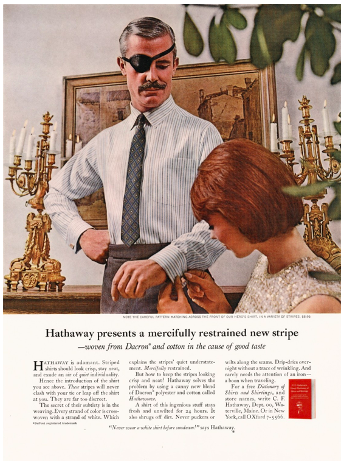
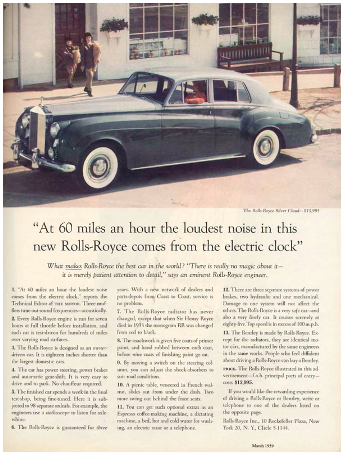
    Famous ads written by Sir David Ogilvy


    Enter the New Millennium

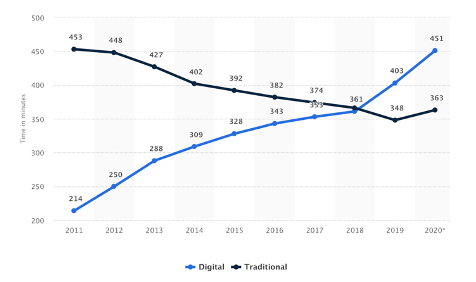
    The new millennium brought with it some profound changes.  The internet was beginning to change the way people live, read, do business, buy, and connect with other people.  In 2004, Mark Zuckerberg launched Facebook.  We learnt a new term called ‘social media’ with its advent. LinkedIn was launched earlier in 2003 and Twitter later in 2006. A host of other social media would completely change the way we live.  So would advertising unfortunately. Because people were spending much less time watching television and reading the newspapers and listening to radio.  In 2019 people spent more time with digital media than with traditional media in the US.


    Time spent per day


    Source: statistica.com


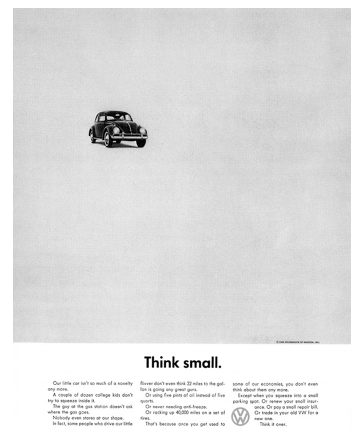
    The world of digital and social media meant new ways of talking to consumers.  This gave rise to new techniques in communicating. It meant that the skill needed to produce the famous Volkswagen Beetle ad by Bill Bernbach that made it a cultural icon that sold millions of cars were no longer needed. One can’t forget of course the degree of difficulty posed to sell an ugly German small car soon after World War II, to Americans used to the luxury of large cars, something the Volkswagen ads achieved admirably.

    1959


    2019


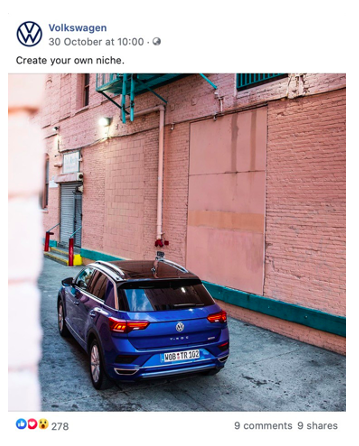
    In fact, the brilliance of the written word employed by master craftsmen like Bill Bernbach and David Ogilvy or the keen visual eye of Helmut Krone was perhaps no longer needed.  In the new millennium creativity had played hide and seek behind a much-abused word called ‘content’. Content was very forgiving of real creativity and happy to make friends with mediocrity.  In contrast to the Think Small ad, the Facebook ad of today for Volkswagen will be judged by the number of likes, comments and shares.  And not purely by how much the ad moves you like the Thing Small ad.  In fact, there seems to be no particular skill this Facebook ad might need either in terms of word or visual craftsmanship.  Suddenly communication had become the domain of data scientists and engineers whose province was machines, algorithms, big data and artificial intelligence. And perhaps creativity was reluctantly but surely taking a back seat.


    How Advertising finally died


    While many predicted the death of advertising no one quite predicted how it would go.


    In the last year, it certainly seems that advertising agencies will get gobbled up by digital agencies in the same group. Grey Advertising is the most recent example which merged with AKQA to form AKQA Group.  Last year similarly JWT merged with Wunderman to form Wunderman Thompson.  And Y&R merged with VML to form VMLY&R. I wonder who is next?


    Suddenly the heritage of a 100 years seems to have gone into the dust. And with the merger goes their history and great creativity of several decades.  When a brand dies, everything it meant to people dies along with it. It is ironic that WPP the group that bought over JWT, Ogilvy, Y & R and Grey is also the company that killed those very iconic advertising agency brands.


    It’s a pity that advertising had to die so suddenly and just get obliterated from the face of this earth.


    Prabhakar Mundkur is a veteran advertising professional and now a prolific commentator. He spent 17 of his 42 years in advertising with the agency once known as J Walter Thompson working with them across three continents. He has also worked with Havas and Hakuhodo. He has been voted Top Voice on LinkedIn, one of the Top Emerging Voices in yourstory.com and has written nearly 400 articles in the last four years. He was once an HMV and Polydor recording artist playing both the guitar and piano and still joins the occasional gig for friends. You will find him on Spotify and Apple Music with his recent compositions. He can be reached via Twitter at @wisecowboy. His views here are personal.


  • Philips digital campaign by Ogilvy Delhi

    By A Correspondent


    The new Philips digital campaign for Diwali conceptualised by Ogilvy talks about how each one of us can ignite a ‘Khushiyon ki Ladi’.


    Said Ritu Sharda, Chief Creative Officer, Ogilvy (North): “We’re all expecting Diwali to be a little different this year, but we’re hoping somethings will still spark that infectious festive spirit. In some way or the other, we will all celebrate Diwali together. So, we thought why don’t we light a ladi this year, a slightly different one, but one that involves everyone.


  • Enriching five years. Abhijit Avasthi on the Sideways journey (Text & Video)


    The interview you read was done via email, and the one you see is via Zoom. But having interviewed with the Sideways founder twice in his previous avatar at Ogilvy and chatted with him a few dozen times, we know how he thinks and speaks. So it’s easier to plan the flow of questions. Abhijit Avasthi’s journey is interesting as Sideways is not just a creative agency. It believes in creative thinking and innovation. And hence has no tagline. Why, 40-odd people who constitute it do not hold any titles. The agency is doing well, which is very good news. Good because times are awfully tough. But also the success of the ‘experiment’ (our words) will surely spur many others to follow suit.


    As part of the MxMIndia Live series, we interview Avasthi (referred to as Kinu by the fraternity). Some of the questions are also in the video, but not all of the video questions are in the text. So you must consume both.


    Here goes the conversation Abhijit Avasthi had with Pradyuman Maheshwari. Enjoy.


    Five years already. And it looked like just yesterday, when I came to your office at Ogilvy doing what could be described as an ‘exit’ interview. So how has the journey been?

    Yes, time flies superfast indeed. Five years back, I doubt I could have predicted the journey that will unfold for Sideways. It’s been an adventure in the truest sense – unpredictable and exhilarating. The last five years have been a massive learning curve for me. And extremely satisfying. We have managed to build an awesome team with diverse talents, done a variety of great work and had tons of fun along the way. What started out as an experiment has turned into something hugely impactful for businesses of all kinds.


    You continued with your association with Ogilvy for a while even after leaving. Was it tough breaking the umbilical chord?

    More than the issue of breaking the umbilical chord, it’s the emotional bond with Ogilvy is which is unbreakable. That is like being stuck with Fevicol. But yes what was difficult was not succumbing to my default way of approaching a brief…what I had learnt and practised for 15 yrs in Ogilvy. It took a fair bit of effort, an open mind and discipline to evolve our own way of going about solving problems in a set-up like Sideways where writers, techies, product designers, strat folks all sit on the same table attacking the issue. How to orchestrate this diverse gathering of talents and get them to complement each other’s strengths has not been an easy task to say the least.


    So you did some work with Ogilvy for a while after that, right? Are you still doing?

    Yes, when I left Ogilvy, a few clients wanted a smooth transition so I helped do that for a year. Not doing so anymore.


    As you look back, was it the right decision to move on? Given that Rajiv Rao and Sonal Dabral have moved on.

    I don’t look at it as a right or a wrong decision. It was a time in my life when I was up for newer challenges and a different journey – an adventure in every sense of the word. Which is why I left Ogilvy without any plan for the future. The idea of Sideways developed in the ensuing months during brainstorming sessions with Sonali. I am sure Rajiv Rao and Sonal moved on for their reasons.


    Any regrets?

    No regrets. None whatsoever. While I was at Ogilvy, I served it and its clients selflessly with all my heart. I managed to build an amazing team of rockstars there which is carrying on the Ogilvy legacy.


    Was getting client easy? Did any move with you – from Ogilvy to Sideways?

    There were clients and people who were keen to move with me but I had decided that I will not be taking any Ogilvy people or clients with me. It’s basic courtesy towards an organisation which is hugely responsible for shaping me.


    When thinking of our Biz Dev processes we were clear that we will not take part in the full monty pitches. So that stacked things up against us – an offbeat set-up not willing to pitch. It takes a leap of faith to park your business based only on someone’s past credentials and a promise. But we were fortunate that from day one we had client partners who were willing to give us a shot. I am grateful to them for placing faith in us and giving us the interesting projects we were looking for.


    Today after 5 years, things are very different. We still do not pitch but now our case studies do all the talking. We have worked with over 50 clients: traditional national ones like Pidilite and Borosil. Regional players like Suhana Masala. New age tech companies like Google and Flipkart. Start-ups like Curefit, Urban Company and Great Learning. From helping build tech platforms for digital payment companies, to designing service journeys to reimagining legacy brands to building products to, of course, advertising we have done it all. So there is a solid body of work across disciplines, across categories and different size businesses.


    Between Rajiv and you, you were always the one who was more business-minded (in a good way) and would interact with the media, etc… so did that help in the transition?

    I have never thought about it that way. I know I have always enjoyed all aspects of a business: the creative side of it and the business side of it and all that it entails.


    But what has surely helped in building Sideways is my personal interest across spheres. Story-telling, Product Design, Science & Technology, Economics, History – everything interests me. A friend recently introduced me to a word from psychology – multipotentialite – someone with intellectual and creative curiosity across various areas. I think I am that – and that has helped make the transition from a traditional agency to what Sideways is. And the Sideways journey has helped me actualize that aspect of myself.


    What part of the business makes you say: shucks, it’s better to work for someone than do your own thing?

    Nothing really. Everything is a part of the challenge I signed up for.


    And what part makes you say: heck, why didn’t I think of it before?

    It’s interesting you ask that: so much of what we are doing at Sideways now is what I wanted to do in Ogilvy 11 years back when Rajiv and I became NCDs. But the agency’s priorities and focus were more mainline advertising at that time, and maybe rightly so for a place like Ogilvy then.


    Moving to some propah questions on Sideways. So tell us in specific terms on the business. How have you achieved what you wanted to?

    The idea of Sideways was straightforward – how to apply lateral thinking to every aspect of a business using a team of people with different skill sets. Around the world, all business partners are trying to reach that fine balance of right and left brain, as well as exploit the potential of a multidisciplinary approach. Which is why you have the McKinsey/Accenture varieties buying into creative firms. Design and tech firms are merging in the Valley. Legacy advertising agencies are bringing on folks from the consulting world in leadership positions. They are all trying to manoeuvre an existing ship for newer, trickier waters. For us, we are born and raised for that. So from day one the team structures we have built and the processes we have evolved are conducive to delivering on those needs for companies.


    High points? And low points?

    I won’t talk in absolutes. But every now and then, after a creds presentation, when the CEO remarks that our approach and work is so refreshing, it’s a high. When we get new biz calls and applications from talent to join based on our reputation out there, it’s a high. When we see the impact of our efforts in the social sector, that’s a huge high. When our work goes viral and we see memes, it’s a high. Showcasing our own toys at the Nuremberg Toy Fair was a high. So fortunately many joy peaks do come our way.


    And I won’t say a low, but it is disappointing when certain potential clients fail to see the value we bring to the table because they are still stuck in time and using existing old school ways of evaluating partners. And yes, when some really outstanding pieces of work don’t see the light of day for reasons beyond anyone’s control.


    Work that you are extremely proud of? In traditional advertising? And non-traditional advertising?

    There are so many. The Kia Motors Brand launch, the work on Borosil to help move it from being a primarily industrial company to a kitchenware consumer brand, solving a complex business issue for Fevicol, partnering Google Pay on the product/strat side, designing collectibles for Disney to disrupt traditional toy retailing, imagining Big Bazaar’s offering as a service brand, designing the 3D training model for Paani Foundation, the ‘Lunar Dome’ tribute to ISRO, digital activations for Imagica…there is just so much that I can go on and on.


    Tell us about your alliance with Reliance? What are the specifics in terms of work?

    Metaphorically speaking, at Sideways we are a bunch of kids who have come together. And so it follows that we love building toys and games. We were very keen to develop exciting new ones and take them to kids out there. Reliance Brands, because of Hamleys, has great expertise, knowledge and interest in that space too. So our JV is a meeting of strengths: our creativity, and their retail and manufacturing/ supply chain prowess. We showcased our first products at the Nuremberg Toy Fair in Germany in Jan 2020.


    These are tough times for A&M. How have you been doing in this period (post-Lockdown)?

    It’s been tricky of course. Though, not being reliant solely on advertising has been a kind of a boon. So many of the product design/ tech/ business strategy projects have been on. Shortly after the lockdown, we launched our Smart Recovery Lab (SRL). In a time where linear thinking will be inadequate, SRL helps businesses look at lateral solves. We are currently partnering companies in the Travel and F&B space by evolving newer ways to tackle the situation.


    What next for Sideways? For you?

    I am excited and enthusiastic about what the future holds for Sideways. We have now built the foundation from which we can leap big. It’s like reaching the Everest Base Camp. And now we are all set to climb to the peak.


    We are always on the look-out to partner clients who want to do things differently, not follow the beaten track – the brave ones who are smart enough to realise that old tricks won’t work in the new world.


    For me, Sideways is a journey wherein I get to learn more and grow more each day. And make some amazing friends on the way – those who join us and partner us.


    Thought of getting acquired?

    There are no plans to get acquired. We are thoroughly enjoying what we are doing. We have just built the foundations of a unique firm with a lot of passion, so we intend to enjoy the fruits of our labour ourselves. We will grow with our own might.


    Second-last question: If you have a Sanjeev Mehta (Hindustan Unilever) or some biggie advertiser in the elevator, and have an opportunity to make a pitch, what would it be… an elevator pitch, in say a hundred-odd words?

    Sideways is a one-of its-kind-company in India. It’s a curious mix of a consulting firm, an advertising firm, a tech solutions company, a product design studio and a circus maybe. We can solve problems and explode opportunities in surprisingly impactful ways. If you’re willing to let go of old legacy methods and be a tad imaginative and brave in approaching issues, then give us a call.


    This is a very sensitive question, and I am glad I am not doing this interview face-to-face as you would’ve thrown me out. Ha ha. But the elephant in the room should be addressed. It’s perhaps an exceedingly uncharitable remark – when some people said you were a Mama’s Boy. With obvious reference to the fact that Mr Piyush Pandey is your Mama, and that you owed your presence (and ascent) at Ogilvy to him… your uncle. Would you say that this five-year journey has in a sense now helped you develop an identity of your own? Grow out of Piyush Pandey’s shadows? Or does all of this not really matter to you?

    Ha ha ha ha…I have lived with this question for so long and have many answers for it. Firstly, I am extremely proud and fortunate to be Piyush’s nephew. I have learnt so much from him, mostly outside the office – so that learning is definitely the advantage I have had over others. And those who pass such comments are the insecure ones who would not amount to anything even if their Mama actually helped them.


    I was always mindful of my relationship with Piyush, which is why when I entered advertising in 1997, I chose not to apply to Ogilvy. I wanted to earn my stripes elsewhere. I joined Enterprise Nexus, did a whole of lot good work, won many international and national accolades (including India’s first ever D & AD in-book) and then was invited to join Ogilvy by Bobby Pawar and Anil Bathwal in 1999. I am thankful to them for giving me that chance to prove myself in Ogilvy. After that over the years, I would like to believe that my work spoke for itself. And I think I did manage to move out of Piyush’s shadows very soon in Ogilvy itself.


    The Sideways journey has enriched me and developed me in many other ways. I have learnt a lot, grown a lot, and along with a bunch of crazy talented folks who believed in our vision, managed to create something amazing from scratch. And that has helped me reinvent my identity in a way I would say.


  • Ogilvy will steer Cars24 creative

    By A Correspondent


    Ogilvy has bagged the creative duties for car sales mart Cars24.


    Nida Naushad

    Said Nida Naushad, Brand Head, Cars24: “We are delighted to welcome Ogilvy, as our new creative partners. CARS24 is on a mission to completely change the way India sell cars by making the process extremely easy and hassle-free.  Now, with Ogilvy’s strong creative and strategic capabilities, we aim to move forward in a journey to make Cars24 India’s most preferred auto brand.”


    Added Shouvik Roy President & Head of Office, Ogilvy Gurugram: “We are very excited to partner a young dynamic brand like CARS24 that operates in a very challenging category.

    Shouvik Roy

    Our ambition is to partner CARS24 and make it the brand of choice for all pre-owned car buyers in India. Our interactions with the CARS24 team has been very engaging and stimulating. And we are confident of some shining work coming out of this partnership.”


  • Hephzibah Pathak is now Vice Chairman, Ogilvy India

    By A Correspondent

    Hephzibah Pathak will has been appointed Vice-Chairman of Ogilvy India. She will assume the position in the Chairman’s office wef August 1  

    Said Piyush Pandey, Chief Creative Officer Worldwide & Executive Chairman India, Ogilvy: My congratulations and best wishes to Hephzibah! Transforming and growing brands and businesses through path breaking creative solutions is Hephzibah’s forte. It is also the greatest need for our clients.  I am sure that Hephzibah will add greater power to a differentiated Ogilvy offering.

    Pathak’s joined Ogilvy Chennai in 1997 as Accounts Supervisor.  In 1999, she moved to Mumbai with Unilever’s acquisition of Ponds India Ltd.  According to a communique, she has been a brand champion for clients like Orange/ Hutch/ Vodafone, Unilever, and Cadbury among others.  She has headed the Ogilvy Mumbai office, has been Director on the Ogilvy India Board and her current role has been Chief Client Officer, Ogilvy India.