A business management graduate from the University of South Florida, Kenney has been in digital measurement product rollouts from 18 countries spanning from New Zealand, Japan, China, India, Singapore and many more across Asia, EU, Latin and South America.
In his last assignment with Nielsen in the US, he was responsible for strategic digital initiatives, new digital products and expansion, and global digital rollouts training technical client facing teams to support the rollouts on the ground in 10 countries around the world.
Welcoming Kenney to the BARC India family, Partho Dasgupta, CEO, BARC India said: “After establishing the TV viewership measurement system in the country, we are now moving towards digital audience measurement. Through this, we aim at measuring all forms of online video including ads and content, which will finally culminate in cross media measurement. This is an evolving area worldwide with very few countries having a total solution that we are seeking to have. Jamie in his role will help take BARC India’s digital plans forward.â€
Kenney, who joined BARC earlier this month, will be based in Mumbai. “While the journey of digital measurement for BARC India is a long and challenging one, in my short time here, I have seen the importance and need for it,†said Kenney.
“BARC India is working towards measuring the rapidly expanding digital space with the ever important TV component. Once we launch digital measurement, we will have delivered a cross platform solution that every major market that I have been to, is craving for,†added Kenney.
In the wake of India’s success at the 2016 Olympics, the phrase ‘Like A Girl’ is going through a positive transition and has ensured heartening conversations such as – “They fought #LikeAGirl†or “They played #LikeAGirlâ€, but we still seem to have a long way to go before each and every girl can do things “Like A Girl†and be proud of it.
A survey, conducted recently by Nielsen in association with Whisper, revealed that one in two girls in India agree that the phrase ‘Like A Girl’ is still used as an insult. “You run like a girlâ€, “you throw like a girlâ€, “you fight like a girlâ€, “you play like a girl†are common insults heard or said that can have a significant effect on girls’ self-confidence, especially during puberty.
According to the study, girls in India were found to be facing a considerable drop in self confidence, especially after having reached puberty, due to the various societal norms and restrictions that they are expected to conform to. At such a stage, phrases such as ‘Like A Girl’ being used in a mean and hurtful manner add to the feeling of being pressurized.
The ‘Like A Girl’ movement was launched by Always, the global brand name for Whisper, outside India, in the USA and select global markets in 2014. It has been supported by organisations such as UN Women, as well as celebrities such as Masie Williams from the Game of Thrones and accomplished athletes like British cyclist Laura Trott (winner of two gold medals in Rio 2016) as well as popular USA Soccer star Alex Morgan among others.
Leading content company, Zee Entertainment Enterprises Limited (ZEEL) announced the launch of the first edition of ‘ZEE Mindspace Awards’, a property which aims at recognizing brands, which have captured maximum mind-space. The awards ceremony will be held on 27th August 2016, at #ZEEMelt 2016 - India’s biggest festival for creativity and innovation in marketing and communications.
Commenting on ZEE Mindspace Awards 2016, Sunil Buch, Chief Business Officer, ZEEL said, “Achieving ‘consumer mindspace’ is every marketer’s ultimate goal. The thought of extending our 3-year old brand intellectual property ‘ZEE Mindspace’ also as an awards property, was based on this very essence. The marketing fraternity is an integral part of our overall business value chain and in today’s digital era it is indeed a challenge for the marketers to arrive at the right marketing mix. The proof of the pudding is being present in the ‘Mindspace’, which is the foundation of ZEE Mindspace Awards.â€
The winning brands will be awarded at the ZEE Mindspace Awards 2016 in the presence of 500+ CMOs and stalwarts from the marketing and advertising industry. Going forward, ZEE Mindspace Awards aims to serve as an additional independent barometer for marketers. While there are numerous awards targeted towards rewarding the creative campaigns undertaken by brands, ‘ZEE Mindspace Awards’ is the only property which recognizes the overall marketing mix implemented by the brand owners to carve a ‘Mindspace’ within the consumers.
Prashant Singh
Prashant Singh, Managing Director, South Asia, Nielsen said, “Nielsen’s research methodology is a brand assessment among consumers who have adopted new age media in addition to traditional media and provides brand owners’ insights into how brands are adapting to this fast-evolving space. More than 12000 online surveys were conducted to evaluate 288 brands across 36 categories. The research was broken into multiple phases – from initial screening of brands to final rounds focusing on understanding what makes a brand resonate in the consumer’s mind. The winners were identified after undertaking a rigorous process, based on top-of-mind recall, popularity, the kind of advocacy the brand commands, the desire to own the brand and finally the buzz it generates. Above all, it’s the brand’s ability to pop-up in mind at the first instance that holds maximum weightage.â€
#ZEEMelt 2016 will also witness the 4th edition of ZEEL’s brand intellectual property – ‘ZEE Mindspace Conference’, which aims at bringing the marketing fraternity together to connect, discuss and explore new possibilities. The sessions under ZEE Mindspace Conference comprise of two main themes, Previewing Tomorrow – where we get insights into the future of several areas in the industry and Open Possibilities – introducing us to the many advantages that data, content, consumer analysis and branding offer in transforming businesses.
Market research industry veteran Prasun Basu has taken charge as President, South Asia of Nielsen India. In this role, he’ll be responsible for leading Nielsen’s business operations in India, Bangladesh, Nepal and Sri Lanka. Basu has been heading operations of Millward Brown as MD-South Asia from April 2013 till this announcement. According to information received, Piyush Mathur who led Nielsen operations in India from 2010 has now moved as Senior VP at Westport, Connecticut.
Basu has previously held senior roles within research and consulting organizations covering both developed and emerging markets such as the US, Latin America, Middle East, Africa, Southeast Asia and South Asia. Basu is returning to Nielsen, having previously led the BASES and Consumer Research businesses in South Asia, as well as heading up the BASES business in India, Africa and Middle East.
An extract from a Nielsen study on perceptions about brand origins and how they shape purchase intentions
• Nearly three-quarters of global respondents, on average, say brand origin is as important as or more important than nine other purchasing drivers, including selection/choice, price, function and quality.
• There are exceptions to every category and in every country, but preferred brand origin for major product categories are generally grouped as follows:
GLOBAL
:: Â Baby diapers
:: Â Personal/beauty care
:: Â Carbonated beverages
:: Â Cars and electronics
:: Â Cigarettes
LOCAL
:: Fresh foods
:: Packaged foods/snacks
:: Carbonated beverages
:: Â Juice/water/milk
MIXED
:: Baby food/formula
:: Home-cleaning supplies
:: Alcoholic beverages
:: Pet food
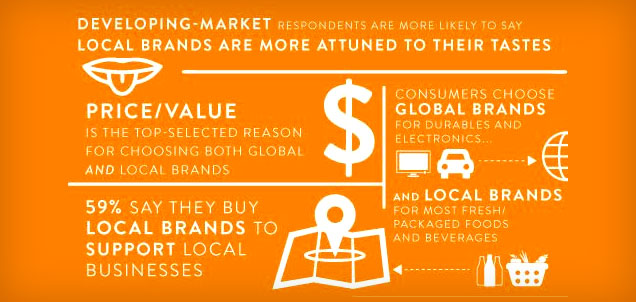
• The top reasons for choosing a brand are the same for both global and local brands: better price/value, positive experience with the brand, safer ingredients and processing, better product benefits, and sales/promotions.
• Nearly six in 10 global respondents (59%) say they buy local brands because they support local businesses, with sentiment highest in North America (65%). Developing-market respondents are more likely than their developed-market counterparts to say that local brands are more attuned to their personal needs/tastes and that global brands offer the latest product offerings/innovations and are of better quality.
• When it comes to online shopping, global respondents are more likely to seek out global brands for durable and electronic products and local brands for consumable products.
Over the past few decades, companies in search of new growth opportunities expanded beyond their borders to find a world of new consumers eager to try their brands. French retailer Carrefour, for example, started with a single storefront in 1958 and now operates stores in more than 30 countries, including Brazil, China and Indonesia. Likewise for U.S.-based Walmart, which now has stores in 27 countries. And some companies reach consumers in virtually every corner of the world: U.S.-based Procter & Gamble sells brands in more than 180 countries, and Japanese automaker Toyota sells vehicles in more than 170 countries.
The entry of multinational companies (MNCs) into new markets—while a boon for local consumers who gain access to a greater range of products—can sometimes cause the demise of local companies, which are suddenly faced with daunting foreign rivals that have an array of advantages, including vast financial resources, diverse talent pools and sophisticated technology infrastructures, supply chains and operating practices.
But just as David slew Goliath (not the other way around), many local companies have not only survived the multinational competition, but thrived. Indeed, some local companies’ flexibility and agility, as well as their superior grasp of the domestic operating environment, have propelled them past their global rivals. For example, in the Philippines, Jollibee has a greater share of the fast-food market than McDonald’s and has expanded to become a multinational company, operating restaurants throughout Southeast Asia, the Middle East and the U.S., while Mexico-based Bimbo not only edged out other on-the-ground rivals but expanded beyond their border to become the largest baking company in the world. And in China, whose Haier has long been the world’s leading manufacturer of a range of large appliances, not only is Huawei gaining share in the country’s midrange and high-end smartphone market, its telecommunication devices are gaining a stronger foothold in the global market.
All of this cross-border expansion, however, has greatly complicated traditional definitions of country of origin. Some iconic “local†brands are actually manufactured abroad, while some foreign brands have built a manufacturing presence in local markets. And some global brands have been in a market so long that many consumers actually perceive them to be local. Nonetheless, brand origin can be an extremely valuable asset for both global and local companies.
“One of the more surprising findings from the survey is that country of origin is as important as—or even more important than—other purchasing criteria such as price and quality,†said Patrick Dodd, president, Nielsen Growth Markets. “In a crowded retail environment, brand origin can be an important differentiator between brands, but sentiment varies by category and by country, and leveraging a powerful brand presence needs to be managed carefully regardless of whether it is global or local. Ultimately, the brands that deliver on a strong value proposition and connect personally to consumers’ needs will have the advantage in any given market.â€
The Nielsen Global Brand-Origin Survey polled more than 30,000 online respondents in 61 countries to understand consumer sentiment about product origin across 40 categories, from consumables to durables. We examined whether consumers prefer goods produced by global/multinational brands (defined as those that operate in many markets) or by local players (those operating only in a single market—the respondent’s home country). While respondents were asked to consider these definitions in their selections, preexisting notions about brand origin could prevail—a global brand might be so pervasive in a local market that a respondent may think it is a dominant local brand. We also explored the factors driving brand preference and the role of the Internet in purchasing decisions for local and global companies. Finally, we examined what local and global players can learn from each other, so we can offer insights into how each can succeed in the changing retail landscape.
Nielsen’s study of the India Book Market pegs Indian Publishing sector at INR 306.6 billion currently, making it the sixth biggest publishing market globally. The study titled ‘India Book Market Report 2015’ estimates a CAGR of 19.3 per cent for the industry in next five years. The report, among other interesting facts, also highlights that India is the second largest English-language print book publisher in the world.
The Nielsen study is a comprehensive assessment of the Indian book industry conducted in association with Association of Publishers in India (API) and the Federation of Indian Publishers (FPI) to evaluate the opportunities and challenges facing the industry, as well as where its future lies. The report will enable the industry to meet the needs and demands of a well-educated nation that continues to grow. Before the release of this report India’s book industry estimates were mostly unverifiable estimates.
Speaking of the India Book Market Report 2015, the newly appointed President of the Association of Publishers in India, Vikas Gupta said “The report offers invaluable insights into the books market that will help not just the publishing industry but also the Government and Educators to make plans for a fully literate and educated nation.†He added “The report illustrates the contribution of publishers in the schools and higher education domains, as also in trade and general interest categories.â€
Vikrant Mathur, Director of Nielsen Book India, commented: “There is enormous potential in the India Book Market which has been highlighted by the report, enabling publishers, booksellers and libraries to gain a deeper understanding of the market, pin-pointing areas that can be developed and those pinch points that need to be addressed in order to bring more efficiency and cost savings to the India Book Market and its supply chain.â€
Some prominent factors that drove the growth of the industry include:
The Growth of Indian Book Market:
Government’s focus on digitization, a growing literacy rate, government spend on education along with increasing outsourcing of book publishing services to India are strengths of the Indian publishing industry and will continue to sustain the industry growth.
Indian Publishing Sector is a dynamic industry:
Further, books have emerged as an instrumental category for e-commerce business, accounting for 15 per cent of the overall e-commerce trade, just trailing behind electronics (34 per cent) and apparel & accessories (30 per cent).
The study revealed that “general and literary fiction†was ranked the #1 genre in the trade books segment while “test prep†was the most sought after genre in Academic books.
Government policies and implications for the Publishing Industry:
Allowance of 100 per cent foreign direct investment in the publishing industry along with various initiatives of the Government in promoting reading habits by strengthening the library movement, organizing book fairs and making subsidized books available are positively impacting the publishing industry. The rising literacy rate and concurrent efforts of the government in reducing school drop-out rate presents publishing industry an immense opportunity to play a direct role in the development of the country through the creation and dissemination of quality educational content.
The Indian book consumer and the digital opportunity:
As digital content becomes mainstream and new channels of marketing open, the manner in which consumers engage with books and reading is continuously changing worldwide. A survey of 2,000 consumers, representative of the urban population aged 18+ during the Nielsen study provides deep insights into changing consumer preference for books in India.
The consumer data survey shows that on average people read books 2.1 times a week while nearly two-thirds read the book occasionally; interestingly, 56 per cent of the respondents bought at least one e-book a year and nearly half of these bought at least 3-4 e-books a year indicating a growing demand for digital books.
BARC India, the joint industry body formed by broadcasters, advertisers and advertising agencies will acquire the Peoplemeter boxes of TAM India, the television audience measurement joint venture between Kantar Media and Nielsen Kantar. This was announced with the formation of a new meter management company which will run the meter operations and will supply raw data to BARC India. Thus the BARC data will be the sole audience measurement currency in India.
It may be noted that MxMIndia was the first report that BARC was in discussions for the buying out of TAM. Well, the tie-up is not exactly the same, but we will wait to see what happens.
Commenting on the development, Punit Goenka, Chairman of BARC India said, “This partnership is a big step forward and in this era of cooperation, we welcome this move forward as a joint industry body. The technology and methodological prowess of BARC, combined with the extra meters and the field force will definitely help the industry progress.â€
“This new venture represents our organization’s commitment to providing precise and stable data around the world, and draws strengths from both BARC India and TAM India,†commented Steve Hasker, Global President, Nielsen. “We look forward to the great coverage and representation this new partnership will deliver.â€
Eric Salama, CEO of Kantar said: “We are happy to cooperate with BARC India to be able to provide clarity and a large single sample for the industry and to keep India as a key market for us.â€
The meter company will have the meter assets and panel management operations of the present BARC Indiaand TAM India panels,which will be jointly owned by BARC India, Nielsen and Kantar with management control resting with BARC India. Â To start with, the company will have 34,000 meterscovering all of India,and will supply raw data to BARC, which will use its own statistical processes and sampling design.The details of the formation and roll out of this new company will be shared in the coming weeks.
TAM India will continue to provide its non-TV ratings services to the market, notably AdEx – Advertising Expenditure for TV, Print, Radio, RAM – Radio Audience Measurement, Eikona – PR Audit, TAM Sports Measurement and S-Group Consulting.
Kavita Acharekar from Nielsen has joined Motivator, in its Mumbai Office, as Client Leader (Business Engagement Team). Motivator is a media agency of GroupM.
With nearly 10 years of experience, Kavita would be leading client relationships across Motivator Mumbai’s key businesses.
Trishul Bhumkar, General Manager, Motivator, shared, “As a part of getting talent and skills ‘outside in’ we are happy to have Kavita join the team. With a good decade of research experience, Kavita will being a new dimension to the way we view consumers. With these diverse skills amongst our team members, we are better equipped to look at same problems in newer ways for our clientsâ€.
Update @ 1.49pm: The fears have been allayed. BARC’s future-ready TV audience measurement data will be released today
The coconuts were ready to be broken. A new sun was rising today. Data analysts made it to their offices early. There was indeed much anticipation. We almost didn’t sleep. Okay, that last bit was an exaggeration. We did catch some winks. But you know why all this tamasha: thefirst data fromBroadcast Audience Research Council (BARC) was scheduled to be released today.
Till late last evening though, the BARC big bosses were grappling with a new problem, and this didn’t concern set-top boxes, the technology, etc etc. Some members of the Indian Broadcasting Federation, the apex body of broadcasters, wanted the release of data to be delayed. They reportedly wanted some more stability.
When we teased whether it was BARC’s IRS moment, given all the madness that happened (and is still playing out) with the print readership study IRS, we were told it wasn’t that bad. These were just reservations. Niggling problems. And no it wasn’t raised by a network whose sporting activity is getting many numbers. In fact all the GECwallahs are pretty happy with the way BARC is going about its task. It’s the smaller channels, specifically some news channels who are upset. There is a conference call scheduled at 12.45pm today to deliberate on the issue.
Meanwhile, TAM, which was until recently subscribed by most broadcasters, still exists, but key stakeholders – television channels, media agencies and advertisers – and have in fact released data comparing household versus individuals. It may be noted that BARC is currently only due to publish household viewership data.
Partho Dasgupta
The diversity in cultural and media consumption in the country makes the work of the Broadcast Audience Research Council (BARC) India the most challenging service governed by a single joint industry body for the entire country, said BARC CEO Partho Dasgupta on the eve of the release of data. With the number of TV-viewing households likely to go up from 20,000 to 50,000 in four years, the process will become even more complex, he added.
Over 300 channels having ordered for the watermarking technology, and with over 272 channels already live, BARC India’s stakeholders – broadcasters, media agencies and advertisers have, got together some of the top vendors from across the globe offering technology and solutions. BARC India, has invested 76% of its budget on technology, it is learnt.
According to Dasgupta, around 3000 professionals have been trained with the BARC India Media Workstation (BMW). NCCS, or the new SEC system, will be the norm to follow for accurate classification and data analytics. The pre-launch and post-launch audit processes were conducted by Ernst and Young’s  Florida team.
Meanwhile, TAM, a joint venture of Nielsen and WPP-owned Kantar Media, is considering an urban-centric audience measurement service. There have also been rumours that BARC could well either buy over TAM’s TV audience measurement facility or turn its sole subscriber. When asked what TAM and he plan to do after BARC data is released, CEO LV Krishnan, who has helmed TAM since 2000, told MxMIndia in an interview yesterday: “On May 1, I’ll still be in business and there is never an end-of-the-road for anything. There will be a new kind of a craft that we will create…â€
So what happens to BARC now? We’ll know for sure by 1.30pm what course the conversation takes. Hmmmm.
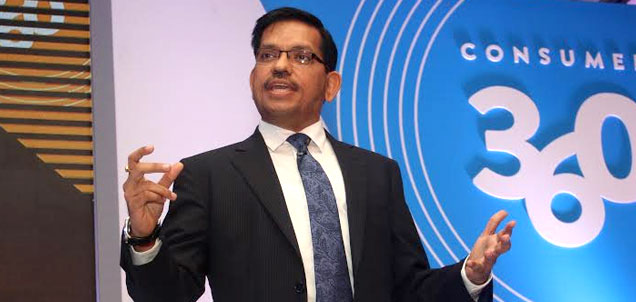
Madhav Mishra is a 19-year-old magazine seller on the streets of Mumbai. On Friday, he made it to a high-profile Nielsen Consumer 360 conference hosted by research and insights major Nielsen – via the opening speech by India region president Piyush Mathur. Reason: Mishra has done something remarkable in his work life. Just before he makes a sale, the secondary-school graduate takes a good look at the car his prospective buyer is travelling in, and pitches his product accordingly. If the occupant looks like a banker or corporate honcho, he pulls out the business publications; if she appears to be a homemaker, then it’s the society or lifestyle magazines. He has only a few seconds to make that call, but over the years, Mishra has perfected the art of creating successful outcomes for his business from years of learning.
“Just insights are not enough,†said Mathur, on the conference’s theme, ‘Create Outcomes’. “It gets better when these lead to actions, and the real difference comes when there are actual outcomes for our clients’ business.†Indeed, Nielsen no longer just hands over findings to clients. It has started doing a value-based exercise where it checks back with the client on what the company has done about the recommendations. “Increasingly, we are also collating the value of what outcome we’ve created for our client,†added Mathur.
Voices from the panel discussion:
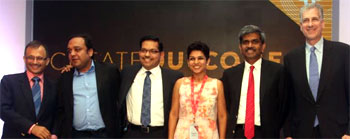
Group photo (L to R) – (Panel discussion participants): Harish Bhat, Member, Group Executive Council, Tata Sons; Punit Goenka, MD & CEO, Zee Entertainment; Piyush Mathur, President, Nielsen India Region; Kirthiga Reddy, MD, Facebook India; D Shivakumar, Chairman & CEO, Pepsico India & John Lewis, President, Global Summer Goods, Nielsen
Sub-brands vs mother brand
Harish Bhat, Member, Group Executive Council, Tata Sons
You have to be careful that a mother brand does not become a grandmother brand. Mother brands have a tendency to age. And typically, the sub-brands that you launch, have to be aspirational for your current set of customers. So companies do a lot to keep their sub-brands young, sexy and aspirational but in meantime, the mother brand has aged. Marketers will have to keep this in mind. Only if your mother brand is young and edgy and aspirational, will the sub-brands under the mother ship, work.
Moving away from the mother brand
Punit Goenka, MD & CEO, Zee Entertainment
Today, in the analogue world, the consumer is used to accessing anywhere from 50 to 80 channels, which will grow to 200 or 500 channels, which means fragmentation of TV viewership was bound to happen. Newer viewership will be created, and not just on the TV screen but on various kinds of screens. Lastly, today’s young consumers say Zee is my mother and father’s channel, it’s not meant for me. So even the new-generation families were looking for new content. That’s why we decided to move away from the mother brand and embark on a host of new channels which were in no way linked to the mother brand. This also allows us to experiment with more edgy content that we can’t have on the mother brand
The power of digital
John Lewis, President, Global Summer Goods, Nielsen
All mediums have to be more addressable, more precise. The notion of a demographic group – that will increasingly no longer be the right construct [for measurement of impact]. It will be about people who are looking for a specific brand or service; for instance, those who are about to buy a car. It’s all becoming more precise. It already happens digitally, which is what makes digital so powerful. But it will soon happen with broadcast or any other medium. And any medium that cannot be more precise, will have problems.
Information and Innovation
Kirthiga Reddy, MD, Facebook India
We believe information equals innovation. The Facebook experience from more than five years ago was very different from the one today. When we started, we had a very static photo image because we thought people would only want to change these on special occasions, birthdays and such. But then we found that people were changing the photo several times a day. It became clear that people wanted to express through photographs what they were doing through the course of the day. It was that user interaction that led to us very quickly launching our photos product, which has become the largest photo-sharing site on the web. We believe in innovation coming from information.
Lessons for marketers
D Shivakumar, Chairman & CEO, Pepsico India
Very rarely in India have I seen a brand move up the ladder. It’s easier for it to come down. For example, if you start with the premium position, you can go down. But if you start with the bottom position, you will find you can never go up. There are some categories intrinsically that consumers don’t give you licence for. No hair care brand across the word has been able to go into skin care. But every skin care brand has gone into hair care. At the heart of all branding in India and most emerging markets, is aspiration and quality. Thanks to disruption in technology, consumers are willing to give brands a lot more latitude today than they did before. But if you’re not in your core area and going somewhere else, then you will have to up the value significantly.
Jairam Sridharan
Invited to showcase their outcomes-based initiatives at the meet, different corporates seemed to have divergent results and experiences. Jairam Sridharan, president, retail lending and payments at Axis Bank, spoke about the creation of the Asha home loan. Research had shown that while a large number of high-end properties was coming up in Mumbai, there weren’t enough takers for those. Instead, there was an overwhelming demand for low-cost housing mainly because consumers wanted to do away with rent and live in their own home. This made the bank create a new product called Asha, a home loans for buyers of low-cost housing.
What a constantly-evolving marketplace needs, however, is innovation outcomes. Sunita Bangard, President, Marketing at Idea Cellular realised the company needed to make its product stand out in a crowded and competitive market. In the early stages, in the debate about India vs Bharat, Idea decided to concentrate on the former (hence its initial, rural-setting ad campaigns). More recently, the cellco found it needed to stay relevant to its rapidly-changing customer base, so it launched the ‘No Ullu Banaoing’ and ‘IIN’ campaigns. “The insight we received was that information is power,†said Bangard. “Keeping the customer at the centre, you need to create innovation in the way you do work, not just in terms of products and services.â€
Srirup Mitra
Innovation can sometimes mean swimming against the tide, as Srirup Mitra, head of the hair care category at Hindustan Unilever (HUL) found with the launch of TRESemme. He had to take several Big Leaps (of faith) by under-leveraging the HUL scale of product launches and deciding to unveil TRESemme in only seven centres across the country; eschew the traditional 30-second TV spot and go digital with YouTube, and even launch the shampoo during the Lakme Fashion Week. “Do what is right for the brand, but make sure you’re consistent in getting across to people in multiple ways,†said Mitra.
Sunil Kataria
Sunil Kataria, business head, India and SAARC at Godrej Consumer Products, however, believes that marketing should not be at the centre of innovation but one of a bouquet of things (including R&D, design, packaging etc) that will lead to “whole brain thinking†about changing course in business in the interest of growth. This idea certainly helped when Godrej launched its Rich Crème hair colour in sachets instead of the older, glass bottles. The demand for the product skyrocketed so much that Kataria believes it turned into “teaching India a new way to colour hairâ€.
Sameer Satpathy
Every company has its own way of reading trends. At Marico, the Consumer Preference Score is sacrosanct; the success of a brand is calibrated against this, says Sameer Satpathy. The company operates on CPS metrics from each state and city, and this came particularly in handy when it launched its Nihar Shanti Amla hair oil. “It’s not about strategic coherence versus tactical flexibility, but both together,†said Satpathy.
Future Group, on the other hand, took customer preference to a whole new level when it revamped the very layout of its stores. As Devendra Chawla, group president, food and FMCG brands said, the stores became more focused on young customers; brought in a regional assortment in the food sections, since culinary preferences change quite significantly from place to place; and adopted a cross-category strategy through an adjacency of product placement. That is, placing mugs and ‘tea time’ snacks alongside tea and coffee. When research indicated that women shoppers spend 20 minutes out of their 30-minute shopping time browsing beauty and personal care products, the group decided to include one-stop beauty centres in its stores, for women.
Eventually one could argue that it all boils down to creating consumer demand. But there are certain rules of the game one needs to follow to do this successfully, said Harish Bhat, member, Group Executive Council at Tata Sons. “As a business companies have to be very clearly aligned to some of the big consumer trends that sweep the market from time to time. There are decades in which certain trends are very big, and any category can hitch itself to a big trend.†But that’s not enough. It’s also important for a brand to have its own lens with which to view and leverage this trend. It’s only when these work in tandem, can successful outcomes be created.
Earlier in the day, Harish Manwani, non-executive chairman Hindustan Unilever and former COO, Unilever, spoke about living and operating in a VUCA world – a volatile, uncertain complex and ambiguous place, that business has to strive to work and grow in. Garth Viegas, Global Insights Director, Tata Global Beverages, and Kartik Sharma, MD, Maxus, South Asia participated in a talk about marketing effectiveness and the art of effective advertising, while Ravi Desai, Divisional Marketing Manager, ITC Foods weighed in on consumerisation and how to engage with the ‘super consumer’. Several top Nielsen executives also participated in the conference, including Prashant Singh, Managing Director, Nielsen India Region, Senior Vice Presidents (Nielsen India) Roosevelt D’Souza and Adrian Terron, and Executive Directors Vijay Udasi, Dolly Jha and Nitya Bhalla.
‘Research important, but can also go wrong’
Companies and the agencies hire sometimes don’t even realise they’re trying to compare apples to oranges until it’s too late. But figuring out why the numbers don’t match and fixing it, has to be a collaborative process, Piyush Mathur, President (India Region) for Nielsen tells Labonita Ghosh
Given the rise of the services sector and some others like telecom, who are the biggest consumers of research?
Traditionally, it is the FMCG companies have been big research spenders. But now telecom and financial services companies are also doing so. The requirement for most of them, going forward, will be how to marry their own data with external data, and how to put it all on one platform. You can go down to a very small geography, like a locality, and find what is relevant to consumers there. FMCG has been at the forefront, and now telecom is catching up
But there is a lot of scepticism in the corporate world about research and how findings can go badly wrong. Companies can’t do without agencies like yours, but they always whip research when things go wrong. Comes with the job or is this a case of sour grapes when business logic might be faulty?
There are always possibilities of research going right and research going wrong. For instance, in retail audit, the number of outlets goes up every year by three to four per cent. But where does it go up, in which city and which channels – just to assess this is a nine-month exercise. We visit 14 lakh outlets and try to simply find this which channels are changing and whether the smaller outlet is becoming bigger. It takes nine months to collate this data and another three or four to insert that into our data. So by the time you finish, you’re already 12-14 months into it. That change has already happened and it’s no longer reflecting in your data. By the time you manage to incorporate the changed data, the market may have changed again. It is a challenging market. We work closely with clients and sometimes things don’t match. But we sit down with them and try to figure out why. A lot of times their products are sold through channels we don’t cover — sale to institutions or army canteens, for example. So we tell them to take these figures out and then compare like-to-like for a clearer picture.
Still, it’s about improving and figuring out better ways of doing research. We have a 40,000 panel for retail and there are nine million outlets. What we often wonder is, is there a way we can a million-outlet panel in future? Of course this is not cost viable. But if there was another way – for instance if we could get a small retailer to take an EPOS machine where he would simply swipe the barcode of products, we would get some data every three hours. Suddenly that would change the game. So we are piloting things like that.
We’ve teamed up with Facebook to see which consumers are going to which sites. That information is used in media planning. If I’m targeting housewives in the 30-35 age group, then I should be advertising on certain sites. So you tag that campaign to that site, and see who’s watching it. Through cookies you can also see the person’s profile is. Now my panel size becomes 118 million [the number of Facebook users in India], and that’s probably more than 50% of the country’s internet population. So chances are, I’m fairly accurate with this data.
But just Big Data or panels is not enough. Big Data will provide granularity, and panels will provide quality, and you need both together. We’re planning something called digital ad ratings. Any campaign that’s run on a digital platform — a website or a mobile app – will tell us who’s watched it, though in a privacy-compliant way. We’ll be able to get the reach and frequency of television, but in the digital space, in terms of ads being viewed. So now one can compare the digital metrics with the television metrics, and that will help the client decide where he should advertise and how much to spend.
Another reason for the scepticism about numbers is that consumers sometimes buy on impulse. And this is impossible to factor in, into findings.
I agree with you. In fact even as a consumer you may not be able to articulate things that guide his or her choices. There might be things happening in your brain or your subconscious that even you are not aware of. This is what made us buy a company, three years ago, called Neuro Focus. They have created a process that goes deep into your brain as you’re watching certain stimulus – an ad or you’re looking at a product — and registers what are the things that appeal to you and what don’t. And this is the unfiltered response of a person, captured at a one-third of a second before the brain can even activate the filters. The capturing is done via an EEG (electroencephalogram that detects electrical activity in the brain). Sometimes even the consumer can’t figure out why certain things happen, but the behavior is there. We’ve taken the help of neurosciences to figure this out.
Because we’re constantly asking ourselves: can we get the real sense of the consumer without asking questions? Over the years, we’ve funded MIT and Berkley to invent new technology which is our IP. So, instead of hooking people up with a mass of wires, it’s a Bluetooth-enabled baseball cap with a camera which captures the brain waves, and you can see these on your phone. The data is then transmitted to our hub in Chennai and processed. We have invested in this process enough that it is now viable to even do large samples, although you don’t really need large samples in neuroscience vs traditional methods. You only need to pick samples based on some parameters – gender, people who are already loyal to your brand versus new users, age etc. Currently these are mobile rigs that we take from place to place for testing. We also have our own lab in Mumbai, and will soon open one in Delhi. This process, called the Nielsen Neuro, takes much less turnaround time for data collection than traditional research.
Do you sometimes feel marketers use research as a crutch to mask their own shortcomings?
I wouldn’t say that about my clients. It’s a collaborative process. Sometimes they don’t get things right, and sometimes we don’t. Sometimes we figure out that we’re comparing apples with oranges. Sometimes we don’t even realise that we’re doing that, so then we deep-dive and try to figure out why the numbers don’t match.
Entertainment television is all about twists and turn in the fictional serials. Cricket, as you would’ve heard several times over, is a game of glorious uncertainties. So why then should there be surprise over the possibility of BARC buying up TAM.
Okay, let’s cut the tease. Broadcast Audience Research Council (BARC) has indeed been in discussions to buy the television audience measurement business of TAM, the firm jointly owned by WPP’s Kantar Media Research and Nielsen. And, yes, it’s March 12 today, not April 1.
According to reasonably reliable sources, there have been a detailed dialogue between the joint industry body-managed BARC and TAM owners Kantar and Nielsen. The talks haven’t concluded yet and the mid-point formula that was suggested by a WPP representative has been reportedly rejected by BARC bosses.
Both BARC and TAM were unavailable for comment, but from what one learns, BARC was seriously considering the buy.
So why gobble up TAM when the audience research measurement activity of the measurement body was under question? Well, even as doubts were being raised, there is no denying that broadcasters, advertisers and media agency use TAM as the currency for their buying decisions. Also, as industry analyst told us, TAM comes with a ready 12,000-odd panel, established processes and teams and archival data.
And from TAM’s point of view, why sell out to BARC? Given that all stakeholders have contributed to the BARC kitty, it’s evident that sooner or later all TAM subscribers will exit the system or want to renegotiate. Given this, it’s best to sell the existing well-oiled measurement machinery to BARC which would find it of use, said the analyst we spoke to earlier.
TAM has already made it known to subscribers (and the media) that it will continue operations even as there is a significant number (in billings at least) of subscribers who have said they would like to unsubscribe. If TAM continues to exist, there will be several comparisons made with the new measurement system, and those subscribers who may be rated poorly by the BARC system vis-a-vis TAM may quote the latter. This could even lead to advertisers questioning the BARC data and hence cause a confusion in the marketplace.
As reported on MxMIndia earlier, the ghost of the Indian Readership Survey has raised anxiety levels in the industry. For, MRUC and RSCI, the bodies running IRS are jointly run and owned by various stakeholders in the industry. And despite it being an industry association, print players are up in arms against the new IRS.
BARC, meanwhile, is said to be only in the discussion with the television audience measurement business of TAM. Other divisions such as the Strategy or S Group which offers advisory service on measurement, AdEx India, RAM for radio audience measurement, Eikona for measurement of earned media and PR activity and TAM Sports, which offers special analysis of sports ROI will not be part of the deal if it goes through.
So where do things stand now? At the time of writing, the talks have been suspended. But as the date approaches for the launch of the system, and the stakes for both BARC and TAM grow higher, the deal could well be inked. Like on television, be ready for the climax.


 Kavita Acharekar from Nielsen has joined Motivator, in its Mumbai Office, as Client Leader (Business Engagement Team). Motivator is a media agency of GroupM.