Ogilvy Mumbai bagged the accolade of being the ‘Most Creative Agency of the Decade’ amongst Indian agencies last week (end-June 2020). The recognition assumed significance as it was announced by Cannes Lions, no less. Additionally, ‘Savlon Healthy Hands Chalk Sticks’ (which won Ogilvy’s first Creative Effectiveness Grand Prix besides seven Lions) featured amidst the ‘Iconic Work’ in this report.
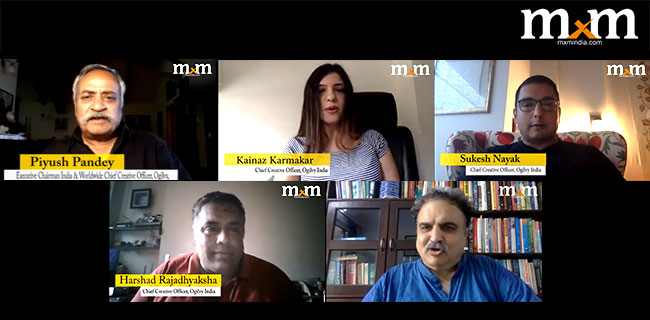
To discuss the Ogilvy India way of doing advertising, we spoke with Piyush Pandey, Executive Chairman India & Worldwide Chief Creative Officer, Ogilvy, and Chief Creative Officers Sukesh Nayak, Kainaz Karmakar and Harshad Rajadhyaksha. The discussion was moderated for MxMIndia by Pradyuman Maheshwari.
When Hindustan Unilever announced its decision to rename its moneyspinner $500 million brand Fair & Lovely to Glow & Lovely, it was a classic case of doing too little too late.
To imagine that the decision was perhaps based on the greatest upheaval of racist stereotyping of our time with the excruciating George Floyd pinned to the ground doesn’t say much for Hindustan Unilever’s decision. There is nothing to congratulate them about. There can be no appeasement of public emotion. There can only be guilt and shame.
Activists through the decades have objected to Unilever’s fairness cream but it needed a revolt as ugly as George Floyd’s death, for the great marketer to make this small move. Not since Rosa Parks was denied a seat on a bus in Montgomery has the world been so affected by the colour bias of the human race.
But how good is the new name Glow & Lovely? Decades of skin care research has shown that ‘Glow’ is a major benefit in for the skin care regimen. Just like ‘Shine’ is. a major benefit for hair. So, taking a benefit from research and planting it in a brand name is perhaps not the most creative way of configuring brand names. But then Unilever has not been particularly known for its creativity. That lesser brands like Emami had already pre-empted this thinking by naming their brands Glow & Handsome is a bit of a shame. After all, one expects leaders to show the way. Not follow in the footsteps of their smaller competitor in the FMCG business.
But is Glow and Lovely a good name?
There is a reason why Glow and Lovely doesn’t sound right given the vagaries of the English Language. The reason why it doesn’t roll of the tongue as easily as Fair and Lovely has to do with the English language. Both Fair and Lovely are adjectives. Glow on the other hand is either a verb or a noun depending on how you use it. Glowing & Beautiful would have sounded better in English. Because Glowing is an adjective. But it then lengthens the brand name. And Unilever might have decided they would stay close to the current syntax. Anyway to the large majority of Indians it would hardly matter. It’s just another name for Fair & Lovely. Fair and Glow are both four-letter words. But how the name changes the advertising need to be seen. Will the new ads have dark and glowing faces to make amends with the brand’s past? That is anybody’s guess.
How Darkie changed its name
It may interest people to know that the exact opposite of Fair & Lovely existed as a toothpaste in Asia many decades ago. A toothpaste called Darkie. Produced by Hawley and Hazel, the brand was very popular in Asia. The pack showed a smiling black performer. The brand was then acquired by Colgate Palmolive which faced a lot of racist flak on the brand. In 1989, Colgate Palmolive decided to change the brand name to Darlie.
“It’s just plain wrong,” Reuben Mark, chairman and chief executive of Colgate-Palmolive, said about the toothpaste’s name and logotype. “It’s just offensive. The morally right thing dictated that we must change. What we have to do is find a way to change that is least damaging to the economic interests of our partners.”
Seems like a shame that another global company had thought about this so deeply more than 30 years ago. So Unilever in many way is 30 years too late.
What will posterity say about Fair & Lovely?
But what this would mean for the generations to come is anybody’s guess. Will Generation Alpha which may use the brand a few years from now warm up to the brand given its history? (Generation Alpha is the demographic cohort succeeding Generation Z. Researchers and popular media use the early 2010s as the starting birth years and the mid-2020s as the ending birth years.)
How will these young people see our racist past? One piece of research showed that Generation Z are as racist as their millennial parents. But will this continue on to Generation Alpha? Technology is likely to change a lot of mindsets in the future. And that may change the fortune of the brand called Glow & Lovely.
Prabhakar Mundkur is an advertising veteran, a lateral thinker, storyteller and musician. He has spent several years in advertising – in India and elsewhere in the world – including at JWT China where he headed the Unilever business, amongst other functions. In fact he worked on Unilever brands for a good 17 years… though never on F&S ;-). A prolific writer now, he was LinkedIn’s #1 Top Voice for 2016 and YourStory’s 100 Emerging Voices 2018. He writes frequently on MxMIndia.
It’s an unfair question to ask, coz who could predict at the start of the year that 2020 which will be such a @#$#@$% year (the number of characters in the prefix to year is no indicator of the word we wanted to use, so chill!)?!. But we are incorrigible. We ask. And our dear Wizard with Word is such a sport, he answers. So without any further ado, presenting the June 26 edition of Das ka Dum with Dr Bhaskar Da. Read on…
If you wish to access the archives, please go to the Das Ka Dum tab on the website’s top navigation bar.
Q. The first half of 2020 will be past us in a few days. Your sentiments as we move over to the second?
A.I am usually not a believer (or expert) in prescriptive pontification. It’s a reality that the economy is under stress across sectors. The demand side of each business is undergoing challenges at multiple levels. Though the process of selective unlockdown has started, the recovery process would take at least one more quarter, if not more. But the collective grief of loss of normalcy and the prevailing uncertainty in various facets of life would take time to bounce back. Hence I feel the second half would be better than the first. But it may not reach the pre-Covid level soon. Some sectors like IT/ tech-led sectors would grow very well, ‘need’ categories would also perform well but ‘ want’ categories would might return to normalcy, a tad slowly.
Over the last five-odd years MxMIndia would’ve done over a hundred-odd stories on television audience measurement and central to all of them was Partho Dasgupta, former CEO of BARC India.
Dasgupta joined BARC in June 2013 and in November last year handed over operations to his friend and former colleague, Sunil Lulla.
He is now using his experience and learnings to various places in the world, setting up BARC-like entities as an expert. He is also consulting broadcast and new media companies as a management consultant. And overseeing performance management. He of course continues to be President of the Advertising Club.
Earlier this week, we interviewed Sunil Lulla, CEO, BARC India on the eve of its fifth anniversary. We now speak with Partho Dasgupta, the former CEO of BARC India and get him to reminisce the days before operations began on April 29, 2015.
We were sworn to secrecy, so we kept our word. But it’s now confirmed and public: Senior media professional Partha Sinha is all set to join Bennett, Coleman and Company Limited (aka the Times of India group) as President, Response. Sinha is set to join the group next month (April 2020). Sinha takes over from Sivakumar Sundaram who is tipped to be CEO of the group. Sundaram is currently President, Revenue, BCCL
A product of IIM Ahmedabad and IIT Kharagpur, Sinha is currently serving notice as Vice Chairman and Managing Director, McCann Worldgroup. He has earlier held senior positions at BBH, Ogilvy and Citibank.
As has been reported, McCann has elevated Jitender Dabas as Chief Operating Officer. In the report we carried last week (Link), we did indicate that there is a transition likely… remember, we were sworn to secrecy.
Last Monday, we also asked veteran mediaperson Dr Bhaskar Das, who does the series ‘Das ka Dum’ on MxMIndia on what would his recommendation be if he were asked by a media group on who to hire – an adsales honcho or someone from another field (Link). Once again, since we couldn’t talk about it, we just put in this teaser… but those in the industry who knew about the move had a hearty laugh.
He’s moved from journalism to communications strategy, but writing and matters of national interest have always been dear to him. Ashraf Engineer, former journalist with Hindustan Times, Times of India, Mid-Day, Maharashtra Herald and also an author and currently Principal Consultant at Pitchfork Partners, has launched a digital platform for commentary, called Allindiansmatter.in, on issues that matter to India. It is a “home for conversations with and about the country,” he said.
The website was launched on February 17 with columns by Ranjona Banerji, senior journalist and columnist (and MxMIndia Consulting Editor); Tushar Gandhi, activist and great grandson of Mahatma Gandhi and Engineer himself.
Banerji wries about what happens when the media abdicate their responsibility. Gandhi has kicked off a three-part series on the India of the Mahatma’s dreams. Engineer, meanwhile, argues that India is rediscovering itself through the Shaheen Bagh protests against the Citizenship Amendment Act.
Added Engineer: “All Indians Matter is a citizen’s effort to engage – through commentary by a variety of writers on a wide range of issues – with everyone who cares about India, its Constitution, its liberal and secular values. It is a response to the political, social and economic situations we find ourselves in. Normally, it would be the domain of the news media, but it’s been found wanting in the past few years. As a result, many of the issues that should be highlighted are sidelined and the voices that should find a megaphone are muffled. Allindiansmatter.in is a simple, clutter-free website that shines the spotlight on the commentary, cutting out complex navigation, multiple sections and visual dazzle. The writing is what it’s all about, and that’s the way it’ll stay even if it evolves into something bigger.”
He added that the initiative is personal one. The website finds an extension on Twitter (@allindianscount), Facebook and Instagram (@allIndiansmatter).
It’s perhaps incorrect to make a shortlist of only 19 stories, while there could a hundred others which deserve to be on this list. But, then, leaderboards like these do give an idea of what people read on a site like MxMIndia.
In a news-heavy year, no marks for guessing who was our most read columnist. If this list was of the Top 100 stories, we think some 20 of them would be by Ranjona Banerji
Listicles are always very popular, and especially the year-ending ones by the very well-read columnist, Shailesh Kapoor. And when it’s a decade-ending one, it climbs to the top of the charts despite being written in December
A report on him last year was, yes, the most read story even in 2019. But we were looking at stories first published in the current year. Given the interest levels in whatever he is doing, we weren’t surprised that it’s in the Top 10.
We are sure this would’ve got more hits had it been earlier in the year. But a story that made most of our readers happy and nodding in agreement of our decision.
Anil Thakraney isn’t a regular columnist with us any longer (though we wish he was!), but this piece on everyone’s favourite cricket commentator maxed in pageviews for over a week
Before I started writing this piece, I casually googled ‘media and disability’. Interestingly, most results were pertaining to the role of the media, portrayal of disability, some academic papers on the subject and so on. Well, that’s typically what comes to mind when you throw these two words together at anyone.
Having crossed over to the disability sector from journalism, I have witnessed several debates (both in official and informal settings) where disability experts, people with acquired disability, scholars and mediapersons battle with each other, presenting their views on the subject.
Again, most debates are focused on ‘representation’. I find the premise of all such discussions fallacious. Our debates, writings, films, stories, all are from an ‘external’ standpoint. It’s always from ‘how I understand it’, or ‘how I perceive it’ or ‘what I have gathered from my research’. And that’s why any coverage or any engagement with disability in the media is at the surface level. Still.
This is part of the reason why stories and accounts are either heroic or pitiful. What I see lacking is the ‘normalisation’ of the idea. We like to compartmentalise issues and people into boxes that are easier to handle. Look at them a certain way rather than making them a part of the overall landscape of things.
In the process, someone else decides what is the issue, how does it impact a life and how it should be tackled. The understanding of it, once or twice removed.
As a communications specialist, I recognise the influencing power of the media and the fraternity. Common notions of disability arise from our media exposure. The images and words that come to mind are ‘wheel chair’, ‘crippled’, ‘handicap’, ‘dependent’, ‘incapacitated’, ‘vegetable’ etc. Clearly, these are neither complete nor correct.
Let’s try to break this down. ‘Disability’ is basically a condition that ‘limits’ a person. This condition could be mental or physical, it could be permanent or temporary. It could be a condition present from birth or acquired later in life. But it’s a ‘condition’. A person with disability is a person with certain limitations, but still a ‘person’. That’s what we often miss out on. We tend to focus on the disability so much that we seldom learn anything about the person. The person may be educated or a school dropout, interested in adventure sports or music, may be a foodie, or a movie buff.
How often do you see a person with disability invited to a public forum to present views on anything other than disability issues? What about the regular issues that affect citizens of this country, like infrastructure, climate change, taxes, education, unemployment or inflation? Do these not equally affect this section of society? Or are we assuming that disabled people don’t access any services, like you and I do.
According to Census 2011, 2.2 per cent of India’s (then) 121 crore population is disabled. And these are government statistics, way less than the actual numbers. There is a legislation called the Rights of Persons with Disabilities Act (RPWD) 2016 that lists out 21 types of disabilities. The RPWD Act mandates equal access to all facilities and services to persons with disabilities. The Act is progressive in its view of shifting the focus from ‘reservations and entitlements’ to ‘empowerment and inclusion’.
A policy can be enforced and implemented. But for it to become a ‘practice’, mindsets have to be altered. That’s what media can help with.
Attitudes can often be more disabling rather than the actual barriers in access. I have worn spectacles since Class 2 or 3, I don’t even remember. My inability to see without glasses is also a ‘disability’. But spectacles can cover up for my impairment. Kids in my school use to single me out and poke fun at my thick glasses but with time, it changed. Slowly, with more people dependent on correctional lenses, it became ‘normal’ (it’s a full-blown market today!).
It’s what we see and how much of it we see. If today in schools and workplaces, we start encountering persons with vision impairment, speech impairment, or any other disability, that will gradually become the new normal.
Certain sectors like IT, hospitality and education have started employing persons with disabilities. Their limitations are easily addressed with small changes in the physical or digital environment. This has helped businesses understand the needs of the larger disabled population better. The media should also consider hiring them, so the ‘normalisation’ of disability can happen from within.
This will change how people respond to ‘disability’. The element of shock or awe will slowly be replaced by a more pragmatic approach.
Today, when I go to a movie theatre, I’m happy to see seats reserved for people in wheelchairs. But the access to the cinema still remains an issue. On several occasions, I have seen wheelchair-bound people being physically lifted by four staff members to get them to a seat just so they can access mainstream entertainment.
If it were easily ‘accessible’, more people in wheelchairs would be seen at the movies. Last year, I attended a special screening of the film ‘Sanju’ at PVR Cinemas in Delhi, for blind and visually impaired people. Wondering how blind people can see a movie? Well, they do. Often accompanied by sighted people who can help them follow the missing links in the absence of dialogues. Technology has reduced that dependence too. An app called XL Cinema, free to download on an Android phone, can enable a blind person to follow ‘audio description’ of the movie alongside the actual screening.
There is the issue of access and then the issue of dignity. The industry needs to address both. And that will happen when we deal with them as ‘people’ and not as a mere ‘section with special needs’.
According to Census 2011, there are around 104 million people aged 60 years or above. This group of people may also fall into the bracket of ‘people with special needs’. Similarly, with a sizeable percentage of disabilities caused by road accidents, India’s overall disabled population is constantly on the rise. We cannot ignore or outcast them.
Often our imagination is curtailed because of their lack of participation in mainstream activities and spaces. Their absence leads to a confined view, further forcing them to live on the peripheries.
This year, the theme of the International Day of Persons with Disabilities is to promote their participation in the development agenda. The UN-defined Agenda 2030 for Sustainable Development pledges on ‘leaving no one behind’. The media needs to look at ‘disability’ as a cross-cutting issue and promote inclusion in every sphere.
Shruti Pushkarna is a former journalist (part of the founding team of MxMIndia). who has now moved full-time to the social sector. She heads operations of the New Delhi-based Score Foundation where she works as Director. Her views here are personal. She can be reached via Twitter at @shrutipushkarna
“Not all battles are fought for victory – some are fought to tell the world that someone was there on the battlefield,” – TV Journalist Ravish Kumar, recipient of the prestigious 2019 Ramon Magsaysay award for “harnessing journalism to give voice to the voiceless”. Kumar, managing editor of NDTV India, is a rare breed in Indian journalism and even more rarely sighted in television journalism. He’s there on the battlefield.
This website and this column celebrate their eighth anniversary this week. When Pradyuman Maheshwari, friend and colleague for more years than I can remember, asked me to be part of his venture, I agreed in a heartbeat. Idealistic, straight as die, doughty, courageous, tenacious, industrious, maybe a little crazy, Pradyuman moulded MxMIndia.com into the force it is today.
In these difficult times for the Indian economy and the Indian media, he has stood by my long and relentless critiques of the Indian media, regardless of business considerations and loss. And the past eight years have been an enormous education to me. I started writing a media column in 2010 when Pradyuman was in charge of exchange4media’s content, including the magazine, Impact. From there to MxM in 2011, what a comparatively innocent time it was for the Indian media. I wrote about changes in style and pattern, about individual transgressions and tracked growth and diversions.
But after the Narendra Modi government came to power in 2014, it was the end of the age of innocence for the Indian media and yes, I do include the shame of the Emergency here. In front of my eyes, I saw the collapse of my profession and I had the task of chronicling that collapse, twice a week. And as names and reputations have fallen, as renowned editors and media houses have capitulated to power, you find yourself scrambling to find redeeming elements.
For some years, I genuinely believed that if television has fallen to government pressure, newspapers still carried the torch, sort of. Those days have gone. Most of what passes for news on television is execrable, but the standard of print journalism has just followed suit. The nature of the beast gives the print media more places to hide but the cowardice and lack of courage, another name for complicity, is self-evident. It is no longer possible for me, or anyone, to carry on with the shibboleth that the print media is streets ahead of television when it comes to ethics or the basics of journalism. The scales have well and truly fallen from my eyes, as they have from many others.
Even a couple of decades ago, journalists who were known to be close to ruling dispensations or power centres were despised as sold toadies or stooges, used by both their sources and their employers. Today, they are celebrated for their proximity and defended by their colleagues for their sycophancy. Social media has been an amazing revelation here. Well-known bylines and faces expose themselves, their biases and lack of professionalism with remarkable regularity and lack of self-awareness.
The fact that Kumar has both won this award and talked about being on the battlefield has only won him enemies, especially from within his fraternity. He has shown so many up by simply doing the one thing we are all asked to do, of “showing truth to power”.
The last eight years, from 2011 to today, have taught me that the need for media scrutiny has never been more important because a fair and free media is essential for democracy. I thank Pradyuman Maheshwari and everyone at MxM past and present, for fighting that battle with me.
Happy Anniversary All!
Ranjona Banerji is a senior journalist and commentator. She is also Consulting Editor, MxMIndia.
For those who’ve been tracking MxMIndia over the years and have been reading my note every anniversary day, an apology: yes, I’m aware I am getting repetitive. It’s just that in the times we live in, it’s important that we keep reiterating our core values. Also, there’s a new set of readers who come in every year.
The Indian news media has never had it so bad. It’s not just about content and it’s not whether there’s enough money in the business. It’s about whether there is a place for ethical journalism. One can of course argue endlessly on the definition of ethics. And what may be unethical for me, may be absolutely fine for some others. For us at MxMIndia, while the desire is to make monies, it’s done without compromising on our value system.
A few days back, I was speaking with a former colleague over a possible project he could be doing for MxM. He found it difficult to believe that I was so insistent on not carrying paid content or doing a quid pro quo. Everyone does that, he said. While lauding MxMIndia’s principles, a biggie from the biz was more candid: Others are thriving and are being patronised despite compromising on values. But all of this is not going to change the way we are, or we want to be.
It’s not that we are a complete media news and views online publication. There are many, many areas and issues we don’t touch. But it’s not that we don’t want to… it’s just that we don’t have the wherewithal to do it. Or it doesn’t fit into our content framework.
~~
It’s our eighth anniversary today. We started publishing on September 9, 2011. Onam Day. We started with a resolve to be a responsible B2B publication. We started with offering content which is beyond announcements. We started with a desire to offer analyses that was more than just stitching together quotes from half a dozen people. But most importantly, we started out with the promise that we will bring you the most credible voices in the business to analyse issues. And we will not shy away from discussing content – in news, advertising and the electronic media. We were also happy to take a stand on industry issues – whenever required.
In the next year, we hope to accomplish some of the things that we haven’t been able to. We are also looking at bringing back a few of our popular departments – like the Jaldi 5 quick chats, the ‘Anchor’ with its listicles and a few new columns. There are also a few new initiatives we are looking at starting. But more on them when we are ready.
Thank you for patronising us, and thanks much to all those who’ve been part of this journey. Please continue to keep the faith.
It’s perhaps incorrect to make a shortlist of only 25 stories, while there could a hundred others which deserve to be on this list. But, then, leader boards like these do give an idea of what people like to read on a site like MxMIndia.
No marks for guessing why this is the #1 story. It appeared on April 24, 2012. Find out what happened on that day. And, yes, the headline was given by Peter himself.
In our list of Top 100 stories, there are at least 10 stories dealing with Arnab. But this one on his being awarded our MxMIndia Mediaperson of the Year Award for 2017 came out tops
We ran a campaign on the government’s missionary zeal to embark on digitisation. This report – based on study by a leading entity – had the government issuing a press release clarifying its position on digitisation
At mid-afternoon on Thursday, in a cool, rainy climes of Khandala near Mumbai, the top deck of the Dentsu Aegis Network had gathered. While they had seen the rise of the Network in India, the announcement was perhaps the best recognition of their work in the last decade-odd. Their leader – Ashish Bhasin – had been appointed CEO of Dentsu Aegis Network APAC. And APAC included the key markets of China, Australia and New Zealand. He will will join big boss Tim Andree’s Global Executive Team, the first and only Indian to occupy the chair. Bhasin will continue to maintain his role as Chairman, Dentsu Aegis Network India. Meanwhile, Anand Bhadkamkar, COO India and CFO South Asia, has been promoted to CEO, Dentsu Aegis Network India. He will report to Bhasin, as earlier.
Bhasin, who was MxMIndia Mediaperson of the Year in 2016, spoke with us over the phone from Khandala. While the clouds were out there in the Western Ghats as also in Mumbai where we are located, the sun was shining very brightly for Bhasin and the Indian advertising industry.
Read on…
Congratulations. Your elevation as CEO of Dentsu Aegis Network Asia Pacific is huge. Your sentiment as you move on to Singapore to take on the role?
Thank you. If the company trusts you with a bigger responsibility, it obviously makes you feel good. First off, I feel it is actually credit to the fantastic team we’ve had pan-India. This has been a dream run of sorts. We started with 40-50 people and today we are almost 3700-3800 people. At a time when everybody is struggling, the markets have slowed down, etc, we have continuously been the fastest growing group in India for maybe five years in a row. It feels good because all of that is in some way recognising India’s performance and from India’s point of view, I think it is a nice reflection on the team and on the country.
If you have to look back, what would you say would be the single biggest achievement since you helmed DAN in India?
I think two things: One is that I was very lucky that I was able to build and retain a fantastic leadership team. If you look at the senior leadership of Dentsu Aegis Network, while the turnover rate is very high in India, in the last 11 years ever since we started this journey, not one single leader at the senior level has left us. Everybody who has been with us, and who we wanted in our team, was in our team 11 years ago and is today in our team too. In fact more got added as time went by. I think building that cohesive world class leadership team is something that I will always be proud of and I will always rate it as one of the best things that we managed to do.
The other thing was taking this call on digital – to invest in digital in a big way. In India, no one else was looking at it and in many ways because of that we got a huge head-start over our competition. Of course eventually everybody is trying to play catch up and will do so over a period of time but that gave us market leadership. Digital was the fastest growing part in the advertising industry…
Acquisitions have been a significant feature of your tenure, right?
Yes, of course. That has been an integral part of my strategy. I’ve always said 50% of my growth should be organic and 50% should come from acquisitions because acquisitions are only about money. They also bring in fresh talent. Some of the best talent in the country whom we would never have been able to hire as employees, but we were able to bring into our group thanks to the acquisitions.
And you have been able to retain them..
People like Vivek Bhargava as an example.
Right.
So these are all very senior leaders and have finished their earnouts and have done very well in life, and they still continue to run their companies many years after that exactly the way they used to right from the first day when they started,
And Aggie (Agnello Dias) and Paddy (Santosh Padhi)
Yes, and Aggie and Paddy. We managed to create an environment where we give our leaders enough space, One thing that people forget is that for an entrepreneur, it’s more than just money. Money is very important but it is your baby… it’s your life, right? Nobody can run Taproot better than Aggie and Paddy, nobody can run Communicate 2 better than Vivek, nobody can run Sokrati better than…
True.
And so on and so forth. So, we allowed them that, but the challenge is the need to align people as a group because we are now 23 different agencies all moving in same direction. I think we achieved that pretty well and I am very proud of the fact that even after their earnouts are over, all these fantastic leaders continue to run their businesses even more successfully than they did when they were standalone entrepreneurs.
Is there something that you would’ve possibly liked to have happened differently?
Yes, I think, it is quite clear to me now that we were significantly better than our competition. We were way ahead because even though our competition was well-established, very big, etc, we still managed to beat the hell out of them and gain huge marketshare. I think I could have been a lot more aggressive… I should have been even more aggressive because we were really faced by very weak competitors who were still caught in a legacy world and who missed this digital revolution. We grew very fast, maybe we should have grown even faster.
Since your move as APAC head requires a relocation to Singapore even though you continue to be chairman of India, how much time will spend here in India?
I am doing the Greater South role already and I am travelling a helluva lot.
But this has a bigger footprint.
So, there won’t be any significant change in the number of days that I am spending in India. I do intend to spend at least a week every month here. I will be retaining my office in India and I will be actively involved in India. But I will be much less involved in the running of day-to-day operations which now we have a new CEO in the form of Anand (Bhadkamkar) who has been involved in this journey from Day 1.
So I am not going away. I am not leaving, in fact I will probably spend as much time in India as I am currently. I am travelling 15-20 days in a month. Given that it’s a region as large as APAC with countries from Australia, New Zealand on one end, and China to Taiwan, Korea, South East Asia, etc. and because our regional center is there, Singapore is the most appropriate place to do that.
Anything that you hope to achieve immediately as Densu APAC CEO?
There are some inherent advantages we have as a group. We can bring all market communication services to the client, so one P/L which was very instrumental in our success in India. And then there is our approach to be digitally ahead. I see no reason why we can’t do this very, very well in every single country.
Back home, you’ve just taken charge of your second year as President of the Advertising Agencies Association of India (AAAI). Are you going to continue with that?
Well, coincidentally we also have our Board meet on Friday. So I will definitely inform my EC (Executive Committee) about the change. And I will go by whatever they decide – whether they would want me to continue my term or not.
The Announcement:
Dentsu Aegis Network today announces the appointment of Ashish Bhasin, CEO, Dentsu Aegis Network Greater South into the newly created role of CEO, Dentsu Aegis Network, APAC, effective immediately. Based in Singapore, he joins the Dentsu Aegis Network Global Executive team and will report into Takaki Hibino, Executive Chairman, Dentsu Aegis Network APAC. Takaki’s role as Executive Chairman, APAC remains the same.
This move further cements the recently announced Cluster Structure; Greater North, Greater South and ANZ in APAC, giving the markets and their leadership teams greater focus on identifying and moving into key growth opportunities. Ashish will focus on accelerating this growth while delivering greater operational rigor and leadership excellence across the region. These changes reflect evolving market dynamics across the region, mitigating the disruption that new entrants, shifting consumer demands and technological evolution creates by focusing on delivering long-term, sustainable growth for our clients. Ashish will maintain his role as Chairman, Dentsu Aegis Network India.
Commenting on Ashish’s elevation, Takaki Hibino, Executive Chairman, Dentsu Aegis Network APAC said: “Ashish’s appointment is critical for the region; enabling the markets to focus on client needs and growth opportunities while delivering operational rigor for the business. He was a clear candidate from the start with a proven track record of delivering long-term and consistent growth. Under his leadership, the business in India is now the second largest Advertising & Media organisation by revenue in the market. His long-term vision coupled with his acumen for identifying an opportunity is one of the best in the business, and I am delighted he will join me in leading the business in APAC.”
Ashish Bhasin, CEO, Dentsu Aegis Network APAC commented: “I am thrilled to be taking on this new role within the APAC region. There is never a more exciting time to be in this business; our competitive landscape is becoming more complex and fragmented while our clients are crying out for long-term vision and simplicity. We have to keep their needs as our North Star whilst delivering long-term, sustainable growth for our business. We are in a unique position to build propositions around our client needs, and I look forward to this next chapter in the transformation journey of this region.”
Anand Bhadkamkar
In India, Anand Bhadkamkar, erstwhile COO India & CFO South Asia, has now been promoted to CEO, Dentsu Aegis Network India. Anand will continue to report to Ashish Bhasin in his new role.
Anand Bhadkamkar, CEO, Dentsu Aegis Network India commented: “I am extremely excited and honoured to take on this new responsibility. I look forward to embarking upon a new chapter in my career and work with Ashish as the Chairman of India to continue building DAN into the country’s most innovative, future-proofed market-leading network. Our One P&L philosophy and our leadership status in Digital sets us up in the best position versus our competitors.”
In addition, Masaya Nakamura, Deputy Chairman & Chief Growth Officer, APAC has taken a new role as CEO, Global Solutions, Dentsu Aegis Network, based in Tokyo. Prakash Kamdar, CEO, Isobar Singapore has been promoted to CEO, Dentsu Aegis Network Singapore.

 When Hindustan Unilever announced its decision to rename its moneyspinner $500 million brand Fair & Lovely to Glow & Lovely, it was a classic case of doing too little too late.
 It may interest people to know that the exact opposite of Fair & Lovely existed as a toothpaste in Asia many decades ago. A toothpaste called Darkie. Produced by Hawley and Hazel, the brand was very popular in Asia. The pack showed a smiling black performer. The brand was then acquired by Colgate Palmolive which faced a lot of racist flak on the brand. In 1989, Colgate Palmolive decided to change the brand name to Darlie.
 It’s an unfair question to ask, coz who could predict at the start of the year that 2020 which will be such a @#$#@$% year (the number of characters in the prefix to year is no indicator of the word we wanted to use, so chill!)?!. But we are incorrigible. We ask. And our dear Wizard with Word is such a sport, he answers. So without any further ado, presenting the June 26 edition of Das ka Dum with Dr Bhaskar Da. Read on…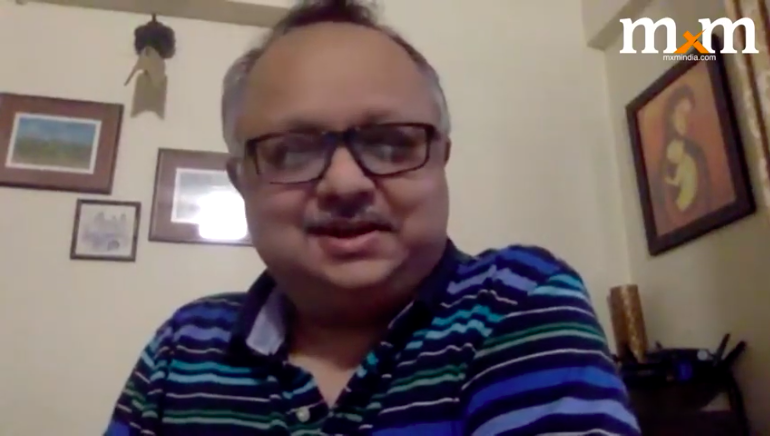
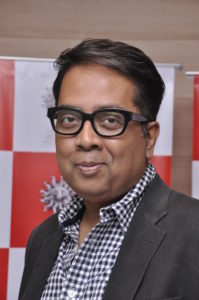
 He’s moved from journalism to communications strategy, but writing and matters of national interest have always been dear to him. Ashraf Engineer, former journalist with Hindustan Times, Times of India, Mid-Day, Maharashtra Herald and also an author and currently Principal Consultant at Pitchfork Partners, has launched a digital platform for commentary, called Allindiansmatter.in, on issues that matter to India. It is a “home for conversations with and about the country,” he said.
 Added Engineer: “All Indians Matter is a citizen’s effort to engage – through commentary by a variety of writers on a wide range of issues – with everyone who cares about India, its Constitution, its liberal and secular values. It is a response to the political, social and economic situations we find ourselves in. Normally, it would be the domain of the news media, but it’s been found wanting in the past few years. As a result, many of the issues that should be highlighted are sidelined and the voices that should find a megaphone are muffled. Allindiansmatter.in is a simple, clutter-free website that shines the spotlight on the commentary, cutting out complex navigation, multiple sections and visual dazzle. The writing is what it’s all about, and that’s the way it’ll stay even if it evolves into something bigger.”
 Before I started writing this piece, I casually googled ‘media and disability’. Interestingly, most results were pertaining to the role of the media, portrayal of disability, some academic papers on the subject and so on. Well, that’s typically what comes to mind when you throw these two words together at anyone.
 “Not all battles are fought for victory – some are fought to tell the world that someone was there on the battlefield,” – TV Journalist Ravish Kumar, recipient of the prestigious 2019 Ramon Magsaysay award for “harnessing journalism to give voice to the voiceless”. Kumar, managing editor of NDTV India, is a rare breed in Indian journalism and even more rarely sighted in television journalism. He’s there on the battlefield.