Tag: MxMIndia

  • 13 years of MxM, 13 years of the slow demise of Indian media…

    13 years of MxM, 13 years of the slow demise of Indian media…

    Ranjona Banerji PhotographIt’s been 13 years since Pradyuman Maheshwari started MxMIndia.com. Congratulations to him, his courage, for putting up with me, and congratulations to his amazing team and contributors.

    It seems unbelievable that I’ve spent 13 years watching and commenting on the Indian media. I remember kicking and screaming when Pradyuman said I had to watch television news. Unlike most people, I never got addicted to 24 hours of vapid material. I prefer reading to listening, which is why I find podcasts intolerable beyond about five minutes. It takes me three days to finish a half an hour podcast. The written media works fine, whether on paper or online. Anyone who has read my columns knows this.

    When we started, though, I did watch a bit of TV news. NDTV was of course the best of the lot, but they all had their moments – India Today, CNN News 18, Times Now and the rest. Arnab Goswami was extremely entertaining, although his spiral into Howard Beale was disturbingly evident. (You haven’t watched Network (1976) yet? Despite all my imploring? Please do!)

    No sooner did the first Narendra Modi government come to power in 2014 than the signs of collapse we had already seen in the Indian media were now no longer hidden in newsrooms. Owners and editors decided that bowing down was the best sign of survival. Actually, I am being kind. Some of them obviously believed in the sectarian policies of the RSS and rejoiced that their time had come.

    I saw the signs when I quit my last full-time job in 2010. The paper changed hands and the new owner openly told us that all this “secularism” would no longer do. Soon after the India Against Corruption movement began, with the support of the RSS, and political strategists used financial fraud as a means to create the myth of Modi.

    The capitulation of the media to political ideology did not in fact quite work out the way its masters and owners thought it would. A gradually flailing economy further ruined by incompetent governance meant that ad revenue was low. The pandemic took a heavy toll on everyone, including the media. Instead of tackling the issue head on, the media carried on with its adulation tactics. It is only when death tolls and general mismanagement became intolerable that some – not all – media outlets realized they owed something to their consumers, not just to the ruling regime. These forays into journalism ended as the pandemic ended.

    But by then, something else had changed. Consecutive lockdowns meant that people got used to an offline life. Digital media, and I don’t mean the traditional media here, took over. YouTube, Instagram and so on, were easier to access for those who had smartphones and the time. Nothing in the traditional media has gone back to what it was, and what it was had been struggling for years with a broken model that everyone knew was broken.

    A lot of this assessment is easier in hindsight. But many of us who watch the media knew that some of it was coming and that the legacy media thought it could continue to run on past glory. Even if that past was about 30 years old. Whether centuries or decades, though, the end result has been the same: if you do not deliver the news as is it is not how your masters want it to be, people will go elsewhere.

    In India, as political fortunes have changed, some in the legacy media have made allowances in their usual sectarian love fests. Those further from Delhi have usually been more courageous. But when you look at how the media has ignored Manipur because it is a BJP-ruled state and how Bengal is being blown up because the BJP wants to make inroads there, you see how old habits die hard.

    This has been the tragedy of the past 13 years. The chronicling of the slow demise of traditional media where I spent most of my life.

    You want me to end on a hopeful note? All right. Stop paying attention to its last throes and move on to credible and intelligent independent digital sources. Or just get doped out on the dopamine hits from Instagram. You’ll learn more than you will from TV debates and have more fun!

    Ranjona Banerji is a senior journalist and commentator. She writes on MxMIndia on Tuesdays and Fridays. Her views here are personal.

  • Wish Us Luck. We’re 13!

    Wish Us Luck. We’re 13!

    As we mark our 13th year, I feel it’s only right to begin with a note I often sign off with: Thank you for keeping the faith.

    These are turbulent times, and the challenges facing the media industry are more real than ever before. For some of us, the struggle is not just words on this page — it’s staring us in the face, in our offices and in our daily lives. It’s about survival.

    Yes, survival.

    But here’s the paradox: there has never been a better time for the media to prove its worth. There is a pressing need for honest, unflinching journalism to survive, thrive and continue doing what it was meant to do — hold up a mirror to society and to those in power.

    At MxMIndia, we’ve faced our share of financial pressures, but despite them, we’ve held firm. We continue to practise the kind of journalism we believe in.

    Let me give you an example. A well-known conglomerate once offered us monies to write a feature on them. We declined. We lost the business. Then, others suggested we exploit the challenges we face to gain sympathy. Again, we didn’t.

    We’ve also been told to stay away from critical stories — to focus only on positive ones. But that’s not who we are. That’s not why we set up MxMIndia on September 9, 2011 — Onam Day.

    From that day to this one, it has been an incredible journey. And I am immensely grateful to all who have walked this path with me.

    To the MxM team — past and present, our columnists, industry professionals, readers, advertisers, and shareholders — thank you for your continued support.

    Of course, revenues matter. But our primary allegiance will always be to our readers. Only when we produce high-quality, credible content, will everything else follow.

    Over the years, I’ve made a few promises in my annual anniversary notes — I’ll admit, not all of them have panned out. But we’ve made progress. We revamped the look of our website, and for that (and standing by me over the last 13 years), a heartfelt thanks to Manish Dhingra and his incredible team at Mediology Software.

    I’d also like to take a moment to thank Rafiq Barak, Kishor Kate, and our CA Nishant Soni, Shripal Kavad, and their teams, who keep the gears of this organisation running smoothly every single day. And to my friend, Prashant Basrur, for showing me the light whenever needed.

    And finally, a special thank you to my family. Over these 13 years, they deserved better materially, but they’ve stood by my belief in what MxMIndia should be and the value of independent journalism, especially in the B2B space, where quid pro quos are most often not frowned upon.

    To all of you who’ve been with us on this journey — thank you once again. I couldn’t have done it without you.

    Best,

    Pradyuman Maheshwari

  • Digital Transformation 1-2-3 with Sanjay Mehta: Part 1

    Digital Transformation 1-2-3 with Sanjay Mehta: Part 1

    Few people in the advertising and marketing ecosystem are better equipped than Sanjay Mehta to lead this online Masterclass on Digital Transformation. In our discussions with him, we were inspired to ask Sanjay Mehta to formulate a three-part series aimed at motivating founders and owners of mid-sized businesses in India to embrace digital transformation. 

    While Digital Transformation is a much-touted (and often incorrectly used) buzzword in Indian business circles, Sanjay Mehta’s series highlights the real growth potential that comes with the right retooling. This insightful series, ‘Digital Transformation 1-2-3 with Sanjay Mehta’, will culminate in a Zoom-based webinar on Wednesday, August 7, at 3 pm IST. The webinar is exclusive to 40 professionals on a first-come, first-served basis.

     Masterclass #1: July 17, 2024 – Boards and Founders need to see “outside the box” for the multiplier effect

    Masterclass #2: July 24, 2024 – Exploiting Opportunities, Overcoming Challenges

    Masterclass #3: July 31, 2024 – The Specific Nature of the Beast

    Masterclass #4: August 7, 2024 – Live webinar (Registration will open on July 31)


    By Sanjay Mehta

     Over the years, working with many companies, working with their top management or with their teams, what comes out clear is that the top focus of senior management is growth. India coincidentally happens to be poised at a very opportune phase. By and large, one sees increased demand and most businesses of good caliber are seeing good progress in their businesses.

    In India, we also have a base of some good-sized businesses that are home-grown and run by the original founder families, after multiple decades. They are absolutely sharp in their own business. Often, we see the next gen also joining the business, often educated and trained abroad, in their respective field, and adding to the strength in the business.

    That said, growth continues to remain a key motivator and driver for the owners and while they are doing all that they know to drive the said growth, are they genuinely tapping the business to its full potential?

    At any point in time, a business may have multiple potential growth multiplier factors. Some of these are known to the business and efforts may be going on. Some others are known, but these are either not prioritised for the moment, or there is a recognition that they don’t have the right skills or resources, to take those up.

    And then there are the third kind of growth multipliers about which the company is not aware of at all. Simply because these may fall outside their areas of competence of experience. Some could be technology-based, some could be through other means.

    It is because of the second and third kind of opportunities that exist, and which are not being addressed, that a company or its Board or the Founders, need to keep an open eye and think “outside the box” to tap these.

    In this case, the term “outside the box” can be a little literal also! To say that, at times, the understanding of the opportunity to multiply growth levels, may not be available at the existing Board level or with the team in the company. And that the Board must be open to consider outside expertise, either by bringing that into the board, as additional/ external/ independent directors, or as strategic advisors.

    Once a strategic approach is defined well, an action plan is laid out, a monitoring and review mechanism is in place, the execution itself, may be something that the company’s internal team, or their existing partners/ vendors could manage. However, since the strategy comes from a level of experience, knowledge and skills that may not be available internally, that is where there is a need to be open to outside help.

    As an example, let’s consider a very simple situation on first principals’ basis. Let’s understand this: that, a company’s revenues are a multiple of their number of customers, the number of transactions that the customers do annually, and the average value of each transaction.

    So, if the company must grow revenues, they need to focus on:

        • Growing the number of customers
        • Increasing the frequency of the customers’ transactions with them
        • Increasing the ticket size of each transaction

    Maybe the company has high focus and skills on new customer acquisitions and they are addressing that first point well.

    However, has anyone truly focused to figure how to bring the customer back to purchase more frequently?

    Has anyone figured as to how we could drive the average ticket size of the transaction higher?

    If asked, there is a good chance that team members will affirm that all these efforts are being done. But whether it is so, in reality? Whether the right skills and opportunities have been exploited to do so? Whether for example, data has been used well to enable this?

    So yes, there is a role that data and technology could be playing, and maybe that is the limitation within the team. That they do not know the potential of data or technology for that purpose, or they don’t have the skills to comprehend potential benefit and ROI of such efforts.

    Be that as it may be, this is just to bring to the fore, the idea that Boards and Senior Teams in companies may be lacking certain areas of skills and knowledge, and in their efforts to do better for the company, they need to be open to change with the times. And where today, there are maybe specialists for audit and legal or around the business itself, on their boards, maybe the next additions to the boards, or at a strategic advisory level, need to be people with subject matter expertise in newer areas that the company current lacks, such as technology and innovation, say, and utilize such persons to provide the further impetus of growth multipliers.


     Next week (Wednesday, July 24, 2024):

    Masterclass #2: Exploiting Opportunities, Overcoming Challenges


    Sanjay Mehta is one of the pioneers in the digital world in India, having founded and spearheaded several companies: HomeIndia, Mirum (earlier SocialWavelength before WPP took it over) to name a few. He is also an author and commentator on all things digital, and beyond. He is an investor, mentor and also helps organisations – large and small – in their process of digital transformation. He tweets @sm63. Linkedin.com/in/spmehta

  • Ranjona Banerji: You’ve got to listen to what your audience thinks and wants!


    Ranjona BanerjiBy Ranjona Banerji


    I suppose it’s only fair. If journalists tell other people how to do their jobs; people are going to tell journalists how to do theirs. And it’s important. You have to listen to what your audience – readers, viewers, well-wishers, critics – thinks and wants.

    But sadly, most of the advice or the outrage misses the mighty deodar and whizzes into the underbrush.

    These are some of my favourites:

    1. All journalists are reporters. This is an understandable error, because a name goes with the article you read and those names provide you with information. But that article – in a proper newsroom that is – has gone through a long process before you read it. Here’s a sample of what could happen: A group of editors has decided on what the article should contain. A senior person has briefed and then debriefed the reporter/correspondent on what the article should contain and assessed what was missed, what else is needed, how the angle may have changed with more information, especially in an ongoing event.

    The article is written, vetted and then goes to the desk. Here the language and flow are corrected and confirmation is sought on information provided or unsubstantiated claims made. If the information or source are potentially controversial, legal opinion could be sought.

    The finished product then goes to the page. Here, because of space considerations, any amount of chipping and chopping may be done. Sometimes to the benefit of the story and sadly sometimes to the detriment. The headline, intro and tagline are finetuned here. The reporter lost control once it when to the desk.

    So what you as the reader see has gone through any number of changes. Therefore, emphatically, no, all journalists are not reporters. All editors may or may not have been reporters. According to the legendary Harold Evans (Editing by Design), to be a desk person is paramount. You start as a lowly sub-editor and you learn the craft of how to bring a journal together. You are or should be the lynchpin of a newsroom.

    2 They do it for the money, they are all “paid media”.

    This is an interesting allegation. Are journalists supposed to work for free? How many of our readers and viewers survive solely on fresh or polluted air, the virtue of voluntary work and the hot criticism of others? I know: none. Yes, employees of a newsroom get salaries, contributors get paid and so on.

    The question is who they get paid by. If it’s not the employer, then that is unacceptable.

    The other question is who is the employer paid by. Advertisers are integral parts of a newspaper and always have been. They put pressure on journals and always have and always will. How far does the employer give in or at all? These are the questions to ask.

    And when the government is the sole advertiser and therefore has the power to exert maximum pressure? Then you reach the sort of situation you are in today.

    This balance is not new, it is ongoing. The issue is how much pressure a newsroom can and will withstand.

    3 People should be arrested for opinions. Take the recent rage over veteran journalist and current columnist Tavleen Singh for instance. Those calling for her arrest for an opinion are no different from those who arrested Umar Khalid for his views. I disagree with almost everything that Singh has written since she became a columnist. I do not agree with those who feel her support for rightwing supremacism reduced after her son’s OCI status was withdrawn. Her rare criticism of the Modi regime is meaningless in the context of the body of her work.

    But arrest? That is dangerous and silly.

    4 Opinions must be policed. How dare X journalist have an opinion? They should report and do their work.

    Let’s go back to Point 1. Some journalists are reporters. Many are not. Some journalists have the opportunity to have their opinions showcased, as columns. Newspapers have edits. Those are the newspaper’s opinions. Viewpoints and perspectives are integral parts of the media. And as we know from social media, opinions have become democratized. Everyone has a voice and the right to feel their opinion is important.

    The feeling of wanting to punish opinions is dependent solely on whether you agree with the opinion or not.

    5 At no point am I saying that criticism is not valid. For more than a decade, I’ve made a living criticicing the media. For years, no one criticised or critiqued the media and that was to our own detriment. Now, there are informed and uninformed critics everywhere. That is how it should be. Keeps you on your toes.

    The purpose of this column is to help you critique better!

    Postscript: I know little of how television functions, so have not included it here. Do what you want with them!

    Ranjona Banerji is a senior journalist and commentator. She writes on MxMIndia on Tuesdays and Fridays. Her views here are personal.

  • 5 Tips, 5 Books & 5 Movies that can Help Us Mainstream Deaf Individuals


    By Shruti Pushkarna


    Shruti PushkarnaHow many of you have watched the Academy Award winning movie CODA? A film that won the Best Picture, Best Supporting Actor and Best Adapted Screenplay at the 94th Oscars.


     

    CODA (or Child of Deaf Adults) features deaf actors Marlee Matlin and Frank Kotsur portraying their disability on screen. The film centres around Ruby Rossi, the only hearing character in this family drama.


    What really stood out for me in this fictional representation of a complex issue, is its ending. When their seventeen-year-old daughter (Ruby) decides to follow her passion and leaves for college to pursue music, the deaf family is left to fend for themselves. But throughout the movie, the filmmaker never puts the onus of inclusion on the disabled, and same is true of the conclusion. Their surrounding community, which is the (hearing) fishing community figures out ways of communicating and transacting with the Rossi family.


    September is observed as the Deaf Awareness Month and this year the theme is ‘Building Inclusive Communities for All’, where deaf people feel connected to their community as well to those without a hearing impairment.


    Officially, India has only 250 certified sign language interpreters for a deaf population of ranging between 1.8 and 7 million.


    With an estimated count of 700 million people (globally) to experience hearing loss by 2050, it’s time we learn ways of including deaf individuals in mainstream conversations. And what better time to start than the Deaf Awareness month!


    The obvious question to ask is how can we include deaf individuals in day-to-day activities, at work or even in social settings?


    Here are five easy tips.


    1. Learn basic sign language to initiate communication with a community severely dependent on visual cues. In 2017, the United Nations officially recognised September 23 as the International Day of Sign Languages. The aim was to raise awareness about the importance of sign languages as a means of communication and as a fundamental human right of deaf individuals.

    2. Speak clearly without overemphasising or speaking too loudly or slowly, remaining natural in your delivery.

    3. It always helps to communicate in quiet environments because noisy backgrounds can make it harder for the deaf (and hard of hearing) to focus on what is being said.

    4. Always face the person you are communicating with while speaking or signing. Deaf individuals rely on gestures, facial expressions, and lip movements to communicate effectively.

    5. Use visual aids like whiteboard, notepad or smartphone apps makes it easier to engage with the deaf especially if it involves information exchange.


    In case you are curious about life with hearing impairment, here are five books that focus on the theme of inclusion using deaf characters.


    1. El Deafo– This is a graphic novel based on the childhood experiences of American author, Cece Bell. It’s a heartwarming and humorous tale of a young girl navigating the world with her hearing aid, recounting her challenges and triumphs.

    2. You’re Welcome, Universe– This book by Whitney Gardner features an Indian teenage deaf girl who gets expelled from her school for spraying graffiti on the wall. In her new school, she tries to find new friends and embarks on a journey of self-discovery.

    3. Wonderstruck– This is an illustrated novel by Brian Selznick which follows the story of Ben, a deaf boy traveling to New York in 1977, and Rose, a deaf girl traveling to New York in 1927. The two stories overlap around the themes of connection and belonging.

    4. Deaf Like Me– This novel by Thomas S Pradley and James P Pradley, is based on a true story. It recounts the journey of a hearing family raising a Deaf child. It delves into the challenges they face and their efforts to support their child’s communication and inclusion.

    5. Deafening– This is a novel by Frances Itani, set during/before World War I, which tells the story of a young woman who becomes deaf due to a bout of scarlet fever.

    And in case you are someone who prefers movies to books, here are five cinematic recommendations with diverse portrayals, exploring themes of deaf culture and inclusion.


    1. Sound of Metal (2019)- Directed by Darius Marder, this film tells the story of a heavy metal drummer who begins to lose his hearing and must adapt to a new way of life within the Deaf community.

    2. Iqbal (2005)- Directed by Nagesh Kukunoor, Iqbal is centred around a Deaf and mute aspiring cricketer. The film highlights his determination to overcome obstacles and pursue his dream of playing cricket at the national level.

    3. The Shape of Water (2017)- Directed by Guillermo del Toro, this fantasy drama features a mute, non-verbal female lead who communicates using sign language. The film explores the power of communication beyond words and the connection between the characters.

    4. Children of a Lesser God (1986)- Directed by Randa Haines, this film revolves around the romantic relationship between a hearing teacher and a Deaf custodian at a school for the Deaf. It explores issues related to communication, love, and societal expectations.

    5. Soundtrack (2011)- Directed by Neerav Ghosh, this film is loosely based on the life of musician and composer Suman Sridhar. The film features a DJ who loses his hearing but continues to create music. It explores his journey of adaptation and resilience.


    Change is not easy to come. Especially not in a country as diverse and complex as ours. It’s true that it takes more than one to transform and build an accessible world. But it’s the action of one that translates into a collective movement for change.


    Can you commit to learn to sign at least one word this September?


    Wondering why MxMIndia publishes a disability advocacy column? Well, we strongly feel that the media can dramatically transform the world of persons with disabilities. This series attempts to help bring forth issues that the media must champion to create a truly inclusive and accessible India. Writing  this column is Shruti Pushkarna, a former journalist and  now a disability inclusion advocate based in New Delhi. Her views here are personal. To access the archives of her 75-plus columns, please visit: https://www.mxmindia.com/category/ columns/shruti-pushkarna/


    If you have a view on the issues raise or would like to align with MxMIndia on this cause, write to us at editor [at] mxmindia.com.


  • 12, going on 13. Wish us luck


    Those of you who have followed our journey know this: when we embarked on delivering MxMIndia on September 9, 2011, we were way too idealistic. To run a B2B publication sans any quid pro quo. Dropping the sales function in a publication that survives on advertising revenues. Critiquing a community which loves critiquing the world, but hates going under the scanner.


    The good (or bad) thing is that we continue to be way too idealistic.


    How do we think we’ve done over the last 12 years? Revenue-wise: it’s a 2/10. Even the most outrageously biased and compromised entity in our business is evangelised by the industry more than we are. But I guess that’s the way of the world.


    But integrity-wise: it’s a 10/10. When we started out and to this day, our primary allegiance is to solely to our readers. Everyone else comes second.


    Content-wise: it’s a 5/10. We consider our readers to be a mature lot. So we’ve stayed away from the pulls and pressures of breaking news – announcements of people movements or account/client wins/losses. We don’t carry pop analyses: take a topic, ask five people for their views. Despite having some of the best commentary in the business, we score ourselves low, because we haven’t been able to leapfrog to content that we think is really needed. We want to be able to have content that people are willing to pay for. Just as they are happy to pay for their vada pavs and kathi rolls.


    Outreach: it’s a 4/10. We don’t conduct events. Because we think the way in which they are conducted by some others has a problem. The decision-making process from amongst marketers and media agencies is taken by the footsoldiers and their team leaders, not the CEOs who attend them. Frankly, we haven’t been able to look at a new model to achieve this outreach to the real decision-makers. And only after we are able to do it, will we embark on ground-level events.


    As we go forward, we need monies and investments. But that’s easier said. Ad revenues keep going up and down. An advertiser can pull the rug off pre-determined deals, and we just need to grin and bear it. Or there are some who don’t advertise with us because we don’t carry every communique they send. That’s not going to deter us though.


    In our 13th year of operation, we are determined to better ourselves. And stay on course with how we would like to conduct ourselves.


    If you think you can help MxM in her journey, please feel free to write to me – pradyumanm {at} mxmindia.com. If you have my personal coordinates, just call/WhatsApp.


    And even if you can’t turn a benefactor – in terms of monies, connects or ideas, just be there for us. Applaud us when you find us doing the right things. Damn us if you think we are erring. But please be there with us. For us.


    Thanks,

    Pradyuman Maheshwari


  • Why Dunkin’ and Lego rebrands succeeded – but X missed the mark

    The X logo atop the company’s headquarters. From a tweet posted by CEO Linda Yaccarino


    By Matthew Pittman


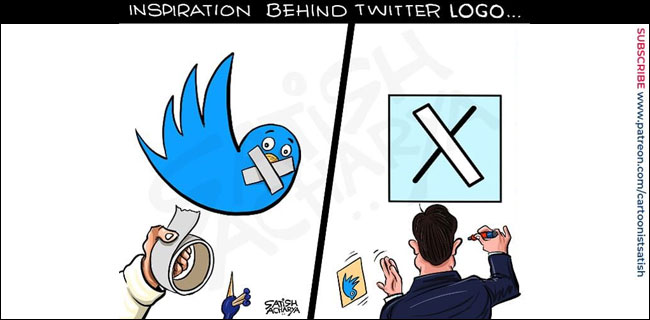
    Twitter has swapped the fluffy bird that used to symbolise the social media platform for a spindly black X. Ditching the company’s well-known logo and changing its name to a letter often associated with danger, death and the unknown is only the latest user-aggravating step CEO Elon Musk has taken since he bought Twitter in October 2022 for US$44 billion.

    But it’s the most visually jarring one.

    The reaction has mainly been a mix of ambivalence, ridicule and scorn. For the most part, longtime Twitter users are unhappy at what they perceived as another unnecessary change that’s eroding their enthusiasm for the social media platform. It’s hard to find anybody praising the change so far, except perhaps some of Elon Musk’s most devoted fans. Twitter co-founder Jack Dorsey signaled that he was finding the uproar overblown.

    I’m paying close attention to this corporate pivot because I’m a scholar of design who researches social media and brand campaigns. Logos and brand names change all the time and rarely cause this much commotion. But because these changes go deeper than most, I believe the risks of damage to the company are greater.


    X’s clumsy design

    X might strike you as a weird brand name, and the change may seem to have happened out of the blue, but Musk has long been smitten with the letter.

    In 2000, the founders of PayPal ousted him as CEO for trying to change its name to “X,” his Tesla models are famously named S, 3, X and Y – which displayed together basically spell out the word “SEXY,” and one of his many children is named X on his birth certificate.

    I would describe the new logo, submitted by a Twitter user, as a white-on-black, sans-serif X consisting of two strokes. It’s minimal and modern – and a stark departure from Twitter’s iconic blue-and-white bird. That shade of blue makes you feel calm and serene; black conveys sophistication and mystery.

    And yet even people who know nothing about design are poking fun at the logo’s simplicity and unprofessional execution. To me, the logo looks suitable for a metaverse strip club or a dating app for robots.


    Facebook’s Meta journey

    Oddball branding is hardly unusual for a big tech company.

    When Facebook rebranded itself as Meta in 2021, it was part of a comprehensive, strategic and long-term plan. The transformation signified the company’s aspiration to shift from a social media platform to an enterprise focused on the metaverse.

    While the goal of a vibrant metaverse remains more theoretical than imminent, the rebranding still gave Meta some momentum as it now seeks to shift its focus to artificial intelligence.

    Meta’s rebranding highlights the importance of staying relevant and embracing innovation. The company discerned the changing landscape and demonstrated a willingness to adapt in response to shifting consumer needs and preferences. When it realized the metaverse wasn’t materializing, the company focused elsewhere.

    Perhaps that openness to trying new things explains why the rollout of Threads, Meta’s new competitor for the social media platform formerly known as Twitter, is apparently off to a strong start.


    Our headquarters tonight pic.twitter.com/GO6yY8R7fO

    — Elon Musk (@elonmusk) July 24, 2023

    Tweet posted by Elon Musk. Also see: A pile of characters removed from a sign on the Twitter headquarters building seen in San Francisco on July 24, 2023. Photograph viewable at https://www.latimes.com/opinion/letters-to-the-editor/story/2023-07-30/twitter-x-elon-musk


    From dunking to Dunkin’ and rebuilding Lego’s brand

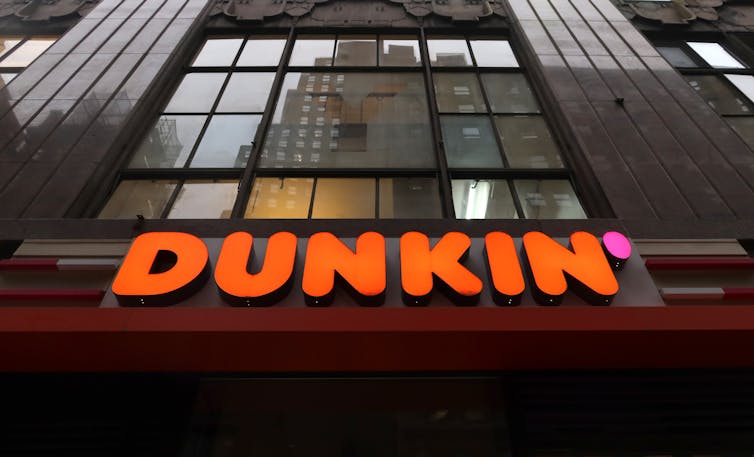
    When Dunkin’ Donuts trimmed its name to Dunkin’ in 2018, the reception was mostly positive. Its customers seemed to get that the company wanted to move away from being closely associated with donuts – a high-calorie pastry with little nutritional value – and toward becoming a “beverage-led, on-the-go brand.”

    That rebrand succeeded, and the company has also stuck with the slogan it adopted a dozen years earlier: “America runs on Dunkin’.”

    Lego had another rebranding effort that business school students learn about as a model.

    Lego was profitable, popular and beloved for the entire 20th century, but around 2003 its sales began to wane. Presumably, kids had too many other toys and digital devices to play with and simply didn’t have the time or patience to assemble small, colorful, plastic blocks anymore.

    Undeterred, Lego conducted extensive market, ethnographic and psychological research to better understand how people in general, and children in particular, play with its wares. The company’s management realized that Lego products can be tied to just about anything.

    Lego blocks are used both in original ways – kids make their own creations – and derivative ways, whether it’s recreating a pirate ship or a dinosaur seen in a beloved movie.

    So the company began to partner with “Star Wars,” Nintendo, “Jurassic Park” and other brands to market special Lego sets. It also released a movie in 2014 that grossed nearly $500 million – boosting Lego sales and profits.

    The orange Dunkin' logo see on a big brown building.
    The Dunkin’ brand name and logo no longer includes the word ‘donuts.’
    Gary Hershorn/Getty Images


    BP rebrand crashed and burned; American Airlines had low altitude

    Many corporate rebrands either don’t work or don’t do much to help their companies.

    In 2000, BP changed its branding from British Petroleum to Beyond Petroleum.

    Despite efforts to reposition itself as an environmentally responsible company, its actions revealed a contradictory truth. While BP reportedly invested over $100 million in the rebranding effort, it continued to spend billions more on oil exploration than renewable energy initiatives. BP abandoned the campaign a few years after its massive 2010 oil spill in the Gulf of Mexico.

    After merging with US Airways in 2013, American Airlines rebranded away from its iconic 1968 logo, which had blue and red letters and an eagle between them symbolizing American power and ingenuity, to a sleek red-and-blue stripe with an abstract eagle beak separating the company’s colors.

    The company called the new logo a “flight symbol.” Some design experts dubbed it a travesty.

    Despite the contention, the company retained the new look.


    Ultimate fate of X

    I doubt the X rebrand will succeed – and not just because I dislike the new name and logo.

    There are some challenging legal issues with naming a major company a letter of the alphabet. The letter X’s use as a brand is already banned in certain countries because of its prevalence in pornography branding.

    And the rollout has been messy on the company’s own website. Musk reportedly swiped the @x handle from its original user without offering any compensation.

    What’s more, many users had already left the platform because of technical glitches and increased hate speech; the switch to X could make them less likely to come back and won’t make others more eager to stick around.

    In Musk’s quest to create what he says will become an app that “does everything,” I believe that his X rebrand took Twitter one more step toward being good for hardly anything.The Conversation


    Matthew Pittman is Assistant Professor of Advertising and Public Relations, University of Tennessee. This article is republished from The Conversation under a Creative Commons licence. Read the original article. The views by the writer are personal.


  • Why does Elon not like Larry?


    Prabhakar MundkurBy Prabhakar Mundkur


    As you all perhaps know Twitter’s official mascot until a day ago, was a bird and the bird’s name is Larry. According to a tweet by co-founder Biz Stone, it is called Larry the Bird as a tribute to Larry Bird who played for the Boston Celtics.


    I was caught unawares when my friends on a WhatsApp group of intellectuals told me that the Twitter logo had changed into an X. What? Why?
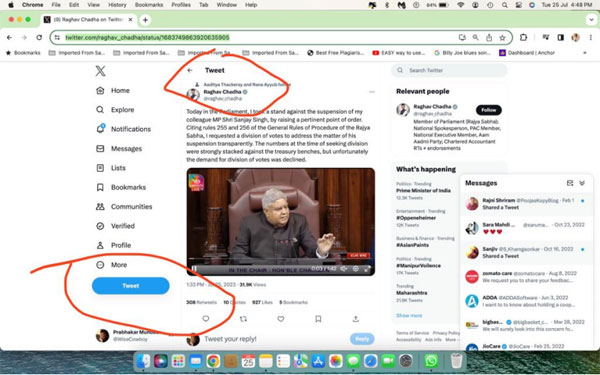
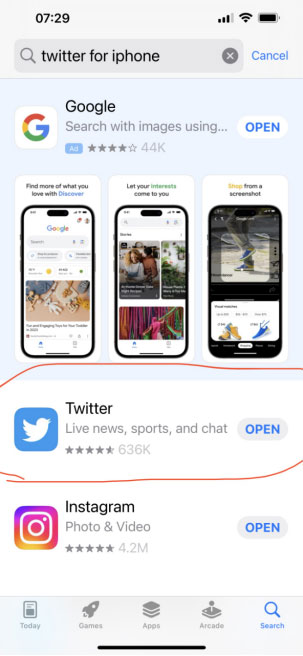
     

    I hastily opened my Twitter app only to see the familiar bird on a patch of blue as the opening screen.


    Wait a minute. For some time, I couldn’t see the X. Then a friend said he had opened it on his computer. I quickly rushed to my laptop and open Twitter. It took me some time to see a weak little X tucked away in the corner of my screen. And the language was the same. It said tweet.


    I then rushed to the App Store to check what the logo on the download would reveal. Once again, I was welcomed by Larry, and that told me that the new X branding was far from complete.


     

    I had never thought about it before but the logic of the previous branding fell into place. Twitter because that is the short high-pitched sound that birds make. That is why you tweet. So what was the logic for renaming it X?


    Elon Musk elaborated: “Twitter was acquired by X Corp both to ensure freedom of speech and as an accelerant for X, the everything app. This is not simply a company renaming itself, but doing the same thing.


    The Twitter name made sense when it was just 140-character messages going back and forth – like birds tweeting – but now you can post almost anything, including several hours of video.


    In the months to come, we will add comprehensive communications and the ability to conduct your entire financial world. The Twitter name does not make sense in that context, so we must bid adieu to the bird.”


    Yes, so I got it. You have long videos instead of 140 words. But you tweeted on Twitter. The logic was solid and unquestionable. My question to Elon is what do you do on X? You still tweet as indeed the image above seems to suggest. Something wrong here. Why am I still tweeting on X?


    Now coming to the logo which was the weakest part of my computer screen when I opened Twitter. For a moment, I thought some highfalutin design company had probably charged Elon a few million dollars for a new logo and made a few quick bucks.


    But here is the ultimate disappointment. It is simply the letter X from the Special Alphabets 4 font which you can buy on the internet for $29.99. Now that is cheapest logo I have ever come across for a major corporation.


    Now I have no pretensions to being an expert typographer but after having spent more than 45 years in advertising I do think I can tell a bad logo from a good one.


    But enough said. Farewell, Larry. Hello, X, whoever you are and whatever you want to be. Please introduce yourself!


  • Brands Navigating the Social Class Divide: Lessons in Sensitivity from Past Campaigns

    Photo source: Tweet by Neeraj Ghaywan (@ghaywan) at https://twitter.com/ghaywan/status/1666667224273403908?s=20


    By Hamsini Shivakumar & Prabhjot Singh Gambhir


    Hamsini Shivakumar
    Prabhjot Singh Gambhir

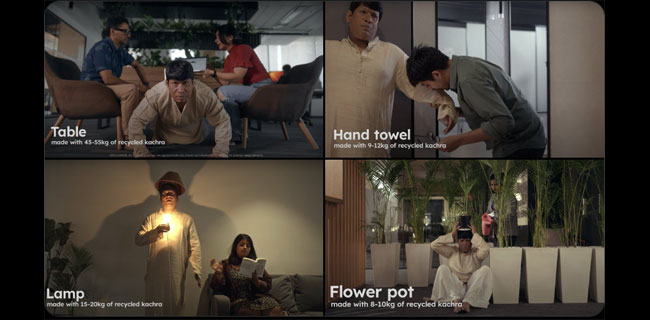
    Zomato’s recent campaign aimed to raise awareness about recycling waste on World Environment Day. However, the use of the character ‘Kachra’ from the movie Lagaan inadvertently reinforced stereotypes and perpetuates the devaluation of people from a specific class. Although the brand intended to employ wordplay in the video, the end-result appears culturally out of sync. The humour in the video appears to be mocking the already marginalised rather than challenging those in positions of power. The video received a lot of backlash on social media, which eventually led to Zomato deleting the video itself from all platforms.


    When faced with these social class divides, brands and their creative agencies are confronted with a unique challenge. Traditionally, marketing has approached class divisions as issues of affordability and accessibility for consumers. The solution typically involves offering products and services at various price points to cater to different segments of the market.


    Think of shampoo sachets, and phone recharges priced at Rs 10. Market segmentation based on affordability addresses the problem of access, ensuring that every consumer can afford and desire products within their price range, whether at the lower end or luxury segment of the market.


    However, addressing the social class divide as a brand in brand communication presents a distinct challenge, as it raises questions about portrayal and representation. It forces brands to examine their vantage point and ideological stance. If a brand aims to project itself as embracing progressive values, how should it navigate the complex issue of social class and class divides?


    This is particularly relevant when it comes to the portrayal of domestic help and their treatment in advertising, especially for brands selling household cleaning products and related items. How should they depict domestic help? Should they merely reflect reality as it is, or should they encourage consumers to adopt more progressive behaviours?


    To effectively navigate the intersection of brand communication and the social class divide, brands can draw valuable lessons from previous campaigns that approached similar subjects with sensitivity. Let’s take a look at some examples of how some brands have approached this issue in the past:


    Ghadi Detergent:


    In Indian popular culture, domestic help is often portrayed as solely responsible for the cleanliness and maintenance of households, perpetuating the notion that it is their sole duty while family members contribute little. Such stereotypes create a power imbalance between domestic help and the families they serve, with the latter holding all decision-making authority.


    Ghadi Detergent’s campaign, #SaareMaelDhoDaalo, deviates from this stereotype. Instead, it encourages individuals to recognise the importance of every task, no matter how small, and to treat domestic help with respect. The campaign depicts a young boy with a callous attitude towards the work performed by the house help. To rectify his behaviour, his mother decides to teach him a lesson by having him clean the house under the false pretence that the house help is on leave. In the end, he learns to appreciate the domestic help’s contribution and even pays him extra to celebrate the festivities.


    Women’s Day 2019 #YourSecondHome : An initiative by PregaNews


    Similarly, PregaNews launched its Women’s Day 2019 campaign, #YourSecondHome, which highlights the importance of domestic helpers and their contributions to households.

    The content begins with a woman scolding her domestic help and asking her not to perform her usual tasks. It appears that the domestic help’s job is at risk. However, as the narrative unfolds, we discover that the woman is actually reducing the workload of the domestic help due to her pregnancy and invites another domestic worker to assist. The campaign challenges initial perceptions by portraying the employer as caring and considerate, much like a family member would be.


    The messaging of the campaign promotes progressive ideals, advocating for empathy towards domestic workers and providing them with benefits such as maternity leave or reduced workload during pregnancy, similar to practices in the organised sector. The brand, PregaNews, seamlessly integrates into the narrative of the ad.


    Cadbury Dairy Milk – Driver


    The work features a boss driving his driver to his child’s school so that he could attend the parent-teacher meeting. While the content is only 45 seconds long, it is quite impactful. We immediately get to understand the dynamics between the employee and the employer and how this is a routine activity. We understand how his boss is being kind and patient towards him and goes out of his way to help him.


    The video shows how a small gesture of kindness towards one’s driver/staff can make a significant difference in their life. The brand integration of Cadbury Dairy Milk is also quite seamless, as it plays on the factor of the boss ‘being sweet’ and sweetness is associated with the chocolate in question.


    Oswal Refined Soyabean oil


    Oswal Refined Soyabean oil’s campaign portrays a positive image of domestic helpers by showcasing the relationship between the wife and her employee. While the husband is upset that the domestic help always leaves early to attend to her children, the wife, on the other hand, is accommodating as she knows that she works well and efficiently. One day, when the wife is out of the city, the maid bakes a cake for the husband and stays late at night just to celebrate his birthday so that he does not feel isolated on his special day.


    The video emphasises that domestic help is not just the staff of the house, but a part of the family, and employers should be accommodating to their requirements.


    However, while the ad’s story has a nice recall value, the brand takes a backseat here. The brand integration of Oswal is not quite as seamless because the story is not built around refined soybean oil. Even a slight mention of it in the narrative would’ve helped the brand integration.


    Facebook | More Together – Pooja Didi


    Facebook’s campaign, More Together – Pooja Didi, is a heart-warming portrayal of support staff. The content initiative can almost be categorised as a mini-short film, as it is about seven minutes long. It highlights the problem of unemployment during the pandemic and how the protagonist – Pooja, starts hiring people in large numbers to provide them with gainful employment solely out of her altruistic intentions.


    However, when she cannot pay the salaries and bills to the people she does business with, she is in a state of crisis. That is when the hired staff of her sweet shop utilises the power of social media to narrate the story of Pooja’s altruistic actions, which end up attracting customers to the shop, thus enabling her to pay all her bills.


    Conclusion

    All the brands seem to take the high power distance between employers and domestic help for granted as a given in Indian society and thus mirror existing realities. They don’t show the possibility of a different future for domestic help (except the Cadbury ad to some extent) in which they can be empowered and assertive of their rights vis-a-vis their employers.


    The convergence of brand communication and the social class divide poses both challenges and opportunities for brands. By being mindful of the implications of their messaging, brands can strive to create advertisements that promote empathy, understanding, and equality. Actively working to dismantle stereotypes and biases, brands can contribute to positive social change.


    Hamsini Shivakumar is a long-time culture-watcher, semiotician, brand consultant and co-founder of Leapfrog Strategy as well as Semiofest, the global unconference for applied semiotics. Prabhjot Singh Gambhir has done his Masters in Film Studies and is passionate about stand-up comedy. He has now turned his observant eye to cultural discourse and its intersection with brands. The views expressed here are their own.


  • Looking Back at the last 11 Years


    By Indrani Sen


    Indrani SenThe second decade of the twenty-first century was perhaps the most eventful phase in the history of the Indian M&E industry, where Indian media played a significant part in transforming Indian economy. When www.mxmIndia was launched in 2011, Indian the M&E industry had just come out of the effects of the economic slowdown of 2008-09 and a new beginning, the start of a digital metamorphosis was looming large on its horizon. Marketers and advertisers were looking forward to the implementation of the Digital Addressable System (DAS) which would transform the regional footprints of the TV channels to national; the only glitch was the delay in execution of Phase 3 of FM Radio.
     

    The three totally different events of 2011 which sums up the whole year beautifully are: the Indian Cricket Team winning the Cricket World Cup which was celebrated across all households in India; the anti-corruption campaign started by Anna Hazare which flooded the country as a movement and last but not the least: the release of the song Kolaveri Di which broke all records by going viral on the first day of its release. All these incidents had one common thread: the power of mass media, both traditional and digital.


    In 2012, the digital metamorphosis continued and dream of reaching and engaging with the significantly diverse, one billion strong Indian customers became a reality. The theme for the FICCI Frames 2013 conclave was ‘A Tryst with Destiny: Engaging a Billion Consumers’. However, a global slowdown of economic growth affected the Indian market and advertising expenditure again took a dip. A grewsome incident of rape resulted in the ‘Nirbhaya’ protest movement followed by women’s safety campaigns across traditional and social media and gained widespread awareness and support. The social issues were the main focus of the year 2012, supported by the TV programme Satyamev Jayate; movies like OMG and Vicky Donor; campaigns like Lead India and Teach India, all highlighted various social issues and proved again the power of mass media, both traditional and digital.


    In 2013, it was clear that “the Stage is set” for the gradual process of triumph of digital media (which has been around since 1995) though all the traditional media ranging from television to newspapers to films to radio to outdoor continued to connect with various touchpoints in the lives of the Indian consumers. The roll out of DAS in Phase I and II cities were largely completed by December 2013 and the process of digitisation across the sub-sectors of the M & E industry continued but monetising the digital content remained a challenge.  Sony Liv and Ditto TV (ZEE) were launched in 2013 marking the beginning of the OTT explosion in India.


    The next year – 2014 – saw a new government at the centre after a successful general election followed by a marked positive shift in investor’s interest for investing in India. However, in the domestic market there were various unresolved issues like implementation of DAS as the deadline for completing the implementation in Phase III and Phase IV cities got extended to December 2015 and December 2016 respectively. Still, the FICCI KPMG Report was optimist about the future growth of M&E industry and estimated the industry to grow from INR 1026 billion in 2014 to INR 1964 billion in 2019 a CAGR of 13.9% over next five years.


    A new era of TV ratings began in India with BARC releasing its first report in April 2015 and by the end of the year they announced their intention of reporting rural TV ratings which would later change the hierarchy of TV channels. Print, which had the largest share of advertising revenue till 2014, finally lost its crown to TV in 2015 (Source FICCI KPMG reports). The entire focus of growth in digital media shifted to the mobile sector as it became absolutely clear that mobile would be the backbone of digital India. Of the 331 internet subscribers, around 200 were mobile internet users. India’s mobile market with over 500 million active subscribers, but had less than 200 million smartphones and low-end phones known as feature phones dominated the market. It also became clear by 2015 that the Central Government had its own rules about allowing criticism of its various policies in mass media. As a result, news media, particularly News TV got clearly aligned to the ruling political party and began taking sides, which was not the characteristics of Indian media.


    The year 2016 was marked by the banknote demonetisation at the end of the year which had ripple effects on the entire economy. Jio mobile phone service was launched publicly in September, 2016 which quickly changed the Indian mobile network scenario in the next couple of years. The implementation of GST in 2017 which saw certain adverse effect on the revenue of traditional media. In 2017, the growth in M&E sector was led by digital, film, gaming and events while in TV subscription growth outpaced growth in advertising. Traditional print media began to lose young genres of readers to digital news rapidly.


    In 2018 and 2019, the overall growth in M&E sector continued to be led by online gaming and digital. These were two good years for Indian advertising industry. The BJP government at the centre was re-elected in 2019 having a positive impact on trade and commerce.  The last Indian Readership Survey was released in 2019 showing TV reached 77% of Indians above 12 years of age against 37% reached by newspapers. However, towards the end of 2019, the whole world saw a new pandemic, Covid-19, which shook up economies and affected business growth across all countries. In India, the National Lockdown declared at a short notice by the Prime Minister towards the end of March 2020, severely affected all business sectors and M&E industry also suffered severely. Indian Print media, which was heavily dependent on the last mile delivery by hawkers, was impacted hugely.


    In 2020, we saw the beginning of the work from home culture, which changed the consumption pattern across media almost overnight. The viewing of content on OTT platforms went up significantly turning the linear TV viewing scenario upside down. Print continued to struggle with both subscription and advertising revenues. Event industry had a most severe setback followed by outdoor, cinema and radio.  The severe degrowth of all traditional media however did not get extended to digital media and online gaming. At the end of the year, it was found that M&E sector performed much worse than Indian economy and it was estimated that it will take 2 to 5 years for traditional media to get back their pre-pandemic advertising revenue of 2019.


    In 2021, the M&E industry regained some of its lost business, but the second and the third waves of Covid-19 did not allow proper growth of the sector. The current year, 2022 promises to be a better year with PMAR and TYNY respectively predicting 20% and 22% growth in total advertising revenue. Advertising and Media agencies also are bullish about their business growth. The agency sector had a tough time during the last decade with stress on margins and commissions. Another trend which became prevalent over the last 11 years was large agencies acquiring or tying up with smaller specialised agencies, even promising start ups. Talent and training have become two issues with agencies in spite of the mushrooming of MBA institutes teaching advertising and media.


    It is doubtful if we will see another such eventful and colourful decade of ups and downs in M&E industry in the near future. www.mxmindia.com has been closely associated with this interesting phase and has flourished as a platform for exchange of independent views and opinions over the last 11 years. I am proud to be associated with website since 2016.


  • Ranjona Banerji: Total collapse of journalism in the last 11 years

    By Ranjona Banerji


    Ranjona BanerjiCongratulations MxMIndia and to Pradyuman Maheshwari!

    It’s been 11 years of this website and for 11 years, it has covered almost every aspect of the media – journalism, advertising, branding, promotion, public relations, marketing with gusto.

    Little did I know when Pradyuman asked me to write for MxM 11 years ago, that I would be first witness to the total collapse of Indian journalism.

    What innocent days those were.

    I trawled through newspapers. I was forced to watch TV news. I listened to “debates”. I could identify one anchor from another. I was amazed at the crowds that apparently showed up at India Against Corruption rallies until I went to one of those rallies and realised there was no one there.

    There was a UPA government at the Centre and journalists assiduously did their thing. They criticised, they analysed and many worked very hard to build up the opposition as an effective counter.

    And really, that’s what it all began.

    It’s not easy to remember, but social media in 2011 was not quite what it is now. Digital publications were not our only solace against bad journalism. A few print publications stood out. FirstPost was the big English language digital thing. The Ambanis had not yet bought News18. And the BJP funded Right Wing digital sites like Niti Central were introduced to pretend that the BJP was interested in news and not propaganda. Arnab Goswami still worked for Times Now.

    And TV, well TV was all gaga-googoo for India Against Corruption. But it still tried to bring us a little reporting, and tried to keep objectivity the cornerstone of their prime time debates rather than bogus “bothsidesism”.

    Increasingly, however, although not totally evident that the time, the media played a massive role in the projection of Narendra Modi as the saviour of a new India. From 2012 to 2014, the use of the media and organisations like APCO was masterful. Political organiser and manipulator Prashant Kishor’s work in Modi’s re-election as Gujarat chief minister passed under the radar. But his CAG (later rebranded I-PAC) outwitted the media in building Modi’s image.

    Those who were outwitted then are now fully paid up members of the Modi media club.

    A few significant moments stand out in these past 11 years. Some before and some after the BJP and Narendra Modi swept into the Union government in 2014. In 2011, India Spend was formed, and although many in journalism have not yet understood the importance of data journalism, we do see more and more of it.

    The arrival of Scroll and The Wire in 2014 and 2015 both brought the basics of ethical journalism back to a beleaguered profession. Several others followed, all of which opened employment opportunities for young people as well gave those interested in the news a number of options.

    Alt News arrived at the end of 2011 and with it, came Boom and Twitter account Hoax Slayer. This started the trend of fact-checkers, people who exposed lies told by a compromised media. And the enormous amount of fake news which spreads around the world on social media.

    Fact checking is a winner for the consumer, without a doubt. It is also a massive shame for a media which is no longer capable of doing a basic job: assessing the information it puts out in the public domain for accuracy.

    Many media outlets claim to have their own fact-checking departments. But they cannot compete with independent checkers like Alt News which are quicker and more accurate. They have paid a heavy price for their work, but have carried on relentlessly.

    Some hope has also come from independent journalists who have bucked the trend of genuflection and tried to speak truth to power. Many were in evidence during the farmers protests, which much of mainstream media blanked out.

    But these are but small sparks of home in a vast sea of misery as far as the media is concerned. In the past 11 years, we have collapsed in the press freedom rankings, we have seen journalists killed and jailed for taking on the powers that be, we have seen almost no solidarity for our targeted colleagues. Spaces for independent critical voices are shrinking. And so is our covenant with our reader and viewer.

    And there is almost no sign of anything getting better as far as the mainstream media is concerned.

    I must therefore thank MxM and Pradyuman for giving me this opportunity. For standing by my unpopular comments in spite of the potential threat to the website and the organisation. It takes courage and conviction and I know MxM has that in spades!

    Here’s to many more years!


  • MxM Live with Kaushik Roy/Roy Phoenix on ‘Alphabetica’


    By Our Staff


    Veteran mediaperson Kaushik Roy needs no introduction in the marketing services domain. But the media professional was not content with resting on his past laurels. Last month, he launched his debut novel ‘Alphabetica’ with a subtext saying ‘A Satire On Majoritarianism’ written with the pseudonym of Roy Phoenix.


    In an extended interview with MxMIndia founder and editor-in-chief Pradyuman Maheshwari, Roy talks about this book, why he wrote under a pseudonym and what’s coming next. As a bonus, watch and hear both Roy and Maheshwari read passages from the book.


    Watch. Like. Enjoy