Tag: Kantar

  • Reset. Redefine. Redux


    The last year has shown our immense capacity for adjustments and unhesitant flexibility in learning to coexist with the virus. From holding back spends to the returning to shopping malls and airports with gusto, Indian consumers have adapted to the ebbs and tides of the pandemic. Preparing for exigencies went hand in hand with recalibrating needs and striving to build a fuller life. We are living in strange times and are yet to get completely accustomed to the new way of living. Nevertheless, there is a continuous effort to do more and be more with the spirit of ‘Carpe Diem’ whenever possible. Along with the conscious focus on care and safety, there is a constant lookout for pockets of enjoyment and social joy.


    Locked in their homes and under restrictions, Indian consumers have also had a year of epiphany. They have realised the value of self-care, mindful living and are now seeking a more sustainable lifestyle. Some old habits have been replaced entirely, others adjusted, and the changes are here to stay.


    The 2022 Annual Trends by Kantar are borne out of conversations the teams there have had with consumers across the country


    Here are 10 themes that define how consumers are preparing themselves for 2022 (text source: Kantar).


    1. Going small to live big

    In earlier times, the big city fuelled dreams and aspirations of the youth and beckoned with the promise to ‘make it big’. The same city now seems stifling with matchbox homes, chaotic traffic, hectic schedules and cluttered living. The urban trapped millennials have been looking for breathers in their busy corporate lifestyles, often finding respite in trips along unchartered tracks.

    The lockdown and the opportunity of working from home has allowed them to consider an alternate to the city humdrum. As companies chose remote working as ‘business as usual’, the service sector employees chose to move ‘back home’ to smaller towns.

    What might have started as a prudent decision to save high rent expenses eventually seems to have translated into a more longer-term lifestyle adjustment. There is a conscious effort to recalibrate needs and wants as *59% believe that the pandemic helped them be more appreciative of what they already have. Many are stepping away from the tiring race to success and charting their own path for professional fulfilment, often trading off a heavier pay cheque for a fuller life.

    Much of the infrastructural development in India has been metro centric. The current trend offers a unique opportunity to reimagine our cities, our infrastructure, and mobility. Brands, on the other hand need to reinforce supply chains to avoid losing customers due to last mile connectivity gaps.

    (*Source: NICS 2021)


    2. Seeking assurance in ‘ghar jaisa’ khana

    The pandemic has made consumers painfully sensitive about the importance of health and immunity. A more focused approach to individual health requirements, an increasing appreciation of the traditional diets and a growing interest in the functional benefits of our familiar kitchen ingredients are triggering conscious food choices.

    Consumers are seeking comfort in familiarity, especially in the times of turbulence. They are more mindful of what they eat and are willing to make an effort to table fresher meals, *72% prefer fresh home cooked food than the packaged with the fear of preservatives. If the meals are not from their own kitchen, they would prefer it from someone else’s to be assured of the hygiene and quality of ingredients, thus making home chefs a rage. ‘Bahar ka khana’ is not yet worry-free as *44% do not feel safe ordering food online these days. At the same time there is a growing awareness about mindful eating rituals such as slow eating, appreciation of what’s on the plate and a deeper consciousness of the emotional connect with food.

    With increasing importance to freshly cooked meals, consumers would be open to kitchen solutions in terms of ingredients or appliances that make ‘home-made’ easier. Additionally, the affinity towards ‘home like food’ will also guide what the food industry will offer in terms of offerings on restaurant menus.

    (*Source: NICS 2021)


    3. Proactive upskilling

    According to the World Economic Forum, while the rapid evolution of machines in the workplace will displace 75 million jobs by 2022, it will also create 133 million new roles. As companies have been on their accelerated journey of digital transformation, the moot question has been whether the Indian workforce is ready for this change.

    Constant learning has become an imperative for workers to adapt to changing times and stay relevant. Through this volatility, upskilling has become the new insurance cover in the job market, ensuring stability in an unpredictable workplace disrupted by technology. Proactive self-learning through online courses has become the new norm for working professionals trying to stay employable as well as students gearing up to join the work force. *65% of learners upskilled to strengthen career prospects and *33% of learners were senior-level professionals. As both freshers and experienced employees become more conscious of the skill gap and lean in to bridge it, enrolments into online courses continue to exponentially grow.

    Proactive and consistent training and development led by employers will be increasingly critical, not only to keep the workforce equipped for the changing workplace, but also to ensure that employees are engaged and invested in the evolving business imperatives of the organisation.

    (*Source: Simplilearn’s State of Upskilling in 2021)


    4. Exercising autonomy through gig work

    The Indian freelance job market gained rapid acceleration with the pandemic induced job instability. However, what started as a necessity, is now a carefully considered choice for many. The comfort of flexible work schedules, coupled with an apathy for the corporate workstyle has been holding freelancers from going back to full-time employment.

    On the other hand, the Great Resignation of the west is showing signs in India too. ***62% of India’s workforce has the intention of switching jobs this year, compared to an average of ***41% globally.

    Most gig workers value the potential for higher earnings and flexible timings in their choice of work and are happy to trade off a steady income and job stability in the bargain. Women looking for employment after a sabbatical have found freelancing to be the much-needed bridge to join back the workforce.  The nature of freelance work has also evolved and gig working is not limited to factory or support function jobs. **70% of the Indian freelancers on their platform were working in core management functions.

    With 15 million freelancers, India is already the second largest gig market in the world. In the long term, the Indian gig economy has the potential to service up to *90 million jobs in India’s non-farm economy. India Inc. should make the most of this opportunity to absorb diverse work force and let them contribute professionally while taking care of their personal comfort.

    (*Source: BSG Report; Unlocking the Potential of the Gig Economy in India 2021

    **Source: Flexingit Survey, 2021

    ***Source: Microsoft’s 2021 Work Trend Index)


    5. Shrinking personal space with remote work

    Working from home had started with the promise of more comfort with workdays without travel and meetings without formals. Very soon this advantage was turned on its head as lines between work and personal life started blurring. Work expected you to be always on call and home assumed you were never away. Though remote work was expected to improve employee productivity, there is mounting evidence of increased burnout.

    **1 in 3 professionals in India feel burnt out due to increased workload and unmanageable stress. Professionals are seeking their personal space that has been squeezed between the responsibilities of home and work and they are looking forward to coming back to their workplace. *57% feel that commuting to their place of work would be a welcome relief after months of working from home.

    Corporate India has already taken cognizance of this situation and there have been measures to ease life in these times for employees. While focus has been on making work from home more convenient through virtual workplaces, organisations will also need to start rethinking their entire work models, culture, and values to ensure better mental health amongst the workforce. Employees are also learning to draw a line between personal and professional while operating from the same physical space.

    *Source: NICS 2021

    **Source: Future of Work Perception Study by LinkedIn, 2021)


    6. Yearning to get away from home

    Tired of being cooped up in their homes with social distancing norms, travel restrictions, people have been aching to step out of their homes. With the easing of mobility restrictions, restaurants are witnessing rising footfalls as Indian consumers making frequent visits to their favourite restaurants. Not only are consumers keen to experience a refreshing restaurant ambience rather than ordering in, the average order values have increased by *20%.  Work from home restrictive lifestyles have also allowed some more disposable income which consumers are glad to spend outdoors as evident in luxury dining increasing by as much as *120%.

    Lockdown fatigue had resulted in strong pent-up demand which is fuelling unique trends of ‘getting away from home’. Travellers have started to rekindle their travel plans through weekend getaways and similar convenient means to escape from the challenging life of work-from-home stifling schedules. Considering the renewed emphasis on personal control over cleanliness and hygiene, travelers are looking for nearby locations for road trips. Staycations are also an emerging trend where people are checking into at luxurious hotels to rejuvenate themselves with a pampered weekend.

    With varying rules of social distancing as we witness new waves of the pandemic, consumers will learn to switch on and switch off their social lives but would always yearn to step out. As consumers continue to seek respite from house arrest yet again, by planning for getaways, dropping into restaurants for a meal or even choosing to work from coffee shops, the reassurance of sanitation and hygiene-related measures such us fully vaccinated staff would ensure that they keep coming back.

    (*Source: Report by Dineout) 


    7. Instagram is the new store

    Fuelled by India’s fast growing smartphone penetration and inexpensive data, social media access and engagement has been steadily growing. As the pandemic further accelerated the growth of the e-commerce, social commerce has emerged as a favoured means of online shopping.

    Making a purchase on social media has brought back the element of the shopping experience that shoppers miss in the online store environment. Discussions, direct messaging and video sharing features make social commerce closer to shopping in person. Consequently, social chatter is fast becoming an active driver of brand choice; while advertising manages to influence *38% towards a brand, *41% tend to be swayed by comments or reviews posted on social media.  Riding on social word-of-mouth, today there are social commerce shoppers, account for **53% of total online shoppers in India.

    Stepping ahead of dynamic customer engagement, social commerce has proved to be an effective and affordable channel for smaller businesses.  This channel has also presented a cost-effective alternative for larger businesses and brands reeling under the pressure of mounting customer acquisition costs and struggling to protect these precious customers from competitors wooing them endlessly with deep discounts.

    *Source: NICS 2021

    **Source: Report by WATConsult, Isobar)


    8. Beauty goes beyond skin deep

    The pandemic brought hand hygiene to the forefront where consumers reacted out of fear without having the time or opportunity to make well thought through choices. The scenario however is vastly different today with consumers making well researched choices in personal care and are realising its significance of self-care more than ever.

    With virtual workplaces and limited social engagement, there is no mad rush to show up looking one’s best and people are moving towards a more sustainable self-care practice grounded in nature, health and wellness. There is an increasing positive disposition towards slowing down through daily self-care rituals. A stark contrast to the fast-paced world of the beauty industry that sells us quick fixes, cover ups and immediate results.

    Consumers have become extremely conscious about taking care of their bodies, and not just for the purpose of looking good. Fewer people are insisting on stepping out of home with make up (*30% vs. *49% last year) and declining interest towards cosmetic surgeries (*17% vs. *48% last year). The millennials especially have become acutely conscious of the long-term benefits of personal care regimes. What started as an obsession for sanitisers and hand-washes, has now gradually moved towards conscious choices of personal care, personal hygiene and wellness products.

    Brands need to be cognizant of shift in consumer choices towards personal care and grooming and cater to this growing affinity towards sustained self-care through their product solutions as well as communication of benefits.’

    (*Source: NICS 2021)


    9. True inclusion finding a voice among the youth

    Consumers are being drawn towards brands that embrace diversity and advocate causes that support social equity. The generation Z, being at the forefront of this movement, are evaluating brands with a conscientious looking glass. These globally connected consumers are constantly absorbing information and influences to make brand choices. They deeply value freedom of expression and the openness to accept different kinds of people and bluntly call out brands for stereotyping or alluding to any kind of discrimination.

    This generation is also taking active steps to make a change around them *36% of Indian Gen Z educated themselves on diversity and inclusion matters and *37% tried to educate and change the views of those around them. *22% of Gen Zs have boycotted a company because they didn’t agree to its views or actions.

    There have been examples of inclusive marketing countering stereotypes to create a vision that consumers can resonate with and embrace. There has been a shift in advertising campaigns featuring stories of real people told with a sensitivity that has found favour with consumers.

    Brands looking to engage this generation will need to extend their efforts beyond mere lip service. Just dressing brand communication with diverse imagery will not be enough. To stay relevant, brands need to embed diversity in their organisational culture as well as in their product development endeavours.

    (*Source: Deloitte 2021 Millennial and Gen Z study)


    10. Collective consciousness towards sustainability

    The pandemic has been a wake-up call; consumers are now acutely aware of the cumulative damage caused to the environment by human carelessness and are eager to ‘make good.’ *76% pay lot of attention to environmental and societal issue in the news.

    Increasing awareness and heightened consciousness have paved the way for more mindful living where consumers are seeking to coexist with nature and the environment. *77% are prepared to invest time and money to support companies that do good and while shopping *64% consumers factor in sustainability atleast once in a while.

    Sustainable actions that people are most willing to take today like reducing food waste, saving energy are those that have been part of the Indian ethos for generations. Yet, there are gaps between intentions and actions as most shoppers buying on autopilot are focused on saving money rather than the planet. Further, they don’t often have enough information about how sustainable products are different and the impact they make on our environment.

    Brands can fuel these actions by increasing awareness about the use of green energy in their production process, making it easier to recycle, incentivizing consumers and making it convenient for them to buy sustainable products.

    (*Source: Kantar Sustainability Foundational Report 21)

    ________________________________


    2021 has been a year of discovery for consumers where there have learnt to find their way in a fast-changing environment. No wonder the ‘how to’ search on Google has been on an all-time high. As we learn to adjust in a world that changes often and unpredictably, consumers would continue to seek more information from myriad sources and will be armed with higher awareness. Brands would need to listen more intently to consumers than ever before, be transparent in their promises and provide solutions for their evolving needs.  


    Contact your local Kantar partner or write to chhavi.bhargava@kantar.com  to know more.
     

  • Amazon, Asian Paints & Tata Tea are India’s Most Purposeful Brands: Kantar BrandZ India 2021

    By Our Staff


    India’s Most Purposeful Technology Brands Rank India’s Most Purposeful Non-FMCG Brands Rank India’s Most Purposeful FMCG Brands Rank
    Amazon 1 Asian Paints 1 Tata Tea 1
    Zomato 2 Samsung 2 Surf Excel 2
    YouTube 3 Jio Taj Mahal 3
    Google 4 MRF 3 Parachute 4
    Swiggy Tata Housing 4 Maggi
    Flipkart 5 Airtel 5 Britannia 5


    Amazon, Asian Paints and Tata Tea emerge as the most purposeful leaders in India across technology, non-FMCG and FMCG categories respectively. This emerged as insights and consulting major Kantar released the 2021 edition of its annual BrandZ India report on Thursday. This year, the report has moved gears to offer a ranking of 2021’s Most Purposeful Brands in India. According to Kantar BrandZ data, consumers believe that these brands lead with a clear sense of purpose to make their everyday lives better.


    The technology ranking has Amazon followed by Zomato, YouTube, Google and Swiggy jointly in fourth place, followed by Flipkart. The non-FMCG ranking is dominated by telecom brands, with Samsung and Jio jointly second, followed by MRF, Tata Housing and Airtel. The FMCG category ranks some of India’s biggest names: Tata Tea followed by Surf Excel, Taj Mahal, Parachute and Maggi both in fourth position and Britannia completing the list.


    Kantar conducted an analysis of 418 brands across 30 categories and found that in India especially, perceptions of a brand’s purpose, its ability to ‘make people’s lives better,’ is crucial to establishing a brand’s Meaningful quotient and thus, boosting prospects for growth.


    Said Deepender Rana, Executive Managing Director- South Asia, Insights Division, Kantar:  “Brand Purpose provides an anchor amidst constant uncertainty, both as a North Star for brands, but also as reassurance to consumers. Purpose as a contributor to brand equity is 10 times more important in India, in comparison to globally. This shows that a larger societal purpose is even more critical to success for brands in India. Of course, vague slogans and one-off ‘corporate charity’ events do not work, and it is not about jumping on the bandwagon of the latest fashionable cause either. Instead, real Purpose flows from, and builds on, a brand’s existing core values and DNA. This reinforces the need to understand and measure if a brand’s Purpose is perceived as adding real meaning to consumers lives.”


    Key Findings:

    2021 Kantar BrandZ data for India, in conjunction with other Kantar consumer sentiment tracking, has revealed several patterns in what Indian consumers deemed ‘Purposeful’ in 2021. Some of the key highlights:

    >> Amplifying or communicating purpose is critical.

    >> Tech brands show how everyday convenience contributes to brand purpose. These brands have been able to scale-up and showcase a wide range of products plus enter new categories at a time when consumers were desperate for at-home & delivery solutions. Everyday convenience in turn made lives easier and fueled saliency for brands

    >> FMCG brands are focusing on reducing their carbon footprint and taking a social stance. FMCG brands that score high on brand purpose have shown that purpose and profit can go hand-in-hand. They are working to reduce their environmental impact and promote social causes – which in turn attract customers, partners, and talent.

    >> Non-FMCG brands are now adopting marketing strategies that promote the brand in ways that look beyond the function of product or service; the key is to do more than just meeting consumers’ immediate needs, adding new and potentially differentiating associations.

    >> The Indian consumer, on a par with many of their Asian counterparts are actively engaging with sustainability; 77% are prepared to invest time and money in companies that try to do good


    Speaking about Kantar BrandZ’s report in India, Soumya Mohanty, Managing Director- Client and Quantitative, Insights Division, Kantar added: “Purpose can work as a strategy for brands, when it’s based on the right consumer insights, and executed effectively. In India, Kantar BrandZ data suggest that a brand’s Purpose ranking has a direct impact on its Meaningfulness score – which in turn is one of the cores, proven building blocks of brand value growth.”


    The Kantar BrandZ Spotlight on Brands in India 2021 Report, Rankings and extensive analysis are available online: https://www.kantar.com/campaigns/brandz/india


  • Mirum launches MarTech Report

    By Our Staff


    Mirum India, in collaboration with Salesforce and WPP, has  launched the ‘Mirum India MarTech Report 2021’, a guide capturing the emerging landscape of MarTech in India. The report is based on a survey administered by Kantar and the final insights are derived from a sample size of 250+ CEOs, and CMOs within industry verticals like BFSI, Retail, FMCG, Auto, Media & Technology.


    Said Arundhati Bhattacharya, Chairperson and CEO – Salesforce India: “In this digital-first world, as customers cling to their pandemic-prompted digital habits, the nature of customer engagement continues to evolve, making well-rounded marketers technologists. Leveraging technology, marketers have effectively been able to hyper-personalise engagement, improve data quality, automate process building trusted relationships. We look forward to supporting organisations as they perform their marketing technology strategies to personalize every moment – all in one platform.”


    Added CVL Srinivas, Country Manager – WPP: “Our clients are increasingly looking at us to help shape their MarTech strategies. Our end-to-end capabilities spanning strategy, media, technology, creative and data put us in a unique position of being able to deliver on this ask. We have brought together the best of WPP led by Mirum along with Kantar and collaborated      with Salesforce to create this rich source of insights.”


    Said Hareesh Tibrewala, Joint CEO – Mirum India: “Marketers are being bullish on using marketing technology for their brands considering the changing marketing dynamics in a data-driven era. With the adoption and acceleration of digitisation, marketing, and technology, MarTech has become quite a preferred tool across mediums. We are foreseeing that MarTech investments will see a rise in marketing Analytics, Performance & Attribution, CDP, and eCommerce sectors. Around 82% and 68% of the respondents from the FMCG industry believe that Sales and CRM respectively count as the top business objectives they wish to achieve using MarTech in the coming three years. With MarTech being a business-led priority for marketers, we are certain that it will be the next big thing.”

     The full report can be accessed here

  • Kantar brings AI-based creative testing to digital video adverts

    By Our Staff


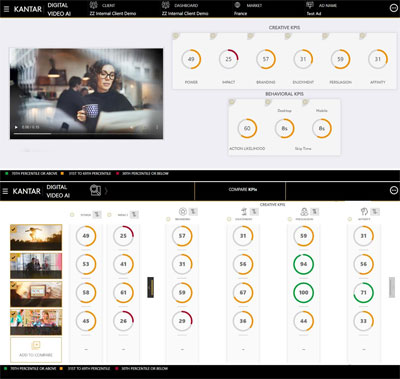
    Kantar, the data-driven analytics and brand solution company, has announced the global launch of Digital Video AI, a fully AI-powered tool that predicts the performance of digital video advertising. Building on the launch of Link AI for TV advertising in 2020, Digital Video AI is a creative measurement tool designed to evaluate online video ads against the behavioural and creative metrics that drive sales and build long-term brand equity.

     

    Unilever partnered with Kantar through the development of Digital Video AI and has tested hundreds of ads on the platform to improve their performance against their effectiveness and ROI goals.


    Said Neha Sharma, Global Brand Engagement Lead, Unilever:  “At Unilever we consider ourselves to be pioneers in pre-testing in the creative development process. Digital Video AI enabled us make quick decisions, pick from our best creatives, test video edits and even measure competitor campaigns with speed and at scale.”


    Added Dinesh Gopinath, Global Head of Product for Kantar’s Analytics practice. “Our research* shows that 49% of advertisers plan to increase the use of AI solutions to evaluate creative. Our goal is to transform the creative process, leveraging AI and other advanced technologies to maximise effectiveness.  We appreciate Unilever’s longstanding strategic partnership and participation in this innovation journey. Worth almost half a trillion dollars this year, digital ads will account for more than 60% of total ad spend**. Digital Video AI is a great new way to make smarter and faster decisions to optimise digital video’s contribution to marketing and business goals.”


  • Kantar Marketplace expands to Creative and Media effectiveness solutions

    By Our Staff


    Launched in 2020 in India, Kantar Marketplace, notes a communique, is a market research platform that empowers insights professionals, marketers and agencies to build meaningfully different brands with speed and agility. It is the only market research platform with solutions that have been independently validated to predict sales and brand growth.


    Said Soumya Mohanty, MD – Client & Quantitative, India, Insights Division at Kantar, “Marketing spends are shifting online and so is the need to get a better assessment of ROI and creative impact, beyond the standard engagement metrics. In this always on digital world where content is getting generated continuously, we need a holistic understanding of the interplay of story, context, placement, format and channel. Kantar offers a synergistic suite of Creative and Media solutions, now available on Kantar Marketplace, which gives you insights at speed but also with the precision that the Kantar frameworks offer.”


  • Kantar-Dialogue Factory’s rural post-Covid economy scan

    By Our Staff


    Kantar, the leading evidence-based insights and consulting company, along with GroupM’s rural and experiential marketing unit- Dialogue Factory have unveiled the second edition of the Rural Covid Barometer Report. The report explores rural India’s concern about the impact of the second wave and how it has altered consumer behaviour and purchase patterns.


    Key highlights:

    Rural India is highly concerned about Covid situation in second wave. Concerns are higher amongst females (91%) as compared to males (85%) and within the higher age bands (55+-year-olds). These concerns are mostly driven by Covid’s impact on day-to-day life and functioning (most for 25-55 year old’s), fear of falling sick and overall need for financial planning. As a result, rural consumption and shopping patterns have witnessed a major shift.


    While consumers are concerned, most are also positive about economic recovery once the situation normalises. Nearly 3 in 4 rural households have received some form of assistance via Government of India schemes, thus providing the much-needed financial cushion to consumers.


    Rural consumers are saving 25% of their income. Southern India (except for Tamil Nadu) is saving more in comparison to other parts of the country. As expected, expenses are higher on personal care, hygiene and cleaning products while spends on indulgence and beauty products have been deprioritized.


    With respect to retail channels, consumers prefer local village shops for purchasing groceries (56%), personal hygiene (49%) and cleaning (45%) products. Even big-ticket items like consumer electronics (50%) and durables (46%) are preferred to be bought at these local shops.


    Digital trends:

    There has been an internet revolution in rural India, with online being the most consumed media after television.


    With respect to online content consumption, music/ audio (69%) leads the pack followed by news (49%) and gaming (33%).


    Usage of video / OTT apps are driven by YouTube at 87% (most in Rajasthan, AP/ Telangana, TN and Bihar) followed by Disney+ Hotstar at 30% (highest usage in UP, TN, Gujarat, Kerala).


    WhatsApp and Facebook are the most used social media/ messenger platforms at 87% (most in Rajasthan, AP / Telangana, Karnataka) and 66% (most in Odisha, UP, Gujarat and West Bengal) usage respectively.


    Phone Pe is the most used digital payments app with 19% rural consumers having used these services in the last six months. Usage of Phone Pe is driven by Karnataka at 46% followed by Rajasthan at 38%.


    Foresighting:

    Growth in the consumer durables and automotive (2-wheeler) sectors are likely to slowdown in next 6 months. However, the smartphone category is expected to see fast growth in the near future.


    Construction sector is also expected to see a bounce-back with consumers expected to spend on building a house/ undertake smaller construction work in the next 6 months.


    Dalveer Singh
    Dalveer Singh

    Commenting on the report, Dalveer Singh, Head of Experiential Marketing- APAC, GroupM Dialogue Factory said: “The pandemic has evolved the rural consumer’s decision-making process. They are watching their spending and prioritizing their buying patterns by the need of the hour. There is a positive acceptance of the vaccination. The upper- and middle-class rural Indians are being more proactive in financial planning to deal with covid constraints, which make these markets a significant place to introduce investment and savings products. To sum up, there is a deep sense of uplift on the subject of India’s economic future.”


    Puneet Avasthi
    Puneet Avasthi

    Added Puneet Avasthi, Senior Executive Director, Insights Division, Kantar: “With a highly concerned rural consumer, rural India is planning finances better and inclined towards a savings mindset. This offers a significant headroom for growth to savings and investment products such as insurance and even mutual funds. Additionally, we are witnessing a significant rise in digital payments as an important mode of transaction, this offers a robust platform for rural financial inclusion, as also for suitable hyperlocal promotions. With the change in consumption priorities in favor of health and hygiene products (a trend that has held since the first wave), FMCG marketers should leverage this trend for planning their innovation pipeline.”


  • TikTok tops Ad Equity charts again, globally


    By Our Staff


    Kantar, the data, insights and consulting company, has released Media Reactions 2021, the second edition of its global ad equity ranking of media channels and media brands.


    Ad equity refers to the attitude’s consumers have towards the advertising experience within specific platforms and ad formats.  Despite the prominence of digital platforms in daily life, consumers continue to be more positive about offline ad platforms such as cinema, sponsored events, magazine ads and point of sale (POS). The popularity of podcast adverts has risen. Positioned at #11 in the overall Ad Equity ranking, they have overtaken influencer content as the preferred digital ad medium. Podcast ads are perceived as both better quality and more relevant compared to 2020, but also more repetitive, unsurprising given the increase in ad spend on the platform.


    Consumer Global ad equity ranking – all media channels Consumer Global ad equity ranking – online media channels
    1) Cinema ads (-) 1) Podcast ads (+1)
    2) Sponsored events (-) 2) Influencer content (-1)
    3) Magazine ads (-) 3) Ecommerce ads (new!)
    4) POS ads (new!) 4) Ads on TV streaming services (-1)
    5) Newspaper ads (-) 5) Social media story ads (-)


    Across branded digital platforms, TikTok remains top of the global Ad Equity rankings. Although only ranked as the #1 overall platform in one market – Taiwan, TikTok is the leading global digital platform in the important US market and is first or second ranked of the global digital platforms in 9 of the 22 markets where it was measured. The inclusion of commerce platforms in this year’s ranking illustrates their increasing importance across the digital advertising landscape. Amazon ranks second globally among consumers, topping the list in 4 markets. Together with regional ecommerce giant Mercado Libre, which leads in Argentina, Amazon’s success showcases why ecommerce has entered the online media channel ad equity rankings in third place.


    Global ad equity for media brands: 2021 Top 5 ranking among consumers

    1) TikTok (-)
    2) Amazon (new!)
    3) Instagram (-1)
    4) Google (-)
    5) Twitter (-)


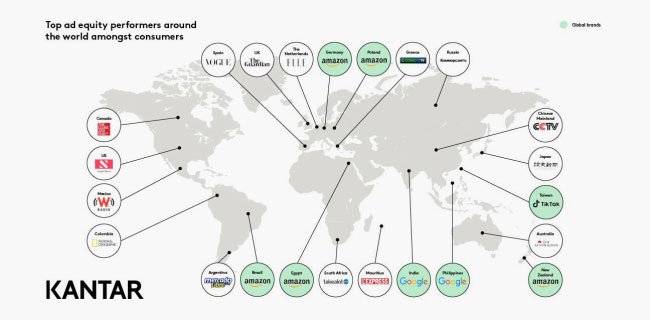
    Global vs Local: Media Reactions highlights the importance, and challenge, of market-specific media strategies. In 16 of the 23 markets surveyed the #1 ranked media brand was a local media brand or a localised version of global media brands. Ten of these 16 are news and magazine brands. This local success, together with differing attitudes to the ads on global digital media brands, makes balancing the benefits of scale of global media platforms with the promise of greater relevance from local media gems ever more important. (see image above)


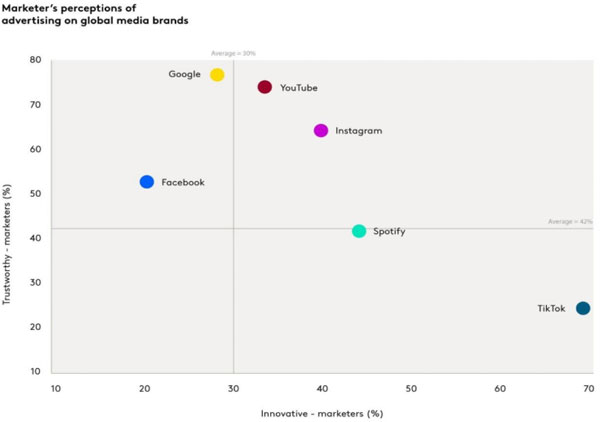
    The Innovator’s Dilemma: Media Reactions also highlights the challenge for brands in keeping their media mix reflective of the latest consumer media preferences as well as reflective of their own values and brand positioning. Marketers favour channels and platforms they believe provide both trustworthy and innovative advertising environments. Among the global brands, Instagram best manages this balancing act. YouTube, Google and Facebook are trusted platforms but are considered slightly less innovative.


    TikTok is not yet trusted by marketers as much as the more established platforms, but it has made enormous improvements in the past year. It remains comfortably the most innovative place for ads, and trust has doubled, so many more marketers are now positive about placing ads on the platform.


    Ad Spend Outlook: Media Reactions marketers’ survey provides insights into probable media growth areas for 2022. The vast majority of global marketers plan to increase spend on their favoured ad formats: online video, influencer content and social media ads. Many will reduce spend on print ads.  YouTube, Instagram and TikTok are the platforms set to benefit most.


    Discussing the findings Duncan Southgate, Global Brand Director, Media, Insights Division at Kantar, said: “The ad industry has been encouraged by the rapid recovery in 2021, as advertising has been used as one of the levers to fuel recovery in the wider economy. As we emerge into a new media landscape, brands need to understand which consumer and marketer attitudes have changed, and which have stayed the same. Which media brands have retained their appeal, and which have grown stronger? While the pandemic accelerated the growth of digital in every aspect of life, we have seen a robustness in consumers’ preference for offline advertising, and some strong local news brands in particular. Marketers need to ensure their strategies respect those preferences alongside the benefits of scale delivered by global digital platforms. TikTok has done an impressive job retaining its differentiated advertising proposition with consumers – even as its user base has almost doubled over the past year. We have also seen the re-emergence of retail as a critical ad platform, both online and physically. Advertising strategies that seamlessly align with omnichannel retail strategies provide a great opportunity for marketers to deliver more popular campaigns.”


    Added Sandeep Ranade, Head of Media- South Asia, Insights Division at Kantar: “Moving into 2022, we will see consumers adopting more and more digital channels and it will impact advertiser’s appetite for digital connection opportunities. Consumers do not differentiate between the way media is bought and hence it will no longer be offline vs online but a balance of reach vs receptivity and global vs local media partners to bridge the gap between what consumers prefer vs what advertisers perceive consumers prefer. We have also seen that Indian consumers generally have more pronounced views on advertising compared to the global audience”


    The full report can be found at www.kantar.com/campaigns/media-reactions.


  • Kantar debuts sustainability study in India

    By Our Staff

    Kantar, the data-driven analytics and brand consulting company, has released preliminary findings from a new study exploring what sustainability means to Indian consumers. Kantar’s Asia Sustainability Foundational Study interviewed nearly 10,000 consumers across nine countries in the region, including India, to understand their concerns and priorities.

    Key findings from the India Sustainability Foundational study include:

    • In India, a country faced with numerous socio-economic issues, resource scarcity and environmental challenges, the issues closest to home take precedence for consumers.

    • And despite these challenges as a developing nation, the concerns of Indian consumers go beyond their basic rights, as sustainability issues are interlinked with their daily lives.

    • The top 5 sustainability concerns of Indian consumers are:

    1. Water pollution

    2. Poverty and hunger

    3. Deforestation

    4. Lack of access to healthcare and vaccinations

    5. Air pollution

    • Consumers’ concerns vary depending on the category in question, so brands developing their sustainability strategy need to understand this in order to focus their efforts. For example, consumers expect food brands to avoid over packaging and to discourage wastage. To gain competitive advantage in this category, brands need a credible back story around the “farm to fork” journey of their products – and to demonstrate that they are taking steps to minimise the impacts of intensive farming such as over-use of pesticides.

    Around 48% of consumers in India are active and engaged on sustainability issues. This group is more conscious of the impact of their own choices. 77% say they are prepared to invest time and money in companies that try to do good. But intent is not always translating into action; 84% of consumers still prioritise saving money over saving the planet when it comes to their real-world actions.

    Though most Indians express willingness to spend time and money to support companies that do good, the Value-Action Gap is still significant, with consumers often failing to act on these good intentions. For example, 65% of consumers report that they throw recyclable waste in the trash or dustbin.

    Further, the study measures the three factors persistently undermining sustainable consumer behaviour:

    • Cost – at the time of purchase, 84% say they prioritise saving money over saving the planet.

    • Comfort – 76% say they do not have enough information to choose sustainable options.

    • Convenience – 72% say they tend to forget about sustainability in their busy day-to-day lives.

    The research additionally introduces Kantar’s Sustainability Framework which businesses can use to build a consumer-centric strategy for success. This leverages a ‘Sword and Shield’ approach to better understand how brands in different categories can responsibly navigate sustainability issues by identifying where to focus their attention, how to localise their brand purpose to address local consumer tensions, and how to innovate to overcome the Value-Action-Gap.

    Commenting on the findings, Paru Minocha, Head of Sustainable Transformation Practice, at Kantar’s India office  said: “India’s stage of growth and increasing consumer consciousness regarding sustainability gives it huge potential to create commercial value and address environmental and social issues. Consumers are looking for brands that have social and environmental purpose, so from a marketing standpoint, purpose is imperative, and sustainability will potentially drive consumer choice. Our research illustrates the importance of taking a local approach to sustainability issues. While a company purpose could be a global constant, translating that into action needs to take into consideration the tensions that exist in each market. For the first time, through this foundational study we are able to identify which sustainability issues consumers care about most and how that should translate to action depending on the consumer category. The immediate task ahead is to find levers to unlock this behaviour change.”

    Added Jonathan Hall, Managing Partner, Kantar Sustainable Transformation Practice: “Kantar’s Sustainability Foundational Study uniquely identifies the social and environmental issues that are relevant for consumers on a sector-by-sector basis in India and across the world. Brands have the opportunity to apply the lens of their purpose to understand where to play in the space and to create interventions that are meaningful for different consumer segments. In this way, brand can help people align their actions with their sustainable beliefs and close the Value-Action Gap.”

  • Comscore launches Plan Metrix Multi-Platform

    By Our Staff


    Comscore, the media measurement and analytics company, has announced the introduction of its Plan Metrix Multi-Platform product to the Indian market. This solution combines consumer’s desktop and mobile behaviour with detailed information about their lifestyles, interests, attitudes and demographics for a unified digital view.


    Said Puneet Avasthi, Director, Specialist Business, Insights Division at Kantar: “As audiences increasingly gravitate towards the digital medium, it has become imperative for brands to sharpen their online targeting, to reach the right audiences. Kantar’s New Indian Consumer Survey (NICS) offers an unmatched profiling of audience segments on demographic, lifestyle and product usage characteristics. Kantar and Comscore have come together to create a data fusion-based product which combines Kantar’s NICS and Comscore’s MMX Multi-Platform to provide a holistic and comprehensive view of digital audiences for sharper profiling and targeting.”


    Added Joris Goossens, EVP APAC and EMEA, at Comscore: “We are delighted to introduce Comscore Plan Metrix Multi-Platform in India, giving our clients more advanced audience segments that are better aligned with how digital media is analysed and planned today. Our global partnership with Kantar has already had a massive impact and now as we move forward in this key market, we are confident we will be able to enhance our client’s consumer targeting and digital media planning capabilities.”


  • Kantar unveils Creative Effectiveness Awards

    By Our Staff


    Kantar, the insights and consulting company, has unveiled the ads that were most effective and creative in India across 2020. At Kantar’s Creative Effectiveness Awards, consumers were the jury. The India report included over 150 ads tested across categories, markets, TGs and media channels which were potential contenders. Kantar tested more than 10,000 creatives for clients around the world. 1000+ of those creatives were tested in India alone.


    Across the television ads that were tested in India, Kantar called out the standout performers/ winners in four key categories.


    Commenting on this year’s winners, Soumya Mohanty, Managing Director- Client and Quantitative, Insights Division at Kantar said: “We are happy to extend this global property to India. The winners are from a diverse range of industries and products. Like our global report, in India too brands that have won have a penchant for achieving creative excellence and their brand promise is delivered through performance, consistently”.


  • 900m internet users by 2025!


    By Our Staff


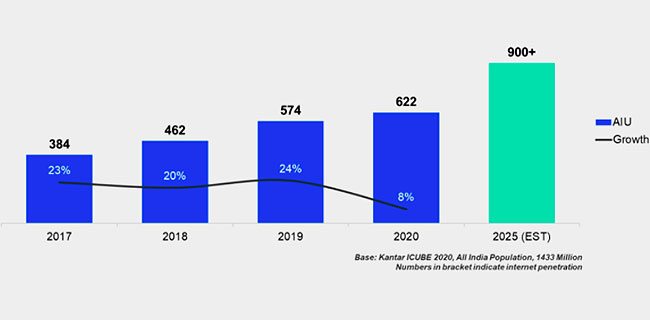
    According to IAMAI Kantar ICUBE 2020 Report, India is likely to have 900 million active Internet users by 2025 as against around 622 million as of 2020, registering a growth of about 45% in the next five years.


    The report suggests that even though the Internet penetration in urban is more than 2X that of rural, usership in rural has been growing at a faster rate on a year-on-year basis. While internet users grew by 4% in urban India — reaching 323 million users (67% of urban population) in 2020, digital adoption continues to be propelled by rural India – clocking a 13% growth to 299 million internet users (31% of rural population) over the past year.


    This indicates that there’s a lot of headroom for growth in rural India and this would help in bridging the urban-rural digital divide. However, the growth rate of AIU (those who have accessed internet in the last one month) has progressively reduced over the years and is the lowest in the last four years.


    It also finds that nine out of ten active internet users access the internet every day; On average, they spend around 107 minutes (1.8 hours) actively on the internet daily. Though the proportion of daily users is marginally higher in urban India as compared to rural India, AIU in urban India is spending 17% more time as compared to rural India.


    Said Biswapriya Bhattacharjee, Executive Vice President, Insights Division, Kantar: “By 2025, there would be a greater number of internet users in rural India than in urban India. Given this, the digital ecosystem will need to evolve to address the specific needs of this emerging demography. Vernacular, Voice and Video will emerge as the game changers for the digital ecosystem over the next few years.


    Small towns account for almost two out of five active internet users while the top 9 metros account to 33% of the active internet users in urban India. The report suggests, of 1433 million population in India, 622 million individuals are AIU and this translates to about 43% of the total population (across urban and rural India). However, with a sizable population not accessing the internet actively in rural India, there is huge headroom for growth in the next few years.


    Interestingly, the proportion of male to female AIU remains almost the same in rural and urban India. In urban India, the ratio between male to female Internet users is around 57:43 while in rural India, the ratio between male to female Internet users is 58:42.


    Mobile continues to remain the device of choice for accessing the internet in both urban and rural. Given the affordability of mobile devices along with the availability of cheaper data plans, accessing the Internet through a mobile device has clearly become the first choice, finds the report.


    Digital Services have assumed great importance for India with the government actively promoting a vision of $1 Tn digital economy. Also, Internet has become a lifeline to most of us amid the Covid-19 pandemic. Almost every decision achieves fruition with the able interference and assistance of the internet. Coronavirus has made us acutely realize the importance of the internet. The internet helped businesses tide through the tough lockdowns, individuals connected with each other, used the opportunity to learn and acquire new skills, and provided much-needed meaning and reason to carry on.


    The spread of the internet has been possible thanks to the joint efforts by the government (promoting e-governance, Digital India vision), telecom services providers (more affordable data packages, better connectivity), and Internet Service providers (popular services like digital entertainment and e-commerce, expanding content in Indian languages). IAMAI stated that the ongoing growth of internet penetration in India provides a critical platform for all stakeholders to harness the digital revolution. The pandemic has also fueled the growth. The association expressed optimism that the government’s policies, regulations, and industry’s support will further strengthen the digital footprint in India and ensure a robust digital economy in the country.


  • Whisper Media releases In-Content Advertising insights

    By Our Staff

    Whisper Media released insights on the effectiveness, efficiency and impact of In-Content Advertising (ICA) on TV audiences across GEC genres in India. The insights of this study on ICA were derived by Kantar. Whisper Media shared 2 years of historical, anonymized data based on their 100 campaigns across 15 brands.

    The research was undertaken across three broad parameters/metrics: Reach, Viewability and Recall. The Reach was measured by using BARC’s Yumi Analytics to ascertain number of users exposed to the campaign, GRPs and frequency, both pre and post campaign. The Viewability was gauged using Eye Tracking studies, which evaluated the attention and focus of the viewer on ICA placements and the time spent by them viewing the campaign. Finally, Recall is an outcome of all parameters to understand the enhanced attention on the content.

    Said Anil Cheriyedath, Director – Marketing and Strategy, Whisper Media: ”India is the largest content producer globally, and GECs remain the biggest drivers of this production where brands prefer to reach the target audience. Brand integrations have always been around in the entertainment industry, but with these studies, it shows the In-Content Advertising through digital embeds have also shown acceptance by brands and audience across all GEC markets which includes the regional and Hindi Speaking Markets. The challenge that integrations faced in India was the measurability aspect, and with that in place through BARC YUMI Tools, it has become easier to validate claims of showcasing effectiveness of ICA campaigns through such unique studies”