Tag: Google+

  • Amp up your Communication Strategy through Easter eggs

    The Google T-Rex game helps pass the time while waiting for the internet to come back


    By Bhuvi Gupta


    Bhuvi GuptaAs I sat this Sunday morning, weighed down by the news that India had breached the 90,000 mark of daily Covid case reportage, I turned to my favourite hack to calm myself down – turn off my Wi-Fi to stop the notifications engage my mind with the T-Rex game on Google Chrome. As I used my cursors to miss the obstacles, I realised that Google’s communication strategy has used so many of these Easter Eggs over the decades, and how they have kept the user engaged so well.


    Easter Egg is a funny name for communication strategy and refers to the treasure hunt for children organised during Easter, where children hunt for the colorful and decorated chocolate eggs, hidden around the house by their parents. The eggs often contain surprises inside their chocolate exterior, making the experience of finding them, even better. Like its eponym, in business terms an Easter egg refers to brand communication hidden within your user interface. Originally, used by coders, to add quirk to what they felt was boring lines of code, it is now colloquially used to refer to any covert brand communication and is designed to humour the user and add personality to the brand, when discovered.  Due to their covert nature, Easter Eggs inherently generate word-of-mouth, which aids even more discovery and virality.


    In a crowded market where users are estimated to be bombarded with more than a thousand ads a day, (this number is debated, some research claims its more than 5000) an Easter egg is a great way to be memorable. However, Easter eggs are most effective for brands that have an established and growing audience, as the discovery of the communication is purely organic. Hence, for companies and products in beta, even if the idea of communication with zero spends seems attractive, deploying Easter eggs should be delayed until the product has an established consumer base.


    The Google search page actually does a barrel roll, when you search for ‘Do a barrel roll’ on Google


    On the Internet, the possibilities are endless – while most online businesses have caught on to having creative 404-pages, there is so much more potential to make an impression. Both Google and Apple have used Easter eggs as a communication strategy –  Google has used the T-Rex game,  Google Doodles and customised search results to drive conversation and engagement since its inception. The customised search results for ‘Do a barrel roll’, ‘Google gravity’ etc., also keep getting a new life every few years, when they are discovered by a new set of users.

    Apple generated far more organic word of mouth when Apple users discovered Siri’s sassy responses, than the traditional PR and marketing they did for the Apple assistants’ launch.


    Easter Eggs have gotten relatively under-utilised in India. A missed opportunity as the Indian marketplace for internet-based consumer businesses is growing and building a loyal user base is crucial for each player. For instance, every e-commerce site has mega sales every quarter, which are promoted through multi-crore ATL campaigns. Planting some Easter eggs on the app & website during these times of high traffic is a great way to enhance user experience, generate word of mouth and differentiate from the competition. Another great application is using an Easter egg to stem the irritation during a negative experience like a broken link or a product in your basket, which gets sold out before purchase.


    Easter eggs are possible on every product with an interface – be it product (via its packaging) or even content ( show credits, the set). My personal favourites include the messages on the bottom of Paper Boat pack and the vanity cards written by producer-director Chuck Lorre at the end of every Big Bang Theory episode, both of which make you feel closer to the product.


    It’s 2020 and people are tired of challenges and trends which ‘go viral’ on the back of generous advertising budgets and often end up losing their core message (Black and White photo challenge, anyone?). Easter Eggs are memorable because their playfulness helps them to become conversation starters, gain word of mouth, discovery and trial. Marketers, I request you to have some fun with your brand, add the personality that is missing, and watch as the organic love flows.


    Bhuvi Gupta is a marketer with over 10 years across industries, of which the last six have been in Media & Entertainment. She has been a part of many launch marketing campaigns – specifically at the Times of India group, Republic TV and the latest in marketing a Bollywood film. She will write on A&M (mostly marketing, but often on advertising too) every other Tuesday. Her views here are personal. She tweets at @bhuvigupta3


  • The Big Bad World of Bought Likes & Trends


    By Bhuvi Gupta


    Bhuvi Gupta

    The business of news and entertainment is unique from other businesses as there is no underlying need for consumption and content is easily replaceable with similar alternatives. Hence, the entertainment industries have always relied heavily on glitz, gossip and glamour to garner consumption.


    This has taken many avatars through the decades. In the early 2000s, the Times Group innovated and changed the PR landscape when they launched Medianet, renamed as Optimal Media Solutions (OMS) since. It was very successful for the both the media and entertainment industries, because of the blurred lines between ads and news. The audience was oblivious as long as gossip and entertainment was delivered and hence many a film were boosted due to entirely manufactured gossip on link-ups and skirmishes on set. TV news followed soon after. NDTV was the front-runner of branded content in TV with shows like Earth Hour, Greenathon etc. Today, weekend programming across English news channel almost entirely comprises such branded shows.


    The digital equivalent of Medianet is the manufactured views, likes, followers and trends because the lines between the inorganic and organic are blurred. This is more dangerous than Medianet, because all social media platforms have Achilles’ heels which can be exploited to manufacture reach that is invisible even to the discerning viewer.


    All this changed when last month, the Mumbai police launched an investigation into the 75 Lakhs worth of YouTube views purchased by Aditya Singh Sisodia aka Baadshah for his 2019 single, ‘Pagal’. The song launch was a mega-affair with influencer marketing campaigns on Instagram and TikTok, YouTube advertising and other dubious means employed in an attempt to break records. Baadshah claimed that ‘Pagal’ was the fastest video to reach 75 million views on YouTube, which was promptly shot down by them due to inorganic means employed. This has subsequently lead to the ongoing criminal case filed by the Mumbai police and the investigation thereafter. The case has opened a can of worms, as newer unethical practices of the digital ecosystem of the entertainment industry began slowly getting exposed.


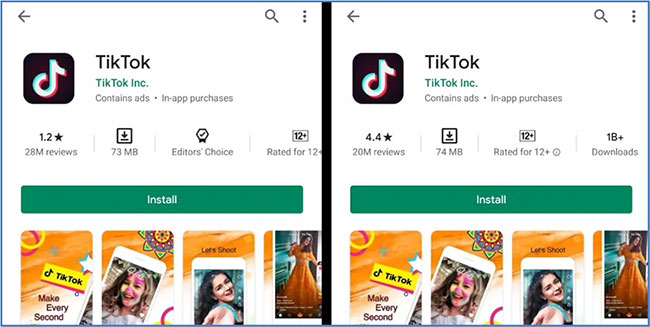
    To be honest, in 2020, Baadshah’s admission to buying views would not have come as a  shock to most of us. Even the undiscerning viewer sees enough chinks in the digital armour – screenshots of identical tweets from celebs (right down to grammatical errors) praising a government or a popular icon, TikTok’s Playstore ratings being brought down in a day and then restored are two of many examples. What is not common knowledge is the sheer mechanics and extent of what goes into digital influence manufacturing and the reasons behind it.


    In May 2020, TikTok’s app store ratings were restored after Google deleted 80 Lakh negative comments made in the span of a week in response to the Galwan Valley skirmish. The Chinese app has since been banned in India.


    Why do Indian Artists companies do this?

    Creating a buzz in the entertainment business is crucial to remain relevant. Social media metrics have come to define the salability of the artist for producers and distributors. It is a flawed ecosystem exploited by all the players. To elucidate –


    The problem with the Algorithm

    View counts on YouTube, don’t differentiate between paid and unpaid views or the viewership duration (a view is counted after only 30 seconds of consumption). Views are a key metric for YouTube’s algorithms, especially when it comes to search result rankings and recommendations, which help drive organic views and hence generate revenue. Hence, paying for views is a natural choice because they help recoup advertising investments through organic views, while adding the credibility that higher view counts get.


    Not only vanity metrics

    For films, OTT and satellite TV, rights are often sold after movie trailers are released and the view metrics of the trailer, contribute to the negotiating power of the producer. Likewise, in the music industry, licensing deals, terms of contracts, concert tours and appearances are often measured basis song popularity. Hence, paying for YouTube views is a natural investment that pays for itself many times over.


    The problem with the platforms

    It serves social media platforms to have higher view counts because, it drives up daily traffic on the platform, while generating ad revenue. This problem of fake news, fake views, and bots serves social media portals which rely on user metrics to help set ad rates. In the absence of stringent laws, while popular social media platforms do make the right noises about removing bots and fake profiles they have little incentive to actually follow through.


    It’s not a crime in India… not yet!

    Many countries across the world like Singapore, France and Germany, are enacting strict cyber laws that punish hate-speech, threats, and impersonations (under which fake followers lie) as criminal offences, liable to both imprisonment and fines. In the absence of such laws in India, manufacturing inorganic views becomes dishonest but not illegal. While the fake likes industry has been thriving for the last few years, the case against Badshah may just be a watershed moment in the creation of cyberlaws, which will bring more transparency in Indian cyber space.


    Till laws change, as a marketer, I leave you with my content checks to avoid being gamed. On YouTube, I check engagement (likes and comments as a percentage of views), for highly viewed content before investing the time to watch. If the number is low, it is safe to say that the views have been bought. And on Twitter, inorganically trended hashtags will have a majority of tweets with the same sentence structure and central thought – so a quick scan of tweets under a trending hashtag will help check ingenuity.


    Bhuvi Gupta is a marketer with over 10 years across industries, of which the last six have been in Media & Entertainment. She has been a part of many launch marketing campaigns – specifically at the Times of India group, Republic TV and the latest in marketing a Bollywood film. She will write on A&M (mostly marketing, but often on advertising too) every other Tuesday. Her views here are personal. She tweets at @bhuvigupta3


  • Udacity appoints Kenny Kim as CMO

    By A Correspondent


    Kenny Kim

    Udacity, the global online learning platform, trains the world’s workforce for the careers of the future, has announced that it has appointed Kenny Kim as its new Chief Marketing Officer. With nearly twenty years of experience in marketing, Kim joins the company from Google, where he served as the Global Head of Growth Marketing for Google Shopping.


    Said Gabriel Dalporto, CEO of Udacity: “Kenny is a strategic leader with a diverse marketing background. His experience helping build disruptive, category-defining companies into lasting brands comes at a perfect time for us. With Udacity’s business accelerating globally and expanding rapidly into the enterprise and government markets, we look forward to Kenny helping us become the market leader in upskilling the world’s workers in the careers of the future.”


    Added Kim: “Udacity’s commitment to providing business leaders, their employees, and also individuals with the skills they’ll need for the future is a powerful mission,”. “I’m eager to do my part to help Udacity transform online education by connecting its new programmes and existing solutions to their growing base of partners and learners.”


  • MxM Open Classroom: Digital Marketing


    Why MxM Open Classroom: Upskill yourself!, That’s what one is told so as to make the extended lockdown work for us. But while doing one of the hundreds of free or paid courses sounds easy, in realit,  it isn’t. And going through the tests and quizzes that are contained in them can be quite daunting. Starting this week, we start a series of ‘open classroom’ sessions. Each week, we will have a five-part series – Monday through Friday that will tackle an important area of the media marketing services domain. We kick off our series with a focus on Digital Marketing with Bhuvi Gupta, a marketing specialist who has


    The HOWs and WHYs of making trends

     

    By Bhuvi Gupta


    According to a FICCI EY report, the Indian Media and Entertainment (M&E) sector grew 9% to reach INR 1.8 trillion in 2019.


    The rapid spread of mobile access is helping the growth of the digital media industry. With a population of 1.3 billion, 688 million internet subscribers and nearly 400 million smartphone users, quantitatively, India already has high numbers but also has high potential for growth. This means that the digital media industry which grew 31% to reach INR 221 billion in 2019 will continue growing and industry experts expect it to grow at 23% CAGR to reach INR 414 billion by 2022. Digital advertising grew 24% to INR 192 billion and is expected to follow a similar growth trajectory. As digital penetration increases, more advertising budgets will get diverted to digital, especially because digital advertising is easier to measure and to finely tailor target audiences.


    The biggest challenge with digital is the evolving landscape – changing algorithms of popular platforms, newer applications of Augmented Reality, new platforms with niche demographics (like Helo, ShareChat, Likee, Bigo), and newer forms of advertising like influencer marketing to only name a few. This makes it difficult to allocate digital budgets effectively because the ‘how’ of being effective is constantly in flux.


    This series is in a sense a cheat sheet to understand digital advertising better and to ease navigating this evolving landscape. In each article, we will evaluate how to best create virality by leveraging popular digital platforms. Key focus platforms will be Instagram, TikTok and Facebook, chosen because of the reach, they garner.


    To kickoff the series we focus on the objective of many if not most campaigns – ‘Virality’. Making a campaign ‘viral’ is the holy grail by which campaigns are measured & many awards given, today.


    Marketers know that in spite of how topical and relevant the communication it is impossible to guarantee campaign virality because there are too many variables.  However, what is attainable is ensuring that a campaign ‘trends’.


    The key difference between a campaign ‘trending’ and it ‘going viral’ are in longevity and organic reach. While a trend may last for a short period of time, may be paid for and limited to a particular target audience, a campaign going viral implies that it has had the longevity of a few days, substantial word of mouth and a high recall value that has surpassed its initial targeting. Hence, while all viral campaigns, trend, not all trending campaigns go viral. With the right strategy it is possible to make a quality campaign trend, which may be the push it needs to achieve virality.


    A quality campaign is one, which while espousing product benefits, is topical and evokes a strong emotional response so that it is prompts the viewer to share it to enable word of mouth. An easy test to determine shareability is to ensure that the messaging is entertaining, inspiring or informative or a combination of the three.


    Here are Five ways to make a quality campaign ‘trend’–


    I. Choosing 1 or 2 focus platforms

    Today every social media platform has a key age and socio-economic demographic. Depending on the messaging, the brand, and campaign budgets focus platforms should be defined. It is wise not to focus on more than two, even if budgets permit. Successful campaigns will spillover organically to other platforms, anyhow.  For e.g. in 2019, Pepsi used TikTok as their primary platform for promoting their new brand anthem with the tagline ‘Har Ghoont mein Swag’. The campaign anthem was sung by 2019’s most popular Bollywood Punjabi singer, ‘Baadshah’ and the music video starred popular Bollywood youth icons & social media influencers, Tiger Shroff & Disha Patani. TikTok was was aligned to the brand’s mass & youth focused targeting. The campaign was a huge success, with 240+ million views and over 15,000 user-generated videos within 24 hours of its launch. The campaign also naturally spilled over to Instagram, where it received 20+ million views. The campaign remains one of TikTok’s most successful brand campaigns in India.


    II. Challenges

    A campaign which requires the consumer to engage will automatically have higher recall value & will also allow for the network effect which will help it to trend organically. The messaging of the campaign is key to how it can have a challenge component.


    Challenges are especially relevant for TikTok, and Instagram. Hashtag challenges form a key component of TikTok and challenges typically trend for a week. Hence, hosting challenges aligned to brand campaigns on TikTok can help a campaign achieve virality.  Currently, a Challenge trending on both TikTok & Instagram is the #PassTheBrushChallenge, where different women, pass a makeup brush to each other while showing before & after images of themselves wearing makeup. The challenge has not been initiated by any brand, but has gone viral with different kinds of iterations being produced, including a male version with a hairbrush!


    III. Hashtags –

    A hashtag, which can be the campaign tagline in entirety or a part of it is a key component of a trending campaign, as it is an easy identifier when the post gets shared, or mentioned. A hash tag is easy to understand, catchy, and related to the brand. It should ideally be not more than 3-4 words, have a verb, and either the brand name or a keyword from the catch phrase.


    Hashtags are vital for discovery on Twitter& TikTok, while they serve as identifiers on Instagram, Facebook & YouTube. Along with the key campaign hashtag, it is advisable to use other aligned & popular hashtags with which the content can be discovered.


    For e.g. in the Pepsi ‘Har Ghoont mein Swag’ campaign the key hashtag used was the same as the tagline, #HarGhoontMeinSwag along with #SwagStepChallenge. The campaign was followed up by a follow up campaign, with a new single called ‘Swag Se Solo’ sung by 2019’s breakout Bollywood singer, Tanishk Bagchi, released in February 2020. This campaign used the hashtag #SwagSeSolo and re-used the hashtag #SwagStepChallenge.


    IV. Influencer Marketing –


    Today, to break the clutter, it is crucial to invest a part of advertising budget on influencer marketing. Influencers enjoy loyal fanbases, and due to their relatibility, are often more trustworthy and credible than celebrities. Targeting influencers aligned to target audiences can help get exponential reach and engagement.


    However, influencers per platform need to be defined because each platform has different influencers in the same niche. A beauty influencer on TikTok may not  enjoy the same following on Instagram & YouTube, and hence can not be used for a campaign with Instagram as the primary social media platform.


    Influencer marketing works on all platforms, but is especially relevant on TikTok, Instagram and YouTube. It is especially effective for marketing new launches. Popular mobile phone brands often leverage influencer marketing while marketing their new launches – One Plus, gets influencers across industries to post videos highlighting the USP of the new launch. Google hosts parties with photo booths and gourmet food and, gifts influencers the latest ‘Pixel’ device. Photos of the party get shared on social media by all the attending influencers, thereby successfully creating a buzz.  One of the most successful examples of influencer marketing remains the selfie taken by Ellen DeGeneres at the2014 Oscar ceremony  (sponsored by Samsung) where Hollywood’s A listers posed for a selfie taken with a Samsung Galaxy Note 3. What remains ‘Note’-worthy is that the picture, which was shared, was not of the selfie but that of the stars taking the selfie so that the ‘Samsung’ logo was prominently displayed.


    V. Digital Advertising –

    For platforms such as Facebook, and now Instagram, which have attained maturity in their life cycle, the competition for organic reach is high. Hence, using advertising for discovery and amplification is necessary for virality. To enable speedier discovery it is advisable to use advertising on TikTok as well. Digital advertising used in conjunction with the above strategies, on the chosen platform (s) can effectively amplify the campaign. While it will definitely help a campaign to trend, it can often serve as a tipping point for creating virality.


    The gulf between a trend and virality is deep and often, a trending campaign that reaches relevant audiences is sufficient to earn ROI and achieve the brands marketing objectives. Virality is very often a vanity metric, which helps the brand create widespread awareness like traditional ATL marketing but may not aid in creating actual consumer intent.


    Bhuvi Gupta is a marketeer with over a decade of work experience, of which the last six have been in the media & entertainment industry. She has been a part of many launch marketing campaigns with experiences at the Times of India group, Republic TV and the latest in marketing a Bollywood film
     

  • Is Super Bowl the American version of IPL?


    By Prabhakar Mundkur


    The Super Bowl represents the most prestigious marketing event of the year. Which is why it draws so many specially made commercials and each has an aura around it.  Everyone is watching the Super Bowl so marketers almost think that they will be judged by the quality of their advertising.   It is also a great place for peer comparison, so how good the advertising is a matter of company prestige as well. It is also the day when the second largest food consumption happens in the US.

     

    Ticket prices normally hit the roof.  This year the cheapest ticket was priced at $4308 with the most expensive ticket going for $385,000.  And the most expensive 30 second commercial this year cost $ 5.6 million. In comparison a 30 second commercial cost Rs. 18 lakh on IPL.  While both are league games one has to remember that the Super Bowl is a one-day show, while the IPL lasts 6-7 weeks, so it is almost like a season.


    One difference I have noticed between the IPL and Super Bowl is that while the IPL is likely to have a lot of cricket stars in their advertising, the Super Bowl has a wide array of celebrities from TV, Hollywood and other sports, or in other words not just football stars.


    For example, take a look at the Amazon ad for this year’s Super Bowl starring Ellen DeGeneres and Portia de Rossi, where they wonder what the world might be before Alexa.


    https://www.youtube.com/watch?v=RF9t2rFmTVE


    The Google Ad for this year’s Super Bowl was quite a tear jerker.  I couldn’t help shedding a few tears for Loretta.


    https://www.youtube.com/watch?v=6xSxXiHwMrg


    Social psychologists refer to two kinds of reactions from sports fans. For those of you who might describe the Indian fans as fickle, the reactions of Indian fans are in line with the global experience.  BIRGing which stands ‘basking in reflected glory’ typically happens when the home team wins and people start feel better about themselves. They will often say “we won”, that’s how closely they identify with the home team.


    CORFing (or Cutting Off Reflected Failure) and BIRGing happens at the Super Bowl as well just like it happens at IPL.  This is evident when people use the third person and when Patriot fans say “They couldn’t stop Denver”.  Of course, because the Super Bowl is just a 4-hour game including the break and advertising, the effects of BIRGing and CORFing doesn’t last as long as say the IPL does which is a tournament that lasts 6-7 weeks.


    The Super Bowl boasted of a 48% female viewership and in 2019 had an audience of 98.2 million people. IPL has a male viewership skew 58-59% with females at 41-42% which is not so bad.How does the Super Bowl advertising compare with the IPL?  Many marketing experts I spoke to felt that the advertising on the IPL didn’t feel as special.  While many ads are created especially for the IPL, some are extensions of regular campaigns. Certainly, the ads have a lot of cricket celebrities.


    David Warschawski, CEO and Founder of Warschawski the integrated ad agency, said in a 2016 article in Adweek “America has a love affair with Super Bowl advertising.”  Would we say that we have a love affair with IPL advertising? I am not so sure, but maybe we are getting there. But we are in love with cricket and if the same passion was translated to its advertising, we might just push the bar a little up from where it is now.


    With the Star Re-imagine awards to reward creativity for ads aired in the IPL, advertisers might want to give the IPL a better shot.


  • 12 Super Bowl Ads You Must Watch


    By Sanjeev Kotnala


    If you are in Marketing and advertising, you would have watched all the Super Bowl ads by now. Every year around this time, the heat is on between brands to make an impression and get maximum instant reach for their messages. Some try being playful, some introduce new themes, and some try to provoke.


    In all, a total of more than 50 advertisements get released in the Super Bowl at an astronomical figure (by Indian standard) of $5.6 Mn per 30 seconds. Most brands must be finding it relevant and efficient, as some brands always have spots aired with the  Super bowl. The inventory is almost sold by November of the previous year.

    Brand, creative and media specialist mourn the absence of any such opportunity in India. Neither the pre-festival advertising in October nor the hyped-up IPL. And let us not talk of the opening episodes of any of the famed reality shows like KBC, KKK or Bigg Boss – none have the oomph, aah and wah of a Super Bowl.

    Not unexpected there is beer advertising as a category dominating the super Bowl commercial. And surprise, everyone investing what we would call a long story format to get their simple message across.

    When brands invest in an immediate reach build-up with an event that guarantees a massive number of eyeball, it is good to see them invest big. The super bowl spots maybe shorter version, but these extended versions show the intent.

    Like every Super Bowl event, many brands spots are just nice or templated around their style of storytelling. They made you smile and at the same time got the brand message across. All under one roof. You can watch all these spots at Adweek.

    ……………………………………

    So here are my 12 favourites brand spots. That’s a high percentage of likability from the commercials aired during the Super Bowl. They are rightly messaged, superbly crafted and executed.

    While watching the Super Bowl, the consumer mind aperture is open for entertainment and excitement. Hence, the ads that have a similar story presentation style that stimulates and engages are contextually better placed than others trying to present the message in a different way.  And one who use the context and the DNA of the event best, win.

    ……………………………………..


    MICROSOFT screened a lovely commercial. The protagonist Katie Sowers- first female super bowl coach, explaining that she wants not to be the best female coach but the best coach. People expect women to do certain things and do not expect to do many other things. However, the first in the filed opens the arena for others. That is like ENCOURAGED BETI ENCOURAGED FUTURE. An attitude we mostly miss in advertising. It is one of the best-crafted spots. It is my Favourite ad.


    https://youtu.be/_xPn4DXIj5w


    GOOGLE has this ad about how people lived before Alexa. It is contextually better placed in the event environment. It is humorous with some crazy situations to drive home a simple point of what Alexa can do.


    https://youtu.be/RF9t2rFmTVE


    GOOGLE has another emotionally powerful linking ad. It is very product dominant in all its visual impact and experience and hence my favourite Number II. ,


    https://youtu.be/6xSxXiHwMrg


    So, how can beer as a category be away from the super bowl?


    BUD LIGHT two spots, INSIDE BRAIN, are highly engaging and entertaining.


    https://youtu.be/wsnnU3fJTWg


    https://youtu.be/pj1meOmpezs


    Then there is BUDWEISER, identifying Typical American with their beer. And I am partial to beer advertising.


    https://youtu.be/yt-zXuAAD6Q


    MICHELOB ULTRA does it one better with its simple message, ‘it is only worth it if you enjoy it.’


    https://youtu.be/U7h6Vls-uO8


    MICHELOB ULTRA PURE GOLD makes a passionate appeal to pick 6 packs and see how it can change American farming. I literally love this very Patriotic beer ad.


    https://youtu.be/ANarZ_113Xc


    Another category that uses Super bowl best is cars. Here HUMMER ELECTRIC makes an impactful promise and delivers message quite soundlessly.


    HYUNDAI SONATA is not far behind in its impact with self-parking demonstration has an extra edge on conversation and experience. It is nothing new, but it engages because of the conversation and the way it clarifies self-parking at any place.


    https://youtu.be/85iRQdjCzj0


    But PORSCHE, Wins the category battle of commercial with THE GEIST. It is so captivating and smart. My favourite number, -3.


    https://youtu.be/FJNmHwBgV4M


    In FMCG, coke, Pepsi, Doritos, Mountain Dew, Cheetos, Sabra SodaStream and others were there. But there was not much excitement around them. They were what they were.


    HEINZ innovative ‘four in one’ commercial does stand out. However, it is a bit disorienting to see them simultaneously- but does that matter?


    There was this REESE’S TAKE 5 with ‘The best bar that you have never heard of’. Likeable but then you have seen Bars and chocolates in that territory so many times. For me, SNICKERS beat it hollow any day.


    https://youtu.be/SLAV4LYO-yU

    ……………………………………………………….


    And the last one for Milo Kotnala, the WEATHER TECH spot.


    ……………………………………………………….

    What say, will we see such hype with brands and IPL, I doubt, but one never knows. Why do you think, IPL will never reach this type of hype as a powerful window with such a hype?


  • Digitas CEO Amaresh Godbole to join Google

    By A Correspondent


    Amaresh Godbole

    Publicis Groupe has announced that Amaresh Godbole, CEO, Digitas India, will be stepping down in March, to join Google. Godbole has been with the company since 2009 and has been instrumental in scaling up the business in the country.


    Said Anupriya Acharya, CEO, Publicis Groupe South Asia: “Amaresh has been a Publicis Groupe loyalist for over a decade. He is moving on to an interesting profile and we’re all extremely happy and supportive of this next chapter in his career. We value his contributions and wish him the very best. He is with us for a couple of months, and is committed to helping us plan a smooth transition. We will announce the succession plan in due course.”


    Added Godbole: “I have nothing but gratitude for my years at Publicis Groupe and Digitas. I have had the opportunity to grow as a professional and as an individual. I doubt I would have ever considered moving out for a similar role elsewhere. I felt ready for this one because Digitas has a phenomenal leadership team in place and is now at a scale where it is self-sustaining. We’ve had our best ever performance last year. Further, with the Groupe’s “Power of One” strategy and Anupriya’s leadership I have no doubt about its continued success.”


  • K Madhavan to replace Sanjay Gupta as Country Head, Disney-Star India. Uday Shankar to also steer Hotstar

    By A Correspondent


    Veteran mediaperson and Managing Director (South) of Disney Star India K Madhavan has been appointed Country Head of Star and Disney India. Also, Uday Shankar, President, The Walt Disney Company APAC and Chairman, Star and Disney India will directly oversee Hotstar. Madhavan  will take charge from January 1. As is known, Sanjay Gupta, Country Manager of Star and Disney India has resigned from the leading broadcaster and is joining Google as Country Manager for India.


    Madhavan who is part of the Star India fold since 2008 oversees the business ventures of Star in the five southern states and a portfolio of regional channels in Malayalam, Kannada, Tamil and Telugu.


  • WARC’s global trend sheds focus on search advertising

    By A Correspondent


    WARC has found that investment in search advertising will rise 9.6 per cent this year, to $135.9bn – equal to 22.0 per cent of all advertising spend worldwide. But this growth rate is the softest since 2015 and is a marked slowdown from the 16.9 per cent rise in 2018. Search’s share of internet advertising has now flatlined at 45.8 per cent – the lowest in more than a decade.


    The squeeze on Google’s main source of revenue has forced it to confront Amazon head on in the smart speaker market, as it looks to facilitate voice search in future paths to purchase. But Amazon has a first-mover advantage in many markets, notably the US, UK and Japan. Control of voice search could be critical to either’s success in future; most marketers understand its potential in the coming years but few have plans to use voice search today.


    Mobile is driving growth in the search market

    Mobile search adspend is expected to rise 19.2per cent to $88.1bn this year – almost two-thirds (64.8per cent) of total search spend worldwide. The US alone accounts for 43.0per cent of this total (US$38.1bn in 2019), while a fifth (21.8per cent, or $19.3bn) is transacted in China. Japan ($6.1bn, a 6.9per cent share) and the UK ($5.3bn, 6.0per cent) follow.

    Google accounts for 95.4per cent of all mobile searches worldwide, higher than its share of desktop search traffic (88.6per cent). Google’s share of mobile search traffic in the US (94.4per cent) and UK (97.9per cent) is close to its global rate but in China its share is near zero, with Baidu the incumbent on 79.9per cent.

    Mobile’s share of search advertising investment is rising ahead of mobile’s share of search traffic, which has plateaued globally since 2017 as consumers spend more time in app (over 80per cent of mobile usage is in-app, according to comScore).

    Research by Mindshare shows that Instagram is used by 69per cent of consumers to discover products, ahead of Snap at 64per cent and Facebook at 61per cent. Google is used most to research, with 70per cent of consumers utilising the platform in this way (versus 51per cent for second-highest Pinterest). Crucially, however, Amazon is used most to buy; 78per cent of Amazon users report this, compared to 40per cent using Google for the same purpose.

    One in three (32per cent) online purchases in the UK begins on Amazon, rising to 52per cent for entertainment products, 50per cent for children’s products, 47per cent for household items and 40per cent for electronics. Comparatively, one in five (19per cent) online purchases begins with a search engine, such as Google.

    Amazon made $35bn from e-commerce in Q3 2019, up by a fifth from the previous year and putting it on course to reach close to $150bn in sales for 2019 as a whole. Over one in ten (11per cent) product page views come from sponsored ads, according to data from Jumpshot.


    Voice is becoming a new search battleground

    Voice is an area of growth for search advertising, aided by the rising popularity of smart speakers – an area where competition between Google and Amazon is fierce. More than one in ten internet users in the US and UK now own a smart speaker. Amazon enjoys a healthy lead over Google in a number of key markets, including the US, where three-quarters of smart speaker owners use Alexa. In the UK, that share is 77per cent.

    The ‘first-mover’ advantage is crucial here, however. Google was first to launch in Australia and enjoys a comfortable lead over Amazon (86per cent penetration versus Amazon’s 15per cent), and the same is true in Singapore (76per cent versus 24per cent). This may not bode well for Facebook, which is developing an AI assistant for its Portal devices and is playing catch up to win market share in this area.

    For all the potential, voice search remains a niche pursuit for advertisers today: only one in ten US practitioners plans to include it within their marketing strategy for 2020. A quarter (25.2per cent) believe it will be an ‘extremely’ important marketing channel within the next three to five years, but half (48.9per cent) have no plans to utilise the tech in the short-term.

    Said James McDonald, Managing Editor, WARC Data, and author of the research: “Search has boomed over the last decade as practitioners have put a greater emphasis on performance-related advertising to lift ROI – few marketing strategies exclude a search element today. WARC research shows that practitioners regard it as the easiest channel to measure accurately, and it is more cost effective in driving conversions when compared to online display formats such as video. But the industry is beginning to question whether this focus has been beneficial in the long run, with a number of large, consumer-facing businesses considering a pivot back to more conventional brand building formats. This could explain, in part, the slowdown in search investment this year, a cooling which will reignite Google’s drive to control the next frontier: voice-assisted search.”


  • HDFC Life collaborates with Google to maximise campaign results

    By A Correspondent


    HDFC Life has announced a tie-up with Google to restructure HDFC Life’s campaigns thereby making them run better with automation. HDFC Life said that this effort has worked well and generated positive results.


    Through this collaboration, HDFC Life, along with its agency partner, iProspect, has been able to leverage machine learning built into Google Ads to target potential customers with relevant ads through fewer search marketing campaigns and targeting groups.


    Speaking about the collaboration, Vishal Subharwal, EVP e-commerce and Digital Marketing, HDFC Life, said: “Technology is the way ahead for life insurance. We have a very clear focus when it comes to reaching out to consumers. We have always believed that our investments in technology will yield results. Keeping this in mind, we have collaborated with industry leaders who have enabled us to achieve our goals. This joint engagement with Google and iProspect has yielded superior results in terms of increase in ROI and decrease the lead costs. This is in line with our continuous endeavour to enhance our reach and offer financial security to more individuals.”


    Speaking about the effort, Vikas Agnihotri, Country Director, Google India, said “With the evolution of technology, brands today are able to optimise their campaigns and get better results and higher return on investments through machine learning. Working closely with HDFC Life Insurance and their agency, our teams were able to simplify the Search Marketing campaigns using automation. Thanks to automation the volume of target groups (i.e. ad groups) reduced by 500X and the teams are now focusing their time on creative experimentation and building further on this success.”

  • Jaldi 5 with Sapangeet Rajwant, Viacom18: It’s the role of marketing to create awareness & interest for content

    Most general entertainment channels are known to not leave any stone unturned in their marketing arsenal for their big shows. Earlier this week, Colors launched ‘Ram Siya Ke Luv Kush’, a narration of the Ramayana through the lens of Lord Ram’s sons Luv and Kush. On-ground activations included a hologram-equipped moving temple across the Hindi-speaking markets, a Twitter Setu campaign, partnerships with Google and UC Browser and a Luv Kush Ram Dham Yatra travelogue. MxMIndia engaged Sapangeet Rajwant, Head, Marketing and Digital – Hindi Mass Entertainment, Viacom18 in a Q&A on the Ram Siya Ke Luv Kush marketing initiatives. Read on…
     

    1. While every new show is accompanied by some high voltage promotions, it appears that with ‘Ram Siye Ke Luv Kush’, Colors is leaving no stone unturned. Why such a huge blitz?

    Luv Kush is a magnum opus for us. It is a show that has been made at scale and we wanted to position it commensurately. Keeping in line with the scale of the show, the marketing has been aggressive to reach the last mile of audiences. The campaign has been designed keeping three objectives in mind – build reach, create impact and drive conversations and buzz. We have used a mix of both traditional and digital media to reach our target audience. This show will cater to audiences across all age groups and segments. Hence the need to go all out and build great opening for the show.


    2. It’s interesting that your digital offensive for RSKLK is significant with your tie-up with Google, a Twitter Setu. Given that a bulk of the viewers for a show like this are slightly older women and men, why go digital?

    Ramayan is a story about family and family relationships. It’s an epic that teaches us life lessons. It’s a story that the entire family watches and it has something there for every family member to learn from. We believe that the show caters to each and every age group across segments and gender. Today, whether it is metros or small towns, with the spread of the internet, all users across segments are present on digital. If you look at the profiling of audiences on digital, you will see that it is present across Sec A, B and C as well. Additionally, apart from Twitter, we have extensively used Facebook and Instagram to promote the show. And there is a huge chunk of GEC audiences that uses these platforms.


    3. What has been the response to the onground promotions that you have undertaken – especially the mobile structures employing hologram technology?

    The response to our Bhakti ki Yatra has been overwhelming. The idea of the entire on-ground activation was to give people an experience of the story of Ramayan using technology – essentially marry new-age technique to experience an ages-old story. We have seen across towns people flocking our Yatra to experience the holy engagement. India is a very religious country and we actually saw people coming out and paying their respect to the structure that carried the story of Ramayan.


    4. Since all of the marketing activities require big budgets – even though some of them are being done in sync with other tech platforms, how do you assess the efficacy of the promotions, especially since in the final analysis it’s the show content that is most critical?

    They say that content is king and we totally believe so. But it is the role of marketing to create awareness and generate  interest for the content. Like they say, jo dikhta hai woh bikta hai. The role of marketing is to create sampling for the show and garner reach. In the broadcasting space, the only metrics that measure our ROI is the reach numbers that we get for the show opening.  Apart from the reach, marketing also builds brand equity and increases top-of-mind awareness for the brand. Through marketing, we build engagement and affinity with audiences which goes a long way into building loyalists


    5. What next coming up from the Colors stable? The next season of Bigg Boss coming up soon?

    There is an action-packed quarter for us ahead. We have lined up quite a few shows including Bigg Boss going forward, which we will announce shortly.


  • Future Shock or Fixed?


    By Sanjeev Kotnala


    Sanjeev Kotnala

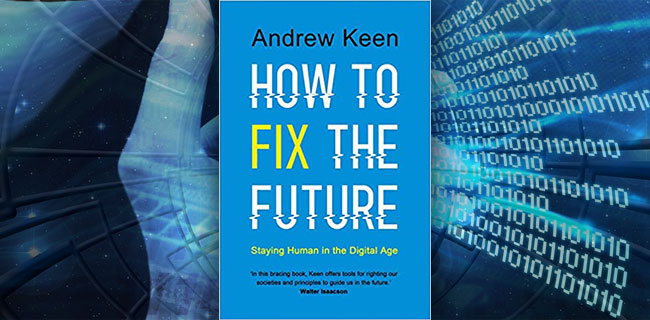
    I knew all along, there was something drastically wrong with the way the future is unveiling itself. I was on the lookout for a debate on ‘How to fix the future’. Andrew Keen’s session at the IAA World Congress held at Kochi, India in February this year probably opened new spaces for the discussion.

    We are under constant surveillance. Our behaviour is slowly being nudged towards what the dominant biggies Google, Amazon, Facebook of the business want. It is the new era of ‘Winner-takes-it-all’ business that is creating polarisation of wealth rather than distributing it.

    We are ignorantly working towards bettering their algorithms. We believe we are getting all this free. Not realising there is nothing free.

    The internet is a boon, but may be the price we are paying for its services outweigh the benefits.  Internet is the new morphine. Like many of us, I feel trapped in the system. I am addicted to it. I am unable to withdraw or detox.

    After having read ‘Internet is not the only thing’ by Andrew Keen, and having an equally polarised view of the internet, it was logical for me to pick his next book ‘How to Fix The Future: Staying Human in the Digital Age’.

    And if this is the trailer, what profound changes Artificial and Alternate Intelligence can unleash on mankind, unless we pre-plan to control the damage. History is witness to the fact that we are blinded by our vision of advantages and rarely humans have thought of the future repercussion while it adopted a new regime of services and products.

    Talking of the influence of internet-based services and addiction, I find it amusing and true. A potential threat humans failed to appreciate at the initial stage. “In the 1960s, we swam through the waters with only a few hooks: cigarettes, alcohol and drugs that were expensive and generally inaccessible… “In the 2010s, those same water are littered with hooks. There’s the Facebook hook, Instagram hook. The porn hook. The email hook. The online shopping hook. And so on. The list is long –far longer than it’s ever been in human history, and we’re only just learning the power of these hooks.”

    On the other side, humankind has always been smart enough to get out of the damage path by intense social pressure, tweaking of the technology and bringing new guidelines and reforms to control the damage.  Half of us would believe that we would once again succeed in doing so with the Internet and AI.

    In his book, Keen makes a very pertinent point: ‘The computer is the “Brain Outside ourselves” our “Second Brain”. From an evolutionary point of view, there we have taken an exponential leap. The new brain has outpaced our heart, our morality and beliefs. We are so preoccupied looking down at the second brains, that we forget how to look smartly at ourselves. As these devices get faster and faster, we appear to be standing still, as they produce more and more data about us, we are getting any more intelligent: as the devices become more powerful, we might lose control of our own lives. Instead of the singularity, we actually be on the brink of antithesis- let’s call it the “duality” –  an ever-deepening chasm between humans and smart machines and also between tech companies and the rest of humanity.

    He adds what I call a real possibility:  ‘In the future, we may no longer be in charge of our own creation… Our technology might be developing a mind of its own, thereby excluding and disempowering, and enslaving us. The existential threat of self-conscious algorithms is very real. They might be our final invention.’

    May be the answer lies in genuinely finding ‘What the Humans are good at’ and will always be a wee bit better than the machines. The current answer is ‘Nothing’. And we in our quest of making machines equally smart and emotive with a better power to process and take decisions are clearly on the path to wipe out any difference. I have my doubts. I am part of the small subset that believes; we are on the way to hastening the end of mankind. And one of the reasons I like reading Andrew Keen.

    Most of us are intellectually challenged to understand the enormity of the technology revolution, the amplified inequalities, the creation of parallel power centres feeding on our data and the race to harnessing Alternate intelligence.

    No doubt, Keen is open and transparent in stating: ‘This is a maybe book, based on the belief that the digital revolution can, like the industrial revolution, be mostly successfully tamed, managed and reformed. It hopes that the best feature of this transformation – increased innovation, transparency, creativity, even a dose of healthy disruption – might make the world a better place.”

    The book title ‘How to fix the future’ is misleading. There are no solutions. There can’t be.

    Keen presents a strong argument in favour of his belief that “No, not even the smartest technology can solve technological problems. Only people can”. I agree with him as he shares a few example and stories of how people are solving the thorniest problem in the digital age.

    Though there are directional paths from education to governance, to fixing it well in time. The example quoted in the book of Governance in Estonia and the always-on technology for betterment in Singapore shows some promise. The concept of ‘Universal Basic Income’, paid to everyone for ‘Not Doing Anything’ is also explored but be warned that can never be the solution. The only good part is that Andrew Keen is raising the issue. He at least presents a possible solution around competitive innovation, government regulation, consumer choice, social responsibility by business leaders, and education. It is up for healthy discussion.

    What I disliked was the constant reference to the 1516 work of Thomas More’s Utopia. It comes across as a framework of an idealistic world-inspiring Keen. But that is hardly the way life is expected to turn. Though it was interesting to note that if seen from a perspective More’s Utopia Map resembles a skull. May be there is a cryptic message in the map design that we are missing.

    Go read this interesting book that may sound fiction to many followers and admirers of internet-led ease in life.