Tag: Google+

  • Guardian Media partners with Mediaguru

    By A Correspondent


    The Guardian, London has entered into a partnership with MediaGuru and is to hold one of its 2012 Activate Summits in India for the first time.

     
    The Guardian Activate events bring together many of the world’s brightest and most influential figures to debate how technology is driving positive social change on a global scale. The first Activate event took place in London in 2009 and the event expanded into the US market last year with the first Activate New York taking place in April 2011.


    Previous speakers have included Google executive chairman Eric Schmidt, LinkedIn founder Reid Hoffman, Arianna Huffington, editor-in-chief of The Huffington Post, Craig’sList founder Craig Newmark and NYU professor Clay Shirky.


    The 2012 Guardian Activate summit in India is currently planned to take place in October in Delhi, and will be organised in partnership with MediaGuru, the media consulting, technology and entertainment company which has a presence in London, Singapore and all across India.


    The Guardian-MediaGuru partnership will see the Activate brand expanding into other territories, including Malaysia, Hong Kong and Singapore. It will also see an ambitious expansion of the Activate digital platform on guardian.co.uk, which will become an online content and networking hub for professionals working with technology to drive global change.
    Announcing the expansion, Alan Rusbridger said: “Technology is bringing the world closer together and at the Guardian we’re committed to encouraging debate between diverse, global audiences in line with our open and digital-first strategies. We’re thrilled to be bringing the Guardian Activate summit to new countries where technology is having a real impact, and look forward to joining and facilitating more fascinating conversations about the influence of web technologies in person, as well as online.”


    Sanjay Salil, Managing Director, MediaGuru, said: “By 2020, it is predicted that India will have 600 million internet users, making it the biggest open internet access market in the world. MediaGuru is proud to be bringing the Guardian Activate platform to India, where a gathering of technology, media, and social innovation leaders can help shape India’s technology and new media agenda.”


  • [MJR] Mamata’s antics dominate the news

    By Ranjona Banerji


    The strange doings of West Bengal chief minister Mamata Banerjee continued to dominate print, TV and social media. The arrest of a Jadavpur university professor for forwarding a cartoon about her was compounded by news of another arrest of another professor for protesting on behalf of slum-dwellers in Kolkata. On Times Now, one lone “sort of” Trinamool Congress-Mamata Banerjee supporter said yes, but, maybe, should not, but. In print, edits and edit page pieces have consistently made fun of her and social media has of course been rife with criticism.


    It is also true that a lot of this anger is middle class rage which does not always translate but it is interesting nonetheless.


    Mumbai newspapers were not unnaturally taken up with Monday’s autorickshaw strike which crippled the suburbs. In the north, it was the chief ministers’ conference on matters of “federalism” and their general beefs with the Centre. Beef is the wrong – or is it right? – word to use here as a “beef-eating festival” organised by Dalit students at the university in Hyderabad has led to near-riot conditions with the right wing Akhil Bharatiya Vidhyarthi Parishad objecting.


    The Taliban attack on Afghanistan was an important part of the news cycle. The last couple of weeks have been minus the sort of media hysteria which has gripped us recently. This means that news can get its normal play without being whipped up and re-packaged as end-of-the-world scenarios.


    * * *


    The murky underbelly of fixers and operators which trawl the paths of Mumbai’s hopeful newbies searching for money, fame and glamour has been exposed by the three murders currently in the newspapers. Intriguingly, the same people are somehow involved in three deaths or connected at any rate.


    Although the cases have got much coverage, thankfully the sort of breathless hysteria which has coloured cases like the Aarushi Talwar-Hemraj murders or the J Dey murder-Jigna Vora arrest has been missing here.


    * * *


    It was a joy to read about Nari Contractor by Makaran Waingankar in Tuesday’s Times of India in what appears to be a nostalgia series called “Bombay Boys”. Made a change from the sniping and/or hagiography about current players practised by some young sports journalists these days!


    * * *


    Also interesting in TOI is an interview with Google co-founder Sergey Brin about how apps are reducing web freedom! Since I am app-less am guessing I should celebrate my freedom!


  • Digital is the way to go, but…


    By Robin Thomas


    Consumers in India are evolving rapidly from print and radio to television and now digital. Just when you thought that digital was all about display advertising, bulk SMS, search, email advertising and online classifieds, in came the social media, video advertising, smart phones, tablets, apps, mobile advertising and so on.


    According to industry estimates there are 120 million internet users in India today, of which almost 30 per cent are from small towns. While India’s broadband internet penetration is still low, it is believed that the next phase of growth in internet will come from mobile users which are estimated to be over 800 million.


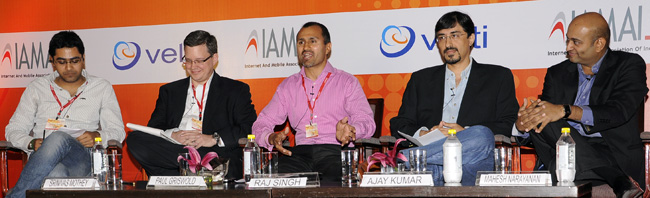
    As more and more youngsters gain access to various digital platforms, there is a greater need for marketers to not only engage the young consumers, but they must also be able to give them a unique experience across the digital platforms. The IAMAI (Internet And Mobile Association of India), which held its 8th Marketing Conclave, 2012 – ‘Digital Marketing 3.0’ on April 13 in Mumbai, extensively discussed the role of social media, video advertising and mobile advertising in the near future.


    Using Social Media:

    Today most companies have multiple social networking sites – Facebook, Twiter, LinkedIn and others. There are separate teams handling social media marketing for the company, but, are brands listening to their consumers? Do they interact and respond to queries and complaints? Do marketers understand the social media and know how to monetize it? Or are brands simply satisfied with the number of ‘Likes’ and views they generate on their social networking sites?


    Karthik Nagarajan, National Director, Social and Insights, Group M was of the view that unless one is not ready and mature enough as an organisation for the medium, the organization must stay away from social media.


    According to Usha Sangwan, Executive Director, LIC India, what brands lack today is the courage to be transparent, they don’t respond to negative feedback and fail to turn the customer as an advocate of their product. “Brands must not see social media as a mere marketing tool and limit to generating numbers alone, but social media must be used mainly for connecting with the TG and co-creating the product. Brands must try and understand their TG and become a part of their customer’s day to day life.”


    Virginia Sharma, Chief Marketing Officer, IBM India hit the nail on the head by stating that brands must have the ability to admit their mistake and apologise to the customer. She admitted that while there is a certain amount of fear among brands to apologise for a mistake committed because it may lead to negative public opinion, but felt it is always better to apologise and rectify the mistake which could lead customers to becoming an advocate of the brand.


    Vinay Bhatia, Customer Care Associate and Vice President Marketing and Loyalty, Shoppers Stop added that it a company’s reputation is harmed only when it fails to act responsibly to a complaint made, and not when it apologises for a mistake and tries to rectify it. “The problem with the companies today is that they make policies as if the consumer is a criminal. Accepting a feedback and acting upon it will not harm the brand but, if one chooses to remain silent about a complaint, that’s the worst one can do to his brand.”


    Leveraging Mobile Advertising:

    Besides the social media, mobile advertising is another challenge faced by marketers who have more or less failed to leverage the small screen. Sadly, mobile advertising is largely limited to only SMSes. Marketers are said to often mistake mobile as an extension of broadband internet and as a result they fail to give their consumers a unique experience on mobile.


    Speaking from a marketer’s point of view, Ajay Kakar, CMO, Financial Services, Aditya Birla Group stated that although the potential for mobile advertising is high, there is still a section of people who have not seen the mobile as an opportunity. He added that mobile industry must follow the ‘Jo dikhta hain, wahi bikhta hain’ policy and evangalise the benefits of mobile advertising. “Content is very important, don’t tells me about your brand, but tell me what’s in it for me? Give me the case study of successful mobile advertising. What I want to know is how much money mobile advertising is making for my brand and for my business? What you must do is to stop saying ‘buy me, buy me’ but, instead tell me ‘why me, why me’?”


    With the introduction of 3G and now 4G services, mobile internet is expected to be faster and with high quality content, better mobile applications, much better video and much more. In addition to these, smart phones and tablets are also said to play important roles in the growth of mobile internet in India.


    Mahesh Narayanan, Country Head-Mobile, GoogleIndiasaid that there is not only lack of understanding about mobile advertising, but also lack of discussion about mobile as a medium in board room meetings. “The consumer shift is already happening from traditional media to mobile; however, great amount of content for mobile is yet to be created. People are looking for your brand on their mobile phones but, ironically brands are absent on mobile.”


    While mobile subscribers will continue to grow and more people will access internet through their mobile phones, the challenge lies in monetizing the medium and to find newer ways to reach out to consumers besides SMS advertising.


    Paul Griswold, Director Product Management, Mobile Marketing, Velti was of the view that mobile is not treated as an integrated part of marketing strategy, but is seen as an extension to online. “There has been a failure to take the advantage of the one on one interactivity mobile offers and just sending SMS is definitely not the way.”


    The participants outlined not only the problems but also possible solutions. According to Srinivas Mothey, Head Mobile Marketing and Advertising, One97, the first step is to educate advertisers and agencies about the benefits of mobile advertising. Although every advertiser may have a different view about the medium, nevertheless they need to be encouraged to invest in mobile. “We are also encouraging advertisers to create mobile assets and not just mobile apps. We are beginning to see the positive results but, in order to see more results, it may take some more, but the first step needs to be taken.”


    Video Marketing:

    Video advertising/ marketing is not a new phenomenon for marketers. Traditionally, marketers are said to be comfortable with video and we have been seeing that on television, and will probably see the same, and in a much bigger way, online and on mobile in the near future.


    According to Debadutta Upadhyaya, Vice President, Vdopia Media, there has been over 50 per cent growth in video consumption in the last one year alone, the fourth largest globally. “Unlike other countries,Indiahas made the leap from web to email to social media and now video. There is still a long way to go on the creative aspect because the primary advertising medium of a creative agency has always been television, so creativity in video advertising is bound to take some time.”


    As India’s broadband penetration and mobile internet accessibility increases, it would be just a matter of time when video marketing would explode inIndia. Besides online, with 3G and 4G services, video consumption on mobile should be an altogether different experience for users and marketers.


    But Shubhranshu Singh, Marketing Director-IndiaandSouth Asia, Visa cautioned: “There is a difference between video on web and video on mobile, and the difference between the two is galloping ahead in terms of content. Perhaps the youngest audience in our country today will watch television online for the first time which could be an opportunity or a threat if we are not ready for it.”


    Digital marketing in itself has become 360 degree for marketers. It has gone beyond display and banner advertising, to becoming more interactive and innovative to reach out to consumers. Digital marketing, as the industry players pointed out, is in a transition phase from web, to email and now brands are trying to reach out to their customers through social media, mobile and video.


    Marketers must stop considering mobile internet as an extension to online and, therefore, give mobile users unique experience of mobile advertising. Social media must not be seen as a mere marketing but, a medium to interact with their consumers, know their behavior and be a part of their day to day life.


    Brands must be receptive to both positive and negative feedback of customers, admit to their mistakes, apologise to the customer and rectify the fault. Digital marketing will undoubtedly grow but, marketers must first be evangalised not only about the benefits of the medium but, also ways and means to leverage it.

    Imaging: Rafiq


  • Raj Kundra & Sanjay Dutt partner with YouTube for Super Fight League

    By A Correspondent


    This summer India will witness a sport it has never been acquainted with. Raj Kundra and Sanjay Dutt, through their company Super Fight Promotions Pvt. Ltd., have launched India’s first professionally organized Mixed Martial Arts (MMA) fighting league, Super Fight League (SFL). Super Fight League has tied up with YouTube to live stream the event on a dedicated SFL channel on YouTube at www.youtube.com/SFL.


    The SFL-Google partnership will add a new dimension to MMA event providing on-demand access to millions of MMA enthusiasts across the globe. Now fans from Mumbai to Melbourne will be able to join the action from all the fight night events of SFL and share their experiences on YouTube.


    The fans can also enjoy special content like fighters’ interviews, fight night highlights, knockout of the night, submission of the night, Bollywood acts, performances by international performers and much more at their convenience.


    Under the terms of the tie-up, Google will have exclusive online and mobile rights for SFL content for three years, and, both, Google and SFL will jointly share revenues from sponsorships and advertising on www.youtube.com/SFL.


    Raj Kundra, Founder Chairman, Super Fight League said: “This unique initiative by SFL to partner YouTube will give the league a global reach on a single platform. This will allow MMA fans anywhere in the world to view the action on-demand as per their convenience, thus making the SFL channel on YouTube the biggest virtual MMA arena in the world. Since we are offering this as a free service initially our events will have greater viewership than other MMA events. This strategic tie-up will give SFL the opportunity to give MMA fans worldwide the best fight night events with some of the industry’s best MMA Fighters.”


    Sanjay Dutt, Co-founder, Super Fight League said: “Martial Arts was invented inAsiaand MMA in the west, now with our partnership with YouTube we will show the world some of the best Indian MMA fighters. With this initiative, fans will be able to have interactions with fighters and celebrities on our YouTube channel. SFL & YouTube will provide a comprehensive site to catch up on all the action any time of the day. SFL will go live from March 11.”


    “We are thrilled to have the SFL as our global partner and bring this exciting Mixed Martial Arts sports content for the YouTube community around the world. The SFL format is super exciting and we’re working with SFL team to provide a unique experience to build greater awareness for the sport,” said Gautam Anand, Director, Content Partnership, Asia Pacific.


    “At YouTube we’re committed to bring all the exciting content for our users and this association will help us to build on that promise. Sports and entertainment are a big focus area for us and we’re working with companies to take their content to a global audience and also provide a great opportunity for advertisers to interact with a large number of viewers through interactive video formats,” he added.


  • Delegates from 15 countries to attend ad:tech New Delhi 2012

    By A Correspondent


    With less than ten days remaining, ad:tech, the world’s No.1 digital marketing, media and advertising event, is on its way to be oversubscribed again. ad:tech New Delhi 2012 has been registering an unprecedented number of entries from delegates, exhibitors and sponsors from all over the world, to make it even larger than last year.


    The event is being held over three days instead of two days as last year, and has an agenda full of insightful keynotes, panel discussions, workshops and networking opportunities. To be held between February 22 and 24 at Hotel Leela Kempinski Gurgaon, the first day of this conference and exhibition will be dedicated to in-depth master-classes on social media and search techniques for marketing professionals.


    The Master Classes will comprise of a hands-on, interactive workshop to provide in-depth learning on developing a web presence, digital brand building, SEO 2.0, evolution of technologies in PPC, social media monitoring, and imbibing search and social into an organization’s DNA. Leading experts from Google, Communicate2, Simplogy, Quova and Value Pitch will be conducting sessions during these pre-registered master classes.


    Rammohan Sundaram, Event Chairman, ad:techIndiaand Founder, CEO & Managing Director, Networkplay Media Pvt. Ltd. said: “This year is going to be a big game-changer forIndiain the digital marketing arena, and ad:tech is proud to be at the forefront in bringing the very best of minds together on one platform. We have global digital heads of top brands like Nestle and Pepsi are among the over 90 expert speakers fromIndia, APAC and the world.”


    Commenting on the people coming down to India to attend ad:tech, Mr Rammohan said: “Apart from India, we already have confirmations from delegates and speakers of as many as 15 countries, including USA, UK, Singapore, Australia, Japan, Indonesia, Singapore and Korea”.


    As the largest gathering of online marketers, the event also promises to showcase leading Indian and global brands, including Pepsi, Coca-Cola, Nestle, Hindustan Unilever Limited, Facebook, Dell, FordIndia, IBM, Nokia, Sony Entertainment Television, Bharti Airtel, LG Electronics, MTV, Linkedin, Homeshop18, Godrej Appliances, comScore, Ogilvy, Avaya, mydala.com, Yatra.com, Kotak Mahindra Group, Tata Teleservices, MotorExchange, and Domino’s Pizza.


    Mr Rammohan said: “We see a renewed energy among brands this year. Such an unprecedented response from brands puts to rest any doubt on the future of digital media in India, and proves that digital is the new arena where real marketing wars will be fought, and probably much sooner than we expect.”


    Besides the master classes, this year’s ad:tech will also feature an exclusive exhibition area for start-up companies in the digital space, which is almost full booked already.


    ad:tech, world’s No. 1 digital marketing ,media & advertising event made its successful debut inIndiain April 2011, withNew Delhi being the first city to host the two day event. With 10 shows in 7 countries, ad:tech has been providing media, marketing and technology professionals with the tools and techniques required to succeed in a changing digital world for over a decade.


  • The Anchor: 4 reasons why one worries about Google

    By Sanjay Mehta


    So you think Google Plus has its set of challenges, as it ambitiously takes on Facebook? Well, I am not even talking about that. My worry is about Google’s core product and cash earner, Google Search!


    Let’s do a quick dipstick here:


    • When you search on Google for information, how fast do you get to the right information that you need? That is, if you ever get it!
    • If the information that you are looking for is not something as basic as “what is the current time in San Francisco?” or “temperature in New Delhi”, there is every chance that information search is a frustrating experience on Google. Do you agree?


    These are the reasons I am concerned about Google.


    1. Not all search queries produce good results on Google

    While Google has been doing a fair amount of innovation in search, and for certain types of enquiries, you can get to the information faster, there are a whole host of search queries that do not lead to good results, and where as a user, you look out for alternative options.


    2. Google’s revenue model on search worries me

    The revenue model is largely an advertising model. An advertiser takes ads on Google, while mapping search words. In other words, if I am a florist, I will likely buy Google ads, for keywords like “florists in Mumbai” or “Valentine’s day flowers” and so on. In short, when someone is searching for words or phrases of these kinds, then I would like them to see my advertisement on the right side of the page on Google. Because, then I would have the best chance of finding a connect to the particular user, and tempting him to click on my ad, and come to my website.


    The other key thing to know and understand is that advertisers typically pay only when someone clicks on their ad and not otherwise. Also, all advertisers do not pay the same amount. The amount that an advertiser pays per click depends on the budget or rate that he has chosen, and it is based on a dynamic demand-supply situation of advertisers and searchers, for that particular word or phrase.


    But, from the point of view of the advertiser, whatever rate he has agreed to pay per click, is his “cost of acquisition”, or the cost to get an interested user, to visit his website. So, who would spend how much on advertising on Google?


    If your business is transportation of very large-sized goods, you may still use Google advertising to get across to people who are looking for such services. But for you then, this is a marketing campaign, and you want a certain visibility amongst your target group. So you would put money here in campaign bursts, and leave it at that.


    On the other hand, if you are an e-commerce company, selling online, whether it is travel services or products, for you, the Google ad is a direct customer acquisition cost, and all the traffic that you pull in from these ads, you have a chance to get them to buy from you, right away. Since there is a way to map conversion from such clicks also, an e-commerce company can quickly calculate the equivalent cost of acquisition, of not just a visitor to the site, but an actual buyer.


    For those who don’t get this, let me explain with an example. Say, a hotel booking company advertises on Google and spends Rs50 per click. Say, 100 people click on the ad. So the cost is Rs5,000. Mapping for conversions from these 100 clicks, he finds out that 20 of those actually made a booking.


    So to acquire those 20 customers, he has spent Rs5,000 or his per customer acquisition becomes Rs250. Now, if his average booking transaction is Rs10,000, he may have no issues in this kind of spend, and may keep doing the spend forever, unlike the advertiser who spends on marketing campaigns in bursts and then goes away.


    Now here is where the challenge for Google comes in.

    All of the transaction-oriented e-commerce businesses are starting to get their own specialized search engines, which do a far better job than what Google does.


    3. If the searcher moves away from Google, so will the advertiser

    Larger and regular monies are spent on Google ads, by companies who have a quick transaction engine on the web – for them, it is direct customer acquisition. However, for most of such needs, users are finding better options to go and search at; over time, users will move away from Google to search for their needs of hotels, flights, products to purchase, movie tickets, etc.


    If the searcher moves away from Google, so will the advertiser who is looking for that searcher. What constitutes the larger spends on Google ads, will take flight and move to more relevant locations to get better returns for their money.


    You don’t buy this argument? Let’s take the spin. Say, you are searching for tickets from Mumbai toChicago. And you are looking to find options. What do you get?


    What I get on Google.com are a lot of ads, on the top and on the right, and in the main search, I get a few clearly SEO-doctored links, and then a few links to travel websites. So yes, if I play around these links, I will get the information that I am looking for, in a few clicks.


    But, I go to any of the leading travel sites instead and punch the same request – I get a quick response in terms of flight options for Mumbai to Chicago.


    And then I go to a travel comparison site like say, ixigo.com, and I get the same search results from several travel sites, simultaneously. Flight options, prices, all at a quick glance, together on the same page.


    So why would I go via Google at all? If, similarly, I was looking for ‘hotel options in Jodhpur’, the experience will be identical to the above. Question again will be that, if I were looking for hotel options, why would I go to Google at all?


    Let’s consider products. Say I was looking for a book, “The Maverick” by Ricardo Semler. What will be my experience?


    Searching on Google gives me stuff about the book, about Semler, reviews, and 1-2 links to Amazon.com.


    Instead I go to junglee.com (the killer app on Indian e-commerce, I reckon), and I get a bunch of options for purchase of the book, with price details, and seller information. Bang on! Exactly what I need.


    Repeat this for most e-commerce or transaction-oriented categories, and you will find a similar challenge. That Google does not give you what you want. There is a specialist platform that gives you perfect results.


    So the bottom line is that people may not start at Google when they are searching for such transaction-oriented information. And this is where the cheese may be moving away for Google!


    This is where the old time Internet service providers and portals went wrong. Time was when AOL and Prodigy and others were the starting point for anyone in theUS, wanting to get information from the Internet.


    Then came portals and search engines. And the game shifted. Sites like Yahoo and Lycos became the default starting points for people, as they offered best recommendations for news, education, entertainments, science, sports, or whatever.


    Then came specialist sites for finance and matrimony and recruitment, and people went there directly, instead of going via portals. I am seeing a similar movement, away from search engines, or rather, away from Google.


    4. Google’s revenue may see a downward spiral

    Considering that search is the main money earner for Google, if they do not correct, this could be the beginning of the southward movement on the revenue front. And that will hurt Google far more than their experiments with social networks – Wave, Buzz, Google Plus, Orkut, etc not taking off!


    I worry for Google.


    Sanjay Mehta is the Jt. CEO, Social Wavelength

     

  • Tribal Fusion is now world’s 2nd largest digital display ads provider

    By A Correspondent


    Tribal Fusion, the global online advertising provider owned by Exponential, is the world’s second largest source of display advertising, according to comSCORE’s December 2011 rankings of the leading global display networks.


    Site reach measurement service comSCORE reported that Tribal Fusion’s premium publisher network reached more than 490 million unique users globally, behind only Google (1.2bn) and just head of AOL Advertising (477m), which includes its advertising.com ad network subsidiary.


    The company said the new ranking reflected its growing global presence and increased demand from brand advertisers for campaigns that take advantage of its rich-media capabilities to offer more engaging creative executions.


    Dilip DaSilva, founder and CEO of Tribal Fusion and parent company Exponential, said: “Brand advertisers across the globe are increasingly looking for new ways to leverage digital media to connect with their prospective customers and are looking for the same kind of high-impact and emotionally engaging creative messaging that they get from traditional TV advertising. And beyond just reaching their prospective customers, our tight integration with our publishing partners, allows brands to connect at scale with prospective customers using high-impact, engaging messaging.”


    Founded in 2001, Tribal Fusion has expanded across the globe and now operates offices in 37 locations worldwide including theUnited States, Canada, Mexico, Brazil, United Kingdom, Spain, Germany, France, Saudi Arabia, United Arab Emirates, South Africa, India, Thailand, Malaysia, Singapore, Indonesia, Philippines, Hong Kong, Australia and New Zealand.


    “Digital media can be accessed by visitors in any country; as a result most premium publishers attract a global audience. Through our ability to monetize publisher inventory in so many countries, we have now become the partner of choice for premium publishers in every country,” said DaSilva.


  • We Cannot Censor the Web, says Google’s Nikesh Arora

    By A Correspondent


    Technology giant Google has finally spoken out on the controversy around banning objectionable content that has led to a legal battle inIndia. In an exclusive interview to NDTV’S Shweta Rajpal Kohli from the World Economic Forum in Davos, Google’s Chief Business Officer Nikesh Arora said: “We cannot censor the web or the ability of people to express themselves”.


    He asked if the Indian government understands the enormity of what’s being asked? He said things are being done too hastily for Google’s liking, and any form of censorship will taint the growth of India’s Internet industry.


    Mr Arora felt that censoring and pre-clearing everything will taint growth of Internet industry inIndiavis-a-vis rest of the world. He said that Google would welcome more dialogue before people rush to try and take action on what’s not a fully formed idea. “We would like to have a real conversation around these issues. They are not asking to censor the web inIndia; they’re asking us to censor the world wide web,” said Mr Arora. He said that Google is not comfortable being final arbiters of what’s objectionable.


    “I used to proud when I used to come toIndiabecause we have a fundamental belief around democracy. Do you want to be part of a country where things don’t move fast, there are no innovations because everything is pre-checked?,” said Mr Arora.


    Stating that 60 hours of video are uploaded every minute and such kind of content  impossible to pre-censor. “You cannot say I built the street corner and will be responsible for everyone who stands on the corner and has a conversation, that’s ridiculous,” was Mr Arora’s last word.


  • ‘Silent Anthem’ is among 2011’s top 10 most-watched YouTube videos in India

    By A Correspondent


    With an Indian viewership of 1,150,509 and around 1,300 people’s comments, “The Silent National Anthem” video has made it to India’s top 10 most-watched YouTube videos of 2011.


    The official Google India Blog recently carried out an analysis to check ‘What were we watching the most in 2011?’ The research spooled back through videos and channels that absorbed collective global attention this year and compiled the list capturing the global view counts of popular videos uploaded throughout 2011.


    The research revealed that in India, the top 10 most-watched YouTube videos of 2011 were:


    1. Don 2 – Official Teaser
    2. RA.One – Teaser Trailer
    3. Agneepath Trailer – Official
    4. Singham – Trailer Full HD
    5. Star Light Star Bright – Mother Goose Club Nursery Rhymes
    6. MissionImpossible 4 – Ghost Protocol – Official Trailer
    7. The 7 Trumpets of Revelation | The Day Trumpet 1 Hits Earth
    8. iPhone 5 Concept Features
    9. Bodyguard – Official Trailer HD
    10. The Silent Indian National Anthem


    While more than 50 per cent of the list comprises trailers of Bollywood movies (the industry is known for high decibel media spends), The Silent National Anthem acquired an audience largely on account of its brilliant emotional connect.


    The premise ‘Patriotism knows no language’ was brought to life through hundreds of special kids with hearing/speech impairments singing the National Anthem in sign language for India’s 61st Republic day.


    BIG Cinemas, in association with the Mudra Group, released the video across its cinemas on 26 January, 2011.

  • AdAsia: From chat rooms to Twitter

    By Akash Raha

    That the digital revolution is already here, and is here to stay, is a given. But marketers are still perplexed on how to make full use of this phenomenon. In AdAsia 2011 a complete session was devoted to this very issue, and to be more precise, the subject of social media was discussed. The session in context was called ‘From chat rooms to Twitter… what next?’

    The panelists at this session were Kate Day, Communities Editor, Daily Telegraph Online, Arvind Rajan, Managing Director & Vice President, Asia Pacific and Japan, LinkedIn and Earl Wilkinson, Executive Director and CEO, INMA. The session was moderated by Rishad Tobaccowala, Chief Strategy and Innovation Officer, Vivaki.

    The session proposed that discussions were going to be a reverse of what this conference is about ‘Uncertainty: The new certainty’. What the session proposed was ‘Certainty: The new uncertainty’. It is certain that over the next few years the driving force will be social media. However, the uncertainty aspect is only what it means to marketers, media company etc.

    Ms Day said, “The question one often asks is, ‘What is the next big platform?’ My answer is it’s all about the people rather than the technology. Actually the underlying shift is with the patterns of behaviours of the people involved and audiences. Brand and customer relationship is the key. If that’s the case, then what platform is next does not matter because the people are here.”

    All the panelists stressed on the need to build consumer relationship and make the social media experience more real and humane. The consumers today want to interact with a human rather than with an automated interface, they want real conversation, moreover, in real time. It is essential to “get your own house in order and make the customers feel at home”. Also, often while we talk about social media, there are assumptions made about the product, content and consumers. Such clichés are something one should stay away from and not base one’s social media plans on them. Crating content and platform for ones invaluable customers is the key.

    FB, Twitter and LinkedIn are three global platforms, but as Mr Rajan said, the reason they are used still remain different. Twitter is a syndication platform. FB is for friends and family and LinkedIn is a professional network. The social media platforms are still new, there is still a lot to be done and lot of understanding needed. The essence is to have meaningful conversation with the audiences, connect with the customers and once that is done, it can be leveraged upon.

    Earl Wilkinson, of INMA also shared his learning in the field of social media apropos newspaper publishers across the globe. He pointed out how sharing has becoming the value added special sauce for journalism online. And in a way, he emphasized that digital times have saved journalism. Now that social media is here already, and everyone knows that communication is essential, the trick is how to structure the communication. For newspaper publishers, the way forward is going to be projecting newspapers and news brands as a trusted voice out in the community and the blog-sphere and get the audiences back on the websites.

    Arvind Tobaccowala of Vivaki said that the essence to being leader in social media space is differentiating content. Speaking about social media platforms he expressed hope for Google+. He said “Google is an amazing company… Believe it or not, Google+ will work, and it will work in a very big way. I don’t know how it will fit into broader eco system but it will be interesting to watch.”

    Pointing to sharing content on the social space as an interesting behavioural aspect and social media phenomenon, the panelists expressed hope that it will only grow further as it is a great way to engage with the audiences. Mr Tobaccowala also pointed out that on the social media space it is important to understand the behavioral aspects of the consumers. There are heavy users and heavy influencers. Right now the focus is less on heavy influencer… Heavy influencers can be further be divided into advocates and detractor. In a nutshell, he stressed that it’s imp to talk to detractors because they are the ones who are more vocal, even more than the advocates. Social media helps rediscover the idea of sharing in new and different ways to new and different audience. The essence is to start with Social media and start with it now. The panelists beseeched everyone to get on it and one might stumble upon something wonderful… “It is not necessary that you always know what you are doing,” said one of the panelists. Also, one should not look for any returns, one will get it eventually. Social media is new and still developing. Not everything that one experiments with comes out right, but one should try nevertheless. Ms Day emphatically suggested, “Don’t throw the baby out with the bathwater,” advocating that even if a few ideas don’t turn out right, it is a must to explore social media, as it is the big thing of the future.