Tag: FMCG

  • India: E-commerce sees a sectoral comeback: Nielsen

    By A Correspondent


    Products that cater to the consumer need for convenience while adapting to the homebody economy dominated the festive sale period in India (Oct. 15 – Nov. 13, 2020), according to measurement giant Nielsen.


    With the need for communication and increased media consumption, mobile phones and accessories (e.g. earphones, headsets, case covers, etc.) continued to account for over half of e-commerce sales during the festive period. While notably, electronics (e.g. laptops, printers, peripherals) increased its share by 10% compared to 7% during the festive season last year (Sept. 28 – Oct. 25, 2019) given the increase in remote working and schooling.  See chart below.


    Nielsen India’s E-commerce Consumer Panel (E-Analytics Solution) helps measure consumer behaviour across more than 30 E-Commerce platforms, finds double digit increase in average spend of online shoppers for electronics and accessories (39%), mobile and accessories (12%), and fashion, including apparel, footwear, and accessories (10%). Appliances (e.g.TV, WM, refrigerators, etc.) also saw notable shopper spending increase at 9%.


    Said Kunal Gupta, Head, Consumer Intelligence, Nielsen, South Asia: “Consistent with the trends that we are seeing globally, consumers in India are fitting into the homebound behaviour. Triggered by the desire to make life and work easier and more convenient at home, we see a significant increase in shopper spend in categories that are perceived to cater to homebody needs on account of the pandemic.”


    Geographically, the growth of e-commerce during the festive period is led by Bharat (<10 lakh population towns). Nielsen reports a 16% increase in orders from smaller cities (<1 lakh population towns) and a 14% rise in shopper spends from >1 lakh+ population cities. This clearly shows the evolution of the shopper spend journey through urban classes.


    Added Vaughan Ryan, Nielsen’s Consumer Intelligence managing director in Asia: “Manufacturers and retailers in multiple markets such as China, the Koreas and South East Asia have long recognised the affinity of consumers to online shopping during popular festivals. The behavior of waiting and saving up for the big festival online sales have clearly turned into a consumer habit. It doesn’t come as a surprise that manufacturers and traditional retailers have online sales promotions on their own or have partnered with online platforms to get products faster to more consumers.”


    FMCG continues to record the highest orders during festive sales with 35% unit share. Looking at FMCG sales over the last 14 months, FMCG sales are higher during the festive period this year versus the pre-COVID period and matches the same level during Republic Day sale in January this year.  New FMCG shoppers have been enticed to shop online for the first time during the festive period in 2020, and with shopper penetration remaining high at almost 20% in the festive period for the year. An uptick from 14% in 2019, indicates that more consumers were persuaded to shop online for FMCG.


    “We see the gradual recovery of FMCG online from April when consumers were mostly buying essentials online and there were supply and delivery issues. The Big Day Events which usually happen during festive sales in August and October helped accelerate the recovery of FMCG,” added Gupta.
     

  • Phygital and sustainability approaches to yield new growth avenues for the retail-FMCG: Deloitte

    By A Correspondent


    Deloitte Touche Tohmatsu India LLP (DTTILLP, in short, but better known as just Deloitte) and FICCI launched the fourth edition of their joint report called Reboot in the annual edition of Massmerize 2020. FICCI Massmerize is the flagship Retail and FMCG event by FICCI’s consumer committee that works towards collaborating with industry leaders and stakeholders from these industries.


    Built on a six-step approach, this report emphasises the need for consumer brands to r-e-b-o-o-t their businesses in view of the disruption and the changing consumer behaviour.  As businesses need to ‘Realign’ their business models and partnerships, ‘Enhance’ consumer experience through technology and Analytics, ‘Build’ resilient distribution, develop their  ‘Omni-channel’ presence, ‘Operate’ efficiently, and ‘Thrive’ by focusing on sustainability.


    Speaking on the launch of the report, Rajat Wahi, Partner, Deloitte India, said: “while the pandemic brought massive disruptions across the value chain of the consumer sector, most companies adapted by building agile business models and innovative marketing strategies, along with expanding their presence through the online platforms to reach their consumers. The prolonged lockdowns have also dramatically transformed consumer buying behaviour while making them more health and socially conscious.


    Added Dilip Chenoy, Secretary General, FICCI said, “‘India has emerged as one of the most attractive investment destinations with the increasing disposable income, rapid industrialization, and a shift in the demographic pattern. Amongst the significant contributors to this growth story have been the consumer-centric sectors, such as retail, FMCG, and e-commerce. India is one of the world’s fastest-growing major economies and has immense potential. Increased involvement and participation of businesses with the help of supportive policy measures will help capitalize on this potential and achieve the societal goals of inclusive growth and empowerment of the people.’’


    Trends/lessons learnt from Covid-19

    1. Acceleration in e-commerce sales as stay-home phenomena drove significant purchases through e-commerce.

    2. Increased demand from rural: Covid-19 has led to massive reverse migration, which in turn has driven up rural demand, favouring companies with strong rural distribution

    3. Focus on health, hygiene, and nutrition: Health concerns and the need to build immunity have led consumers to buy home sanitation and immunity boosting products.  As a result, these categories have seen major growth since March ‘20 and this is likely to continue into 2021.


    4. Reconfigure distribution to explore omni-channel models: The pandemic, with frequent lockdowns, compelled companies to re-configure their distribution models within a short period, even forging new partnerships and alliances to achieve that.

    5. Existence through phygital approach: As digital-savvy consumers look for a mix of digital and physical engagements, ithas led to retailers building an omni-channel presence to provide best-in-class customer experience.

    6. The Covid-19 crisis has put sustainability in the spotlight and companies are now seeing sustainability through the lens of growth as well as bottom line, and using their sustainability initiatives to better engage with their customers.

  • Sociomark unveils new brand identity

    By A Correspondent


    Sociomark, the digital marketing agency started by Vivek Baandal and Heta Desai Baandal, has unveiled a new brand identity on the occasion of its third anniversary. It will now focus on associating with brands from Entertainment and FMCG Industry and will also keep ethos towards passion-driven marketing.


    Speaking on the new branding, Heta Desai Baandal, Managing Director and Vivek Baandal, CEO & Creative Director, Sociomark said: “The last three years have been of great learning and growing. With digital marketing in India now booming and taking a new route, post the lockdown, we are really excited to bring in new and innovative solutions. The past few months have bought a paradigm shift in consumer base and content consumption patterns on digital media, across platforms. Our new logo stands for our new approach and outlook, as we carve our path in the next step of our journey.”


  • Retail market ad revenue is back to 90%, notes Dainik Bhaskar

    By A Correspondent


    In August Dainik Bhaskar achieved 90% of the advertising base of the retail market which contributes 70% of its advertising revenue, according to a communque which adds: “This clearly indicates that the non-metro markets consumption is back to almost normal.”  For Dainik Bhaskar the advertising categories like real estate, jewellery, automobile, healthcare, FMCG and government have bounced back very strongly, the communique adds. In the automobile category,  in the month of August,  Dainik Bhaskar saw 9% volume growth.


    Said Harrish Bhatia, President Sales and Marketing: “The markets of Rajasthan, Madhya Pradesh, Bihar and Gujarat have recovered much faster than expected and in certain categories like real estate and jewelry we have seen growth in Madhya Pradesh and Rajasthan.  The stronghold of Dainik Bhaskar in these markets is helping us to gain larger market shares.”


    Added Satyajit Sengupta, Chief Corporate Sales & Marketing Officer: “With the festival season round the corner and the Central Government announcing Unlock 4.0 we are very confident that companies will go all out to get the sales which they lost in April, May and June and hence advertising budgets shall be increased.”


  • Bizongo Designs new image for Sesa

    By A Correspondent


    Bizongo, the digital supply chain system for auto-replenishment of packaging, which also designs and develops packaging solutions announced the unveiling of the new brand image for FMCG major Sesa’s haircare range and hand rub.


    Said Sachin Agrawal, Co-founder and COO of Bizongo: “I am delighted with the new brand identity that Bizongo’s in-house design team created for Sesa. It fulfils the challenge of retaining aspects that made it such a popular product while including changes in the logo and packaging design to make it more aspirational. The new design is more sophisticated and contemporary to target younger consumers and serve the product well even in export markets without losing its unique personality.”


  • Parle is most chosen brand in India in Kantar’s Brand Footprint 2020 report

    By A Correspondetn


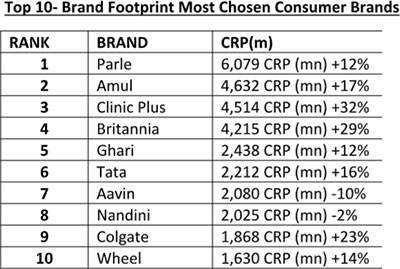
    Last week, Worldpanel Division of Kantar, the leading data, insights and consulting company, released its report, Brand Footprint 2020. The report is an annual ranking of FMCG brands based on the Consumer Reach Points the brands scored in a year. The report is in its 8th edition this year.


    Key findings:

    Scoring the highest CRP (mn) at 6029/ +12% Parle, ranks first followed by Amul at 4,632 CRP (mn)/ +17%, Amul at 4,632 CRP (mn)/ +17%, Clinic Plus at 4,514 CRP (mn)/ +32%, Britannia at 4,215 CRP (mn)/ +29% and Ghari at 2,438 CRP (mn)/ +12%

    Five new brands joined the Billion CRP Club this year Dabur, Vim, Sunfeast, Brooke Bond & Patanjali. 21 brands made it to this group in 2019 compared to 16 in both 2018 and 2017.

    Over 2/3rd of the top 50 brands are Indian Origin brands (36) while global stands at 14.

    Global brands (29 %) show 1.8x growth compared to Indian Origin brands (16%). Global brands are growing almost twice as fast at 29% compared to Indian Origin brands at 16%.

    Consumers make significantly more choices this year leading to a significantly better CRP performance by brands- 57 % brands record growing CRPs.

    Bigger brands find better growth and follow the Golden Rule, brands grow faster by growing penetration

    Colgate stands at the highest penetrated brand at 88%

    Surf excel remains marks a consistent CRP growth rate at +20% scoring 1566 mn CRP.

    58 brands saw a penetration gain of 1% or more. Leading the category is Ponds at 5.8% followed by Harpic (4.8%), Comfort (4.5%). 1% penetration gain adds an extra 2.9mn shoppers to the brand.

    In the foods category Britannia clearly charts out a success story as the 2nd most chosen brand, 7th highest penetrated brand with a household penetration at 67.6%. While Aashirvaad saw a surge with 4% penetration increase and +55% CRP growth.

    Within homecare surf excel marks +48% CRP growth while recording +3.4% penetration increase, closely followed by Vim at +44% CRP growth and +3.2% penetration.

    Dabur comes out strong in the personal care & foods category with +34% CRP growth, making it the 5th most chosen beauty & health brand in India with a 70.0% household penetration.


    Impact of Covid-19:

    Food & Beverage brands get picked up more often except Parle and Tata due to drop in frequency. For example, Amul is chosen over 100,000 additional times during the COVID months of March-May.

    While personal and home care brands drop CRPs

    Despite CRPs, trip size increases causing top brands to grow volume


    Said K Ramakrishnan, MD- South Asia, Worldpanel Division, Kantar: “Consumer Reach Points are a great way to measure and rank brands as it is a measure of the number of opportunities a brand has, to interact with a consumer. It is great to see consistent validation for the fact that if you build penetration, frequency and growth follow. This has really been a year of global brands in terms of their higher growth than others. Like these, this year’s report has a lot of interesting nuggets to derive a lot of information and insights on top the behaviour of consumers towards brands in the last year.”


  • IAMAI to promote ‘new age’ Indian brands

    By A Correspondent


    The Internet & Mobile Association of India is perhaps known more as a club of the big dads in the internet world and the legacy brands from media and marketing, even though what drives the internet-driven world is the lakhs of start-ups and professionals who fuel the economy.


    Well, in a bid to promote new age Indian brands across segments such as food, consumer durables, electronics, fashion, FMCG, etc., IAMAI has now set up a founders’ community of direct to consumer Indian brands. The unifying features of these brands are that they are digital-first, innovative, competitive, and manufacture or produce in India.


    At present there are at least 100-odd such brands in the market and more are emerging every day, notes a communiuqe adding that these brands are innovative since they cater to a younger and often first-time shopper catering to a niche demand.


    With 35 such brands in tow, a committee chaired by Aman Gupta, Co-Founder and CMO of Boat audio and co-chaired by Manish Chowdhary, Co-Founder of Wow Skin Science has been set up.


    Said Gupta: “To ensure a brand continues to do well, it is almost imperative for businesses to enhance their Direct to Customer (D2C) channel. The model enables a brand to listen to the unfiltered voice of their customer and is a natural progression from shifting the online shoppers to buy from the brand’s website and own the experience, data, and lifetime value of the customer. The committee will bring the ecosystem together, indulge in knowledge creation, and put forth the best practices in a mission to build internet-driven iconic brands.”


    Chowdhary added in a communique that the committee will jointly look towards building the consumers’ trust by engaging in better customer communication and other similar initiatives by D2C entities.


  • Mother’s Recipe launches social media campaign

    By A Correspondent


    FMCG brand Mother’s Recipe has launched a social media campaign titled ‘Your Traditions Our Pickles’ to revive the emotions of tradition. The campaign was launched with a purpose to strike a chord with its consumers amidst the pickle season. Triton is the creative agency and Social Panga is the social media agency.


    Said Sanjana Desai, Executive Director, Mother’s Recipe – Desai Foods: “We have launched the campaign ‘Your Traditions Our Pickles’. The idea spurted when we realised that our culinary traditions cannot be contained by the threat of a virus, why should we miss out on the taste of tradition this summer? With all our campaigns we have always believed in striking an emotional chord with our consumers and their treasured memories. We have over 50 variants of pickles available for every taste. There are no added preservatives, no artificial colours, its made the traditional way with lots of love. ‘Pesh hai wohi ghar wala swad, wohi summer wala swad’


  • O4S launches digital trade promotion platform ‘Gynger’ for manufacturers

    By A Correspondent


    O4S, a leading Enterprise SaaS start-up that enables supply chain visibility through a serialisation solution, is betting big on digitised trade promotions and management (TPM) solutions. The company has launched ‘Gynger’ to enable brands and manufacturers to not only adopt a data-driven approach for planning as well as executing  trade promotions, but improve effectiveness of their trade promotion spends.


    Commenting on the launch of Gynger, Divay Kumar, CEO and MD, O4S, said: “With complex supply chains for distribution and their varying levels of maturity, companies across sectors including FMCG, Agriculture, and Pharmaceutical face the challenge of disconnectedness with the retailers and influencers. The wide spread retailers’ network which commands a significant share of product sales, needs stronger and direct engagement, powered by automation. The current approach to trade promotion planning and execution by companies is often based on “gut” & “experience” of the trade marketing team, and the tools to manage and measure promotions are understated. Hence, Gynger offers the right tools to companies for complete control over their TPM schemes to plan, execute, assess, and gather actionable insights on their effectiveness in real-time, enabling mid-way course correction and bringing value to enterprises. The uniqueness of our solution ensures that the entire process is data-driven, eliminates reliance on any middlemen, and adapt to the existing schemes format to reward the champions in order to achieve desired sales result.”


  • Scenarios beyond Covid-19: Rebound, Reboot, Reinvent


    This article courtesy Nielsen

    Governments around the world are edging toward plans to exit mass population lockdowns, albeit at different speeds and in different ways, but the persistent questions for business are around what the future holds and how it should be navigated.


    In response, Nielsen has identified three distinct time horizons for global market regeneration beyond the novel coronavirus (COVID-19) global health emergency and attached likely scenarios to each. The three-tiered framework identifies the conditions for businesses to Rebound, Reboot or Reinvent as they confront expected unprecedented recessionary conditions.


    With trillions being pumped into economic stimulus packages, yet thousands still dying of COVID-19 and some countries confronted by the prospect of ongoing population lockdowns, the question of how to reconfigure economies is significantly dependent on the behavioural changes taking place among the world’s consumers.


    Nielsen’s global intelligence team has undertaken an initiative that takes into account global macro conditions such as unemployment, bailout packages, and interest rates and ties them to ongoing FMCG sales and attitudinal inputs from consumers around the world. From there, the team examined common threads of consumer behaviour that tied to how the disease was being managed and the response of governments to support citizens through health and financial care.


    The findings led to three horizons being established that reveal significant new and adjusted consumer behaviours that will lead to different types of demand in terms of what, where and how consumers make purchases. They also point to a series of common characteristics likely to be exhibited by consumers over time. All of these are based on the conditions currently in play to manage the virus on a global basis.


    “Much has been made of comparisons to the 2008 global financial crisis, but this situation doesn’t make for accurate comparisons. The circumstances back then were fundamentally different,” said Scott McKenzie, Nielsen Global Intelligence Leader. “Thousands weren’t dying each day, millions weren’t locked in their homes indefinitely, businesses weren’t ordered to close their doors, kids were still in school. The impact of this will be profound and more far reaching than anything we’ve seen in our lifetimes. The pace of change is also extraordinary.”


    The new Nielsen framework extends a set of six consumer behaviour threshold levels that provided early signals of spending patterns during the first three months of the health crisis. It lays out three possible timelines for each of the scenarios:

    :: Rebound: An early return to normal living conditions (schools, workplaces, stores, restaurants etc re-open) at some point in the third quarter of 2020.

    :: Reboot: A medium-term scenario that is positioned in the fourth quarter of the year.

    :: Reinvent: A longer-term view that places the world in a general return to normal living conditions at some point in the first half of 2021.

    COVID Exit Scenarios

    “The world is fundamentally recalibrating right now. Consumer habits are changing at pace and understanding those changes, in the context of these scenarios, will be critical as businesses prioritise how they too recalibrate to meet the changed circumstances driven by COVID-19,” said McKenzie.


    The framework points to a series of behaviours and habits that will be accelerated in each of the scenarios. In some cases, changes that may have taken years to evolve could be in place in a matter of months.


    Already, this year, Nielsen has tracked significant changes to the ways people shop and the ways they think they’ll behave after the Covid-19 crisis comes to an end, particularly with regard to technology and the use of digital platforms.


    Taking advantage of Nielsen’s global footprint, the intelligence team was able to shape the new framework by also taking into account consumer sentiment, such as that measured in Europe, where many expect the impact of Covid-19 to be long lasting. And to test hypotheses using data out of markets such as China and South Korea that are further along in dealing with the disease and its impact.

    Regeneration Srategies

    In each horizon identified by Nielsen, a different set of factors and respective consumer behaviours can be identified.


    In horizon No. 1, “Rebound,” a series of health indicators, actions by governments and business, and market conditions point to a rebased “normal” that has some of the following as a societal response:

    Horizon 1: Rebound


    In horizon No. 2, “Reboot,” the societal response has a different set of focal points and positions the economy for meaningful regeneration toward the end of the year.


    Horizon 2: Reboot


    In horizon No. 3, “Reinvent,” as the name suggests, a complete reinvention is required and may not play out until the first half of 2021. The consumer behaviours and characteristics are sharply amplified compared to horizons No. 2 and No. 3:

    Horizon 3: Reinvent

    With each of these time scenarios, the baskets of shoppers will also change. The repertoire, pack sizes, brand choices, product origins and more will be reconfigured as shoppers adjust to changed economic circumstances and a sharper focus on their health and safety.


    Two clear sets of consumers will also emerge – those with insulated levels of spending, often those who have maintained employment and remain shielded from day-to-day economic impact and those who will be restrained in their spending habits due to unemployment, furloughing or other COVID-19-related challenges.


    This polarisation of spending is expected to drive new considerations for retailers and brands as they urgently examine the range of products being offered and the pricing dynamics within.


    This article originally appeared on Nielsen. 


  • 110 objectionable ads withdrawn in Jan 2020 after ASCI investigation

    By A Correspondent


    During the month of January 2020, ASCI investigated complaints against 342 advertisements, of which 110 advertisements were promptly withdrawn by the advertisers on receipt of communication from ASCI. The independent Consumer Complaints Council (CCC) of ASCI evaluated remaining 232 advertisements, of which complaints against 208 advertisements were upheld. Of these 208 advertisements, 83 belonged to the education sector, 64 belonged to the healthcare sector, eight to personal care, seven belonged to Real Estate sector, five to the food & beverages sector, and 41 were from the ‘others’ category.


    ASCI exercised the “Suspension Pending Investigation” (SPI) option to fast-track a complaint against an extremely offensive advertisement of an online content app. The advertisement shown as a user uploaded content involved the use of expletive and swear words as well as use of obscene language. The advertiser was instructed to pull down the objectionable advertisement within 48 hours.


    ASCI also processed an intra-industry complaint against an advertisement by a pipes and fittings company featuring a famous Bollywood celebrity that misled consumers by implying that they are selling zero defect pipes. The advertisement also violated ASCI’s Guidelines for Celebrities in Advertising.


    An FMCG giant, while presenting their ketchup as an accompaniment to meals was seen discrediting home cooked food and disparaging good food practices by calling it to be “boring” roti-sabji. Two popular alcohol brands were seen using surrogate advertising by promoting a music CD and travel experience, respectively.


    In the cosmetic and personal care category, one large FMCG company was found to fall foul by contravening the ASCI Guidelines for Advertising of Skin Lightening or Fairness Improvement products. These were two separate advertisements of their cosmetic bleach brands. Another FMCG company misled consumers by claiming that its soap was recommended by Doctors and is capable of reducing risk of skin problems by up to 95 per cent.


    A legacy brand with their sports motorcycle portrayed dangerous acts and manifested a disregard for safety as the visuals were likely to encourage minors to emulate such acts which could cause harm or injury.


    For the month of January, the CCC saw misleading advertisements of several IVF hospitals and Fertility clinics guaranteeing success and claiming to be the best. There were also a number of real estate advertisements making leadership claims which were unsubstantiated.


  • Strong Brand ≠ Strong Reputation


    By Siddhartha Mukherjee


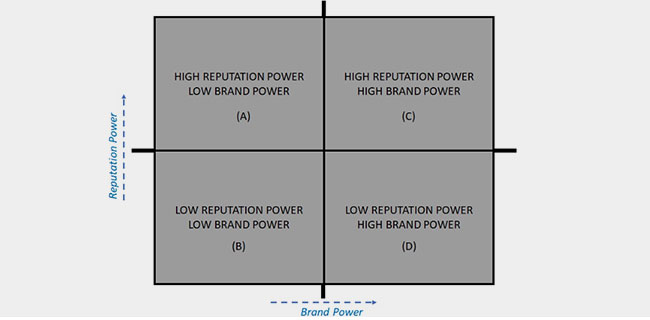
    When you combine a logo with promise, what you get is a brand. However, only when you live up to that promise, you accrue reputation. This means a Brand is Inside-Out, while Reputation is Outside-In. However, many corporates get deceived and misinterpret a strong brand equalling a strong reputation. This is why Balance Sheets go through an imbalance.
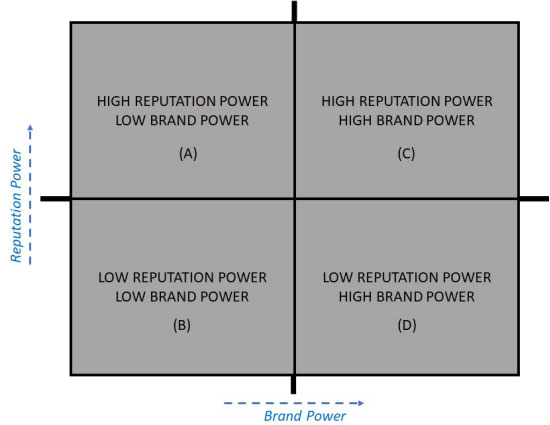
    Depending on which Block (A, B, C or D) the Corporate Entity is in, the above construct gives way to an ocean of Brand Research, Measurement and Data Analytics possibilities which will tangibly benefit Board of Directors, CEOs and the Communications Machinery at large. It can lead to a full circle of Data Information and Analysis possibilities.


    Barring Block C, which is a Utopian zone, majority of the Corporate world outside comprises of Corporates who operate from Blocks A, B or D. For them, the relative chances of business success or healthy balance sheet depends on how close they are to the Utopian Block C on the above plot chart.


    There are reasons why majority of the Corporates go through the imbalance of Brand Power and Reputation Power:


    1. FMCGisation: FMCG Industry’s way of brand management and business approach has inspired almost every single industry vertical today. (No wonder, most of the Top CXOs in sectors like BFSI, Automobile, Telcom, etc. got their initial success in FMCG industry). Which is why, they focus on business sales first, Organization Halo effect later. In other words, they believe that the only parameter to measure Reputation Power is demand, sales & revenues.

    2. Focus skewed towards scoring on Brand Promise: Management orientation is towards being visible. No wonder then, Marcomm spends are sky high. CorpComm takes a back seat.

    3. No focus on Corporate Reputation Pillars: Barring visibility of Products & Services and Marketing Initiatives, other Corporate Reputation Pillars like Corporate Thought Leadership, Financial Strength, Commitment to Work Place, Responsibility through CSR & Sustainability, etc. are treated through a cosmetic or adhoc lens.

    4. Archaic Research and Analysis methodologies: Balancing Brand Power with Reputation Power needs a seamless and clever assembly line of Data Information & Analysis Machinery. Listening (to the MOOD of the ecosystem) itself is the biggest chunk. This not just needs resources but starts with Intent.

    5. Perception of Communications Machinery: The age-old saga of Organization’s perception of what value Communication Desk brings to the table is still in poor state. No wonder, “NEWS MANAGEMENT” is the start and end of what this desk is expected to do.


    Having said this, I am aware that there are Corporate Dark Horse which are emerging out of this staid thinking and realigning themselves. The Board, Management and the Corporate & Marketing Communications Machinery are working in tandem. They are ensuring that Corporate Symbols, their Promise and Behaviour (actions and reactions) all create equality within Brand Power and Reputation Power so that it creates a spot closer to or in the utopian Block C.


    Siddhartha Mukherjee is a senior marketing services research professional. He was until last year Business Head at Eikona and has spent a fair time in the PR industry. Starting today, he revives his fortnightly column for MxMIndia.