Tag: flipkart

  • Flipkart Fashion asserts its uniqueness in campaign by Lowe Lintas Bangalore

    By A Correspondent


    Leading online e-commerce playerFlipkart seeks to assist shoppers on all issues related to fashion. By launching Flipkart Fashion, it seeks to establish Flipkart as a destination for “affordable trendy fashion” by landing the proposition of being a one-stop solution to all fashion related confusions. Through Flipkart Fashion, the online player is providing a method to the madness of spotting the right trend by making trends – handpicked by top fashion experts, accessible to its consumers.


    To communicate this new offering, Flipkart has unveiled a high decibel integrated marketing campaign across India. The marketing campaign would span the online and offline platforms and reach out to a cross section of the populace in various regional languages. The communication has been flagged off by the launch of two video films on both the online and offline platforms.


    Conceptualised by Lowe Lintas Bangalore, the films promote Flipkart as the one stop shop for all needs around fashion. The films have been devised based on the insight that even though fashion as a category has scale and accessibility on Flipkart, it is still not a go-to platform for trendy fashion in the minds of consumers. Flipkart Fashion aims to change this perception and position itself as a trendy yet affordable destination for its consumers.


    Commenting on the marketing objective, Shoumyan Biswas – Head, Marketing, Commerce Platform, Flipkart said, “Flipkart is the market leader when it comes to fashion amongst e-commerce portals. Being a market leader, it is our responsibility to grow penetration of fashion across all consumer segments and need states. Also, fashion being a profitable segment with high growth, it is one of our top priorities. Our scale and depth in this category have helped us decode some key consumer truths. One of the biggest consumer aspirations is the desire to be “trendy”. We realized that this desire often goes hand in hand with “confusion” of finding out what is “in trend”. Basis this knowledge, we created a campaign around the proposition of “Being Trendy made Easy” by curating trendy selection by top fashion experts and offering them at affordable price points.”


    The films highlight the confusions related to trends surrounding fashion and how Flipkart Fashion is an assured solution that one can rely on. Be it about the ever-changing fashion trends to conflicting advices on trends and having to choose between too many trends…there are many confusions that confound and disorient the consumer. But with Flipkart Fashion that has over 100 stylists highlight emerging trends on the platform, users are to find only the best of the latest fashion. The films sign off with the line that ‘If it’s trendy, it’s on Flipkart’, which establishes the point that Flipkart Fashion offers users with only the latest trends.


    Highlighting the creative idea behind the films, Rajesh Ramaswamy, Executive Director, Lowe Lintas Bangalore said, “Fashion is something so relative, that it’s near impossible to wrap your head around it. The confusion about ever changing trends and the fashion world in general is something that everyone experiences. And yet, we are all conscious about what we wear and also about all the judgement that will be passed by our peers in the case we get it wrong. In the film, we have captured this very confusion and fear and provided a solution for it. With over 100 top stylists picking the latest trends for you, Flipkart fashion clears all confusion and lets you simply choose.”


  • Flipkart announces its biggest integrated brand communication campaign

    By A Correspondent


    There are a host of dates earmarked in India’s annual calendar where consumers wait with bated breath to partake of the celebrations. Clearly figuring in this list is the ‘The Big Billion Days’ (BBD), that has been made popular by Flipkart over the past two years. As a concept, Big Billion Day was launched in 2014 as a one-day sale initiative across categories. But over time, it has moved to a five-day full-fledged sale event with different categories opening on different days.


    As opposed to The Big Billion Days 2015, which was an ‘App only’ sale, this year the sale is being extended across all platforms – App, website and m-site. To re-establish its connect this year with the users, Flipkart has announced the rollout of a full-blown integrated campaign that is one of the largest marketing initiatives being undertaken by the company this year.


    “We aim to get 30% more reach this year with our campaign for Big Billion Days and will spend more than 20% of our budgets on digital channels to do this,” said Samardeep Subandh, Chief Marketing Officer at Flipkart. As part of the marketing exercise, Flipkart has rolled out a series of videos that will attempt to inform the consumers that it is not just another sale event but the ‘Sale Event’ of the year. The key message that is derived from the campaign sums up the entire event – “ITNE mein ITNAAAA milega”. It communicates that no matter what one’s budget is, BBD increases its value with the unbeatable offers it has across categories. So staying within budget, one can upgrade or buy more and not let the budget dictate one’s shopping aspirations.


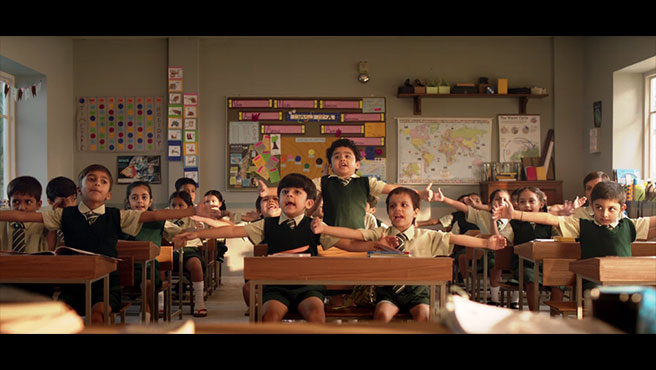
    Conceptualised and executed by Lowe Lintas Bangalore, the brief shared to the agency was to land the fact that BBD is not just another sale event but rather it is the ‘Sale Event’ in India. To cut across the clutter and differentiate itself, Flipkart opted to use kids and show them in witty yet real situations.


    Highlighting the creative thought-process behind the campaign, Arun Iyer, Chief Creative Officer, Lowe Lintas said, “Like most important events, The Big Billion Days have come to be an important event in the Indian context. These are the days when consumers unleash their inhibitions and go on a shopping spree with much gusto. The campaign thought ‘ITNE mein ITNAAAA milega’ is a colloquial expression that captures how Indians like it when they receive something extra by paying a small sum. This thought has been captured well by the kids that act as orchestrators of the message. It was an exciting campaign to work on, and we hope consumers like it as much.”


  • DentsuWebchutney’s 360 digital campaign for Flipkart sale

    By A Correspondent


    Flipkart and its digital partner DentsuWebchutney have come together to create a ‘made-for-360 experiences’ to highlight the key offers of Flipkart’s annual flagship sale tittled The Big Billion Days.
    As the lead character in the film says, it’s a “game disguised as a 360 video”.


    Taking from the campaign theme, ‘Ab ITNE mein ITNAAAA milega’ (cueing in value maximisation, courtesy the sale’s offers) – the activity maximised the experience of the user by packing in a treasure hunt within the 360 video. Said Shoumyan Biswas, Vice President – Marketing Flipkart: “For us engaging with our users with a compelling story is as important as sales. We constantly like to push the frontiers – be it with our service, technology or consumer engagements”.


    Said PG Aditiya, Creative Director, DentsuWebchutney says, “360 as a technology hasn’t progressed too far yet, and we were experimenting with form which had little precedence- gamification within storytelling using 360. There were tons of roadblocks- but as it’s always the case, the output was worth it. For Indian digital creatives, it’s a pretty big step in the right direction- with the potential of interactive video using tech that social gives you.”

  • Brand-building via Content Marketing


    Text and Videos by Santosh Jangid


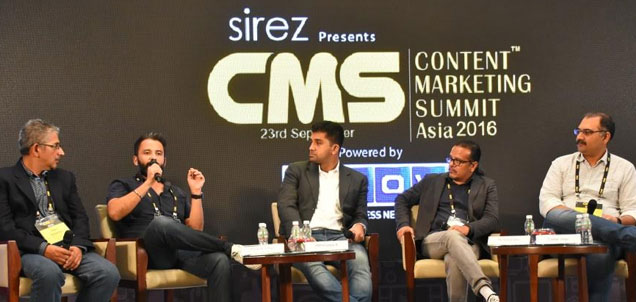
    How critical is Content Marketing to the marketing and media fraternity. It’s growing in acceptance, was the broad verdict from a cross-section of the fraternity at the Content Marketing Summit Asia 2016 held in Mumbai last week. The third edition of the Summit saw over 300 delegates listen in to to a diverse set of speakers. Amarjit Batra, CEO of OLX and the  first keynote speaker, stressed upon the fact how content has become the most important element in marketing today. Sandeep Bhushan of also emphasised that the timing is perfect right now to explore content marketing. Flipkart’s Senjam Rajsekhar spoke on the Flipkart way of storytelling. Using Salman Khan’s dialogues from blockbusters, Ashish Patil of Yashraj Films conveyed how to be a “Sultan” of content marketing. And Rohtash Mal of EM3 Agri Services, the second keynote speaker, encouraged marketing professionals to find a strong purpose of their marketing activities.


    The conference hall started Summit Chairperson RP Singh’s opening address “I am personally satisfied with the response as we continue to raise the bar every year. Unlike other events, we focus only on great content with almost Zero sponsored sessions so that CMS Asia becomes a platform to learn for every one rather than a platform to sell services,” he said while announcing that next edition will be held at Delhi NCR.


    The CMS Asia awards in five categories were also announced on the same day. Y-Films from YRF walked away with Content Marketing Agency of the Year & Content Marketing Innovator of the Year awards. Brooke Bond’s Six Pack Band was declared Content Marketing Campaign of the Year, which was also created by Y-Films. Content Marketing Brand of the Year was awarded to Nescafe and comedian Kapil Sharma was declared Content Marketing Personality of the Year.


    Senjam Raj Sekhar, Head of Corporate Communications, Flipkart

    How does Flipkart use content to reach various stakeholders?

    The way we look at it is that every organisation has interesting stories within itself. stories of customers, stories of employees and stories of the organisation itself or stories on how the organisation is funded. We have a team of writers and storytellers who actually go and hunt for the stories and  who look at what are the stories that will be of interest to readers. We report on ground and we found a lot of customers from Jhumaritalaiya actually shopping on our website. So we send them to Jhumaritalaiya, spent a week there to find out why Jhumaritalaiya is shopping online and from the mobile phone and we found some very interesting insights there. So, essentially if there are stories inside the organisation, then it is our attempt to tell those stories.


    You have said that Flipkart generates a lot of clicks on LinkedIn and Twitter but not on Facebook despite your various attempts to promote your content there. Why is that?

    The kind of content that we have are more long form content. Short videos of say 20-30 seconds work very well on Facebook, short posts work very well but if you look at long form pieces of around 2000 – 3000 words, we find a more engaging relationship on LinkedIn and on Twitter. The clickthrough rates of LinkedIn and Twitter are much more higher, in fact 4-5 times higher than Facebook. So medium to medium it depends on whether you have short form content or long form content. If you have a lot of visual content, then you use Instagram.


    Manish Kalra, Chief Business Officer, Craftsvilla

    Would you say that content marketing has short-term or long-term gains?

    Content marketing is completely a long-term phenomenon and you may not get short-term gains. What you can get is how many repeat visits are you driving to your website, what is the stickiness of the users that you are getting in, how much content consumption in terms of pages view per visit is happening, is it increasing your time spend on the site. So that’s where content marketing becomes very important for e-commerce websites but if you are looking for short term results it’s not at all effective.


    How does one check if content marketing is working or not for the audiences. What are the parameters for measurement of efficacy?

    Some of the parameters are that it will not be direct e-commerce attribution but it will be more around stickiness, repeat visits and pages view.


    Do you think content marketing helps in brand-building or is it just one of the many things one needs to be doing in a marketing activity?

    It is a part of building and connecting with the user in the long-term. It is not a short-term phenomenon. It is something which every brand should do if they want to connect with the user on a subliminal way, in a non intrusive way, in a way that they would like to consume you than the way you would like to get consumed. It’s an important part of the overall marketing mix.


    What are the challenges in content marketing for Crafsvilla?

    In case of content marketing, because we are so niche we need to ensure that the right content gets curated. So, if some handicraft from Kutch, say it’s a dhokra art and then people don’t know what it is, I need to have an expert who can go in and curate, source and shoot that content. So that’s the challenge that we don’t find the right talent which is able to curate the right kind of content for us whether its video or written content but we are evolving and creating internal teams which can help us.


    Bianca Ghose, Chief Content Officer and Head – Content Marketing, HCL Technologies Limited

    What are the challenges of content marketing?

    For a content marketer, creating quality content is something that I think is a major problem area because what you need is partners who understands your business, understands your business goals and the marketing outcomes and understands your audience. Unless you’re able to map all these three together you are not going be able to generate content that cuts through and grabs attention. The second challenge that content marketers today in India and all across the world are facing is also how is it that they are optimising the content to make sure that it’s performing because at the end of the day those form of tools and methodologies to measure the performance of content don’t really exist. But to be able to say that, this is my white paper and this is the kind of engagement that it has generated is difficult because a white paper is not just a white paper. It could be in the form of a blog or it could be translated in the form of a brochure that goes up on the website. How do you measure all those interactions with your piece of content to ensure that you are really taking back to your CxOs the amount of engagement or sales cut through that it has generated? These two are the areas that we still need to figure out as content marketers.


    Does content marketing have any short-term gains or is it a long-term play?

    Content marketing has no short-term gains and I don’t think this a play that can happen in a couple of months. You need to be able to do content marketing seriously, consistently for months on end to be able to generate some kind of impact. Content marketing will be able to take you to places where your sales folks won’t be able to go to. You’re sales folks will be able to leave behind a content asset in a closed door meeting or if you’re able to put in your content into the social browsing habits of your customer or prospect. So content is definitely something that will generate returns to your business but it is something that you have to do well and consistently for it to start showing results.


    Do you think content marketing helps in brand-building or is it just one of the many things one needs to be doing in a marketing activity?

    Content is the heart of a campaign so if you’re talking about a brand strategy or a brand narrative without having your content or your message at the heart of it, you really have a piece of a hollow shell. A lot of content marketers and brand marketers start thinking about the platform before they start thinking about the content strategy which means that you’ve thought through the outer circle without really thinking about what is the message that I’m trying to push out, what is that conversation that I am trying to generate for my audiences. So, unless you’ve really thought through the content, the message, the articulation of that and then the platform you’ve really done it the other way round. So being asked the question or saying that is content important is redundant. The question is how do I do it right to be able to generate the kind of outcomes that I am expecting for my business.


  • MRSS inks market research contract with CureFit

    By A Correspondent


    MRSS India Ltd. has been selected by CureFit Healthcare Pvt. Ltd. as its research partner for its strategic market research requirements. CureFit is a healthcare and fitness start-up launched by former Flipkart executives Mukesh Bansal and Ankit Nagori. The company has recently raised $15 million through Series A funding.


    The research by MRSS India would aim to help CureFit fine-tune their business concept while also providing detailed insights to aid in the business launch, scheduled for 2017, through multiple research surveys involving consumers and various healthcare sector professionals. The contract will be year-long with research covering markets across India, and would mark the first in a series of contracts expected to be signed with the company.


    Raj Sharma

    Speaking about the recent partnership, Raj Sharma, Chairman, MRSS India said, “Healthcare is a buzzing and promising sector for start-ups right now and we are delighted to partner with CureFit. This project has given MRSS India an opportunity to work with 2 very renowned and seasoned entrepreneurs and be a part of their exciting journey right from inception.”


  • Amazon, Flipkart & Snapdeal have highest brand equity amongst e-comm sellers, notes new Nielsen study


    By A Correspondent


    Amazon, Flipkart and Snapdeal have the highest brand equity amongst e-tailing websites. The three e-comm majors ranked first, second and third amongst sellers as per Nielsen’s newly launched E-commerce Sellers study Q1 2016 (Jan-March2016). Familiarity, which had come up as the top driver for building equity in the category, is demonstrated by top-of-mind recall. The top three players among the first brand spontaneously recalled were Amazon (25%), Flipkart (21%) and Snapdeal (20%). In terms of overall awareness, Amazon (86%), Flipkart (82%), and Snapdeal (75%) were leading among the others. Intent to sell on the e-tailer is also an important parameter to demonstrate familiarity where the leading brands were Flipkart (58%) and Amazon (55%).


    “This study outlines the need gaps in the eco system, and opens avenues for E-commerce platforms  to support sellers.  E-tailers can play a big role in helping sellers develop their category and build businesses – thus also becoming a preferred brand for sellers,”  said Dolly Jha, executive director, Nielsen India.


    The findings from the study indicate that 39 per cent online sellers explore two or more e-commerce website as an option to sell products on and grow their business.


    The Nielsen study launched aims to understand the inclination and experience of selling products on e-tailing platforms. The study also gauges the brand equity of e-commerce websites amongst connected online sellers, and of those who intend to sell their products online in the next few months. The first wave of the study was conducted in 16 markets with a population of more than one million, and a sample size of over 1100 respondents.


    “With the e-commerce industry growing in double digits, there is surge in demand by customers, and an evolving online seller category that is fuelling supply on portals. To ensure the equilibrium of demand and supply, it is essential for e-commerce portals to focus on developing an inviting platform for online sellers in India. Sellers are also increasingly discerning when it comes to reaching their customer and meeting business needs,” said Jha, adding: ”Considering the juncture at which the category is, it is now very critical for e-tailers to understand push and pull factors that make sellers pick one website over the other. The study will also help understand the impact of marketing activities.”


    A high level of familiarity along with indepth  knowledge of an E-commerce website is the most important factor that drives brand equity, notes a Nielsen communiqué. Other key factors that impact brand equity are certain perception of the e-tailers: “They help the sellers stay relevant and ahead of competition” , “Provide new market opportunity”  and “Help minimise costs to reach out to more customers” .   At a micro level, other important attributes include potential of reaching out to customers from the same locality , ensuring publicity for the shop, and those websites used by peers and competition. Helping sellers save on in-store and inventory management, as well as a platform that would be most profitable to sell products on are critical when looking for new opportunities and markets. The ability of reaching out to a pan-India customer base, savings on logistics and requiring minimal investment are other considerations sellers look for while choosing e-tailers.


  • Does tweet spat herald consolidation?


    By Sagar Malviya


    Future Group CEO Kishore Biyani said the Twitter spat between India’s ecommerce poster boys Sachin Bansal and Kunal Bahl could indicate a consolidation wave triggered by Alibaba’s imminent entry into the space.


    Biyani, who runs the country’s largest brick-and-mortar retail company and is known to disparage ecommerce rivals, said social media had become the medium of engagement for many entrepreneurs. “Very often I see conversation as a precursor to hint something strategic or big. In this case, it could even be consolidation or something more,” he said.


    Flipkart’s Sachin Bansal vs Snapdeal CEO Kunal Bahl: Right guys stuck in a tough ecommerce battle


    By Biswarup Gooptu & Madhav Chanchani


    Three months into 2016 and the battle lines between India’s top two ecommerce companies are being drawn deeper. The exchange of barbs between Flipkart’s executive chairman Sachin Bansal and Snapdeal CEO Kunal Bahl on Twitter on Friday evening wasn’t merely a spillover of their rivalry but emblematic also of the significant pressure they are under with investors’ becoming tightfisted. It portends more ugly confrontations.


    “While in 2014 it looked like the game had consolidated between Flipkart and Amazon, the market suddenly opened with Snapdeal, Paytm and Shopclues jumping into the fray,” said Harminder Sahni, founder of retail consulting firm Wazir Advisors. “Now investors are evaluating (ecommerce firms) closely, so it becomes (important to establish) not only how good you are but also how bad the other players are.”


    This year is expected to be an inflection point for Flipkart and Snapdeal, which, along with Amazon, have dominated India’s $23-billion (Rs 1.5 lakh crore) market but are yet to show paths to profitability.


    Investors who have poured billions of dollars into Flipkart and Snapdeal are pressurising the firm’s managements to optimise their operations, curb discounts and focus on improving margins as they seek ways to sell their investments and maximise returns. Both Flipkart and Snapdeal are scouting for new investors to back them as they compete for top honours in India’s ecommerce industry while staving off the challenge from Amazon.


    Flipkart has been in the market awhile to raise $1.4 billion and, according to media reports, had approached Alibaba for funding, but investors have become fussy amid growing uncertainty.


    Snapdeal was able to raise $200 million in February in funding led by Ontario Teachers’ Pension Plan at a valuation of about $6.5 billion. A lot of that money, though, went to existing investors selling their shares in the company. “The pressure is too much,” said Sahni. “I don’t think we have seen this kind of a public spat between people from the industry in the modern times.”


    India’s ecommerce industry, though, is not in a position of uncertainty. In February, Morgan Stanley raised its forecast for the gross merchandise value of Indian online retailers to $119 billion by 2020 from its earlier estimate of $102 billion, indicating that more consumers are buying online.


    Source:The Economic Times

    Copyright © 2016, Bennett, Coleman & Co. Ltd. All Rights Reserved

    Licensed to republish


    While the Chinese ecommerce giant is a fringe player in its core business-to-business online trade in India, it has an indirect presence in the country’s ecommerce segment. It invested more than $500 million for a 40 per cent stake in One97 Communications, which runs Paytm, a wallet and ecommerce company, while Snapdeal raised $500 million from a clutch of investors including Alibaba last year.


    Alibaba said recently it will make a direct entry into India’s online space and is said to be looking at several options. One could be increasing its stake in Paytm and spinning off its marketplace into a separate venture.


    It has also been reported that it (Alibaba) was talking to the Tatas for a broader strategic alliance besides deepening its relationship with Snapdeal.


    The consolidation buzz in the ecommerce space has been strengthened by talks swirling around Flipkart. The Economic Times (ET) had reported on failed talks between the company and Amazon. Flipkart founders Sachin Bansal and Binny Bansal denied this.


    ET and a few other newspapers have also reported that Flipkart was in funding talks with Alibaba. The founders of Flipkart and Snapdeal had lashed out at each other on Twitter Friday night over Alibaba’s entry plans.


    Bansal, executive chairman of Flipkart, indirectly criticised the companies in which Alibaba has invested. “Alibaba deciding to start operations directly shows how badly their Indian investments have done so far,” he tweeted.


    Bahl responded with. “Didn’t Morgan Stanley just flush $5 billion worth market cap in Flipkart down the toilet. Focus on ur business not commentary :)”


    The reference was to a mutual fund managed by Morgan Stanley marking down the value of Flipkart’s shares by 27 per cent, signalling that global investors believe India’s largest Internet company may be overvalued. Flipkart had said in a press statement that it is valued at $15.2 billion. A 27 per cent drop would put this at $11 billion.


    In comparison, stocks of Biyani-owned entities — Future Retail, Future Consumer and Future Lifestyle Fashions — have gained 14-80 per cent on the BSE and have a combined market capitalisation of $1.5 billion. Biyani had accused online retailers of adopting predatory pricing two years ago. Earlier this month, he released a series of ads targeted at the three main online marketplaces — Flipkart, Amazon India and Snapdeal.


    Last month, investor Rakesh Jhunjhunwala said ecommerce companies were attracting too much investment without any meaningful retail disruption and was bearish on the business model. “I will consider buying Flipkart’s stake if it is valued at $100 million,” he had joked.


    The combined losses of the three leading online retailing platforms widened to Rs 5,052 crore in FY15 as they spent heavily on infrastructure and discounts to woo consumers.


    Source:The Economic Times

    Copyright © 2016, Bennett, Coleman & Co. Ltd. All Rights Reserved

    Licensed to republish


  • Flip the Cart, Snap the Deal and Amaz-Off. Future to tease ecom majors with ad offensive


    By Sagar Malviya & Pritha Mitra Dasgupta


    Future Group CEO Kishore Biyani, who’s never made a secret of his disdain for ecommerce rivals, plans to step up the offensive with a series of ads that use word play to target the three main marketplaces – Flip the Cart, Snap the Deal and Amaz-Off.


    This is probably the first time a brick-and-mortar retailer will engage in comparative advertising against online rivals, which have been grabbing share by discounting products.


    After nearly three years of deep discounting, most online sellers are now pulling back from this strategy in a desperate effort to shore up their finances, making them vulnerable on this front. Ecommerce discounts are now mostly limited to select brands such as online exclusives, old merchandise and own labels.


    The combined losses of the three leading online companies — Amazon, Flipkart and Snapdeal — ballooned to Rs 5,052 crore in FY15 from Rs 1,000 crore in the year before as they sought to build market share. At the same time, several brickand-mortar retailers clocked double-digit same-store sales growth last year, a reversal from the trend in 2014 when physical stores reported subdued demand as ecommerce players wooed away consumers.


    As part of the Future exercise, three newspaper jacket ads on Friday will direct shoppers to its Brand Factory discount outlet instead of hunting online for better prices in a manner reminiscent of the pot shots that Pepsi and Coca-Cola took against each other in the 1990s.


    The theme will be continued inside the stores, with staff and cashiers wearing T-shirts with messages such as ‘My deal got snapped’ and ‘My cart got flipped’. The 40 or so Brand Factory stores will also wear new facades and selfie zones with the same theme targeting Flipkart, Snapdeal and Amazon.


    “We just want to prove the point that both our merchandise assortment and pricing are better compared to online companies. We need to make consumers aware of this fact,” said Biyani, adding that Brand Factory’s gross merchandise value (GMV) in the year to March 2016 was Rs 3,500 crore. Future is India’s biggest listed retailer.


    “While we use sales numbers to talk about performance, we are bigger than Myntra or Flipkart in terms of GMV,” he said. As part of its Great Offline Denim Festival, Brand Factory will sell nearly a dozen brands such as Levi’s, Benetton, Lee, Wrangler and Pepe jeans at a 50% discount for three days.


    Future has fired ad shots at ecommerce before. For instance, “You can’t take the nation for granted even for a day,” was aimed at Flipkart’s Big Billion Day sale in 2014.


    Snapdeal has taken digs at Flipkart and Amazon with its campaign tag line: ‘You don’t need a billion offers to amaze you. You just need to snap the best ones’. It also had about 100 billboards in 20 cities emblazoned with the phrase ‘Achha kiya bata diya, #YahanSeKharido’ aimed at Flipkart, which was running the ‘Nahin khareeda? #AchhaKiya’ campaign last year.


    “The intent of a campaign is really crucial,” said McCann India CEO Prasoon Joshi. “Whether the campaign is offensive or not will depend on the intent of the brand. If the intent is shallow fun then it is different. But I personally believe that taking creative potshots at competition cannot be a long-term strategy.”


    Brick-and-mortar retailers are also investing in omni-channel strategies and experimenting with global models such as flash sales, such as by offering a single product for sale for a period of 24 to 36 hours. “We are planning flash sales where consumers can get discounts, coupons and offers on several brands by using an app but buying at physical stores for certain hours or days,” said Rajiv Prakash, cofounder of Shouut, which is in talks with Shoppers Stop, Oberoi Mall, Decathlon and DLF Promenade for deal-of-the-day sales.


    Source:The Economic Times

    Copyright © 2016, Bennett, Coleman & Co. Ltd. All Rights Reserved

    Licensed to republish


  • E-commerce: It’s time you get your Onions right!


    By Jaisurya Das


    It may just be a coincidence but just a few weeks after I questioned the future of online shopping ventures and their dangerous losses, Flipkart has been downgraded by Morgan Stanley.


    What is worrying is that, if this is how a key investor is reacting, it won’t be time before we see more toeing the line.


    I wonder if the exit of Mukesh Bansal created a void of sorts, or possibly fear of a possible mass attrition. Well, I am no expert in e-commerce but write I will, from my own perspective.


    Honestly I think it’s a lot to do with the model and the inflated expectations from the serviced audience. Let us examine a few of the premises used for loyalty prediction.


    Acquire a customer at any cost. Service is above all.

    Brilliant. I tested this with two separate ventures:

    Test #1.  Order : Buttered bun: 1, delivered in 1.5hours from well-known bun outlet : Prompt, courteous service , coupled with sms messages and mail confirmation, payment gateway etc. Transaction Value: Rs 25 .


    Test #2. Grocery and daily needs. Order: 6 eggs and 500ml of coke. Order placed, payment gateway confirmation (2 mails, 2 messages) received in few minutes. Order delivered in 2 hours. Transaction value: Rs 56.


    Our customers believe in repeat purchase.

    Not true. Customers browse like there is no tomorrow. Whoever attracts their carnal instinct, wins! The more you pop right in their face, the more chances are that you will get a clickthrough.


    The more the customers, the more the revenue.

    Rubbish. There are classic examples of huge companies who have the highest volume and value market shares and yet are unprofitable. Let’s take the classic example of the erstwhile music mammoth HMV or Bata (till very recently) for that matter.


    Remember, profitability is about managing overheads well and how much your yield is per transaction. Volumes bereft of sensible yield mean nothing more than a bunch of Excel sheets!


    Average transaction value per customer will be Rs 500/ 250 minimum.

    Test: Leading e-commerce venture:

    Order : One landline splitter. Ordered , 8 text messages, 6 emails , a well-wrapped parcel and a well-spoken delivery man all within 48 hours. 2 mails post delivery. Transaction value: Rs 32.


    If customers can buy at this cost, it is almost certain that the site will only end up fulfilling the necessity and immediate need of its audience. The “I must have this” segment will slowly move away to another shopping destination which is all about their persona and their exclusivity.


    The wider the range the higher the sale.

    In fact, today’s customer is highly impulsive and tends to take purchase decisions fast. Hence too wide a range can in fact be detrimental since the customer is forced to go through pages and pages of options before hitting the Buy button !


    The lower the price, the higher the sale.

    This is the famous belief that everything cheap sells. What wasn’t factored though is the propensity of our neural networks to reinvent themselves. Price is a deciding factor and yet not the critical ruling factor in a purchase decision.


    Brand familiarity, peer confidence, persona etc are all significant drivers of purchase. Indulgence is often way beyond price barriers. Its about carnal satisfaction. Its about fulfilling an immediate desire to own….


    No matter what, valuations will only go skyward.

    Well, I guess the proof of the pudding is in eating it.  As Isaac Newton discovered: “All things that go up will come down “. Tragically this seems to apply to even fictional valuations!! We just had one example to show things can go wrong…. No, this isn’t the bubble we saw years back. This is for real and this time with much, much more money!


    Unfortunately, even the mammoth Titanic sank…Was it an iceberg of overconfidence?


    Time will tell. This mystery will be unravelled for sure.


    The market is rocking. People buy any idea. We have it sealed!

    How I wish this were true. All of us would be millionaires by now. Yes, a lot of us have seemingly bright ideas yet, not all of them sell! I may think idlis and gun powder delivered in real-time worldwide is a bright idea but when it comes to the consumer, s/he may demand it hot and fresh from an outlet s/he is familiar with!


    We can exit anytime and get our pound of flesh. From the day we take off, we are only valued higher and higher.

    How I wish entrepreneurship is as simple as jumping on a good horse and riding it into the horizon of success. No, you can’t exit anytime, nor can you expect valuations to soar. If you don’t have a winning product and later a brand to reckon with, it’s unlikely that you can exit with any wealth.


    Venture capitalists and angel investors are not as dumb as they may look. They know their onions well and monitor every rupee that they invest. Some give more rope but believe me, they know when you to tie that fateful knot!


    When the basic premise of a business and its success can be questioned (no matter how absurd the questions may be!) you can be sure that there is problem somewhere.


    Consumers aren’t idiots. They are human beings with a well-developed brain that can seamlessly skim through millions of data bytes to arrive at one quick answer;  Buy or Skip!


    Entrepreneurs and start-ups underestimate the consumers capacity to think and rationalise since all inferences are based on their own imagery of what is good and what isn’t.


    Today’s consumer isn’t a reflection of anyone. Each individual has a unique capacity to emote and connect, be it with a brand or a peer. This enables them to gather infinite pulses from the marketplace that most people cant imagine or decipher.


    What triggers purchase? What enables a decision? What prompts someone to leave one site and go browse through the other? What prompts a consumer to stop just before s/he hits the Buy button and abort the purchase ?


    This is just a glimpse of the unexplored terrain of the human brain. It takes much more than a great idea and an over enthusiastic bunch of youngsters to build a company and brands that will stand the test of time ….or the human brain!


    Today, if I may take the liberty of quoting Galileo…


    “ I do not feel obliged to believe that the same God who has endowed us with sense , reason and intellect has intended us to forgo their use ”


    Be sensible. Please do take instructions if you are in unfamiliar territory.


    Jaisurya Das, the maverick media-evangelist, eats, sleeps and romance’s brands. His cerebral consulting interventions are aimed at making brands powerful and sustainable. He is also the Contributing Editor of MxM India. The views expressed here are his own.


    The views expressed in this article are his own.


  • Gearing up for the Big Sales


    By Indulekha Aravind


    Manjunath V*, who juggles two jobs with college in Bengaluru, is one of Flipkart’s 16,000-strong delivery force, dropping off 70-80 packages a day. After his night shift with a courier firm ends at 3 am, he snatches a few hours of sleep before leaving for the ecommerce giant’s warehouse at 6.30 am. But, from this week, when the “Big Billion Days” sale kicks off, he says he will be reporting to work at 5 am and looking at an 11-hour shift so that he can complete that day’s sale season deliveries, likely to be 100 a day.


    “There’s no fixed time to when we finish — the sooner we complete the deliveries, the earlier we can leave.


    But we need to finish that day’s deliveries,” says the 19-year-old. Manjunath’s employer, Flipkart, is looking at shipping 1,03,000 packages daily during “Big Billion Days”, as opposed to 65,000 on other days, according to multiple operations executives with the firm. Its Gurgaon-headquartered rival, Snapdeal, saw sales grow 10 times during its preview Diwali sale held last Monday and is optimistic about similar numbers as the festival season picks up. Furniture marketplace Pepperfry is looking at sales doubling during these months while payment-solutions-firm-turned-marketplace Paytm is eyeing 3x growth. If these projections sound dazzling, it’s because the Diwali-Dassera season is traditionally the time when Indians have shopped the most online, and ecommerce companies expect 40% of annual sales to come from the months of October and November.


    And while deep discounts are still the way to the customer’s wallet for companies like Flipkart, Amazon and Snapdeal, ecommerce companies across sectors are also trying to leave nothing to chance while ensuring the customer gets what he ordered, on time.


    Gearing Up for Busier Days

    Though the sales only begin in mid-October, companies began supply-chain preparations as far back as May. In fact, Snapdeal says they begin gearing up for next year’s Diwali from the previous year. “Unlike Flipkart, we have a sale every week, which is a good stress test to gauge customer experience. We began getting ready for this Diwali as soon as the last festival season was over,” says Jayant Sood, chief customer experience officer at Snapdeal. The company, valued at $4.5 billion in its latest round of funding, saw a 15x surge in traffic last Diwali, according to Sood. Being a marketplace, it does not own inventory or a logistics team but, last Wednesday, Snapdeal announced a $20 million investment in third-party logistics player GoJavas, in which it holds a 40% stake. GoJavas, says Sood, now delivers in 350 cities. The fresh fund infusion in the logistics company is in addition to the $100 million Snapdeal has invested in the last six months to improve its logistics and supply chain.


    In Bengaluru, rival Flipkart has been streamlining its delivery process to meet the daily order avalanche during its biggest annual sale. With last year’s edition of its Big Billion Day coming in for a lot of flak from customers for price discrepancies, inadequate stock and server glitches, forcing the company’s founders Sachin and Binny Bansal to apologise to customers, the company has ramped up its back-end operations.


    Flipkart now has 16,000 delivery staff, has increased the number of fulfilment centres from 13 to 16 this year and has automated its warehouses, says Neeraj Aggarwal, senior director, delivery operations. According to another operations executive, who requested not to be named, half the members at each delivery hub have been trained to make 300 deliveries a day. “Earlier, staff would spend a lot of time settling the cash-on-delivery accounts. This year, we have installed cash deposit machines in cities where will see the heaviest sales so that they just need to deposit it in the machines,” he says. Handheld devices to scan items and segregating categories by the day are also expected to cut delay, he says.


    For Paytm, this will be the company’s first Diwali as a marketplace. The Alibaba-backed firm began talks with suppliers and logistics firms three months ago and has tied up with 30 courier partners. “We’ve ensured our third-party logistics partners have enough exclusive capacity and have shared our plans about expected sale volumes,” says Saurabh Vashishtha, vice-president, business, at the company’s headquarters in Noida. “We also have very strict service-level agreements whereby the logistics partners will incur losses if a package is not delivered on time. Also, the volume of business we give them would depend on the service,” he adds.


    Paytm has introduced a logistics cloud for local courier companies which are big in that particular region but not plugged into the ecommerce economy because they lack the technological capability. Similarly, the company is also creating a warehouse cloud to integrate warehouses run by third parties into its system, which would then be available to the smaller merchants selling on Paytm. “We negotiate with the warehouses so that the small players get a better rate,” says Vashishtha, who attributes the glitches that happened with most etailers last festive season to not anticipating the demand. At present, over 60,000 merchants sell on Paytm.


    Of Bulk Orders and Deliveries

    Delivery is particularly crucial for furniture sellers like Urban Ladder and Pepperfry, with staff usually having to assemble the items they deliver. Urban Ladder does not outsource any of its logistics and operates with a team of 850 delivery staff, predominantly in Bengaluru, Mumbai and Delhi. “We control the last mile, so we also take care of the training of all the delivery staff,” says Kaustabh Chakraborty, vice-president, operations. Though the company states that it will take 15 days to process an order, Diwali is the time when there are multiple requests to deliver much faster.


    “Each customer might also order 20-25 items for their homes, if it’s a “gruhapravesh” (housewarming) and there is huge pressure from the customer to deliver everything together,” says Govind Raj Kaushik, manager, operations, at the company’s warehouse in Bengaluru.


    Furniture marketplace Pepperfry has also moved to take complete ownership of its logistics chain. “This year, we stopped using third-party logistics providers. The entire distribution chain is now centrally controlled so the tradeoff that might have been there between our product and a rival’s will not be there this year,” says Ambareesh Murty, cofounder and chief executive of the company.


    Murty says Pepperfry, which ships 300,000 items a month, is looking at a 100% jump in the festival season, just as it did last year. “We deliver to 430 cities and will add another 200 in the next two months,” adds Murty. The company’s fleet of trucks and delivery personnel have seen a five-fold jump from the beginning of the year. It also has an app called Far Eye to track the deliveries in real time. “A delivery does not take more than half an hour. An alert is sent to the supervisor if it takes more time,” says Ashish Shah, Pepperfry’s chief operating officer.


    Feet On the Ground

    For hyperlocal grocery platform Grofers, the biggest challenge is ensuring there is adequate staff to deliver the 100% surge in orders it expects in electronics and gift items. The jump in demand is accompanied by higher attrition with delivery staff taking leave during the festival season, says cofounder Albinder Dhindsa.


    “We normally add around 10% staff month-on-month but we’ve ramped up our delivery capacity by 40% to 4,200 over the last two months anticipating the dip in attendance,” he says. “We also need to make sure we have a good relationship with the suppliers so that we are the preferred vendor.”


    Neeraj Jain, cofounder of electronics marketplace Zopper, is anticipating his first challenging Diwali because, till last year, the company was merely connecting buyers and sellers through calls, and not accepting orders. To help the smaller merchants on its platform deliver on time, Zopper will be underwriting part of the demand.


    “We have told them to scale up operations and will be paying them, even if there is not sufficient demand, provided their services are available exclusively to us. We’re also offering incentives if they perform well,” says Jain.


    One would expect higher pressure on delivery staff during the peak season, but many did not seem apprehensive. Ravish Kumar*, who picks up returned goods for Amazon in New Delhi and is on the payrolls of a third-party firm, says he will probably have to pick up 50 packages a day, instead of 40. “There was pressure when there were fewer centres but not anymore,” he says, though he adds wryly that the company does not give mithai dabbas for its delivery staff. Amazon also runs a programme whereby a delivery associate is given the opportunity to work as a process associate during the festival season, which could translate into a promotion. On average, in the bigger ecommerce companies, delivery staff are paid `12,000 a month. A customer associate with Vulcan, a logistics firm that works with Snapdeal, says the number of van deliveries might go up from 10-15 to 20 a day during Diwali and Dassera, with an additional `20 paid for each delivery after 20. In Mumbai, delivery agent Arjun Kumar is preparing to hit the jackpot during the festive season, when deliveries are likely to cross 100 a day from the usual 45-50, which would earn him incentives.


    “My take home could easily double in these three months,” says the 23-year-old. A section of delivery staff in Mumbai like Kumar had gone on strike earlier this year pressing for the fulfillment of some 21 demands that ranged from toilet facilities to incentives for additional deliveries and returns but unions affiliated to Flipkart, Snapdeal and Amazon and the like have adopted a more conciliatory position since. “Around 15 of these demands have been met,” says Sachin Gole, a leader of the MNS Kamgar Sena. It was the delivery staff affiliated to MNS, the Raj Thackeray-led political party, that had gone on strike in July. “These companies have promised to give delivery personnel incentives once the hectic sale season concludes,” adds Gole.


    But though personnel have been recruited, incentives promised and stress tests carried out, there is still one factor that could throw the best laid plans out of gear. “If it rains, it will spoil our delivery schedule,” admits the Flipkart operations executive quoted earlier.


    *Names have been changed on request (With inputs from Rahul Sachitanand)


    Source:The Economic Times

    Copyright © 2015, Bennett, Coleman & Co. Ltd. All Rights Reserved

    Licensed to republish
     

  • Will it B #Sale ya #Fail for Etailers?


    By Ravi Balakrishnan


    How brands and big box retailers prepare for festive seasons or sales is, by now, an oft-told tale: extra staff come on board for just a few days, months are spent negotiating exclusive deals, there’s a ‘no-holidays-during-the-holidays’ rule for regular store hands and the shifts stretch from 6 AM to midnight.


    But what of India’s leading ecommerce players? Apart from throwing in discounts every day, many of them are remarkably susceptible to isolating one day (or three) a year when they hope the largest chunk of money spent online by Indians will be on their sites or apps.


    Flipkart’s founders were preparing for a bigger, better ‘big billion day’ as far back as January this year. It wouldn’t surprise us if in the last three months of 2015, there’s a grand orgy of conspicuous consumption, complete with “never before” deals on the apps and sites of Amazon, Flipkart and Snapdeal.


    Online sales have existed for a while: Citibank’s OMG Sale and the Google Online Shopping Festival, for instance. But the one that’s most recalled for reasons good and bad is Flipkart’s Big Billion Day sale last year. It was online Darwinism at its finest. Those with fast net connections, twitchy fingers and instincts honed by last minute bids on Ebay fared well. The ones who were disappointed — and it felt like there were at least a billion — fumed and fretted online till the Flipkart’s Bansals felt compelled to apologise. So, what are etailers to do as they prepare to serve another big billion?


    Be Ready For Literally A Billion Transactions

    Etailers cannot make grandiose claims of serving a billion and then not have the computing power to deal with even half that number. Whether online or offline, infrastructural readiness counts for a lot. Overseas, the main motivation for such sales is offloading stock.


    In India, it’s to get a larger number of people shopping online. Their first experience needs to be memorable. Error messages and products disappearing from shopping carts don’t make for great memories. Rajdeep Endow, MD, Sapient, observes, “No amount of advertising can bridge the gap in how long a product is available for. It’s better to have a live clock ticking, counting down the duration of the deal rather than people finding inventory is over.”


    Throw mobile-based apps into the mix and things get a lot more complex. On the one hand, there’s a walled garden of data to be mined. Observes Kumar Subramaniam, co-founder, Zero:Zero: “We know if the app’s been used to search for shoes, if the purchase was made, if there was an exchange, etc. The ecosystem is rich and etailers are just scratching the surface.” Which brings us to its biggest problem: complex user interfaces with lots of scope for unintended button mashing.


    Subramaniam admits, “Shoddy UX is a big issue that is unaddressed. I guess it’s more painstaking than splurging crores on an ad campaign.” While still on apps, Harshil Karia, MD, Schbang, believes there’s a case to be made for them using data optimally and “compression and resizing of images is a must.”


    Make Shopping Social

    Even online shopping is not a lonesome experience in India. There are phone calls made, links shared, and parallel teams of friends, family and colleagues tracking prices on other sites.


    Ajay Kelkar, co-founder and COO of Hansa Cequity suggests, “I don’t know how many of these sites rely on augmented reality or apps that allow you to share information or deals with friends and family.” He suggests using augmented reality to create a social sharing experience. For instance, trying out a muffler or scarf and buying it off the app instead of going to the store. He believes, “If tech platforms move from managing high volumes of transaction to better experience that would be a game changer.”


    Rely on Big Data. But Not Just On Big Data

    According to Karthik Nagarajan, national director – content and social media, GroupM, “Data influences almost 40% of orders received by the larger players.” While the most obvious use is recommendations, Endow says it’s globally harnessed to project demand and make sure etailers have the infrastructure to meet it, or to create or optimise real time campaigns. Throw in external data and it allows for a more compelling sales pitch. Kelkar observes, “For Ajay a Maharashtrian in Kolkata, Ganesh Chaturthi maybe more important than Durga Puja. It is a more personalised expression of an offer.”


    Have a Good Explanation Ready For The Backlash

    The apology from Flipkart last year was heartfelt but it’s unlikely to have the same impact if used again. There’s always going to be backlash and etailers need to work out what they are going to say well in advance. Consider the number of attackers: Disgruntled customers frustrated by a slower than the norm delivery. Vigilant shoppers tracking whether an etailer inflates prices before discounts. Online smartasses who live for the chance to poke fun at etailers and their dodgy selections – run a search for Hilarious Reactions to the Amazon Prime Sale, if you don’t believe us. Also the parameters of success or failure need to be defined. If stock has sold out, it’s a success, in spite of what angry online critics may say


    Try To Do Things Differently

    At some point, etailers need to figure out if they are really building brands or just coming through as an undifferentiated mass of deal providers. Nagarajan admits, “I’m not sure how much unaided recall people have on one sale against the other since they all come at you via newspaper ads or TV commercials.” One way of making things memorable is by opting out of the big sale rat race. Kelkar suggests: “Like credit card companies give pre-approved offers what stops etailers from giving me preapproved sales rooms?” Given they are not as time bound as brick and mortar stores, it’s entirely possible to have a personalised sale for every customer, perhaps on their birthday. Kelkar says, “It allows people to experience the site in different ways at different times: to fragment the base, from all users coming at the same time for price-offs.” However this approach discounts a very critical aspect: Scoring a deal few others got, that many were in the running for. The bragging rights that accompany buying a Rs 40,000 camera for half the price are often a bigger draw for a consumer than a consummate love for photography.


    Source:The Economic Times

    Copyright © 2015, Bennett, Coleman & Co. Ltd. All Rights Reserved

    Licensed to republish


  • Flipkart keeps app plan on hold to assess how it will impact sales in big-ticket categories

    By Jayadevan PK


    Flipkart, the country’s top online retailer, has decided to put on hold its plans to go app-only because it has yet to assess how the move will impact sales in big-ticket categories such as large appliances and furniture, two company insiders said. “Major sellers who retail white goods, electronics and large appliances are not convinced about the move,” one of them said.


    “Flipkart might pick up the project (to go app-only) soon but as of now things have been stalled and September looks unlikely,” the company insider told ET. Chief Product Officer Punit Soni, who leads the firm’s ‘Project Shaw’ initiative to go mobile-first, was looking to shut its desktop site in September. Soni did not respond to a message sent as of press time on Sunday.


    A company spokesperson said, “We are constantly experimenting with various aspects of our service to create the best shopping experience for our users on our app. Meanwhile, we continue to offer both desktop as well as mobile option for our customers.”


    Flipkart said its mobile app accounts for 70-75% of the total traffic. Besides the fact that a majority of Indians use smartphones to access the Internet, ecommerce players push mobile applications because apps provide more data on each user, allowing the firms to personalise user experiences based on interests and requirements gathered from users’ buying and browsing history.


    Sellers of high-value goods sceptical

    However, sellers of high-value goods seem sceptical of Flipkart’s app-only move. They believe such a move would cripple a user’s ability to research products effectively before deciding to buy. Industry insiders agree.


    “Some categories are better viewed on a bigger screen,” said Sujayath Ali, CEO and cofounder of mobile appbased fashion retailer Voonik. “Also, going app-only will affect people browsing from office as well as price or value comparison,” he said. Flipkart-owned fashion retailer Myntra went app-only in May.


    At the time, Mukesh Bansal who heads Flipkart’s commerce platform, had said fashion is a personal experience and a mobile app works better for the category.


    Nearly 95% of Myntra’s traffic and 70% of its sales were already coming from mobile. Bansal, who founded Myntra, was not available for comment. Ali of Voonik said the market is much larger for mobile than desktop and it’s growing faster.


    According to Internet & Mobile Association of India and KPMG, India is projected to have 236 million mobile Internet users by 2016.


    Flipkart started selling large appliances in April 2014 after it briefly stopped retailing them. Earlier this month, it also started selling furniture such as sofas and beds.


    Source:The Economic Times

    Copyright © 2015, Bennett, Coleman & Co. Ltd. All Rights Reserved

    Licensed to republish