Tag: flipkart

  • Tata most valuable brand, Flipkart and Micromax in top 100: Brand Finance India 100 study

    By Kala Vijayraghavan


    Tata remains the country’s industrial titan, this year its brand value exceeded US$15 billion for the first time. Brand value was a little slow this year however, with a 4 per cent  increase on 2014. Tata is the world’s 65th most valuable brand. Tata is India’s leading brand by a long way on almost every measure. It is the only truly global megabrand originating in India, but there is a new generation of Indian brands following in Tata’s footsteps.


    The Brand Finance India 100, released on Friday, is an annual study conducted by leading brand valuation consultancy Brand Finance. India’s biggest brands are put to the test and evaluated to determine which are the most powerful and most valuable. Among the top 10 includes Tata followed by SBI, LIC, Airtel, Reliance, Indian Oil, Infosys, L&T, HCL and ONGC.


    Twenty per cent  of the brands in this year’s Brand Finance India 100 are new entries. They come from a wide range of sectors; E-commerce, Pharmaceuticals, Automobiles, Telecoms, Heavy Engineering and Banking. This bodes well for the success of Indian industry and demonstrates a growing competitiveness, though established, top-ranked companies will now have to pay ever closer attention to the value of their brands. Continued investment in customer relationships, technology, advertising and brand strategy will be imperative to stay on top.


    Commenting on the results, Brand Finance India’s Ajimon Francis stated, “There is increasing competition for places in the Top 100. Emerging sectors like E-commerce, telecommunications, technology companies, banking services are particularly competitive. Staying in the premier league of brands will require a world beating product or service, differentiation and a strong vision and mission, including a strong ethical stance. Royal Enfield, Flipkart, Micromax and Sun Pharma are all potentially world beating powerhouse brands.”


    Source:The Economic Times

    Copyright © 2015, Bennett, Coleman & Co. Ltd. All Rights Reserved

    Licensed to republish


  • Flipkart refreshes brand identity; unveils new logo

    By A Correspondent


    After eight years of innovating and transforming the shopping landscape in India, Flipkart has now undergone a brand identity refresh. Starting with a new logo, the brand has now been refreshed across all the elements that have made it endearing to millions across India.


    Conceptualized and designed by Flipkart design team and an external agency called Umbrella Design – the new brand identity represents Flipkart’s vision of commerce in India by reinstating its focus on the mobile platform. The 3D design and contrasting color palettes in the new logo helps break the clutter and stands out on the mobile platform. The added zest and flavors in the logo make the brand more appealing and inclusive to all its audiences.


    The refreshed personality will reflect in all forms of the company’s messaging and engagement with customers. It will help customers experience ‘One Flipkart’ every time and at all touch points. Every stakeholder, be it customers, sellers, media, brand partners, vendors or employees, will experience a more witty, youthful and sincere Flipkart.


    Speaking on this ocassion, Shoumyan Biswas – Senior Director, Marketing, Flipkart said, “The refreshed brand identity, including the new logo, is a reflection of our promise to our stakeholders – youthful, innovative, fast and reliable. We have always been ahead of the curve in a rapidly evolving industry and the new brand identity honours the legacy that we have built over the last eight years and at the same time looks into the future.”


    Shoumyan further added, “While developing the New Logo, we focussed on three key elements – one, the new identity had to create a positive perception about our Brand; two, the logo needed to be more inclusive in its appeal to all our customers and three, given our focus on the mobile platform it had to stand out on the app interface. With our new Brand Logo, I believe that we have achieved all of these.”


    This activity dovetails with Flipkart’s business focus where in the coming year, the brand wishes to reach everyone who has a pin code and a smart phone and fulfil their desires for great products at surprisingly delightful prices.


  • Star CJ is now Shop CJ, to concentrate on TV-led sales

    By Dyanne Coelho


    Leading 24/7 home shopping channel Star CJ now has a new name. It dons a new logo and will be called Shop CJ Network Pvt. Ltd..The company, which started business in September 2009 with Star as a joint venture partner, has now allied with Providence Equity partners. According to Shop CJ Network CEO Kenny Shin, Star exited the alliance as it figured that home shopping was not a part of its core competency. “Star wished to focus on the entertainment and sports business, which is why they quit the alliance,” Shin said.


    At the launch of the new logo and identity of the network, Shop CJ also presented its new tagline – ‘Shop a new trend’ by which it wishes to cater to a wider spectrum of consumers.“Shop CJ is focused on trends to transform the Indian customer’s lifestyle. We are not focused on discounts and on catering to the customers pockets like our competitors Flipkart, Snapdeal and Amazon,” said Shop CJ Marketing head Donald Kwang. Kwang stressing that unlike some e-commerce destinations, Shop CJ’s major sales come from its television network. As much as 94 percent of CJ Shop’s sales are from TV, whereas a meagre 6 percent comes from the internet and mobile combined. “For the time being we would like to focus on our television consumers, as they contribute to the largest part of our revenue,” Kwang added.


    The rebranding of Shop CJ is to better align the company’s philosophy with its future strategy. Talking about future initiatives, Shop CJ CFO N. Ramakrishnan said, “We are looking to expand in the east and north-east through physical warehouses. We are also looking to enhance our warehouse management system in order to enhance logistics and boost back-end services.” In order to further their stance in the e-commerce market, the company is attempting to understand buying patterns of the Indian consumer. “Indian consumers have a much rationalizsd purchase behavior. If they don’t like a product, or if the quality of the product is not up to the mark, they will send it back. This is why we ensure a high standard of product quality testing,” said Shin.


    Other than India, parent CJ O Shopping operates home shopping networks in Korea, China, Japan, Thailand Turkey, Phillipines and Vietnam.


  • E-com majors Flipkart, Amazon etc spend mega on ads

    By Shambhavi Anand & Pritha Mitra Dasgupta


    Ecommerce, probably the most happening sector in India, has turned into one of the hottest for the advertisement industry , too.


    Spending on advertisements by e commerce companies surpassed that of consumer durables, banking and financial sectors in 2014. They are spending as much as the traditional table-toppers -telecom and auto companies.


    TAM Adex data show that the big four e-commerce companies ­ Amazon, Flipkart, Snapdeal and OLX ­ alone spent a staggering Rs 600 crore on ads in 2014. Overall, the sector spent Rs 750-800 crore in 2014 and the budget would cross Rs 1,000 crore in 2015, say media planners.


    The big spending has come despite the fact that Amazon started advertising in India as late as in May 2014. But that forced rivals, local leader Flipkart and Snapdeal, to beef up their efforts. In 2014, the sector spent Rs 60-70 crore on print ads, as they vied for premium positions, such as front page, jacket and double jacket ads in newspapers.


    The sector spent Rs 32-35 crore only on jacket ads ­ four full pages of advertisement that cover the rest of the newspaper as a jacket.


    But, more money has gone to television ads: as much as 50-60% of the total ad spend. While 15-20% of the total was spent on digital, 10-15% went to print media and the rest to radio and out-of-home media. “We expect the spend to go up by 20% in 2015,” said Anand Chakravarty , head of western India operations at media agency Maxus.


    The media mix of the sector will continue to be driven by television, followed by digital in 2015, he said, as the primary objective of the players is to build reach and ensure high visibility to garner more investment interest.”Digital drives business performance,” he said.


    Foreign investors who saw e-commerce as an opportunity to play in the nation’s mammoth $500 billion retail market have bank-rolled top online retailers’ efforts to scale up quickly over the past few years.


    This has also increased competition in the online market, where the players are waging a war to win over the consumer. While the companies have of late cut down on discounts to consumers, they are focusing more on brand building, signing up Bollywood celebrities as brand ambassadors and stepping advertisement activities around sporting events.


    The e-commerce sector is expected to spend heavily on the Indian Premier League.


    Source:The Economic Times

    Copyright © 2015, Bennett, Coleman & Co. Ltd. All Rights Reserved

    Licensed to republish


  • App publishers counter undercutting ad networks

    By Krithika Krishnamurthy


    Ad network Adatha was born four months ago when Venkatesh Rajendran, co-founder of online magazine publishing firm Magster, found discrepancies in the manner in which he was being paid for his services.


    Magster was advertising the mobile apps of Flipkart, Mobikwik and Snapdeal through various ad networks such as China-based Avazu, InMobi and SVG Media.


    For the same app, Rajendran said, he was getting different payments from different networks. Advertisers pay ad networks to display ads on relevant apps, mobile sites and websites. The websites like Magster get paid for the ads they showcase.


    “We got paid differently from different ad networks. Why were there variations for the same app?” he asked himself, he said. When he dug deeper, he said he found that despite having got impressions, the ad networks were undercutting him, by showing him the wrong metrics.


    In this case, Avazu was paying him a slightly higher amount for every ad installed, but it reduced the overall number of installs, he said. So, Rajendran said, the final payments would be much lesser at the end of the day. This prompted him to form an association of about 15 members called Indian Mobile App Publishers’ Network that aims to blacklist and showcase suspicious ad networks to publishers.


    CashOn, Pokkt and EarnTalk Time are some of the publishers that have come on board. Publishers claim Indian players like InMobi, SVGMedia and VServ are known to play by the rules, but those in China, especially YeahMobi and Avazu don’t necessarily do.


    Avazu refuted the claim while YeahMobi did not respond to requests for comment till late evening on Tuesday.


    “That’s not really true. We only cut publisher payments when we find fraudulent traffic or when publishers are not compliant with our advertisers’ policies and we always provide evidence on that, and provide all the guidelines within campaign descriptions of each advertiser campaign,” said Yi Shi, chief executive and founder of Avazu.


    Not just publishers, even advertisers claim they are getting the short end of the stick. Advertisers or brands pay for people who are viewing their ads; some pay for clicks while others pay for installing apps. But about 5-10% of it is generated by machines, according to online measurement firm comScore.


    AdCovenant, an ad agency, has come up with a solution that specifically aims to tackle the number of false clicks through rates with their solution. “We ensure 50% better return on investment as all of it is human impressions,” said Chetan Ahuja, spokesperson of Pune-based AdCovenant.


    Source:The Economic Times

    Copyright © 2015, Bennett, Coleman & Co. Ltd. All Rights Reserved

    Licensed to republish


  • Flipkart eyes more buys to boost mobile ad biz

    By Samidha Sharma


    India’s largest online commerce player Flipkart is looking to strengthen its mobile advertising platform, a vertical that may help it clock substantial revenues at better margins in a business which has only been guzzling cash till now.


    Sachin Bansal, co-founder & CEO of the Bengaluru-based Flipkart, said in an exclusive chat that the e-commerce company , which acquired AdIQuity Technologies recently , will build a 200-people strong team in a year for its ad business as mobile becomes its focus area for investments going forward.


    Accepting that desktops weren’t giving the same returns on investments anymore compared to a few years ago, Bansal said Flipkart will keep an eye out for more acquisitions in the mobile space and look to fill the gaps on tech and talent front.


    “I believe it (mobile advertising) can be a big business for us,“ said Bansal, who is spearheading the ad business for Flipkart post a reorganisation at the seven-year-old company which started off as an online bookstore.


    Search giant Google and social networking site Facebook dominate the online and mobile advertising space, globally and in India, but e-commerce majors who boast of large consumer traffic and data are now looking to target shoppers on their platforms, prompted by their growing seller base and high adoption of smartphones.


    The e-tailer, valued at over $11 billion, first started dabbling with advertising a year ago with a few banner ads but put its weight behind the vertical only in the last six months.


    “Sellers and brands really needed this platform as they wanted to have more control over their sales, we learnt this from our initial experiment. That’s when we thought we needed a company which had expertise in the mobile ad space,“ Bansal said.


    With its massive data insights on consumers, Flipkart is a great platform as marketing dollars move towards data-driven advertising, said Anurag Dod, founder of AdIQuity , who was Bansal’s senior at IIT Delhi. AdIQuity , which started off in 2006, exactly a year prior to Flipkart, as a search engine under the name Guruji, is likely to help Flipkart with mobile-specific ad technology .


    Bansal said with a push towards expanding its marketplace, where merchants directly sell to consumers, it was imperative to address the concern of sellers who wanted to push their brands and products on Flipkart.The company claims to have 30,000 sellers and directly competes with Amazon and Snapdeal. For now , the e-commerce biggie will open the mobile platform to its own sellers for advertising and then look at getting external brands on board.


    “It’s still unclear in the short term as to how many of the sellers on ecommerce platforms would convert into big advertisers other than the top 30 of the big merchants. Also, if you look at the China digital ad market, it’s 40-50 times larger than India. This is the main reason why Alibaba is able to monetize Taobao via advertising revenue,“ said Karan Mohla, VP at IDG Ventures India.


    Source:The Economic Times

    Copyright © 2015, Bennett, Coleman & Co. Ltd.

    All Rights Reserved, Licensed to republish

     

  • Hot, happenin’ and most wanted!


    By N Shivapriya


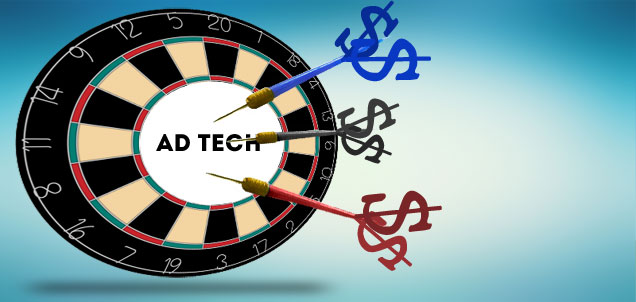
    Last week, early talks were reported between Google and ad tech firm Inmobi for a possible valuation of over Rs 12,000 crore. Inmobi founder Naveen Tewari later told employees that he was not looking for such a deal. The same day, it was also reported that e-commerce firm Snapdeal was looking to acquire Komli Media, another ad tech firm, for a potential valuation of over Rs 1,800 crore. Flipkart acquired Adiquity earlier this month.


    All this comes in the backdrop of a squeeze in the US. After an early flurry in 2013 and the first half of 2014, the number of ad tech initial public offerings have now dried up. But that hasn’t deterred new firms and existing ones from aiming for a slice for huge spends that are on stake as online ad spend continues to grow on the PC and mobile. It could also very soon enter the universe of wearables.


    inMobi: Going After Mobiles

    CEO: Naveen Tiwari, Employees: 900


    Last month, inMobi said it reached 1 billion unique mobile devices. This is precious real estate in the ad targeting world.


    inMobi connects those that want to sell ad space, like content sites, apps or game developers, with those that want to advertise on the mobile platform. Its technology helps to serve the right ad to the right user. For instance, when you are in your newspaper app you could be shown an ad for a bag you were planning to buy earlier on an e-commerce app. This is a simplistic scenario.


    inMobi builds audience personas and uses various targeting capabilities such as appographic targeting (based on a user’s app preferences) to determine the right user for the right ad.


    When the user engages with the ad by clicking on it, inMobi gets paid. Cost per click or cost per mille (mille referring to a thousand ad impressions) are some commonly used metrics.


    In addition to guaranteed engagement, there could other payment metrics such as guaranteed outcomes. For a game ad, the outcome could be a download, for an auto ad, it could a test drive query.


    A game developer who is an advertiser can also specify the goal of the campaign to be a certain number of high lifetime value users, who download the game and play it frequently by purchasing features such as lives and coins.


    “So as our ad network gets bigger, our knowledge about user behaviour gets better,” says Richard Sullivan, vice president and general manager, who attributes this and analytics and data sciences to better ad targeting and performance.


    To improve engagement, inMobi also innovates on how the ad is delivered. Native ads, where the ad looks and feels like the rest of the content on the page, although it is called out as an ad or sponsored content, is one such innovation that’s been found to increase user engagement.


    Komli Media: Helping marketers squeeze more value

    CEO: Amar Goel, Employees: 300


    It started as an ad network bringing together ad supply and demand for India and South East Asia. Today, Goel says part of its business is a demand-side platform and part of it is an ad network. The company is mostly about helping advertisers and marketers drive value through its offerings, such as the re-marketing demand-side platform, RevX, that is has developed.


    RevX is programmatically driven and is used by almost all the leading e-commerce firms in India and South East Asia, Goel says. The platform also integrates with customer relationship management data.


    The programmatic capabilities it is building are becoming a larger share of its business. It also executes rich-media campaigns and crossdevice campaigns, which are hard to do programmatically.


    Media.net: Money in Targeting at Scale

    CEO: Divyank Turakhia, Employees: 500+


    It is positioned as a contextual targeting specialist. Contextual targeting serves ads relevant to the context of the page as opposed to what the user was doing a while ago or a few days back. For instance, a user may have been on makemytrip.com to check out some flights. But if the user is currently reading an article on used cars, then contextual targeting will analyse the content of the page real-time to show ads relevant to it – an ad for a second-hand cars website, for example.


    “As of now the user may not be interested in seeing an ad about flights because he is researching cars,” says Turakhia. Most ad tech firms start with one niche and then expand to other areas, he adds.


    Media.Net gets a cut from what the advertiser pays the publisher. “Publishers will come to us only if we are able to offer them good rates and advertisers will pay more only if they get the desired results. So our targeting has to be really good,” says Turakhia.


    Source:The Economic Times

    Copyright © 2015, Bennett, Coleman & Co. Ltd.

    All Rights Reserved, Licensed to republish


    Future of Ad Tech Firms

    Globally, companies spent about $140 billion on digital advertising last year. One or more ad tech firms have a role to play in every one of these dollars spent. Going forward, ad tech will continue to play a crucial role in targeting ad spends precisely at the right consumers.


    “The key shift we are seeing is in making marketing personal again,” says Kirthiga Reddy, MD, Facebook India. She compares it to the convenience of a kirana store that can predict what you will buy and also suggest something new you may like, but with the scale of mass media.


    Facebook along with Google is leading the charge of ad tech with precise targeting and measurement capabilities in ways that weren’t possible earlier with a number of their products. They are the giants in the field. Every ad tech firm competes with them in some way but also collaborates with them because the size of the pie is so big.


    Of the $ 50 billion US digital ad spend, for instance, over 35% is with companies that are not household names like Google, Facebook, Microsoft and AOL, points out Divyank Turakhia, CEO of Media.net, an ad tech firm that runs the contextual ad programme for the Yahoo-Bing network. His firm serves ads on websites that are part of the Yahoo-Bing network.


    Ad tech firms – both big and small – are re-writing the rules of advertising, changing how online campaigns are created and priced and setting goals so precise that shopping for customers is no different from say, drawing up a grocery list.


    For instance, an advertiser may want to target, say, only South Korean men between the ages of 25 and 40 years and who have a taste for Indian food. The advertiser can also specify the purse: $100,000. After the campaign, the ad tech firm will return measurable results and any remaining dollars as well.


    The simplest kind is search targeting, where a person searches for a particular term. Here, the intent of the person and what he or she is looking for is clear. So the ads that come up are related to the search keywords. But a person searching for pizza delivery in Mumbai wouldn’t want to see an ad for a pizza delivery place in New York. This is where geo-targeting comes in, explains Turakhia.


    “Similarly, there is demographic targeting based on what your age group is or whether you are male or female. These are conventional ways of targeting that advertisers used for their campaigns. But today there are multiple mechanisms of ad targeting in so many complex forms, which combines all the data signals that are available,” he adds.


    A pizza delivery chain based only in New York can set a goal of 20 pizza deliveries for every $100 spent and the ad tech firm will try to get the results by optimising the ads to a suitable audience.


    Sophisticated ad buyers such as eBay India place several millions of ad bids a day based on multiple variables and parameters to get the best bang for its advertising buck. “On a daily basis, we place about 40-50 million bids. When you’re working with such large numbers there is no way it can be done manually,” says Shivani Dhanda, head – marketing, eBay India.


    It uses a bid management system that evaluates how much to bid for a particular user and if eBay wins the ad impression, the appropriate ad is dynamically put together. For instance, if the user is searching for a keyword ‘mobile phones’, the bid management system will consider various parameters such as if the user visited eBay, which phones he searched for and how likely he is convert before deciding how much to bid. The entire process from placing the bid in a realtime auction to when the ad is dynamically put together takes about 100-150 milliseconds and happens even as the user is entering a url.


    The tools that help advertisers do this are also supplied by ad tech firms. eBay, for instance, uses software from Pune-based firm Sokrati, founded by former Amazon executives, to manage its bids, along with an in-house bid management system.


    “Display (advertising) has risen from the ashes. Programmatic (real-time bidding) technology allows bidding for each of display unit on a one-to-one basis, recognising who the user trying to access the website is, what the context of the page is, and what the size of the ad unit is,” says Subra Krishnan, vice-president (products) at Vizury, a Bengaluru-headquartered ad tech firm, which has raised $27 million so far from multiple investors and has a presence in China, Japan, Korea and emerging markets such as India.


    Players are Evolving

    The industry has become so complex that most firms are reluctant to label themselves as anything more specific than ad tech players as they venture into areas that can add more intelligence and help in more relevant targeting of customers.


    Vizury, for instance, is known in India for its ad re-targeting products on the mobile and desktop. But it is now venturing into proprietary data and the kind of work that large software companies typically do with business intelligence software. Its newest offering integrates multiple customer data such as call centre and loyalty programmes to provide better market segmentation and targeting of the customer.


    “There are probably 100 different types of ad tech companies. It’s a kind of battlefield where various entities are trying to optimise various parts of the business and yet ultimately, there is the consumer who takes the final call,” says Tamara Gaffney, principal analyst, Adobe Digital Index, which provides research and insights on digital marketing.


    Adobe also has offerings in ad tech, which integrate a number of technologies.


    “It’s hard to explain but there would be players around targeting, optimisation, analytics… a good analogy would be the financial services industry where are buyers and sellers but many intermediaries,” says Amar Goel, CEO, Komli Media, which started off as an ad network bringing buyers and sellers together but is now building a lot of programmatic (realtime-bidding) technology and leveraging data.


    He declined to comment on reports of Snapdeal acquiring Komli. The driver for such ad tech deals, says Anupam Mittal, CEO of People Group and angel investor, is the access that large e-commerce firms like Flipkart and Snapdeal have to customer shopping patterns and behaviour. “These ecommerce firms have billions of page views. They know people’s shopping habits and what they are looking for, so they have some level of context just like Facebook and Google. They also want to acquire good teams that can help to build their own ad proposition to customers,” he says.


    Still, many listed ad tech firms have seen their market value fall on Wall Street. “Ultimately, there are two kinds of ad tech: one captures the intent of the user, and Google does that.


    The second is when you know so much about the user that you can present the relevant ads. Facebook does that. Everything in between is a promise of something that will be built. Margins are wafer-thin if at all they are there.


    Google and Facebook own their audience so their margins are much better because they are not sharing the outgo with the publisher,” adds Mittal (see table).


    However, it’s equally true that there are smaller firms building smart capabilities that the likes of Google, Facebook and Twitter are interested in. “The very fact that Google buys companies nearly every year shows that they are getting beaten at their own game,” points out the CEO of an ad tech firm, requesting anonymity.


    Google’s mobile ad platform, AdMob, was through an acquisition in 2009. Similarly, Twitter bought MoPub, a startup helping mobile publishers manage their inventory


    Consumer is The Sweet Spot

    Fashion e-tailer Myntra, which uses both Vizury and Komli, says it has translated to higher revenues. “Our pain point as an e-commerce player is we create the intent but the average conversion rate (people who buy after visiting the site) is only two out of 100,” says Priyanshu Kumar, digital marketing manager, Myntra.


    On January 3, when Myntra held its ‘End of Reason’ sale, it notched up a record Rs 100 crore in eight hours. At least 3% of that revenue could be attributed to the re-marketing campaigns run by Komli and Vizury on that day as they brought back potential customers who had visited the site but dropped off, says Kumar. “They were very aggressive going after the users who had visited our site but not converted,” he says. Myntra saw a conversion rate of 6% on that day as compared to the e-commerce industry average of 0.8% – 2.5%.


    The most reliable data about users online is first-party data, which is collected by the site you are browsing, says Gaffney. Second-party data is obtained from exchanges which, in turn, get the information from participating sites that sell their information to the exchange for a fee.


    Such success stories are also helping ad tech win new following among companies in manufacturing, consumer and other industries in India. “Three years back, only internet companies were the most visible users of our ad offerings. But since then we have seen traditional industries like auto, FMCG and the government take it up signficantly,” says Nitin Bawankule, industry director (Ecommerce, Local, Technology), Google India.


    Ford India has hiked its digital ad spends from 5% of its ad budget to 15%-20% in less than four years, says Anurag Mehrotra, director (marketing, sales and service). Tushar Vyas, head digital (South Asia) at advertising agency, GroupM, says digital ad spends are growing three times faster than the overall ad growth.


    The mobile is the next frontier in advertising with its ability to identify the user location as well as predict user behaviour based on the device being used.


    This could be the next level of evolution for ad tech firms. With the mobile, for instance, advertising technology can even find out if the user is standing or sitting, says an ad tech executive.


    “If the advertising landscape is complex, the mobile landscape will make it more so. When you combine the advertising technology landscape with the mobile technology landscape, you could end up with this almost supernova of advertising targeting and data collection opportunity,” says Gaffney. The launch of Apple’s smartwatch and other smartwatches could take that to another level. Ad tech is here to stay and grow.


    Source:The Economic Times

    Copyright © 2015, Bennett, Coleman & Co. Ltd.

    All Rights Reserved, Licensed to republish


  • Flipkart to pursue online advtg, brand consulting like Facebook, Google

    By Aditi Shrivastava & Harsimran Julka


    Flipkart will soon offer online advertising and brand consulting for vendors using its electronic marketplace, its diversification into fee-based businesses much like Google or Facebook aimed at chasing new high-margin revenue streams to accelerate profitability ahead of a potential public listing.


    On the commerce front, the company has picked furniture as a category it will seek to expand in as part of this thrust into higher margin areas, sources familiar with the company’s plans told ET.


    The diversification into publishing online ads and brand consulting follows a recent top deck rejig that had founder and Group CEO Sachin Bansal shift from daily operations to focus on strategic initiatives.


    He will lead the new advertising revenue thrust, which will see Flipkart, one of India’s most-recognised Internet brands with a large web presence, become also an online ad publisher much like Facebook and Google.


    Flipkart’s IPO plans are driving it to explore new avenues that would help it turn profitable or at least lower its losses, people familiar with the plan said. “They need to show some solid revenue ground apart from its marketplace to go public,” said one person aware of the developments.


    Flipkart is the sixth-most visited website in India, according to website ranking site Alexa. Google’s various sites, Facebook and Yahoo occupy the first five spots. It already carries ads on its website from brands such as Max New York Life, Reliance General Insurance, ICICI Prudential, Franklin Templeton India and Bharti AXA, but presently earns only a minuscule sum from this.


    “We know something about the most important decision that a consumer makes, that is purchase. What you like on Facebook versus what you spend your own money on, the value of that data is a lot higher,” said Mekin Maheshwari, chief people officer at Flipkart.


    NEW TEAM BEING HIRED

    Sachin, who is hiring a new team for the advertising initiative, is exploring opportunities to be able to personalise and create ads that would be relevant to both customers and advertisers, he said. “Overall, there is a great opportunity to increase their revenues, and coupled with the fact these ad revenues will be at very high margins, this will definitely help these businesses from a profitability standpoint,” said Kartik Hosanagar, professor of ecommerce at The Wharton School.


    Ravi Vora, senior vice-president (marketing), will head a newly formed brands consulting group that will work with small and medium businesses to build their brands online. “(The initiative) is broader than just Flipkart and may not be completely online,” said Maheshwari. “We will enable emerging brands in India to carve out their Internet strategy.”


    Flipkart has about 30,000 small and medium business sellers on its platform, and aims to grow that number to more than 1 lakh in the next 12 months.


    FOCUS ON FURNITURE TOO

    As for furniture, the company expects it to emerge as a large category in the online retailing market on the lines of other high-margin categories such as electronics and fashion.


    The furniture category is a highly profitable business with margins in the range of 40-60%. “We will have an added focus on furniture category on our commerce platform, which we look to build ground-up,” said Ankit Nagori, head of marketplace at Flipkart.


    It was reported recently that Snapdeal could record a five-fold increase in losses going up to $250 million (Rs 1,500 crore) for this fiscal year. Industry experts estimate Flipkart’s losses would be at least double that number (over $500 million), with the company expecting to sell goods worth $8 billion in 2015.


    Sunil Wattal, who teaches management information systems at Temple University in the US, said that by being able to show profits earlier, Flipkart will be in a stronger position when it offers the IPO, and could possibly even expedite the timing of the listing.


    DIVERSIFICATION RIGHT STRATEGY?

    Vivek Wadhwa, a fellow at Stanford Law School and director of research at Duke University, doesn’t think diversification is the right strategy.


    “This is a mistake that many Indian companies make: try to become conglomerates that are in several businesses. It has worked for a few old line companies but does not work in the Internet space. Here you need to focus and execute with precision,” Wadhwa said.


    Over the past year, Flipkart, Snapdeal and Amazon India have been engaged in a cash-draining battle to acquire customers. Flipkart in January recorded a gross merchandise value of $3 billion while Snapdeal was on a $2-billion run-rate that month and Amazon at more than $1 billion.


    The Indian ecommerce market is projected to reach $43 billion in value by 2019, according to Nomura.


    Last year, Flipkart raised a total of $1.9 billion, at a valuation of about $11 billion (Rs 69,000 crore). In December, the eightyear-old company announced a $700-million investment round. Its investors include Tiger Global, DST Global, Steadview Capital and the Qatar Investment Authority.


    Source:The Economic Times

    Copyright © 2015, Bennett, Coleman & Co. Ltd.

    All Rights Reserved, Licensed to republish


  • Do Thumbthing, urges flipkart in latest campaign

    By A Correspondent


    For those planning to shop online, they can do so by just using their thumb. That’s the key message in Flipkart’s latest campaign.  ‘Do Thumbthing’ campaign gives a creative twist to Flipkart’s mobile app, focusing on the shoppers thumb as the central character.


    The humorous campaign conveys the ease of mobile shopping and how a delightful experience is literally at the tip of one’s thumb. It brings alive the fact that shopping is more fun when it can be done from anywhere and at any time a shopper wants – from your home, at the gym, at a party.


    Today well over 70 per cent of traffic to Flipkart comes via the mobile app and majority of these shoppers-most of who are first time customers-are from tier II & III cities.  With increase in internet penetration, adoption of smartphones and lower data costs, smaller cities are more active online than ever which shows that m-commerce is poised to grow tremendously in the next 6 -12 months.


    Commenting on the launch of this campaign Mausam Bhatt, Senior Director – Mobile Marketing, Flipkart, said “With the Do Thumbthing campaign our focus is to make the Flipkart mobile app the medium of choice when it comes to shopping online. The various elements of this campaign-videos, games, contests, special app offers- will help us generate buzz about the Flipkart Mobile App amongst the younger audience. We are confident that this digital campaign with its fresh approach will establish an instant connect with the new generation of customers, and encourage them to experience online shopping the mobile way.”


  • Quick to Quickest: In next 6 months, Flipkart may deliver your packages in just 3 hours

    By Varun Sood


    Indian online shoppers would ideally like to push the button on their purchase and hear the doorbell chime immediately after, announcing delivery. That’s not going to happen anytime soon but e-tailers, led by Flipkart, are trying to get as close as they can. The country’s largest online retailer is figuring out how it can get goods to the customer’s doorstep in as little as three hours.


    Bengaluru-based Flipkart is evaluating which products and cities it can start with even as it considers pricing for the service, which we learn could be rolled out in the coming six months.


    “We have to figure out the technology, pricing for these services,” said Sujeet Kumar, head of WS Retail and ekart Logistics. “Such deliveries are necessity driven — say a thing a customer wants to gift or something he needs immediately.


    Mr Kumar, who joined Flipkart in 2008, declined to put a date on when the logistics arm, ekart, could start with this service. WS Retail, which used to be part of Flipkart, has since been spun off and is now the largest vendor on the Flipkart marketplace. “Flipkart has to offer a viable business model because it (3-4- hour delivery) will be expensive for the customer,” Kumar said in an interview last week. However, we learn it could start with some products in 3-4 cities as early as July.


    India’s e-commerce space has grown rapidly in the last few years since Flipkart first started operations in 2007, when most deliveries took a few days. Now, the three top online retail firms — Amazon India, Flipkart and Snapdeal — offer same-day delivery in big cities for a fee. They deliver the next day for free in the big cities but deliveries can take longer outside these areas


    Faster delivery could, therefore, prove to be a game-changer in the country’s fiercely competitive e-commerce space, reckon experts, and shortening the shipping time to a few hours may draw more users. This could also persuade Amazon India to bring the service to the country. Its parent ships goods, including detergents and shampoos, to consumers in Manhattan in 60 minutes for a $7.99 fee.


    To be sure, there are more than a few wrinkles that need to be ironed out, said experts.


    “There are two important things retailers need to get right to make this work,” said Karan Girotra, professor of sustainable development at Insead. “First, they need to select a small subset of their offerings which are available with these time frames. Second, meeting this delivery promise requires organisations to build very different logistics and operational systems than those necessary for traditional delivery route-based delivery systems For instance, retailers may need to have many more warehouses in central parts of the city to make these work.”


    Flipkart, which already offers users across 10 cities same-day delivery, says it has a strong logistics and delivery team in place, with 13 warehouses and over 12,000 people helping with last-mile delivery. “The kind of data we have is much richer than, say Google Maps,” said Kumar, adding that the company will start deploying more technology as it focuses on providing value-added services, including faster delivery, as it seeks to edge past competition.


    Mr Girotra also believes that the marketplace model may make it difficult to bridge the time barrier.


    “Players with marketplace-based models… will find it much harder to pull this off,” he said. “For such players, the delivery often involves picking up the merchandise from a third-party location and it is much harder to offer ultra-fast delivery.


    Source:The Economic Times

    Copyright © 2015, Bennett, Coleman & Co. Ltd. All Rights Reserved

    Licensed to republish


  • Lowe’s new campaign for Flipkart spreads happiness

    By A Correspondent


    Lowe Lintas Bangalore has rolled out new campaign for Flipkart. The campaign titled Iss Mein Hai Kisi Ki Khushi’ aims to bring alive the magical moments that emanate by shopping on the Flipkart mobile app.


    The campaign kicks off with a couple of stories about how shopping on the Flipkart Mobile app can help fulfil small wishes, in an instant. The idea was to not just appeal at an intellectual level but also on an emotional level by representing real life events, where app shopping triumphs over web and offline shopping.


    Commenting on the initiative, Shoumyan Biswas, Senior Director – Marketing, Flipkart, said, “Mobile is the future for e-commerce. We believe that the instant connect and convenience afforded by a mobile experience is unparalleled. Based on our customer feedback on how the mobile app has made life easier for them – we wanted to explore this aspect through our new campaign and create active consideration by seeding a deep emotional bond. For a generation living on the mobile, we are positive that these ads will have an instant connect with them.”


    Commenting on the same, GV Krishnan, Executive Director, Lowe Lintas Bangalore, said, “Brand Flipkart means lot to us and the entire team has put in tremendous effort to bring this first campaign alive. The campaign dwells on a powerful emotion – the joy of fulfilling someone’s wish – and has a universal appeal. The Flipkart Mobile app allows one to access a range of products anytime,anywhere and ‘Make Any Wish’ for your near and dear ones come true. I believe this has been brought alive in an engaging manner by the team.”


    The creative brief given to the agency was to come up with an interesting way to showcase how shopping in India is changing and how mobile shopping apps are fast becoming the key to on-the-go shopping today.


    The first film shows how the Flipkart mobile app helps bring a smile on a little girl’s face who was upset as she couldn’t participate in a dance. Seeing the little girl upset, her cousin orders the dress through the Flipkart shopping app, which instantly brightens up her mood.


    In the second film, while at a friend’s wedding, a girl realizes that she has lost her luggage. The protagonist overhears her distress call and uses the app instantly to solve her problem by ordering something to wear at the wedding. This small gesture sparks off a strong chemistry between the two.


    Highlighting the creative standpoint taken by the team, Rajesh Ramaswamy, Group Creative Director, Lowe Lintas Bangalore said, “The brief was a great guide for us to arrive at this communication. Creatively, the task was to present the role of the mobile app in everyday life. To arrive at an interesting yet relatable context was our biggest challenge. And unlike other categories, the possibilities of situations where this could play out were many. ‘Which one to pick?’ is a good place to be in. It’s great fun when observations and insights stemming from our own lives can be used.”


    The campaign has been launched across major television channels and will be played suitably on multiple digital platforms as well.


    Team Credits –

    Agency – Lowe Lintas Bangalore

    Client – Flipkart

    Creative – Arun Iyer,Rajesh Ramaswamy, UjjwalKabra, Indrasish Mukherjee, Adarsh Atal

    Business – GV Krishnan, Anand Narayan, Kunal Madhavdas, Pritika Gupta, Sandhya Subramaniam

    Planning – S Subramanyeswar, Vishal Nicholas

    Producer – Curious Films

    Director – Vivek Kakkad


  • Flipkart set to raise $1.5 billion in another round of mega fund-raising

    By Radhika P Nair


    India’s largest online retailer, Flipkart, could begin another round of mega fund-raising as it expands its product range catering to a widening base of customers. The Bengaluru-based firm will seek funding of about $1.5 billion and has begun shortlisting potential investors, according to two people with direct knowledge of the developments. “Talks haven’t begun yet and Flipkart is looking to target only a few investors that they want on board,” said one of the two persons directly involved in the process. “The fund-raising process is expected to begin in January 2015.”


    Flipkart, when contacted, declined comment on its fund-raising and investment plans. The company has raised a total of $1.2 billion this year and has just completed a round of festival sales marked by steep discounts. “At the pace at which it is making investments, Flipkart will deploy most of the funds it has raised by around mid-next year,” said the source.


    Discounting still accounts for a chunk of Flipkart’s monthly costs, with promotions costing it at least Rs 70 crore each month, according to a person who works with Flipkart at a strategic level.


    The company has also identified very specific areas to pump in money to ensure its goal of doubling in size by next year.


    Post the blockbuster festive season sales of October, when the company shipped around 80 lakh items versus 50 lakh on average, the company has revised its internal targets to reach sales of $4 billion by the end of the current fiscal, according to sources.


    A major area of focus is increasing the categories in which they have leadership. “It has built a lead in fashion with the Myntra acquisition. The same push needs to happen across categories,” said Manish Saigal, managing director at advisory firm Alvarez and Marsal.


    “Furniture and packaged food will be launched very soon,” said a person directly involved in the process. The teams are being built for these product categories.


    Rival Amazon India recently launched its gourmet and specialty foods category with over 155 Indian and imported brands. Amazon is yet to launch furniture. Snapdeal, on the other hand, already has a presence in these segments.


    “There are aggressive existing competitors and large offline players could come in very soon. It makes sense to extend its leadership now,” said Arvind Singhal, chairman of retail advisory Technopak.


    The seven-year-old company will launch a wider range of lifestyle products and consumer durables. It already has its range of tablets and digital accessories (Digiflip), apparel (Flippd) and home appliances and personal healthcare products such as sandwich makers and hair dryers (Citron).


    According to a person directly involved with the process, Flipkart will put more marketing muscle behind in-house brands.


    “We have seen how Myntra’s inhouse brands have performed and scaled. That is what will be done with the new brands.”


    For Myntra, its portfolio of about 10 in-house brands accounts for about 20% of overall sales. Its biker brand Roadster is already a Rs 100-crore brand.


    Flipkart’s stake acquisition in consumer appliances service provider Jeeves Consumer Services should be seen in this light. “When they have their own brand of appliances, they will have to handle servicing, warranties and other such issues.


    They can’t do this all on their own,” said one of the persons who spoke on this matter. A Flipkart spokesperson said through this (strategic) partnership, Jeeves will provide exclusive value-added services in ecommerce to Flipkart customers across India.


    “Flipkart and other marketplaces will have to invest humungous amounts into logistics and fulfilment if they want to cover even rural areas,” said Technopak’s Singhal. Flipkart has a delivery network of about 300 locations and is intending to expand its reach to even small towns.


    In each of these areas, Flipkart is also looking at acquisitions.


    When Flipkart appointed former Canaan Partners associate Nishant Verman as its M&A head earlier this year, its HR head Mekin Maheshwari said inorganic growth is a strong component of the vision to make Flipkart a $100-billion company. Snapdeal and Amazon have also made their intentions clear to acquire companies in areas ranging from mobile technology to payments.


    “The over-arching theme will be acquisitions as they try to bridge existing gaps and scale up faster,” said Alvarez and Marsal’s Saigal.


    Source:The Economic Times

    Copyright © 2014, Bennett, Coleman & Co. Ltd. All Rights Reserved

    Licensed to republish