Tag: Dentsu India

  • Rohit Ohri takes charge at FCB Ulka

    Rohit Ohri

    By A Correspondent


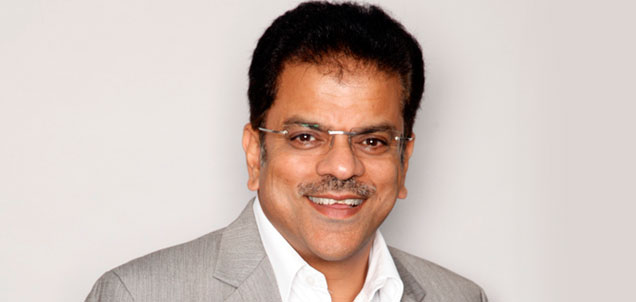
    As you read this, Rohit Ohri has taken charge as Group Chairman and CEO of FCB Ulka. The former Dentsu India CEO was until recently serving a cooling off period. Ohri is scheduled to address employees at a town hall later this week.


    As may be recalled, in July 2015, Carter Murray, Worldwide CEO of FCB, had issued a confirmation on Ohri’s appointment and that he succeed Nagesh Alai who, after 25 years with FCB who was scheduled to move into the role of Global Vice-chairman at FCB, working on special initiatives for Murray.


    “I want to thank Nagesh for dedicating his career to our FCB operations in India and for helping FCB Ulka become one of the strongest agencies in the country. I look forward to working with him on special global initiatives,” said Murray.


    On Ohri, Murray said the following in a communiqué: “When Nagesh and the Board introduced me to Rohit as someone they felt fitted the culture of the company, I was struck by his passion for what we do, his focus on great work and strong client relationships, and his natural gravitas. If you add his track record in the industry, Rohit is someone whom I think will lead FCB Ulka forward with vision and energy, and keep the flame strong.”


    With FCB’s newly restructured global company, Ohri will serve as a member of the global operating committee and report directly to Murray in New York.


    “FCB has gone back to its roots and is reigniting its brand essence under Carter’s leadership. The opportunity to partner with him, in what could be the most defining time in the history of FCB convinced me to quit my regional assignment and come back to India,” said Ohri in a statement.“FCB Ulka has a rich legacy of creating solid brand-building work. It’s a company that values partnerships, people and culture. The opportunity to build on this legacy and to take a great agency to greater heights is truly exciting. I’m delighted to be at the right place at the right time and with the right people.”


  • Former Dentsu India chief Sandeep Goyal to launch equal JV with Zeotap

    By Pritha Mitra Dasgupta


    Former Dentsu India chairman Sandeep Goyal is launching an equal joint venture with German startup Zeotap that will provide a platform for advertisers to buy media space on mobile platforms through real time bidding, based on browsing history of individuals. Goyal is currently scouting for a name and a head for the new company that will focus on programmatic advertising, or automated media management. The venture will be operational within the next 4-6 weeks, he said.


    His company Mogae Media has signed a memorandum of understanding with Zeotap to float a 50:50 joint venture in India. Goyal, whose non-compete clause with Dentsu is ending this year, said financial structures of the new entity are being worked out.


    In India, programmatic buying is usually used for the digital platform. But the Mogae-Zeotap venture is looking to do it on smart phones and smart devices. “This company is primarily targeted to programmatic advertising on the mobile, both WAP and inapp”, said Goyal.


    “The new company has four parts – a data management platform, an ad exchange that enables real time bidding (RTB), a supply side platform (SSP) that brings publishers together, and a demand side platform (DSP) that aggregates demand from advertisers,” he said.


    Zeotap was launched in November 2014 by a team with extensive experience at Vodafone, IBM and Fyber (RNTS Media) as a data platform for leveraging the real time bidding (RTB) advertising ecosystem.


    It recently raised series A funding of $6.4 million, or about Rs 42 crore, from Capnamic Ventures, Iris Capital (backed by advertising conglomerate Publicis and telecoms giant Orange) and prominent business angels including former executives at Nokia and Yahoo.


    Daniel Heer, cofounder and CEO of Zeotap, had said that the new investment “will be employed towards Zeotap’s international expansion as well as to substantially grow our global technology centre in Bengaluru”.


    Source:The Economic Times

    Copyright © 2015, Bennett, Coleman & Co. Ltd. All Rights Reserved

    Licensed to republish

  • Sandeep Goyal to launch mobile-first ad agency Tango Media

    By Pritha Mitra Dasgupta


    Sandeep Goyal, founder and former chairman of Dentsu India and current owner-promoter of the Mogae Group, is ready to launch Tango Media – a technology-driven company that aims to marry television commercials and content with mobile phones.


    With his five-year non-compete clause coming to an end, Goyal said Tango Media is the first step towards his return to advertising which was first reported on April 28. While Goyal had declined to comment on the development then, he admitted as much now. “Tango Media is the first step towards that. But whatever I do will be mobile first, and then we will go backwards. So it will be mobile, digital and then other media,” said Goyal.


    He admitted that traditional advertising business is both low on margins and satisfaction, but said that he “will work towards building a new-age agency”. He said that Tango Media will be a wholly-owned subsidiary of Mogae Media and the company has spent the past three years building the platform. While Tango Media has already been incorporated, the platform will go live from August 15.


    “Ninety per cent of all advertising is intended to elicit consumer response, mostly an action that pushes brand sales. But call-to-action (CTA) on TV tends to get lost as an end-frame super (mostly dwarfed by the brand logo), either asking the customer to send an SMS, or message a short-code, or call a particular number. Consumers rarely remember the number.


    Hence, the brand never really gets the necessary bang for its buck,” said Goyal. “We have invested the last three years in figuring out, researching, developing and perfecting a solution that makes it easy for consumers to remember and recall both the brand and its call number. And the solution works without needing to download an app or use the internet,” he said.


    Tango Media has roped in Sandeep Bajpai, who had previously worked with Tata DoCo-Mo and Spice as the marketing head. Yogesh Sachdeva, who formerly worked with Airtel and Aircel, has been appointed the chief technology officer. Tango Media is still scouting for a CEO. “In the next one year, we plan to spend upwards of Rs 100 crore on Tango Media of which we will spend Rs 40-50 crore in advertising. We plan to call for a multi-agency creative and media pitch soon,” said Goyal.


    Source:The Economic Times

    Copyright © 2015, Bennett, Coleman & Co. Ltd. All Rights Reserved

    Licensed to republish

     

  • The Most Annoying Buzzwords of 2014


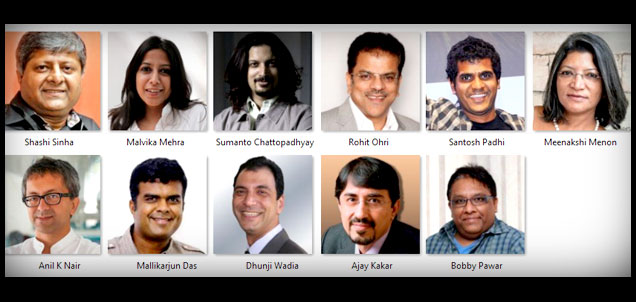
    We asked the industry’s finest for buzzwords they grew heartily sick off in 2014. Big Data and Viral were the big losers. Read on for the rest:


    Shashi Sinha, CEO, IPG Mediabrands

    1. Talent

    2. Compensation

    3. Digital

    4. Television measurement and

    5. Analytics were annoying as the more people spoke, the less they did anything about these things.


    For 2015, for starters, I have high hopes from the new TV measurement which Barc will put out, media agencies getting into content production, collaboration between all constituents of the ad ecosystem, budgets which will hopefully be at landmark levels and the World Cup which we should win again.


    HALL OF SHAME 

    Viral – Most of the time it is just an ad that runs way too long. Get some scissors, people


    Big Data – The ultimate Brahma Astra for the advertising charlatan


    The only viral I know of is the one that requires the intervention of a doctor

    Perhaps the most, abused & misused terminology in the year. Runs the danger of being called ‘Pig Data’.

    It’s just analytics. People have been doing this ever since humankind stepped on this planet.


    Malvika Mehra, National Creative Director and Executive Vice President, Grey

    The 5 most oft used words in 2014 were 1. Guys 2. Let’s 3. Make 4. A 5. Viral.


    Also ‘Take your time (4-5 minutes is great), but please don’t take my money. No budgets this year. And while you are at it, make it so stunning that it is ‘organic’ (unpaid distribution)’. Ji Sirji. ‘But ultimately make me a TVC. And I want a ‘BIG, LAUNCHY’ feel for our product in 30 seconds or less. Chal, paanch second aur le lo’. Ji sirji.


    The Pitch Bitch: ‘Of course we love you guys! We are just opening it up to 10 other agencies to inject some freshness into the brand (and test how much lower will they drop their price vis a vis yours for the same or more amount of work)’. Par Sirji?


    Femvertising: From soap brands, to makers of shampoos, sanitary towels, watches to home appliances and mobile network providers, everybody suddenly wanted to ’empower the woman’. I get the noble intent, but wish the brands would really ‘walk the talk’. Else it’s just a ‘token’ gesture. And consumers see through that inauthenticity.


    Interactive Pre-rolls: With stern warnings of ‘If you skip this ad, I will have to kill not only Jack and Jill and Mary and her little lamb, but also Old MacDonald along with all the cute animals on his farm’.


    Research: Gut instinct is officially dead. It got replaced by the R word. Heard about ‘No guts. No glory’? Not lately.


    Sumanto Chattopadhyay, Executive Creative Director, South Asia, Ogilvy & Mather

    Native Advertising: I imagine people wearing grass skirts and clapper boards singing jingles.


    Vlog: At times we Bengalis mix up our Vs and Bs. That’s what I thought this was all about!


    Content: As in, ads vs. content, content marketing. Like ‘traditional’ advertising has no content? I’m content to pass on this one.


    Social: Yeah, why not? Let’s party. And get paid for it! That’s what I say.


    Seamless: Every element has to seamlessly work with everything else. Imagine if our clothes were like that too! Now that would be some fashion trend.


    Santosh Padhi, Co-founder and Chief Creative Officer, Taproot India

    Pitch: If you do not respect yourself nobody will.


    Research: Like sex determination, it should be banned


    Low Budget: Instead of 300 insertions can we do 280 and improve the quality of the creative?


    Urgent: Premature babies forcefully welcomed will always run a risk


    Celebrity: They are the super highly paid creative directors, why do you need one more creative agency?


    Rohit Ohri, Executive Chairman, Dentsu India and CEO, Dentsu Asia Pacific (South)

    Integrated: Integration is the process, co-creation is the magic.


    360: 360 degree campaigns are consumer conversations in bursts, 365 is everyday relevance.


    Alignment: Alignment is passionless, belief runs deep.


    Structure: Structure constrains, open source liberates.


    Procurement: Vegetables are procured, ideas are partnered.


    Meenakshi Menon, Chairman, Spatial Access

    Big Data: That has to be on the top of my list. It’s just analytics. People have been doing this ever since humankind stepped on this planet.


    Twitterati: Everybody has become an instant expert on Twitter. I’d replace the term with ‘scum.’


    ISIS: ‘Isis’ is supposed to be the goddess worshipped as ideal mother and wife. Our vocabulary keeps evolving, sometimes not in the right direction. I’d call the group as a distortion than assigning them the name of a goddess.


    Homechef: Where mothers cooking for their families had some dignity to it, now we have a whole new concept of women cooking for complete strangers that they invite at home. The food is charged, of course. It’s just a little pretentious a term. Just call them plain old cook, maybe?


    Climate Change: It only gets talked about. Never acted upon. Perhaps replace it with – learn to breathe under water? Or ‘Grow gills?’


    Anil Nair, CEO and Managing Partner, L&K Saatchi & Saatchi

    Integration: The term liberally used when you don’t have a clue of what to do with your brand. It’s been institutionalised now. We will have Chief Integration Officers everywhere in no time. Put an end to this painful word. Replace it with ‘We need to have an idea,’ Sirjee.


    Social Listening: It’s something that our good old researchers have been doing for ages. It’s nothing more than trend analytics, only instead of taking a dictaphone out to record voices, you’re recording them off Facebook and Twitter. Just call it ‘consumer understanding’ and do not make an unnecessary tool out of it, please?


    Viral: The only viral I know of is the one that requires the intervention of a doctor and loads of medicine to go away. I don’t care where this term came from, it needs to disappear. It’s an epidemic that needs an antidote.


    SEO, SEM: Why are we making a mountain out of a molehill? Can we not get caught up in the process and its terminology and revert to a simple non-jargonised world?


    Big Data: For God’s sake, the database just got bigger. But it always existed. The most successful political campaign of this year was based on pure emotional advertising and not big data. Let’s stop jargonising information. Call it what it is (read: information).


    Mallikarjun Das, CEO, Starcom MediaVest Group (India)

    Big Data: A phrase bandied too easily and too much, especially by those who pay scant regard to rationality. The ultimate Brahma Astra for the advertising charlatan.


    Programmatics: A term used in context with media buying, especially on digital, when what they are doing is just using the optimiser.


    Fragmentation: The only problem with using the said buzzword is that it’s often used in a wrong way to strike some sort of terror in a client.


    Storytelling: Need I say more?


    360 degree: This term is like that sugarcane that’s passed through the machine 300 times. There’s no juice left in it and yet it’s being rolled one last time.


    Dhunji Wadia, President, Rediffusion Y&R

    Big Data: Perhaps the most, used, abused and misused terminology of the year. It runs the danger of being called ‘Pig Data’. There are questions regarding the implications of the approach and also the way it is currently done. It needs to look at data holistically – Total Information.


    Digital Evangelists: Don’t need them as you cannot preach to the converted.


    The ‘Selfie’ Contest/Promotion: Replace it with better imagination.


    E-commerce ‘Discount for the Day’: That runs for years together.


    Free App Download: With more and more retailers and brands reaching for e- and m-commerce, there is an explosion of apps to be downloaded. Begs the question, ‘Why would anyone pay to download such an app?’


    Ajay Kakar, CMO, Aditya Birla Group – Financial Services

    “Isse viral kar do!”: Which is what every client says. It’s content, not viral, please.


    “Facebook has 50 million visitors!”: So what? VT station has more people visiting, does that mean we put all our ads there?


    New media: Let’s just say ‘customer’ as opposed to new, old, traditional, or any other kind of media. Creative awards: Awards should be for creatives that work.


    Pitches: Here a pitch, there a pitch, everywhere clients flirting. Serial pitching must end. Let’s call them ‘Brand Custodians’ and not pitchers, shall we? Clients and agencies must stop playing the blame game. If one is the crutch to your success there’s no way one should let go.


    Bobby Pawar, Director and Chief Creative Officer, Publicis Worldwide

    Viral: For the love of likes, it’s just a video until lots of people see and share it. Most of the time it is just an ad that runs way too long. Get some scissors, people.


    ATL/BTL: It implies a caste system of ideas. The good ones go above, the so-called ‘hard working’ ones slide under. It shouldn’t matter where the idea lives, it must be good enough to move your audience. People don’t care, therefore you must.


    But: This is phaasi ka phanda for ideas. It is crueler that a blunt ‘no’. Why? Because it is preceded by some waffling words that give hope to the creative, then ‘but’ shows up and yanks the handle.


    Deadline: Nothing induces a creative butt-clenching moment like this word. Yes sir, three bags full sir, our work is time bound, but does it have to sound so, erm, deadly?


    Purchase: It’s the leading cause of hair-loss among agency CEOs.


    Source:The Economic Times

    Copyright © 2015, Bennett, Coleman & Co. Ltd. All Rights Reserved

    Licensed to republish


  • Shine launches new advertising campaign

    By A Correspondent


    Shine.com has put up a good show this year that saw them launch a portal exclusively for IT jobs (tech.shine.com), increase their database to 15 million, venture into e-learning offerings for candidates and substantially increase their new client count apart from improving satisfaction levels of existing clients.


    Seeing the increasing usage of mobile phone in job search, Shine.com is now targeting to become a ‘mobile-first’ company where the entire registration and job search process for a candidate can happen only on a mobile phone. Apart from simplifying the user flows on mobile, Shine.com has also added exclusive features on its mobile app that lets candidates leverage their personal networks to find people in companies where they want a job.


    Commenting on this unique feature, Amit Garg, Business Head – Digital, HT Media, said, “For us to give value to jobseekers and recruiters, we are always experimenting with new technology to create brand new solutions that would take the industry ahead. While doing so, our research pointed us to the ‘power of weak ties’, a seminal study that says that your next career move is likely to come from people who are not our closest friends but are likely to connect you to professional circles that you don’t have access to. Our new app leverages these ‘weak connections’ of a candidate and our consumer proposition says that Shine.com will come to your use where your best friends cannot.”


    Rohit Ohri

    Rohit Ohri, Executive Chairman, Dentsu India and CEO Dentsu Asia Pacific (South), said, “We’re really excited about the new Shine.com campaign. Conceptualised by Soumitra Karnik and the Dentsu Creative Impact team, the campaign introduces a mascot for brand Shine.com. A mascot who is an innovative thinker and a quick solution provider to everybody’s job-related problems. We’re hoping that Mr M will become a brand property that will give Shine.com memorability, relevance and ultimately leadership in the category.”


  • Upclose with Rohit Ohri, Dentsu India


    By Pradyuman Maheshwari


    After 21 years at JWT, Rohit Ohri moved to head Dentsu India in mid-2011. A scuba diving and golf enthusiast, Mr Ohri completed three years at Dentsu in August this year. From an all-Japanese client set, today over 70 percent of his clients are homegrown.


    With Taproot and WebChutney in the fold, Mr Ohri is now looking at more acquisitions – Public Relations consultancies, Activation companies and even regional agencies. Excerpts from a freewheeling conversation with Rohit Ohri:


    Over two decades at JWT – 21, to be precise and now three years at Dentsu. How was the transition and the journey been thus far?

    Three years have been enormous in terms of learning. For 21 years in JWT, I learnt at a particular tempo and pace. Being the largest advertising agency in India, there are systems and processes which kind of work on their own and you don’t really need to do much around them. When I joined Dentsu, the entire organisation had to be built. From IT to HR to the talent and client management systems, all that had to be put into place. While the previous management did a pretty good job in terms of launching Dentsu in India and getting clients, the fundaments were pretty weak. One of the big things we needed to do was to put these in place. It wasn’t just a quick-fix to get the organisation back on track, it was really about transformation. In the three years, we’ve grown significantly. In 2013-14 we’re the fastest growing Dentsu branded agency in any country anywhere in the world.


    When you joined, it was a depleted set of accounts…

    After the previous management and the top bosses moved out, there wasn’t any Indian leadership. There was an exodus of Indian clients and a lot of the Japanese clients weren’t really happy with the instability in the agency. There were challenges on every count. All the Dentsu-branded agencies were in the red. When I joined, I didn’t realise how big the mess was, but I knew it needed much fixing. Eight-nine months is a huge time for an agency to lose a lot of its momentum and its business.


    The fact that you have to build afresh must have also been an opportunity for you to set up an all-new organisation.

    Yes, we built the whole agency again ground-up; I dipped into my years of experience at JWT, into what was the University of Advertising, and I was fortunate enough to pick out the things that would work and leave things that wouldn’t.


    As you look back, would you say joining Dentsu was the right decision?

    The amazing thing is when the news broke on my joining Dentsu, many people called and said: ‘Are you nuts?!’


    Some of us in the media also thought the same.

    (laughs) They said I must be crazy. If I waited little longer, I’d be the head of JWT! Why quit? Today, the same people say this was an inspired move!


    21 years at JWT is not a short time. Clearly, the path to ahead was known to you. If it wouldn’t be JWT directly, a Contract, etc?

    Yes, but it wasn’t defined. It would’ve been a zig-zag road and gone up there eventually, but I don’t think we had great clarity behind that at that particular time.


    Many people have left JWT in their prime. Wonder why.

    It’s different strokes for different people. I felt whenever I needed growth, JWT was able to provide me the space. When I was in Kolkata from just being an account executive to heading all of account management, I said I needed another opportunity and I was moved to Delhi to head of Pepsi. That was a fantastic time. I absolutely loved the seven years I spent as head of Pepsi, we did some of the finest work Pepsi has ever done in this market. That was hugely satisfying! Then I headed the Delhi office which was another huge challenge and hugely exciting. We grew rapidly and Delhi became the largest office of any agency in India and one of the most profitable offices of JWT worldwide. It was very strong and when I quit, we were at the peak. To me, it’s very important in life to time your exits and entries.


    But at the fag end of your JWT stint, there were some dampners like a bit of Pepsi and Airtel going to Taproot, right?

    Not really. When you look at the time when I’d left, it was a Rs 112 crore revenue for JWT Delhi office only, larger than many agencies put together! That time it was the fourth largest advertising agency in India as an independent office. We were growing very rapidly. To my mind, one of the big reasons to move out was not the slowing down of JWT, but it was about the opportunity.


    Did they try to hold you back?

    Yes, of course. There were other options to go abroad and at that time I wasn’t so keen on moving out of India.


    You had some fantastic clients you were virtually married to at JWT. Didn’t you think of bringing them to Dentsu?

    Not at all. While I had relationships with many clients, to my mind the most important thing was that I didn’t want to run before we could walk. The agency had to be built first to a particular strength and capability before you could take on a big client. You can get a client but you can lose a client even faster. In all fairness, Dentsu at that time had pretty big clients. Toyota, Maruti Suzuki, Honda, Panasonic, Hitachi, Canon, we haven’t lost any. When I joined we just had the Japanese clients.


    So you consolidated and then the Taproot acquisition.

    Aggie (Agnello Dias) and I worked together in JWT and while I was in JWT, he started Taproot and we lost one project in Pepsi and a bit of the Airtel business to him. We were on two sides of the fence in many ways. There was fierce competition. It’s amazing to think that in one lifetime, there was this great partnership when we were together and then we were on opposite sides of the fence.


    The perception was that Dentsu is a Japanese agency only for Japanese clients and the creative ideology is completely middle-of-the-road! To change all of that you needed a flaming torch. That would be an agency like Taproot and quite honestly, Dentsu had not even heard of TapRoot. The Japanese took my word and we agreed this was a great idea. At that time, I think, Aggie was already talking to some holding companies and pretty close to signing on the LOI. Everyone said the Japanese will take so long! But if they have an agreement in the plan and they believe your strategy is correct, the implementation is absolutely fast! Within 10 days they had an offer on Aggie’s table saying this is what we’re looking at.


    It was a huge high for you, a personal victory of sorts. Would you say that has been your biggest high in the last 3 years?

    Yes, the Taproot acquisition was a huge high. Suddenly the industry perception about what Dentsu wanted to do in India actually changed. Fundamentally, apart from the fact that we’ve done well on a business front, changing perceptions is the hardest part in the business.


    Taproot has been reasonably independent in the Dentsu fold. Any plans to change the name.

    You’ll see some changes going forward. It’ll become a Dentsu company, the Taproot brand will stay.


    A Dentsu in the prefix or suffix?

    We’re working on the nomenclature. Taproot has a very unique culture and we didn’t want to destroy that. You’ve got something for a specific value. There were different stages in the post-merger process. In the first stage, we kept it completely separate. In this stage, we started working together. We have a Creative Council and all creative guys work with them on certain group creative initiatives. Part 2 is we’ve started pitching for clients together. Because we’re working together, we use Taproot’s creative ability and you use Dentsu’s integrated thinking.


    This has been working very successfully over the last two years. I’ll give you an example. We’ve got NourishCo, a Tata and Pepsi joint venture. We handle all their businesses together. We have AkzoNobel here, ITC in Bangalore and we did the Congress business together. It’s a win-win situation for both.


    What about your existing creative agencies?

    We have four creative agencies: Taproot, Dentsu Communications, Dentsu Creative Impact and Dentsu Marcom. It’s not such a huge number because Dentsu Communications is roughly the same size as Taproot. If you look at just Dentsu brands, they’ve also grown on their own. In the South, we won TVS, we have MRF in Chennai, HT here and then we have Max, the agency has won a large number of clients on it’s own. The big thing has been Honda. We’ve seen enormous growth in Honda Motorcycles. Dentsu Creative Impact and Dentsu Marcom are doing very well. All of them are growing. To achieve 65 per cent growth, every single piece of that business has to deliver. All the engines have been firing. The idea is that the acquisition adds to the overall Dentsu strategy which is interconnected. The entire group benefits then, from that relationship.


    How about Dentsu Media?

    Ever since Divya Gupta has come on, we’ve made fair progress, a lot of it has been a challenge for us. This year has been spectacular for Dentsu Media. They’ve done really well.


    How’s the WebChutney acquisition doing?

    When I look at my overall strategy, I see that four or five years down the line, there won’t be separate digital and creative agencies. There will be one agency. Keeping creative excellence in mind, I was looking for a digital agency that also excelled in creative work. That’s been my greatest satisfaction to see the quality of work that WebChutney has done…


    Is that also going to be integrated in the system like Taproot?

    A lot of it is already happening. One of the big initiatives we’re doing for next year is that the creative agency and the digital agency will sit collocated, so WebChutney move in with the Dentsu brand agency.


    And one keeps hearing about more acquisitions coming up, are they the route that you looking at?

    I don’t think acquisitions is the strategy that we are following but we are looking at full-service integrated offering for clients. Here, we have a creative agency with a media agency and a digital agency coming together and creating a whole set of services, so there are very clearly some holes still left to be filled.


    Like?

    Like PR and Activation.


    PR and Activation, and anything else?

    And, of course, digital is one space we are continuously looking at.


    Any more creative agencies?

    Well, we are not closed to that, that’s all I can tell you right now.


    You are already have a large presence in Delhi, Mumbai and Bangalore. Why another creative agency?

    May be for geographic expansion. We were not there in Kolkata.


    Is there any business there?

    There is a fair amount of business in Kolkata, Ahmedabad and Hyderabad. JWT’s Mindset acquisition in Hyderabad has been quite a successful acquisition for them. So the opportunities exist…


    Lastly, a few months back, there were rumours that you were quitting.

    Yeah, I heard those rumours myself, but I did clarify very quickly. There is no truth in them, but people keep talking. The interesting thing is that when I speak to my colleagues outside India, they are absolutely amazed that people in advertising agencies in India get so much of media coverage.


  • Dentsu-UNFPA join hands to launch CSR Advisory Services

    By A Correspondent


    Dentsu India’s social and development sector communication division, Citizen Dentsu, in partnership with UNFPA (United Nations Population Fund) India, launched CSR advisory services, to assist Corporates with their CSR planning and implementation. With this initiative, Dentsu India will be the first Ad and Communications firm to offer CSR services, along with a reputed implementation and monitoring partner, UNFPA India.


    The provisions of CSR Policy, notified under the Companies Act 2013 promises to be a historic milestone, as India becomes the first country in the world to bring social responsibility to the centre stage of corporate reporting framework. The real challenge, however, for the 6000-odd corporates above a certain size, who now will be required to plan, implement and report their CSR activities annually to their stakeholders, is really coming out of a familiar domain and diving deep into a much-talked-about, but fairly unchartered CSR territory.


    Citizen Dentsu, manned by a team of professionals, has years of experience in strategic communications for numerous development sector issues like child survival and safe motherhood, immunization, HIV and AIDS, education, water and sanitation and environment. Besides, Dentsu companies all over the world work on CSR initiatives for many of their global and local clients.


    Emphasising the respective roles of the two partners, Rohit Ohri, Executive Chairman, Dentsu India Group and CEO, Dentsu APAC, said, “While Citizen Dentsu will work closely with clients in strategizing and planning their CSR initiatives, helping clients extract the maximum through brand-CSR synergy, which we think company heads will be greatly interested in, UNFPA will provide technical support for projects undertaken by pre-evaluated and approved set of NGOs”.


    Frederika Meijer, Representative, United Nations Population Fund, India adds, “We have a range of CSR-ready projects that companies can partner on to meet their CSR commitments in India. More importantly, with UNFPA employing globally certified protocols to monitor and evaluate non-government and civil society organizations (NGOs), as well as their work, the CSR projects can be expected to be far more efficient and effective”. She believes that while there are thousands of field-level organizations ready to take up CSR projects, Citizen Dentsu’s experience with social and developmental projects in India and UNFPA’s inputs in terms of NGO selection and planning, monitoring and evaluation of projects, would be a clear and unique differentiator.


    Rajendra Singh from Citizen Dentsu and Rajat Ray from UNFPA India will be steering the partnership. With both being seasoned hands in brand and corporate advertising, as well as in handling development-led projects, it is easy to understand why they have been picked for the task.


  • Swati Bhattacharya joins Dentsu India, to head Mama Labs

    By Shambhavi Anand


    Swati Bhattacharya, who quit as national creative director of JWT India in September, will join Dentsu India and head a new project, Mama Labs, which will focus on the Indian mother as a consumer.


    She will join Dentsu as principal partner – creative and report to Rohit Ohri, chairman at Dentsu India and CEO at Dentsu APAC. “The new role is like a dream come true for me although the fear of moving out of a comfort zone is also there,” Ms Bhattacharya said.


    She has spent almost all her work life so far at JWT, after joining the agency 22 years ago. She is known for her work with numerous brands including Airtel, Pepsi, Nestle, ITC, Unilever and GSK. Her work for Horlicks is the most acknowledged. Her work at Dentsu will involve planning advertising and digital campaigns for brands targeting women. “Till now, I have worked in a place which has been associated with so many brands. But now I will have to start from scratch and build a brand,” she said.


    Mr Ohri said, “Dentsu Mama Lab aims to be a thought leader on mothers, motherhood and mothering. Understanding both facets is what will make brands connect meaningfully with moms.”


    Source:The Economic Times

    Copyright © 2014, Bennett, Coleman & Co. Ltd. All Rights Reserved

    Licensed to republish


  • SpiceJet hands over creative reigns to Dentsu

    By A Correspondent


    Dentsu Marcom has bagged the creative duties of budget airline, SpiceJet. The agency won the business following a multi-agency pitch.


    SpiceJet aims to re-define and refresh the flying experience in India by infusing it with humanity, warmth, passion, commitment and on occasion a welcome touch of humour, with the goal of delighting customers and exceeding their expectations in every interaction. All of this is based on the foundation of its internal mantra of SOCCH: Safe, On-time, Clean, Courteous and Hassle-free. The brief it gave to advertising agencies was to capture this spirit in its new campaigns.


    Sanjiv Kapoor, Chief Operating Officer, SpiceJet said, “SpiceJet is delighted to have appointed Dentsu Marcom as our creative agency. We were impressed with their understanding of the brief and strategic approach at the pitch process… The agency will have a vital role to play in repositioning the brand thought further as we grow and enabling SpiceJet to achieve its aim of becoming a people’s airline and a carrier of choice.”


    Rohit Ohri

    Rohit Ohri, Executive Chairman, Dentsu India and CEO, Dentsu APAC (South) said, “We are happy to partner brand SpiceJet on this exciting new phase of their journey in India. The new leadership team at SpiceJet has a clear and compelling vision of what the airline will stand for. Our task will be to develop this vision into a unique thumbprint for the brand and bring that to life at every customer touch point.”


  • HT to focus on digital business

    By A Correspondent


    After announcing the partnership with Apollo Gobla, Inc (USA) to launch Bridge School of Management this year, HT has revamped its job portal Shine.com and has integrated recruitment services through Facebook. HT has integrated Shine.com, the job portal, to Facebook as the first step. The TVC conceived by Dentsu India will go live from June 5.


    Earlier this year, Shine.com announced a strategic partnership with social recruitment platform MyParichay. But this is only the first step, Rajan Bhalla, Group Marketing Head, HT Media Ltd told MxM India.


    In an exclusive interaction, Mr Bhalla said, “Our news portals are set to take the next digital leap. Our journalists are being trained currently since video will be the next big thing on digital media. We are also building a strong mobile marketing capability for our clients. Even our Desimartini.com will be scaled up and prepared for the next leap.” HT has already geared up to take Times of India head-on in various markets: tie-ups with The Hindu in the South and The Telegraph in the East markets have resulted in “creating stronger ad packages to break the monopolistic hold of TOI,” asserted Mr Bhalla.


    HT is also “looking strongly at social networking and leverage that platform for our clients,” said Mr Bhalla. With an aim to create disruption and a first step in this direction, Shine.com has integrated Facebook. Hiring through social media, whilst once seen as nascent, has now reached mainstream recruitment as a credible tool in a savvy recruiter’s toolbox. 85% of Indian jobseekers use some or the other online social networking platforms for finding a job, and find both Facebook friends and LinkedIn connections useful in finding jobs.


    Amit Garg, Business Head, Internet Business, HT Media, said, “With Shine.com, HT Media has focused on recruiter needs and strive for innovative solution which provides tremendous value in the recruitment industry. After our candidate database crossing the 1 crore mark and with 2 Lac Job Openings on site, we are now the world’s first job portal to integrate Facebook hiring solutions with our mainstream offering. Our latest survey with candidates suggests that 65% of respondents are more likely to use Facebook over LinkedIn for job search – we now have a product that bridges this opportunity between recruiters and candidates. Our strong technological capabilities and a focused team working on integrating social media for recruitment have been instrumental in creating this unique product for this space. ”


    While talking about the idea behind the new campaign for this product, Mr Bhalla said, “The communication challenge was to showcase, how the power of personal network can help you with your next job search and the campaign is crafted around this thought. The core proposition of ‘a friend can now help you get your next job’ is very simply articulated with the campaign idea of ‘Yaar Tu God Hai’. It’s a story of two friends and the way one helps the other in getting his dream job through the face book network represented through a human pyramid and a high-energy hummable song – Govinda Ala Re. This is a very different and refreshing new take on the category normally associated with boss bashing and quitting because of not being paid well enough. We are positive that this campaign will strike an emotional chord with both the candidates as well as the recruiter fraternity. This will be a multimedia campaign comprising TV, Print, Digital and unconventional media. So catch it and discover a whole new world of job search.”


    The campaign, conceived by Dentsu India, will be seen on television (on general entertainment channel Sony with its flagship programmes like Crime Patrol), movie premieres such as Kai Po Che on Zee Cinema, English Entertainment channels, news channels such as Times Now, Headlines Today, CNN-IBN and NDTV, Regional channels across Marathi/Tamil/Telugu markets. The campaign will also be launched across movie screens – chasing big properties in the next 6-8 weeks. Apart from radio spots, the print campaign will be heavily supported by Hindustan Times, Mint and Hindustan. Ambient media in Delhi/NCR, Mumbai and Bangalore would include campaigns across office areas, Mumbai locals, Delhi Metro, over 50 pubs and Café Coffee Day outlets.


    Soumitra Karnik

    Soumitra Karnik, National Creative Director, Dentsu India Group said, “The campaing brings alive the unique proposition of the brand through a very distinctive and memorable metaphor – that of a human pyramid of friends that helps one rise to the top, literally, and plays on the ‘backdoor entry’. In today’s connected world, social networking that helps one land one’s dream job is a powerful proposition.”


    Mr Garg told MxM India, “This the first phase of the campaign. With such a strong proposition in the market, we think it is important to invest continuously in marketing the product.”


  • Dentsu buys 80% of Webchutney

    By A Correspondent


    Rohit Ohri, Executive Chairman, Dentsu India Group along with Webchutney co-founders Sidharth Rao (L) and Sudesh Samaria (R)

    The Dentsu India Group has announced that it has acquired an 80 percent stake in digital agency Webchutney. With around 200 employees across offices in Delhi, Mumbai and Bengaluru, Webchutney has been credited with developing award-winning and memorable digital experiences for some of the biggest brands in the country, many of them of global repute like Airtel, Unilever, MasterCard, Coca-Cola, Bacardi Martini, Budweiser, ITC, Marico, Madura Garments, Titan, Bajaj, Reliance Retail and Saint Gobain.


    The work done by the agency has been awarded at various domestic and international events over the years including Adfest, Goa Fest (Creative Abbys), Yahoo! Big Idea Chair Awards, Campaign India Digital Media Awards, IAMAI Indian Digital Awards, W3 Awards and Olive Crown Awards among other prominent recognitions.


    Founded by Sidharth Rao and Sudesh Samaria in 1999, Webchutney boasts an impressive client roster and some of the most recognized digital work over the last few years spanning web design, social media, mobile and experiential digital advertising. Rahul Nanda, President, Mobile Initiatives, joined the agency in 2005 as Partner and Chief Operating Officer. The agency will continue to operate independently under the management control of its current leadership.


    Sidharth Rao, Chief Executive Officer and Co-founder, Webchutney, commented, “In Dentsu and Rohit Ohri, we have found a partner who is willing to invest in and cultivate our passion to provide path breaking digital creative services to our clients. We are thrilled to be working with such a strong global leadership and are ready to enter a new phase of our growth. We could not have made it this far without the unfaltering support of our clients, our leadership teams and the talented bunch of team members. I am also personally grateful to Sarbvir Singh who has been my mentor for the last five years and his team at Capital18 for ensuring that we shared a wonderful journey together.”


    Sudesh Samaria, National Creative Director and Co-founder, Webchutney, said, “The Dentsu network is ‘future obsessed’ and that fits in perfectly with what we do here at Webchutney. We’re always trying to be ahead of the curve and we love people, ideas and technology that will help us and our clients get there faster. So in that sense both from a philosophy point of view as well as synergies across capabilities, we believe we’ve found the ideal growth partner in Dentsu.”


    Speaking on the new partnership, Rohit Ohri, Executive Chairman, Dentsu India Group, said, “Dentsu is the first global network that’s being built out in the post-digital era. We believe we’re building the network of the future. Our partnership with Webchutney is another step in that direction. We’re now going to be able to put world class digital solutions in the centre of our offering to our clients. I’m delighted to have Webchutney as a part of the Dentsu India Group.”


  • Mogae launches mobile creative agency ‘Mobocracy’

    By A Correspondent


    Mogae Media has announced the launch of Mobocracy, India’s first single window mobile creative agency. Headquartered at its Gurgaon offices, the new mobile boutique already has a team of 12 professionals across design, creative, technology and mobile integration.


    “The world is getting smaller. At Mobocracy we’ve invested in founding the right skills for optimizing design for the small screen and strengthening communication strategies for this next wave of advertising. We are already working with our diverse portfolio of clients to integrate smart mobile thinking into new and existing campaigns,” said Tanya Goyal, Executive Director of the Mogae Group.


    With massive rise in the number of mobile phone users accessing the web on their handhelds, it is very important for a brand to have mobile version and Mobocracy offers top-notch mobile web design services to help a brand reach its target audience that is scattered over many handsets & versions in a unified way.


    “It’s hard to believe that as recently as a decade ago; most businesses did not even have a website or, at best, maintained a meagre online presence. Today it is as much a staple of our daily lives as is the personal computer, making it vital for businesses to not only maintain a comprehensive website, but to keep updated with advances in technology that will offer customers easy access to the information they desire. Further the advent of ‘smart phones’ such as the iPhone, Android phone or Blackberry has prompted those in the business of building and hosting websites to explore new technological avenues, leading to the creation of ‘mobile web sites’,” said Tanya Goyal. “Ultimately, mobile websites are a win-win both for clients and consumers – helping to deliver a brand’s message and compelling content to current and potential customers with just a glance at their mobile phone screen.”


    Mogae Media, the parent entity of Mobocracy, was set up in October 2011 by veteran ad-man Sandeep Goyal, former JV partner and Chairman of Dentsu India.