Tag: BARC

  • So what should one make of BARC’s TAM meter jv?


    By A Correspondent


    So you have already read about the BARC India-TAM jv being solemnised. Now let’s try and understand what it means for all stakeholders, and more importantly for BARC and TAM.


    Tears for TAM?

    Of course, it’s been in existence for over 15 years. Has done yeoman service to the industry. The adspends on television would’ve grown any which way, but the presence of a robust measuring system ensured the more discerning and price-sensitive advertisings looked at television (over print).


    What happens to LV Krishnan?

    Don’t know yet, But one has to acknowledge the great work put in. Take a bow, LV!


    So, effective March 1, BARC will be a monopoly?

    Ah, well, yes. TAM will cease to be in existence for television measurement.


    Monopolies are bad news. How does this new one help television?

    Yes, a monopolistic situation isn’t good news, but don’t underestimate Nielsen and Sir Martin Sorrell’s WPP. They could well enter the scene again – directly or indirectly. In the short run, it will help stabilise BARC.


    But TAM meters were bad na? Will the 12,000 meters really add up?

    Hmmm, in all probability a fair number of them won’t be mainstreamed into the BARC system eventually. They may be deployed on rural or not-so-significant areas.


    So are we thinking of what you are thinking?

    We are all thinking, but we don’t have an evil, cynical mind!

    No, that basically the gobbling up happened because they wanted to kill competition!

    The weather in Mumbai is so horrible these days. I really wish I was in Delhi


    Okay, okay, we got the answer. But, pssst, just between you and me only, and not for the entire world, how did it help doing that?

    Because ever since BARC started releasing data from April 29 last year (2015), some broadcasters – large networks and minor ones – have been fussing about the data. And always comparing the BARC data with that of TAM. So, that was a pain in the you-know-where


    So you have a created an unfair monopoly?

    Why do you such words. Keynes ka distant cousin, kya?


    What happens to TAM’s digital-television measurement system which it announced with IMRB last year?

    Most probably it will be killed too. BARC is coming up with something similar. Plus TAM can’t be doing TV, so finito for the TV measurement part of the service possibly!


    And what the other stuff… RAM?

    Other businesses continue. The press release clearly says that it will continue to serve AdEx services of TV, Print & Radio AdEx, Daily & Weekly Sales Index Reports, Bollywood & Music Monitoring Dashboards; Audience Measurement in Radio (RAM); Sports Sponsorship ROI Measurement (TAM Sports) and PR Measurement data & Audit services (Eikona) to its valuable clients.


    But?

    No buts. But, yes, the main horsepower would come from TV


    So why did Kantar and Nielsen do it?

    Because they had lost substantial business any way. While broadcasters have the propensity to pay for two currencies, their associations would frown upon them continuing to back a company it had opted against.


    What about GroupM? Isn’t it owned by WPP, the people who half-own TAM via Kantar?

    Sir Martin Sorrell is a smart businessman. And his people here are wise. They know what’s good for the industry


    And where the wind is blowing?

    Why don’t you change from kurtas to shirts?


    Any more questions we should be asking?

    Yes, so when will it start getting warmer in Delhi

     

  • Colors continues to top Hindi GEC roster

    By A Correspondent


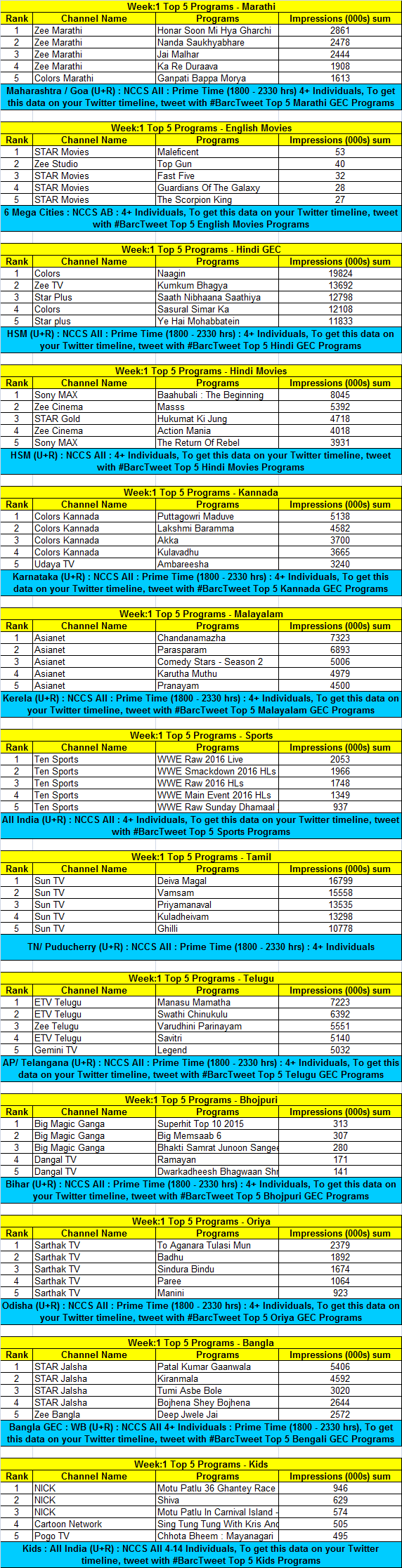
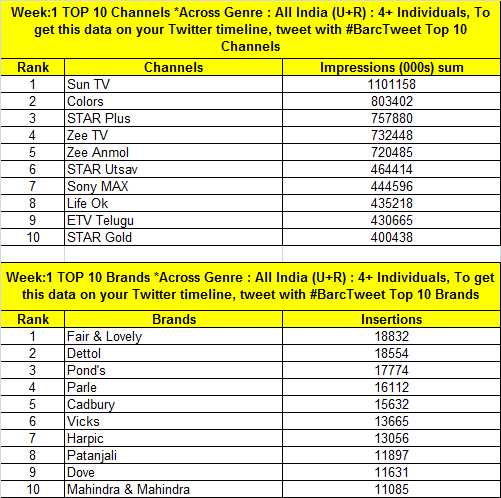
    The Week 1 ratings from BARC​ for ​Saturday, January 2, 2016 to Friday, January 8, 2016) sees Colors continuing to be #1, followed by Zee Anmol and Star Plus amongst Hindi GECs.


    Note these numbers are combined for urban and rural audiences, and subscribers to the data will know how the rankings are dramatically different for urban audiences.​ And ditto for rural or free-to-air audiences.


    Enjoy!​​​​

  • BARC gets media-neutral-ready. Rat’000 to be called Impressions’000

    Some eight months after it launched its TV Ratings service (on April 29, 2015, to be precise), the Broadcast Audience Research Council (BARC) has rechristened its popular viewership measurement metric Rat’000 as Impressions’000.


    Going forward (that’s with effect from today, Thursday, January 14 when data for Week1/2016 is released) the current Rat’000s will be referred to as Impressions ‘000s. “Users of BARC India data may note that the new terminology does not imply any change in the way television viewership is measured. Nor will the introduction of Impressions’000 have any impact on past data BARC India has released so far,” notes a communique. BARC India would also like to inform its subscribers that the metric Rat% will continue to be used as it is, and will see no change.


    The decision to usher under this new terminology in the new year has been taken to avoid confusion in the marketplace  and as BARC India gears up for its digital measurement initiative. “We are preparing for the future. When we get into digital measurement, viewership will be measured in Impressions and in order to maintain uniformity and avoid confusion we decided to rename Ratings ‘000s to Impressions ‘000s,” said Partho Dasgupta, CEO, BARC India.


  • BARC’s watermarking technology achieves new milestone

    By A Correspondent


    Broadcast Audience Research Council (BARC) India has achieved a significant milestone within the very first year of its operations: the subscriber base of TV channels who have signed up for its Watermarking Technology has crossed the 400 mark. If one takes into account the various language feeds of channels, that number actually climbs to 457, as BARC India is watermarking 28 language feeds separately.


    BARC India started rolling out viewership data in end-April with 277 channels signing up for its Watermarking Technology: and in the short span of last 8 months, it has witnessed a rapid acceleration of broadcasters adopting the technology, which is the starting point for BARC India’s future-proof audience measurement system.


    The technology has been adopted by not just broadcasters with an all-India market, but also by regional broadcasters across the spectrum. Of the 429 channels that have adopted the watermarking technology, 195 are ‘All India’ channels and HSM (Hindi Speaking Market) channels.


    131 channels are from the South comprising markets of Tamil Nadu & Puducherry (42), Andhra Pradesh & Telangana (39), Karnataka (27) and Kerala (23).


    Of the other key TV markets in India, 18 channels are of West Bengal and 17 of Maharashtra & Goa.


    BARC India contracted Kantar Media’s team (previously part of Civolution) to supply the watermarking technology that underpins the world’s largest audience measurement system.


    “We are happy to have partnered with BARC India to deploy our watermarking technology. With so many new ways of distributing and consuming TV and video content, Kantar Media’s solutions enable BARC India to detect content wherever and whenever it’s consumed,” said Jean Michel Masson, Global Director of Watermarking Solutions, Kantar Media.


    Partho Dasgupta

    “We have been able to cross the 400 channel mark in a short span since our launch. This is an achievement and the team at BARC India has done a great job to achieve this target. I am thankful to Civolution and Cineom for their support and technology,” added Partho Dasgupta, CEO, BARC India.


  • Colors back to #2 in Week 48 of BARC ratings

    By A Correspondent


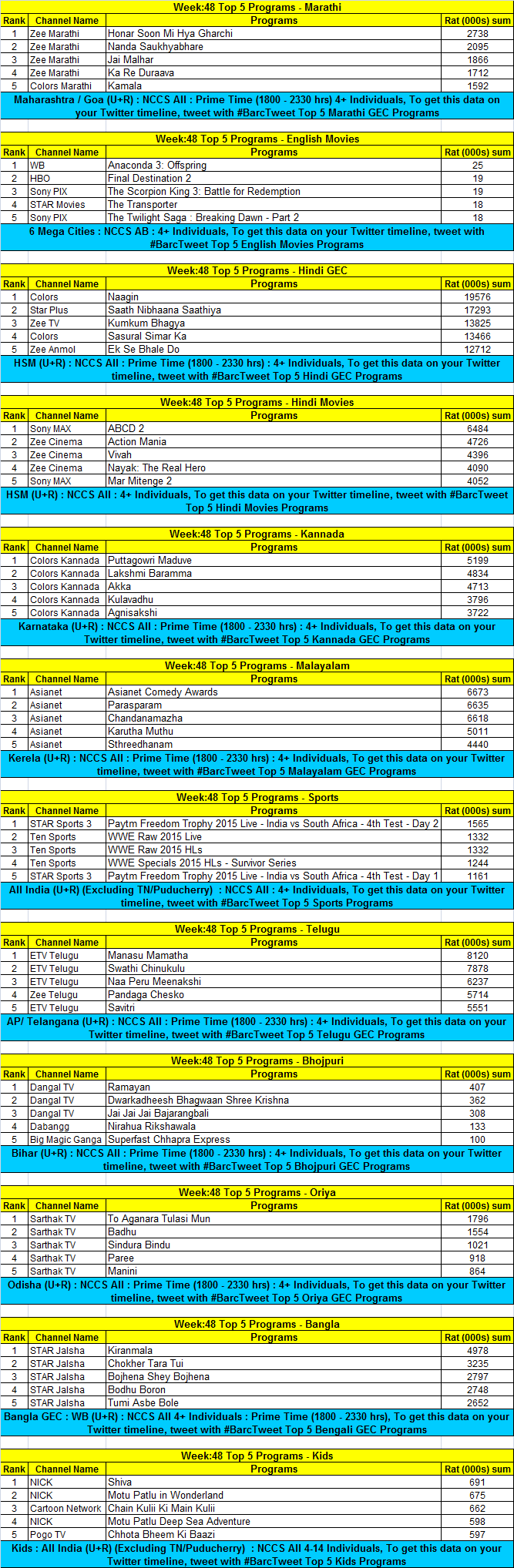
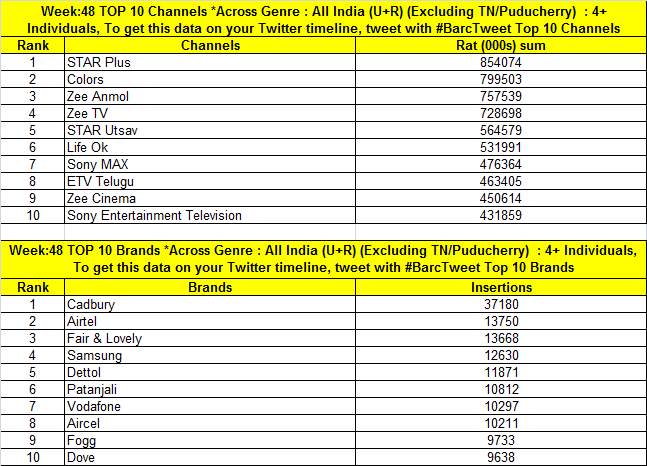
    The Week 4​8​ ratings from BARC​ for ​Saturday, 28th November 2015 to Friday, 4th December 2015) sees a lot of the old and some new.


    Note these numbers are combined for urban and rural audiences, and subscribers to the data will know how the rankings are dramatically different for urban audiences.​ And ditto for rural or free-to-air audiences.


    Enjoy!​​


  • Star Plus, Zee Anmol & Colors rule Week 47

    By A Correspondent


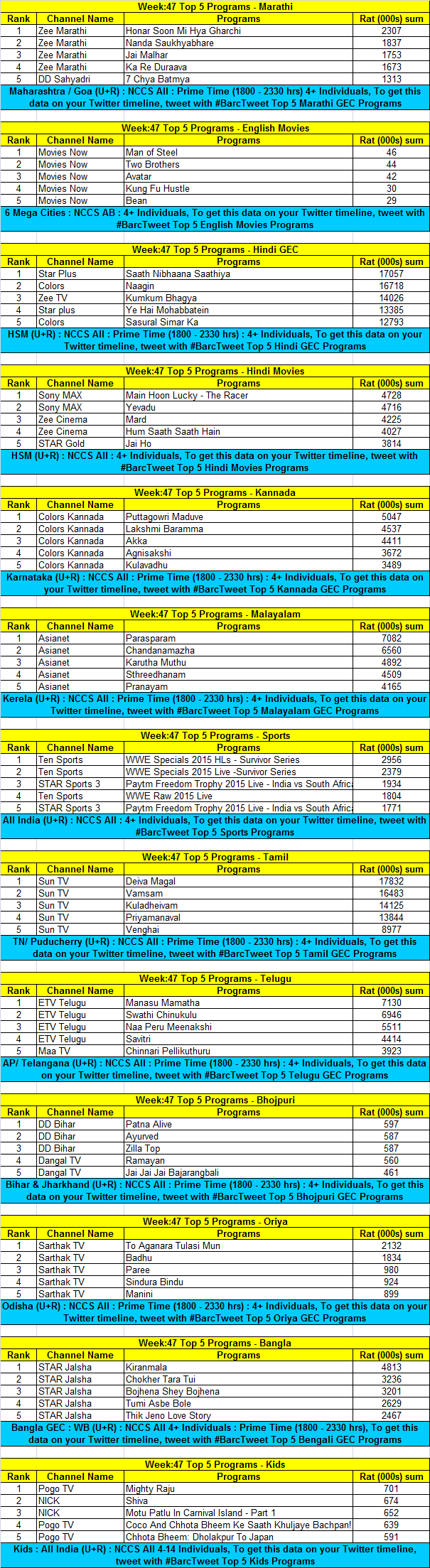
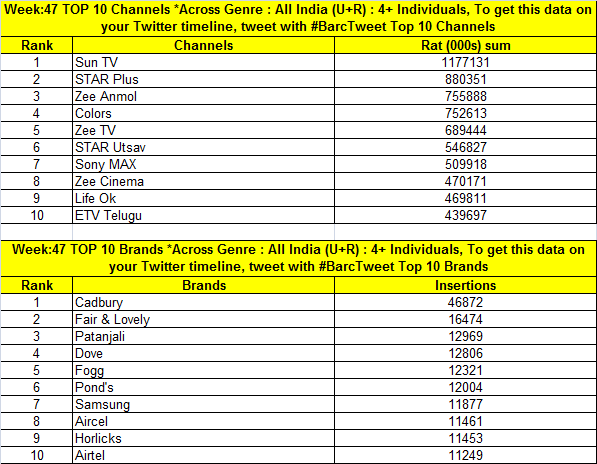
    The Week 47 ratings from BARC (for Nov Nov 21-27, 2015) sees a lot of the old and some new. But the all-hyped Hindi GEC rankings of the Top 3 continue to be the same.


    Note these numbers are combined for urban and rural audiences, and subscribers to the data will know how the rankings are dramatically different for urban audiences.​ And ditto for rural or free-to-air audiences.


    Enjoy!​​


  • Week 46 sees Aaj Tak as clear #1 in Hindi News, but India Today is #4 in English

    By A Correspondent


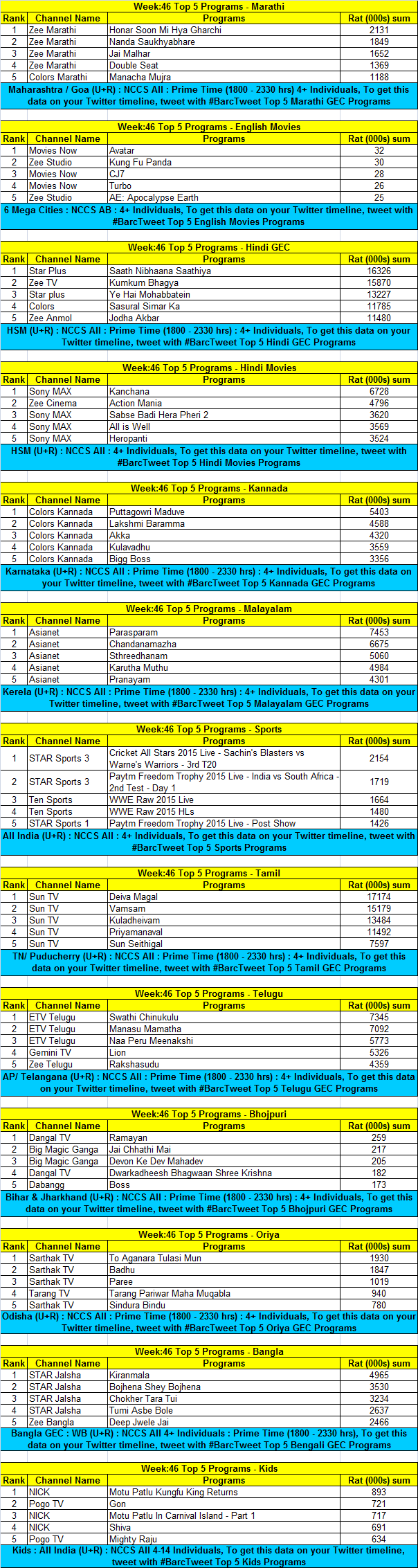
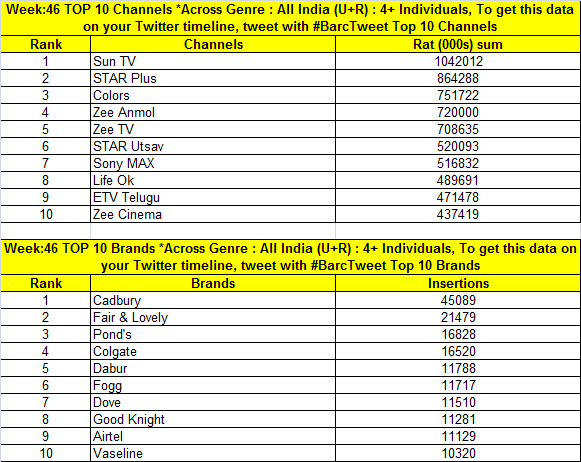
    The Week 46 ratings from BARC (for Nov 14-20, 2015) sees some stability post the Diwali holidays. Colors is back at a clear #3 after Zee Anmol, and Doordarshan is not in the Top 10 of HIndi GECs. Aaj Tak is the clear #1 in Hindi News, but India Today is #4 in English


    Note these numbers are combined for urban and rural audiences, and subscribers to the data will know how the rankings are dramatically different for urban audiences.​ And ditto for rural or free-to-air audiences.


    Enjoy!


  • Week 44 puts Zee marginally ahead of Colors at #3

    By A Correspondent


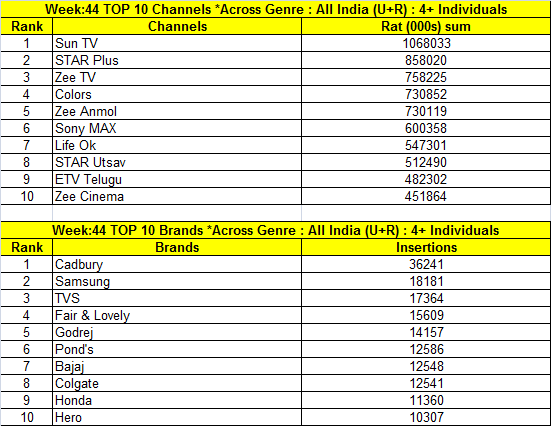
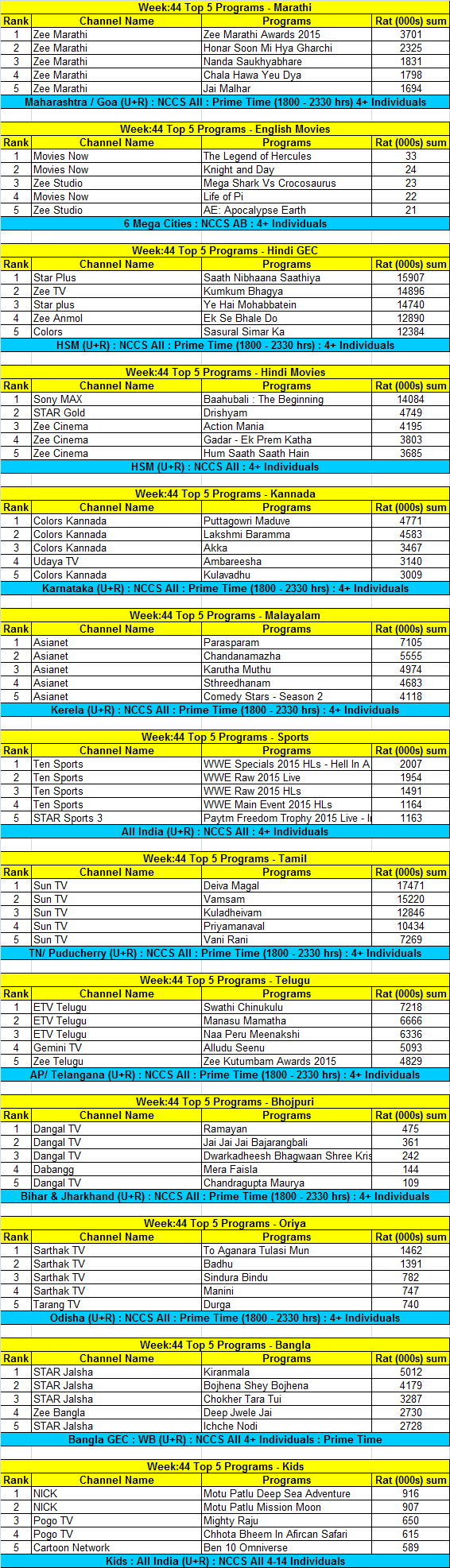
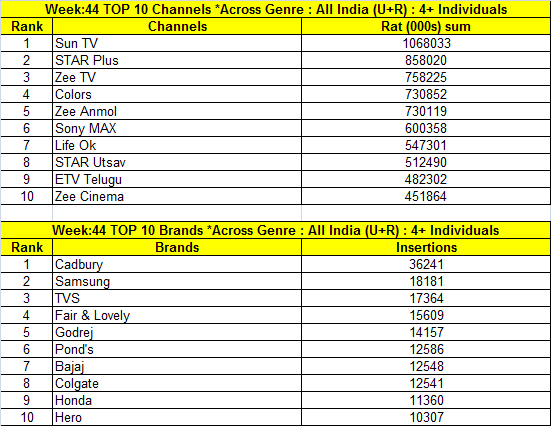
    The Week 44 ratings from BARC were delayed due to the Diwali holidays, but they brought with them some happy and not-so-happy numbers for some channels. Zee TV got marginally ahead of Colors, and Doordarshan National was out of the Top 10.


    But these numbers are combined for urban and rural audiences, and subscribers to the data will know how the rankings are dramatically different for urban audiences.​ And ditto for rural or free-to-air audiences.


    Note: Week 45 numbers will be out in a couple of days. Enjoy!


  • Indrani Sen: Radio Rumblings & Selling without Currency

    By Indrani Sen


    Currently radio is the fastest growing traditional medium in India. Why the Radio Industry is not feeling the need for a valid media currency after investing a whopping Rs 3,000 crore (including the migration fees) in the Phase III of FM Radio expansion? Why is RAM, our only syndicated radio listenership study, limited to only four cities since 2007 when six years back in 2009 (after the Phase II auction), 91 cities formed our Private FM Radio Network? How can the Radio channels be so indifferent to RAM that some of them have stopped subscribing to it? As per the FICCI KPMG 2015 report, radio revenue will increase from Rs 1,960 crore in 2015 to Rs 3,950 crore in 2019. Are the advertisers buying radio time blindfold or is there a hidden card which is helping radio stations to sell effectively without the help of a regular currency?


    What is ailing our Radio Audience Measurement studies?  We had a good start in radio research in late 1990s. The advertising industry felt the need of radio listenership measurement even before the advent of private FM channels and the pressure which mounted on AIR resulted in Audience Research Unit starting its Radio Programme Listenership (RPL) ratings in 1998. In early 2000, MRUC started Indian Listenership Track (ILT) in partnership with AC Nielsen ORG- MARG based on yesterday’s listenership (YDL) which is also referred as Day After Recall (DAR).  MRUC commissioned a research to evaluate which of the two radio research methodologies (between DAR and Diary) was the most robust in Indian context and the Diary Method scored above DAR.  ILT was discontinued after 2006 as TAM announced the launch of RAM from 2007.


    A joint service between IMRB International and Nielsen Media Research, RAM is an independent division of TAM Media Research and provides listenership data based on the Diary Method on a weekly basis. RAM started with a lot of promise in Mumbai, Delhi and Bengaluru in 2007. Kolkata was soon added as the fourth city. The panel size of 600-plus individuals each in Bengaluru, Delhi, Mumbai and Kolkata has been static over the years though new listening devices have been included in the diaries.


    RAM was criticised soon after the first ratings were released for using the 2005 NRS universe estimate without proper corrective measures. The universe estimate was finally corrected in 2011 (two years after Phase II auction) showing huge growth in population in all the four cities. Certain demographic distributions based on the new universe estimates and other findings were also challenged by radio industry experts. Large FM radio organisations found that they had to invest in independent research to understand the behaviour of the listeners in the markets beyond the four RAM cities. They chose to rely on their own research across all markets and began unsubscribing to RAM. The limitations of RAM drove some of the advertisers to conduct their own research to understand the efficacy of radio as a medium for their target audience and they stopped using RAM.  It became a Catch-22 situation.


    The exodus of FM Channels from RAM resulted in lack of financial support to the syndicated research. Apathy of the radio industry is the reason for RAM getting stuck to only four cities over eight years though they announced periodically their intention to add on more cities. It is probably too late now to revive and revamp the syndicated radio listenership research in its present format.  A new audience metrics needs to be set up in India based on a proper sampling structure for covering the entire FM Radio network (AIR and Private) and providing useful information to the radio and advertising industry.


    The Association of Radio Operators in India (AROI) should collaborate with BARC for setting up the structure of the radio audience research. BARC has been set up with the intention of providing measurement of “Broadcast Audience” including both TV and Radio. After setting up the TV audience measurement system successfully, BARC needs to focus on radio audience measurement system.  AROI would have to ensure complete support by the radio industry to the new avatar of the syndicated listenership study.


    The question which needs to be addressed is can the radio industry afford a large scale sophisticated radio listenership study based on audio meters? As per the FICCI-KPMG 2015 report, against industry size of 543.2 INR billion for TV and 284.5 INR billion for Print, the size of the radio industry is miniscule at only 19.6 INR billion. It is obvious that unless advertisers and media agencies actively support the syndicated research on radio listenership study, it would not be financially feasible.


    A number of media planners are now using IRS data for preliminary analysis of penetration of FM Radio in their target audience and selection of radio channels. However, the analysis often cannot be conducted due to inadequate sample size in the selected target audience. While MRUC is planning the new IRS, can they examine the scope of providing additional information on penetration of FM radio as a medium?


    Meantime, regardless of the coverage provided by RAM, the FM radio industry continues to thrive and grow at a compound annual growth rate of 18% (FICCI-KPMG Report, 2015). What is the secret of the success of this medium? Radio operators in India are today selling radio time based on a 360 degree approach which is helping in the growth of radio advertising.  No deal happens without ground activation and digital support through mobile texts and social media interactions. Often TV or Print or OOH support from the same media house is also solicited through FM Channels.


    The advertisers are satisfied as they have an indirect measure of the radio listenership through social media sites and the success of activation programmes are reflected in the sales graph. Recently, in a media seminar conducted by Calcutta Media Institute in Kolkata on October 9 and 10, 2015, Jimmy Tangree of 91.9 Friends FM said “We also do radio” while moderating a panel discussion.  He explained that no radio show happens today without the digital/ social connection. This is the hidden card behind the success of the medium and explains how the radio industry is successfully marketing radio time without the support of a regular media currency.


  • Zee Anmol is the new #3 Hindi GEC as BARC goes rural

    On Friday, the Broadcast Audience Research Council (BARC) India released the much awaited rural India. Data for Week 41 was released today for October 10 to 16, 2015 and the combined numbers for rural and urban were presented among the toplines.  BARC India, a joint industry body comprising the broadcasters, media agencies and advertisers, started rolling out ratings from April, 2015, and the release of rural numbers has been hailed as a significant achievement, even as there was a section of influential broadcasters who were trying to get it delayed.


    With the release of the All India data, BARC India has expanded its reach to 153.5 million TV households, representing All India and all modes of signal. Of this 77.5 million are urban TV households and 76 million are rural TV households. BARC India will now be reporting Megacities, 10-75 lakh towns, less than 10 lakh urban areas and rural.


    The BARC India survey shows that lesser time is spent on TV in rural areas. Two in five rural audiences fall in the NCCS AB category, rural India gives younger audiences in the age group of 15-40 years. Last but not the least, with rural India’s ‘Early to bed and Early to rise’ philosophy, the conventional definition of prime time for channels may change.


    Highlights of BARC India Week 41 (October 10-16) ratings:

    • Star Plus maintains its leadership with 804214 Rat (000s) followed by Colors at 708747 Rat (000s).
    • Zee Anmol jumps to number 3 with 609189 Rat (000s).
    • DD National registered an Average Time Spent (ATS) of 53 Min 39 Sec highest among Hindi GECs.
    • Rishtey is amongst top 10 Hindi GECs with 270072 Rat (000s).
    • In the news genre, Times Now maintains its leadership with 560 Rat (000s) followed by CNN IBN at 233 Rat (000s).
    • Sports sees major spike in ratings. Star Sports 1 holds number 1 position with 162592 Rat (000s) on the back of Paytm ODI Trophy 2015- India vs South Africa.
    • Star Gold becomes No 1 Hindi Movie channel with 486374 Rat (000s) with the premier of Bajrangi Bhaijaan.
    • Aaj Tak is number one in Hindi News genre with 72067 Rat (000s).
    • Sun TV with 1092231 Rat (000s) topped the Tamil GEC genre. It also becomes the No 1 channel on All India basis ahead of Star Plus and Colors.
    • ETV Telugu maintains No 1 position in Telugu GEC market with 424252 Rat (000s).
    • Colors Kannada maintains its ranking order in the Kannada GEC space with 211268 Rat (000s).
    • Zee Marathi with 116598 Rat (000s) leads the Marathi GEC genre.
    • In the Malayalam GEC genre, Asianet topped the chart with 413385 Rat (000s).
    •  Star Jalsha tops Bengali GEC space with 241463 Rat (000s).
    • Discovery Channel stays ahead of competition with 6433 Rat (000s).
    • Kids genre sees spike in ratings, Nick is the number one kids channel with 97227 Rat (000s).
    •  MTV is the No 1 Youth channel with 14219 Rat (000s).
    • ET Now tops the English Business news genre with 484 Rat (000s).
    • Movies Now maintains its leadership in English Movies genre with 3200 Rat (000s) followed by Sony Pix at 1893 Rat (000s).
    • Zee Café maintains its leadership in English Entertainment genre with 103 Rat (000s).


    “I am delighted to present to the Broadcast and Advertising industry the All India Ratings. We have been able to give to the country a view of “What India Watches” as promised,” said BARC India CEO Partho Dasgupta.


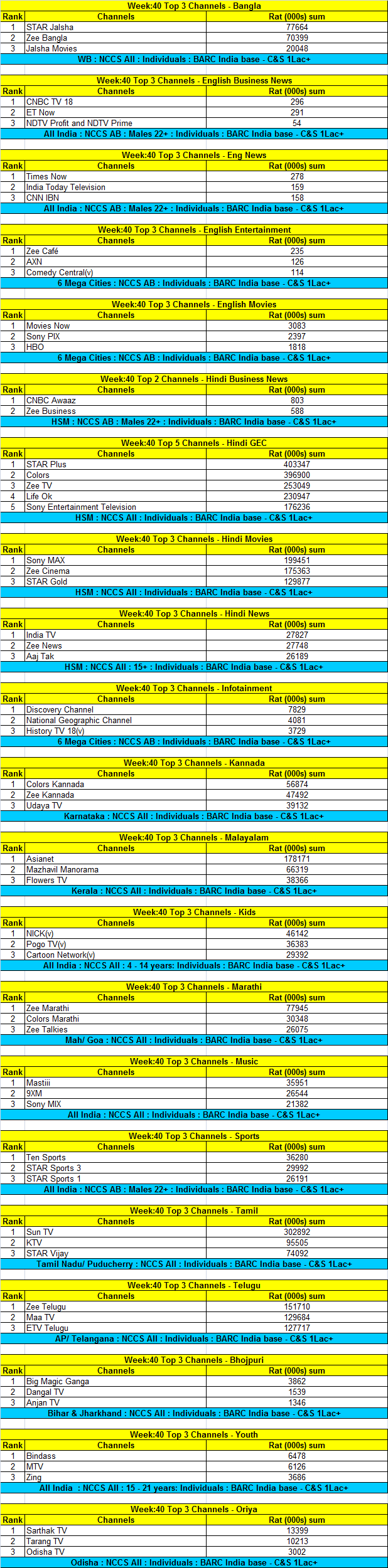
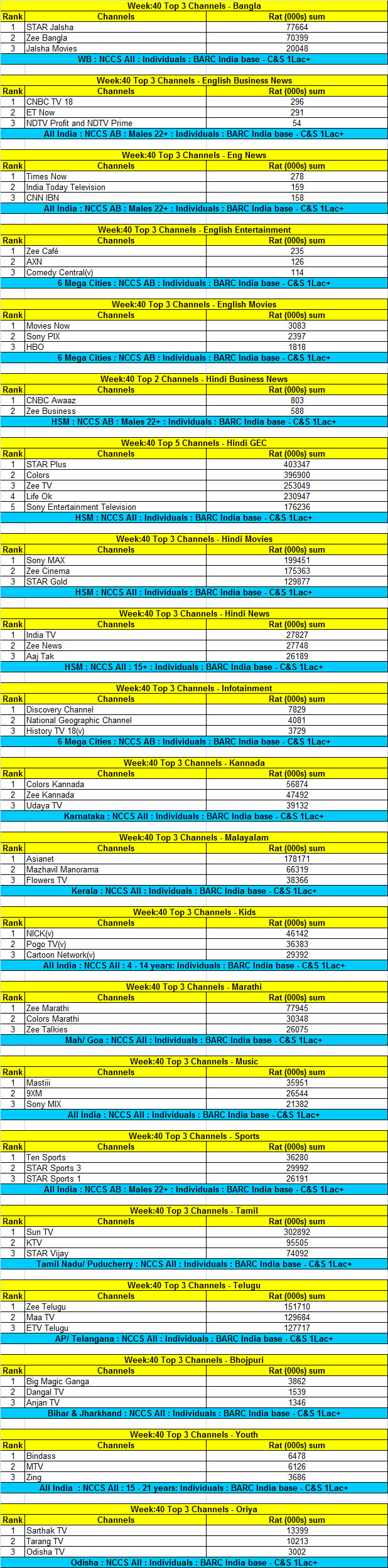
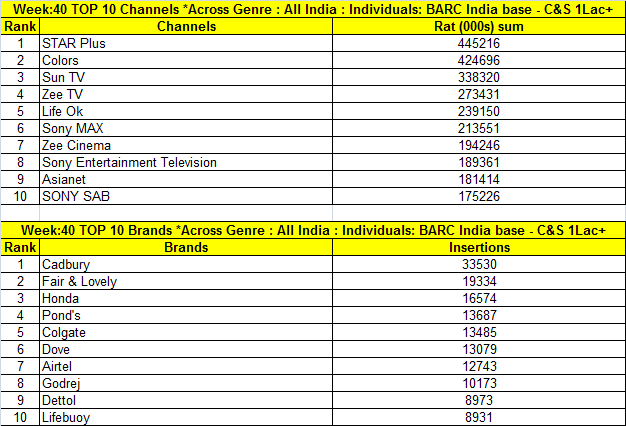
  • BARC Data for Week 40 (Oct 3-9, 2015)

    Here’s BARC data for Week 40 (Oct 3 to 9, 2015) for general entertainment channels and and more!​


  • Naysayers silenced. BARC to go rural from next week

    By A Correspondent


    Stability is a bad word to use in the Broadcast Audience Research Council (BARC) office. You may well get barked at. As one top media agency honcho discovered at an event when s/he tried to raise it with a BARC official.


    The decision to publish rural ratings didn’t happen with ease, we are told. There was at least one influential player who aggressively opposed it. There were some others who simply wondered: Shouldn’t we wait for the ratings to settle down?


    The Board members were convinced on Tuesday evening that all will be well. The #1 channel will not tumble and turn #5. Yes, some free-to-air re-run channels will gain a bit, but, heck, if that’s what India watches, what can BARC do about it. A presentation was made in a Board meeting, and the decision was taken.


    With this, BARC India, which currently reports about 55 million households representing C&S universe of 1 Lac+, will expand its reach to 153.5 million TV households, representing All India and all modes of signal. Of this 77.5 million are urban TV households and 76 million are rural TV households.


    BARC India, which had recently announced a joint venture with TAM Media to form a meter management company, is working on the dynamics of it and will soon announce its integration plan.


    “With the board giving us the go ahead to release the rural data, one will see ‘What India Watches’” said BARC India CEO Partho Dasgupta.


    According to an analyst, the big beneficiaries of this would be broadcasters who have worked on their reach to the hinterland, and have traditionally been strong. The dynamics are dramatically different for urban and rural India. Among these channels, Zee TV will be a big gainer, we are told as will be the free-to-air re-run channels of the key networks. Doordarshan officials are also reported to be jubilant about the rural numbers coming in, as that, they feel, will help highlight their popularity vis-à-vis others.