Tag: Avik Chattopadhyay

  • Social Embracing & the Socially Embarrassing


    By Avik Chattopadhyay

     

    ‘Social distancing’ is not a new phenomenon. We humans have been practising it for centuries. As religions. As castes. As ethnicities. As colours. As genders. Just that in all previous occasions, there were only some of us who were inflicted with this while a larger population continued life unfettered and unabated.


    The current phase of social distancing affects us all and it is seemingly for our collective good. Positives are being drawn from ‘living in one’s own cocoon’ by the sections of society that have the means and the diversions to afford one. For the larger population it is a huge disruption in life, not just physically but also emotionally. And it is the latter type of disruption that does things to the mind. Fear. Anxiety. Vacuum. Solitude. Recognition.


    If I were to study the current pandemic socially, those regions of the world that thrive on “social embracing” are most affected. This embracing manifests in the form of tourism. Italy. Spain. France. Singapore. Hong Kong. East and West coasts of the US. The pattern is very clear. Thousands of Chinese, not knowing they are affected, went for their annual vacations on the occasion of their new year. Hundreds of Chinese firms arrange these vacations as part of their annual incentives. Every year they are welcomed with open arms as they bring in livelihood and GDP. I have heard that in Paris, the numbers are so huge that the Chinese embassy is allowed to bring in their own security personnel to ward off muggings and snatchings! Such is the power of the Chinese tourist! It was the same for the Japanese and Koreans a few decades ago.


    The equation has changed, and how, in the matter of a couple of months. Today, the rest of the world looks at a Chinese with huge levels of suspicion. Conspiracy theories go around about how their government has actually orchestrated this for world economic domination. And the social media is awash with how we should isolate the country and ban its people and products.


    Going by that logic, Britain, France, Spain, Portugal, Belgium, Germany, US and Japan should have been banned already! For each of them, in the due course of their economic progress has wantonly and repeatedly killed millions of people, either at war or in colonies or, just like that [applies most to the US]!


    Social distancing is a medical practice. It is temporary, imposed by a government and is not at all to be stretched beyond its medical health benefits on to any other socio-economic aspect of life.


    This disruption actually needs Social Embracing. And it need not be physical at all, but emotional and sociological.


    It needs the government to think of all consequences before passing an executive order. Even a single death of a migrant on a highway deprived of food and water is due to the Prime Minister’s obsession with grandstanding and hyperbolic announcements. The responsibility of lakhs of people getting displaced due to chaos and confusion created by his executive order lies squarely on his shoulder. We have meekly lived through Demonetisation, GST and CAA. Expecting us to endure one more example of shoddy planning and execution is sheer social elitism!


    It needs all the privileged segments of society to come together and support the others. We are a 200 million middle class boasting of a smartphone, loyalty programmes and online shopping. Each of us need to take up the cause of just 5-6 underprivileged around us in these trying times for them through food, basic medicines, some money and the mental comfort of societal support.


    It needs industry bodies and corporates to forget their differences and plunging revenue charts to collaborate for large-scale interventions. Lakhs of truck drivers were stranded on the borders, soon to be joined by lakhs of migrant workers the next day, on the highways. It has taken the relevant industry and trade bodies more than 6 days to come up with a plan to reach out food and water to them! Just because the bodies have long-standing internal differences, an insider told me.


    It needs each of us not to consider suffering from Covid-19 as a stigma and go about socially ostracising people who have been inflicted or have family members suffering so. Patients need support and lots of encouragement. They have been part of the social ecosystem for so long and suddenly how can they be wished away? Authorities have been putting up notices in front of the houses having Covid-19 patients / quarantined. It is easy for us to identify the homes and decide what to do…either we leave “Get well soon!” cards and flowers at the gates every morning or we point fingers at the gates and avoid them like the plague. The former is what I mean by Social Embracing” and the latter is what I call “Socially Embarrassing”.


    Living in tiny apartments, playing the same music on some app and uploading that video is socially embarrassing.


    Sharing and forwarding insensitive posts on one particular country, region and people is socially embarrassing.


    Beating up fellow citizens labelling them as so-and-so is socially embarrassing.


    Sharing pics on social groups of which triple-cask single malt would you be enjoying this evening is socially embarrassing.


    Holding religious sermons and gatherings wilfully endangering thousands of lives in the name of a “god” is socially embarrassing.


    And, apologising on a national radio address for the trauma that millions of migrant working citizens have to go through is most definitely socially embarrassing!



  • Avik Chattopadhyay: The logo is finally flat!

    By Avik Chattopadhyay


    A bat has brought the world to a standstill. Economies are decelerating, stock markets are crashing, cities are getting locked down, travel has stopped and countries are putting themselves into quarantine.


    The world is indeed flat.

    Otherwise, the virus would have slipped off the curve.

    Logos are going flat too.

    Not a very new phenomenon as Apple was one of the early converts.

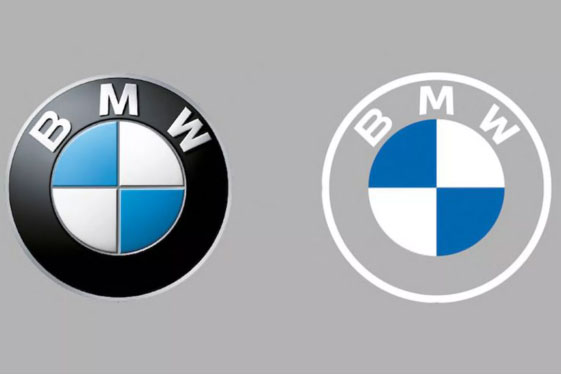
    But BMW doing something similar is indeed significant news to me.


    You know, automobile brands are too snooty to be messed around with, especially when it is a luxury marque. So when one of the world’s most aspirational brands, across categories, goes into a transformative mood, many of do sit up and start analysing.


    The social media handles were buzzing with BMW’s new logo, unveiled at the sanitised Geneva Motor Show last week. Thankfully, the Covid 19 social media frenzy had not happened then, otherwise this news would have gotten drowned out.


    Most people I sought feedback from do not like what has been done.


    Expected, as most of us do not like shaking the status quo. We call it “tradition” and “ritual”. Therefore, sacrosanct and touch-me-not. But here was a brand like BMW that had already taken the step, shaken the status quo, broken tradition and upset the ritual. There must have been reasons compelling enough to do so. Personally, I find it very clever. And truly disruptive of existing convention and comfort. Hence, my opinion on this developing trend of big brands modifying their logos into a ‘flat’ format.


    Apple. VW. BMW.


    The first and last undertook the transformation of their own volition.

    VW did so as part of their image ‘cleaning up’ act after the Dieselgate scandal.

    The previous versions were these metallic, 3D effect.

    The new ones are simple, clean, lean and 2D.

    Why have these brands consciously decided so?

    For three reasons, I believe…


    Transparency

    A simple and clean logo on your product, sans all frills, depicts a sense of transparency in the brand’s relationship with its stakeholders…customers, employees, partners etc.


    Adaptability

    The fact that the logo does not have a fixed colour palette but allows for including its setting in the form of hues, textures and material shows inclusion as central to its value system, hence adaptability. The brand, through its logo, has the ability to blend and become part of the environment and context it operates in, across cultures and markets.


    Personalisation

    The brands of tomorrow will be post-industrial. Gone are the days when we gaped at large structures and industrial enterprises in admiration and aspiration. Tomorrow’s brands will be personal. They will connect directly and personally to each consumer through new means of engagement and immersive experiences. They will be configured to be consumed and not merely owned. And the logos of such post-industrial will at least not be in 3D with a machined, metallic finish. They will adapt themselves to be expressed most effectively in the digital media that today’s and tomorrow’s consumers most commonly use to interact with the brands.


    The marketing maverick Shunu Sen had once told me, “The brand is a wasting asset!” Very true, Mr Sen, especially in today’s world where consumption outstrips transaction and advocacy outlives mere satisfaction. The logo is but a true manifestation of that world. Transparent. Inclusive. Flexible. And very personal.


  • Avik Chattopadhyay: Lucifer at the Auto Expo!

    By Avik Chattopadhyay


    Lucifer was getting bored. Almost dozing off when God walked up to him and said: “Want to taste a new kind of hell?” “Sure, tell me more…” “Read on social media that the Indian automobile market is hellish.” “Hellish…or actual hell?” “Check it out for yourself. Lazing on that ottoman is making you fat.” “Okay, okay…don’t push it. Where exactly do I start? Heard that country is a huge maze.” “Seems there’s an auto show somewhere up in the north. Good place to start.” “Terrific! Never been to an auto show. Beam me down…now!”


    Oh man! Look at all those people streaming in! Seems the whole world is here. Imagine when they all come up…


    “Excuse me Sir, your pass please. Others are waiting behind you.”


    “Oh yes, here it is. Sorry.”


    So, what do we have here? They call this an SUV. Popular name here. That one there too is an SUV. Didn’t the guys in the previous hall also have a couple of SUVs?! “How is your SUV different from that in the previous hall?” “Oh, theirs is a traditional SUV…boxy. Ours is a coupe SUV. Sleek. We also have a mid-size SUV. There…” Next hall. Now, what do we have here…a tiny vehicle with bug eyes…wait, they are calling this an SUV too! “What SUV is this?” “This is a compact SUV.” As I stepped out I see a very interesting SUV parked outside. Two types of wheels. “Excuse me, what SUV is this?” “This is a tractor!” “Wow, a tractor-SUV!” “Where are you from, weirdo?” How offensive! One can get confused…this thing also has high seats and a high roof!


    Alright, so what do we have here? The description says “face-lift”. What could this be? “Excuse me, which part of the face did you lift?” “Ummmm…well the grille now has two chrome stripes on it…previously had one. Also, the DRL has been repositioned over the headlamp. And…” “Call this a face-lift?! More like a nip and tuck, is it not!” And there are lots of nips and tucks all around. The crowd must be liking all this stuff. A bumper here, a light there.


    And what’s with this “Electric” mania? It’s all over the place. This electricity is blue in colour! Fancy that!! That’s why the blue lightning streaks, outlines, highlights and letters all over. Wonder if red or green electricity works equally well. The red one would surely go with my eyes!


    But, where are those ‘half-vehicles’ …the ones with just two wheels? They were all over on the roads. “Excuse me, where are the ones with two wheels? Do not see them here.” “Oh, there are just a couple here. Most have stayed away. You will find them in Milan and Cologne.” “Close by?” “Where are you from, weirdo?” Now, that’s the second time in a day. Third time and I burn this place down.


    This green stuff on the floor is sure interesting. “That’s artificial grass!” “I see. Whatever for?” “Because we believe in green technology! Can’t you get it?” “Pardon me. You have blue electricity too. Is this the same stuff?” End of polite conversation.


    “You back already?”


    “Yup.”


    “Okay, am all ears…”


    “Do not bother.”


    “C’mon, humour me…”


    “Okay…sample this. They say it’s winter, but I found ladies standing next to vehicles shivering yet hardly wearing any clothes. They say India is a market of 1.3 billion people but when I was beaming down I saw innumerable people on feet asking for money from those in vehicles. Understand?”


    “Oh hell!”


  • Mufflerman & the Mango People


    By Avik Chattopadhyay


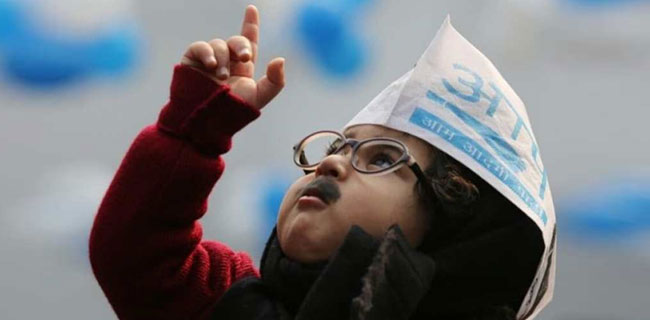
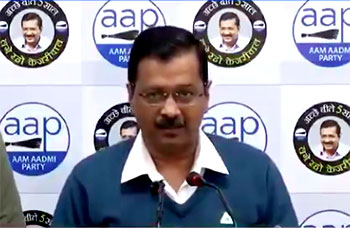
    In February 2015, I had done a piece for MxMIndia titled on Brand AAP on the occasion of Delhi waking up to the 67-03 mandate. Last night, my friend Pradyuman helped me refresh my memories of the same as I sat down to pen my thoughts on Delhi waking up to the 62-08 reality!


    After five years, I look at the AAP brand again.
    To see whether it remains the same. Or has it changed. Or evolved.
    There is nothing political in my analysis and assessment here…purely from a brand manager’s perspective.

    So, what have been the FIVE key learnings of the AAP brand?


    That the core purpose remains the same.
    The core brand idea cannot be tinkered with based on different occasions and opportunities.
    The AAP purpose remains the very same as it was in 2014 and 2015.
    It is all about fundamental deep-rooted development… about education, health, water, electricity, mobility and safety.
    It is an organisation of middle-class people who earn their bread the hard way.
    Therefore its purpose has to do with improving the lives of the middle class.
    You do not play around with your purpose just because you are in the driver’s seat… the destination remains the same as long as the vehicle remains the same.


    That the personality has to mature with time.
    This is crucial in the life-cycle of any brand, for it determines the ‘route’ you may take to help your vehicle reach its destination.
    It was “clean development” in 2015, it is “clear development” in 2019.
    The demonstrations on the street have given way to demonstration of actual work done.
    So, is the leader no longer the ‘rebel’? He sure is, but the cause is more clearly defined.
    And the energies of the rebel are channelised now.
    There was definitely some bluster in 2015. Its only candour now.
    The candour earlier was sometimes uncomfortable. Now, it is comforting.


    That the promise has to be clearly demonstrated.
    The comfort in the candour comes through the demonstration of the promise.
    At the end of the day, human life cannot improve by consuming tweets, memes and social media posts.
    It is by schools, clinics, uninterrupted electricity, free water, improved mobility and greater safety.
    It is about the here and now.
    Digital and social media are only supports and not the core food.
    Spinning stories are good for a satiated and secure person, not for someone who is still getting his / her life into order.
    As Lenin had said, “How can a man think with his mind when his throat is parched?”


    That the key stakeholders are to be respected.
    Most brands forget this in their ‘power trip’.
    As a ‘ruler’ one has the greed to look down upon the electorate and grant it a “mind” far lesser than it actually has.
    The context has to be set up right at the start, the key stakeholders identified and their engagement plans chalked out.
    Each stakeholder has to be given his / her due place, and space.
    The context is about every-day life and livelihood of the two crore people of Delhi, and quite frankly nothing more.
    The key stakeholders are [a] the voter, [b] the non-voter, [c] the candidate and [d] the reporter.


    The voter – central to your brand’s existence and is looking at you making his/ her life better, bit by bit, but surely, with every passing day. The Delhiite is immensely proud of a unique culture that the city-state has conjured up for itself. That has to be catered to and not rudely challenged. This is the “Mango People” and they come in various textures and flavours. Appreciate them and preserve them instead of putting them into a large mixer and churning them into one gooey mass.


    The non-voter – a very important influence on the voter – the children and the people in the NCR who will not vote but will surely have a clear opinion on who deserves to won.


    The candidate – is an individual in his / her own right, with a mind and a heart of one’s own; can chart out own strategies within the larger framework, express own opinion and share own plans rather than be a mute by-stander at the mercy of the bosses. Very similar to what happens in large organisations, is it not, with the regional managers / department managers / project heads?


    The reporter – do grant him / her the power to observe, analyse, digest and then opine; the sheer urge to browbeat and force feed ‘stories’ does not work especially in a battle-zone that is highly aware and expressive.


    That uncluttered messaging is crucial to any campaign.
    Keep it simple, uncluttered, frank and forthright.
    I just loved the little interactive film shared on social media about Mufflerman looking into your door saying “Can I come in?”
    In 2015 it was the Mufflerman game, this time it was this truly disarming video interaction.
    That is what the target stakeholder likes…clarity and candour, without mixing up issues that are not relevant to the occasion at all.
    I would surely want the entire nation to be united and stronger but right now I have to decide on who can improve my daily life better.
    The relevance of messaging is always critical to any campaign’s success, and this was a great demonstration of the same.


    The AAP 2019-2020 election campaign is a lesson for every brand manager.
    On how to carefully nurture and deliver a brand that rides on huge expectations and external challenges.
    And how to stay true and committed to the core purpose and not get waylaid into distracting and diversionary narratives.
    As my brand guru Wally Olins used to keep reminding me, “Live your own life, Avik. You only have one bloody chance!”


    Avik Chattopadhyay is a brand strategist living in New Delhi NCR. He writes on MxMIndia on most alternate Thursdays, but this time we requested him to write on a Wednesday. His views here are personal.


  • 7 Social Groups. 7 Social Brands


    By Avik Chattopadhyay


    “Social brands” are a very interesting phenomenon.


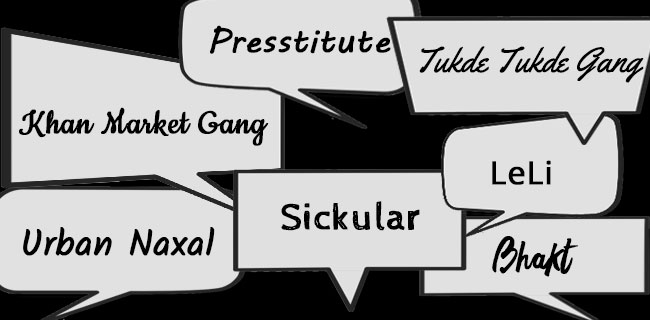
    What starts off merely as a means to identify or classify a group of people finally ends up as a means to differentiate, distinguish, label and finally act upon. Stereotypes are cast over a period of time eventually ending up in the “brands” being subjected to a certain preconceived notion.


    It might work in certain rare cases in the positive, but in most cases the exercise of creating social brands is with a deep-down devious motive, to divide, deprive and eventually destroy.


    Contexts also work hugely in granting a certain social brand its legitimacy or sheer lack of it. Hence, a “commie” is a good thing to be called in the erstwhile Soviet Union but terrible to be branded as in the US. In the former you might have got a star, but in the latter, you would have Hoover’s goons tapping your phone even if you were Arthur Miller!


    We have also had our share of social brands for as a collective people we thrive on races, castes, creeds, colours and any type of differentiation that has been thought up on this planet. We create social brands out of caste, profession, region, colour, political leaning, religion and even disabilities! So, “Brahmanical intelligence” was always lauded while “Babus” are typically looked at with scorn and satire. In primary school I was introduced to “Bangalis” and “Madrasis”. In high school my world expanded to “Harrys” and “Chinkys”. And my world was never the same, adding a group here and a group there to my lexicon. The corporate world took me across borders and cultures and colours. Never been a dull moment.


    Just when things were getting a bit boring, the 2014 general elections happened in our lives. And the proceedings of creating new social groups and classifying people under them gathered furious momentum. So, here are 7 new social brands that have been created in India over the last five years.


    1. Sickular– interesting name…initially I thought it was about the communists…sickle and all, but then got hammered that it was all about those amongst us who propound this concept called “secularism”. This was the shroud around appeasement of minorities and fringe groups by those who have sacrificed the entitlements of the majority.


    2. Bhakt– this is quite an old one but has got a fresh lease of life now, and how! This brand could make you a patriot, a nationalist, a preserver of moral values and one who serves the true interest of an entity called Bharat. On the contrary, all that could backfire on you when seen through another pair of glasses where you are this mentally delinquent flag-waving sword-swinging lout on the street. Pretty compelling on both sides. A janus brand!


    3. Urban Naxal– this brand was created around 10 years back but keeps getting pulled out of the hat as the situation demands. Here, you are basically a gone case as you espouse a lost cause! You are a threat to national security, even if you actually work with tribals in the back-of-beyond trying to save their land from being gobbled up into a bauxite mine. This brand is the real serious stuff as you are always on the radar of the central government and all intelligence agencies. If one is branded so, that person has truly evolved and arrived.


    4. Presstitute– I was actually impressed with the Indian who had coined this word to brand the media that is up for sale. Then I realised that the brand has been imported from the US. Some futurist had created this term in total disgust at the quality of reporting there. Here, all camps use this term liberally to brand all members of the media, as media will always have a point of view that may not pander to each camp.


    5. LeLi– this is another interesting one, aimed at the “left liberals”. Let me tell you that most leftists are not liberal and the true liberal shuns the typical leftism practised in our country. It’s a bit of a paradoxical brand with fundamentally conflicting brand purposes. Therefore, can understand why those who are branded so seem peeved no end! Total identity crisis.


    6. Tukde Tukde Gang– this brand has synonyms in the form of “JNU Gang”, “AMU Gang” and “Deshdrohi Gang”. Pretty powerful and damning stuff actually. This is the primary enemy of the Bhakt brand. They cannot tolerate each other. This brand is intent on breaking up all the good that the Bhakt does. This brand typically feeds in to the Urban Naxal brand. They are alleged to have a symbiotic relationship.


    7. Khan Market Gang– this brand is a result of collateral damage, caught between the Urban Naxals, the Bhakts, the Presstitutes and the LeLis. The members of this brand were otherwise party-loving, mall-hopping, gin-sipping innocents who just happen to be found in a tony shopping area of Delhi. Just because they smiled at the LeLis and Sickulars as it seemed fashionable, they have now got branded and are subjected to television debates and lectures on ancient moral values.


    Life in India could never be more exciting.


    Never mind the farmer suicides, unemployed youth and duped depositors, it is such fun to sit at a restaurant and slot people around you in one of these social brands. Terrific timepass. Ah, that guy with a tilak on his head… he is a Bhakt! That lady reading Milan Kundera must be a LeLi. Those ‘jholawalas’ have to be Urban Naxals. Happy days are here again…


  • Avik Chattopadhyay: Brand of the Year – the Indian Student

    By Avik Chattopadhyay


    This is that time of the year when the best of the best are recognised. Person of the Year. Film of the Year. Tweet of the Year. Instagram pic of the Year. And so on. Hence I thought of taking this opportunity to announce my “Brand of the Year”.


    The Indian Student.

    Yes, the Indian student, who has actually helped keep the fabric of this nation more or less unharmed and intact through the year. On various occasions. On various issues. Social. Ecological. Economic. Behavioural. Political. Cultural. Some issues complex, some very fundamental.


    As a brand, they have stayed true to their core purpose.

    As a brand, they have been on course with their promise to deliver.


    The student is the future of any country. The student stands for all that is good, aspirational and ambitious about society. That is not necessarily bound down by convention and ritual but makes the nation proud.


    Because I care beyond myself

    I care about the environment and will take action to reverse damage and preserve what is left. I will make festivals less polluted. I will take to public transport to reduce congestion.


    I care for the unique yet fragile concept of “India” that is only 70 odd years old. I will take to the streets if needed to preserve the national fabric.


    I care for the unwanted and underprivileged. I will go out of my social bindings to stand up for them.


    I care not because I am affected, but because this land I inhabit and this flag I salute is affected. And if I do not care for another, no other shall care for me when I need support.


    Because I have no hidden agenda

    I am typically not driven by agendas and mala fide intentions at this stage of my life. Yes I do have peers who have joined youth wings and student wings of various political parties but they are only a handful. I am still idealistic. I am still inquisitive. I am still a bundle of energy. I still have time on my hands. I am not yet ‘comfortably numb’. I am not yet bound by stereotypes of colour, faith, flags and forms. I still think I can walk over and hand out a rose to a policeman across the barrier. I still think I can upload a video of an unruly lawmaker and shame him / her before the millions. I still think I can share a ‘bread pakoda’ and a ‘chai’ with a peer who completely differs in thought and action. I still think I can bring change…positive, powerful, progressive and for all.


    Because I am the future

    I experiment every new trend as nothing is beyond bounds.


    I will redefine consumerism by experiencing more than merely owning.


    I will redefine freedom of speech and expression by making myself heard.


    I will embrace causes that transcend culture, gender, race and religion.


    I will be my own check and balance as I move forward, into a new decade of challenges and opportunities.


    I will be the India that the world will one day truly admire.


  • Reverse Snobbery Works & How!


    By Avik Chattopadhyay


    I have a friend in Paris, the tony, fancy part of Paris. He has a four-bedroom apartment in an ornate late 19th century building. Antique furniture, impressionist paintings, a pair of Mings and a Steinway among other collectibles. And he drives a Smart ForTwo! That’s a 2.6 metre two-seater car costing around Rs.5.0 lakhs that just about manages to hold him, his wife and a couple of shopping bags inside. “That’s all you own?” “Oui. That’s good enough. Easy to park. Easy to use. Easy on the environment. Easy on…” “Okay, okay, get the idea. Making a statement, aren’t you? You could afford an exotic Alfa Romeo but wish to make a certain statement with the Smart.” “Voila! You get it. I stay in the heart of Paris in my own apartment. And I use the Smart!”


    Reverse snobbery.

    That’s what it is. Plain and simple.

    Cocking a snook at the ‘wannabees’ who are desperate to flaunt their BMWs and LVs, paying their EMIs through their noses.

    This is the “rebel” brand. One that questions straight-jacketed conventions and the holy cows. One that challenges the age-old traditions as irrelevant and ostentatious.


    It works. It sure does work.

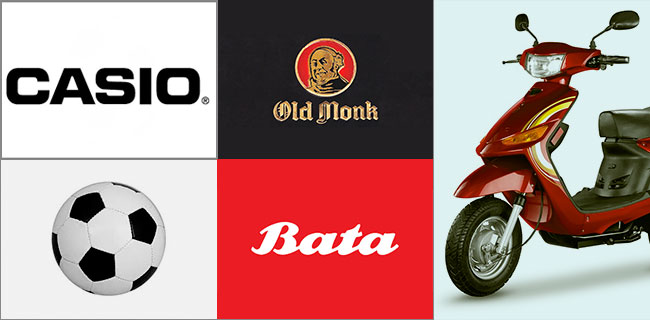
    And quite a few brands have built their raison d’etre on this very platform of standing up and smirking at the typical symbols of status and exclusivity. I have picked my favourite 5, apart from the Smart, that have proven beyond doubt that reverse snobbery is a viable and sustainable space to occupy, both as a philosophy and as a business proposition.


    Casio.

    Specifically the G-shock range that has truly transformed the digital plastic cased and strapped watch into a near icon! It goes off the shelves in no time in any part of the world, appealing across age groups. In any premium watch retailer you will see it displayed alongside far more “premium” brands like Tissot, Armani and cK. It is a rage amongst the gen-Z for its sheer larger than life physical manifestation and built in “cool” features that the premium brands do not offer. Swatch did play the same role very effectively till some time back but its absence from the smartwatch segment has seen it slip in the eyes of the beholder. Titan also missed a beat or two with Fastrack in taking it up the image ladder.


    Old Monk.

    Never could imagine a benign Benedictine padre to be a spirited confidante of millions of homes in India! And also travel across the world bringing both joy and solace to the Indian diaspora. My alma mater has something called OMAXI, the Old Monk Association of XLRI with a ‘chief’ ceremoniously elected and crowned every year! One really committed group I must admit. That glass bottle with the caramel brown liquid has given a beating to some of the biggest global spirits in terms of loyalty, advocacy and also relevance. When your customers release ads on your 60th anniversary you sure know the prayers are on your side!


    Football.

    Yes, the beautiful game came back with a bang with the English Premier League getting into our bloodstream through ESPN a decade and a half back. In a nation obsessed with cricket [still so] and sports like golf and Formula 1 catering to the “elite”, Sir Alex Ferguson came with a sledgehammer and rearranged the living room a wee bit. Football got a bigger footprint beyond its traditional following in Bengal, Kerala, Goa and Punjab. Rich kids went around chilling in Manchester United and Chelsea t-shirts. Then came the wave…La Liga, Bundesliga, Serie A, Champions League and more. It was cool to discuss Mourinho’s follies in the toniest of parties in Delhi and Mumbai. The game of the masses finally saw a fashionable following in the “class”.


    Bata.          

    The good old fuddy-duddy school shoe brand is back with a bang! After decades of meandering around directionless, they have finally hit the purple patch. Excellent product portfolio, much improved product quality and most importantly, a new customer base that sees it cool enough to wear and flaunt. The shopping experience has also been taken a few notches higher with a strong online push. The renewed self-confidence is demonstrated by the introduction of an entry-level fast-fashion brand like FootIn. The brand co-existing with the likes of Hush Puppies, Caterpillar, Scholl and Weinbrenner has actually paid off immensely for its own image makeover.


    The Scooter.

    Its no longer “sissy” to be seen moving around on a scooter anymore. You need not pass off yours as your sister’s before your friends or colleagues. The scooter is cool. Its more responsible. Its more flexible. Its more than a motorcycle. The relaunch of the Chetak by Bajaj tells you that the guys at Akurdi have realised their mistake of vacating this space to competition. The Honda Activa is the largest selling two-wheeler in India. It’s a scooter! The category today offers you a range to choose from based on your personality type – family man = Jupiter, fashionable = Fascino, speed freak = Ntorq, cruiser = Burgman and so on. The scooter looks as aspirational and adorable as any motorcycle. And the fact that it continues to cater to both men and women with consummate ease is what attracts the ‘metrosexual’ to it in droves.


    These are my top 5 picks of brands that thrive on reverse snobbery.

    Just wish the Tata Nano were also on this list.

    Had all the ingredients of being a global icon.

    Alas, that is one big lost opportunity…another story…another day…


  • Gone with the Crop Stubble!

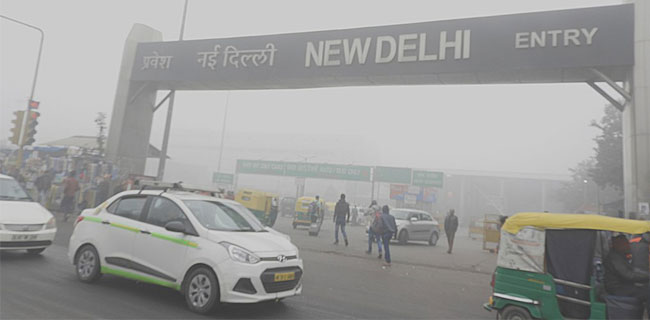
    File pic of New Delhi in 2017… but things haven’t changed much since


    By Avik Chattopadhyay


    The National Capital Region [NCR] has just finished with its annual Festival of Smoke.

    It’s quite unique in the celebration that happens – eyes become moist, throats become parched and the general feeling is simply breathless! A heady mix of road dust, generator fumes, vehicle emissions, construction dust and something called “crop stubble burning”.


    The last one has been in the news of late. The entire NCR seems to be pointing fingers at the farmers in Haryana and Punjab for all the polluted air in their world. “The villain operates out of Patiala” seems the refrain. Okay…so what does really happen? The rice paddy crop is harvested in September-October every year. A large part of Punjab and a little part of Haryana [and UP too] grows lots of rice. The time available between the rice harvesting and the sowing of wheat is just a few weeks. Everything is incredibly rushed. After the harvesters are gone, the rest of the straw and stubble needs to be disposed of. The correct way would be to uproot the straw and mix the balance of the crop stubble with the soil. This needs lots of mechanised equipment and thousands of operators. Both of which are just not there…for reasons unknown. Hence the straw and stubble are burnt…by the hundreds of thousands of acres of land. And all the foul air travels, through the villages of Punjab and Haryana on to the National Capital. In time for the Festival of Smoke. Ably supported by the Festival of Lights.


    This happens every year. With unerring punctuality and impact. Followed by panel debates, political blame-games, an over-active social media, hyperactive activists and interventions like “Odd-even”. Every year. The plot does not change, like most soaps on television.


    This year was no different. The festival was conducted with its usual gusto and garrulousness. The plotters and pundits were the same as last year and the years before that. Little realising that this moment of social anxiety can actually be acted upon and gradually turned around into one of anticipation, planning, implementation and mitigation. One can actually demonstrate positive pro-action to build better bonds with the population [and electorate / consumer base]. How else are enduring and loved brands built, if not through actually walking the talk and connecting with the larger masses on a greater purpose?


    Five key brands came a cropper in the 2019 edition of the festival. They had the opportunity but simply wasted it. In fact, they have emerged weaker than before, though none would have the candour to admit to the same.


    AAP ka Sarkar

    Epitome of total callousness. It seemed as if they were waiting for this calamity to start one more round of ‘collective crying’. They actually spent precious money on billboards that claimed that all the great work they had done in curbing pollution during Diwali was undone by the farmers of Punjab and Haryana! How insensitive can a “common man’s” government be? Instead of wasting money on thousands of billboards basically projecting the CM and merely writing letters to the neighbouring states, the government could have taken lots of ground level interventions, much in advance, within NCR as well as in Punjab and Haryana. At least in the fifth year of their term, knowing very well what the calamity is, the citizen of Delhi could have expected more empathy and maturity!


    Ministry of Environment

    Instead of feigning helplessness at the hands of the states, the ministry could have swung into positive ground action months in advance. They could have monitored the actual use of allocated budgets in purchasing the machines needed to remove the stubble. They could have created teams at ground zero to educate and ensure negligible burning by farmers. They knew that the AAP ki Sarkar would throw their hands up early on and hence grabbed the opportunity to build greater affinity through action. But they too did nothing at all but for releasing official statements expressing concern about the situation!


    Indian agriculture industry

    Corporate India has to understand that if it expects the common man to see it in better light, it has to do better things than just obsess with sales and profits. Being the closest to the problem, the leading tractor makers, seed suppliers and fertilizer companies could have taken up the task of supplying equipment and operators for a start. They could have created the forward linkages of using the straw for end products like construction bricks, biogas and ethanol. Why would I sit calm when my customer and key stakeholder is left helpless with no option to set the fields on fire? Why can I not come together for a greater cause?


    BCCI

    They actually played a T20 game in the haze in Delhi! Preposterous!! In fact, when some people raised the question of whether the game should be moved to a ‘cleaner’ city, the BCCI did not budge. They did not only put the health of 22 players at risk but also that of the thousands of spectators present. Being rich and powerful does not give you the licence to play with the lives of the common man and woman. BCCI could have actually championed the cause of clean air by not holding the match in Delhi. The revenues lost would have paled before the respect earned from the cricket-crazy nation!


    Prayas

    One typically expects the NGOs and activists to maintain the right optics and narratives on such situations. But a leading NGO called Prayas actually went ahead and organised a mini marathon for children, without masks! The flak they received was totally justified. Look at the brighter side… a large part of the NCR knows of them now!


    When times are good the general population is in its comfort bubble and true leadership, resilience and maturity is not tested in people. Moments of reversals and calamity throw up true leaders. This Festival of Smoke just about stubbed out five potential ones!


    Avik Chattopadhyay is a senior marketing and brand strategist based in Gurugram (okay, Gurgaon!). He writes fortnightly on MxMIndia. His views here are personal


  • A Prize Too Far?


    By Avik Chattopadhyay


    Abhijit Banerjee wins the Nobel. Bezwada Wilson wins the Magsaysay. Satyajit Ray is bestowed with the Irving Thalberg award. Arundhati Roy wins the Man Booker prize.


    All moments that have made the nation proud and also brought certain special and superlative people to the forefront who would have otherwise remained in the inside pages of a newspaper. They were brought to the front page by being associated with certain awards and prizes that are the gold standard in their respective fields…the Nobel in Economics, the Magsaysay for Social Service, the Thalberg for a lifetime contribution to films, the Booker for literature and so on.


    As Indians we have gone into overdrive every time such an achievement happens. I personally have tried my hand at “reflected” glory by having known Siddhartha Mukherjee in my adolescence, Bezwada Wilson as a professional and now Abhijit Banerjee as the elder brother of my business partner! Apart from the fact that I keep good company, I sure take pride in the value of the associations. Of the stature of the prizes and awards. For these are testimonials of their individual prowess at a global level and a recognition of their contribution to the betterment of society at large.


    So, in the middle of all the euphoria of Abhijit-da [co]winning the Nobel for Economics, one simple question came up in my mind. Why could we never have an award or prize of international scale and fame? One that people from every corner of the world would crave for. One that every media publication in the world would write about. One that would make us proud as a nation for not only having produced stalwarts but also recognising ones from all walks of life, all fields of endeavour and all forms of excellence.


    Sadly, we have none.

    There is the Jawaharlal Nehru Award for International Understanding but it has hardly attained that global stature and the last one was anyway given in 2009 [to Angela Merkel]. Tells you about the commitment to continuity by the award givers. And the present government will have none of it as “Nehru” is a bad word nowadays.


    We have lots of film awards, but none at the level of the Palme d’Or.

    We have lots of sports awards, but none at the level of the Laureus.

    We do have a few awards for journalism, but none at the level of the Pulitzer.


    Why is this so? Why could India not create at least one award of global stature that had the world looking forward to the winner being announced every year? We take pride in being the first nation to have attained freedom through peace. So why not one for peace movements? We take pride in being the world’s biggest feature film market. So why not one for non-English movies? We take pride in being one of the world’s oldest civilizations [a few flagbearers will claim us to be the oldest]. So why not for historical studies?


    Four clear reasons why not.


    First. We fear global comparisons.

    As a nation, we are a very apprehensive lot with lots of mental reservations about being evaluated on development parameters at a global level. We would love to vote by the millions for a movie star on the internet and declare him the “most popular” in the world. We have made religion out of a sport that is played by only a handful of nations with just 12 of them being full-time members of the sport’s governing council! We hate being exposed to indices and metrics that put us out in the open against people of other nations. Years of thriving on mediocrity in the garb of development have led us to this unique state of being. The ones that go out and establish themselves on the world map do so purely by themselves, with little support and encouragement from the nation. But once they get global recognitions, they become beacons of all that is great and glorious about India!


    Second. We take comfort in volume and not value.

    We are a very opportunistic nation, taking recourse to facades that help us in specific contexts. So, as a poor nation, why do we need to have international prizes and awards and give away serious prize money to outsiders? Don’t our poor need to be fed? Such precious money cannot be wasted at all. We are all about numbers…population by the millions, roads by thousands of kilometres, schools by hundred-thousands, languages by hundreds, rituals by thousands and so on. We are not really about the qualitative aspects of the population, the roads, the schools and so on. Hence, the sheer value of creating and nurturing an award of international stature does not hold much water.


    Third. Philanthropy is not our thing.

    Imagine a Man Group in India putting their money behind an international award for literature like the Booker. Or someone like the Rockefeller Fund partnering with the family to create the Magsaysay. Or the motion picture association creating an Oscar. That’s not really our cup of tea. Non-government awards and prizes are constituted to pat each other on the back. They are not necessarily for greater good. People of dubious repute or minimal contribution are given the nation’s highest civilian honour! How many like Maulana Abul Kalam Azad have we had who had the guts to refuse the Bharat Ratna as he felt he was not eligible enough? Why could the Ambanis not institute a global award for entrepreneurship? Why could the government not revive the Nehru Award in the right spirit?


    Fourth. Sadly, we still lack self-esteem.

    Collectively, we are still not out of our colonial hangover. We still feel that we are not good enough to be counted at the global scale, apart from a few Guinness Record events being stage-managed. We will crave for associations and recognitions from overseas but not have the ego to go ahead and create one recognition of global repute. Political pontification and posturing do not help. Building tall statues and long bridges are not a sign of self-confidence. Creating gold standards whereon stalwarts from across the world are evaluated surely are.


    After winning the Nobel in 1913, on being called to yet another celebration ceremony in Kolkata, Tagore had politely refused being garlanded. He said that while he did not yet know how the Western world recognised a poet standing on the Eastern coast, back home he was sure to acknowledge the ‘intoxicated euphoria’ of his own people but not consume it!


  • Is the Auto Expo dying?


    By Avik Chattopadhyay


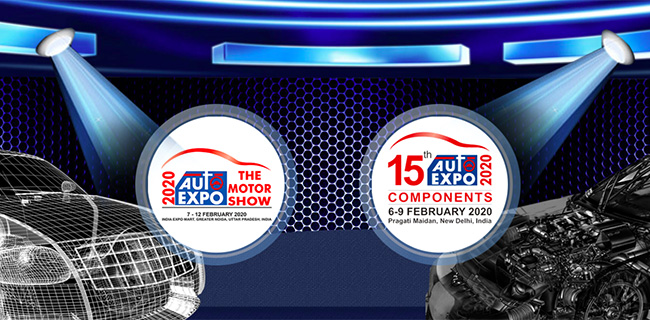
    Having spent a couple of decades in the automobile industry, the Auto Expo has been one event I have always looked forward to. Since 1993, I have visited every single expo, as a proud member of the automobile fraternity and as an Indian. It is truly one of the few world-class expositions in our country, bringing in the best, brightest and most reputed from across the world. I cannot forget Porsche participating way back in 1993. Or the Hyundai Santro launch. Or that of the Bajaj Pulsar. Can one forget the world waiting with bated breath for the unveiling of the Tata Nano in 2008?


    The narrative today about the Auto Expo actually pains me. It is largely negative, focusing on the automakers who choose not to participate in an edition. People only fussing over the symptoms without a bother on the suggested treatment.


    The ‘motorshow’ as a concept is at the crossroads. The traditional one is a dinosaur, now surviving only as a closed platform for the big bosses of the automakers to satisfy their personal egos, pamper some journos and use it for personal networking. Any consumer event has to fundamentally be clear of what the consumer wants and behaves like.


    Twenty years back, the consumer looked forward to a day out with the latest in automotive design and technology, the show providing that opportunity. Automakers used to plan their big announcements and unveilings accordingly. “Latest” and “first” were buzzwords. The consumer today any way has access to all information and reviews online and does not look forward to spending a day with ‘old’ news. And the automakers have their own product portfolio calendars to follow, choosing to have ‘stand-alone’ moments of limelight. The show has lost the buzzwords. There seems no novelty and flaunt value.


    The organisers of the show in Detroit are close to shutting it down. Paris and Tokyo are holding on to “national pride” and putting up a brave face. Geneva, already small, is scaling down. And Frankfurt this year saw a lively debate on its future. Some small ones have shut shop and nobody misses them. Quite a few automakers have chosen other platforms like CES to ‘connect’ better.


    So, where goes the Auto Expo? Does it deserve to continue or will die a painful death?


    In the midst of all the debate and prophecies on the future of the motor show, the Auto Expo has a once-in-a-lifetime opportunity to take the bull by the horns and create a new paradigm on what the motor show of tomorrow should be. Yes, the Indian automobile industry and its policy body SIAM can actually take up this challenge and become a pioneer.


    So, what will it take to rebuild the relevance of the expo? Five key things:


    First, it’s about mobility and not just about motors.

    Tomorrow’s world will be not about just metal, glass and rubber. It will be not about just the products anymore. The traditional way of positioning the show as having “x” number of launches and unveils will have to give way to “z” number of tech showcases. It will be all about mobility and not simply the motors that form only the core but not the entire ecosystem. This contains multi-modal travel, entertainment, sharing, platooning, lifestyle and all types of ‘phygitial’ customer touchpoints. It will be more about safety, cleanliness, responsibility and sustainability than just speed and torque and number of cylinders. It will be all about greater immersive experiences rather than just the act of clicking selfies with motors and some celebrities.


    More so, the organisers are right now at the mercy of the automakers participating to ensure the show’s ‘success’. Right now, they are wasting time answering journalists about who all has pulled out of the show than invest it in ensuring better qualitative participation. Automakers take the excuse of “not having anything new to display” for not participating. Another favourite excuse of theirs is that the “cost is too high” forgetting that only around 15-20% of their total spend is actually on space rental and services. Getting huge teams of designers and fabricators from the headquarter locations to construct their pavilions does not help their cause one bit.


    Second, needs to expand the scope of participants.

    Logical, is it not, if it is to be about mobility. The participants have to be beyond just the automakers. There have to be technology brands like Microsoft, IBM, Google and Apple. There need to be solution providers like Ola, Uber and Zoomcar. There need to be public transport providers like Delhi Metro, DTC and BEST. There need to be navigation services like Map My India and Garmin. There need to be infotainment providers like Airtel, Jio and Amazon Prime. There need to be social media influencers like Twitter, Facebook and Instagram. The list can just go on and on…as long as I have driven home this point.


    Third, needs to bring in more ‘organisers’.

    Of course, as only SIAM, CII and ACMA do not have the wherewithal to bring in all the big brands mentioned above. Organisations like NASSCOM have to be brought in. Even international bodies like JAMA and ACEA have to be active organisers to ensure the required levels of participation. Ministries of consumer affairs, electronics and technology have to be involved with all support.


    Fourth, it needs to cater to the ‘mobile’ Indian.

    This is a key disruption needed to evolve the show from its current largely-physical manifestation. While the organisers take pride in having close to 600,000 visitors over just six days of the show, it has to cater to ten times that number, right across the country and the world. And this can be done only digitally…when you re-create the Auto Expo as a virtual show on mobile or tablet or laptop screens for those to enjoy who cannot physically visit. No motorshow in the world has done this as yet [though the Tokyo show does have its share of VR]. Being the land of the software-geek, the Auto Expo should certainly take this up and set a new benchmark.


    Fifth, it needs consistent support and funding.

    The show’s scope and scale should not be limited to only what budgets the automakers who participate have. This is India’s showcase to the world. It is larger than life. It needs financial support from the ministries and all allied industries. Only then will the show be able to create relevance that is credible, demonstrable and sustainable.


    In fact, it should not be called “Auto Expo – the motor show” anymore. That is the past. It is the “India Mobility Expo”.

  • Avik Chattopadhyay: Peddling Gandhi, piece by piece!

    By Avik Chattopadhyay


    On October 2, I decided to drive around a large part of ‘Lutyen’s Delhi’ to see what all was happening on the occasion of Gandhi Jayanti. After all, MKG, or Bapu, as most have been taught to call him as, is actually one of the biggest brands the world has ever seen!


    Personalities, typically as brands, do not claim to have very long shelf lives. Most of them get consigned to being mere ‘celebrities’. The moment the generation they belong to hand over the mantle to the next, their popularity wanes into the pages of Wikipedia. The personalities that actually transcend generations become true ‘icons’. The world has its share of a few truly global icons…those whom people from almost every corner of the world…from Pondicherry to Polynesia and Reykjavic to Ross Island…recognise, associate and have a clear opinion of.


    MKG, Gandhi, Bapu or Mahatma is one such icon.

    Right from Einstein being in awe of him, Churchill being in despise, Netaji being in admiration and Mandela being in following, the world just cannot ignore Gandhi or have enough of him.


    Like any truly iconic brand, there are specific words that are always associated with the man – non-violence, freedom fighter and Indian. Even though I personally do not put Gandhi on a pedestal like most of India does, I cannot deny the respect, admiration and awe for one of the world’s most disruptive and impressionable politicians.


    So here I was driving down Tughlak Road and Akbar Road and Janpath looking at all the banners, billboards and decorations that were put up commemorating 150 years of the man. There were billboards put up by the Congress party carrying quotes of Gandhi flanked by photos of Sonia and Rahul Gandhi. There were banners strung up by fringe parties like LJP with the sole objective of associating with the man. And, to top it all, there was an article by our Prime Minister that appeared, of all places, in The New York Times, espousing the need for ‘Gandhi’ today. Concurrently, Swarajya magazine, an RSS publication carried a story titled ‘Dismantling sainthood’ and stating that it was actually Ambedkar and not Gandhi who was the true father of the nation! And our dear friend Mr Trump had already called Mr Modi the “father of the country”.


    So, like any successful and enduring brand, everybody wants to appropriate it for purely personal benefit and mileage. While one political party, thinking of Gandhi as their personal property, takes his cap, the other, not wanting to be out done, takes his spectacles. While another organisation believes that by dragging the brand down is the only way to challenge it! No one, interestingly, is really interested in his beliefs on nationhood, social inclusion and governance. For those are not very convenient values to imbibe and live by. They are uncomfortable for a few and a tough act to follow for the others. Picking up symbols or pieces of the man, as per individual convenience, needs only marketing spends and a 24×7 social media team.


    In fact, each precious principle of life and governance that the man preached and practised has been systematically and cruelly consigned to paragraphs in history books and state-dinner speeches. The “half-naked fakir” is now a caricature of half-truths… conjured up for political agendas that are actually chalk and cheese. While one uses him for building toilets, the other uses him for appeasement. Both with equal levels of disrespect and disregard for the values the man stood for. Churchill would be mighty pleased!


    Gandhi as a brand and a concept belongs to the nation. In fact, to the world. So, on the occasion of his 150th birth anniversary, why can all political parties not forget their ideological differences and come together to commemorate the man and his operating principles? Why can Gandhi not belong to the entire nation for once, instead of being torn apart into pieces by various vested interests? Why does Gandhi have to be the preserve of only a few and not the resolve of millions? Are we so mentally stunted as a nation that we cannot have some common iconic brands that can rise above ideological and political differences and represent us as a nation? Is this the millstone around an iconic brand? Is this the price a brand has to pay for being true to itself for generations? I wonder if Simon Bolivar is carved up the same way as we conveniently carve up Gandhi into pieces. Or is Mandela? Or is Lincoln?


    While travelling in the metro one day I asked a young person wearing a Che t-shirt if he knew who the man was. “He is a rock star” came the reply. Hope I die before the day kids wear Gandhi t-shirts because “the old man looks cool”!


  • Avik Chattopadhyay: By BMKJ, it’s ISRO!

    By Avik Chattopadhyay


    For the last one week the nation has been obsessed with the moon, and for the right reasons. After all, a bunch of unsung people who have dedicated their lives to true scientific research were about to perform a feat that brings adulation and accolades for the nation from all corners of the world. There would be no divided opinion, no detractors and no sceptics for this. This was pure ingenuity combined with dedication and determination, ably supported by a frugal budget, out to once again prove that the “Indian” can and is above caste, politics, isms and polarisation.


    ISRO is a unique brand, in a brand called India.

    It is unique in its very history and legacy…right from being set up by a man who understood what scientific temper would mean for future generations, supported by a Prime Minister much maligned and ridiculed now, to inducting people purely on merit and passion, to constantly punching above its weight in the missions it takes up.


    ISRO is what the public sector undertaking was envisaged as by the ridiculed PM when he called the PSU the ‘temple of modern India’. It is all that a newly independent country’s aspiration was… building world-class institutions, filling them with the best talent from within and the world and then giving them the freedom to go ahead and achieve…for collective benefit and progress. That is the model of true nation building.


    There are no ‘reservations’ in ISRO. There are no quotas. Politicians do not recommend appointments. There are no hidden agendas to cater to. At the same time, it is very un-private enterprise like too. It works on shoe-string budgets for “launches”. It typically shuns the limelight. It believes in nurturing its employees for life, and it has 16,000+ of them. And it does not make investor pitches or shareholder presentations.


    In this context Chandrayaan 2 has been a curious exercise, for me as an observer. Never before has there been so much hype generated for any Indian space mission.


    This looked like an event manager’s delight with an omni-channel overdose of “space science”. The social media was alive and clicking with all types of messages and memes. Television programmes were created with otherwise boundary-line jesters at cricket matches being flung at us. There was even one ex-NASA astronaut who was roped in for one such circus. Poems were written. T-shirts were made. News channels found a reason enough to fill in 24 hours of content, day after day.


    And then the marketing wunderkids from the government flew in onto this entire jamboree being conjured. Their MBA schools had taught them about focused communication. And that had to be the moment Pragyaan would imprint the Indian national symbol and ISRO’s logo on the lunar south pole! So, the entire Chandrayaan 2 mission came out to be that single defining moment when we Indians would leave our imprint on the moon. Just like we do on historical monuments! “Ravi loves Archana” kind of stuff, literally. The entire focus was on Vikram and Pragyaan. “Fifteen minutes of terror” as the national lapped up. This was “national pride” re-defined. Thankfully the Pakistanis have had nothing to do with space or we would have had another occasion to bash them up digitally.


    Someone, just someone, had to step back and tell these spinmeisters to back off and give the entire mission the proper perspective it deserves. The Prime Minister sitting with the scientists there and texting away to the nation is not camaraderie. That comes from increasing the mission budgets and allowing the team to truly flex its muscles without constraints. Frugality is not a virtue expected from a space mission. It very much is from government spending on MPs’ salaries. And there is no need to have every moment of the Prime Minister’s sojourn recorded for the “wow” moments to be beamed up to the world. Some events need their correct dose of gravity and sterile distance. They need to be accorded that level of respect. Not everything is to be instagrammed or tweeted upon. Not every event is a photo opportunity until the mission is complete. Wish the same level of collective national excitement could be built on the 1st day of the harvesting season.


    A milestone space mission is not a ‘Mata ki chowki’.

    And for the Prime Minister to conclude his pep-talk with “Bharat mata ki jai”…completely off the mark and inappropriate.


    Obviously, the scientists at Bengaluru know their jobs and have already dusted off this little trespass!


    Avik Chattopadhyay is a senior marketer and strategy consultant. This column appears on MxMIndia every Thursday. His views here are personal