Tag: Amazon

  • Amazon Prime Video inks partnership for NBA for India, elsewhere

    Amazon Prime Video and the NBA hav announced an 11-year media rights agreement, beginning with the 2025-26 NBA season. As part of the deal, Prime Video will present exclusive global coverage of 66 regular-season NBA games, including an opening week doubleheader, a new Black Friday NBA game, and all games from the Knockout Rounds of the Emirates NBA Cup, including the in-season tournament’s Semifinals and Finals. This partnership footprint includes India.

    Prime Video also acquires rights to exclusive coverage of every game of the postseason SoFi NBA Play-In Tournament, first and second-round playoff games, and Conference Finals in six of the 11 years of the deal. Prime Video will distribute its package of games in the U.S. and internationally, with an expanded package of games in select territories, including Mexico, Brazil, France, Italy, Spain, Germany, the United Kingdom and Ireland. This expanded package includes a minimum of 20 additional primetime regular season games each year, a Conference Finals series each year, and the NBA Finals in six of the 11 years.

    “The digital opportunities with Amazon align perfectly with the global interest in the NBA,” said NBA Commissioner Adam Silver.  “And Prime Video’s massive subscriber base will dramatically expand our ability to reach our fans in new and innovative ways,” adding:  “We are proud to be the first exclusive streaming partner for the NBA, bringing Prime members across the globe one of the most exciting and most popular sports in the world. With 66 regular season games, the NBA Cup, the Play-In Tournament, more than 20 playoff games every year, and NBA League Pass, we’re giving basketball fans around the world more ways than ever to watch the action,” said Jay Marine, Global Head of Sports, Prime Video. “Over the past few years, we have worked hard to bring the very best of sports to Prime Video and to continue to innovate on the viewing experience. We’re thrilled to now add the NBA to our growing sports lineup, including the NFL, UEFA Champions League, NASCAR, NHL, WNBA, NWSL, Wimbledon, and more. We are grateful to partner with the NBA, and can’t wait to tip-off in 2025.”

  • Is customer service just a cost centre?

    Is customer service just a cost centre?

    With apologies to none at all

    By Vikas Mehta


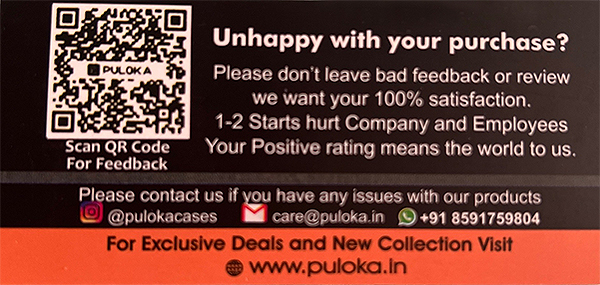
    Vikas MehtaOver the past few months, I noticed that while buying stuff from e-commerce sites, specially stuff made by small players, mostly new entrepreneurs, I would get an unusual request. It would be in the form of a leaflet or a visiting card which would request the buyer to get in touch with them directly if there were any issues with product quality or delivery etc. One or two of them would even request not to complain to Amazon or give a negative feedback. They would reassure of sorting out the problems. There would be a phone number or a WhatsApp number and also an email id. The products I bought were either accessories or small electrical or electronic devices. This is an example of the same when I bought a phone cover recently.

    Frankly, I hardly noticed or gave a second thought to such messages till one day, I actually faced some quality issues with a mini UPS I had got for my broadband router. I found the card with the contact details. I tried calling the number, which was a mobile number, but got no response. I send an email and still had no response. So, after three days I finally got in touch with Amazon who got my product replaced as it was in the warranty period.

    This set me thinking. First, the trend of brazenly asking not to report any problems and not to give a negative feedback. Some may say that it could reflect confidence in the quality of the stuff so if by any chance there is a problem they can handle it, but I think it’s exactly the opposite. It’s the worry that too much of negative feedback will lower the rating score. It also tells me that ratings score is an important parameter that contribute to the sales of the smaller unknown brands or products. I do follow rating scores and was not sure if buyers take it seriously, but this type of communication tells me that they do.

    Secondly, this raises a question whether this is just a gimmick with the sole purpose of avoiding lower ratings and bad publicity? Because if the sellers are genuinely interested in building good consumer relationship then they would respond to complaints. In my case, what happened was that my complaint was finally resolved but the seller escaped as I did not give any negative feedback on Amazon. I am sure Amazon took them to task or lowered some metric because of my complaint but the seller managed to avoid a public complaint from me.

    Which brings me to two simple questions? One, why do we still have a jugaad mindset? Why are we being smart in a negative way and not using the smart to build a strong brand or a better customer relationship. Second, is customer relationship seen as a cost centre or as a sales promotion tool?

    Let me explain the second point with a very recent example.

    I am an e commerce addict and do not hesitate to buy even large ticket items like TVs or AC etc online. I find the process easy. I am able to compare across brands sitting at home and rating points gives me a fair idea of consumer feedback and experience. Exchange allows me to dispose off old products and even get some value out of them. Not to mention the thrill of discounts and the psychological feeling of getting a good deal.

    Three years ago, during Covid while using my Dell Laptop I faced some issues. Given the fact that it was Covid time I was not too keen to go to a service centre. So, when I discovered a Dell store close to my residence, I visited it. The salesperson, was very helpful. Thankfully, the issue was software related so he set it right in 10-15 minutes. Not once did he ask me to visit a service centre. In fact, he gave me his mobile number and asked me to call him if I face any more issues. He did not make any sale nor did I promise him one.

    But a few months later when I was looking to replace my laptop with a new model, my thoughts turned to the helpful salesperson. I did my homework on Amazon and then approached him with my shortlist. I asked him to match the discounts. He actually showed me another model which was not in my shortlist and explained to me why it could be a better choice. I was not totally convinced but just his effort impressed me. Ultimately, I ended up buying a laptop from him. Even though it was slightly more expensive. It was as if his helpfulness, his going out of the way and his efforts in making me feel important was an extra feature to which I was assigning some value.

    And he became our go to guy on anything technical in electronics. My wife had a different brand but he did not hesitate in helping out with any issue with that too. He would even volunteer to come over if the need arose.

    In the last more than three years as a family we have bought three new laptops. And no surprises in guessing that all three have been bought from this one person. More than any celebrity he has been the influencer or endorser for Dell for us. I am even sticking out my neck to say that if he shifts to any other brand, I would follow suit.

    It’s not just the first experience with him but also subsequent experiences. Whenever we have bought a laptop, he has undertaken it on himself to transfer all data to the new laptop. Mostly from cloud but some from old laptop too. And this includes ppts, word documents, images, videos; everything. My trust in him is so strong that I leave the old laptop with him to transfer the stuff. Sometimes, he comes over and does the work. Any issue and he is available to sort it out.

    And every laptop that I have bought from him, I could have got it cheaper online. I could have saved 3-5,000 rupees each time.

    What has happened is simple. The customer service has not been a cost centre. It has become an additional feature. One, which makes me shell out extra or in plain words pay a premium.

    That’s something that new startups or small entreprenuers must understand.

    Do not look at customer service as a cost.

    It could be your extra product benefit.

    It could be a tangible value addition.

    It could be your differentiator.

    Neglect customer service and treat it like a gimmick at your own peril.

  • Google, Tata Motors, Amazon, Jio & Apple Most Inclusive Brands in India

    Google, Tata Motors, Amazon, Jio & Apple Most Inclusive Brands in India

    Leading marketing data and analytics firm Kantar has launched its Brand Inclusion Index (BII), a global study which reveals that 75% of consumers say that a brand’s diversity and inclusion reputation influences their purchase decisions.


    A staggering 68% Indians claim to have been discriminated against, and in majority of cases in commercial places and brand touchpoints, which is substantially higher than the global figure which stands at 46%. The study also showcases that DEI is important for an overwhelming majority of Indians, both in life and while making brand choices, with 86% of respondents.


    The first edition of India Brand Inclusion Index study explores skincare, banking, automotive and Technology categories. In its Index of the world’s most inclusive brands, Kantar ranked Google, Amazon, Nike, Dove and McDonald’s in its global top five while in India, it is Google, Tata Motors, Amazon, Jio and Apple. The brands were recognised by consumers for setting a positive example by demonstrating a genuine commitment to diversity, equity, and inclusion (DE&I).


    The study identifies that inclusive marketing is a significant opportunity to drive brand growth. It is clear that brands who fail to address discrimination, risk alienating a significant portion of their customer base. Despite progress made by some brands, the Brand Inclusion Index 2024 reveals a significant inclusion gap that businesses must address. This gap is the difference between the proportion of people in a market who have experienced discrimination and the percentage who believe in the importance and influence of diversity and inclusion.


    Kantar’s Brand Inclusion Index 2024 is a survey of more than 23,000 people in 18 countries, the India leg comprises 1000-plus respondents with an inclusive demographic which is gender expansive, disability, socio-economic class, religion etc.


    The findings of the Brand Inclusion Index sit in the context of preliminary research from the Unstereotype Alliance with Oxford University’s Saïd Business School, using data from Alliance members including Kantar. This study has found that progressive, inclusive advertising drives a significant sales uplift of over 16% when compared with less progressive ad content and has a significant impact on consumer loyalty, buying intentions and a brand’s pricing power. Respondents assess brands on different dimensions – brave brand DEI strategy, diversity, equity, and inclusion – from the absence of negative actions, to the presence of positive initiatives.


    Key findings:

    • There’s an urgent need for brands to address DE&I failures: A staggering, 68% Indians claim to have been discriminated against, and in majority of cases in commercial places and brand touchpoints, which is substantially higher than the global figure which stands at 46%. The study also showcases that DEI is important for an overwhelming majority of Indians, both in life and while making brand choices with 86% respondents
    • Consumer expectations are high, globally: 75% of consumers globally say that diversity and inclusion – or a lack thereof – influence their purchase decisions
    • DEI is yet to make its mark on Indian advertising:
      • More women are seen in Indian ads than global average but they remain bound by traditional roles of homemakers and mothers (7% women are featured in non-traditional roles)
      • Fairness of skin may have transitioned to glow but skin colourism continues to exist in creatives
      • Sizes remain slim and small. (7% diverse body shapes)
      • Ageism dominates with 40+ women represented in less than one out of five ads (15% in India vs 26% globally)
    • Underrepresented groups are most vulnerable: Ad protagonists and characters in India are painted in broad strokes of what they, their homes, beliefs and lifestyles look like, ignoring ethnic minorities, LGBTQ
    • Ads that successfully portray people positively provide greater predicted ROI for advertising investment. There has been growth in the industry in positive portrayal of Males over the last year, but a drop in Female portrayal since last 2 years
    • Globally, people with disabilities and LGBTQ+ individuals report the highest rates of discrimination (81% and 62% respectively), emphasising the need for targeted efforts to create more inclusive environments and content
    • Google, recognised as most inclusive brand in India as well as globally. It emerges as a beacon of hope, ranked by Kantar as the most inclusive brand globally. Consumers, particularly in marginalised communities, praised Google for its unwavering commitment to DE&I in its internal policies, products and marketing, its authentic representation of people from all walks of life and its leading-edge innovation for inclusion
    • Alongside Google, Tata Motors, Amazon, Jio and Apple emerged in the top five winners in India. Category wise, the India top Brand Inclusion Index scorers are – Google (Technology), Tata Motors (Automotive), SBI (Banking), Dove (Skincare).


    Said Valeria Piaggio, global head of diversity, equity and inclusion at Kantar: “It’s a myth that inclusion marketing is about marketing to minorities. Inclusion marketing is expansive marketing. One of the fundamental ways to grow your brand is to predispose more people to it. Yet when brands exclude consumers – whether that’s because people don’t feel welcomed when shopping in stores or their advertising doesn’t reflect diverse communities – it’s an easy miss.


    “Millennials and Gen Z prioritise diversity and inclusion even more than other groups, and as these populations grow in size and buying power these issues will carry more weight. Brands will be rewarded if they stand by their values – especially in the face of vocal communities which stoke the culture wars by pitting minority groups against one another.”


    Said Soumya Mohanty, Managing Director & Chief Client Officer- South Asia, Insights Division, Kantar: “In a country of India’s size, the term under-represented groups can be misleading for brands to use as a guiding light. Minorities can translate into millions of people who may choose or not choose to buy your brand, based on how well they feel seen, heard and voiced in your brands. It is a business imperative for brands to prove that they are serious and committed about DEI. The Brand Inclusion Index – our breakthrough study on brand inclusion – gives clear indications of how to achieve the inclusivity imperative. Our analysis of what’s behind the most inclusive brands is that they all have three things: a well-thought-out DEI strategy that stems from company actions and is committed long-term, impeccable creative execution, and bravery. The element of bravery will be increasingly important. As in other moments in history, when there’s significant social change, there are groups of society that seek to maintain the status quo, feel threatened, and as a result, react loudly,” adding: “To avoid backlash, brands today need to be extra careful. Full inclusion needs to work at both ends of the spectrum: reaching out to underrepresented populations and making them count, while avoiding negative reactions from people who are used to seeing themselves well-represented by brands and don’t want to be left behind. This study brings understanding of how people perceive brands based on their DEI efforts, focusing on populations that tend to be excluded, underserved, or misrepresented. The Brand Inclusion Index gives marketers clear benchmarks for brand inclusion and inspiration from brave brands that are seen as diverse, fair, and inclusive.”

  • Not just Quick Commerce

    Not just Quick Commerce

    With apologies to none at all

    Vikas MehtaFirst, a confession. I got it all wrong. About two years ago when quick commerce delivery started, I was sceptical. Indeed, I was a naysayer. My thinking was in a straight line. How many times would one need quick delivery? Why would we need things in 15-20 minutes over and over again. After all quick commerce will have a minimum order delivery benchmark. So, every time, I need a soap or a vegetable or a dal, will I be ready to spend not just for that one item but also a delivery charge as I may not fulfill the minimum order criteria. And then we got hooked onto ecommerce not just for convenience but also for the discounts. So, will the quick commerce guys give me discount similar to traditional ecommerce (never thought, would call ecommerce traditional, but we live in exciting times)? And boy, was I wrong? Just in two years, quick commerce controls a third of the e-grocery market, up from one-fifth.

    To add to this what surprised me was that the quick commerce players were not ecommerce players but either new ones or food delivery people. At best they had mastered the art of quick delivery. But not about warehousing, stocks, discounted pricing etc. During the pandemic when food delivery app like Zomato and Swiggy were out of play as restaurants etc were closed, they switched onto grocery deliveries. Like food, they tied up to pick groceries, vegetables etc from kirana shops, supermarkets etc and like food, delivered it. So, yes, they could deliver speedily but where was the experience of trading, stocking, pricing etc of groceries and fruits and vegetables? Wasn’t that more critical.

    I was an avid ecommerce shopper. Even before the pandemic, my monthly grocery etc shopping would be through Amazon or Big Basket. And the scales were tilting more towards Big Basket as that was a one-stop shop for groceries, knick-knacks, fruits and vegetables, packaged foods etc. Plus, their delivery time slot system was also a good attraction.

    So, when BlinkIt opened in Doon, their first dark centre or warehouse hardly 3.5 kms from my house, I ignored it. I would see the riders zipping in and out and standing in cluster outside the dark centre. What caught my attention was that the number of delivery people huddled around the dark centre kept on increasing exponentially, till the place started becoming a traffic menace.

    I dismissed this as an initial craze which would pass soon. I did download the app and was not too impressed with the offerings or the price. It was cheaper than MRP but in my biased view not as cheap as a typical ecommerce player. I did however notice that they also stocked socks and bedsheets and cookware and other homecare stuff. They also had electronics and pet items. But when the announced 15-minute delivery of iPhone 15 on its launch, I did start taking notice.

    And then on the day of Diwali when my wife asked me to get some fresh flowers and I could not find them in the neighbourhood, I checked on Blinkit. Not only were they delivering fresh flower but also a complete Puja thali with or without a small statue of Laxmi. I was really intrigued and I ordered.

    The app experience was wonderful. Once I registered my credit card, I did not even have to enter my PIN and BlinkIt has a tie up with MyGate. So, when my order was picked up by the delivery executive, Blinkit sent me a preapproval message and at a click, his entry was approved. All this from my locked home screen. The delivery was seamless in a neat bag, in 15 minutes. And the whole deal was not at all expensive.

    Now, I wanted to try more. So next week when we required household groceries etc including two bulbs, I looked at BlinkIt. The whole operation – from ordering to delivery – took around 20-25 minutes and the deal was worth it. The interesting thing I discovered was that whenever I needed something which does not fit into traditional grocery or vegetables, BlinkIt would have it. We needed some woollen socks and cap for our trip to Kashmir. I found it on BlinkIt without having to go to Myntra or Amazon.

    And I think this is the main reason why all naysayers of quick commerce have been proved wrong. It’s not about quick delivery only. What makes it interesting is that it goes beyond traditional grocery, fruits and vegetables and also stocks much more. Till now, I would rely on Amazon for anything other than groceries or vegetables. Then came Big Basket, and I could now get groceries, food, vegetables etc from one source. But I still required Amazon for everything else.  BlinkIt, for me, is a combination of Amazon and Big Basket. And delivered quickly. And at competitive prices. Not at a premium.

    So, for me, BlinkIt works as follows. One source where I find almost 95% of what I need usually. Prices competitive to other ecommerce players. A superior app experience. And finally, all that I need gets delivered in 15-20 minutes. I do not have to wait or follow up or even chase. This is as close to a offline personal shopping experience. You decide, you buy and it gets delivered. The shopping experience is complete. The circle is closed.

    I do not know much about Zepto or Instamart as they still do not deliver in Doon, but BlinkIt has, in my mind cracked the quick commerce code by not just focusing on speed of delivery but also on the range of products. I remember reading somewhere how some head honchos of quick commerce companies had spoken about opening many small dark stores storing about 2-3,000 SKUs. Each dark store would cover about 5-7 square kms. The thinking was that most households only need a limited range of goods quickly. So, the focus was not the width of goods available but the number of stores for quick delivery.

    This is exactly where the quick commerce companies could have gone wrong. And I see this happening with BBNow. They too are 3 kms away from my house but their range is quite limited. Indeed, I can find stuff on BigBasket but not BBNow. This is where I think BlinkIt has cracked the quick commerce code. As I write this, I get a notification that BBNow is delivering electronic items like chargers, power banks, phone covers etc in 15 minutes. So, they too are on a course-correction.

    It’s not about delivering a few products quickly, for that will be far and few per customer. But making available as wide a range as possible and delivering it all quickly. This also ensures a bigger order size. And psychologically it’s about completing the shopping process in real quick time. Threfore, if weekly offline shopping was a regular habbit, regular weekly quick commerce shopping is also now a habit

    So, convenience is not just about sitting at home and shopping or getting a missing product quickly. BlinkIt has added the dimension of completing the shopping loop in quick time. As I said, this imitates the complete offline shopping experience .

    And I know that it is working because I see more delivery guys, more two-wheelers and more yellow BlinkIt bags around. I have also, for the first time heard the local kirana shop owners complain as BlinkIt is eating into the traditional small buyer too. And most importantly I know that BlinkIt has found the successful formula when sometimes, even at 9 am, I open the app and I see an apology saying that they are overburdened with orders so I should try after sometime. And when they do accept the order, after sometime, they levy a traffic surge surcharge.

    Deja vu!

  • Prime Video revs up marketing campaign for ‘Poacher’

    Ahead of the global premiere of Amazon original series Poacher, the streaming major has unveiled an aggressive marketing campaign. Life-sized installations have been set up in prominent locations across the country.

    Notes a communique: “From oversized faux elephant tusks in glass boxes at prominent locations in Mumbai to highlight the scale of the issue, to elephant crime scenes in Mumbai, Delhi, and Bengaluru, the service has been successful in creating conversations about the issue of wildlife crime, to strongly convey that – “Murder is Murder”- be if of a human, or an animal. The elephant crime scenes are located in areas such as Mumbai’s Bandstand and Powai, Delhi’s Janakpuri and Saket, and Bengaluru’s Shantiniketan.”

  • Amazon Fire TV Streaming Trends Report

    By Our Staff

    Indians spent more hours streaming cricket vs entertainment content during domestic and international cricket tournaments in 2023 as per Amazon Fire TV Streaming Trends Report. Published by Amazon, the annual edition of the report captures aggregated insights on how Indian viewers consumed content on their Fire TV devices in 2023. Data reveals that Maharashtra, Delhi, Andhra Pradesh, Karnataka, and Tamil Nadu streamed more hours of cricket than other states on Fire TV.

    In 2023, Indian households spent around four hours per day streaming their favorite movies, shows, cricket matches, playing games, and listening to music, through Fire TV. A family in Delhi streamed 5.4 hours every day in 2023, the highest by any Indian household through Fire TV.

    Favorites on Fire TV: Sports, Kids’ content, news, and TV shows

    • Besides cricket, Fire TV users also enjoyed streaming F1 races. Viewership for F1 races witnessed a 50% increase from last year
    • Kids’ related apps saw approximately 31% increase in monthly streaming hours per customer. Some of the popular apps include YouTube Kids, ChuChu TV, HappyKids and others
    • Fire TV users also enjoyed playing music on their TV. Last year, one in every three users played music through Amazon Music, Spotify, and other music apps through Fire TV
    • Fire TV users made the most of free (ad-supported) streaming platforms. Apps such as YouTube, miniTV, MX Player, and others saw approximately 23% year-over-year increase in streaming hours

    Users enjoy the convenience of Alexa’s universal voice search on Fire TV

    • Approximately 80% of Fire TV users took Alexa’s help in searching and navigating through their favourite content across 12,000 apps, controlling their Alexa-enabled smart home appliances, setting reminders, etc.
    • Comedy, thriller, and drama were some of the most popular genres of content watched by Fire TV users. Tarak Mehta ka Ulta Chashma was the most voice-searched Indian title, followed by Big Boss, Anupama, Ramayan, and CID to name a few
    • Parents of young kids used Alexa to search and play popular kids’ shows namely Cocomelon, Peppa Pig, and Chhota Bheem through Fire TV

    Indians across 99% of the pin codes have purchased Fire TV devices

    • With thousands of positive reviews and a 4+ rating on Amazon.in, Fire TV Sticks have been bought by Indians across 99% of the pin codes of the country
    • From Kavaratti in Lakshadweep, Port Blair in Andaman and Nicobar, Kamrup in Assam, Papum Pare in Arunachal Pradesh, to Purnia in Bihar – families enjoyed the streaming experience offered by Fire TV
    • Fire TV users enjoyed streaming Prime Video movies and originals
    • Some of the most streamed movie on Prime Video were Pathan, Bawaal, Rocky aur Rani, Jailer, Drishyam 2, Pippa, and Mast Mein Rehne Ka
    • Popular Prime Video original series streamed by Fire TV users were Farzi, Dahaad, Jubilee, and Made In heaven, to name a few
  • Amazon miniTV collaborates with digital storytelling platform, Pratilipi

    By Our Staff


    Amazon miniTV- Amazon’s free video streaming service has collaborated with digital storytelling platform, Pratilipi, to launch its latest series, Dehati Ladke, into a comic adaptation. The streaming service recently premiered this coming-of-age drama series, originally published as a book on Pratilipi, and is currently streaming exclusively on Amazon miniTV, available on Amazon’s shopping app, on Fire TV and on Play Store.


    Talking about this endeavour, Ranjeet Kumar Singh, CEO/Co-founder, Pratilipi said: “Bringing this slice-of-life series into the comic world has been an amazing and memorable experience. From the adaptation of a book to a series, and then to a comic, we are grateful for the support from Amazon miniTV in this journey. Pratilipi always strives to bring something unique to the table for comic lovers, and this venture has added yet another feather to our cap. We are extremely excited to see the response of readers for Dehati Ladke’s comic adaptation.”


  • Prime Video launches FanCode, a dedicated sports channel

    By Our Staff


    Prime Video, the entertainment offering from Amazon, has expanded its sports programming by launching FanCode on Prime Video Channels. The first dedicated sports streaming service will offer “access to the best of global and domestic sports”. Prime members can now purchase an annual add-on subscription of Rs 249 to FanCode.


    Said Vivek Srivastava, head – Prime Video Channels, Prime Video, India: “At Prime Video, we know that while our entertainment preferences are delightfully diverse across the country, we are all ardent sports fans! All forms of sports have such strong, passionate fans following them and we would like to make access to a diverse array of sports super easy,” adding: “We are thrilled to collaborate with FanCode to offer our customers an immersive sport viewing experience with a line-up that spans multiple sports and geographies. We are certain that the diversity in programming, and the convenience of enjoying all their favourite sports at a single destination, will delight sport lovers across the country. The addition of FanCode to Prime Video Channels also allows us to offer a comprehensive bouquet of entertainment, from international and local language content to kids-focused and now live sports.”


    Other than FanCode, Prime Video channels include BBC Player, BBC Kids, Animax + GEM, Lionsgate Play, discovery+, Eros Now, DocuBay, ManoramaMAX, hoichoi, MUBI, AMC+, ShortsTV, VROTT, Acorn TV, NammaFlix, Stingray All Good Vibes, iwonder, Curiosity Stream, Chaupal, MyZen TV and Museum TV.


  • Amazon rolls out third edition of campaign

    By Our Staff


    Ahead of Prime Day 2023, Amazon India has announced the third edition of its campaign, #AmazonGotMyBack with a brand film to showcase the convenience it offers to customers across India.


    Talking about the third edition of the #AmazonGotMyBack campaign, Dr. Karuna Shankar Pande, Director, Amazon Logistics, India said: “At Amazon, we constantly strive to make the delivery experience convenient for our customers through our unparalleled reach in the hinterlands of the country with reliable and on-time deliveries. #AmazonGotMyBack campaign gives all of us, especially our associates who work behind the scenes across operations network, an opportunity to see real and unique experiences of our customers.”


  • Amazon Mini TV to dub shows in Hindi

    By Our Staff


    Amazon miniTV, the free video streaming service from Amazon.in, has announced the launch of its newest category, ‘Mini TV Imported’, with International content dubbed in Hindi. It will stream top global shows every month ranging from Korean, Turkish, Mandarin and Spanish dramas.


    Commenting on the big venture, Amogh Dusad, Head of Content, Amazon Mini TV (or miniTV, as Amazon writes it) said: “In recent times, the viewing preferences of digital video consumers in India have changed significantly. They love diversity in content offering and are looking for unique stories & captivating characters from across the world. We have curated a list of blockbuster shows (from Korean, Turkish, Mandarin, Spanish and many more languages) that we believe will resonate with Indian viewers. Very excited to add the international shows in local language to our content slate on Amazon Mini TV!”


    Added Aruna Daryanani, Director and Business Head, Amazon Mini TV: “At Amazon Mini TV, our endeavour has always been to offer exciting content to our audiences across India for free. We are catering to a vast majority of 18-34-year-olds, who are looking for fresh content beyond television. Hence offering a varied choice of international shows dubbed in India is a perfect extension and we believe will appeal to our customers. We believe this is an exciting opportunity, as advertisers are also very keen on reaching out to this audience on our service.”


  • IPL16 ads: They don’t make ’em like it anymore


    By Sanjeev Kotnala


    Sanjeev KotnalaI am a loyal IPL follower, and I watch the match telecast every evening. The quality of telecast and the options for the viewer have increased exponentially. However, that cannot be said for the ads telecast on IPL. Watching them makes me overtly nostalgic. In earlier IPL seasons, the brand and agency people invested much more effort into crafting and developing the advertisements. It is much more about media muscle and frequency than the craft today. Somewhere high frequency seems to be a substitute for creative content.

    IPL 2008, the first edition, had everyone excited. It was expected to become the Super Bowl equivalent for advertising in India. Today, IPL is one of the richest sports leagues, with two months-plus of excitement and engagement, delivering eyeballs and loyal enthusiasts on digital and TV. IPL advertising almost defines the advertising spending trend for the nation. It should be common sense that the brands wanting to exploit the IPL matches across the season need multiple creatives to avoid overexposure and audience apathy. Unfortunately, the advertisements hardly reflect the thinking. The advertisement content and creative lack high engagement. It makes me think- They don’t make them like it anymore.


    IPL- everything is not lost.

    A few brands stand out in the scores of brands trying to effectively use the IPL platform across TV, OTT and Digital.


    RuPAY

    RuPay, with its UPI plus credit card communication, is an excellent example of focused communication. All three advertisements are interesting and engaging. The ‘Silver Helping Hand’, ‘Catch Expert- Chaos in Museum’, and the ‘Slippery Spy- mole’ are fun to watch and communicate the message.

    Unlike the Tata Tiago example of reasons to go for an E-SUV, which may not be the best and most effective way for the brand. Do people still need reasons to buy an electric vehicle!


    DREAM11

    DREAM11 has been consistent through the IPL seasons and has always worked on ‘All will play’. This season is no different. The brand continues the good work. The Bollywood and cricketers’ interactions as opponents in the game are engaging and funny. ‘Lal Singh’, ‘You don’t go for awards’, ‘Dialogue Delivery’, ‘Viral’, ‘All is well’, ‘Duplicate‘, ‘Lagaan’, ‘Riaaz’ and ‘Retake‘ are a few of the ads. Hope to see more situations in the rest of the matches.


    MYCIRCLE11

    MyCircle11 has also done well with its ‘Second prize 1 crore- toh pehla prize kya hoga‘ communication, continuing the Giant theme and format. However, the situations and the excitement are missing as the idea becomes a prisoner of the format. And for some reason, the 2023 videos are unavailable, and even the site showed Jeeto 1 crore everyday campaign in 2021.


    AMAZON

    The ‘Aaj Amazon se kya Khareeda’ series is another set of communication that makes the point while engaging the audience. It slowly builds on categories- the order size and common everyday items.


    IPL ADS- ALL-TIME FAVOURITES

    All of us will have different advertisements telecast with IPL seasons as favourites. Here are the ads that stand out. If I have missed some really good ones- do let me know.


    VODAFONE ZOOZOO

    The Vodafone ZOOZOO would rank as an all-time favourite of all IPL ads. The way the ads were conceived, executed, released, and the build-up was well planned and executed. In fact, they were produced and timed with the IPL season.


    AMAZON CHONKPUR KE CHEETAHS

    My other favourite of mine has been Chonkpur ke Cheetah by Amazon. Even today, in the Amazon ads, telecast on IPL16, the brand is extending the same- similar concepts like A-to-Z, Aapni Dukan, and a platform for everything, including your everyday items. Chonkpur was another instance and example of IPL-specific communication. The slow unveiling of the journey of Chonkpur ke Cheetah was well planned and executed, keeping the excitement high.


    CRED – NOT EVERYONE GETS IT.

    When the ‘Cred – Not everyone gets it’ series started, it had a mixed reaction. But, the way the series progressed and the brand kept unleashing fresh creative starring another popular celebrity, it grew on you as an audience. A well-thought-through and executed campaign.


    SWIGGY, NO ORDER IS SMALL.

    Swiggy and Zomato both exploited the audience’s interest in watching the telecast. They have offered various schemes to make people order during the matches. However, what stands out are Swiggy ads of ‘No order is small’ and ‘What is the score’. It also introduced the actor who became known as Swiggy Uncle and was featured in many more TV films.


    ADD-ON

    Not IPL Ad- but the Kid-adult format by FLIPKART was an engaging experiment killed by overexposure and format constraints.  Another series that was engaging and interesting was Voltas Murthy.

    Similarly, Make My Trip’s consistent use of celebrity Alia, and Ranveer Singh continues to be superbly executed with its own fun quotient while delivering the message. However, that cannot be said for Ranbir Kapoor – Asian Paint ads which lack engagement- proving that consistent use of celebrity is not the solution and the content remains the king.


    NET-NET

    Want to associate with IPL and exploit the platform? Then the brand must understand that the ads are the real breaks and the interruption in the audience’s interest. And the season is long, and the media cost is too high to associate. The brand message should be simplified and relayed to the audience through multiple creatives to keep the engagement levels up and excitement with the brand. Do invest in creative development and execution even at the cost of losing out on frequency of exposure. An excellent /Good creative exposed less number of times is a far better proposition than a mediocre/average creative exposed many, many times.

    Just for the suggestion watch this ever favourite ad of mine. Ericsson One Black coffee ad.


  • The More The Merrier


    By Sanjeev Kotnala


    Sanjeev KotnalaI believe in using multiple creatives to reiterate the message. It not only keeps the interest alive but also strongly makes the point. Multiple creatives are more effective when there is continuity, they are linked with a character or strong slogan, take the story forward or are humour based.


    In my last week’s article, I suggested using multiple creatives by banks and payment platforms to collectively address the issue of safe digital payments – an industry problem.


    Many brands have used multiple creatives to their advantage. A few examples are Rajasthan Tourism – MusicsthanJanesthan and other series, Coca-Cola- Thanda Matlab Coca Cola, Amazon- Chonkpur ke cheetah, Aapni Dukhaan, Dinshaw’s- Wakao series, Voltas AC- Murthy series, Cred – celebrity series, Policy Bazar – 1 cr ka life insurance, AajTak-  the black and white series- Sabse Tez, Tata Sky – Chota recharge.


    In recent times, with the attention span of the audience dropping fast and the brands focussing on digital media more and more, the need for such linked multiple creatives (the shorter the better) reiterating the same message gets enhanced. As they depict different scenarios, the chances of them hitting home with relevant audience sub-segments are much higher. One finds humour-based multiple creatives to work better. As they are more engaging and involving.


    Amazon – Aaj kya Khareeda? #aajkyakhareeda

    Amazon uses Multiple Creatives in the campaign Toh Aaj Kya Khareeda. There are different product categories and relationships under play.

    Brother-sister– where the sister buys a deo for the brother and asks him to stop using her personal care product. Grandfather and Grandson– where the grandfather has purchased just batteries at Amazon. The neighbour – where the housewife shares the everyday items she ordered and even states the everyday things expected in the next delivery. Husband-wife – where the wife playfully suggests that she had ordered stuff for her husband.

    The creative strongly drives home the message: Whatever you need, from personal care to stationery, groceries to utensils, you get everything on Amazon! Roz ka samaan Amazon par. And there is a subliminal message that people use Amazon for the most minor things. Moreover, people are buying something daily that simultaneously speaks of trust and ease.

    I wish the brand went a bit quirkier and even showed things people don’t think they will get and buy on Amazon or things that amazon has now made easier to buy.


    CADBURY- KISI AUR KI KHUSHI

    As a brand, Cadbury has used Multiple Creatives to powerfully deliver a message and establish the brand’s Goodness, sharing, caring, and love elements. It even stands for saying Thank you – and now in participating in someone else’s happiness. The brand has multiple creatives exploring various situations. The newspaper Hawker and his client in house 302 test riding his new cycle. The employee gets an increment, and everyone celebrates. The lady opening a new parlour and the madam of the parlour where she used to work comes in as her first client to mark the occasion. And the one that I liked the most- the liftman video getting 10,000 views making him a social media star– and so the residents of the building comes to congratulate him. And the brand has also taken it to ground activation- celebrating the house help birthdays. The creatives are simple, dubbed into regional languages, and work equally well.


    TATA CAPITAL – QUICK PERSONAL HOME/BUSINESS AND LOANS AGAINST SECURITIES

    Tata, across brands, seems to acknowledge that you need to press a different nerve to tap different segments. To create relevance and impact, the segment must have a slice-of-life situation to relate to. And with the added touch of humour, the message could be delivered efficiently. Be it Tata Sky or Tata Tea, or Tata Capital, the format of a relatable problem is resolved efficiently and with a smile. In the case of Tata capital – QUICK LOAN is the message, and the promise of quickness is delivered digitally in situations with a smile. Be it for marriagehomepersonaleducation or business loan against securities.


    PIRAMAL FINANCE. HUM KAGAZ SE JYADA NEYAT DEKTEY HAI.

    An unbelievable promise in the loan market, but it had to be communicated well. Here are the two decent attempts- but I think they need to explore more and show different scenarios- strata- a business that can benefit from it. Including the family members and the actual situations is a nice touch for the Lohaar and the Home Loan ads. Though in this case, the ads are not that short but are short enough to keep the interest alive and engaged.


    NET-NET

    In the era of a short attention span, a series of Multiple creatives (the shorter, the better) reiterating the message can be more effective. It allows one to address different nuances of the same issue, thus making it more relevant to a broader audience. Try it out.

    It does not in any way suggest that a single communication exposed with the desired frequency will not work. As the choice will always be determined by the message and the category. I always suggest investing more in the creative process, even at the cost of compromising a bit of media weight. And in the current media scenario and audience interaction with media, I think multiple short creatives can deliver better results.

    …………….……………………………….