Tag: Amazon

  • Spending on videos to reach consumers yielded highest returns: Octane CMO Report


    By Our Staff


    Spending on video to reach consumers during the lockdown period yielded highest return on investment, said the ‘Digital 2021: Adapting to the New Normal, a report prepared by Octane Research and DMAasia.


    Octane Research engaged with 250-plus Chief Marketing Officers (CMOs) and leaders – as part of its research study to gain first-hand insights and perspective on outflanking the impact of the Covid-19 pandemic.


    According to the report, as many as 62 per cent of India CMOs said that spends on video for consumer outreach delivered the highest return on investment. “The digital industry and streaming video players like Netflix, Amazon, Facebook, YouTube and others decided to temporary default their video quality to SD. This initiative was in consumer interest to ensure better access to the internet by maintaining the robustness of cellular networks,” said the Octane’s annual state of online marketing report published on its 10th anniversary.


    The report said video continues to be the most stimulating type of content for the consumer, as well as offering maximum engagement.


    Marketers said that video-along with live streaming—gave their brands the maximum amount of customer engagement, only social media had more. It was also noted blogs and email campaigns have continued to be among the Top 5 channels for customer engagement. Promotion and updates through the use of traditional SMS is also among the Top 5.


    “Content Marketing in India has finally found its place as a separate line item on the marketers’ budgets. Online is driven through effective content management practices and we anticipate surge in this area for the 2021 Annual. Engaging new audiences emerges as the no. 1 area of opportunity for India brands,” it said.


    Video continues to be the most stimulating type of content for the consumer. It continues to offer a solid ROI (return on investment), as 61.8 per cent of our responders deploy content marketing strategies within the videos & webinars.


    The report revealed that a video for “Nutrela” titled #AcchaKyaHua, and promoted with minimal budget, managed to garner over half a million views on Facebook during the lockdown.


    “With movement of people severely limited during the lockdown and even after that, companies swiftly adopted digital mode to reach out to wider section of people, the evidence suggest that the strategy worked,” said Punit Modhgil, Chief Research Officer, Octane Research.


    The research report said about 51 per cent of India CMOs admitted having leveraged branded pages, microsites and social media handles for marketing promotions and consumer engagement. Promotional microsites allow consumers to have a quick, focused journey based on their immediate need, rather than dispersing their attention. They are also cost-effective in increasing a consumer’s engagement by promoting brand specific content.


    CMOs in India also leveraged their brand’s social media handles to actively reach out and engage with their followers. They used their Instagram and Twitter handles to showcase emerging creative talent—and commissioned select creative work to help tell the brand story. The brand ‘Converse’ ran a campaign on new ways to create progress together with consumers.


    As regards emailers and newsletters, 43 per cent of India CMOs participating in the study ranked email third in terms of impact & return on investment generated. According to Campaign Monitor, open rates for email increased by 16 per cent in March and email sends increased by 19 per cent.


    2020 is the year influencer marketing became mainstream with marketers in India and a majority of them plan to invest in 2021 in influencer marketing programs because of its high impact in driving awareness & engaging consumers. Celebrities regularly conducted “Instagram LIVE” sessions to engage their followers. In addition, a number of BFSI (banking, financial services and insurance) and e-wallet brands utilized influencers to inform consumers on how their services were relevant during lockdown. An overwhelming 88 per cent of the participants said they would be trying influencer marketing in the next 12 months as “Consumers trust what influencers say about brands far more than what brands say about themselves in their advertising”.


    Thirty-three per cent of CMOs feel they would be running seasonal campaigns on loyalty programmes and an almost equal number vouched such initiatives in the short-term.



  • How Many Ad Films are too Many in a Campaign?


    By Sanjeev Kotnala


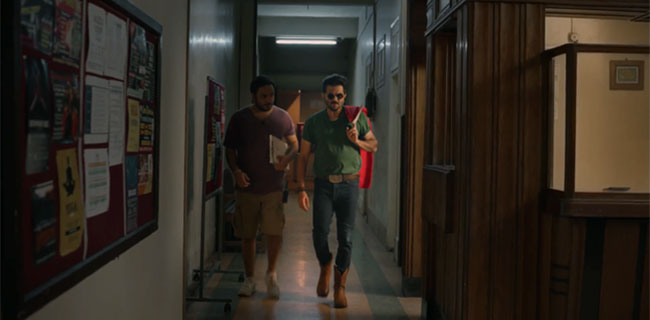
    Brands make multiple television or digital video commercials (TVC/DVC in short,  referred hereafter as ad films) to engage their audience and deliver the message. They are mostly various expressions of the same idea. So, how many ad films should a brand make? Or, how does the team decide how many should be made? Or, why create a series of ad films? That is not counting the edits and adaptations into regional languages.



    Why Multiple Ad Films?


    There are possibly so many highly logical reasons that may push the client and the creative to look for multiple ad films:


    • The client believes in iterative expressions.

    • There is a budget to make multiple ad films.

    • The creative is of the point of view that the concepts need clarity.

    • The media agency needs it to keep the audience engaged when the ad frequency is high.

    • The campaign runs aggressively across a property like IPL, and hence audience gets bored faster.

    • To take advantage of economies of scale in production.

    • To justify the high fee of a celebrity.

    • The communication aims to change behaviour and hence more ad films.

    • The concept is so disruptive that we better have more ad films to explain.

    • The idea is so strong that it demands multiple ad films.

    • The idea is weak, and with multiple ad films, we minimise risk.


    I am stopping listing reasons knowing that there could be many more for such a strategic decision. But the questions kept bugging me, and soon I found myself with my dear friend, consultant Vermajee, the Management Guru. Last Friday, over Antiquity Blue topped with chilled No 1 club soda, served in steel glasses, I got enlightened on the subject. Being Navratri, drinking was banned at home. So, we parked his SUV under a banyan tree on the Western Express Highway within sight of a ‘No Parking Zone’ sign and chewed on the subject along with Faldhari Chiwda. Vermajee shared his gyaan and opened my eyes. He usually does have that impact on me.


    Ad Films Earlier – Vermajee’s Time


    Some few decades back, when Vermajee was part of the agency circus, the brands were happy with one TVC at a time. Maybe one TVC per season. Some TVCs lasted many seasons over TV, Cinema and Rural Vans.


    It was not the creative teams lacked ideas. The act of making a TVC was time-consuming and very painful. You had to really work hard. Work in detail. Post work was astronomically costly. Budgets were sacrosanct and less clutter in the media. The clients as usual finicky and khadoos, wanting a Merc at the cost of a Maruti.


    The client today is no different. Even then, they did not understand that creative and advertising was an investment, not an expense. They fail to see, it is better to invest in good creative even at the cost of the media budget and expose it a less number of times. Cutting production budget, making an average TVC and exposing it more number of times is a bad idea.


    Yes, some clients made TVC throughout the year. If you made a judgmental error in one, there was not much to worry as the next TVC was on its way.


    However, we were absolutely sure of our craft but a bit unsure of consumer understanding. The research was used as the master key for campaign support and approvals. The scripts and even at times the edits were pre and post researched. It was too costly to change anything at a later stage, not that changes did not happen.


    Vermajee Gyaan


    Vermajee explained the difference between episodic series (procedural) and serialised ad films. He reiterated the need to judge an ad film more on strategy and impact, likeability, memory and engagement than anything else. He empathised on the law of marginal returns. Vermajee said: “the client and creative along with media must risk raising the question about the number of Ad films and must stop when they stop adding value to the campaign”.


    The Case of Multiple Ad Films


    Here, the same story is repeated with a slight twist or a change of character. Each of the films is complete, and you don’t lose much, not watching all of them collectively or in a particular series.


    The recent Cred communication is an example. Film celebrities like Anil Kapoor, Madhuri Dixit and Bappi Lahiri audition for Cred. They perform in their signature styles but are rejected. They are so overexposed that one completely forgets the Cred ad of last year, which is more explanation-based.


    People question the creativity in the Cred campaign. There is a huge awareness buildup for Cred, and the single-minded message is clearly established. I don’t have data for app downloads and usage. Recently, we saw  Alka Yagnik- Udit Narayan auditioning, which makes me think that the brand missed an opportunity in using influencers and UGC.

    In another version of this, you have the same proposition and intent but the playground and the story changes. The episodes remain independent and complete in themselves. It works brilliantly with a simple message and some emotional engagement.

    Dream11 seems to have been successful in campaigns in this style of multiple ad films. Dream11 last year #YehGameHaiMahan with multiple fils – Bush or pipeline, Dhobighat, old friends etc. pr the campaign #kheloDimaagsey. This year the Dream11 campaign #YehApnaGameHai features Dhoni, Shikar, Rohit and others.

    One of the best examples of it is Thanda Matlab Coke. Here Aamir Khan played different roles from the Punjabi farmer, Pahadi guide, to Bengali babu and some more. Well, one can not forget the ZooZoos.


    The Serialised Ad Film

    Here the multiple ad films that are following a pre-defined narrative. There is a link between them. Sometimes subtle and sometimes overt. They are best watched in series or totality.

    The story moves forward with each ad film, keeping the audience engaged in the campaign. There is a surprise packet of what next. The character layers get unravelled with time.

    Some years back we saw Amazon  Chokpur cheetahs; India Ke Sapno Ki Apni Dukkan. A small town bunch of cricket players and their coach. The ad films are still remembered with films like Dhyani’s Birthday, Introduction, Kab Khelenge 2020 and official song among others.

    Nowadays we are seeing something of serialised ad films by PhonePe ads featuring Aamir Khan and Aliya Bhat. The Chaiwala,  Kiskepass, safety and more. This time, the functionality is overpowering, it is making its point, and the interplay of characters is excellent. However, will it really become a true serialised ad film set is yet to be seen?


    The best I have seen in the Indian context is Tata Sky Chota Recharge. The campaign kept the audience glued. In fact, they were rooting for the teenagers to meet and love to blossom. The brand message delivered simply. In such cases, when the audience gets hooked, they want more of it.

     The attempts of true serialised campaigns have been far and few. Such creative requires commitment and a willingness to carry the collective risk. But like gambling, the response and gains are equally large. 


    Reminder: How Many Ad Films?

    :: Always look at multiple Ad Film from Brand and the strategy point of view.

    :: Always evaluate the content and multiple ad films in the context of the newness of the message, brand, service, media budgets and complexity or simplicity of communication.


    Invest in creative development even at the cost of media budgets. An excellent creative product exposed less will always pay back far more than a bad/mediocre/average creative exposed more number of times.

    Evaluate from consumer interest engagement point of view than the jury and judges at the awards point of view.

    No need to make more films just because you have a good script. As you may end up hitting marginalised returns and underexpose other films.

    Go ahead and do multiple ad films if they really add to the brand message understanding or clarity, emotions and association.

    Maybe Dream11 did not need all the films and Cred could benefit from serialised rather than a series of films. Perhaps, the client-agency-media teams on these brands know better the reason for multiple ad films, and when did they hit the curve of marginalised decreasing returns or maybe they can do with some more films.

  • For Amazon Sellers India, ‘Itna aasan Hai’

    By A Correspondent


    Amazon India has launches its seller-driven campaign ‘Itna Aasan hai’ . The intent of three-ad campaign conceptualised by Ogilvy is to communicate to existing and prospective sellers who are not on the platform, how easy and simple it is to sell on Amazon.  The films are directed by Sharat Kataria for Lucifer Circus.


    Said Satish Upadhyay, Head – Marketing, Amazon India Marketplace: “The 600,000 sellers on Amazon.in are benefiting from online selling while bringing hundreds of millions of unique products for our customers.  With this campaign, we intend to communicate to millions of MSMEs about how Amazon makes it easy for small businesses to go digital and start or expand their business by reaching millions of Amazon customers through e-commerce.”


    Added N Ramamoorthi, President, Ogilvy South: “For millions of small businesses, it is both easy to sell on Amazon as well as to grow with Amazon. While the nursery rhyme execution in this series of ads makes this point in a simple, memorable manner, it also underscores Amazon’s commitment to the progress of sellers and small businesses across India.”


    Said V Kamala Gowri, VP, Ogilvy South: “A lot of small businesses in the country look for a partner to help grow their business. Amazon is that platform which will enable your business to grow and reach greater heights. This campaign shows how simple it is to register your business on Amazon and kick start your online journey. The creative device of a nursery rhyme helps bring out the message in the most simplistic manner. Lets get started now.”


    One last quote, sorry. Added Mahesh Gharat, Chief Creative Officer, Ogilvy South: “The brief was simple. Change the perception of the sellers about selling on Amazon. They believe there are numerous barriers like paperwork to sell on Amazon. To communicate the ease of selling on Amazon, our campaign needed to be even simpler. When I say simple, the first thing that came to our mind was a nursery rhyme. Wake me up in the middle of the night and I can still narrate you a nursery rhyme. Taking this device and the iconic rhythm, we communicated how easy it is to sell on Amazon. Thus, driving home the thought about how simple it is to sell on Amazon.”


    Ouch. One more. Said Mukesh Kumar, Group Creative Director Bangalore: “The perception amongst sellers is, selling on Amazon involved a lot of barriers like paperwork. The brief was simple. Turn the barrier perception into something simple. When the team sat together, we realised our communication should be as simple as the process of selling on Amazon and what better than a nursery rhyme. There is nothing stickier and simpler than a nursery rhyme. It is still fresh in our heads and probably will stay in our heads for life. From there on, our job was simpler. The takeout after watching this campaign should be the ease of selling on Amazon is as simple as mugging up a nursery rhyme.”

    No more quotes. Now watch the ad.


  • Amazon starts ‘Inn Dibbon Mein Kya hai?’ campaign

    By A Correspondent


    Last Friday, Amazon India unveiled its campaign “Inn Dibbon mein kya hai”. Conceptualised by Team Ogilvy Bangalore, the ‘Inn Dibbon mein kya hai’ and directed by Afshan from Good Morning Films, the campaign includes TVCs and short content for customers across India.


    Said Ravi Desai, Director Mass and Brand Marketing, Amazon India: “Last few months have transformed the way we all live and each one of us is embracing change & making many new beginnings…some big…some small. We see this intervention as more than just a campaign from Amazon, but as an ode, a salute to this spirit of optimism and human tenacity – finding moments of joy & togetherness during these times. It also very humbly reminds us of the privilege & the responsibility Amazon has, to serve our customers, and be an ally in their new beginnings. The quintessential Amazon Box ceases to be just a carrier of something you ordered, transcending to a larger purpose of delivering happiness safely, with the trust that millions of customers have placed in Amazon.in.”


    Added N Ramamoorthi, President, Ogilvy South: “What unites all of us during this tough time is hope – for newer beginnings and for better times ahead. Little things symbolize new beginnings, be it the new laptop for a daughter or a mobile phone for a parent. That’s where Amazon and it’s wide selection across categories comes in – as a brand that enables our search for new beginnings by delivering these symbols of hope when we need it the most.”


  • Amazon v/s Flipkart: The Big Sale Fight


    By Sanjeev Kotnala


    In all likelihood, over the next few days, you will buy some item on the ‘Amazon Great Indian Festival Sale’ or the ‘Flipkart Billion Days Sale’. And at the end of the sale period, one of them will claim some astronomical figure of realised sales.

    Through the years, Amazon and Flipkart have successfully redefined ‘the biggest sale’ in Indian festival calendar. It is now nearer to Dassera than Diwali, an attempt to sweep the market before the traditional sale period.

    Sales in India on a single day are nowhere close to the eye-popping record $30.8 Billion ‘Single’s day’ sale of Alibaba, which was more than the ‘Black Friday’ and ‘Cyber Monday’ sales combined. But we are getting there with growing e-commerce, better logistics, infrastructure and some help the banks and payment gateways.


    STRAIGHT FIGHT BETWEEN AMAZON AND FLIPKART.

    Ladies and Gentleman, the man/woman with a high-end mobile and slow connection and the laptop babu with a fast connection. The fight is opening soon. Guaranteed you will benefit in this ‘diwalia hone ko tayyar‘ (Ready to get bankrupt) sentiment associated with such sales.

    In the red corner of this ring of festival annual sale fight is the Amazon Great Indian Festival Sale with its very cultural centric motif that is scheduled for September 29 to October 4. Amazon Prime members can try it out from September 28 itself.

    In the blue corner is Flipkart, which has mastered the art of sale throughout the year. Its Big Billion Days Sale will start on September and 29 and end on October 4.


    This is a straight fight no consumer worth his or her last spending INR wants to miss.

    The banks are joining the fun with further cash backs and easy EMIs. Somewhere there is a hint of cashback within 72 hours of sale! Additionally, to keep the excitement, there is a promise of new additions on hourly sale, which is expected to boost repeat logins. And the exchange offers are not missing from the sale. Don’t have money, well, there is some 1,00,000 credit possibility with Flipkart.

    Both Amazon and Flipkart want you to keep your wishlist ready. No doubt this is the best sale one can aim at. But as per the earlier pattern, one can see additional Dassera sale, Electronic sales, Diwali sale online and offline. Maybe the only issue is too much option for the consumer that may delay decision-making.


    CONNECTING WITH THE CONSUMER.

    Now both the e-commerce sites have upgraded their systems and made arrangement to smoothen the consumer experience. But the campaigns by Flipkart seem heavy and lacking conviction. There has been a Billion Day Sale for production and media. It is overloaded.

    Deviating from ‘children acting like adults (adult kid)’ theme that predominates Flipkart as a brand, it seems to have gone back to the safety of celebrity advertising. Flipkart has cornered and employed every possible top celebrity interested in selling the idea of getting ready for the sale. Virat as a Cop and Deepika as a Lawyer, Amitabh as a Godown owner and Alia as a newsreader. Regional skew and for every region worth as a priority market, they have a regional star selling the Big Billion Day sale. Don’t know if the celebrities came in some sale.

    Meanwhile, Flipkart continued with the strongly associated Adult Kid format borrowing the characters of Circuit and Munnabhai for its Rewards Programme.

    Amazon is playing on the brand pull and the past experience of the family as the purchasing unit. And whoever I have spoken with, seems to have a strong perception that the discounts- delivery- experience at Amazon is far better than at Flipkart.

    This, in fact, will be a more significant factor in deciding which way the match swings. Because, people know in India that sale and discount is one thing, delivery, service and protection is something totally different.


    THE COMMUNICATIONS.

    AMAZON GREAT INDIAN FESTIVAL SALE


    FLIPKART BIG BILLION DAY SALE.


    In the past, Flipkart has used their strong Adult Kid format for the Big Billion Day Sale.. But for some reason, most likely it not giving then enough ROI, they have opted for the celebrity safety net.


    https://youtube.com/watch?v=FHD_yTkx9Dk

  • The Festival of Freedom


    By Avik Chattopadhyay


    We are a land of festivals. There is a phrase in Bengali that goes like “12 months, 13 festivals”.  Just the Bengali ones, mind you. If one were to add up all the festivals across all faiths and occasions, we would end up with probably 10 times that. We just love celebrations, of all types, shapes and sizes. And most brands around us surround us with their specific pieces of communication for each festival. Wishing us health, prosperity, happiness and most of all, spending money.
     

    Two such festivals fall end-January and mid-August.

    The “feeling nationalist” festivals.

    Tomorrow is one.

    When as a nation we shall see a surge of nationalism and being Indian.


    Over the last one week many of us would have bought the national flag.

    Ones for our car dashboards. Ones for pasting on our windows.

    Ones for placing on our work-desks. Ones for our verandahs and rooftops.


    We will wear traditional clothes and gather at parks and community centres to hoist the national flag, sing the national anthem, exchange pleasantries, hear out a few speeches, and then carry a little box of a samosa and a laddu back to our world of WhatsApp, Twitter and Instagram, passing judgments, drawing conclusions, pouring vitriol and acting holier than thou.


    Brands also have this seasonal booth of national pride.

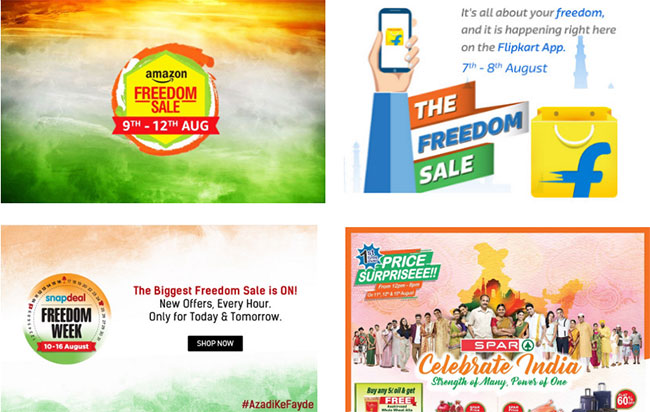
    We actually have multiple “freedom sales” going on.

    Amazon simply calls it the “Freedom Sale”.

    Flipkart says “it’s all about your freedom…”

    Snapdeal promises it is #AzadiKeFayde.

    While Spar encourages you to “Celebrate India. Strength of Many. Power of One.”

    How utterly ridiculous can the entire thing be!?

    First, you misuse the sanctity of an occasion like the Independence Day to push out a commercial activity. And then you wrap cheeky communication around it that makes you think you look smart! What about my freedom does Flipkart really deliver? And what “fayde” [benefits] of freedom does Snapdeal promise me? The Spar one actually goes one step further by saying things that are totally inane. The marketing heads behind these exercises need some brain scanning.


    Then we have lots of brands espousing national pride and the spirit of unity on television. Liberty Shoes. Benetton. Manyavar. Times of India. Lava. And so on. There are some truly ridiculous ones that you can watch on YouTube in collections called “Independence Day Ads” part 1, 2, 3 and so on. I found one by Oyo featuring actors Manoj Bajpayee and Raveena Tandon totally demented. And there is one by PayTM that claims that a cashless India will be corruption free, even if you may give people in kind. The mind boggles. Then there are quite a few that are forcing you to be misty-eyed. But then there are ones by Ambuja and Bajaj that strike the right chord.


    I have three observations to make on all the advertising that is specially prepared for occasions like Independence Day [or even Republic Day].


    Why not for the whole year?

    The values of freedom and being part of a nation cannot be restricted to only 2 weeks of a year, like any other festival. They need to be communicated through the year, in all languages, to reinforce the true meaning of being an Indian, in its inclusiveness, openness, progressiveness and the responsibility that lies in each of us to preserve, nurture and propagate these values. Only then can the message register and resonate. Otherwise we will continue to have one week of cacophony and then slip into yet another festival.


    Why always feel good and not feel disturbed?

    Every piece of communication wants to tug at your heart, create a lump in your throat and leave you misty-eyed. Like a television soap. Freedom entrusts us with the responsibility of not just sharing the good stories but also highlighting the issues of concern. The nation need not be sung to sleep but also woken up rudely with uncomfortable truths staring us in the face. Communication needs to provoke the recipient into thought, debate and positive action. Brands can take up a cause that is close to their heart and wake people up, beyond shares on social media.


    Why not encourage people to give instead of buy?

    Do not make people buy. Instead, teach them to give. To a cause. To specific sections of society. To the underprivileged. To the exploited. To the deserving. We Indians are terrible philanthropists, bordering on being downright inconsiderate and selfish. Let all the e-commerce platforms encourage their members to move beyond the donation boxes in the places of worship onto the streets where millions of our brothers and sisters could benefit from our little contributions.


    Wish brands accord the occasion its due respect and stop treating every national holiday a shopping spree. Also try to resist the temptation of melodrama in your communication as that quite ridicules the sacrifices of our forefathers for the cause. As Netaji had said, “Freedom is not given. It is taken.” Jai Hind!


  • FCB India and Boltd declared winners at the Amazon Alexa Cup

    By A Correspondent


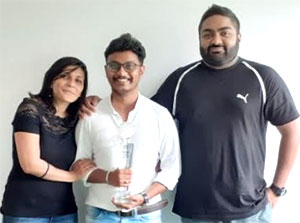
    FCB India along with their development partners Boltd have been recognised as the 2019 Amazon Alexa India Champions for their winning idea towards building a scalable voice experience, strategy and complete pitch with a proof of concept and demo.  As they have completed the India round, they will move on to the next leg, which is the APAC round of the Alexa Cup.
     

    The FCB India team comprised Giamaria Fernandes, Nikhil Fernandes and Vinesh Nandikol. Boltd was represented by Vishal Golia and Chetan Bothra. As a part of the challenge, the team had to convey the customer experience, target audience and value, originality, technology and APIs, feasibility and usability and a multi-channel go to market strategy in an eight-minute presentation.


    On the team winning, Joemon Thaliath, CEO of FCB Interface said: “We are really proud of FCB India’s Digital team’s achievement wherein they had to present a complete go to market plan covering strategy, proof of concept and a demo. They emerged winners among agencies and other tech partners, and this shows how far they have come in their thinking and their ideas through constant learning. We are also thankful to Boltd, our development partners who helped us bring the winning idea to life and Amazon Alexa India for this great initiative.”


  • Future Shock or Fixed?


    By Sanjeev Kotnala


    Sanjeev Kotnala

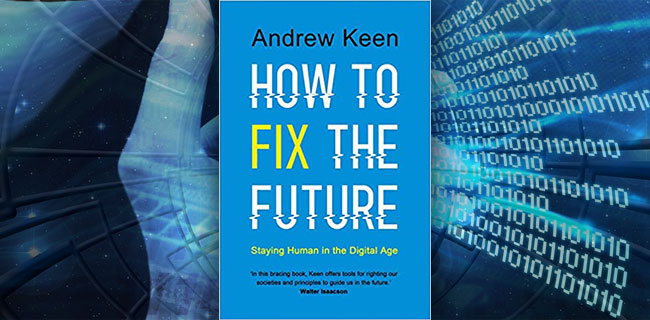
    I knew all along, there was something drastically wrong with the way the future is unveiling itself. I was on the lookout for a debate on ‘How to fix the future’. Andrew Keen’s session at the IAA World Congress held at Kochi, India in February this year probably opened new spaces for the discussion.

    We are under constant surveillance. Our behaviour is slowly being nudged towards what the dominant biggies Google, Amazon, Facebook of the business want. It is the new era of ‘Winner-takes-it-all’ business that is creating polarisation of wealth rather than distributing it.

    We are ignorantly working towards bettering their algorithms. We believe we are getting all this free. Not realising there is nothing free.

    The internet is a boon, but may be the price we are paying for its services outweigh the benefits.  Internet is the new morphine. Like many of us, I feel trapped in the system. I am addicted to it. I am unable to withdraw or detox.

    After having read ‘Internet is not the only thing’ by Andrew Keen, and having an equally polarised view of the internet, it was logical for me to pick his next book ‘How to Fix The Future: Staying Human in the Digital Age’.

    And if this is the trailer, what profound changes Artificial and Alternate Intelligence can unleash on mankind, unless we pre-plan to control the damage. History is witness to the fact that we are blinded by our vision of advantages and rarely humans have thought of the future repercussion while it adopted a new regime of services and products.

    Talking of the influence of internet-based services and addiction, I find it amusing and true. A potential threat humans failed to appreciate at the initial stage. “In the 1960s, we swam through the waters with only a few hooks: cigarettes, alcohol and drugs that were expensive and generally inaccessible… “In the 2010s, those same water are littered with hooks. There’s the Facebook hook, Instagram hook. The porn hook. The email hook. The online shopping hook. And so on. The list is long –far longer than it’s ever been in human history, and we’re only just learning the power of these hooks.”

    On the other side, humankind has always been smart enough to get out of the damage path by intense social pressure, tweaking of the technology and bringing new guidelines and reforms to control the damage.  Half of us would believe that we would once again succeed in doing so with the Internet and AI.

    In his book, Keen makes a very pertinent point: ‘The computer is the “Brain Outside ourselves” our “Second Brain”. From an evolutionary point of view, there we have taken an exponential leap. The new brain has outpaced our heart, our morality and beliefs. We are so preoccupied looking down at the second brains, that we forget how to look smartly at ourselves. As these devices get faster and faster, we appear to be standing still, as they produce more and more data about us, we are getting any more intelligent: as the devices become more powerful, we might lose control of our own lives. Instead of the singularity, we actually be on the brink of antithesis- let’s call it the “duality” –  an ever-deepening chasm between humans and smart machines and also between tech companies and the rest of humanity.

    He adds what I call a real possibility:  ‘In the future, we may no longer be in charge of our own creation… Our technology might be developing a mind of its own, thereby excluding and disempowering, and enslaving us. The existential threat of self-conscious algorithms is very real. They might be our final invention.’

    May be the answer lies in genuinely finding ‘What the Humans are good at’ and will always be a wee bit better than the machines. The current answer is ‘Nothing’. And we in our quest of making machines equally smart and emotive with a better power to process and take decisions are clearly on the path to wipe out any difference. I have my doubts. I am part of the small subset that believes; we are on the way to hastening the end of mankind. And one of the reasons I like reading Andrew Keen.

    Most of us are intellectually challenged to understand the enormity of the technology revolution, the amplified inequalities, the creation of parallel power centres feeding on our data and the race to harnessing Alternate intelligence.

    No doubt, Keen is open and transparent in stating: ‘This is a maybe book, based on the belief that the digital revolution can, like the industrial revolution, be mostly successfully tamed, managed and reformed. It hopes that the best feature of this transformation – increased innovation, transparency, creativity, even a dose of healthy disruption – might make the world a better place.”

    The book title ‘How to fix the future’ is misleading. There are no solutions. There can’t be.

    Keen presents a strong argument in favour of his belief that “No, not even the smartest technology can solve technological problems. Only people can”. I agree with him as he shares a few example and stories of how people are solving the thorniest problem in the digital age.

    Though there are directional paths from education to governance, to fixing it well in time. The example quoted in the book of Governance in Estonia and the always-on technology for betterment in Singapore shows some promise. The concept of ‘Universal Basic Income’, paid to everyone for ‘Not Doing Anything’ is also explored but be warned that can never be the solution. The only good part is that Andrew Keen is raising the issue. He at least presents a possible solution around competitive innovation, government regulation, consumer choice, social responsibility by business leaders, and education. It is up for healthy discussion.

    What I disliked was the constant reference to the 1516 work of Thomas More’s Utopia. It comes across as a framework of an idealistic world-inspiring Keen. But that is hardly the way life is expected to turn. Though it was interesting to note that if seen from a perspective More’s Utopia Map resembles a skull. May be there is a cryptic message in the map design that we are missing.

    Go read this interesting book that may sound fiction to many followers and admirers of internet-led ease in life.


  • Racold boosts geyser sales on Amazon with WatConsult

    By A Correspondent


    WatConsult has launched a campaign for Racold leveraging the Amazon Marketing Service. The team created a campaign using wrongly spelled keywords; like the word ‘Geyser’ which was often misspelled. This resulted in a return on the actual spend of 16X, while the team inserted these keywords into each and every product listing on Amazon.


    Said Prashant Dhar, VP – Marketing, Ariston Thermo India: “Racold is a brand synonymous with breakthrough innovation and we never stop listening to our customers whether it is in terms of product innovation or their needs/demands. WatConsult provided a highly insightful and in-depth understanding of consumer behaviour on E-Commerce platforms enabling the brand to touch newer heights and witness great success.”


    Added Rajiv Dingra, Founder and CEO, WatConsult said, “Ecommencify team analysed and understood the behavioural patterns of consumers while searching a product online. Considering the fact that our country has diverse languages and every language has a different dialect, we figured that people, many times, type as they speak which results in miss-spelling. We used this simple insight and leveraged ‘Amazon Search Ads’ to drive whopping sales for our brand.”


  • Dentsu Webchutney appoints Pravin Sutar as ECD

    By A Correspondent


    Dentsu Webchutney has appointed Pravin Sutar as Executive Creative Director. He will be based out of the agency’s Mumbai office. His last stint was with Leo Burnett, where he handled brands like HDFC Bank, HDFC Life and Amazon.


    With over 17 years of cross-category, cross-platform experience along with a diverse set of exposure spanning marketing, digital and creative, Sutar is all set to lead the charge for the agency.


    Commenting on Sutar’s appointment, Nishi Kant, EVP & Branch Head said, “It’s great to have someone of Pravin’s experience on-board in digital environment. His enthusiasm for his craft, I’m hoping will spread infectiously through the agency.”


  • Amazon gets back its Chonkpur Cheetahs for IPL 2018

    By A Correspondent


    The Chonkpur Cheetahs are back for Amazon, and this time with new rivals. The campaign “Ajnabi Shahar Mein Apni Dukaan” shows the everyday struggles of an unknown city through the cricket team, where Amazon.in helps resolve dilemmas getting in the way of things truly important.


    Conceptualized by Ogilvy Bangalore and directed by Hemant Bhandari of Chrome Pictures (Chonkpur Cheetahs) Jerald Packiasamy of Still Waters Films (Chellapuram Cheetahs), the films bring to life stories of people settling into new cities, and how Amazon India can help by providing access to required products in a humorous and light hearted way.


    Said Ravi Arun Desai, Director, Mass and Brand Marketing, Amazon India: “With more than 300 million interactions across touch points in 2017, Amazon had to bring back the Cheetahs in 2018, this time chasing a bigger dream in an ‘Ajnabi Shahar’. The insight behind this campaign is that almost all Indian families have someone who would’ve moved to a big Indian city in pursuit of better opportunities for themselves and the next generation. The campaign encapsulates how Amazon supports millions of Indians in their pursuit of dreams, as we cater to their everyday needs. Our customers use Amazon to effortlessly settle down in a completely new environment. The campaign explores a few relatable stories of the Chonkpur Cheetahs trusting apni dukaan to help them tackle some problems of settling into an unknown city. With over 17Cr products to choose from, the obstacles are taken care of by Amazon.in, and all they now need to do is concentrate on fulfilling their dream.”


    Added Azazul Haque, Executive Creative Director, Ogilvy Bangalore: “When we conceived the idea of Chonkpur Cheetahs last year we created an entire team with characters that would feel completely relatable to any individual who saw it. Their journey started as a team with a big dream – and this year that dream takes them to an unknown big city. This journey is inspired by the millions in India who shift to unknown cities to fulfil a lifelong dream regardless of the challenges they may have to face. Amazon.in here is everyone’s ‘Apni Dukaan’ that helps tackle these challenges, so that the dream can flourish.”


  • Now watch Ben 10 on Amazon Prime too

    By A Correspondent


    You’ve been watching Ben 10 on Cartoon Network and Voot Kids. Now get set to entertain yourself on Amazon Prime Video too. Turner India and Amazon Prime Video have announced a strategic tie-up that will see Cartoon Network’s popular kids shows play on Amazon Prime Video. This content licensing deal will see Cartoon Network’s Ben 10 (Classic), Ben 10: Alien Force, Ben 10: Ultimate Alien, Ben 10 Omniverse, Grim Adventures of Billy Mandy, Johnny Bravo, Powerpuff Girls (Classic), Kumbh Karan, Roll No. 21 and Dexter’s Laboratory and many more shows that will play on Amazon Prime Video under the Kids & Family TV section. We aren’t sure if this tie-up would mean that some of the shows licensed to Viacom18’s Voot will continue or not.


    A communique received carries no statements from spokespersons of either Amazon or Turner.