Tag: advertising

  • [LOOKBACK 2011] People movements: some surprising, some not-so

    By Ritu Midha


    People movement is a way of life for any organisation, more so when it happens in the advertising and media industry.


    Here are some leading movements of 2011, a few of these even making one’s eyes pop with disbelief


    Ashvini Yardi:

    Ashvini Yardi, who seemed to be doing everything right at Colors as Head of Programming quit the channel. This made many wonder what next for Colors shows? Ms Yardi, meanwhile, continues to work with Viacom 18 and would work on film projects.


    Bharat Kapadia:

    Bharat Kapadia quit Lokmat as Director in July 2011, and started two ventures of his own. One of them a marketing consultancy firm called ideas@bharatKapadia, and the other a technology solutions company: Whatuwant Solutions.


    Bobby Pawar:

    Mother of all surprises! Mudra bagged awards by the dozen last awards season, and credit for the same, to a large extent, goes to the creative genius. He joins JWT India as Chief Creative Officer and Managing Partner India. Would the JWT awards tally increase in coming years, courtesy Mr Pawar holding the reins of creative at the agency? We vote in favour – what say you?


    CVL Srinivas:

    CVL Srinivas was the first big movement of the year 2011, moving to Starcom MediaVest as MD, LiquidThread, APAC & Chairman, Starcom MediaVest Group, India. Mr Srinivas moved from Bennett Coleman & Co Ltd, where he was the Director – Private Treaties.


    Divya Gupta:

    One had almost thought that the lady with a razor sharp mind had left advertising for good. But she proved us wrong. She joined Dentsu, as the CEO of media business. She returns to advertising and media after a gap of six years, how much a difference her presence would make to Dentsu India, we would learn shortly, as she believes in driving in top gear.


    Divya Radhakrishnan:

    Her quitting TME as President in January 2011was another big news earlier in the year. Ms Radhakrishan recently launched Helios Media Pvt Ltd which would offer outsourcing services to the broadcasting industry in the sales, marketing, research and traffic management.


    G Krishnan:

    The phones never stopped ringing the day G Krishnan quit TV Today. After 16 years with the organisation, he was the face of the organisation and rightfully so, considering his contribution to it. Future plans of the former Executive Director & CEO, TV Today Network Ltd are still under wraps.


    Haresh Chawla:

    Haresh Chawla, a name synonymous with Network18, decided to move on in November. Currently the Group CEO of the organisation, he has been with the organisation for 11 years and guided its growth from a single television channel, CNBC-TV 18 to a media conglomerate with diversified interests and revenues of Rs2,500 crore in FY 2011. All eyes are now on Mr Chawla’s next destination, while he is busy handing over the responsibilities.


    Joy Chakraborthy:

    Joy Chakraborthy quit Zee Entertainment Enterprises Limited (ZEEL) as Executive Director, Revenue & Niche Channels in October-end and had people guessing where he was headed, but not for long. He joined TV Today Network as CEO on December 1, 2011. How far Mr Chakraborthy fits into Krishnan’s boots, only 2012 will tell.


    Raj Nayak:

    This one left people gawking too! Bosses at Viacom 18, of course, remembered the magic Mr Nayak had created at Star TV, and expect him to pull a similar rabbit out of his hat yet once again. Would 2012 see Colors moving up to be the numero uno yet once again? We would have to wait and watch.


    Rajesh Jejurikar:

    Rajesh Jejurikar announced his movement from Mahindra & Mahindra to Zee Entertainment Enterprises Ltd as president in November. It will be interesting to see how he deploys his learnings as the president of automotive division, M&M at Zee.


    Rajiv Agarwal:

    One of the most acclaimed names in Indian advertising, returned to what he knows best – advertising in February 2011. After a seven years hiatus, he relaunched Nexus Equity in partnership with Arun Kale, his former partner.


    Rohit Ohri:

    He was Senior VP and Managing Partner role at JWT before he moved to Dentsu India Group as executive Chairman in June 2011. Many in the industry are of the view that Mr Ohri’s appointment was an excellent move on Dentsu’s part.


    Sameer Nair:

    When he quit Turner General Entertainment Networks in May 2011, it was, indeed, big news. However, with the organisation all set to fully integrate Imagine operations into Turner Broadcasting System Asia Pacific, many expected this to happen.


    Seema Mohapatra (November 2011):

    No one really expected Seema Mohapatra to move after a dozen-and-a-half years stint with BBC Worldwide. At the time of calling it a day at the organisation, she was the Regional Director, South Asia BBC Worldwide and headed BBC Advertising, ad sales company of BBC Worldwide for the region.


    Shreejit Mishra:

    The biggie from Hindustan Unilevel was appointed as the CEO, BCCL in May 2011. Yet another example of media companies trying to make the most of learnings in FMCGs.


    Suman Srivastava:

    The ace adman moved on from the position of CEO, Euro RSG in January 2011, to be the Founder & Innovation Artist at Marketing Unplugged.
     

  • [LOOKBACK 2011] Top TV & Print Advertisers


    By Ritu Midha


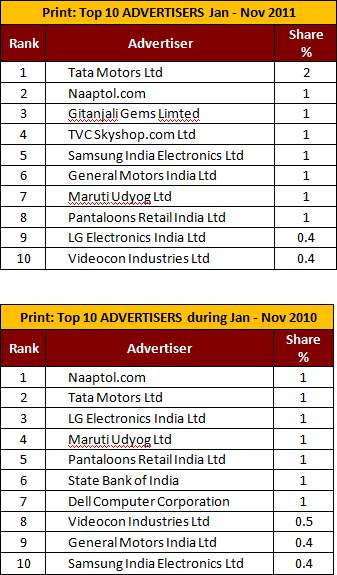
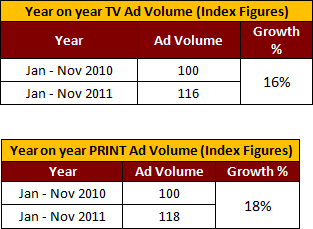
    Slowdown, as a term, might have the highest recall value for media owners in the year 2011 – more so in the case of print. Interestingly, while there would have been a dip in advertising spends in terms of value, advertising volume has in fact increased over the previous year. And even more interestingly volume growth has been higher for print media:


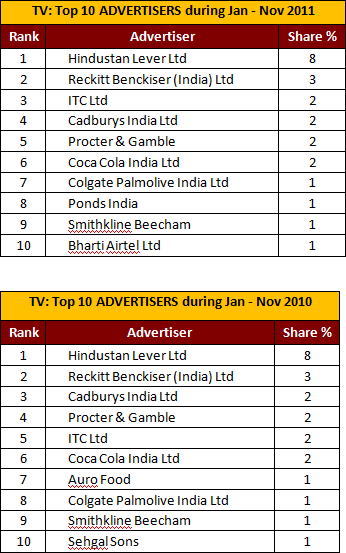
    When one moves to the top 10 advertisers for the year 2011 on television, the list seems more or less similar for 2010 and 2011, though the ranking has, of course, changed.


    Two advertisers from last year which are missing this year are Auro Foods and Sehgal Sons – both with 1 percent share.


    Is the situation similar for Print? Let’s check it out: Two new entrants for 2011 are Geetanjali Gems and TVC Skyshop. The ones missing from last year are SBI and Dell Computers.


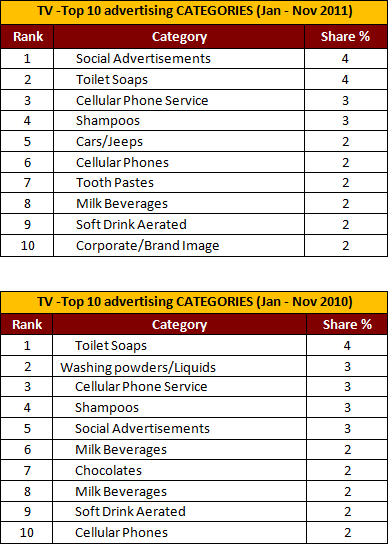
    As for the advertising categories, there are quite a few surprises when compared to the previous year, as far as television goes: Washing powders & liquids, number two category in 2010, is not in top 10 this year. Social advertisement, no 5 last, is top of the heap this year. Have a look at the tables for 2011 and 2010:


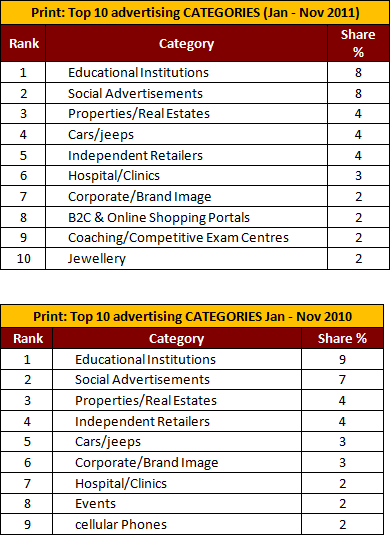
    On to print. The top five categories remain the same with just a position switch in rank in number four and five. However, there are two new entrants on eight and nine – pipping to the post the categories at those positions in 2010. Educational institutions, top category for both the years – shows a 1 percent jump in share:


    Source : TAM AdEx
    Period : Jan – Nov 2011 Vs Jan – Nov 2010
    Medium : Television & Print
    Figures for television are based on duration in seconds & are represented as index figuresFigures are based on CCMs & are represented as index figures
  • The Anchor: Pops on why advertising is still sexy

    By KV Sridhar (Pops)

    #1 Richer life experience.

    If you are passionate about life and want to live life the fullest, this profession allows you to do that. (I am writing this sitting in a plane to Colombo for a working weekend.)


    #2 Get paid for doing what you like.

    If you are curious about life, mine some insights to tell some stories, you’ll get paid handsomely.


    #3 Want to be an expert in 100 categories?

    Advertising helps you to learn about 100 categories in 10 years, no marketing job can offer that.


    #4 Around the world in no time.

    South of France as a trainee boy? Sounds great? Get your jumbo passport and get on board.


    #5 Do nothing.

    If you are a dreamer or want to relive your memories every day? Just gaze out of your window and narrate few experiences (that’s work for you) and you’ll be the next guru.


    #6 Be a celebrity.

    Imagine, if marketing is the glamorous part of business than advertising is the glamorous part of marketing. Got the logic? You’ll be seen in the papers more than Ratan Tata.


    KV Sridhar (Pops) is the National Creative Director at Leo Burnett.

  • The Anchor: The Seven(?) Traits of Creative People

    We are all born creative. Remember the first months after birth. We make amazing sounds, don’t care how we look, are comfortable with our nudity, create a mess, scream like crazy and attract a lot of attention and emotion by saying words that make no sense.

    These are the traits of a creative person.

    Then something goes wrong. Somewhere along the way we grow up. We accept conformity as a sign of social success. We fool ourselves into believing that this is the real us – our unique voice drowned by the noise of the larger collective.

    But our creativity never gives up on us. It waits inside us, dormant and patient – hoping for someone or something to let it out. Till one day we realize that ‘being creative’ is a decision. All we have to do is repeat the personal mantra “Yes, I am creative. Yes I am, yes I am creative”. And we are born again. Kicking and screaming, we proclaim our new position to the world. “I am creative!”

    So this one goes out to you, the reclaimed individual, the re-arranger of dreams, the new you in the old bottle, the enlightened fool, the one who was lost and now is found. These are your habits… who am I to restrict it to seven. Why seven? You are more than a number. Who decides these numbers any way! Let’s just celebrate you: with all your limitless magical liberated traits of creativity:

    1. You are a child. You resigned from adulthood long ago.

    2. You are not afraid to ‘act’ like a creative person

    3. Your eyes light up at a question you can’t answer

    4. You are excited about unusual problems, as well as solutions

    5. You make new connections. You fuse two seemingly unconnected things and give it fresh meaning

    6. You generate as many answers as possible. You don’t look for the one “right answer”

    7. You don’t ask if something is “logical”

    8. You set aside all rules

    9. You don’t judge the quality of an idea by looking at its “practicality”

    10. You allow ambiguity

    11. You need people

    12. You are not afraid of silence. In solitude you are least alone

    13. You are an observer, a social voyeur, a curious eyewitness

    14. You worship nature

    15. You trust your own feelings

    16. You combine intuition with logic, and in conflict listen to your gut

    17. You believe in play, you kick the problem like a football

    18. You are emotional

    19. You discover hidden meaning in information

    20. You listen

    21. You don’t listen

    22. You’re not afraid to fail. You are willing to lose

    23. You refuse to grow up

    24. You take risks

    25. You express your thoughts and feelings openly and freely

    26. You have a crazy sense of humour

    27. You are motivated by the problem itself

    28. You recognize the “Ah-Ha!” experience

    29. You have a high capacity for visual imagery and fantasy

    30. You cry easily

    31. You hate articles like this that try to define people

    32. You march to your own drum beat

    33. You are freedom’s child

    34. You don’t take ‘no’ for an answer

    35. You win


    By Josy Paul, age 6 (Nov 14, 2011)

  • Anil Thakraney: Any one for brief briefs?

    By Anil Thakraney


    A firangi ad pal has come up with a fantastic idea: Clients and ad agency client servicing people should brief creative people only on Twitter. That, no other method should be used, and all current briefing formats must be junked. Brilliant! Because this means the suits will be compelled to tell their creative folks what the advertising needs to communicate in just 140 characters. And it will cut the temptation to file pages and pages of irrelevant info and put out excessive demands from an advert. This will result in sharp, focussed communications.


    I recall some years ago when I was in the advertising biz, I did recommend a similar sort of thing. I once bought a wad of tickets from a Mumbai BEST bus conductor. And then circulated the little tickets amongst the agency client servicing people and account planners, insisting that briefs must only be written on the back of the bus ticket. One brief per ticket. Of course, they were outraged. How can one state everything on that size of a paper, was the common protest. Yes, they missed the point completely. Which is the need to keep the brief simple and single-minded, state one promise that the ad must deliver on, and remove all the so-called secondary data, which planners and suits feel very tempted to load on. And which is not just unnecessary, it confuses the hell out of creative people.


    Well, no need for bus tickets any more. Technology has provided the answer. Tell your creative people in 140 characters what the ad must communicate and who it should address. If you can do this, chances are very high you’ll get a much better creative output. And if you refuse to tweet and continue to dart out large e-mails, then don’t blame your creative people for coming up with laundry garbage.


    Now let me sum up the above column in exactly 140 characters and you’ll notice it still works! No reason a brief should not.

    My tweet: “Mr Suit: Tell me who the target audience is. The brand promise. The desired brand personality. The media vehicles. And then leave me alone!”

    Happy tweeting!


    ***

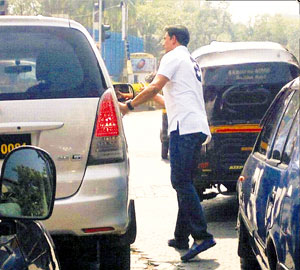
    PS: Loved it that hunky star Akshay Kumar chucked the empty ciggie pack back into the face of the car driver who had carelessly thrown it on to the street. We must all learn from Akshayji. Just one question: How did the hero manage to grab a picture of the incident? Does he take his publicist along wherever he goes? Hmmm.


    Image courtesy: Mumbai Mirror.

  • Anil Thakraney’s Hard Knocks: The damned misleading adverts

    So, finally the government has woken up on the issue. No less than the Prime Minister’s Office (PMO) has gotten into the act. The plan is to come up with policies that can control the malaise of misleading ads.

    Well, to be honest this should have been done a long time ago. The Indian mediascape is lined with ads that make false/exaggerated promises. Health drinks that will make your child grow tall. A magic lotion that will sprout hair on that bald pate. Cars that give you outstanding mileage on Indian roads (wow!). The dubious list is long.

    Yes, the ideal solution is self-regulation. But it will never work, there are just too many brand managers ready to play mischief for that extra market share point. Therefore unfortunate though it is, we do need some powerful and implementable regulation in force so that consumers don’t get fleeced.

    However, and this is the crux of the problem: More than policies, we need hard punishment delivered to the offenders. Because penalties for misleading ads are very light in India, it becomes tempting to cheat. In the US, consumers can file for huge sums in damages if a brand has lied to them. And they do often get rewarded with the big bucks, and quite swiftly too. This ensures that brand managers think many times before misleading their consumers. In India, harassed grahaks have to do a lot of legwork at consumer courts; and even when the ruling is in their favour, the compensation is a pittance.

    So let’s have the regulation in place by all means. But there needs to be severe penalties spelt out to discourage mischievous marketers.


    ***


    PS: Ads for cars have seen a sudden surge; almost every other commercial is for a gaadi these days. Guess sales are down because of massive hikes in price of petrol and diesel, and there’s a bit of panic in the auto companies. But instead of offering cash discounts and other usual freebies, why don’t they offer schemes like ‘Free 10 litres petrol every month for one year’. That’s actually just Rs 9,000, but it could strike a chord with a junta reeling under murderous fuel price hikes.

  • Anil Thakraney’s Debrief: Good strategy, poor creative

    There’s a new commercial on air for Parker Pens. And it stars brand ambassador Amitabh Bachchan. The creative thought is this: ‘What the world calls a pen’. And it’s a correct one. Because as we all know, pens as a category is on a fast decline on the product life cycle chart. There will come a time when the pen will become a historical product, much like the typewriter. So it makes sense to make the brand synonymous with the product, to own the category, and thus at least be a leader for as long as the product survives. I completely agree with this strategy.


    But the creative fails to leave a mark. Bachchan is seen sitting inside what looks like a hotel lobby. And he’s got the whole range of Parkers spread out on the table. What is he, a pen seller? That’s not explained. Suddenly, a firang arrives and asks if he can borrow a pen. But instead of lending him one, Big B begins educating the gent on how Parker is pronounced in various nations. Exasperated, the man asks for a Parker, which is immediately handed to him.


    Boring creative. After the first exposure, you will reach out for the zap button on the remote control. Because it’s laboured, un-engaging and witless. While I like the idea of getting the brand to be the hero, so that consumers ask for it at retail outlets, sadly the commercial is very dry. And no, Bachchan has no role to play out here… he’s forced in, as he usually is in ads.


    Rating: (On a scale of 1 to 5): 2. For a sound strategy.


    Anil Thakraney’s ad review column DeBrief will appear twice a week – Tuesdays and Thursdays.

  • The Anchor: Satbir Singh on 7 reasons advtg is a serious business that allows much fun

    #1 Planning communication strategy requires serious thinking. Being entrusted with planning a communication strategy for a brand is no easy task and requires meticulous planning and perfect execution.
    #2 Creating campaigns requires seriously long hours and weekends in the office. Zeroing on the right idea and taking it to its final step takes time.

    #3 Executing ideas and shooting films amongst others requires travel sans any sightseeing. It might seem glamorous that one gets to travel to various exotic locations while shooting an ad, but the truth is that it’s all work and hardly any play.

    #4 On the other hand, working on different brands and different briefs on the same brands means no monotony.

    #5 It is a profession of very young people. The atmosphere is always exciting and never dull. The industry is full of youngsters who are brimming with fresh ideas and it’s always a learning experience to work with young people who often open up a new line of thinking.

    #6 For those who find it a draw, you could be working with top cricketers and Bollywood celebrities. Now that could be a perk of working with an advertising industry.

    #7 Seeing work that you’ve created on TV and around you is a massive pleasure. It is a deeply satisfying experience to see the idea that one has been working on finally taking shape and then reaching fruition.


    Satbir Singh is Managing Partner and Chief Creative Officer, EuroRSCG India

  • MediaVest grabs PIX media mandate

    By A Correspondent

    In what can be described as another note in its symphony of wins, Media Vest’s Mumbai office has bagged the media mandate of PIX, the leading English movie channel. Both the agencies will handle all the media planning activities for the channel. Media Vest will handle television and radio and Zoom Advertising will handle only print.

    MediaVest Worldwide is part of Starcom Media Vest Group. Starcom MediaVest being ranked one of the largest brand communications groups in the world. MediaVest will handle the operations for PIX in Mumbai.

    Commenting on the development, Mr Dinesh Rathore, VP MediaVest, Mumbai said, “Pix is one of the leading channels in India that provides excellent English content to the viewers. It has been broadcasting great content to the viewers consistently over the past few years. We intend to drive the channel to a leadership position in the English genre with our human experience strategy framework and hardnosed analytics, providing simple, real-time and meaningful solutions. We are excited to be working with the brand and believe that this partnership will translate into a success story for it.”

    Zoom Advertising became operational in 2004 and within a span of three years it managed to get INS accreditation. Delighted at their recent success,  Mr Chirag Barasia, Proprietor – Zoom Advertising commented, “Being an evolving agency we have established ourselves as a formidable agency in print action, so we take great pride in the way which PIX has put immense trust in us. We are also excited in bagging their print AOR & media buying duties which is a challenge and an opportunity for us to connect them to wider print options. We are extremely positive on our media buying capabilities and thus we will strive hard to ensure PIX achieves significant progress and success in their print portfolios. Similarly, PIX has given us a big boost to venture out in exploring and implementing other media opportunities for them and our other clients.”

  • Malls are great for Digital: Ishan Raina

    Ishan Raina, CEO & MD, OOH Media India Pvt Ltd is an advertising veteran. An IIM Calcutta Alumni, Raina was one of the first industry experts to stress that it was important to engage consumer at various touch points.  The changing lifestyle today has proved his conviction true. In a conversation with Ritu Midha of MXM India, elaborates on the evolving OOH medium, advent of digital OOH and measurement. Excerpts:

    Q: How do you see Digital OOH growing in India vis-à-vis other media?

    The Out of home TV medium in India is about four years old and still in its growth phase. But the medium has grown a lot as compared to what it was four years ago. It was a conceptual selling at that point of time where the challenge was not only in growing the company but also growing the industry as a whole. Today people understand this medium and the future prospect of this medium. The change in the lifestyle trends of the consumers and media fragmentation has led to the growth of this industry. Time spent for consuming traditional mediums is also getting shorter. OOH TV being an SEC ‘A’ focused medium adds dynamism to the existing media plan of the clients for their brands.

    Today OOH industry commands 15-20 percent of the total advertising share.  Digital OOH TV has 15 percent of this share ie 1-2 percent of the overall advertising budget. The biggest challenge is to grow the size of the market which is still at a growth stage. We need to grow this to 4-5 percent in the next two years.

    Today we have over 300 clients from across categories from Automobiles, Finance, Telecom, Retail (Luxury, Apparels etc), Media, FMCG, Consumer Durables, Travel & Tourism, Education etc. using us for various reasons /campaigns. In brief, since the industry is still emerging and not yet mainstream media, there is immense scope for new clients, categories and growth. While starting new clients & categories has been difficult, repeat clients have been relatively easier, due to good formal (research) & informal (word of mouth) feedback.

    Q: In terms of new types of Digital OOH advertising, how does India compare with US, China and Europe?

    In India there is certainly a considerable change in the lifestyle of consumers today. People spend more and more time out of home whether it is in their offices, malls, multiplexes, restaurants, gymnasiums, bookstores etc. This change in the lifestyle trends of the consumers and media fragmentation has led to the growth of this industry. OOH television networks adds a great value as it follows these consumers wherever they are thus becoming the only medium present in a day of the life of a consumer.

    India is a growing market and thus provides tremendous opportunities to advertisers to reach out to their target group. This has also resulted in the development of various new media formats with digital OOH being one of them. In general, Digital OOH space is expected to see a tremendous growth in the future, given the expected infrastructural growth, increased amount of time spent outside home, and the general economy boom in the coming years.

    China is the largest market in the world for digital OOH TV, and our strategic partner Focus Media, is the global leader. In Europe as in the US this medium has become more of a point of sale medium and not a “day in the life of an SEC A consumer” as it is in emerging markets, such as India and China.


    Q: What part of media spends goes into Digital OOH?

    Digital OOH TV commands 1-2 percent of the overall 24,000 cr advertising industry. This will grow to 4-5 percent in the next 2 years. About 80 per cent of this would belong to 2-3 national players and we hope to continue being the revenue leaders of digital OOH TV industry. Digital OOH advertising is emerging as an integral part of the media mix for advertisers, and is being used by them for various companies and launches.

    Q: Is measurement still an issue with Digital OOH advertising and promotions? What kind of research is now being done to measure?

    In Digital OOH format, we understood the gap of measurement in traditional OOH and thus initiated OOH Metrics, which is today India’s first ever large scale digital Out-Of-Home TV research. Out-of-Home media conducted this research in association with Nielsen – world’s leading provider of marketing information and audience measurement.

    OOH Metrics is the only Metrics available in Outdoor Audio Visual space as of now conducted to understand the Demographic profile of the people and the audience behaviour. It is the study done across 8 cities, conducted by Neilsen, with a sample size of almost 15,000. OOH Media also does campaign research for the brand advertisers on OOH screens to quantify and qualify the viewership.

    We have done over 100 Campaign Evaluation Studies across categories like Auto, Telecom, Finance, FMCG, IT and many more to find the recall of ads through this medium. The results have been encouraging which have resulted in long term relations with clients.

    Q: If we look at geographical segmentation – do some parts of the country respond better to Digital OOH than others? Similarly would the trends vary in metros and non-metros?

    Digital OOH is value for money in metros but as you go down the chain that is tier 2 and tier 3 cities, it becomes an expensive option because of the availability of the regional formats. So Digital OOH is actually a medium for major 8 metros with good density & quality of audience or locations.  This will change over time.

    Q: To what extent has the advent of mall culture and modern retail helped the cause of Digital OOH. And how do you see it contributing five years from now?

    The OOH TV format has actually evolved tremendously in Offices / Commercial Bldgs and Tech Parks / Residential complexes, Gymnasiums as well as large format malls / multiplexes / Modern Trade. There is a constant evolution of infrastructure (malls and hypermarkets) which is bringing the radical change in lifestyle and spending patterns of consumers. These In-stores facilities offer a wonderful opportunity for Branding of various products at the “point of purchase”. Thus greater the increase in number of In-store networks more is the opportunity to utilize these networks as a medium of advertising and creating a top of mind recall. Digital OOH media is strategically present in In-store locations with more than 2000 screens in Malls, lifestyle stores, Supermarkets. Digital OOH adds a lot to the communication by being the only audio- visual medium and thus we can say the medium is increasingly becoming effective and is here to stay for a long time.

    Q: What as per you are emerging trends in Digital OOH advertising?

    Audience, not screens, is the Mantra:  The quality and quantity of audiences that the screens provide, is what is the ultimate driver for this medium and the differentiator between different brands in the medium.

    Localisation / Customisation of Messages: OOH Media has been the most flexible medium today and gives a chance to slice and dice the message of the campaign as per the kind of audience an advertiser would like to reach. The client can select the locations, cities, frequency and language as per their requirements. Flexicasting provides an advantage of getting as local as possible just like an outdoor but with the power and capability of Audio-Visual.

    Relevance is the new king: The role of content is thus becoming very important in this medium and OOH Media continuously experiments with content to make it more relevant for the audiences and thus attracting more eyeballs. Content Integration helps in creating a contextual connect for the brands. OOH Media customizes in-house content as per the client’s requirement and offering to make it contextual.

    Connect with consumer: The medium offers an advantage of Flexicreation i.e. creating customized ads and content according to the kind of audience the client wants to reach and also the kind of locations they want to advertise in. Flexicreation for the same medium is impossible in any other audio visual medium. The future will be and has to be the contextualization of the content and advertising messages.

    Q: How effective are touch screen kiosks and how best can they be utilized by the advertisers?

    It is still early  days – not currently scalable. Our model is ‘Push’ to the consumers, where as Kiosks rely on consumers to take some action.

    Q: A lot of money is being spent on airport advertising? Is it just the premium customer that lures the advertisers there – or is the recall value much higher of airport ads?

    Airports are a very effective locations –and of course brands advertise there to target a specific target group.

    Q: How powerful is OOH as part of experiential marketing?

    Its part of the experience currently, not really experiential marketing or interactive marketing. What OOH TV ensures is great recall across Sec ‘A’ and increasing also reach in select locations where due to media fragmentation and audience habits, OOH TV is actually the first time the audience is exposed to the advertising.

  • J19 wins rights for Jet buses

    By Nibha

    J19 Max (Jash Media And Communication Pvt Ltd), an OOH agency, recently won the advertising rights for three years for the 96 on-ground Jet Airways air transfer buses that ply within 15 major airports in metro and micro-metro cities across India, from 2011 to 2014.

    In an exclusive chat with Nibha of MxM India, Mr Sunil Gohil, Director J19 Max, said, “We have recently won the advertising rights for a period of three years, and this includes both bus grab handles (which was earlier with Atin Promotions) and contravision running feet of right, left and rear panels inside the buses, which ply across all the 15 major airports, including Mumbai, Delhi, Bangalore, Hyderabad, Chennai and Goa.”

    Mr Gohil added, “The contravision will be executed for the first time inside the Jet Airways a/c Tarmac buses where a 6”-high tape will be offering a branding space at the right, left and rear inner panels inside the coaches. Apart from that each bus will continue to have 25-30 double side grab handles with a display size each of size 5”x3”. And, at most airports, the Jet Airways Terminals have no aerobridge facility, so all departing and arrival passengers pass through these coaches. Thus, we shall be catering to double-digit-lakh eyeballs per month.”