Blog

  • Freaking News | When newspapers twisted facts to suit themselves

    By Ranjona Banerji

    This weekend was dedicated to – surprisingly, not Mahatma Gandhi – but to the poor people of India. Of course this was a matter very close to Gandhi’s heart and perhaps more important to a commemoration of his 142th birth anniversary than cursory lip service paid to his legacy, as has become our wont.

    So TV channels and newspapers discussed the Planning Commission and its inexplicably odd expenditure cut-off of Rs 32 a day being above the poverty line in cities and Rs 26 a day in villages. As TV anchors, activists and the general public fretted and fumed, some analysts – in print and on screen — tried to explain it all statistically and economically to us idiots. Little of that was fully comprehensible and regardless of the contempt for a middle class which has only recently woken up to social issues, it goes without saying that the Planning Commission’s figures seem to be absurd.

    The imminent fall of the government continued to be a matter of discussion, especially for the BJP as the UPA scrambled to convince everyone that the dissent within them was normal and all was hunky-dory. But the BJP itself appeared to be a house divided with much speculation over Gujarat chief minister Narendra Modi’s perceived snub to both the party headquarters as well as to party stalwart LK Advani.

    **

    Weekends on TV are usually news-free as news channels fill their space with car, food and Bollywood shows. We also occasionally get interviews with artists and writers. Presumably, this satisfies our need for culture, both popular and otherwise.

    International news channels however manage to slip in a bit of news as well, with the Eurozone crisis, the unrest in Libya, Syria and Yemen, the US economy and the US fight with Pakistan sharing space.

    **

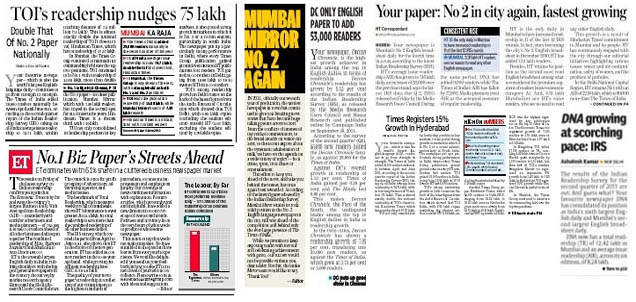
    The fun quotient for the end-of-the-week as far as Indian newspapers were concerned was the release of readership figures for the quarter by the Indian Readership Survey. Every newspaper managed to twist the figures to suit themselves and this means that readers of multiple papers would have been in a state of happy confusion. In Mumbai for instance, both Hindustan Times and DNA claimed the number two spot, while the Times of India claimed number 1 for itself and number 2 for its free tabloid Mumbai Mirror. The figures support Mirror as 2 and Hindustan Times as 3, but then given that Mirror comes free with Times of India which has a huge lead over the others, this leads to a few questions. It also effectively puts DNA at either 3 (if you discount Mirror) or a distant 4. Mid-Day also saw a readership increase, bucking its own trend over the last couple of quarters.

    In Delhi, both Times and Hindustan Times claimed a rise in readership and the number 1 spot – or so it seemed to me. Across the country, this chest-thumping continued. I’m guessing readers know what they read and that advertisers will be suitably impressed – the whole point of this operation.

    **

    Am I the only one tired of every newspaper and news channels calling itself “your paper” and “your channel”? I “own” so many newspapers and channels now that am considering getting an investment consultant to cope!

  • Largest OOH display leaves footprint in Delhi


    By A Correspondent

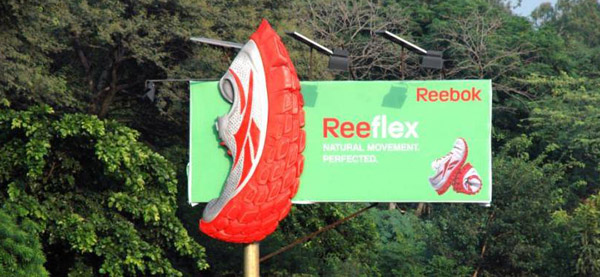
    BIG Street, the OOH initiative of Reliance Broadcast Network Limited, and Mudra Max have created the largest out-of-home display for Reebok on the façade of the Dhaula Kuan Airport Metro Station.

    Reebok, the leading producer of athletic shoes, apparel, and accessories, introduced a new range of running and training shoes called ‘ReeFlex’. A product of advance research, the shoes feature 76 independent ‘sensors’ on the bottom, planned in a way to adjust to all training surfaces. Throughout the stride of the wearer, these inbuilt sensors work together to promote the natural movement and flexibility. To promote such an innovative product, Reebok India partnered with BIG Street and Mudra Max to create an equally innovative OOH display.

    BIG Street, which holds the advertising rights to the display media in the Delhi Airport Metro Express stations, proposed the branding of the Dhaula Kuan Airport Metro Station’s façade – an enormous glass structure overlooking the busy NH8 stretch. Subsequent to the approval of the concept by Reebok, Mudra Max flawlessly completed the execution, branding the mid portion of the façade, a huge area of about 8,602 sq feet.

    Since the canvas itself was a building, high quality, international standard one-way contra vision from 3M was used, that was unobtrusive to the metro passengers inside the station but left an indelible impact on the motorists and pedestrians on the road.

    The branding has already created a huge buzz, with people reducing the speed of their vehicles to look at the giant display in awe. The impact of the communication has been compounded by the fact that the station is bang opposite a traffic light, ensuring a captive audience for a good two to five minutes.

    Commenting on the campaign, Mr Rabe Iyer, Executive Vice President, RBNL & Business Head BIG Street & BIG Live said, “BIG Street has time and again proved its ability to create eye-catching innovations for its clients. This cutting edge display for Reebok has firmly positioned BIG Street as a ‘thought leader’ in the Out-of-home space.”

    Mr Mandeep Malhotra, President, Mudra Max, OOH, said, “It has always been a pleasure to work on Reebok. The passion and desire to create innovative OOH by the team Reebok gives us the kicks to run around and deliver the best campaign after campaign.”

  • Claims and counter-claims start after IRS 2011Q2 release


    By A Correspondent

    The claims and counter-claims have begun. In Mumbai, Mumbai Mirror said it’s No 2 again. So did Hindustan Times. Both weren’t incorrect: Mirror may have the second-largest readership, next only to The Times of India, but Hindustan Times is the second-most read broadsheet English daily. DNA’s report too says it’s the second-largest broadsheet daily.

    Sadly, the conferences which the Market Research Users Council and Hansa Research Group would conduct to release every round of the Indian Readership Survey have been done away with. The detailed dump is curiously no longer handed out to the trade media.

    Consequently, what the MRUC and Hansa expect the trade media to do is to either carry unverified claims of various media entities. Or depend on friendly publications and agencies to give out data.

    MxMIndia.com requested veteran media consultant Sundeep Nagpal and his firm Stratagem Media to dig a little deeper and help us come up with a variety of insights given IRS 2011 Q2 data.

    For instance: the DNA report quotes a total readership (TR) figure for itself which most media agencies do not recognise. Media agencies and MxMIndia recognise Average Issue Readers (AIR) as currency. Interestingly,  when you look at the numbers for Greater Mumbai, while DNA is a distant third amongst English language broadsheets vis-a-vis The Times of India, it’s difference with #2 English broadsheet Hindustan Times is just 63,000. For HT of course the growth story in Greater Mumbai is tremendous: 27.2% year-on-year and 4.1% in the second quarter.

    We asked Strategem for the following:

    1. Given the toplines mailed to us by IRS, could we analyse it vis-a-vis the Q1 data for 2011 as well as the Q2 data for 2010 so that we can do a year-on-year analyses?

    2. Can we also similary analyse the data region-wise – Hindi belt and North, West, South and East and North East?

    3. Can we look at the numbers for the 8 metros combined and separately?


    Stratagem has provided us this data, and we present these to you as follows:


    First, take a look at the table withe the Top 10 publications across the country – urban and rural India.


    Publications

    IRS 2011 Q2

    IRS 2011 Q1

    % growth in IRS 11 Q2 over 11 Q1

    IRS 2010 Q2

    % growth in IRS 11 Q2 over 10 Q2

    Est. Individuals (000s)

    889070

    885122

    0.4

    871443

    2.0

    Dainik Jagran

    16393

    15910

    3.0

    15925

    2.9

    Dainik Bhaskar

    14174

    14016

    1.1

    13303

    6.5

    Hindustan

    11985

    11810

    1.5

    10143

    18.2

     Malayala Manorama (Daily)

    9962

    9938

    0.2

    9841

    1.2

    Amar Ujala

    8891

    8747

    1.6

    8417

    5.6

     Lokmat

    7595

    7486

    1.5

    7402

    2.6

     The Times Of India

    7471

    7442

    0.4

    7088

    5.4

     Daily Thanthi

    7290

    7187

    1.4

    7402

    -1.5

    Rajasthan Patrika

    6941

    7033

    -1.3

    6900

    0.6

     Mathrubhumi

    6690

    6800

    -1.6

    6566

    1.9


    Let’s also look at the combined numbers for the eight metros of Mumbai, Delhi, Kolkata, Chennai, Bengaluru, Hyderabad, Pune and Ahmedabad.


    Combined 8 metros-Mum,Kol,Ahm,Bang,Pune,Chen,Del,Hyd

    Publications

    IRS 2011 Q2

    IRS 2011 Q1

    % growth in IRS 11 Q2 over 11 Q1

    IRS 2010 Q2

    % growth in IRS 11 Q2 over 10 Q2

    Est. Individuals (000s)

    73117

    72672

    0.6

    71138

    2.8

     The Times Of India

    5114

    5073

    0.8

    4879

    4.8

     Ananda Bazar Patrika

    2708

    2725

    -0.6

    2821

    -4.0

     Hindustan Times

    2690

    2675

    0.6

    2566

    4.8

     Navbharat Times

    2392

    2349

    1.8

    2216

    7.9

     Gujarat Samachar

    1606

    1641

    -2.1

    1503

    6.9

     Daily Thanthi

    1365

    1319

    3.5

    1233

    10.7

     Lokmat

    1224

    1268

    -3.5

    1295

    -5.5

     Daily Sakal

    1175

    1213

    -3.1

    1089

    7.9

     Hindustan

    1128

    1142

    -1.2

    1167

    -3.3

     Divya Bhaskar

    1124

    1129

    -0.4

    1039

    8.2


    The growth story is undoubtedly that of Hindustan which has grown 18.2 percent over the second quarter of 2010, though the growth in the second quarter of this year has now steadied at 1.5 percent. But the winner of the quarter from the toplines of 2011Q2 for across the country is undoubtedly Dainik Jagran with a 3% growth. On a base of 1.59 crore this is big.  The other stories of the big players is also noteworthy. Bhaskar 6.5% y-o-y, Amar Ujala 5.6% y-o-y and The Times of India too at 5.4% y-o-y. Jagran’s y-o-y is 2.9% and Lokmat has grown 2.6 percent over 2010 Q2.
    We urge you to click on the links below (these will come up later in the day) for detailed numbers.It is important to note that the numbers thrown up in the above table are not truly indicative of the power of the various publications. Remember, these ratings are only for metros, and the picture is dramatically different for an ABP in West Bengal, and Gujarat Samachar in Gujarat or Thanthi in TN and Sakal and Lokmat in Maharashtra. Ditto with Hindustan and Bhaskar.

    Links:

    IRS Q2 2011 Hindi Belt & North


    IRS Q2 2011 – South


    IRS Q2 2011 – East


    IRS Q2 2011 Maharashtra & Gujarat

    Information courtesy:


  • UTV Stars cracks deal with Pakistan for PZ show

    By Dhara Salla


    UTV Stars is going international within just the first month of its launch, with its celebrity chat show, Up Close and Personal with PZ. Confirming this, Mr Nikhil Gandhi, Business Head, UTV Stars, said, “We are in syndication and have already cracked the deal with Pakistan, and the show will be aired there after the season ends in India. We are also in talks with the UK and US. There are many revenue streams attached to this show. It has upgraded the face value of the overall channel. The show is also available on YouTube. We are in talks with two service providers for the audio clips of the show and of course in-flight entertainment, video on demand, and many such revenue streams.”

    He added, “My team is working towards it and everything should be in place within the next two weeks for this show. We are fairly new but we believe that we have set a benchmark in this genre.”

    There are about 10 brands already associated with this show like Tanishq, Honda, Reliance and Maruti to name a few.

  • Reviewing the Reviews: Sahib Biwi Aur Gangster

    By Deepa Gahlot

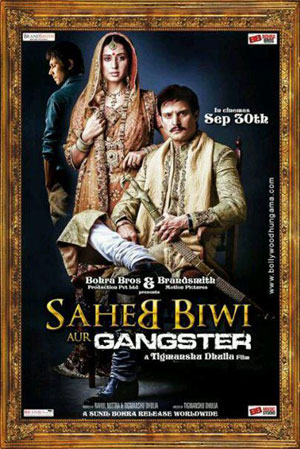
    Sahib Biwi Aur Gangster

    Key cast: Randeep Hooda, Jimmy Shergill, Mahie Gill

    Written and directed by: Tigmanshu Dhulia

    Produced by: Rahul Mittra and Tigmanshu Dhulia


    Force may have been the bigger Bollywood release this week, but the community of critics has been almost unanimous in its praise for Tigmanshu Dhulia’s Saheb Biwi Aur Gangster. This does not happen too often, that a dark horse races ahead. The film might actually end up doing well because of the mostly positive reviews and word of mouth. And when awards times come round, Randeep Hooda and Jimmy Shergill can have a bash at the trophies. The film got three stars and above—with just a couple of exceptions—and what can be justifiably defined as a rave.

    Shubha Shetty Saha gave it 3 and a half stars, but the review is worth 5. She writes, “Even before the movie begins, you get a good feeling about it. Fortunately, it lives up to that intuition. A crackling script, fantastic direction and amazing performances, this movie almost deserves to be called a classic.”

    Mayank Shekhar of The Hindustan Times gives it 3 and half stars, too, and writes, “It’s the page-turner script that steals the show. It’s packed with enough turns, intrigues and twists to hold your attention, keep you guessing. All of it bound by some sort of logic still. At least as much logic as you’d expect from a drama or thriller that doesn’t embarrass your basic intelligence. This doesn’t.”

    On rediff.com, Sheikh Ayaz also gives it 3 and a half stars and writes, “It’s fascinating to see how Dhulia doesn’t succumb to the idea of doing this as an expose film on the hypocrisy that breeds within royal mansions; neither does he develop the crime angle, a move that partially subverts this film’s obvious direction towards the crime genre. Instead, he plays it straight with single-minded focus on the development of his characters and the impact they would have on the plot.”

    Aniruddha Guha of DNA goes with 4 stars and says, “While his script is clearly the film’s USP, Dhulia as director does full justice to the written matter, extracting some superb performances, and making a technically polished film. Little embellishments, like the orchestra sound in a raunchy item number, add to the film’s charm.”

    Not surprisingly 4 stars also from Nikhat Kazmi of the Times of India, and this time the generous rating may even be justified. “The film may be a finely crafted drama, yet it unfolds with thriller pace, keeping you on the edge of the seat till the very end. Enjoy the experience of a revised and re-mixed story, well told. Tip Off: Don’t like run-of-the-mill stuff? Will surely like this… it’s different.”

    Anuj Kumar of The Hindu is a little less effusive. “A master at creating moments, Dhulia’s writing is dipped in wit and the repartees are laced with subtle comments on the changing times and human behaviour… A royal treat where the desserts are a bit disappointing.”

    Going against the tide is IBNLive’s Rajeev Masand with his 2 and a half stars and faint criticism. “The film opens intriguingly and maintains an even pace, but it’s betrayed ultimately by a confused script that hobbles around in all directions, never quite finding its rhythm. Dhulia knows the milieu, so the film has an earthiness that is attractive, and much of the dialogue is clever. Yet, key dramatic scenarios are handled amateurishly… Sahib Biwi Aur Gangster is ambitious in its idea, and the dynamics of the relationships between its central characters are nicely handled. But Dhulia slips up in the tiny details.”

    Shubhra Gupta of The Indian Express gives it 2 stars and slams it. “But for all its frills, some of them nicely executed and attention-grabbing, Sahib Biwi Aur Gangster never quite rises above its familiar plot points, and ultimately stodgy storytelling. I’ve lost count of the times I’ve seen greedy politicians handing out contracts to greedy contractors bypassing worthy candidates, and the obscenity-laden skirmishes between the warring parties: even the smirks and the gaalis are now standard procedure. The decrepit palace, the decadent ex-royal (Shergill), the dissatisfied wife (Gill), the needy mistress (Narayan) and the faithful retainer, all have had variants before: the actors are skilled only to the level of filling in their characters, but not creating any truly memorable moments.”

  • Join the MxMIndia Monday Debate: Are our papers and channels scared of taking on Big Biz?

    The Monday News Debate @MxMIndia

    The news media today is an exciting place – not just because of phenomenal growth but also because of all the questions that this growth throws up. The advent and massive expansion of television and now the explosion of the internet pose new challenges every day to traditional precepts and practices of journalism. The Radia tapes, the Murdoch revelations, the Anna Hazare movement all led to much discussion and even heat within and outside the media.

    Keeping this in mind, MxMIndia announces a new feature – a series of debates (and discussions) on issues which affect, concern or threaten the news media. Some of these will be by invitation but we also invite our readers to participate by suggesting issues that need taking up and contributing to the debates.

    We are starting out with the news media, but will in addition move to areas of marketing, advertising and the media later.

    Here’s how it will go. Each month, we will tackle one issue. So October will be Big Business and the News Media.

    It’s an old problem and one that never seems to go away: how does a media house reconcile between the principles of journalism and the need to make money? In today’s context of paid news and adspace-for-equity deals, is the media frightened to take on big business for fear of losing revenue? Are they not therefore, in the long run, depriving the reader of legitimate news which may well make a difference to their lives? We foresee an exciting discussion in the making. Did someone say slanging match?


    If you have a view on Big Business and the New Media, email us at editor@mxmindia.com with the subject line BBNM. On every Monday in the month of October, we’ll carry your views as well as those of commentators whom we invite to write.


    MxM News Debates will be coordinated by Ranjona Banerji, senior journalist and Contributing Editor, MxMIndia.

  • Double masthead for Bigg Boss innovation

    By A Correspondent

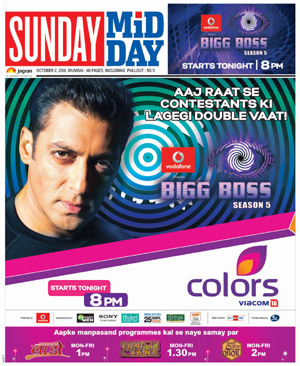
    SundayMiD DAYon October 2 had two mastheads, one each on the front page and the back page, each delivering Vodafone presents Bigg Boss 5’s theme of “Double Vaat”.

    Bigg Boss 5 which is being telecast on Colors, part of the Viacom18 group, is hosted by Salman Khan and Sanjay Dutt, two actors known for their fun and personas, enhancing the concept of ‘Double Vaat’ even further. To make its readers experience the theme, SundayMiD DAYhas devised an innovation of designing the masthead and impact jacket for Viacom18 on the front page and on the back page of SundayMiD DAY. So a reader will be able to read SundayMiD DAYin a regular manner on the front page as well as in an upside-down manner on the back page, creating some confusion and giving them the experience of ‘Double Vaat’.

    Mr Manajit Ghoshal, MD & CEOMiD DAYInfomedia Limited said, “MiD DAYbelieves in delivering the best to all its readers and clients. Innovations like these help us send clutter-free messages to our readers and it adds great value to the proposition that the advertiser wants to communicate. For all such innovations carried out across years, we have won many accolades and appreciated by one and all across the globe.”

    Mr Rajesh Iyer, Director-Marketing, Colors, said “Bigg Boss is Colors’ flagship show, and this season, with the theme being Double Vaat, this innovative association with MiD DAY will be really fruitful for us. Providing readers with the newspaper in reversible format is bound to create curiosity among them.”

  • Exploiting OOH’s true potential: Mukesh Manik

    By Nibha


    If developing strong and reputed brands makes good business sense, and if brands are what the consumers relate to, identify with, and buy, then it is important for marketers to exploit the true potential of billboards and other OOH media.

    More on this in an interview with Mukesh Manik, M-I-C (Man-In-Charge) at Encyclomedia Networks, the only Indian OOH media creative shop that is currently headquartered in Mumbai, India. It is represented in four markets under joint venture agreements – Australia & New Zealand out of Melbourne, Australia (www.mediatag.com.au), Latin America out of Buenos Aires, Argentina (www.encyclomediala.com) with offices in Guatemala and Mexico, Kiev, Ukraine and Jeddah, Kingdom of Saudi Arabia (www.encyclomedia.me). Besides, Encyclomedia is also represented through exclusive distribution contracts in Bangladesh, Kenya, Nigeria, Pakistan, Croatia, Kazakhstan and Hungary.


    Excerpts from the interview:


    Q: How has your journey been in the media Industry till date and what is it that excites you about billboards?

    Media and advertising has always intrigued and amused me. A message is sent out to the masses repeatedly over a period of time, and that this message has a multi-dimensional impact on the choices that are made by an individual and the perception of a product is fascinating. Billboards are my favourite as more and more people are spending time out of home. They also present their own set of challenges as they have to deliver a message while the viewer is moving in most cases at speeds of 60 km/hour. This gives just a few seconds to catch the attention, deliver the message and assist brand recall. The trick lies in the design which should be able to engage the viewer in those critical few seconds while there are other distractions like traffic, environmental landscape, music, etc. A well-designed billboard is easily one of the most powerful, consistent and effective means of communicating to an audience on the move. Marketers still have to exploit the true potential of this medium and this in itself presents an opportunity like no other.


    Q: What role do you think innovation plays in OOH media? And in the recent past can you name any campaign which can be termed as “really innovative”?

    Innovation isn’t just about using cutouts and neon, though I admit that they are effective at times. Innovation lies in understanding how best to use the tools available to enhance the billboard creative, to create an impact that has a lasting recall. Truly innovative billboards are remembered years later, much after the campaign is over. In the recent past, one of the most innovative billboards I have seen was the Barclays Bank Billboard which just carried their logo on a white background. The innovation was in its simplicity and ability to make the announcement that Barclays is now in India.


    Q: How does one justify the cost of innovations in terms of both the recall value and the rise in the market share especially when we don’t have any posting technology at place to justify the effectiveness of the OOH campaign?

    “Innovation” is perceived as being expensive but in actuality it is quite the opposite. In the Barclays billboard mentioned above, there was no additional cost of materials, cutouts, neon, etc. but it still had the desired impact. Innovation drives recall, recall fuels sales. Advertising is meant to provoke a response. If the ad is forgotten, it cannot possibly invoke a call to action. Though there is technology available to measure the effectiveness of Outdoor advertising, the true measurement is in the after effects of the campaign. Product advertising is easier to measure compared to a service as the advertiser can just take a look at their sales graph.


    Q: What difference can be made in terms of ‘Innovation’ for Outdoor (Traditional Media) and for Indoor (Alternative Touch Points)?

    I believe that a media plan consisting of an Outdoor campaign and an effective Point of Sale is sufficient to achieve sales objectives for a brand. Marketers need to appoint specialist agencies for the different media formats they advertise on. This is easier said than done. The creative and innovation has to be across all the formats. An agency specializing in TV commercials and Radio cannot possibly be expected to come up with innovative creative solutions for an Outdoor campaign.


    Q: According to you is accountability the factor that is keeping the clients at bay from the OOH Media, when it comes to the media plan? And do you think that the clients are ready to experiment with the real time innovations and not just cutouts and neons in the near future…?

    Clients are increasingly accepting Outdoor as an independent medium. The double digit growth in the Outdoor advertising industry confirms this trend. With over a 100 TV channels and hundreds of print publications, the chances of an advertisement being missed is higher than ever. Outdoor advertising addresses that issue easily as a good outdoor campaign cannot be missed when people are on the streets. The industry will mature with the growth in Outdoor spends. Cutouts and Neon are considered innovations in the absence of specialist Outdoor design studios.


    Q: How do you rate the change in the Indian OOH industry, especially in the past 3-4 years…? And according to you, what is it that will make OOH media more than just a reminder medium?

    The more clients see pathbreaking billboard designs by specialist agencies, they will demand the same for their brand as well. This will lead to fantastic creative innovation in Outdoor advertising and billboards will not be considered a poor cousin of mainstream advertising. There are many brands even today that successfully use only Outdoor Advertising to communicate their message.


    Q: How do you see the n-sync between the agencies, the media owners and the statutory authorities? And who according to you should take the initiative to improve the OOH industry overall?

    To expect the media owners, agencies and statutory authorities to come and work together is far-fetched. The change has to be from within. I believe that if media owners offer international standard media formats and quality media displays to agencies, it will encourage better designs and print quality. This in turn will change the cityscape for the better. It has already started to happen with the introduction of street furniture, modern bus stops, etc.


    Q: What according to you are the essentials of outdoor advertising?

    There are five essential skill set components in outdoor advertising.

    The first essential skill is creativity, the art of being innovative and imaginative. We must apply creativity to everything we do – tirelessly exploring innovative ways to communicate the brand USP in a meaningful, relevant way. The message has to break through and resonate with the consumer to be successful. Consumers are not waiting for your message. You must deliver it to them in an unexpected manner. An effective creative has an after-shock. It will be felt long after the campaign is over. When that happens, you’ve done your job. That’s creativity; you can’t put a price on.

    The second skill is being media-savvy. With the media fragmentation increasing exponentially, each medium must be understood for what it is really capable of delivering. It must be targeted precisely and assessed with the end user in mind. As with the creative, media planning and placement must build the clients business.

    The third is unyielding commitment. You are more than the agency; you must be an evangelist, preaching the virtues of your client to your staff, your client’s staff and public. We must be committed advocates as well as dedicated business partners. The entrepreneurial approach that we apply to each of our client’s business must be evident in every phase of the advertising development, from planning to creative to execution.

    The fourth essential skill is discipline. At Encyclomedia, we assist clients in focusing on the compelling, differentiating selling points that include consumer consideration. We must never lose sight of that focus as we move from creative development through media planning and execution. We seek to reach the targeted consumers with an effective, focused communication to which they will respond.

    The fifth is accountability. The bar is set with the client’s business objectives. Then we raise it a few notches higher. Our philosophy is the image-building and branding must always be balanced against the need to deliver on the bottom line. Advertising in Outdoor is a mean to an end, not an end in itself.


    Q: What’s your take on breakthrough ideas in the OOH domain, especially in terms of the changing scenario?

    Breakthrough ideas might appear to be instant or impulsive, but they are not. They are based on sound strategy, outstanding visuals, and the correct application of timing and media. The art is in ensuring that all elements of communication work together, so that the end result is more powerful and effective. It’s like conducting a symphony orchestra – all the instruments working together, the timing just right to make beautiful music. In outdoor advertising this is a total business solution.

    We’re a very visual audience. The world is changing in so many ways. Today, television shows and movies are quickly clipped, with constant talking and constant cuts. There are no more long scenes. In outdoor advertising one must understand that this is how people consume information, so one must work to bring them in, but then your campaign must nurture them and be there for a long time. Remember that an outdoor medium is not a “speaker’s point”.


    Q: And about the core component of the brand message?

    It is important to understand the life cycle of a category, a brand, and a product to take a brand to the next level and drive long-term success. New brands must establish a niche. A mature brand must find new life, possibly by re-inventing itself through extension or by creating a new identity that connects with today’s consumers.


    Q: Do you think the budget affects creativity and deliverables to the client?

    Outdoor advertising will always, like any other advertising, be dependent on the brand’s budget to some degree. Having inadequate money to spend puts undue pressure on the advertising. Whether you have the budget or not, the advertising must be truthful, relevant, eyecatching, memorable and downright pleasing; only then will it go through to mind and memory of the consumer. Smart advertisers know that outdoor advertising helps develop brand awareness, and they select a specialist outdoor design and production agency to deliver the job.


    Q: What’s the key to your success as a specialist OOH creative agency?

    To be successful, you must be involved. You must take the time to learn your client’s business and brand attributes well. Let the client know that you care as much about the business as he or she does. Analyze the business, its chief competitor its unique culture, mission, vision and trends of the category it’s in. Most importantly, stay focused on brand attributes upon which the client can build. Be single-minded, literally. Don’t throw many attributes out there in the hope they’ll take away just one. Be certain the one is the one you want them to take away. If you don’t know your client’s business intimately, you are likely to focus on attributes that aren’t really important to the consumer, often at the client’s request. It’s your uncomfortable obligation to be honest and say, “That’s an attribute that has no meaning to the consumer.” Recommend what is right for business, what is supported by logic, research and solid, strategic thinking; that which differentiates your brand from the competition. Only then can you communicate in a compelling manner, cut through the clutter and attract interest and attention.

  • Anil Thakraney’s Hard Knocks: Are newspaper owners in sleep mode?

    The latest IRS figures are in. And as usual, newspaper edits get busy boasting about rise in readership. Or, they’ll work out ingenious ways to interpret the findings, to keep their board of directors and advertisers in good cheer. By the way, I often wonder if everyone’s readership is healthy, who’s taking the fall? Anyway, that’s not the point of my article. And neither do I wish to discuss IRS’s methodology.
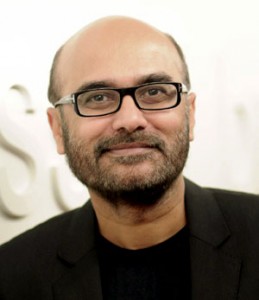
     

    What I want to say is this: Newspaper proprietors in India should be thrilled even if there is no growth for their brands. India is that unique nation where dailies continue to thrive even as they struggle to survive in the rest of the world. And that’s purely because, as Indian Express chief Shekhar Gupta said to me in an interview for GQ mag, and I quote: “India has more space for media than most societies. People read multiple newspapers. We may see a shakeout, but not in the near future. Simply because of the demographics. India is adding nearly three crore literate people to the market every year. That’s the size of a large European country.”


    Shekhar is right. India’s large population base and rise in education will sustain newspapers for a pretty long time. But the proprietors will do well not to get complacent and sit on their laurels. Because the global trends will sooner or later catch up with India. Soon the tech revolution will hit India hard, and many newspaper brands will be compelled to shut shop.


    And innovations and out-of-the-box thinking must start NOW before it’s too late. Sadly, I haven’t seen any signs of that so far. Almost every single news that gets ‘broken’ on the covers of our dailies, I have already been made aware of the previous night by TV and/or Twitter.


    So people, do gloat if you wish on the IRS figures. But also do take care to smell the coffee.


    ***


    PS: I badly wanted to stay inside the Bigg Boss house this time. But couldn’t think of anyone to kill, rape, molest, abuse or cheat. So I didn’t qualify. The loss is all mine.

  • M&M start toy store-y with Beanstalk

    By Sagar Malviya & Sarah Jacob


    Utility vehicle maker Mahindra & Mahindra has launched a toy store and driven into a new market that pits it directly against the Mukesh Ambani-led Reliance Retail. The store, Beanstalk, which opened at Brookefields in Bangalore’s IT suburb Whitefield, will target children up to their late teens. “We have been piloting a toy store for the last two weeks in Bangalore,” said Mr K Venkataraman, MD of Mahindra Retail, without sharing further details.


    With its first toy store, Mahindra Retail has forayed into the highly unorganised and fragmented 1,500 crore domestic toy market which is growing at 15%-20% according to industry estimates.


    This is the company’s second venture in the retail sector, after it launched the mother and baby care brand Mom & Me more than two years ago. Mahindra & Mahindra has, however, been distributing toy brands such as Lego, Disney and Mattel, among other products, through group subsidiary Mahindra Intertrade unit.


    For Mahindra Retail, toy retail is likely to be an extension of catering to children, expecting and new mothers across categories such as baby food, strollers, toys and apparel. Its 49 Mom & Me stores are spread across metros and smaller cities such as Amritsar, Aurangabad and Coimbatore. It has also launched Mom’s Lounge, a wellness studio for new and expecting mothers, at two stores.


    Mahindra’s toy store has opened less than a year and a half after Reliance Retail entered the domestic toy market. Reliance Retail, which stitched a franchise agreement with British toy maker Hamleys, opened its first flagship outlet in April 2010. It plans to invest around 125 crore in five years and open 20 Hamleys outlets, two of which are the large-format stores that have opened in Mumbai and Chennai.


    Besides Mera Toy Shop, which has 19 stores across the country, most toy retailers are either regional players such as Sapphire in Karnataka or owner-managed standalone stores.


    A relatively late entrant into the $20-billion organised retail segment in India, Mahindra & Mahindra has focused on specialty formats to benefit from non-crowded retail segments.


    But selling toys is no child’s play.


    “Children are much clued into not just games but also the brands today. And pester power works,” said Mr Sudhir Pai, senior VP & head of Hamleys. With both parents working in many nuclear families, toy retailers stand to benefit. “Parents are unable to spend enough quality time with their children and the guilt factor is prompting buying,” he said, adding that infant and play school categories are growing faster.


    Mr R Jeswant, VP sales & marketing at toy maker Funskool India, said higher purchasing power of young parents, better merchandising of products and awareness of the role of toys in aiding child’s development are boosting growth in the industry. Funskool India, a joint venture between American firm Hasbro and MRF, expects to report a 35% growth in revenue at 100 crore this fiscal.


    “The average selling prices of toys have been moving up as higher-priced toys are being sold in much large numbers. Customers are willing to spend upwards of 20,000 on toys,” Mr Jeswant said. Besides traditional toys, video games are expected to be a high-growth segment.


    The industry is, however, plagued by duplicates.


    “There are probably three dozen versions of Scrabble and two dozen versions of board game Monopoly in the market. But only one each of that is authentic,” said Mr Amit Bagaria, chairman of retail consultancy Asipac Projects.


    The consultancy estimates that toy retail within leisure megastores typically generate sales per sq ft of around 450, a little more than half of what children’s apparel stores do because consumers prefer lower-cost options.


    “The challenge will be for companies to convince consumers to switch from purchasing non-branded counterparts to the branded types,” said Ms Parita Chitakasem, research manager-India at market research firm Euromonitor International.


    Source:The Economic Times

    Copyright © 2011, Bennett, Coleman & Co. Ltd. All Rights Reserved

  • FMCGs tread new paths for higher profits

    By Ratna Bhushan


    Consumer product makers such as Heinz India, Perfetti Van Melle and Glaxo SmithKline Consumer are entering product segments that offer higher profitability to offset pressure on margins due to volatile commodity prices.


    Heinz India, known for its ketchup and Complan milk drink, plans to foray into cornflakes. Rival GlaxoSmithkline Consumer Healthcare, maker of Horlicks milk food drink, too may target the breakfast table.


    “With the huge pressure on margins, the attempt is to diversify into areas where profitability can be improved, besides reducing dependence on volatile commodity fluctuations,” says GSK Consumer MD Mr Zubair Ahmed.


    It’s for the same reason that Dabur, maker of Real juice and Chyawanprash, plans to launch car fresheners and aromatic candles under the Odonil brand, and Parachute hair oil maker Marico will foray into body lotions.


    That’s not all. Sugar confectionery maker Perfetti Van Melle is piloting packaged potato chips and salty snacks under its Stop Not brand, and biscuits maker Britannia is giving final touches to a multi-city rollout of its baked snacks brand Time Pass after test-marketing it in Bangalore.


    Everyone wants to hedge risks and reduce reliance on a few mainstay products that depend heavily on certain commodities. Most consumer products companies have taken a hit on their margins due to rising raw material costs over the past 10-12 months. Crude oil prices too went up over 30% in the first six months of the year. Companies have raised prices by 5%-10% and initiated several measures to cut costs to deal with rising costs. While some input costs have started softening, companies say it is too little and that pressure on margins continues.


    Analysts say the firms have no option but to diversify – because they can’t risk increasing prices of their bread-and-butter products beyond a point, particularly in mass-market categories where competition is intense. “Competitive intensity has gone up significantly in the past 12-18 months; companies are looking at ways of getting a foothold in emerging categories,” says Mr Gautam Duggad, research analyst at financial services firm Prabhudas Liladher.


    So companies are adopting a flanking strategy and stepping into more profitable and fast-growing categories even if they are unfamiliar.  “Some of the categories could be small but the idea is to develop and nurture them for 5-10 years so they can add to topline in the long-term,” says Mr Duggad.


    India’s largest retailer Future Group President – Food & FMCG Mr Devendra Chawla expects emerging categories such as beauty, anti-ageing, health, nutrition foods and wellness to attract big investments. Brands are also offering differentiated products with functional benefits because they can be sold at a premium, he adds.


    “Highly penetrated categories like soaps and detergents will also witness margin expansion by upgrading consumers, for example, from plain detergent to machine wash; dish-wash powders and cakes to liquid; and shaving cream to foams and gels,” Mr Chawla says.


    Companies say brand extensions help increase brands’ popularity, shelf space and marketing efficiency.  “Brand extensions not only help increase rate of acceptance and trials by consumers but also maintain efficiencies on advertising and promotion expenditures,” says Dabur India CEO Mr Sunil Duggal.


    GSK Consumer seems the most aggressive. In the past six-eight months, the British firm-synonymous with Horlicks for decades-has added Sensodyne toothpaste and Lucozade sports drink to its portfolio.  Last year, it extended Horlicks to instant noodles called Horlicks Foodles. GSK Consumer’s Ahmed says the move helped increase the brand presence on the shelf.


    Perfetti Van Melle is testing packaged snacks in parts of Punjab, Karnataka and Andhra Pradesh. Unlike confectionery where margins are wafer-thin and price points are restricted largely to Rs 1, 2 and 5, the company would have more leeway to experiment with different price points within snacks.


    Hair oil and edible oil maker Marico will extend its two-decade-old coconut hair oil brand Parachute to body lotion and other skincare products subsequently, riding on the brand’s purity and value-for-money attributes.  Marico’s bottom line depends to a large extent on coconut oil costs, while biscuit maker Britannia’s margins rely heavily on costs of atta and sugar. Heinz, on the other hand, which has also forayed in breakfast mixes, has been dependent on Complan.


    All of them would want to reduce over dependence on a single product or commodity. Analysts, meanwhile, warn that while some category extensions are logical, others may fizzle out. “Companies have to look at avenues of growth but the investments need to be sustained,” says Baring Private Equity Partners’ Head (Investments), FMCG, Mr Keshav Misra. “And not all experiments succeed; some work, some don’t.”


    Of course, there have been several failures in the past. Kellogg’s foray in biscuits had bombed many years ago, and in the late-1990s GSK’s Aquafresh toothpaste and fruit drink called Ribena did not work.


    Source:The Economic Times

    Copyright © 2011, Bennett, Coleman & Co. Ltd. All Rights Reserved

  • AdStrat: Survive the World by Contract Advtg

    [youtube width=”400″ height=”300″]http://www.youtube.com/watch?v=vcts1imOOuk&feature=related&noredirect=1[/youtube]

    The campaign:

    Survive the World


    The client:

    American Tourister


    The agency:

    Contract Advertising


    The brief:

    Created in the rough territory of Jodhpur, ‘Survive the World’ captures a roller coaster ride. Conceptualized by Ravi Deshpande, the new brand campaign depicts the regular travel woes in a typical congested city anywhere in the world.


    The film showcases a tourist, who is caught in a traffic frenzy on the way to the airport. With his trusted 4-wheeler American Tourister luggage in tow, the tourist sets off on an enthralling escapade across the city to reach his destination in time.


    Any specific advisory from the client:

    The specifics given by the client to the agency was to focus on the ‘four wheel’ feature of the brand and create a creative revolving around the same


    Research insights:

    The agency already had an idea which came from the success of ‘Survive Mumbai’ and ‘Survive Istanbul’. The idea was to take that a step ahead and hence the creation of ‘survive the world’ took place. The main focus of the sagency was to tell a story based on  this particular theme.


    Media vehicles:

    The main media focus was extensive television and cinema coverage, and some OOH innovations.

    Key issues kept in mind while executing the ad:

    In the words of Ravi Deshpande, Chairman and Chief Creative Director, Contract Advertising: “The most pertinent question before us was, how do we make sure that the emphasis is on the product while we also tell an entertaining story to the consumers? The second issue was to look into the safety aspect of the person on roller skates in a place like Jodhpur, which was ultimately managed well.”


    The differentiating factor about the ad:

    The differentiating factor (as per the agency) about the campaign is that it is unlike other campaigns of similar products, it’s a seamless journey told in a span of 60 seconds. Other than this, the ‘Survive the World’ campaign is being innovatively marketed with it being  released as a music video on television on September 24 following a release in cinemas nationally in the second week of October.


    Market and client feedback and follow-ups:

    Ravi Deshpande: “The client is extremely happy with the final product and we have received amazing feedback from them.”


    Credits:

    Music: Ashutosh Phatak

    Creative team: Ravi Deshpande, Malobi Dasgupta

    National Creative Director: Ravi Deshpande

    Production House: Far Commercials

    Director: Jeff Balameyer