[singlepic id=6 w=200 h=180 ]
Blog
-
India Today group's chief executive officer Ashish Bagga all set to take charge as INS president Ashish Bagga all set to be INS president today
Mr Ashish Bagga, Chief Executive Officer of the India Today group, is all set to take charge as president of the Indian Newspaper Society for the year 2011-12. The 72nd annual general meeting of the apex association of newspapers is scheduled to take place in Bengaluru today.
Mr Bagga will succeed Mr Kundan Vyas of Mumbai’s Janmabhoomit Group. As is the custom, Mr K N Tilak Kumar of Prajavani who is currently vice-president is likely to be deputy president, a position that Mr Bagga occupied in 2010-11.
A little about Mr Bagga (information culled from AdAsia 2011 website)
Mr Bagga has been associated with the Indian media business for over 25 years. Other than the India Today group, he has also worked Hindustan Times as Director (Marketing). Immediately before re-joining India Today in 2001, Mr Bagga did a short stint as President & CEO with Business Standard for the paper’s e-initiative in association with Financial Times, London. Bagga has forged strong partnerships with several leading international media brands for the India Today group. He has been awarded a publishing scholarship by the Publisher’s Association of the United Kingdom through which he also worked with The Daily Telegraph in London in London.
Mr Bagga is a Physics Honours graduate and an MBA and was also awarded the prestigious British Chevening Scholarship in 2003. He is exceedingly active in various industry bodies.
Watch this space for more on the elections…
-
With big faces reigning on reality and other shows, what is the scope for newcomers and can a new face create the same magic? Can telly newbies score with biggies around?
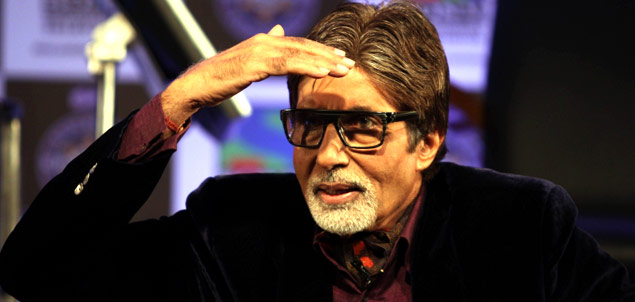
By Dhara Salla
Whenever one thinks of Antakshari on Zee TV there is only one face that comes to mind: Annu Kapoor. Or it’s Sonu Nigam for Sa Re Ga Ma. Fast forward to today, and the story is much the same – the big faces on television have always helped audiences to connect and reinforce the recall value. Today, all the channels have either celebrity hosts or celebrity contestants, be it the Big B Amitabh Bachchan in KBC, Salman Khan and Sanjay Dutt in Big Boss, Akshay Kumar in Khatron Ke Khiladi, Mithun Chakraborty in Dance India Dance, Madhuri Dixit in Jhalak Dikhla Jaa… and the list goes on. In the reign of big faces, the question to ask is, what is the scope for newcomers and can a new face create the same magic?
Ms Anita Mookerjee, GM, Mediacom, said, “It depends on the newcomer and the format of the show. However, a big name is most often successful. In most of the cases the celebrity, along with the mass appeal, also has the ability to engage and enthrall the audience. Amitabh Bachchan is an icon, a legend people can’t get enough of.†She further adds, “Salman Khan has a unique mass appeal, he was media elusive for a long time and it was the fact that the audiences were getting to see a more personal side of him which worked to the advantage of the show. Akshay Kumar took Khatron Ke Khiladi to a different level; the same show as Fear Factor didn’t really click.â€
Mr Jamnadas Majethia, MD, Hats Off Productions, says, “No, I don’t believe a newcomer can create the same magic as the big stars. The life of a reality show is limited to about three months or 12-14 episodes. So it would take time for a newcomer to get established. By the time they reach the third or fourth week the viewers would have already shifted their loyalties. The pull that a Hrithik or any celebrity like Madhuri can give, nobody else can give.â€
Industry pundits’ views seem to reflect that a newcomer cannot create the same magic that big names and faces can. An established celebrity with an X-Factor, hence, can add more to the flavour of the show than a newcomer can. Having said that, the success of reality shows depends on influences such as the celebrity quotient, programme promotions, the channel on which the programme is telecast, controversies and PR, and lastly the concept.
We may remember that Shahrukh Khan, Abhishek Bachchan, Genelia D’Souza and R Madhavan were also hosting shows which did not do well and were taken off air, so the success of reality shows depends not only on the celebrity but also on other things. There is more to it, as Rajendra Dwivedi, Vice President, Starcom Worldwide, Mumbai, explains. “Emotional stakes are more valuable than financial stakes. A real life credible drama or story of the participants works better than prize money. The format has to be engaging and good talent scouting should be undertaken. Then the celebrity host can build on these factors.â€
On Indian television, where there are celebrity hosts there are also celebrity participants on the other side. Examining the question of which one works better, Ms Mookerjee says, “Celebrity participants definitely work; we see spikes in episodes with celebrity participants.â€
On the contrary Mr Majethia says, “The shows with celebrity anchors or judges work better but not really the shows with celebrity participants. Celebrities should be there as they add a lot of value to the content. There is a lot of fresh talent, and because of these celebrity hosts they also get some mileage.â€
When almost all the reality shows currently on television include celebrities, then how does the TG differ? According to Mr Dwivedi, the TG of the reality show depends on the format of the show. Hence, for KBC it will be all individuals but for Emotional Atyachar it will be youth and for Khatron Ke Khiladi, it will be males.
The big faces have been ruling the roost on the small screen for a long time in the reality show format. What is more interesting, however, is that the emotional storytelling and the HSM focus has added to the success of shows as it helps with audience connect. That’s something for media planners to note.
Photograph: Fotocorp
-
Mobile phones are the obvious place to be in for companies like Maruti Suzuki, Dabur and others. Tring, tring! Maruti, Dabur & Co woo internal/external customers via mobiles
By Nikhil Menon
Between the Indian Premier League-3 and the FIFA World Cup, 2010 dished out a lot of high-octane excitement that was exceeded only by the marketing blitz surrounding these competitions.
For Maruti Suzuki, getting a piece of the action was important, since it was launching a massmarket car (Eeco) and its new K-series engine around the same time as the IPL season. Also, the company wanted to be seen a young, tech savvy brand that the new generation of sports enthusiasts could identify with.
Since competitor Hyundai was spending huge amounts as sponsor of both events, Maruti had to try something different. Instead of thinking megabucks or bigger promotions, India’s largest car-maker thought smaller – in pocket-size terms.
“With the advent of the Internet on phones, young buyers have become keen users of digital media – so the mobile was an obvious place for us to be in,” says Maruti’s chief general manager, Mr Shashank Srivastava.
Maruti jumped into the IPL fray with a cricket alerts service accompanied by a daily contest. The contest was the ‘hook’ used to reel subscribers into specially-designed ‘Maruti branded zones’ complete with verbal and visual cues related to the brand.
During the FIFA Cup, Maruti ensured that its branding was visible across a portal , which gets a lot of traffic from Maruti’s core target of young, urban males. With 20 million impressions from seven million unique users, the mobile campaign generated significantly better returns for Maruti than all media formats. “We have doubled our digital media budget to Rs 15 crore this year,” says mr Srivastava. Last November, this campaign won an award from the Global Mobile Marketing Association.
Maruti’s successful tryst with the mobile phone is part of a phenomenon that gurus have long been predicting – the rise and rise of the mobile device. Today a phone isn’t just personal; it is fast getting commercial. At last year’s Mobile World Congress in Barcelona, Google CEO Mr Eric Schmidt said in the context of business strategy, “The new rule is mobile first.”
And it’s not just the Internet giant that thinks so. In India, the mobile revolution and rollout of 3G services have helped create a natural platform for engaging customers in transactional activity . However, the growth in mobile services is predicated on the growth of smartphones and most companies are still playing a balancing act across different generations of mobile technology . Apollo’s medical response service is one such model.
As part of the group’s strategy to touch a billion lives, Apollo wanted to extend its healthcare services to people hailing from areas where the brand didn’t have a presence. Through group company HealthNet Global, Apollo tied up with operators Aircel and Idea earlier this year to provide SMS and voice services to their subscribers. While the SMS service pushed specific health tips to users’ phones, the voice call service was manned by a team of doctors who would collect the patient’s information and recommend medicines based on the symptoms described.
Mr Rahul Thapan, global head of marketing and sales, Health-Net Global says close to half a million calls have already poured in so far and HealthNet Global is ready to take this service to the next level. It is now awaiting TRAI permission to roll out a 3G video consultancy initiative that allows people to chat with doctors on video-enabled smartphones and also upload relevant reports that can be viewed by the physician who can issue a printable prescription. “While we plan to charge Rs 60 per video consultancy for urban consumers, we realise that rural consumers may not have access to smartphones. The government needs to enable this programme at the rural level,” says Mr Thapan.
Companies are using mobiles to target internal stakeholders as well. This has created opportunities for handset makers and operators alike, especially within business mobility. India’s largest mobile services provider Airtel uses its MATE (Mobile Application Tool for Enterprise) platform to offer over 30 enterprise consumer applications that include information sharing, tools for field staff, mobile learning and other tools.
Mr Najib Khan, chief marketing officer-B 2B, Bharti Airtel says that as workforces go mobile, the cell phone will play a key role in keeping information and processes flowing smoothly. “The mobile workforce in India will grow to 205 million by 2015, and 65% of these individuals will have smartphones. Employers need to have a strategy in place to deal with this upcoming trend,” he says.
For the last three months, Dabur has been using the mobile platform to efficiently measure sales, inventory and customer response in its rural markets. Mr George Angelo, executive director-sales , says, “We recently expanded its sales force in the rural market in a big way. But data archiving was a big challenge, and too much paper was being generated. The mobile app (application ) has changed all that.”
The app is being used by approximately 500 sales staff across an initial batch of 200 districts in 8 states. Loaded onto the sales person’s mobile phone, it keeps track of inventory at the level of the village sub-stockist . As the salesperson visits different markets , he punches in sales of products from each village and issues replenishment orders from the district super-stockist . The data is also relayed to Dabur’s head office, and displayed on a giant electronic map. “This way, we know where the sales person has been, orders generated, inventory remaining, values of sales and buying activity from individual villages,” Mr Angelo says. Parallel to the rural app, Dabur also launched another app used by merchandisers to track whether retail stores are meeting their commitments vis-?-vis Dabur products.
The B2B applications of mobile phones are catching on fast. Three years ago, Mr Siddharth Agarwal, founder and CEO, Mobicule Technologies perceived an opportunity in mobile workforce solutions for distribution-oriented businesses. Ironically, his first client was Mumbai’s largest Nokia distributor. “We installed an application on their phones which enabled them to check the retailer’s credit, punch orders into the system and receive approval for the same instantly,” Mr Agarwal says. It’s taken a while for other clients to see the point, but Agarwal says people are today far more comfortable with such ‘futuristic’ solutions.
A case in point is Shoppers Stop, which uses Mobicule’s warehouse software product residing on high-end PDA devices, to scan incoming merchandise and verify it with the retailer’s enterprise software – something that was earlier done manually, with a much lower degree of efficiency. Mobicule claims that since post the implementation, there has been a 17% lowering of stock-outs and near-100 % accuracy in store dispatches.
On the consumer front, companies have seized the opportunity to build services for the urban user whose increasing dependence on cell phones for entertainment and social networking has thrown up many possibilities. For DTH satellite television company Tata Sky, linking its services to users’ mobile phones was a natural move, since research indicates heightened levels of phone usage among youngsters during TV watching hours. “The majority of our users have smartphones and are heavily influenced by their peers on social networking sites,” says Mr Vikram Mehra, chief marketing officer, Tata Sky. The company recently launched a single, integrated iPhone app that subscribers can use to find out more about current and future shows, order new ones and pay online, record shows remotely , see what shows their friends are watching, and share their thoughts on Facebook or Twitter.
While these services were already being offered individually via SMS, the integrated app brought them together. Mr Mehra says that within days of the launch, the app has been downloaded by over 100,000 users, and now the company plans to introduce something similar on the Android platform as well.
HDFC, too, decided to take advantage of rising Internet usage on mobile phones, and moved its full-fledged NetBanking functionalities to a mobile GPRS site – claiming to be the first bank to do so. Mr Sanjeev Patel, EVP & Head, Direct Banking Channels , HDFC Bank says, “NetBanking has become popular in recent years, and since 3G-enabled cell phones offer much faster transactions, we thought it made sense to combine the two,” he says. While refusing to share usage details, Mr Patel says the response has been better than imagined. “We’ve already achieved 70% of our annual target for the medium,” he says.
While most mobile initiatives in India are beginning, elsewhere companies have already latched on to the medium. The Financial Times reported that an iPad app used by Pepsi ‘s vending machine technicians saved it $7 million in 2010.
Mr Amit Lall, head-mobile marketing, Mobile2Win says one of the factors instrumental in mobile marketing spends growing at a healthy clip, is that it’s possible to target phone users on many fronts -handset , number, operator, circle, usage patterns, etc. He states an example, “We created a tax calculator application for Bajaj Allianz, for people looking to save tax on their income . Their usage details were saved and the company called them back later to get feedback on the app and potentially engage them further.” While this is great for marketers, some worry about privacy being compromised. But Mr Lall says that the choice to interact with a brand is completely in the user’s hands.
Mr Kevin Conway, global director of consumer brands at Missouri , US-based Savvis Inc says: ” The solutions that will prevail in mobile marketing are the ones that will put the power in the hands of the consumer to opt in or out of the services.”
Security and simplicity are issues that will become increasingly important going forward. When Cleartrip launched its mobile WAP site in July 2010, the focus was to throw away any feature that would be seen as unnecessary, without compromising on security of transactions. “We went out of our way to ensure that the site was oversimplified and equipped for any user and handset,” says Mr Hrush Bhatt, Cleartrip’s founder and director (product strategy). Today, the mobile site contributes 8%- 10% of Cleartrip’s bookings.
So what’s next for the not-so-humble mobile phone? According to EMC Corporation and Zinnov Management Consulting, the total cloud market in India, currently at US$ 400 million is expected to grow more than 10 times over the next five years and reach a market value of $4.5 billion by 2015. Mr V Ramnath, Director Sales, Nokia India says, “As enterprises migrate to the cloud – they are not only looking at ROI and scalability but they are also looking at an increasingly mobile workforce – workers who will be able to do business from anywhere in the world. Smartphones , therefore, will emerge as the biggest accessibility tool to access enterprise cloud data for the workforce at large.”
Source:The Economic Times
Copyright © 2011, Bennett, Coleman & Co. Ltd. All Rights Reserved
-
For the first time ever, Red Label Tea signs television’s popular bahu Akshara for its latest ad campaign. Red Label Tea – the choice of every Smart Bahu
By A Correspondent
Red Label, the largest tea brand from the house of Brooke Bond, for the first time in its history of 140 years, has roped in Indian television’s smart bahu Hina Khana aka Akshara from ‘Yeh Rishta Kya Kehlata hai’ for its latest ad campaign. The latest Brooke Bond ad campaign starring four ‘smart bahus’ from across the country, aims at repositioning Red Label Tea as the trusted choice of a contemporary Indian housewife. The ad goes on air from October 1, 2011.
The ad campaign focuses on re-positioning Red Label Tea as not just a healthy but also a reasonably-priced tea available in packs that fit every housewife’s budget. As a part of the campaign, the stars will be seen urging viewers not to trust everything they hear and see. The television commercial has the actress re-assuring the audience that contrary to general misconception; Red Label Tea offers not just superior-quality taste and health benefits but also suits every family’s pocket.
Commenting on the new Brooke Bond Red Label campaign, Mr. Arun Srinivas, Vice President, Beverages, Hindustan Unilever Ltd, said, “Our latest ad campaign plans to establish Red Label as a tea that is not just consistent and high on quality and health benefits, but also fits every housewife’s budget. The actresses, perceived as the ‘smart bahus’ of the 21st century on the television shows will come to the forefront in their off-screen avatars and campaign for the country’s oldest tea brand, Red Label. The ad campaign will also feature their on-screen mother-in-laws which makes it even more interesting and engaging for the viewers.â€
Ms Hina Khan, on being inducted to the Red Label family, commented “Drinking Red Label has been a part of my daily regime since my teenage years. When Red Label offered me the chance to endorse the brand, I jumped at the opportunity. It was a wonderful experience to see my on-screen character Akshara, the smart bahu of Indian television blending in perfectly with the campaign. â€
So Bahuranis! Pick your pack of Red Label tea-the best quality tea that is not only healthy but also affordable!
-
Micromax MTV Unplugged premieres this Saturday with Rabbi Shergill MTV Unplugged kicks off with Rabbi Shergill
By A Correspondent
Experience pure and acoustic music with your favourite singers starting Saturday, 1 October at 8pm and 10.30pm exclusively on MTV, as the Unplugged series begins with Punjabi music’s “true urban balladeerâ€, Rabbi Shergill.
The Bullah Ki Jaan hit-maker doles out his popular hit songs in an acoustic format on Micromax MTV Unplugged in the first episode this week.  These include ‘Bullah’, a song based on the poetry of the 18th century Sufi saint Baba Bulleh Shah, ‘Jugni’, a folk special, ‘Bilqis’, a song that pays tribute to the unsung heroes of our nation, ‘Tere Bin’ from the movie Delhi Heights and ‘Heer’ based on a poetic love story and many more.
-
Anchor Electricals has called for a creative pitch. Industry sources close to the development have confirmed the news to MxM India. Anchor calls for creative pitch
By Shubhangi Mehta
Anchor Switches, a subsidiary of Panasonic Electric Works Co Ltd, has called for agencies to handle their creative mandates.
The account size could not be ascertained at the time of filing the report.
In June 2010, where Anchor Electricals communicated its logo change and being a part of the Panasonic group, the company then launched the second phase of the logo revival campaign. The campaign was conceived for the end-user to understand and accept the benefits of this change and to showcase the Anchor range of products. The outdoor campaign had been conceptualized by Primetime Outdoors. The overall investment incurred for the OOH campaign was in the vicinity of Rs 7-8 crore.
Anchor has been around for more than 47 years, constantly innovating and bringing quality products to the market. Anchor changed the way people look at switches by introducing India to the piano switch in 1976. It then went on to create offerings like Roma, the finest modular range of quality switches and accessories.
-
New thinking brought to old school systems such as agency structure can lead to a lucrative overhaul The Anchor: Rajan Narayan on 6 ways ad agencies can maximize revenues
 #1 Explore markets beyond the current six metros in India.
#2 Focus on emerging sectors such as service industries, online companies.
# The era of partnership and long-term is dead with clients. Therefore, charge on assignment basis and earn for work rather than work first for free and earn after the release of the ad.
#4 Move from brand building to the brand popularity model where revenue is earned for the buzz created around the brand across media.
#5 Overhaul the account planning functions. They need to be re-trained and presented as ‘Marketing Service’ and offered to clients only for a fee. The service provides a holistic marketing solution with hard sales targets and commensurate fees.
#6 Have a flexible agency structure which works with freelancers and collaborates / provides service to other agencies for a fee. This ensures that employee costs are not high and every employee is productively utilized.
Rajan Narayan is President, Quadrant Communications
-
Imagine TV’s Saurabh Tewari, quits and starts Nautanki Films, discloses his plans. Saurabh Tewari on life after Imagine
By Dhara Salla
Imagine TV’s Head of Programming-Fiction Mr Saurabh Tewari has quit Imagine to start his own venture ‘Nautanki films’ with Abhinav Shukla along with BAG films and Media Ltd. He discloses his plans to MxM in an exclusive conversation. On talking about the stakes that BAG films hold, Mr Tewari said, “It is highly confidential, but I can say that BAG has bought decent percentage of stakes in the company and would back up with a lot of funding activities.â€
The operation of Nautanki films starts this October in which they will start the pre-production for the two films they are working on, one is a rom-com and other is a social thriller. The films will hit the floor in January 2012, and parallel to this are some TV projects.
The first thing that Mr Tewari plans to do in this new venture is, “Make a wish list for the stars to cast in the films.†On a long term basis he reveals, “We want to develop a parallel business model for films with path breaking concepts. We would finance a film with a budget of Rs 2-2.5 crore to film makers and provide a platform to create that pool of talent which still needs to be discovered like Anuraag Kashyup films.â€
On a lighter note, while discussing about the name ‘Nautanki films’ he laughs and says, “In our internal discussions we thought the name should be striking, which we use in our daily lives and which gives a very earthy feeling and not an English Corporate name so that everyone could remember it easily. That would help in branding our company.â€
Saurabh Tewari had joined Imagine TV of Turner General Entertainment Networks India Pvt. Ltd as Head of Programming – Fiction, a year ago with over a decade of experience in the media and entertainment industry. He was the brain behind unconventional shows like Gunahon Ka Devta, Chandragupt Maurya, Baba Aiso Varr Dhoondo, Preeto, Dwarkadheesh, Uttaran, Balika Vadhu, Laagi Tujhse Lagan, Bhagyavidhata. Prior to his move to Imagine TV, he was Associate Vice President and Creative Director at Colors.
-
Ranjona Banerji's review nightly news on TV and the fare in the morning papers When Arnab’s panelists turned argumentative
By Ranjona Banerji
 Today is the turn of newspapers, which saved the day. That is, it gave readers a sort of clue about what was going on in the government over the 2G note about the former finance ministry from the current one. Or at least, we have been led to understand that a serious damage control exercise is going on in the government and Pranab Mukherjee has sought to clarify that his note did not target P Chidambaram. It also seemed evident that Congress president Sonia Gandhi had stepped in to stop her ministers from getting into public spats.
Television made much of the ruckus in the J&K Assembly over a possible clemency plea for Afzal Guru, sentenced to death over the 2001 attack on Parliament. The plea started with a tweet put out by J&K chief minister Omar Abdullah after the Tamil Nadu assembly asked for clemency for some of the people facing a death sentence for their part in the assassination of former prime minister Rajiv Gandhi. A recurring problem with TV is that it does put matters into perspective or indeed explain the pernicious nature of using parochial interests to put forward such clemency pleas. Therefore, the debate should have covered all three recent incidents – Sikhs asking for clemency for Devender Pal Singh Bhullar of the Khalistan Liberation Force for a bomb attack in ’83, Tamils asking for clemency for Murugan, Santhan and Perarivalan for their role in Gandhi’s death and Kashmiri politicians asking for similar clemency for fellow Kashmiri Afzal Guru. All these people were sentenced on charges of terrorism and either the same standards apply to all or our polity will be in serious trouble.
However, Times Now could not conduct a proper debate on this mainly because the panellists were unruly and argumentative and all Arnab Goswami’s pleas went unheard. He should have just cut the sound and continued perhaps. Most newspapers meanwhile, chose not to give this incident too much importance which may well be the more intelligent way of dealing with it.
The Calcutta High Court verdict in favour of the West Bengal government over the Tatas in the Singur land acquisition was given prominence by most newspapers, with The Telegraph. Calcutta and most business papers giving it the front page.
**
Even in the dumbing down of newspapers which we are so fond of, it was interesting to read an edit page piece on the neutrinos which travel faster light at the CERN lab in Geneva. Even if not all can understand what is going on, it is important to keep track of such events.
One would have expected more analysis on the current face-off between the US and Pakistan over the ISI’s terror links and the allegations made by US Joint chief of staff admiral Mike Mullen, since the fall out has direct implications for India. Perhaps our top analysts are sharpening their knives.
**
A fascinating TV-print-social media back and forth is going on over the BBC’s interview with an investment trader, Alessio Rastani, over the current economic crisis. Rastani told the BBC that traders like him waited for such moments to make money and that the markets were run by Goldman Sachs and could not be controlled by government actions. The interview went viral on Facebook and Twitter. Newspapers and magazines claimed that Rastani was a hoax and one paper quoted him as saying he was an “attention seekerâ€. Rastani’s finances, as investigated by the British newspapers, seemed none too healthy. The BBC however stood by its decision to call Rastani as an expert. The general consensus seemed to be that whoever Rastani is and whatever his credentials, he seemed to have spoken some very bold and harsh truths!