Blog

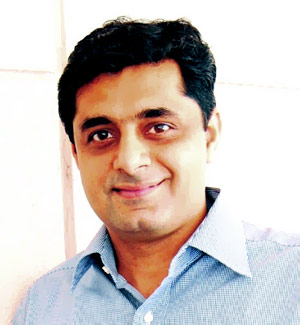
  • Keeping pace with technology is the huge challenge: Jwalant Swaroop

    Mr Jwalant Swaroop, who has more than 26 years of experience in the newspaper industry, has been associated with the Lokmat Media Group since 1992. He recently took charge as the chief operating officer of the group’s publishing and events division, based in Mumbai.

    In a freewheeling chat with Ritu Midha, Mr Swaroop talks about topics including new challenges to the newspaper industry, the growth of the regional press, and digital as the next big thing.


    How has the newspaper industry evolved in the last decade or so?

    The newspaper industry has evolved remarkably in the last ten years, both in mindset and revenues. The approach is futuristic so investments have been made in that direction. Just for numbers sake, the industry has shown robust growth of around 15 percent YOY in advertising revenues and about 10 percent on the circulation front in the last ten years.


    Traditional media in markets like India is still growing. Would you say that print players have taken the right steps to take optimum advantage of that and push the medium further?

    Yes very much. I think digital is being seen as the most potential transition, there are investments being made and backed with complete will to seize all opportunities. However, it is a long-term view and probably it might take another five years to see the real ROI.


    Looking specifically at regional press, do you believe it is poised to grow at a reasonable pace?

    It will, of course, as the regional markets growth is pretty robust. Therefore regional press will have its share of growth.


    Coming to Marathi media competition is growing intense (what with the launch of Divya Marathi). Do you see it helping in growing the market, or could it fragment the market?

    Both. Growth brings fragmentation. It is good, of course, making content the King and the consumer the real Hero.


    Moving on to your new role at Lokmat, what are the changes and transformations that you intend to undertake as the COO Publishing?

    As a company we are poised for the next orbit of the growth and therefore I need to accelerate that pace and make it happen so that the company is future-ready.


    On May 15, 2011 Lokmat saw a content and design change to its product. On August 15, Lokmat Samachar saw a similar makeover. Did they achieve their objectives?

    Differentiation and relevance are the key elements of the change, and I am glad that both the makeovers respectively, of Lokmat and Lokmat Samachar, achieved this.


    What has been the market response to your Hindi compact daily Lokmat Samachar? Do you think the compact format, like in the west, will have more appeal in future as it is easy to read and handle?

    Lokmat Samachar is actually a broadsheeter; the compact is the City News Express (CNX), launched in Aurangabad as a bilingual newspaper. That is doing pretty well, both in terms of advertising and circulation.


    Do you think that the regional newspapers are doing enough innovation to gain the attention of the advertisers? What are some of the recent noteworthy innovations?

    Unfortunately, innovations by the regional press are not showcased properly. We do everything that can deliver the desired impact to the brand communication. Communities and printing innovations are a regular in thing. We are doing several cross-media promotions for many brands these days. We recently published a 3D issue in Nagpur, Aurangabad, Nasik, Kolhapur, Mumbai, Jalgaon and Pune, which became hugely successful.


    Digital is supposed to be the next big thing. Do you think that such a threat would not affect the regional players for a long time as the technology, perhaps, has not percolated to the grassroot levels?

    Technology reaches the masses rapidly  faster than anyone can think. The huge challenge is actually to keep pace with it. Digital is reality, and why next big thing it is already a big one. Social media is changing the landscape and fast impacting media consumption patterns, and mobile internet browsing will be the defining medium of the future.


    How has the year been so far? And how do you see it panning out for the group?

    The early months have been disappointing and I hope, as we go forward, things will be better.


  • We have broken the shackles: Josy Paul

    BBDO India celebrated its third anniversary on August 30. Mr Josy Paul, Chairman and Chief Creative Officer of the agency, is a happy man as in an existence of just three years, BBDO India has established its credentials as an agency nurturing creative excellence that incubates impactful ideas. As Mr Paul puts it, We create acts and not ads.

    Ritu Midha of MXM India caught up with Mr Paul on the anniversary day. Presented below are excerpts of the stimulating conversation encompassing 25 years of Indian advertising, Mr Paul’s journey through these years and of course BBDO  and what makes the agency the creative powerhouse it is today. Enjoy!


    You are celebrating the third anniversary of BBDO India. How does it feel?

    It feels great. We are celebrating three years of not being in advertising. We started three years ago with the thought that India needs more acts than ads. We started with a belief that there is a greater social consciousness in consumers, and the consumer is not only father, mother daughter… or any other relationship. Besides, the family or personal values, a social value is also creeping into the human beings. India is far more socially aware, and we felt that brands must be able to resonate with that. And that is what we are trying to achieve.

    This year, we won four Lions at the Cannes – one of them a Black Lion. This year, for the first time, Cannes has created Black Lion for advertising effectiveness  there are only six of them. One that we have is the only one in Asia. We are celebrating that as well.

    You sure must be a very happy man.

    Yes, of course. The awards are a big testimony to the team thinking together. It is a young team and all the accolades help in our continued strive for excellence.

    Tell me something more about the environment at the time of your launch.

    Well, at that time media fragmentation had started, and the only way to bring them all together was and is, with an excellent idea. A fancy line was just not enough – you needed an action-oriented idea based on behavior, which then allowed all mediums to get involved. It holds true today as well.

    We have proved the power of action oriented idea with campaigns like women against lazy stubble  it started on Facebook, Aviva great wall of education that started as a wall on the road, Quaker healthy heart mission that was a website and invited people to take healthy heart test and Quit India Movement for Nicorette which spanned various media. An interesting one down South (Tamil Nadu) was Lemon Patalum, which we did for 7up. It is a whole platform to invite kids to play light-hearted, lemony, rubber ball cricket with their superstar CSK. Today more than 2000 teams participate in it. We are creating platforms. Many such things are in the pipeline.

    Would you then say that television might cease to be the lead medium?

    TV will continue to be at the core, because it allows you to reach a lot more people faster, with a singular message, but the TV would not be just a 30-second spot, it will be more about content. For example, the Anna Hazare movement does not have any ads but it is there as news, views and debate and also images. What you create may be a documentary, just a vignette or a quick news item. The message can keep changing.

    If television is only a standalone thought where you are just cracking a joke or saying something in an entertaining manner, it becomes just for that moment, but if it is part of a larger consciousness, or a larger behavioral activity  it is part of the continuum, it is part of one energy wave  and hence it is 10 times more effective. A lot of our work is in that area.


    How can one maximize the creative impact?

    There are so many kinds of people with so many different mediums at their disposal  you have to maximize based on the budget you have. If you don’t have a great budget, and you have to just do a car sticker, it still has to be a great sticker. It is your ambition, together with what the environment allows and offers you. It is all about how you react to the world around you.


    To a very large extent, media effectiveness is a game of budgets; to what extent does it hold true for creative?

    It is a very interesting question. Honestly, as a creative person I can’t answer the question on the budgets  I can only chat about the impact. And when you have an effective idea, you know it has great impact value.

    If you have a larger budget, maybe a big celebrity in the ad, it might have a bigger jump. However, the core of good communication is ALWAYS an impactful idea. Some companies have the ability to take an impactful idea and distribute it widely to make the impact much larger. Others put it in a specific medium because that is the only money they have and that is what they need at that point. So big budget or small, you need an impactful idea.

    I will give you an interesting example. We did a piece of work for a company called White Collared Hippies  an alternative travel company set up by young Gujarati guys from California. It won us an award, and quite a few nominations at Cannes. They do not have large media budgets, so they have posted the campaign we did for them on their own website and their Facebook page. While it may not be distributed widely, and they might not be getting customers, this campaign is getting them partnerships. They are getting famous in the B2B space, the campaign is helping them in creating the echo system.

    To what extent does gut feel help a creative person?

    Gut feel is essential to a creative person. If there is no gut, no leap, no personal filter, you cannot add to the world. The unique point of view that comes from your own gut, from your own perspective of the world, is what makes it fresh. Freshness is a must in a creative person.

    However, gut feel does not work in isolation. We are also studying consumer behavior at media level. Though we have not set up any system to segregate content and understand it in different ways, we are watching what consumers are viewing and what they are gravitating towards.

    Moving to another oft discussed phenomenon – user generated content. Do you see it happening in creative?

    Well, in creative, there are a few examples but I do not know whether they fit into your definition of user generated content. The user is generating more content  not because he is creating the content but because he is forcing the content  for instance in the case of Old Spice campaign: The man your man could be. It started with one television spot, became three television spots – people started getting excited about it. They wanted their own version on the Net. So Old Spice said you speak to us, and we would start creating it online. So the consumer was talking to the advertiser  and he was creating it live for them. It is a very interesting format.

    A slightly different question, how has the ad world changed from the time you returned from the Himalayas about 25 years ago?

    Some things have changed and some things have not changed  but everything has definitely evolved. Interestingly, advertising is teaching us, especially me as an individual to also evolve.

    I am going with the flow…

    There was a time when we were doing a lot of print. There were many good print writers in mid-80s, around the time I joined. It gave way to a bit of cinema, and then to a lot of television. You started enjoying that.

    In 2005, we launched CNN IBN, with Rajdeep Sardesai and Dilip Venkatraman, and with that we pioneered two-way television in India. You realised that television is no longer the medium that just beams down on you.

    It isn’t just the acceptance of new worlds, and knowing that your past is irrelevant. It allows you to enjoy what is happening. It is just explorative  you are doing it because you are enjoying new things. It is not that you know something very well, it is that you don’t know enough about anything and that allows you to enjoy everything. That is a nice space to be for me personally.


    And how has Indian advertising changed in terms of quality?

    Advertising has really opened up and it has become very free  it is not really as structured as it was before  it has changed with the changing times. It is getting better and better and integrating with the real world. It was not so real earlier. I remember David Ogilvy asking me during his India visit in 1989, Why are all the women on Indian television completely pink-faced  pasted with makeup  while I have never seen any such lady in a five-star hotel or on the road? I had no answer, and the reason was we had become so used to seeing two different worlds on television, and in real life. Today when I look around I realise that we have broken all those shackles. Openness, freedom and new ways of looking at the same problems, is there. There are young, open-minded people  who are far better than us, far better than me at least.
    Is there a dearth of talent in advertising?

    There is a lot of talent  but talent over time starts becoming solidised… fossilised. They accept only what they know from before. Cholesterol starts getting into the system  and the only way to beat that talent cholesterol is continuously asking questions. The solution is going out and getting new people into the system  so that the whole system gets energised.


    Coming back to you, how is the experience in BBDO different from that in David?

    I have never seen it as difference. I see it as a continuum. The spirit of David was the spirit of challenge  the ability to question everything. It operated in a small space, with young clients who in most cases did not have a national footprint. We never had giant businesses. In a way it was the seed of BBDO. What BBDO gave you was space, size, ambition… the ability to integrate with the larger world and to be a part of one world philosophy. BBDO Worldwide is just a giant David – it is a great agency that is doing great work across the world – not only for challenger brands but also for leadership brands. What has stayed is the spirit of challenge  and what has changed perhaps is size, ambition, the platform, the dream, the people you are working with  the osmosis  the ability to integrate with the larger world.


    So, what plans for the agency?

    BBDO is not about me, it is about brilliant talent led by a fantastic team. We are an organization  and not a one-man band. Three years, and we have built a fantastic foundation.

    We want to build on that, and we want to build through national clients. We are a very cohesive agency with a new world mindset. We can solve lot of national problems from a non-advertising perspective, and that’s why we say we create acts not ads. We are in the business of solving a communication issue or using communication for solving a national or social issue or using communication to build something or to create relationships. We feel confident vibrations that we can do anything today.


    My last question, do the mountains still beckon you?

    It is important to try to find space to the assimilate speed of what you are receiving. Running away to the mountain again is great. It gives you time to catch up with what the world is telling you. You need time to receive. You are using that time to reflect. You are trying to find pauses and spaces in mountains, nature, mist and rain, to catch up with incredible experiences so that you can learn from it.

  • The Future is on the Shelves: Devendra Chawla

    As per Boston Consulting Group estimates, the size of the organized retail market is approximately $28 billion and is likely to grow nine times to $260 billion in 10 years. Modern retail is no longer testing the water but is all set to grow at a reasonable pace. And as is known, the Future group has played a key role in the growth of modern retail in India.

    Mr Devendra Chawla, President, Food & FMCG Category, Future Group, reflects upon the increasing importance of retail in brand communication, consumer insights and trends among other things, in conversation with Ritu Midha of MXM India.


    Customer engagement is the buzzword. What steps can a retailer take to keep the customer involved and engaged?

    The landscape for brands is undergoing a transformation. While media is proliferating from one channel to multiple channels and one screen to multiple screens, brands need to shout louder to get consumers’ attention in this age of the addictive remote. Yet, the bigger challenge for marketers is not to get attention but to engage with this consumer. While the media is expanding, retail is converging in the sense that a brand can reach and interact with more consumers under the same roof. Though in a nascent stage, modern trade is contributing in a major way towards the growth of categories such as breakfast cereal, cheese, packaged rice, toilet cleaners, liquid soaps, air fresheners and hair conditioners, to name a few. A retail store in that sense is the new media vehicle to create awareness about new brands/products for a large number of consumers visiting the stores.


    It is said that most purchase decisions are now made in the last leg  or seven minutes before the customer actually shops. Are marketersmaking specific point of sale strategies to influence customers?

    Last mile marketing is about engaging the consumer and most decision by the consumers are taken at the final consumer touch point, the store, where given new information, brands may interrupt the decision-making process and enter the consideration set. One can activate last mile marketing by engaging in the following effectively in the retail theatre.

    • Celebrating new product launch
    • Sampling
    • Category Dressing
    • Knowledge to customers  usage, recipes
    • Break-the-routine promotions
    • Multi/Combi Pack
    • Cross promo
    • High customer engagement activities like lucky draw
    • Education & upgradation of Customer


    As per a recent Forbes study in the US and Europe, customer retention is far more important now than gaining new customers  how true does it hold for India? And more specifically for modern retail?

    Modern retail penetration is very high in case of Europe and the US. So more and more players are targeting the same set of customers. But in India, modern retail is still nascent (7-8 percent of total trade), penetration primarily limited to Metros and state capitals. For India there is huge opportunity particularly in the tier 2 and 3 towns. The pie is so large that acquiring new customers is as important as retaining them. Having said that, loyalty needs to be worked on to create customer stickiness.


    Data and research seem to be gaining in importance; how do you track the customer behaviour? Can you give a few examples of learnings bringing change in your retail format?

    Interestingly for us, the stores also double as a live research laboratory and a constant source of feedback . There is as much feedback as one wants to accept on behavior of categories, the way they are consumed, what need gap exists giving way to valuable consumer insights.

    Some examples… Kids engagement with products is much higher in a supermarket environment where products are displayed at their eye level and are well within their reach. For example, in the ketchup category, we learnt how kids are dependent on grown-ups for usage, thanks to the heavy and breakable glass bottle. Consumers were indirectly asking for innovative solutions here as the bottle is consumer unfriendly for the primary consumer.

    We worked around the issue and launched an easy-to-use standee pouch with spout for our ketchup brand, Tasty Treat. Mothers instantly loved it since it made them anxiety-free and their kids self-sufficient. This pack reduced packaging cost by 30 percent and supply chain cost by 40 percent due to lighter weight, providing even more value to the consumer.

    We Indians are unique and unconventional in our own way. In a category like soups, speaking to consumers before the launch of our private brand regarding the ideal soup serving size brought to light the fact that 70 percent of them preferred drinking soups in mugs, in the comfort of their homes  while the form of consumption is in bowls under public gaze like in a restaurant!

    Apart from insights , POS data is also a huge repository of consumer behavior, but still nascent in India. Plus we also work on

    • ACN reports
    • Kitchen Audit where we study in which catchment what consumers are consuming so we can stock them.
    • Catchment Studies within a given radius of the store.
    • Community Studies  Food habits, Festivals.


    Experiential marketing is a much talked about phenomenon now  how important a role does a retail outlet play in it?

    It’s the retail theatre where imagination and the buying experience can be fired up. We enable market development and driving consumption, as India is still under-branded and under-penetrated in most categories. We gave away mugs during our soup launch with a campaign ab soup ka mazaa mug mein, and saw category expansion of 25 percent. Traditionally, category expansion role was played by the advertised brands. Future group has rewritten some of those rules.

    We follow a toolkit including a multi-sensorial engagement with the consumer in the retail theatre.

    • In food categories, where taste and palate play an important role in buying decisions, experience in terms of sampling is very effective.
    • We have sampling counters in all the family centres, live cooking/recipes.
    • In the non-food category, testers are provided to help customers with decision-making.
    • Promoters play an important role  eg, case of beauty products through demonstrations.


    Talking specifically of the Future group, how do you distinguish in brand experience across your retail formats?

    The focus obviously is on providing customer satisfaction  whichever food retail format store they shop in. We have segmented our formats keeping customer type and convenience in mind. We have KB’s Fairprice largely for the people who are looking for convenience. Store formats keeps limited assortment but we stock all the top brands and SKUs that consumers would require.

    Then comes the Food Bazaar  which is mainstream and for the aspiring class. As it is now a food shopping destination for a large urban and semi-urban class, the focus is on making brands available at different price points, and ease of navigation. These have wide and deep assortment play.

    Next is FoodRight, and the aim is to delight the customer by making available aspirational products. At the top of the pyramid is Foodhall  the new upmarket format we have introduced for the discerning customer. From layout to the products on the shelf, everything is for a specific customer  it is the outcome of a lot of research and consumer focus groups coupled with kitchen audits. The initial feedback tells us we are in the right direction.


    Talking specifically of food and beverages, how do you strike a balance to keep both the customer and the brand happy?

    The most important thing is driving consumption, working with national brands to upgrade consumers to more value-added categories , thereby giving choice and new status to the customer, and sales to the brand via category management .

    • Properties like Monthly Bachat Bazaar, Sabse Saste 3 din, Mahabachat, give an excellent opportunity to brands to interface with consumers.


    Would you say retail has far more to offer in terms of PoS experience, and brands need to take advantage of it?

    • The moment of truth for the retailer is the PoS, a gold mine to understand behavior, data, money spending patterns like share of wallet on various categories. Though data is extremely perishable, brands need to capture pattern/behavior on a regular basis by tying up with the retailer in lieu of remuneration.


    Any instances of Big Bazaar working together with a brand to make it a part of consideration set?

    Quite a few, and just to give some examples…

    • Coffee Category project with Nestle, Coke fixture for CSD category, PoS data sharing with elect sambandhis.
    • Juices project in leading brands.
    • Solution Centre for Chinese with brands like Ching’s.

    In the case of private labels, which are the categories where private brands are doing well?

    Future Group has significant presence in the private brands fashion, electronics and general merchandise categories. In Food and FMCG, though we are a recent story, our brands are no 1 or no 2 in a dozen product categories including staple food, ready to cook and home care. Our entrenched brands are Tasty Treat, Clean Mate, Fresh & Pure, Premium Harvest and rising brands are Sach, Ektaa and John Miller. Tasty Treat now ranks as the 5th Brand in terms of sales in our stores from the 3000+ brands that we offer in Food and FMCG categories.


    Has the customer mindset towards store brands changed for better?

    A label on the shelf becomes a brand by covering the two-foot distance from the shelf to the trolley. After all it is the consumer’s choice, the rest is marketing terminology we marketers use. For consumers everything on the shelf is a choice and are all brands. The proof of the pudding is in the eating, and the leadership status of many private brands shows the acceptance of these brands. We are creating independent brands like John Miller, Tasty Treat, Clean Mate and Premium Harvest, and these are not store brands as store brands use the store’s name as the brand.

    In many cases, our brands are manufactured by the same factories that produce for brands marketed by leading multinational and domestic companies. Our formulations are arrived at with rigorous development process. We work closely with our vendor partners for fostering high quality and long term relationships.


  • The top of the consumer pyramid is growing: Sam Balsara

    Mr Sam Balsara, Chairman & Managing Director, Madison Communications Pvt Ltd, is one of the most influential people in Indian media. It is not only because he owns one of the largest media agencies in the country, and has a 51 percent stake in the other (Mediacom India), but because of his understanding of the Indian consumer and industry issues, and his ability to be one step ahead.

    Ritu Midha of MXM India spoke with Mr Balsara on topics ranging from the current consumer sentiment, experiential marketing, industry issues and more. Excerpts from the conversation:

    GDP growth at 7.7% is the lowest since December 2009. Besides, a recent AC Nielsen study shows that consumer sentiment has gone down. What does it augur for the advertising industry?

    More than slowdown, I think the sentiment is getting a bit affected, and this, indeed, is going to impact the advertising industry. I would say advertisers, or for that matter categories, which do not advertise regularly would get seriously affected by the prevailing sentiment.

    Talking of specific media, advertising on TV would be the last to be affected. Advertising in English print and outdoor would be affected first and in a slightly deeper way than advertising. The television, to my mind, provides far more flexibility, and tends to keep the inventory full… at whatever rate.

    On the positive side, however, India continues to be a shining star on the global map. Many more foreign companies will come to India with their global brands and competition for the established brands will increase. It surely means new players will have to spend aggressively to carve a niche for themselves, while the established players will have to step up their spends to keep ahead. This would, in a way, counterbalance the ad spends.

    We must not forget that India is an under-advertised economy. Our GDP-to-advertising ratio continues to be one of the lowest in the world.

    Will the mass brands cut down ad budgets more than luxury brands?

    Mass, specifically mass FMCG brands, understand that advertising is as important for them as raw material or packaging.

    It is discretionary categories like financial institutions and real estate and not FMCG which could cut down or exit totally like financial institutions, and real estate. 50 to 60 percent of television advertising is FMCG advertising. In print, FMCG would be less than 15 percent. And that is the reason television would not be hit that badly.

    Moving on to consumers, do you believe that the top of the pyramid is expanding

    Yes it is. The rich in India are growing richer, and that too at a terrific rate. This has led to luxury brands coming in and doing good business.

    But from a media perspective, these brands use more of events, CRM and experiential marketing. The impact of their advertising on typical mass media is a bit limited.

    This, in turn, should give a boost to aspirational brands.


    You just mentioned experiential marketing. Do you believe its time has come?

    Experiential marketing is growing at a phenomenal rate. More and more companies are now focusing on integrated marketing and engagement. So directionally, it is the way forward.

    Marketers now know that they need to engage their prospective target group in a more meaningful and deeper way to in order to convert them into customers and retain them.

    Earlier, a television commercial would suffice, but things are changing now. In addition to traditional advertising, you need to seduce the customer in variety of different ways. Awareness about one’s brand is not enough. Marketing spends in experiential marketing are substantially increasing.


    Are advertisers also reconsidering their retail and PoS strategies?

    Most large advertisers now have a focused set of people to look after modern retail and merchandising. Though organised retail is pegged between 6 to 10 percent of the total retail, for many upmarket brands these figures would be much higher, and for them to succeed adequate expertise in the modern retail area is a must.

    As per a few gurus, many purchase decisions are now made in the last seven minutes before the actual purchase happens.

    This is definitely true for smaller value products  the way a product is displayed and merchandised makes a huge difference.

    Indians, by nature, are changing. Earlier one wanted to use the brands that their mom and dad used. Now one can’t use the same brand that one’s mom and dad used, even if it is a very good brand. In addition to it, there is an increasing tendency to switch brands. If last month one used brand A, this month brand B would be the brand of choice. Loyalties are very difficult to come by, and experimentation is going to a higher plane it earlier was. People are not afraid to experiment with new brands and experiences. I think all this is putting the market on a boil.


    Moving on to a term I am still trying to understand well  neuro marketing. Do you see it helping advertisers?

    Given the two facts, a, world spends 400 to 500 billion dollars in advertising, and b, the phenomenal development in both medicine and technology  it stands to reason that we should spend a lot more effort in understanding why and how people buy.

    I have no doubt that in next 15 to 20 years, we would have a set of dos and don’ts as well as aids. These would provide a scientific basis on what to say and how, and what to show and what not to show. All this would definitely trigger sales.

    Right now in India, it is still in the parking stage. Not much happening as of now.


    And in what stage is digital as of now?

    Well, digital is finally at take-off stage. Last year, our digital arm grew at around 50 percent, and this year we are expecting 35 percent growth. Many large advertisers, including FMCGs, are now taking a serious look at digital as the medium to connect and engage with customers.

    It is now moving to a more serious attempt at using digital, and spending serious money on it to deliver business results. Digital is going to get very important in the next one or two years.


    Which of the Madison arms are growing faster in percentage terms?

    These are obviously the new divisions  as they have a smaller base. However, our OOH and experiential marketing divisions have seen good growth last year.


    Is rapid OOH growth a phenomenon across the industry?

    It is not just outdoor; the entire spectrum of OOH, activation, experiential and events is growing at a fast rate. Increasingly, advertisers believe that they need to include these, over and above what they were doing before. Hence, they are allocating a little more of their overall advertising budget to this. This, in turn, is making these segments grow at a faster rate than traditional and conventional segments.

    Moving back to Madison, how are your branches in Thailand and Sri Lanka performing?

    They are performing alright, but I would not say they are doing spectacularly well. Thailand has seen a fair share of problems in last few years, and it has been a bit of dampener. The company over there also does a lot of experiential marketing, events and promotions, and there was a setback for the last few years. However, from the middle of last year, there are signs of stability returning to the country.

    Now something about Mediacom. How have things changed for you from the time you picked up 51% stake in the agency?

    This industry is all about change, and if you are in advertising you have to do things differently and do different things in order to make your clients win every day. If you keep doing the same thing every day, both your clients and your clients customers are going to reject you.

    You must be a happy man, considering the achievements of Madison and Mediacom.

    Mediacom is a part of global network, and it has its own set of international clients. Madison, meanwhile, is homegrown agency rooted to the ground here. Both have their unique strengths and are doing well. Mediacom, of course, has done extremely well due to the aggressive growth of multinational clients. Madison’s growth is largely thanks to large clients that we have picked up in the last few months.

    Are there any more acquisition plans in the near future?

    We are fortunate that people continuously talk to us. It is not that we rush into acquisitions, but we do look at them on and off.

    One last question- a few agencies believe that they should not be penalised if their clients fail to pay channels for advertising

    To the best of my knowledge, IBF AAAI holds the client responsible for non-payment and so the client is put on PDC or advance payment before a complete ban is placed on the client. We understand that, though it is the agenciesresponsibility  ultimately one can’t earn 3 percent and pay up 97 percent!

    That brings me to another pain point raised by a few agencies: commission of 3%, which in many cases is 2% or less.

    Large clients now understand that they made a serious mistake by reducing media agency commissions under pressure. They have now begun to take corrective actions.

    At the top end, it is improving but at the middle and bottom end it’ll never improve. But as they say, If you throw peanuts, you’ll only get monkeys.


  • G Krishnan moves on

    By A Correspondent

    A mail from Mr G Krishnan yesterday morning took his industry friends by surprise. It said he was moving on, but had no mention of his next destination.

    Mr Krishnan’s departure from TV Today Network happens after a long and productive stint of 16 years. At the time of putting in his papers, he was Executive Director and CEO of the media giant.

    In an internal communiqu, Mr Krishnan simply stated, I write to inform you that I have decided to move after 15+ years from my current role of Executive Director & CEO, TV Today Network Ltd., to pursue new opportunities. He further said, In view of the above, I would like to relinquish my position as Vice President and Board Director – IBF and also the Chairmanship of IBF-AAAI subcommittee. However I am always available for any industry-related issues. I would like to take this opportunity to wish IBF and the sub-committee all the best.

    Meanwhile, India Today Group Chairman & Editor-in-Chief Aroon Purie stated in an internal communication, This is to inform you that G Krishnan (GK) has resigned from the services of the company with effect from September 1, 2011. All his direct reports will report to me until further notice. I would like to place on record my appreciation for his immense contribution in making TVTN a leading news broadcasting company of the country and AajTak, India’s foremost news channel in Hindi, right from its inception.

    Mr Krishnan’s stint with television began in the mid-1990s, with the introduction of the daily TV news bulletin Aaj Takon Doordarshan. Krishnan played a key role in launching Aaj Tak as a news channel. TV Today Network today runs news channels Aaj Tak, Headlines Today, Delhi Aaj Tak and Tej.

    Before the TV Today Network, Mr Krishnan worked with Bennett, Coleman & Company as the head of its marketing and sales departments. At BCCL too, he was credited with many firsts, among them Times FM.

  • The PHD of growth

    Pizza Hut Delivery (PHD), not just an adjunct of the main pizza brand but one which is positioned as a sub-brand of Pizza Hut, has been slowly but steadily increasing its footprint across India. PHD is actually a global concept which was launched in India in 2007 though it has kept away from limelight until now, as the company had decided at first to focus on providing consumers with a world-class dining experience in-store. The focus on dine-in was also because the delivery market had not really evolved at that point. But now there has been a change with people being more amenable to the home delivery option, hence the need to step up the PHD offering.


    The Indian food and beverage industry has been showing a healthy growth in the last few years and if one were to look at the organized pizza market, it would now stand at approximately Rs 450 crore and is growing at almost 25 percent year on year; the average bill size has also increased in the last few years and one can easily put a conservative figure of a 15 percent rise in that amount. With the trend showing a rise in home delivery, it is natural that Pizza Hut would tweak its offering to reach those potential consumers. In fact, its competition Domino’s has built its whole communication around the fact that it delivers in 30 minutes or the customer gets the pizza free.


    Ashok Bajpai, General Manager, PHD, explains the strategy behind bringing PHD into prominence. He said, Over the years, the delivery segment has gained importance in India and PHD has the ability to provide great tasting pizzas, pastas, garlic bread, desserts and drinks right to your door. We are committed to bringing restaurant-quality food to the homes of our customers. Also consumers today are increasingly looking towards delivery as an option to enjoy restaurant-quality food in the comfort of their home.


    Mr Bajpai added that the time has come for PHD to expand faster. Pizza Hut Delivery ensures that it fulfils its promise of delivering great tasting food, hot, to its consumer’s doorstep every single time, he added.


    PHD’s premise of hot pizzas delivered to the doorstep takes the form of the hot dot, which is a heat-sensitive sticker on the pizza box. If the dot is hot, so is the pizza inside. This replicates the restaurant offering of a hot pizza on the spot, and combats the concept that home-delivered pizza is not hot enough, which is sometimes a deterrent.


    Currently, PHD stores stand at 37 and the focus is to bring the number to 300, countrywide, by the end of 2015. Mr Bajpai is of the opinion that delivery is still nascent and more of a metro phenomenon. He said, India is growing at an unprecedented pace and in the future, a lot of action will be seen in tier 2 cities and other smaller towns. PHD is now one of Yum’s fastest growing brands.


    Aren’t Pizza Hut and PHD in conflict with one another? At Yum!, rather than conflict, PHD is seen as growth driver. While Pizza Hut is gaining prominence in Affordable Casual Dining (ACDR) space, PHD is developing the growing delivery business in the country, concluded Mr Bajpai.


    The challenge for Pizza Hut will also be from many QSR that has emerged in a short span and specializes in Indian food like Goli Vada Pav and Kaati Zone. There are also many local pizza brands like Pizza Corner, Slice of Italy or the homegrown US Pizza, and all of these either are QSR or focus on home delivery. Hence, if Pizza Hut is stepping up its focus on PHD to grow, it is in sync with the demands of today and with future growth strategy.

  • High-end car brands cash in on innovation

    First it was the talking newspaper, now its the shiny happy newspaper The Volkswagen glossy experiment in the newspaper has certainly created a buzz. In the past two days we have seen two high-end automobile brands come up with visible print advertising, first was the launch of all-new Volkswagen Jetta which has garnered enough reaction and opinion from the fraternity and then the full front page ad on the all-new BMW X3. It is said that the Jetta innovation would have cost anything around Rs5-7 crore though what is debatable is whether spending that amount will reap results in proportion.


    The automobile advertising especially in the premium segment has gone all out to capture its customers and the method especially in the case of Volkswagen has been innovative advertising be it the roadblock marking its entry into India or the talking newspaper for the launch of Volkswagen Vento, these innovations have been happening at regular interval and has definitely managed to pique the curiosity on the brand.


    Print is the preferred medium to showcase the high-end launches as its gives a decent exposure of the brand and manages to capture eyeballs.


    Anilkumar Sathiraju, Associate VP and Head South, Mudra Max, said, These types of innovations help in staying on TOM (Top Of  Mind). Today’s consumer is very smart, educated, well-aware and informed, especially in this category. They would do their complete homework, talk to people, take test drives before making any choice so its important to give the image of `I am a big player. VW as a brand always believes in being the first to innovate and truly believes in innovation as ideally doing something that has never been done before.


    I strongly feel that the advertising has definitely not got out of the readers’ mind. Ask people, and they would remember the innovation done by VW. Even the industry to that extent has recognized it and in some categories, innovation and especially in print works, added Mr Sathiraju.


    Naresh Gupta, Chief Strategy Officer at iYogi Technologies, is of the opinion that the timing of the advertising is because the car brands are beating the Shradh deadline by creating the connections early. He said, All brands want to catch the Diwali season, and cars involve long drawn-out decision-making. Both brands are pitching early to be on the shopping list.


    Mr Gupta explained, These big noise advertising initiatives helps to create bigger desire and also to grab eyeballs. Car brands have to be desired by new buyers and they need a pat on their back from their peers and friends. High-end cars can get tuned out of the mindset due to the perceived premium, and sometimes this needs to be broken. VW does not spend more than anybody else, but spends in one burst and this has helped to grab eyeballs. I would dub this as very smart strategy.


    With India seeing more new entrants like Peugeot and old players launching their new variants, the sector is likely to see lot of visibility in terms of advertising. There have been players like Honda who have in the past relied on the digital to showcase their launch but VW has been consistent in its innovation in print which then leads consumers to digital. In Jetta’s case it has meant getting people on Twitter with the #anything4jetta contest. Definitely, a sector which needs close monitoring especially with the festive season coming soon.

  • MSM pumps up the volume with new music channel

    Multi Screen Media (MSM) is all set to launch its music channel, Mix, on September 1. Promoted as a pure Bollywood music channel, Mix will play songs not only from contemporary cinema but also the earlier decades, appealing to a wide audience spectrum.


    It is after a five-year gap that MSM is launching a channel  the last one was Sony Pix in 2006. Reflecting on the reason for launching a channel at this juncture, that too a music channel, NP Singh, COO, MSM said, We wanted to first advance our existing channels, and then launch the music channel. Now that Sony is number two in the GEC space, and SAB, Max and Pix too are doing very well, the time is just right for the launch of music channel. He added, As a network, we have seen tremendous growth this year. There has been viewership and revenue growth in every quarter.


    Music, Mr Singh believes, is a natural extension of the MSM bouquet of offerings. Mix primarily plans to cater to the core target group of 15 to 24, as the youth consume maximum music. However, the channel will also target adults in the age group of 25 to 44, the section which, Mr Singh stated, is largely underserved when it comes to music on television.Thirty percent of the programming on Mix will be targeted towards this group.


    The channel will have theme-based programming through the day, playing different types of music. For instance, Arziyan will feature devotional songs at 7am, Ishq- Vishq will have softer love songs from noon to 3pm, and Music Madness with faster numbers will be from 6pm to 8pm.


    Alleyah Asgghar, Vice President and Head Programming at Mix, said that scheduling on the channel is a result of mood mapping research conducted by MSM, combined with the network’s learnings from viewership pattern on its other channels.


    Answering questions on the key differentiators that the channel would have, Neeraj Vyas, Executive Vice President and Business Head, Max and Mix, stated, Though the content on a music channel cannot be unique, Mix will showcase good quality music in an uncluttered environment. It will have factoids about music similar to what Max has about movies.The channel, he said, would have a large library of songs to reduce the number of repeats.


    At the moment, average time per viewer on a music channel is 25 minutes. As Mr Vyas remarked, it is important to not only get more viewers to the channel, but also to keep them engaged and increase stickiness.


    The channel also plans to have user-generated content on the channel wherein the users can send in their stories and the channel will play related songs.


    Mix, Mr Vyas said, would be on all distribution networks in the duration of a month.

  • TN announces state-run cable TV channel

    Tamil Nadu Chief Minister J Jayalalithaa has announced in the state legislative assembly that the state-run Arasu Cable TV Corporation will start functioning from September 2.


    The corporation is launching a total of 90 channels, including pay channels, for a monthly fee of Rs 70, Ms Jayalalithaa said.


    The service had been started by the previous DMK government following the split in the DMK  first family  involving the Marans, but, Ms Jayalalithaa said, it had become dormant after DMK chief M Karunanidhi and the Marans resolved their differences.


    In a suo moto statement to the Assembly, Ms Jayalalithaa said, The corporation provided 50,000 cable connections when it was started in 2007 but due to selfishness of rulers, it shrank to 432 as on March 31, 2011.


    Efforts made to restructure the corporation included the appointment of a chairperson and a managing director. Digital heads were also restructured, and more than 34,000 Multi-System Operators) and cable operators who 1.45 crore connections have joined the network, which covers Chennai as well as other areas.


    While consumers will be charged Rs 70 per month, operators will have to pay Rs 20 per connection, Ms Jayalalithaa said, adding that her government’s latest initiative would ensure delivery of cable services at nominal rates.

  • Fast company, any takers?

    Over the last few months, social activist Anna Hazare has become a household name. , and his feat has surpassed many notions mass movements.[didnt understand] Few young people would have encountered a mass uprising of this dimension, and the sentiment that Mr Hazare sparked has inspired many sections of society to make a difference. The rebellion encompasses men and women from all classes and social strata, and that is what makes this popular movement different.


    As Mr Hazare’s fast ran into the next day and the next, media houses kept notching up higher TRPs with every passing hour. Such events are news organizations dream come true, as they keep their platter full for days on end. Ramlila Maidan was filled with Mr Hazare’s supporters, militating for a strong Lokpal Bill, and media houses enjoyed a bullish viewership.


    But not everyone is convinced about the media’s activism and its role in the issue. The media has been repeatedly accused of sensationalism and blowing the issue out of proportion. It is blamed for supporting a popular movement, even without knowing what consequence it (the Bill) will lead to.


    Speaking on media’s role in the recent Anna’s fight against corruption Anupama Maitra, Lecturer at Calcutta University, said I have serious reservations about the role of media in general, and the Anna hype is no exception. There is a lot of money behind it and it is motivation enough to blow issues out of proportion.


    Apart from watching the media’s action from the monetary perspective, some also differ with its role ideologically. According to Aatrayee Ghosh, MPhil student at JNU, The whole issue is an overhyped mass craze that is demanding the destruction of its own democracy and its institutions; and the major role played in building this hype is by the media.


    However, not all is lost for the media, as some sections of society still feel that it has played a pioneering role in recent times. Sahil Mullick, Advocate, Bombay High Court, said, Alas; India as a country is acting critical, conversational[?] and ignorant on a common issue. Thanks to a relatively more pro-active and less commercial approach of the media, 121 crore people of my country know there is something going on.

  • Sanofi turns to Facebook for flu prevention

    Sanofi Pasteur, the vaccines division of Sanofi, has chosen the social media route to create awareness on protection of children against influenza.


    The pharma major created a page on Facebook, Mothers Against Flu, very recently. As of yesterday[check if needed to update] evening it had 710 fans on the page.Film star Raveena Tandon has been roped in to give the campaign an extra edge.


    The objective of the exercise is to unite mothers from different parts of India with the single aim of protecting their children from the flu virus. The campaign seeks to do it by creating awareness about the steps they can take to protect against and prevent flu.


    The company states that as social media is rapidly growing in India and young mothers often connect with their friends on social media websites,Sanofi Pasteur India has launched this engaging and exciting flu awareness campaign for mothers.


    Sanofi Pasteur India Executive Director Joselito Sta Ana said:For the first time, we are initiating a public awareness campaign in India through a social media platform, which would not only give information about flu, but is also a platform for mothers to exchange views on childcare in general.


    The company believes that this is the right time to launch this campaign, as influenza tends to peak during monsoon and winter.

  • India Shops Online is thrust of HomeShop18.com’s new campaign

    Shopping for the Indian consumer usually means in-store  but with e-commerce gaining ground, HomeShop18.com has unveiled its new television commercial, called India Shops Online.


    The TVC is built around the idea that the e-commerce portal delivers the best brands at great value, and emphasizes the click of a button concept visually as well as in the audio.


    Announcing the launch of the new commercial, which is produced by Cell18 under the direction of Zubin Driver, the company shared some key statistics: 300 percent growth in traffic over the past 12 months, six-fold growth in online shopping revenues and nearly 30 percent repeat customer base.


    In creating the commercial, the brand has taken care to introduce the modern within the context of the traditional in the Indian household. The commercial also captures the instant nature of e-commerce shopping, and reflects the growing stature of homeshop18.com in the category.


    Commenting on the commercial, HomeShop18 CEO Sundeep Malhotra said, This commercial is reflective of our deep focus on the e-commerce domain and is meant to accelerate the growth of the e-commerce category and of homeshop18.com as a consequence, being the clear leader. In this commercial you will find a clear leader-like tonality and a deep association of e-commerce and homeshop18.com.


    The TVC, the first in a series, has been produced in a 30-second format with 15-second versions to follow, and more commercials are scheduled to be produced under the Indian Shops Online theme.


    HomeShop18 has recently been in the news for having acquired a books e-tailer called coinjoos.com and also for raising funds worth Rs 100 crore.