Blog

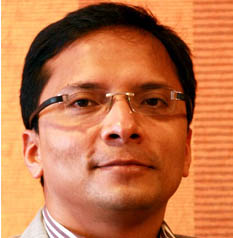
  • Santosh Menezes joins Images Group as AVP

    By Akash Raha

    Santosh Menezes has recently joined Images Group as Associate Vice President Publications – West, at the Mumbai Regional office. Images Group has several leading and trade business media magazines such as Images Retail, Images Retail Middle East, Images Business of Fashion, Images Business of Beauty, Images Franchise, Food Service, Shoes and Accessories Shopping Centre News, Progressive Grocer, Food Service, Sportswear International etc. Mr Menezes’ role in Images will be to consolidate the titles in the respective category, increase revenue and activate opportunities through customized solutions.

    Earlier, he worked with The Times of India Group as Senior Manager and team head. He was a part of selling broadsheets, special features, activating events, and annual properties such as ET 500, Brand Equity Quiz Specials, launch of Best Wishes bridal special, Bombay Times and Westside Plus core teams.

    Thereon, he went on to join DNA to be a part of the core launch team, as Senior Chief Sales Manager. He worked there for two years being a part of ME Women weekend magazine and then heading the Andheri Office. Also, he was a brand custodian of weekly compact Sunday offering Ya Young Adults and retail weekly DNA Westcoast.

    He also had a stint in Dubai where he was Divisional Head (Sales and Alliances) at Concept
    Media for International magazines like Millionaire and Retail ME and as  Director (Sales and Marketing) with Spear Publishing, Dubai heading titles Emirates Parent Plus and Aailati ( My Family) in Arabic, consumer  Events like Family A’fair. Mr Menezes shared the information and details about his new work profile over an email interaction with MxM India.

  • Mohit Sainani quits Mid-Day, joins Star India

    By Shubhangi Mehta

    Mr Mohit Sainani who was working as the marketing head, Mid Day for the past four years, has quit and moved to Star India.

    Industry sources confirm that Mr Sainani’s designation at Star has not been decided yet but he will be working closely with Mr Neville Bastawalla, AVP marketing,Star India Pvt Ltd. It may be recalled that Mr Bastawala had joined Star India as Head of Marketing for Star World and Star Movies. He too was previously with Mid-Day as Head of Marketing for a little over three years from where he exited early in December 2010.

    Prior to Mid Day, Mr Sainani had a stint with Compass BPO as a Marketing Manager where he reported into the CEO. Before that he worked with Times of India as Assistant Manager and as Relationship Manager with Citibank NA.

    Star India, the leading media and Entertainment Company in India has the highest reach among the country’s broadcasters, beaming to over 140 million people every week across India and over 65 countries across the globe. Its portfolio includes 33 channels in eight languages spanning the household brands Star Plus, Star One, Star Gold, Channel [V], Star Jalsha, Star Pravah, Star World, Star Movies, Star Utsav; along with the joint venture channels Asianet, Asianet Plus, Star Vijay, Suvarna, Star News, ESPN and Star Sports.

    Star India also manages a portfolio of business ventures including DTH operator Tata Sky; cable system Hathway, channel distributor Star Den, news channel operator MCCS, the film production and distribution business Fox Star Studios India and Star CJ Home Shopping.

  • The Anchor: 10 media evils we’d like to see banished this Dassera

    By Pradyuman Maheshwari


    It’s Dassera tomorrow, a festival that symbolises good winning over evil. Here’s my list of 10 media evils that I would like to see the end of. You can say that some of these are predictable since I have written about the issues in the past, but they are genuine evils. Banish them!

    #1 Corruption

    The 10-letter word is not just a preserve of government and politicians. It exists in plenty in corporates and the private sector. Our business included. Bribes to get sales deals through, generating revenues by way of money payouts and favours. Sending media buyers and clients to see the FIFA World Cup or Wimbledon tennis is nothing extraordinary these days. Nor is selling of magazine covers, or newspaper or website stories, in lieu of monies very surprising. Ditto with awards: money or just for old times’ sake. Har ek friend zaroori hota hai!

    #2 Paid news

    This has been institutionalised by certain publications even if it’s for just for lifestyle, glamour and brand launch news. It needs to stop, and a dubious disclaimer won’t do. Paid News is prostitution of editorial space and I don’t have to spell out what its practitioners should be called.

    #3 Industry fiefdoms

    Trade associations are supposed to help the lowest common denominator, but in the media we have a situation that some of the aasociations have become fiefdoms and people hardly mentor or help the weaker players. In fact they often attempt to crush them.

    #4 The ratings race

    Revenues happen only if there is proof that your product is read or seen or heard. Nothing wrong with it. But some newspapers are rumoured to go to any extent to fix things. And channels see nothing wrong tweaking storylines for better numbers. Ratings ke liye kuch bhi karega!

    #5 Dearth of talent and disparity in salaries

    There is need for dramatic change here. Some wings of media and marketing are paid fantastically, others pathetically. Journalists, for instance, are very poorly paid in many establishments. Ditto with staffers in Tier 2 cities. The media needs to attract quality talent and offer great content. Both are critical for good content. Alas, I don’t see this changing in a hurry.

    #6 Abuse of Intellectual property

    In Indian media, copyright is mostly defined as the right to copy. Our media companies are fortunate that legal action takes its time or never happens. Else a few of them could be giving the more high profile criminals company in Tihar or Arthur Road. The discipline has to start from the ground-up. Googled pictures must be a no-no and only licensed content must be used.


    #7 Fake ads

    It’s not as severe as other issues here, but the fake ads that advertising agencies craft to win awards are not on. Yes, they are a given these days and some leading agencies patronise the practice. But there has to be a way to end it. Perhaps some introspection?


    #8 Content sucks

    The self-regulation mechanism has been set up, but I think some of our channels, especially a few newswallahs, could do with a drive to improve content. And a news channel must air news and possibly some kutta-billi stuff. Not the other way round.


    #9 FDI blues

    Foreign direct investment in radio was hiked to 26 percent last week and in news channels it’s restricted to 26 percent till date. However, GECs can be 100 percent owned by foreigners. And creative and media advertising agencies too can be fully owned by non-Indians. Given that ad agencies influence media buying decisions and hence can in turn influence the media, why not allow full FDI in news and radio?


    #10 No Ethics!

    It’s a dirty word in most media organizations. Look at how many have a Code of Ethics, and insist on employees (and the promoters) agreeing to practise it.


    The views expressed here are my own and are not endorsed by MxMIndia.com

  • Copy us? Go ahead, says Reckitt honcho


    By Shruti Pushkarna

    Reckitt Benckiser needs no introduction and neither does the man who has ensured an outstanding record for the company in India.


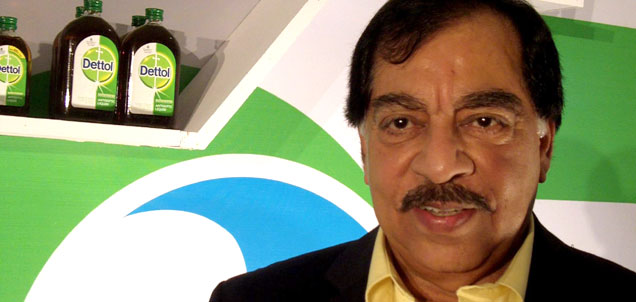
    MxM India caught up with Mr Chander Mohan Sethi, Regional Director – South Asia, Chairman and Managing Director, Reckitt Benckiser (India) in a one-on-one interview, at the release of the latest international Dettol Habit Study by the Global Hygiene Council in association with Reckitt Benckiser, in New Delhi. The study which was carried out in 12 countries including India, found that people who have good manners have better personal hygiene.

    Mr Chander Mohan Sethi has envisioned and assisted Reckitt Benckiser in its entry into various sectors, as well as helped the company establish a strong foothold in the household products and personal care sector.

    Mr Sethi began his career at Reckitt Benckiser India as Branch Manager- Eastern Region in 1984. He was promoted to the position of National Sales Manager in 1987 and in three years, recognizing his huge contribution to the company, he was promoted as Head of Marketing and Sales. He also headed Reckitt Benckiser, Nigeria and West Africa in 1994. Mr Sethi began his career as a management trainee with Glaxo SmithKline Consumer Products Ltd.

    Reckitt Benckiser, a global consumer goods company, headquartered in UK, is a world leader in household, health and personal care. Some of its leading brands include, Dettol, Harpic, Strepsils, Vanish, Veet and Mortein.

    In this candid interaction, Mr Sethi reinforces Dettol’s growing market share and the need for competing brands to think of newer ideas to take on an iconic brand like Dettol.


    Q: What are the key insights of the latest Dettol Habit Study, specific to India?

    First and foremost, the study has been done in 12 countries; more than 14,000 consumers have been contacted. In India, the study has also been done, both in metros, mini metros and in smaller towns. I think two key insights have come. One is that, male and female hygiene habits are the same. And secondly, which is a bit concerning, is that the younger generation unfortunately is not following as good hygiene practices as they should. I think that certainly is a surprise for us.


    Q: As the latest report states, good manners and behaviour are equally important factors as much as the availability of good infrastructure to practice good hygiene. How do you react to that?

    I think it’s a great insight, it’s a great fact of life, that you could have the best infrastructure but if you don’t have the right hygiene habits, it would lead to, you know, infection. So you can have a very clean room, you have a very large home but if you don’t have the right habits, there is going to be a problem of hygiene.


    Q: Is Reckitt Benckiser taking any specific initiatives for hygiene awareness in rural India?

    There is a very fine definition between rural-rural and what I call semi-urban. In very small, 40,000-50,000 population towns, we focus in different regions in terms of going to these towns and doing mother contact programmes, also in school programmes and hospitals. I would like my team to go into areas where they can effectively to do it.


    Q: How does the Global Hygiene Council function?

    The Global Hygiene Council is basically an independent body made up of very eminent doctors and scholars. They do studies on hygiene practices, on what should and what should not be done, after getting insights into consumers’ lives and consumers’ homes, in places of work. These are independent specialists, who get funded by their universities or hospitals where they are attached. But when they come to the Council, which is where we put an education endowment to run this entire body for more than ten countries, they meet a couple of times, and we use their material to be able to propagate good hygiene.


    Q: Dettol ranked as No1 in the Most Trusted Brand survey by Brand Equity in 2002. It slipped down to No2 in 2003. Even though the brand has consistently ranked in the Top 10 Most Trusted Brands, it never regained the No1 mark. How do you react to that?

    The first point is that Dettol is one of the most trusted brands in this country and over decades together. The second point is that there are a lot of new brands that have come, whether it is in the technology sector, cars, information or services etc. So it’s a question of what is the priority in that consumer’s mind at that point of time on his list of things. For us, it’s very important that we read the consumer’s reaction and feedback. But just to give you an idea, Dettol Liquid, in an independent survey by Nielsen, is 85 percent of the market. If you take Dettol Liquid hand wash, again Nielsen says, 53 percent of the market, so I could go on. Now if Dettol were not in one of the most trusted brands then we wouldn’t have 85 percent of the market in liquids, wouldn’t have 53 percent in hand wash. And just to say, Dettol soap for example, the body soap, it used to be No 8 in the soap market, and it is today No 3 in the entire soap market. Certainly in the germicidals, we are today at the top.


    Q: Dettol has positioned itself as the germ fighter brand; how have other players in the market affected this position? In fact, as a study indicates, in 2007 Dettol made an effort to reposition itself to take on Lifebuoy. What do you say to that?

    Lifebuoy tried to position itself like Dettol, I mean they must be running out of ideas that they have to… but you know, I can’t blame them. If you have an iconic brand like Dettol, everybody would want to be like Dettol. So good luck to those guys who want to copy us but the consumer says there is only one Dettol, there is only one brand which they trust in terms of hygiene.

  • FDI’s 26% allowance: Are radio players happy?

    By Shubhangi Mehta


    The government has enhanced the foreign investment limit for FM radio to 26 percent from the earlier 20 percent.


    This change ensures conformity of the foreign investment limit with other similar activities in the Information and Broadcasting sector.


    Rana Barua

    Is the increase adequate or was there more that was expected?

    Mr Rana Barua, Chief Operating Officer at RED 93.5FM, put forth his views by stating,” it’s a positive sign for sure for the industry .

    Whether Red Fm is looking at upping the Astro stake, Mr Barua said, “We will try and look at that but this will all depend on internal decisions hence there is not much to be said on this as of now”.


    “It is a welcome change but we will be able to gauge its real value closer to the bidding date of phase3 when migration policy is clear.  While radio in india is possibly one of the highest CAGR media in the world, the global economic situation needs to be accounted for in order to ascertain foreign investment’ interest,” said Mr Vineet Singh Hukmani, MD, Radio One.


    Apurva Purohit


    On this Ms Apurva Purohit, CEO, Radio City 91.1 FM said,”The increase in FDI in Radio sector from 20 to 26 percent is not really going to make any dramatic impact on the industry. It is too less and even now not on par with other media like TV or DTH.”


    Prashant Panday


    Mr Prashant Panday,CEO,Radio

    Mirchi, remarked, “A higher FDI limit will help FIIs to trade more in radio stocks that are listed. Till now, the limit was 20 percent and when FIIs approached that number, they had to take special permission from RBI to buy more. Now that limit has been raised to 26 percent and that will help increase volumes on listed radio stocks.”


    Will this encourage more foreign players to invest in the market?

    On this Mr Panday said,” Whether it will have any impact on strategic investments from foreign companies in India or not remains to be seen. On the one hand, the radio sector in India offers tremendous growth opportunities. But on the other hand, the sector’s profitability has been in question for much of the last five years. Even going forward, if bidding in Phase-3 becomes unreasonable, profitability could be in serious jeopardy. Further, foreign ncompanies are themselves operating under uncertain conditions in their own markets. Whether they will be willing to invest in India at this point in time remains to be seen.Also, given the condition of the money markets in India right now, it is unlikely that fund raising will be very easy. Given all of this, I think FDI investments into the radio sector in India will be limited.


    Mr Barua on the same said,” I’m still not sure if the rise will encourage new players to enter the market. The rise is there but when it comes to analysing it, I have always encouraged a higher percentage. In my opinion this rise is not high enough and leaves us with a doubt if it will actually egg on more foreign players”.

  • First on MxM: What’s-On-India gets Intel inside

    By A Correspondent

    What’s-On-India, the Indian TV industry’s popular EPG company, has raised funding from a group of investors, including Intel Capital. What’s-On-India’s existing investors – Sequoia Capital and Nexus Venture Partners – also participated in the latest funding round. The investment is aimed at expanding the technology vertical into new and emerging technologies as well as strengthening the company’s owned media portfolio.
    Atul Phadnis, Founder & Chief Executive Officer, What’s-On-India said, “Over the last 3 years, What’s-On-India has made tremendous advances both on the Technology front as well as the Media businesses. We are delighted to have Intel Capital as an investor in this journey given Intel’s focus on smart TV and other technology areas.“
    “Smart TVs, digital set-top boxes and other IPTV devices are transforming the living room and changing the way people consume content. As these new gadgets get embraced, Whats-on-India is well positioned, through their technology and content, to create compelling user experiences,” said Sudheer Kuppam, MD, Asia Pacific, Intel Capital.
    What’s-On-India is India’s premier (and perhaps only) TV guidance company working with all major TV Networks and Operators. The company’s vision is to enable TV content search, discovery and guidance across varied platforms and technologies. What’s-On-India’s Technology vertical runs India’s largest multi-platform, multi-lingual, multi-device Electronic Program Guide (EPG) system that covers more than 550 TV Channels on the source side and powers EPGs into more than 20 million set-top-boxes and devices on the destination end.
    The media vertical of the company runs the “What’s-On-India” channel, that is currently available via cable, satellite and DTH other than on web portals and via widgets and apps on Tablets, Mobile and Smart-TVs.

  • More Garba-Dandiya in Mumbai papers please

    By Ranjona Banerji

    The more I watch TV news (mainly thanks to this blog, my life was far less complicated before this!!!), the more sorry I feel for TV journalists in India. The constant need to fill up air time with drama, pyrotechnics and hysterics must be overwhelmingly frightening. The news in Indian TV world can never just be about events taking place. It has to be worthy of a Cecil B deMille movie with a thundering Charleton Heston, several horses, a few small divine miracles and for the grand finale at the very least, the parting of the Red Sea.


    Monday night and Tuesday morning were full of the death of a National Conference worker in Jammu & Kashmir and the alleged involvement of chief minister Omar Abdullah somehow or the other, the arrest of Gujarat cop Sanjiv Bhatt for turning against the Narendra Modi government and to some extent, the clarification by Montek Singh Ahluwalia on the Planning Commission’s poverty figures.
    **
    Tuesday morning’s newspapers found merit in Bhatt’s arrest and Ahluwalia’s statement but dismissed the J&K fight to a few paras on the nation pages. TV however continues with the story because it has drama and for many of our uber-nationalist TV journalists, J&K has a special fascination. The Indian Express Delhi edition however led with J&K. The Hindu focused on the ongoing Telengana stir which has been downplayed by Mumbai papers at least.
    In fact, the poverty issue has been given full range in our newspapers. The Times of India however has carried two intriguing opinion pieces. Arvind Panagriya, who teaches at Columbia University decided that our high child malnutrition figures are manipulated. And Swaminathan S Anklesaria Aiyer, who normally illuminates economic matters for us lesser mortals, mocked the sudden middle class interest in poverty. Contrastingly, on Sunday, The Hindustan Times carried an excellent piece by Kirit Parikh on our poverty measures. TOI on Tuesday has Parikh going further and discussing the failures of our PDS system.
    **
    Strangely, the anti-Wall Street protests going on all over the United States have not picked up traction in India. One would have thought this would be good grist to the drama mill. Also, given how Indian TV went to town when pop star Michael Jackson died, his murder trial is being largely ignored, in spite of all the dramatic revelations on a daily basis.
    **
    This is a particularly Mumbai-related complaint. The Navratri season is almost at the end and most newspapers have concentrated only on Durga Puja pandals all over the city. Where are all the pictures of garba and dandiya? I hear and see the dancing in real life but cannot find it in my newspapers? What is going on? I understand that the media is chockfull of Bengalis and people from East India, but as a hardened Mumbaikar (please ignore my name and its implications in your mind), I do expect to see Navratri represented in my newspapers.

  • The Anchor: Vidya Heble picks 10 videos to watch when bored at work (or not)


    #1 12 Days of Christmas, Indian style: What, you haven’t seen Boymongoose yet? Watch, and listen. And don’t let your attention wander because there are quirky little details in the video that you’ll miss otherwise.


    #2 If You Come Today: Kannada superstar Dr Rajkumar had an unlikely resurgence of fame with this clip from one of his films, now a viral hit popularized with some fine commentary by Time Out and impaled on yonder web to delight us.


    #3 MTV Chaiboy: An old spirit-lifting favourite. The boy’s moves are infectious and the soundtrack only helps in spades.


    #4 Sony Handycam: At first view this may be bugging because of the mess the kids create, but the nonsense ditty is indubitably catchy.


    #5 Iron Eagle Nominee: “Let’s say you’re a defense-company marketing executive. And you want to make a splash at the Indian defense ministry’s annual air show. Do you: (a) buy expensive gifts for New Delhi’s generals; (b) treat the press to Kingfishers and samosas; (c) produce a Bollywood-esque video featuring bare-midriff girls, flower-draped missiles, and the catchphrase ‘dinga dinga dee’? Unfortunately for us, Israeli arms-maker Rafael chose C.” Nuff said. PS: It’s horrible.

    http://www.wired.com/dangerroom/2009/03/iron-eagle-isra/


    #6 ‘The Force’ Volkswagen Commercial: Admit it, Darth Vader is there only to win over the grownups (who pay for the car). But the small boy’s acting – while entirely inside the eerie black costume, hence no cutesy facial expressions – is magnificent.


    #7 Achmed the Dead Terrorist: Leave your sensibilities at the door. Jeff Dunham uses the skeletal suicide bomber to poke fun at everyone (including himself), and you will laugh.


    #8 ‘Tera Husn Bahut Mujhe Bhaata Hai’Peugeot: Just for the end, which will have you rocking along with the triumphant guys who remodel an old beat-up jalopy into a Peugeot 206 lookalike.

    http://www.k10k.net/dropbox/storage/peugeut206-sculpteur.mpeg


    #9 The Last Knit: Did someone say “obsessive compulsive”? Perversely fascinating, animated, and sans dialogue so you can share it with your international colleagues.


    #10 In Which Annie Gives It Those Ones: Yes, you heard right. And yes, you’ll need more than a post-lunch slump to take this one in. For those who came in late – it’s Shahrukh Khan’s gangly-teenager phase, and please take a number for your initiation rite.

    Vidya Heble is Deputy Editor at MXMIndia.com. Mostly.

  • IT use can bring transparency: Sibal

    By A Correspondent

    “Increased use of information technology will bring about transparency and accountability in the system,” minister for communications and information technology Kapil Sibal has said. Mr Sibal, inaugurating the 8th Assocham International Summit on e-Governance, added that the government would introduce the Electronic Services Delivery Bill in the next session of Parliament. This Bill is aimed at making public services available in only electronic mode in all State and Central government departments over the next five years.

    The scope of human intervention must be reduced with information and telecommunication technologies playing a lead role to curb corruption in public life and ensure good governance across the country, Mr Sibal added.

    He said that though the government is working on a new law to deal with the menace of corruption, only mass adoption of technologies for e-governance and m-governance can improve the quality and speed of public services delivered to citizens in urban and rural areas.

    “Much of the talk of corruption that we have had in the recent past will be dealt with through the initiative of IT. What we need to do is to ensure that the scope of human interface – which is the scope of all corruption – is excluded. IT should play an important role in finding solutions and we are in the process of doing it,” said Mr Sibal.

    By 2014, every gram panchayat in the country will be connected with fibre optic cables and the last mile connectivity will be with wireless broadband. The true empowerment of people is possible when government services are made available at the doorstep of every citizen – be it for tax returns, insurance premiums, banking operations or payment of e-bills, he remarked.

    Mr Dilip Modi, president of Assocham (The Associated Chambers of Commerce and Industry in India), said digital inclusion is the critical pillar of the chamber’s agenda of making inclusive transformation happen.


    “E-governance can bridge the gap between deficits and surpluses in rural and urban India. With six lakh villages in the country, land records need to be digitised. We are quite bullish on the internet’s potential to provide fair transparent governance structures,” said Mr Modi.

    Mr Umang Das, chairman of the Assocham National e-Governance Council, said the concept offers a unique opportunity to move away from piecemeal reforms to an era of institutionalised transparency.

    India has 73 million internet subscribers and the figure is poised to grow to 275 million by 2015, according to Assocham.

  • BIG FM does an item number for Diwali

    By A Correspondent

    It’s Diwali in the air, come October, and 92.7 BIG FM is joining the festivities with its game show, titled “Diwali Ke Item Bomb”.

    The main objective of this show will be to get as many people to win. In this on-air game listeners will be asked an extremely simple question, which if answered correctly will get them a chance to “spin” a roulette wheel on air and win fabulous prizes.

    The Diwali roulette wheel will spin across 30 markets and engage around a crore of consumers over six weeks through on-air and on-ground activities. With the game format designed keeping customer gratification in mind, the campaign is a major platform for brands to leverage.

    The on-ground activities will cover RWAs, schools and colleges where people will get to spin the wheel in person. To make it more exciting there is also a digital element to it, an application that allows people to test their minds, then spin the wheel and win.

    Commenting on the campaign, Mr Soumen Ghosh Choudhury, Business Head, 92.7 BIG FM said, “With our Diwali special property we promise to deliver highly engaging entertainment and more. With a reach across 30 markets and a well tailored offering that is designed to get one hooked and addicted, this property will allow listeners an excellent opportunity to win goodies this Diwali, while advertisers will find an appropriate platform to connect with Diwali revellers across the country.”

  • Brothers are Discovery’s new stars

    By A Correspondent

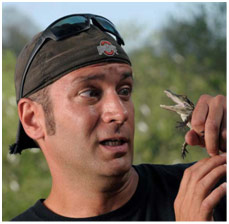
    Robbie and Stephen Keszey are brothers who run one of the most unique family businesses – working with wild and dangerous animals deep in the swamps of Florida. They run America’s largest venomous snake farm, which is home to hundreds of the meanest gators and crocs one could ever see. Together, they are the stars of Discovery Channel’s new series Swamp Brothers, which is airing every night at 10pm.


    Robbie is a veteran of the 1980s metal scene who is passionate about all things scaly, and Stephen is a former New York City bartender, more accustomed to hailing a cab than handling a snake. Robbie and Stephen run Glades Herp Farms, Florida’s largest reptile sanctuary and exotic reptile dealership. Their farm also houses Florida’s International Teaching Zoo, which is full of rare species from around the globe and brings in a constant stream of new and different animals each month. In each episode of the show, the brothers put themselves on the line to protect the most unusual of creatures – from pythons and alligators to wildcats and bears.


    As a child, older brother Robbie loved two things: music and wildlife. After high school, he moved to Los Angeles to play bass in a rock band, living a life of excess on the Sunset Strip. Eventually realizing that his true passion was for wildlife and reptiles, Robbie moved to Florida and Glades Herp Farm, bringing with him his rock ‘n’ roll attitude and a penchant for living on the edge. Today, Robbie is a skilled expert in all herpetofauna – especially crocodilians and venomous snakes. His goal is to one day take what he’s learned on the farm and open his very own teaching zoo, where he can continue to teach people to conserve and respect animals.


    Robbie’s younger brother Stephen is a pure city boy at heart who headed straight to the Big Apple after graduating from university. During his 14 years in New York City, Stephen held his dream job as a bartender, where drinking, telling jokes and flirting with girls were all in a day’s work. When Robbie asked Stephen to help him expand the business, Stephen initially was not thrilled to leave the big city life, especially to spend all his time around dangerous animals. Overly cautious by nature, Stephen concedes that where reptiles are concerned, he always bows to the expertise of his brother.


    From pythons to rogue bobcats, the brothers make it their business to track these beasts down, capture them and return them to a safe environment – without losing life or limb in the process.


    ROBBIE KESZEY – The Herp Expert

    Partner at Glades Herp Farm, former bassplayer & rock ‘n’ roll band assistant Robbie Keszey has been interested in reptiles and wildlife since he was a kid. Robbie’s #1 goal is to teach people to respect and conserve animals through captive breeding. He is a professional skilled expert in all herps, especially crocodilians and venomous snakes. But it was Robbie’s other passion – music — that drove him to move to Los Angeles after high school to play bass in a rock band. While in L.A., Robbie served as personal assistant to C.C. Deville, of the glam rock band Poison. After traveling the world, Robbie found his way back to his first real love – wildlife and reptiles. He moved to Florida to work at Glades Herp Farm, bringing with him his rock ‘n’ roll attitude and a penchant for living on the edge. A Florida Gators fan, Robbie lives in Bushnell, Florida with his wife, Michelle and their kids, and they hope to one day own a teaching zoo of their own.


    STEPHEN KESZEY – The City Slicker

    Assistant at Glades Herp Farm, former New York City bartender Stephen Keszey is a pure city boy at heart who


    prefers the chirping of urban crickets (car alarms) to actual crickets. After graduating from The Ohio State University, Stephen moved to New York City, where he lived for more than 14 years. During his time in the Big Apple, he had a variety of jobs, including a stint working in music publicity — but Stephen’s love was bartending. When their mother became ill, Stephen left New York City for Florida to help out, and found himself also helping his older brother, Robbie, at Glades Herp Farm. Although Stephen is overly cautious and extremely fearful of getting hurt, he has gained some knowledge, and concedes that there is only one aspect in his life where he bows to the expertise of his brother without question, and that is where reptiles are concerned.

  • Creatures feature on World Animal Day


    By A Correspondent

    If you adore animals and love the planet, tune into Animal Planet to celebrate the World Animal Day on October 4.  Bursting with intriguing facts and enchanting animals, Animal Planet commemorates World Animal Day with a full day programming line-up from 12 noon to 12 midnight, aiming to inspire viewers of all ages.

    Kicking off the day to celebrate all things wild and spotlight some of the rarest and greatest creatures on the planet, Animal Planet follows the lives of several unique species like river dolphins in India, hyenas in East Africa, pygmy elephants in the jungles of Borneo, wild wolves in Ethiopia, bat-eared foxes in Namibia and ferocious crocodiles in Africa.

    Discussing the special Animal Planet Marathon on World Animal Day, Mr Rahul Johri, senior vice president and general manager (South Asia), Discovery Networks Asia-Pacific said, “We dedicate this special day of the year to highlight the wonderful animal kingdom and the amazing relationship it enjoys with humans. Over the years, we have witnessed a growing sensitivity and commitment amongst viewers for Animal Planet’s breathtaking and awe-inspiring content. I am most excited to present this year’s 12 hours programming marathon which will do it all – inform, entertain and connect.”