Blog

  • Industry veterans to train @ Stratagem Media’s Media Rhythm 4

    By A Correspondent


    Stratagem Media, an independent media services company led by Mr Sundeep Nagpal, has been fairly active in the field of media training – an area which Mr Nagpal has, for many years, specialised in. The latest in the company’s list of training programmes is the Media RHYTHM series, which he started a couple of years back. The idea was to provide hands-on training to media professionals in the area of sales and help them overcome severe impediments in today’s media selling environment.

    RHYTHM is an acronym for Realising Higher Yields through Talent Harvesting in Media. The company has so far done three rounds of Media RHYTHM; and the previous ones have had Chairman of Madison World Mr Sam Balsara and former Zee CEO Mr Pradeep Guha flagging off the events.

    The fourth round is all set to take place on December 2-3, 2011 in Mumbai, and MxMIndia is the web partner for the event which has five modules – Print, TV, Radio, Digital and Outdoor.

    The list of speakers includes media veterans such as Mr Bharat Kapadia, Mr Suresh Balakrishnan, Mr Madan Sanglikar, Mr Jairaj Padmanabhan and Mr Nagpal himself. Topics that will be covered are: ‘Adding relevance to Value’ by Mr Kapadia, ‘Customising business solutions to meet business objectives’ by Mr Balakrishnan, Does Digital really work’ by Mr Sanglikar, and Strategising before, during and after every move in a media sale by Mr Padmanabhan. Mr Nagpal will talk on ‘When, how and how much to use the science behind media decision making’.

    Mr Nagpal is optimistic of putting up a good show. Talking to MxM India he said, “Stratagem Media has always believed in giving hands-on training to media professionals. There is so much that youngsters can learn, on how they can develop their skills and also how to start thinking and implementing effective selling strategies. ”

    Mr Nagpal further said that the workshop will give participants insights on things like how to close deals in the least possible time and how to understand the thought process of a media planner better. He feels such interactive workshops provide an opportunity for media companies to harvest talent of a select few ad sales personnel which they think are the future.

    Mr Kapadia said “Media RHYTHM is not like the regular seminars. It is more like the closed-room sessions, where participants get a chance to interact more and participate, unlike large forums and industry gatherings. The hands-on approach towards training is what makes the whole experience better.”

  • Subhash Chandra gets Emmy Directorate Award

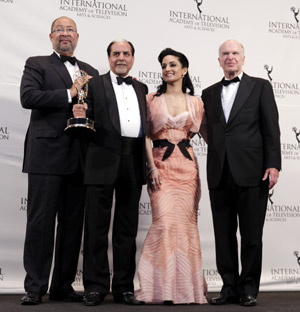
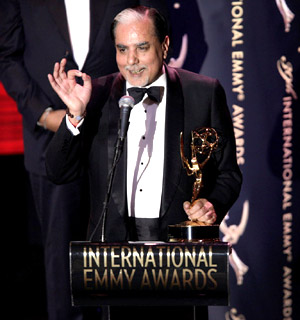
    Zee Group Chairman Subhash Chandra giving his acceptance speech at 39th International Emmy® Awards, held at the New York Hilton in New York City (CREDIT: Chip East / PSG)

    By A Correspondent


    Subhash Chandra, founder of Zee Group, has received the 2011 International Emmy Directorate Award. Mr Chandra made history by becoming the first ever Directorate Award recipient from India. The award was presented at the 39th International Emmy Awards, which took place on Monday, November 21 at the Hilton New York in New York City.


    “Subhash Chandra is a one of a kind visionary – a self-made entrepreneur who made his mark on the Indian television industry by launching the first privately-owned channel in India,” said Bruce Paisner, President & CEO of The International Academy of Television Arts & Sciences. “We happy to present him with our 2011 International Emmy Directorate Award as Zee Entertainment Enterprises prepares to celebrate its 20th anniversary, in 2012.”


    Remarked Mr Chandra, “India is the cynosure of the world today and it’s a great privilege to be the first Indian recipient of this award. It really means a lot to me, Zee Group and the Indian media and entertainment Industry.” He added, “While there have been many representations from India in the areas of technology and retail, this puts India’s media industry on the map and raises the profile of India with regards to its media and content.”


    Zee Group Chairman Subhash Chandra with Richard Parsons, Citigroup chairman and former chairman and CEO of Time Warner (far left), and Emmy Award-winning actress Archie Panjabi (The Good Wife), who both presented him with the 2011 International Emmy® Directorate Award, as well as Bruce Paisner, President & CEO of The International Academy of Television Arts & Sciences (far right) at the 39thInternational Emmy® Awards, held at the New York Hilton in New York City. Marks the first time in history that an Indian received this honor. (CREDIT: Allison Joyce / PSG)

    Richard Parsons, Citigroup chairman and former chairman and CEO of Time Warner, along with Emmy Award-winning actress Archie Panjabi (CBS Network’s critically acclaimed hit drama “The Good Wife”) presented the International Emmy Directorate Award to Mr Chandra during The International Emmy Awards Gala.


    The 39th International Emmy Awards were hosted by Jason Priestley, who was joined on stage by a cast of international celebrity presenters. Actor, director and producer, Mr Priestley was hosting for the second consecutive year. He was joined on stage by a starry cast of presenters including Brazilian actor Vladimir Brichta, Jeff Hephner (Starz’ Boss), Edward Herrmann (Gilmore Girls), Rick Hoffmann (USA Network’s Suits); John Larroquette, Danny Pino (NBC’s Law & Order: Special Victims Unit), Ally Sheedy, Blanca Soto (Univision’s Eva Luna and El Talismán), Jessica Szohr (Gossip Girl); Wendy Williams (host of syndicated talk show The Wendy Williams Show) and Goku and Luffy (characters from Toei Animation’s animated hit Dragon Ball Z and One Piece).


    The International Emmy Awards recognize excellence in television programming produced outside the United States. The awards gala is attended by 1,000 international entertainment decision-makers every year. For a list of nominees, visit http://iemmys.tv/news_item.aspx?id=136.

  • Viacom18 leads in accolades at PromaxBDA Asia

    It was the Big, Big Night for the folks into on-air promotion, branding and advertising for the promo-wallahs (and of course many others). Vying for the much-sought-after Promax Muse and BDA Isis were satellite, cable, broadcast television, radio station and associated new media, their agencies and production houses. The holder of the awards are instantly recongised as the best in Asia.


    Indian companies generally fare well at Promax. And at the 2011 awards held on Tuesday (Nov 22) in Singapore, they dominated. Nearly half the honours in the 48 categories went to Indian entries.


    Viacom18 companies led the tally followed by (in no specific order): Star, MSM, Zee, UTV, Turner, MCCS and the BBC.


    Here’s the tally, sorted by company name.


  • JWT restructures to bring in 3 NCDs


    By Tuhina Anand & Shubhangi Mehta


    After roping in Bobby Pawar as its Chief Creative Officer and Managing Partner, JWT is now bringing in more changes in its team structure which Colvyn Harris its CEO dubs it as `transformational changes’.  It is learnt that JWT has brought in a three National Creative Director structure which includes Swati Bhattacharyya in Delhi, Tista Sen in Mumbai and Senthil Kumar down South. All three NCDs will have a team of ECDs under them and when Bobby Pawar joins which will probably be in March 2012 as the CCO , he will spearhead this structure.

    Ms Bhattacharya has been heading the GSK business at JWT while Ms Sen and Mr Kumar have been Executive Creative Directors at the agency.

    On the restructuring, Mr Harris said, “I cannot think of 3 more deserving and talented people who have imbibed the best of JWT values and who believe in the JWT Company. It has taken us some time to recognize that their current roles and responsibilities far exceed what national creative directors in other agencies are responsible for. Given the sheer scale of our operations, and our most admired line-up of India’s finest and the world’s most admired brands, it was imperative to recognize the creative leadership team with a designation based on their role.”

    “Given the exigencies of the market and the pressure which is being brought to bear on us to improve our creative work – especially from clients who are in the more competitive categories – we believe that the combined skills and talents of Swati,Tista and Senthil will be able to provide the best solutions for our clients, our brands, and our people, added Mr Harris.

    Talking to MxM India on the creative pillars that JWT is creating, Mr Harris said, “The roadmap that JWT has drawn of being a creative powerhouse and being creative led and creative driven organisation will be achieved by these changes. Bobby along with the team will help us in realizing this vision. In fact, people who are saying that the CCO position at JWT has been unstable should know that Adrian came as the Delhi office head so we didn’t really have anyone take the CCO position for long. Bobby’s position in that sense is of true CCO who will lead a team of around 300 creative people at JWT along with the newly restructured team.”

    It may be recalled that when Josy Paul had joined JWT as its NCD, Agnello Dias had also been promoted as NCD and the agency followed the dual NCD structure at the helm but no CCO. It was only later when Mr Paul quit that Mr Dias was made CCO, though he too quit soon after to start Taproot India.

    Mr Harris also said  that one should gear up to hear of some more announcements at JWT very soon. The agency has also recently roped in Max Hegerman as Senior VP and its Head to look after JWT’s Digital strategy.

    On his mandate at JWT, Mr Bobby Pawar said, “My job at JWT will be ensure we change our benchmarks and set new standards. Critical would be in setting a vision and then delivering on it. JWT will be the magnet for the best talent in the industry and offer the most creative solutions ever seen.”


    INTERVIEW

    Bobby Pawar, the guy who is taking over as Chief Creative Officer and Managing Partner of JWT, has been responsible for turning around the agencies which he has worked for. When he was at BBDO in Chicago he weaved his magic to make one of the hottest shop in the region. In India too, with Mudra as its Chief Creative Officer he has been instrumental in the agency winning awards and accolades on many international and desi platforms. The agency has done some high decibel advertising like the ones for Volkswagen launch in India and there after its variants that had caught eyes of many. With Mr Pawar’s next destination being JWT which has  seen causalities in quick succession including Bruce Matchett, Josy Paul, Agnello Dias and Adrian Miller. Looks like JWT is gearing up for combat and shut the wagging tongues of the industry. Here’s an interview with Bobby Pawar who sportingly answered our questions though he steered away from some specifics.


    Q: Omnicom as a parent, so many awards in the kitty all with your leadership… why then did someone like Bobby Pawar leave?

    I guess I am addicted to challenges and the task of polishing JWT’s creative luster and raising the game there was just too seductive to pass up.


    Q: What is the mandate at JWT, also we have seen the creative head at JWT being an unsteady wicket in last few years, should we expect a change now?

    Colvyn didn’t asked me to partner him on the mission of maintaining status quo. I would hardly be the right guy for that. Both of us want JWT to evolve, to build on the past, but look firmly at the future. The focus will be on the work and the people who do it. And that means the entire agency. We don’t just want a highly creative creative department, but a highly creative company. Everybody has a role to play in making sure the solutions we think up, sell, and execute are as great as the brands need them to be.


    Q: Was the Omnicom deal anything to do with your moving out?

    If anything the Omnicom deal almost kept me back. That is a great company and I have the highest regard for John Wren, Chuck Brymer, John Zeigler et all. They made me feel very welcome, but as they say a man’s got to do what a man’s got to do.


    Q: How would you sum up your stint at Mudra?

    I loved it. See, I’m not leaving because I am unhappy. When I started nobody gave us a chance. Four long and hard years later, our creative reputation is the opposite of what it was. We did pathbreaking work for Volkswagen, Big Cinemas (Silent National Anthem), 7-Up, Union bank Of India, Emirates, Philips, Economic Times, McDowell’s No. 1, etc. We were the winningest DDB agency at Cannes this year along with DDB Paris, 3rd in the agency of the year standings at Spikes and we had the most metals Abbys. Not too shabby, right?


    Q: What should we expect from Bobby Pawar in his JWT avatar?

    I believe that agencies don’t just need to create, they also need to invent. Why can’t we invent a whole new medium while we thinking of a campaign that runs on it? The future will be invented by those who ask the most interesting and unexpected questions.


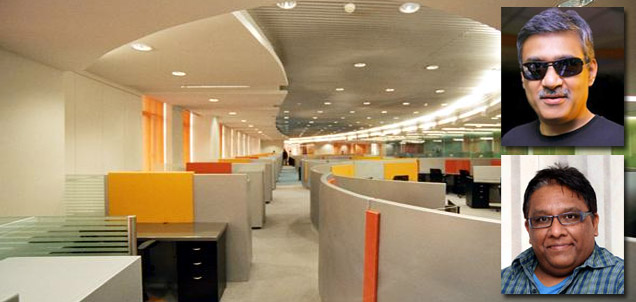
    Photograph of JWT Mumbai courtesy JWT website. Images of Messrs Harris and Pawar from the JWT and Mudra sites respectively

  • HT’s series on medical malpractices

    By Ranjona Banerji


    I have to congratulate the Mumbai edition of the Hindustan Times for its hard-hitting series on medical malpractices – particularly the way doctors take patients for a ride by prescribing any number of fake tests. Almost everyone I know has been a victim of this scam at some time or another and it is shocking the way it has proliferated. Well done to HT – we have so many stories telling us about some celebrity doctor importing some ground-breaking medical practice at some exorbitant price or about the dismal state of government hospitals. Both aspects are undoubtedly true. But it’s also necessary to highlight the problems within the medical community which in keeping with the zeitgeist appears to be greed!


    I must admit to not being a fan of the Mumbai edition of Hindustan Times – being better than what DNA has become is hardly something to be proud of. On a normal day, The Times of India just whitewashes the competition with its total city coverage. But targeting issues which affect citizen and packaging them well is a time-tested and intelligent way of increasing reader interest and HT has done it well here.

    **


    It is quite amusing to compare last night’s television to this morning’s newspapers. So while some channels decided to focus on the Special Investigation Team’s submission that the Ishrat Jahan encounter case was actually murder, others were taken by the BJP’s plan to boycott Union home minister P Chidambaram in the Parliamentary session. Mayawati’s quickfire session to chop Uttar Pradesh into four also got airtime as did Pakistan’s problems with what has been dubbed ‘memogate’.


    The Times of India used the rupee’s downslide compared to the dollar as its lead tying into general economic woes, with Ishrat Jahan as second lead. Hindustan Times did a DNA and gave us everything – Mayawati as lead, then Ishrat, then NDA and Chidambaram with the rupee as a single col. The Indian Express has Anna Hazare and his wax likeness as a lead pic, with Ishrat Jahan as the lead, Mayawati second and the NDA boycott as third.


    The Telegraph, Calcutta, stuck to a local story as lead, went with Pakistan and memo-gate as second lead and Ishrat Jahan as third.

    So what then is “news”. The general news-entertainment channels would usually leave the rupee to the business channels so that could not be “news”. Besides it is almost impossible to have a sensational TV debate on the subject. Ishrat Jahan and Mayawati obviously deserved top billing. Pakistan’s memogate is one more in a list of problems to for most newspapers it was international page news. But Pakistan makes for TV drama, so it makes it there.

    The NDA boycott possibly got stuck in the news spin cycle because the bigger story will be about Parliament was disrupted, not the announcement of the disruption plan.


    **


    Having forced myself to watch NDTV, I was lucky to get a bit of a laugh when during Nidhi Razdan’s evening show, she played a clip of Srinivasan Jain’s interview with Anna Hazare. As is his wont, Hazare held forth on his normal procedure of flogging those who drink alcohol after being warned off three times and then taken to a temple the fourth time (I am guessing there are no Muslims, Christians, Buddhists, Jews, Sikhs and Parsis and anyone else I’ve missed out on in Ralegan Siddhi). Jain, rather than question Hazare on this frankly outrageous practice, proceeded to repeat and expand on it, presumably for us who didn’t understand Hazare the first time around. Razdan was rightly outraged, but her guests – Manish Tiwari, Nirmala Seetharaman, Jyotirmay Sharma and Shoma Chowdhury were even appropriately very amused and could barely hold back their laughter at Hazare’s absurdity.

    **


    By the day, did anyone read Shoma Chowdhury’s defence of all the allegations made against Tehelka? Too much explaining never works in journalism. Brazen defiance works better.  Therefore, a tedious read.

    eom

  • The Anchor: 5 changes the publication industry is seeing

    By Adarsh Mishra


    #1 Nowadays circulation operates on an FMCG model. As most of the companies are subscription driven, they are able to track readers and their profiles. The conventional method of circulation has undergone revolutionary changes due to subscription module and publication aspirations to achieve higher numbers in terms of ABC and IRS.


    #2 Circulation, which is considered a cost centre in every organization, is playing a very important role in the present media scenario as media planners are giving more importance to numbers in comparison with class.


    #3 In the present scenario most publications are resorting to invitation pricing which helps them to get a larger base in a shorter time. The classic example can be Delhi where publications slashed their prices in order to get higher numbers.


    #4 In coming days it will be vernacular publications which make more money as against English publications. The reason being people’s inclination towards their own languages and lower operating costs.


    #5 The government should increase the scope of FDI as it will help the publication  industry in India to grow at a faster rate and also it will help small or regional players to compete in the national arena.


    Adarsh Mishra is Vice President, DNA.

  • Google’s India Head Rajan Anandan on ASCI Board

    The Advertising Standards Council of India has appointed Mr Rajan Anandan, Managing Director & India’s Country head of Google as a member of its Board of Directors. Mr Anandan’s induction immediately follows the appointment of ASCI’s new Chairman I Venkat during the last AGM.


    Mr Anandan’s appointment on the Board is strategic to ASCI’s plans to step up its efforts to promote fair advertising practises in the online domain.  With a large percentage of India’s population being very young, digital adoption is expected to increase going forward as more of the population comes of age and there will be a proportionate increase in online revenue spends. Thus, it becomes imperative for ASCI to ensure that advertising on the internet conforms to the current code of conduct.


    Commenting on Mr Rajan Anadan’s induction on ASCI’s Board, Mr I Venkat, Chairman, ASCI said: “The internet is increasingly becoming a significant touch-point for brands to connect with consumers. Thus, it becomes essential that online advertising is aligned to the primary objects of ASCI. Rajan’s appointment on ASCI’s Board will help ASCI generate the necessary consciousness towards fair advertising practises in the Online domain.”


    Mr Anandan said, “The Internet in India has over 100 million users is quickly becoming a scale advertising medium for companies in many industries.  Being on the Board will quintessentially help ASCI and Google to jointly create awareness about fair advertising practises across a large bandwidth of consumer touch-points on the internet.”


    It is estimated that the Indian online advertising revenue will touch Rs 1,500 crore by the end of 2011. With the kind of growths seen in this space, online advertising would possibly be worth around one billion dollars by the end of 2014. Thus, bringing an increasing consciousness on the way brand advertising is done in the online space is critical for ASCI.

  • Just below the surface: Filmmaker Umesh Aggarwal

    By Johnson Napier


    Dignitaries and members of the fourth estate may have found it a pill too bitter to swallow at Mumbai’s Madame Cama Hall, Kala Ghoda on Saturday when they were given the lowdown on the murky deals that transpire in the worlds of print and broadcast journalism. The affair was a documentary screening by Umesh Aggarwal, director of News & Entertainment Television on ‘Brokering News-the inside story of paid news.’


    Umesh Aggarwal talked to MXM India on the motivation and challenges encountered behind the making of the film, and what stance th industry needs to take to curb the menace. Excerpts:


    Q: What was the motivating factor for attempting to unveil hideous information prevailing in the news broadcast and print sector?

    For the last few years the manner in which news reports were presented in Newspapers and on News channels had become a topic of joke. It was not merely restricted to my group of friends but many people had started taking news reports with a pinch of salt.


    A copy that was sensational, almost making most news items “entertaining” had become a norm of the day. There were various examples where a serious follower of news could catch contradicting reports in the same newspaper/channel. The question was whether news organisations owed any answer to their readers/viewers.


    During 2009 elections, News media blatantly partnered with politicians and political parties. The entire journalist community was aware of what was going on but no one raised a voice. Perhaps, the Press Council & others had no teeth or intentions to rock the boat.


    As far as I can remember The Hindu was the only paper that allowed space for a debate on Paid News. Articles written by Late Shri Prabhash Joshi, &  P Sainath raised valid questions. Yet “market leaders” refused to touch the story. In early 2010, Outlook published a cover story “Paid News of India”. While reading that story I could visualise a film.


    I started following the story carefully. Just by scratching the surface a dark side of media was right in front of me.

    Every aspect of news be it political, business, sports or entertainment had a price tag.

    Even panel discussions on an important national issue were ‘fixed”. Guests were invited to give the discussion a particular slant. Selection of guests wasn’t dictated by the editorial policy of the group but there were other considerations.

    I thought that it was only English press that indulged in paid news. I was wrong. The problem was and is worse at the vernacular media. I was aghast to know that one of the most respected newspapers in north India actually auctioned its bureau. The highest bidder was made to pay to the group, he was also expected to run the bureau and pay salaries. In lieu of all this… all his stories straight went to the press.

    I had the notion that business journos were corrupt. It turned out that all industrialists cultivate political journos as well because they are the ones close to the powerful politicians – and they are the ones who broker deals.

    During the last 5 years most of the vernacular news channels were launched while elections were round the corner. It wasn’t merely to catch eyeballs but it was discussed openly during editorial meets that how political parties could be tapped (or trapped) for resources. These horror stories are not a products of my imagination, they came from the horse’s mouth. Many journalists shared their experiences, yet they couldn’t come on record.

    Political parties, corporate houses & event managers have devised newer ways to “buy” positive reports. At press conferences journalists are expected to drop their visiting cards. According to their position/ status a gift will be delivered to them. Not only that this gift can be exchanged for hard cash at designated outlets. Can you imagine journalists indulging in such practices?

    The final straw was when the two-member subcommittee of PCI submitted its report on Paid News, and it was scuttled. I somehow managed a get hold of the original report. I knew I had to make a film. Why should media be allowed to remain absolutely unaccountable for its actions?


    Q: What were the imminent challenges you faced in producing the documentary?

    The first challenge was to decide “who is this film for?” Journalists already knew what was happening… others though cared for news but “would they be interested / do they bother how ownership patterns, management dictating editorial staff/ business deals etc. impact news?”

    The next challenge was how to make it a visual narrative. Interviewing 5–6 people & converting it into a roundtable discussion was a format that didn’t appeal to me. And visuals narrative required great amount of research, & sourcing of news clippings.

    And there were people who agreed to come on camera but when we reached there to shoot they developed cold feet & we returned.

    And of course there always was this inner conflict of being a whistleblower to your own community…my connections with television news runs deep. Lots of my dear friends work with newspapers & channels but, finally, the urge to make this film went beyond all such personal conflicts.


    Q: Were you, at any point in time, influenced by people who were being spoken of in the documentary?

    No. No one ever tried to influence us. In fact most of the journalists were forthcoming in sharing their experiences but only OFF CAMERA.


    Q: Did you make any attempt to contact or gather information from those individuals or organisations who were being named/accused in the documentary?

    We contacted them. Either they were “travelling” or refused politely while wishing us Good Luck.


    Q: Cannot this documentary act as solid proof and be submitted to the concerned authorities to solicit action on the wrongdoers?

    That’s not for me to decide. The film is in public domain. Besides, this is not a film about individual wrongdoers – this is more about an evolving system of corruption that needs to be countered urgently if news media has to retain its credibility. Personally, I would be happier if the documentary has a preventive impact rather than a corrective one.


    Q: While a good start has been made, according to you what does the industry need to do to stem such a malpractice?

    I feel, there are enough reasons for us to be proud of Indian media. Yet its credibility is being questioned and there are valid reasons for that. Today it is run like any other business, yet it is not accountable to any one like other businesses are. A mere question about its conduct is treated as a threat to free press or freedom of expression. Those who advocate self regulation must ask themselves whether self regulation is working! If it is not what steps are to be taken? Media has to allow itself to be questioned.


    Q: What is your message to the youth who want to pursue a career in the field of broadcast and journalism?

    Choose your icons carefully. Primarily it should be journalism that should attract them… money and glamour should be the accessory and not the uniform, it should be a part of the package & not the package itself.


    Q: A word on the next project that you seek to undertake?

    India becoming a hub of clinical trials… legally & illegally…

  • Debrief: Zzzzrfan Khan

    By Anil Thakraney


    Vodafone has decided that people with, let’s just say ‘limited means’, but with a mobile phone in hand must do more on their phones than just talk.


    This makes sense. A whole lot of Indians at the bottom of the telephony pyramid use basic handsets and are averse to experimenting with features. They are happy to use it purely as a speech device. If some of them convert and do more voice-based things, it expands the market. So no issues with the strategy.


    In order to communicate this to the lower end of the consumer spectrum, Vodafone has gone back to the ‘aam aadmi’ actor: Irrfan Khan. A series of TV commercials have been unleashed. I watched two. In one, the actor cribs that people invite him to parties just to get an update on the latest Bollywood gossip. And he says they should use their Vodafone connection for their gossip needs. In the other one he complains that his missus cooks cauliflower all the time. When all she has to do is use Vodafone to learn new recipes.


    Now while I understand that the intent is to keep the communication simple given the target audience, that does not mean the ads have to be dull and witless. The problem is the scripts aren’t funny, and the continuous stand up drone of Khan can get really irritating after a point. And even if you are the sort who smiles at such stuff, you will not do so on the second exposure. Also, for some strange reason, Irrfanji mumbles his way through the ads, as if they woke him from deep slumber. I had to watch the ads many times to even comprehend what the man is saying.

    Bring the Zoozoos back, I say!


    Rating: (On a scale of 1 to 5): 1. Only good for putting you to sleep.   

  • The lesson so far for FM players

    By Robin Thomas


    FM Phase-I Policy was approved by the Government in July, 1999. Under Phase I policy, a total number of 21 FM radio channels are operational in 12 cities. FM Phase II on the other hand has a total of 336 channels in 90 cities across the Country whereas the much awaited FM Phase-III policy seeks to extend FM radio services to about 227 new cities. Phase-III will cover all cities with a population of one lakh and above, simultaneously, there will be a total of 839 new FM radio channels in 294 cities. In addition to this Foreign Direct Investment (FDI) in radio has been raised from 20 per cent to 26 per cent, if allowed, multiple frequencies will bring new genres in radio leading to content innovations, and the overall advertising pie is also expected to rise from the estimated 5 per cent.


    While the FM phase II may have been well received by the industry, all FM stations have reported break-even. Smaller FM stations are more likely to face huge challenges ahead especially since the music royalty issue is yet to be resolved. Overbidding in phase I and II could be just one of the issues, MxMIndia asks some of the industry players what lessons the FM radio industry can learn in Phase III from the earlier Phase I and II.


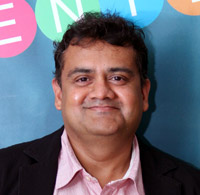
    Mr Prashant Panday
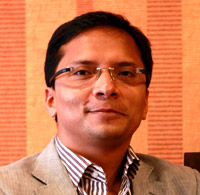
    Mr Rana Barua
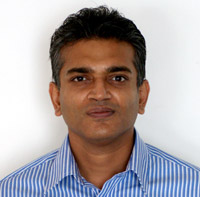
    Mr Harrish M. Bhatia
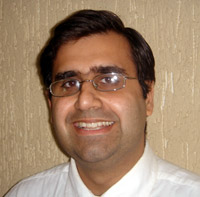
    Mr. Harshad Jain
    Mr. Ashish Pherwani

    Mr Prashant Panday, CEO, Radio Mirchi observed, “One main lesson from Phase I and II – Do not bid so aggressively that you can never recover your investments. Those who bid sensibly in Phase-II (very few) are making PAT profits this year. Those who did not are at best making EBITDA break-even. Some are still making EBITDA losses. These people sometimes feel overjoyed that they have turned EBITDA positive; but fail to realise that the returns on investments only start after you turn PAT positive. There are barely 4-5 years left for the licenses to get over. If a company is not PAT positive yet, it has no hopes of generating any decent ROI. This is the main learning from the first two phases.”


    “The 2nd learning is about being able to bring brands. But to build brands, companies need profits. So again, if you have bid wrongly, you don’t have enough resources to build brands. That’s what our research shows every quarter. That except for Mirchi and maybe one-two other brands in some specific cities, no other radio station has been able to build a brand. They may have listenership, but they still don’t have a brand. There are no attributes that people assign to these brands. No values that the brands stand for. Without a solid brand, listenership suffers. Pricing suffers. And long term profitability suffers” he added.


    In an earlier interaction with MxMIndia, Mr Rana Barua, COO Red FM said, “One of the critical learning that a lot of us had in phase I and II is not to overestimate the potential of the market. The biggest challenge that lies for all of us is knowing that uncertainty has become such a huge thing today, therefore I think a cautious approach is going to be extremely critical.”


    According to Mr Harrish M. Bhatia, CEO, MY FM, “What was witnessed in Phase 1 and Phase 2 is totally different than Phase III. The Phase-3 rollout will increase radio penetration, making it a pan-India medium, reaching tier II & III towns. The most important thing that the radio players need to keep in mind is to bid realistically.”


    Mr. Harshad Jain, Business Head, Fever FM had a different viewpoint, he said, “The regulatory amendments in phase III are ultimately expected to facilitate industry growth.  FDI has been increased and might drive some additional investment in the industry. I do believe that FDI should have been raised further to actually fuel growth and overall industry development. Another key change is to allow multiple frequencies in the same city but we will have to wait and watch how this rolls out in practice. Another key shift in policy is the e-auctioning route as this will take the license fee to new highs, especially for frequencies in metros like Delhi and Mumbai.”


    Mr. Ashish Pherwani, Associate Director, Advisory Services, Ernst & Young, has seven point suggestions to the FM players, some of them are  the key aspects that all radio companies need to address vis a vis phase III are: –


    1. “Which licenses to bid for-  How well the new stations complement the existing bouquet of stations in terms of tactical sales, the future revenue potential from these stations both from the point of view of generating local revenues and adding on to the revenue generating ability of other stations, etc.”

    2. “Bid values- The bid value should logically be based on the revenue generating ability of the station over its license period, and expected costs.

    3. “Alliances.  Some radio companies need to consider which stations to bid for on the assumption that they will form alliances with other networks that together will provide advertisers with national, regional or state-wide reach.  In addition, radio companies with existing ad sales.” In addition to these, “Trade licenses that add value to other networks, Using FDI effectively, Build better MIS and control mechanisms to prevent operational chaos and Focus on People” are some of his suggestions to the FM players.


    As one of the industry player said FM Phase-III is not the same as Phase I and II, true, but it is bound to have challenges of its own perhaps even more bigger and tougher. MxMIndia will focus next on the challenges for FM radio in Phase-III.

  • Movies Now: Riding high on popular titles

    By Tuhina Anand


    It’s going to be a year since Movies Now from the stable of Times Television Network launched in December last year. Ever since its launch, the channel has managed to upstage its competition, some of which have been in the business for much more than a decade like Star Movies and HBO and the newer players including PIX. What has worked in favour of the channel is its promise of an enhanced viewing experience because of being available on the High Definition (HD) platform, relying on popular titles, getting its distribution correct besides the backing of the Times conglomerate that definitely has helped in marketing the channel.


    Amongst the English channel category, it is the English movie channels that comprise 30 percent of the market share. This is the highest reach in this category.  The English Movie category also has a reach of around 29 percent of the total television viewers. These numbers definitely moves the genre which was earlier seen as niche to be highly influential hence even catching advertisers eye especially those marketing premium products because this is the category where the potential customers are on.


    With launch of Movies Now last year the category underwent a change especially because of the performance of the channel thus putting competition on their toes. The launch of the channel had catapulted the growth of the category from 50 GRPs to 72 GRPs and witnessed growth of 43 per cent. The category reach increased by 20 percent and now reaches out to 5.5mn individuals every week. Besides, Movies Now enjoys the highest viewer time-spent in the category, which is nearly double of other English Movie Channels.


    Talking about the success, Ajay Trigunayat, Channel Head, Movies Now, under whose  leadership, the channel has been charting success shares that his firm directive towards the channel’s Audience Management Plan included Content, Brand & Marketing and that has helped Movies Now break-through the clutter and carve a distinct identity in the mind of its consumers and a firm place in their daily lives, culture and ethos.


    He said, “Movies Now India is witnessing an ever increasing English speaking audience. Also, the target audience is no longer residing only in the metros and is now moving into the Tier 2 and Tier 3 cities. Thereby, we have a category which growing rapidly and demanding far more English content paving way for the new players in the market.”


    The talking point of channels success has been its limited but popular library. Kunal Jamuar, Head of West India and Executive Director, Mumbai at MPG India explains how he sees the channels growth. He said, “It has a limited library but good titles that has ensured first appointment viewing and later stickiness. I think they have consciously kept a limited library thus giving viewers the much more opportunity for stickiness so in that sense they have changed the paradigm for English movies category.”


    “However, I think going ahead they need to address larger demographics which I think is getting ignored like paying attention to various time bands and playing movies accordingly.”


    Rajneesh Chaturvedi of MEC Global, said, “Movies channel is primarily driven by its title where Movies Now has scored well. They have managed their distribution well so in a year’s time they have done well for themselves and the category. Going ahead, they have to keep on adding popular titles which they have been doing currently to get viewers to stick to the channel.”


    INTERVIEW


    ‘Providing the best to the viewer’: Ajay Trigunayat, Channel Head, Movies Now

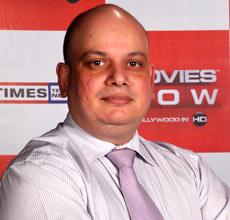
    Ajay Trigunayat has been instrumental in conceiving & nurturing the launch of Movies Now – Hollywood in HD, the English Movie Channel from the Times Television Network. Prior to Movies Now, he has worked with Media Agency Middle East, Dubai as CEO (2006-07) handling Sales, Event Management & Broadcast, Brand & Marketing for the Arab Youth Football Championship. He has spent 4 years at Zee Telefilms Ltd. and was the driving force behind the re-branding of Zee English, Zee MGM to Zee Café and Zee Studio in 2004 – at the same time re-vamping the content through key strategic partnerships with Disney, Warner, Sony, Fox and Universal.

    Mr Trigunayat has spent a decade in Advertising agencies honing his Brand and marketing skills across Rediffusion Y&R , Lintas and Contract. Here, Mr Trigunayat in conversation with MxM India offers a peek into the working and success of Movies Now.


    Q: How do you see Movies Now poised amongst competition in this category?

    Movies Now has achieved category leadership from the very launch day itself; and is the leader across all channels, across weekdays, across weekends, across day parts and despite 2 key cricket events (World Cup and IPL) the category viewership has grown by a whopping 80%. Our reach has nearly doubled for the category from 36 mn viewers per week to 60 mn + viewers today and Time Spent per viewer has grown from 35 minutes per week to 55 minutes per week!

    We have excellent feedback from our viewers on the our HD picture quality, 5.1 surround sound, selection of titles and our overall look and feel.


    Q: What is the advantage that Movies Now has as compared to the other players in this category?

    Better Movies, Better Picture, Better Sound! Movies Now – Hollywood in HD is a

    complete sensorial treat. It is an exponentially better English Movie watching experience

    in India.


    Q: In terms of future growth for the channel, where do you see it coming from?

    Growth will come due to significantly better viewing pleasure, furnished through significantly better digital distribution; with government mandating CAS across all metros.


    Q: What has been the biggest challenge for the channel since its launch?

    Keeping up the good work and increasing the gap with competition!


    Q: How do you view the current trend of subtitling. Does it help in garnering greater viewership?

    No. Sub-titling does not lead to increase in viewership; but it does provide better comprehension to a large section of viewers who are not familiar with foreign accents.


    Q: In terms of acquiring new titles, what have been your top two priorities?

    Only one priority: provide the best to the viewer!


    Q: There are lot of repeats of a movie, what policy does Movies Now follow on this?

    We let the repeat pattern be decided by the viewer. Thus some movies have few repeats and some movies have many repeats.


    Q: To go beyond metros, what are the few pointers that the channel is following?

    Currently the significant chunk of viewership is delivered from Metros even though we are present across the 1 mn+ universe. We will extend distribution as the viewers across the country take preference to our category


    Q: What should we expect from the channel in times to come?

    Loaded Viewer Engagement with Hollywood in HD.
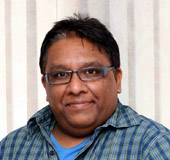
  • Bobby Pawar quits Mudra to join JWT as Chief Creative Officer & Managing Partner

    By A Correspondent

    It’s official. Mudra’s chief creative officer has moved. To JWT as chief creative officer and managing partner. Pawar has confirmed the development to MxMIndia.

    Pawar has been the creative force behind the agency’s several wins on the awards circuit over the last two years.

    Information on Bobby Pawar courtesy Mudra.com

    Bobby oversees the Mudra Groups creative product across all the four Agencies. Prior to taking over Mudra’s national creative responsibilities, Bobby had spent 7 years in the US market with BBDO Chicago and O&M New York.

    Bobby cut his teeth at Ogilvy and Mather India. He rose quickly from Senior Copywriter to Creative Director and worked on award winning campaigns for Tata Safari, Tata Sierra, Kelvinator, British Airways, etc.

    He is a two time copywriter of the year (Ad Club of Bombay – 1998, 2000). In 2000, he joined Ogilvy & Mather, New York as a Creative Director. There he worked on brands like Jaguar, American Express and Kodak. He helped pitch for AT&T Wireless and was asked to run the $600 million account when the agency won it.

    He re-launched AT&T Wireless with the much talked about mlife campaign. The launch spot ran on the 2002 Superbowl and ranked in the top three in the USA Today poll. Additionally, it was picked to be in the Museum of Modern Art. Moreover, one of the follow-up spots was spoofed by Jay Leno on his show.

    Bobby moved to BBDO, Chicago in 2004 as Group Creative Director. He worked with Marty Orzio, the CCO, to turn around an agency that wasn’t known for great work. He helped change the culture and the product. Now the shop is considered one of the hottest in the region.

    A stand up comedy buff, Bobby also loves photography and travelling.