Blog

  • Stand up and be counted against paid news!

    By Ranjona Banerji


    The best TV news programme I watched all weekend was the BBC’s Panorama on the August riots which hit England, with particular emphasis on the city of Manchester. As you might remember, the riots started in London over what appeared to be a clash between the police and residents of a locality over the shooting of a black man. However, it soon became clear that race had little to do with the rage of the citizenry as anger spread from city to city and then manifested itself in arson, looting and attacks on the police.

    Panorama concentrated on Manchester, how the police – who had spent officers to London as the capital was struggling – watched and waited. How many had little idea why the riots hit Manchester and how quickly they spread. How those who worked in the poorer areas – like Salford – were not surprised at the extent of the anger against the establishment.

    The programme spoke to the police, to some rioters and tracked the process of how video footage helped in making arrests. The home minister was also interviewed.

    However, there were no “general” experts who put forward any psycho-babble theories and nor did the reporter pontificate. Instead, here was an old-fashioned report, minus glitz and packaging. It made, perhaps obviously, for compelling viewing.

    I’ve heard endless theories, as have we all, about how TV news in India is in its nascent stages, how TV is all about rating points and can never look further and how sensationalism is the only way competition can thrive. But I have never yet heard or seen any competent research which proves that Indian TV news viewers are all uniformly dumb. In which case, surely once in a while, TV can allow some good journalism to sneak through?


    MxM partnered a film viewing and a seminar on paid news organised by Moneylife Foundation last Friday – paid news. Umesh Agarwal’s documentary Brokering News was a hard-hitting look at the scourge of our times – paid news. The film looked at the trend of media houses approaching politicians and political parties to sell them editorial space for positive coverage. The reader or viewer of course is not informed that the coverage has been paid for. This has become an across-the-spectrum practice during elections for four or five years.

    It has long been known that smaller newspapers particularly in the regional languages use their reporters to get advertisements as well as get stories. Sometimes, the information gathered is used to blackmail politicians and businesspeople to increase the newspaper’s revenue. Brokering News tells the story of Rakesh Sharma who decided he could not be used like this any more his employer – Dainik Jagran – and is now fighting a lone battle against the newspaper. Sharma pointed out that other newspapers – he named Dainik Bhaskar and Hindustan among others – were also involved.

    The film looked at corruption in the sports and entertainment sectors of journalism and ended with the Niira Radia tapes and its impact on the media. It was interesting to see Rajdeep Sardesai of CNNIBN, who was interview in the film, damning the practice of cosying up to PR people or subverting the cause of journalism and then copping out when it came to actually taking on the people exposed by the tapes. The biggest fish caught in the net were of course Barkha Dutt, Vir Sanghvi and Prabhu Chawla.

    The film should be seen by every journalist. There was a bigger caveat I think to the media, which can sometimes become too complacent. The film played to a packed audience, with standing room only in a hall which seated about 300. For a documentary, that is remarkable. The media ought to take heed that the general public is not completely oblivious to its shortcomings. The warning signals are quite visible.

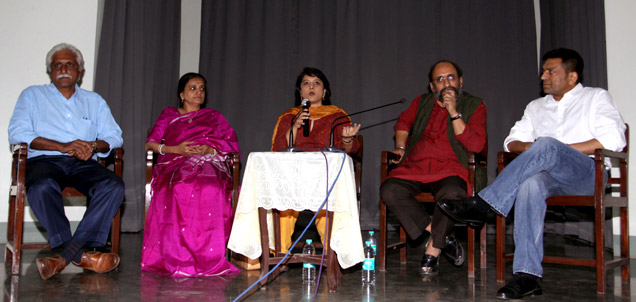
    I think those of us who are not caught up in the seamy side need to come out and speak out, with more strength. The panellists – Paranjoy Guha Thakurta, Ayaz Memon, Bhawana Somaiya, Umesh Agarwal – and moderator Sucheta Dalal examined and slammed paid news and acknowledged the degradation in the media. Now we need more.

    eom

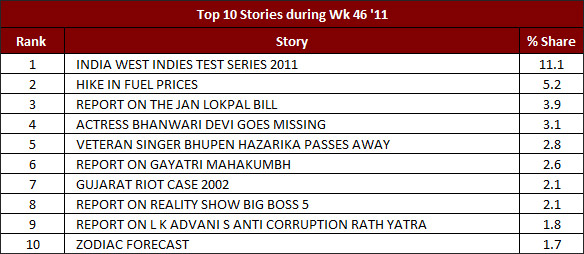
  • NCT Data Wk 46 ’11

    Source: News Content Track – A service of TAM Media Research Pvt. Ltd

    Channels: Aaj Tak, CNN IBN, Headlines Today, IBN 7, India TV, NDTV 24/7, NDTV India, Star News, Times Now, Zee News & News 24

    Period: Wk 46 – Nov 6 to Nov 12, 2011

    Note : Analysis is based on the telecast duration


    About TAM Media Research


    TAM is a joint venture between Nielsen Company & Kantar Media Research. Besides measuring TV Viewership, TAM also monitors Advertising Expenditure of Television, Print & Radio through its division AdEx India. Since 2004, it extended its presence in the PR Measurement & Analysis space for Corporate/Marketing Clients by setting up a separate division Eikona PR Measurement.


    In 2007, the joint venture introduced RAM (Radio Audio Measurement) service to track Radio Listenership for the Indian Radio Broadcast Industry. In year 2009, TAM launched a division, called TAM Sports that specializes in monitoring Sports Sponsorship ROI.


    TAM Media Research’s objective is to fuel media insights that will drive the growth of the Indian Media Industry.

  • Is Bobby Pawar quitting Mudra?

    By Amit Bapna


    It seems more or less certain now – the first big exodus from the Mudra group after the Omnicom-buyout may soon happen with Chief Creative Officer Bobby Pawar likely to hang in his boots and move from the agency that he joined in 2007. The industry has been buzzing with his imminent move for some days now.


    His next destination, according to industry sources, is JWT, one of the two big agencies of the rival group WPP in India, where he could be donning the hat of the chief creative officer. To an ET email, Colvyn Harris, CEO of JWT India, replied , “It’s still a rumour. If it were to happen, we will send you a mail.” If he does join JWT, Pawar’s most important task could be to help the agency’s Delhi office regain some of its glory, which has been perceived to be losing on people and accounts in the past few months. When contacted, Pawar refused to comment. Sources also said that Mudra is trying to retain Pawar and has made a counter offer.


    This would not be his first stint with Sir Martin Sorrel’s global network, but it surely is likely to surprise many industry-guys, considering his stint at Mudra has been a fairly awarded and rewarded one. At Mudra, Pawar’s mandate has been overseeing the group’s creative product across all the four agencies (Mudra India, DDB Mudra, Mudra Max and Ignite Mudra). Prior to taking over Mudra’s national creative responsibilities, Pawar has had a varied creative stint.


    Source:The Economic Times

    Copyright © 2011, Bennett, Coleman & Co. Ltd. All Rights Reserved

  • The Anchor: 5 reasons why broadband internet will grow in India

    1. Better devices
    2. Ease of use
    3. Better connectivity
    4. The pricing at which the broadband in now available – the government of India, BSNL has been doing a lot to get pricing and affordability in play.
    5. People coming onto the web is the effective reason. The fact that more and more services are available on broadband will also result in better broadband services.


    The broadband penetration is bound to grow, there is no two ways about it. Take for instance China, five years back China was around 100 million internet users, four years down, now it is at 450 million internet users. It has an extremely high penetration of mobility but its broadband continued to grow because infrastructure rollout has happened, ease of use is there from a connectivity perspective. Therefore I am opportunistic about the fact that broadband will continue to grow in India.


    Siddhartha Roy is the COO, Consumer Business & Allied Services, Hungama Digital Media Entertainment.

  • AdStrat: Birla Sun Life leaves nothing to fate

    The Campaign: Birla Sun Life Insurance Protection Solutions Campaign

    The Client: Birla Sun Life Insurance

    The Agency: JWT

    The Brief: The campaign objective is to reiterate the philosophy to leave nothing to fate. The communication would center around the proposition of fulfilling responsibilities towards one’s loved ones. The tonality and messaging of the TVC and the campaign throughout is both empathetic and a friend who knows what’s best for you, thereby attempting to move him into action, more effectively

     Any specific advisory from the client: Manage the task of sensitizing the consumer to the uncertainties or fragility of life without putting them off.

    Research insights:  Consumers today are becoming more confident and optimistic about their achievements. They have the zest to achieve everything, however there are little efforts towards securing or insuring these achievements against any unforeseen circumstances. Thus it was observed that there is a further need to infuse a sense of urgency towards insurance planning and protection in the otherwise optimistic, confident Indian consumer who tends to leave his dreams to fate/destiny. The average Indian’s apathy and inertia is evident from the fact that the pure protection category merely contributes to just 3% of the total industry premium. This brings to fore the reality that a large population base is leaving their dreams to fate or destiny.

    The thought process behind the creative: The communication aims to create an emotional connect and empathy with the aam aadmi, by showing a slice of life situation which can happen with any young couple staying in metros or small towns. They share each other’s dreams and are thinking about their future, which they are eagerly looking forward to – just when they come face to face with the unpredictability of life.

    Media vehicles chosen: The TVC has been on air since November 04, 2011 and is being played across all leading television channels. In the time to come you will witness an array of initiatives that will help BSLI reach out across the country with the theme of ‘safety, security and protection’. These will span television, radio, outdoor, below the line and digital media.

    Key issues kept in mind while executing the ad: The attempt here is not to challenge the consumer’s confidence (and switch him off), but sensitize them in a thought provoking way that spurs him to act.

    Does the treatment do justice to the brief? The commercial certainly breaks clutter through its neat execution. It is based on a very thought- provoking insight – can you leave your dreams to fate? There is a moment in the film that shakes the viewer into thinking. On a day just like any other, a young couple narrowly escapes a brush with death. Call it luck by chance, destiny or fate; it does shake up the couple in the film and the viewer. The differentiating factor of the ad is its very real and slice of life feel. There is absolutely nothing ‘ad-dy’ about the ad. The couple are just like any young couple with dreams, the day is just like any other, but then something happens that makes it a day very unlike any other.

    Differentiating factor: Everything about the ad is natural and candid, and it still succeeds in driving home the point. Natural acting,  no stars, a sudden realization through the shock and a simple message ‘Kahin aap apne sapno ko kismet par to nahi chor rahe’ towards the end, makes it an appealing and relevant communication. The ad carries an emotional realization for everyone including individuals from towns and villages who come to cities with big dreams and aspirations but tend to ignore something like insurance and their own protection

    Campaign credits

    Creative Agency:                                         JWT India

    Director for the film:                                    Amit Sharma

    Production House:                                      Chrome Pictures

    Media Planning:                                          Mindshare

    Language:                                                   Hindi / other regional

    Duration:                                                     45 seconds

    National Campaign Launch:                         4th Nov, 2011

    JWT Team that worked on the film:

    Creative: Tista Sen, Nandita Chalam, Dipesh Kowarkar, Siddharth Joglekar, Kunjika Talpade

    Servicing: Samarth Shrivastava, Swati Bobde, Vineeta Sukhija, Amita Servaia

    Planning: Rajesh Mehta

    [youtube width=”400″ height=”250″]http://www.youtube.com/watch?v=0RTwNe38qls[/youtube]
    [vimeo width=”400″ height=”250″]http://vimeo.com/31714764[/vimeo]


  • Debrief: A wing and a player

    By Anil Thakraney


    Many experts (and non-experts!) have given us their views on the Kingfisher airline mess. Many reasons why the airline is in trouble have been speculated upon. And all this while the man in the hot seat, Dr Mallya, only posts pissed-off tweets. But doesn’t tell us what really is going on.


    Here’s my theory, and I put it out despite the fact that I know as much about the airline industry as Rakhi Sawant knows about nuclear physics. And I do so because I believe the main problem isn’t really about the business itself, it’s about branding.


    Yes, Mallya and gang have messed up on the running of the company. Yes, they could have handled flight scheduling better. Yes, they should have hired better talent at the top, and yes, the government’s unhelpful policies have added to their woes. But the real problem is that Dr Mallya has fallen into a self-created trap. Because the Kingfisher airline is a brand extension of the high selling and very profitable Kingfisher beer, it must carry forward the brand values of the latter. Any deviance from those would hurt the beer brand, because they share the same identity.


    Now, Kingfisher beer is synonymous with good life and high living. And has been so for many years. If the airline goes totally cheap and down-market, it runs contrary to the mother brand’s values. I suspect this is the battle that Dr Mallya lost, because it has conflict embedded within. With the downturn in the economy, spiraling cost of fuel, heavy taxes on airline travel and some serious competition in the sector, downgrading Kingfisher airline, cutting off all the frills, was the order of the day. What Dr Mallya did instead was to spend more on comfort, food, service and entertainment. And sent the operational costs crashing through the roof. He HAD to do this because the Kingfisher brand = Good life. He had no choice. Dr Mallya cuts the good life on the airline, it comes straight back to haunt his cash cow Kingfisher beer.


    Make no mistake about this: Dr Mallya is no spring chicken when it comes to dhandha, he runs a massive, very profitable liquor empire. He knows a lot about costs, revenues and bottom-lines. Where he went wrong was in the branding strategy. That trapped him big-time. He ought to have coined a new, independent brand name for the airline. A stand-alone brand that fights its own battles and is unburdened of any legacy. In which case Dr Mallya could have taken tough decisions on his airline. He could have gone really low-cost, and may well have been saved from the miseries he’s facing today.


    Perhaps he should have called it ‘Deepika’ airline. His equally flamboyant son would have approved! 🙂


    ***


    PS: Very happy that the media left Baybee Bachchan alone. Maybe Justice Katju has got to them. Maybe the broadcast editor’s guidelines were taken seriously. Maybe an earlier post from me opened their eyes (hee hee). Whatever. But this incident could well be a turning point for Indian journalism. Let’s hope so!

  • All set for Effies on Dec 14

    By Tuhina Anand


    The Advertising Club Bombay is gearing up for the judging that is slated to take place this week for Effie 2011. The Effie awards recognize effective advertising is slated to take place on December 14, 2011 in Mumbai.


    Ajay Kakar, CMO – Financial Services, Aditya Birla Group and Chairman Effies Committee, Ad Club Bombay said, “As a Marketer I view the Effies as the most coveted awards platform, because it recognises work that works – for the brand and the business. It is also the only award that is given to both the agency and client. With regards to the format, this year we have given greater focus and recognition to a wider number of categories. Also, as a first – we are going to have the judging take place in Bombay and Delhi.”


    What is different this year that the Round One of judging which has traditionally taken place only in Mumbai will also be happening in Delhi this year. The Mumbai judging will take place on November 22 and 23 whereas the Delhi round will happen on November 29. The Round Two will only take place in Mumbai.


    Talking about the development, Bipin Pandit of The Ad Club Bombay said, “The Advertising Club Bombay is a national entity and not just Mumbai-centric. We want the club to spread its wings and believe that it should include players from the industry across.”


    This year almost 275 entries are expected and if the number seems low then one must understand that each entry costs Rs 21000 hence the quality of entries is highly superior. The awards will be given in 15 categories. “This year I do expect the number of entries to exceed the record of last year and I see the entries come from a wide spectrum of agencies and brands, across categories,” added Mr Kakar.


    The awards are the only ones that involve client as well as the agency and are given to advertising that has worked in the marketplace. The Effie Case studies are also most sought after and will be presented as part of the event. Besides, there is an impressive line of marketers and account planners on board who will be judging the awards.


    Times TV Network and Marico are the Associate Sponsor for Effie 2011 whereas Brand Equity is the Category Sponsor for Bravery Awards.

  • Be cautious in slow market: Rana Barua

    By Robin Thomas


    The government has enhanced the foreign investment limit in FM radio to 26 percent from the earlier 20 percent. E-auction for FM phase III is reported to have received a nod from the Union Cabinet. Multiple frequencies if allowed will bring different genres of FM station in the same city, the overall media spends and advertising revenue in radio will see humongous growth. FM stations will soon be allowed to air news although not independent of the government owned AIR (All India Radio), nonetheless it seems good times are ahead for the Indian radio industry.


    While the FM phase III rollout has moved a little closer to reality, there is always something to learn from past experiences, even for the Indian radio industry. MxMIndia tries to find out one of the critical learning for the radio industry in FM phase III from the earlier phase I and II. In conversation with MxMIndia, Mr Rana Barua, COO Red FM observed, “One of the critical learning that a lot of us had in phase I and II is not to overestimate the potential of the market. The biggest challenge that lies for all of us is knowing that uncertainty has become such a huge thing today, therefore I think a cautious approach is going to be extremely critical.”


    “We should be completely taking cognizance of the fact that there is definitely a slowdown, the clients, advertisers and everybody else is extremely careful about the money they are investing in any form of medium. Taking things for granted and creating business plans for the next two three years seems like a passé now. It is more like making a business model and reviewing it every month” he added.


    Mr Barua also shed some light on how Red FM is gearing up for FM phase III. He spoke about Red FMs cautious approach and its keen interest in participating in FM phase III. “We are still weighing the pros and cons but, yes we will be seriously involved in phase III. We are very clear that we would like to be in most of the markets which will have some kind of ROI but, we will weigh the pros and cons, we will see the costs and we will be extremely cautious about the approach. We are looking at towns where we are not available and which are important for the advertiser. So we are definitely looking at this as one of our strategies” explained Mr Barua.

  • Corruption a symptom of governance: Mark Tully (Video Report)

    By Shruti Pushkarna


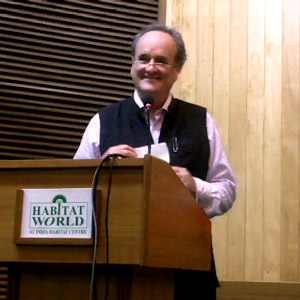
    Almost twenty years after he wrote ‘No Full Stops in India’, veteran journalist Mark Tully unveiled his latest addition to the India series, ‘Non Stop India’, in the capital on Saturday, November 19. Addressing a packed hall of avid readers, Mr Tully confessed that he was most nervous about talking to the Delhi audience. Citing an Indian cricketer’s concern, he said, “It’s hardest to play against a home crowd, and Delhi is very much my home and all of you all will be my severest critics.”


    Mr Tully also confessed that he didn’t want this book launch to be another one of the mutual admiration sessions that these things are often brought out to be. He admitted, “We journalists are actually very good at having self-congratulatory sessions.” He said he was delighted that his old friend, Karan Thapar, agreed to join him, “…as Karan would be the last person to give me an easy ride.”


    Acknowledging that much has changed in terms of how India looks at itself as well as how it is looked at in the international arena, since he wrote ‘No Full Stops in India’, Mr Tully said, “I think the danger in the Indian story, and this in a way is the point of this book, is that it can lead to ‘jugaad’, the concept that we are going to get there anyhow, so why do we worry about the problem which we have. It’s like the gentleman who I once met, who I asked, what does he think about India and he said, ‘Main bhagwan main bharosa karta hoon.’”


    [youtube width=”400″ height=”250″]http://www.youtube.com/watch?v=iUgdUEPanZA[/youtube]

    Known for his love and admiration for this country, Mr Tully also confessed to his audience that he didn’t find himself very settled in Britain so he thought that maybe his ‘karma’ has landed him here.


    Defending his work against one criticism made by Outlook reporter Pavan K Varma where the latter said that he would have liked Tully Saheb to leave the safer shelter of an observer and give his own views far more robustly, of what is wrong or right with India, Mr Tully said that it’s not entirely a negative book and it does warn about problems which lie ahead. He also added that for one to be able to criticize, one has to be extremely understanding and sympathetic of the issues at hand.


    Quoting a journalist who once said, ‘these are my conclusions on which I base my facts’, Mr Tully hoped that this book produces some facts which contradict some commonly held conclusions. A few of those that he has written about in this book include, the problem of Naxalites, the Dalit situation in the country today, the issue of privatization and the problem with ministers pouring money into troubled areas, like Kashmir. He said, “Overall the story is really about governance, something that you all hear about now. And I hope the story makes the point that this corruption that we are so concerned about, is, I think and many of the stories suggest this, more like a boil…boils are created by blood poisoning, they are not the blood poisoning themselves, they are a symptom rather than what is going wrong, And corruption in my view is basically a symptom of governance which needs reform.” Adding on, he said, “…And that’s why I fear that this whole Lokpal campaign. Yes maybe Lokpal will be a help but it would be more of a problem if everyone then sits back and says we’ve solved the problem, everything’s all right.”


    When asked how much of a problem was the Prime Minister himself, Mr Tully unswervingly admitted, “I think the PM has a major problem because we all know where the power lies very often and it’s not necessarily the PMO and we also all know that Manmohan Singh for all his many qualities, is not basically a politician who has grassroots experience. And in my view one of the problems with the Congress party is, at the Centre most of the people are not really grassroots politicians.”


    Probing him further on the issue of governance, Karan Thapar asked him whether the problem actually lies with Sonia Gandhi. To which Mr Tully candidly replied, “I think the difficulty and the problem with Sonia Gandhi’s position is that too much influence lies there when in fact it should lie in the PMO.”


    While Mark Tully spoke at length on the first two chapters of the book that concern the problem of Naxalites and Dalits in the country, he also remarked on the recent criticism of Indian media made by the Chairman of Press Council of India, Justice Markandey Katju. Mr Tully said, “I think that one thing that we should look at is, we are culpable as journalists because we don’t stand together, we don’t fight for our right to do our job, we are meant to be the professionals who know what goes on television screens, who should know what goes into newspapers and yet all the time we allow ourselves to be dictated to, by managements who basically have interests other than putting out the news in a readable and a fair and balanced way. And this is the problem everywhere. This is the problem which gives rise to this continuous obsession with breaking news and rolling news on Indian TV.”

  • Upclose with Paid News


    By Johnson Napier


    Imagine being told by a news channel or a newspaper that the minister you voted for was as right a choice as could be or that the zonal officer from your local municipal ward has done an inimitable task or that the food that you consume from a particular brand has the ingredients to unleash the hidden potential out of you or even better, that if you carry out an assignment on an auspicious day as predicted by the pundits your fortunes would change forever…? You’d fall for the bait, right? If not all, a majority of the consumers would be taken in by the promises being unleashed as the source that it is coming from couldn’t be doubted in the least. But that is the irony. From being the messengers of truth and entrusted with the task of upholding the morals of society, the fourth estate of India’s democracy is increasingly being looked upon with uncertainity. And there is every reason for readers’ and viewers’ apprehensions, as docu-filmmaker Umesh Aggarwal would want us to believe.


    Presenting his take on the sorry state of affairs prevailing in the print and news broadcast sector, Aggarwal presented a one-hour documentary titled ‘Brokering News—the inside story of paid news.’ The film is the initiative of the Delhi-based non-governmental, not-for-profit Public Service Broadcasting Trust (PSBT). The event was held at Mumbai’s Madame Cama Hall and was organised by Moneylife Foundation and Citizens Action Network with the support of industrialist Cyrus Guzder. MxMIndia was the media partner for the event.


    Being the first of its kind initiative on the sector, the documentary provides a harsh outlook on the filthy mannerisms being employed by most prominent newspapers and news broadcast houses where consumption of news is concerned. Spanning the streams of politics, business, sports and entertainment the film addresses a significant challenge facing Indian democracy today—which is the state of its media. The film looks at three aspects of paid news—how politicians are paying for positive coverage during elections, with the result that those who don’t pay are blanked out by the media; how the coverage and reviews of movies are orchestrated and paid for and of course, paid news about business and industry. It depicts in detail how journalists were forced to broker deals to offer editorial coverage to politicians.


    Following the screening, the event headed for a lively panel discussion and comprised of the following notable panellists: Umesh Aggarwal, director of News & Entertainment Television, Ayaz Memon, veteran journalist and currently consulting editor at IMN News, Paranjoy Guha Thakurta, educator & commentator, Bhawana Somaaya, noted film critic and columnist and Sucheta Dalal, Trustee of Moneylife Foundation and Managing Editor of Moneylife Magazine.


    When left to express their initial comments on the screening, Paranjoy Guha Thakurta began by highlighting the last action that was shown in the documentary – the disqualification of a local MLA from one of the constituencies in the North by the Election Commission of India because of the malpractice the individual resorted to with the help of the media. “It was the first ever such judgement that was carried out by the ECI and we hope to follow that when a judgement is pronounced on the former chief minister of Maharashtra Ashok Chavan.” According to Mr Guha Thakurta, while SEBI has made it mandatory for news and print houses to disclose their relationships and dealings with corporate hoses and influential individuals, there is still no transparency on such a ruling as nobody has even challenged the visibility or the outcome of this ruling as yet. “We hope to do a lot more and see a lot of action going forward.”


    Sucheta Dalal began by questioning the level of dishonesty that existed in business journalism. “Having worked as business journalist myself for many years, I can say that most of the stories that appear in newspapers are advertising-driven. And the sorry part is that it is a trend that is gaining ground with nobody doing a thing about it. I haven’t even heard of reports of anybody approaching the RTI for finding information of such corporate dealings with the business news organisations.”


    Probably, the most straightforward answer was unleashed from Ms Somaaya who vouched that in her entire career spanning over 30 years, she has never resorted to the concept of being entertained at the gesture of the entertaining parties. “I am an idealist. I can proudly state that I am not the same as the others in the space. Even today, there is a place for ethics and integrity in journalism,” she quipped.


    Presenting his rationale on the tale, Ayaz Memon asserted that there was a turmoil being currently witnessed in the media sector what with the explosion of several mediums in the space. “As a result there are not enough checks and balances leading to dangers lurking in every nook and corner of the business.” Citing the example of cricket, Mr Memon went on to describe the state of affairs of players who played in the earlier days and how they were paid minimal dues to the players of today who aspire to be paid huge sums. “This has led to match-fixing and spot-fixing being introduced to the sport today. While it is still not as widespread as is made out to be, the danger of such things going unchecked is huge.”


    When questioned by a member from the audience on which is the bigger worry – watching damaging news versus news that is paid for and how to distinguish between the two, Ms Somaaya reverted by stating the practice that she follows when reviewing films. “I’ve always refused offers for special screenings as after they lavish you with undue attention they expect that you judge the film in their favour. Reviewing films has become a big business today and one cannot predict the veracity of the reviews that get published.”

    Mr Guha Thakurta added here that it was largely the media that has played a huge role in giving damaging news or news that is paid for. “The need of the hour is to amend the Act and make paid news a cognisable offence.”


    Mr Aggarwal added here by saying that “we have our priorities misplaced. We need to figure out what kind of news gets featured and whether it is a pertinent one.” He cited the classic example of the small kid Prince that was covered live on almost all television channels for three days but another important news of 57 miners being trapped underground the same day was totally missed by everybody.


    Proceeding to the immediate solutions that were required to be taken by the industry, Mr Guha Thakurta called for an underlying need to have a regulation in place. “The thing about self-regulation is that in most cases it is not an effective thing to do. Recently there were two channels who were questioned for showing obscene content but what about the judgement? The problem is that we do not have an independent regulatory body which could govern and control the media; a body that acts as a statutory ombudsman for the electronic media.” Continuing further, Mr Guha Thakurta said that the issue was also how we strengthen the defamation laws in the country. “We need to go beyond individuals and focus on the systems. That should be the immediate priority.”


    Ms Dalal stated here that it was essential that media houses portray the right picture and not otherwise.”Most media houses are going in losses amounting to several crores of rupees but they are putting up are brave front and are getting help from the media to hide their plight. The owners need to question themselves as to what is it that we are doing to broadcast the right news?” Summing up, Mr Memon added that “we don’t live in a perfect society. It’s a time-bound initiative and will require the industry to come together and fight the menace.”

  • Ten Sports gets hockey deal till 2014

    By A Correspondent


    Ten Sports has entered into a long-term partnership with the International Hockey Federation to acquire the broadcasting rights for the major FIH Championships till 2014. As part of the agreement Ten Sports will be broadcasting over 50 India-playing matches the next four years from major men’s hockey tournaments from around the world.


    Atul Pande, CEO Ten Sports, said, “Our long-term agreement with FIH reaffirms our commitment to bring  the best sports action to our viewers, and this new agreement for telecast of the best of men’s hockey, Champions Challenge and Champions Trophy, reaffirms our commitment to grow the sports business and consolidate our position as the leading sports broadcaster.”


    Leandro Negre, FIH President, added, “We’re delighted to extend our long-term partnership with Ten Sports for a further four years.  This deal is of unprecedented value to FIH, not only in terms of the record license fee, but also for us to guarantee hockey fans and FIH sponsors unparalleled exposure for the world’s best hockey events on the subcontinent’s most-watched sports channel.”

  • Sanjay Kailash is ESPN’s EVP, Head of Sales (India)

    By A Correspondent


    Sports content provider ESPN STAR Sports (ESS) today announced the promotion of Sanjay Kailash to Executive Vice President & Head of Sales (India) for its India operations, ESPN Software India (ESI).

    Mr Kailash will have an expanded role with the overall responsibility of delivering revenue for various streams of the business including Advertising, Affiliate Sales, Digital Media and Event Management Group. He will continue to report directly to ESI’s Managing Director, Aloke Malik.

    Said Mr Malik: “As we further scale up our business in the market with new networks and offerings, we see great potential in bringing more synergy across different revenue functions. This will allow us to explore more opportunities and develop focused propositions for our business partners. Sanjay’s in-depth knowledge and cross-industry experience will help ESPN Software India further reinforce and broaden its business in the sub-continent, and I believe the organization will benefit from his contributions through this new role.”

    Mr Kailash has been with the company for over 10 years, having made significant and consistent contributions to the Ad Sales function. Most recently, Mr Kailash led the ICC Cricket World Cup Ad Sales effort and set new benchmarks in the media industry. In addition to Mr Kailash’s Ad Sales experience, he has developed a deep understanding of the various facets of this business, and forged strong relationships with clients and key associates over the years. He has been keenly involved in the Programming & Scheduling aspects of the business and contributed to the start-up of the Event Management Group in India, as well as growing the Digital Media business for the company.

    T S Panesar will continue to head Affiliate Sales including both Cable & DTH business and Ad Sales will be led by Anup Govindan, both of whom will report to Sanjay Kailash.

    ESPN STAR Sports India’s content line-up includes major sports events across the globe, such as the top cricket rights for premium International Cricket Council events, the successful Champions League Twenty20 as well as international and domestic cricket from Cricket Australia and the England & Wales Cricket Board; Grand Slam tennis events including the season-opening Grand Slam of the Asia/Pacific in the Australian Open along with the iconic Wimbledon Championship; top quality football in Barclays Premier League; premium motorsports events in Formula 1 and MotoGP; the Golf Majors such as The Masters, US Open and The Open Championship, in addition to the highly-anticipated London 2012 Olympic Games scheduled to begin in July next year.