Blog

  • Staff restructuring @ Turner

    By A Correspondent

    More than two decades after launching with pan-regional CNN and Cartoon Network services, and having grown to 23 channels and 29 websites in nine languages, Turner Broadcasting System Asia Pacific (TBSAP) is to realign its structure to reflect its considerable business outside of Hong Kong. The large, geographically-diverse Asia-Pacific region has over the years become a combination of distinct sub-regions, each with its own characteristics, business imperatives and growth challenges. In order to pursue the network’s ambitious new goals in an increasingly dynamic and fragmented Asia-Pacific region, TBSAP is to rebalance its resources to better seize the exciting opportunities in these territories of North Asia, South Asia and Southeast Asia/Pacific, each of which will come under a new management structure.

    Mr Steve Marcopoto, President and MD TBSAP, commented, “The driving principle behind our new set-up is to provide ownership and accountability to each Asia-Pacific sub-region in pursuit of growth. To better align us to meet the challenges and opportunities of these distinct markets in the years ahead, business will be run out of each sub-region with Hong Kong oversight and support.”

    Individual roles of the TBSAP executive team are to be realigned as follows: Mr Sunny Saha becomes SVP & MD Entertainment Networks, TBSAP, and takes on expanded responsibilities on strategic planning across the company, while continuing to oversee the functions in Hong Kong that support TBSAP’s new sub-regional operations. Mr Saha will also directly manage the company’s entertainment networks in Southeast Asia/Pacific, with the support of Mr Robi Stanton who assumes the role of GM, Networks Australia and New Zealand. Mr Saha will remain as TBSAP’s lead executive for all activities on global properties such as Cartoon Network.

    Mr Anshuman Misra will become SVP & MD of Networks and Content Distribution (NCD) Asia-Pacific, taking on full responsibility for Turner’s content sales business across the region. He will also assume responsibility for syndication sales.

    The North Asia region will be managed by Yew Ming Lau who will assume the new role of SVP & MD, North Asia. Mr Siddharth Jain will assume management of South Asia as SVP & MD while Ms Monica Tata, as VP & GM Networks, will now manage all of Turner’s India networks with the assistance of dedicated business heads reporting to her. The team at Imagine, until some months back headed by Mr Sameer Nair, will report to Ms Tata.

    In light of the increasing priority of CNN International News Source, Mr Ringo Chan will devote his major focus to this pursuit as SVP, CNN Broadcast Sales & Affiliate Relations, while maintaining his responsibilities for NCD in Greater China as well as the important liaison work he conducts for TBSAP with the PRC.

    Mr Jeremy Carr will assume important additional responsibility for growing TBSAP’s digital entertainment properties as VP Entertainment, Digital & Adsales.

    Finally, Phil Nelson will assume full regional responsibility for Business Development as VP of Business Development, Asia Pacific.

    These new operating arrangements will take effect immediately.

    “We have the best management team in the business and our new approach will focus each of our executive resources more deeply on specific areas, rather than across the entirety of the substantial and complex region of Asia-Pacific,” Mr Marcopoto added. “This is a positive, forward-looking, strategic and long-term initiative to continue to grow Turner Asia and deliver optimum performance to better seize exciting opportunities in the years ahead.”


  • 26/11 Mumbai attack: HR practices converted ordinary Taj employees into heroes

    By Saumya Bhattacharya


    In the weeks that followed 26/11 – the day on which rampaging terrorists killed some 150 people at 10 locations in South Mumbai, including 11 employees of the Taj Mahal Palace hotel – Mr Ratan Tata made visits to some of the bereaved families. The chief of the Tata group, which owns the Taj via group company Indian Hotels, met a woman who pointed to the garlanded figure of her late husband and said: “My children never realised their father was a hero.” It took Mr Tata by surprise, as he expected to encounter anger and sorrow.


    The above anecdote is narrated by Mr Rohit Deshpande, professor at Harvard Business School (HBS), who was interviewing Tata for a five-part video case study on crisis management at the Taj during 26/11. Mr Deshpande started to teach the course at Harvard from October 2010. His students, especially non-Indians, were transfixed by the topic and were incredulous why employees were willing to give up their lives when they had the option to flee.


    The student reaction prodded Mr Deshpande, along with Ms Anjali Raina, executive director at HBS India Research Centre in Mumbai to delve deeper into the HR practices of the organisation. The uncommon valour of those who worked at the Taj convinced the duo to research the human resource (HR) practices of the organisation. After all, here was an extremely rare case of employees placing the safety of guests over their own well-being; and in the process some of them sacrificed their lives.


    “We wondered whether the HR best practices made them do this and decided to dig deeper into the HR processes,” said Mr Deshpande, while Ms Raina added that: “It was intriguing to unpack the Taj approach to HR and speculate on the linkages between the hotel’s HR policies and practices and the customer service experience.”


    The research of Mr Deshpande and Ms Raina spanned more than a year. They began by asking for manuals, wondering if there was training given to these employees for an incident like this one. There was none.


    An intrigued Mr Deshpande started to research the HR practices of the company and found three pillars of practices that explained the courage and actions of employees: A recruitment system that hires for character and not for grades; training programmes that not just mentor employees but also empower them to take decisions; and a reward programme that recognises employees on a real-time basis.


    “I teach both MBA and executive programmes. In my experience, these practices have been unique,” Mr Deshpande said. Just one aspect- that of recruiting from small towns and recruiting for attitude rather than grades – was unheard of, he added.


    This research is interspersed with tales of employee heroism – a 20-something banquet manager helping guests escape; telephone operators staying at their posts and alerting guests to stay indoors; and staff forming a human shield to protect guests at the time of evacuation.


    One executive chef at the hotel told the researchers that other groups have tried to hire him, but he refused to go. Reason: There is a connection with the guests.


    Generations have come to the Sea Lounge for matchmaking and weddings are celebrated in the Crystal Room; and waiters have been serving people for generations, the researchers were told.


    “(At a time when) we are hearing so many stories of human frailty, mismanagement, moral turpitude, the Taj research is about ordinary people who became heroes. It’s about leadership from everywhere, especially leadership from below,” said Mr Deshpande.


    The research will be published in HBR’s December 2011 issue. The context for the students and organisations is to learn about HR practices that have been put together on unique criteria, said Mr Deshpande.


    The culture of employee-empowerment has been ingrained in the Taj workforce for some time now. For instance, the researchers found similar displays of gallantry at the at the Taj properties in Maldives at the time of tsunami in December 2004. “I realised that just like the character of a human being is the sum of choices made over the years, the culture of an organisation is the sum of values, policies and practices consciously fostered over the years,” said Mr Raina.


    Source:The Economic Times

    Copyright © 2011, Bennett, Coleman & Co. Ltd. All Rights Reserved


  • Phase III countdown: ‘Overbidding will kill stations’

    By Robin Thomas

    FM radio listenership has more or less remained stagnant for a while since the completion of FM phase II. The soon to be launched FM phase III may have therefore brought some respite to FM stations across India. For some phase III is an opportunity to expand their listenership reach to newer cities and towns, yet for others it becomes an opportunity to further consolidate their position within a particular state/region. If Multiple Frequencies are allowed, it will introduce different genres of FM radio within the same city, thus encouraging new listeners to tune in.

    The drawback however would be the marginal FDI increase in radio to 26 percent from the earlier 20 percent. This marginal increase in FDI will probably discourage investors from taking the full plunge into the phase III bidding process. News is not available in the best of forms too, as FM stations are allowed to source news only from All India Radio.


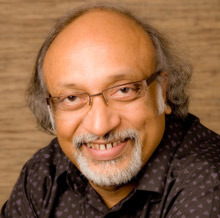
    Mr Prashant Panday
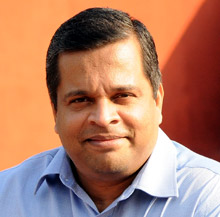
    Mr. Harshad Jain
    Mr Harrish M. Bhatia
    Mr Rana Barua

    Despite all these developments, FM stations face a whole lot of other challenges which may have a direct or indirect effect on their phase III plans. The Music Royalty issue still remains unresolved, as a result of which FM stations, particularly in small towns, have to pay higher royalty. With expansion there would also be an increase in operation costs, and employee or talent management could be another challenge. MxMIndia spoke to few FM players to find out their views on the challenges for FM stations in phase III.


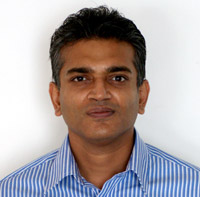
    Mr Prashant Panday, CEO, Radio Mirchi explained, “If people overbid in Phase III, they are finished. Radio is not like TV. One has to be extremely cost-conscious. One has to keep his head down while doing the business of radio. Phase III has e-auctions. There is a very good chance of bids going haywire. This is what each bidding broadcaster has to keep in mind.”


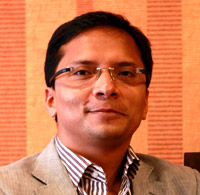
    Mr Harshad Jain, Business Head, Fever FM observed, “Phase III will bring with it a set of inevitable challenges like rising costs to set up new stations, and getting new audiences while the radio industry on the whole is still grappling with current costs and investments.”


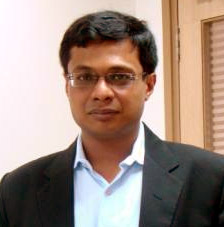
    Mr Harrish M Bhatia, CEO, MY FM said, “The most important is the Royalty Issue; till the time it is completely resolved, it is quite difficult for the radio industry to grow efficiently. The absence of an acceptable radio measurement tool is another challenge. Content restriction is a big restraint for the industry as we are not allowed to provide self-generated news content. The challenges faced by the radio industry in the cities and towns other than the six metros are more or less the same as above.  To overcome these, the industry as a whole needs to work in tandem.”


    One of the possible challenges that FM stations can no longer remain immune from is the global economic climate. The uncertainty hit the world economy just before the FM phase III rollout, which may have some impact in the bidding process. “India as an economy is still expected to show healthy growth rates despite global sluggishness and we believe Radio will see greater volumes in a downturn too. The key issue is the ability to take up prices that will be difficult to manage in a downturn,” explained Mr Jain of Fever FM.


    According to Mr Bhatia, “The global showdown is more of metro phenomenon, hence it has not impacted the tier 2 and tier 3 cities. In fact, the radio business growth, even for existing players, is expected from non-metro cities.”


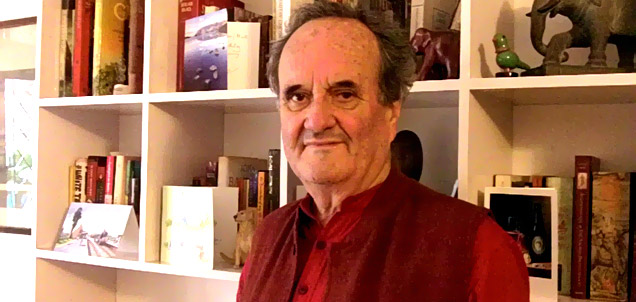
    In an earlier interaction with MxMIndia, Mr Rana Barua, COO Red FM had said, “I believe we should be taking complete cognizance of the fact that there is definitely a slowdown. The clients, advertisers, everybody are extremely, extremely careful about the money they are investing in any form of media. Taking things for granted and creating business plans for next two or three years seems passé now.”


    Three schools of thought emerged from this interaction, one which believes that the economic slowdown is a metro phenomenon. The second line of thinking is that the despite the global slowdown, the radio industry will continue to grow. And the other believes that the industry must admit the fact that there is a slowdown and hence the industry must take a cautious approach especially during the phase III bidding process.

  • The Anchor: 5 indications that India is e-commerce-ready

    #1 Internet penetration

    The sheer number of internet users has grown drastically in the past decade. In 2001, the number of internet users in India stood at 7 million. In 2010 this figure had grown to 100 million (source: Internetworldstats). As a result, the size of the market that needs to be addressed by e-commerce players today is very different and has much more potential.

    This growth in internet users is also largely due to the fact that the key enablers for e-commerce are currently coming together in the Indian market. Aspects like broadband and credit card penetration, wireless connectivity, and penetration of hand-held and computing devices have found widespread acceptance today, unlike their limited penetration in 2001. Moreover with mobiles, especially smartphones, becoming more accessible to the average consumer, internet access through mobile platforms is also on the rise.


    #2 Multiple players investing to increase awareness and adoption rates

    The players currently operating in the e-commerce space are also of an extremely different mindset. Players are more organized, and understand and appreciate the value proposition offered by the industry far better. E-commerce companies are today making investments in technology and innovation that will serve to strengthen and grow their business in the long run. They are not looking at short-term business solutions but are interested in scaling up their operations over a period of time. They are also taking the trouble to understand the points of concern that consumers may have with respect to online shopping and taking the trouble to address that. At Flipkart, for example, we have started our own logistics company to smoothen last-mile deliveries. We also offer services and features like cash/card on delivery, EMIs and 30 Day Replacement Policies to deal with concerns like revealing credit card details or not being able to check the quality of products online.


    #3 Change in consumer mindset

    Additionally, an increasing number of Indians are now trusting online players as a reliable channel for shopping. Post the success of travel sites, more and more customers are beginning to appreciate the convenience of online shopping. They are beginning to realize that the choice, convenience and cost benefits of online shopping outweigh those of physical retail stores, and are turning to e-commerce for more and more of their shopping requirements.

    The industry is expected to grow by 47 percent in 2011 to reach Rs.46, 520 crore by the year-end, according to a report by the Internet and Mobile Association of India. Online retail (excluding travel ticket booking, etc.) will account for 6 percent, or about Rs.2, 700 crore, of the total market. By 2015, this space is expected to grow to about $10 billion. E-commerce users today stand at 10 million (including travel) and this number is constantly growing.


    #4 Popularity of online travel sites

    Certain sectors related to e-commerce have already proven themselves in terms of their growth and popularity. Online travel sites began to do well even when there were hardly any players in the online retail sector. This has given e-commerce companies the confidence that the Indian consumer is open to the idea of shopping online and the success story of online travel has consequently begun to rub off on other verticals as well.


    #5 Growing investment in an e-commerce eco-system

    Market trends are not going unnoticed and more and more professionals/industry bodies are giving serious consideration to e-commerce as a viable investment option. There have been extensive investments made in the e-commerce ecosystem by both government and private players. The realization that the industry players are in this for the long term and are building up their business, keeping in mind benefits to the consumer and the economy, have fuelled an interest that can only speak well for the Indian e-commerce market.

    We have been a big believer in the e-commerce story of India. With the country poised to become one of the largest e-commerce led economies in the world, we will continue to aggressively invest in this space and contribute to this growth story in every way we can.


    Sachin Bansal is the CEO and Co-founder of Flipkart.com.


  • Hard Knocks: Why this Kolaveri Di, indeed! Why?

    By Anil Thakraney


    When I first came across links to Kolaveri Something on the social media sites, I quickly ignored them. Thinking this is another one of those time-pass videos that keep getting shared by virtual pals. But the video went viral in a matter of days, and by now millions have watched it and the world is talking about it.


    As a result I was compelled to click on it and must say I was left pretty unimpressed. A regular kind of sod sings some nonsense inside a recording studio, words that sound like a cross between Tamil and rustic English. I found it neither funny nor entertaining. And was left wondering what I had missed out here. Incidentally, I felt the same when the Pakistani band Beygairat Brigade went viral.


    Three observations I have to make in this matter. One, it’s abundantly clear that you can now use only social media to launch a brand with a huge bang. If there ever was any doubt on that, then it can be laid to rest now. Owners of mass media need to pay close attention because as time goes by, more and more advertisers will take social media a lot more seriously, and not as a ‘secondary’ medium which it is currently treated as. These are not freak incidents but a clear warning sign for the future.


    Two, no one can predict with any degree of accuracy what can go viral in the virtual world. I found the Kolaveri video quite stupid, but millions of people don’t think that, they love it. Maybe a study needs to be conducted on this subject, and it would be quite helpful. However it’s clear people have found a way to showcase their ‘talents’. I already see many imitators busy at work.


    Three, my own guess is that the best chance to strike gold on the net is to be as absurd and loony as possible. And the more rustic and unrefined you are, the better your chance of getting noticed. Now all of us have a real shot at being stars!

    ***


    PS: So, Cyrus Mistry is the chosen one, and by all accounts this seems to be a decision made purely on meritorious considerations. However, one wonders if things may have been different had Ratan Tata married and had his own children. Would the Dynasty Raj have played a part? Like it happens in all walks of life in India? Well, we’ll never know. My own hunch is this: Mr Tata would still have used merit as the yardstick. Indeed, it is this culture that makes the group unique in this nation.


  • Primetime debates an excuse for doing TV cheap: Mark Tully


    By Shruti Pushkarna


    [youtube width=”350″ height=”200″]http://www.youtube.com/watch?v=2RilcOb3GrQ[/youtube]
    [youtube width=”350″ height=”200″]http://www.youtube.com/watch?v=PdgXFlJ8g1g[/youtube]

    He likes to refer to himself as ‘British who is much influenced by India’. Often called an ‘expert on India’, Sir Mark Tully is famous for his extensive reportage of the changing social, political and economic trends in India as the BBC India Correspondent and as BBC Bureau Chief later. He quit the BBC in 1994 after an argument with the then BBC Director General, John Birt, where Mr Tully accused him of running the corporation by fear. But his deep-rooted familiarity with India and its culture made him stay on here even after his term ended with the BBC.


    Sir Mark Tully has co-authored and authored quite a few books on India, his latest being Non Stop India which he released in the capital last week.

    He is currently the regular presenter of the weekly programme, ‘Something Understood’ on BBC Radio 4.

    In this interview with MxM India at his Nizammuddin residence, the veteran journalist shared his views on what he thinks of the Indian media today. Mr Tully also shared some instances from his BBC days to point out the changes that the media has seen over the years. While he seemed extremely hopeful of the print media, he felt there is a need to hold back the expansion in Indian television to see what’s going on really. “Technology,” he says, “is being badly used to overload journalists, particularly in multimedia organizations, to make journalists into radio, television and online journalists at the same time, with the net result that they have absolutely no time to find out what’s going on.”


    And although he believes that India has a great future, he urges India to stop following the western model and to create its own way forward.


    Q: Much has changed from the time you wrote No Full Stops in India. If you were to write that book now, what would change?

    I think the big thing that would change would be that India is in a very different position economically than it was before, and India is in a very different position in what I call ‘morale terms’ as well. At the end of the ’90s, things were looking very bleak in India, we’d had twenty years or more of Neta-Babu Raj and the economy was stagnant basically because of that neta-babu raj and all the bureaucratic controls that existed, particularly controls on investment and on doing business. So that would be very different. But one thing I would say which would not be different would be the emphasis on that India must find its own way ahead and not simply ape and follow American or the western model.


    Q: The Indian media has gone through an explosion in the last five to 10 years. As someone who dominated the airwaves just before that, what’s your take on the current explosion?

    Well I don’t think I ever dominated the airwaves but what has happened basically is that television has taken over in a big way and sadly radio, the media which I love best and which I think is a very very important media, has not been allowed to develop properly because the government has restrained control over news and current affairs. Television has expanded and I believe that what is now needed with television is to sort of in a way call a hold to the expansion and look at what is going on on television and see whether improvements cannot now be made in that.


    Q: We have had a Press Council Chairman Justice M Katju virtually damning the media and media persons. There are many who agree with him but say he’s got no right to say it. As an outsider now, do you agree with Justice Katju’s views?

    I think that maybe he overstated the case, probably he did. But I don’t think we should react hysterically as journalists. I think that we should examine ourselves and see what is going wrong and there are things which are going wrong. And the first thing I would say is our failure to stand together to resist the onslaught of commercial pressures which have turned television and newspapers, and even radio into commercial rather than news organizations. Secondly, I think that we journalists, very much need to examine the way we exercise the editorial function. There isn’t, particularly in television, enough editing going on. I’ll give you one example, the Bombay attacks, if the editor in the studio had exercised tight control over reporters in the field then we wouldn’t have gotten into the mess that we did over the Bombay attacks. That’s just one example. Time and again, you see examples of shows which drift on, breaking news which drifts on without any apparent editorial control. And thirdly, what I find whenever I ask anyone in television, whether there are reviews of what has gone on the day before or a week before so that people can learn from their mistakes, so that you can criticize and benefit from that criticism, I’m always told that reviews don’t take place. When I worked in BBC World Service Radio, we used to have two meetings regularly every day; part of that meeting was looking forward to the news we would be covering that day or expected to have to cover and part of it was very much a review, and a critical review of what we’d done the day before.


    Q: Your views on the long-drawn-out debates with the usual suspects as panelists on Indian television prime time news?

    Well, as someone who is sometimes on these panels, frankly I am amazed that there are so many of them. There is a stage army of people really who come on to these panels and they always get politicians, and the political parties send the same people every time. And I think this is largely an excuse for doing television on the cheap. I personally believe that we should have other ways of presenting the news, discussing the news than endless panel discussions, and of course one way which you would have seen nearly often enough is through news and current affairs documentaries.


    Q: And while Indian media has gone through this explosion, how would you think the British media has seen the last decade?

    Well I think that the British media has changed a great deal in the last decade because of course of the media which you are in, the internet and the electronic media, that has had a very considerable effect on newspapers. Newspapers have been the main victims really and you’ve got a situation in London for instance, where a historic paper like the ‘Evening Standard’ is now given away free because it couldn’t get enough circulation to attract advertising. I think the commercial impact has been there in Britain as well. And the other thing I think change has come to over very much, which I think is a pity, is that there is far more of correspondence giving you the news in conversations with presenters rather than properly crafted news stories; and very often television just turns into bad radio. The other day I saw a comedian do a wonderful imitation of these dreadful interviews where clearly the presenter has warned the correspondent of what the question is going to be. So the presenter very earnestly asks him a question like, ‘Is the rupee going to fall further?’ And the correspondent says, ‘Yes, yes you are quite right, that is the big question.’ That sort of thing rather than the properly crafted news stories. And also like in India, because it is so much easier to broadcast from the site, there is too much broadcasting from the site now and too much repetition. I was watching the night that Gaddafi was killed, and you saw the same pictures going round and round and round.


    Q: Since the time you were active and on the field in India, what do you think has been the changes that the political class has had towards the media?

    I think the political classes have become more organized, they have these spokesmen now and all that. I think some of them rather like coming on the Tele, they weren’t so interested in coming on the radio. When I was with the BBC, it was a strange fluke of history really because the transistor radio had come and so radio listening was very widespread but all the listeners had was to listen to the All India Radio. So lots of them turned to the BBC as an alternative source of news and we became in effect, a domestic news broadcaster. So that meant that the politicians were much more concerned about the BBC than I think they are now, their attention is much more on the local media now.


    Q: And vice versa? Journalists towards the politicians? After all they are all in the hunt for the exclusive?

    I’m not sure that there has been any big change about that except one thing, I wouldn’t say they are in the business of exclusives, they are in the business of much less worthwhile, which is ‘bites’. Time and again, when I go to a book launch or something like that, quite often a young journalist would come up to me and say, ‘can you give me a bite?’ That didn’t use to happen nearly as much. And we used to have many more set-piece interviews. I must in my time have done five or six interviews with the Prime Minister, with Indira Gandhi, I interviewed Rajiv several times, I interviewed Morarji, I made a whole film about Morarji. Now you don’t see those set-piece interviews and the big leaders don’t seem to have as many set-piece press conferences as they used to have.


    Q: What’s your view on the Indian print media? With the breaking news constituency now clearly dominated by news television, has Indian print been able to adapt itself to the new times?

    I think that the Indian newspapers do seem to have adapted quite well, circulation figures as far as I know are doing very well. What there has been I think which is very important and very good thing really, is there has been a realization of the power and influence of the media in languages other than English. Even twenty years ago, general assumption of advertisers was why bother to advertise in a Hindi or Punjabi or Bengali media because people who read those papers, they don’t have much money, they can’t buy what we advertise. So all the stress was on the English media. Now if you look at the top ten newspapers, you will find there is only one English newspaper in that, and that was the Times of India. So I think this is a good and healthy development which has taken place.


    Q: Do you think a News of the World-like scandal could ever happen in India?

    Yes it could happen anywhere. I’m not saying that I have evidence that people are tapping phones here but there’s obviously a risk that journalists will fall into that. If you take the whole question of sting operations which comes fairly near that, there have been cases In India where sting operations have been mounted against the wrong person or not for proper reasons and that has caused problems and we do know perfectly well that in the local press, in remote areas, sting operations are sometimes used as a way of blackmailing people. In my view, sting operations should only be used when there is a story of very considerable importance and there is no other way of getting at it.


    Q: Rupert Murdoch isn’t a bad name here in India… our values are different.

    Perhaps he’s not a bad name in India because he isn’t a name here really. Yes he is involved marginally in television here but you don’t have Murdoch newspapers here and you don’t have a channel like Fox News either. And you haven’t had a phone-tapping scandal like the News of the World one. So maybe he is comparatively unknown here, although maybe he wouldn’t like to hear that.


    Q: And what about our corporate sector? You have written a whole chapter celebrating the Tatas. Did the Radia tape controversy impact your views on the group? Especially Mr Ratan Tata?

    Well that’s all very muddy and I mentioned in my chapter about Ratan Tata and I mentioned that his voice was heard but I didn’t come to any conclusion about it. The reason why I’ve written about Tatas in my book was something which some people haven’t quite understood. It wasn’t really to investigate them and say that are they good or are they bad, what is good about them, what is bad about them. The thing was really to bring to the attention of people, the remarkable achievements of the Tata group once they were freed from the restraints of the Neta-Babu raj and of the license permit raj. So that was the intention, to demonstrate the enormous ability that there is in India if only we can get governance right. And also to get into the book some criticism of the government and bad governance by business because I always contend that if only business will raise its voice against bad governance then we may get something done about bad governance; because if business doesn’t flourish, then the economy doesn’t grow and all the politicians seem to be interested in is the economy growing. But I would just add one thing there, I don’t believe that business should be able to dictate the policies of the government; I do believe that business needs to play a role in a balanced economy in which all sorts of other elements are also playing a balanced role.


    Q: The fact is that the news media is dictated by technology these days. Is that a good thing or bad?

    Well, you know, I didn’t think things in life to be wholly good or wholly bad. There are advantages in technology and disadvantages. The great disadvantage I think of technology now is that it is the ability to transmit news on the spot is being badly misused. It’s being badly misused by the endless badly edited breaking news syndrome. It’s being badly misused by this overuse of this syndrome of a presenter talking to a journalist on the spot. And it’s being badly used to overload journalists, particularly in multimedia organizations, to make journalists into radio, television and online journalists at the same time, with the net result that they have absolutely no time to find out what’s going on. So the ability to communicate in any way is of course valuable but we always forget that there can be over-communication. I think many people spend far too much time in front of screens rather than meeting people face to face. Recently I did a radio programme about the difference between talking to people on the net and talking to people face to face.


    Q: India doesn’t have any news on private radio (except of course the government saying that private FM saying you can take All India Radio feeds). Do you think that once in, there could be yet another dramatic change in the way we will see news?

    Yes, I think there would be a dramatic change, I think it will make a difference to FM radio. It would give FM radio many more listeners. If you take the example of Britain, the No. 1 political show of the day is not on television, it’s on radio; the one which sets the agenda is the Today programme on BBC Radio 4. If you go to Britain and you talk to a lot of people, for many people it’s almost become fashionable to say ‘I don’t watch television but I do listen to radio’. Radio is a hugely powerful medium and of course news can be prepared to broadcast on FM radio, it will make a big difference to radio and I think there will be many people who’ll turn to FM radio for their news.


    Q: And one final question: Telling a story on radio versus telling a story on television?

    Well I think telling a story on radio is much harder than telling a story on television. But, and I firmly believe this, the pictures on radio are better than the pictures on television. And the pictures you tell/show on radio, you describe on radio, the stories you tell on radio are much more likely to stick in people’s heads than television shows are. The art of radio broadcasting, in many forms of radio broadcasting, is to make each listener think that you’re speaking to them individually and I think you can do that in a much deeper and more meaningful way on radio than you can do on television.

  • How about a little ethics from owners & managers?

    By Ranjona Banerji


    The big news for Friday’s newspapers and Thursday evening’s television will undoubtedly be the assault on Union minister Sharad Pawar in Delhi and whatever happens to Sachin Tendulkar in the match against the West Indies in Mumbai.


    But the big news for Thursday was the announcement on Wednesday evening that Cyrus Mistry was to take over from Ratan Tata as chairman of the Tata group in December 2012. Although Mistry – son of Shapoor Pallonji of the giant construction company and a significant shareholder in Tata Sons – was on the shortlist, most of the talk had been of Ratan’s half-brother Noel, who runs Trent.


    So plenty of scope for journalistic speculation, projection and detailing from Mistry’s choice of music to his preferred holiday destinations most of which has been fulfilled in the newspapers. The Economic Times also wins the award for Desperate Need for A Pun with the headline ‘Mystery Ends, Mistry Begins’.


    Since Ratan Tata will only retire when he turns 75 in December 2012, there is enough time for our largely adulatory business media to tell us everything we never wanted to know about Mistry (or, if you prefer, No-more-a-mystery). Puns, as you can see, are endemic, chronic and largely incurable in journalism.


    **


    But the biggest issue for the media is more media-related. The edit page of The Times of India carries a long and extremely well-argued lead article by N Ravi of the Hindu group called ‘Censors at the Gates’. The ludicrously large fine on Times Now for defamation has been dissected and dismissed, the dangers of allowing government regulation of the media has been delineated and the Press Council of India and its new chairman Markandey Katju summarily castigated.

    Ravi says, “What is causing consternation among the media now is that to the expected chorus of complaints from parties in power facing media exposure of corruption have now been added the voices of the Vice-President of India Hamid Ansari and former Supreme Court judge and newly appointed chairman of the Press Council of India Markandey Katju. Self-regulation of the broadcast media has failed and there was a need for a state-sponsored body to regulate the media, both asserted at an event held ironically to mark the National Press Day…

    “The debate on the media has somehow got tangled with the discussion on putting in place an ombudsman to tackle corruption among ministers and high public officials though they are two entirely different sets of issues.”

    Ravi points out that much as the media dishes it out, should be able to take it. But he makes a distinction between being subject to the laws of the land and being subjected to unfair legal conditions or restrictions of any kind by the government.

    So far so good. No media person can argue with Ravi. The difference however between being a journalist and owner of a media house emerges at the end of the article when Ravi discusses government trying to stifle the media through its wage board. Regardless of how good a newspaper The Hindu is, let us not forget that the standards of journalism are upheld by journalists and no by owners. Most of the degradation in the media today — paid news, private treaties and other forms of institutionalised corruption – are invented and carried out by owners and managers. The wage board ensures that newspaper owners pay their journalists and other workers. It is hard to understand the moaning and carping of newspaper owners that paying wage board rates will force newspapers to close down. The Times of India, for instance, several years ago switched to the contract system for journalists when the birth of broadcast news created a shortage of journalists and an escalation of salaries. A few that stuck to the permanent employee-wage board system got paid comparative pittances. Some in fact, at the tail end of their careers, found they were earning about the same as trainees.

    It is also well-known that many language papers pay their reporters almost nothing and expect them to make a living through helping the owners through various channels of institutionalised blackmail. When I was with The Times of India in Ahmedabad in the early 2000s and Divya Bhaskar was launched, the other Gujarati papers were horrified that Bhaskar paid English-newspaper rates rather than the usual Rs 1000 a month for reporters.

    The upshot is that wage board recommendations are minimal and most large English and some language papers pay well above them. The recommendations are tailored to the size of the newspaper – they are not uniform across all of them. I do not know of any industry where employees have to be willing to work happily for peanuts while the owners rake it in. Not surprisingly, the journalists are quite happy with the wage board because it means at least they get paid something. Journalists would be even happier if owners and managers did not dictate news to suit their advertisers, gave up Medianet and stopped the practice of paid news.

    So how about a little more media ethics from owners and managers?


    eom

  • The New Big Boss of India’s Biggest Brand


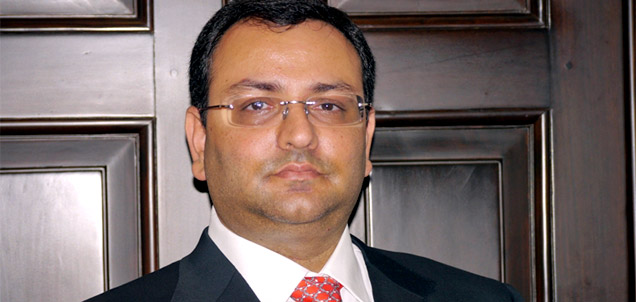
    The search for Ratan Tata’s successor of chairman of the Rs 4.3 lakh crore Tata group has ended with the appointment of Mr Cyrus P Mistry as deputy chairman of Tata Sons. But who’s this 43-year-old Mystery Man?


    Read on for:


    > The Main story on announcement with Mr Ratan Tata’s statement

    > Statement of Mr Cyrus Mistry

    > Profile 1: Avid golfer & foodie, avoids cocktail circuit

    > What Titans Of India Inc Have To Say

    > Profile 2: A reticent man with strategic vision, humility

    > Profile 3: Official profile from the Tata corporate website


    The Main Story


    The mystery over who would succeed Mr Ratan Tata as chairman of the Tata Group ended yesterday as the board of directors of Tata Sons met to appoint Mr Cyrus P Mistry as Deputy Chairman. He will work with Mr Tata over the next year and take over from him when Mr Tata retires in December 2012. This is as per the unanimous recommendation of the selection committee.


    Endorsing the appointment, Mr Tata, Chairman of Tata Sons, said: “The appointment of Mr Cyrus P Mistry as Deputy Chairman of Tata Sons is a good and far-sighted choice.


    “He has been on the board of Tata Sons since August 2006 and I have been impressed with the quality and calibre of his participation, his astute observations and his humility. He is intelligent and qualified to take on the responsibility being offered and I will be committed to working with him over the next year to give him the exposure, the involvement and the operating experience to equip him to undertake the full responsibility of the group on my retirement.”


    Mr Mistry, currently managing director, Shapoorji Pallonji Group, has been a director of Tata Sons since August 2006. He is a graduate of civil engineering from Imperial College, London, and has a master of science in management from the London Business School.


    And this is what Mr Mistry said in his statement:


    “I feel deeply honoured by this appointment. I am aware that an enormous responsibility, with a great legacy, has been entrusted to me. I look forward to Mr Tata’s guidance in the year ahead in meeting the expectations of the group.


    “I take this responsibility very seriously and in keeping with the values and ethics of the Tata group I will undertake to legally disassociate myself from the management of my family businesses to avoid any issue of conflict of interest.”

    But who’s this mystery man?


    Read on:


    Profile 1:

    Avid golfer & foodie, avoids cocktail circuit


    By Reeba Zachariah & Namrata Singh


    The man who will head a group synonymous with Indian industry is an Irish national and shares his birth date (July 4) with the US Independence Day. But in many ways, he resembles the business giant he has been handpicked to succeed. Like Mr Ratan Tata, Mr Cyrus Pallonji Mistry, 43, is described by close friends as soft-spoken , candid and down to earth.


    Again like Mr Tata, Mr Mistry is said to love cars – especially SUVs – and steers clear of the cocktail party circuit. But unlike lifelong bachelor Tata, Mr Mistry is said to be a devoted family man. He is married to Rohiqa, daughter of renowned lawyer Iqbal Chagla, and the couple have two school-going sons. An avid golfer, mr Mistry is known to be a foodie and his favourite holiday destination is Europe. Besides Mumbai , he owns houses in London and Pune.


    According to a Tata group insider, “Mistry is one person who can laugh at himself.” His sense of humour should come in handy in facing the challenges that lie ahead. A person who has shown a preference for the shadows , he will now have to put up with the arclights for years, perhaps decades.


    Tellingly, his Wikipedia profile was created within minutes of the announcement that he had been effectively chosen chairman-in-waiting of Tata Sons. The youngest son of construction baron Mr Pallonji Shapoorji Mistry, Cyrus hails from one of the richest Indian families with a net worth of $7.6 billion. But he will disassociate himself from the family business to avoid conflict of interest.

    Voracious reader with eye for detail


    Mr Cyrus Mistry has been managing director of Shapoorji Pallonji & Company, which is part of the Rs 15,000-crore Shapoorji Pallonji Group (SP Group). An avid golfer and prolific reader, Mistry got the chance to join Tata Sons’ board a year after his father retired as director in 2005. The family is the single largest shareholder in Tata Sons with a stake of 18%. Mistry is also on the board of Tata Elxsi and holds non-executive positions on the boards of several other companies. He is a trustee of the Breach Candy Hospital Trust as well.


    Although he does not have experience in heading a Tata group company , Mr Mistry, a graduate in civil engineering from London’s Imperial College, has been actively involved in the family business. His expertise includes formation of business plans, risk evaluation, business investment strategy and property and infrastructure development.


    Mr Khurshed Daruvala, MD, Sterling & Wilson, in which the SP Group holds 56%, describes Mistry as a “ hands-on leader” who is strategy oriented. “ Ever since Mistry started working with this partnership firm in 2003, the turnover has jumped from Rs 50 crore to Rs 2,000 crore.”


    If this is exemplary, consider what Mistry accomplished after he took charge at loss-making Afcons Infrastructure. SP Group acquired a 53.96% shareholding in Afcons in 2000. In March 2011, Afcons earned a total income of Rs 2,893 crore with a compounded annual growth rate of 21% over the past five years.


    He joined the SP Group in 1991 as a director and became its MD in 1994 in charge of the construction business. His brother, Mr Shapoor Mistry, is actively involved in the real estate and textile business.


    Conservative in his approach, Mr Mistry is said to have an eye for detail. “Once he takes decisions, he sticks with them,” said an insider. He can safely expect to take many crucial decisions in the years to come.


    What Titans Of India Inc Have To Say


    It is a historic and great moment


    -Krishna Kumar, director, Tata Sons


    A young leader means long-term stability for the Tata group


    -A M Naik, CMD, L&T


    There is strong chemistry between Mistry and Ratan Tata. He is very thorough and has good financial insight


    -J J Irani, former director, Tata Sons


    Good sign to have a young chairman -Ajay Piramal, chairman, Piramal group Cyrus symbolizes continuity, yet change


    -Harsh Goenka, chairman, RPG


    He’s mature beyond his years


    -Zia Mody, senior partner, AZB Partners


    Source:The Economic Times

    Copyright © 2011, Bennett, Coleman & Co. Ltd. All Rights Reserved


    And here’s a little more…


    Profile 2:

    Cyrus Mistry:  Tata Sons’ deputy chairman a reticent man with strategic vision, humility


    When senior advocate Mr Iqbal Chagla met Mr Cyrus P Mistry for the first time, he felt there was something special about the man. “He struck me as a young man who will make it big one day,” says Mr Chagla.


    Mr Chagla had good reason to ponder over Mistry’s future prosperity – the younger son of construction tycoon Mr Pallonji Shapoorji Mistry was keen to marry his daughter Rohika.


    On Wednesday, Mr Chagla’s prediction for his son-in-law couldn’t have come true in grander style. In the early evening, Mr Ratan Tata sent out an email to the top five-six executives of all Tata Group companies, informing them that Mr Cyrus P Mistry would succeed him as chairman after December 2012. In his message, the 74-year-old chairman hoped the Tata brass would lend the same support to Mistry as it did to him.


    Not all may choose to do so, but Mr Ratan Tata for his part surely will. Top officials in the group who have worked closely with Mr Mistry say he gets along famously with the Tata Group chairman and is very similar to Tata in nature and attitude.


    Cyrus was Ratan Tata’s First Choice


    They add that Cyrus was the chairman’s first choice right from the time the hunt began for a successor. But Mr Tata was also keen to follow a systematic process of selection, involving shortlisting of candidates – both external and internal.


    So who exactly is Mr Cyrus Mistry, and what makes him the best man to head the sprawling Tata empire? He’s low-profile, reticent and conservative, qualities he has inherited from his father. After graduating in engineering from Imperial College London, Cyrus plunged into the family-owned construction business.


    His father gave him a clear mandate: grow the engineering, procurement and construction activities. Cyrus focused on the Middle East and grew the business in Oman and the region.


    Cyrus’ big break came when the group acquired construction company Afcons Infrastructure Ltd, which undertakes large infrastructure projects in India and abroad.


    The company was acquired at a time India was witnessing a construction boom. As chairman of Afcons, Cyrus oversaw many important projects. The company was involved in the construction of Delhi Metro, and Cyrus often flew to the capital to supervise the work.


    Those who have worked with him say Cyrus possesses a near-perfect blend of hands-on involvement and the ability to give long-term strategic direction. “He has excellent leadership qualities, can think on his feet and combines all this with humility,” says former Unilever honcho Mr Keki Dadiseth, who was at one time believed to be in the reckoning to succeed Mr Tata. Another executive who has worked closely with Cyrus says he has the ability to operate both “as a telescope and a microscope”.


    Among those backing Tata’s choice is Mr Darius Pandole, who remembers Cyrus since their days in the Cathedral & John Connon School in Mumbai. “Cyrus’ is an inspired choice; he will provide long-term stability to the group,” says Mr Pandole, a partner in New Silk Route, a private equity investor. Cyrus is just 43, and even if the retirement age of chairmen in future is brought down to 65, he will still have a good two decades at the helm.


    Yet, there are those who point out that Cyrus has succeeded Tata purely on the strength of his father’s 18.5% holding in Tata Sons, which makes the senior Mistry the single largest shareholder in the holding company of the Tata Group. Others feel Cyrus lacks global exposure and may not be able to tackle the complexities of a diverse business house like the Tatas. But Pandole retorts: “People raised eyebrows when Mr Ratan Tata succeeded JRD. Look at what he’s achieved.”


    Meantime, officials at some of the front line Tata companies are baffled by the sudden announcement. Most have little or no exposure to Cyrus. A senior official in the group said on the condition of anonymity that the Tata Group will now be known more as Shapoorji Pallonji Group. “The Mistrys are known more as sharpshooters, which is in sharp contrast to the Tatas’ trusted brand image,” adds another old hand at a Tata company.


    Source:The Economic Times

    Copyright © 2011, Bennett, Coleman & Co. Ltd. All Rights Reserved


    Profile 3:

    Profile of Mr Cyrus P Mistry from the Tata corporate site:


    “Mr Cyrus P Mistry, 43, joined the board of Shapoorji  Pallonji & Co. as director in 1991 and was appointed managing director of the Shapoorji Pallonji Group in 1994.  He is a graduate of civil engineering from the Imperial College, London (1990) and has an M.Sc. in management from the London Business School (1997).


    Under Mr Mistry’s guidance, Shapoorji Pallonji’s  construction business has grown from a turnover of $20 million  to approximately $1.5 billion. The group’s companies have evolved from pure construction to executing projects under design and build and EPC delivery methodologies, implementing complex projects in the marine, oil and gas, and rail sectors. Under Mr Mistry’s stewardship, the group has registered many firsts in India — construction of the tallest residential towers, the longest rail bridge, the largest dry dock and the largest affordable housing project.  The group’s international construction business now extends to over 10 countries.


    Mr Mistry is responsible for launching the infrastructure development vertical in the Shapoorji  Pallonji Group in 1995 with a 106 MW power project in Tamil Nadu, followed by the development of India’s largest biotech park near Hyderabad in partnership with the Andhra Pradesh government. The infrastructure vertical has also developed two large road projects totalling an investment of USD 550 million.


    The Shapoorji Pallonji Group’s recent foray into agriculture and biofuels, with the leasing of 50,000 hectares in Ethiopia, was also overseen by Mr Mistry.


    Mr Mistry joined the board of Tata Sons in 2006. He has been a director of Tata Power and Tata Elxsi in the past.


    He is also on the board of the Construction Federation of India, the Imperial College Advisory Board, the board of governors of the National Institute of Construction Management and Research (NICMAR), and is a fellow of the Institute of Civil Engineers. ”


    Photograph: Tata.com
  • The Anchor: Pops on why advertising is still sexy

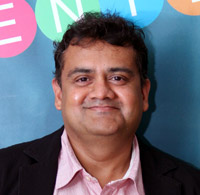
    By KV Sridhar (Pops)

    #1 Richer life experience.

    If you are passionate about life and want to live life the fullest, this profession allows you to do that. (I am writing this sitting in a plane to Colombo for a working weekend.)


    #2 Get paid for doing what you like.

    If you are curious about life, mine some insights to tell some stories, you’ll get paid handsomely.


    #3 Want to be an expert in 100 categories?

    Advertising helps you to learn about 100 categories in 10 years, no marketing job can offer that.


    #4 Around the world in no time.

    South of France as a trainee boy? Sounds great? Get your jumbo passport and get on board.


    #5 Do nothing.

    If you are a dreamer or want to relive your memories every day? Just gaze out of your window and narrate few experiences (that’s work for you) and you’ll be the next guru.


    #6 Be a celebrity.

    Imagine, if marketing is the glamorous part of business than advertising is the glamorous part of marketing. Got the logic? You’ll be seen in the papers more than Ratan Tata.


    KV Sridhar (Pops) is the National Creative Director at Leo Burnett.

  • The Indian Express, now on iPad

    By Akash Raha


    The Indian Express has launched its app for the iPad, allowing readers to read the e-paper on the Apple handheld. Within days of its launch, it was among the top ten free applications on the Apple iStore on Monday. The reader-friendly app has much more than the regular newspaper app – it also has the day’s e-paper, an electronic version of the print edition.


    “There’s a growing need, across the world, for news and analysis from India that’s insightful, credible, and trustworthy. That’s what the Express is all about,” said Shekhar Gupta, Editor-in-Chief, The Indian Express. “And we are committed to delivering this content to readers wherever they are, whatever device they use. The Indian Express iPad app is the logical next step after our print, web, mobile and Kindle editions.”


    The e-paper on the app, the first of its kind, allows readers across the world to read the day’s newspaper on their iPad just the way they would read a printed copy. The e-paper has pages and sections of the paper’s different editions. There is a dedicated photo section that carries swiftly downloadable pictures of the day.


    Launched by the Express Group’s online division, the app is free. The app also allows readers to browse through live news stories and articles from The Indian Express’s web site too (www.indianexpress.com.) It includes dedicated sections on business, sports, fashion, editorials, opinion pieces and a photogallery.


    The app integrates easy sharing of content on social networking platforms such as Facebook and Twitter. Readers could also forward links of articles they like to their friends through e-mail besides and save the articles for subsequent reading. An app user guide has been put up on the newspaper’s website, too.

  • Tata Sky expands its channel offerings

    By A Correspondent


    Tata Sky, the leading Direct-to-Home service provider, has announced the addition of three new channels to its vast line-up of relevant channels for its subscriber base of over 8 million connections.


    A strong advocate of offering a wide range in every genre, Tata Sky has added MOVIES NOW to increase the Hollywood movie quotient on its platform. And continuing in the endeavour to offer channels that mirror the voice of the nation; Tata Sky has also launched Suvarna News 24X7, Asianet’s Kannada news channel from the heart of Karnataka and Zee 24 Ghante Chattisgarh, the only 24-hour satellite news channel in Chhattisgarh.

  • Radio Mango in 4th anniv mode, to consolidate in Kerala for Phase III

    By A Correspondent


    Radio Mango, an FM radio venture by Malayala Manorama, a Malayalam daily, aims to consolidate its position in Kerala once FM Phase III is officially rolled out. It is however not known which cities the FM station would bid for as they are currently awaiting clarity on the phase III. “We would definitely look to consolidate our position in Kerala. We are still unclear about the reserve price calculations and await clarity before finalising our phase III plans,” said Ravindran Nair, Director Programmes, Radio Mango.


    He further said, “We are confident of growth in 2012 since we have been steady since the last 4 years. The key factor in the quantum of growth, of course, would be phase III.”

    In Kerala Radio Mango is aired in Kochi, Trissur, Kozhikode and Kannur. Red FM and Club FM are its main competitors in these cities besides the All India Radio (AIR) FM stations. On November 29, 2011 Radio Mango will celebrate its fourth anniversary however the FM station seems to be in no mood for big celebrations.

    Radio Mango claims that its national and local advertising ratio is almost 50:50. Some of its national advertisers are Maruti, Hero Motors, Nokia, Blackberry, Max Bupa, Kenwood, Airtel, Docomo, Belkin, Ford, Hyundai, Sharp, and Philips etc. Nearly 80 per cent of songs aired on Radio Mango is Malayalam film songs and the rest 20 per cent from non-Malayalam music ie Hindi and Tamil songs. Besides its on-air activities, Radio Mango is quite active online too. It has over 5,700 likes on its Facebook page and nearly 300 followers on Twitter.


    In conversation with Ravindran Nair, Director Programmes, Radio Mango.


    Q: Since November 29, 2007 when Radio Mango first went on air, until the year 2011 how has the journey been for Radio Mango? 
    Radio Mango has had a great period of sustained growth since launch. We have been consistently No.1 in the state and have been figuring in the top 20 nationally in terms of reach. In IRS Q2, Radio Mango is 16th nationally, in terms of reach (11th if AIR stations are excluded). In terms of reach within a state, Radio Mango ranks 5th nationally! Radio Mango has grown by 45 percent in Yesterday’s listenership over the last one year. Within Kerala, Radio Mango leads the no 2 station by 81 percent in terms of reach. (All figures are from IRS Q2 2011).


    We have won several national and international awards including New York Festival silver and bronzes, Wow Experiential Marketing Award golds, ERA golds etc. In fact, we are the only radio station in India to have won Mirchi Kaan Award golds for two years running.  We also figure in the Limca Book of Records for our musical reality show ground event.
    Q: How do you plan to celebrate Radio Mango’s fourth anniversary?
    We don’t look at months and years as landmarks. We would rather have our achievements be the milestones. Hence, all our anniversaries are private internal affairs and we don’t tom-tom in public.
    Q: Can you throw some light on your phase III plans? Will the FM station expand in cities/ towns of Kerala or will the expansion be beyond Kerala i.e. other parts of India?
    We would definitely look to consolidate our position in Kerala. We are still unclear about the reserve price calculations and await clarity before finalizing our phase III plans.


    Q: How has the response from advertisers been? What is the national-local advertising ratio?

    The response from the advertisers has been good so far. The national and local advertising ratio is almost 50:50. Some of the national advertisers are Maruti, Hero Motors, Nokia, Blackberry, Max Bupa, Kenwood, telecom majors like Airtel, Docomo, Belkin, Ford, Hyundai, Sharp, and Philips etc.


    Q: For 2012 what are your growth targets? How will you sum up 2011 for Radio Mango? 
    We are confident of growth in 2012 since we have been steady since the last four years. The key factor in the quantum of growth, of course, would be phase III. 2011 has been a great year and we are very pleased with our overall performance. The Radio Mango brand has never been more robust and recognised.


    Q: Who is your creative and media agency?
    Our creative and media agency is Stark Communications.