Blog

  • Industry bigwigs share insights with students at Ignite!

    By A Correspondent


    “You won’t get what you deserve, you get what you negotiate!” said Vijay Mansukhani, Co-Founder & Managing Director of consumer electronics giant, Onida Ltd.


    Mr. Mansukhani shared this and other insights with students of Centre For Management at the inauguration of Ignite!, CFM’s Industry Week on February 6.


    Sharing vignettes of his entrepreneurial journey, Mr Mansukhani spoke about how in the 1980s, the nascent Onida signed a joint venture withJapan’s JVC, beating larger Indian manufacturers, by understanding how the Japanese mindset worked.


    Additionally, the highly successful (and radical) TV campaign where the Devil said that Onida TVs were ‘Neighbours Envy, Owners Pride’ was due to the fact that they picked a young low cost ad agency and couldn’t pay for the larger conservative ones.


    Students later said that it was refreshing to hear from a successful entrepreneur who was willing to share both the positive and negative aspects of his life.


    Also giving his valuable inputs was Mr. Chandrakant Salunkhe, President of the SME Chamber of Indian who adviced the students about the government schemes available for micro and small entrepreneurs. “Rs1 Crore collateral-free loan is available to micro and small entrepreneurs under the Government’s Credit Guarantee Trust,” he said.


    What was interesting about the above fact was that the vast majority of people are not aware of this facility. So many budding entrepreneurs never start their own business due to lack of funds. If this was widely known, there would be many more companies starting up.


    The SME Chamber focuses helping entrepreneurs through education and networking on ways they can grow their businesses faster.


    When he asked the assembled management students how many of them wanted to start their own business, a majority raised their hands. This was a huge shift from the older mindset where students just wanted a good corporate job after graduation.


    Mr. Salunkhe and Mr. Akhil Shahani (Managing Director of Centre For Management), spoke about the need for jointly creating an MBA especially for the SME segment.


    It was a great eye opener for CFM’s students on the ways they can start their own business.


    Ignite! Is being held from February 6 to 11 between 10am to 4pm at the Centre for Management campus in Bandra. Every day, well known achievers from Indian and international industries as diverse as electronics, pharmaceuticals, media, transportation and retail will come to share ideas with the students to inspire them to greater heights in their own post graduate careers.


    Centre for Management is part of a global network of 75 Universities and 500 colleges that bring internationally recognized MBAs toIndia. It is an initiative of the Thadomal Shahani Trust, whose trustees sit on the managing board of 24 colleges in Mumbai includingThadomalShahaniEngineeringCollege, HR College,JaiHindCollege, KC College,MMKCollege,NationalCollegeand others.

  • Mindshare Chennai bags media duties for SPR&RG Constructions

    By A Correspondent


    After recently bagging the media duties of The Hindu,Mindshare,India’s leading media agency has added another new business to its client portfolio – Tamil Nadu based real estate developer SPR&RG Constructions Private Limited. The mandate involves handling the media strategy as well as planning and buying across all mediums. The account will be handled out of the Chennai office.


    Commenting on the win, Ravi Rao, Leader,South Asia, Mindshare, said: “This win is great news following Mindshare’s recent growing focus on strengthening our South operations. We are really excited to have the opportunity to serve SPR&RG Constructions Private Limited. They have a great vision for the category and we believe we can do some game-changing work for the brand and look forward to doing it well.”


    SPR&RG Constructions Private Limited is engaged in the acquisition and development of residential and commercial properties, besides executing turnkey infrastructure projects in Tamil Nadu. The company is coming up with their second large scale project in Chennai – Osian Chlorophyll where they bring on board the social conscience that ensures they contribute to the societies they are operating in.


    This is a unique property with 42 gardens and sky bridges that connects all the 10 blocks which have gardens lining it and thereby enhancing healthy living within the city limits.


    “With two upcoming projects in Chennai at Porur and Vepery, we were in consideration to partner with an agency that has expertise in local media and has ability to put to use global knowledge at local level for all our forthcoming projects,” says Sandeep Pantvaidya, VP – Marketing and Sales, SPR&RG.


    “We are glad to have Mindshare, one of the finest media buying agencies in the country today, on board to handle brand SPRRG and Chlorophyll. We look forward to a lengthy and profitable partnership with Mindshare in the years to come,” he added.


    Mindshare is a global media and marketing services network with billings in excess of $27.8 billion (source: RECMA). The network consists of 114 offices in 82 countries throughout the North America, Latin America, Europe,Middle East, and Asia Pacific, each dedicated to forging competitive marketing advantage for businesses and their brands.  Mindshare is a member of WPP, the world’s leading communications service group with $84.2bn in billings (source: RECMA), and is part of GroupM, the world’s leading full service media investment management operation, which was created by WPP Group to oversee its assets in this sector.


  • Reliance Broadcast Network returns with second edition of BIG Regional Music Awards

    Reliance Broadcast Network Limited’s intellectual property vertical, BIG Live and radio arm 92.7 BIG FM on Monday announced its second edition of ‘BIG Regional Music Awards’- the biggest celebration of regional music in the country. The awards, having an imprint across 5 major states – Maharashtra, Punjab, Andra Pradesh, Karnataka and West Bengal- will have their own unique, regional flavour which will appeal to regional and local tastes. BIG Regional Music Awards is a platform which seeks to recognize the excellence in regional music.


    BIG Regional Music Awards is the only regional awards platform which not only has a wide national reach but also empowers people to recognize regional musical excellence and is a true people’s choice award.


    There will be a jury and popular choice segment of awards, which will see talent being judged by the audience, ensuring transparency and fair play as the power to vote rests with the audiences.  The complete show will feature around honouring the biggest entertainers across the strongest emotions of the viewers and listeners.


    The awards will be promoted through a high-decibel marketing plan ranging from on-ground, television, radio, outdoor and digital. These awards will reach out to 4.2 crore consumers who tune into 92.7 BIG FM. The property will enjoy 360 degree promotions for 45 days offering unique integration opportunities for brands.


    Commenting on this occasion, a company spokesperson said: “Music is the true celebration of life in our country. BIG Regional Music Awards is this celebration of unity in diversity where our culturally rich country’s musical offerings are acknowledged. This platform is sure to excite not only the respective regional consumer but also the regional talent which has long sought its due recognition.”


    Reliance Broadcast Network Limited is a multi-media entertainment conglomerate with play across radio, television, intellectual properties and out of home. It is part of the Reliance Group and specializes in creating and executing integrated media solutions for brands.


  • Debrief: Thomas Cook: Forced humour

    By Anil Thakraney


    ‘Travel Smooth’ is Thomas Cook’s latest punch line. And the promise in their new campaign is that they will ensure we don’t face embarrassing situations when we travel abroad. That Thomas Cook is an expert travel agent and we can feel safe when we do business with them.


    I watched three ads; each caters to a specific traveller’s need. One involves a conservative desi family booked into a very shady hotel, courtesy an unreliable agent. Likewise, other ads deal with problems on foreign currency and sight-seeing. It’s a negative campaign, an attempt to get a positive spin-off by rubbishing the competition.


    I like the strategy. Rather than use the tried and tested route of boasting about Thomas Cook’s great work, better to make fun of the rivals. This ensures refreshing advertising, so that’s fine. However, in the execution of that intent, the advertiser loses the way.


    [youtube width=”400″ height=”200″]http://www.youtube.com/watch?v=EAhfCt4GKdM[/youtube]
    [youtube width=”400″ height=”200″]http://www.youtube.com/watch?v=vp1kql2V9ZY[/youtube]

    The commercials try hard to be funny; they are executed quite shoddily and end up becoming a bit irritating. While the hotel one is marginally better, the currency and the bus tour ads leave you totally cold.


    Maybe the writers of this campaign haven’t travelled much. I can put out a laundry list of hilarious events that unfold because of poor planning. Enjoy an international holiday, guys. And then come back and write the storyboards.


    Rating: (On a scale of 1 to 5): 2. Good strategy not backed by creative.


  • One Alliance & Neo renew arrangement

    By A Correspondent


    NEO Sports Broadcast Pvt. Ltd and MSM Discovery Pvt. Ltd have come together once again for the distribution of television channels NEO Sports and NEO Cricket under the aegis of TheOneAlliance bouquet effective January 4.


    TheOneAlliance bouquet is further strengthened with a line up of blockbuster sports events – Asia Cup (Cricket), UEFA Euro 2012 (Football), French Open (Tennis) and World Series Hockey (Hockey). This stellar line up coupled with DLF IPL on SET MAX makes TheOneAlliance bouquet the preferred choice of sports fans.


    Rajesh Kaul, President – MSM Discovery Pvt. Ltd, said: “The philosophy of TheOneAlliance is to create a strong product offering of diverse and strong television content. The sports genre has always been a strong growth driver. We are happy to welcome back NEO to TheOneAlliance bouquet. The blockbuster line up on Neo channels coupled with DLF IPL on SET MAX will ensure the bouquet is poised for further growth.”


    Prasana Krishnan, COO – NEO Sports Broadcast Pvt. Ltd added: “TheOneAlliance and NEO distribution deal is a strategically sound arrangement. NEO has shared an extremely fruitful and pleasant relationship with MSMD and we are happy to rejoin TheOneAlliance bouquet and aspire to take it to greater heights. The combined offering of the bouquet will ensure viewers get to witness the biggest blockbusters in Cricket and major sporting events in 2012.”


  • Ready for the digital revolution: Vivek Khanna

    By Akash Raha


    Vivek Khanna, Publisher and Business Head of Mint, HT Media Limited

    Vivek Khanna joined HT Media in 2008 after working for more than 16 years, of which 11 were spent with Hindustan Lever Limited (HLL) where he led strategic and marketing initiatives – segmentation, positioning, advertising, and new product development. In his last assignment he was Director Marketing with Aviva, responsible for the company’s product and marketing strategy. He is a post-graduate in management from IIM-Ahmedabad and an economics graduate from the University of Delhi. In conversation with MxMIndia, Mr Khanna talks about Mint’s brand of accessible business news, new markets, and the digital wave, among other things. Excerpts:


    Q: Since its inception five years ago Mint has become a success story of its own. What has the journey been like, and what are some of the learnings that you would like to share?

    When we started off five years ago we identified a clear need gap amongst readers, which none of the existing business papers were satisfying. And that is how the entire positioning of Mint got developed, looking at the need gap and then asking how we could address it. We worked towards developing a product that would address the need gap; plus we said that we would get the best minds in the business – and we got editors and journalists from around the world and created a totally differentiated and unique product. I think the single biggest learning that we have is that as long as we are able to sustain this quality that we have been known for, we will continue to grow and do well. The journey so far has been very good, basically because of the fact that we have a product that is totally unique and well differentiated, and has been able to sustain and maintain itself from day one.


    Q: There are many reasons attributed to Mint’s success – the Berliner format, the content, and good marketing. What do you think is the main reason Mint has worked with both readers and advertisers?

    What clicks is with the readers first is the product. It is the quality of the product over the last five years that has helped us grow significantly since our launch. The advertisers are paying for the fact that we reach out to a certain number of very high-profile target audiences across the country. That’s really the key thing. Our product is something that this target audience likes, and therefore they are reading it on the regular basis. No one will keep picking up a product each day if it’s not good… Hence the fundamental thing behind our success is really our content.


    Q: Mint started off with emphasis on making business news easier for the masses. Is this still the ethos now and for the future?

    The Mint proposition is ‘clarity in business news’. We didn’t say we will be for the elite or for the masses. We just said that we will provide clarity to business news and that is what we continue to do – by analyzing and discussing a particular topic at length and presenting it in a manner that is easy to read as well as supported with facts, and therefore we have a certain credibility in the market. That focus has been there since the beginning, and it should continue.


    Q: What is the nature of Mint’s tie-up with The Wall Street Journal – content sharing or more?

    I can’t discuss what constitutes our tie-up with WSJ, as it is confidential information.


    Q: Following the Hindi and Gujarati editions of The Economic Times, do you see Mint also coming out with regional avatars?

    Well, as we speak, I have heard about some of these regional avatars getting pulled out from the marketplace. We will get to know over the next couple of days if that news is true or not. As far as we are concerned we have a certain growth path which is planned, we will continue to go on as per that planned growth plan. I can tell you that in the very near future, in the next 3-6 months, we don’t have a plan for any language business daily.


    Q: Regional media in India is still growing. How does the proposition of Mint in a Hindi or regional language avatar look to you?

    There is a increasing trend in smaller towns and among readers of Hindi and regional language. As the economy of some of these smaller towns continues to grow there is the tendency and the desire for people to be abreast with what is happening in the business environment. So if we feel that we have a certain role to play and we can provide those readers with news that will help them, then we will certainly evaluate it. But like I said, as of now there are no such plans.


    Q: Going forward how do you see the audience and revenue breakup for your digital editions? Specifically the web, tablets and smart phones?

    It is almost impossible to say that… You have different experiences in different markets. We have some western economies where people have moved predominantly towards digital and have dropped significantly. On the other hand we have a market like Singapore which has an 86 percent internet penetration, and 70 percent of the people there own a smart phone, and still there is no drop in circulation of leading products like The Straits Times. So we are talking about very different markets and very different experiences. I think in India the printed form still has some way to go. However, digital is going to emerge over a period of time. Now whether it is going to be five, 10 or 15 years is very difficult to say. What we have to do is, be prepared when it comes. Therefore, we have launched some apps and some more are going to come. So there is a whole plan to be ready for the so-called digital revolution in newspaper, when it comes.


    Q: What are the plans to break into newer markets?

    We are in fact evaluating a few markets. When we feel that the time is right for us to enter, we will do so. We still have some way to go in a few of the existing markets… So the focus remains in growing in the existing markets as well as looking at the right time to enter in some of the newer markets.


    Q: What are some of the marketing initiatives that the paper has planned and in which cities?

    We have two big initiatives coming up which are around the budget and around our luxury conference (in March), which is an annual event.


    Q: Since you are a listed company, will you be give us some numbers as to how Mint has been doing over the years?

    I can’t disclose that information.


    Q: What are some of the upcoming trends that you observe in the print industry?

    What is happening is that there is a clear trend, in terms of increase in readership, in some of the language publications that we have been seeing. Clearly, as the literacy level is rising, people’s urge to learn more and read more too is increasing. In times to come, this phenomenon will grow further with penetration of technology and spread of education in India. The other trend that we can observe is the proliferation and spread of digital media.


  • Reliance Broadcast Network to distribute Bloomberg UTV

    By A Correspondent


    Reliance Broadcast Network Ltd. on Monday announced the coming on board of Bloomberg UTV, India’s premier business news channel, as part of its distribution portfolio. This move further strengthens the well-crafted television strategy of RBNL which includes the 3 BIG CBS Channels – BIG CBS Prime, Love and Spark, and the regional Channels BIG MAGIC and Spark Punjabi. Add to this, the channel which is scheduled to launch through the JV with Germany’s RTL Group, and Reliance Broadcast Network will boast of an unmatchable seven channel bouquet.


    The partnership points at excellent synergies between the businesses and will allow for seamless integration of Bloomberg UTV into the existing bouquet. While Reliance Broadcast will benefit from having a premier news channel empowered by the global authority in business news – Bloomberg. Bloomberg UTV gains through becoming part of a commanding bouquet of channels backed with an excellent brand lineage. This consolidation establishes a bouquet to be reckoned with and one that will meet requirements of both audiences and marketers alike.


    With digitization in the anvil, reduced bandwidth issues and a boost in demand for premium quality content, the channel portfolio stands to have an edge in the market. The reach and varied profile of consumers and customers brings with it opportunities for bundling and cross selling, ensuring the bouquet is able to garner optimal subscription rates.


    With each channel having its distinct audience base, the entire bouquet will cover a wide spectrum of the Indian cable and satellite television viewing audiences. With its ability to offer advertisers the opportunity to reach out to audiences ranging from 4 year olds to 25+ year olds, from heartland India to the key metros, it ensures an unparalleled marketing platform.


    The 7 Channel mix now offers the following:

    1. BIG CBS Prime, a male skewed premium entertainment Channel (male 15+, SECA,7 metros)

    2. BIG CBS Love, the first ever international women’s entertainment channel (female 15+, SECA,5 metros)

    3. BIG CBS Spark, the first ever International youth Channel (4-24, SECA,7 metros)

    4. BIG MAGIC, a variety entertainment Channel for the Hindi heartland (CS 4+ MP,UP, Bihar)

    5. Spark Punjabi, the country’s first International Punjabi Channel (CS 4+, Punjab, 1mn+)

    6. BIG RTL Channel in the action space

    7. Bloomberg UTV, India’s premiere Business news channel (male 25+, SEC A, 7 metros)


    With a prolific mix of channels cutting across genres ranging premium English, credible news and well-tailored regional channels, the bouquet of Reliance Broadcast Network stands to make a significant impact in the market.


    Speaking on the occasion Tarun Katial, CEO, Reliance Broadcast Network said: “With the addition of Bloomberg UTV to the RBNL network, we now present one of the strongest television portfolios in the country. This consolidation of the network delivery platform allows us to enable marketers with a single consolidated outreach platform, while offering audiences the best possible television content.”


  • Double-digit growth in Jan for consumer electronics, cars & lifestyle retail chains

    By Sarah Jacob, Writankar Mukherjee & Neha Dewan


    Sales of consumer electronics, cars and lifestyle products bounced back in January after a tough quarter, raising hopes of a revival in consumer sentiment in 2012.


    Companies, including Samsung, Nokia, Hyundai Motors and Reliance Retail, have reported up to double-digit sales growth in products such as flat-panel televisions, smartphones, cars and fashion garments in January, as aggressive discount offers on the back of a recovering stock market and appreciating rupee lured shoppers back to the main street.


    “Not just consumer but overall economic confidence has also picked up in January due to a host of factors such as rupee appreciation, stock market and some policy-level changes like single-brand FDI,” said Adi Godrej, Godrej Group Chairman.


    “So the fear of declining stock market and rupee depreciation has been replaced by positive consumer sentiment, which is interlinked and is reflecting in healthy consumption,” he added.


    Shantanu DasGupta, durable maker Whirlpool’s VP (corporate affairs & strategy-South Asia), stated that sales increased across product categories in January. “While demand has been bullish across the country, certain pockets in the north and west performed exceptionally well. The summer looks positive,” he said.


    Carmakers too are upbeat after a tough 2011 when sales rose just 4.24 per cent. Companies are optimistic that new models and stable interest rates on loans could bring back the boom.


    “The new year seems to have started on a positive note,” said Arvind Saxena, Hyundai Motor India Director (marketing and sales). Hyundai saw a 12 per cent jump in sales to 33,900 cars in January.


    But marketers are still cautious. Several segments are still growing on the back of heavy discounts and end-of-season sales. Consumer sentiment not clear ye


    Analysts say consumer sentiment is not clear despite the positive signs. “The environment is still challenging. Interest rates are high and consumer sentiment remains uncertain,” said Anand Ramanathan, associate director at management consultancy KPMG.


    Sandeep Kulhalli, VP-retail and marketing at Titan Industries’ jewellery chain Tanishq, said: “Much of the positiveness is because the whole market is on discount offers.” In January, Finance Minister Pranab Mukherjee said this fiscal would be challenging.


    With GDP growth forecast being tempered to 7.2 per cent from 8.6 per cent, the economy had been wrestling with high commodity prices, sharp increases in interest rates and the Euro zone crisis, which dampened consumer confidence in the third quarter.


    All eyes are now on the Union Budget over whether the growth momentum in January will sustain over the next quarter by increasing disposable incomes or moves to boost demand.

    Rupee impact

    The rupee’s gain in January after a downward spiral in the second half of 2011 helped stabilise prices of consumer durables and electronics products, which require imported raw materials, and boost demand.

    Korean electronics maker Samsung’s flat-panel television sales grew 50 per cent over last January and more than 85 per cent compared with December 2011. “The rupee stabilising against the dollar is one factor for higher sales,” said Mahesh Krishnan, Samsung India VP-home appliances.

    Rupee depreciation had prompted several companies to increase prices by 5-10 per cent in several tranches late last year. The personal computer market bounced back to low double-digit growth in January compared with November-December when it shrunk around 15 per cent.

    Several brands also reduced prices that brought back the market into shape, said S Rajendran, Acer India chief marketing officer. New launches too helped boost demand. The country’s largest phone maker, Nokia India, launched five new devices under Lumia and Asha series that boosted sales in January, both over last year and compared with November-December.

    Sunil Dutt, MD of Research in Motion India, which makes BlackBerry smartphones, said smartphone sales increased 40-50 per cent since the second week of January compared with a flat November-December 2010. “The market is back to its natural growth momentum.”

    Bijou Kurien, president and CEO of Reliance Retail-lifestyle, said good performance of export and IT firms in the third quarter had a rub off on consumer confidence in terms of bonuses and increments. “This will help the upward trend continue through February and March,” he said.

    Reliance Retail’s lifestyle division posted an upswing in retail sales since January 7, reaching its peak over the Republic day weekend. J Suresh, MD and CEO of Arvind Brands and Retail, which makes Arrow, Flying Machine and US Polo in India, however, cautions that it would be best not to get carried away by performance in the end-of-season sales period just yet.

    Pushpa Bector, senior VP of another New Delhi-based mall, DLF Promenade, said: “People are getting far more conscious today. If they get a good deal, they tend to stock up.”

    – With inputs from Chanchal Pal Chauhan


    Source:The Economic Times

    Copyright © 2012, Bennett, Coleman & Co. Ltd. All Rights Reserved


  • Is cricket overpriced?


    By A Correspondent


    The past six to nine months has been a phase where Indian cricket has seen a remarkable slump. BCCI, which is at the helm of affairs, has been criticised for not keeping an eye on the future. The general sense is that the board is not prepared to mend this sorry state of Indian cricket despite pressures from broadcasters, the media and of course, viewers at large which matter the most if the plan is to sustain the sport in the long run.


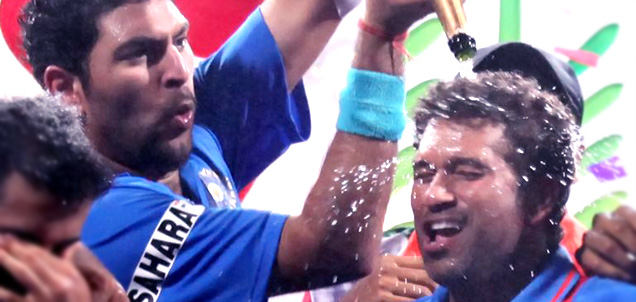
    Yes, cricket is the only celebrated sport in the country and advertisers have banked on its popularity. But recently, the game has come under the scanner with India’s debacle in its current series. Sahara has decided to end its 11-year association with BCCI and the Indian cricket team. And have also put the fate of Pune Warriors in jeopardy. The question here is whether cricket, as it is today, is an overpriced sport.


    Jai Lala, Principal Partner – The Exchange, Mindshare said, “Cricket has always been a very attractive sport for advertisers. Therefore, it has been priced highly. When the performance of the Indian cricket team goes down, the viewership goes down and hence advertisers find it expensive. Advertisers want guaranteed viewership. So as a broadcaster if you’re able to provide that, advertisers will be more open to pay expensive ad rates on cricket.”


    So it’s about the TRPs. R Sridhar, CEO, Brand-Comm offers a different dimension. “I think there is too much of cricket and too many properties are being created. What needs to be done is to bring focus back on the game and once India starts to win matches, which it shall as for the next 20 months it is playing at the home turf, it’ll be business as usual. Cricket will always have takers. But, with the current development there is likely to be some kind of negotiation.”


    On whether BCCI is losing the plot, Mr Lala said, “BCCI has to be more professional. They are riding on a monopoly as far as Cricket in India is concerned. I think the time has come for them to corporatize their proceedings. There is a need to ensure that the future of Cricket in India is safe. The systems, procedures etc. needs to be relooked at.


    IPL as is known is the game that corporate czars play, and are in no mood to go soft on their plans around the property.


    However, a senior media planner on condition of anonymity said that there is a swing in the opinion because of India’s performance where the same people were betting high on the game. She said, “Cricket was not an expensive sport when India was winning, people who advertised during the Word Cup paid off their skins and didn’t complain. Now that India is losing, there’s been a negative sentiment among all stake-holders.”


    On the recent development of Sahara pulling out of the Indian team sponsorship, the senior source said: “This is nothing but politics. Unfortunately, BCCI is interested in only making money rather than focusing on the future of this sport.”


    Another media planner is of the opinion that there may be a bit of caution in the air. But he says, “There is no property better than cricket when it comes to capturing a large chunk of audience. So one pays premium for the kind of viewership which in any other property is difficult to get.”


    He added that the association of Sahara and Indian cricket team was that of passion. Though it was not a brand-building exercise for Sahara, in the bargain the brand gained too. He says Rs 120 cr is what it takes to spend on cricket in India in a year. And if one thinks of that number, then the choice of corporates wanting to associate would be a handful. “Telecom players would have been a good bet but with the fiasco that they are facing, that seems to be an unlikely choice. However, there might be some price cutting on this front but getting a sponsor would not be difficult.”


    For now, it seems everything rests on BCCI as far as the margins for broadcasters are concerned. Nimbus has found itself in a fix, with BCCI terminating the contract on non-payment of dues. An insider reveals that the heavy price levied on the part of BCCI, plus the slowdown, impacted ROI for the broadcast major.


    Even in the case of IPL, MSM has already paid a heavy price, and are looking to monetise the same via hiking ad rates (by 10 per cent this year, as stated by President of MSM, Mr Rohit Gupta). Any plans to relook the 10-second on air-spots will drastically bring down revenues for the broadcaster.


    Plus, the back-to-back cricketing schedule lined up by BCCI, as many opinion makers within the sporting arena agree, is the single reason why Indian cricket is experiencing a downfall never seen before, which could mean India losing many more matches, loss in viewership, loss in advertisers/sponsors. In a nutshell, cricket as a sport in India will lose its sheen

    Photograph: Fotocorp


  • Vijaydutt Shridhar: Passion for the printed word

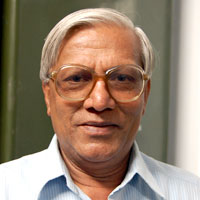
    The Padma Shri award for Sahitya (Literature) this year has gone to author Vijaydutt Shridhar, 60, former editor of Navbharat and the only journalist on the list. The award is well-deserved for the man who has almost single-handedly taken up the task of preservingIndia’s history through the lens of time, past and present – the newspapers, magazines and periodicals.

     

    In an email and telephonic interview with MxM India’s Archita Wagle, Mr Shridhar talks about his passion, the Madhavrao Sapre Samachar Patra Sangrahalaya evam Shodh Sansthan in Bhopal, Madhya Pradesh.


    Q: Tell us about your career, and what you are doing now.

    I am retired now and I concentrate on the museum and my books nowadays. Before that I was the director at Makhanlal Chaturvedi University of Journalism and Communications. I also worked as the editor of Navbharat. I have worked with several state level committees related to journalists and newspapers in Madhya Pradesh. I was a member of the Madhya Pradesh Vidhan Sabha Press gallery committee for two decades.


    Q: What prompted you to start the Sapre Sangralaya in 1984?

    I was working on my book Shabd Satta, which chronicles 150 years of journalism in Madhya Pradesh. I had to travel far and wide to research for my book. While researching for the book, I realised that there was no systematic classification of the material that I required. Authenticating the material was also difficult, and posed a lot of problems for me as history is incomplete without properly verified material. I visited individual collectors, but the newspapers in their collections had started deteriorating. This sparked the idea of preserving newspapers.


    Q: How did you get the material for starting the museum?

    I met Pandit Rameshwar Guru, a veteran journalist, Hindi poet and Mathematics teacher. He also had an extensive collection of journals, newspapers and periodicals going back two generations. But due to family obligations he was ready to donate them. He had two conditions, though. One, he wanted the material to be saved systematically and in the name of future generations. Two, the collection or the museum which would house them will not be handed over to the government or any university as Mr Guru feared that the material would not be cared for properly at either places and that the universities are more concerned with their salaries than preserving the heritage that such a collection represents.


    Q: Can you tell us more about the Sapre Sangralaya and the work it does?

    After Mr Guru agreed to donate his collection, a society was set up in the name of Madhavrao Sapre, the pioneer of Hindi journalism. The ideology that Lokmanya Tilak had when he started Kesari, was the same ideology that Shri Sapre had, so he launched Hindi Kesari. The Sapre Sangralaya collects all kinds of old periodicals and newspapers in all the languages – Hindi, Marathi, Urdu and so on – for the purpose of preserving them. Earlier I used to travel to different places scouting for materials. I once bought an old collection of Punch magazines from a man who sold them for a song because he wanted to pay for his liquor. But as time passed, people came to know about the work we are doing and they donate their private collections to us, knowing that we will take good care of the material they donate.


    Q: How are the footfalls in the museum? Do you get a lot of visitors?

    The museum is acknowledged as a research centre by many universities. We mostly get journalists and academicians who come to the museum as they know that what they might not get anywhere else, they will find it here. Once, the editor of an established and well-known Hindi newspaper came to the museum because he wanted to see a copy of a particular issue for January 1962 of his paper. It was a moment of pride that we had the issue which their archives didn’t have.


    Q: How do you arrange for the funding for the Sangralaya?

    The Central and the state government provide funding for the museum but they never interfere in the day-to-day working. We also receive donations. So funding is not a problem for us.


    Q: Any future plans for the Sangralaya?

    You should know that the paper a newspaper is printed on is not of the finest quality. We have newspapers and journals dating from the 1600s. Constant handling also accelerates the deterioration. We have preserved the material we have gathered so far by chemical treatment, pest control, laminating the old papers, and transferring the old papers onto microfilm. So far, we have transferred material up till the 19th century. But now we are looking at digitising the content we have. We are looking at transferring all the material to DVD so that people who come to the museum to look at these newspapers for their research will be able to go through the DVDs and the newspapers can be preserved better.


    Q: The website for the museum is in Hindi. Would you consider having a website in English, in order to reach a wider audience?

    The suggestion that you have given is a good one. We are translating the summary for the website in to English and other languages… but only the summary, the rest of the website will be in Hindi as that is the language we work in. But once we translate the summary, that will provide enough information for people about what we do.


    Q: You are an author; any work in progress on that front?

    I have written three books and now I am in the process of completing my fourth. My first book was Bhartiya Patrakarita Kosh, which is an in-depth study of Indian journalism in the pre-Independence period (1780-1947). The book covered the whole sub-continent -India,Bangladesh and Pakistan. It is the history of Indian journalism in all languages of country – origin, growth, struggles, achievements and contribution.

    My second book was Shabd Satta which covered the history of 150 years of journalism in Madhya Pradesh from 1849 to 1999. My book Choutha Padav is the history of 1000 years of Bhopal with special reference to BHEL. Now I am working on my latest work, Pahela Sampadkiya, which is a collection of the first editorial in prominent Hindi language newspapers. The book has about 28 editorials and my comments and analysis on each of the editorial.


    Q: How do you find time to manage both your writing and your day-to-day commitments?

    Now that I have retired, I can devote more time to writing and my work at museum. So it is not difficult.


    Q: How does it feel to have your efforts recognized by the government in the form of the Padma Shri in Sahitya?

    I didn’t expect to be awarded. I have been working on the museum for the last 28 years. I never expected to get the award as the government doesn’t declare it in advance, but it feels good.


  • Yuvraj cancer news first lead?

    By Ranjona Banerji


    The unveiling of Justice OP Saini’s verdict on the petition filed by Subrahmaniam Swamy to make P Chidambaram a co-accused in the 2G spectrum case on Saturday was fascinating. Times Now gave us second by second coverage about nothing at all happening outside Patiala Court. The other channels thankfully limited themselves to studio panel discussions about the possible implications of this verdict.


    The BJP was very cocksure that Swamy would succeed. The Congress was largely invisible, relying on a few of its friends to state its case. The old telecom companies were part of the discussion. The new ones (and now licence-less) were invisible.


    As Navika Kumar talked about the butterflies in her stomach waiting for the verdict (why?), she conceded that Chidambaram may have bigger airborne insects inside his digestive organs. This waiting outside this courtroom was apparently the most exciting journalistic assignment ever! Wow!


    Anyway after hours of pointless speculation and some interesting debates on other channels, the judge then called Swamy for a private discussion and cleared the courtroom. Immediate outrage at this ill-treatment of the media! But then someone pointed out that the judge wasn’t in the courtroom at all. More inconsequential details followed. Then the judge just said the petition was dismissed.


    Suddenly, we were told that actually Swamy looked deflated when he came out of the private discussion with the judge. This, however, was not noticed before the petition was dismissed, a sort of after the fact observation.


    As expected the BJP tried to put up a brave face and then vanished and the Congress, to its credit, did not go too far in its victory dances. Swamy appeared “first” on Times Now but refused to answer who finances his penchant for litigation. By Sunday his bravado was back and in Monday morning’s papers he was saying the judge was good but his judgment was bad (damned with faint praise?) and Swamy would be going higher up the judicial ladder.


    * * *


    Sad as the news of cricketer Yuvraj Singh’s cancer is, am not sure whether it is first lead news, but most Indian papers seem to think so.


    * * *


    The divorce between Sahara and Indian cricket also appears to have come as a surprise to our intrepid sports journalists and here again Yuvraj Singh’s health seems to be have been an issue. Some further investigation here may be a good idea but whenever a big money player is involved, the media’s newsgathering resources seem to shrink.


    * * *


    Press Council of India chairman Markandey Katju is apparently on twitter with the handle (@mark_katju. There is some speculation on twitter whether this is a genuine account or not but today’s newspapers seem to think it is. I’m following it anyway just to check.


  • Private labels of retailers Bharti Retail, Future Group outsell national brands in own stores

    By Sagar Malviya


    Private labels owned by retailers such as Bharti Retail, Future Group and Aditya Birla Retail outsold several national brands in home care and packaged food categories at their retail stores as value conscious consumers opted for best bargain in an uncertain economic condition and soaring headline inflation despite consumer goods companies aggressively betting on modern retail to drive future growth rate.


    For instance, Bharti Walmart’s private brand ‘Great Value’ tops the floor cleaner segment with 50 per cent share and are in the top three selling spot in terms of market share in categories such as tea, wheat flour, rice and branded snacks according to Nielsen latest retail index service during July-September 2011 period for the India FMCG Private Label market.


    Customers prefer private labels due to better quality, high food safety standards, international look and feel of products feels William Savage, chief merchandising officer, Bharti Walmart, which has private labels owned by retailers such as Bharti Retail, Future Group and Aditya Birla Retail outsell several national brands in certain home care and food categories at their retail stores even as big brands push more sales through modern retail.


    Coming at a time when national brands increasingly bet on modern retail to drive their future growth, analysts say even large manufacturers such as Hindustan Unilever and Reckitt Benckiser are impacted.


    “In short term, national companies will have to either go for promotions or discounting to fight back market share,” says Gautam Duggad, an analyst at brokerage Prabhudas Lilladhar. “But it also means losing margins and that’s a trade-off call the companies will have to take,” he adds.


    While retailers attribute the success of their own brands to value offers, good packaging and their increasing credibility, consumer product makers say private labels are gaining mostly in low-involvement categories.


    QUALITY AT LOW PRICE

    “Customers have begun to like private labels due to better quality, high food safety standards, international look and feel of products, customized packaging created after customer feedback and the credibility of the retailer,” said William Savage, chief merchandising officer, Bharti Walmart, which has over 35 per cent market share in wheat flour segment, close to 22 per cent in tea and 20 per cent in salty snacks, or namkeen.


    Private labels are mostly priced much lower that branded products because of substantial marketing and distribution savings. Retailers make up for lack of media marketing through in-store promotions and prominent display.


    In Big Bazaar stores, which started selling own brands four years ago, private labels are among the best sellers in at least a dozen product segments. Future Group Chairman Kishore Biyani believes its brands such as Tasty Treat and Clean Mate are now established. “Three years ago, our private label sales grew mainly because of experimentation and trials by consumers. But now, sales are driven by repeat purchases,” says Biyani.


    “We have quality products packed innovatively, priced attractively and placed strategically at our retail stores. So the success of private brands is a combination of all four Ps,” he adds.


    Aditya Birla Retail CEO Thomas Varghese says its More Value and More Choice brands have got good traction after the firm repositioned its private labels two years ago. Its private label pickles, with the widest range of regional variants, outsell the likes of Mother’s Recipe and Priya Pickles in More outlets. Hand wash, toilet and floor cleaners and disposable tissues are among the other segments More brands are among the best sellers.


    MARKETERS UNFAZED

    While companies such as Dabur, Emami and Parle acknowledge that private labels are gaining ground, they say it’s on segments where product differentiation is low and have relatively lower shopper involvement in purchase decisions, and that it will be tough for retailers to challenge national brands in high-involvement segments.


    “When it comes to foods or personal and beauty care products, consumers have been loyal to branded items and will continue to remain so,” said George Angelo, Dabur India Ltd Executive Director-Sales. He expects retailers to reduce product launches and rationalise range in this space.


    Emami CEO Krishna Mohan said it will be difficult to make strong private labels in personal care and over-the-counter health care segments because they require stronger consumer understanding and brands will need to innovate to provide extra benefit to consumers. But he expects retailers to eventually get there. “We are sure they are working on the same and eventually will venture into these categories which are huge.”


    Private brands already account for close to 7 per cent of modern trade sales in India, compared to 1 per cent in China, according to a Nielsen survey that covered more than 50 countries last year.


    And the scope is huge. Private brands account for more than 40 per cent of the total sales of the world’s largest retailer Walmart. The rise of private labels comes at a time when modern retail is increasing its contribution to the top line of most consumer goods firms.


    For instance, the country’s largest consumer goods company HUL gets around 12 per cent of its Rs20,000-crore annual sales by selling goods at modern retail stores compared with just 5 per cent four years ago.


    Source:The Economic Times

    Copyright © 2012, Bennett, Coleman & Co. Ltd. All Rights Reserved