Blog

  • Vandana Das to join DDB Mudra, Delhi as President

    By A Correspondent


    Vandana Das, President and Branch head at Brand David, a sister agency of Ogilvy, is all set to come on board the DDB Mudra Group as President. She will be responsible for building, both, the DDB Mudra and Mudra brands in Delhi.  She brings with her more than two decades of experience including more than fifteen years at Ogilvy.


    A post graduate in Psychology and Business Administration, Ms Das is credited with the significant growth that Ogilvy Delhi has enjoyed in the last few years. Besides successfully turning around many Dabur brands across the hair care, skin care, oral care and home care categories, she launched the hugely successful Maruti Zen Estillo Little box campaign, a completely integrated effort that spanned television, print, OOH, digital as well as rural marketing.


    She played a significant role in transforming Limca from an uninspiring brand to a very refreshing drink for the youth. She has also worked on Costa Coffee, Hindustan Times and Four Square Cigarettes. At Ogilvy Delhi, Vandana also served as a training leader.


    Speaking on the new development, Madhukar Kamath, Group CEO and MD of the DDB Mudra Group said: “I am glad that Vandana is coming on board. I look forward to working closely with her. In the Group, we are keen on building our Delhi operations around her. I was impressed with not just her dynamic leadership capabilities, but also her boundless energy and lively people skills. Both, in terms of culture and mindset, she will be a great fit and asset within the DDB Mudra Group.”


    Vandana Das said; “It has been great working with Ogilvy for the past 17 years and my time spent has been very enriching and will always be cherished. It is now time to explore other opportunities and I am excited. DDB Mudra is poised for even greater growth and I am looking forward to being part of the team that will steer it.”


  • LinkedIn announces localized solutions 4 Indian recruiters

    By A Correspondent


    LinkedIn, world’s largest professional network, with over 135 million members worldwide and over 13 million in India, on Tuesday announced localized hiring solutions used by recruitment professionals in India.


    This move, a global first for LinkedIn, will give more recruiters in India access to high potential candidates and drive the growth of the local talent economy.


    LinkedIn India is rolling out, specifically for India, localized versions with India pricing for offerings like LinkedIn Recruiter, which will allow Indian recruiters to search and target profiles in India. Other offerings with differentiated India pricing include Jobs Network, Work with us Ads, Targeted Recruitment Ads and Talent Direct.


    “The growth currently being experienced by the Indian economy needs to be complimented with the right talent. Our member base, which consists of educated and engaged professionals, is much sought after by recruiters from corporations and executive search firms. By creating localized products for recruiters in India, we hope to build on our philosophy of connecting talent with opportunity,” said Irfan Abdulla, Head of Hiring Solutions at LinkedIn India.


    “LinkedIn’s localized pricing is in line with its commitment towards introducing efficiency enhancing tools for professionals and an acknowledgement of the growing demand for customized solutions in the Indian market,” he added.


    Since managing talent is core to making recruiters productive and successful, tools like LinkedIn Talent Pipeline enable recruiters to easily manage all their talent leads in one place; LinkedIn Career Pages, is a one stop virtual destination which helps companies build a brand amongst prospective candidates; and Targeted Recruiting Advertising is a strategic tool which enables recruiters to reach a specific population of candidates as per skill, location or experience. These tools empower hiring managers to make effective and strategic hiring decisions.


    In India, LinkedIn Hiring Solutions are used by a number of companies including ING Vysya, Genpact, Biocon, Wal-Mart, HCL Technologies, L&T Infotech among others.


  • The Anchor: Rajiv Rao on the 5 Mumbai watering holes he misses most

    By Rajiv Rao


    For most advertising professionals, office becomes home and the nearby bar is the second home. It’s where we head after a long day for a well deserved drink, be it raising a toast or drowning sorrows.


    Here is a list of 5 watering holes that I miss today. They have meant so much to me over different phases of my advertising career. Some have lost their charm and glory and some closed forever. So, there’s little I can do but head for the nearby bar and drink to some good memories.


    Tavern (Hotel Fariyas) Colaba

    Tavern was one of the most rocking bars in the early 90’s. It was the perfect combination of beer and good old rock music and the best part, a huge screen that would play live shows of the legendary musicians. Queen, Floyd, Stones, Doors, Hendrix, and the likes of Zeppelin were regulars there. Fridays and Saturdays would be insanely loud and packed. After a point everything would be a blur. At least that’s how I remember my Tavern nights.


    Cafe Naaz

    Though I got to experience very little of this place I still miss it the most. I was introduced to this place very late in life. Naaz was perfectly located, away from the madness of the city and yet you could see the buzzing city from a distance. The queen’s necklace was best seen from Naaz. Warm beer, lousy food, slow service but loads of the charm. Naaz beats any of the high rise bars of today hands down.


    Sports Bar (Bowling Co)

    The day I joined Ogilvy, I joined Sports bar. Countless lunches, happy hours, lunches that got extended to happy hours and of course after work drinks. Large screens, screaming fans and endless pitchers with Nachos. A lot of male bonding has happened over beers and pool tables in this sporty venue that has given many a “men will be men” moments. I would run into people from work more at the bar, than the office corridors. (And some of these people were people I was running away from)


    The Ghetto

    Ghetto played real music. The reason it became the preferred hangout for an entire generation of beer, rum and rock lovers. It was where you walk in to a hole through the wall, to a world that unwinds you after work. And yet this is the very place where many ideas were born over many more pitchers. The unusual fluorescent lighting made way for many fun moments. Not to mention, this is the place that introduced writing on walls even before the Facebook epidemic. In fact chances are you will still find your drunken slogans and thoughts scribbled on the walls even today. The Ghetto spells sheer nostalgia for me and many more who welcomed by the tuxedoed doorman ‘Shuklaji’ knowing all the patrons on first name basis


    Zenzi (Bandra)

    Not too long ago, Zenzi with its open multi-cultural vibe was a mecca for advertising professionals for a short phase. In fact if anyone was to look for a job in the industry, floating a resume at this premise would be a better bet than sending emails to head hunters. It was cool and casual enough that one could walk in with chappals and yet it had a certain attitude that was only for the like minded people from the mad ad world. At any given time, there was so much creative energy, it was like a doctor’s prescription for recharging creative juices.


    Rajiv Rao is NCD, Ogilvy &Mather.


  • Coffee Bean & Tea Leaf looking to brew more

    By Tuhina Anand


    Coffee Bean & Tea Leaf (CBTL) which was launched in 2008 in India is eyeing to capture a segment that has grown up to coffee culture and now is migrating to the next level of coffee as an experience.


    The future growth path for many of the players in the cafe business is to offer a different experience depending on the TG. India having gone through the phase where cafes have established themselves as a ‘hangout’ place, there is a need for a better offering for those looking for more. Hence, there is Cafe Coffee Day coming out with its Lounge concept or players like Costa Coffee and CBTL stepping in to provide that evolved ambience. With Starbucks set to enter India, this space will only see more competition.


    The organized coffee chain retail market is said to be approximately Rs1,000 crore and has been steadily growing. For CBTL this is where opportunity lies for future growth where, having started with one outlet in Select CityWalk in Saket in New Delhi, in the last three and half years they have expanded to 17 stores, including three outlets at airports, in Delhi, Mumbai, Bangalore, Kolkata and Pune.


    Talking about their growth plan, Vinay Gopinath, Head, Marketing, Pan India Foods, the company that has brought CBTL to India, said, “We are looking at expanding our presence and clocking in at 25 stores by May this year. There are plans to expand in a big way in Pune, Bangalore and Kolkata. We are also looking to enter newer markets like Jaipur and places like Ludhiana and Chandigarh in Punjab.”


    The expansion for CBTL is along four formats including high street, property inside a mall, kiosk model and high profile office building. There are around 2,000 organised players in the cafe segment including CCD, Gloria Jean’s, Costa Coffee, Barista and Mocha among other stores. As Mr Gopinath says, they have been growing their store presence by 25 per cent yoy and that has been the case with many leading players in this segment.


    CBTL worldwide has around 812 outlets and their USP, as Mr Gopinath describes it, is having the best coffee on their menu coupled with their mojo effect plus offering high-quality food and the best music.


    However on pricing, Mr Gopinath clarifies, “Yes, we do charge a premium but that is only on our signature offering. Pricing of, say, our cappuccino or any other regular product will be as competitive as any other cafe.


    “At CBTL we cater to the upper strata of market and it’s definitely not a hangout place. It’s about better experience. Our TG would be anyone 20 plus to 35 who has traveled around the world and looking for a better coffee experience. There are many who are looking for this experience so there is opportunity galore. The positive thing is that finally a segmentation is happening and gradually a pyramid is being drawn in terms of coffee consumption at various places. With increase in coffee consumption outside homes there is immense scope to grow the top end of the spectrum.”


  • Gadgetsguru gets hyperactive, launches brand campaign

    By Archita Wagle


    An eye-catching full page ad in the Times of India on Monday morning spoke of “Demo kahin bhi lijiye, shopping gadgetsguru.com par hi kijiye”.


    Asked why the big bang route, Arun Kapoor, CEO-gadgetsguru.com said: “This is purely a branding ad. We are trying to increase our brand awareness.”


    Mr Kapoor goes in depth about the strategy adopted, explaining the reason for coming up with an ad just now: “There is a lot of competition from other online portals. Every other portal will offer you Cash-on-Delivery, 30 days warranty and other sops. So we created a whole new funda. Instead of competing with the online industry, we decided to take the offline industry (the retailers and the wholesalers).”


    While offering branded products to the customers, the online portals lose out due to the fact that the customer doesn’t get a demo of the products he may want to buy. Even when a person goes to buy an expensive item from a shop, s/he will  go to 10 different shops to find out about the best deal they can get. “A person buying products online can’t get a feel for the product he wants to buy. So we are telling him/her that they can go to a shop to get a demo of the product they have their eye on; but they should buy it from us as we give them the best deal they can get,” Mr Kapoor explained.


    Gadgetsguru.com was founded by Mr Kapoor in 2004. The website and the backend support was developed in-house. When asked about what was the reason for coming up with such ads now, Mr Kapoor said: “When we started in 2004, the first few years were not so great. The first year saw sales of just Rs1.25 lakhs. It didn’t make sense at that time to give out such full page ads. Now that we have established ourselves, we decided to increase our brand awareness. Also we have recently been affiliated with Brand Capital, Bennett Coleman & Co. Ltd’s offering (earlier called ‘private treaties’. We have got a budget of Rs30 crore for the next three years thanks to the tie-up. So we decided to for it now.”


    [youtube width=”400″ height=”200″]http://www.youtube.com/watch?v=-b5JSmWtvnc[/youtube]

    Gadgetsguru.com is not just coming out with print ads, but have also launched TVCs which take a tongue-in-cheek look at “bahanas” that consumers give to avoid buying a product after they take a demo at the shop. The TVCs show a boy running out to avoid buying a tablet by telling the salesman that he is allergic to tablets; a man refusing to buy a refrigerator because the door faces south instead of east; and a woman running out of the shop on the pretext of testing the zoom on a digital camera. The voice-over at the end tells us “Demo kahin bhi lijiye, shopping gadgetsguru.com par hi kijiye. Faayda aap hi ka hai.”


    The TVCs were launched recently when the promos for the Zee Cine Awards  started to be aired. Gadgetsguru.com is the associate sponsor for Zee Cine Awards.


    In fact, Mr Kapoor promises that radio and online ads will be launched in the next 15 days. When asked about what they would be talking about, Mr Kapoor refused to say anything.


    Not only that, gadgetsguru.com has launched a campaign on Facebook which promises the person coming up with the best bahana a chance to win a BlackBerry.


    The creative mandate for gadgetsguru.com’s ad campaign has been handled by   Manoj Motiani, Founder & Chief Creative Officer of Thought Bubbles. Mr Motiani was formerly a creative director with O&M. “We decided to give the creative mandate to Thought Bubbles as Manoj Motiani is a good friend,” explained Mr Kapoor.


    Gadgetsguru.com is on a roll. After launching a branding campaign, they are now looking at providing services in countries such as Singapore, Malayasia, UAE andcUK. “We will be starting our services in Hong Kong,DubaiandSingaporein the next three months. We are looking at tie-ups with the major market players who have a reputation of expertise in electronics market. We will create a sub domain for that particular country so that people in that country and surrounding areas can buy from there. We have been getting a lot of orders from South-east Asian countries,” said Mr Kapoor.


  • Betting big on shopper insights


    By Johnson Napier


    At a time when brands – led by their able marketing chieftans – are still grappling with the insight and consumers are still clueless about the experience that the discipline offers, it is turning out to be an opportune time for agencies making a beeline in building their expertise around the rather unexplored phenomenon of Shopper Marketing.


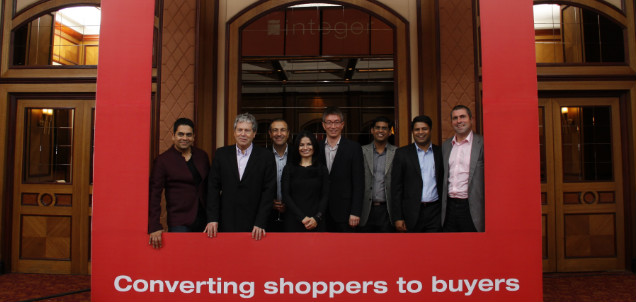
    The initiative, which is being pursued with hot interest by agencies to offer their services, has found a new and able beneficiary in Integer Group, one of the world’s largest promotional, retail, and shopper marketing agencies.


    A group company of TBWA (an Omnicom Group agency), Integer enters India with Mumbai as its hub and the sixth such market for the group in Asia Pacific. It has already blazed ahead with its offerings in other established markets like the US, Australia, Europe, the Middle East, and North and South America.


    Commenting on the launch of the property in India, Shiv Sethuraman, CEO, TBWA India said: “Integer is going to be an important part of our strategy and is one of the fastest growing units within the marketing communications mix. We are very happy to be investing in the division early enough than most others.”


    On the choice of India as the next market for launching the division, Dan Paris, Regional Managing Director – APAC, Integer said: “India, as a market, is accelerating fast and retail as a major driver is picking up drastically in India. From our POV, we wanted to launch at the right time and with the right assets and people. We thought the most important thing to do would be to invest in a serious study and the findings have revealed that this is an opportune time to be launching in this country.”


    Integer’s shopper marketing expertise utilizes extensive global research data on shopper behaviour, retail insights, and unique tools to develop strategic marketing solutions for clients interested in engaging and motivating shoppers. In India, the unit would be headed by Sreejit Nair, MD, Integer who comes to the agency after having worked for FMCG majors like PepsiCo and P&G. Sharing his vision and how Integer would work in the Indian context, Mr Nair said: “Coming from the client side of the business, I know what retailers go through. Especially modern retailers, who are struggling with basic issues like ensuring fill rates, getting space at a fairly good rental, and so on, but what’s happening is that they have actually become obsessed with price. Shopper marketing gives a lot of opportunity for them to differentiate. If you go to the client with an effective plan, I am sure modern retailers would accept this practice.”


    According to Mr Nair, the issue with brands is that they get obsessed with themselves; they don’t want to see what’s there for the retailer and the shopper. “If I am going to talk only about my brand, then it is like trying to push something to the retailer and that won’t work. And even if it works, it won’t succeed,” he affirms.


    Sharing the agency’s core focus in India, Mr Paris affirmed that it would be around four verticals, namely promotional marketing, shopper marketing, channel marketing and digital. “As per reports, retail is estimated to grow to 6 per cent until 2016. Given that there is no slowdown being witnessed here and the fact that India delivered an average 3.9 per cent growth in retail, we expect a modest growth in this segment,” said Mr Paris.


    “Also, the growth will be led largely by digital as the number of consumers who use online and mobile for research and shopping has gone up dramatically. Our study indicates that more than 60 per cent of the online consumers do research, comparisons and shop online and through mobile and this is quite a high figure. With e-commerce expected to grow by 3 per cent and with more than 123 million mobile payment users expected by 2012, these are exciting times for players to be in retail in India and around the world,” he added.


    When quizzed on how Integer India would be different from what the other players in the space have to offer, Mr Nair said: “We would differentiate from the others through our insights. What’s happening is that everybody wants something sexy in retail and it starts and stops with that. We don’t want to be in that particular pool of agencies; we want to start with insights, focus on a lot of inputs on understanding the shopper first and tailoring solutions around his need. We don’t want to be seen as someone who makes flashy collaterals for retailers.”


    Adding on, he said: “Personally, I believe that there is a lot of opportunity in traditional trade – that is an area that needs to be tapped. How much do companies know about traditional trade shopper? Hardly anything. That’s where the opportunity lies for us.”


    Sharing a similar sentiment, Mr Sethuraman added: “I don’t think there is a clear understanding of what shopper marketing is actually about. Most people confuse it with BTL, activations and other such initiatives. The challenge for all agencies offering this service is to get the meaning behind this term well defined, get marketers to believe in this property and treat it as a proper discipline and not just another version of doing BTL. Having said that, I think there is room for all the players to grow healthily for a long time to come; it is still a very nascent category.”


    Prior to launching the service in India, Integer India had undertaken an extensive study across India to map the shopping behaviour of consumers. Titled Check Out India, the study was designed to understand motivations and attitudes, rituals, and factors that influence shopping. The study was conducted across three geographical segments -Urban A – metro with a population of more than 1 million, Urban B – cities with population of less than a million and Rural India. The respondents included male and female shoppers in the age group of 18 to 55. The study threw up interesting findings around the frequency, priority and communication as seen by urban and rural shoppers. Going forward, the objective would be to keep conducting the study twice a year and present it to the marketers for deeper understanding into the mindset of the consumer.


    As for its initial client list on board, Mr Nair said: “Right now we are just working on some projects with PepsiCo and P&G, but we don’t intend to go all out with this unit. We have just launched this study and will have to see how we could present the study in a relevant manner to the clients. I must mention that this is a category neutral study; we’ll have to go on a category level and find about more about the shopper relevant to that category so as to make it really relevant to a particular marketer. We are currently pitching to a few brands and should be able to make an announcement in 2-3 months time.”


    On the growth that Integer is expecting from India, Mr Sethuraman said: “It is still a nascent market and we can easily look at a growth of 60-70 per cent in year one itself. But while a percentage growth may sound impressive, we have to say that the base is still small. The bigger task is to get clients to get used to this novel idea called shopper marketing and make it a genuine part of the communication mix.”

     

  • Cricket gets even more interesting with Zapak’s Cricville

    By A Correspondent


    Zapak.com, India’s leading gaming portal, announced on Tuesday the official launch of Cricville, a social cricket game on Facebook. This is Zapak’s second initiative in the social gaming, first one being Zapak Tambola. Before the official launch, the game was launched in the open Beta testing phase and got rave reviews.


    http://www.insidesocialgames.com/2012/02/06/social-cricket-game-cricville-aims-to-hit-a-six-on-facebook/


    Cricville broadly follows the IPL-pattern gameplay where the user can own a cricket club and work towards making it bigger and better. The user can work as a club manager, and build the club’s city and stadium. S/he can also hire a coach to train and upgrade the players’ overall performance.


    Users can choose from an array of exciting modes to play. These include Challenges, where the users can throw challenges to their friends on Facebook; Tournaments which will help increase the user’s rankings and in turn help the user’s chances of winning Gold, Silver & Bronze trophies. The users can also play practice matches to improve their overall skills. The game also allows them to upgrade their players by improving their batting, bowling and fitness to score over their friends.


    Speaking on the launch of Cricville, Manish Agarwal, Chief Operating Officer – Reliance Entertainment – Digital Business, said: “Cricket is not just a game but a complete religion by itself in India. With IPL just round the corner, this is the perfect time to launch Cricville, which follows an easy and competitive gameplay that will appeal not only to cricket fans but also to other gaming enthusiasts on Facebook. Zapak wants to tap the Indian-themed games segment which offer universal appeal on Facebook and what better way to spearhead that other than Cricket.”


    Zapak Digital Entertainment Ltd. is India’s largest gaming company that addresses the complete value chain of digital gaming. With currently 8 million registered gamers, Zapak.com is not only the largest casual gaming sites in the country but amongst the top casual gaming sites in the world. As per a recent survey on an average a user spends about 21 minutes on Zapak.com, which is way higher than the average time one spends on any gaming website.


  • Anil Thakraney: A Sahara lesson for BCCI

    By Anil Thakraney


    Though they may eventually resolve their dispute, and Sahara could again partner the BCCI in some form, it must be said one feels happy that the former decided to pull the plug on constant moolah supply to the cricket board. And the Sahara group has also opted out of the IPL. The world’s richest (and most arrogant) cricketing body can do with some hard jolts like these.


    In fact, I do believe sponsors and advertisers are the ONLY entities with the power to clean up cricket in India, so that the sport doesn’t wither away and lose its mass appeal. They must list down harsh terms and conditions on the BCCI before they put the money down. And this includes demand for complete transparency in the way the BCCI functions. The cricket body has conveniently cloaked its workings in dark secrecy, and this has led to many dubious deeds. Including financial scandals, unethical business practices, badly planned tour itineraries and a myopic vision of the future of Indian cricket. Humiliating defeats of the team in the recent past is sure to affect viewership of both, international tournaments and the great IPL. This means ad rates must be slashed as well.


    The big problem is that the BCCI appears to be accountable to no one. And quite characteristically, they are completely allergic to being put under the purview of the RTI Act. Which means there is no way to clean up this dodgy organization. Unless of course the advertisers gang up against them, and put some serious pressure. The autocratic style of operating Indian cricket cannot be allowed to go on. This is very important for the future of cricket in this country.


    Hopefully, Sahara’s bombshell will serve as a wake-up call for everyone else.


    ***


    [youtube width=”400″ height=”200″]http://www.youtube.com/watch?v=pGMOhOYvcw4[/youtube]

    PS: An ad tailor-made for the commercial break. Chrysler released this stunning patriotic commercial during the Super Bowl half-time, featuring the Hollywood superstar, Clint Eastwood. I can feel the blood rising miles away in Mumbai, imagine the impact on Americans. Super stuff.


  • Gouri Dange: Those deliciously bizarre Google ads

    By Gouri Dange


    You know how Google watches over your shoulder and reads the content of your emails and sends you what it thinks are appropriate ads on the sidebar? I just love the convoluted logic behind the ads that are selected to send to you. For the longest time, I just didn’t notice them, but once I began to glance at them, it became a most illuminating exercise. There is something so deliciously bizarre in the way the ads refract your reality. Open your emails in the last week and take a look at the sidebar.


    It’s like some slightly deranged/overreacting person is keeping a log or diary of your life as it is unfolding. On top of it, this deranged person has the job of continuously coming up with solutions – all sorts of goods and services – to counter what it thinks is the angst in your life.


    So, for instance, a couple of years ago an ageing dog of mine began to get epileptic fits. I must have written in anguish to a couple of close friends about this development, and there it was: Google began to urge upon me ads for homeopathy, allopathy, healing crystals and what-have-you for epilepsy. Then I may have mentioned to someone in an email that the vet has said that I might have to prepare myself to have the old dog put down. So now the ads in a rather ghoulish but ever-helpful manner began to become about humane vet services, pet cemeteries, incinerators and other such sombre subjects.


    Once you begin to notice the ads, two distinct realities begin to emerge about yourself. Parallel Universes. One is what is actually happening in your life and what you need to do about it, and one is what the Google ad-world thinks is happening in your life and what it thinks are some of the solutions and strategies that you need to adopt with the help of its advertisers and their sparkling merchandise.


    Just today, I wrote to a niece saying I need to get a hardship allowance from the government for putting up with the idiosyncrasies of a neighbour. And whadyouknow – the ads on the sidebar became about government jobs, government grants, and properties for sale. So my offhand joke got interpreted as: lady, you need in some way to be connected up with the government, and/or you need to move house.


    Of course, given that dabbling in real estate is urban India’s new religion, the ads for rent, sell, buy, beg, borrow, steal apartments come fast and thick anyway, whether you mention this subject in your mails or not. ‘Luxurious 1 bedroom apartments’ are being peddled all the time.


    But my most favourite interpretation-misinterpretation came from a flurry of emails that were flying amongst some 11 fellow writers. The subject of our emails was the less-than-professional behaviour of a publisher soliciting our writings for the Chicken Soup for the Soul series. I hadn’t been paying attention to the ads that Google had been wildly generating in tandem with our mails. Once the matter was sorted out in our favour, someone sent around mail saying let’s get together soon, toast each other and have chicken soup on the menu. Heading the list of ads that day was one for ‘poultry slaughter lines’. All those hot and bothered emails that us renegade writers had been exchanging, translated in the mind of Google to this reading: the one thing that would solve all our problems was if we got ourselves a fully-automated chicken beheading, skinning and dismembering machine!


    And why not. Perhaps I’ll get one anyway. May come in handy.


    Naming no Names is the mid-week column where novelist, columnist and counsellor Gouri Dange presents her tongue-in-cheek view of our world.


  • The Anchor: 5 reasons advertisers should bet on new sports that appeal to Gen Y

    #1 75 percent of India is below the age of 35 years.

    They are more connected and the world is a smaller place for them. They consume all global sporting action including Soccer, Motor Sports and so on. Advertisers trying to reach them need to understand that they do not consume the same old mix of cricket. The brand needs to be clear if they are targeting 25 per cent ofIndiaor the 75 per cent.


    #2 Cricket is expensive.

    Advertisers used to get best ROI with Indian Cricket in the earlier days. But now the property is very expensive and out of reach of most advertisers. Brands with a few million rupees to spend for a month cannot even dream of cricket properties like IPL.


    #3 Brands looking to be multinational need to associate and build the brand around multinational sports.

    With more and more Indian brands buying global companies and entering new countries, they realize the need to look beyond sports played in a very few countries. Only Soccer and Motor sport are truly global.


    #4 The future lies wide open to companies that are willing to be nimble, adventurous and innovative.

    With the market dynamics changing so quickly brands need to invest into new age sports that allow innovation and brand integration. Unfortunately, established sports do not allow any tweaking as the rules are very firmly set. New sporting ventures keen to gain market share will be more open to innovations.


    #5 Cricket is overcrowded.

    The market is already very crowded with new competitors are entering every day. And every new brand seems to try and build around the platform of cricket. How will you differentiate your brand and its ethos if everyone has the same product features, same benefits and now the same brand ambassador? Investing into new sports will give the brands a new and exclusive identity. They help brands stand out of the crowd.


    Darshan M is the CEO, I1 Super Series at Machdar Motorsports Private Limited.


  • “No Paid News” in Dainik Bhaskar

    By A Correspondent


    Dainik Bhaskar has unveiled a campaign  ‘No Paid News’ with a promised to readers that they will not be misguided.


    Simple yet stark statements and visuals in a very common man’s language and imagery were used to drive home the differentiator and the message was amplified by radio. The campaign ran through the entire election duration ending with the polling.


  • Leadership makes us tough, with ourselves first: DNA

    By A Correspondent


    Given Prime Minister Manmohan Singh’s recent statement that the “media should come together to exercise a degree of self-regulation and to combat perversions like paid news”, broadsheet Daily News and Analysis (DNA) announced its Code of Ethics on its front page.


    According to the paper’s leadership team and CEO Mr. KU Rao, the “road of integrity and honesty is always difficult but in the long run, we will come through as an organization that has greater value which will one day bear fruits for us as well as for our partners who work with us.”