Category: XTREME FOCUS

  • Mazel tov, Sam & Madison: Sir Martin Sorrell


    Sir Martin Sorrell first ventured into advertising with Saatchi & Saatchi – and was addressed as third brother to Charles and Maurice Saatchi by many then.  In those days, he was not impressed by the way the industry was run. He purchased Wire and Plastic Products, a wire basket manufacturer in 1985-and there began the journey called WPP- the advertising and media giant. An MBA from Harvard University’s Graduate School of Business Administration, Sir Sorrell is Group Chief Executive Officer, WPP.


    Madison and WPP, as is known, are not only close competitors in India, but also partners – Mediacom in India being their joint venture.  On the occasion of Madison Media’s 25th anniversary, RITU MIDHA of MxM India asked Sir Martin Sorrell for his views on Madison, Sam, his JV with Madison and if he would be interested in WPP partnering Madison.


    1. What, in your view, are the key factors that have enabled Madison’s success as a standalone media agency?

    Sam, Sam, and Sam is the answer to that.


    Sam has been the driving force in Madison in developing it into the force that it is.


    Lara obviously has been a great support to Sam, but I think we have to say that the agency is very focused on Sam and his talents and his view of media planning and buying in the Indian context.


    Sam is a wonderful entrepreneur in our industry, in India. He has a very deep and engaging vision of how the media business has grown, is growing and will grow in India, over the last quarter century, and I’m sure over the next quarter century at least.


    2. How is the Mediacom experience in India – are there any ideology clashes?

    Certainly not to my knowledge, but you’d have to ask Sam about that.


    It seems to me that we have a very shared vision on how clients should be responded to, serviced and how client relationships should be developed.


    3. How does the expertise WPP and Madison bring to table for Mediacom differ?

    WPP looks at things in a global context, not only an Indian context, and we have strong linkages to consumer insight and data and horizontality as well as digital and internet and interactive expertise. In some senses, Madison and Sam complement that because they place an enormous amount of emphasis on big data, on consumer insight and of course on the development of digital.


    We’re pretty much in agreement strategically and structurally about how we go about things.


    4. You have a sizable presence in India. Why did you tie up with your closest competition here?

    Madison is a media planning and buying agency,or what we at WPP would call media investment and management.


    To WPP, media, while it’s an important part of our operations, in India,that is just one part of it. We have approximately US$500 million of revenue in India, andthat revenue covers an awful lot of activity.


    Having said that,  in media planning and buying, or media investment and management, Madison is a worthy competitor and a strong competitor, although there are others as well in the market.But I would agree with you that of the media competition there, Madison is the strongest competition.


    Given our client pattern in India, it makes sense for us to have a joint venture with Sam, which has proven to be extremely successful.


    5. Sam has often indicated that though he is not interested in selling Madison, he is open to a global partner in Madison. If the opportunity arises, would WPP be interested?

    The answer is “definitely”.


    6. 25 glorious years – your message to Sam and Madison?

    Mazel tov!


    7. Moving to a slightly broader subject, at a time when political and economic predictions about India are not too very rosy, how do you see our media market shaping?

    I think your question is too gloomy. I’m extremely optimistic about India and its growth. Most BRICs have had a slowdown — that’s in relative terms because in Europe we would kill for 5 or 6 percent growth, which it looks like the Indian economy will deliver. If the Indian economy grows at 5 to 6 percent, we will grow at double that rate, as we did virtually last year andwill do again this year.


    So, I’m not gloomy at all about India. With the rise of the lower middle and middle class in India bringing 100s of millions of people literally into relative prosperity,Isee nothing but opportunity in India along with other markets such as Brazil, Russiaand China, and indeed the next 11 and the CIVETs.


  • Shailesh Kapoor | FICCI-Frames: 14 and counting

    By Shailesh Kapoor


    The 14th edition of FICCI-Frames concluded in Mumbai yesterday. I remember attending the inaugural one back in 2000, held at a much lower scale, and if I recall correctly, over two days, instead of the three-day schedule now.


    Many such conventions and events begin to fall apart in their second or third year. So, the fact that FICCI-Frames has been conducted for 14 years without a break is no mean achievement in itself. It has arguably got more commercial and less “conventional” over these years, but it that’s what it takes for an event of this nature to keep running year after year, one would gladly accept the commercialization.


    The bringing together of the various sectors of the media and entertainment industry, as well as the government and the regulatory bodies, gives FICCI-Frames the stature it enjoys today. However, there is an aspect of the event that may be worth worrying about in the editions to come – that of its positioning.


    FICCI-Frames is clearly a “networking” event today, than being a “learning” event. Over the last few years, with an enhanced Bollywood presence at Frames, it has also acquired some “glamour” connotations, apparent from the presence of gossip journalists in the media centre.


    Now, I’m not sure if Frames acquired this networking + glamour positioning by accident or design. But I’d like to believe that they certainly didn’t design to remove “learning” from their intended positioning. But learning has idneed become an incidental aspect of the event.


    Yes, there are some stimulating panel discussions and keynotes, but those are far and few in between. A lot of discussion tends to scratch the surface, with reasons ranging from choice of panelists to poorly conceived topic to political correctness to (the most common one) unprepared moderators.


    There’s another off-shoot of the learning debate, and that’s to do with the nature of the delegates at FICCI Frames. When it first started, Frames attracted a wider mix of executives across levels. Many middle management executives could be seen at the event, with a genuine desire to learn something new.


    By pricing the event at more than Rs. 10,000 per delegate, FICCI has effectively made it the events of haves vs. have-nots. I’d like to believe that the biggest convention of the media and entertainment industry should be inclusive in its approach, attracting many more than the 2,500 delegates it currently manages.


    But irrespective of the positioning it acquires over the next decade, FICCI Frames has managed what would have been unthinkable back in the 1990s – an industry forum that’s no pushover!


    Shailesh Kapoor is founder and CEO of media & entertainment research and consulting firm Ormax Media. He spent nine years in the television industry before turning entrepreneur. He can be reached at his Twitter handle @shaileshkapoor


  • LookBack 2012: Shailesh Kapoor on 10 Things that Defined 2012 for Television

    By Shailesh Kapoor


    It’s been more than an eventful year for the television industry in India. Digitization in the four metros is finally a reality (almost), and this sets the ball rolling for the nationwide digitization that we all eagerly anticipate. It was also the year of tussle on the measurement side, with the NDTV lawsuit setting the cat amongst the pigeons. I hope 2013 is remembered as the year of BARC, where we see a new, more robust currency research being set up by our industry bodies.


    But besides these two key areas of activity, 2012 was also a year of a lot of action on the content and marketing front. Here is my pick on the top 10 events or trends of the year, which may have a lasting impact on the industry in the times to come.


    10. Regionalization of West Bengal: From once being a prime Hindi market, West Bengal (WB) has gradually moved to being a part regional market over the last decade. This year saw even more action on this front, with the launch of Zee Bangla Cinema and Jalsha Movies, making WB a fully regional market in effect. Recent successes in the Bangla film industry seem to have spurred broadcasters. To me, it’s a matter of time before WB, including Kolkata, is dropped from the traditional definition of “HSM”.


    9. Mahadev rewrites mytho rules: Almost all the success our television has seen in the mythological space has been ‘calendar art’ in nature. With its more atypical yet extremely entertaining treatment of Mahadev, Life OK ushered in a new trend. The programme managed to build popularity as the year passed, and this, in turn, should encourage other channels to break the stereotypical mytho mould, starting with MaaDurga on Colors. After the failed experiment in Mahabharat on 9X, Mahadev has proven that some of the holy cows of the mytho genre are overrated.


    8. The rise of the crime genre: I wrote about this in a TV Trail recent post too. Between Crime Patrol and CID itself, the success story of the crime genre on our television is a worthy one. 2012 saw Arjun, Savdhaan India and Shaitaan, as broadcasters tried to identify different ways of milking a lucrativegenre. Whether this proves damaging for the genre in the long run, only time will tell. For now, crime is cool, but only on TV!


    7. Khamoshiyan – The nameless launch: For me, the unique launch of Star Plus’ new show Khamoshiyan was the standout programme marketing story of 2012. Using a news approach where ‘missing ads’ were used to promote the lead character Gauri Bhonsle and her story, Khamoshiyan became the first programme on Indian television to launch without the programme name being revealed! The dare-devilry seemed to pay off, with a 4+ TVR on the launch day. But even if it didn’t, I’d have said: Full marks for trying.


    6. The Dirty Picture – One night stand:A much promoted television premiere of a much hyped Bollywood hit was stalled, just the night before its scheduled telecast on April 22. Despite 59 cuts and a U/A certificate, I&B ministry directed Sony to drop the afternoon and primetime airings. This created a sense of outrage in the film industry, especially given the ambiguous and ad hoc nature of the directive.


    5. Bollywoodization of television: It’s not a new trend, but this year, Bollywood integrated with television like never before. Last year, Vidya Balan had made an appearance in Bade Achhe Lagte Hain to promote The Dirty Picture. This year, Salman Khan featured in Diya Aur Baati Hum to promote Dabangg 2. Aamir Khan shot for a two-part special for CID. In Jab Tak Hai Jaan, Anushka Sharma played a character working for Discovery Channel. Stars were also seen promoting their films on primetime news, not just on GECs.


    4. Kids – Entering the mainstream: The much undervalued kids genre had a good year. Sonic had launched in end 2011, and this year saw Nick Junior and Discovery Kids adding to the genre. Indian animation made its presence felt even further, as Nick launched a series based on comic characters Motu Patlu in October. SAB TV also experimented with kids-inclusive programming in Baal Veer and Jeanie Aur Juju, and if early trends are an indication, the experiments have worked well. And of course, the biggest reality show success story of the year was driven by kids – DID Li’l Masters.


    3. Education – Theme of the year: Over the last five years, there has been much talk of serials which highlight “social issues”. An issue that has emerged a clear frontrunner in this context is “education”, especially women’s education. The top-rated programme of the year, Diya Aur Baati Hum, brought the education theme alive. But there were other stories too, such as Afsar Bitiya and even the education track that started last year in Saath Nibhana Saathiya. Unlike other social issues that may gather only fleeting interest, the education theme is here to stay.


    2. The news revolution: Our much maligned news channels continued to play an instrumental role in bringing about social change. The recent public outcry against sexual assault on women is a prime example of the role news channels played in creating a movement. The eagle eye of news cameras continued to stare those in power, more than ever before. But for the news revolution, our democratic credentials would have come under the scanner sooner or later.


    1. Satyamev Jayate: There couldn’t be a more deserving candidate for the top spot. Aamir Khan showed that there is room for television that goes beyond the hullabaloo of ‘mass entertainment’ programming. Barring the odd jugmental episode (especially the one on organic farming v/s pesticides), Satyamev Jayate brought some rare qualities to our television – compassion, grace and impact. And no ratings can capture this side of the television story of 2012.


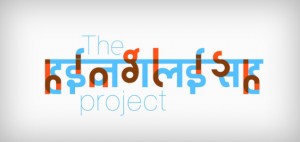
  • ‘The Hinglish Project’ and 6 other wins add on to India’s tally on Day 4

    By A Correspondent


    Day 4 at the Grand Auditorium, Palais des Festivals was not as eventful for the Indian contingent as the metals failed to come in big numbers as envisaged. India managed to clinch only 7 metals, including 1 Gold, 1 Silver and 5 Bronzes in the four categories for which the winners were declared – Design, Press, Radio & Cyber. In Cyber there were no shortlists from India.


    The Gold was bagged in the Design Lions category which had a total of eight shortlists from India. DDB Mudra Group was the winner of the lone Gold for their work ‘The Hinglish Project’, bagged under the Consumer Services category, the work was for Ministry of Tourism under the Incredible India initiative.


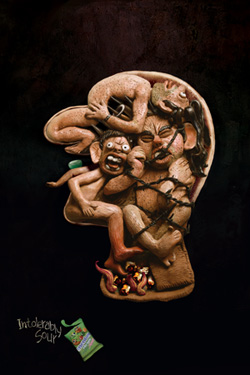
    Ogilvy & Mather’s work for Mentos Sour Marbles saw it bag a Bronze

    The creative credits for the entry include Sonal Dabral, Chairman & Chief Creative Officer, Pratap Bose, Chief Operations Officer, Louella Rebello, ECD, Shirin Johari, Associate Creative Director – Copy & Art, Michael Remedios, Agency Producer & Warren Pereira of W Films.


    Incidentally, The Hinglish Project also bagged a Bronze in the Design Typography category. Reacting to the win, Louella Rebello, ECD, DDB Mudra Mumbai said: “The Hinglish Project has been a labour of love. We named it ‘The Hinglish Project’ because it is exactly that. A project that aims to demystify Hindi and make it familiar and more approachable by using a wonderful blend of the two languages. It was very well received and appreciated even before it was entered and the Cannes Lions are testimony to this. Kudos to Shirin Johari. At DDB Mudra, it’s champagne time as we bring home our Lions.”


    Perhaps the biggest disappointment for the Indian contingent was in the Press Lions category where it managed only four metals out of a total of 30 shortlists. The big winner was Leo Burnett as it bagged Silver for its client Bajaj Electricals. Leo Burnett bagged the award in the Home Appliances & Furnishings category; the creative team for which included KV Sridhar – CCO, Nitesh Tiwari – ECD, Vikram Pandey – CD, Vikram Pandey – Copywriter, Brijesh Parmar – Art Director, Amol Jadhav – Photographer, Sushma Singh/Adya Thakur – Account Supervisor and Beena Koshy – Advertiser’s Supervisor.


    The Print category also brought in three Bronzes forIndiawhich included one by Ogilvy & Mather for Mentos Sour Marbles – the team for which included Abhijit Avasthi/Rajiv Rao, CCO, Priti Arora, CD, Tushar Pal, Copywriter, Deelip Khomane, Illustrator and Typographer.


    O&M bagged another Bronze in Press Lions for its work around Hot Wheels

    The other bronze went to BBDO India for its ‘White Collar Hippies’ campaign – the team for which comprised Josy Paul, CCO, Rajdeepak Das, ECD, Sandeep Sawant, CD, Yohan Daver, copywriter; while the third Bronze went to Ogilvy & Mather for ‘Hotwheels’ for its client Mattel Toys – the team for which included Abhijit Avasthi/Rajiv Rao, CCO and Sukesh Kumar Nayak, ECD & Copywriter.


    The other Bronze was bagged in the Radio Lions category by Leo BurnettIndiafor Strand Bookstall. The team for the campaign was led by K V Sridhar, CCO, Nitesh Tiwari, ECD and Ashwiny Iyer Tiwari, CD of Leo Burnett.


  • Colors ki kahaani: Milestones in the journey so far

    • Colors, launched on July 21, 2008

    o Was the 11th Channel in the Hindi GEC Genre

    o Star Plus was clear leader with 300+ GRPs, followed by Zee TV with 200+ GRPs

    o Colors launched with 81 GRPs in 5-1/2 days of programming

    o Crossed 100 GRPs in the Second Week

    o Crossed 200 GRPs in the Ninth Week of launch

    o Became #2 channel in the 10th week of launch

    o Crossed 300 GRPs mark in 29th week of launch

    o Colors broke the 10 years Leadership of Star Plus within 9th Months of its launch & became #1 channel

    0 With the launch of Khatron Ke Khiladi 2, Colors garnered 325 GRPs, highest GRPs by any channel since launch of Colors

    o With launch of new season of Bigg Boss with Amitabh Bachchan, Colors crossed another milestone by fetching 338 GRPs

    o Launch of Bingo with Abhishek Bachchan, took Colors to 365 GRPs

    o Colors was consistent #1 channel for consecutive 22 weeks with an average of 319 GRPs


    • Lost the leadership to Star Plus in March 2010
    • Was a consistent #2 channel since then till August 2011
    • Sony took the #2 position with launch of KBC, Colors slipped to #3 position
    • Colors slipped to #4 position in early 2012
    • Came back strongly in December 2012, to regain the #1 position


    • While the other entrants in the Hindi GEC space Imagine, 9X, Real have shut shop, Colors continues its move towards leadership
    • Where in 2008, only 2 channel were at 100+ GRPs (Star Plus & Zee), today there are 5 channels generating 100+ GRPs every week
    • Colors has stood strongly in the tough competitive space.
    • Today, Colors is the strong challenging #2 channel in the Hindi GE Space


    Updated: July 18, 2013

    Source: Colors research team


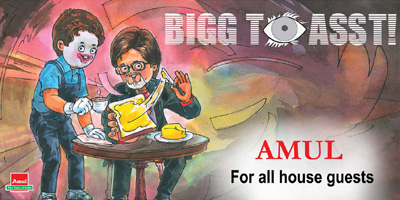
  • 5 Amul ads that tell the Colors story

    Khatron Ke Khiladi was indeed a show that got everyone talking about Colors


    Getting Amitabh Bachchan as the ‘pop philosopher’ for Bigg Boss was a big coup


    Guests on Bigg Boss reality show have always grabbed headlines


    Khatron ke Khiladi is now part of everyday Indian lexicon


    Had he not won the Bigg Boss show, Vindoo may not have grabbed headlines they way he did in the recent spotfixing scandal. Don’t miss the Bigg Boss’s eye in this Amul ad


  • Mediaah!: How underdog Colors won the great GEC battle

    By Pradyuman Maheshwari


    Having tracked the journey of both Television 18 and Viacom from their early days (in India in the case of Viacom), there was much desire to see both groups succeed.


    But I thought they were being too ambitious to launch a Hindi GEC in 2008. The market was already very crowded and with the whizkids of broadcasting Peter Mukerjea and Sameer Nair also in the fray, the sentiment then was that it was going to be well-nigh impossible for any new channel to be a success.


    I was sure the Network 18 team wouldn’t get it right. They had had success with CNN-IBN but entertainment wasn’t like news. Good content doesn’t necessarily maketh a GEC.


    The idea of getting Ashvini Yardi (who had earned her stars as programming head at Zee) was a great one. But could CEO Rajesh Kamat and she be able to match the maharathis and former Star India CEOs Peter and Sameer?


    I think what changed my outlook to the channel’s launch was the news that Akshay Kumar was signed to do a Fear Factor. The folks meant business and Akshay was then the reigning king of Bollywood. Plus the team was young, friendlier (than the others) and indulged us in the media.


    A week before the launch, most of us had wanted Colors to succeed. Even advertisers and media agencies longed for a worthy alternative to the existing slew of channels. And after the ratings for the first two weeks came in, we were sure the channel was a winner.


    Even then there were naysayers telling us that the magic would fade away. Regrettably for them, it didn’t. Soon Colors dethroned Star Plus as the numero uno Hindi GEC.


    I remember writing then that it was complacency that had seen Star Plus go down, a comment that didn’t work very well with some people internally and of course the biggies in the business. But a year-odd later, when I spoke to Star India CEO Uday Shankar, he admitted that the channel getting complacent. I asked him just to let people know that my earlier statement was based on some digging in, and not speculation.


    **


    My first major interaction with Rajesh Kamat happened only when I had this interview on the first anniversary of the channel in Impact magazine. It was an extra-long 6000-word interview. Rajesh had then told me how it helped being an underdog. “It made us focus on our own efforts. Also what happens is when you’ re an underdog, you push yourself to give 200%.” He mentioned how he learnt several tricks of the trade from Sameer Nair, and knowing that the former Star India CEO would’ve tracked the rise and rise of the channels, we invited him to do an appraisal for this fifth anniv package.  The Impact interview isn’t on the Net, but I found a Word version on my Gmail archives. Inbox me if you want a copy.


    ***


    In many ways, the launch of Colors also marks a little over five years I have spent in the M&E media. I can’t claim the same kind of success that the channel has achieved, but, yes, the ability and desire to try and do stuff that has not been done before is there.


    Here’s to many, many more colourful years for Raj Nayak and Team Colors (and the folks at Network/TV 18, Viacom and Viacom 18)!


  • Anil Thakraney: Balika Vadhu on Colors was a game-changer

    By Anil Thakraney


    Hard to believe it’s been only five years, it feels like the channel has been around for a very long time. In a short time, Colors has managed to create a niche for itself in the Hindi GECs segment. This must not have been easy, given that Zee, Star Plus and Sony had already established themselves long before the new player arrived. Since ratings play a cyclic game (one big show can catapult a channel to the top rung), I don’t go by numbers. But it’s clear that Colors has made an impact on the viewer’s psyche, and congrats to the team for that achievement.


    I must also state for the record that their flagship serial, Balika Vadhu, is the only Hindi soap I currently watch. This is because the serial feels very real, in the lives of the protagonists we see glimpses of our own. Indeed, Balika was a game-changer when it arrived on the scene because it broke the genre of the over-the-top, garish, unbelievable soaps that used to rule till the year 2008.  Since then, Balika has gone on to inspire other soap-makers. Colors needed such a kick start programme to get instantly noticed.


    However, sadly, the rest of the channel’s programming hasn’t really been different, their serials haven’t shown the same freshness. Bigg Boss, the reality show, may not garner big ratings, but it keeps Colors buzzing on Twitter, which explains its continued run. I have never been a fan of this dimwitted show for just one reason: The channel deliberately invites the demented sort as guests, hoping that their shenanigans will get the viewers hooked. My view is, this can be achieved with witty, interesting, feisty people. We don’t need morons for entertainment. Here’s hoping Colors will keep this in mind for the future.


    For the next five years, I would advise the channel to return to its roots, and passionately work towards creating game-changing programmes. In a previous post, I mentioned why producing American quality serials is very dicey in Indian conditions, therefore a Homeland or a House of Cards will be very difficult, if not impossible to do. However, that doesn’t mean the channel can’t push the envelope. Now that the best of Bollywood talent is beginning to take television fiction seriously, the smart channel will be the one that exploits this opportunity quickly, teams up with the hottest young writers and directors, and puts out programming that’s offbeat and interesting. Is Colors up for the challenge? That is the question the channel’s leaders need to ask themselves as they blow the five colourful candles.


    Anil Thakraney is a senior journalist and commentator. He is also Editor-at-Large, MxMIndia. The views expressed here are his own. He can be reached via Twitter at @anilthakraney


  • High Five with the Colors ‘A’ Team

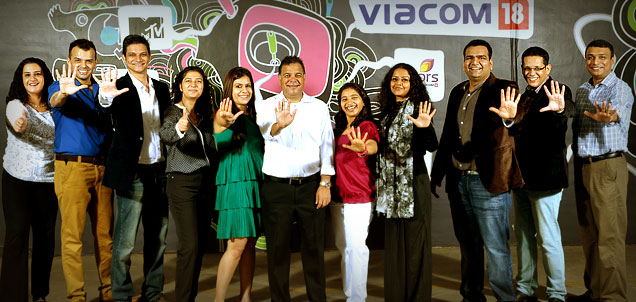
    The Colors A Team (Left to right): Simran Hoon- National Sales Head, Prashaant Bhatt-Weekday Programming Head, Vivek Srivastava- Digital & Business Operations Head, Manisha Sharma- Weekend Programming Head, Sonia Huria Gupta- Communications Head, Raj Nayak- CEO, Colors, Cheryl Mendonca- Operations Head, Monica Nair- On-Air Programming Head, Romil Ramgarhia- Commercial Head, Arnab Das- Head Strategy & Research, Rajesh Iyer- Head Marketing


    So what’s the big deal if a channel has completed five years of existence. Last year, Zee did four times that. Star Plus – in just its Hindi avatar – has been around for over a decade, Sony Entertainment Channel too has been there for long… even Sab TV has been on air for more. Only Life OK among the general entertainment channels is younger in age.


    But the five years of Colors have redefined Indian entertainment television. In not just programming terms, but the way the business ought to be done: marketing, sales, distribution, promotions… almost every department.


    Rather than do an interview with CEO Raj Nayak or the programming/marketing/sales heads (which we could do any time through the year), we thought of bringing you the entire core or A team at Colors. Simran Hoon- National Sales Head, Prashaant Bhatt-Weekday Programming Head, Vivek Srivastava- Digital & Business Operations Head, Manisha Sharma- Weekend Programming Head, Sonia Huria Gupta- Communications Head Cheryl Mendonca- Operations Head, Monica Nair- On-Air Programming Head, Romil Ramgarhia- Commercial Head, Arnab Das- Head Strategy & Research, Rajesh Iyer- Head Marketing and of course Raj Nayak, CEO of the channel.


    Many of them are seldom in the limelight, and so in this interaction with Pradyuman Maheshwari, we got the Colors ‘A’ Team to share their sentiments about the channel. We did it over kathi rolls, sandwiches and chocolate mousse last Thursday, three days before Anniversary Day. Simran Hoon was on a short vaction when the lunch happened so we got her views via mail and phone. The photograph you see was shot the previous day.


    Excerpts from the conversation:


    Also read:


    Raghav Bahl: The Colors of Trailblazing


    Sameer Nair: Had it not been for the global recession, Colors would’ve been a billion dollar channel!


    Anil Thakraney: Balika Vadhu on Colors was a game-changer


    Mediaah!/Pradyuman Maheshwari: How underdog Colors won the great GEC battle


    Colors ki Kahaani – Milestones


    5 Amul ads that tell the Colors story


    The highlights of the journey so far and what were your expectations when joined Colors?

    Raj Nayak, CEO: The answer is simple, they offered me a deal that I couldn’t refuse. But on a serious note, I have been here half the five-year innings of the channel and as I look back I think it was a very courageous and bold move at that particular moment of time for any company to come and launch the 10th or 11th GEC when it was assumed that the market was already overcrowded. I think coming in as the 11th player also had its own advantages, expectations were low because whatever you do, you can only go up. It is indeed a huge compliment to my predecessors and the team that has been there since then.


    From what I hear, they researched and studied the minds of consumers and identified the need gaps. Once done, Colors offered differentiated content and ensured that the channel doesn’t look like any other. They saw the opportunities in viewership from the Hindi hinterland and touched upon stories with social issues, set in rural india, which were never dealt with before. A complete contrast from the urban saas bahu serials…


    Meanwhile, all channels had seen the success of Colors and started copying what we were doing. Colors as a brand had been repositioned by the competition and we were slow in reinventing. We did not evolve the way we should have. This was also the period when I was offered the job as my predecessor had quit. Within a short span of my moving in there were people at the senior level who had moved out of the organization  and suddenly I was left with Team where there was lot of insecurity, compounded with the fact that the channel had also slid to No 4. So the first task was to build confidence and security within the team. There was this fear whether the new boss would bring in people with him, fix them in key positions. But in my mind, if this was the team that had made the channel the No 1, why couldn’t they do it again?


    So I didn’t bring in a single new person into the company. We have the same team that launched the channel and the only exception that happened was the programming head chose to move on. Had she continued, we would’ve had the same team!


    The next thing was the realization that success can also become your baggage. We got so identified with social issues,  social drama that producers would then say yeh Colors jaisa show hai. As a result, we never got new ideas. We then sat down and decided to do something completely different. We’ve had our successes and failures. Like Chhal, which was a social thriller, at 9 pm. People said we were mad, we went ahead and failed. Also Ring ka King didn’t as well as expected.


    What we didn’t do is stop reinventing. Jhalak Dikhla Jaa has been a huge success, so has Comedy Nights with Kapil. Sur Kshetra did well and Madhubala has possibly been the only fiction show from the last two or three years that’s worked so very well. I don’t think there is any other GEC that has kind of variety that we have. The secret to our success is this desire to continually evolve and take calculated risks. And we have a great team taking this forward.


    Manisha Sharma, Weekend Programming Head: I was working with another network when I came here and Colors has always been very dynamic and aggressive network with everything it has done. When I used to be on the other side one would keep thinking on how Colors would get away with it even as we would live within the realms of dos and don’ts of shows and that’s possibly one of the reasons why I joined Colors. And in these last 15 months I have never done so many shows and so many launches in any other place ever before. The good thing is we decide very quickly, if something is not working, we take corrective actions. We do not have layers hierarchy and bureaucracy. We have the youngest team working across any network… very dynamic. We are very world broadcasters.


    Raj Nayak: We have a single line brief which says only if there is a problem, come to me. Doing well is expected, each one here takes the ball and runs with it with no supervision. And that kind of passion and commitment I have never seen anywhere else.


    Arnab Das- Head Strategy & Research: I have been here with Colors for three years now. What got me into Colors was at that point it was already an iconic brand. It had created its own niche. All the shows that we have done – Balika Vadhu in the beginning, then Madhubala, now Jhalak Dikhla Jaa and 24 that’s coming up – have their own position and highlight.


    Simran Hoon – National Sales Head:  I have had the fortune of working with top successful brands like Sony, Star , Zee and the The Times of India over the past 19 years and truly enjoyed working with some of their successful start ups. When a Hindi GEC was being planned by an enviable company like Viacom 18, it was an opportunity I just couldn’t resist !!!


    The stint has been truly a dream ! Joining the channel six months before launch and being part of the core team and to see the channel now complete five superb years, has truly been a privilege!


    Romil Ramgarhia- Commercial Head: I joined Colors before it launched in the finance department so. I came from the telecom industry to media and entertainment and the fact that Viacom and Network 18 had tied hands got me here. The media also excited me specifically so I just jumped and Colors happened. There is lot of hard work. There was lot of planning which went into, but the journey has been exciting. It’s been a great learning experience. We have been through all peaks and troughs. We’ve been No 1, we been a challenger brand. We’ve seen all the ups and downs. The best part about this place is the vertical structure that gives us the decision-making authority.


    Cheryl Mendonca- Operations Head: I joined more than five years back. We had heard that MTV was coming up with a GEC. The launch was completely chaotic. I have never launched a channel with not more than five people handling entire non-creative. With no equipment, manpower was absolutely scarce. With all those constraints we managed to launch. The thrill of the ratings we got in the first two weeks can’t be described in words. It so motivated the young team we had. From those days – all the ups and down – it’s been a great journey.


    Monica Nair- On-Air Programming Head: I was very really reluctant to join as I had this cushy job at a big network so when the previous CEO called me up, I said NO. And then he called he said if you don’t come and  join us we will never ever offer again in your life and I promise you it would be an exciting journey. So I just trusted him and I joined it’s been a really great journey ever since. The first time India got a glimpse of our channel was thanks to work that my OAP team had done, and I was really proud of it. The shows weren’t shot then, the packiaging had to be create. And our promos got people talking. I think it is the best place that I have ever worked in because people are accessible and you get to do what you believe in!


    Prashaant Bhatt- Weekday Programming Head: If Colors is five-year-old year kid, I am just a 20-month-old baby. The journey has been very good. I been in the media for 15 years but as a freelancer. I knew if I ever wanted to do something as a broadcaster, it would be at Colors. Our mindsets are the same. Let’s take risks, let’s do something different. We bring a certain aggressiveness to our work. We are very passionate about our work and what really works is the conviction and dedication. A point came when we actually ran out of social messages to give to people out there. We done it all with Balika, Uttaran, Bhagyavidhaata and there were 20 other social messages in other networks. So we said let’s not copy ourselves and we did Madhubala when went so much against the Colors strategy then. We decide to shock our viewers and it worked. It’s this ability to take risks is what drives us and what brought me here. The day we play safe would be a boring day actually.


    Vivek Srivastava- Digital & Business Operations Head: I have been around since before the channel launched. I worked on strategy were would like to believe there was a method in the madness. I think our biggest strength is that we always challenge the rules. It’s thinking out of the box and raising the bar is not aonly appreciated but celebrated and cherished.


    Sonia Huria Gupta- Communications Head: The journey in one word has been exhilarating for me. There is so much action in my life every day. I have been privileged of working with the greatest minds right now. I mean then it was Rajesh Kamat and Ashvini and now it is Raj and everybody who is here. You rarely get an opportunity to work with legends like these. When we started, the promos said ‘ek naya Hindi general entertainment channel’. In two months, we had to drop the word ‘naya’!  Baalika Vadhu had been a talking point in every household. From my function point of view, the representation of the bouquet that we offered covered Bharat and India so which meant the messaging had to come out in a right manner where we did not alienated anybody… something for everyone and everything for someone.


    Rajesh Iyer- Head Marketing: A lot of what had to be said has been said already (laughs). I joined this place purely because it was a start-up. The idea of a place where you can start from beginning and you define your own rules lured me here. When we started the challenge we faced was that we were launching a mass brand without a mass platform. So we didn’t have a platform to promote ourselves and we no other mass channel would take us because we were competition. Within a month though we had a platform and the journey has been great ever since. There is complete transparency here… the people we work with, the bosses we work with, the colleagues we work with. There is a lot of camaraderie and no insecurity in the core team and that’s critical for any success story.


    What according to you been the most significant milestone of the last five years? Is there one thing that you think you could re-do in last five years? And first with you, Rajesh!

    Rajesh Iyer: Thanks (laughs). I think an important milestone for a young channel like us was to be No 1. That was the defining moment for the entire organization… whether it was the perception standpoint within the trade, internally, within peers. I dont think so I would like to re-do anything.


    Sonia Huria Gupta: I think one significant milestone would be No 1 for all of us but I think what we are doing right now is even more significant. Like Raj says it’s always easy for of all us to get there to the No 1 position, but sustaining that, being there, being still relevant for the audience I think that is even more significant today.


    Vivek Srivastava:  I think the significant milestone has to be No 1 and the fact that we achieved that in nine months was a very big thing. And I agree with Sonia reaching the top is easy, sustaining it is what is difficult. On re-doing, I think as a GEC brand we need to be dynamic, so we don’t have to redo but keep reinventing, so nothing really.


    Prashaant Bhatt: For newcomers like Mr Nayak, Manish and me, going back from No 4 to No 1 was the milestone. Having said that, a bigger milestone was me is the differentiated programming that we have. No longer does any producer come to me and say ‘Yeh Colors jaisa show hai’!


    Monica Nair: They have also said it. But I would like to see us No 1 again.


    Cheryl Mendonca: When we hit No 1 and when the other channels started looking at us like a threat and even started copying us.


    Romil Ramgarhia: Getting to the No 1 was the most significant milestone for me. In terms of redo, I think as a brand we missed the bus by not launching the Hindi movie channel when it was ready to go on air. It was a big mistake, and we’ve now missed the bus fo r the next five years as well.


    Simran Hoon: Beating the número uno Star Plus in 9 months of launch when they were the undisputed leader for so many years was creating not a milestone, but making history !


    Arnab Das: See, being No 1 is from a TAM rating perspective. The most significant milestone according to me for Brand Colors is being there as No 1 and most powerful brand in the minds of the consumer. I interact a lot consumers and it’s very clear that Colors is here to stay and our viewers have many expectations and they want us to meet them. In terms of redoing, I agree with Romil, the movie channel was an opportunity to expand our brand. Unfortunately we missed that, I guess we have to live with it.


    Manisha Sharma: I think everything has been covered. I joined when we were No 4 then managed to get it No 1 then we have been a very healthy No 2. That is really a milestone. I think it’s easier to be No 2 and aspire to be No 1. I can see a Star right now constantly freaking out for losing its position but for us it’s always been great. We are always in the No 2, No 1 game and that is the healthy part of it. And about re-doing, I am to new here to redo and all that we are doing right now is doing, doing and doing (laughs)


    Raj Nayak: I was very lucky I inherited a very good team. The biggest challenge for me was pursuing these two people to look after programming (points to Manisha and Prashaant). So getting the two people was important and hence a milestone. And then there was the signing of 24. The success of 24 for me is not going to be so much for Colors but for the entire industry. It has the potential for becoming the gamechanger for the industry. I meet colleagues from other networks who tell me that for the industry’s sake, we want you to be successful.


    Your favourite programme/show on the channel over the last five years?

    Raj Nayak: I need to be a little tactful because I need all the producers, but I don’t want to be seen to be playing favourites with any particular programme. But there’s one show which is actually a loss-maker for me and yet we do it year after year and that’s Bigg Boss. It’s got cult following in this country which is completely different from any other show. It gives the channel a differentiated identity. So at one level, we have Bigg Boss, and on another there’s Balika Vadhu.  It would possibly be right to say that Bigg Boss is not my most favourite show, but surely the most important one.


    Manisha Sharma: Balika Vadhu. It very effectively brings up a social message and is very beautiful fiction. Worldwide, you go after stories like these.


    Arnab Das: India’s Got Talent was my most favourite show of the channel. Purely because of the dynamics: one gets to see everything and anything on the show.


    Simran Hoon:  It’s always been Bigg Boss for me! Sheer entertainment and also a dream for advertisers when it comes to brand engagement embedded in a manner where it moulds itself well with content.


    Romil Ramgarhia: It’s Balika Vadhu and Jhalak. With Balika, the characters resonated very well. Anandi and the entire family really worked for viewers and Jhalak because it just took the scale of dance shows to a different level. It’s is the biggest dancing show that’s ever been done on Indian television


    Cheryl Mendonca: For me, KKK…Khatron ke Khiladi, Akshay Kumar was fabulous for the two seasons he did. And the other would be Balika for the way the story has progressed.


    Monica Nair: For me it’s Balika as it’s the first time I cried watching a fiction show. I howled when Gehna’s husband died, it was the most moving episode. I would also salute Kathron ke Khiladi because it was not a talked about format in the earlier channel. Without Khatron ke Khiladi, Balika wouldn’t have been so big. I feel people started sampled Khatron ke Khiladi first and then they came to know about Balika. So hats off to Khatron ke Khiladi!


    Prashaant Bhatt: Definitely one of them is Balika Vadhu and Madhubala too because it helped change the perception of the channel. The first show that didn’t have any hardcore social message, wasn’t regressive and was without a rural backdrop. Earlier producers would come up and say ‘Yeh Colors jaisa show hai’ which was a slap on our face…


    Vivek Srivastava: Comedy Nights with Kapil and Big Boss purely because it gives so much of conversation around the channel.


    Sonia Huria Gupta: Balika again for me and currently my hot favorite is Comedy Nights with Kapil.  There was this one particular episode where Dadisa whose character is very grey asked her granddaughter-in-law to divorce her grandson. To me that was the high point of the show.


    Rajesh Iyer: Comedy Nights with Kapil is my hot favourite. It was an underdog show when we launched it and has done extremely well, a clear testimony to all the creative work that has gone behind it. The second show which I like is Khatron ke Khiladi. It was the first show which we launched and it more or less defined us… we are also Kathron ke Khiladi!


    Any kind of programme/show  you would like to see on Colors (and why)?

    Raj Nayak: Grey’s Anatomy since you asked for just one. I think it is very easy to adapt in India because everybody thinks it’s a hospital show but it is not a hospital show. You have this operation theatre and various characters and a lot of cameo in it. That will be on show I woud like to put money on.


    Manisha Sharma: Homeland. In India, we see a division between fiction and non-fiction. But with shows like 24, there’s no such distinction. It’s edgy and is great content and television is going to move to that space.


    Arnab Das: Prison Break, one of the best shows I have seen in terms of taste, the plot. It’s woven so beautifully, from beginning to the end.


    Simran Hoon: Friends… Would love to see an Indian adaptation as it fun and a first of its kind on Indiantelevision


    Romil Ramgarhia: I think we need something like a Sherlock Holmes. It’s a show that would work well with Colors audiences


    Cheryl Mendonca: CSI indeed. It’s brilliant!


    Monica Nair: I was doing some research on non-fiction and discovered how a certain show had done which covered a couple’s divorce live. I would like to see something similar on Colors that will keep the audiences glued to their TV screens.


    Prashaant Bhatt: Instead of naming any particular show, I would say horror as a genre. It’s been missing on our platform, so anything with horror would be good to have.


    Vivek Srivastava:  I would go for Dexter and The Big Bang theory. If there’s one network which can do justice to this kind of programming, it’s Colors


    Sonia Huria Gupta: For me, It would be Scandal. It is really scandalous stuff with the way things work in the White House and it would be interesting to adapt something like that to India, to what happens in the Parliament. It would make for great content!


    Rajesh Iyer: Friends. If there’s a network that can execute it well, it’s us.


    Your vision for Colors. In 2018, five years from now, how would you see Colors score the Perfect 10?

    Rajesh Iyer: I think if we are still concentrating on giving varied content, different type of content, I see the Colors franchise growing and many more channels in the fold. I see Colors in the digital and various other formats. In 2018, Colors will have a very strong digital play.


    Sonia Huria Gupta: If we continue to stay nimble-footed, if we continue to stay agile and if we continue on the path of re-inventing and having an aggressive approach, we will score the Perfect 10


    Vivek Srivastava: If we are as relevant and contemporary and as we are today, we would’ve done the job!


    Prashaant Bhatt: While we will be 10 years’ old in 2018, we would still be younger than the other GECs. I think the same kind of energy, aggressiveness and risk-taking factor should take us to the Perfect 10.


    Monica Nair: I don’t think there is any formula or any such thing. I think: go with the flow, go with the gut and with good karmas supporting us, we will achieve the Perfect 10.


    Cheryl Mendonca: With a similar team and enthusiasm, we can take Colors to greater heights in the next five, 10, 12 years ahead.


    Romil Ramgarhia: For 2018, my vision is to be the most profitable media brand as far as Colors is concerned and have all things that possibly we can have across the television and non-television space. We need to re-invent and experiment continually to score a Perfect 10


    Simran Hoon: Can’t really make such a big prediction given how dynamic this industry is! I am waiting to meet someone who is a fortune teller and paradoxically most media companies happily carry such programmes across the board! Am also waiting to meet someone who has a Peoplemeter though am happy not knowing the latter!


    Arnab Das: I would say as a brand, Colors should be considered as an inclusive and respected brand for internal and external stakeholders… whether it is the consumer or the advertiser.


    Manisha Sharma: I am hoping that by 2018, all of us are stakeholders and none of us are only working here (laughs)


    Raj Nayak:  I see Colors as not being a single brand, but having several brand extensions. Is Colors being in the regional space and very active in digital. The future is that people are going to be multi-platform, multi-screens in every field. Our vision is to be India’s most respected, profitable and trendsetting media company.


    Pradyuman Maheshwari: Thank you, everyone. For me, the channel had arrived was when I was on this flight from Mumbai to Delhi in 2009 and a gentlemen in the row ahead had opened the newspaper which had a Colors ad. This prompted him to crib to his companion and mouth a few expletives on how his 7-year-old son had started spelling colour without the ‘u’ thanks to what he sees on telly. He said he wanted to complain, but didn’t know who to go to!
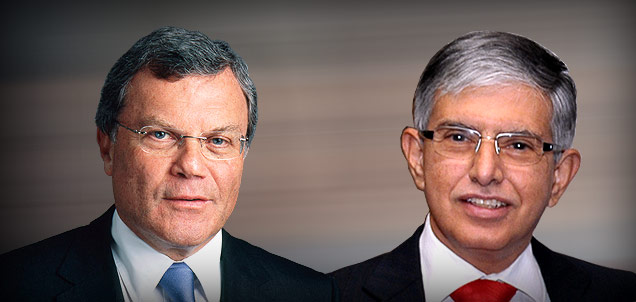
     

  • Raghav Bahl: The Colors of Trailblazing

    By Raghav Bahl


    “Where is the ‘u’”, I exclaimed at our regular fortnightly update meeting in January 2008. An economic cloudburst was about to crush the globe in an unprecedented landslide, but our mood was flush and excited. Sitting across me were Haresh Chawla, Rajesh Kamat, Ashvini Yardi, Sanjay Ray Chaudhuri (RayC) and Vandana Malik. Ashvini had just turned the laptop’s screen towards us, revealing the logo of “Colors”, resplendent in purple, blue and white hues, levitating on a striking flute. “C’mon Raghav, the ‘u’ is so old-fashioned and ‘your’ generation. Today’s Google kids spell it the way the Americans do. It’s Colors, without the ‘u’!” A trail-blazer was born.


    Six months earlier, we had spotted a wafting opportunity. The reigning market leader over the last decade had crashed to less than 200 GRPs. The extant Number One was cruising unchallenged in the 800 GRPs’ stratosphere. There was a yawning gap, reaching out and luring a challenger to dive into the treacherous blue sky in between the two. Another contender, called Imagine, had strung out its sails. Viacom and TV18 decided to take the plunge too. May the best woman win!


    TV18 was just emerging from another heady launch two years earlier, in 2006. We had taken the battle to the utterly monopolized English general news market. Within months of its launch, CNN-IBN had dethroned the leader, proving all naysayers wrong. And that victory had taught us a seminal lesson – if you want to enter an arena which is totally dominated by a single player, just do not pussyfoot your entry. Enter with the mindset of a leader. Enter with a full FPC, with drama, comedy, crime, mythology, clutter-breaking reality and big film premieres. Spend a dollop to hurl the brand in the faces of millions and millions – and back it up with a distribution plan which puts you right “next” to the leader.


    Yes, it would cost hundreds of crores, but we were clear that we would rather burn hundreds of crores in a high voltage launch and win or flame out, as against die a slow and painful death with a hundred small cuts, struggling every day in the Number 4 or 5 position, draining away cash and energy, shoulders drooping, simply waiting for the inevitable closure. We were sure that we had to enter with the mind-set of a leader.


    So when Ashvini said that our flagship show was a socially progressive drama set in rural Rajasthan, classically shot, with folk music, telling the poignant and uplifting story of a child bride, we said “go for it”. Balika Vadhu was born. Then we said that we will trot out little Krishna in the mythology genre, in place of the muscular and mustachioed cardboard characters that ruled there. While the others were doing urban saas-bahu dramas, we plumped for socially relevant, suburban, semi-rural tales of human spirit and suffering.


    An expanded TV audience, now residing in “non-metro” India, resonated with our stories. We piled on the pressure by commissioning the reigning star of Bollywood – Akshay Kumar – to helm Khatron Ke Khiladi. I still remember the day I authorized that 9-figure payment to sign him up. My fingers trembled, but our resolve was steely. While every channel was tucking reality away on the weekends, we decided to disrupt with a daily one-hour strip at 9 pm. The women loved Akshay, the men loved him as much as they loved the lissome ladies, and the teens rediscovered GECs to enjoy the youthful Khatras and Khiladis. Even as the economic cloudburst destroyed the world economy in 2008/9, we kept the faith. The rest is history!


    Five years on, I now watch the mounting energy of Colors from a relative distance, totally sanguine that Prashaant, Manisha, Raj and Sudhanshu have caught the gale – we still have the mindset of a leader.


    Raghav Bahl is Founder & Editor, Network18


  • Sameer Nair: Had it not been for the global recession, Colors would’ve been a billion dollar channel!

    One of the finest minds in Indian broadcasting, Sameer Nair was former COO/CEO of Star, and founder-CEO of Imagine (aka NDTV Imagine) that started exactly six months before Colors did and shut down in a little more than five years of its existence. We asked Mr Nair to give us his perspective on the Colors journey and achievements. His views have much meaning because he has worked closely with both CEOs that Colors has had so far – Rajesh Kamat and now Raj Nayak, and knows a lot more than others on what makes for an entertainment channel’s success and failure.

     

    On the launch and growth of the channel:

    When Colors was launched I guess it had the advantage of coming with very little expectations. Both the channels that had launched before it – 9X and Imagine – had come with all the hype and hoopla of their founders’ ‘awesome’ track records and they were expected to deliver the goods. In that context, Colors had a relatively unknown and untested team.


    It was the remarkable combo of Haresh Chawla, Rajesh Kamat and Ashvini Yardi who worked together, studied the examples of 9X and Imagine – and decided what to do and more importantly, what not to do. They put serious money behind distribution, marketing, content… they went for broke, so to say. Everything fell into place remarkably. Their combination of shows – Bigg Boss, Fear Factor and Balika Vadhu worked wonders for them.


    Now, both Bigg Boss and Fear Factor were on Sony the previous years, but Colors made them bigger, better and brighter. In GECs, you need a soap to make the connect and that happened with Balika. Balika Vadhu was the one show that needed to work and it did.


    In a manner of speaking, they did what we had done at Star in 2000 with the KBC-Kyunki-Kahani combination. That’s the way it works: once you find favour with audiences, it sort of multiplies and magnifies itself…a halo effect if you will. And once Colors achieved that, it never looked back. Very quickly it went to 100 rating points and then 200 and a few months later, it actually dislodged Star Plus from its eight-year hegemony.


    Nothing succeeds like success. And the ‘awesome threesome’ took full advantage of that. We could see from the outside that they always had their foot on the accelerator. They really went for it and kept on adding to their repertoire. Colors stayed No 1 for a while and continued to spend the money.


    Putting the Colors success in perspective:

    In any marketplace, there will always be the established players and then the new entrants who try and gain market-share and mindshare. It’s never easy to dislodge the leader – for television, audience inertia is a huge factor – but the leader also knows that it can’t go on forever. The question was – what would trigger the change?


    First 9X and then Imagine failed to rock Star’s boat; but the Colors performance was unique and outstanding. It deserved every success it got. Meanwhile, the market got a lot more competitive. Star Plus responded very quickly I would say, regained its No 1 ranking and now, pretty much has a stranglehold on the whole game. I think Star’s strong comeback was very commendable in the circumstances.


    And then the second phase:

    There was a change of guard of sorts. First Rajesh left, then Haresh and then Ashvini, all in quick succession. Around this time Raj Nayak joined as CEO. The company also got larger. In the first phase, it was essentially Colors. Now it became an integral part of the Viacom Group. The successful first phase also resulted in the transaction with Reliance and now we have a bigger, corporatized structure – but still nimble-footed and competitive enough to remain Star’s key challenger.


    My favourite Colors show over the last 5 years:

    I have never been a regular viewer of Balika Vadhu. I like a lot of their non-fiction shows. I liked Bigg Boss and Fear Factor. Much earlier we had done a Jhalak variation on Star One as Nach Baliye, so that’s something I watch. Now I look forward to 24. But more than any one particular program, you need to do a lot of exciting programming and then strive-hope-pray for that lucky break. I think Colors did that very, very well and when they saw an opportunity, they didn’t hesitate to grab it.


    Anything the channel could’ve done differently in the five years:

    Nothing at all! As they say, why fix it when it ain’t broke! A few  ups and downs will always happen between No 1 and 2 and it was too much to expect that Star, the lord and master of Indian Broadcasting for 8 long years, would take things lying down, roll over and play dead. Star is a much bigger, much wealthier company led by a lot of excellent professionals and it did the right thing by dragging Colors into that expensive fight. I don’t think Colors could’ve done anything differently. The lucky break was striking the right programming mix. A sort of unlucky break was the global recession. I felt bad for them at the time, because their incredible success was not valued enough by the depressed market. Had the Colors success story happened in 2007, it would’ve been a billion dollar company. And then, we would be writing a pretty different story!


    Colors five years hence… in 2018:

    I don’t see Colors as a single channel any more. It’s a huge media organization with broadcast and distribution interests. It’s a JV between India’s largest company and US giant Viacom, so obviously it is driven by ambition and great money to back it. It’s difficult to say that in five years from now, Colors will be No 1 or 2 or 3… and I don’t think that’s the correct way to look at things. Colors has made Viacom 18 a major player on India’s broadcasting stage. Of course Viacom 18 is not just Colors just as Star was never just Star Plus; though for a while between 2000-03, it was often perceived that way on the outside.


  • 1 Minute View: Gyaan from the Colors journey

    More than your daily viewswallah give you his/her daily dose, we suggest you should read up what the biggies have said on the Colors journey.


    Let’s give you a quick summary of what you can read in the various stories in our special package on the Colors fifth annv:

    1. High Five with the Colors ‘A’ team

    Everyone agrees that there there is no bureaucracy in this young team in the channel. People assume the responsibility and fly with it. Turning the numero uno GEC was the biggest milestone and while there’s no one programme that’s a unanimous choice: Balika Vadhu, Khatron ke Khiladi and Bigg Boss are the big ones. And Madhubala and Comedy Nights with Kapil as both have redefined the channel on content


    2. Raghav Bahl: The Colors of Trailblazing

    If you believe in an idea, back it up fully. No half-measures


    3. Sameer Nair: Had it not been for the global recession, Colors would’ve been a billion dollar channel!

    They put serious money behind distribution, marketing, content. Everything fell into place remarkably. Their combination of shows – Bigg Boss, Fear Factor and Balika Vadhu worked wonders for them.


    5. Anil Thakraney: Balika Vadhu on Colors was a game-changer

    Balika Vadhu works well and in it we see glimpses of our own. On Bigg Boss: You can also hook viewers witty, interesting, feisty people. We don’t need morons for entertainment.


    6. Pradyuman Maheshwari in Mediaah! How underdog Colors won the great GEC battle

    What changed outlook towards the channel was the news that Akshay Kumar was signed to do a Fear Factor. The folks meant business and Akshay was then the reigning king of Bollywood.