Category: XTREME FOCUS

  • Sachin Kalbag: No time for water, no time to blink

    By Sachin Kalbag


    On the morning of November 28, 2008, around 100 reporters rushed to Chabad House in Colaba where four Pakistan-trained terrorists had taken hostage all the eight Jewish people living in the building. Chabad House, or Nariman House as it was previously known, is the outreach centre for the Jewish community in Mumbai, and is the first stop for any religious activity for the community, especially for those visiting from outside the country. It was a natural target for Islamist militants who had laid siege to key locations in Mumbai from the night of November 26.


    There were a few reporters present at the spot, but most of the attention from media houses for the most horrific terror attack in India’s history was given to the Taj and the Oberoi, both plush five-star hotels where hundreds were held hostage, and many later killed. Nariman House, on the other hand, is in a middle-class area of Colaba at Hormusji Street, and access to the building is through a narrow lane on the west, and a slightly wider but still crowded lane to the north. Escape is practically impossible.


    It was in this situation that Rabbi Gavriel Holtzberg and his pregnant wife Rivka found themselves on the night of November 26. Later, reporters at “ground zero” were told that the hostages were tortured badly before being killed.


    For the reporters, which included this writer who was reporting for the Delhi-based newspaper Mail Today, there was seemingly not much to do but wait until the well-trained National Security Guards (NSG) commandos neutralised the four terrorists.


    However, it was not all just wait and watch. Intermittent fire had already been targeted at journalists at the Taj on the night Nov 27, and the four terrorists at Nariman House could have, out of desperation, hurt any of the hundreds of onlookers and journalists, which included cameramen from news agencies all over the world. In fact, a few bullets were indeed fired at us, but they seemed more like warning shots than any attempt at killing us. The terrorists, reportedly, were told that their only aim at Nariman House was to kill the Jews. According to a Times (of London) news report, the Pakistani handlers told the terrorists that “the lives of Jews were worth 50 times those of non-Jews”.


    A unit of 22 NSG commandos arrived in the morning rappelling down a military helicopter, and entered Nariman House. Soon, the exchange of fire began. A second unit of NSG commandos, most likely snipers, took positions in a building situated 100 metres north of Nariman House. Separating them was the narrow lane, whose most remarkable feature was a large banana godown which was shut indefinitely.


    There was neither food nor any water for journalists, so we relied on the goodness of the locals to provide us with biscuits and cups of tea. The more fortunate ones were given vada pav. We could not even imagine the stamina of the NSG commandos who had nothing to eat or drink during the entire offensive that last close to 12 hours.


    The terrorists, it was immediately obvious, were well-trained in military warfare and hand-to-hand combat. How else could they survive an onslaught by some of the best trained commandos in the world?


    In the middle of all this, journalists were shooting pictures, giving live newscasts and filing stories to their respective newsrooms. The pressure on television reporters was immense. Viewers from all over the world wanted the latest, and the live pictures were not providing much context. Studios kept calling their correspondents, who had nothing much to say. This often resulted in misreporting.


    One such reporter, whom I got acquainted with, was being repeatedly called upon to give updates. In frustration, he began describing events that never took place. For instance, he would sit and chat with me for 20 minutes, and then, when his editor called, he would simply rattle off trivial stuff that was the figment of his imagination at best. When I asked him why he did that, he replied, “This is television, yaar. You print guys will never understand.” Later, at around 6:20 pm, they even claimed that the operation was over.


    I was more amused than angry. I cross-checked with a Hormusji Stree resident, Dhaval Koli, whom I had befriended during the day. He said the firing is still on, and the operation isn’t over. Koli worked at the local Baskin Robbins shop, and he offered to take me around as he had lived his entire life there. His help turned out priceless because I could add details to my reports that others could not. For instance, he was the first to tell me that Sandra Samuel, the 44-year-old nanny of Holtzbergs’ son Moshe, had rescued the toddler. The operation finally got over at night, three hours after television reporters had declared it finished.


    Around 9 pm, I ate my first morsel in 26 hours – a vegetable sandwich bought by a colleague working at India Today’s Nariman Point office. Later, after filing stories, I went to a pav bhaji stall to eat some Mumbai street food. There is a certain satisfaction you get by eating good food after more than a day of not eating. My respect for war reporters went up a hundred notches.


    I had arrived in Mumbai on November 27, and stayed on for four more days. Most of these 102 hours were spent on the streets. I could not meet my parents or my friends, who kept calling up. No reporter I knew there could find time to drink water, leave alone meet friends and family. This was one of the most horrific events of independent India, and as reporters, we could not even blink. We were, we soon realised, eyewitness to history.


    Sachin Kalbag is Executive Editor, MiD DAY

     

  • Amul ads on the terror attack & after

    The creatives we see on Amul Butter’s billboards are excellent indicators of popular mood and perception. Here we bring you some of these released after November 26, 2008 and until the Kasab hanging


    War of terrorism unleashed in Mumbai – Dec ’08


    Return of the English Cricket Team to play the test matches at Chennai & Mohali – December ’08


    The Taj reopened its Tower Wing, three weeks after the terror attack – Dec ’08


    FBI investigating David Headley’s footprints in India regarding 26/11 terror attack in Mumbai – Dec.’09


    The burning rage and flickering hope amongst the people, on the first anniversary of terrorist attack in Mumbai – Nov.’09


    Judge pronounces terrorist Ajmal Kasab guilty – May’10


    Error in the list of India’s most wanted terrorists – May – 2011


    Ajmal Kasab finally hangs… – Nov’12


  • Bharat Ratna = Brand Ratna?


    By Binoy Prabhakar


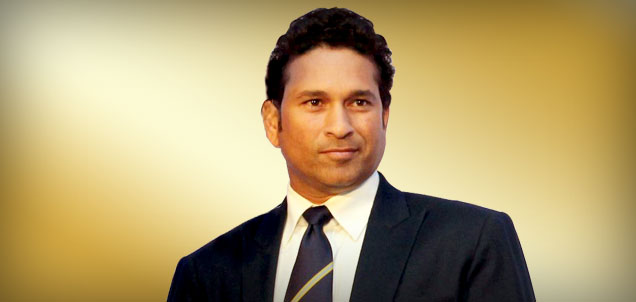
    Sachin Tendulkar’s sparkling career ended with the mother of all farewells, the outpouring of adulation and emotion, the throng of photographers and hyperventilating fans who trailed his last days in India colours unprecedented in any sport, leave alone cricket. Milkha Singh, Prakash Padukone, hell, even Michael Jordan must be ruing their decision to pursue a non-cricketing sport. And then he was chosen for the Bharat Ratna.


    Now is that a good thing or bad thing? No doubt, Tendulkar the sportsman couldn’t have hoped for a more fitting bookend to his career than receiving the highest civilian award in India. But what about Tendulkar the brand ambassador? From a marketing standpoint, the award seems like a cross to bear. Here is why. The interest of brands in Tendulkar thanks to his farewell circus is as high as it was during his playing days.


    Surely, his marketing kitty of 14 brands (the number has dropped by four since May 2012 when he scored his 100th international century) can only swell hereon due to the attention.


    Yet, the award raises the uncomfortable question whether Tendulkar should be endorsing products in the first place. The frowns began on Twitter, the largest gathering ground for shouting heads, where users hoped the cricketer would stop associating with at least Luminous, an inverter maker, which jockeys with realtor Amit Enterprises as the most lackluster brand he promotes.


    Murmurs, Protests

    It didn’t take long for the murmurs of disapproval to grow louder and take a more serious overtone. A key argument relayed by this crowd was that Tendulkar had amassed tons of money from the game. Janata Dal (United) MP Shivanand Tiwari was of the view that Tendulkar was not playing for free. “Sachin has made crores of rupees by helping corporates market cricket in the country,” he said.


    A case has been filed in a Bhopal court against Tendulkar and the prime minister who recommended his name. At the heart of the wave of discontent was the money Tendulkar made from brands. The catcalls will grow shriller if brands decide to thrust the Bharat Ratna at the centre of commercials featuring Tendulkar. Indeed, the Bharat Ratna has inadvertently cast a harsh light on Tendulkar’s promotional pursuits. But Harish Krishnamachar, country head of World Sport Group (India), the company that manages the star’s commercial interests, says Tendulkar will honour all contracts, which run until 2014. Fortuitously for Tendulkar’s managers, a Bharat Ratna recipient is not barred from marketing.


    The rulebook states that “the honour does not confer any pre- or postnominal titles or letters; recipients are constitutionally prohibited from using the award name as a title or post-nominal”. That means the launch of a slogan like ‘Luminous Ratna’ or ‘Coca-Cola salutes Bharat Ratna’ can invite trouble.


    Mr Krishnamachar says the award increases the stature of the Tendulkar brand and will also carry with it an added responsibility of selectivity and an increased sense of trust and responsibility.


    In Tendulkar’s defence, he has been picky about his brand associations. He has said no to tobacco and alcohol promotions; he rejected a multi-crore deal with UB Group three years ago. WSG has no precedent to turn to as previous recipients such as Lata Mangeshkar and Bismillah Khan received the award in their twilight years. Not so with Tendulkar.


    At 40, he happens to be the youngest recipient of the Bharat Ratna. The “Sachin! Sachin!” fever is now showing few signs of letting up. So if there is a time to milk the affection of brands, it is now. Remember public memory is short. Sociologist Shiv Visvanathan says Tendulkar is too predictable a character. “I can see him growing less interesting day by day.” In that context, the award could have waited.


    A New Game Plan?

    Mr Krishnamachar says Brand Tendulkar has gained an increased visibility, adding that “Sachin has always done selective associations and hence we will assess things once he is back from his break”. It won’t be easy. Mr Visvanathan says Tendulkar has to choose from a range of brands. “He is the man who could not fail. So he has to vouch for products which are ‘fail-safe’.


    A safe bet for brands would be to focus on Tendulkar the legend rather than Tendulkar the Bharat Ratna. Even that presents a dilemma. Visvanathan says there is going to be the touch of the comic now. “Imagine Tendulkar says Boost is the reason for my Bharat Ratna. The problem then is the Bharat Ratna becomes a brand endorsing a smaller brand.”


    Source:The Economic Times

    Copyright © 2013, Bennett, Coleman & Co. Ltd. All Rights Reserved

    Licensed to republish


  • Shailesh Kapoor:Getting ready for Satyamev Jayate 2.0

    By Shailesh Kapoor


    Aamir Khan’s labour of love (but one that comes with a hefty paycheck too), Satyamev Jayate, makes a comeback this Sunday. In its first season in 2012, the show made a sizeable impact on the socio-political environment. In the process, it managed to become perhaps the only television property in the last twenty years whose success of not measured entirely or primarily through its viewership ratings.


    We are in the election year, and coming with short, monthly seasons of 4-5 episodes each, starting with one in March, seems to be a good move. In the last season of 14 episodes, there was a sense that the show had become a blind spot in its second leg. There’s only so much awakening and inspiration one can take at a time, after all.


    I have to admit I’m a tad disappointed with Sunday 11 AM continuing to be original slot for the show. While there may be a valid ‘feel’ argument, a property of this nature needs a wider available audience. 8 or 9 PM would achieve that better. Even at a feel level, noon will deliver a higher reach without compromising on the feel. I’m sure Aamir and Star Plus had their reasons.


    Satyamev Jayate continues its tradition of not using show footage in the launch campaign. This season’s campaign, built around ‘Jinhein Desh Ki Fikr Hai’, stands out for its exceptional clarity of message and its consistent tone across ads. Rarely do we see TV show launches executed as ‘ad campaigns’. In fact, even in channel parlance, they are called ‘launch promos’ and not ‘launch ads’. Just nomenclature, or a deep-seated issue?


    When I see a good campaign based on atypical viewer segmentation, my eyes light up. The researcher in me has been wondering: What percentage of our TV audiences are the ones who have a sense of ‘fikr’ about the ‘desh’? And how does one measure this accurately, without relying on claims? For example, do most viewers of Arnab’s show (in whose breaks the Satyamev Jayate campaign is running on very high visibility) care for the country? But we digress.


    Despite the good campaign, the show is set to have a modest start from a viewership perspective. There are bound to be format tweaks that create a sense of freshness and build on learnings of the first season. For example, there is a definite hint of higher viewer interaction this season in one of the ads.


    In the pre-satellite television and pre-measurement days, there was certain diversity in television content. TV ratings are needed for transaction. But the biggest collateral damage they have caused in India is homogenization of content.


    Thank you Star and Aamir Khan, then, for challenging that status quo in 2012, and now coming back with a new season well knowing that blockbuster ratings are out of reach here.


    TV Trails is a weekly column written by Shailesh Kapoor, founder and CEO of media insights firm Ormax Media. He spent nine years in the television industry before turning entrepreneur. The views expressed here are his own. He can be reached at his Twitter handle @shaileshkapoor


  • Ranjona Banerji | Times@175: The Good, The Bad & The Ugly

    By Ranjona Banerji


    The word “sesquicentennial” was not familiar to most in Bombay when The Times of India splashed it all over the city in 1988. But since my school in Calcutta, La Martiniere for Girls, had celebrated its 150th birthday a few years before, everyone in that city knew what it meant. Those 150th celebrations of the Old Lady of Boribunder were a massive announcement in a sense of a new Times of India. Not so much an old lady but of a group that would transform the Indian media scene – in both good and bad ways.


    Although I did a story on the 150 year celebrations for the now defunct Bombay magazine, I must confess I remember very little about what happened. Except for the takeover of Victoria Terminus with massive artworks carefully placed between its ornate columns. Situated across each other, India’s most famous railway station and India’s most famous newspaper have long dominated Bombay’s skyline with their Indo-Saracenic architecture, control of commuter and long-distance travels and of course, people’s minds.


    But the sesquicentennial celebrations were actually a message to the world that The Times of India had transformed itself. Samir Jain, elder son of Ashok Jain, would now run the paper as his own – unlike his father who had left it to editors and journalists. In the early 1980s, I worked for a while with an advertising agency which handled Bennett Coleman accounts. There were no Jains in sight when you visited the Old Lady in those days. And of course there was Girilal Jain, the editor who was synonymous with The Times of India and ultimately the apparent cause of Samir Jain’s distrust of editors and journalists.


    Girilal Jain (no relation) was sacked in 1988, ostensibly for his pro-Hindutva leanings. But some of those stories about his disdainful treatment of Ashok Jain and Samir Jain’s anger at that must have played a part. After Girilal, no editor would be allowed to reach such dominating heights. The subtle hand of the young owner would be felt everywhere. Soon, his younger brother Vineet would make his own mark on the group.


    The Times of India has done a lot of damage to the media in general with its subsequent treatment of journalists, with putting marketing above newsgathering and by introducing money-gathering practices like Medianet which is essentially legitimising bribery. However, it also took media in India into the contemporary world and set the standard for all other newspapers. Over the last 25 years, as it now celebrates its 175th anniversary, The Times of India remains the country’s most-read newspaper and continues to mean all things to all people.


    I worked for The Times of India’s Ahmedabad edition from 2001 to 2004. In that time, I saw the best and worst of it. The support given to us in the editorial office during our coverage of the Gujarat riots of 2002 was remarkable and commendable. And it was also most welcome as the local government and civil society turned against us for the newspaper’s decision to be fair in its coverage of the riots and our refusal to give in to the sentiments of the Hindu majority. The newspaper’s management in Delhi dealt with most of the anger and the threats to the group.


    However, it was also during my time in Ahmedabad that Medianet was introduced and that led partly to my decision to leave the group. Sadly today most other media houses have followed the Medianet example, where people and corporates can get positive or useful news about themselves printed in the glamour sections of newspapers. Journalists either have to give in or find some other place to work. What happens there is not really journalism anyway.


    Yet in these 25 years there has been a lot of hard work and massive growth. The Times of India has complete control over Mumbai, its flagship edition, plays a neck and neck race with the Hindustan Times in Delhi and has editions which are either ahead of the others or serious contenders in major cities in India. Times Now is one of India’s most popular news channels. Radio Mirchi rules the FM waves. Indiatimes hogs internet space, especially for NRIs.


    Given the newspaper’s oddly distrustful relationship with culture and cultural activities since 1988, I doubt that Mumbai’s Chhatrapati Shivaji Terminus will be festooned with major artworks by Indian greats again. Perhaps Katrina Kaif and Hrithik Roshan dancing all over the building would be more appropriate? They can pay the newspaper to do it too.


  • Ranjona Banerji: End to innocence

    By Ranjona Banerji


    Watching TV news every day was never on my list of must-dos. I laughed at my friends and relatives who were addicted to news on an endless loop and TV debates full of bluff and bluster. Working in a newspaper, who needed so much TV news anyway? You could easily find out what was happened from other sources.


    Enter MxM and an end to my life of carefree innocence. Now, I’m top of the pops when it comes to TV news. I watch it all day. I watch it all night. I can tell from a lift of an eyebrow or the curl of a lip if an anchor is going to mess it up or burst into bombast. A glance at a guest on a TV debate and it’s clear whether they’re going to shine or sink tonight.


    I now have extensive knowledge of the boundaries of human ingenuity, especially when it comes to grammar and spelling. I thought newspapers were running downhill fast when it came to standards, till I started watching TV news.


    If the star anchors are bad enough when it comes to their egos and their often shifting quality, it is the guests who give you a delightful idea of how petty, daft, small-minded and badly behaved Indian society can be. There is also a refreshing sense of honesty at work. Almost never do you see a TV guest who feels he or she has to put on an act because they are on a show. They are incapable of masking their true feelings and so eagerly expose their shortcomings – whether in the art of making a logical argument or the bigger challenge of civilised behaviour.


    But I also discovered what a terrible job it is, working in television. Waiting for hours outside a gate or a door, hoping the studio will come to you for a one minute at least. Or the opposite can happen – an anchor come to you over and over when you really have nothing new to say from what you said five minutes ago. The anchor then asks you impossible questions: “Have your sources told you exactly how many toes have been injured in the train accident?”


    I have also learnt that newspapers are also on a slippery slope – especially when it comes to paid news and ethics but they still have a superior understanding of newsgathering than TV. Hard to see why news channels don’t hire more print journalists for general “gyan” and that other word so popular these days, “mentoring”.


    The past year with MxM has also forced me to look at the media far more critically than I ever did before because, if nothing else, distance lends perspective.


    But I’ve also had the chance to reconnect with the advertising industry, where I worked for a short while at the beginning of my career. I’ve also learnt how much the media has grown. I’ve read Anil Thakraney, Peter Mukerjea and all the other guest writers who share their insights. I’m enjoying Vidya Heble’s new column on language. And of course, Pradyuman Maheshwari’s insights into the media.


    And I’ve poked a little fun at ads. Which in many ways has brought me so much more joy than making chutney out of journalism – schadenfreude anyone?


    That’s one year of MxM. Can’t wait to see what the next one brings!


    Ranjona Banerji is a senior journalist and editor. A commentator with Mid-Day and various other publications, she is Contributing Editor, MxMIndia.


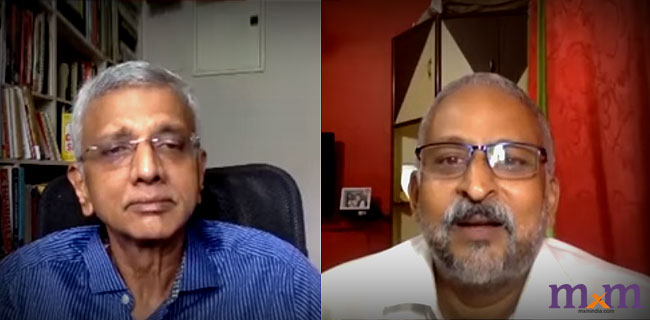
  • Discussing ‘Spring’ with Ambi Parameswaran & Sanjeev Kotnala


    By Pradyuman Maheshwari


    We had already carried a review by Sanjeev Kotnala in his Wednesday column last week. But this was Ambi Parameswaran and it was his Book #10, so we couldn’t not get into a dialogue with him as we’ve done around the release of last two if not three books.


    It’s always a pleasure chatting with Ambi, and since he had read the book and he’s an integral part of the MxM family, we also invited Kotnala.


    It was an interesting discussion, albeit of just a little over 30 minutes which can’t do justice to a discussion with two ‘maharathis’ of marketing services and business strategy. Kotnala spoke about how it’s essential reading for students and young executives and Ambi discussed about his rejection experience.


    Watch. Enjoy. Like… (and I must add: buy the book!)


  • Sebastian ‘Saby’ D’Souza: I want to erase 26/11 from my memory (alert: some explicit pictures)

    Sebastian ‘Saby’ D’Souza

    By Fatema Rajkotwala


    Five years ago, the city of Mumbai was under siege for three days when terrorists infiltrated the city’s pride and pulsating locations of the Chhatrapati Shivaji Terminus, the Taj Mahal and the Oberoi hotels, the Leopold Cafe and Nariman House at Colaba. While citizens and residents grasped what was the sudden reality, Sebastian D’Souza, then senior photographer with Mumbai Mirror ran out to the train station armed with nothing more than his Nikon camera and lenses.


    Today, five years later, Saby, as he is known in the fraternity and to friends, is far from willing to reminiscence on the incident that brought him much fame and glory. His close-up photograph of Ajmal Kasab, the sole survivor among the terrorists that day, was circulated, flashed and reused by media across the world. “Yes, I made a big name and was praised by all. The photographs were used by the media all over,” he says. “But I wish I had never done it. You’re on the field at that time. It’s crazy. I cannot explain it.”


    Saby was contacted and applauded by the global media for the considerable risk he undertook in documenting the event. “The western media praised and appreciated my work and contribution. They recognised the effort and said they would be honoured to have such a person in their country. Life in India is cheap. Nobody cares. If I had died that day, it would’ve been a very bitter truth for my family. The Indian government, Chief Minister Ashok Chavan, gave me a house but it is a disputed structure. This is the second time this has happened. Earlier I was given a house by Mr Sharad Pawar. If not by the person sanctioning it, you get cheated during the paperwork all the way. I am retired now and I still live on rent.”


    Even though the senior photojournalists shared some of his photographs he had taken, he says he would rather not remember or reminisce the events of the evening of November 26,. “I want to erase the event from my memory completely. I wish it had never happened. I didn’t do it for fame or money. It is not an event worth remembering anyway. I want to forget it ever happened and put it past me.”


  • Vidya Heble: A hundred bashes at the keyboard

    By Vidya Heble


    A hundred days, each ending with a feeling of triumph as we upload stories Big and small. Be it scoops, press events, awards nights, seminars, trade fairs or film festivals – each story is like another dollop of cement in the solid structure of MxM that the team has built up.


    A hundred moments of joy as we hit upon That Headline. Sometimes this is followed by a bout of despair when we realize that it won’t fit, and we scramble for an alternative.


    A hundred aaargh! moments when we come across oddly-phrased press releases that need to be deciphered by a scientist – sometimes a physicist and at times a microbiologist. And then the quiet elation when we manage to make it readable.


    A hundred plunges into despondency as we discover that we’ve goofed, and it’s too late to rectify it. The only cure for this is the dawn of the next day and a fresh palette to work on!


    A hundred questions – will this story work? Will this headline sing or sink? What’s a better word for…? Why didn’t I think of that (usually the next morning)?


    A hundred answers – every day. With every congratulatory message, every phone call and email and sms and chat popup that says “Good job!”  Yes, the answer is that we not only can, we did.


  • श्रीनगर का मौसम: आज का मौसम और आगामी पूर्वानुमान

    Sunrise: 2025-06-23 07:10:19 IST
    Sunset: 2025-06-23 19:55:54 IST
    श्रीनगर में आज मौसम साफ है, अधिकतम तापमान 33.72 डिग्री सेल्सियस और न्यूनतम तापमान 20.68 डिग्री सेल्सियस रहने की संभावना है। 23 जून 2025 07:00:00 IST को हवा की गुणवत्ता मध्यम है। आने वाले दिनों में, 25 जून 2025 को हल्की बारिश की संभावना है, जिसके बाद 26 जून 2025 को बारिश हो सकती है। 26 जून को अधिकतम तापमान 29.14 डिग्री सेल्सियस और न्यूनतम तापमान 19.78 डिग्री सेल्सियस रहने की संभावना है। हवा की गुणवत्ता पर सावधानी बरतने की सलाह दी जाती है।

    Daily Forecast

    Date Max Temp (°C) Min Temp (°C) Weather Condition
    2025-06-23 33.72 20.68 Clear
    2025-06-24 34.48 21.54 MostlyClear
    2025-06-25 33.16 21.85 Drizzle
    2025-06-26 29.14 19.78 Rain
    2025-06-27 31.26 19.6 Rain

    AQI

    The current AQI in Srinagar is 121, which is Unhealthy for Sensitive Groups.

    Other cities

    City Temperature (°C) Min Temp (°C) Max Temp (°C)
    delhi 31.87 27.36 33.78
    mumbai 28.69 26.07 29.63
    kolkata 29.02 26.35 30.76
    chennai 33.18 25.71 33.72
    bengaluru 24.91 20.27 26.49
    gurugram 32.83 27.58 34.17

    Frequently Asked Questions

    श्रीनगर में आमतौर पर सर्दी कब शुरू होती है?+
    श्रीनगर में आमतौर पर सर्दियाँ दिसंबर में शुरू होती हैं और फरवरी तक जारी रहती हैं, लेकिन जलवायु परिवर्तन के कारण इसमें बदलाव हो सकता है।
    श्रीनगर में गर्मियों का मौसम कब शुरू होता है?+
    श्रीनगर में गर्मियों का मौसम आमतौर पर मई से शुरू होकर अगस्त तक रहता है।
    श्रीनगर में औसत वार्षिक वर्षा कितनी होती है?+
    श्रीनगर में औसत वार्षिक वर्षा लगभग 700 मिलीमीटर होती है, जो साल के विभिन्न महीनों में भिन्न होती है।
    श्रीनगर में वर्ष के दौरान तापमान में क्या भिन्नता होती है?+
    श्रीनगर में सर्दियों में तापमान शून्य से नीचे जा सकता है, जबकि गर्मियों में यह 30 डिग्री सेल्सियस तक जा सकता है।
    श्रीनगर घूमने का सबसे अच्छा समय कौन सा है?+
    श्रीनगर में घूमने का सबसे अच्छा समय मार्च से india win the match आज हम बात करने वाले हैं हमारे पड़ोसी मुल्क पाकिस्तान”>अक्टूबर के बीच होता है, जब मौसम सुहावना होता है।
    • IMD: Indian Meteorological Department
    • AQI: Air Quality Index
    • PM2.5: Particulate Matter (2.5 micrometers)