Category: Uncategorized

  • Don’t compare Goafest & Melt..


    Media agency heads have always played a key role in India’s growing media services industry. GroupM, the holding arm of a clutch of agencies owned by WPP, has been on the forefront over the years, with CVL Srinivas, CEO – South Asia, now doing that in a quiet, definitive way. So while we were not surprised when Mr Srinivas was actively associated with Goafest, we wondered whether all was well in the AAAI when we first heard that he had virtually turned co-organiser of Melt, a two-day festival of creativity being organised by Kyoorius on May 21 and 22. Here, in an interview with Pradyuman Maheshwari, Mr Srinivas talks about why GroupM supports multiple trade events and the ‘tu tu, main main’ between the supporters of Goafest and Kyoorius…


    You answered this question when Melt was being announced, but given that it is happening now, one would like to hear it from you again: How is it that GroupM and you personally are as actively involved with Goafest and the Abby as you are with Kyoorius Melt?


    At GroupM, we try to support as many initiatives as our bandwidth permits. Apart from Goafest over the years, and Melt2015, we have been supporting a host of events, be it MMA, Social Media Week or supporting organisations such as IAA. We believe in doing our bit to shape the market and help the industry evolve. One of our biggest challenges as an industry is to attract talent. We see all these events as having a role to play in keeping our industry exciting and attractive for young talent. For us, it has never been a case of either/or (with regard to the events). Having said that, I must confess that if at all we do not support any particular event, it will be more because of time and bandwidth constraints than anything else.


    When we first heard that GroupM was actively associated with Melt, our response was one of disbelief. Did this [Kyoorius] in any way impact your association with that [Goafest]?


    We have supported Goafest over the years and even this year, be it with speakers, designing the event, or with sponsorships. We continue to send the maximum number of award entries and among the highest number of delegates. When Melt came to us as an opportunity, we found the format interesting. Coincidentally, it came at a time we ourselves were driving a few programmes internally and externally around creativity in technology and media. We felt this would be a great platform for us to energise our teams and learn from the experts who will be taking part.


    I know it’s early for you to make a forecast, but what’s your sense on how Melt will turn out?


    We have a great line up of speakers and good buzz around the event. Considering it’s the first such event being held in Mumbai, I am sure it will pick up momentum as we go along.


    You were at the Kyoorius Awards last year giving away some of the awards, and you were also present at the Goafest Abbys both last year and this year. What, according to you, would be the key differentiators?


    Each awards event has its own flavour. There isn’t any need to compare the two and get worked up. Goafest is clearly an industry event, since industry bodies are behind it. Kyoorius awards is run independently. Just to clarify, GroupM has no role in the awards; we are only partnering on Melt.


    A slew of media agencies seem to have no problem with any of the awards shows, or even with each other. Why do you think creative agencies have problems with participating in awards shows?


    I am not very sure!!


    Even agencies from the WPP group have stayed away.

    Well, GroupM hasn’t.


    We may not hear it said out loud, but there is a clear ‘tu tu main main’ between Goafest and Melt/Kyoorius Awards. What would you say to the naysayers from either camp?


    It’s better to live and let live and not criticise either of them.


    And to all those in the industry who may not have made up their minds yet: Since you are one of the co-organisers, why should they register and attend Melt?


    It’s an event that combines advertising, media, digital, marketing and technology. In the real world, each of these areas is merging into the other. Melt is bringing alive this phenomenon in a very interesting way.


    A version of this first appeared in dna of brands dated May 18, 2015

     

  • Aapka Colors beams in HD in the US

    By A Correspondent


    Aapka Colors, the general entertainment channel of Viacom18 Media Pvt. Ltd. announced the launch of the channel’s high definition (HD) feed which will be available to viewers in the USA starting June 3, 2015. Aapka Colors will first be available on Dish, one of the leading pay-TV providers in the US. It will also be available on Sling International starting June 3, 2015.


    Currently, the Aapka Colors SD feed is widely available to subscribers of multiple MVPDs including DISH, Sling TV, AT&T, RCN, Verizon Fios, among others. The introduction of the HD feed offers DISH and Sling subscribers all current content of Aapka Colors with an even more immersive viewing experience – clearer picture as well as superior sound.


    Gaurav Gandhi, Group COO – IndiaCast, said, “With the launch the HD service of Aapka Colors on DISH and Sling, we further enhance our offering on those platforms. We at Viacom 18 and IndiaCast, strive to bring the best of Indian entertainment to the South Asian diaspora around the globe. The fact that US will be the first market after India where we will launch the HD service of Aapka Colors demonstrates our commitment and focus towards the market. Together with DISH and Sling, we look forward to offering a truly world class viewing experience to our audiences who have contributed phenomenally to the growth of our business in the US.”


    Chris Kuelling, Senior Vice President, International Programming, DISH and Sling said, “We are proud to be the first pay-TV provider in the U.S. to deliver AAPKA COLORS in HD, giving our customers an enhanced viewing experience and delivering on our ongoing commitment to provide high quality, affordable entertainment that connects viewers to their culture.  And with Sling, viewers will be able to access Aapka Colors in HD on almost any device including IOS, Android, Roku, Xbox, Amazon Fire and more.”


  • BTL Baatein: Interview with Kamal Basu of Volkswagen in new weekly series powered by VISCOMM

    Kamal Basu

    Head of Marketing & PR – Volkswagen Passenger Cars

    Volkswagen Group Sales India Pvt Limited


    A seasoned marketing professional with over 25 years of experience in advertising and marketing, Kamal Basu was appointed as Head, Marketing and PR at Volkswagen from January 1, 2015. Prior to this, he has worked with Skoda Auto India as Marketing Head and has contributed to Skoda’s performance in India over the last three years. He has spent close to two decades working with leading advertising agencies like Rediffusion Y&R, Ogilvy and with Saatchi & Saatchi as CEO.


    In his current role as the Head, Marketing & PR at Volkswagen Passenger Cars India, Mr. Basu plays a key role in developing the strengths of the Volkswagen brand in India. Mr. Basu has done his marketing management from Jamnalal Bajaj Institute of Management Studies, Mumbai, and is passionate about cricket, movies and travelling.


    How important is BTL to your overall marketing plan?

    It is a very critical element for us and I’m assuming it is the same for most auto companies. It’s the first method of introduction when the customer reaches out to the auto dealership. However, we need to reach out to consumer needs and wants and small BTL activities also include reaching out to consumers rather than wait for them to come to our showrooms.


    Can you give a broad idea of your spends pie of ATL v/s BTL?

    In other industries, BTL is in the range of 12-15% of ATL budget, but in the automotive space, it is almost 1:1.


    Apart from the routine display and engagement activities, in what way do you innovate with below-the-line advertising and promotion?

    We have something called open floats campaign, where we put the car on a flatbed in the back of the van and we take it physically to markets where we are not present. We do these displays within a distance of 40-50 kms from our showrooms, because when people from these small towns purchase our products and if they need servicing, they are not ready to travel much. We also do a lot of associations with events happening at a local level. Almost 80% of the money is spent through print work for dealership advertising.


    In terms of generating results, esp from consumers and in B2B, do you find BTL a more sureshot avenue than ATL?

    BTL campaigns are always result-oriented. They have a clear mandate. Corporate brand campaigns have multiple tasks like driving imagery, brand awareness, etc. BTL would form a subset of the ATL objectives.


    While sales and salience are good indicators of its success, what are the attributes you look at to measure the success of a BTL campaign?

    For BTL campaigns, enquiries generated are the attributes. This campaign is evaluated with the overall leads and enquires we’ve got on a day-to-day basis. Test drives will definitely help in branding as well. One thing that differentiates BTL between the automotible and FMCG space is that in the automotive space, almost 85% of the BTL money is spent in the organised sector. This is generally used to communicate offers. When I say that I spend 1:1 on ATL and BTL, this also takes into account advertisements in supplements of newspapers, etc.. Communication of offers is also considered to be BTL.


    There are many organizations who often do new launches almost entirely on BTL aided with an outdoor and/or digital blitz? Your view on this. Given rising media costs, do you see BTL managing on its own, without ATL?

    I don’t see BTL managing without ATL. During a launch of a new product or service, the primary task is mass awareness of the new product. This is not possible only through BTL. During a launch I like to keep everything close to my control. It is what we call Corporate ATL Activities. If today one looks at advertising on TV, in print media or even in a magazine, I don’t think anyone can look at only BTL. The market is getting ferocious.


  • BTL Baatein with Sanjay Tripathy of HDFC Life

    Sanjay Tripathy

    Senior EVP, Marketing, Product, Digital and E-commerce, HDFC Life on the role of below-the-line advertising and promotions in a marketing plan


    Award-winning marketer, Sanjay Tripathy is Senior Executive Vice President, Head Marketing, Product, Digital and E-commerce at HDFC Life. A graduate in management from IRMA, Gujarat preceded by an engineering degree, Mr Tripathy has worked with GCMMF, Fritto-Lay, Mattel and Reliance Infocomm before joining HDFC Life in December 2004. In this interview with MxMIndia, Sanjay Tripathy speaks about how key are below-the-line promotional activity to a marketing plan…


    How important is BTL activity to your overall marketing plan? And overall in the financial services sector?

    BTL activities form an important part of our overall marketing plan. In context of the financial services industry, product understanding and trust are teething customer issues. BTL marketing becomes important because it provides the human interaction, which effectively solves problems related to understanding and trust. It also provides the desired experience to the customer which can affect the purchase decision process.


    Can you give a broad idea of your spends pie of ATL v/s BTL?

    Depending on the objectives of the campaign, we allocate budgets for ATL and BTL activities. More important than the budget allocation, is to make sure that the ATL and BTL activities being executed are complementary and provide the complete brand experience, which we intend to provide to the customer. We don’t work on pre-decided spend patterns, rather adapting to the communication and engagement objectives of the campaign.


    Can you also specify the range of activities that you undertake as part of the below-the-line advertising and promotion?

    – They would be of two kinds:

    i. Strategic:

    a. Experiential modules at relevant sites (work site, malls etc.), to let them experience the campaign/product proposition. e.g “Director Of Happiness” for Smart Woman campaign and work site campaign for QROPS prospects

    b. Contact programmes such as Spell Bee which we have done in the past, which help us engage with the right audience in the relevant life space


    ii. Tactical:

    Lead Generation modules run at channel partner locations, work sites etc. for product awareness and desired customer action, especially during the tax investment season


    Do you prefer to do this through BTL agencies directly or via your existing creative/media agency?
    – Different campaigns demand different skillsets. For campaigns which require smaller scale and faster turnaround, smaller agencies are our pick as they are more agile and can turn around work much faster. Whereas, for campaigns of a larger scale and higher complexity, larger agencies tend to do well. So, we use a mix of both, depending on our requirements.


    In terms of generating results esp from consumers and in B2B, do you find BTL a more sureshot avenue than ATL?

    BTL has its advantages, as it provides opportunities for:

    i. Direct interaction with customers

    ii. Immediate Query resolution and closure

    So we use BTL activities as a part of the mix, where it fulfills our business objectives. ATL obviously has its part to play.


    While sales and salience are good indicators of its success, what are the attributes you look at to measure the success of a BTL campaign?

    With the increased social media usage, brands have the opportunity to amplify consumer experiences beyond the select few who are physically a part of it. Hence, another way of using great activation ideas is to put them up as a part of consumable content on social media. How well it does on social media, in terms of reach and engagement, is also a metric we use to look at the success of the initiative. In the past, we have done this with our Smart Woman’s “Director of Happiness” campaign and “HDFC Life Spell Bee” with great results.


    There are many organisations that often do new launches almost entirely on BTL aided with an outdoor and/or digital blitz? Your view on this. Given rising media costs, do you see BTL managing on its own, without ATL?

    For a brand to scale up and reach out to people on a national level, ATL will remain important, as BTL can only reach out to a select few. And we are still some way off from seeing the kind of internet penetration that makes Digital interchangeable with ATL.


    Hence, we look at creating and executing a strategy which optimises the strengths of each media rather than replace something completely.


  • BTL Baatein:Sumeet Narang,Bajaj Auto Powered by VISCOMM

    For a product like a motorcycle, it’s got to be more than just advertising above-the-line that can do full justice to a brand. But sometimes it’s also a combination of BTL or on-the-ground activity with ATL or digital specifically, as Bajaj Auto did recently. And, as Sumeet Narang, Senior Vice-President (Marketing – Motorycles) at Bajaj Auto says what drives customers a lot more to showrooms is the above-the-line investments.


    We’ve seen the webisodes for Discover and this is possibly the first time a product in this sector has embraced the digital medium in a big way. Huge step forward?

    The bigger move is not the screen through which we’re broadcasting but the content. Whether it’s cinema, TV, mobile or laptop; whether it’s through the internet or a place where you buy a ticket, it’s just a medium.


    The spends on this campaign are probably as much as for a TVC, but the reach is not as much. Do you think it’s effective enough, in terms of RoI?

    First, if you don’t lean forward and experiment, you’ll always stay in the safe zone. We clearly explored the upside and downsides [before embarking on the campaign]. The ZingZong ride campaign was launched on Feb 8, but before that, we conducted a 13-city survey on relationships and how people about them and about marriage and such. And we saw we were on the right track with our findings. Another thing that came out strongly in the survey was that people found a long drive on a bike to be the most romantic way of spending time together, and they rated it higher than a candlelit dinner, a movie together or just hanging out at home. This was a corroboration of our findings, and the way we’re building this brand. We decided that we needed to take this campaign into people’s lives. If this brand stands for re-igniting romance, what’s the biggest symbol of that? The heart, of course, and that’s how ZingZong was launched – strategically -on World Marriage Day. It was launched with press articles, TV ads over three days and advertorials across all leading print papers. We also invited couples to drive around the country and bring the ZingZong back in their lives. That announcement is, in itself, an endorsement by the brand of what it believes in. It was a pretty high-reach campaign when we launched it. We used mass media. I think if you mix media, you can get a good balance of reach as well as engagement.


    It’s still early days but how has the campaign worked for you? It really seems to have struck a chord…

    Considering we got upwards of 8,000 entries from couples wanting to take part and willing to share their stories.


    In terms of sales?

    It’s a brand activity. It’s difficult to isolate aspects and say I see a blip here or there. It’s a part of the whole process we’re rolling out in, in terms of repositioning Discover as a brand. I don’t think I can isolate any one activity. It’s still early days.


    Apart from digital and television, has the ad been on other media as well?

    TV and print are the dominant media. We’ve also used digital. There’s an interesting on-ground property that we’ve built where a couple can visit a showroom and get a 60- second film made of themselves. It’s called a ZingZong World Tour. We’ve had to be careful with digital, though. This isn’t like a youth brand; . In a certain way, there is a bit of a convergence on the way the role digital’s got to play in the life of Discover. It’s a more mass brand and for that way, everybody is wanting Digital to evolve as a medium. From being a youth brand consumed more out of desktops and laptops and high-end smartphones, we all know there ae actually 250 million internet users, dish has also to got a lot more mass and wider. It’s a challenge for the brand and as much for the digital industry.


    The spends are huge for digital and you’re happy to experiment.

    We’re pretty mindful of what we spend across media. So we feel a small proportion of our spends could be put into something experimental. It may or may not work, but it definitely leaves us a lot wiser.


    In terms of your sales, this is the beginning of the festive season, the key season…

    This is a big season for us in the north, particularly during what we call the wedding season. So you do see an increase when the festive season comes on, starting with Navratras, that’s the next big season. The webisodes and all will not necessarily culminate in that. They’re not being timed toward the October festival season per se, but I would say it comes in now. We launched a new campaign in January. So, across what is quarter four for us, we’re focused on our above-the-line campaign and some time in February, we launched ZingZong Ride.


    How much of your spends are either above the line or below?

    It’s a much smaller amount that goes below the line where it varies from industry to industry. We have dedicated dealers with showrooms, but that’s part of our infrastructure. Whereas for an FMCG, every poster put up at a retail shop would constitute a below-the-line investment. For us, that’s really the infrastructure. It’s a difficult thing to compare. Below the line plays a role. The infrastructure is there and it’s already gone in the infrastructure and continues to do so. We find what drives customers a lot more to showrooms is the above-the-line investments.


    And there’s still some time before you get into some e-commerce sales, which hasn’t really entered the automobile sector in a big way….

    In case of two wheelers, I don’t think you can do away with the kind of experience and assistance and expert advice that a customer requires at a point of sale, which is [acquired from] the dealership. It’s not like browsing through features online and then ordering the bike online too. I can’t say how things will be in future. Currently, we’re very focused on our current methods.


    And one last question: What are the challenges that lie ahead for you in terms of marketing, advertising and promotion of motorcycles?

    At the industry level, we’ve been seeing a slowdown in the last six months. So one big challenge is going to be to accelerate the re-purchase cycle at an industry level. Our commuter segment, where Discover is operating, has lost some market share. We have to get that back. Our third challenge has to do with new launches. I think we need to consolidate them in the market. We’re talking about quite a few of them, like Platina or CT100. We have to continue building the credibility of these brands and make them look very different and exciting. Similarly, with the new Pulsar that we’ve launched, the advertising and marketing challenge is going to be to up the brand imagery and sheen. These are top-of-the-line bikes and our challenge would be to come up with marketing which complements them.


    And one last question: What are the challenges that lie ahead for you in terms of marketing, advertising and promotion of motorcycles?

  • BTL Baatein: Sagar Boke, Bunge India. Powered by VISCOMM

    As Head of Marketing at Bunge India Pvt Ltd Sagar Boke brings to the table a vast experience of over a decade in the field of brands and marketing. He was Category Head for Skin and Fragrance at Cavin Kare. Prior to this he was the Deputy General Manager, Marketing, Hair Colours, Godrej Consumer Products Ltd. He was instrumental in building brands such as Godrej No 1 soap, Godrej Nupur annd Fairever Fairness Cream. Mr Boke speaks with Dyanne Coelho on how BTL is a key part of his overall marketing activity.

     

    We’ve heard about your activation in Lucknow and Varanasi. For a product like Dalda, how important is BTL activity to your overall marketing plan?

    I would say very important, because whenever you are competing in the commodity category, it is important for a brand to create an emotional connect. One of the ways to really do that is through BTL activation, which amplifies the brand idea. Now the brand Dalda is focused on a mother’s trust. The tagline of the brand was ‘Trusted by Mothers who Care’ and the current tagline that we have is‘Dabba Khali, Pet Full’ to imply that every time the kid comes home, the dabba is khali and the stomach is full. The idea was to look at areas that create an emotional connect with the mother. This activity was one where we achieved that objective.
    And for other products like Gagan?

    For all our brands I would say that BTL activation plays an important role. In ATL, we talk about the brand value and brand proposition, whereas in BTL we bring the brand proposition alive to the consumer. The amount of consumer connect we receive through BTL is unparalleled.
    Dalda has always been very active on the mass media… how are those spends doing?

    I’m not in a position to share exact numbers, but I can definitely say that we are one of the most active brands on the media and possibly one of the highest spending brands on media in the edible oil category. With respect to our spends, I can say that it is 70 percent on television and print, 20 percent on activation and 10 percent on digital. Also, when talking about digital, I think mobile as a platform holds a very high potential. We launched an initiative called Dial D, wherein a consumer could give a missed call on a number and they would instantly get a call back. Once they got the call back, they could submit a recipe to enter the contest. We also shared recipes with the callers. They could stand to win prizes if their recipe won.

    Can you give us a broad idea of your spends pie of ATL v/s BTL?

    It would be 70 percent ATL and 30 percent BTL.
    What is the range of activities that you undertake as part of the below-the-line advertising and promotion?

    Our aim of BTL is to bring the brand proposition alive. So for these, we look for high conglomeration points and various occasions. Last year, we had an activity at the Rath Yatra, where about 10 lakh pilgrims had gathered. The campaign took place at Puri, Odisha, during the Jagannath Rath Yatra.  We collaborated with renowned sand sculptor Sudarsan Pattnaik who created a life-sized sand art sculpture of Lord Jagannath on the beach in Puri.Similarly, during Durga Puja last year, we had a Dhunuch iinstallation, an offering made to the goddess. This was created using 5000 Dalda bottles at Singhi Park in Kolkata. Like these, many of our activities have caught the attention of the consumers. Last year, during Mother’s Day, we had created a special mobile application wherein the consumer could record a message for their mother and the message would be delivered to their mother through us. So in this way we look at occasions and ideas which are clutter breaking to really create awareness about the brand.


    Do you prefer to retain BTL agencies directly or initiate them via your existing creative/media agency?

    We have a number of BTL agencies who work for us, so mostly we do it through a BTL agency, since their expertise is in that.

    In terms of generating results especially from consumers and in B2B, do you find BTL a more sure shot avenue than ATL?

    I would say so, because in BTL you are pretty much focused in terms of the target audience one is looking at. And also it is a very measureable method. Far more measureable in terms of the results one would get.

    While sales and salience are good indicators of its success, what are the attributes you look at to measure the success of a BTL campaign?

    One of the other parameters we look at is brand health. Another is spontaneous awareness of the brand. We also look at the consideration of the consumer to buy the brand. Because if both brand health and brand awareness are high, then the inclination of the consumer to buy the product is also stronger.Consideration is important. Would they consider buying my brand? In terms of creating brand awareness, ATL is more effective, but what BTL strongly does is it creates an emotional connect. It is not only sufficient to have an awareness of the brand, it is also important that consumers consider consuming the brand. BTL really works to create an engagement and a connect for the brand.

    There are many organisations that often do new launches almost entirely on BTL aided with an outdoor and/or digital blitz? Your view on this. Given rising media costs, do you see BTL managing on its own, without ATL?

    I wouldn’t say that. In very niche categories it is possible for BTL to manage without ATL. For example, if it is for a premium product, or a customised offering where you only want to target a small audience, then it would work. At the end, the objective of ATL is to reach a larger consumer base. In BTL, your consumer target base is smaller and it should do the job. However, if you are targeting a large mass audience, then it is difficult with BTL alone. In order to create awareness for a larger number of people, BTL is more expensive; however the quality of engagement via BTL is also far superior.


  • BTL Baatein: Pravin Kulkarnii, Parle Products. Powered by VISCOMM

    With over 15 years of experience in the domain of sales and marketing management across various leading companies such as Blow Plast, Pidilite and Parle, Pravin Kulkarnii joined Parle Products in 1994 and is currently General Manager, Marketing. He is based out of Mumbai and is responsible for corporate strategy, business profitability, product portfolio management, strategic brand management, advertising and promotion for all Parle brands in the country. Mr. Kulkarnii is a graduate in Engineering from VJTI, Mumbai and a postgraduate in management from the University of Pune. Mr Kulkarnii speaks with Dyanne Coelho on how ATL and BTL have complementary and not competing roles.


     

    How critical is the role that Below-the-Line advertising and promotions plays in the FMCG space?    

    The main role of BTL is to give the experience of the brand to consumers, to have an interaction and experience with the brand , positioning  of the brand, etc. This is done so that the positioning of the brand gets completely fixed in their minds. ATL generally creates awareness and an image, but positioning and communicating the experience of the brand comes only through BTL activities.


    Are there any specific products in Parle for which BTL is used in particular?

    Almost all brands have some kind of BTL activity, mall activations and all. We even have rural activations. Almost 70 to 80 percent of the brands have some amount of BTL activity.


    How important is BTL activity to your overall marketing plan at Parle?

    It is very important. Almost 15 to 20 percent of our marketing budget goes into BTL.


    Can you give a broad idea of your spends pie of ATL v/s BTL?


    Like I mentioned earlier, we spend between 15 to 20 percent of our budget on BTL activations.


    Can you also specify the range of activities that you undertake as part of the below-the-line advertising and promotion? 


    We do a lot of activities, like sampling of our products, merchandising activities, schoolroom promotions about different brands, brands especially that are targeting kids. We also do rural promotional activities, which means that we go to villages and spread activities about the brand and also do distribution. We also take part in a lot of melas, at movie theatres, exhibitions and other activities.


    Do you prefer to do this through BTL agencies directly or via your existing creative/media agency? 

    No we do it via specialised BTL agencies that have the infrastructure in various cities. That way it is also much cheaper, because regular agencies charge too much for such activations.


    In terms of generating results especially from consumers, do you find BTL a more sureshot avenue than ATL? 

    There is a completely different role for ATL and BTL. They don’t clash with each other. ATL helps create awareness and brand image. BTL complements it by creating an experience for the brand. Both have complementary roles rather than competing roles. Neither is complete without the other. ATL doesn’t give the brand experience to the consumers, at the same time, doing just BTL is going to be a very limited activity. How many BTL activities can you have? You want to create mass awareness, and for that you need ATL.


    While sales and salience are good indicators of its success, what are the attributes you look at to measure the success of a BTL campaign? 

    In a BTL campaign, it is not always sales, but many times we check to see the awareness of the brand before and after. Similarly, we track what the brand image was before the activity and after. Whether the positioning of the brand is more clear is also what we look at. We also look to see what is the overall experience of the brand, whether it was positive or satisfactory or not achieved results. So these are the factors we track before and after the activation.


    There are many organisations that often do new launches almost entirely on BTL aided with an outdoor and/or digital blitz? Your view on this. Given rising media costs, do you see BTL managing on its own, without ATL?


    Both are complementary. None can exist without the other. A lot of experience also happens at the shop level, during the actual sale. Even if we create awareness, the consumer may not remember it at the top of his/her mind all the time. So if the consumer has a good experience at the shop level, the likelihood of purchasing the brand increases.


    You’ll have done some BTL activities recently in non-metro cities…

    Yes we have done it across the country. We go to over 500 population villages. We do similar activities there as well. But we have noticed that we get a far better response in the smaller towns than in cities. There people are more excited about such activities. In bigger towns the psychology is that they have seen everything. So they don’t get excited anymore. That is not the case in small towns.


  • Allwyn Fernandes, RIP


    Veteran journalist, educator and Public Relations practitioner Allwyn Fernandes passed away in Mumbai on Tuesday (December 2). He was 66.


    A former Chief Reporter and later Senior Assistant Editor with The Times of India in the 1980s, he gave it all up to work with veteran Roger Pereira’s PR agency in 1994.


    Mr Fernandes joined The Times of India in January 1970 after studying journalism at Bhavan’s College in 1969-70. He rose up the ranks at TOI to be a very successful Chief Reporter. Many of his reports were front-paged and had the administration looking for cover.


    Several senior journalists of today have worked under him or have been taught by him at the many schools of journalism he was associated with. Reacting to the news, TV Today consulting editor Rajdeep Sardesai tweeted that Allwyn was his first editor. “My first chief reporter and a standout name in Mumbai city reporting passes away. Allwyn Fernandes, RIP,” the tweet noted.


    Tweeted former journalist and senior communications consultant Vivek Sengupta: “RIP, @Allwyn Fernandes. A noble man and a first-rate professional. He touched my life with the warmth of his friendship.”


    MxMIndia Editor-in-Chief Pradyuman Maheshwari noted in his tweet: “Mentor to many,journalism teacher,media trainer to corporates,remember Allwyn Fernandes as affable Chief Rep of Times of India in 1980s. RIP” And added: “Always had huge regard for him. Even tho’ we had our disagreements.Like on the Tata Steel-Charu Deshpande issue.”


    MxMIndia Consulting Editor and columnist Ranjona Banerji tweeted: “Sad to hear about the death of friend, former journalist and PR person Allywn Fernandes”


    Amith Prabhu, who writes the ‘PR, etc’ column on MxMIndia on Mondays tweeted: “Another fine human being succumbs to cancer. @Allwyn was a gentleman & one of the early adopters of PR in India. Was a gem at @Edelman_India” and added to a conversation on Twitter: “We should institute an award in his memory for journalists who moved to PR and left a lasting impression”. Perhaps we should.


    To many in the industry, he would be remembered as a senior journalist who made the perfect transition to public relations, but there are still others who vouch for his integrity and no-holds-barred approach with his team members and clients. Even as the one leading media relations, he appreciated the journalist’s point of view and did not attempt to get pesky and push his client’s agenda, a senior journalist told us.


    Allwyn Fernandes, RIP.


  • BTL Baatein: Sachin Dingankar, Zydus Wellness Ltd. Powered by VISCOMM

    A postgraduate from the Indian Institute of Management Bangalore, Sachin Dingankar took on charge as Head of Marketing at Zydus Wellness in March this year. Zydus has a strong portfolio in the FMCG space with brands such as Sugar Free, Everyuth, Nutralite and Actilife.

     

    Of his 18-odd years of work experience, Mr Dingankar has worked with well-known FMCG majors like Johnson & Johnson (J&J), Godfrey Phillips (GPI) and  Henkel managing brands like Four Square, Red & White, Cavanders, Stayfree & Schwarzkopf Professional. A diverse set indeed. Recently, at the Kyoorius Advertising Awards, a Zydus campaign crafted by DDB Mudra bagged the lone Black Elephant awarded. Mr Dingankar takes questions from Dyanne Coelho on his company’s BTL philosophy and how it is gaining ground vis-a-vis ATL.


    How important is Below-The-Line marketing in the wellness space?

    Experiential marketing has become an important part of driving brands/ products in the wellness space. This has become all the more important because new products are being developed with specialised ingredients and benefits that needs to be communicated to the consumers


    Are there any specific products or services for which BTL is used in particular at Zydus?

    We use BTL for engaging with consumers for all three franchises – Nutralite, Everyuth and Sugar Free


    How important is BTL activity to your overall marketing plan?

    As mentioned, BTL has become an integral part of our marketing plans


    Can you give a broad idea of your spends pie of ATL v/s BTL?

    The spend ratios are similar to the industry.


    Can you also specify the range of activities that you undertake as part of the below-the-line advertising and promotion? 

    We do a range of activities for Nutralite like festival activity, sampling in different touchpoints like modern trade, general trade, corporate and society etc.


    Do you prefer to do this through BTL agencies directly or via your existing creative/media agency? 

    We work with both options. DDB Mudra has been partnering with us on Nutralite for both creative work and on activations as well.


    In terms of generating results especially from consumers, do you find BTL a more sureshot avenue than ATL? 

    Both have their reasons for being an important part of marketing plan.


    While sales and salience are good indicators of its success, what are the attributes you look at to measure the success of a BTL campaign?

    Various measures are used to evaluate success of BTL campaigns. Some of the measures are increasing relevance, image parameters etc


    There are many organisations that often do new launches almost entirely on BTL aided with an outdoor and/or digital blitz? Your view on this. Given rising media costs, do you see BTL managing on its own, without ATL?

    In India, a number of brands are building business by using BTL. It has become a relevant lever to build brand without using ATL significantly.


    In the creation of the Nutralite’s ‘Health Cha Shree Ganesh with DDB Mudra, did you’ll worry about hurting religious sentiments? 

    We were very conscious of not hurting any sentiments. Full attention was paid to the activity to ensure that this issue was addressed appropriately


    The ad won the only Black Elephant at the Kyoorius Advertising Awards last month. What was the overall response you got to the campaign?

    It is a very prestigious award and we are very happy to win it. The response has been overwhelming.


  • Amith Prabhu: Brand Maggi – 20 years to build, 2 minutes to get destroyed!

    By Amith Prabhu


    I complete two years of writing this weekly column. I think this is now easily the longest running weekly column in India on Public Relations. Thank you for reading it and supporting me with feedback. No better way to start the third year of writing than with the focus on the ongoing crisis to have hit one of India’s most loved brands.


    I don’t think there is anyone who grew up in urban or semi urban India, now in their 20s, 30s and 40s and did not savour Maggi in its myriad forms. Maggi was part of every kitchen and has been a leader in the instant noodles category. The last few weeks have been dreadful for this much loved brand.


    Most of the damage has happened because the brand failed to communicate. There has been a ‘Promoted’ tweet that has been floating but nothing much else. And to think of it the real problem began in Barabanki 15 months ago which was resurrected recently.


    I wrote a column in December when Uber faced a crisis and the simple steps apply even to this crisis. What starts as a risk turns into an issue and then emerges as a crisis before becoming a disaster. The type of crisis Maggi is facing has been experienced by leaders in the past – Cadburys with worms and Pepsi and Coke with pesticides.


    The straightforward approach is to Be Alert, Admit the mistake, Apologise genuinely, Act fair, shun Arrogance, Advertise remedies, Accept criticism, Allow questions. Maggi’s silence has been deafening and confusing. Not sure if it is ignorance of crisis management principles, high confidence in the product and therefore arrogance or both.


    But this has hit the brand and the corporate parent very hard. No one ever died because of Maggi. But this episode makes it feel as if Maggi is a silent killer. There are various angles including conspiracy theories that competition may have played a trick or two. All that talk will keep happening until Nestle India takes control of the message and does a few things.


    The CEO needs to put out a two part video. One part where he is having a Maggi meal at home with family and at office with colleagues. The other part where he is talking about the confidence the company has in the product and its safety.


    The company needs to bring out front-page advertisements because the opportunity to enjoy earned media has gone away. These ads should run for a week educating consumers about the action being taken and the goodness of the product. With the kind of market share Maggi enjoyed and the revenues it brought in it would not be a bad idea for the global CEO to fly down and meet the authorities.


    It needs to use social media to interact smartly and there are several recent examples of cases where the brand custodians have defended products vigorously on the online medium. None of this is rocket science and it is surprising that Nestle has not taken the basic steps during a crisis. Maggi is a good example of how a brand takes twenty years to build and just two minutes to get destroyed.


    As I was writing this column over the weekend there was news that Nestle had hired a communications firm to help it in these days of crisis. It may be too little too late. Fortunately, Indians have a weak memory and easily forgive brands. There are groups already planning Maggi meet-ups to show solidarity to the instant nodle they grew up on. Time will tell what becomes of this iconic brand. In the meantime, other FMCG brands may do well in pulling their socks.


  • BTL Baatein: Swati Rathi, Godrej Appliances

    A postgraduate in marketing from the Xavier Institute of Management, Swati Rathi has been with Godrej Appliances for over nine years after a stint at IMRB and Polaris Software. Given the wide range of products that Godrej Appliance has, Ms Rathi’s experience ranges from driving a 1000+ team of frontline customer advisors to directing the ATL and BTL of Godrej Appliance products. Ms Rathi takes questions from Dyanne Coelho on how vital BTL is to her company’s over marketing plan and the attributes she looks at to measure the success of a BTL campaign philosophy
     

    Swati Rathi, Senior General Manager and Marketing Head, Godrej Appliances

    1. How important is BTL activity to your overall marketing plan?

    BTL communication is extremely critical to the success of any marketing plan. It not only helps in building awareness, creating interest and driving imagery for the brand but also helps in providing a deeper level of understanding to the consumers by giving them information and by connecting with them more closely. It is a down-to-earth, hands-on approach that is more direct and helps the brand in establishing a relationship with the consumers. For a consumer durables brand, product understanding and demonstration plays a very important role and purchase decisions continue to get influenced at the shop floor and therefore, BTL communication plays an even more crucial role for brands like us.

    At Godrej Appliances, BTL activations play a crucial role in the overall marketing plan. Through our BTL activations, we try to ensure that there is consistent brand presence in the market and a high visibility at the shop floor. We do nearly 1000 BTL activations throughout the year ranging from participating in premium exhibitions such as IITF to improving shop floor visibility through clutter-breaking visual merchandising concepts.  All our activities are targeted at driving brand imagery and conversion at the shop floor level by letting the consumers experience the products and offerings up close.


    Can you give a broad idea of your spends pie of ATL v/s BTL?

    Approximately 25-30 % of our marketing spends are on targeted BTL activations.


    Can you also specify the range of activities that you undertake as part of the below-the-line advertising and promotion?
    At Godrej Appliances we undertake a wide variety of activities as a part of our BTL communication. These include:


    :: Shop level product launches and retail promotions> demonstration focused activations at shops or in mobile canters around the city
    > cookery classes for Microwave Oven promotion
    > product stacking/usage demonstrations for refrigerators etc.

    :: Festival specific activation

    > tactical offer centric promotions at or around the shop floor through inserts and visual merchandising

    :: Exhibitions of different scales

    :: Van branding and activations
    :: Office/ Mall/RWA activations
    :: Clutter-breaking visual merchandising led promotions
    :: SMS and email campaigns


    Do you prefer to do this through BTL agencies directly or via your existing creative/media agency?

    While we work with our creative agencies for creative development, the execution is taken care of by our BTL agencies.


    In terms of generating results esp from consumers and in B2B, do you find BTL a more sureshot avenue than ATL?

    For improving marketing effectiveness, we typically combine ATL and BTL techniques in a single, integrated campaign for communicating consistent messages across all media.

    BTL activations work as reinforcement and are more driven to effect conversions. BTL is very successful in upcountry locations and the results are also easily measurable.


    While sales and salience are good indicators of its success, what are the attributes you look at to measure the success of a BTL campaign?

    The number of leads generated, footfall and sales are important parameters that are measured to assess the success of BTL campaigns. What is also positively impacted through a well executed BTL campaign is the confidence of trade partners, motivation of the sales force and reassurance to consumers, feedback from trade partners etc.


    There are many organizations who often do new launches almost entirely on BTL aided with an outdoor and/or digital blitz? Your view on this. Given rising media costs, do you see BTL managing on its own, without ATL?

    Both ATL and BTL have their own defined role to play and the media mix depends on the objective of the campaign and nature of the product being launched. Further, with consumers’ media habits getting more and more fragmented, it is important to have a sharply targeted mix with the role of each media vehicle being defined very carefully.


  • TGI@15: New India, New Perspective, New Lens

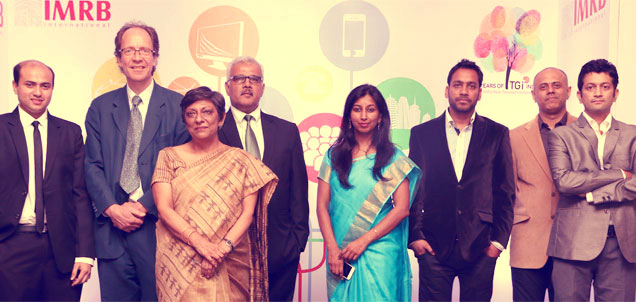
    L-R: Sanket Dave- Research Manager, IMRB International, Geoff Wicken- Head TGI International, Kantar Media, UK, Preeti Reddy- Sr. VP, IMRB International, Hemant Mehta- Sr. VP, IMRB International, Deepa Mathew- Group Business Director, IMRB International, Vishal Aggarwal-Principal Consultant, IMRB International, Tarun Abhichandani-IMRB International, Sagar Sheth- Insights Director, IMRB International


    By Dyanne Coelho


    It was celebration time for leading market research firm IMRB. On Tuesday, in the presence of a cross-section of marketing service professionals, IMRB marked the fifteen years of completion of its syndicated study Target Group Index (TGI). There is a renewed focus on the study, and senior IMRB personnel were in attendance at an event to explain this at a seminar titled: New India, New Perspective, New Lens. Introducing the study were Preeti Reddy, Senior VP and President-designate of IMRB and Hemant Mehta, Senior VP, IMRB. Also present was Geoff Wicken, Head of TGI International at Kantar Media UK who along with Deepa Mathew, TGI India Head, Sanket Dave, Research Manager, IMRB International and Vishal Agarwal, Principal Consultant, IMRB International addressed the gathering.


    The Target Group Index (TGI) is a global database that measures consumer lifestyle, habits, buying patterns, beliefs, values and media habits. It was launched in 2001 in India and has been widely used for studying consumer behaviour across different categories of products.


    On the occasion of its 15th year, Geoff Wicken, Head of TGI International, Kantar Media UK shared his perspectives on the study from a top angle view, comparing Indian consumers to its global counterparts. TGI in itself is also slated for some overhaul, accommodating new age tastes, preferences and consumer habits.


    Deepa Mathew, TGI India Head, focused on the evolution of the Indian consumer over the past 15 years. There are new states that we have today she said, and also new metros. The number of migrants making their way to urban metros is on the rise. There are different dynamics to the population today than there was 15 years back, Mathew explained. More than half of India’s population is under the age of 30, she said. There is an early start to life, and the age that youth start working is lower than what it was earlier. Gender equations are changing. There is a 30 percent increase in working women, Mathew added. With this, the average age of marriage is being pushed higher and subsequently the age of childbearing is also being getting stretched. “According to RBI estimates, the per capita income of families is on the rise,” Mathew said. This has caused the formation of new categories of consumers. Micro markets within markets have emerged. The time spent outdoors has risen. Subsequently, time spent in restaurants and coffee shops has increased. With the dawn of the digital era, consumers are influenced by other consumers they interact with on social media. Celebrities can no longer influence consumer behaviour to a great extent. “Consumers now have the confidence to take calculated risks,” Mathew said.


    Consumer power is shifting to the BRICs, Geoff Wicken, Head of TGI International, Kantar Media UK explained. The use of digital media and technology has resulted in stronger consumer behaviour among BRIC nations, he said. In India, ownership of items like cars, mobile phones, micro waves are steadily on the rise. “Mobile shopping has grown 700 percent between 2010 and 2014,” Wicken stated. According to a study, 49 percent of Indians are trying to keep up with changing technology, 57 percent love to buy new gadgets and appliances, 45 percent depend on the internet as the first source for information of any kind and 64 percent say that they like to try out new food products. Consumers are ready to shell out extra money for quality goods. “Quality is a basic hygiene parameter for consumers,” Mathew said. However with this, brand loyalty has seen a steep descent, as consumers wish to experiment with the variety available, Mathew added.


    Sanket Dave, Research Manager, IMRB International highlighted that plans to extend TGI to the North East and Jammu and Kashmir are underway. New categories of products, such as green tea, olive oil, and various personal health care products are also being added. Additionally, the study delves deep into the world of digital and attempts to break down consumer digital behaviour, apps usage, social trends and e-commerce purchase behaviour.


    Vishal Agarwal, Principal Consultant, IMRB International focused on the TGI Clickstream that tracks the real time internet usage of consumers. It targets consumers and analyses their online brand behaviour using metrics like the amount of time spent on a particular site, page clicks, etc. Thus it helps brands break down their consumer targets into smaller fractions and retarget. Said Shripad Kulkarni, CEO, Percept Media: “Clickstream is something very very interesting, and it will be nice to see how Clickstream data can be combined with the treasure that TGI has. Really looking forward to that,” he said.


    The recurring theme for the evening revolved around the changing Indian consumer, changing values and behaviours, the advent of the digital medium and the implications of these factors on the industry. “The international trends were very interesting, as was the comparison of consumer behaviour in India versus how it is in other countries. In many ways it was a bit surprising, because India seems to be quite progressive on the hierarchy as compared to what I thought, Ronita Mitra, Senior Vice President – Brand and Consumer Insights, Vodafone India expressed.


    The seminar highlighted the changing consumer patterns over the years and the implications it has for marketers. It also placed India alongside other nations and studied the growth on a number of platforms.