Category: Uncategorized

  • Realty Check | Day 17 | Abhaya Shankar: Towards energy efficient buildings

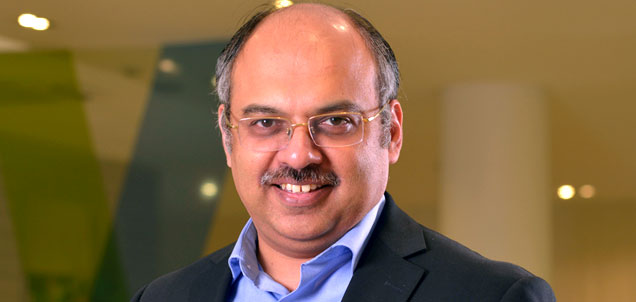
    By Abhaya Shankar
    Managing Director, HIL Limited


    A robust growth in employment, education and health care coupled with the booming urban population is expected to give the Indian real estate sector the much needed push as India continues to be a favourite real estate hub for global investors. Estimates point at steady housing demand throughout the year for the Indian economy, as the industry too gears up on meeting this demand. The Confederation of Real Estate Developers’ Associations of India (CREDAI) has also identified demand from Tier-II and Tier-III cities, which is ideally a resultant of burgeoning consumer spending. Additionally, the recent move to introduce REITS, or Real Estate Investment Trusts, is a progressive one as well as it is expected to help both developers and investors, through better financing and investment options.


    The move towards green is sweeping the real estate space and looming large, given the rising environment awareness and the mounting pressure for retaining ecological balance. According to the Indian Green Building Council (IGBC), out of the 25 billion sq ft of built up area in India, green spaces currently cover more than two billion sq ft and is aims to reach 10 billion sq ft by 2022. Over 300 new green buildings are coming up across different locations in India with the concept seeping in. Green buildings strive to optimize demand for electricity, water and other natural resources (in construction, operation and demolition); generate all their electricity on site through renewable energy; cater to their water demands through sustainable processes such as rainwater harvesting; and recycle all waste on site.


    Given the paradigm shift to green buildings, India, the second largest real estate market in the world, can save a good Rs 83,000 crore every year by investing in energy efficient buildings- an amount equal to the combined current expenditure on health and education. Sustainability is, thus, the key to making rapid strides of progress in the real estate sector in India and elsewhere. Sustainable buildings benefit occupiers with several operating cost reductions Green buildings with sustainable elements can save up to 20 per cent in total electricity costs.


    The concept of co-creation has also emerged anew in the Indian real estate industry as customers who have a long term relationship with the dealers need to be aptly managed in terms of delivery of expectations. The quality and effectiveness of communication with customers during the various stages of the project life cycle (and even after that) creates the experience of “absolute delight” which sustains in the longer run. From updating themselves with CRM software applications to taking into account customer feedback, real estate companies and dealers are walking that extra mile to co-create a shared value proposition and ensure the customers a truly differentiated customer experience.


    Coordinated by Shobhana Nair


  • Realty Check | Day 19 | Vijay Machindar: Holistic view on real estate sector for all-round happiness

    By Vijay Machindar
    Managing Director, Ornate Spaces Pvt Ltd


    It’s interesting that this article just as the first 100 days of the Prime Minister Narendra Modi government are being celebrated. There is indeed overwhelming support for the Modi and the BJP-led National Democratic Alliance that even naysayers will contend that the mood on the street is definitely upbeat.


    This after all the gloom was welcome, especially by the real estate sector since it can only prosper if the sentiments are positive not just in the industry but also among all citizens as only then will property be sold and bought.


    It’s important that the government and civic administrations have a holistic approach to infrastructure development. In the short run, this may impact some interests, but it is the only way in which we can ensure the well-being of everyone. It is critical that all stakeholders respect the need for proper civic infrastructure.


    This holistic view means that in all of the real estate development activity, we do not ignore the environment. The world including India has paid a price when nature has been plundered. We need to take care of the environment.


    The long term prosperity and happiness of all stakeholders can only be achieved if in our pursuit of building property, we do not ignore the environment. Mother Nature needs the respect she deserves.


    Coordinated by Shobhana Nair


  • What Ticks for Indian Consumers/ Men – Divya Gupta and Paritosh Joshi

    Continuing with our extracts from the second edition of the MxMIndia Annual, we present contributions by Divya Gupta and Paritosh Joshi


    Clubbing ‘Males’ as one segment is quite misleading


    By Divya Gupta


    The Indian male is both the middle-aged, Stanford educated, CEO with two kids and a four bedroom home on Neapean Sea Road and the 25 year-old, Matric fail, rag- picker from Gorakhpur sniffing glue behind Bandra station. This is urban India. Rural India is a whole other story. A generalization of their media consumption is a broad basket. There are also great regional and economic differences in extent and level of involvement. Urban consumption is higher overall and online plays a significant role. In suburban and rural India, where traditional media held sway, consumption of both, traditional and non- traditional media has gone up significantly in the recent past.


    Men typically watch less TV than women their age. They view more cable and pay channels. They are most attentive to sports, news and movies. Radio, newspapers and music are consumed mainly between 6am and 5pm. Magazines between 9am and 5pm, books between 8pm and 2am. TV is consumed across the day with a sharp rise in viewership post 8pm.


    Men are more engaged when it comes to product demonstrations and testing, ambient advertising and promotions. The greatest connect cutting across class and gender is Bollywood. Men are the predominant audience in cinemas with or without family. This is true across town classes but more prevalent in lower socio-economic strata. One of the largest segments of entertainment downloads by men, especially younger men is Bollywood scenes, dialogues, songs etc.


    There are more male subscribers to mobile and internet than women. The internet is used for mail, search, shopping and product comparisons, videos, chat sites, games as well as distance education, banking, and music. The use of mobile devices has grown in leaps and bounds and a third of the country’s population has a mobile phone. Text messaging, videos, games, location searches, travel transactions, banking transactions are the main uses. Uses that are growing are check-ins, learning languages, weather maps and location GPS. Mobile media consumption is more apps led and men download apps based on personal interest.


    To sum up, while there is a distinct difference in media consumption across genders, clubbing ‘Males’ as one segment having homogeneous media habits is quite misleading. Traits predominant in a section can be contradicted by another in such a basic way, that we’d we left wondering if we know anything at all!


    ‘Marketers better be honest to the consumer’


    By Prasoon Joshi


    Today, the definition of a happy family has definitely changed. To what extent, depends on the socio-economic strata of society you are talking about. If you ask a person in a village how family happiness has changed for him, it would be very different from middle India where I was brought up.


    The biggest change is that society has become more individualistic and the joint family structure is gradually diminishing. We have not yet moved into an individualist society completely though. We are in a cusp where people are finding it difficult to be a collective society. The notion of self, my needs, my life, me, my achievements is increasingly becoming more important.


    There is a flux of people to metros, big towns and cities. The happiness that people used to get from family has somewhat shifted from family to material things, and that is the first sign of a consumerist society.


    Consumerism has tip-toed into our consciousness. We are willy-nilly going the western way, which is based on consumption. When your economic principles are changing, then your value system also changes gradually. It is not to say that the meaning of happiness has gone diagonally opposite of what it used to be – Indians still value inner happiness.


    Rural vs. Urban

    When you say development, it means different things to different people. In rural India, there are infrastructural issues like in many places there is no electricity, no roads etc. While on one side their basic infrastructural needs are being met now, they are also getting connected with the world at the same time, thanks to the way mobile phones have reached rural India. It is leapfrogging ahead and they are experiencing things faster than urban India did. Unlike urban India, they are not experiencing changes in phases.


    The challenges of rural India have also been different – people in urban India cannot even imagine that somebody still gets water from a faraway place. We live in a very compartmentalised and disconnected world. On one hand, we are talking of having hundreds of channels where the number keeps increasing every day and on other, people are living in media dark ages in the same country.


    Then I look at the juxtaposition of rural life. I have not lived there but I have been in many villages and in my view it is simpler, less complicated, one has fewer things to do and it is definitely not hurried. They have stress of a different kind – they have living stress, water, electricity, sanitation etc., though that is changing now.


    It is not to say that people in rural areas do not chase dreams and aspirations. TV is a great window for anybody who lives a rural life to understand how we live in cities, which is why today the sachet packs of brands are being sold in rural areas – nothing prevents them from wanting a Sunsilk shampoo sachet or a Horlicks sachet. Distribution might be an issue but that will get resolved too.


    From a collective to individualistic society

    Individualism has been there since the time hedonism was invented. The time we live in makes it more pronounced. I do, I hope, I did, it is the ‘I’ word that drives the behaviour in all we do. It is a lot of self-credo and want for ‘myself ‘ and that is a big change.


    When it comes to purchase decisions, people do seek approval but decision making is purely individualistic. You may want affirmation after you decide it, but by and large you pretty much decide it. As for the stories about my child influenced me to buy a red car or some other product, it is said so but I don’t really believe in that maxim.


    Most challenging TG for marketers

    Teens, in my view, are the most difficult to reach. They are at an age where they think they know everything but haven’t tested it yet. They have that rebellious spirit as well. Peer group pressure is maximised with this audience or market segment. They have aspirations, dreams, they want and every marketer is trying to reach them. They are definitely the most important audience segment.


    Man’s role in changing family dynamics

    Larger societal values drive them to perform and succeed, be it in a career or at home. The same motivations which drive anybody drive men as well – may be they are more ambitious, but here is where good family values make the difference as against the family values of a western world. In the Indian context, we believe in our duty towards family, towards career, towards children, towards marriage and more. As a result, there is lot more security in the Indian society. How people think in the western world is that at age of 16, 18 and 21, there are three rites of passage where you move out. Not so in the Indian society.


    Advertising and changing consumer

    To an extent, brands drive cultural change and we ride those cultural trends. It is like a cycle, a brand sets out a cultural nuance and then that becomes a trend which people ride. It continues till the next one comes along that inspires the next behaviour.


    The power of social media

    That is the future. I find it very instantaneous and effective. You can pinpoint it much better. The creation of the now famous Pink Chaddi brigade and the moral policing when they all donated their pink chaddis; or the Arab Spring or the recent Campa Cola Housing Society campaign and the sexual harassment campaign were highly effective. When targeted correctly, social media can be most impactful and effective. There are many such examples that show how it can fuel whatever cause it sets out to do. Having said that, the cause must be just and justified.


    Mobile: the way forward

    Mobile is specific, targeted, real time, geographic and relevant. Where the future development will take place is in the quality of messaging. Just tele-marketing, pushing out a banner, or a billboard, as is being done currently, would not suffice. Targeting would need to get more focused. For instance if I say Pizza, GPS would pick my location and show me the available outlets. But it should go beyond that – marketers would have to figure what can I do to entice a consumer to my brand v/s another? Or, perhaps it can get me to change my mind out of pizzas.


    Changing consumer expectations & future readiness of marketers

    Consumers would always be dynamically driven and a difficult-to-satisfy set of individuals. Brands and aspirations will drive them to expect more, to want more, and to spend more as their respective economic affluence grows. The richer you get and the better you do, you will continue to want more.


    Are marketers future ready?

    Marketers can be as future ready as they want to be. They are finally people taking decisions. Like there is no common man, there is no common marketer driving a purchase decision. For every brilliant marketer there is an equally not so brilliant one – so on average some will always be ahead of the curve driving change and others wondering what happened and that’s how case studies get built.


    Family purchase decisions

    The man and woman relationship and equation has got redefined in our society, more so in the urban areas. Earlier, man was the provider and woman used to take care of the house. Since the time women have come out and said, I do not need a provider – I need a relationship, it has changed. It has made her an equal stakeholder in the purchase decisions. Earlier children were kept at an arm’s length, they couldn’t look straight into their father’s eyes, forget about participating in purchase decisions. Today’s kids have much more say – in fact decisions even on buying a TV or refrigerator or what car the father drives sometimes are completely driven by their influence. As a society, we are becoming individualistic but the nuclear family purchase decisions are more collective today.


    The most difficult TG to reach

    Teenagers are the most difficult to reach as their media habits are very complex – they are on social media, telephone, they watch television. Though they are available, it is complex to be able to map their lives. I would say you still get appointment viewing for the housewife or the man of the house or children, but to get hold of a teenager is the most difficult part.


    It is very important to reach them though. They experiment, and are emotional about the brand they want to associate themselves with. They are ready to spend money and most marketers and product categories want them. If you get them at that age, they will stick to your brand…they become your brand loyalists.


    What holds the family together?

    Today’s society is connected through festivals and special occasions. It is not that people are disconnected and are not interested in meeting their families and friends. They are so caught up with their life – life has become so tough that they are finding festivals and special occasions as a time to connect. Whether it is somebody’s birthday, anniversary or festivals, these have become much more serious interacting points than ever before. I think special occasions are keeping people together at least in metros and urban society.


    Selling indulgence

    It is not easy to sell indulgence to Indians. An Indian consumer prefers not to call himself or herself indulgent, still there is some resistance to it. Barring a few categories, if you want to sell them pure indulgence they will be little wary of that. Unlike the western society where there is no guilt for buying for indulgence, here age-old guilt still exists. However, that is gradually changing. Luxury products have already started finding windows – earlier the cars would be just of functional use for family but today a person can go for a car which expresses his individuality.


    Changing consumer expectations

    Consumer is an emperor now, he is spoilt for choices and he/she is going to be more demanding and discerning. The consumer of today wants less faff and more of the real stuff. Your brand is going to be very closely scrutinized and your promises are going to be looked at very critically. The consumer will want answers from you, and would want you to be accountable for what you say in your advertising and what you promise through your products. Consumer is definitely going to discard brands which would not fulfil their promises, or are going to be fly-by-night, flimsy and shifty.


    Also, a social/environmental consciousness about the brand and the company’s social and environmental standards/commitments is slowly coming in at least some consumer segments.


    Marketers have to realize that they have to live up to the expectations of the consumer. Hyperbole has to be used very carefully in brand communication. Marketers better be honest to the consumer rather than promising the earth. As is said, ‘Good advertising kills a bad product faster’.


    – (As told to Ritu Midha).


    Tomorrow: Friday, September 5:  Women/Sunder Hemrajani and Nikhil Madhok


  • Realty Check | Day 20 | Dinesh Ethiraj: Need for satellite townships to be well-connected & self-sufficient

    By Dinesh Ethiraj
    Director, Green Tree Homes & Ventures Pvt Ltd


    Satellite townships have been growing in our country. These townships came into existence as a solution to the haphazard development of suburban areas in major cities. The city limits are becoming overcrowded and the land prices have hit the roof. Land prices increase as the environment becomes bad, and then quality becomes expensive to super expensive. This has made the government and the real estate developers to look for development of habitat outside the city limits.


    There is a need for the satellite towns to be developed. According to a study done by Jones Lang LaSalle on ‘Satellite Townships’, “Cities like Mumbai, Delhi, Chennai, Bengaluru and Kolkata, etc, provide three to five times the number of houses as compared to their parent cities. Every year, when the Mumbai Metropolitan Region constructs about 24,000 houses, Mumbai City builds 1000 houses, her suburbs build about 5,000 and the remaining 18,000 are constructed in her satellite towns of Thane and Navi Mumbai. Chennai constructs about 18,000 houses annually, of which only 3,000 are in the city limits, while a whopping 15,000 are in the suburbs and satellite towns.”


    The idea behind developing satellite townships is to bring up planned habitations to ease population growth in towns. All major towns of the state are presently marred by unplanned growth that is stressing public utilities.


    Affordability drives many to these townships. With several industries setting up factories far way from cities, developers know there will be a demand for the residential properties and they go early and tap the market way ahead before the infrastructure is built.


    Most of the satellite townships are poorly connected with main city.  They continue to suffer from a lack of proper roads, water, electricity, sewage systems, public transport, hospitals and schools, etc. Inhabitants buy properties thinking things will get better in 15- 20 years. But that’s lot of time to wait for the development.


    Satellite towns should be well-connected and must be self–sufficient. It simple terms it should be a small city by itself.  The city agencies should be innovative and use market dynamics to raise and deploy funds for infrastructure.


    The state governments can provide with plying mini / bus between the towns and cities. They can improve the quality of commuting for a better and safer journeys. Develop not just road connectivity, but also extend the connectivity via metro rails(once its in place). We have different rail connectivity, and road connectivity most of these and not interconnected.


    Many flyovers are built without logical connectivity.  Such things add to the pains than to gains. Good quality roads must be put in place. Proper facility of water, electricity, sewage systems, public transport, hospitals and schools, etc


    Bengaluru’s NICE Road has a really good connectivity. Developers are quiet upbeat about the integrated township development, they feel that the governments, both the central and State should do more  to promote such developments. Governments can give rebate for the developers to encourage them to work along with the governments for development.


    Governments, the developers and citizens have to wake up to the call of the growing satellite townships. They answer all needs to have better facilities to live in. And better connectivity to the cities, better schools, hospitals etc. We need to push for the change to happen.


    Coordinated by Shobhana Nair


  • What Ticks for Indian Consumers/ Men – Indranil Roy and Ishan Raina

    Continuing with our extracts from the second edition of the MxMIndia Annual, we present contributions by Indranil Roy and Ishan Raina.


    ‘The future of magazines is in becoming engagement platforms’


    By Indranil Roy


    Men have traditionally been known as consumers that take interest in the following genres: news and current affairs, business, sports and technology. Surely, men are not interested in fashion. While they may want to look good, they do not spend time going through magazines reading fashion stories.


    If they somehow happen to pick up a ( fashion) magazine, you will invariably find them flipping through the pages. However, if it is business, sports or current affairs magazine, you will find them deeply engrossed reading. Anybody in the knowledge space would tell you that the best content strategy for engaging men is by having a lot of information and facts. Men love gathering more and more information to enhance their knowledge. Tables, numbers, illustrations or charts and diagrams grab their attention.


    Why is OOH digital media good for SEC A?


    By Ishan Raina


    Traditional media is rapidly declining as statistics are proving from research reports. With 600+ channels on TV, the viewership is getting more and more fragmented. You also find more newspapers in the house but the time spent reading them is not increasing. More people are now increasingly spending time out of the house. Research says that about 90 per cent occupants in residential colonies visit malls and multiplexes on a regular basis.


    Hence, delivering eyeballs is becoming an excessive challenge for marketers. How, then, do you reach out to youth/SEC A busy audiences? The idea is to fit into their life because they won’t fit into yours. The new age media space has changed drastically with the emergence of social media. With social media, the public has eyes and ears everywhere. Out of Home Media is one such company in the digital LCD screens space, another of new age media’s innovations. It reaches out to media dark/heavily media fragmented audiences in a strategic, focused manner across various consumer touchpoints following ‘A day in the life of an urban, SEC A consumer’.


    Content has to be revolutionary in nature and not generic. Analytical, yes. Not preachy. Content that presents a different view, or a different angle will be much talked-about amongst men. The key for magazine publishers targeting men is to understand that digital media has become a way of life. Men like to carry high-end gadgets wherever they go, so adopting to newer platforms such as tablets and fablets is going to be extremely important.


    At Outlook, we have made that change and have recognised the importance of embracing digital yet keeping the essence of a magazine intact. The future of magazines is in becoming engagement platforms and that can only happen by going digital. As for the growth aspect for men’s magazines, there is a lot of opportunity for monetisation as advertisers are now increasingly looking towards targeting specific consumer groups.


    The model follows a ‘queue’ theory’ with screens present at places where people queue up/spend time like lift lobbies in commercial buildings and residential buildings, cash counters in lifestyle stores/bookstores/modern retail formats and in front of treadmills in gyms. Some of the best brands work with OOH Media utilizing the medium repeatedly to reach their target audience in a sharp and focused manner.


    For example, Colgate uses the screens to run regional ads that are specific to each city, thus creating an instant connect with the audience. Citibank/ Crocin/Airwick/Eno/GM run different cluster-specific creatives to be more relevant to the consumers getting exposed to the screens within those clusters. Given below are some Nielsen statistics to validate that OOH Media created additional reach and observed an upward shift in recall for some of the country’s most iconic brands on a regular basis.


    Outcome: OOH Media provides additional reach for those critical audiences, as despite heavy media pressure, between 25-45 per cent are actually viewing the ad for the first time on OOH screens. Outcome: OOH Media has been instrumental in creating additional recall for brands targeting SEC A, urban audiences in locations where our screens are present vis-à-vis locations where our screens are not present. Today, SEC A consumers are time poor but cash rich, much more flexible and experimental in their approaches and decisions, boast of higher disposable incomes, more stylish lifestyle choices and a massive exposure to global trends via social media which has directly hampered the consumption of traditional media.


    To conclude, OOH Media is moving from a niche to a mainstream medium to connect with yield customers i.e. those who are affluent but time-challenged and who contribute, not to the overall turnover, but significantly to the profits of companies across FMCG, telecom, auto, financial services and increasingly tourism. – This article discusses the situation in India – however, habits of SEC A (well-to-do consumers) is becoming global and I am confident that similar trends will be observed across countries.


    Next: Monday, October 13: Women – William S Pinckney and N S Rajan

  • Shailesh Kapoor: Lessons TV Can Learn From Modi, The Entertainer

    By Shailesh Kapoor


    It’s been an unduly inert week on the telly so far. About two weeks ago, we witnessed that magical event from the Madison Square Garden. But since then, both the entertainment and the news scenes have been on the low, with nothing remarkable to speak about, barring the launch of a new season of Satyamev Jayate, and the promising first week of Ekta Kapoor’s Life OK show AjeebDastaan Hai Yeh.


    When the Prime Minister becomes the television star of the country, it says a thing or two about the state of affairs, both in governance and in the TV business. In my last 30 years of active TV viewing, this has never happened before. Yes, past prime ministers may have given an odd inspiring speech or two, but there was no show business involved there. Even their best speeches were merely functional in nature.


    Narendra Modi’s speech was entertainment at its best – Complete with a song-and-dance pre-cursor, spiced up with a rotating stage and a cheery crowd, and very strong in content. For a country that has learnt to live with the idea of a non-communicative Prime Minister for at least a decade now, this was a bolt from the blue. There was fairly low hype around the event on social media and on TV during the day. It was only when the event began that its influence began to be felt.


    TV channels may do well to learn a thing or two from Modi, in what is supposed to be their own bastion – Entertainment. The freshness with which he approached his speech, both in form and content, shows how well he has come to understand the pulse of the nation (and indeed, the diaspora). Cashing in on the overall mood of hope and optimism, he sent one positive message after another, but spoke specifics, than homilies and platitudes.


    This hand-on-the-pulse optimism is something our conventional television (read entertainment channels) could do well to incorporate in their programming. In a country that’s been constantly in the midst of development for almost two decades now, the mood of the hoi polloi is bound to evolve every 3-4 years. Conventional entertainment, especially television, should be the first to tap into this.


    But, as has been evident to me over the last six years, conventional entertainment operates with a lag effect. It is largely oriented at aping existing success stories, than searching for needs gaps. And by need gaps, I don’t mean programme ideas. Instead, I refer to the form of storytelling and messaging that resonates with the mood of the nation at any given point of time. We may as well can them ‘mood gaps’, instead of ‘need gaps’.


    We have undoubtedly entered a period of optimism. A good leader at a national level can create that impact. It’s been five months since Modi was elected and the honeymoon period is still on. There are definitive signs that this mood will last. But do we see its impact in any TV programming? Not yet anyway.


    We are in the last quarter of the calendar year and 2014 is set to be one of the least innovative years in the short history of Indian television. The Prime Minister is leading from the front to show us the way. But is anyone ready to follow suit?


  • What Ticks for Indian Consumers/ Teens – Dr Subho Ray and Sanjay Shah

    Continuing with our extracts from the second edition of the MxMIndia Annual, we present contributions by Dr Subho Ray and Sanjay Shah.


    Reaching out to Digital Natives 2023


    By Dr Subho Ray


    To be able to foresee the complicated interplay of high technology and consumer behaviour ten years from now with any precision is a hazardous task and best left to astrologers. What is certain, however, is that the technology will surely change and so will consumer behaviour. What they would look like is anybody’s guess! In order to give you an idea about what technology and consumer behaviour are going to be in the year 2023, let me play a trick on you and take you back to 2003.


    If you were 15 years old that year, it is likely that you did not have a mobile phone or a tablet, access to internet depended on the munificence of friends and family, accessing internet meant primarily checking mails or chatting. In other words, there was little scope for you to become a digital native. Cut to 2013. A 15 year old in India today has access to a phone or a tablet that is connected to the internet.


    The access to internet is not only for checking emails and chatting but to access a wide range of information, prepare home work, access school website, build your profile on a social networking site to express yourself. In short, you are a digital native and since there are many digital natives of your age and interest there is a network effect which allows you to spend more and more time on internet – you seem to be spending most of your time on the phone or internet.


    How effective a medium is OOH for teens?


    By Sanjay Shah


    Let’s first understand if OOH as a medium is, in itself, effective. In India, I do not think there is any precise study or research that would give an exact answer to the above question. While all advertisers and marketers would agree and believe that OOH works and delivers, it would still be a gut feel. However, if one was to derive a parallel from the international market, than BrandScience, a British media research firm, has a very interesting and valuable finding.


    They have over the last three years, across eight countries including the USA, analyzed over 600 econometric case studies, to gauge the impact of OOH on sales results. Interestingly, BrandScience found, Outof- Home advertising has a high return on investment (ROI) across all categories. On a global scale, BrandScience found for each dollar spent on OOH advertising, an average of $2.80 was received in sales.


    Interestingly, Television and Print advertising have a lower ROI, yet they receive a greater share of the dollar in the average media mix (source: OAAA). Now coming to Indian teens, their population today is 240 mn – a significant number which forms a very unassailable share of 19.8 per cent of the total population of India. (Source: Census India 2011). It would therefore be interesting to understand as to what consumes the day in the life of a teenager – school/college, homework, extracurricular activities, shopping, socializing etc.


    A marketer trying to reach you would most certainly have to have a digital component in her marketing strategy in order for you to act as an influencer on your parents. By now, more than an influencer, you have also become an independent buyer and consumer of a wide range of digital products and services such as books, music, videos, ringback tones – anything that can be consumed in a digital form.


    You have also not failed to note that many of the “real” goods like the Tantra t-shirt or the Levis 501 jeans are being sold online. In 2023, you would be 25 in your first job and a user of internet and mobile phone for over 10 years. You certainly don’t read newspapers and have little time for television.


    There is no way to reach you and engage with you outside digital. Interestingly, there is also no way to sell goods and services to you without digital. With more than 200 million internet users, declining prices of smart phones and marketers and retailers jostling to get into your digital space, this looks more of a reality in 10 years that anyone would be ready to concede.


    So then how and where do you engage such a huge and largely decisive group? Internet may not be the right answer to capture their attention, as a study by Harris Interactive, reported that 62 per cent of teens do not pay any attention to online advertising, 34 per cent paid little attention and 4 per cent said a lot. Nor would traditional media be the right answer as a significant part of their day is spent out of home.


    Therefore, capturing their attention out of home, where they congregate the most would be the most ideal and effective. Teens respond to ads differently and prefer to encounter them in different places, and therefore though OOH media is the right answer, the larger challenge would be, selection of the right media, the right media vehicle, and the right location. But yes, OOH is effective.


    Tomorrow: Tuesday, October 28: Men – Satbir Singh and Monica Tata


  • Vistara ropes in strategic partners for ‘brand building’ initiative

    By A Correspondent


    Airline entity Vistara has announced the names of its strategic partners who have been contributing in brand building and image management for the brand. The partners have been handpicked owing to their keen understanding and strong repute of building brands on a local and global scale. Vistara has these partners on board and involved in the journey of the brand for some time now. They will continue to extend all support required for Vistara’s 360 degree branding and customer engagement program.


    Vistara’s name, brand strategy and identity, has been developed by brand consulting and design company Brand Union Keshavan. The core values, which form the framework of brand Vistara, include excellence that surpasses customer expectations, thoughtfulness that demonstrates empathy and understanding, trust that upholds integrity, fairness and transparency, innovation to deliver operational excellence and cost leadership, and teamwork by building collaboration and diversity.


    Ad shop Ogilvy & Mather Advertising has been mandated with the task of building strategy and executing integrated communication solutions including digital and social media, towards building a strong Vistara brand. IPAN Hill+Knowlton Strategies has been appointed the Public Relations advisor and communication partner.


    Maxus along with Neo@Ogilvy, will provide insights into the media planning and buying processes, digital planning and execution. MaXposure Media Group, one of the leading in-flight magazine publishers in India, will publish the in-flight magazine for Vistara.


    Phee Teik Yeoh

    Talking about the partners on board, Phee Teik Yeoh, CEO, Vistara, said, “Our brand building partners play an immensely significant role in integrating our core values in their creative approach. I can proudly say that we have found the right partners who believe in our brand and its value proposition and will help us deliver seamless service experience to our customers. It was critical for us to choose the right teams – both in terms of sector expertise as well as creative foresight – for us to work collaboratively and deliver our brand promise.”


  • Facebook scales up missed call ad biz with VivaConnect

    By A Correspondent


    Keeping in tune with trends of emerging markets, Facebook has launched ‘Missed Call’ ad unit business in feature phone heavy Indian market. To scale-up its reach over mobile devices Facebook has partnered with VivaConnect for its missed call platform.


    The ‘missed call’ advertisement is Facebook’s first foray into mobile service to empower advertisers effectively reach their consumers in developing markets. India, the 2nd most populated country in the world is quickly catching up to the U.S. as Facebook’s biggest market.


    The new missed call ad format comes in action as around 66 per cent Indians access Facebook on mobile devices of feature phone segment and a whopping 95 per cent of India’s mobile subscriber base has a pre-paid connection. A place where it’s a common norm among family and friends, to dial a call and hang up after a ring expecting a response in return. The missed call ad format will definitely bolster brands advertising over Facebook, happening on mobile.


    “Consumer behavior in high-growth markets is changing very rapidly and we are poised to respond to that as quickly as possible. We see brands delivering useful and entertaining content like sports scores, news, or celebrity messages that people find valuable enough to take the time to listen to and interact with. There is also a good tie-in for direct response advertisers who can use the Missed call unit as lead generation, where a person is essentially raising their hand and expressing interest in a good or service,” said Maxine Schlein, Product Marketing Manager for Emerging Markets at Facebook.


    When a person sees an ad on Facebook they can place a ‘missed call’ by clicking the ad from their mobile device In the return call, the person will receive valuable content, such as music, cricket scores or celebrity messages, alongside a brand message from the advertiser, all without using airtime or data.


    The combination of user’s social data assembled over Facebook and the reach offered by VivaConnect’s missed call platform, together will allow brands to effectively target their consumers with right kind of advertising. Content will be personalized effectively, matching up the highly diverse Indian user base. Also, mobile access will grant an individual reach for retargeting consumers in brands subsequent activities.


  • Building Trust via Masterbrand 2.0


    Eight commercials, Rs 25 crore adspend, and the dropping of megastar Aamir Khan from the next phase a high profile advertising blitz. The Godrej group unveiled its Masterbrand 2.0 consumer connect initiative last week showcasing a slew of innovative products. From a new-age bed equipped with electronic hydraulics, a video door phone allowing continuous surveillance of two entrances of home with a storing capacity of upto 100 photographs, effective mosquito repellant solutions to authentic street food experience at home, these products will be highlighted through a series of eight television commercials that are being aired from November 14 onwards. Aamir Khan, who starred in the first phase of the activity, has moved out though the old protagonists Sam and Meera have stayed on.


    Commenting on the Masterbrand 2.0 campaign strategy and the new customer interface system, Shireesh Mukund Joshi, Head-Strategic Marketing said the total spend by Godrej on Masterbrand in Phase 2 is Rs 25 crore, the same as what it was in the first phase. Individual businesses though could use the commercials in addition for pushing their sales.  “Companies aired the TV ads with their budget, reposted Masterbrand digital posts on their channels, and used Aamir, Sam and Meera in their creative last time. This time too is same. Plus they are promoting the FreeG number and channelising their appropriate marketing activity through the FreeG menu,” Joshi told ‘dna of brands’.


    Excerpts from an interview with Shireesh Mukund Joshi with Pradyuman Maheshwari:


    As you embark on the second phase of MasterBrand, tell us what has been the experience of the first phase?

    I think the campaign has been delightfully successful. People have seen the impact it has had on the business, seeing the impact on the brand. The impact on the brand dimension, revenues, on the pride of the employees, qualitative connect between categories and the Godrej brand. In general, the group feels it’s been a very successful campaign.


    You embarked on the build-up for the Godrej brand in 2008. As you look back at the six-year journey, was it really necessary to undertake it? The Godrej brand has always been a household name?

    The first need that was felt was that the brand had a hundred years of uncontrolled growth. Divisions were doing things on their own and there was no mastermind shepherding this journey. One stream of thought then was that there needs to be a unified presence for the brand, you can’t represent it in a fragmented fashion. The second thought was that it wasn’t just about how the brand looks but also what people think of the brand. What should you think when you think of Godrej? We spoke to stakeholders inside and outside and arrived at the brand position. After that got done, three other things took off from there. The moment you have a positioning and a set of communication, you need to track it. Tracking, became one stream of work. Next, if it’s a strategic asset, then an asset has value. And the third part was the stream of communication. The team recognized that there were several things that were important and strong about Brand Godrej that needed to be communicated, but they couldn’t all be done at once. After the initial signaling of the change, we took on each one at a time. First was around technology – the aerospace campaign. The second was around lifestyle – the Khelo, Jeeto campaign. The third was around youthfulness and GenNext – the GoJio campaign. Each year was about a new dimension and we did what we could do in 2013 because the seeds had been sowed by other campaigns.


    When do you think this journey would have achieved its desired impact?

    We are a respected brand, but it’s not the ranking that’s important to us anymore. It is, but it’s not the stronger driver. The average home will have about four to five Godrej products. We make hundreds. How do we drive a much broader penetration? There is a fair bit of growth still to be achieved.


    India has several such large brands as Godrej. Do you think there is a need for an exercise like this for other brands as well?

    I do. In the end every brand is a promise and it plays itself out in business decisions. No brand was created for the purpose of creating a brand. It was created for a product or service. If you think about the conglomerate brands we have in India, they span multiple categories. Ours, Tata, Birla, Reliance, Dabur…. It helps to do it scientifically, measure it, understand the interplay and do more things that reinforce each other and do less of things that are a counter to each other.


    You mentioned four or five products in each household and you have a 100 of them in your portfolio. Have you felt the need to get into more youth-appealing products like mobile phones? Would you advise the management to get into such product areas?

    We aren’t looking at product categories we aren’t already in. We’re looking to strengthen and capitalise the categories we’re  already in. We might be a 30-40 per cent market leader. There is tremendous headroom for growth. The focus is on capturing the headroom for growth we have now, which is based on our strengths. If you look at the brand history, you’ll see that every year we have touched upon or entered a category or segment…


    How has the brand campaign helped in terms of revenues?

    Exponentially and I think our volumes have increased significantly. We’ve seen at least over 25% year-on-year growth on both topline and bottomline.


    Has it helped in terms of attracting topflight talent. Are you hiring from the premium B-schools like the IIMs?

    It has. This year we went to XLRI and IIM Ahmedabad, which we hadn’t gone to for a few years. The growth of the consumer and employer brand allow us entry and access into more and more campuses.


    You mentioned the spends on the advertising campaign have been in the region of 25 crore and it has had a positive rub off on the sales of brands. Would you say that the sales have increased beyond spends?

    I think, first of all, all the spend isn’t going into sales. We started with the objective of long-term sales which eventually translates into sales. What we saw was a much stronger short-term impact. There are certain divisions where we’ve seen a dramatic increase in sales in a few months. We’re continuing this campaign, which we’ll see grow with the multiplier effect.


    The fact that you’ve got into the second phase obviously indicates the first phase was successful. You have to justify the cost, right?

    Certainly, not just to ourselves because the funding comes from the divisions. They also see it of value given that they still support it in Year 2. Businesses are seeing its impact on their own revenue and sales, directly.


    You’ve had Hrithik Roshan, Virat Kohli, Aamir Khan and now you’ve moved way from celebrity endorsers. In fact Godrej has traditionally had people like Imran Khan endorsing the brand.

    Yes, we’ve had historically… mostly in the soap business. Preity Zinta did appliances. No other business has consistently used celebrities thought. Even the Godrej Masterbrand has used a celebrity only for one year. There was a specific reason why we chose Aamir Khan more than anybody else. Now we’ve moved on to the next stage. Traditionally, we don’t use celebrities, leaving soaps aside.


    If you have to look at one word where you would have the Godrej name to be described, would it be ‘trust’ or ‘cool’?

    One word is difficult. Everything is multi-dimensional. When we grew up, I had only two shoes – black and PT shoes. Now you have work, party, for sports… everything is fragmented. It’s hard to develop brands in developed categories to work with a single dimension. You have to be more complete than one dimensional. An idea that makes life brighter is just one thought.


    The making life brighter would be more cool than trust, isn’t it?

    It’s not at the cost of trust. Products have a much shorter life cycle now. My dad had his first car for 20-odd years before he sold it. I’ve never kept a car for more than five years. It’s not that trust and durability aren’t factors anymore. People have the economic ability to make more choices. We know we’re able to offer services without having to give up on the already good parts. People trust us.


    A shorter version of a story package on the Godrej Masterbrand 2.0 appeared in dna of brands on November 24
     

  • Online retailers like Flipkart, Snapdeal turn marketing focus to mobiles

    By Jayadevan PK


    Flipkart is giving the Google-run Great Online Shopping Festival a miss this year because the biggest Indian online retailer is promoting its own mobile app. Snapdeal is participating, but pushing its mobile app as well.


    Indian e-commerce companies are changing their customer-acquisition strategy and are enticing people with offers to install their apps on mobile phones. They expect the move to create more loyal customers than those who land on the portal through online searches.


    For search giant Google, this growing trend underlines the need to expand mobile offerings to retain its healthy rate of growth in a market where more people are expected to access the Internet on the mobile than on desktop.


    “The ecommerce industry is now mcommerce in India; the way you reach out to customers is very different even from a year ago when other digital channels were more prominent,” said Mausam Bhatt, senior director for mobile commerce & digital marketing at Flipkart. Flipkart and the local operations of US ecommerce giant Amazon get more than half their India traffic through mobile phones. And, these companies are increasingly spending on mobile-related promotions.


    Bhatt declined to provide details on Flipkart’s marketing expenditure. Traditionally, its spending has mostly been on search engine and display advertising, but he said there has been a large shift in spending to expand the number of customers having its mobile app installed on their phones.


    “An app install is an endorsement that someone wants to shop with you,” said Kishore Thota, head of digital marketing at Amazon India. While Thota still counts search and display advertising as an important part of Amazon’s marketing strategy, he says from a long term point of view, “We definitely see more investment going into app presence.”


    This shift means Google may have to work harder for the advertising dollar. For Google, which posted more than Rs 3,000 crore in India revenue for FY14, ecommerce has contributed to the 47 per cent growth in revenue over the previous year. For many years, search engine marketing, or advertising on search queries, has been the mainstay of online businesses. The other major form of advertising online was display advertising. Google is the leader in both.


    As more and more consumers move to mobile, both forms of traditional advertising have been slowing. The first by the proliferation of apps and the second by the smaller screen sizes that make it tough for display advertising. “You have to really earn the real estate on mobile,” said Thota.


    One-time purchases, like buying insurance or car will still be influenced by a Google search while regular actions like recharging a mobile, ordering a cab or ordering food, will see app install and more loyalty, said Naman Sarawagi, founder and chief executive of comparison shopping site FindYogi.


    Google, though, has a few things going for it. “There is a shift in revenue from SEM (search engine marketing) as we know it, but with products like Google Maps and Google Now, Google still has significant stake in the future of interaction, thereby safeguarding its search and discovery based revenue,” said Sarawagi.


    Google’s mobile revenue is already supporting its growth globally. In the US, market research firm eMarketer estimates that search revenue from desktop computers will decline to $10 billion this year from $10.8 billion in 2013. But mobile search revenue is expected to grow to $5.1 billion from $3.1 billion. According to the estimate, Google’s total advertising revenue will increase 14 per cent to $43.5 billion in 2014.


    “The shift to mobile is one we welcome and in Asia the change is happening faster than anywhere else in the world,” said Praveen Sharma, director-performance at Google-APAC. Sharma said Google has driven hundreds of millions of app downloads through these formats.


    The trend isn’t limited to India or Asia. According to eMarketer, desktop search in the US will decline significantly this year, as mobile search ad spending grows.


    In India, mobile advertising has steadily grown in proportion of the total digital market, to 14 per cent in the fiscal year through March 2014 from 7 per cent in fiscal 2012, according to the Internet and Mobile Association of India’s latest report.


    In the same period, contribution of search to total advertising revenue has gone down to 30 per cent from 34 per cent. Display advertising has also gone down in proportion as social media and video advertising have grown. The total digital advertising market is expected to reach Rs 3,575 crore in fiscal 2015 from Rs 2,750 crore last year.


    To serve its growing mobile clientele, the search giant has also launched advertising solutions for the mobile world. This year, Google launched app promotions advertising formats across its products including search, display network and YouTube.


    Source:The Economic Times

    Copyright © 2014, Bennett, Coleman & Co. Ltd. All Rights Reserved

    Licensed to republish


  • Global brands change partners for more reach in India


    By Vijaya Rathore


    Brioni, a luxury menswear brand from Italy, is currently looking for the “perfect” location in a south Delhi upscale mall to open a store, almost after a year it shut down its earlier store located inside a five-star hotel.


    Store location is not the only change that Brioni has initiated in the country. It has found a new partner to sell its jackets, ties and shirts in India.


    Another luxury brand, Etro, is holding talks with a number of retailers in India to make a comeback, after it split ways with Genesis Luxury and all the India stores were shut last year.


    Ahost of popular brands, including Ferrari, Bang & Olufsen, Montblanc, Etro, Brioni and Bulgari are revisiting their India business plans by tweaking one of the most important factors – the local partner. Reasons differ. It could either be inefficiency of the existing partner to infuse new energy and money in the business, or the desire to take control of the operations by choosing someone docile.


    Iconic jewellery brand Bulgari has formed a joint venture with a new “silent partner” with an aim to have better control over its operations in this market.


    “Our ambition in India is much higher than before,” Bulgari chief executive office Jean Christophe Babin said on his recent visit to India. The decision to make direct investments in this market, instead of simply relying on a franchise partner is like “pressing the reboot button”. Bulgari had ended its seven-year relationship with Mumbai-based Dia Group’s Lifestyle Tradelinks India in 2011. Likewise, Ferrari has hooked up with Yadur Kapur, a dealer of luxury cars for the Delhi market and Navnit Motors in Mumbai, splitting with Delhi-based Shreyans Group.


    Mr Kapur, who is working on a plan to open a new showroom, sales and service centre for Ferrari in Delhi, says, “The brand will now be represented in the right way in the country.” One of his focus areas would also be to make sure that the company sent enough cars to India to match demand and that the buyers don’t have to wait too long.


    Experts point out that the change in partnerships was partly due to the natural lifecycle of a relationship between the two parties, apart from other factors. “Many pacts were originally signed for a limited period, and when that time passes, people move on,” says Devangshu Dutta, chief executive at retail consultancy Third Eyesight.


    Also, as brands become more serious about the market, they revisit everything in order to infuse a fresh lease of life into the business.


    “When international brands realise the importance of India and sense that the existing partner may not have the capacity, interest or potential to address the same, they move on,” adds Mr Dutta.


    Etro, for example, is one of the brands looking for a new partner to conduct business in India. “We have had a meeting with them,” said a senior executive of one of the top luxury retailers in India who did not wish to be identified.


    Some separations are bitter. Former cricketer and businessman Dilip Doshi and Montblanc are fighting a legal battle amid allegations of fraud and deceit. Mr Doshi claims that Montblanc pulled out of a possible joint venture at the last minute and terminated its distribution and franchise agreements in March this year.


    Earlier this year, Montblanc announced a 51:49 joint venture to setup single-brand retail stores with Titan Industries, a Tata Group company.


    Similarly, Brioni and Badasaab Designs (retailer of Brioni in India) went to court against each other and the legal tussle went on for some time. “A mutual settlement has been reached between the two,” said a person aware of the development. Brioni is understood to have finalised OSL Luxury, which sells Corneliani menswear in India, as its new partner. OSL executives, however, did not comment on the development.


    To begin with, most brands are working on re-establishing a retail presence besides enhancing brand visibility and “consumer experience.”


    Denmark-based high-end entertainment systems maker Bang & Olufsen (B&O) for instance has just opened a single-brand store in Delhi, and so has Bulgari. Ferrari and Brioni are doing the same. “We also have access to outside investment to expand B&O’s business in India,” said Gaganmeet Singh, director of BeoWorld.


    For the Bulgari CEO, it was important to take control of India’s operations.”Though we have a partner here, we are behind the driving wheel,” Babin said.


    It’s not the first time brands are shuffling their relationships. In 2009, Gucci parted ways with its old franchisee Vijay Murjani and moved to a franchise agreement with investment banker Ashok Wadhwa’s Luxury Goods Retail.


    Versace, is now with Infinite Luxury, but was earlier retailed by Blues Clothing Company in India. In 2012, Giorgio Armani ended its joint venture with DLF Brands to get into a deal with Genesis Luxury, run by Sanjay Kapoor.


    A recent Euromonitor report said that India was the fastest-growing emerging market for luxury goods. The country’s luxury market will grow 86 per cent in constant value terms between 2013 and 2018, while China, Malaysia and Indonesia are expected to grow 74 per cent, 62 per cent and 59 per cent, respectively, over the period. India’s luxury market was expected to reach $14.73 billion by 2015 from an estimated $8.21 billion last year, with about 30 per cent of the customers coming from smaller cities.


    Source:The Economic Times

    Copyright © 2014, Bennett, Coleman & Co. Ltd. All Rights Reserved

    Licensed to republish