Category: Uncategorized

  • Tough & wanting to be in the Top 5


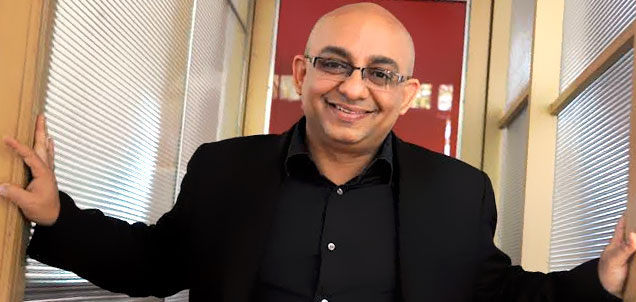
    Saurabh Varma, CEO, Leo Burnett, was considered an ‘outsider’ when he took charge of the network of agencies 18 months ago. But that didn’t stop him from taking some bold steps in acquiring talent, setting goals, and generally shaking up an organisation that was doing well. But, as Varma tells Pradyuman Maheshwari, just being among the best in India is not enough. He wants Leo Burnett’s India operations to be counted among the Top 5 in the world in two years. And he doesn’t mind being the tough taskmaster boss as long as achieves results.


    It’s been a year-and-a-half since you came in. How has been the journey so far, between Leo Burnett then and now?

    It’s been 18-odd months but it seems like a lifetime. For us, the journey always starts with a shared belief and common purpose for collaboration. If you ask any of the leaders or youngsters who have joined us, in the last 18 months, we’ve managed to make sure everybody understands what our shared belief is. As an organisation, we want to become among the Top 5 creative agencies in the world by 2017. Once you have that overall vision, it’s about having a clear strategic roadmap to get there. And that is a function of structures, systems, people, the talent you hire, how you brand yourself in the marketplace and the kind of product you create. In the last 18 months, we’ve been very focused on our growth strategy, which is around integration and specialisation. Integration is not equal to generalisation; it’s not an idea that travels across different media. True integration is when you have a bunch of specialists working together to create magic. We’ve been focused on building our specialist pillars one by one, making sure they have the ability to work with each other. Every client wants integration, but not at the cost of not having specialisation.


    Burnett wasn’t doing badly when you took charge. So why the need to reinvent and fix things?

    In 2013, we were already the Creative Agency of the Year, but our benchmark was India. We were not looking to become the best in the world. Now we are. If you don’t refocus on a new strategic mission, on a new ambition, you will become complacent and not move forward. That’s why the need to reinvent.


    For us, this journey is a function of three things — people, product and profits. Profits are critical in the overall scheme of things, because our belief is, great creativity across centuries has only happened when you have prosperity. On the people front, we’ve made some significant changes. When I joined, everybody wanted a sense of comfort as far as creative leadership was concerned. There were some standard names floating around in the market, and everybody advised us to go for them.


    But you opted for a rank outsider…

    Yes, and it was driven by strategy. We operated without fear, because when the agency is already going through a big change in the leadership at that point, to make one more significant change and change everything, is risky.


    Did you have the full support of your international offices on that?

    Absolutely. I’ve had the blessing to do what is required to create a model organisation. For us to hire a 35-year-old Chief Creative Officer was a bold move, but it was a function of our ambition to be among the Top 5 in the world.


    Were your clients okay with it? You’ve had some pedigreed, long-standing clients. Did they require any convincing?

    I think the question is not whether they were fine then. The question is whether they are fine now. Obviously, we needed to have conversations with clients and share the reason we were making such a big shift. We needed to convince them about our strategic direction, and why it would benefit them in both the short and long term.


    People, product and profits are the mainstay of any business. How have you performed on these?

    I’ve already mentioned one part on the people front. The other part is, if we look at our teams across the board – the business directors, strategic planners or creative leadership team –. there’s a new team in Bengaluru, and a new leadership in Delhi. All of this is a function of knowing we need people who are digital by blood and understand modern paradigms. The industry is full of prima donnas, especially in India, but we’ve steered clear of them. One of the keys to driving integration is a focus on people who can collaborate with each other. So we’ve hired what we call the ‘Positive A’ types – those who have the ability and guts to deliver, and also have a positive spirit about them.


    Was it easy bringing this about? Or was it tough getting the old-timers to believe in this whole new philosophy?

    When you have a clear strategic roadmap, and you share your vision continuously with the teams, they start getting a sense of confidence that you genuinely believe in that vision yourself. They look at the leader to see whether he has the confidence to deliver against that vision. When they start seeing results, it creates more momentum.


    We’ve heard stories that Saurabh is a very tough guy, a taskmaster and all of that. Is all of that true?

    I would think that would be absolutely true. I think we have ruthlessly pursued a single agenda to be the best creative agency in the world.


    So what comes first, the carrot or the stick?

    No it’s not about the carrot or the stick, it’s about decision-making, it’s about making sure that everybody is aligned to a single vision, and I think if you look at what’s happened with us, most of the people have stayed back because they believed in that vision.


    All of us, on the outside, were closely following the many changes taking place [at the agency]…

    Most people have stayed back because they believed in the vision. People who did not are the ones we felt were not going to add to the energy and the momentum that we wanted, and are not with us anymore.


    Was it easy getting a few of the older guys to exit?

    A lot of what you call the ‘old guys’ are still in our system and they’re thriving and succeeding. I think what people want to see is a shared belief and a shared destiny, and everybody who exists here, believes in that.


    What about profits? How are you doing in terms of your bottomlines?

    Right now, we are the fastest-growing Leo Burnett agency in Asia. We are growing twice as fast as the industry average, and I wouldn’t be surprised if we are the fastest-growing agency in the country at the moment. We have huge momentum as an agency and this happened because of focussing on our clients, solving their problems and doing great work, that’s all.


    How has the change in strategy impacted your other arms like Orchard and Indigo?

    So like I said, first, we’re united by that single ambition, which is to be among the Top 5 creative agencies in the world. Second is the function of deciding what the unique purpose of each company is: What is the leadership we need in that country and how we’re going to grow. If you look at Indigo, we are blessed that it’s a build agency. About 18 months ago, we were only a Mumbai agency. Today, we are one of the best holistic digital agencies in the country. For us, Indigo has been a unique growth story, but that’s only one part of it. The second part is integrating it with Leo Burnett as a network. Till18 months ago, there were hardly any shared clients; Indigo and Leo Burnett had their own sets of clients. Today, we have integrated across the board on clients for whom we do multiple things, from search, social and retail to activation and ATL. There are teams from Indigo, from our park shopper unit, from activation unit all working together seamlessly to create solutions.


    Wouldn’t it have been better if you had to integrate Indigo within Leo Burnett to make it fully forward-looking?

    It already is integrated incredibly well at the moment. When you say integration, it is merged; we have one P/L, that’s the great part about Leo Burnett at the moment. We don’t have the same silos you see in some large organisations. Our ability, therefore, to create a systemic solution for clients, is far more dynamic than other agencies. The way we work on these solutions is that we have one integration manager, rather than an account manager, who runs everything and understands search, social, e-commerce, retail, and that requires a very different kind of training as far as the individual is concerned.


    In the last 18 months, while you have possibly been putting your house in order, you’ve been away from most industry events. Was that deliberate?

    It’s deliberate for two reasons. First, the only thing that really matters is our clients’ work. When you spend too much energy on extra-curricular activities, it defocuses you from your true objective. Second, we don’t think there is enough maturity as far as the awards in India go, to participate. There are too many factions, and we don’t want to be a part of any of them.


    But some amount of collaboration with other agencies always helps, right?

    We have been collaborating. The Publicis group has 13,000 people, and that’s where we want to collaborate. We have access to one of the best PR agencies, MSL, and some of the best media agencies with huge digital capabilities, like Starcom and Zenith, and that’s where we’re collaborating. We have lots of shared exercises and shared programmes.


    And awards?

    Every agency loves awards. We participate in Spikes, Adfest, we have a huge battalion going to Cannes – the biggest you can possibly imagine, right from youngsters to account people, HR people etc. We do believe in awards; in seminars and listening to the best people in the world really matters. It tells us what the benchmarks in the world are. What we do not want to be a part of, is what’s happening at the moment.


    You have the D&AD-backed Kyoorius Awards, but you didn’t participate in that either…

    I think the whole industry has not come together. I’ve been pretty vocal about my sentiments on this. Until the time awards are driven by a sense of maturity and not agendas, we will not participate.


    One of the things said about you not participating is because there’s not enough work that you think can win awards. Is that true?

    I am certain that if you put our best work alongside the best work of any other agency, we will be among the Top # in India any time. So that’s not the problem. The issue is what kind of awards do you believe in? We’re not an agency which believes in doing a poster for or press campaign for an award. If you see some of our work you will see what we believe in, is great work.


    Are you looking at any acquisitions, any more organic growth, to achieve becoming among the top five agencies of the world?

    We are continuously looking at building our specialist functions but we’re not looking at acquiring agencies for scale. That’s never been part of our strategy. For us it is very strategic; if there is an agency or a specialist function which is in line with our strategic intent, we will go for that acquisition.


    Coming back to your start at Leo Burnett, there were questions being asked about whether you can do it. You were not from an Indian scenario; you were put into a system which was doing fairly well, but had to reinvent. Do you think those disadvantages actually proved to be your strengths?

    I never thought of it as a disadvantage. For us it was a strategic decision. We started discussing this move four years ago. We planned for this move for the last three years. So it wasn’t done all of a sudden. The industry will say what it will; we’ve never really bothered about that. For us it’s about following through all our strategy and delivering on what we believe is the right thing to do for ourselves and for our clients.


    The fact that your predecessor Arvind Sharma and Co put in some great work would’ve helped?

    Yes, we’ve always focused on great work. Work for our clients and solving their problems. That’s the strength of Leo Burnett and that’s an advantage we continue to build on.


    And great work is possible even through a non-star creative head?

    No I think we have the biggest rock star in the making. And mark my words on that. Raj Deepak Das will be the biggest star, I’m not talking about India, but globally. I’m only betting on my belief in that, and my ability to partner with him in making that happen. So for us all, what we’ve done is we’ve strategically decided what we need to do, we believe we have the talent, we’ve identified the talent to take us into that trajectory.


    Are you looking at hiring more talent?

    All the time. With our growth we need to continuously find new talent to join us, and like I keep saying, talent is what we call the ‘Positive A’ types.


    On a lighter note, now that you’ve reached close to where you are, do you think you would be less tough on everybody, or is that something that you need to be?

    See I don’t think I’m tough, I’m single-minded. I’m single-minded in my ambition, and single-minded in my focus. That’s what I’m doing and I think some of those decisions, might not seem the right decisions at a certain point of time, and I can live with that.


    This interview first appeared in dna on brands on June 15, 2015

     

  • Dear MxM by Jaisurya Das: My company has hired a new CEO who hasn’t performed… and the owner doesn’t listen

    By Jaisurya Das


    Dear Friends,

    Greetings and Welcome to Dear MxM!


    Am overwhelmed with your positive feedback to last week’s column. It’s this warmth that we attempt to reciprocate, week after week. Thanks again for the suggestions, the requests, the words of encouragement and the occasional critique to keep us on our toes.


    Paradoxically, the very fact, that most of you wrote in asking for more such relaxation techniques, is in itself disturbing.


    Stress is a lethal Trojan. It slips in unnoticed, auto-runs and soon enough re-writes  the very OS that it rides on. We must find method in this madness. MxM India is committed to this cause. 


    That’s the Truth. End of story.


    Your Questions, Our Answers. Read on.


    I am a Senior marketing professional working with a government department near Delhi. My interest in the media got me to your site and your column. It is excellent and doing great service.  Mr Das, while I have a good income and there is much job stability, I was wondering if it is a good idea to switch to a marketing job with a media company. Please advise.

    Thank you Sir!! Am indeed humbled by these kind words of encouragement. Means a lot…

    Media is the most exciting platform for a marketer! I am biased and will be for the rest of my life.

    I have been part of its (read print) metamorphosis from the sanctum sanctorum of news to its current avatar, a business. So what if ‘breaking news’ this morning is all about a Bollywood diva turning vegan.. You can always read the indepth story of the brand that is changing the way we breathe.

    Media will remain an incomparable High for every discerning marketer. Perform or Perish. For me, it’s the blood that runs in my veins . Inseparable. Yet, I say no! Please stay right where you are.


    India needs marketing talent now. There is little doubt that as a country, we are now poised for tremendous change, and change for the better I would imagine. Media can wait , Market India!  Give her body, give her your time and empower her to become a superpower . She can.

    Our children must walk head high .They must know that there isn’t a better country .

    Jai Hind!


    My company – in the business of news media – has  had a new CEO who joined the organisation some six months back. Unfortunately, the organisation’s sales are going down, and I find that the owner is not doing anything about it. At first I thought it is only fair to give him more time, but in these times, a down slide for a full year can set one back majorly. What do you think I should do? Please advise.

    A sharp drop in revenues for any media organisation in today’s fiercely competitive buyer’s market can signal doom. News media organisations cannot sustain without marketing and sales acumen of the highest order. I am surprised the owner of this company is unable to hear the alarm bells. He or She probably has other business interests, and media is now just another toy to play with.

    Your concern for this organisation is certainly worthy of immense respect. If i can hazard a guess, you have given this company and its brands its best years of revenue generation.

    Dear MxM would be happy to help you in whatever way we can,  and for a start, assure you that your craft will always berecognised.

    You have given this company your best years , your unquestionable loyalty and your heart. It’s a pity the owner brought in a new chief executive (performer or otherwise ) when there is true passion in his backyard. Unwind, toss a coin high into the air. Heads you win, Tails he loses. The business of media is not Maya.


    Sir, I have heard you are going to turn 50 soon. Sorry, to be asking a personal question.. but at what age and at what juncture you realise you are cut out for the news media and not hotel management that you studied for?

    Wow ! Do you know my time of birth as well?  Jokes apart thanks for writing in. Feels good.

    To be honest, I had no enlightenment such.

    The hotel that hired me on campus, refused to move me from the Front Office to Marketing. I worked 12-16 hours/day muck like the proverbial horse and yet I felt bored.  I walked out into the sun, and barged into the first office I saw.

    An hour later, I walked again, this time with a water purifier strapped on my back . I learnt sales on the streets of Chennai. Thank God for the purifier . It changed my life.

    The move to media happened six months later. A leading media house was looking for a Sales Executive to be based at Trivandrum. Malayalam was essential, more so since this job demanded travel across Kerala.

    My parents were there at that point of time, so I gave it a shot. You don’t meet a Mallu. They happen to you.

    My employer realised this the hard way .

    Media is the ‘other’ woman in my life. My wife has finally accepted this reality. I flirt with reckless abandon.

    At times this works well. Don’t worry about the timing or juncture my friend !

    Just follow your heart. Its invariably right .


    My agency worked very actively for a marketing campaign, but the Cannes Lions metal has gone to another agency  which had entered for the award. It is so unfair.  While my boss advised me that just stating on my CV that I have worked on the campaign is enough along with a letter from him and the client, but I am not sure. Please advise?

    Yes , that’s proof of the pudding enough!  I know the Cannes Lion means the world to you right now, but believe me it’s the lack of it, that will prove to be your biggest catalyst to win.

    Master your craft. Win you will. All the very best !


    See you next week , same day, same space.  Inbox your questions to Editor@mxmindia.com putting Dear MxM in subject line.


    Have a blast this weekend. Celebrate life.


    Take good care of yourself.


  • Shailesh Kapoor: Hindi Fiction: Getting Younger, But Not Young Enough

    By Shailesh Kapoor


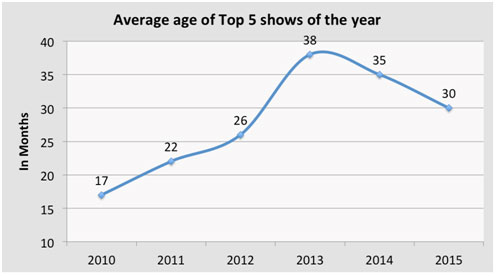
    What are the odds that a new fiction show, launched by one of the leading Hindi GECs, will enter the list of Top 5 programmes within its first 6-12 months? If you look at the chart below, you wouldn’t want to place a bet on that.


    This simple analysis of the Top 5 Hindi GEC fiction shows of the year, over the last six years, has a lot to reveal. The average age of the Top 5 shows (defined as the number of months the show was on-air, counted at the middle of each year, i.e., end June) is currently at 30 months. Yes, that’s two-and-a-half years!


    As you can see, 2013 was a watershed year, when the average age increased by a full year, from 26 months to 38 months, which could be interpreted as largely the same shows being the Top 5 in both these years (three of the five were indeed the same).


    The years 2010 and 2011 were very different in nature. These came in the aftermath of the shake up that Colors brought with it, reaching No. 1 in 2009, before Star Plus made an astounding comeback with ‘Rishta Wohi Soch Nayi’ in 2010. The two channels dominated the ratings landscape, and most shows that topped the charts in 2010-11 were 2009-11 launches.


    What number should a broadcaster be happy with? Is an average age of 17-22 months preferred over an average age of 35-38 months?


    It can be argued that a broadcaster who’s doing well and has a loyal viewer base (e.g. Star Plus) would benefit from a higher-average-age trend. It would indicate consumer inertia to shift from their favorites, and that should suit the leading channel well.


    Also, a lower average age would mean that shelf life of programmes is reducing, which, in turn, would imply that channels would have to launch more programmes every years, which in turn means costs of content development, marketing and research will go up.


    But most channels are not leaders with a big loyal base, and average shelf life of new shows is determined largely by flop shows than by hit shows, and has remained largely constant at about 12 months over the last few years (which means that for every show that goes on for five years, there are at least half a dozen others that end within a year).


    Any growing industry would aspire to bring the average age down. 30-38 months is simply too old for comfort. 12-18 months should be a good number, reflective of an audience taste that balances loyalty and novelty.


    The implications of the average age having gone up can be significant, especially for broadcasters challenging the big three at the top. Converting a viewer who’s 2.5 years into a show is a tough ask. A 30+ months stat reveals an audience mindset that’s largely rejecting new content. As has been mentioned in this column before, it’s a reflection of their cynicism that new content largely flatters to deceive.


    Colors has managed to do well in recent times, with shows like Ashoka and Meri Aashiqui Tumse Hi bucking the trend of old horses driving success. That’s one of the reasons we have seen an improvement from 38 months to 30 months over the last two years.


    But we need a lot more. The category may have got eight months younger, but it is simply not young enough. The answer lies in content innovation. But that’s another topic, for another day.


  • Pepperfry appoints Motivator as Media AOR

    By A Correspondent


    Motivator, the GroupM media agency, has bagged the media duties of leading online furniture and home products marketplace, Pepperfry. The account of the Mumbai-based Pepperfry is estimated to be approximately Rs 80-100 crore. Over the last six months, Motivator has added several clients under its portfolio including brands like Honda cars and Disney Studios.


    As a part of the media mandate, Motivator will be responsible for managing the traditional and digital media planning activities for Pepperfry. The agency will be working closely with the team at Pepperfry to plan and implement pioneering campaigns tapping various communication channels including emerging media avenues.


    Speaking on awarding its media duties to Motivator, Kashyap Vadapalli, CMO Pepperfry said, “We are confident about Motivator’s ability to deliver innovative strategies to assist us in building a strong consumer brand. Their fresh approach towards media planning and the strong synergy with our plans makes it a cohesive partnership. We look forward to work with them.”


    Trishul Bhumkar, General Manager Motivator said “It’s an exciting challenge to change the way Indian consumers buy furniture and we are excited to be a part of this challenge. In continuance of working with client who expect business results rather than only media strategies, PepperFry is a great addition to the family. Motivator’s best foot is forward in this challenge.”


  • Vodafone unveils campaign to promote Double Data & Double Validity plans

    By A Correspondent


    Vodafone India launched its biggest nationwide consumer promotion, offering immense value benefits to both its voice and data customers. While the data product offered ‘Double Data’ on a pack upgrade, the voice product offers ‘Double Validity’ on purchase of a rate cutter pack for local / STD calls.


    The Vodafone Doubles 360 campaign went live a few days ago with an objective to create a value proposition in the prepaid segment. The first TVC ‘Vodafone Smitten’ helped to create rapid awareness for the ‘Double Data’ offering. The second commercial ‘Vodafone Jokester’ goes on air on 27th August, 2015 and aims to deliver conversions for the ‘Double Validity’ proposition.


    Vodafone India launched Double Validity on rate cutter packs, giving pre-paid customers a great reason to talk more at lower rates. The offer on rate cutter pack will enable customers to talk more at attractive rates, affordable prices and an opportunity to double the validity of the product at a nominal cost of INR 7.


    All pre-paid customers of Vodafone pan India can avail this offer through any of the following routes (via 121, through the special offers section on the Vodafone website and My Vodafone app) and can choose to double the validity of the selected voice rate cutter pack by paying just INR 7.


    Earlier this month, Vodafone launched Double Data offer wherein pre-paid customers availing data recharge, will enjoy double the value of the chosen data pack, at the same cost.


    The brief to Ogilvy was to bring alive the key proposition of Vodafone Doubles’ offer.  The key consideration for the campaign was to ensure quick connect with the TG through simple stories and rapid awareness to drive for the offer performance.


    The communication is based on the Insight that users often shackle their data usage due to the worry of running out of allowance. The creative idea of the communication is thus around More Allowance being equal to More Fun, and the TVC brings this alive through a simple story of individuals experiencing the unrestricted joys of unshackled data usage.


    The proposition of Double Data and Double Validity is brought alive in two TV commercials. An interesting customer interview format is chosen which begin with pitching the proposition as a question. The respondent then begins to imagine all that he/she can do (and much more) if this dream offer came to reality.


    The Vodafone Doubles propositions are brought alive through slice of life stories to ensure easy message delivery. The TVCs will be supported by a 360 degree campaign, which is designed to bring alive the Vodafone Doubles offers. As the core TG of each of these may reside in different markets and access different media, TV, OOH, digital, and on-ground has been chosen to target specific offers across varied geographies.


    Avneesh Khosla, Executive Vice President – Products & Services – Marketing, Vodafone India, said, “Mobile telecom services in India are still largely voice dominated with over 70 per cent of the market revenues contributed by Voice plans. Double Validity is one more customer centric initiative from Vodafone, conceptualized with the objective of ensuring our customers get control on how they utilize their plan and get full value for money. It is a refreshing new offering that blends affordability with customer empowerment.”


  • Consumers in India ‘extremely optimistic’ about economic prospects, notes MasterCard study

    By A Correspondent


    India is the most optimistic market in Asia Pacific in terms of consumer confidence, according to the MasterCard Index of Consumer Confidenceâ„¢. While consumers in Asia Pacific remain generally optimistic about the future, the level of optimism is beginning to recede in a number of markets besides India. At a score of 93.1 out of 100, India’s consumer confidence remains in ‘extremely optimistic’ territory and it is the only market among the 17 that is above 90 points.


    A majority of Indians (91.5) are confident about employment prospects in the country and there has been a 3.1 point rise in the number of people who have a positive outlook on the economy, from 91.4 in H2 2014 to 94.5 in H1 2015. People also expressed optimism that their regular income may increase, as well as confidence that their quality of life may improve over the next six months. The highest levels of optimism were seen in the cities of New Delhi and Bangalore.


    While optimism in India increased, the first half of 2015 saw confidence levels recede in a number of Asia Pacific markets, such as Indonesia, Malaysia, Myanmar and Thailand. These declines come off the back of a ten-year high in optimism levels in the second half of 2014 and reflect an increasingly uncertain economic outlook.


    Key APAC finding:

    • Collectively, Asia Pacific markets remain optimistic – levels of optimism remain stable at 66.1 Index points in H1 2015 compared to 68.3 Index points in H1 2014. This stability reflects the fact that the most pessimistic markets are showing signs of improvement while the most optimistic are showing decreased confidence.

    Matthew Driver, Group Executive, Global Products & Solutions, Asia Pacific, MasterCard, said: “Consumer confidence is a more nuanced story for Asia Pacific in 2015 as economic uncertainty has begun to impact more developing markets. India is now the only market in Asia Pacific in which consumers are extremely optimistic about the future. The energy that Prime Minister Modi has brought to his reform agenda is being well received and having meaningful outcomes. Indeed the IMF is forecasting that India’s economy will grow 7.5% this year, outpacing China for the first time since 1999. Chinese consumers also continued to be optimistic and with the survey period ahead of the recent stock market adjustments, were even more confident than in 2014. In comparison there was a significant moderation in consumer sentiment in a number of markets in Southeast Asia as the economic outlook has softened – specifically Indonesia, Myanmar and Thailand, all of whom recorded double digit declines in confidence. There were also further falls in Malaysia.”


    Additional country-level detail

    • People in Indonesia, Thailand and Myanmar remain generally optimistic but consumers have shown significant deterioration in their confidence from very high levels six months ago.
    • Indonesia (64.3) showed the greatest decline in confidence levels of all the markets surveyed with a 25.8 point drop led by large decreases in confidence in the economy (-31.6) and the stock market (-29.7). Bank Indonesia’s own consumer confidence index also shows falling numbers due to shrinking job availability as well as declining income and business activity.
    • Consumer Confidence in Thailand (72.8) showed significant deterioration with a 10.9 point decrease. The outlook on the economy (-15.3) and employment (-12.5) contributed most to the drop.
    • Myanmar’s (81.6) consumer confidence posted a 15.6 point decrease moving it out of the 94+ (extremely optimistic) territory for the first time since MasterCard started surveying the country in 2013. The decrease was led by declining optimism regarding the local stock market (local property market for Myanmar) at -31.8 points.
    • Consumer confidence in China and Hong Kong were shown to be stable, remaining optimistic. However, it is very important to note that the survey was conducted between May and June, before the fall in the Chinese stock market. There was no indication that confidence in the stock market would fall, and in the survey, the local stock market component is in optimistic territory at 81.3 Index points for China and 80 Index points for Hong Kong.
    • Meanwhile Australia, Taiwan, and Japan showed improvement in consumer confidence. However they started off at either a pessimistic or neutral base.
    • Bangladesh falls 8 points to 75.3, driven downwards by a 21 point decline in confidence in the outlook of the local stock market (46.5). Sri Lanka makes its debut in the Index of Consumer Confidence at 67.5 putting it in optimistic territory.
    • Consumer confidence in Japan showed extreme improvement, increasing by 22.3 points. Solid economic growth in the first quarter and increased tourism spending from overseas is supporting the retail sector. According to MasterCard’s latest Global Destination Cities Index, two of the fastest growing tourist destinations in the world since 2009 are in Japan, Osaka and Tokyo.
    • In Southeast Asia, Philippines (81.4), Singapore (65.3) and Vietnam (86.9) remain stable with increases of less than 5 points. Malaysia (44.9) moves further into pessimistic territory with -5 points.
    • Australia’s one year slide has abated somewhat in this survey with an increase of 5.4 points, but at 39.5 it still remains below the 50 point neutrality mark. New Zealand remains stable at 57.7 (+1.3).


    Methodology

    Between May and June 2015, MasterCard asked 8,718 urban, banked consumers, aged 18 to 64 in 17 Asia Pacific markets to give a six-month outlook on five economic factors including the economy, employment prospects, regular income prospects, the stock market and their quality of life. The Index is calculated with 0 as the most pessimistic, 100 as most optimistic and 50 as neutral.


    By A Correspondent

  • Dear MxM by Jaisurya Das: My ‘tuning’ with the new boss is not good…

    By Jaisurya Das


    Greetings and Welcome to this edition of Dear MxM.


    I met and interacted with an interesting cross section of sales professionals over the past few weeks of my travel.  Maybe it is time we go back to the basics.


    The Three Biggest Myths Of Selling deveined for safe consumption…


    1. A Salesman is Born, Not Made.

    Now how many times have we heard this ludicrous statement…!

    There is no born Salesman. One doesn’t exit the womb to start Selling!

    Selling is a Science for God’s sake, and this is precisely why it is taught and learnt all over the world. So,the next time someone tells you that he’s a born salesman, remember he’s hallucinating.


    2. A Good Salesman can Sell Any Product.

    Sounds great doesn’t it?  Unfortunately it’s a Blatant Lie and whoever said this, has obviously sold nothing ever.

    If you have a bad Product, there is sweet nothing you can do. Credit the consumer with some sense, if not for common sense. It’s true for Brands and we have seen this time and again. Bad Brands do not sell. Period.


    3. A Good Salesman can sell to Anyone ! 

    Eskimos and refrigerators we grew up on. But why in the world would the Happy Eskimo buy a Refrigerator??

    Hallucination, Fertile Imagination, call it whatever you like but remember it’s yet another Blatant Lie!

    Try selling me an ashtray. I don’t need one; I don’t smoke.

    It’s virtually impossible to have someone buy anything if there isn’t an inherent need.  End of Story.

    Fairy tales and fables exist in abundance. Probably sensible to devein them from time to time.

    Friends, no more hallucination and rumination. It’s time for the real truth….

    Your Questions, Our Answers. Candid, honest.  Because We Care.

    Read on….


    Sir, one of the MxMIndia’s star columnists – Mr Amith Prabhu – has recommended that all PR professionals must attend one or two Indian and international PR conferences. It’s an investment with great RoI, he has suggested. While I agree with him, I find that the expenses on attending some of these conferences is  considerable, and given that one doesn’t know the longevity of one’s employment, I wonder whether it’s a worthwhile spend. What is your advice?

    Undoubtedly Mr Prabhu is right, conferences and seminars help build perspective and catalyse learning while providing a forum to keep abreast with the latest in the industry.

    Additionally, these conferences are a great opportunity to meet peers, senior professionals and top-of-the-line practitioners. The rest is really left to you!

    I would think it a highly worthwhile investment to sign up for good conferences . I must however add that it is important to check with practitioners and the like to decide on whether the conference in question is slated to be good. A conference is as good as its speakers, so keep a watch on the list of professionals presenting.

    I do hope you get to attend the cream of conferences (incidentally, you must tell your HR department to have you and others, nominated officially, much like discerning companies).

    All the very best to you for a successful career in the PR industry.


    My boss was the head of sales and marketing, and he was suddenly moved to a different role. My tuning with the new boss (don’t know if tuning is the right word, so please correct) is not very good, and every morning I wake up to the feeling that it’s a bad morning and I shouldn’t go to work. I think I know you will tell me to wake up and smell the coffee, but I am still writing to you for your advice.

    No, Don’t smell the coffee, but do tell me what you mean by tuning?
    “Setting with the Boss”, “Tuning” etc are nothing but signs of professional insecurity. Am sorry to say this my friend, but get your act together!
    Relying on a relationship that you may have with your superior is no way to make a career. Remember a boss can change (akin to your present predicament!), but the legacy of performance must go on.
    You are judged finally by your performance in Black & White and not on the depth of “Tuning” you have with your Boss.
    Get cracking, friend! Start moving and proving your mettle with work, not good internal PR, else you may just find  that you become part of the furniture while the rest move on. The choice is yours!


    I had read a similar mail in the past, but my problem is severe. I find that that my new boss’s behaviour with women is not good. Nothing has happened so far, but the way he looks at women and often even cracks personal remarks is a worry. My sister also works in the same organisation and I am worried for her.

    Are we overthinking this? Has your sister ever been at the receiving end of any remark or unacceptable behaviour?
    My friend, if the answer is no , then i suggest you focus on your work and forget about the Boss. Am sure your Sister knows how best to take care of herself.
    Honestly, I would think twice before making such allegations. In the absence of concrete evidence to prove your belief, this amounts to Defamation.
    No! I have no mercy when it comes to sexual harassment incidents, and I have always advocated the most stringent action, yet I have seen many a case that was concocted for various reasons.
    Criminal jurisprudence states that the accused is innocent until proved guilty . This is in fact, the basic tenet of our criminal jurisprudence system.
    For the time being, let’s follow this, what say?


    Sir, I have heard that you moved from hotel management to journalism? How? Why? Any regrets?

    Hotel management to sales actually. No, no regrets whatsoever.
    As luck would have it , I was hired on campus (after my hotel management course ) by a leading 5-star chain but they decided to place me in the Front Office. It was fun encountering a plethora of guests, each unique yet the role demanded very little of me .

    My passion for sales saw me finally walking out of the hotel (literally!) and striding into the sun, a good hour later, I was sitting across the table getting briefed on the fine nuances and USP of a popular water purifier. This stint changed my perspective on a career and made me a toughie who wouldn’t take NO for an answer.
    Yes, I learnt sales with a purifier strapped on my back. Encountering umpteen door slams, rebukes and the like. A few months later I heard off a media sales opening based at Trivandrum to work with the numero uno media group in the country.
    This is where it all began…… Hotel Management to Sales, Brand Management, Profit Centre Management , Publishing etc.
    So my friend , the ‘How’ is explained, the ‘Why’ is simply because I wanted the excitement of sales… the adrenalin of challenge!


    And my friends, we will back next week with your Questions and our Answers.
    Maybe a para or two on things that matter as well . Do feel free to write in and tell us whether you liked/ disliked our introduction on the ‘ Myths of Selling ‘ .

    Dear MxM , Because We Care.

    Inbox your questions to editor@mxmindia.com with Dear MxM in the subject line


  • IAA India Silver Jubilee kicks off in Kochi


    By Jaisurya Das


    Kochi, the spice town in God’s Own Country, witnessed a never-before flurry of excitement and cheer on Thursday evening when the IAA India Silver Jubilee Summit was inaugurated


    The world of advertising and media was welcomed in attention when Srinivasan K. Swamy, President, IAA India Chapter and VP-Development, IAA Asia Pacific welcomed everyone.


    Faris Abouhamad, IAA Chairman and Global President, in his short and crisp address was all praise for the Indian Chapter of IAA . India would be among the Top 3 advertising spenders in the world, predicted Abouhamad.


    Amitabh Kant, Secretary, Industrial Policy and Promotion, Govt Of India, was at his best, presenting his pet subject ‘Branding India’. Kerala, as always took pride of place when it came to tourism and the initiatives taken. Kant emphatically spoke about how there was a concerted effort to promote lesser known facets of Kerala.


    Backwaters, Ayurveda, traditional cuisine, the Snake Boat Races, tree huts and more. Integration of services, Opening sectors like railways, insurance, medical devices to FDI and building infrastructure has seen India garner a whopping 48% increase in FDI. Kant certainly kept the audience rapt with his inimitable humour and conversational style.


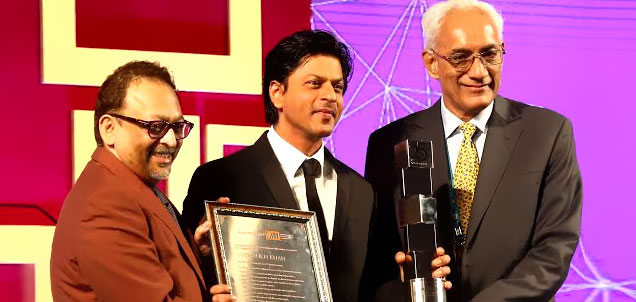
    After a brief Vote of Thanks by IAA India Secretary Monica Tata, Pradeep Guha, Summit Chairman and Area Director, was all praise for Swamy and his leadership. IAA is undoubtedly the most active body for advertising and media in the country, remarked Guha. PG as he is affectionately called in the industry, wasted no time in introducing the Guest of Honour, Shah Rukh Khan.


    The crowd frenzy was no less than a college festival, what with fans being called upon stage for s generous dose of Shah Rukh’s unparalleled style of romance. The King Khan rose to the occasion and made a slick speech on his tryst with brands . He talked about how disruption is the key now so much so that he predicted that the next big star would be from the digital world, and not film and TV.


    The crowd euphoria moved to the venue for the cocktails and dinner which was undoubtedly a gastronomical delight. Day 2 would see a galazy international speakers presenting their perspective of Change…..


    Watch this space on Monday for a detailed account of what happened on Day Two and Three.


    Jaisurya Das, Contributing Editor, MxMIndia, is a senior mediaperson based in Pune


  • Amith Prabhu: Public Relations is about honesty, no matter what!

    By Amith Prabhu


    I enjoy writing columns that are connected to personal experiences. The past month has been harrowing in terms of organising the annual communications summit that is now in its fourth year. I have had a tougher time organising this one compared to all the previous three editions put together. The first two happened when I lived thousands of miles away.


    Well, this time around every category of people ranging from vendor, partner and sponsor have gone back on their words making the effort to put the event together all the more harder. The good thing is, there are angels who come to the rescue, but they come at a price. While I will not get into details and won’t name the organisations or individuals involved, it is important to understand that the first step to Public Relations is to be transparent.


    The first problem began when one of the sponsor who made a commitment to be in a certain category backed out and wanted to move to a lower category. That is understandable as revenue management can be a hindrance to marketing efforts. Just as that issue was being sorted, the band that had agreed to perform and to who a cheque with full advance called to bail themselves out and then took five weeks to return the payment which they had thankfully not cashed. As we were focusing on the content of the summit, one of the five hotels began to play truant and put up some inventory online on a third party website. They had a clear understanding that we, as organisers had the first right of refusal of any rooms. But the misery of dealing with this issue has led to several man hours wasted and an unhappy feeling.


    The point I’m making with all these examples is how the three organisations in question may have had genuine constraints but they never came across as genuine. They came across as issues that emerged because of bad organisation or planning. Public Relations is about honesty, first. When organisations do not stand up for what they promise there is a problem. Fortunately, for these organisations I was the customer at the other end. They were let off easily.


    We keep making plans for our organisations and for that of our clients’ organisations. The bottom line of every plan should be “Honest first”. We have to be honest to ourselves, so that all stakeholders experience the outcomes of our honest words and deeds. On the other hand, there have been organisations that have filled-in when some dropped the ball. And they do so because they believed in Honest and Transparent dealings. We have the power to create. We need to create more responsibly.

  • It’s Mindshare on the Top again.

    A jubilant Mindshare team. Picture by Abhinav Kocharekar, Courtesy DNA


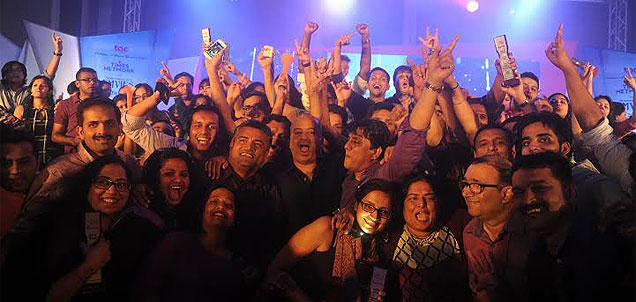
    When Ravi Rao, Leader, Mindshare South Asia spoke to MxMIndia on the eve of his departure to Dubai as Chief Client Officer – MENA in April, we asked him if he considered the agency’s loss at the Emvies last year, as a low during his stint. He said it was just a “momentary despair in the longest winning streak of Mindshare; we will continue to haunt others, year after year”. At the Emvies 2015 on Friday, Mindshare grabbed the title of Agency of the Year with five Gold, eight Silver and 17 Bronze metals. The now nine-time winner had its entire team in attendance, including COO Mindshare Asia Pacific Gowthaman Ragothaman and Prasanth (‘PK’) Kumar, who took over from Rao in March this year and had earlier said he was confident of winning the Agency of the Year crown this time. “There’s been lots of great work in the last year that Mindshare has done across clients, and a lot of effort into bringing in diversified and other business categories,” he had said. Friday’s win, however, left him cheering out loud for his team. “The voice is gone, but the action is full on,”  he said. (See Emvies points tally table here)


    Even though Maxus lost its last year’s glory to older sibling Mindshare, MD, Kartik Sharma was unfazed. “Whenever we’ve won or lost, our focus has always been our clients,” he said. “We’re very happy with the quality of work we’ve done. We’ve got quite a lot of clients in last two or three years and we continue to do some interesting work with them. He added: “Our focus has been more digital and analytics for the last couple of years. And today, if you saw the kind of awards that we’ve won, they had a layer of either of the two. But there’s always scope for improvement, and we’ll work on that.” Maxus was third in the pecking order of agencies, while Lodestar UM was at No. 4.


    Sam Balsara, Chairman, Madison World, whose agency was the first runner-up for the title of Agency of the Year, also said he was happy with his agency’s performance which was their best so far at the Emvies. Madison took home six Gold, four Silver and nine Bronze metals.


    Meanwhile, Tata Sky was conferred with the Client of the Year award, with Procter & Gamble India the first runners-up and Marico, a close third.


    Emvies 2015 launched a new category too, Media Partner of the Year, which was conferred on partners across various media. While the award for TV was won by Pogo, The Times of India walked away with the award in the print category. In the cinema category, it was won by Rohit Shetty’s Film Production house, in radio it was Big FM, while Torrent Sites and Google Ecosystem received the award in the digital segment.


    This year’s edition was the 15th of the Emvies. And Punitha Arumugam, Chairperson of the Emvies’ Committee and a senior media specialist herself, said it was the best she had seen so far. “The highlight this year was the fact that we started the process of online entries,” she said. “Secondly, we started including media owners in the Emvies because earlier we had only media agencies; then moved to media agencies plus client, and now from client to media owners. It’s been very exciting for us.” Since she’s not a part of a media agency any more, we asked Arumugam to trend-spot and tell us what she thinks of the way the media business is going, given the Emvies showing this year. “What we see is that digital probably gets the highest number of entries, and also the highest growth in terms of the number of entries year-to-year,” she said. “You’re seeing a genuine shift to digital. Even in offline media entries, for example, you get to see a lot more digital as a part of the whole product.”


    Another change that has taken place over the years, according to her, is in the field of data analytics and research, as evidenced from the number of entries going up and the amount of focus that agencies are putting on this.


    Arumugam was bullish about the spends on digital increasing with time since all agencies are now incorporating digital in various ways and moving towards it, even if at a slow pace. “While clients may be spending 10-15 per cent [of their budget] on digital, when you walk into any office, 80 per cent of the conversation is about online. Hopefully, the budgets will follow the conversations very soon,” she said, as celebratory cheers, accompanied by the beating of dholaks, took over the venue to get the party going.


    A part of this report first appeared in dna of brands


  • Kyoorius Design Awards Winners

    Click here to view IN-BOOK WINNERS – KYOORIUS DESIGN AWARDS 2015

    Click here to view BLACK & BLUE ELEPHANT WINNERS – KYOORIUS DESIGN AWARDS 2015

  • Virat Kohli to play anchor role for WROGN


    Universal Sportsbiz Pvt. Ltd. (USPL), the celebrity fashion lines company founded by Anjana Reddy with equity participation from Sachin Tendulkar is launching the WROGN brand campaign with Virat Kohli as an anchor within a mobile app. The WROGN fashion brand is an expression of Virat Kohli’s distinctive sense of style and enormous youth appeal. This will be the first time that any sports icon has been embedded within a mobile app to engage with youth audiences across India.


    USPL is unveiling #WROGNauditions on September 12 and this will see youth across the country answer Virat’s quirky questions on the mobile app. Winners get an all-expenses paid trip to Las Vegas with friends. WROGN is targeting to reach over 5 million youth across India. The app will be available both on Google Play and iOS platforms from September 12th. The #WROGNauditions teaser was launched by Virat on September 3rd and has been trending on Twitter.


    Anjana Reddy, co-founder, Universal Sportsbiz commented, “Since WROGN is a break-away youth fashion brand, we wanted to do something very irreverent with Virat. Since mobile is the quickest path to directly engage with the youth, we created a gamification app that features Virat as an ‘Anchor’ who poses tricky questions. We believe that direct youth engagement with a sports icon blended with the latest mobile and digital platforms will accelerate the brand equity of WROGN in an innovative clutter breaking manner”.


    “Created by Fish Eye, the gamification strategy behind the innovation was to create a clutter breaking engagement device with the youth of India. WROGN has already built significant traction and this new campaign with Virat as an Anchor will appeal to the sensibilities of the modern youth”, added Anjana.


    USPL is in the process of expanding its distribution network for Wrogn across the country. It plans to enhance the network presence from 38 stores to 70 stores for WROGN.