Category: RESEARCH

  • Global adspend to rise 8.3%, but growth to slow significantly in 2023: WARC


    By Our Staff


    Global advertising spend is on course to rise by 8.3% – or $67.3bn – to $880.9bn this year, reports WARC, lifted by a positive first half for holding companies and a boost from cyclical events in the second, most notably the US midterm elections and the men’s FIFA World Cup in Qatar this November. Market growth is then set to ease significantly – to 2.6% – in 2023, as investment is inhibited by cooling economic conditions and third-party cookie blocking online.


    The new projections, based on data from 100 ad markets worldwide, amount to a downgrade of 4.3 percentage points (pp) to 2022 growth and 5.7pp to 2023’s prospects, compared to WARC’s previous global forecast in December 2021. Taken together, the new forecasts represent a reduction of almost $90bn in growth potential for the global advertising market this year and next.


    Advertising holding companies – which serve many of the world’s biggest brands – have recorded a positive start to 2022, with all major firms upwardly revising forward guidance for the year ahead. Conversely, small to medium-sized businesses (SMBs), who largely buy ad space directly, are bearing the brunt of worsening economic conditions. A slowdown in SMB advertising activity will impact social media companies most – a sector already struggling to grapple with the impact of Apple’s new privacy measures. WARC expects social media ad spend to rise 11.5% this year (compared to +47.1% in 2021) then ease to just 5.2% in 2023 – the slowest rate yet for the sector.


    Aside from businesses, consumers are also feeling the squeeze of soaring price inflation. This is particularly true among low earners for whom energy and food costs comprise a higher proportion of income. Wealthier consumers, however, have seen the value of their assets appreciate in recent years and are more likely to have received above-inflation pay rises – spending intentions among high earners remain bullishly positive per Deloitte monitoring. Sectors like technology & electronics (+11.5% in 2023), pharma & healthcare (+7.5%) and household & domestic (+6.5%) are expected to post healthy increases in advertising investment to capture any available disposable income.


    Social media’s $40bn shortfall

    Apple’s move to block third party cookies across its 2bn devices – which are used by 12% of the global population (860m people) – has already had an adverse impact on the social media companies which rely on third party data, most notably Facebook-parent company Meta.


    WARC believes that Apple’s privacy push – aside Google’s delayed move to block third party cookies from its Chrome browser (66% global market share) – will remove close to $40bn from the bottom line of these social media companies over the course of this year and next. A recent survey of over 1,500 practitioners for WARC’s Marketer’s Toolkit found that only a third (34%) of respondents felt fully prepared for a post-cookie advertising market.


    Meta recorded its first annual decline in advertising income during Q2 2022 and WARC believes its full year growth will be flat over the forecast period, as the Instagram platform stymies ongoing losses from the core Facebook platform this year and next. TikTok (+41.5%), Snap (+5.8%) and Twitter (+2.7%) are all expected to record growth next year, but at a far slower rate than historically seen, while a number of Chinese platforms are set to record losses.


    Very few product sectors are cutting advertising investment

    Of the 18 product sectors monitored by WARC, all bar automotive are on course to increase advertising spend this year. Only four sectors are expected to cut spend in 2023; transport & tourism (-0.4%), alcoholic drinks (-1.1%), financial services (-4.5%) and automotive (-12.4%).


    The technology and electronics sector – the third largest of the 18 monitored by WARC – is forecast to lead growth this year and next (+25.0% in 2022 and +11.5% in 2023), culminating in a total spend of $85.1bn by 2023. The pharma & healthcare sector then follows, with expected growth of 11.0% this year and a further 7.5% in 2023, by when investment will have topped $60bn globally.


    Retail – the largest sector monitored by WARC and which includes Amazon, the world’s largest advertiser by spend – is set to increase advertising investment by 6.8% this year and 3.6% next year despite retailers seeing tighter margins from inflationary pressures. The automotive sector, however, is bedogged by both supply- and demand-side pressures and is the only sector set to cut advertising spend in both 2022 (-5.3%) and 2023 (-12.4%).


    AVOD market heats up as streaming becomes war of attrition

    Advertising spend in the video streaming sector is set to grow faster than the total ad market this year (+8.4%) and next year (+7.0%). Within this, the advertising-funded video on demand (AVOD) sector – which includes the likes of Hulu, Amazon Prime Video and YouTube – is expected to rise 8.0% this year and then a further 7.6% in 2023 to reach a value of almost $65bn.


    Aside from the social media players, YouTube’s fortunes have also proven vulnerable to privacy changes on Apple devices; WARC believes that YouTube’s advertising revenue will rise 7.3% this year (compared to a 45.9% in 2021), but that its growth will then ease to 5.6% in 2023. This would give the company 39.4% of the global AVOD market, a declining share (down 0.9pp from 2021) as competition heats up with the introduction of advertising to Disney+ and Netflix later this year.


    There is already evidence of saturation in the streaming market, particularly in the US, with audiences now using seven streaming services on average (compared to the global average of five). Consequently, new entrants are just as likely to be fighting for existing advertising spend as they are for incremental dollars, which could hinder overall growth of streaming operators in the short- medium-term.


    Streaming services owned by broadcasters (BVOD) are also set to grow their advertising income this year (+9.7%) and next (+5.2%), but from a far lower base (reaching $18.5bn in 2023). Linear TV is set to benefit from cyclic sporting and political events this year, raising advertising investment by 3.6% to $180bn (20.4% of all advertising spend) but the market is then on course to record a 4.5% loss in the absence of these events next year.


    Summing up, James McDonald, Director of Data, Intelligence & Forecasting, WARC, and author of the research, says: “With the growth rate of global output now set to halve and acute supply-side pressures fanning inflation, the economic slowdown has removed close to $90bn from global ad market growth prospects this year and next. Yet brands are still spending as the Covid recovery continues, and global ad trade remains on course to top $1trn in value by 2025. Platforms with rich sources of first-party data – most notably Amazon, Google and Apple – are well placed to weather future headwinds by offering measured performance in a climate where return on investment becomes paramount.”

     

  • TCS is India’s Most Valuable Brand


    By Our Staff


    Tata Consultancy Services (US$45.5 billion) is the new number one most valuable Indian brand, claiming the top spot from HDFC Bank (no.2, $32.7bn) which had held the position since the first ranking was unveiled in 2014. TCS’s brand value has been accelerated by global demand for automation and digital transformation following the pandemic.


    The Top 10 Most Valuable Indian Brands together contribute just over half of the ranking’s total value. There has been significant movement at the top, in addition to the two most valuable brands switching positions. There are two new entrants – Infosys ($29.2bn) which has rocketed up to no.3 from 12th position, and ICICI Bank ($11bn) which has climbed two places to no.9. State Bank of India ($13.6bn) has also risen four places to no.6.


    There are brands from 23 different categories in the 2022 Indian Top 75. There are a total of 14 newcomers , from 11 categories – including online gaming, education, apparel and real estate, reflecting the diversity and dynamism of the Indian economy.


    India’s strongest brands have bounced back from the pandemic to increase their brand value by a massive 35% CAGR since 2020, when COVID-19 hit the country. India’s top 75 brands are worth a combined $393 billion, equivalent to 11% of India’s national GDP.


    Technology and Banking brands account for over half of the total value. Six B2B Tech brands and 11 Consumer Tech brands contribute 35% to the total value of the ranking, reflecting the rise of Tech India. Overall, B2B brands (tech, payments) are on average almost three times as valuable as B2C brands, reflecting the fact that many of the B2B brands play on the global stage while B2C are more focused on the domestic market. Six banking brands deliver 19% of the total value. Also notable for their performance are Insurance brands, which have performed well as the pandemic increased consumers’ focus on protection of life and health and Telecom Providers, led by Airtel (No.4; $17.4bn) and Jio (No.10; $10.7bn), which took full advantage of growth opportunities as everything moved online, from education to work to parties.


    Key newcomers to the ranking include Vi (No.15; $6.5bn); formed from a merger between Vodafone and Idea, Byju’s (No.19: $5.5bn), the educational technology brand that has become India’s most valuable education brand, and Adani Gas (No.21; $4,5bn).


    Said Deepender Rana, Executive Managing Director- South Asia, Insights Division, Kantar: “India’s leading brands have grown at an exceptional rate, despite global economic headwinds, putting the disruption from COVID-19 behind them. Indeed, they have both driven and benefited from the transformation in consumer and business behaviour as a result of COVID-19, especially where it relates to the use of technology. The challenge now is to sustain momentum as inflation bites worldwide and consumers and businesses adjust to the new normal. Brand owners will need to work harder to identify and build on what makes worth paying for and ensure ROI on their marketing expenditure to avoid a margins squeeze.”


    Kantar BrandZ has identified Four Fundamentals responsible for powering brand growth: Function, Convenience, Experience and Exposure. India differs from other markets around the world, however, in that a brand’s sustainability credentials and purpose matter more.


    Overall, 65% of Indians feel anxious about climate change, and 64% believe businesses must play their part. The highest-ranking brands in the Top 75 are clear on purpose and have a relevant sustainability agenda. These include services platform Zomato (No.30; $3.1bn), which offsets the carbon footprint of its deliveries and packaging. Swiggy (No.20; $4.8bn) elevates consumers’ quality of life with speedy delivery of meals, groceries and healthy items, as does Flipkart (No.12; $8.9bn), while also helping smaller local brands to connect with consumers via its platform.


    Added Soumya Mohanty, Managing Director, Insights Division, Kantar: “Purposeful and sustainable brands are rewarded. Indian consumers look further than the brand attributes that affect them personally – they want brands to improve people’s lives and have a positive impact on wider society. They vote with their wallets, choosing brands they see as ‘doing the right thing’. Indian brands should have a clear view of their purpose, connect strongly with it by embedding it in their culture, talk about it in creative and powerful ways, and deliver on it – without fail.”


    Salience – the ability of brands to spring quickly to mind when a consumer has a need – is also vitally important. India’s Top 10 brands are far more salient than their counterparts in most other countries. However, for growth to be supercharged, brands must also have strong meaning as well. They should have functional meaning – doing a good job of fulfilling a need – but also a layer of emotional meaning. The Kantar BrandZ India Top 75 far exceed other Indian brands on all these of these vital predictors of success.


    Other key highlights from the analysis include:

    :: 57 of the brands in the 2022 Top 75 have been in the ranking since 2018, while 19 have moved up the league table.

    :: The share prices of companies behind strong brands are protected in a ‘bear’ market and recover more quickly. Between August 2014 and June 2022, the SENSEX India Index gained 63.8%, while a portfolio of the most valuable Indian brands rose 81.8%.


    There are eleven consumer tech brands in the Top 75, reflecting the increasingly digital way Indian consumers live, which is 11% of the total brand value. The four most valuable brands in this category are Flipkart (No. 12; $8.9bn), Byju’s (No. 19; $5.5 bn), Swiggy (No. 20; $4.8bn) and Nykaa (No. 25; $3.7bn).


  • Social Media Trends 2023


    By Our Staff


    Talkwalker, the consumer intelligence acceleration platform, and Khoros, a digital-first customer engagement software and services, have released the Social Media Trends 2023 Report. The report follows the announcement of the companies’ strategic partnership to seamlessly deliver deep listening and social media management through a unified experience.


    Some of the key trends identified in this report include:

    ● Customer experience will get even more social – 75% of consumers say the pandemic has driven long-term changes in their behaviours and preferences, including a bigger focus on urgency. Brands must prioritise customer experience by providing support, information, or solutions as fast as possible. In 2023, expect more brands to leverage social media as dedicated support channels, enabling a fast, efficient response no matter which platform consumers use to get in touch.

    ● Social commerce will rise and fall – Large increases in post-pandemic digital growth and rising costs of living are driving increased demand for affordability. Soon, consumers will be more willing to explore new shopping channels such as social. However, some countries are more ready to adopt social commerce than others. In India, from FY 20-25, social commerce is expected to grow at 55-60% CAGR, taking the current market size from $1.5-2 billion to $16-20 billion.

    ● Brands will place emphasis on communities rather than personas – 66% of branded communities say that their community has led to increased loyalty. Brands will focus on gaining deeper knowledge of their consumer ecosystems to understand who is driving and sharing brand-focused conversations. Influencers, employee advocates, and consumers will be engaged within brand communities to generate authentic connections and consumer-led content.


    David Low
    David Low

    Said David Low, Talkwalker CMO: “We all know the digital ecosphere has disrupted how marketers engage with consumers. In this new environment, marketers must focus on forging symbiotic relationships through a better understanding of online conversations and taking quicker action. It’s this new understanding that will help brands create meaningful experiences and become closer to their consumers.”


    Added Dillon Nugent, Khoros CMO: “As marketers, we know the value of data and the importance of listening to our customers. But, we need to be more action-oriented and use those insights more effectively. Consumers’ comfort level for doing things online-shopping, researching, socializing—is not slowing down as the world opens up. They also care more about their communities—global, local, IRL, and online. Marketers need to tap into these trends and behaviours more deeply to personalize customers’ experiences and create more impactful strategies that empower your brand to stay connected to customers and grow your presence in the market.”


  • WARC unveils ‘State of Modern Marketing in India 2022’ report

    By Our Staff


    World Advertising Research Centre (better known as WARC) has come out with a report titled The State of Modern Marketing in India 2022.


    Findings from this study suggest that over a third (36%) of Indian marketers will spend more than 60% of their budgets on digital marketing, compared to 25% of APAC marketers overall.


    Other key findings:

    > Two-thirds of marketers expect the metaverse to significantly impact digital marketing in the next five years

    > Around a fifth of marketers currently use AR/VR to drive improvements in marketing, but over half expect it to be the most significant technology for marketing in two years’ time.

    > The removal of third-party cookies and the continued impact of Apple’s ATT are seen as more significant to Indian marketers than those elsewhere in APAC.

    > Multiscreening has overtaken m-commerce and watching the video to become the most significant consumer behaviour for the marketing industry in India

    > A majority of marketers are using data analytics and collection to drive improvements in their digital marketing.


    *Over two-thirds (67%) of respondents highlight brand awareness as a key priority in digital marketing.

    *Almost half (48%) of Indian marketers have used Facebook or YouTube for display advertising.

    *YouTube is the top streaming service in India, with 79% of Indian internet users saying they use it.

    *Over four in five (82%) expect digital marketing budgets to increase over the next year, compared to 67% across APAC.

    *Multi-screening has emerged as the most significant consumer behaviour (60%), doubling in perceived significance in India since 2021 (31%).

    *Budgets (36%) are the biggest barrier to the growth of digital marketing in India.

    *OTTs are seen as one of the most significant consumer behaviours in India, more so than across the rest of APAC.


    The report is based on an online survey of 100+ marketing professionals, carried out between July and September 2022.

  • The Changing World of Inspirations


    By Indrani Sen


    Indrani Sen Wunderman Thompson’s recently published ‘Inspire Score: Top 100 2022’ (now in its third year) reflects how people’s ideals and aspirations have been changing with the digital and technical innovations as well as the conditions of the uncertain times that we have been living over the last two years. The Inspire Scores are no longer influenced by the brands’ inherent core values, their relationship with the consumers and their ability to adopt to the changing environment but are influenced by the changing focus in the consumers’ lives, consumers’ wish list for achievements.

     

    According to the report, Inspire is a “proprietary global platform that explores what makes brands inspiring and what inspires consumers, making Wunderman Thompson the world’s leading researcher into inspiration.” Wunderman Thompson has designed the ‘Inspire Score’ based on robust methodologies in order to find out how elevating, magnetic and motivating the different brands are to determine their inspire scores which in turn guide the brands about how they can connect better with the consumers to become more inspirational in their eyes and achieve tangible growth in terms of market share. Within a category, the brands with high inspire scores can charge a higher premium for their products and services enabling them to increase their profitability. Cross category comparisons of inspire scores help in understanding the changing mindset of the consumers.


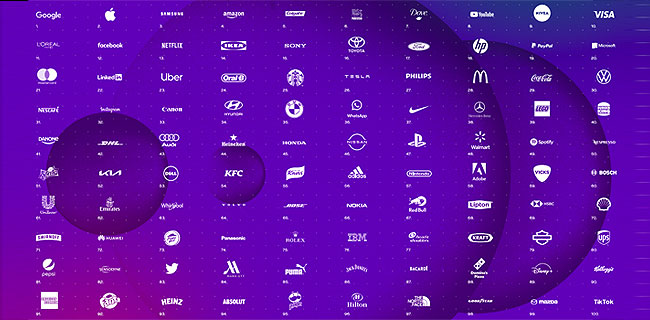
    For the second year running, Google is the most inspiring brand in the world followed by Apple, Samsung and Amazon, who have also managed to hold their positions within the top four. Apart from Nike (37), brands like Adidas (51), Unilever (56), IBM (76), etc. do not even feature in the Top 50 inspiring brands. In the automobile industry, Toyota (16) and Ford (17) lead the pack, followed by Tesla (26), Volkswagen (30), Hyundai (34), BMW (35), Mercedes Benz (38), Audi (43), Honda (45), Nissan (46), Volvo (64) and Mazda (99). The presence of a dozen automobile brands in the Top 100 shows the category continues to be highly relevant to the consumers, though the brands have become comparatively less inspiring than brands in digital, social media and ecommerce categories.


    Social media brands have seen strong gains in 2022 over 2021 reflecting their growing importance in people’s lives through social interactions.  Facebook has moved up from 16 in 2021 to 12 in 2022 and the inspiring power of both Instagram and WhatsApp has grown despite various problems. Twitter (83) has gone down the Inspire Score ladder in 2022 due to the controversies surrounding the brand and what the industry has started describing as the “Elon effect”. The Chinese brand TikTok (100) has managed to enter the Top 100 for the first time in 2022.


    Streaming brands remain inspiring with YouTube moving up two notches within the Top 10 brands and Netflix’s score has risen from 28 in 2021 to 13 in 2022. Spotify has also moved up couple of notches from 52 in 2021 to 49 in 2022 and Disney+ has entered the Top 100.


    It was surprising to find Microsoft has slipped in the inspire score though it has managed to stay within the Top 20 brands. Intel which ranked 87 in 2021, has dropped out from Top 100. The Chinese brand Huawei, a leading global provider of information and communications technology, has gone down the inspire score ladder drastically from 26 in 2021 to 72 in 2022. Does this show a trend where the consumers are taking digital technology for granted and are finding the applications of the technology more inspiring?


    In the personal care and beauty categories, Colgate and Dove have gained hugely and have entered the Top 10 in 2022, while Nivea has manged to retain its position within the Top 10 and L’OREAL has slipped one notch from 10 in 2021 to 11 in 2022.


    Impulse brands have done well in the post lockdown year, with inspire scores of soft drinks, beer and spirits rising. However, coffee shops and fast-food chains have lost the inspiration momentum which they had during the Covid years.  Except Nestle which continues to feature in the Top 10, other CPG food brands have also become less inspirational.


    To sum up,  Wunderman Thompson’s efforts to generate ‘Inspire Score’ year on year would surely help in accelerating globally the growth of marketing investment in the various forms of digital media for reaching target consumers.


  • Sports market: Rs 9,500cr in FY22: KPMG, CII & IBDF report


    By Our Staff


    Television remains the largest media platform in India, both in terms of reach, as well as consumer engagement in terms of time spent. As per KPMG Analysis 2022, the number of TV households in India is expected to reach 250 million by 2026, from 210 million in 2020. When it comes to TV consumption, sports has the highest reach among all genres on TV at 722 million in the first nine months of this year. The genre has remained largely resilient to the COVID-19 headwinds and is expected to scale the 2019 highs by the close of this year. The advertiser interest in sports broadcast has grown strongly with the increasing viewership and demographic reach offered by sports properties. Both traditional and new age businesses have turned the spotlight on sports TV broadcasting with the segment clocking revenues of INR7,560 crore in FY22 (with the TV + digital OTT sports market at INR 9,500 crore in FY22) as per KPMG India.


    Through this whitepaper, “Sports broadcasting on TV – A match made in heaven”, launched at the CII 11th Big Picture Summit 2022, KPMG in India, CII & IBDF presented a report on the growth drivers for sports broadcasting in India, the potential runway ahead and how the value chain stands to gain from it.


    TV has an unparalleled reach of 900 million viewers, the largest of any media platform in the country. Apart from the significant scale advantage of TV, relevance of TV for sports consumption stems from the fact that sports is essentially developed and shot for the large screen owing to the ability of TV to create a more engaging viewing experience compared to smaller screens like smartphones. Co-viewing is an intrinsic part of the sports consumption experience across the world and even more so in India owing to the emphasis on family viewing, for not only sports but also other genres – thus underscoring the importance of TV for sports consumption.


    The carefully packaged entertainment rendered by domestic sports league and India’s performance in international platforms like the Commonwealth Games furthers the viewer interest in and engagement with sports. Corporates are also increasing their involvement in sports beyond advertising and are participating as franchise owners and/or engaging in grassroot development programs – thus playing an active role in development of India as a sporting nation. These efforts set in motion a virtuous cycle, as an increasing interest in sports fuels further consumption, which is beneficial for the entire value chain including the sports broadcasters.


    Commenting on the findings, Akhilesh Tuteja, Partner and Head, Technology Media and Telecom, KPMG in India said: “Given its wider reach and interest as compared to other content genres, sports on Television is one of the most monetisable genres. The Television and Digital OTT sports market is estimated at close to INR 10,000 crore in FY22, with sports on TV holding a lion’s share. With a large screen experience, co/family viewing and investments by broadcasters, bringing the best of Cricket and other sport to Indian viewers, sport on TV is likely to remain highly relevant for the foreseeable future.”


    Added Vibhor Gauba, Associate Partner, Deal Advisory – M&A Consulting, KPMG in India: “Advertisers on TV see tremendous value when it comes to sport. Whether it be traditional or digital first brands, the premium NCCS AB audiences that sport on TV has access to; means that these brands continue to see TV as the first port of call for increasing reach, building brand recall and relevance; and getting their messages across to consumers. Impact properties like IPL and PKL will continue to see brands flocking to them in the coming years.”


  • India Shining in Market Research


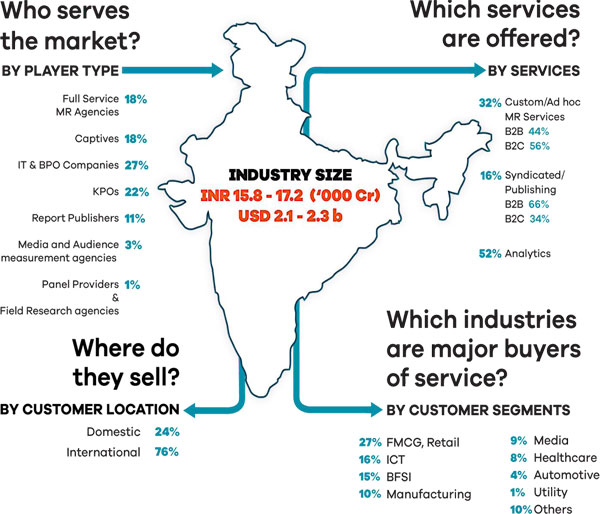
    The Market Research Society of India (MRSI), the apex body of marketing research in India, released the a report titled ‘Research & Insights Industry in 2021’. The report, released by Piyush Goyal, Minister of Commerce & Industry, Consumer Affairs & Food & Public Distribution and Textiles on November 17-18, covers the expanded definition of ‘research and insights’ including the traditional market research agencies, pure-play analytics firms, captives of global companies, outsourcing and various technology providers.


    1.Definition and sizing of a new and up-to-date Construct of the Research & Insight Industry 2021


    2. Industry recovers post pandemic due to accelerated demand from analytics and international clients

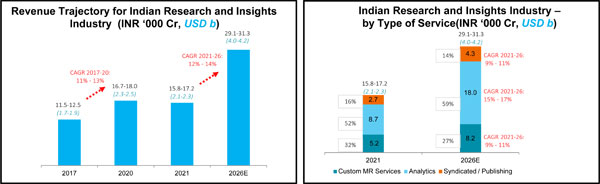
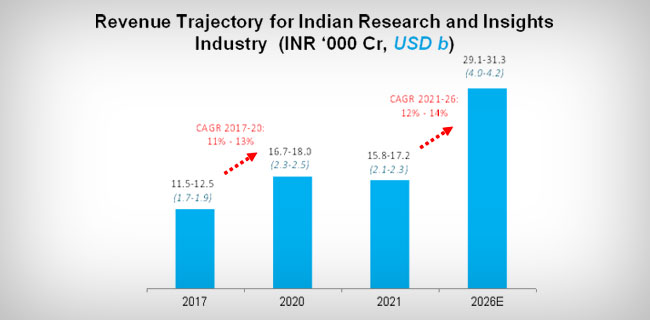
    The revenue of Indian research and insights industry is expected to double by FY26, primarily driven by the increasing demand for analytics, also fueled by international demand.

    FY21 revenue was expectedly impacted by the COVID 19 pandemic, with the biggest declines in custom MR services and syndicated products. However, robust international demand for analytics services ensured that the overall industry declined only marginally. The strong turnaround seen in H2 FY21 continues in the first half of current year (FY22), in line with economic recovery in both Indian and international markets.


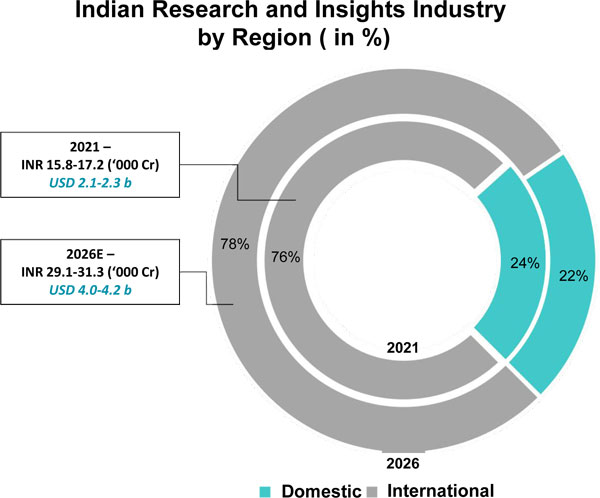
    3. International business is expected to remain on a strong growth trajectory due to demand for analytics, and tail-winds for outsourcing

    International business grew at a robust pace in FY21 despite the pandemic and the trend is expected to continue.

    Key drivers for international business growth are demand for analytics and greater acceptance of the benefits of outsourcing in several major markets. These drivers should remain for the next five years.

    Domestic custom market research services to recover and grow at double digits in FY22, to reach pre- pandemic levels. Thereafter, growth till FY26 is expected to settle at a rate of around 6% to 7%.


    4. Consumer facing industries, ICT and BFSI are the verticals that will keep driving growth

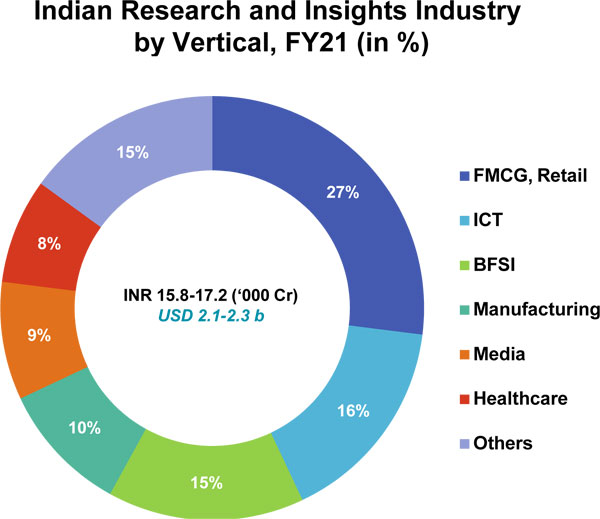
    FMCG, Retail, ICT and BFSI are the largest buyers of research and insights services in 2021, and these sectors will continue to dominate. Fintech and digitalisation will drive demand from these sectors, both in international and Indian markets.

    Verticals that got severely affected by COVID-19 in FY21, such as Travel and Hospitality, are expected to bounce back stronger post pandemic due to pent-up demand.


    5. The escalating importance of technology is blurring the lines between the types of organisations that serve the research and insights industry

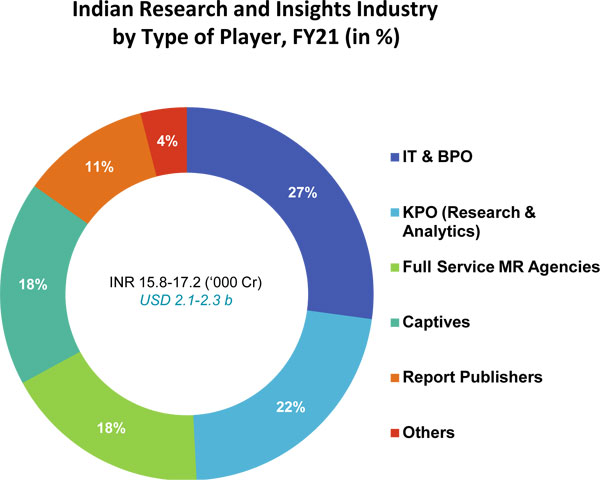
    Unlike most countries, the Indian industry is characterised by diverse types of players. Apart from agencies that cater to the domestic market, there are a large number of companies that serve international markets. These include those who provide purely research services, report publishers, diversified BPO and IT firms, KPOs and captives of multinationals.

    While these companies have different origins and strategies, the industry is witnessing a convergence in service offerings. The increasing importance of technology is accelerating this convergence, especially in larger firms that want to retain their share of the client’s wallet.


    6. Consolidation is changing the contours of the research and insights industry

    With the role of technology growing dramatically and the declining share of traditional services, the definition of a “full- service” research agency is changing and lines between player types are blurring.

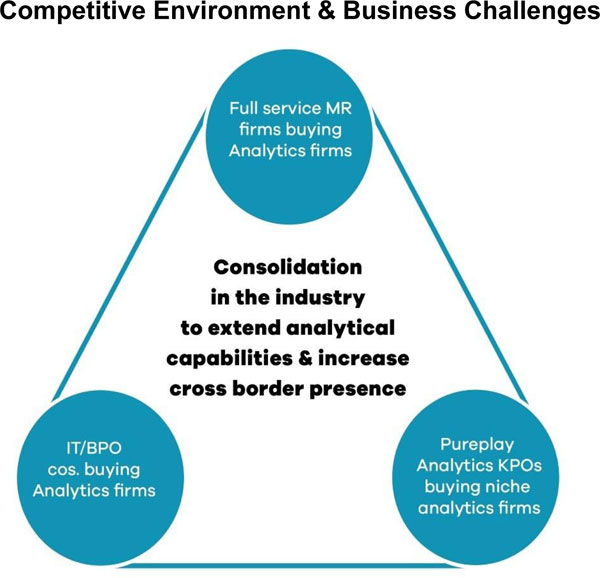
    Large full-service agencies and market research outsourcing companies are adding analytics to their offerings often through acquisitions. IT and BPO companies are muscling into market research as well as analytics. Report publishers are re-focusing on consulting or custom research. Large cash- rich companies in traditional consumer MR and IT/BPOs are aggressively acquiring niche analytics firms. This consolidation is likely to further intensify competition

    Enthusiasm for Indian start-ups, coupled with the robust global demand outlook, means that their private and public funding is likely to scale new peaks in India.


    7. A key business challenge for the industry to deliver on the growth potential Is attracting and retaining talent

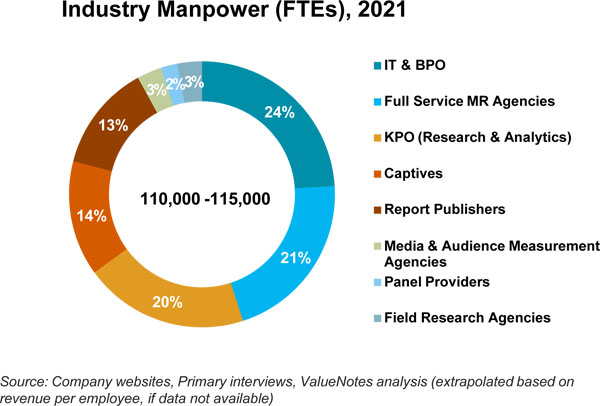
    Roughly 110,000 to 115, 000 full-time employees are estimated as the workforce for the research and insights industry in FY21.

    Workforce in analytics would increase by close to 15% annually, for the next few years. With the increased adoption of technology, full-service MR agencies and panel providers are likely to redesign or rethink their workforce to enhance IT and analytical skills and staffing.


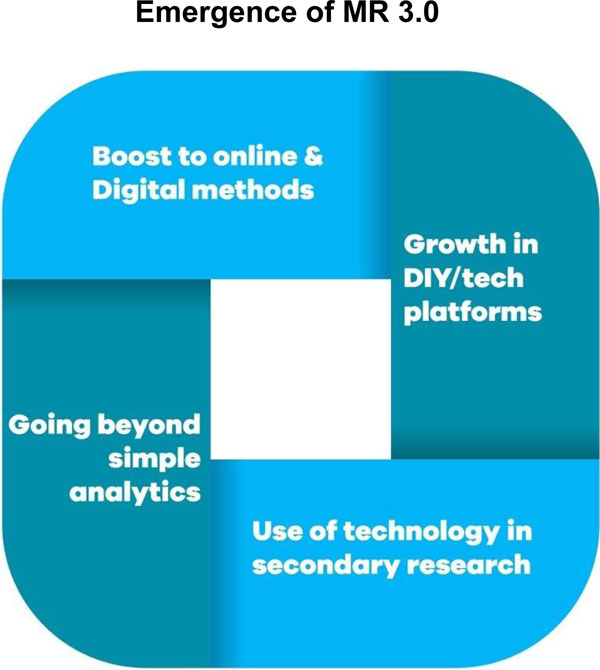
    8. Unveiling the concept of “MR 3.0” and signposting the journey

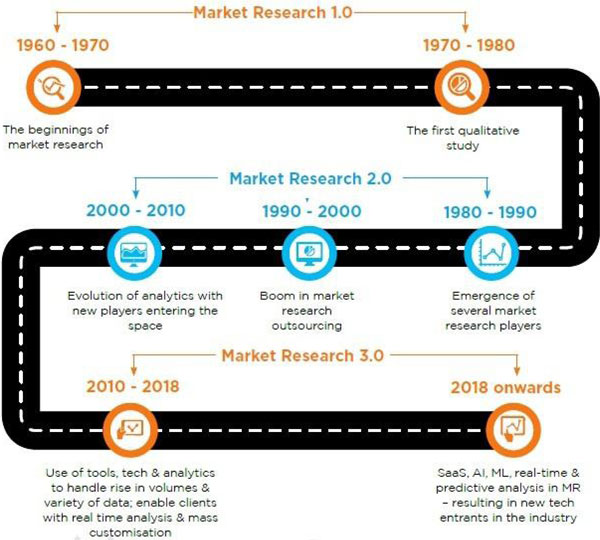
    The Indian research and insights industry is on the path to adopting and adapting to the current and up- to-date version of “MR 3.0”

    The consolidation of businesses and blurring of lines between types of players is part of this trend. The use of technology is another marker of the emergence of MR 3.0.


    9. Technology and changing customer needs are driving the transition to MR 3.0

    COVID-19 forced businesses globally to accelerate their transition towards digital. Online data gathering methods, online qualitative and online panels have gained traction in India as well. Similarly, there is an increased use of technology and automated extraction tools in secondary research. Growth in DIY platforms is seen, and this will encourage small-budget companies to start using market research more often

    The researcher’s role is rapidly changing, with focus changing from data collection to data analysis. Moving beyond simple analytics, service providers are helping clients gain valuable insights using advanced analytics such as natural language processing (NLP), machine learning (ML), predictive analytics and decision intelligence frameworks.


    10. Looking forward to 2026, these trends will continue and intensify

    A. Moretechnology and business model disruption is foreseen

    Technologies such as AI and analytics are still in their infancy today. These will be the new economic currency for the market research and insights industry. Rapid digitalization will pervade more sectors and create more data trails.

    Productization and platform-based services will gain more traction.

    B. Blended Story Telling

    In the coming years, there will be specialists who would excel in Q & A based research and those who will excel in listening. The ultimate success paradigm would be one where best of both these are blended together to land powerful stories about why consumers are doing what they are doing, and how we can influence their choice decisions. That would lead to the creation of a new breed of researchers – Consumer Data Scientists: those who understand marketing, research and technology and have the ability to distil all three to deliver powerful insights


    10. Looking forward to 2026, these trends will continue and intensify

    C. The need for insights and data will become even more important in this radically changing world.

    The focus will shift focus from asking to observing, questioning to discussing, collection to analysis, insight to foresight, rational to emotional, large surveys to data streams, geographically fixed to mobile, siloed to converged, cognitive self-reporting to precognitive neurosensing, and project-based work to engagement-based consulting. Research and insights will find ways to integrate itself across the strategic decision- making process, will help clients pull insights from disparate data streams, will aggressively leverage foresight tools, will be nimble, and will make speed a core competence by fully leveraging the 24-hour global clock.

  • Tracking the Metaverse


    By Our Staff


    The Internet and Mobile Association of India (IAMAI) in association with Deloitte launched a report titled ‘Metaverse – The Hype, Possibilities, and Beyond’ at Digital Marketing Conference, ‘Marcon 2022’ in Mumbai on Monday (Dec 12).


    The report was launched by Sreeram Ananthasayanam, Partner, Deloitte. The event also saw a panel discussion after the launch.


    Here is the Executive Summary of the report:

    Technology is getting affordable, scalable, and trustable, and transforming business models and consumer expectations. Robust and scalable digital infrastructure and applications are enabling personalisation for a generation that prefers differentiated experiences. In addition, alternative technologies (Decentralized Autonomous Organizations [DAO], Decentralized finance [DeFi], Nonfungible token [NFTs]) are disrupting digital ecosystems by disintermediating intermediaries and decentralising ownership. Technology is building decentralised trust to make processes and transactions efficient, transparent, and seamless.


    One such technology is Metaverse, which refers to an immersive, interactive, and live virtual environment, distinguished by its ability to transport the real-world experience into a virtual world. In this world, people across locations can interact live and work in real time. This is supported by a digital economic infrastructure powered by virtual digital assets. Metaverse is a confluence of technologies that aims to integrate businesses in innovative ways, enhances operational efficiencies and transactions, and provides an experience par excellence. It creates new market avenues, which are futuristic, yet revolutionary. The exponential nature of technology growth is only going to make it more feasible and affordable. Several enterprises and customers are foraying into this space that is redefining business models and customer expectations.


    In this report, we aim to understand how businesses engage and interact with each other in a Business-to-Business (B2B) and Businessto-Consumer (B2C) ecosystem. We believe that adopting Metaverse is possible through the merging together of the physical and digital worlds (phygital). It will help businesses reduce costs, collaborate in real time, overcome logistics issues, provide enhanced opportunities and productivity, improve feedback processes, and offer possibilities for product and service augmentations. All these will not only generate revenue but may tilt the competitive advantages in favour of those ahead in the adoption curve. It will enable businesses to take a step towards introducing environment friendly policies and sustainability.


    Metaverse is a ‘virtual world’ with real people in digital avatars, who come together to interact and transact. Hence, the boundaries for work and play are blurred. Such a concept is hard to understand, monitor, and regulate because of the undefined rules and unimaginable complexities that may exist. In the following chapters, we begin with our understanding of Metaverse as the world is still exploring its confluence in the Phygital space. We also debate on the possibilities of different types of Metaverse architectures and their potential across enterprises. Subsequently, we discuss the challenges that will likely arise while implementing the Metaverse ecosystem and the possible measures to sustain business in a dynamic marketplace.


    There is also a section that provides an overview of the applications of Metaverse and its potential across sectors. We will discuss the art of possibilities for enterprise Metaverse and how it will help enterprises scale and diversify their businesses and opportunities by using the myriad elements of the Metaverse economy. While most of the current use cases on Metaverse primarily relate to the B2C segment, this report also explains the potential enterprise-grade use cases that address the B2B segment.


    Conclusion of the report:

    The Metaverse technology is likely to see exponential growth in the coming years with rising awareness about its applications and rapid advancements in the digital infrastructure and digital natives gaining purchasing power.


    On one hand, as the supply side of the Metaverse ecosystem develops, more organisations are likely to reorient their business to take advantage of this evolving technology. Several organisations have already announced their Metaverse offerings, which may help achieve the required scale and demand to improve cost-effectiveness and adoption rate. On the other hand, the demand side of this ecosystem. has been driven by demography, along with phygital worlds, virtual work/play facilitated due to the pandemic, and Moore’s law playing its role in making the infrastructure affordable.


    The success of Metaverse penetration will depend on the time organisations take to understand its relevance to their business and the pace of this ecosystem’s development. The ability to ramp up the technical skills and readiness, and deal with rising cyber threats will be critical to its adoption. Governments can play an important role through the right regulatory policies and incentives for new-gen tech adoption.


  • IPL valuation jumps 75% to USD 10.9 bn in 2022


    By Our Staff


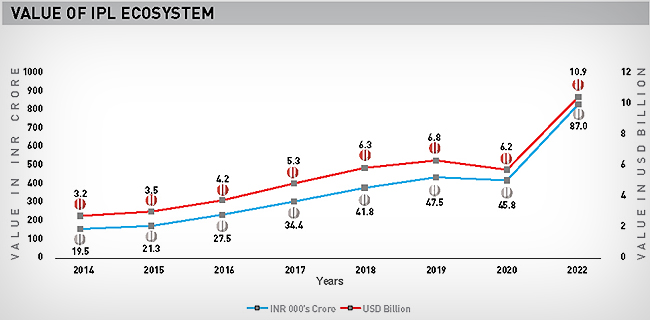
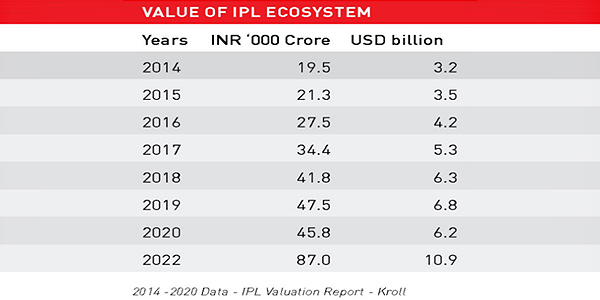
    D and P Advisory, a leading providers of consulting and advisory services, has announced the launch of a valuation report on the Indian Premier League (IPL) for 2022. The report titled ‘Beyond 22 Yards’ highlights that the value of IPL ecosystem registered a 75% growth since 2020, and now stands at USD 10.9 billion.


    Here are highlights of the report:

    In 2020, the IPL was valued at USD 6.2 billion. This valuation makes IPL a Decacorn (a business with a value more than USD 10.0 billion) within 15 years of inception. The IPL Ecosystem represents the value generated by the IPL as a business.


    A landmark event this time was the auction of the IPL media rights for 2023 to 2027. For the first time, media rights were spread among different broadcasters, breaking the monopoly of one company. The league has sold media rights at USD 6.2 billion, registering a three-fold jump compared to the previous 5-year cycle in 2017. Additionally, the tournament in 2022 also registered a record breaking combined viewership of 426 million on television and OTT platforms.


    With two new teams (Gujarat Titans and Lucknow SuperGiants) getting bought last year at a combined staggering value of USD 1.6 billion, the average price tag of a team has seen a whopping 16-fold jump from its inception. These two factors were instrumental in boosting the valuation of IPL to become a Decacorn and the second largest sporting league (on a per match basis from broadcasting fees) globally.


    To add to the momentum, the Board of Control for Cricket in India (BCCI) has announced the launch of Women’s Indian Premier League with a base price for a franchise at INR 400 crore (USD 50 million). This price is higher than most other cricket leagues globally, and will add immense value to the overall IPL Ecosystem.


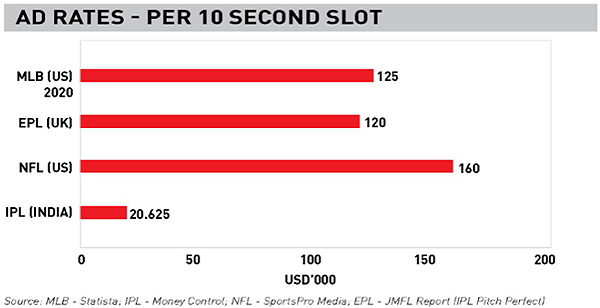
    However, on a broader scale, IPL is significantly behind in terms of ad rates, when compared with some of the other global sporting leagues. For example, a 10-second slot for an ad during IPL 2022 costed nearly USD 20,000; whereas, the ad rates for the same time slots at National Football League, English Premier League and Major League Baseball were over USD 1,00,000. Drawing this comparison, the report mentions how IPL has a lot more space to grow in future provided broadcasters are able to monetise the content well.


    On the launch, Santosh N, Managing Partner, D and P Advisory sid: “Since its launch in 2008, IPL has reimagined the nation’s cricket competition. IPL 2022 witnessed some major milestones and captivating games throughout the season. The renewed media rights deal was a major contributor towards a substantial jump in value for a relatively young league like IPL. These observations are an assurance of the fact that the IPL will continue to revolutionise the game of cricket and will be etched in the hearts of millions of fans for years to come.”


    The report goes on to say that the IPL team owners are looking to replicate the multi-club ownership model as part of their long term strategy. For example- The Knight Riders Group owning the right to Trinbago Knight Riders in the Caribbean Premier League, and a franchise of the UAE T20. It also has plans to build cricket stadiums in Los Angeles, USA, in partnership with the Major League cricket. Reliance Industries, the owners of Mumbai Indians, recently unveiled two new franchises in UAE’s International League T20 and Cricket South Africa T20 League.


    Furthermore, with BCCI having forged and locked in new broadcasting deals for the next five years, the report foresees a more stable phase in terms of the value of the IPL Ecosystem. “The value appreciation may not be as fast as seen in the earlier years”, it states.


    The report also states that the digital rights being sold separately from TV rights would result in greater engagement on the digital platforms. Further, the impending introduction of 5G services, greater penetration of the internet and increased smartphone usage will add to the rise in viewership.


    The report concluded stating that for these growth trajectories to maintain their momentum, all teams need to continue broadening their footprint, forming relationships, and generating revenue opportunities in different markets. Ultimately, apart from the love for cricket that viewers have, much of cricket’s future depends on ensuring quality; not just for the fans, but also to attract sponsors and broadcasters, the latter of which have become vital for the game’s financial health.


  • Hansa Research: Trends that Ruled 2022

    By Our Staff


    Hansa Research, a consumer insights and market research company, has tabled a report with Trends that Ruled 2022 in various sectors. The multinational company headquartered in India with presence also in USA, Singapore, Germany, New Zealand and Bangladesh, tracks down the top trends of 2022 in the entertainment, banking & insurance, shopping & travel sectors.


    Entertainment Trends

    As per the Brand Endorser Report 2022 of Hansa Research, Amitabh Bachchan was the most recognised celebrity in India. He surpassed many popular young actors in terms of recognition. In the sports sector, Sachin Tendulkar emerged as the number one celebrity. In 2022, these veterans were preferred by brands for endorsements as they are perceived as trustworthy, relatable and likeable.

    In the category of south Indian celebrities, Allu Arjun and Samantha Prabhu were the most recognised owing to the rise in viewership of OTT platforms. YouTube viewership also increased, making Bhuvan Bam the most recognised influencer. They set an example of how good content and performance are enough to create an impact.

    Along with big names, big screens also made a comeback in 2022, with more people preferring to watch cricket on a bigger screen. People chose Smart TV to enjoy cricket on Hotstar. TV viewers also favoured HD viewership to enhance their experience.


    Banking & Insurance Trends

    Trust and customer support dominated the trends in the banking and insurance sector. According to the findings of Digipay Customer Experience Score (CuES) 2022 by Hansa Research, customers focused on security, privacy and support from banking digital payments apps instead of settling for non-banking digital payments apps. GenZ and Millenials emerged as frequent but not loyal users of digital payment apps.

    Based on the Insurance Customer Experience Score (CuES) 2022 by Hansa Research, HDFC life and ICICI prudential life became popular choices among customers. People have favoured brands that provide a better purchase, dealing, and advisory experience.


    Shopping Trends

    Online shopping remained highly popular during the festive season, even when physical stores also offered sales and discounts, as per the Customer Sales Survey Report 2022 by Hansa Research. Mobile phones topped the list of the most purchased products followed by shoes and electronic accessories. Interestingly, people favoured buying books online and offline equally.

    Customer experience became key to enhancing the shopping experience. Many brands considered customer feedback to improve their products and services.


    Travel Trends

    According to a survey by Hansa Research on behalf of Norwegian Cruise Line, Cruise holidays emerged as the top family travel trend, with 8 out of 10 families planning a cruise vacation abroad in the next year. 79% of people want to make up for the time lost during the pandemic and go on a vacation with family in times to come. 89% believe that spending quality time with family is essential for holistic well-being.

    69% of travellers focus on value and intrinsic pricing while 61% consider easy access to attractions and activities while travelling.


  • ASCI releases report on advertising in the EdTech sector

    By Our Staff


    The Advertising Standards Council of India (ASCI) released a comprehensive report on advertising in the education technology sector (EdTech) and the impact it has on parents and students. The report aims to decode the challenges and opportunities for EdTech sector advertising. The report also identifies ways in which the sector can shape a more responsible narrative, and move away from opportunistic advertising which many consider problematic.


    EdTech as a sector holds immense promise in being able to address the infrastructural and learning challenges in India, hence it is critical that the advertising of the sector does not undermine its potential. The study, done with the active participation of both industry and non-industry stakeholders identifies opportunities and challenges and proposes a framework that could guide advertisers to more balanced advertising.


    The EdNext study was undertaken by ASCI with Sprint Studio.ai as the research partner and UNICEF as the knowledge partner. A total of 100 EdTech advertisements across print, TV, digital video and static mediums were analysed by a wide set of stakeholders including parents, students, policymakers, educationists, child development experts, as well as representatives of the industry from the marketing and creative fields. The study was conducted across the cities of Delhi, Bangalore, Indore, Kanpur, Patna, Kolhapur, Warangal and Bardhaman.


    The analysis revealed that:

    Ads have a huge impact on parents’ choice of EdTech platform, with 49% of parents choosing platforms based on advertising

    Like traditional education ads, Ed-Tech ads too, have a huge focus on marks and ranks. Math and science dominated the subjects depicted

    While 81% of parents trust EdTech ads, 73% felt that ads showed high pressure of studies

    None of the endorsers/ role models were from the academic field

    Stereotypes of gender, physical appearances, and mother’s roles crept in to these ads

    The findings also noted some positives. Some of the key positives identified were:

    Ads featuring parents represented them as supporting partners to students, and thereby provided positive role models for progressive parenting (21 out of 23 ads)

    Parents and experts also felt that ads that focused on conceptual learning were progressive and enjoyable


    The EdNext study proposed a framework to elevate the communication around EdTech mindfully. Titled ‘RAISE’, the framework provides stakeholders a set of lenses to evaluate the creatives and develop messages that could be considered more progressive. Following the checklist guide provided in the framework will help marketers and creative experts review concepts at the inception stage of the ad itself.


    The framework is based on five principles which include:

    R – Relationship of the student with learning

    A – Authenticity of situations, promises and claims

    I – Inclusive representation of characters to depict diversity in gender, age, physical attributes, personality types, learning styles and pace along with regional inclusion

    S – Spectrum of pedagogy where there is information on learning methods and how they contribute to holistic learning outcomes

    E – Excellence markers to focus on overall development as a measure of success over ranks and marks


    Manisha Kapoor, CEO and Secretary General, ASCI, said: “EdTech has emerged as a very important sector in recent times, especially in the pandemic era where parents engaged with these companies to supplement their children’s education. Ed-Tech has the ability to solve some fundamental infrastructure and content challenges and revolutionize Indian education. However, given the particular asymmetry between vulnerable parents and students on the one hand, and large organizations on the other, it is critical to ensure that advertising is responsible and does not exploit these vulnerabilities. EdTech advertising has a massive opportunity to build a positive and future-facing narrative, which makes for compelling brand stories that also build confident and multifaceted learners.”


    Mayank Kumar, Chair at Indian Ed-tech Consortium, and Co-founder UpGrad added: “The EdNext report shines light on the sheer scale of the EdTech sector and highlights the need for raising the bar on advertising in the industry along with providing a roadmap on how that can be achieved. The report also shows huge acceptance of the benefits of EdTech products by students, parents and teachers. The in-depth research we undertook along with ASCI will help the industry get a clear picture of how the sector can benefit through responsible advertising, which it is already constantly working towards.”


    Divya Gokulnath, Co-chair at Indian Ed-tech Consortium and Co-Founder BYJU’S said: “The EdNext report highlights that almost all parents are appreciative of the ads which show children enjoying the process of learning, which is something we live by, work for, and showcase in our ads. We prioritize building strong and sustainable relationships based on first principles. While it’s natural for advertisers to highlight the best outcomes achieved by their users, the EdTech industry strives to present a balanced picture at all times. As a nascent industry that is constantly evolving, we must adapt in our effort so that we can make learning effective for everyone. This initiative by ASCI will help us design even more responsible and effective ad campaigns as we continue to grow and improve.”


  • ‘Recall of TV ads still the highest at 38%’


    By Our Staff


    Television is still the medium where brand advertising is noticed the most closely followed by digital. Axis My India, the consumer data insights company, has released its latest findings of the India Consumer Sentiment Index (CSI), a monthly analysis of consumer perception on a wide range of issues. The report highlights that media consumption has increased for 20% of those surveyed. It further emphasises the significance of 5G and enhanced telecom connectivity for speeding up India’s digitization. The study also included a few pre-Union Budget questions.


    The survey was carried out via Computer-Aided Telephonic Interviews with a sample size of 6100 people across 27 states and UTs. 65% belonged to rural India, while 35% belonged to urban counterparts. In terms of regional spread, 23% belong to the Northern parts while 27% belong to the Eastern parts of India. Moreover, 28% and 22% belonged to Western and Southern parts of India respectively. 69% of the respondents were male, while 31% were female. In terms of the two majority sample groups, 33% reflect the age group 36YO to 50YO and 30% reflect the age group of 26YO to 35YO.


    Commenting on the CSI report, Pradeep Gupta, Chairman & MD, Axis My India, said: “Consumers are looking forward to various measures taken by the government towards fuelling a digital India. As per 22% of those surveyed, penetration of ‘all things digital’ (better digital banking, better internet security, 5G) is important for Indian economy. This is because more and more people are adopting the digital way of life. The gap between ads noticed in digital over television is also reducing even though TV continues its dominance when it comes to advertising recall. It is thus important for marketers to take note of the respective strengths of the new vs old forms of advertising while designing their overall media mix.”


    On topics of current national interest ahead:

    • According to Axis My India’s Pre-Budget CSI Survey 38% notice brand advertisements on TV while 32% notice ads on digital medium. In addition of those surveyed 51% have noticed advertisements atleast once (or more) on digital medium.

    • The survey also threw light on factors that will help digitization in the Indian economy. Better banking network (view of 32%), better spread of telecom connectivity & 5G (view of 19%) and better Internet security (view of 18%) are considered important pillars of digitization.


    Key CSI findings:

    • Consumption of media (TV, Internet, Radio etc.) has increased for 20% of the families, which reflects a decrease by 1% from last four months where it has been consistent at 21%. The overall, net score, which was at -2 last month, reflects 0 this month.

    • Mobility has increased for 9% of the families, which reflects an increase by 2% from last month. The overall mobility net indicator score, which was at +2 last month, has remained the same this month.

    • Overall household spending has increased for 59% of families, increased by 4% compared to last month. The net score, which was +47, last month has increased by 5 to +52 this month.

    • Spends on essentials like personal care & household items has increased for 40% of the families, which reflects a dip by 1% from last month. The net score, which was at +26 last month, increased by two at +28 this month.

    • Spends on non-essential & discretionary products like AC, Car, and Refrigerator has increased for 5% of families, which reflects a decrease by 2% from last month. The net score, which was at +2 last month, has reduced to +1 this month. Sentiment towards discretionary spends highlight the lowest percentage increase in the last four months.

    • Expenses towards health-related items such as vitamins, tests, healthy food has surged for 33% of the families. This reflects a decrease in consumption by 6% from last month. The health score which has a negative connotation i.e., the lesser the spends on health items the better the sentiments, had a net score value of -28 last month, is at -22 this month. Sentiment towards health spends also showcase the lowest percentage increase in the last four months.