Category: NEWS

  • The Big Sale: Hit or Flop?


    By Harsimran Julka & Aditi Shrivastava


    Flipkart declared on Monday it had created Indian e-commerce history by clocking $100 million (Rs 600 crore) in sales in just 10 hours of its much-heralded discount sale, but not before its hard-won reputation for customer service excellence suffered knocks amid technical glitches and recriminations from angry buyers disappointed with the pricing and availability of products.


    As India’s largest online retailer and the posterboy of its startup boom took pride in successfully seeing through what it termed as an unprecedented event, competitors took advantage of its missteps and cut prices, diverting traffic away from Flipkart on what was supposed to be its big day.


    Backlash on Social Media

    “It feels a bit like a boxing bout in which one boxer accidentally knocked himself down before the opponent even entered the ring,” said Kartik Hosanagar, professor of internet commerce at The Wharton School in the United States.


    Flipkart’s so-called ‘The Big Billion Day’ is the first time in India that a discount sale of this magnitude has taken place. Modelled after the Black Friday shopping bonanza in the US, Flipkart said its aim is to create an online equivalent for India.


    Sachin Bansal, the cofounder and CEO of Flipkart, said he was pleased with the outcome, admitting at the same time that there were surprises and some errors. The company said it sold goods worth $100 million (almost Rs 1 crore every minute) within 10 hours and its site recorded one billion hits. “This was unprecedented. It is an historic day for ecommerce,” the 32-year-old entrepreneur said.


    Online sales of goods, while they are growing rapidly, are still a minuscule part of India’s retail sector. Flipkart, Snapdeal, Amazon and others account for just $5 billion in annual sales compared to the retail industry’s size of over $500 billion but projected to grow exponentially.


    Flipkart ended up with lot of backlash on social media sites as its system continued to change prices of products during the day. A Delhi-based customer who had paid Rs 27,000 for an LCD TV listed at a pre-discount price of Rs 49,000 was declined purchase as Flipkart said that the product had gone out of stock. “Mean sites for the same product,” the customer wrote on Twitter.


    Another customer who wanted to buy an LCD set on Flipkart saw the price change by Rs 10,000 within two hours. Customers were also peeved as Flipkart did not allow cancellations. Many shoppers who encountered better deals or changed their mind after clicking the buy button had no choice left, unlike on other days when cancellations and replacements are allowed.


    Flipkart attributed some of the problems to the “largest scale of traffic and customer visits e-commerce has witnessed across the country”, noting that it had got a billion hits on its website. As angry customers took to social media, rivals gained traction. “Amazon was the most trending site on our site on Tuesday,” said Swati Bhargava, CEO of CashKaro, an online cashback site which directs user traffic to sites such as Flipkart, Amazon and Snapdeal.


    “People are loving the Amazon discounts which keep on getting bigger and Monday compared to Sunday, making October 6 its biggest day ever in India. The company attributed this to deals every hour and “ensuring the availability of the deals advertised.” Amazon India’s site was redirecting to bigbillionday. com during the day.


    Rival Snapdeal, which cocked a snook at Flipkart with an advertisement that sought to make light of its rival’s big day (“For others, it’s a big day. For us today is no different), also did not leave any stone unturned. Its co-founder and CEO Kunal Bahl said Snapdeal had also sold goods worth Rs 1 crore a minute. “The best part of the day: we didn’t really spend much to bring customers to Snapdeal,” Bahl said, in an apparent dig at Flipkart’s advertising blitz that preceded Monday’s sale that, industry watchers say, would have cost the company tens of crores of rupees.


    Bansal admitted errors with “a few products and few customers.” These he attributed to mistakes on Sunday night while uploading prices of products and promised to rectify the problem. “it was not intentional at all. We are sorry for that,” he said, adding that the Flipkart team had burnt the midnight oil ahead of the sale. “I slept only 2-3 hours last night. Living on Red Bull.”


    Despite the backlash, there was optimism about the future of the ecommerce sector. Experts said that the Flipkart sale and the Diwali bonanza from Amazon and Snapdeal will help change the habits of the Indian consumer used to thronging bazaars and malls during the festival season.


    “This looks like a transformational move for ecommerce in India, a tipping point,” said Arvind Singhal, CEO of retail consultancy Technopak.


    Source:The Economic Times

    Copyright © 2014, Bennett, Coleman & Co. Ltd. All Rights Reserved

    Licensed to republish


    Companies accuse e-retailers like Flipkart, Snapdeal, Amazon of devaluing brands and threatening livelihoods


    By Writankar Mukherjee & Sagar Malviya


    As Flipkart’s discount sale ran into a storm of protests in the virtual world, the company and its ilk of online retailers found little comfort in the real world too.


    A parade of big name consumer goods makers and brick-and-mortar retailers took aim at the e-retailer flock of Flipkart, Snapdeal and Amazon, accusing them of devaluing their brands and threatening their livelihoods, further marring a day that was billed as an important milestone in the evolution of the fledgling sector.


    LG Electronics, the country’s largest white goods maker, issued a rare advisory on Monday in which it explicitly stated that it had not authorised any e-commerce company, bar its own online store, to sell its products in India and hence it retains the right of not extending additional services, warranties on such products as it does not vouch for their genuineness.


    “This is to safeguard our consumers,” a company spokesperson said. Flipkart, however, sought to reassure customers that all products sold on its site were genuine.


    Tightening the noose

    “We can assure our customers buying LG, Sony or Canon products on Flipkart.com that they are genuine. Our customers will continue to enjoy the warranty and services extended to all original LG products as always,” a company spokesperson said. But officials at several consumer goods makers, many of which have also had an uneasy relationship with the lot of e-retailers, said they would henceforth tighten the noose on online discounting.


    LG’s rival Sony said it will not allow massive online discounting of its wares because it impacts the company’s brand image and accused e-retailers of having violated business arrangements. “The online sale war of Monday was really disappointing and alarming. This is not the way we have agreed to do business as partners,” said Sony India sales head Sunil Nayyar. He said Sony televisions had borne the maximum brunt of discounting and that it had taken a toll on the company’s brand image as customers who brought the same product a day earlier at its correct market price could feel cheated and blame the brand.


    “We have decided to handle online discounts now with an iron hand and will ensure Sony is not involved again and there is a fair play for all channels,” he said. The maximum discounts at Monday’s flash sales were for electronic products, notably items such as Apple’s iPhone, iPod and laptops, Sony’s televisions and smartphones, Canon’s cameras, lenses and printers, Samsung’s television, smartphones, refrigerators and washing machines, LG’s televisions, refrigerators, microwave ovens and smartphones, and tablets and computers of Lenovo, Asus, Dell and HP.


    Camera maker Canon said it would henceforth ask distributors to have separate sets of products for brick-and-mortar stores and online stores. “We have just reached an agreement with Amazon and Flipkart that while they can sell offline models, they cannot discount it. We hope Monday’s sale is just one-off scenario and will not be repeated,”said Canon India Executive Vice President Alok Bharadwaj, adding that the hefty discounting of its products on online marketplaces was not endorsed by Canon and was also difficult to control.


    “Probably, the best way to reduce disruptions like these is deeper engagements with these online marketplaces which we now plan to do.” Lenovo, which had earlier this year urged customers against buying its products from online retailers only to subsequently withdraw its advisory, said it would also have different models for its online and offline sales channels. Lenovo India MD Amar Babu said his company was keen to have fair competition in the marketplace and did not favour one sales channel growing at the expense of another.


    The tongue -lashing from the consumer goods biggies on Monday followed a huge brouhaha created by traditional retailers, upset that the hefty discounting by online sites would hurt their business. Brick-and-mortar stores remain the mainstay sales channel for consumer goods brands, but fear that their businesses are threatened by the fast march of online retailers. In categories such as smartphones, online retailers now account for more than a 10% market share, so much so that some new model launches now happen exclusively on these sites. Online retailers also account for 5% of television sales.


    As Flipkart’s discount sale and Snapdeal’s riposte captured shoppers’ imagination on Monday, small retailers and trader lobbies said they wanted the government to intervene.


    The All India Mobile Retailers’ Association, a new body that claims to represent the interest of around10,000 mobile retailers, said it would approach the government and the Competition Commission of India (CCI) to stop such predatory pricing deals by e-commerce marketplaces.


    “The way e-commerce is progressing, several shops may have to shut down, which will jeopardise lakhs of jobs,” said the organisation’s secretary general Dhiraj Malik. He accused e-commerce firms of cartel-like behaviour, discounting products and selling them below cost prices. “This in turn has impacted our sales by 30% and profitability by 60%,” he said.


    The Confederation of All India Traders, an umbrella body representing some six crore traders and small retailers, has already written to Commerce Minister Nirmala Sitharaman to stop discounting by online marketplaces. It said discounting by these sites had affected store sales of items such as cosmetics, footwear, apparel, jewellery, watches, electronics, computer hardware and software, mobiles, sports goods, travel luggage and books.


    “Since e-commerce firms merely provide a technology platform for sellers who are registered with them and because the ownership of the inventory is not their’s, how can these marketplaces offer discounts?” asked its secretary general Praveen Khandelwal. He said his association would complain to the competition watchdog this week.


    Officials at large retail chains, also taken aback at the aggressive discounting offered by online players, said e-retailers not only antagonised brands by selling products at throwaway prices but also affected distributors who might now demand unreasonable margins.


    “This event will perhaps now trigger many brands to go against all online channels for spoiling their imagery and pricing strategy,” said the owner of a leading electronics store chain. Vijay Sales managing director Nilesh Gupta said when it comes to appliances and durables, consumers still want the touch and feel factor, especially in smaller cities.”Also, most of the popular products are not sold online and consumers will have to visit stores if they want latest collection,” he said.


    Source:The Economic Times

    Copyright © 2014, Bennett, Coleman & Co. Ltd. All Rights Reserved

    Licensed to republish


  • APAC Effie Awards 2015 calls for entries

    By A Correspondent


    The 2015 Asia Pacific Effie Awards has announced the Call for Entries. The 2015 Awards features 34 Single Market categories and 2 Multi-market categories, with 5 new categories, namely Branded Utility, Business-to-Business, Shopper Marketing, Sponsorship & Event Marketing, and Youth Marketing.


    “The introduction of these new categories will ensure that the competition keeps on the forefront and stays current with the market trends,” said Jarek Ziebinski, the 2015 Awards Chairman. He further added, “As the gold standard of marketing effectiveness, winning an APAC Effie is an affirmation of the best in its class in the region. It represents agencies’ success in delivering ideas that work for their clients. I certainly look forward to seeing the exceptional cases from the region.”


    The Call for Entries was launched along with the campaign “Let the Numbers Tell Your Story” by Leo Burnett Indonesia. The objectives, the goals, the insights, the execution and most crucially, the results, are all measured in numbers. Let numbers prove the effectiveness of your campaign, that’s what Effie is all about.


    Organised by the Confederation of Asian Advertising Agency Associations (CAAAA) and Tenasia Group, the Asia Pacific Effie Awards honours the region’s most outstanding campaigns which have been brilliantly executed and proven results in meeting challenging strategic objectives.


    The 2015 Awards is now accepting entries through to 15 December 2014 for all marketing communication efforts that have ran in Asia Pacific during the qualifying period.  Winners will be announced at the Awards Gala in Singapore in April 2015.


  • Dish TV announces new HD feature for North India

    By A Correspondent


    Dish TV has introduced an all-new package for its new and existing customers in North India. Special variant of these packages are also available for its customers in South India.


    Speaking on the occasion, Salil Kapoor, Chief Operating Officer, Dish TV said, “The initial response to the new packaging for this festive season has been overwhelming for Dish TV. As Asia’s largest DTH operator, we have always focused on offering premium and exclusive packages with a value proposition offering for both new and existing customers. Dish TV has always been at the forefront for being pioneers and introducing a host of customer- centric products and services.  Our new packaging with an enhanced focus on HD is in response to our consumers viewing habits making quality entertainment more accessible and economical.”


    In High Definition, Dish TV now has maximum content, 36 HD channels, making it highest in the country. The growth of the High Definition category over the past year together with rising sales of flat panel TV’s has added a new dimension to the superior HD viewing experience. The overall packaging, with enhanced HD and sports bouquet will further encourage viewers in the metros and larger cities to subscribe to new offerings from, Dish TV.


    With the addition of 2 sports HD channels Star sports HD 1 and Star sports HD 2, Dish TV has a complete offering & mix of entertainment, music, news and regional language channels (for its viewers).


  • Marie-Claire Barker joins MEC as Global Chief Talent Officer

    By A Correspondent


    Marie-Claire Barker

    MEC has announced the appointment of Marie-Claire Barker as their first Global Chief Talent Officer. Marie-Claire Barker joins from the Ogilvy Group, where for the past six years she has been Chief Talent Officer, responsible for driving and delivering talent strategy for their 22,000 staff, globally. She is one of the most senior and respected talent professionals in WPP and the industry.


    She will work with the agency’s global CEO Charles Courtier; the company’s global Executive Committee; discipline leaders and People and Culture teams around the world, to deliver a consistent talent strategy and approach to how MEC attracts, evaluates, motivates and grows their people.  The goal is for MEC to be the company of choice for talented individuals who want a challenging, rewarding and exciting career in the marketing industry.


    Marie-Claire Barker said, “I want to be in a business with a palpable culture.  MEC’s talent manifesto, which encourages each employee to thrive within the context of work, is something that really intrigues me.  I have a strong desire to change the face of talent management in our industry, so operating in an environment that encourages uniqueness and innovation in a culture where employees feel there are no barriers to reaching their potential is what has drawn me to MEC.”


    Commenting on the appointment Charles Courtier said, “Talent is the single most important ingredient to the future success of MEC. Marie-Claire has an absolute passion for the growth and development of people, and I know that she’s looking forward to working with MEC leaders to drive a culture where each employee is able to contribute in a meaningful way to improve business results, and reach their own personal potential.  This is why MEC appealed to her, and why under her leadership and experience we’ll be able to truly thrive as a company.”


  • Interactive TV releases Cinema Audit & Monitoring report

    By A Correspondent


    Interactive Television, a unit of WPP, in collaboration with IPSOS-MEDIA CT released the CAM report August 2014 (Detailed trends and tracker for the movie Singham Returns). CAM report by Interactive Television is an initiative seeking to capture and present the trends and developments in the Indian Cinema advertising industry. The report documents important specifics of the month of August including presence of each category and brands in cinema, brand recall, placement and distribution strategy of each brand and traces the developments in the Indian cinema advertising.


    CAM report August 2014 captures that Food and Beverage continues to be the top category present in almost all the screens in cinema advertising in the last one year & has emerged as a biggest spender on this medium followed by Beauty & Personal Care and Apparel.


    Ajay Mehta, CEO- Interactive Television Pvt. Ltd says, “CAM completed 12 rounds of audit with ‘Singham Returns’. With this month’s CAM report, 298 brands were active on cinema out of which 55 are new brand entrants. On an average, 120 new brands are associating with cinema every month and looking at it as a useful medium to advertise. In the coming months, we are expecting to see rise in number of brands advertising on cinema because of big releases like Happy New Year, PeeKay expected to generate higher footfalls.”


    Key highlights of the report include cinema is India’s greatest passion and has been enchanting audiences for almost a century now. The core objective of CAM report is ‘to understand the potential of cinema as a medium of advertising, track how is it moving over time.’ The Report examined advertising investments in Indian multiplexes or theatres and offers a comprehensive overview of where the money is flowing in cinema advertising. Chocon continues to be the top advertised brand on screen with presence in 3/4th of the screens and the ads are being played in all premier slots. The brand continues to be most recalled brand followed by 7up. Also the difference between the top brand recalled and the others is quite high.


    The report also highlights that 55 new brands were screened, out of which Parle Marie & Tropicana were present on more than 100 screens. Parle Marie with highest slots balanced their ads for ‘Before Movie’ and ‘During Interval’ equally.


    CAM reporting is done on a monthly basis and monitoring is done with big releases in that particular month.


  • Roger Davies joins Robosoft as VP & GM

    By A Correspondent


    Roger Davies, a digital & gaming industry veteran, has joined Robosoft as Vice President & General Manager of the Games & Entertainment division and will be based out of London, UK. He has extensive experience across marketing, business development and strategy having worked with leading technology and entertainment companies like BT Global, Shell, Medio Systems, Real Networks, Nazara Technologies. During his tenure in the mobile industry Roger has been engaged in creating and driving deployment of content globally, building relationships with key participants in the digital ecosystem.


    Robosoft Technologies, a premier mobile solutions provider known for creating over 1400 ground breaking mobile applications for its global clients, sees immense potential in the Games & Entertainment category. Rohith Bhat, CEO of Robosoft observes: “according to Smartphone & Tablet Gaming 2013 report by Casual Games Association, already, 378 million consumers worldwide, or 39% of all mobile gamers, spend a monthly average of $2.70 on or in mobile games. By 2016, these figures will amount to 50% and $3.07 respectively.”


    “We want to be the premier go-to company in mobile games. Given our capabilities in game design & technology and our track record, we are confident of making a mark in the Games & Entertainment domain. There is a huge potential between movie franchises, game developers and brands for bespoke mobile games,” added Roger.


  • Still unsure about BARC’s proposed measurement regime? Try these FAQs


    After engaging with a cross-section of the broadcast ecosystem with roadshows in Delhi, Bengaluru, Chennai and Mumbai last month, there were many questions that the BARC India management and technical committee were asked.


    While the roadshow presentation is put on the BARC website, the joint industry body also circulated an interesting set of FAQs to its mailing list as well as put up on the website (http://www.barcindia.co.in/roadshow.html).


    Here are the FAQs, which we republish with permission in the interest of broadcast stakeholders who may have missed BARC’s communication.


    How is BARC INDIA better?

    The key differences are: a) much bigger sample size, b) better representation of urban-rural divide, c) measuring catch-up TV along with linear TV d) accurate identification of channels even in simulcast situations e) adoption of the watermarking technology which has capabilities to capture multi-platform viewership and f) usage of NCCS


    How have you ensured robust sampling?

    We are going much wider and deeper (i.e. going rural, covering more towns and also going deeper in the existing towns).


    What % of TV homes is covered with BARC INDIA?

    We will capture viewing behavior of all TV owning HH’s through robust sampling and report “What India Watches”.


    What is the meter distribution between urban and rural?

    In the first batch approximately 70% of our meters will be in urban and ~30% will be in rural.


    What happens to the viewership of the channels which are not watermarked?

    They will not be reported.


    Do you see a scenario of two data providers? 

    We can speak for ourselves – we are gearing to be THE currency for television audience measurement.


    What do you mean by being future ready?

    In more ways than one.

    – All of our partners / vendors are the best in their class making each cog in the measurement wheel totally solid.
    – Viewership measurement technology – watermarking is capable of measuring viewership across screens. Going forward when digital viewership of television content aggressively competes with television viewership this becomes extremely relevant.
    – Same goes with time shift viewing which we are geared to report from day one.


    How many towns will be covered?

    As mentioned above, the sample will be both deeper & wider.


    A humungous exercise like this, has to have checks & balances as to who knows what. We will almost triple the coverage of towns compared to existing system.


    TAM currently measures 27crores individuals. What will be the corresponding number in BARC INDIA?

    BARC India mandate is to measure ‘What India Watches’. We would be going; both wider and deeper. BARC India will represent entire TV Universe footprint in the Country.


    What will be the frequency of data availability?

    We are fully equipped to report data at the frequency that the market wants to. The frequency for reporting is likely to be weekly. However for certain data types (depending on viewership numbers), we might aggregate the same either by period or time-band or geography. Announcement to that effect will be made after we have validated the data.


    NCCS: How is a particular durable even relevant today to be included in the list of durables to determine household affordability?

    It is administered by MRSI and a review will be done periodically to keep it relevant.


    What is the likely pricing going to be? 

    The idea is make affordable data available to the last mile. We are working on an ingenuous pricing model to capture the principles of BARC India of inclusivity, equality and transparency. After necessary iterations and approvals it will be revealed closer to launch.


    How many channels will be monitored by BARC INDIA? 

    All the channels that have watermarking will be monitored. Number of channels getting watermarked are increasing as we speak. All the major channels are being watermarked.


    What if watermark is switched off by the broadcaster?

    – We are not worried about that.
    – Firstly, it’s not in the interest of the broadcaster to deliberately switch off watermarking. But like any technology, such eventualities could happen due to various reasons. To arrest these instances stringent processes with escalation matrix across watermark monitoring agency, broadcaster & BARC India are in place. They will highlight even if a small bit of content is not watermarked.
    – Secondly, if the watermark is off the media agencies and advertisers will most likely stop buying the channel thereby forcing the broadcaster to correct the same.


    Would reporting be available at DTH vs digital vs analog cable?

    All decisions on reporting will be taken only after reviewing live data.


    Would data be available at TV vs other devices?

    While currently our focus is to report accurate data for the television viewership, BARC India has the technical capability to capture data across screens and therefore we will certainly do so going forward.


    Now that establishment study uses data from IRS 2013, is there a possibility of cross-media reporting?

    Establishment study uses data from multiple sources like IRS, NCAER, TRAI & Census. Our immediate focus at BARC India is to report television viewership.


    Will there be a time gap between the release of viewership data and adex data?

    BARC India is aiming at releasing both simultaneously.


    Will adex nomenclature match with TAM/ MAP?

    BARC INDIA nomenclature would be different and will be more advantageous for advertisers.


    Would the panel take into consideration MSO on ground strength?

    Panel would be a reflection of what people watch; no MSO biases would be considered for sampling.


    Would there be an overlap between TAM and BARC INDIA data?

    In any country there is only one currency which operates for trading TV advertising inventory. TAM being a proprietary set-up, may continue to report data; however industry bodies would eventually be moving to single currency.


    What is the plan on vigilance?

    A senior police official is being appointed by BARC INDIA for heading vigilance. Given the current data collection format and use of technology, tampering of data is highly unlikely.


    Would multi TV households be reported separately?

    Very few households currently have multiple televisions and we would not report this number separately though we will measure multiple TVs, wherever it is, in sample households.


    Would cable channels start getting captured?

    Watermarking technology supports this. If any MSO wants their channel to be measured, they should invest in the embedding technology.


    Since reporting is done at Urban and Urban+ Rural level, isn’t it possible to work back and arrive at Rural only figures?

    BARC India will not support or endorse this as the figures are statistically invalid, that’s precisely the reason why rural won’t be reported separately as a gold standard by BARC India. Once the sample increases from 20k to 50K we will have the capability to report rural also separately.


    Will Group M also subscribe to BARC India television viewership data? 

    Group M is a part of AAAI, who is one of our shareholders. Group M is also financially committed to BARC India.


  • Samsung, Apple to spend Rs 200 crore on promotions

    By A Correspondent


    The stakes couldn’t be higher for Apple and Samsung this Diwali as they unleash their newest devices – the iPhone 6 and 6 Plus will be ranged against the Galaxy Alpha and Note 4.


    Both companies will hurl almost everything they have in their advertising budget into a short, sharp burst of promotions as they seek to influence buyers seen to be emerging from slump-induced austerity – car sales for instance have picked up in the last five months. Diwali falls on October 23.


    As much as Rs 200 crore will be pumped into ads for the four products. According to trade partners and media planners, Samsung has lined up around Rs 100-120 crore on a big-bang launch of the two devices.


    Q3 Earnings to Plunge 60%: Samsung

    Apple is going to spend around  Rs70-80 crore along with its two telecom partners, Reliance and Airtel. Experts say this is among the highest amounts spent on new launches in Indiafs consumer goods industry. The iPhone 6 has a 4.7-inch screen, the same as the Galaxy Alpha, while the 6 Plus has a 5.5-inch display compared with the Note 4’s 5.7-inch size.


    The South Korean company has booked front-page jackets in all leading newspapers and primetime spots on television channels well in advance, forcing Apple to focus more on digital media and below-the-line activities such as in-store branding and product demonstrations that will be extended even to some small, neighbourhood stores.


    Apple’s media agency and company officials are also negotiating for prime space in leading newspapers. “Samsung has progressively increased their booking of advertisement spots during Diwali and they have indeed picked up huge ad inventory,” said a senior sales executive at a leading broadcaster with multiple television channels across genres.


    To be sure, Samsung needs to push products harder to gain an edge over Apple because of the US company’s skill at creating a media splash and generating public interest in its products. Meanwhile, Samsung also needs to counter the slowing demand for high-end phones, given the perception that newer devices in the high-price band only offer incremental advances. That trend has been bolstered by Chinese companies such as Xiaomi offering phones with advanced features at lower price tags. Such phones also include those made by Motorola and Micromax besides the recently launched Android One handsets.


    In fact, parent Samsung Electronics warned on Tuesday that its thirdquarter earnings would plunge 60% from the year before because of competition from Chinese rivals, Bloomberg reported.


    “It appears that Samsung has been cutting prices to maintain market share but has lost market share anyway,” analyst Richard Windsor told Bloomberg. “If market share continues to fall… Samsung will come closer to joining the long-suffering ranks of every other Android handset maker.”


    Samsung will also be keen to avoid the fate of Nokia, once the world’s leading cellphone maker, which was unable to cope with competition as iPhones and devices made by the South Korean company gained popularity. In 2013, Apple spent $1.29 billion (or 0.6% of sales) globally on marketing campaigns compared with Samsung’s $14 billion (5.4% of sales), although this includes spending for the latter’s vast range of electronics goods such as televisions and appliances.


    At the premium end, Samsung’s last major release, the Galaxy S5, failed to generate high demand. According to the latest figures from market tracker IDC, Samsung’s share of the Indian smartphone market dipped from 31% in the second quarter last year to 29% in the same period this year. As per estimates, Apple is the market leader in the Rs 30,000-plus smartphone segment in India, controlling almost half the market followed by Samsung with around 25% share.


    “In the premium segment, Samsung is facing intense competition as most of the international device vendors have aggressively revised their pricing strategies,” said Karan Thakkar, senior market analyst, client devices, at IDC. “On the other hand, in the affordable segment, most of the international brands are challenged by Indian and Chinese vendors, who attach a value-formoney proposition. The latest price reduction by Samsung for most of its products is one step to retain the leadership position.”


    A senior executive with a leading retail chain said Samsung would price the Alpha and Note 4 cheaper than Apple’s two new devices to get the attention of consumers.


    “Since Monday, after Apple announced the India launch of the new iPhones, the Samsung sales force has been meeting all trade partners to boost confidence in the two new models. In the same way it wants to bombard consumers with far more communication than Apple for topof-the-mind recall,” he said. Samsung and Apple will be deploying the bulk of their ad budget for the year in a short period, a reflection of how critically both sides regard Diwali sales.


    “The presenting sponsor of the Indian Premier League spends Rs 50-60 crore in 60 days,” said a media planner. The two companies will spend almost 60% of their total budget in the first six weeks, while the rest would be spread over the next few months.


    Samsung has told trade partners that while the Galaxy Alpha will hit stores this week at around Rs 39,990, the launch of the Note 4 will be on October 15-17 and is going to be priced at Rs 50,000-Rs 52,000. Apple’s two new iPhones will be launched in India on October 17. The iPhone 6 will start at Rs 53,500 and the biggerscreen iPhone 6 Plus at Rs 62,500. A Samsung India spokesman said the company would announce the launch dates of the Alpha and the Note 4 in a few days. “We are working on the pricing formula for Note 4. But yes, we have been aggressive on media buying this festive season since it’s a good time and would be launching new products,” he said. Apple didn’t respond to an email query as of press time.


    Samsung is going to become a highly visible brand this Diwali and may draw more eyeballs right from outdoor activations to in-store promotions, said D Sathish Babu, founder of leading cellphone retailer Univer-Cell. The intense competition will see demand revive across the board, he said. “Of course, the iPhone will have its own dedicated customers. It’s going to be an interesting fight and would revive smartphone demand since after almost 10 months some good models are going to hit the market,” Babu said.


    Apple started taking bookings for the iPhone 6 and 6 Plus on Tuesday, generating a substantial amount of interest. Industry executives said all top retail chains have ordered a few hundred devices each, while more than 1,000 have been booked at Infibeam. com, which is Apple’s official e-commerce partner in India.


    Going by the pre-order numbers, Infibeam expects demand to exceed that for the iPhone 5s and 5c launched last year, said a spokesman for the site. He, however, refused to share any numbers. However, sources said Infibeam has already received more than 1,000 orders. Samsung too is planning to start pre-orders for Note 4.


    Both Samsung and Apple have assured trade partners that they would ration stocks and supply strictly in line with actual sales to ensure that there is no online discounting by any seller. “However, there will be no shortage of inventory at anytime,” said a senior executive at a top retail chain.


    Source:The Economic Times

    Copyright © 2014, Bennett, Coleman & Co. Ltd. All Rights Reserved

    Licensed to republish


  • Lowe Lintas + Partners impresses at Jay Chiat with 2 wins

    By A Correspondent


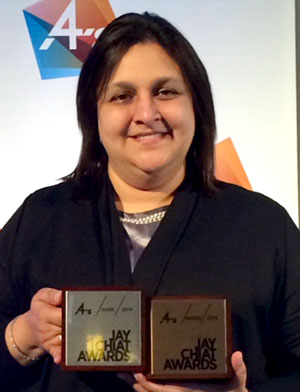
    Anaheeta Goenka

    Now into its 18th year, the 2014 Jay Chiat Awards were presented at the 4A’s Strategy Festival that was held from October 5–7, 2014 in Chicago, U.S.


    Continuing its good run across effectiveness award festivals and producing the best result yet for India at Jay Chiat, Lowe Lintas + Partners India bagged a Silver and a Bronze at the much-acclaimed international awards show. This is the first time that any agency from India has won two awards in one year at Jay Chiat. The Silver win is also the highest ever for an entry from India. India’s previous best performance was a Bronze win in 2011.


    India’s both wins came for Lowe Lintas + Partners on work for Hindustan Unilever in the award category of ‘Product/ Service Creation’. While “Little Farmers of Kissanpur” was awarded Silver, the much celebrated “Kan Khajura Station” won a Bronze. There were no Gold awards given away in this category.


    Sharing his excitement on bagging the two wins, Joseph George, CEO, Lowe Lintas + Partners said, “These wins are a first for Lowe Lintas, HUL and India. And that is special. The Global Jay Chiat Awards are considered to be the toughest to win in strategic excellence; and given our singular bias towards effectiveness awards, these wins are even more precious for us.”


    Anaheeta Goenka, Executive Director, Lowe Lintas said, “Both these campaigns have been recognized by multiple award shows at a country, regional and global level. While the Kissanpur win is about a great strategy that was ‘naturally seeded’; KKT was about providing entertainment to media-dark areas by turning a mobile phone into a radio station. We’re grateful to the jury for recognizing two very local ideas and celebrating them on a platform as big as Jay Chiat.”


    KKT and Kissanpur, between them, have brought Lowe Lintas + Partners over 30 metals so far across a host of award shows around the world including Effie India, APAC Effies, Cannes, Tambuli Awards and AME.


  • Girish Balachandran joins Avian Media

    By A Correspondent


    Girish Balachandran

    Avian Media has announced the appointment of Girish Balachandran as National Head of Marketing and Group Business Director. In his new role, Balachandran will lead the agency’s business development and marketing efforts across India while advising clients on their communication strategy. Girish will work closely with the leadership team at Avian Media to further align and strengthen company’s operations in India, thereby driving growth and profitability for the firm.


    Nitin Mantri, CEO, Avian Media, said, “Over the past few years, Avian Media has achieved steady growth as we focused on adding more marquee businesses to our client portfolio across centres. The company has grown rapidly in the last ten years and the time has come for our next big leap. Girish will initiate a new marketing drive for Avian as well as manage key client relationships. With his vast experience and business expertise, we aim to further strengthen our capabilities to become India’s Most Trusted Advocacy Firm by 2025.”


    An industry veteran with over 14 years of international experience in business development and marketing communication, Balachandran returned to India after 9 years in the UK and 3 years in the Middle East. In 2011, Girish was appointed as a Board Director at Ketchum UK to lead the firm’s business development and oversee key account growth for Oracle. In his six years of employment with Omnicom agencies, Pleon and Ketchum from 2006 – 2012, he served as a core member of the leadership teams responsible for growing the business, developing new offerings in change communications, field marketing and digital consulting.


  • DDB Mudra appointed creative agency for Sony Max & Max2

    By A Correspondent


    Hindi movie channels Sony MAX and MAX2 have roped in DDB Mudra as their new creative agency. The decision was closed following a competitive pitch by a few selectively invited agencies, vying for the account.


    DDB Mudra will handle the creative duties for the brands MAX & MAX2 which were previously handled by J Walter Thompson. Both MAX & MAX2 have always built distinctive brand imagery for themselves to stand out in a highly cluttered industry and have sustained their leadership position through their effective and high on recall brand communication.


    Commenting on this change Vaishali Sharma, VP Marketing & Communications, MAX & MAX2 said, “With the ever changing business environment, it is important to continuously reinvent and innovate as a market leader. We are happy to have DDB Mudra as our new agency on board and look forward to working with them. We are confident that they will provide us with a fresh perspective for our campaigns and will enable us to scale new heights.”


    Rajiv Sabnis

    Rajiv Sabnis, Executive Director & President, DDB Mudra Group said “If Bollywood and cricket are like religion in India, then MAX is the temple at which Indian viewers pay obeisance. MAX is the original Bollywood movie channel. Through its exciting and interesting bouquet of Hindi movies, it has enthralled Bollywood fans across India. Add to that the mega entertainment of IPL. You can’t ask for better. The DDB Mudra mandate is to take this obsession with Bollywood and cricket to the next level.”


  • Radio City launches its first ever Loyalty Programme – City First

    By A Correspondent


    In a bid to further enhance the ideology of its ‘City First Aap First’ campaign, Radio City has launched the first ever loyalty programme by any media house in the country, for its consumers. Titled ‘City First’, Radio City 91.1 FM has set a new benchmark of being a pioneering media brand which reaches out to a millions of listeners who connect with the brand on a daily basis. The brand will engage, gratify and celebrate loyal listeners.


    ‘City First’ loyalty programme registration open from the 6th October for anyone who participates in a contest or sends an SMS to Radio City or gives a missed calls, or interacts through IVRS or On- Ground. The journey begins with the first interaction though any of these mediums with Radio City which act as a gateway to the ‘City First’ loyalty programme. Subsequently, every time a listener sends in an SMS to Radio City, points get added to their mobile number making them eligible for the various forms of gratification.The mobile number acts as the interface and the points can be redeemed at Radio City offices.


    Apurva Purohit

    Talking about the breakthough innovation, Apurva Purohit, CEO, Radio City 91.1 FM said, “Radio City has always attributed its success to its listeners. They are the driving force for us. To celebrate their continued loyalty, we launched our ‘City First Aap First’ initiative and have now introduced a new dimension, bringing into play the ‘Loyalty Programme’ with ‘City First’. While the idea is to gratify listeners, who engage with the brand on a daily basis, with great offers and gifts and make every SMS they send count, the larger objective is to talk to the listeners and interact with them. I believe the loyalty programme will mark the beginning of a new era of interactivity between broadcaster and consumers.”


    The gratification in term of points is based on the level of participation. For instance, if a listener has sent 3 SMSes to which the cost he incurred was Rs 9, the gratification in form of points will be 12. Similarly, if the cost incurred was Rs. 60 or 120, the gratification in the form of points will be 75 and 150 respectively. Listeners can send upto 40 SMS per month and points redeemed in a 3 month window. The points enable consumers to win rewards like talk time, shopping vouchers, movie vouchers, meal vouchers, concert tickets, interaction with their favourite jocks and opportunity to meet their favourite celebs etc.