Category: NEWS

  • Havas Media launches Meaningful Brands study

    By A Correspondent


    Havas Media has come out with findings of its research that suggests that 20 per cent of brands have a notable positive impact on our sense of well-being and quality of life. Some of the findings also suggest that majority of consumers are willing to pay 10 per cent more for socially and environmentally responsible goods in India and China and 95 per cent and 85 per cent say they trust companies with a responsible or social profile more than those without in China and India respectively.


    This is the fourth yearly study done by Havas Media, which started initially with a study on sustainability and has evolved further to studying Meaningful Brands.


    What is intriguing is that for the second year running, Havas Media found that most people would not care if 70 per cent of the brands ceased to exist. Further, it argues, that the existing approaches to building and measuring brand value are out of date. As a direct response, Havas Media has launched ‘Meaningful Brands’, a global framework that offers a new index, analysis and proprietary tools to measure and build brand value in the context of today’s demanding environment.


    This innovative global undertaking that covers India and China in Asia Pacific enables, for the first time, to connect brands with our quality of life and well-being. It does this by measuring the perceived impact of brands on our personal wellbeing – their influence on factors such as our health, fitness, happiness, values, social relationships, financial security, lifestyles and habits – and our collective well-being, that is, how brands help to improve communities, societies and the environment.


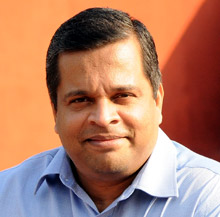
    Speaking to MxMIndia, Vishnu Mohan, CEO of Havas Media Asia Pacific, said: “The findings suggest that the brands in the emerging markets like Asia have a much more positive impact and score higher on trust as compared to western market. It would have been believed that vice versa would be true but this study shows that the future of brands is higher in emerging markets like India. My interpretation is that valued brands are those that have values too. Hence those brands that are considered meaningful also have been performing well on the stock index.”


    The research was carried out from March to June 2011 across 14 markets – France, Spain, UK, Germany, Italy, USA, Mexico, Brazil, Colombia, Chile, Argentina, China, Japan and India. The research took into account the views of 50,000 consumers via online panels. Mr Mohan explained that the plan is to include more markets and consumers to make it more robust.


    The findings of Meaningful Brands analysis are especially relevant for marketers in Asia. It clearly shows the seriousness with which consumers in Asia look at the social, ethical and environmental aspects of a brand. As a region, which is growing at a rapid pace, the findings provide us a huge opportunity to create the context that promotes the growth of meaningful brands. Companies and brands operating in our region can play a big role in transforming the lives of millions of people and contribute to the progress of their societies.


    Some of the key consumer trends in China and India include:


    • 74 per cent and 62 per cent say they would pay 10 per cent more for socially and environmentally responsible goods in China and India (highest globally, aside from Chile).
    • Information and expense are the main barriers to socially responsible consumption, with credibility being another key issue in both markets.
    • 84 per cent in China feel it’s the responsibility of companies rather than the government to solve social and environmental issues (compared with 64 per cent in 2009) and 76 per cent in India, with a similar increase, since 2009.
    • 95 per cent and 85 per cent say they trust companies with a responsible or social profile more than those without in China and India respectively.
    • Empowerment is down in China: 64 per cent feel that they can make a difference to how companies behave and this is static in India at 71 per cent.
    • But so is cynicism: 71 per cent feel that most companies are only trying to be responsible to improve their image and only 12 per cent trust what companies say in this area.


    The analysis suggests that the next generation of brands will come from emerging economies. People in fast growing economies, such as Asian and Latin American markets, record a stronger and healthier relationship with brands. The proportion of brands making a notable positive contribution to our lives increases to around 57 per cent in China, 30 per cent in Latin America, compared to 8 per cent in


    European markets, where people tend to be more skeptical and less engaged with brands. In the US, it’s 5 per cent. By contrast, the situation in developed economies is the opposite. Brands in these regions are no longer seen to improve people’s quality of life.


    Meaningful Brands helps us to develop this type of relationship by understanding exactly what people expect from brands. It also helps us track how successful companies are responding to these needs by understanding how these companies are contributing to our wellbeing, both as citizens and individuals, and how they communicate these values to us. It also shows us that there’s a big business opportunity for brands which are able to satisfy consumers by creating wellbeing in the context of their new values, expectations and local market realities.
     

  • Now Meru to offer special services to key customers

    By Preethi Chamikutty


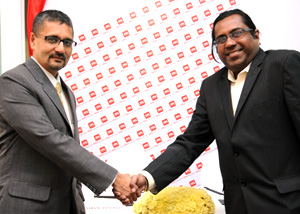
    From zero to 5,600 radio taxis in under five years, with a presence in four metros to boot, has helped Meru Cabs become the largest such service in the country. With Rs300 crore in revenue, Meru has raced ahead of competitors like Easy Cabs and Mega Cabs, with the company even claiming that it is the third largest radio taxi operator in the world. The sauce of this success is no rocket science, at least on paper: a clean car, a knowledgeable driver, non-negotiable fares and a tamperproof meter.


    “You provide these things to the customer and he will be happy,” said Gavin D’abreo, who heads marketing & sales for Meru. This, of course, is just the beginning, and as Rajesh Puri, CEO, pointed out: “This industry is still at a nascent stage and there is a lot of upfront investment that needs to be done. Technology has been a major investment for us to improve our service offerings.”


    So what next for Meru, now that it has established a sound base in Mumbai, Delhi, Hyderabad and Bengaluru? Well for starters, turning profitable is the priority, with Mr Puri expecting to be in black in three out of four cities at the end of the quarter ending March. Beyond that, identifying new revenue streams by offering specialized services is the way to scale up operations.


    Meru, which has partnered with the airports in the cities it operates in, is now testing out a service called Meru Select in Hyderabad. This is aimed at giving its regular users a guarantee of up to 80 per cent of getting a Meru cab when they book for one. The trigger for Meru Select: only 5 per cent of its customer base gives Meru about 60 per cent of its revenues.


    “Because of limited inventory, customers have complained to us about the non-availability of cabs when they order for one. We work on first come, first serve basis, but our loyal customers get an additional assurance of getting a cab with Meru Select,” explained Mr D’abreo.


    Meru Corporate, aimed at corporate customers who want more than a service from point A to point B as being offered by Meru currently, is another service being tested. Meru Corporate is targeted at executives who have to travel from one meeting to another across the city in a day.


    A preloaded plastic card will be given to the eligible executive, which will be swiped by the Meru driver at the end of day’s travel. Some 21 companies have so far expressed interest in this service and Meru is in the process of giving the finishing touches. Other services being planned are transporting kids in absence of their parents as well as a service for medical emergencies.


    Also on cards are expansions into Chennai, Kolkata, Ahmedabad and Vizag. However, such growth won’t come easy. One reason for that are restrictions – fares, distances and licences are regulated by the government. Another hindrance in growth, according to Mr Puri, is finding drivers. And then there’s competition. Mega Cabs, the oldest brand in the radio taxi business, is present in seven cities. Then there’s Easy Cabs -present in four cities – which are available at malls, hotels and even hospitals. Niche services like For She, an exclusive ladies taxi service driven by lady chauffeurs in three cities, are also available.


    Yet, there are brands – like Gold Cabs and Star Taxi – that have not been able to survive the tough regulatory environment and the investments that need to be pumped into not just vehicles but the technology back end. Meru estimates the size of the radio taxi business in India at 9,500 cabs across Mumbai, Delhi, Bengaluru & Hyderabad, which is growing at 50-60 per cent per annum. Nabankur Gupta, founder, Nobby Brand Architects, a brand consultancy, reckons the radio taxi space has tremendous scope for brand building.


    “What exists today is commodity service with a name; a brand can be built only if customers come back to a brand for the experience they get. Security and assurance of good service will help build stronger brands in this space,” said Mr Gupta. He suggested having two levels of service offerings – one level is a limousine kind of service, which is about exclusivity and pampering; the second level is the existing sedans that can cater to the mass market. Mr Puri of Meru agrees there is a demand for super premium service in India, but the constraints are not just restricted to acquisition of vehicles. “To have differentiated cabs, there has to be a differentiated pricing system and a backend IT infrastructure to support it. Technology is the most important aspect of our business.”


    He adds that evidence of Meru’s tech edge is that its drives can do “six duties a day compared to 2-3 duties of others. Our backend alerts them about the next job nearest to where they are positioned,” explained Mr Puri.


    Mr Gupta says in countries like Singapore and Hong Kong radio taxis have made a big difference and have also replaced the public taxi fleet. “Black & yellow taxi drivers should be spoken to and, if they can be taken over, we will have a much better taxi service in our cities,” he suggested.


    Source:The Economic Times
    Copyright © 2012, Bennett, Coleman & Co. Ltd. All Rights Reserved

  • Betting big on shopper insights


    By Johnson Napier


    At a time when brands – led by their able marketing chieftans – are still grappling with the insight and consumers are still clueless about the experience that the discipline offers, it is turning out to be an opportune time for agencies making a beeline in building their expertise around the rather unexplored phenomenon of Shopper Marketing.


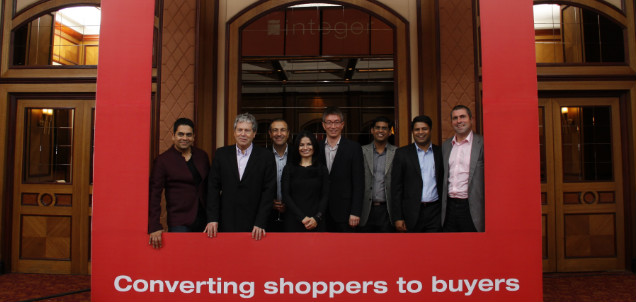
    The initiative, which is being pursued with hot interest by agencies to offer their services, has found a new and able beneficiary in Integer Group, one of the world’s largest promotional, retail, and shopper marketing agencies.


    A group company of TBWA (an Omnicom Group agency), Integer enters India with Mumbai as its hub and the sixth such market for the group in Asia Pacific. It has already blazed ahead with its offerings in other established markets like the US, Australia, Europe, the Middle East, and North and South America.


    Commenting on the launch of the property in India, Shiv Sethuraman, CEO, TBWA India said: “Integer is going to be an important part of our strategy and is one of the fastest growing units within the marketing communications mix. We are very happy to be investing in the division early enough than most others.”


    On the choice of India as the next market for launching the division, Dan Paris, Regional Managing Director – APAC, Integer said: “India, as a market, is accelerating fast and retail as a major driver is picking up drastically in India. From our POV, we wanted to launch at the right time and with the right assets and people. We thought the most important thing to do would be to invest in a serious study and the findings have revealed that this is an opportune time to be launching in this country.”


    Integer’s shopper marketing expertise utilizes extensive global research data on shopper behaviour, retail insights, and unique tools to develop strategic marketing solutions for clients interested in engaging and motivating shoppers. In India, the unit would be headed by Sreejit Nair, MD, Integer who comes to the agency after having worked for FMCG majors like PepsiCo and P&G. Sharing his vision and how Integer would work in the Indian context, Mr Nair said: “Coming from the client side of the business, I know what retailers go through. Especially modern retailers, who are struggling with basic issues like ensuring fill rates, getting space at a fairly good rental, and so on, but what’s happening is that they have actually become obsessed with price. Shopper marketing gives a lot of opportunity for them to differentiate. If you go to the client with an effective plan, I am sure modern retailers would accept this practice.”


    According to Mr Nair, the issue with brands is that they get obsessed with themselves; they don’t want to see what’s there for the retailer and the shopper. “If I am going to talk only about my brand, then it is like trying to push something to the retailer and that won’t work. And even if it works, it won’t succeed,” he affirms.


    Sharing the agency’s core focus in India, Mr Paris affirmed that it would be around four verticals, namely promotional marketing, shopper marketing, channel marketing and digital. “As per reports, retail is estimated to grow to 6 per cent until 2016. Given that there is no slowdown being witnessed here and the fact that India delivered an average 3.9 per cent growth in retail, we expect a modest growth in this segment,” said Mr Paris.


    “Also, the growth will be led largely by digital as the number of consumers who use online and mobile for research and shopping has gone up dramatically. Our study indicates that more than 60 per cent of the online consumers do research, comparisons and shop online and through mobile and this is quite a high figure. With e-commerce expected to grow by 3 per cent and with more than 123 million mobile payment users expected by 2012, these are exciting times for players to be in retail in India and around the world,” he added.


    When quizzed on how Integer India would be different from what the other players in the space have to offer, Mr Nair said: “We would differentiate from the others through our insights. What’s happening is that everybody wants something sexy in retail and it starts and stops with that. We don’t want to be in that particular pool of agencies; we want to start with insights, focus on a lot of inputs on understanding the shopper first and tailoring solutions around his need. We don’t want to be seen as someone who makes flashy collaterals for retailers.”


    Adding on, he said: “Personally, I believe that there is a lot of opportunity in traditional trade – that is an area that needs to be tapped. How much do companies know about traditional trade shopper? Hardly anything. That’s where the opportunity lies for us.”


    Sharing a similar sentiment, Mr Sethuraman added: “I don’t think there is a clear understanding of what shopper marketing is actually about. Most people confuse it with BTL, activations and other such initiatives. The challenge for all agencies offering this service is to get the meaning behind this term well defined, get marketers to believe in this property and treat it as a proper discipline and not just another version of doing BTL. Having said that, I think there is room for all the players to grow healthily for a long time to come; it is still a very nascent category.”


    Prior to launching the service in India, Integer India had undertaken an extensive study across India to map the shopping behaviour of consumers. Titled Check Out India, the study was designed to understand motivations and attitudes, rituals, and factors that influence shopping. The study was conducted across three geographical segments -Urban A – metro with a population of more than 1 million, Urban B – cities with population of less than a million and Rural India. The respondents included male and female shoppers in the age group of 18 to 55. The study threw up interesting findings around the frequency, priority and communication as seen by urban and rural shoppers. Going forward, the objective would be to keep conducting the study twice a year and present it to the marketers for deeper understanding into the mindset of the consumer.


    As for its initial client list on board, Mr Nair said: “Right now we are just working on some projects with PepsiCo and P&G, but we don’t intend to go all out with this unit. We have just launched this study and will have to see how we could present the study in a relevant manner to the clients. I must mention that this is a category neutral study; we’ll have to go on a category level and find about more about the shopper relevant to that category so as to make it really relevant to a particular marketer. We are currently pitching to a few brands and should be able to make an announcement in 2-3 months time.”


    On the growth that Integer is expecting from India, Mr Sethuraman said: “It is still a nascent market and we can easily look at a growth of 60-70 per cent in year one itself. But while a percentage growth may sound impressive, we have to say that the base is still small. The bigger task is to get clients to get used to this novel idea called shopper marketing and make it a genuine part of the communication mix.”


  • Cricket gets even more interesting with Zapak’s Cricville

    By A Correspondent


    Zapak.com, India’s leading gaming portal, announced on Tuesday the official launch of Cricville, a social cricket game on Facebook. This is Zapak’s second initiative in the social gaming, first one being Zapak Tambola. Before the official launch, the game was launched in the open Beta testing phase and got rave reviews.


    http://www.insidesocialgames.com/2012/02/06/social-cricket-game-cricville-aims-to-hit-a-six-on-facebook/


    Cricville broadly follows the IPL-pattern gameplay where the user can own a cricket club and work towards making it bigger and better. The user can work as a club manager, and build the club’s city and stadium. S/he can also hire a coach to train and upgrade the players’ overall performance.


    Users can choose from an array of exciting modes to play. These include Challenges, where the users can throw challenges to their friends on Facebook; Tournaments which will help increase the user’s rankings and in turn help the user’s chances of winning Gold, Silver & Bronze trophies. The users can also play practice matches to improve their overall skills. The game also allows them to upgrade their players by improving their batting, bowling and fitness to score over their friends.


    Speaking on the launch of Cricville, Manish Agarwal, Chief Operating Officer – Reliance Entertainment – Digital Business, said: “Cricket is not just a game but a complete religion by itself in India. With IPL just round the corner, this is the perfect time to launch Cricville, which follows an easy and competitive gameplay that will appeal not only to cricket fans but also to other gaming enthusiasts on Facebook. Zapak wants to tap the Indian-themed games segment which offer universal appeal on Facebook and what better way to spearhead that other than Cricket.”


    Zapak Digital Entertainment Ltd. is India’s largest gaming company that addresses the complete value chain of digital gaming. With currently 8 million registered gamers, Zapak.com is not only the largest casual gaming sites in the country but amongst the top casual gaming sites in the world. As per a recent survey on an average a user spends about 21 minutes on Zapak.com, which is way higher than the average time one spends on any gaming website.


  • Market research firm Majestic MRSS opens shop in India

    By A Correspondent


    Realising the extensive scope that the discipline of marketing research could offer to its patrons in India, decade-old full service market research company Majestic MRSS has announced its foray into the country recently. The new venture seeks to capitalize on technologies around insights developed by Majestic MRSS and its partners in the US, Europe and Japan.


    In India, the venture will be headed by Sarang Panchal who comes in as Chief Mentor and Principal advisor. Mr Panchal has more than two decades of experience in Market Research and has worked in P&G prior to his career with D&B, VNU and Nielsen.


    On his responsibilities at the company, Mr Panchal said, “My primary role here would be to mentor the leadership team that we are putting in place. My extensive experience that I have gained in the field of research marketing would enable me to guide marketers on what will work for them and what to avoid. We expect the full team to be in place by the end of the month.”


    Outlining the objectives of the company, Mr Panchal said “Our aim at MRSS in India would be to further leverage the use of technology to offer better and customized services. We will continue adding more innovative and strategic technologies as we become one of the leading players in India. We are pioneers in getting technology in the Asia-Pacific region, and are now ready to introduce them to India.”


    Raj Sharma, Co-founder and President of Majestic MRSS said, “We believe Mr Panchal’s extensive knowledge around research, associations and active presence in the industry will bring instant recognition to MRSS India as a brand with global technological leadership and hyper-local understanding.”


    When asked on how MRSS would differentiate from the other players in the space, Mr Panchal said, “We have leveraged technology in the field of market research in the areas of data collection and advertising / media research. Moreover we are ‘known’ for our high quality work in researching upscale and ‘difficult to contact’ target groups. This is what sets us apart.”


    Adding further he said, “Currently MR agencies are considered to be data suppliers. We hope to change this perception and become partners of clients and enable them to grow their business in India and Asia Pacific. The industry may not change in perception unless larger players begin to offer truly-world class research in marketing and that is what we would excel to provide.”


    Going forward, the goal for the company would be “to become the largest independent MR agency by the end of the decade,” affirmed Mr Panchal. Given the huge void of players in the space, it isn’t an impossible proposition, he feels.


  • Venturenet Partners to launch Radiowalla in April

    By A Correspondent


    Venturenet Partners Private Ltd, a Bengaluru-based internet radio company plans to launch a premium model internet audio service, Radiowalla by April 2012.


    Venturenet has already launched Spot Radio, a b2b digital in-store radio entertainment network in August 2011. The internet radio company has already announced that it has raised series A funding from Ojas Ventures Partners (OJAS) which will enable it to further expand the services and features of its retail audio solution – Spot Radio and it’s b2c radio service – Radiowalla.


    In addition to this, it is also learnt that after having out-performed its business goals, Venturenet will scout new investors for the next round of funding.


    In conversation with MxMIndia, Mr Anil Srivatsa, Co-Founder and CEO, Radiowalla explained that the objective of starting Radiowalla was to provide radio with its due of choices and to serve the special interest groups and communities with the content they would like to listen to and willing to pay. “We are trying to be in all languages and genres, including motivations, philosophy and other non music content… It is like an audio mall – one place for everything,” he added.


    Launched in August 2011, Spot Radio is said to have already partnered with 20 national retail chains, with over 2000 sites nationwide and is targeted to grow to a record 10,000 sites by the end of the year.


    Currently, Venturenet has around twenty brands in its client list ranging from lifestyle brands to hypermarket brands to food and beverage brands to name a few. According to Mr Srivatsa, Venturenet Partners is currently in an investment mode and hence he is not thinking about break-even plans.


    However he believes the sites – Spot Radio and Radiowalla – will sustain break-even very soon, though not for the next 18 to 20 months.


    On his vision for the year 2012, Mr Srivatsa said: “My vision for the coming year is to launch a life changing audio platform that will change the way people will consume audio content. Therefore we are trying to leap frog into raising and meeting the expectations of our consumer base.”


    The team size of theBangalorebased Venturenet Partners is currently around 12 – 13 and growing. The marketing plans, for now, are limited to viral but will later spread to the traditional and digital media.


    Mr Anil Srivatsa has been a veteran of the media field since the past 20 years. He had launched a radio show called ‘Anil Ki Awaaz’, inNew Jersey,USAand ‘between the sheets’ inIndia. He also launched an internet radio channel for Asian Americans. Prior to launching Venturenet Partners, Mr Srivatsa was the CEO of Kings XI Punjab and before that he was the COO Radio Today Broadcasting (Meow 104.8 FM).


  • Nisha Narayanan holds fort @ Red FM as Rana Barua quits

    By A Correspondent

    Senior vice-president projects and programming Nisha Narayanan is learnt to have assumed charge at Red FM as COO Rana Barua is moving on (as reported by MxMIndia yesterday). Though both Mr Barua and the company spokesperson were unavailable for comment, MxMIndia learns that he has put in his papers and amongst other things is mulling turning an entrepreneur.
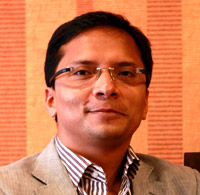
     

    According to sources, it’s business as usual at the leading FM station with Ms Narayanan, an old Red FM (and Sun FM) hand, managing affairs of the company at least temporarily. Mr Barua is reported to be on leave and serving notice.


    Prior to joining Red FM, Mr Barua was EVP – Programming & Marketing at Radio City. Before he moved over to radio, he was VP and Head – Mumbai at Bates. And earlier: Client Services Director at Rediffusion DY&R, Account Director at McCann, Senior Account Exec at Ogilvy & Mather and an Account Exec at JWT.


    with Robin Thomas

  • Big FM appoints Vivek Malhotra as head of marketing

    By A Correspondent


    Reliance Broadcast Network Limited (RBNL), on Tuesday, announced the appointment of Mr Vivek Malhotra as Head, Marketing for its radio brand, BIG FM. Mr Malhotra will be responsible for developing the overall brand and communication strategy for the business and implementation rollout across the stations. He will be closely associated with the product, operations and revenue teams.


    Speaking about his new role, the immediate challenges and the shift to a new medium altogether in an email interaction with MxMIndia, Mr Vivek Malhotra stated: “Radio, as a medium, appeals very differently and does indeed have a connect with the audience at a very personal and emotional level and it is amongst the most inclusive media formats in the country.”


    “Accordingly, the challenge to truly differentiate and connect more closely with the audience is distinctly different. The leadership position enjoyed by the network added to the fact that radio is welcoming the most interesting times ahead, made this an opportunity very few would miss” he added.


    In a prepared statement, Reliance Broadcast Network stated: “We are delighted to have Mr Vivek Malhotra on board. He brings with him vast experience across marketing, media research, trade management, sales support, AFP solutions, distribution and corporate strategy. With a strong understanding of business and tremendous creativity, we are confident Vivek Malhotra will play a key role in leading the team to continue the development and growth of the radio business.”


    Prior to joining Reliance Broadcast Network, Mr Malhotra was the senior Vice President – Marketing, PR and Research at Bloomberg UTV. He played an integral role in setting up the entire marketing system and repositioning the product to new brand values, along with the additional responsibilities of distribution planning and coordination. Vivek Malhotra also worked with STAR News Network, wherein he is said to have not only led their trade engagement and research unit but also acquired valuable experience around regional products like STAR Majha.

  • Radio One likely to turn English in Mumbai & Delhi

    By Robin Thomas


    FM radio network Radio One is likely to go English for its Mumbai and Delhi stations, MxMIndia has learnt from industry sources. This shift is likely to take place next month or early February 2012. MxMIndia did not receive any official confirmation from Radio One at the time of writing this, though industry sources have confirmed the development. Radio One, a joint venture between Next Mediaworks Ltd and BBC worldwide, operates in seven cities – Mumbai, Delhi, Kolkata, Chennai, Bengaluru, Pune and Ahmedabad.


    An English FM radio station in Mumbai and Delhi may add a fair deal of differentiation in music, but what remains to be seen is how advertiser-friendly it will be, given that listenership levels are lower than those playing just Hindi music.


    MxMIndia spoke to few industry players on whether Mumbai and Delhi markets will open up to an English FM station. One of them was of the view that an English FM station in Mumbai in particular will create a much needed differentiation in terms of music. There is a market for English audience, but it may take some time to get established, what remains to be seen is how the advertisers will react to this change. Another industry observer was of the view that while there is a market for English music listenership in both Mumbai and Delhi, it could still be challenging for the FM station in terms of revenue generation, as the audience size is small.


    On the other hand, Sunil Kumar, MD, Big River Radio feels the fact that there are audiences willing to pay a huge sum for rock concerts, the number of English newspapers, the popularity of serials such as Friends, are sure indications that there is a market for an English FM station. “There is a market for English music listeners, these are the people who have an international or global outlook, they travel abroad and are well attuned to English music. An English FM radio station will bring an additional audience to radio – that is, those who do not listen to radio. Just look at the number of English movie channels, English GECs, news channels, they are doing extremely well. Therefore, for a premium channel you don’t need a large audience but, you can charge huge premium for the audience they deliver to, which is often people in the higher socio-economic group,” he said.


    It may be recalled that when Fever FM was launched in Mumbai, it initially aired both Hindi and English songs after which they had to completely switch to Hindi. Radio One too has experimented for long with its English format in its earlier avatar of Go92.5 and Radio Mid-day. Market pressures and the desire to catch up with the more mass Bollywood hit music format got it to go completely in Hindi. Hit FM is the only 24×7 English FM station in Delhi, while Mumbai currently has no fulltime English FM station. The other 24×7 English FM stations in the country are Radio Indigo in Bangalore and Chennai Live in Chennai. All India Radio’s FM Rainbow station also plays English music.


  • Rana Barua quits Red FM, may start own venture

    By Robin Thomas

    Red FM COO Rana Barua is moving on. MxMIndia learns that he has put in his papers and amongst other things is mulling starting out on his own. Mr Barua and the Red FM spokesperson were not available for comment.

    Prior to joining Red FM, he was EVP – Programming & Marketing at Radio City. Before he moved over to radio, he was VP and Head – Mumbai at Bates. And earlier: Client Services Director at Rediffusion DY&R, Account Director at McCann, Senior Account Exec at Ogilvy & Mather and Account Exec at JWT.

  • Very challenging times for radio: Rana Barua


    By Robin Thomas


    Rana Barua is a veteran media professional. He is Chief Operating Officer (COO) at Red FM. Prior to joining Red FM, he was the EVP – Programming & Marketing at Radio City. Before he moved over to radio, he was VP and Head – Mumbai at Bates. And earlier:

    Client Services Director at Rediffusion DY&R, Account Director at McCann, Senior Account Exec at Ogilvy & Mather and Account Exec at JWT. He’s been through it all.

    In conversation with MxMIndia.com, Mr Barua speaks about FM phase III, and how radio can emerge stronger from the ongoing slowdown.


    Q: How did your transition from advertising to radio happen?

    Advertising was getting a bit stagnant, the market in media was opening up, television had opened up in a big way at that time, newer media were on the anvil, movie marketing was also opening up, radio was also growing at that point in time (ie about six years ago). I have always been very keen to move into a domain which is more or less a specialized medium. Since radio was also into huge expansion mode with phase II at that time, it made more sense to move into radio rather than any other medium.


    Q: And the advertising experience came in handy…

    Oh yes! I think it comes in extremely handy if you come in from classical advertising or communication which is more specialized. Since I moved as Head, Marketing, it made a lot of sense because I worked with a lot of brands, and had the entire expertise of knowing clients, advertising, communication skills, media and creative agencies. Thus the entire gamut came in handy which helped me settle in easily. So, the transition was good, it was just that the scope was very different.


    Q: Can you throw some light on the overall importance of phase III for FM radio?

    Phase III is extremely, extremely important for radio growth. This is probably going to be very exciting, at the same time a really challenging time for the industry because radio is multidimensional. There is huge expansion, multi frequency will be allowed and news will be available but not in its best form as it will be sourced from All India Radio (AIR). FDI gets raised from 20 percent to 26 percent. I’ve always said it should have been higher because that would have allowed more international players or private investors/ equity holders to look at it in a more serious way. Fourthly, networking will be allowed, which means one will be allowed to run the FM station sitting out of a main hub; as a result the cost may come down. Therefore if you look at it on the whole, these are definitely exciting times and we will probably know how all of us shape up in the next two years. There are going to be many challenges and a great number of opportunities for everybody in the radio medium.


    Q: And this will help increase the ad pie…

    It should! The only contrary point is that you may have new FM players entering, but the ad pie will grow because of different genres coming in, as a result new clients may also come in who would have not necessarily advertised on radio. And since costs will also come down, you will find a lot of innovative programming happening in radio. Nevertheless, these are still early days; the overall scenario looks very positive, but the challenge is, what will be the benchmark for research? There are also other challenges like the music royalty issue, the entire migration process from phase II to phase III, the e-auction as bidding process etc.


    Q: Do you view e-auctions favourably?

    We are pretty okay with e-auction, and from what I have understood from a lot of people, it is a much cleaner exercise.


    Q: Are there any setbacks…?

    Everyone will have some issues which are different from each other. The common factor however is the music royalty issue which is still unresolved. We are still a little unclear about the multiple licensing because if the e-auction bid goes into some preposterous amount it will naturally lead to some kind of setback for the overall industry, so we are hoping that this does not happen. News could have been better if it had been a bit more independent and I am sure we would have invested in the entire medium/department. Nevertheless if you see the overall picture, especially the way radio has been growing over the last three or four years, this gives you an impetus. Today if you look at the global economic scenario you just can’t predict any more but, yes it is a movement forward, with exciting times, greater challenges. Yes, certain things could have been better or more favourable for us, but we will go step by step.


    Q: How is Red FM gearing up for FM phase III?

    We are still weighing the pros and cons. Yes, we will be seriously involved in Phase III. We are clear about being present in most of the markets which will have some kind of ROI but we will weigh the pros and cons, we will see the costs, we will be extremely cautious about the approach because breaking even in radio is not the easiest of forms as it will all depend on the return on investment (ROI), the advertising revenues etc. If you ask me whether we are serious about phase III, then yes we are definitely looking at it in a very serious way.


    Q: Any specific cities that you are looking at?

    No, we are not looking at certain cities, but we are looking at towns… say where we are not available, which are important for advertisers. We are looking at these as one of our strategies, but we are weighing all the pros and cons and only then are we going forward.


    Q: Is there any lesson or takeaway that the radio industry should learn in Phase III from Phase I and II?

    One of the critical learnings for a lot of us in phase I and II is probably going to be that we must not overestimate the potential of the market. We also know that we look at certain benchmark figures and we tend to overestimate and because of that one tends to overbid. This is one of the key learnings one is hoping that everybody puts on the table before one gets into the e-auction process because at the end of the day it’s a fixed pie and from that fixed pie you would probably get a certain amount of revenue for radio. More than phase I, and phase II, one of the learnings for all of us is the uncertainty of the markets as we don’t know what’s coming up in the next three months. Therefore, I think the biggest challenge that lies ahead for all of us is the uncertainty, which has become such a huge thing that everybody is talking about the uncertain future. Hence I think a cautious approach is going to be extremely critical.


    Q: So, is the uncertain future – the global economic slowdown that seems to have come back – is that something to worry about?

    Yes, absolutely. However, more than worry I believe we should be taking complete cognizance of the fact that there is definitely a slowdown. The clients, advertisers, everybody are extremely, extremely careful about the money they are investing in any form of media. Taking things for granted and creating business plans for the next two or three years seems passé now. It’s more like making a business model and reviewing it every month because the numbers keep changing every month, not because of wrong projections of estimation, but because the moment costs go up, inflation goes up, prices go up. The environment has become so dynamic – which it wasn’t even a year ago; every day there is a new story. So, it’s great to plan for the future, but I think one needs to be very cautious about any kind of numbers or projections or predictions made by various studies and research etc, which will however be reviewed very soon.


    Q: How would you sum up 2011 for Red FM?

    We have definitely grown; even this year we have made overall growth in our entire network, at a certain target we had set for ourselves. But as I said, with the environment being so dynamic naturally those numbers are nowhere close to what one would have guesstimated maybe earlier, say last year when things were so much on the rise and one had hoped that coming out of a slump the next two or three years would be on the way up. What we have managed to do very well is that as a network we have grown extremely strong – into a formidable player post the RAM numbers which were released I think a month or two ago, wherein for the first time RAM went into the nine markets which they are hoping to do more frequently. So we are pretty confident that all the efforts of building the brand and all the efforts in programming have really helped. We are confident because we have got people and our talent in place.


    Yes, we are aware that with phase III coming in there would be a lot of movement again, but that’s part of the business. We have got a great team going, who are extremely motivated and work passionately for their brand and numbers therefore are showing very well. As I said the larger markets are not showing growth that it should have ideally shown, but it’s the mini metros and towns which have grown much more dynamically for us.


    Q: And how would you sum up 2011 for the radio industry?

    Overall if you look at the numbers one had predicted for radio, the growth has not been as dramatic as one would have expected because it is understood that there has been an overall slowdown. One of the things we need to look out for is some kind of consolidation which is how we would want the medium to grow.

  • Radio Mango in 4th anniv mode, to consolidate in Kerala for Phase III

    By A Correspondent


    Radio Mango, an FM radio venture by Malayala Manorama, a Malayalam daily, aims to consolidate its position in Kerala once FM Phase III is officially rolled out. It is however not known which cities the FM station would bid for as they are currently awaiting clarity on the phase III. “We would definitely look to consolidate our position in Kerala. We are still unclear about the reserve price calculations and await clarity before finalising our phase III plans,” said Ravindran Nair, Director Programmes, Radio Mango.


    He further said, “We are confident of growth in 2012 since we have been steady since the last 4 years. The key factor in the quantum of growth, of course, would be phase III.”

    In Kerala Radio Mango is aired in Kochi, Trissur, Kozhikode and Kannur. Red FM and Club FM are its main competitors in these cities besides the All India Radio (AIR) FM stations. On November 29, 2011 Radio Mango will celebrate its fourth anniversary however the FM station seems to be in no mood for big celebrations.

    Radio Mango claims that its national and local advertising ratio is almost 50:50. Some of its national advertisers are Maruti, Hero Motors, Nokia, Blackberry, Max Bupa, Kenwood, Airtel, Docomo, Belkin, Ford, Hyundai, Sharp, and Philips etc. Nearly 80 per cent of songs aired on Radio Mango is Malayalam film songs and the rest 20 per cent from non-Malayalam music ie Hindi and Tamil songs. Besides its on-air activities, Radio Mango is quite active online too. It has over 5,700 likes on its Facebook page and nearly 300 followers on Twitter.


    In conversation with Ravindran Nair, Director Programmes, Radio Mango.


    Q: Since November 29, 2007 when Radio Mango first went on air, until the year 2011 how has the journey been for Radio Mango? 
    Radio Mango has had a great period of sustained growth since launch. We have been consistently No.1 in the state and have been figuring in the top 20 nationally in terms of reach. In IRS Q2, Radio Mango is 16th nationally, in terms of reach (11th if AIR stations are excluded). In terms of reach within a state, Radio Mango ranks 5th nationally! Radio Mango has grown by 45 percent in Yesterday’s listenership over the last one year. Within Kerala, Radio Mango leads the no 2 station by 81 percent in terms of reach. (All figures are from IRS Q2 2011).


    We have won several national and international awards including New York Festival silver and bronzes, Wow Experiential Marketing Award golds, ERA golds etc. In fact, we are the only radio station in India to have won Mirchi Kaan Award golds for two years running.  We also figure in the Limca Book of Records for our musical reality show ground event.
    Q: How do you plan to celebrate Radio Mango’s fourth anniversary?
    We don’t look at months and years as landmarks. We would rather have our achievements be the milestones. Hence, all our anniversaries are private internal affairs and we don’t tom-tom in public.
    Q: Can you throw some light on your phase III plans? Will the FM station expand in cities/ towns of Kerala or will the expansion be beyond Kerala i.e. other parts of India?
    We would definitely look to consolidate our position in Kerala. We are still unclear about the reserve price calculations and await clarity before finalizing our phase III plans.


    Q: How has the response from advertisers been? What is the national-local advertising ratio?

    The response from the advertisers has been good so far. The national and local advertising ratio is almost 50:50. Some of the national advertisers are Maruti, Hero Motors, Nokia, Blackberry, Max Bupa, Kenwood, telecom majors like Airtel, Docomo, Belkin, Ford, Hyundai, Sharp, and Philips etc.


    Q: For 2012 what are your growth targets? How will you sum up 2011 for Radio Mango? 
    We are confident of growth in 2012 since we have been steady since the last four years. The key factor in the quantum of growth, of course, would be phase III. 2011 has been a great year and we are very pleased with our overall performance. The Radio Mango brand has never been more robust and recognised.


    Q: Who is your creative and media agency?
    Our creative and media agency is Stark Communications.