Category: NEWS

  • Why FM is more than just a recall medium: Rabe Iyer

    By Rabe T. Iyer


    Old media don’t die! They just bounce back in new avatars. Not so long ago, radio had been written off as dreary, downmarket and not so cool. Television and, later, “new media” were touted as being media of the future. Thanks to advancements in technology and a change in lifestyle, radio has made an incredible comeback.


    FM radio stations are one of the most popular entertainment mediums, offering millions of Indians a great mix of shows covering music, contests, discussions, humour and gossip, delivered in local flavour by popular young radio jockeys.


    Radio is a medium of the senses, bringing the listener’s imagination to life and taking him into an exciting new world of his own. Thanks to local FM stations, marketers have been able to connect with their target group, especially the youth, like never before.


    According to industry experts and analysts, there are 250-300 million radio users today. This penetration is surprisingly more than that of newspapers, known to be the oldest among present day media. In addition, at 145-150 minutes per day, the consumption time of radio is more than that of television, which stands at 140.  Today, 80-90 per cent of mobile users access the radio on their phones.  The fact that the medium is mobile has clearly helped to increase its usage and popularity.


    With the rollout of Phase III licensing, the Indian radio industry is optimistic of huge growth. The industry, which currently brings in around Rs1,100 crore revenue, will see 800 new radio stations across 300 towns coming up.


    Here, radio-based advertising can be used effectively for communication and positioning. It is to be used well since it can target a large audience because of its immense reach. It is useful in increasing awareness about a brand or business and helps in enhancing the brand image. The past couple of years have witnessed a flurry of activity in the FM sector. Not surprisingly, the radio industry of today can be compared to television in the early and mid-nineties, and one that is all set to boom further.


    With carefully worded scripts, brilliantly created situations, and tailor-made strategies, radio advertising is getting more innovative and effective day by day. It is perhaps one of the simplest yet most cost-effective and powerful means of communication in today’s world.


    Studies indicate that instead of two back-to-back commercials on television, one commercial on television and another one on radio give about a 20 per cent higher brand recall. Also, a television commercial, if aired on radio, works very well as the listener can then visualize the entire advertisement. Hardly surprising that over the years, print based publications and television channels have been using radio as a support medium, as a reminder medium, and as a mean to building up frequency.


    As mentioned earlier, another interesting facet of the Indian radio story is the mobile phone explosion and its convergence with FM. This has exponentially increased the width and depth of the market.


    Radio offers tremendous opportunities for advertisers and media planners who need to explore various options, following which they can effectively use the medium in their media mix. Conversely, broadcasters need to develop the market by being more responsive to an advertiser’s needs. This will provide an opportunity for the market to arrive at the final verdict on the effectiveness of the medium inIndia.


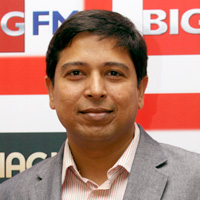
    Rabe T. Iyer is Business Head, 92.7 BIG FM


  • [PR Channel] Our approach has been very focused & niche: Veena Gidwani

    It’s been a fulfilling and boisterous ride, to say the least, for one of the most prominent names in the domain of PR – Madison PR. Having made a modest start about a decade ago, the agency today has a roster of clients that most would die to have a hold on. Not to forget the healthy growth numbers that the agency has been posting year-on-year, which have been in double digits for long. None of this would have been possible without the guidance and leadership capabilities displayed by the face of the agency – Veena Gidwani.


    Having been involved with the agency since its inception, Gidwani today is singularly responsible for the peak status that it has attained over the years. In conversation with Johnson Napier of MxMIndia, Veena Gidwani discusses her foray into the space; shares her secret to bagging top-notch clients and has a word of advice to the industry so as to get it to be in a more orderly state in the future. Excerpts:


    Your career spans an illustrious three decades, straddling the domains of advertising and marketing. Though your love for the medium is known, what is it about Public Relations that made you take up the profession as a career path?

    My foray into Public Relations happened in 1995. At that point in time, I was employed with the Tatas for their design and creative services company when I was advised by a friend to head a joint venture in the PR and investor relations space. That was when I set up Prima Communications – the corporate image building venture that I was instrumental in setting up and was responsible for delivering growth for the unit.


    During that phase, it was observed that a lot of Indian companies were not communicating effectively with their stake-holders. There was a need felt for them to have a professional service which understands how to communicate and how to do it on a sustained basis. So I was involved with that for some time till 2000 when Sam Balsara (CMD, Madison World) offered me a role at Madison PR and that’s how my journey began over here.


    It’s been 12 years now for me atMadisonand we have grown from a small and limited team to a team that is very cohesive and spread out across four cities. Today we service clients across industry verticals – we focus largely around clients in lifestyle, FMCG, food and also other verticals like consumer durables, financial, hospitality, healthcare and so on. This has enabled the team to have a lot more exposure and experience in handling all kinds of situations and industry and client needs.


    How has Madison PR delivered on the growth front in 2011? How has the start been in 2012?

    We have had a good start in 2012. Most clients have outlined plans for good growth and plans for having new products being launched and so on. Though, of course, in the last quarter some clients have been a little careful in terms of committing a budget, preferring to play a wait-and-watch game. But as the year has begun, the start has been positive so far.


    As for 2011, the year was good for us; we have witnessed double-digit growth. All our offices have added businesses. In Mumbai we added Godrej Tyson and Godrej Locks; inDelhiwe added JK Cement and Ricoh andApolloHospitalsinBangalore… so there have been additions and growth in all offices.


    While on 2011, I would like to share an important thing that happened to me which was my travel to Cannes. Being on the jury, it gave me an opportunity to see PR campaigns from across the world that were submitted. I’d like to add that a lot of good work also happens inIndiabut unfortunately not too much of it is entered. It was a great experience to interact with many agency heads from across the globe and I think that some of the issue that all of us are battling are almost the same across the world. Also, the other interesting thing out there was that there was not a single category that did not have digital as an entry. So it was a great learning experience at Cannes.


    Your client roster boasts an impressive line-up including the likes of P&G, Parle Agro, Britannia, etc. What is it about Madison PR that gets such top marketers to cling on for a long time?

    As an agency, our philosophy has been to work with a limited number of clients but work very closely with them. That’s because PR is such a business that you need to have close interaction with your clients. Unlike advertising, where you create a plan and that plan holds still for the next three months or so, PR is a very dynamic medium- the plan keeps on changing. We may have developed a strategy for this month but if some development happens then we need to incorporate such changes. Also, most often the Marketing people at the client’s end are so busy with their everyday goals, meetings that they do not have the time to share with the media when they have some important developments. As we believe in the proactive approach of being in regular touch with the clients, it becomes easier for us to strategise and execute ideas for them. So that’s one area that we are constantly looking to delight clients in.


    The other important thing is that we believe we have to be creative in our approach. The media landscape today is so competitive that everyone wants a slice of the information that is going out. So how do you stand out and make your communication interesting? You need to be creative in your approach; you need to customise the content to suit the medium. So that’s another value-addition that we offer to our clients.


    How would you rate Madison PR on the parameter of client retention?

    We’ve had clients who have been with us for several years, like P&G, which is our oldest client and continues to work with us. Having said that, we do have clients who work with us for a year or two, and that happens because if the companies are small or privately held and if they feel that do not have much to communicate then they break away from the association. But I can say with certainty that we command a high loyalty rate amongst our clients.


    How do you review your practices each year so as to stay ahead of the curve on a consistent basis?

    We do not work having a delineated or watertight practice. For example, you may have a group that may be working for two separate practices but what we try to do is analyse what are the trends, in which direction is the industry progressing and what is it that we can provide that nobody else is providing and do that more efficiently.


    What is the shift you observe in the way PR as an industry functions today to what it did, say, about a decade ago?

    A decade ago, PR largely meant media exposure and media relations, whereas today it is more holistic communications counsel with specialized services like influencer marketing, word of mouth, events, research and overall strategic planning and execution. Also if you observe, there has been a significant shift in the way the professionally managed clients avail the services of PR agencies. They understand the value of a big and creative idea and they support it. They are willing to give it all the support that it needs in terms of implementation and cost. At the same time they expect us to deliver good outcome and results out of the exercise. However there are several organisations which are not that clued in on the value or merit that PR brings to the table. They fail to look at PR as an area that needs sustained investment or something that needs an ongoing boardroom thought.


    But I would say that there has been a major shift and most professionally managed companies are realising the value of PR. In fact, PR is becoming an integral component of their media plan and very often many of clients invite us to the pitch alongside the other disciplines. We are briefed at the same time as the others so that we can think creatively and come up with ideas and have a concerted and synergised plan for that particular initiative.


    Where do you see Madison PR placed in the PR pecking order amongst its contemporaries?

    We wouldn’t want to rate ourselves amongst the other players based on our size; we are not a big agency. We are a relatively small agency but as I said our approach is very focussed and niche; we want to work with a very limited number of clients and work in a manner where we come up with innovative ideas to build brands.


    What are some of the challenges facing the PR industry in India?

    Talent has been one of the biggest problems facing us and the industry as a whole. Especially the senior staff – it is extremely difficult to find a good fit. One of the biggest problems that we face is that most people want to move on to the corporate side of the business.


    Though I must say that there is a lot of excitement when you work on the agency side of the business as you get to work with multiple brands, you get to see what the other groups are doing on other brands, you get to work with new brands as well as old and reputed brands or somebody who wants to deal with a crisis situation, and so on. There are many such situations that take place here and therefore I would say that the PR agency life is very vibrant.


    Also, it is essential that agencies impart training to its workforce. We do provide in-house as well as external training and workshops for our staff. It goes a long way in preparing them to face the challenges that the business demands.


    Any other challenges apart from talent?

    The other big challenge facing the industry is the way clients want to remunerate agencies. With so many players out there offering their services, people are willing to undercut price for the same. PR, as such, is a very qualitative service; you cannot exactly say that someone has quoted me this rate and why are you quoting me something else? One must understand that there are various elements to this service. Over here, one idea or not missing an opportunity can make a huge difference to a campaign. So proactiveness from the agency and the way they deal with you, all add up to the sum total of value or service that the agency is giving to you. So two agencies of the same size may be offering the same service at varying rates and it is up to the client to take a call on who is the right partner.


    The other element here is that it is a very people-intensive business. Because, besides people and the intellect what else are you really using? So an agency’s idea, people skills and your interaction with people are the key skills that one uses. Also, people costs are going up and clients have to realise that to get good service you have to pay good money – which some clients do. But by and large, most people think that they can negotiate fees and make us work for less and this perception needs to be changed.


    You’ve been involved with PRCAI and have served as president in the past. How do you see the association casting an impact on the industry in a large way?

    I really do not know what is going on over there now but I guess as an industry we need to come together and do more. If everybody gets together we can hope for a smooth running of the industry. We are operating at several levels. At one level we have internationally-affiliated global agencies, then you have the Indian independent agencies, then you have agencies likeMadison, which are part of agency network, you have individually-owned agencies, smaller agencies, etc so the canvas is very vast. This makes it difficult to have standardised norms and practices that each one may follow.


    Have you been approached by an international agency for a joint venture?

    As and when there is some venture to look up to we would consider it but we are happy being as we are right now.


    What is the road ahead for Madison PR in 2012?

    For us to put up a good growth, churn out good campaigns and help clients to get better market shares and enhance the equity of his brands with consumers and stakeholders. Also, we see big opportunities in lifestyle, personal consumption, retail and healthcare sectors with many new entrants and aggressive expansion plans of existing players.


    For us, digital is now becoming important and more and more brands are now going online to communicate with consumers but I think that in 2012 there will be a lot of activity around this arena.


    Finally, will Madison PR be the place you retire at or will you contemplate another career opportunity in the future?

    I haven’t thought about leaving this place; it has been an interesting and exciting journey over here. There are always newer things that come up and one thinks of it but it’s been very exciting and I am looking forward to more excitement in the time to come.
     

  • Television channels on Valentine mode

    By a Correspondent


    It’s Valentines Day today – a day celebrated by many, abhorred by some and perhaps overlooked by others. And some of the television channels, too, have tweaked their content to suit the Valentine mood.


    Zee Cafe

    Zee Cafe will broadcast back-to-back episodes of the popular romantic sitcom ‘Better with You’ from 1:30pm to 5pm on February 14. In addition to this, Zee Cafe has designed an application for Valentine’s Day called ‘Which Is Your Cafe Couple’ where users answer questions about their favourite song, ideal date and so on and based on their answers the app shows them which ‘Cafe Couple’ they’re most like. The result then shows up on the users’ wall with a link to the Cafe fan page and app.


    zoOm

    Bollywood celebrities Kareena and Imran will play Love Gurus for fans on zoOm. Katrina Kaif will give a style makeover to a lucky fan. Not only that, celebrities like Ritiesh-Genelia, Prateik-Amy Jackson will be a part of the four day lineup to celebrate the Valentine week on zoOm. The channel has lined up many other activities such as a Bollywood celebrity stylist giving tips for the perfect ‘Valentine’s Day Look’. zoOm has also put together a special music selection for Valentine’s Day.


    Big CBS Love

    Big CBS Love will broadcast a special series on romance, love and relationships from February 14 to February 17 from 10am to 10 called “Valentine’s Week Special – Crazy in Love”.


  • Love sees a new high for Archies on V-Day


    By Tuhina Anand


    Valentine’s Day celebrations in India would be incomplete without that ubiquitous Archies card declaring undying love and probably most, when at the store, one adds some gifts too from a wide selection of red and pink love tokens. So there is no room for doubt when the company declared that Valentine’s month, as it considers the period from February 1-14, accounts for 16-18 per cent of their annual turnover.


    “We have seen that 3-4 days before V-Day, the sales across our stores increase from anything between 6-10 times as compared to an average day. In fact, a day before (Feb 13), the stores witness chaos and we have to arrange for all the helping hands available to cater to this rush in many of our company-operated stores,” informed Youhan Aria, Head Corporate Communications at Archies.


    In the last few years, Valentine’s Day has become a money spinner for businesses of all sorts. While few years back, this day was restricted to college-goers or youngsters, now the craze has engulfed many across the cross-section. Mutalik and Shiv Sena notwithstanding, the day is being celebrated and the phenomenon has caught on so much that even if one might not go for a high priced gift, a greeting card or maybe flowers and chocolates do figure on the gifting list.


    Aria shares the example of a beat constable in Vasant Vihar in New Delhi, who did not understand the concept behind V-Day, but still walked in one of the Archies store to pick up a card. That speaks volumes on the V-Day equation and the formula of gifting.


    For Archies, V-Day is bigger than any other gifting occasion which sees spikes in sales, be it Diwali, Friendship Day or Rakhi. Across its 240 stores in 66 cities, the display, too, is done keeping in mind the spirit of the day where red and pink rules.


    In terms of top picks for gifting are the usual cards, soft toys, chocolates and fashion jewellery. Also, it seems, when splurging on V-Day, money is not much of a concern and people go for cards that are high on embellishments – higher the number of inserts, better it is. Also there are not too many takers for lesser-priced cards


    “Over the years, the change that we have seen on the V-Day gifting is that our TG has expanded.Whereas, earlier it was restricted to only teens and young professionals, now one sees people even in their late 40s coming over to pick something. Seeing this trend, we have expanded our portfolio of gifts to cater to a wider range for different TGs,” said Mr Aria.


    Also one thing that Archies has seen over the years is that sales come more easily from tier II and III cities as the number of options available in these towns are limited. Mr Aria added: “For us, competition comes from anyone, be it a coffee joint or a retail store. In fact, even laptops, jewellery brands and shops as well as restaurants are competing with us. I would call these category killers. However, an Archies store is a social expression as it fulfills its customer’s gifting needs. Even gifting a gadget is never complete on V-Day without the greeting cards, and that’s where we step in.”


    Archies has seen exponential growth in the demand for their merchandise and cards on V-Day in the last few years and have been extremely satisfied with the sales during this period. While the country celebrates V-Day on February 14, for Archies, their season for this celebration has almost ended and they now start analyzing the sales and trends and get ready to celebrate the day of love for the next year. In fact work for the next year’s V-Day design of cards, based on the feedback they get every year, begins in the month of April itself.


  • Rejoice! Consumer spending in India poised for explosive growth, says CII-BCG report

    By A Correspondent


    The Boston Consulting Group (BCG) and The Confederation of Indian Industry (CII) jointly released a study titled The Tiger Roars: An In-Depth Analysis of How A Billion-Plus People Consume. “This report examines the shape and size of the consumption expenditure of India , and its expected evolution over the next decade, in detail. While India’s robust consumption growth presents attractive opportunities for companies, its unique diversity and variety makes it a challenge to capture these opportunities. This report presents a framework and approach on how to de-average the opportunity to better segment consumers and effectively understand their buying preferences,” said Abheek Singhi, Leader of the Consumer & Retail Practices, BCG India and co-author of the report.


    Buoyed by the rising household income, coming-of-age of a new generation, and other socio-economic forces, overall consumer spending in India is likely to expand 3.6 times-from $991 billion in 2010 to $3.6 trillion by 2020. The projected 14 per cent growth rate is much faster than the anticipated annual global growth of 5.5 per cent-and even faster than the anticipated growth of 9 per cent in emerging economies. By 2020, India will constitute 5.8 per cent of global consumption – more than double the 2.7 per cent it now represents.


    Despite the current global economic environment, India continues to march along a robust growth path. With the recent regulatory changes, increasing consumption levels and changing consumer preferences, the FMCG and retail sectors are standing at the point of inflexion,” said Amitabh Mall, Partner & Director, BCG India .


    India has billion-plus consumers spanning all income segments. The income pyramid is real but does only a partial job of explaining consumer attitude and behaviour. This report provides a definitive view of the income segmentation and more importantly uses other parameters of location, education and occupation to define the seven segments in India :

    • Professional Affluent (2 per cent of households)
    • Traditional Affluent (4 per cent of households)
    • Urban Aspirers (8 per cent of households)
    • Rural Aspirers (6 per cent of households)
    • Large Town Next Billion (6 per cent of households)
    • SmallTownand Rural Next Billion (24 per cent of households)
    • Strugglers (50 per cent of households)


    Food, housing & consumer durables and transport & communication are expected to be the Top 3 categories, accounting for 65 per cent of consumption in 2020. The Professional Affluents are expected to dominate consumption in 2020, accounting for 26 per cent of total consumption expenditure, up from 16 per cent in 2010. By contrast, spending by struggler households will decline from 26 per cent in 2010 to 11 per cent in 2020.


    “The roar of the Tiger is a fitting metaphor for consumer spending in India . Consumer spending in India will continue to roar, but the companies that try to capture it may not be so fortunate. India is a big and growing consumer market, but not an easy one. Understanding the size and shape of the prize and where it is hidden in the challenging fabric of India are the first steps to capturing it,” concluded Mr Singhi.


  • French retailer Auchan eyes jv with Landmark group

    By Samidha Sharma & Boby Kurian


    French retail giant Auchan, touted as Wal-Mart’s most aggressive global rival, has held talks with Micky Jagtiani’s Landmark Group for a possible India entry.


    The ongoing discussions centered around a potential joint venture but the final agreement will depend on whether India moves ahead with plans for foreign direct investment (FDI) in multi-brand retail, said at least two people familiar with the talks.


    Auchan, the second largest French grocer after Carrefour, is fully owned by one of the wealthiest French families- the Mulliez- who also own sporting goods chain, Decathlon. Auchan has been a fast mover in emerging markets like China and Russia, where it has performed better than global peers Wal-Mart, Tesco and Carrefour. The big-box retailer Auchan, with a special focus on developing hypermarkets, had last reported turnover of over $70 billion.


    “The discussions with Auchan are in an advanced stage and a decision is likely to take place in a month’s time,” said a person in direct knowledge of the development. The stores which will come up in India, if the agreement is signed between the two groups, may operate with the Auchan brand name although, the finer details are still to be etched out.


    India decided to suspend plans to allow 51 per cent FDI in multi-brand retail in December following a lack of political consensus, but could revive it after the crucial elections to state assemblies next month.


    Landmark may forge a franchise agreement with the French retailer till the FDI norms are relaxed in multi-brand retail, said one of the sources mentioned earlier. Landmark Group currently runs the Dutch retail chain Spar in India through a licencing agreement signed in 2007 which comes to an end in December this year.


    The Spar MD Gordon Campbell who was in India last month had said they were open to engaging with other partners to expand more aggressively here. Spar has 10 stores in India currently.


    Sources close to the development said that Mr Campbell’s statements to the media did not go down well with Max Hypermarkets, a part of the Dubai-based Landmark Group, and the partnership with Spar is virtually over.


    A detailed email sent to Groupe Auchan remained unanswered while a company spokesperson for the Landmark Group was unavailable for comment.

    The Croix, France based- Groupe Auchan SA, operates 581 hypermarkets and 2,384 supermarkets and minimarkets as per the company’s 2010 annual report. “We are clear-sighted – the outlook is more positive in emerging countries than in the Euro zone where the crisis is not yet over and continues to strongly depress consumer spending. 2011, our 50th year, will see the number of hypermarkets worldwide break through the 600 mark. We also plan to continue developing franchise and partnership agreements,” said Vianney Mulliez, chairman of the board of directors, Groupe Auchan in the annual report.


    In China, Sun Art Retail group, a joint venture between Groupe Auchan SA and Taiwan based-Ruentex Group, successfully raised $1 billion in a Hong Kong Initial Public Offering last year, the proceeds of which will go in its expansion.


    Sun Art operates 197 hypermarkets across mainland China under two brand names, Auchan and RT-Mart. The other big market for Auchan is Russia where it has around 50 hypermarkets.


    The $70 billion Auchan has told Landmark Group’s Max Hypermarket that it would prefer a JV if India allows multi-brand retail FDI.


    Source:The Economic Times

    Copyright © 2012, Bennett, Coleman & Co. Ltd. All Rights Reserved

  • Rahul Saighal is new Samsung CMO

    By Mahima Puri


    Samsung India has appointed Rahul Saighal as its new chief marketing officer. He will replace Elkana Ezekiel, who is said to be joining Ahmedabad-based Zydus Wellness as managing director.


    Prior to this, Mr Saighal held the same position at the telecom company Aircel, which he joined in October 2007. Prior to that, he worked with Unilever for almost two-and-a-half years, starting August 2005, as regional brand director in Thailand.


    An economics graduate from St Stephen’s College, Delhi, Mr Saighal pursued his MBA in marketing from IIM Calcutta. His experience in the telecom industry could prove useful for Samsung, which is establishing itself as a key player in the smart phones and tablets category in the Indian market.


    Mr Ezekiel had joined the Korean consumer & electronics major in January 2011, prior to which, he was with Johnson & Johnson as regional franchise director for Asia Pacific. He held this position for about five years from April 2007, before which he spent 13 years in the organsation in various marketing roles.


    A Samsung spokesperson confirmed the development, while Zydus Wellness refused comment.


    Source:The Economic Times

    Copyright © 2012, Bennett, Coleman & Co. Ltd. All Rights Reserved


  • KKR announces new marketing campaign

    By A Correspondent


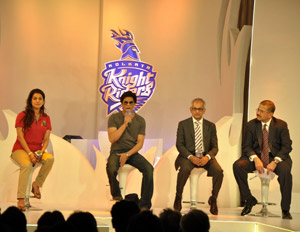
    The Kolkata Knight Riders [KKR] on Monday announced the launch of their new marketing campaign, “New Dawn, New Knights.” At the centre of the campaign is the unveiling of a new and refreshed logo. The new design stays with the traditional team colours of purple and gold, but incorporates a striking new logo unit. Created by leading global branding agency, Lambie-Nairn, the new identity is modern, vibrant and unique.


    Team owner Shahrukh Khan said: “The new team we put together last year made us proud with its refreshing approach, winning attitude and professionalism they brought to KKR. Add to that our new coach and players this year, I am excited about the upcoming season and our new campaign, New Dawn, New Knights.”


    The KKR CEO, Venky Mysore said: “We have been fortunate that the KKR brand has become the leading brand in the IPL. We are working very hard to add value to our sponsors, grow our fan base and build a profitable business. I am confident that our new logo and our new campaign will help us achieve our objectives.”


    “The KKR identity had a lot of equity but it was not designed for use across the wide range of platforms that are used today. We wanted to retain the existing heraldic imagery and purple and gold colours, as these features differentiate the team from the competitors and ensure they are instantly recognizable. However, we needed to refine the logo and ensure that it would work across every touch point, from the screen to merchandising” added Sophie Lutman, Creative Director at Lambie ­Nairn.


    The new look has been polled out across a wide range of applications, including the team kit, online, social media applications and merchandising.


    The Knight Riders represent the city of Kolkata in the Indian Premier League. KKR is one of the most trusted Sports brands in the country. The team is owned by Shahrukh Khan, Juhi Chawla and Jay Mehta and headed by CEO and managing Director, Venky Mysore.


    The Knight Riders are led by Gautam Gambhir and the squad includes some of the finest players in international cricket like Jacques Kallis, Brett Lee, Yusuf Pathan and Manoj Tiwary.


    For the last thirty years, Lambie-Nairn has been pioneers in the world of branding and identity. They have launched some of the biggest brands in the world, winning awards and redefining genres along the way.


  • FM stations celebrate Valentine’s Day

    By A Correspondent


    In case you don’t remember what’s special about today,  just tune into any FM radio station and you will know that love is in the ‘air’. And when television channels, newspapers & magazines and the internet have something to offer this Valentine’s Day, can FM radio be far behind?


    Here are some of radio stations and their big plans for the day:


    • Big FM

    Big FM will be playing love songs or romantic songs throughout the day. Big FM Hyderabad station has been running an on-air contest – Jodi No.1 since the last four days wherein listeners share their love stories with the RJ. On February 14 – Valentine’s Day – actors Siddharth and Rana Daggubati will select the best stories, announce the winners and reward them during the morning show.


    Big FM’s Delhi station will air ‘Big Love Meter’ which will test how well the listeners know their partner. In addition, an RJ will travel across the Delhi city in a ‘Mobile Big Booth’ conducting ‘Love Meter’ tests on married and unmarried couples. Big FM Delhi will also have ‘Club 927’ which aims to engage housewives by conducting a quick ‘Love Meter’ tests on their husbands over the phone.


    Big FM Mumbai station has roped in Rajeev Khandelwal and Mugdha Godse to co-host the morning show with RJ Ankit to promote their movie ‘Will You Marry Me?’


    • Red FM

    For Red FM Delhi it all began with one phone call from the Delhi Traffic Police Head Constable, Ramesh Kumar who wanted to lose weight as his wife constantly complained about him being overweight. This conversation was followed by a nine day activity wherein Red FM Delhi RJs Swati and Peeyuush decided to make head constable Kumar lose some weight and get fit before Valentine’s Day. Red FM Delhi is calling it ‘Ek Moti Si Love Story’.


    The Delhi station also roped in Bollywood celebrities like Kareena Kapoor and John Abraham who gave tips to lose weight. It is also said that people of Delhi also stepped in to help Mr Kumar lose weight by lending him their old treadmill, waking him up in the morning, taking him out to jog and so on. A run was organized at Hindu College where 300 students ran with Ramesh Kumar to boost his morale and support him in his endeavour to lose weight. The event is said to have been attended by Joint CP Traffic Satyendra Garg and Former National Hockey Captain Rajpal Singh. On February 14, Red FM will send Ramesh Kumar and his wife Raj Rani for a date to Le Meridian to reminisce about 27 years of their marriage.


    • Radio Mirchi

    On Valentine’s Day, Radio Mirchi’s late night show, ‘Purani Jeans’ aims to become a love messenger for its listeners. RJ Anmol will read out the love letters that were penned down by listeners for their loved ones. The listeners were given an entire week to send in letters for their loved ones to RJ Anmol.


    • Radio Misty

    Radio Misty will play love songs the entire day, along with live shows, centred around Valentine’s Day. It started with Love Forever week where the music and shows focused on the Valentine theme. The station will air live shows with listeners in-studio sharing their real life stories. Beside this, Radio Misty will have OBteams in different part of Siliguri to have live connect with listeners. The entire week listeners will be given the opportunity to win gifts, including candlelit dinner with their loved ones.


    • Indigo 919

    Radio Indigo 919, Bangalore will launch Heartline 919 on Valentine’s Day. Heartline 919 has been packaged for the young Bangaloreans. Over the last decade Bangalore has burgeoned to a global city with a significant part of the population being under the age of 25 and living away from home. Given the stress factors in corporates today, the need to maintain a work-life balance and to handle relationship and other personal issues, which is usually neglected gain significant importance. Heartline will address issues such as this every Tuesday between 10 pm and 11 pm starting the February 14.


    Heartline 919 has been edited and co-conceptualised by Sophia Purushotaman, a UK national and an Indian resident, and hosted by Dr Shyam Bhat and Teja.


  • Korean durable brands outwit Indian giants

    By Rajiv Banerjee & Ravi Balakrishnan


    There’s frenetic activity inside the corporate office of a leading consumer durable brand. As the financial year hurtles to an end, the head of marketing is racing against time, tying up operational plans for the 12 months of the new fiscal. This involves meetings with the board and also key dealers to keep the network abreast of the gameplan.


    The excitement among the marketing team at the consumer durable maker is palpable, and not just because of the strategy being crafted. 2012-13 may well be the year in which, after a long time, Indian consumer electronics and white goods makers stand more than just a fighting chance of taking on their more successful Korean rivals.


    “When the Korean brands were behaving like Indian companies, they were doing very well. The minute control moved out of this country to Korea, it’s all changing,” says the marketing head, who wishes to remain anonymous.


    This change in the Rs35,000 crore durables and electronics segment in India – where possibly after more than a decade, the incumbents (the Koreans) seem vulnerable – is not lost on rival brands. Specifically, the indigenous brands like Onida, Godrej, Voltas and Videocon, which once ruled the roost but were thrown off the perch as Korean brands LG and Samsung caught the Indian consumer’s imagination and her share of wallet.


    Today, according to market estimates, Samsung and LG together have a dominant combined share of 34 per cent in ACs, 45 per cent in refrigerators and an equal combined share in washing machines (semi-automatic category). But in the ACs, from the period January-December 2011, Samsung’s market share fell from 19 per cent to 11 per cent.


    Similarly, LG slid from 28 per cent to 23 per cent, but Voltas jumped from 12 per cent to around 17 per cent in the same time frame. In the CTVs segment, Videocon is running almost neck to neck with leader of the pack LG with Samsung in the third position. And the year ahead may well be comeback time for the domestic camp.


    Sure, the growth rate for the industry dipped to 8-9 per cent against the projected 14-15 per cent in 2011. But that’s not fazing the Indian warhorses, a few of whom are blueprinting big-bang entries into new categories. Godrej Appliances, which has a presence across categories like refrigerators, washing machines, air conditioners and microwave ovens, is running pilot projects in small geographies in the area of consumer electronics, according to Kamal Nandi, VP, sales & marketing, Godrej Appliances. Those in the industry aware of the developments indicate that Godrej is giving colour televisions a serious thought although Nandi refuses to elaborate on the nature of the pilot project.


    Similarly Voltas, say rivals who are aware of the matter, is readying for a more aggressive play in air conditioners (ACs) to close the gap with LG; this after overtaking rivals like Samsung and Carrier. “In the last 3 to 4 years, one can see the comeback of Indian brands both at the shelf level, as well as in the minds of the consumer. Brands like Videocon and Godrej have gone through major identity revamps. Accurate positioning or not, but it has certainly brought back the buzz for them in the home appliances domain,” says Deba Ghoshal, head of marketing at Voltas.


    In many ways, the Indian brands today are doing what the Korean brands did when they entered India way back in late 90s. The Koreans mapped the strength and weaknesses of each Indian player across categories and then went about eating into the share of established brands like BPL and Onida in colour TVs, and Godrej and Videocon in appliances. Sensing that they were no match for the product strength of the Korean brands, the Indians manufacturers changed their strategy.


    “They tactically withdrew from categories where they thought that they will not be able to match the product strengths of their Korean counterparts. However, they did not let go of their core competencies. Instead of spreading themselves too thin, they maintained focus on their main categories,” says a senior marketing professional from one of the Indian consumer durable brands.


    A brand like Onida resorted to re-branding in an attempt to project a more youthful image, and in the process moving away from its iconic ‘Devil’ (Neighbours’ envy, Owners’ pride) advertising.


    “I wouldn’t say the campaigns from the last couple of years were path-breaking but we want to be a little unconventional to appeal to young nesters, which is our defined target group,” says Anand Ramadurai, head of marketing at Onida.


    Over the years, to withstand the Korean onslaught, brands like Onida decided to focus on regions and consolidate the space there. “In markets like Mumbai, we are relatively weak since the cost of doing business is very high. But the south is a strong market across categories, as is Gujarat, and the north is strong in air conditioners,” explained Mr Ramadurai.


    Other marketers chose their areas of comfort and protected that turf. For instance, Videocon maintained a strong presence in consumer electronics – its market share according to estimates in CTVs stands at 26 per cent. Godrej focused sharply on the direct cool refrigerator category (overall in refrigerators, Godrej stands at 15 per cent). And Voltas consolidated its presence in ACs with a market share of around 17 per cent at the end of 2011. “In many sub-categories, Indian brands have successfully protected their turf, and lead the market,” observed Mr Ghoshal of Voltas.


    At the same time the focus of the Korean brands is getting diffused somewhat as they get more serious about mobiles and tech products. For Indian manufacturers, it’s an opportunity to go in for the kill. Sure enough, Onida, Videocon and Voltas are pushing further into home appliances and ACs.


    Apart from stable pricing and better dealer margins, where Indian brands are trying to emulate the Koreans is faster go-to-market. Implementation, the players realise, is the key to instilling confidence in the trade that the companies mean business.


    “We are trying to break into the MBOs (multi-brand outlet) in Mumbai as well and are present in Vijay Sales and Reliance Digital where we were not there at all a month or two ago,” said Mr Ramadurai. “The recent campaign from us has certainly brought in the numbers, both from brand volumes as well as from a market share perspective,” added Mr Ghoshal.


    However, there are challenges ahead for Indian players. Nabankur Gupta, founder of Nobby Brand Architects who has worked with Videocon and Philips in the past, says Indian business houses, by typically chasing volumes, run the risk of entering the zone of commoditisation. They neglect the fact that many of the lower-volume, higher-end products add value – not just to the bottom line – but to the brand’s image.


    The Koreans and Japanese brands, says Mr Gupta, still rule in the premium, innovation- led space across categories. His take on the Indian brands is as follows: Videocon has regained number one position as a consumer durables group but not as a brand. Onida has totally lost out on appliances.


    “They are concentrating on TV and have held their own in terms of volumes but there’s very little innovation. It’s an also-ran brand. They still go on basis of old loyalties and pricing and a lot of dealer push,” reckons Mr Gupta. Mr Ramadurai of Onida counters that Onida is definitely not a price warrior. “What we do is launch products that are innovative in some manner. Being an Indian company, our insights are seen to be better.”


    Another area of concern for the Indian brands, market observers feel, is the lack of investment in technology; where Koreans and the Japanese brands have proved to be miles ahead.


    “In the conventional products like CRT TVs, Indian brands may stake a claim with an advantage on cost. But MNC brands have been able to invest in technology across smart TVs, LEDs, home theatres and mobile. Without investment in tech and manufacturing, Indian brands cannot dominate the market,” said Vijay Narayanan, head of marketing at Havells and formerly with Korean brand, LG.


    Finally, if Indian brands are to make their very own great leap forward, brandbuilding has to become a year-long pan-India affair rather than sporadic bursts around the festive season. According to Mr Ramadurai, Indian companies that are listed on the stock exchange cannot splurge on communications as they are accountable to shareholders. The cost of high spends that don’t quite show up on the bottom line and on margins can wreak havoc on the stock price.


    “Most multinationals in durables are not listed here and so can afford to make losses and make it up someplace else. Haier was extremely aggressive year before last and Toshiba was a year ago. They come and go in cycles but we can’t do that,” shrugs Mr Ramadurai.


    One option is a greater reliance on the more cost-effective digital media. It’s an area that Onida confesses to just starting to get its feet wet. It’s currently evaluating options of e-tailing and harnessing its presence on social media.


    Rebranding, pushing the trade and distribution may allow the Indian players to narrow the gap with rival Koreans. But there’s one camp that is slowly but surely making its presence felt as well – the Japanese. Even if Indian brands are successful in dethroning the Korean brands, rest assured the Japanese will be snapping at their heels.


    Source:The Economic Times

    Copyright © 2012, Bennett, Coleman & Co. Ltd. All Rights Reserved


  • Venke Sharma moves to Leo Burnett Indonesia

    By Amit Bapna


    Venke Sharma, formerly with Leo Burnett India, has been announced as the executive director, head of digital, technical advisor for the agency’s Indonesia office. In this role he would be reporting to Thomas Sutton, country advisor, Leo Burnett Indonesia.


    Sharing the details of the new role with ET exclusively, Sharma said: “In this role, my chief mandate would be to ensure that Leo Burnett Indonesia meets overall growth targets as well as be responsible for formulating digital strategy for clients, ensuring digital revenue growth for the agency and building a talent base as well as work processes to ensure seamless integration with the agency.”


    When asked about what excited him to take this on new role, he attributed it to the fact that Indonesia is emerging as a growth leader in Asia – it is the 3rd most populous Facebook nation, with almost all Facebook users using it from mobile. Indonesians are heavy Twitter users too. 95 per cent use local language (Bahasa) for social media/web usage.


    And in this backdrop, he added: “Brands are looking for direction from agencies to help engage this vast audience. I am looking forward to this opportunity to help brands realise the potential of the medium.” Sharma was earlier instrumental in setting up Tribal DDB in India, post which he was heading Leo Burnett’s marketing services arm, Arc Worldwide in India till recently.


    Source:The Economic Times

    Copyright © 2012, Bennett, Coleman & Co. Ltd. All Rights Reserved


  • Prabhat Khabar launches rural tabloid Panchayatnama

    By A Correspondent


    Mahatma Gandhi once said: “the soul ofIndialives in its villages”. In fact, he termed them ‘small republics’ and advocated for ‘a village-based political formation’ and the creation of Gram Swaraj. But in time, the essence of villages was lost in rapid urbanization.


    Where once almost 70 per cent of population resided in villages which also were our biggest contributor in terms of agriculture and agro-based products, now seems to have gone far away somewhere.


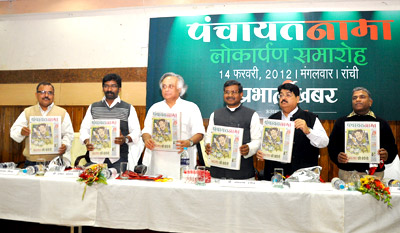
    In fact, now a day, even media, for commercial reasons or otherwise, don’t portray the real picture of villages. To bring development and growth to villages of Jharkhand, the leading Hindi daily Prabhat Khabar has launched its fortnightly tabloid ‘Panchayatnama’.


    The newspapers was inaugurated by Union Rural Development, Shri Jairam Ramesh in the presence of Shri Primal Nathwani , MP Rajya Sabha , Shri Hemant Soren, Dy. CM, Jharkhand and Ex-Chief Minister Shri Babulal Marandi at ATI Ranchi.


    The tabloid will cover and feature Panchayat-oriented news, information and issues such as empowerment to Panchayat people, monitoring and analyzing their development work, information about and reviewal of  government schemes for Panchayat, incorporation of better people in Panchayat for the post of Mukhiya and other Panchayat seats.


    The 40 pages colour tabloid with cover price of Rs12 is first of its kind in Jharkhand and will be available in all the 4423 Panchayats in 24 districts.


    The tabloid has promised to deliver news with credibility and already 15,000 copies have been booked. It’s a step to revive the identity of ruralIndiaand initiate development programs.


    The newspaper targets rural readers like farmers, NGOs, Panchayat members, Gram Sabha, government departments in rural areas and Zilla Parishad.