Category: NEWS

  • Private labels of retailers Bharti Retail, Future Group outsell national brands in own stores

    By Sagar Malviya


    Private labels owned by retailers such as Bharti Retail, Future Group and Aditya Birla Retail outsold several national brands in home care and packaged food categories at their retail stores as value conscious consumers opted for best bargain in an uncertain economic condition and soaring headline inflation despite consumer goods companies aggressively betting on modern retail to drive future growth rate.


    For instance, Bharti Walmart’s private brand ‘Great Value’ tops the floor cleaner segment with 50 per cent share and are in the top three selling spot in terms of market share in categories such as tea, wheat flour, rice and branded snacks according to Nielsen latest retail index service during July-September 2011 period for the India FMCG Private Label market.


    Customers prefer private labels due to better quality, high food safety standards, international look and feel of products feels William Savage, chief merchandising officer, Bharti Walmart, which has private labels owned by retailers such as Bharti Retail, Future Group and Aditya Birla Retail outsell several national brands in certain home care and food categories at their retail stores even as big brands push more sales through modern retail.


    Coming at a time when national brands increasingly bet on modern retail to drive their future growth, analysts say even large manufacturers such as Hindustan Unilever and Reckitt Benckiser are impacted.


    “In short term, national companies will have to either go for promotions or discounting to fight back market share,” says Gautam Duggad, an analyst at brokerage Prabhudas Lilladhar. “But it also means losing margins and that’s a trade-off call the companies will have to take,” he adds.


    While retailers attribute the success of their own brands to value offers, good packaging and their increasing credibility, consumer product makers say private labels are gaining mostly in low-involvement categories.


    QUALITY AT LOW PRICE

    “Customers have begun to like private labels due to better quality, high food safety standards, international look and feel of products, customized packaging created after customer feedback and the credibility of the retailer,” said William Savage, chief merchandising officer, Bharti Walmart, which has over 35 per cent market share in wheat flour segment, close to 22 per cent in tea and 20 per cent in salty snacks, or namkeen.


    Private labels are mostly priced much lower that branded products because of substantial marketing and distribution savings. Retailers make up for lack of media marketing through in-store promotions and prominent display.


    In Big Bazaar stores, which started selling own brands four years ago, private labels are among the best sellers in at least a dozen product segments. Future Group Chairman Kishore Biyani believes its brands such as Tasty Treat and Clean Mate are now established. “Three years ago, our private label sales grew mainly because of experimentation and trials by consumers. But now, sales are driven by repeat purchases,” says Biyani.


    “We have quality products packed innovatively, priced attractively and placed strategically at our retail stores. So the success of private brands is a combination of all four Ps,” he adds.


    Aditya Birla Retail CEO Thomas Varghese says its More Value and More Choice brands have got good traction after the firm repositioned its private labels two years ago. Its private label pickles, with the widest range of regional variants, outsell the likes of Mother’s Recipe and Priya Pickles in More outlets. Hand wash, toilet and floor cleaners and disposable tissues are among the other segments More brands are among the best sellers.


    MARKETERS UNFAZED

    While companies such as Dabur, Emami and Parle acknowledge that private labels are gaining ground, they say it’s on segments where product differentiation is low and have relatively lower shopper involvement in purchase decisions, and that it will be tough for retailers to challenge national brands in high-involvement segments.


    “When it comes to foods or personal and beauty care products, consumers have been loyal to branded items and will continue to remain so,” said George Angelo, Dabur India Ltd Executive Director-Sales. He expects retailers to reduce product launches and rationalise range in this space.


    Emami CEO Krishna Mohan said it will be difficult to make strong private labels in personal care and over-the-counter health care segments because they require stronger consumer understanding and brands will need to innovate to provide extra benefit to consumers. But he expects retailers to eventually get there. “We are sure they are working on the same and eventually will venture into these categories which are huge.”


    Private brands already account for close to 7 per cent of modern trade sales in India, compared to 1 per cent in China, according to a Nielsen survey that covered more than 50 countries last year.


    And the scope is huge. Private brands account for more than 40 per cent of the total sales of the world’s largest retailer Walmart. The rise of private labels comes at a time when modern retail is increasing its contribution to the top line of most consumer goods firms.


    For instance, the country’s largest consumer goods company HUL gets around 12 per cent of its Rs20,000-crore annual sales by selling goods at modern retail stores compared with just 5 per cent four years ago.


    Source:The Economic Times

    Copyright © 2012, Bennett, Coleman & Co. Ltd. All Rights Reserved
     

  • Big CBS Network’s channels expand reach into Sri Lanka

    By A Correspondent


    Big CBS Networks, a joint venture between Reliance Broadcast Network Limited and CBS Studios International, recently announced its expanded reach into the SAARC region, beginning withSri Lanka.


    The company offers its three-channel bouquet – Big CBS Prime, Big CBS Love and Big CBS Spark, and will target the 15+ English speaking audiences inSri Lanka. The channels will be available inSri Lanka, across cable platforms and key hotels in the English language. BIG CBS Networks will also evaluate the possibility of dubbing the content in local languages in the future.


    With a GDP of $64.047 billion and a growth rate of 6.5 per cent,Sri Lankais one of the fastest growing economies in the world. It has a youth literacy rate of 98 per cent with the highest literate population amongst developing nations, an indication of a fast-growing English entertainment seeking audience. With limited English entertainment options, the Big CBS Channels are designed to targetSri Lanka’s fast-growing, upwardly mobile population.


    The channels will be launched on a fixed licensee fee model and will ensure regular and streamlined revenue from the market which will add to the bottom-line of the JV. Also, the same satellite with existing feed being utilized for this expansion ensures no technical cost to the JV.


    At start, the channels will be distributed with the biggest cable operator Lanka Broadband Network but plans are on to soon launch across all platforms across the entire SAARC region comprising of Bangladesh, Nepal, Bhutan, Maldives, Pakistan and Afghanistan.


    Commenting on the same, Mr. Vishal Rally, Business Head, BIG CBS Networks said: “This is a natural extension to make accessible the superlative content of Big CBS to audiences in the international markets. With audience demographics similar to those of urbanIndia, we are confident of the channels doing exceedingly well. As a business model, this is a cost neutral expansion enhancing the JV’s profitability.”


    The wide range of popular CBS content to be offered by the channels will include hits such asHawaiiFive-0, America’s Next Top Model, NCIS, Survivor, CSI: Crime Scene Investigation, 90210, Frasier, Everybody Loves Raymond, The Oprah Winfrey Show, Entertainment Tonight and more.


    Big CBS Networks Private Limited is an equal joint venture between Reliance Broadcast Network Limited and CBS Studios International, BIG CBS Networks has changed the way English language television entertainment is served to Indian audiences.

  • MJ Akbar’s The Sunday Guardian turns 2

    By Akash Raha


    The Sunday Guardian, the weekly Sunday newspaper, completed its second year in the market. The anniversary issue of the newspaper came out on February 5, 2012.


    Senior journalist and columnist MJ Akbar had launched the weekly newspaper from Delhi on January 31 2010. The newsweekly is also simultaneously published in London under the name of ‘India on Sunday’.


    Speaking about the two-year-long journey Kamal Shah, COO, The Sunday Guardian said, “It’s been an exciting journey so far. We’ve managed to create a distinct identity in a very short span of time, and have been able to assemble an excellent group of editorial staff who have consistently provided thought-provoking analysis and news. It is possible to be successful as a Sunday newspaper in this day and age of instant news. Our approach has always been analytical. We just don’t report news but look at news in depth!”


    When asked how the newspaper has grown in terms of revenue and circulation Mr Shah said, “We have concentrated since the beginning in establishing a broad circulation base and readership profile. We have managed the high net worth individuals, knowledge seekers and decision makers as our readers. Our revenues are growing and we’ll be able to capture a large percentage of advertising volumes in the weekly newspaper category.”


    According to sources in The Sunday Guardian, the newspaper circulates 74,500 weekly copies and 8,000 in its London editions. The weekly newspaper comprises of 40 pages of which 20 pages are devoted to the youth in the section Guardian20. The newspaper also has a digital presence on www.sunday-guardian.com.


  • Lintas Media Group wins Jayalakshmi Silks

    By A Correspondent


    Kochi-based Jayalakshmi Silks, one of the largest readymade textile retailers in Kerala, has awarded its Media duties to Lintas Media Group. The account, estimated at an annual spend of Rs20 crores, was handled by a local media agency prior to this.


    Suresh Balakrishnan, CEO, LMG said, “Vidya Nandakumar has just taken over as the head of the Kochi office and we have won Jayalakshmi Silks. We are extremely delighted to win this business which, along with Manappuram, which is an existing account inKochi, makes us a serious player in the Kerala market.”


    Govind Kamath , Managing Partner, Jayalakshmi Silks said, ” The retail market in Kerala is extremely vibrant, especially in the textile and jewellery categories. We have been growing and expanding at a healthy pace. In the last 18 months, apart from ourKochioutlet, which is more than 50 years old, we have opened huge outlets inCalicutand Thiruvanthapuram and are opening our largest outlet in Trichur in April. We realized that in order to help us in the expansion process we need credible partners having an international pedigree. We are very excited about appointing Lintas Media Group as our Media AOR. We are hoping that they will enable our growth in the years to come”.


  • Dainik Bhaskar asks voters to select the right candidate in Punjab

    By A Correspondent


    The state of Punjab went for polls just after the nation-wide public uprising against corruption. The whole nation was reeling under wide spread mismanagement and corruption, and it had provoked the citizens to rethink and hard.


    Elections are the most important part of democracies and societies in transition and the Punjab elections were an ideal platform for the people of Punjab to set tone for rest of the country, to rise and choose the right candidate, who would truly work in the interest of the public.


    Keeping in view the kind of awareness as well as apathy among voters, Dainik Bhaskar took an unique approach – Sahi Ko Chuno.


    Dainik Bhaskar, as India’s largest newspaper, felt that it was their responsibility to create the awareness among people, and to remind them that if they really wanted to eradicate corruption, and improve the overall system, they could not do it just by holding protests and picking up anti-corruption placards! If people really wanted their representatives to work for their benefits, to create policies and laws that were pro-public, they would have to choose their political representative with much thought. Sahi Ko Chuno (choose the right candidate) was Dainik Bhaskar’s call to the readers.


    The “Sahi ko Chuno” campaign did not align with any political party. It was a truly citizen agenda. It just provided platform for common public to voice their views and express themselves.


    On November 22, 2011, Dainik Bhaskar’s editorial team announced the start of campaign ‘Sahi Ko Chuno’ across all its editions in Punjab. This created high awareness and buzz on why was it important for voters to “Choose the right candidate”.


    A special initiative, “Yuva Sansad”, was organized in colleges and universities acrossPunjab, to catalyze productive discussions amongst youth on the prevailing political scenario and to educate them of the need to choose the right candidate.


    Public’s opinion on what is an “Ideal Candidate” was initiated in 32 cities of Punjab. The ground survey was completed in 26 days. Results of the survey were announced in Dainik Bhaskar on January 2. More than 85 per cent of voters inPunjabhad expressed their views that while voting they would be given due weightage to the “candidate” instead of “party”.


    The ‘Sahi ko Chuno’ campaign set a tone in Punjab, creating high awareness on need to choose the right candidate, as a right candidate would represent them in future as well as playing a significant role in policy making for the betterment of Punjab and its people.


    The campaign also used cable, FM, print promo ads as well as outdoor media including gates, standees, banners, posters in major touch points across 32 cities of Punjab.


  • Double-digit growth in Jan for consumer electronics, cars & lifestyle retail chains

    By Sarah Jacob, Writankar Mukherjee & Neha Dewan


    Sales of consumer electronics, cars and lifestyle products bounced back in January after a tough quarter, raising hopes of a revival in consumer sentiment in 2012.


    Companies, including Samsung, Nokia, Hyundai Motors and Reliance Retail, have reported up to double-digit sales growth in products such as flat-panel televisions, smartphones, cars and fashion garments in January, as aggressive discount offers on the back of a recovering stock market and appreciating rupee lured shoppers back to the main street.


    “Not just consumer but overall economic confidence has also picked up in January due to a host of factors such as rupee appreciation, stock market and some policy-level changes like single-brand FDI,” said Adi Godrej, Godrej Group Chairman.


    “So the fear of declining stock market and rupee depreciation has been replaced by positive consumer sentiment, which is interlinked and is reflecting in healthy consumption,” he added.


    Shantanu DasGupta, durable maker Whirlpool’s VP (corporate affairs & strategy-South Asia), stated that sales increased across product categories in January. “While demand has been bullish across the country, certain pockets in the north and west performed exceptionally well. The summer looks positive,” he said.


    Carmakers too are upbeat after a tough 2011 when sales rose just 4.24 per cent. Companies are optimistic that new models and stable interest rates on loans could bring back the boom.


    “The new year seems to have started on a positive note,” said Arvind Saxena, Hyundai Motor India Director (marketing and sales). Hyundai saw a 12 per cent jump in sales to 33,900 cars in January.


    But marketers are still cautious. Several segments are still growing on the back of heavy discounts and end-of-season sales. Consumer sentiment not clear ye


    Analysts say consumer sentiment is not clear despite the positive signs. “The environment is still challenging. Interest rates are high and consumer sentiment remains uncertain,” said Anand Ramanathan, associate director at management consultancy KPMG.


    Sandeep Kulhalli, VP-retail and marketing at Titan Industries’ jewellery chain Tanishq, said: “Much of the positiveness is because the whole market is on discount offers.” In January, Finance Minister Pranab Mukherjee said this fiscal would be challenging.


    With GDP growth forecast being tempered to 7.2 per cent from 8.6 per cent, the economy had been wrestling with high commodity prices, sharp increases in interest rates and the Euro zone crisis, which dampened consumer confidence in the third quarter.


    All eyes are now on the Union Budget over whether the growth momentum in January will sustain over the next quarter by increasing disposable incomes or moves to boost demand.

    Rupee impact

    The rupee’s gain in January after a downward spiral in the second half of 2011 helped stabilise prices of consumer durables and electronics products, which require imported raw materials, and boost demand.

    Korean electronics maker Samsung’s flat-panel television sales grew 50 per cent over last January and more than 85 per cent compared with December 2011. “The rupee stabilising against the dollar is one factor for higher sales,” said Mahesh Krishnan, Samsung India VP-home appliances.

    Rupee depreciation had prompted several companies to increase prices by 5-10 per cent in several tranches late last year. The personal computer market bounced back to low double-digit growth in January compared with November-December when it shrunk around 15 per cent.

    Several brands also reduced prices that brought back the market into shape, said S Rajendran, Acer India chief marketing officer. New launches too helped boost demand. The country’s largest phone maker, Nokia India, launched five new devices under Lumia and Asha series that boosted sales in January, both over last year and compared with November-December.

    Sunil Dutt, MD of Research in Motion India, which makes BlackBerry smartphones, said smartphone sales increased 40-50 per cent since the second week of January compared with a flat November-December 2010. “The market is back to its natural growth momentum.”

    Bijou Kurien, president and CEO of Reliance Retail-lifestyle, said good performance of export and IT firms in the third quarter had a rub off on consumer confidence in terms of bonuses and increments. “This will help the upward trend continue through February and March,” he said.

    Reliance Retail’s lifestyle division posted an upswing in retail sales since January 7, reaching its peak over the Republic day weekend. J Suresh, MD and CEO of Arvind Brands and Retail, which makes Arrow, Flying Machine and US Polo in India, however, cautions that it would be best not to get carried away by performance in the end-of-season sales period just yet.

    Pushpa Bector, senior VP of another New Delhi-based mall, DLF Promenade, said: “People are getting far more conscious today. If they get a good deal, they tend to stock up.”

    – With inputs from Chanchal Pal Chauhan


    Source:The Economic Times

    Copyright © 2012, Bennett, Coleman & Co. Ltd. All Rights Reserved


  • One Alliance & Neo renew arrangement

    By A Correspondent


    NEO Sports Broadcast Pvt. Ltd and MSM Discovery Pvt. Ltd have come together once again for the distribution of television channels NEO Sports and NEO Cricket under the aegis of TheOneAlliance bouquet effective January 4.


    TheOneAlliance bouquet is further strengthened with a line up of blockbuster sports events – Asia Cup (Cricket), UEFA Euro 2012 (Football), French Open (Tennis) and World Series Hockey (Hockey). This stellar line up coupled with DLF IPL on SET MAX makes TheOneAlliance bouquet the preferred choice of sports fans.


    Rajesh Kaul, President – MSM Discovery Pvt. Ltd, said: “The philosophy of TheOneAlliance is to create a strong product offering of diverse and strong television content. The sports genre has always been a strong growth driver. We are happy to welcome back NEO to TheOneAlliance bouquet. The blockbuster line up on Neo channels coupled with DLF IPL on SET MAX will ensure the bouquet is poised for further growth.”


    Prasana Krishnan, COO – NEO Sports Broadcast Pvt. Ltd added: “TheOneAlliance and NEO distribution deal is a strategically sound arrangement. NEO has shared an extremely fruitful and pleasant relationship with MSMD and we are happy to rejoin TheOneAlliance bouquet and aspire to take it to greater heights. The combined offering of the bouquet will ensure viewers get to witness the biggest blockbusters in Cricket and major sporting events in 2012.”


  • Is cricket overpriced?


    By A Correspondent


    The past six to nine months has been a phase where Indian cricket has seen a remarkable slump. BCCI, which is at the helm of affairs, has been criticised for not keeping an eye on the future. The general sense is that the board is not prepared to mend this sorry state of Indian cricket despite pressures from broadcasters, the media and of course, viewers at large which matter the most if the plan is to sustain the sport in the long run.


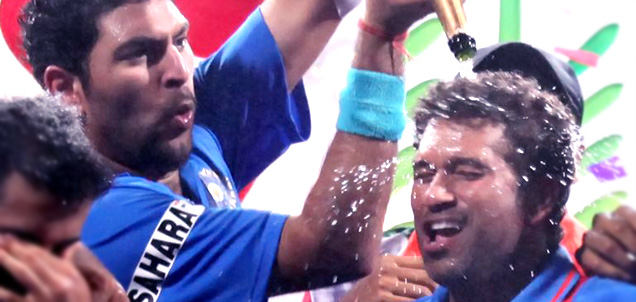
    Yes, cricket is the only celebrated sport in the country and advertisers have banked on its popularity. But recently, the game has come under the scanner with India’s debacle in its current series. Sahara has decided to end its 11-year association with BCCI and the Indian cricket team. And have also put the fate of Pune Warriors in jeopardy. The question here is whether cricket, as it is today, is an overpriced sport.


    Jai Lala, Principal Partner – The Exchange, Mindshare said, “Cricket has always been a very attractive sport for advertisers. Therefore, it has been priced highly. When the performance of the Indian cricket team goes down, the viewership goes down and hence advertisers find it expensive. Advertisers want guaranteed viewership. So as a broadcaster if you’re able to provide that, advertisers will be more open to pay expensive ad rates on cricket.”


    So it’s about the TRPs. R Sridhar, CEO, Brand-Comm offers a different dimension. “I think there is too much of cricket and too many properties are being created. What needs to be done is to bring focus back on the game and once India starts to win matches, which it shall as for the next 20 months it is playing at the home turf, it’ll be business as usual. Cricket will always have takers. But, with the current development there is likely to be some kind of negotiation.”


    On whether BCCI is losing the plot, Mr Lala said, “BCCI has to be more professional. They are riding on a monopoly as far as Cricket in India is concerned. I think the time has come for them to corporatize their proceedings. There is a need to ensure that the future of Cricket in India is safe. The systems, procedures etc. needs to be relooked at.


    IPL as is known is the game that corporate czars play, and are in no mood to go soft on their plans around the property.


    However, a senior media planner on condition of anonymity said that there is a swing in the opinion because of India’s performance where the same people were betting high on the game. She said, “Cricket was not an expensive sport when India was winning, people who advertised during the Word Cup paid off their skins and didn’t complain. Now that India is losing, there’s been a negative sentiment among all stake-holders.”


    On the recent development of Sahara pulling out of the Indian team sponsorship, the senior source said: “This is nothing but politics. Unfortunately, BCCI is interested in only making money rather than focusing on the future of this sport.”


    Another media planner is of the opinion that there may be a bit of caution in the air. But he says, “There is no property better than cricket when it comes to capturing a large chunk of audience. So one pays premium for the kind of viewership which in any other property is difficult to get.”


    He added that the association of Sahara and Indian cricket team was that of passion. Though it was not a brand-building exercise for Sahara, in the bargain the brand gained too. He says Rs 120 cr is what it takes to spend on cricket in India in a year. And if one thinks of that number, then the choice of corporates wanting to associate would be a handful. “Telecom players would have been a good bet but with the fiasco that they are facing, that seems to be an unlikely choice. However, there might be some price cutting on this front but getting a sponsor would not be difficult.”


    For now, it seems everything rests on BCCI as far as the margins for broadcasters are concerned. Nimbus has found itself in a fix, with BCCI terminating the contract on non-payment of dues. An insider reveals that the heavy price levied on the part of BCCI, plus the slowdown, impacted ROI for the broadcast major.


    Even in the case of IPL, MSM has already paid a heavy price, and are looking to monetise the same via hiking ad rates (by 10 per cent this year, as stated by President of MSM, Mr Rohit Gupta). Any plans to relook the 10-second on air-spots will drastically bring down revenues for the broadcaster.


    Plus, the back-to-back cricketing schedule lined up by BCCI, as many opinion makers within the sporting arena agree, is the single reason why Indian cricket is experiencing a downfall never seen before, which could mean India losing many more matches, loss in viewership, loss in advertisers/sponsors. In a nutshell, cricket as a sport in India will lose its sheen

    Photograph: Fotocorp


  • Top Ramen consolidates its advertising duties with Dentsu

    By A Correspondent


    Top Ramen, the instant noodle company from Indo-Nissin, has consolidated its advertising duties with the Dentsu India Group. Dentsu Communications has been already handling the creative duties and now with media, too, coming under its umbrella, Dentsu has consolidated the entire business.


    The media duties were earlier being handled by Madison Media. The size of the business in the last financial year was close to Rs10 crore and is slated to scale upwards and be in the range of Rs15 crore.


    Confirming the development, MNVV Prasad, General Manager, Sales and Marketing, Indo-Nissin Foods Ltd, said: “At this juncture we were looking at integrating our communication. Since Dentsu is already partnering with us for creative, we decided to consolidate the media with them too.”


    He added: “The instant noodle market has undergone tremendous change in the last two years, especially with international players coming into fray and the existing ones going aggressive. Top Ramen has been a leader in the world in this category and scores in innovative product strategy. We hope to combine our advantages and come out with a strategic communication that will differentiate us from others. We want to grow on the basis of our different positioning in this category.”


    Top Ramen has been competing with Nestle’s Maggi much before Knorr, ITC’s Yippee or GSKs Foodles came in the fray. Sensing competition, Top Ramen has gone aggressive on its marketing plan in the last two years and even signed on Saina Nehwal to feature in its advertising, which is a shift from its earlier strategy.


  • Scarecrow turns 2, launches design division

    By A Correspondent


    With two offices, 45 people and 25 brands, Scarecrow has completed two successful years today (Feb 9). On the occasion of its second Anniversary, Scarecrow Communications Ltd. has announced the launch of a design division -www.scarecrowdesigns.net. Primarily, Scarecrow Designs, headed by Kapil Tammal as Design Director, will provide exclusive design solutions to various clients.


    Scarecrow Designs also endeavours to produce pure graphic design content on its own. The in-house designers and budding talent from design schools will be roped in to create merchandise (t-shirts, bags, accessories and so on), which will be showcased at the Scarecrow Art Gallery and on www.scarecrowdesigns.net


    Why Scarecrow Designs?

    Scarecrow Communications Ltd provides all advertising solutions under one roof. But the team realizes that there is a lot of demand for pure design-led jobs. From brand manuals to corporate & brand identity, and packaging. Due to the retail boom, mall culture and entry of many international lifestyle brands inIndia, design has become extremely imperative.


    Many national/international brands, more often, avoid spending on full-fledged ATL campaigns due to media costs. But what they can’t avoid spending on is to create a look, feel and imagery of the brand where design is sacrosanct. And so, these clients specifically seek design-led communication solutions. And there was a need gap here.


    The team at Scarecrow also observed that good talent from design schools normally joined design houses rather than ad agencies, leaving them with substandard design talent.


    To correct and balance the design ecology of talent and need, Scarecrow believes in identifying design talent at an early stage. Even when the current Design Director Kapil Tammal was brought on board, he was also offered a senior position in Landor, one of the leading design houses. Subsequently, Scarecrow has also attracted talent from design institutes like NID.


    Yet, to complete the ecology of design, one needs to create a complete environment of design that attracts and nurtures great design minds to provide great design solutions. Hence the launch of a separate interface called Scarecrow Designs.


    Idea behind the new identity:

    Crop Circles have been the biggest design mysteries in the world. Even today, some believe aliens create them, while some believe it’s a hoax. Being Scarecrow, standing tall in the field, the team thought of owning and associating with Crop Circles. No one has officially claimed to own them yet.


  • Cairn India invites creative, media, PR partners

    By Shubhangi Mehta


    Cairn India, a part of Vedanta Group, which acquired 51-60 percent of its stake in 2010, has invited agencies to be their creative, media and PR partners. The pitch is based out of Delhi. No official confirmation could be attained at the time of filing this report but agency sources close to the development have confirmed the news to MxM India.


    There is no incumbent on the account.

    For the record, Cairn started its operations in 1979, when Sir Bill Gammell, the chairman, founded Cairn Energy. In 1988, the company was listed on the London Stock Exchange. Sir Bill Gammell became its first Chief Executive and has held this position for more than two decades. Cairn Energy PLC, a FTSE 100 company, was one of the first UK companies to invest in the Indian oil and gas sector.


    In 2010 Vedanta Resources Plc (VED.L) completed its long-delayed $8.7 billion purchase of a majority stake in Cairn Energy Plc’s (CNE.L)


    London-listed Vedanta now holds 58.5% of Cairn India (CAIL.NS), of which 20% is held through its Sesa Goa (SESA.NS) unit.


  • Bright Future, Generali speaking

    By Shubhangi Mehta


    The overall slowdown has not spared the life insurance industry – a recent report by CNBC stated that overall de-growth has been in the region of 30-40 per cent, which effectively means the industry is at 2008-09 levels three full years later. Against this very challenging environment, Future Generali India Life Insurance has posted an overall business growth of 14 per cent on a year to date basis over last year.


    Future Generali is now increasingly looking at localised below the line activations and “reach out” programmes to promote the brand and reach out with advisory services to customer prospects. This includes school based programmes, park or recreation based programmes, mall/shopping programmes, health oriented programmes/camps, renewal camps etc. They are exploring various ways to reach out beyond the clutter and high costs of pure play advertising. Future Generali does approximately 200 such activities across the country per month.


    Abraham Alapatt, Senior Vice President & Head – Brand & Corporate Communications at Future Generali India Life Insurance Company & Future Generali India Insurance Company, said, “Our General Insurance business is doing very well and is well on track to possibly being among the fastest General Insurance companies in India to achieve operating break-even. We offer best in class ‘Total Insurance Solutions’ in the form of products and services across Life and General Insurance, and top-notch post-sale experience. We also offer the convenience of dealing with our branches, agents, online via our portal futuregenerali.in to buy, service and renew your policies or even via our unique Mallassurance outlets at Big Bazaars across the country.”


    As per the marketing initiatives this year by Future Generali, there is an overall brand budget of Rs40 crore which is line with their budget of the last FY.


    Among the various marketing initiatives by Future Generali is a ‘Financial Planning Tool’ which is a simple interactive tool they ask their advisors or FPAs to complete with customers/prospects. This is a 10-minute exercise, that helps one understand where one stands by comparing short-term financial needs with short-term income streams and then helps one check if he/she is prepared to meet their medium- to long-term goals.


    Another initiative is the FG Game of Life, a simple Facebook game which allows one to journey through the perils of everyday life and collect ‘shaguns’ along the way for protection. This game was launched in December, and a contest for higher scorers was launched 10 days ago. Since then there have been a large number of new followers, and now there are close to 18,000 followers with over 20 per cent people “talking” about it.


    Future Generali has also just launched the Online Video Bank which is an intuitive service, allowing a person who has bought their Online term Plan ‘Future Generali Smart Life’ to upload a short video message to his family/loved ones. This video will be stored against his policy data and at the time of claim settlement, they undertake to retrieve and deliver this message on a CD to the nominee/nominees of the policy. He/she can change/replace the video as often as they want during their lifetime as long as they are existing/registered customers.


    Mr Alapatt adds, “We have a five-year strategic plan towards break-even and growth and we are doing what it takes to stay true to that. I am particularly excited about Video Bank this because it delivers a huge emotional payoff to the customer (in absentia) and his/her family at the real ‘moment of truth’. Our plan is minimising cost while maximising ROI in printing and production, innovation in idea and execution for ATL, more localised reach programs in BTL and aggressive online and social media initiatives and investments.We have a five-year strategic plan towards break-even and growth and we are doing what it takes to stay true to that.”


    The continuous balloon chain formed of the balloons signed by people during FGIW were strung together on February 9, 2011 at Mumbai to form a 20+km-long chain – adjudicated by a Guinness World Records representative as the world’s longest balloon chain.


    The FGIW campaign also went on to win Indian Marketing & Advertising’s highest recognition of effectiveness, by wining an Effie award at the Advertising Club of Mumbai in the Financial Services category in December 2011.