Category: NEWS

  • Design takes centre stage at Momentum India 2012

    By A Correspondent


    The National Institute of Creative Communication (NICC) along with the Confederation of Indian Industry (CII) organized a two-day forum titled ‘Momentum India’ highlighting the growing need for industry-oriented professionals in Media and Design.


    Prominent national and international names who attended the event included Prof Theo Groothuizen, India Regional Advisor, ICSID, Counsellor for Science and Technology, Embassy of the Kingdom of The Netherlands; Nick Talbot, Global Design Head, Tata Elxsi; Srinivas Reddy, Director, Glynt Jewels; Michael Foley, Product Designer & Founder, Foley Designs; Sonia Manchanda, Director, IDIOM Design Consulting; BR Swarup, Creative Director Ad campaign ‘Your Moment is waiting’, Kerala Tourism; Ramesh Ramanathan, Senior Advertising Consultant; Wasim Khan, International Fashion Photographer; Pradyuman Maheshwari, Founder Director, MxM India; and Abhijeet Sojwal, Head of Photography and Imaging, Myntra.


    The two-day session included topics such as design and its importance, media and design education destination, media and design education opportunities, media and design careers in industry, industry-education collaboration and the Indian media and design entrepreneur. Besides sessions there were also workshops on the art of photography, toy design, copywriting, TV journalism among others.


    Also read: NICC and CII bring ‘Momentum India’

    http://www.mxmindia.com/2012/01/nicc-and-cii-bring-%E2%80%98momentum-india%E2%80%99/


  • Will Kannadada Kotyadhipati make Suvarna #1 GEC?


    By Tuhina Anand


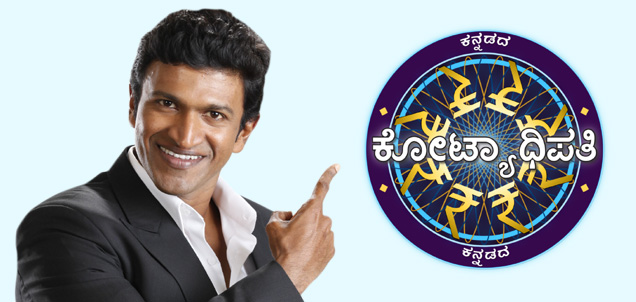
    Kannadada Kotyadhipati (KK), or Kaun Banega Crorepati (KBC) in Kannada, is all set to make its debut on Suvarna, the Star Network’s Kannada general entertainment channel. The show, which will debut in the end of February and will run from Monday to Thursday, is being touted as the biggest format show in Karnataka.


    For the channel, the show will play a pivotal role and people behind Suvarna are hoping that the numbers delivered would do the magic of upstaging the leader Udaya TV. Interestingly, what was unthinkable three years ago can be seen as achievable now, going by the way Suvarna is placed today.


    Anup Chandrashekaran

    As Anup Chandrashekaran, Business Head for Suvarna explained, “In an IMRB tracking, the perception that came about Suvarna was that we deliver fresh ideas and differentiated content and are seen as a young vibrant channel.”


    To reach this level has not been easy, it has taken a strategic shift in the channel’s programming to get newer audience into its fold. This was done by introducing format shows which, according to the channel, is nothing less than social experimentation because of the content of the shows.


    “Of late, only 60 per cent of our GRPs come from fiction. While the format shows ensure that we get newer audience to experience Suvarna, we flank these shows with good fiction that resonates with audience. Ours is a holistic family entertainment channel that includes fiction, non-fiction and movies, and shows what Kannada GEC stands for. We have a healthy mix in terms of SEC demarcation. We have reworked our fiction where we got young protagonists and stories that resonate with the Kannada audience. Our production value is of superior quality and there is a freshness to what appears on Suvarna. This change also shows in our numbers,” added Mr Chandrashekaran.


    Despite the fall in Kannada GE (KGE), Suvarna has grown by 5 per cent in Q4’11 and by 24 per cent in Q3′ 2011. Also Suvarna contributed 48 per cent of KGE’s growth in Q3’11. (TG :CS 4+, Karnataka market. Data updated till wk 53’11). Also Suvarna was the leading prime time channel inBangaloremarket and beat Udaya TV (CS 4+, Wk day19:00-24:00. Wk 41 – 53’2011).


    Even in weekday prime time in Karnataka market, the difference is of 50-60 GRPs and that’s where Suvarna hopes that Kannadada Kotyadhipati will play a major role.


    Considering that KBC has been a successful show in Hindi, especially in 2011, Suvarna is hoping the same magic will work in Kannada.

    The channel has roped in Kannada film star Puneet Rajkumar as the show’s host, and is aggressively marketing the show.

    Talking about the marketing plans, Anil Narang, Head-Marketing and Strategy, Suvarna said, “We have planned to reach out to Karnataka markets in 3 phases. The first is the audition phase and the communication is on how you can register for the show. The response has been better than what we expected and got representation from entire Karnataka. We also have a Facebook page to reach out to new audiences.”


    Mr Narang added, “In the second phase, we will be launching 100 hoardings across Karnataka to ensure visibility. We also have mobile vans that will cover 13 districts and will have a mock KBC set where people can play KBC with a host who will wear a Puneet Rajkumar mask. The third will be the sustenance phase, once the show gets on air, to maintain that the audience.”


    There will be also be print, cinema and TV advertising. The advertising revolves around the idea that ‘knowledge is the key quotient and with basic common knowledge one can win a crore’. The estimated budget could run into Rs10 crore.


    Suvarna is also planning to launch a historical soap along with KK.


  • Get set for the funny stuff with ‘Comedy Central’


    By A Correspondent


    Viacom18 has announced the launch of its sixth channel, ‘Comedy Central’, a 24×7 channel dedicated to English language comedy content, which will go on air from January 23. The channel is said to have a mix of all genres within comedy ranging from sitcoms to sketch comedy, British comedy, Stand-Up and Gags, among others.


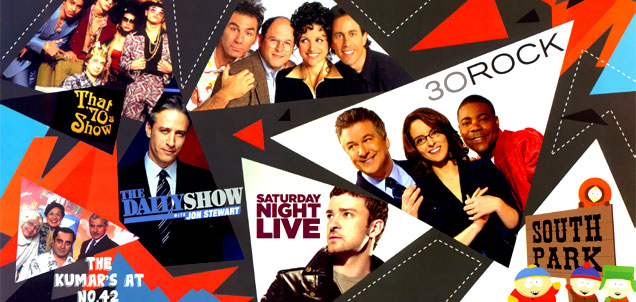
    Comedy Central will air mainly international content with English sub-titles. Some of the popular shows to be aired on the channel are Saturday Night Live, The Office, Seinfeld, The Wonder Years, That 70s Show, The Daily Show with Jon Stewart and SouthPark, to name a few.


    According to Mr Ferzad Palia, Sr. Vice President and General Manager, English Entertainment, Viacom18 Media Pvt. Ltd, although there could be fragmentation in English language channels, the viewership has gone up, so has the time spent viewing English language channels and the reach. He also said that English channels are one of the most under-served genres however there is still a huge scope. “There has been growth in English literacy and in the next four or five years, English language literacy is expected to grow manifold. We also observed that Indians are increasingly able to laugh at themselves, at least a little more than what we used to. There are a number of factors to launch ‘Comedy Central, this are just one of them, thus we feel this is the right time for the launch.”


    He further said: “The format of the channel is the best of comedy. We are picking up the best content from across the world. We have different programmes for different audience in different time-bands. It is a combination of content for the mature audience and for the youth. We have significant and equal doses for both. In addition to these we are premiering about 7 or 8 shows on weekends.”


    ‘Comedy Central’ aims to reach atleast 20 million households across the country at its launch and will be available across analog, digital cable and DTH. While the channel will initially start off with Airtel DTH and Dish TV, it aims to be available across all DTH platforms within the next 60 days. The channel has hired BBH as its Creative Agency while Vizeum is the Media Agency.


    Since 80 per cent of English viewers are said to be from the metros, the content will be largely metro-centric. Even on the distribution front, the channel will be targeting the key metros, namely Hyderabad, Pune, Ahmedabad, Mumbai,Delhi, Bengaluru and Kolkata.


    The business model that ‘Comedy Central’ aims to follow is primarily advertising-led followed by subscription, but besides this, the channel also plans to reach out to the audience through web, mobile and merchandising, among others. The channel plans to create special packages and interaction mechanisms, relevant not just to a particular brand but even the show, for advertisers.


    In a prepared statement, Bob Bakish, President and CEO – Viacom International Media Networks said: “Comedy Central is one of Viacom’s most distinct and successful franchises globally. We feel that the time is now right for Viacom18 to introduce Comedy Central in India, given the growth curve of the Indian television entertainment market.”


    Mr Haresh Chawla, Group CEO-Viacom18 said: “With the launch of Comedy Central, Viacom18 now marks its presence in another under-served genre – English comedy. We are confident of Comedy Central establishing itself as one of the dominant players in the English entertainment space in Indian television.”


    The marketing campaign will be unveiled only after ‘Comedy Central’ has been officially launched. But the channel plans innovations across television, print, outdoor, radio, below-the-line and digital. The marketing plan is also said to involve strategic partnerships with lifestyle touch points like coffee chains, theatres, clubs, gyms, salons, shopping destinations and other hangouts.


    The tagline of ‘Comedy Central’ will be ‘Laugh it Off’. It will target audiences in the age bracket of 15 years and above. Since late 2006, ‘Comedy Central’ has expanded globally with localized channels in Poland, Germany, Netherlands, Italy, Hungary, Sweden, Ireland, United Kingdom, New Zealand, Israel and Spain.


  • NDTV Good Times’ tie-up with Geo TV for Foodistan

    By Akash Raha


    NDTV Good Times, which is all set to host the mega food reality show Foodistan, has tied up with Geo TV to telecast the show in Pakistan. Atul Seth, Vice President - Development, NDTV Lifestyle Limited disclosed this news to MxM India.


    When asked why NDTV Good Times chose to partner with Geo, Mr Seth said: “It is the largest network in Pakistan and the most respected. It has been a beautiful relationship with them so far and we have been in constant touch with the group, and the response from their end has been very good. We would ideally like to do a simul-cast in both the countries, but the timings are not certain as they might clash with some religious ceremony.”


    The show will be launched in Pakistan soon. According to Mr Seth, Geo TV is keen to broadcast and partner with NDTV Group, not just one season, but for seasons that will follow.


    When asked for further details on the deal, Mr Seth clarified: “Right now it’s only about them showcasing our content, but eventually we probably will look at a situation where both partners will co-produce the show. It is still too early to announce as the talk are in nascent stages, but perhaps that is the way forward.”


    The reality show will premiere in India on January 23 on NDTV Good Times. The show will feature 16 chefs from India and Pakistan in a battle of culinary supremacy. At the end of it all, the reality show will have one winner.


    The 26 part series would be judged by eminent food critic, avid traveler and gourmand at heart Vir Sanghvi along with Bollywood actress Sonya Jehan and Merrilees Parker (popular British Chef and presenter). The tri-weekly show will be hosted by Aly Khan and Ira Dubey.


    Announcing the new series, Smeeta Chakrabarti, CEO, NDTV Lifestyle said: “We are absolutely thrilled to announce Foodistan, the biggest food show on the Indian television. Food, as a genre, is in the DNA of NDTV Good Times and we are committed to taking that to the next level with Foodistan. India and Pakistan are two nations who share a common passion for good food. And this love for food is something that binds the two nations, in spite of the numerous differences, which is why Foodistan will appeal to our viewers. We are positive that our viewers will not only enjoy the show but will also connect to it.”


  • Newswatch: Sanjay Kapoor on Team Anna & the fast co

    By Sanjay Kapoor


    In January 2011, Anna Hazare was virtually unknown to Delhi’s self obsessed middle class. A year later, after he had unleashed a tumult against the government by sitting on a fast till the central government appointed an all powerful Jan Lokpal or ombudsman against corruption, and controlled all the headlines of the national media, Hazare is slowly slipping away from prime time news. What he and his verbose bunch of supporters have to figure out in the coming days is: what do you do when the gaze of the TV cameras shifts? How do you get them to look at you again?


    These questions must be surely gnawing at an ailing Anna Hazare as he strenuously pedals on his stationary exercise bike to regain his health and also find a way out from this dead end. He must be wondering what really went wrong at his “fast fest” at MMRDA grounds of Mumbai, where he did not get the kind of fawning and gushy support of the people as he got in Delhi. Not only were the crowds thin, even the TV news channels, unlike in the past, refused to bloat their numbers. Delhi, surely, seemed a distant memory. What really went wrong for the anti-corruption movement that seemed to threaten the stability of UPA government?


    Operating under the rubric of “India against Corruption’, Anna Hazare’s movement was crafted like the Arab Spring. The main pillars of his campaign were the media and the urban middle class. Interestingly, Team Anna seemed to follow the template put together by Belgrade-based Centre for Applied Non-violent Action and Strategies (www.canvasopedia.org), which seeks to provide consultancy to protests around the world. CANVAS takes the credit for training and supporting civil society activists in countries like Egypt, Tunisia, Myanmar, amongst many other countries, for organising protests. CANVAS recommends non-violent interventions like fasts and suggests the use of media to disseminate a message that the “people see that there is something is wrong, and they are willing to do something about it”. Funded by US-based entities, much of the advice listed on its website finds an echo in what has been witnessed in the country in the last few months.


    CANVAS suggestions are usually meant for authoritarian regimes where press is under state control and the only way to reach out to the masses is through social media like Facebook and Twitter; there is no such problem in India. In a noisy and chaotic democracy like ours with hundreds of privately owned news channels following each other’s “breaking news”, this was much easier. Team Anna and its patrons had to get one big media organisation on their side and rest was easy. Call them partners in a conspiracy hatched by patrons of Anna Hazare or a simple display of good reflexes in spotting a big story, the Bennett Coleman group showed great enthusiasm in building the narrative of how “a Gandhian left his village to save the republic from the corrupt”. In the cacophony and melee of TV news reporting there is no clarity of who ” broke the Anna Story” when he descended on Delhi to fast at Jantar Mantar last April, but it was a matter of time when all news channels went overboard in their coverage of his event. Clever camera angles plus filling up the TV screens of small snapshots of people assembling at different places helped in creating crowds when few existed. Truth was manipulated to build a feverish demand for the appointment of an unelected Lokpal to save the country from rampaging pindaris. It is quite unclear how media organisations may have benefited from wall-to-wall coverage of Anna Hazare’s fast at Jantar Mantar and later at the capital’s Ramlila Maidan, but news channel did not seem shy in expending their resources on it. Statistics show that there were 5592 pro-Anna and only 62 anti-Anna segments in the Jantar Mantar coverage. During the Ramlila ground fast it perhaps got worse. TV channels were unhesitatingly and unashamedly uncritical of the movement.


    Television coverage is an extremely expensive business and most of the news channels would not have gone overboard in hysterically reporting on Anna’s campaign if there was no promise of gains – present or in the future. Who put up the money for the coverage of the campaign? There were rumours that a colossal corpus was created in Bangalore to fund the anti-corruption campaign. Hence Team Anna showed great reluctance to campaign against the disgraced former BJP chief minister BS Yeddyurappa of Karnataka. Rumours also abound that due to the high financial stakes the Anna story was pushed more by managers and editors than by reporters. Some of the reporters covering the fast were even heard complaining that they were under pressure to make the “Gandhian’s” agitation look pretty.


    Pains were taken to make the movement look non-political, but it became clear at Ramlila Maidan and later that the spine to the movement was provided by the front organisations of the Rashtriya Swayamsevak Sangh (RSS). Crowds and news coverage is seldom spontaneous. It takes a lot of effort to get people out for protests. Contractors are used to ferry crowds for the rallies and PR companies are deployed to organise press coverage. On both counts RSS front organisations display great competence. They have enormous capacity to bring in their supporters and also organise favourable media support. Earlier anti-corruption agitations, like the one led by Jayaprakash Narayan in the ’70s and later by VP Singh in the ’80s succeeded due to the support extended by the RSS.


    At the Ramlila ground there was plenty of evidence of the presence of RSS front organisations, but most of the media outlets were reluctant to talk about it. The camera and the focus remained on a fasting Anna Hazare and his lieutenants like Arvind Kejriwal and Kiran Bedi, rather than those who were baying for Prime Minister Manmohan Singh or Sonia Gandhi’s heads. The ground was full of posters and hoardings to show how corrupt and anti-national the Congress party was. Team Anna and its supporters used the democratic space to demand an entity that was not only against the Constitution but also fascist in character. Quite evidently, such a demand met the approval of those who hate politics and want India to become a hard state.


    Anna Hazare became the darling for many of those around the country that saw politics and Parliament as a waste of time. And the way the visual media backed him and his call, it seemed only a question of time before the country got their version of Jan Lokpal, which would have been accountable to none.


    Lack of firmness and conviction displayed by Prime Minister Manmohan Singh and his ministers in handling the agitation contributed in reinforcing this impression. Besides the TV channels, newspapers too gave the impression that the Ramlila ground was India’s Tahrir moment and the government would have to give way on the Jan Lokpal bill. Times of India carried a banner headline suggesting it to be another “August Kranti”. Hindi newspapers also went hysterical. Their reporting was little different from the kind on display when the Babri Masjid was brought down by hysterical mobs in Ayodhya many years ago. There were only very few publications that did not go overboard and were critical of the undemocratic noises and demands that were being made from Ramlila ground.


    Parliament acquitted itself through reasoned debate and conveying the sense of the house on the Lokpal issue allowing Anna Hazare to end his fast.


    Subsequent media scrutiny, both by foreign and national media, showed Anna Hazare and his team members in their true colours. Hazare was really a village tyrant who believed in tying the drunk to trees if they consumed alcohol. He also believed in giving capital punishment to those who were found guilty of corruption.


    Kiran Bedi was discovered to be fudging travel bills on many of her visits. There were also allegations that were brought out by the media about short-changing the Delhi Police on the issue of providing computer education to the children of constables. Arvind Kejriwal, the brain behind the movement, too, was found to have messed up in a showdown with his previous employer, the income tax department.


    As the true picture of these crusaders came out in the open, the government, it seems got into the act and began to reach out to some media houses. It is not clear what quid pro quos were worked out, but when Hazare sat in Mumbai, there was a sea-change in the gaze of the cameras and the way his fast was reported. For a movement that drew strength from crowds and media coverage feeding on each other, Mumbai was a big dampener. Worse, Anna, who looked a champion in Delhi, fasting for almost a fortnight, could not last more than a day. All the rumours about how electrolytes sustained him in Delhi returned when his fast collapsed.


    Team Anna claims to be at the crossroad of their movement. Their cluelessness and confusion would deepen if the Congress party does well in the assembly elections. And if it does not, then they will be back on the streets claiming victory in their defeat. This time, though, there would be no ambivalence about whom Anna is hunting with.


    Sanjay Kapoor is the Editor of Delhi based Hardnews Magazine.


  • Gold opens new doors for Manappuram

    By Tuhina Anand


    The traditional arena of the gold loan as a source of quick cash has been transformed into a booming business with the advent of some major players. In redefining the way gold loan is viewed, Manappuram Finance Limited (MAFIL), based in Thrissur District in Kerala has played a key role, and in the process has turned its own fortunes around too, especially in the last two years.


    As  I Unnikrishnan, Managing Director, MAFIL says, their balance sheet has shown 100 percent growth in terms of profit in FY 2009-10 and 200 percent in FY 2010-11. There are multiple reasons for this growth, including being the first Kerala-based NBFC (Non-Banking Finance Company) to receive foreign investments which paved way for its geographical expansion. Manappuram had been restricted to Kerala till 2005 but started expanding to west, north and east. They have 2700 branches and in FY11 it has already opened some 700 branches. Also technology has played a major role in the company’s success with core banking solutions available to them, thus revolutionizing the loan against gold business.


    Other than this, communication has played a crucial role in Manappuram’s success. The company has splashed out on getting top film stars as brand ambassadors. Mr Unnikrishnan explained, “We have got not one but multiple brand ambassadors to reach out to people in various regions. When you enter a new geography, the need is to create a trust among consumers on your brand especially in our trade where we are asking them to part with their gold which is something precious to them. There is a need to build credibility in the lending business. We decided to go with the popular film actors as these are names people trust.  The idea to have so many film stars helps as each actor is trusted by people especially in their region.”


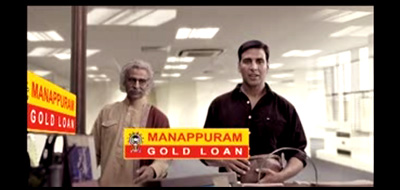
    They have roped in Mohanlal who is leading actor in Kerala, Puneet Rajkumar from Karnataka, Vikram who rules Tamil cinema, Akshay Kumar who has pan India appeal as well as actors Venkatesh and Mithun Chakraborty.


    More than anything as Mr Unnikrishnan says, they have managed to create awareness about gold loans and brought about a perceptual revolution. Earlier pawning of gold was seen in a poor light and there was a negative impression that people sell gold when they are in distress. “We have positioned gold loan as something that is handy and that is where our well crafted advertising has helped. It has required a commitment to convince the customer that gold loan is a feasible and quicker way of getting cash and not just in distress. I think this strategy has paid off and not just for Manappuram but also for the gold lending business.”


    The communication shows that gold loan can help one scale up their business or fulfill a long awaited dream. So gold which Indians have a tendency to hoard and keep in lockers can actually fetch you money to realize your dreams.


    After having a good run in the South, now Manappuram is experiencing growth from Gujarat, Maharashtra, Chhatisgarh , Orissa and West Bengal among others. In fact, Mr Unnikrishnan is bullish on the trade and estimates that the organized gold loan market is close to Rs 1 lakh crore and the unorganized as Rs 2 lakh crore. In fact, seeing the opportunity in gold loan besides the NBFCs like Manappuram and Muthoot who have gained success even banks have got into this area. He concludes, “The challenge is not the market as it is growing. The challenge is to train people who can understand and meet the need of customers.”


  • Don’t be complacent: N Ram’s goodbye letter

    By Tuhina Anand


    On his last day as the Editor-in-Chief and Publisher of The Hindu, Business Line, Frontline, and Sportstar, N Ram bid his colleagues farewell and exhorted them to seize the opportunities of the media world and face the challenges of the tough business environment the media faces today.


    Mr Ram’s mail states that Siddharth Varadarajan, D Sampathkumar, R Vijayasankar, and Nirmal Shekhar, all Editors, will take over, with effect from January 19, 2012, as Editors of The Hindu, Business Line, Frontline, and Sportstar respectively responsible for the selection of news under the Press and Registration of Books (PRB) Act of 1867.


    K. Balaji, Managing Director of Kasturi & Sons Ltd, takes over as Publisher of all Hindu Group publications and also as Printer as applicable. Ram informs that he will continue to be a wholetime Director of Kasturi & Sons Ltd.


    He states in the letter- “These changes on the editorial side are significant, indeed milestones in our progress as a newspaper-publishing company. On the one hand, they represent a conscious and well-prepared induction of fresh and younger blood at the top levels of our editorial operations, not of course as one-person shows but as captains of teams of talented professionals who work on the basis of collegiality, mutual respect, trust, professional discipline, and cooperation. On the other hand, these editorial changes are a vital part of the process of professionalization and contemporization under way in all the Company’s operations. I am clear that this is the only way to face the future – the opportunities as well as the challenges.”


    In the letter he also mentions, “About us it will certainly be no cliché to say: individuals come and go, the institution goes on.”


    He talks about the current situation of print press and broadcast television being in crisis across the developed world. He mentions Indian media being fortunate, “The chief differentiating characteristic of this media world is that printed newspapers (and also broadcast television) are in growth mode, some of us in buoyant growth mode. How long this duality will endure is a matter of conjecture. But there are exciting opportunities out there in our media world and they must be seized strategically and with deft footwork. Digital journalism – good journalism on the existing and emerging digital platforms – is an exciting domain where a combination of quality, reliability, interactivity, creative ways to engage the reader, and growth with commercial viability will be key. There are, equally, tough challenges – especially a hardening business environment and rising commercial pressure on editorial values and on the independence and integrity of editorial content, seen, for example, in the recently exposed notorious practices of paid news and private treaties. The negative tendencies that have surfaced in the Indian news media have been sharply criticized by the Press Council of India Chairman, Justice Markandey Katju; and Nobel Laureate Amartya Sen has reflected on the problem in a rather different way. The last thing we need is complacency.”


    “In my understanding, the two central functions of a trustworthy and relevant press (and news media) are (a) the credible-informational and (b) the critical-investigative-adversarial. A third is the pastime function, which is important, especially for engaging the reader in a wholesome way; but it must be constantly kept in perspective and proportion and must not, in my view, be allowed to outweigh, not to mention squash, the two central functions.”


    He concludes by thanking people he has interacted during his tenure and assures that after completion of the process of editorial succession, The Hindu publications will be in able and trustworthy hands and their values as strong as ever.


  • Digital Summit: The new wave of mobile and social – are we strong enough for it?

    By Akash Raha


    The Sixth India Digital Summit hosted by IAMAI and Ministry of Information & Technology got underway in Delhi on January 18, 2012. The two-day summit will host a wide array of discussions and debates along with award ceremony, commemorating those who have done well in this field.


    Power Panel 2: Mobile VAS: What’s New?

    The post lunch session discussed and deliberated on the topic, ‘Mobile VAS: What’s new?’ The panelists for this session were Mr Vijay Shekhar Sharma, Founder, Chairman & MD, one97; Jay Seth, President & CEO, Air2Web India – a Velti company and Kunal Bajaj, Partner & Director, Analysys Mason India. Vishwanath aluuri, founder, Chairman & CEO, IMI Mobile was moderating the session.


    He panel debated how new technologies are coming in the market each day and how it brings newer mediums, newer devices and newer services. Each and every day technological innovations are pushed to new extremities and it gives the consumer a whole lot of options. But are these newer innovations helping the existing businesses to grow or are they hurting it?


    According to Mr Bajaj, technological innovations are constantly helping the business to grow. However, Mr Sharma was not of the same opinion. He said that currently the platforms are too digital to be efficient and new addition to digital innovations does not necessarily help the existing business to grow.  He gave the example of piracy which is constantly on the rise with the rise of technological innovations.


    Talking about mobile applications Mr Bajaj said that the future will be that of paid applications and more investment has to be made in the knowledge of how can people be made to pay. Mr Sharma too said that currently there are over 100 million people spending approximately Rs 30/- on mobile apps, which makes future even more heartening.  Mr Seth pointed out that the essence of it all remains in the fact that the end consumer is happy. An application is going to do what it is meant for and it should make a consumer happy,yet from a business perspective a profitable business model has to be made out of it.


    Power Panel 3: Social Entertainment: the merger of Content, social media and video platform.

    In the current times movie, television experience and social media all work hand in hand. Movie producers and TV shows are posting tweets and encouraging an immediate social relationship among viewers. Kicking off the discussion the moderator, Mr Neeraj Roy, Managing director & CEO, Hungama Digital pointed out how in the last 2-3 years all the newer devices that are coming in the market have internet connectivity. According to sources, he explained, by the year 2015 10 billion people will be connected to the internet, and not only through their phones and tablets but through cars, television nd other home appliances. In all of these, one thing remains constant which is a screen. At such a situation, the content provider is threatened as the system is so dynamic and yet is excited and sees the development as an opportunity. In a year and a half India will jump from 3G to 4G and sky will be the limit for content provider, seller and receiver.


    Vivek  Bhargava, Founder Communicate2 gave the example of Kolaveri di which became viral. It essentially shows the reach of the digital. Internet has become a mass medium and video consumption trends have become as such. The only option is that brands have to evolve now with changing times.


    Rahul Saighal, CMO, Aircel said “There are three important elements – content, social and video (behind which it there is broadband) and all of these are hugely disruptive force. Sale of internet TV in 2012 was 10 percent of the market share in US… the numbers in 2012 is set to rise at 50 percent. And with growth, the era of mass customization will be reached. He went on to say that the concepts of time has changed too…Time is now internet specific time (IST) rather than Indian Standard Time.


    George John, Director Marketing, Warner Bros India explained how WB has actually thought about the future and taken steps to provide content anytime and anyplace. 9 O clock is no longer prime time, rather, you can choose for yourself when your prime time is going to be in future. To be specific about social media, it is an interactive activity… The question is, is it possible to make it more interactive and entertaining is what will drive the industry forward.  Mr Saighal said that “The future of content is that you create content for a psychographic and allow the audience to engage and  share the content and make it successful.”


    Power Panel 4: eCommerce in India: Today and Tomorrow

    Online buying habits have recently picked up in India and is growing at a very fast pace. It has taken us from the high street markets to the iStreet markets and has changed the way retail industry and buying in India. A power panel deliberated on this issue and on what is the way forward for the ecommerce business in India.


    While Harish Bahl, Founder & Group CEO, The Smile Group moderated the session other panel members who participated in the discussions were Muralikrishnan B, Country Manager – India & Philippines, eBay; Sundeep Malhotra, CEO, Homeshop18; Binny Bansal, Co-founder  & COO, Flipkart and Vinay Gupta,Founder & CEO, Via.com.


    Mr Bansal maded the initial comment and said that one should forget about profitability to start of with as it is all about market share and the consumer. Mr Bahl further added that the ecommerce business has just started in India and we have to start our business thinking about the end customer. Their needs are very simple; we deliver to them what they ask for. Mr Malhotra said that currently we are not strong enough to reach a consolidation and right now we need to engage and build on customers.


    When asked how to build a lifetime of customers, Mr Malhotra said that “For a lifetime of customers one has to spend a lifetime in a business.” What is important in the current scheme of things is the frequency and not the basket size of the buy. We are too new in the business to even think about profitability and yet, one have to maintain a fine balance in our business to sustain it. Mr Muralikrishnan said that the fundamentals are imp to be built on. One has to build on consumers and engage with them but not through push marketing, but not spam marketing. There is a need for more research and understanding on the customers buying habits which would eventually help the ecommerce business to sustain, be profitable and serve the customers better.


    The panel members were of the unanimous opinion that ecommerce is a potential big industry in the times to come, and yet, comparison with western markets is unfair as it is still relatively new. The ecommerce industry is going to be the next big thing, considering the rising real estate prices too. The idea, as one of the panelist said, is to make “Malls within shops.”
     

  • I&B ministry puts up charter for media growth

    By A Correspondent


    The Ministry of Information & Broadcasting has uploaded the Citizen/Client’s Charter on its website. The vision of the Citizen/Client’s Charter is to create an enabling environment for the media and entertainment sector, with appropriate policy framework, to help it grow at a sustainable annual growth rate of above 12 per cent and, in the process, take the benefits of the emerging technologies to disseminate information on the Government’s policies, programmes and its achievement, and facilitate value based wholesome entertainment for the people of India.


    The Mission of the Charter is to effectively disseminate information on the policies, programmes and achievements of Government while ensuring free flow of information to the public and safeguarding freedom of the press and media in general.


    The charter also aims to promote, facilitate and develop the Broadcasting Industry in India and strengthen the Public Service Broadcaster. It also hopes to promote and develop good and value based content for healthy entertainment of people of all ages and create a policy framework for achieving this.


    Some other key points in the charter’s agenda are

    • Universal digitalization for broadcasting by 2017.
    • Expansion of FM Radio network to all cities with a population of one lakh and above by 2014.
    • To restore, digitalize, preserve and enhance public access to the archival wealth of films, video and audio resources.
    • Digital conversion of Indian Films by 2017.
    • Human Resource Development and setting up of the Centres if Excellence for Media and Entertainment sectors.


    The charter outlines all the major services rendered by the Ministry to the citizens along with the procedure and the stipulated timelines. Some of the subject covered are: Issue of licence for providing DTH services to prospective licensee; issue of License to Multi System Operators; setting up of teleports by TV Channels for uplinking/ downlinking; issue of permission for uplinking/ downlinking of TV channels uplinked from India.


    The Charter also highlights the evaluation criteria, performance and service standards for each of the services identified.


  • RIL buys 1.14% in distribution firm, DEN networks

    By Rajesh Naidu & Ameya Chumbhale


    Reliance Strategic Investments, a subsidiary of Reliance Industries, has bought a 1.14% stake in DEN Networks, one of the two listed cable distribution companies in India. As RIL has acquired interests in media firms dealing with content, it makes sense for the Mukesh Ambani-controlled group to invest in a distribution network now, several analysts told ET.


    RIL recently sold its stake in Ramoji Rao-promoted Eenadu regional channels to TV18 Broadcast, a subsidiary of media conglomerate Network18 Media & Investment. Through the deal RIL would have preferential access to the content of all the media properties of Network18 and its associates and its subsidiaries-these include digital media and the TV18 channels.


    “This may be the beginning of strategic investments in cable distribution companies as they will need huge sums to invest in digitalisation, as mandated by the government,” said Mr Devendra Parulekar, partner at Ernst & Young India. Another analyst who did not want to be named said RIL could increase this stake to 15% soon and then proceed towards buying out the promoters’ stake.


    Mr Parulekar said, “The digitalisation law will ensure steady revenues from cable distribution and this revenue remains steady even when there are recessionary trends in the markets.”


    On Wednesday, DEN’s stock went down by 0.78% to 63.75 while Hathway shot up by 7.84% to 136.


    Source:The Economic Times

    Copyright © 2012, Bennett, Coleman & Co. Ltd. All Rights Reserved


  • Video Report: DoT Secy hints at govt hardline on freedom of speech online

    Text and Video by Shruti Pushkarna


    DoT Secy on ICRIER’s report on Impact of Internet
    [youtube width=”400″ height=”200″]http://www.youtube.com/watch?v=Ea03D2jzvUY[/youtube]

    R Chandrashekhar, Secretary, DoT & SiT and Chairman Telecom Commission, Ministry of Communications and Information Technology, Government of India appears certain that the government is going to adopt a hard line on the issue of freedom of speech line. Interacting with the media on the sidelines of the launch of a book based on the research by the Indian Council for Research & International Economic Relations (ICRIER) on the impact of the internet in India at the IAMAI’s 6th India Digital Summit in New Delhi, Mr Chandrashekhar also spoke onTRAI’s recommendations on spectrum allocation. Although he shied away from giving any real answers to the question, on the issue of freedom of speech online, he was firm on how every company across the world has to comply with the laws of the land and India’s case shouldn’t be any different from the rest of the world.


    DoT Secy on recommendations of TRAI on spectrum allocation
    [youtube width=”400″ height=”200″]http://www.youtube.com/watch?v=qEPbv8AFN04[/youtube]

    Earlier, the book titled India: Impact of Internet was released by Mr R Chandrashekhar. The report comes at a time when the government has just announced its grand plan for taking broadband to the masses, by taking it first to local panchayats. Following the launch, Mr Rajat Kathuria, External Consultant, ICRIER made a short presentation on the findings and recommendations of the study.


    Mr Chandrashekhar congratulated ICRIER at the launch of the report and welcomed the timing of the report and the benefits it will bring to the table in quantifying the actual impact of internet on society and economy.


    DoT Secy on recent controversy on digital freedom
    [youtube width=”400″ height=”200″]http://www.youtube.com/watch?v=hiP-F_wtMWk[/youtube]

    The report stated that States with higher internet penetration can be expected to grow faster, and every 10% increase in Internet and broadband penetration in the country could potentially lead to the addition of 1.08%, to India’s gross domestic product (GDP). The report recommends increasing internet usage in the country, which is still very low at just above 100 million users.

  • Winning consumers, dil se


    By Shubhangi Mehta


    ‘Advertising’ generally relates to a 30-60 second commercial which is, in some way, a break from whatever has grabbed our attention on the TV. It is, at times, packed with humour or creativity which manages to engage audiences and pay attention to the product being endorsed. But these days, brands are thinking beyond short term goals such as increasing sales to a long term goal of maintaining goodwill for the brand.


    For a while now, a lot of advertisements are not just based on a self-centred motive to sell the product but the brands and creatives are becoming more and more altruistic and trying to engage the audiences by including them in the commercial.


    Whether it is Coca-Cola “spreading happiness” or Tata Tea asking the consumer to “Jaago Re”, almost every brand is trying to step ahead and be an element revolutionising society.


    [youtube width=”400″ height=”250″]http://www.youtube.com/watch?v=M5ECJrnqPcI[/youtube]

    R Balki, Chairman and CCO, Lowe Lintas India, said, “There needs to be a connect of the message with the product. Brands just cannot jump onto the bandwagon by saying something which isn’t connected with the product. Even before Tata Tea or Lead India, it was Lifebuoy that came up with ‘koi dar nahi’, which encouraged kids to walk out and clean the streets. Hence, there is a definite need of product association with the message. Even in the Tata Tea campaign, tea is always associated with awakening and, with a name like Tata attached to it, we took it a step ahead and correlated it with awakening against corrupt politicians and so on. The thought was based on being optimistic and not cynical.”


    As a matter of fact if we are to recall, such advertisements are also the ones that manage stay in our minds the longest. Be it ‘Jaago Re’ ‘Lead India’ ‘Hum Mein Hai Hero’, ‘Idea’ commercials or the latest Stayfree campaigns.


    [youtube width=”400″ height=”250″]http://www.youtube.com/watch?v=A0M0EZ8T5J8[/youtube]

    “Every businessman today realises that just a transactional relationship with a client does not work these days, there is a very important need for emotional connect with the consumers, and brands like Coca Cola are realising the same. The trend has been there for a while, but its gaining momentum as every brand wants to be in the good books of the consumer. This is a worldwide trend where the society needs to know what exactly we are giving them back,” explained Prasoon Joshi.


    The problem lies when rather than being engaging, these commercials become preachy. The idea should be that it sermonises in such a creative way that it manages to engage a consumer, who considers an advertisement a break from a nail biting cricket/football match, or a soap opera that he /she is watching


    KV Sridhar, NCD, Leo Burnett, India, said, “More and more brand are realising these days that whatever we do is replicable. All the uniqueness and benefits get blurred after a while. Be it the uniqueness of an iPhone which is replicated by Chinese and Korean companies or the uniqueness of a brand communication. The other thing that marketers have understood is that ‘honesty’ and ‘selflessness’ are the keys to attract audiences. The Brand now tries to tell the audience that your ideas and my ideas are the same and this has become the solution to connect with the masses.”


    It won’t be wrong to say that Indian society gives utmost importance to values when compared to any other society. Hence, it helps a brand to come across as socially responsible.


    [youtube width=”400″ height=”250″]http://www.youtube.com/watch?v=6DkS7wfPMdQ[/youtube]

    Rahul Kansal, CMO, Bennett, Coleman and Co, said: “When it comes to using a social message to promote one’s brand, it has to have certain connection with the product. Sometime back, we saw Aircel’s campaign to Save the Tigers. Despite being a good concept, the campaign did not leave a mark, as it didn’t really help the brand because the cause wasn’t really connected with the brand. On the other hand, if we talk about Tata Tea’s Jaago Re campaign, it is a beautiful example of laddering up by a brand since tea is always associated with awakening and here the brand communication took it a step further by making it an awakening of the society towards the corrupt system. The Coke ad is also an example of going ahead with a thought of a drink which is meant to quench thirst, stepping ahead and becoming a brand to spread happiness. Times ofIndia’s ‘Lead India’ and ‘TeachIndia’ are also an example of laddering up by using a social message.”


    One might wonder, is creativity becoming a follower rather than a creator? One can also speculate that creative thought is the slave of trend, where one does something exceptional and others follow, as that becomes what the audiences want. The fact that such campaigns manage to capture the consumers’ eye is evidence. This practice had been seen in the past as well, but more and more brands have been adopting the concept lately. Will it continue, and how well can creativity present it? The fact remains that any product endorsing itself on such messages, even if remotely, needs to be connected with the communication at a certain level.