Category: NEWS

  • HDFC Life ‘click(s) to protect’

    By Shubhangi Mehta


    HDFC Life has introduced a policy for its urban customer which will help them buy insurance online. The campaign for this will be hitting television screens soon.


    Until now you online purchase was meant for purchasing goods for one’s use but now after the ‘Click 2 Protect’ initiative by HDFC Life, one can now buy term insurance online and secure your family with a large sum assured at the lowest premium rates.


    Click to protect is available in 750 cities, where HDFC Life is accessible if consumers need any help.


    [youtube width=”400″ height=”200″]http://www.youtube.com/watch?v=WsxjzLfPFH0[/youtube]
    [youtube width=”400″ height=”200″]http://www.youtube.com/watch?v=VCoiYnzZUXQ[/youtube]

    Sanjay Tripathy, Executive Vice President and Head, Marketing and Direct Channels, HDFC Life, on this initiative, said, “This is a new online programme mainly for our informed urban customer between the age of 25-40 years. The online programme is an ease for a customer who plans to buy insurance. The campaign that we have created for the product talks about ‘I love my family’ – it’s about being a son, then a husband, to a father. The thought manages to connect with the Indian consumer. For Indians, family comes first and they want to secure their family’s current lifestyle/dreams/goals even when they are not around.”


    The new campaign mainly focuses on the fact that hypothetically, an individual finishes graduation by the age of 20 years. Post that he starts working, gets married, becomes a parent, buys a house etc, ie with increasing responsibility people become more concerned about their family. Today uncertainties have increased and lifestyle has changed significantly as compared to previous generations. The campaign makes the consumer realize that term insurance is very important today to secure one’s family adequately, and seeks to make him feel concerned.


  • Arun Anant will be CEO, Hindu from Feb 6

    By Tuhina Anand


    It is learnt from sources close to the development that Mr Arun Anant is all set to join Kasturi & Sons Ltd as its Chief Executive Officer. He is slated to join on February 6, 2012 and will be responsible for all the non-editorial operations of the company.


    Mr Anant’s appointment comes following the recent development of Mr N Ram, the Editor-in-Chief and Publisher of The Hindu, Business Line, Frontline, and Sportstar stepping down thus paving way for restructuring at the senior level. Mr Ram had mentioned the appointment of a new CEO very soon.


    Mr. Anant, a B. Tech from BHU and a Post-Graduate in Management from IIM Ahmadabad, has earlier worked with The Economic Times and was the CEO of UTVi (now Bloomberg UTV). After moving from UTVi, he has set a management consulting firm called Inc Value. He has also worked on the agency side at Lowe where he was the GM Strategy.


    Also read

    N Ram to call it a day at Hindu

    http://www.mxmindia.com/2012/01/n-ram-to-call-it-a-day-at-hindu/


    Don’t be complacent: N Ram’s goodbye letter

    http://www.mxmindia.com/2012/01/dont-be-complacent-n-rams-goodbye-letter/


    Photograph: incvalue.com

  • Why the PR industry needs some PR


    By A Correspondent


    The PR industry in India today is facing potential growth-limiting challenges such as a dearth of home-grown talent, the fallout from recent PR scandals and a move away from traditional PR towards strategic communications.


    This is the thrust of the most recent executive report on the public relations industry in India from MSLGroup India’s Hanmer MSL and 20:20 MSL, both part of MSLGroup, Publicis Groupe’s flagship public relations, speciality communications and engagement group. The report, Understanding the Public Relations Industry in India: Challenges, Opportunities and 2012 Outlook, takes an in-depth view of the PR industry in India, drawing on quantitative and qualitative research to bring together a hard-hitting and frank appraisal.


    The report touches on these issues, as well as the widely reported misconceptions about size of the Indian PR industry, and the ramifications of this over-inflated figure on the market. A recent Associated Chambers of Commerce and Industry of India study pegged the size of the industry at a “wildly inflated” $6 billion whilst MSLGroup’s research points to $140 million being a more true representation.


    Jaideep Shergill, CEO for Hanmer MSL and Member of MSLGroup India Management Board commented, “The challenges before the Indian PR industry are not that different from what other service industries have had to face in the past – a serious talent shortage, disconnections between fees and value, and measuring performance accurately. Furthermore, we must look ahead and ask ourselves how the industry should react to a worsening global economic situation. These are questions this report tackles and by bringing these tough issues to the fore, we hope that it puts the industry into perspective and kicks off a discussion on the roadmap that PR in India so desperately requires.”


    “The industry is at an important crossroads, and we have taken the first step in not only asking difficult questions of ourselves and the industry, but also providing potential solutions to foster a stronger and sustainable India PR market,” added Sunil Agarwal, founder of 20:20 MSL and Member of MSLGroup India Management Board.


    In addition to highlighting a variety of trouble spots, Understanding the Public Relations Industry in India: Challenges, Opportunities and 2012 Outlook report also identifies opportunities for PR agencies such as offering integrated strategic and speciality communications, bridging the compensation gap, ensuring performance measurement and understanding client expectations.


    Throughout the report, critical questions are posed to agencies and their staff, clients and their organizations, media and the industry at large which are aimed to spark debate, ideas and potential solutions that can strengthen the industry’s future. Some of these include:


    • A misunderstanding of the size of India’s PR industry, hiding the on the ground realities and core issues.
    • A serious Indian talent crunch, stunted by a more lucrative in-house corporate communications sector, increasing the demand-supply.
    • A lack of understanding of how PR can play a strategic role, resulting in low PR retainers – in the Rs 20-lakh ($40,000) range compared to the average advertising retainer of Rs 2 crore ($400,000).
    • A vital need for PR firms to offer integrated communications as the line between PR, advertising and digital begins to blur.
    • Speciality communications such as niche PR, engagement through social media and employer branding to be recognized as growth focus areas for PR agencies.
    • Despite the global economic turmoil, India continues to grown at 7%, presenting a unique opportunity for PR firms in terms of global and Indian MNCs.


    MSLGroup India has developed this report to further its and the industry’s goals for sustainable and professional development. PR professionals, clients, organisations and the industry recognise that PR in India is at a critical juncture and Public Relations Industry in India: Challenges, Opportunities and 2012 Outlook offers a transparent and robust précis to move the industry forward.


    (To learn more about the Public Relations Industry in India: Challenges, Opportunities and 2012 Outlook, or to read the report by MSLGroup India in full, visit asia.mslgroup.com.)


  • 3 EDs quit in 1.5 years… all well at Hindustan Unilever?

    By Kala Vijayraghavan & Chaitali Chakravarty


    Three of Hindustan Unilever’s top team of eight executive directors – Gopal Vittal, Shrijeet Mishra and Ashok Gupta – have quit in the past 18 months. There have also been more than a few exits in lower levels of the company.


    And sources within and outside the marquee employer say managers are feeling stifled by paucity of growth options. The FMCG giant, once considered an impregnable vault of top-notch talent, is now beginning to look vulnerable.


    What ails HUL? The cause for the simmering discontent among local managers can be traced back to a bunch of strategic changes CEO Paul Polman is rolling out to make Unilever more responsive globally, past and present HUL managers say.


    First, Mr Polman has consolidated the global business into four divisions – personal care, home care, food and refreshments (like Ice Cream). Secondly, he is centralising much of the decision-making globally, stifling the role of local managers.


    Thirdly, he is forcing the company to consider outside talent, upsetting growth aspirations of internal candidates. Mr Polman, who took over in January 2009, is the first outsider in 77 years to head Unilever.


    And lastly, global postings in the Unilever universe, once a big draw for Indian mangers, are no longer as attractive. “While the company has become bigger, roles have become fewer,” a top HUL official told ET. “Jobs at HUL are becoming more functional and narrow,” other top officials with an inside line to the company added.


    An insider points to Mr Pankaj Gupta, who quit Unilever recently to join Reckitt Benckiser as supply chain head for South East Asia. He is now managing many factories across countries. He has the freedom to strategise, change and make the system more efficient. But as category VP, supply excellence for Unilever in Singapore, he had limited operational freedom.


    Insiders say HUL will not miss exits like Mr Gupta as they have an excellent knowledge management system which means managers are told how things are to be done. There is little room for initiative.


    Mr Polman is also mandating longer tenures at each position for its top management including the CEO. He is doing this to ensure business accountability and continuity in the face of growing competition and volatility. But at HUL, which is used to quicker job rotations and promotions, this too, is being viewed as a disadvantage by internal staffers.


    Moreover, Mr Polman’s view that outside candidates should also be considered for every senior management role to ensure diversity, is another reason for angst among internal candidates used to netting such roles, sources say.


    “It is highly speculative and incorrect to draw such conclusions,” a HUL spokesperson said in an email response to an ET questionnaire. “The average age of our Management Committee is around 45 years. This is a reflection of our focus on identifying high potential talent and investing in them through exposure to big and challenging jobs early in their career.”


    A young management committee could be another reason making the second rung of managers restless, an FMCG expert, who has worked in HUL for several years in the past, said. “The so-called number two gets impatient,” he said.


    Sources point to examples like Mr Samir Jain, vice-president, laundry at HUL, who quit to join Bungee, an agro-trading company, as it’s second in charge. He has a better and quicker shot at becoming CEO, they point out.


    “HUL has over 1,500 managers and attrition is significantly below industry level at 5% per annum for the past four years. Our approach for identifying and grooming top talent has established the company as a source of leadership talent,” the HUL spokesperson said in the email response.


    Moreover, global posting, once an attractive carrot, is no longer effective. Highly placed sources say that both Mr Gopal Vittal and Mr Shrijeet Mishra (currently the chief operating officer of Bennett, Coleman and Co Ltd, the publisher of The Economic Times) were offered global postings, but found them unattractive.


    There are more such instances even at lower levels, they added. “India is where the action is. Why would I want to move to Moscow or Poland,” a former HUL executive, who was offered one such posting, quipped.


    Source:The Economic Times

    Copyright © 2012, Bennett, Coleman & Co. Ltd. All Rights Reserved

     

  • What’s-On-India launchesTV streetmaps

    By A Correspondent


    What’s-On-India, India’s premier TV guidance company has launched a new business vertical – ‘television street maps’ – to monitor day-to-day changes to TV Channel availability and placement across Cable and Satellite households. The service has already gone live and has attracted a host of customers from the TV sector.


    The move to launchTV streetmaps by What’s-On-India is considered very strategic, especially in the context of dramatic changes expected in the distribution side of the TV business over the next couple of years due to digitalization being introduced by the government.


    What’s-On-India has already expanded this system nationwide to cover 700+ Analogue and Digital head ends across almost 300 towns and cities making it the largest ground coverage in the business.


    “Our plans are to expand the system to 1000+ head ends over the next 3 months, besides providing insightful value added services in this space to stakeholders,” said Joydip Kapadia, Executive Vice President, What’s-On-India.


    This new vertical has added a series of new customers which include One-Alliance, MSM Network, UTV Network, Viacom-18 among a host of others.


    Atul Phadnis, Chief Executive, What’s-On-India said: “We are very excited to enter this space. Over the next few quarters, What’s-On-India will be investing in this vertical to expand its scope across the country as well as to bring in newer technologies and automation for faster information from the ground. We are also integrating TV Street Maps with our EPG Systems for certain breakthrough solutions within the Indian market!”


    What’s-On-India Media Private Limited isIndia’s Premier TV Guidance and EPG Company. The company’s technology vertical powers EPG Metadata content from 500+ TV channels into more than 35 million Set-Top-Boxes and devices across Cable, Direct-To-Home, IPTV, mobile TV, Smart-TVs and Tablets.


  • Vivek Malhotra joins TV Today as VP – Marketing

    By A Correspondent


    TV Today Network Limited (TVTN) has appointed Vivek Malhotra as VP, Marketing. As part of his new role, Malhotra will be responsible for developing the brand and communication strategy for leading media brands under TVTN, and will additionally be taking charge of the research and the special projects division.


    Mr Malhotra will be reporting to Joy Chakraborty, CEO, TVTN and is expected to play an important role in future plans envisaged by the new leadership.


    Joy Chakraborty said in a prepared statement: “As the pioneers of news broadcast inIndia, TVTN products have consistently been breaking new ground across verticals. With Vivek’s understanding of the news category, we look forward to communicating this even better and achieving a serious resonance for each of our media brands. His complementary understanding of research and communication should help us create a superlative viewer and advertiser experience”


    Before joining TVTN, Mr Malhotra has a brief stint with BigFM as the head of marketing. Prior to that he served as the Senior Vice-president – Marketing, PR & Research at Bloomberg UTV where he set up the marketing division and held the portfolio since the channel was launched. He also oversaw the distribution and co-ordination at the business news channel.


    Mr Malhotra’s earlier stint was with Star News Network, where he headed the trade engagement and the research unit. He also acquired experience around regional products like Star Majha. He was also instrumental in evolving within TV18, an independent resource centre of creative solutions and media research which he later led as a national intelligence unit called ‘The Edge’.


  • Swati Mohan is VP – Prog & Ops for Fox, NGC India

    By A Correspondent


    Swati Mohan has been appointed as the new Vice President-Programming and Operations for FOX International Channels and NGC NetworkIndia. In her new role, Ms Mohan will be responsible for programming and operations for the bouquet of channels under the company inIndia, including National Geographic channel, FOX Traveller, Baby TV, Nat Geo Wild, Nat Geo Adventure, Nat Geo Music and National Geographic Channel HD.


    Keertan Adyanthaya, Managing Director, FOX International Channels and National Geographic NetworkIndia, said: “Swati comes with a vibrant tapestry of experience in creating content for successful brands. I am confident that she will bring this experience to play in creating engaging and relevant shows for our suite of channels and strengthen them even further.”


    Ms Mohan said in a statement: “I am extremely thrilled to be associated with the Fox International bouquet of channels. National Geographic Channel and Fox Traveller are the gold standard in their respective genres and I will strive to create a great line up of international and locally produced content that will enhance the appeal of these channels inIndia”


    Ms Mohan comes on board with 12 years of experience in the industry. Beginning her career as a copywriter at Ogilvy and Mather, she went on to making content for television as an Executive Producer at FBC Media and Endemol. Her last five years at Group M across Mindshare and Maxus, had her successfully develop the space of brand building with the aid of specially created content for many advertisers across the country. In her last assignment, she was National Director – Entertainment, Sports and Partnerships at Maxus.


  • Debenhams’ Aditya Nadkarni: Finding the right fit

    Aditya Nadkarni, Brand Head, Debenhams has been leading the brand to become the forefront of multi-brand retailing in India – setting new industry standards, venturing into uncharted territories and launching revolutionary retail concepts to provide an extraordinary shopping experience to the customers. Mr Nadkarni’s association with the retail industry started as an assistant manager – retail at Shopper’s Stop. Since then he has worked with several well known retail houses such as Trent and Piramyd where he undertook various operational functions and has been instrumental in the successful development and launch of a number of private labels as well as international brands like Blend of America, Versace, Versace Sports and Cerruti 1881. Here he talks to MXMindia’s Tuhina Anand on Debenhams’ plan in India.
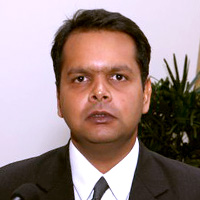
     

    Q: How do you see Debenhams poised amongst the fashion brands in India today?

    Debenhams is the only premium woman-centric department store in the country today. We offer wearable fashion for the sophisticated, mature and well-travelled woman. We also provide assistance to women for their beauty and cosmetic needs, stylish home linen, speciality cookware, kids’ apparel and men’s apparel. As we offer not only international products but also products from international designers as well in every category, we believe we are unique in the premium department store segment.


    Q: Can you elaborate on your expansion plans for Debenhams this year?

    This year, we expect to make a strong entry with large format stores in Bangalore and Mumbai. We also aim to open three to four stores on an annual basis. Since Debenhams is a premium department store, we will be targeting Tier 1 cities.


    Q: How have you been promoting the brand here?

    We have focused our attention and resources towards working on an editorial basis with fashion media in the country. We also believe that our presence in the digital media space is helping to take the Debenhams brand to more and more people across the country. And of course, our customers are our brand ambassadors and they really do help to highlight the Debenhams name. Today, we enjoy one of the highest conversion rates in the segment, which is a result of the trust and confidence our loyal customers have placed on us.


    Q: With the FDI in retail, especially multi-brand retail, having gone to the back burner, does it in any way hamper your expansion plans?

    As a leading brand in our segment, we do not believe foreign direct investment in retail, multi-brand or single brand, would stifle our growth. In fact, we welcomed such regulation, as it would bring about more players in the segment and provide consumers with more choice.


    Q: With so many international players vying for the attention of Indian buyers, what advantage does Debenhams have?

    Debenhams enjoys the status of being the sole department store, in the premium segment, in the country today.


    Q: How do you view the fashion retail sector, especially for international brands – the size and opportunity – in India?

    Over the years, Indians have developed their fashion sense to mirror other countries and the latest trends. We see that with consumers travelling more and becoming savvy about international trends and lifestyles. The Indian consumer has evolved much more in the past decade than ever before. With the Indian economy growing positively, consumers are able to more afford the international brands present in the country today.


    Q: What is the kind of investment that Debenhams will make in India in the next three years?

    Debenhams is looking at opening three to four stores per year. The stores will range from 30,000 sq ft to 40,000 sq ft each. We expect to make substantial investments, keeping customer demographics and psychographics in consideration. Each store will be equipped with the traditional superior fit-out and superior quality staff.


  • Mid Day is a broadsheet – for a day

    By Akash Raha


    Mid Day appeared in a strange avatar on January 25 – as a broadsheet. The innovation was aimed at enhancing the impact of the launch of heavyweight wrestling show ‘Ring ka King’ in India.


    Manajit Ghoshal, MD & CEO Mid Day Infomedia Limited said, “This broadsheet innovation employed by us is a stimulating and stylised way of advertising. It introduces a surprise element, which helps in better impact and recall of the communication. It has been our continuous endeavour to create path-breaking strategic solutions for each of our clients to reach their target audience. This innovation has been one more step in that direction, as it strengthens our repute to innovate and be a solutions provider and a brand partner to our esteemed advertisers.”


    Colors had been looking for a strategic partner to assist in the launch of the show called ‘Ring ka King’, which will be launched on January 28, 2012 on Colors.  The brief shared with the Mid Day team was to communicate the debut of this show in India in a clutter-free manner. Further ideation on the brief led to the concept of creating a larger-than-life canvas where the launch can be communicated in an impactful manner.  The wrestlers are of enormous hulk and it was felt transforming into a broadsheet format would be a compelling way to communicate their arrival. The insights revealed from a study conducted on the kind of target audience led us to the following copy “Itna bada hai inka akaar, ki bada karna pada yeh akhbar.Teen din pehle de rahein hai khabar, Taaki aap rahein tayyar.””, which communicates the launch in a dazzling and eye-catching manner 3 days in advance. We wanted to highlight the fact that a special affair calls for a broader and bigger canvass.


    Commenting about this innovation, Rajesh Iyer, Head – Marketing, Colors, said, “The Ring Ka King thriller campaign is the physical representation of the excitement that the show embodies. We wanted to bring the action of the ring alive throughout our communication. To bring out the adrenaline pumped exuberance of the show into our promotional activities we collaborated with our creative partners to come up with a campaign which could do full justice to the thought. All our promotions for Ring Ka King, be it the print innovation with Mid Day or disruptive campaign across outdoor, radio and TV, are high on volume and scale.


  • Given cricket fatigue (and India’s poor showing), Bollywood lines up releases during IPL

    By Ameya Chumbhale & Meenakshi Verma Ambwani


    This season, Bollywood’s ready to take on Team India, and is not even scared of the IPL googly. After the drubbing in England, followed by the humiliation Down Under, the cricket-crazy nation seems to have developed some kind of a cricket fatigue, and Bollywood, seizing its opportunity, has lined up a string of releases during the busy cricket season.


    Unlike the previous four seasons of the IPL, when Bollywood deferred new movie launches during the well-televised IPL season in April-May, this year at least half-a-dozen big films, with close to Rs 200 crore riding on them, have planned their releases bang in the middle of the event. These include Ajay Devgan, Akshay Kumar-starrers as well as a Raju Hirani scripted film.


    “IPL has lost its charm,” says Mr Utpal Acharya, head of distribution and acquisition at Reliance Entertainment, which has co-produced the Karishma Kapoor-starrer Dangerous Ishq. “We are confident that audiences will visit cinema halls irrespective of IPL this year.” Almost all the others who are releasing their films in April-May endorse Mr Acharya’s views.


    From Sajid Nadiadwala , who is releasing a sequel to the successful comedy flick, Housefull, which has been acquired by Eros, to Vidhu Vinod Chopra, who is releasing the Raju Hirani-written Ferrari Ki Sawari , to the Priyadarshan-directed Ajay Devgan-starrer Tezz, and the Mukesh Bhatt-Emraan Hashmi Jannat sequel –they all think that films will do well this summer.


    “People are not only going to watch IPL all of April and May. So, we are releasing Ferrari Ki Sawari during the school vacations, which we think is the ideal time for family audiences,” says Mr Samir Rao, chief executive officer at Vinod Chopra Productions. With cricket touching a low after the euphoric World Cup victory last year, Bollywood’s taking everything on the front foot.


    Says Mr Deepak Marda, joint managing director Cinepolis India, “I believe the lacklustre performance of the Indian team and the lack of buzz around the IPL has given confidence to film producers to schedule their movie releases during the fifth IPL season.” The dip in cricket’s popularity is evident from the fact that average ratings of the fourth IPL were the lowest among all the seasons.


    TRPs of the matches averaged about 3.91 across six metros compared to 5.51 in IPL-3 . In the past four seasons, Bollywood, realising that it couldn’t match up to the fire power of IPL, decided to join the cricketing tamasha, with some stars being owners of some teams, while many others endorsing the game’s biggest brand by revenues during the games, and at the aftermatch parties.


    IPL’s impact was so huge that cinema halls wore a deserted look — some even start showing IPL matches live — and film producers didn’t dare to launch new movies. Before IPL was launched in 2008, the April-June period was considered the best for new movies since it coincided with the vacation for students. Things changed a bit in the past two years, when Mukesh Bhatt’s Jannat (in 2009) and the romantic comedy Tanu Weds Manu (2010) bucked the trend and made some money in the middle of IPL season.


    “The growing number of movies released every year have led film producers to plan their releases in a manner that they do not clash with each other. This too has led film producers to choose April-May to release their movies ,” says Mr Ashish Saksena, chief operating officer of Big Cinemas.


    Top executives in the movie hall business, like Mr Sunil Punjabi, chief executive officer at Cinemax agree with Saksena and expect the first quarter of the 2012-13 to be better in terms of revenues than the previous year due to a stronger line-up of movies. Hollywood too has slotted a few releases like Men in Black-3 and The Avengers as well as James Cameron’s Titanic which is being re-released in 3D, all which should add to the kitty during the same period.


    Source:The Economic Times

    Copyright © 2012, Bennett, Coleman & Co. Ltd. All Rights Reserved


  • It’s bye-bye time for Sandeep Pathak and Raj Kamble

    By A Correspondent


    It’s now confirmed. Both captains of the Bates ship are bidding goodbye to the agency. Although there’s no official communiqué from the agency, Sonal Dabral, India Chairman and Regional executive Director, Bates Asia and Sandeep Pathak, CEO, Bates Asia have put in their papers.


    While Mr Dabral is moving to DDB Mudra, Mr Pathak’s destination next is not known, refusing to comment on the issue. He has been with the agency since four years.


    Meanwhile, at BBH India, Raj Kamble who had replaced Priti Nair last year as Managing Partner, has also called it quits.  ECD Russell Barrett has been elevated to the post of Managing Partner. Kamble’s next port of call is unknown.


    In an official communiqué, Sir John Hegarty said:  ‘It’s always sad when great creative people leave you, but it’s greater satisfaction when you can promote an outstanding creative leader from within. Russell Barrett has created most of our best work and put BBH India on  the creative map. I believe with his creative leadership our Mumbai office will go from strength to strength.”


  • [PR Channel] Young PR professionals need a reality check

    By Sayantan Sinha


    When the editor (no I am not talking about Mr. Mehta’s pet) called me to write this piece, I wondered “who’s going to read?”


    We, the breed of superior intellect and pray do not believe that, like to imagine (which is true) that we are the most well-read lot with deep understanding and knowledge on everything from needle to submarine. So my PR brethren, let us get out of our cocoon and do a little reality check.


    The stalwarts of the PR industry are people with huge repertoire of knowledge. Hence they are where they are today. The likes of Prema Sagar, Dilip Cherian, Madan Bahal, Supriyo Gupta, N S Rajan, Sunil Gautam, Roger Periera et al are known for their indelible track record.


    The intellectual growth of PR professionals has been inverse to that of India’s economic growth rate, particularly so in the past few years. While figure, physique and sensational sense of dressing have incorporated the oomph factor, lack of intelligence pervades the industry. Unfortunately, the finest of the gyms or the salons cannot add that aspect to personality. Add to that sheer indolence and Herculean attitude.


    Most of the younger lot, particularly in Delhi, have a lot of both. So much so, they successfully make new editors (refer to Person X as editor of one biz paper when s/he is in fact RE of another pink daily) , create awesome profiles (no link between the journalist, his area of expertise and publication) and above all confidently attribute journalists to publications which they left eons back.


    Why is this happening? I totally agree with my peers about the inflated egos of the younger generation. But we cannot absolve ourselves from the fact that we have not instilled the sense of responsibility in the new lot. Every agency has well-defined (and that has to be another critique) systems and processes. However, despite insisting on regular media rounds, you would hardly find youngsters rushing from one building to another on India’s Fleet Street.


    Of course, if there is a press conference, you will find a few hovering around. Penetration of internet and mobile have done all of us good, but our younger friends need to realise that relationships cannot be built only over emails and telephone /mobile or for that matter BBM.


    It is true that even five years back, it was far easier to meet a journalist. We could amble on the ET floor or chat with multiple journalists in Hindustan Times, but today that is not possible. But it is imperative to meet journalists so that there is connect between the face and the email id.


    It is a different issue that it is far easier to grab an appointment with the President than send a youngster out for media round. One is accosted with barrage of questions like “Why do I need to meet him / her? I get my work done”; “They must be busy”; “They do not come out to meet” and the best “What do I talk to them about?”!!!


    In the good old days, when people used to go for “shikaar” (hunting), they used to study the prey and its surrounding. Transform that to our profession. Even if there is no story to pitch for, go ahead and meet a journalist of the beat you cater to. Read his articles, talk to him about his stories, create a rapport and nurture it. A personal touch can go a long way. Don’t forget the brilliant line of Airtle’s campaign “BAAT KARNE SE HI BAAT BANTI HAI,” though the approach of today’s PR professional is as horrific as Airtel’s connectivity.


    And by the way, media rounds in Delhi can be great fun, if one is a foodie. From the crisp samosas of INS building canteen to dosas and vadas near Jantar Mantar, from bread pakora outside PTI building to finest fresh juices at Bahadur Shah Zafar Marg, the choice is huge. And make friends in Times Building, at-least to visit their swanky canteen.


    The other grey area is the fabled media list. More often than not, the most “updated” media list is the dated one. In Google age, youngsters seem to have forgotten the art of copy & paste! Otherwise how would one explain about a CoB who passed away some years ago still holding that position?


    More often than not, senior journalists complain about young PR professionals calling them and asking what do they write on! This brings me back to the first paragraph of this article. The stalwarts of the industry and anyone in the industry worth his salt, reads. Unless one reads, it is rather difficult to survive in the industry. Every byline has a name and in today’s day and age, most of the newspapers have compartmentalised content according to the beat. It is not rocket science. Even a child reading a newspaper regularly will be able to say what a particular journalist writes on.


    The angst in media against PR professionals is not unwarranted. We have provided them with enough ammunition to allot PR professionals as courier guys, adding no value. Unless one proves his mettle in this value chain, the individual must leave the profession. PR is serious business and we hope to have able people in the industry to take it forward. This is not written to demean anyone but to look within ourselves to find the answer.


    Sayantan Sinha is Founder & Managing Partner, Out-There PR & Communications