Category: NEWS

  • In the Age of AI will Media & Advertising Divorce?

    In the Age of AI will Media & Advertising Divorce?

    Image rendered by ChatGPT given the column theme


    Ashoke AgarrwalA few decades ago, I was helping an advertising honcho craft an acceptance speech for a Lifetime Achievement Award. High on the list of reasons why advertising is a social good is that it enables citizens to access information and entertainment by providing media at a reasonable or no cost. Fast forward a few years, and the media veteran Pradeep Guha shocked the world by overtly positioning the primary role of the Times of India (TOI), once India’s newspaper of record, as an amasser of audiences for advertising to address. Pradeep’s honest assertion presaged the fall from grace of TOI and most other newspapers from a necessary read to a toilet accessory, if that.

    In the realm of broadcast and cable television, the relentless pursuit of audiences for advertisers has led to a steady diet of mind-numbing soap operas and shallow news coverage. The once vibrant and diverse landscape of television has been reduced to a monotonous cycle of content, all in the name of catering to advertisers’ demands.

    In the early years, social media was hailed as a tool of enlightenment and revolution, and the Arab Spring and Ukraine’s Maidan Revolution were credited to it. Today, it is seen not just as banal but as an insidious cause of rising depression among the young and tribalism at large. What gave? Once again, it was social media’s marriage with advertising. As Google (Alphabet) and Facebook (Meta) anchored their business model to advertising, they invented and nurtured algorithms that invented hordes of individuals hooked on content that amplified their worst impulses.

    The rise of OTT (Over The Top) television based on a Netflix-like subscription model led to a creative renaissance that restored television content as an art form similar to the movies (the fact that film and music had survived, in the main, as art forms have to do with the fact that advertising played little or no role in their business model). To my mind, OTT’s recent experiment with advertising as a source of revenue is dangerous and could lead to an inevitable creative slide into inaneness.

    The world is now seeing two revolutions.

    There is now a backlash to the increasing irrelevance of traditional mass media and an increasing wariness with social media as a news and information source. As a result, social media like Instagram and, where available, TikTok (or its imitators) have become platforms for content creators across various genres. While traditional social media platforms are becoming forums for content creators aiming at the mass market, niche platforms like Substack, Medium, Reddit and YouTube are becoming platforms for niche content creators in journalism, opinion, reviews and think pieces.

    In the coming years, if traditional media continues its decline, individuals or small, independent teams may take over a more significant share of the content market. While niche content on platforms like Substack and Medium is subscription or micro-payment-supported, content creators of mass platforms like Instagram and TikTok depend upon an insidious form of advertising called Influencer Marketing.

    While the dispersed content-creation model gathers momentum, another revolution is afoot as AI matures and uniquely empowers individuals and businesses. In a decade or two, communication between brands and individuals will be AI mediated with an AI avatar of the brand in communication with an AI avatar of the individual. I have posited this in my MxMIndia column of Jan 2022 titled ‘The Coming Post-Digital Age’.

    This will then result in a divorce between the media and advertising, leading to:

    • A re-emergence of mass media, albeit with a different business model
    • a repositioning of social media as a valued platform for content creators
    • And more effective and efficient brand-building by marketers through direct communication and social diffusion

    What do I mean by social diffusion? Globally, brands like Tesla and Apple have been built chiefly on social diffusion, which involves shared social narratives and the prosaic term unpaid media. Brands like Mercedes and BMW may have had advertising support in developed countries but have been mainly built on social diffusion in India. The guru brands – Sri Sri and Satguru – have been built through social diffusion. If Patanjali had continued to rely on social diffusion instead of relying on advertising to meet vaulting ambition, it would not be in the trouble it is today.

    In conclusion, the marketing communication discipline will shift paradigm over the next decade. One dimension of the change will be technology, with the emergence of AI as the vital medium of consumer interaction. The other dimension will be social, with the slow and steady accretion of social diffusion through narratives and word-of-mouth.

    Ashoke Agarrwal is a veteran advertising professional with around four decades in advertising and marketing services. Agarrwal, a chemical engineer from IIT Mumbai and a postgraduate from IIM Bangalore, is a pro-entrepreneur with past and current ventures in market research, advertising, CGI, e-learning and brand consultancy. He writes on MxMIndia every Thursday. His views here are personal.

  • Gig Workers: Charity begins at home

    Gig Workers: Charity begins at home

    With apologies to none at all

    Vikas MehtaBy Vikas Mehta

    Yes, I had ended my last post with a link to the new Pepsi rehash of the old ‘yeh dil maange more’ ad. And had promised to review it. But, hey, promises are meant to be broken. Am actually so disappointed at the ads dished out during the IPL that I refuse to talk about them. Instead, I will narrate two contrasting tales that I picked up over Eid.

    A friend was just settling down to enjoy the Eid holiday when he got a call from a friend who was coming over with some Eid sweets. My friend panicked as he had nothing to offer. But then being a millennial and having acquired the habits of Gen Z, he immediately remembered Blinkit. Sure enough, Blinkit was offering Eid sweets, not the typical Eid sweets like Sewaiyan but Feni Lachha, Agra Petha, Panjeri Laddoo…you get the drift.

    As luck would have it, my friend’s guest and the Blinkit delivery guy reached almost together. The guest was dressed in Eid livery and as my friend opened the door to his apartment, the Blinkit delivery guy too turned up. He delivered the order and then wished the guest Eid Mubarak in a choking voice. While the guest reciprocated heartily, my friend checked on the app and discovered that it was Eid for the delivery guy too. Instinctively, he called the delivery guy who had by then almost reached the lift, and handed over the Blinkit packet to him wishing him Eid Mubarak.

    Taken totally by surprise, the delivery guy burst into tears. It seems he had reported for his job against his family wishes, because he knew that being Eid there would be a shortage of riders, an excess of orders and he could earn better. So, while he ached to be with his family and celebrate the festival, economic compulsions and family responsibility steered him away from it. But, my friend’s gesture bowled him over. Watching all this, the guest too slipped in a note into his palms and urged him to go home to enjoy Eid with the family.

    Now, before we all go mushy and applaud the generosity of the two gents, listen to another incident that I picked up the same evening. My wife’s friend had called her over for a small Eid party. While they laid out a sumptuous dinner, the lady of the house seemed a bit off-colour. On enquiring, she found out that the friend was upset with Myntra. She had ordered an Eid dress for her daughter, a bit late but the delivery date as promised was on Eid. So, she was relieved that she had not failed her daughter.

    But, on the morning of Eid, she got a message from Myntra that due to some operational issues, the delivery will be delayed. Now, this lady was tracking the package and she knew that it had reached Dehradun. So, she deducted, rightly, that due to Eid, there was a shortage of delivery guys. And that upset her. She was angry and upset that her Eid had been spoilt.

    What contrasting tales. Here were two people who had instinctively succumbed to the spirit of the festival. Caring and sharing had come naturally to them.

    On the other hand, was this person who had a narrow selfish view of the festival. Who did not get the spirit of the festival and treated it very transactionally.

    That’s of course, my view. But the diversity of human behaviour never stops to amaze me. And also, the unpredictability of it.

    More crucially it also tells us the indifference we have towards the gig worker. As consumers we have lapped up the culture of home delivery. We marvel at the technology. We are awestruck by the whole process. We are delighted by the speed of delivery. And we are also happy that employment is being generated in the form of delivery guys. But, have we ever thought about humanising the last mile delivery.

    The word gig comes from an early twentieth century jazz slang. When two or more musicians would combine together to perform informally. No contract, no formal agreement, no payment promised. In today’s economy, it stands for any informal job. And that is what I cannot understand. Why is this last mile delivery an informal job? Isn’t it one of the most important parts of the delivery process? When every day, nay, every minute counts in making the delivery happen, why is the role of the delivery boy downgraded to a foot note?

    These people have no formal timings. No structured holidays. No minimum payment guarantee or even a basic pay. Their remuneration is linked to just delivery. Come rain, come extreme heat, come festivals, come illness, these gig workers have to soldier on.

    And please, do not compare them to a train driver or to a medical worker or to a public transport official. All these people have jobs. Not gigs. Fixed pay, not just a variable component. Sick leaves, designated holidays. Either gratuity or pension or both. Even insurance. Nothing of that sort exists for a gig worker.

    Before you accuse me of turning socialist or maybe even communist, all I am actually doing is to draw the attention of us, the consumers, who meet and interact with these people daily, to the fact that delivery people are not robots. They are as humans like you and me. But is our behaviour towards them human?

    I have a theory called the Indian housewife theory. It is expected that the housewife will make tasty meals every day. In fact, three times a day. And rarely do we have a word of appreciation towards the food cooked. Because we take it for granted. But once in a blue moon if the food goes wrong for whatever reason, the whole family rains down on the housewife. No appreciation for the 99% good food. But protest and howlers for that 1% of mistakes.

    And that’s how we treat the delivery or gig workers. We rarely acknowledge them. We hardly notice them. But they become our target if they are late or there is a problem in delivery.

    All I am asking therefore is that we as consumers must change our attitude towards the gig workers. Have empathy. Treat them with respect. It’s getting hotter. We do not venture out but expect them to deliver. On time. The least one can do is ask them if they need a glass of water. Maybe a small snack. An orange a day will not burn a hole in your pocket but it will not only refresh them but also make them feel appreciated and human.

    And some apps like Blinkit now give you the option to tip them. Do that. If you have saved Rs 20 in that delivery, tip it. And if you are really transactional, satisfy yourself by thinking that you save much more than the twenty rupees. You saved the effort of venturing outdoors. Didn’t you? So, nothing wrong in tipping them a small amount.

    We, the customers have to start this movement. One may call this socialist thinking but frankly I don’t care what it’s called as long as it helps us be humane. Can we at least make a beginning?

  • Shell Advance upgrades portfolio

    Shell Lubricants India unveiled its upgraded portfolio of Shell Advance Motorcycle oils and launched a limited-edition packaging featuring brand ambassador Shahid Kapoor, continuing a partnership on the Rukna Mushkil Hai brand campaign.

    Introducing the new and improved Shell Advance range, Amit Ghugre, Chief Marketing Officer, Shell Lubricants India, said: “For us, ‘Rukna Mushkil Hai’ is not just an emotion but a platform to empower riders to be truly unstoppable. Last year, we teamed up with Shahid Kapoor to echo the spirit of these motoring enthusiasts, and now we are taking it a step further with portfolio upgrades to offer stronger and more impactful consumer benefits. With our special edition packs, we hope to inspire more users to fulfil their passion for riding with Shell Advance engine oils.”

  • Aaj Tak takes the helicopter route for elections coverage

    What we are set to witness is the mother-of-all-elections. And for Hindi news television leaders Aaj Tak, even the sky is not the limit as far as the coverage goes. Star anchor-editor Anjana Om Kashyap will take the helicopter route for a special show titled ‘Rajtilak’. Kashyap will journey across 100 cities in India and to remote parts of the country.

    Speaking on this occasion, Rahul Shaw (CEO – TV & Radio, TVTN) said: “Rajtilak’ prioritises raw, unfiltered opinions and perspectives of citizens. As the most trusted news brand of the country, the citizens expect no less from AajTak. AajTak’s Helicopter shot in the final match of Indian politics will revolutionise the coverage, guaranteeing unprecedented reach and engagement with democracy in live action.”

    Added Sandeep Seksaria (Managing Director, LTK Industries) added: “LTK Group is proud and pleased to be associated with TV Today Network, India Today Group for this unique initiative Aaj Tak ka Helicopter Shot – ‘Rajtilak’. The communication objective of our brand Macho Hint and the Aaj Tak initiative matches perfectly well to be at the centre of the nation’s socio-political conversation. The idea of reaching out to the people across the nation aerially and bring to them the pulse of the nation is quite remarkable and Macho Hint is thrilled to be an honoured partner in this initiative.”

    Said Shashi Sinha, CEO of IPG Mediabrands India: “We are delighted to partner with Macho Hint of LTK Industries and Aaj Tak in this unique and innovative programme, Rajtilak Helicopter Shot.”

  • Ranjona Banerji: Media trapped in a cage of its own making

    Ranjona BanerjiWhat is reader interest and how does one best save it?


    Take the case of a yoga teacher-cum-ayurvedic medicine business house. Baba Ramdev has been popular and unpopular in Uttarakhand for some years now. He shot to national fame during the India Against Corruption movement in 2011, when he joined hands with Anna Hazare, Arvind Kejriwal, Prashant Bhushan, Kiran Bedi and others to take on the then UPA government over corruption charges regarding spectrum auctions, the Commonwealth Games, coal allocations, and renew demand for Lokpal courts.

    He was also known at the time for running away from the police dressed a pink salwar kameez, disguised as a woman, and for being hospitalised after only a few days of fasting.

    But it was after the Narendra Modi government came to power that Ramdev gained power and prosperity. And how. Patanjali products were everywhere. From ayurvedic potions and lotions to instant noodles and biscuits.

    During the Covid-19 pandemic, Patanjali claimed to have found the cure for the virus, which it widely advertised with some help from Union ministers from the BJP: Coronil was the answer, according to Patanjali, Ramdev, government ministers. False claims were made that the medication was WHO-approved, from which Baba Ramdev had to backtrack.

    The sordid details are all here:

    https://thewire.in/health/the-business-of-godmen-how-ramdev-was-protected-and-even-promoted-by-the-system

    Over two years later, the long arm of the law has caught up with Patanjali, over its “misleading ads”. The Supreme Court has rejected Baba Ramdev’s apologies and warned of further action against Patanjali.


    https://timesofindia.indiatimes.com/india/misleading-ads-case-sc-rejects-patanjalis-apology-warns-them-to-be-ready-to-face-action/articleshow/109185292.cms


    Let’s now get back to the question: how is the media to cover such a case?


    Because of the times we live in, news channels have acted as out-of-court defence attorneys for Ramdev and Patanjali. As the company and its owner has wept in court, Ramdev has wept on screen, full of contrition and a bit of anger at the strictures of the court.


    In that other world to which I sometimes refer, where journalism is practised as it usually is, Ramdev and his company would have gleefully been ripped apart. The media is vicious when you are down. But in India, it depends on which side of the political spectrum you fall. As a friend of the ruling BJP, there is only comfort and garam chai for you with jalebis on the side. Fraudulent claims, outright lies in the middle of a terrible pandemic, these are not important enough for the mainstream media to focus on. And yet, some of these media houses did revert to journalism for a while during the pandemic; perhaps the scale of suffering forced them to.


    Answers to the question about reader interest are therefore manifold. If your prime audience is only interested in glorification of the BJP and its chief leader, then clearly, criticism of Ramdev is not going to happen. The Union Government has not fully distanced itself from Ramdev and his problems, so media houses take that as an instruction to support him. The glee of taking down a big personality – a media staple – is denied to them. The audiences that demand sensation, thrill and/or facts and the truth have to play second-fiddle to the prime audience who want adulation of power. The media is thus trapped in a cage of its own making.


    We are now in the quietest election season ever. The media continues with the Modi circus, amplifying the Prime Minister’s statements without question. What price this very significant letter by the Constitutional Conduct Group to the Election Commission on its favouritism and the lack of a level playing field?


    https://thewire.in/government/former-civil-servants-write-to-eci-on-lack-of-level-playing-field-before-polls


    Ranjona Banerji is a senior journalist and commentator. She writes on MxMIndia on Tuesdays and Fridays. Her views here are personal

  • Silver Spun expands to include influencer marketing

    Silver Spun Brand Solutions, an integrated marketing communications firm, is expanding its services by adding influencer marketing initiatives.

    Speaking about the development, Heeta Parikh, Founder, Silver Spun Brand Solutions, said: “As the digitisation of the world continues to bring global commerce and audience together, brands must adapt and act on innovative strategies. Our decision to incorporate influencer marketing into our portfolio arises from our deep understanding of our clients’ needs and the ever-changing dynamics of consumer engagement. With social media marketing at its peak and dedicated industry influencers being the most viable choice brands to engage the targeted audience, we felt it is the right time to be the informed mediator in bridging the gap for our existing and potential clientele in helping them reach influencer mindfully to ramp up their consumer reach and in turn contribute to their ROI.”

  • FCB India appoints Ashima Mehra as CEO

    Ashima Mehra
    Ashima Mehra

    FCB India, part of the FCB Group has appointed Ashima Mehra, as the new Chief Executive Officer (CEO). She was last with Leo Burnett India where she served as an Executive Director.

    Notes a communique: “As FCB India’s new CEO, Ashima will be responsible for overseeing the agency’s operations, driving business growth, nurturing client relationships, and fostering a culture of creativity and innovation.”

  • Frodoh World welcomes Shamsuddin Jasani as Strategic Advisor

    AdTech firm Frodoh World has onboarded former Wunderman Thompson CEO and digital native Shamsuddin Jasani as a Strategic Advisor. Jasani will help in the  teams expansion plans.  He will also play a pivotal role in the launch of Frodoh World’s digital Retail Media platform.

    Russhabh R Thakkar
    Russhabh R Thakkar

    Speaking on the development, Russhabh R Thakkar, CEO of Frodoh World, said: “Shams has always been a mentor to me and we believe that his invaluable expertise will catalyse Frodoh’s leadership in CTV innovation, Digital Retail Media and our overall company growth. With his strategic guidance, we are poised to pioneer groundbreaking advancements in the CTV space and new ventures in Retail Media further solidifying Frodoh World’s position as a frontrunner in the industry.”

  • Present Imperfect. Future Shock. Journalism students see an industry in crisis

    Present Imperfect. Future Shock. Journalism students see an industry in crisis

    By Trish Audette-Longo & Christianna Alexiou

    It’s hard not to see the journalism industry as one in crisis.

    In February, Bell Media announced it was ending multiple CTV newscasts, making other programming cuts and selling 45 radio stations. Its parent company, BCE Inc., also announced it is cutting 4,800 jobs “at all levels of the company,” saying fewer than 10 per cent are at Bell Media.

    Weeks later, Vice Media said it would stop publishing on Vice.com and lay off hundreds.

    These decisions followed CBC’s December 2023 announcement that it would cut 600 positions, and news last fall that some Canadian journalism schools had shut down or paused their programs.

    Across the country, the outlook for the future of news is — at best — uncertain. Not talking about the state of the industry is not an option for journalism educators.

    In journalism school, students learn their craft while engaging with critical questions about their roles and responsibilities. They are often taught by previous or current journalists, whose work experiences prepare them to help students tackle reporting challenges.

    Crises ask journalism educators, students and practitioners to grapple with sharing stories about what the future could hold. What will journalists’ jobs look like in five years? Or 25 years?

    No one in any industry would be able to answer such questions with certainty. But critical events in journalism demand we talk through uncertain futures. And this presents follow-up questions. What are the risks and rewards of talking openly about precarity? How do you start a conversation when the future is so uncertain?


    Understanding journalism education

    In 2015, with the shock of the 2008 economic crisis still working through newsrooms, journalism educators offered a wide-ranging map for reevaluating the goals of journalism schools, and whether they are solely meant to train future journalists.

    Crises run into each other, overlapping and informing responses to change. COVID-19 and a reckoning with racism in journalism and other institutions have demanded new reflections on journalism education.


    Pathways to the future

    It’s time journalism educators shift conversations with students, to address their experiences, their worries and their understanding of what journalism is and what they want it to be.

    In 2022, we asked journalism students at Carleton University — where we, respectively, teach and studied — how they felt about their training through COVID-19. We were curious about how students viewed online learning and transitioning into journalism jobs.

    What we heard were concerns about burnout, precarity, work-life balance and the long-term outlook for a life in journalism.

    “I just feel like almost every week or every few weeks, I go on Twitter and there’s a journalist who’s like in their 30s or 40s, like halfway through their career, who just quit,” one student said.

    Students knew the risks of going into the industry, thanks to news of other cutbacks, guest speaker testimonies and their own experiences losing internship opportunities when the pandemic forced newsrooms online.


    Anticipating challenges

    We asked journalism students what they thought a day in the life of a journalist looked like. They talked about days that demanded endurance, dedication and working through different kinds of uncertainty.

    “They’re just always on,” one student said. “I don’t think journalists have a normal day. As in, you know, get up, get to work, get home.”

    Another student described “general burnout” as “a huge part” of the job.

    It isn’t surprising that students anticipated challenges finding work and worried about long-term financial stability. In some ways, their responses align with a broader Gen-Z refusal to put their jobs at the centre of their lives or accept low pay.

    “I don’t want to say, you know, the more money you make the more successful you are, but being able to just have that security is, I think, a huge thing,” one student said.

    “Maybe it doesn’t quite align with ‘success’ in a ‘making a difference’ kind of way. But I think (financial security) gives you an ability to make a difference.”

    Students also flagged the importance of mental health and well-being.

    “There is an expectation that your entire life should revolve around chasing a story until you physically cannot anymore,” one student said, explaining that this kind of thinking turned them away from journalism.


    Learning together

    Today’s journalism students have likely been told their entire lives — by friends, family, pop culture and so many reports — that it’s a dying industry. Nonetheless, they’re driven to find out more.

    Journalism in crisis, as others have argued, presents an opportunity to unpack traditions and reimagine practices.

    It’s also an opportunity to reconsider how journalism schools and newsrooms respond to the concerns of emerging journalists. How can precarity and burnout be addressed collectively inside and outside journalism, not as individual matters?

    One place this can begin is with classroom conversations, collectively taking on uncomfortable truths and fears alongside building new skills.


    Navigating not having reassuring answers

    One risk, for educators, is not having ready-made, reassuring answers to questions of insecurity.

    Introducing worst-case scenarios also risks scaring away students. In our interviews, one student cautioned against presenting guest speakers’ negative portrayals of the industry too early, for example.

    But recent news makes industry crises impossible not to talk about.

    Talking through crises can allow for discussion of alternatives and solutions. However, care should be taken to not romanticize what has worked in the past, including precarious conditions like long hours, low pay or competing for fewer and fewer jobs.

    Instead, it’s helpful to think of imagining different journalism futures as an in-progress collaboration for students, educators, journalists and news organization leaders. Such collaboration is a project of articulating not only crisis conditions, but drawing on shared experiences to figure out what it would take to make things better.

    Looking back, we wonder what responses and creative solutions we would have heard if we asked students what they wanted their days to look like as journalists — not just what they thought the job looked like already.The Conversation


    Trish Audette-Longo is Assistant Professor of Journalism Studies, Carleton University and Christianna Alexiou is an MSc in Regulation Student at the London School of Economics and Political Science. This article is republished from The Conversation under a Creative Commons license. Read the original article.

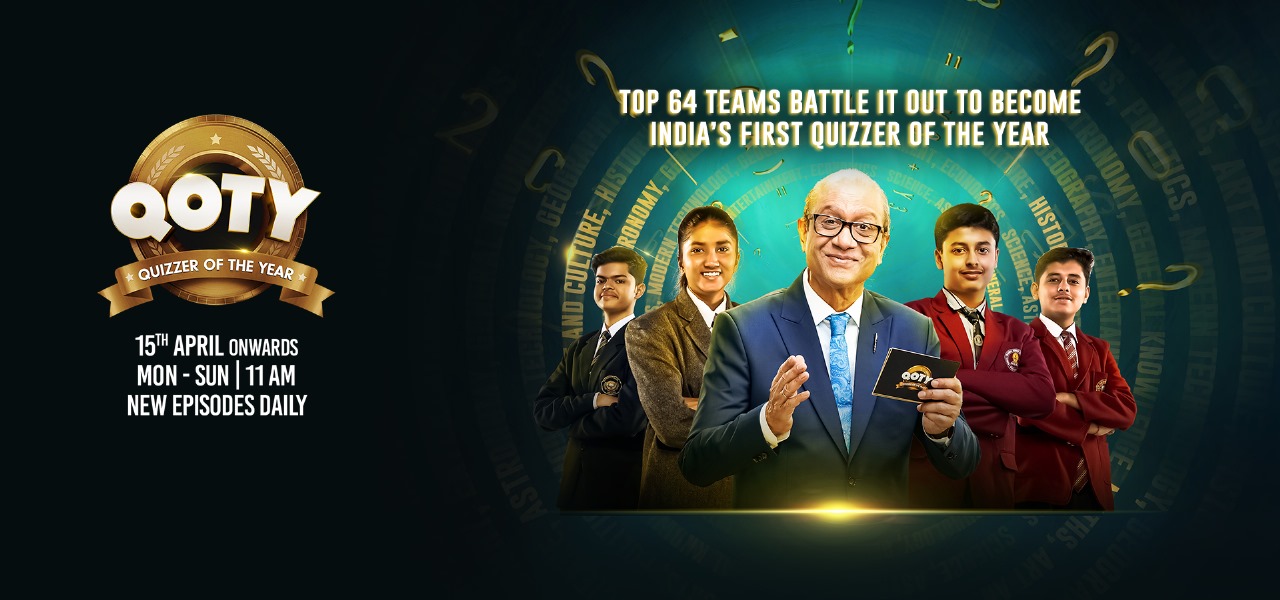
  • Sony Liv to air Siddhartha Basu’s ‘Quizzer Of The Year’

    Remember Siddhartha Basu doing Quiz Time on Doordarshan in the mid-1980s? And various other shows like: Spectrum, The India Quez, The Beanstalk Quiz Summitt, Mastermind India, University Challenge, India’s Child Genius and of course Kaun Banega Crorepati.

    Basu and wife Anita Kaul Basu are now streaming Quizzer Of The Year (QOTY), a nationwide challenge on Sony Liv.

    It started from April 15 with zonal rounds hosted by seasoned quizmasters Joy Bhattacharjya and Col Vembu Shankar. Winning teams will advance to the quarterfinals, semi-finals, finals hosted by Basu, with the ultimate winner being crowned the Quizzer Of The Year.

  • Havas Media gets Anand Kumar as President – South

    Anand Kumar
    Anand Kumar

    Havas Media Network India, the specialised media agency conglomerate of Havas India, has appointed Anand Kumar as President – South, Havas Media India to spearhead the operations in the southern markets.

    Anand will be based out of Bengaluru and report to Uday Mohan, Managing Director, Havas Media India, and will work closely with the core leadership team of the agency. Kumar has worked in various media agencies in the past including Essence, Maxus, MEC, MPG amongst others.

    Said Uday Mohan, Managing Director, Havas Media India: “We are now poised to embark on our next phase of growth, as we stay committed to making a meaningful difference in the industry. Our robust operations in the south, offer immense potential for marketers and as we continue to grow our business, Anand’s rich expertise will prove to be a huge leverage for us in the region. His addition to the team aligns perfectly with our commitment to staying at the forefront of media innovation.”

    Added Mohit Joshi, CEO, Havas Media Network India: “At Havas Media Network India, our team has grown to over 1000 members, reflecting our expanding presence both in terms of capabilities, talent pool and client base nationwide. Our operations in Bengaluru serve as a hub for numerous key and successful client relationships in the region. We are deeply ingrained in the southern market, leveraging our diverse competences via teams at PivotRoots, Havas Media India, and Centre of Excellence. As our network expands rapidly, we prioritize leaders who possess a profound understanding of the industry landscape. Anand’s appointment reflects our commitment to enhancing omnichannel planning capabilities and ensuring seamless workflows from client briefs to tangible business outcomes, particularly within the pivotal South market.”

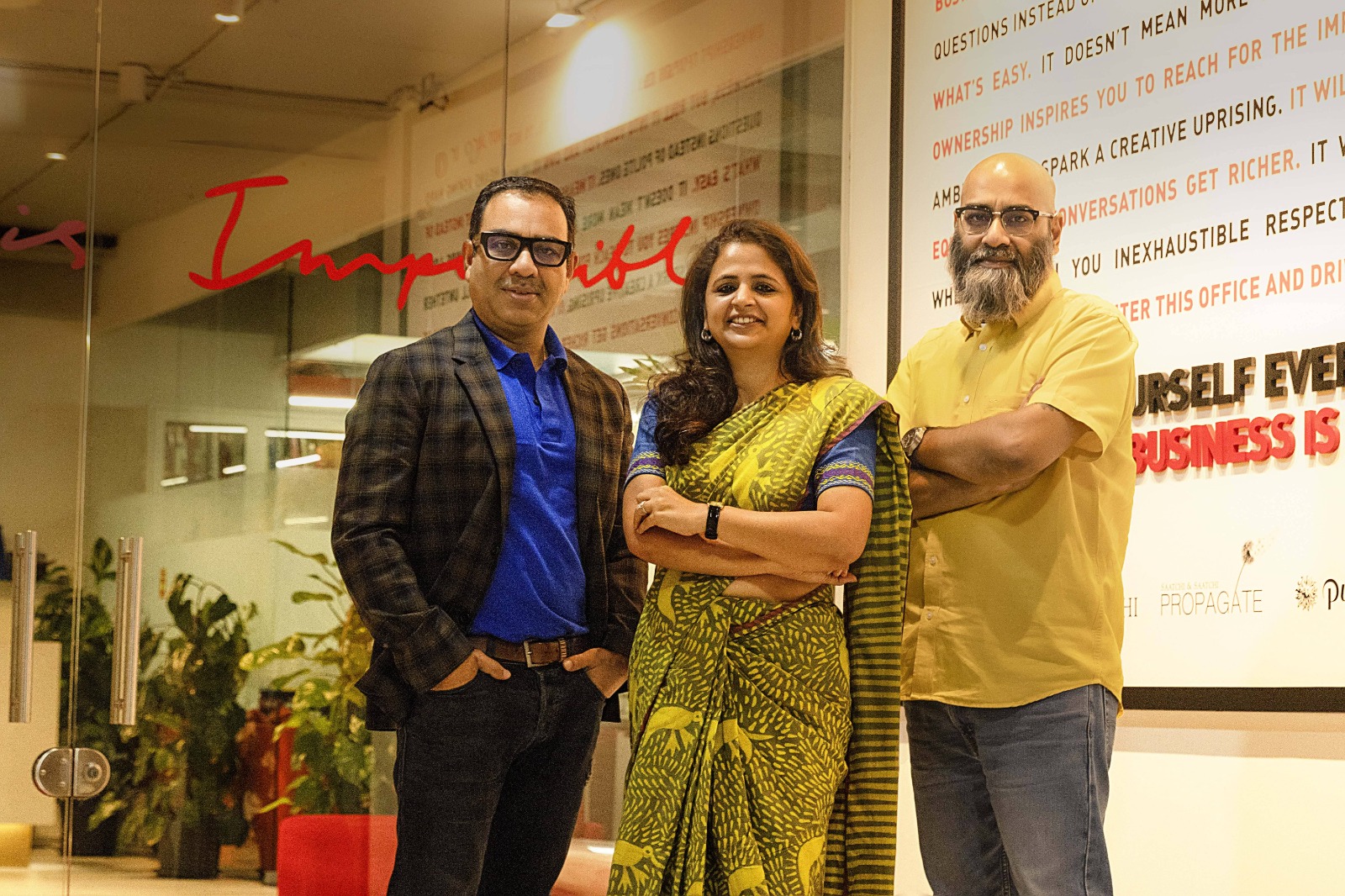
  • L&K Saatchi & Saatchi appoints Ekta Relan as CSO

    Paritosh Srivastava (Left) Ekta Relan (Center) Snehasis Bose (Right)
    Paritosh Srivastava (Left) Ekta Relan (Center) Snehasis Bose (Right)

    L&K Saatchi & Saatchi has strengthened its strategy leadership by elevating Snehasis Bose, its Chief Strategy Officer (CSO), to the role of Group Chief Strategy Officer. With this, Bose will now oversee strategy across L&K Saatchi & Saatchi, Publicis India, and Saatchi & Saatchi Propagate. Additionally, Ekta Relan takes over the reins as the new Chief Strategy Officer (CSO) for L&K Saatchi & Saatchi. Together, Bose and Relan will collaborate to enhance the agency’s strategic initiatives.

    Commenting on the appointments, Paritosh Srivastava, CEO, L&K Saatchi & Saatchi and Publicis India said: “Given the disproportionate growth all three agency brands have seen in client results, creative respect and revenue over the last few years, and the significant role the strategic function has played, it is the right time for us to introduce a force multiplier. Snehasis is a proven war horse who has been a great asset and most dependable partner to the agency. It’s a natural progression for him to bring his influence and impact across the other agencies. Ekta is a rare talent, with her wealth of experience and strategic acumen, she is the perfect strategic leader and cultural fit to take L&K Saatchi & Saatchi’s spirit of ‘Our Client’s Business Is Our Business’ to the next level.”